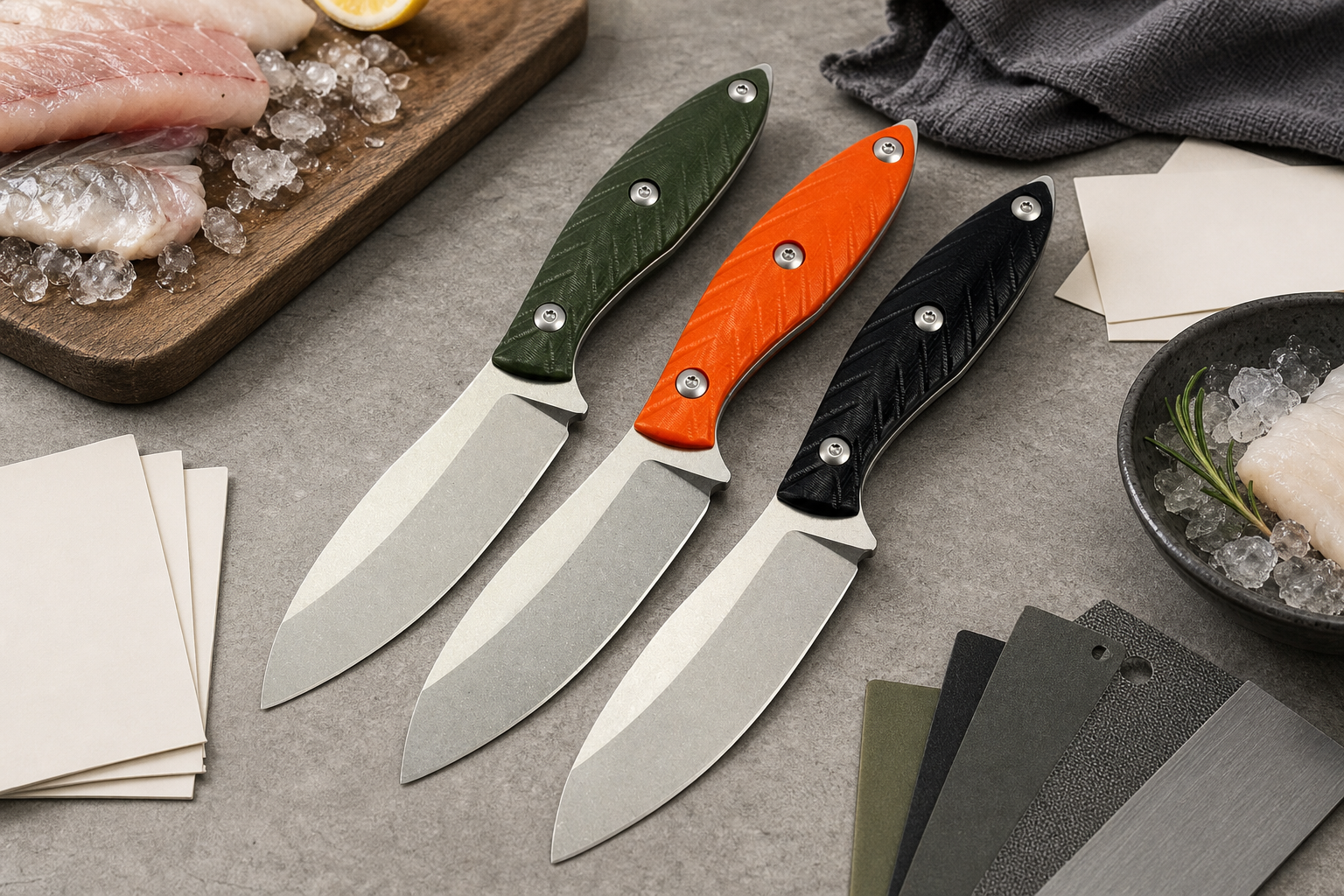
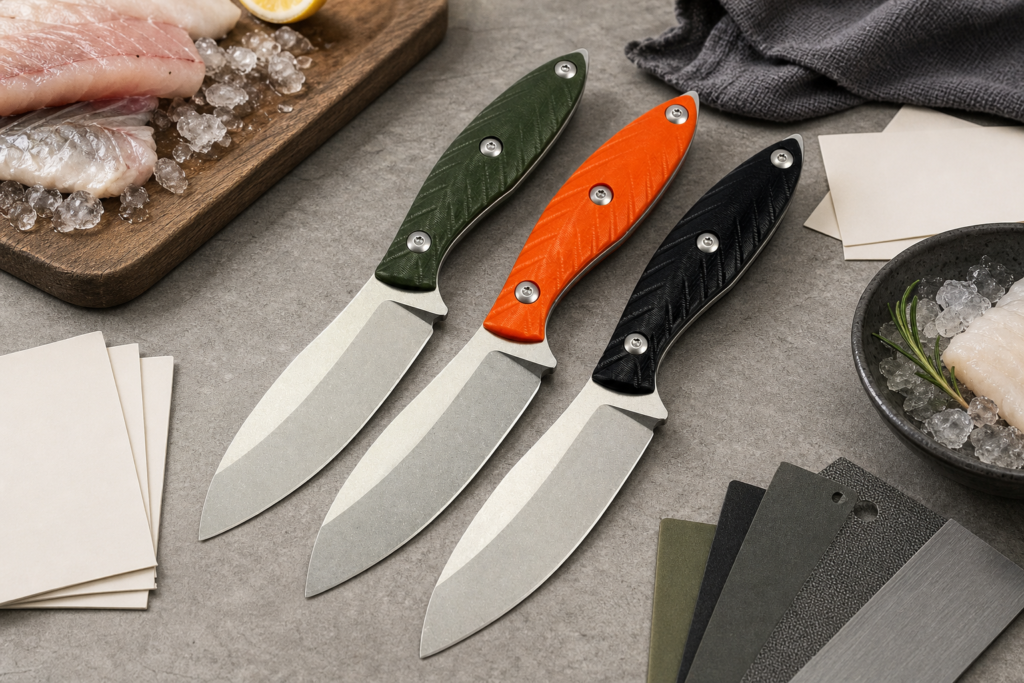
A fillet knife can look like a simple fishing tool. In sourcing, small changes in flex, tip, handle, and cleaning design change the whole product.
Buyers should specify fillet knife anatomy by defining the seafood task, blade length, flexibility, tip shape, grind, edge angle, steel, handle grip, food-contact materials, sheath or packaging, cleaning instructions, and QC tests.
Quick buyer brief:
- Answer: A fillet knife is special because its long, narrow, controlled blade helps follow fish bones and skin while reducing waste, but only when flex, edge, handle, hygiene, and QC match the target user.
- Buyer context: This guide is for fishing knife brands, seafood prep brands, kitchen knife importers, outdoor retailers, private label teams, distributors, and OEM/ODM sourcing managers.
- Key checks: Target fish size, blade length, flex class, tip profile, edge angle, steel grade, corrosion resistance, handle material, grip texture, cleanability, sheath, food-contact review, sharpness test, warning copy, and production inspection.
Planning a fixed blade or outdoor knife project?
Share your target use, blade size, steel preference, handle direction, sheath needs, quantity range, and packaging plan. Vast State can help turn it into a quote-ready specification.
This article treats fillet knives as lawful seafood preparation, fishing, kitchen, and outdoor utility tools. It does not cover combat, self-defense, weapon use, or intimidation. Buyers should confirm food-contact rules, local knife laws, retailer requirements, and market-specific labeling before launch.
The legacy of the fillet knife is not only a story about fishing culture. It is also a design lesson. The anatomy exists because fish preparation needs a thin edge, controlled flex, careful tip work, corrosion resistance, and a handle that stays secure around wet hands.
What Makes a Fillet Knife Different From a General Kitchen Knife?
The difference is controlled flexibility.
A fillet knife is usually narrower, thinner, more flexible, and more tip-focused than a general kitchen knife because it must follow bones, skin, and curved fish surfaces.
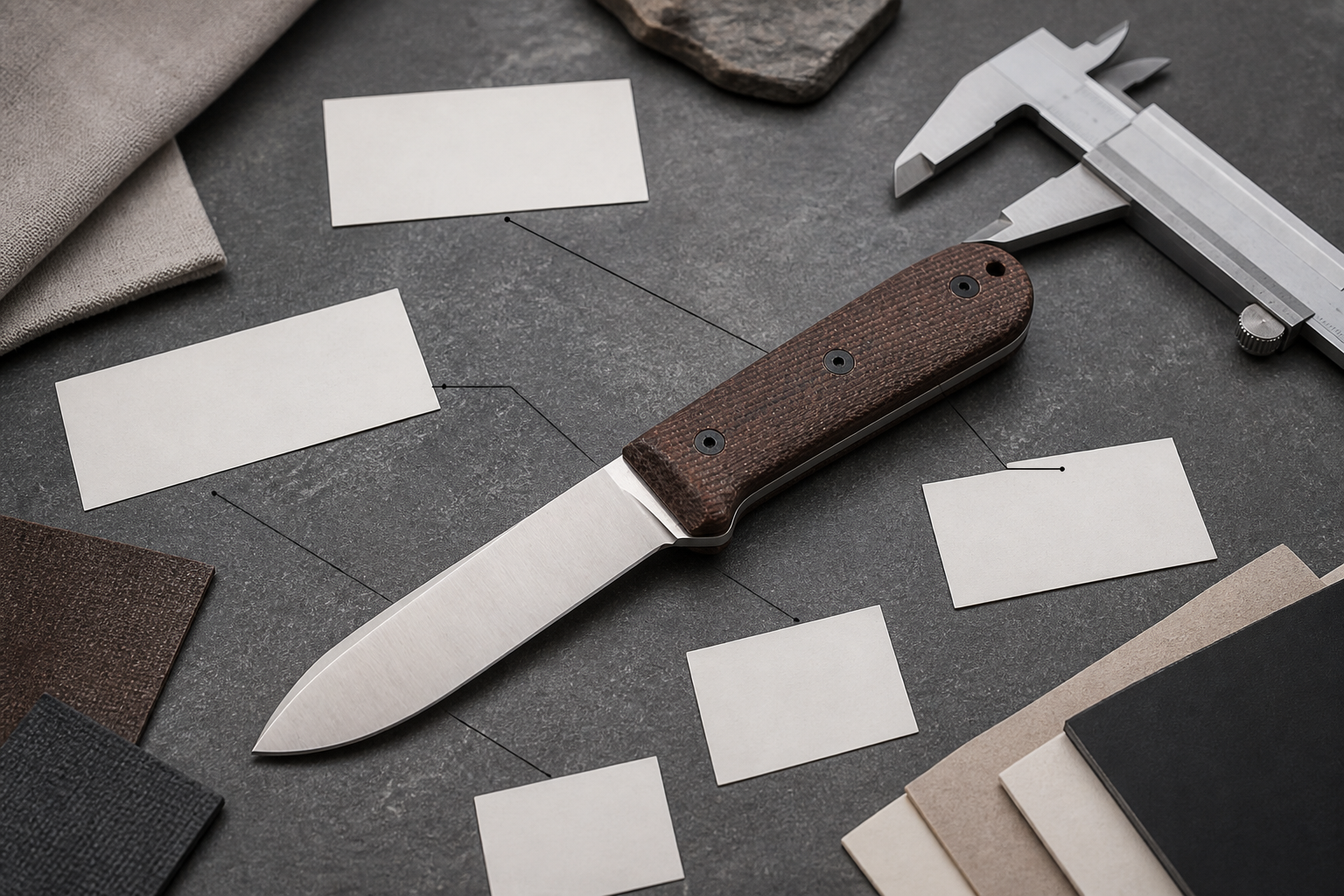
I Start With the Cutting Path
A general kitchen knife often works on a board with downward or rocking force. A fillet knife often works along a fish body, against skin, and around bone structure. That is why anatomy matters. The blade needs enough length to cover the cut, enough flex to follow contours, enough stiffness to keep control, and enough corrosion resistance for wet seafood environments.
The FDA Fish and Fishery Products Hazards and Controls Guidance is written for seafood hazards and controls, not knife design. Still, it helps buyers remember that seafood handling belongs in a broader safety and sanitation context. A fillet knife product should not be designed only for appearance.
The buyer should define:
- Target seafood type
- Typical fish size
- Kitchen, dock, boat, or retail use
- Blade length range
- Flex class
- Handle grip need
- Cleaning method
- Sheath or guard use
- Packaging warning copy
Once the cutting path is clear, the anatomy becomes easier to specify.
Which Blade Length and Flex Should Buyers Choose?
Flex must fit the fish and user.
Buyers should specify blade length and flex by target fish size, cutting style, user skill level, blade thickness, steel, heat treatment, and final QC method.
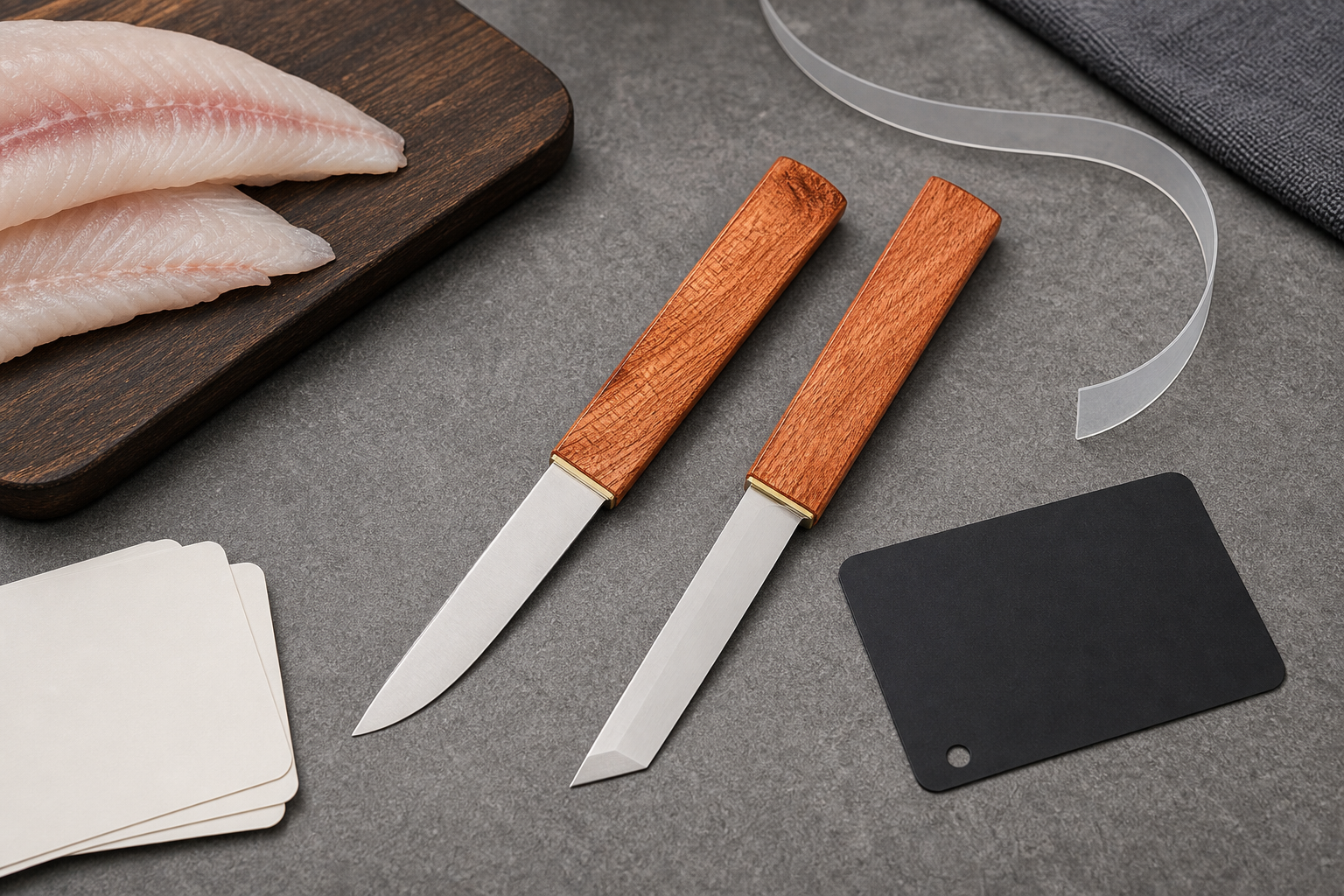
I Avoid Asking for "Flexible" Without a Number
"Flexible" is not a specification. One buyer may mean soft and bendy. Another may mean thin but controlled. A supplier may change steel, thickness, heat treatment, or taper and still call the sample flexible.
The buyer should create a flex class. It can be simple at first: light flex, medium flex, stiff flex. For higher-volume projects, the buyer can define a test method, such as deflection under a set load at a set blade length. The important point is repeatability.
The NIST dimensional metrology page supports the manufacturing idea that measurement helps control part quality and improvement. For fillet knives, measurement should include blade length, width, thickness at stations, distal taper, edge length, and tip position.
A practical length and flex matrix may look like this:
- Short blade, medium stiffness: small fish, compact kits, controlled tip work
- Medium blade, medium flex: general fishing and kitchen prep
- Long blade, controlled flex: larger fish and longer slicing passes
- Stiffer blade: buyers who want more control and less bend
The sample approval should include at least three sample checks: visual profile, flex feel, and measured thickness. If the blade flex changes after heat treatment or polishing, the buyer needs to know before production.
How Should Tip, Spine, Belly, and Grind Be Defined?
Small geometry changes matter.
Buyers should define tip profile, spine taper, belly curve, blade width, grind height, thickness behind the edge, and edge angle because each field changes control and maintenance.
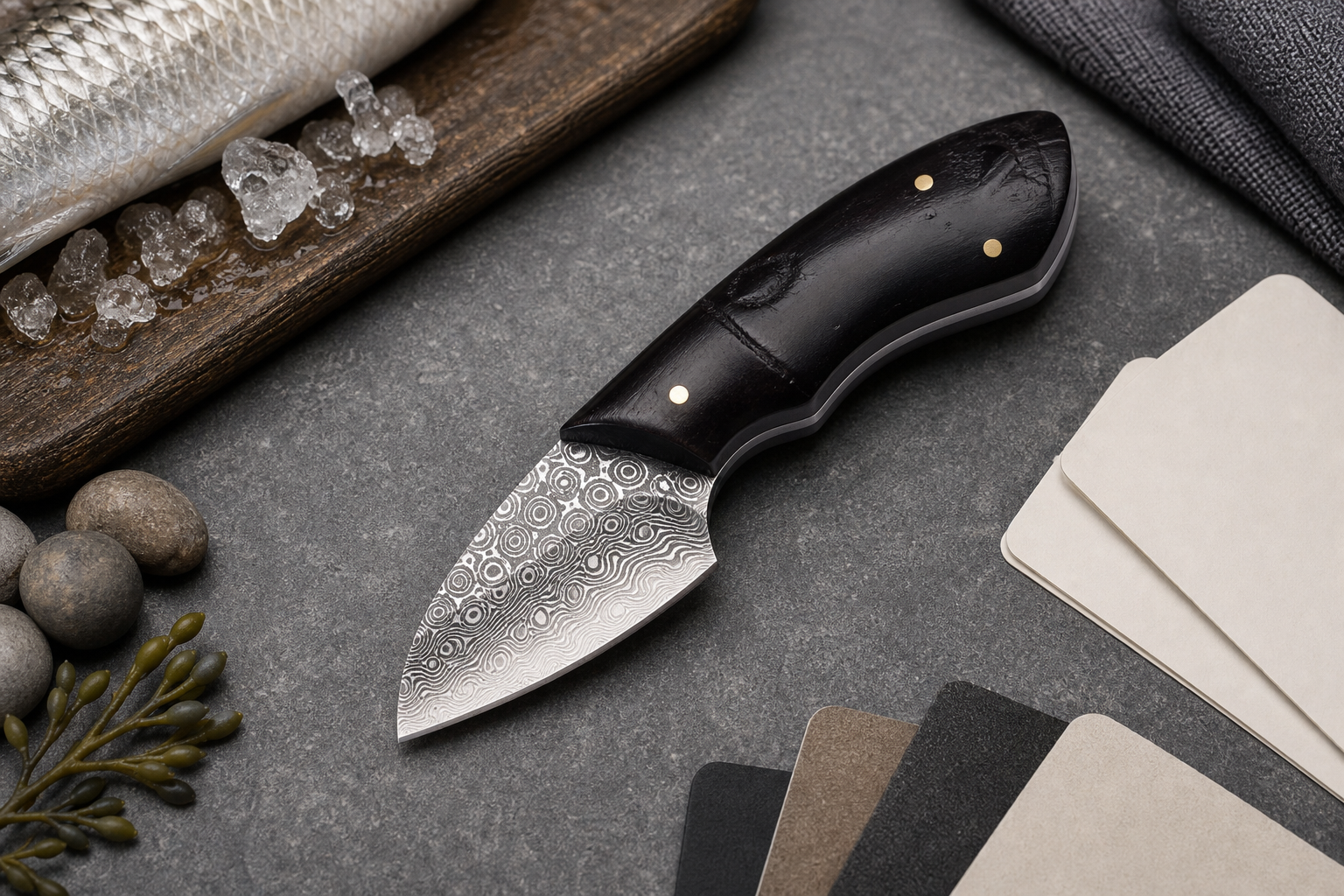
I Do Not Let the Supplier Guess the Profile
The tip controls entry and detail work. The spine controls stiffness and taper. The belly changes slicing feel. The grind and edge angle affect sharpness, edge retention, and sharpening. These details should be on the drawing, not left to the factory's habit.
The ISO 8442-5:2004 page states that the standard specifies sharpness and edge retention testing for hand knives used in professional and domestic food preparation. A buyer does not need to claim ISO testing for every project, but the page supports a key idea: sharpness and edge retention should be tested through a defined method.
Fillet knife anatomy fields should include:
- Tip profile and tip height
- Spine taper
- Blade width at heel, middle, and near tip
- Blade thickness at key stations
- Grind type
- Grind line height
- Thickness behind the edge
- Edge angle target
- Burr removal method
- Sharpening method
If the product is sold to everyday consumers, the buyer should also think about maintenance. A knife that is hard to sharpen may look premium but create poor customer experience after the first season.
Which Steel and Surface Finish Work for Seafood Use?
Wet use changes the material brief.
Fillet knife steel and finish should be selected for edge behavior, corrosion resistance, cleaning, food-contact expectations, sharpening, and the buyer's target price point.
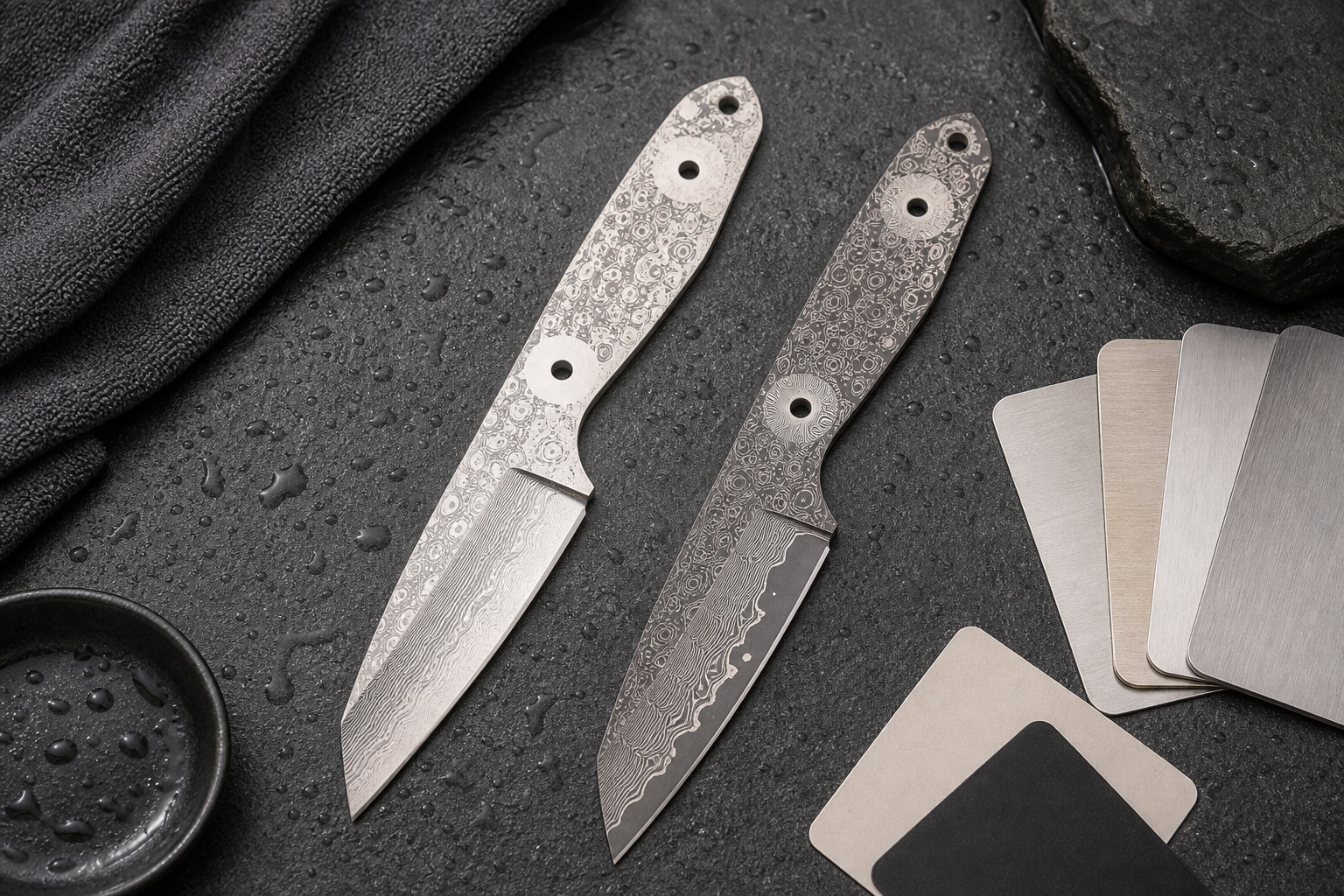
I Treat Corrosion Resistance as a Use-Case Requirement
Seafood work often includes water, salt, fish residue, cutting boards, coolers, and outdoor storage. A fillet knife may be rinsed, wiped, packed, and used again. If the steel or finish is not matched to that environment, corrosion complaints can appear quickly.
The buyer should ask for steel grade, heat-treatment range, hardness target, finish process, passivation or surface treatment notes if relevant, and corrosion test approach. The project may not need the most expensive steel. It needs a material system that matches the product promise.
If the knife is positioned for food preparation, the buyer should also review food-contact expectations. The FDA explains that food contact substances include materials that come into contact with food and are not intended to have a technical effect in food. Its food packaging and food contact substances page and related guidance help buyers think about material status, not just marketing words like "food grade."
Material review should cover:
- Blade steel
- Handle material
- Adhesives, coatings, or inserts
- Surface finish
- Cleaning instructions
- Odor transfer risk
- Staining risk
- Supplier material declarations
Buyers should avoid unsupported claims such as "rust proof." A more careful phrase is often better, such as "corrosion-resistant stainless steel, clean and dry after use."
What Handle Anatomy Matters for Wet Seafood Work?
Grip is a safety feature.
A fillet knife handle should support wet-hand control, cleaning, hygiene, balance, edge awareness, and long cutting sessions without creating dirt traps.
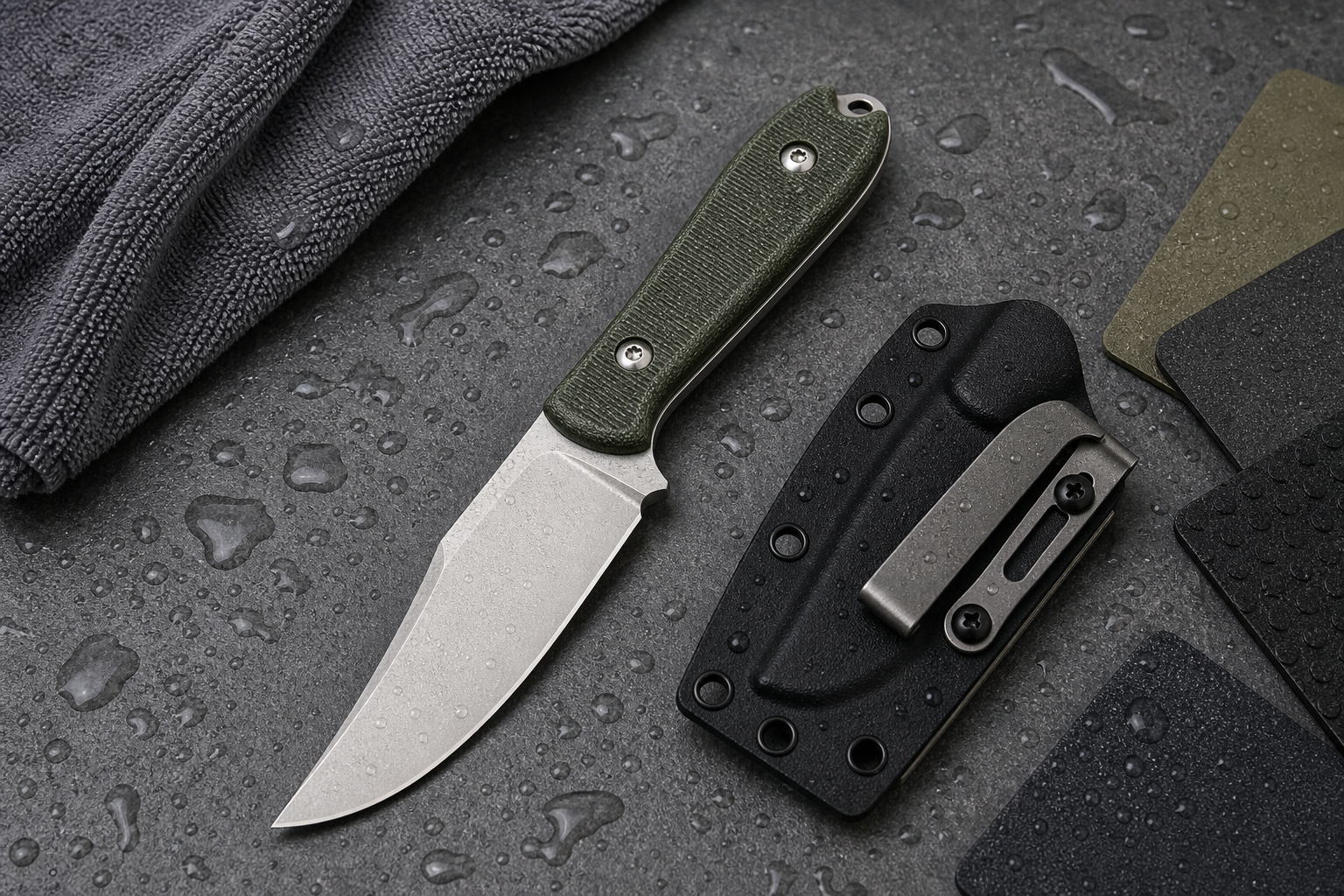
I Review Grip and Cleanability Together
Some handles feel secure but are hard to clean. Some handles look sleek but become slippery. Some textures collect residue. Some soft materials absorb odor or discolor. The right handle depends on where the knife will be used.
The FoodSafety.gov four steps page stresses clean, separate, cook, and chill, including washing utensils and surfaces after contact with raw seafood. For a fillet knife buyer, that means the handle and blade transition should be easy to clean and explain.
Important handle fields include:
- Material
- Texture depth
- Guard or finger stop
- Handle length
- Handle thickness
- Balance point
- Tang construction
- Joint design
- Dishwasher or hand-wash instruction
- Odor and stain resistance
The buyer should ask the supplier for wet-hand sample testing. Even a simple review with damp hands and food-safe gloves can reveal problems early. A comfortable dry handle may not feel secure in a seafood environment.
How Should Sheath, Guard, and Packaging Be Designed?
The edge must be protected after use.
Fillet knife packaging should protect the edge and tip, control moisture expectations, avoid package cuts, and keep warning copy visible during unboxing.
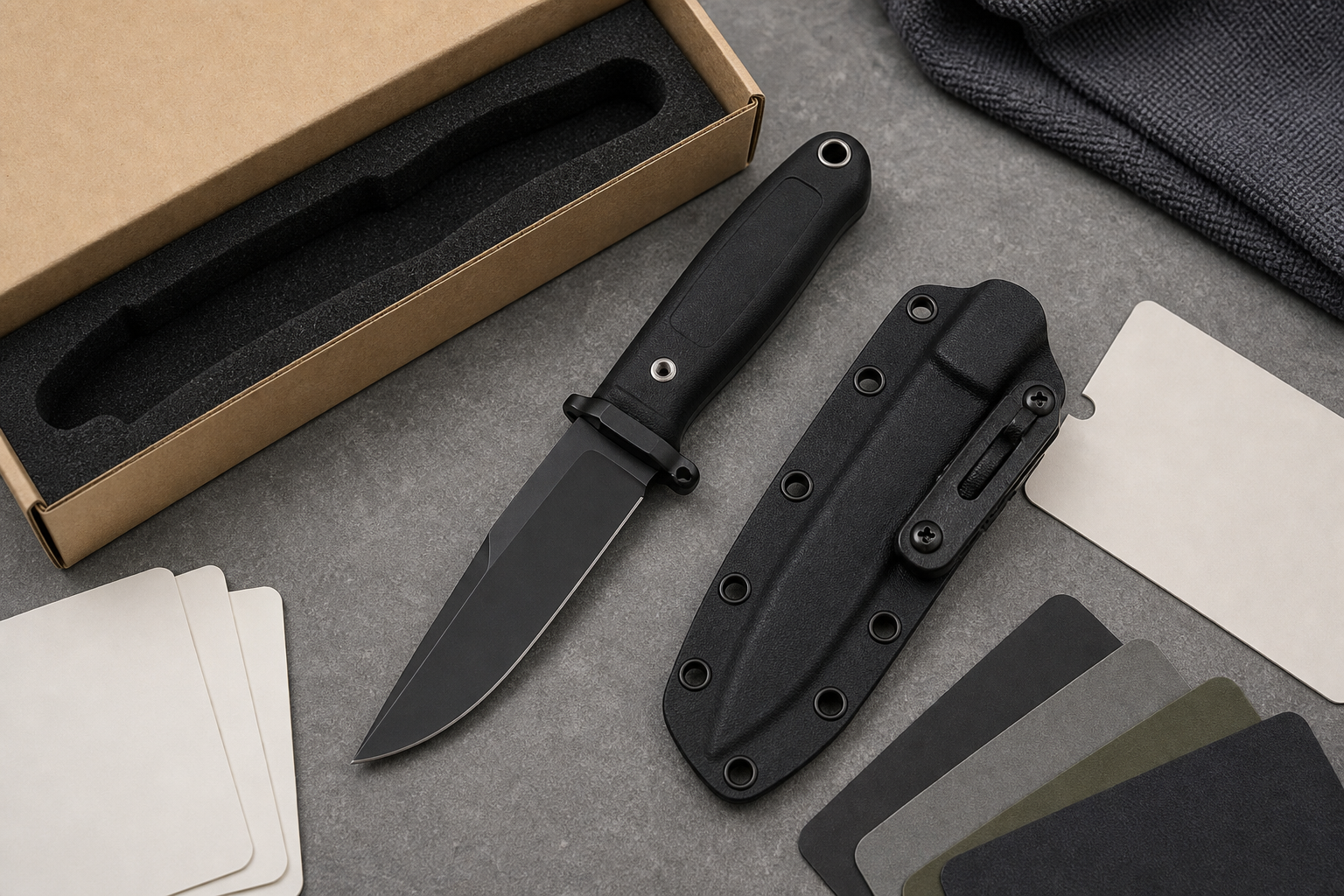
I Package the Knife for Shipping, Unboxing, and Storage
Fillet knives are long and narrow. The tip can be vulnerable. The edge can cut packaging if the tray is weak. A wet-use product may also be stored in a tackle box, drawer, boat compartment, or kitchen tool roll. Buyers should not approve packaging only from a front photo.
Packaging review should include:
- Tip protection
- Edge protection
- Sheath or guard fit
- Package puncture risk
- Retail hanging strength
- Moisture warning
- Care card location
- Barcode and label placement
- Importer or distributor mark
- Carton drop and compression review
The CPSC labeling requirements overview reminds buyers that labeling needs may depend on product type, design, components, and intended audience. For fillet knives, the warning card and package should match the actual product, not a generic knife template.
The buyer should also define whether the sheath is only for retail protection or for long-term customer storage. These are different design briefs.
What QC Checks Prevent Fillet Knife Quality Drift?
Thin blades need disciplined inspection.
QC should verify blade profile, length, thickness, flex, edge angle, burr removal, hardness, corrosion review, handle bonding, sheath fit, packaging, and warning-copy presence.
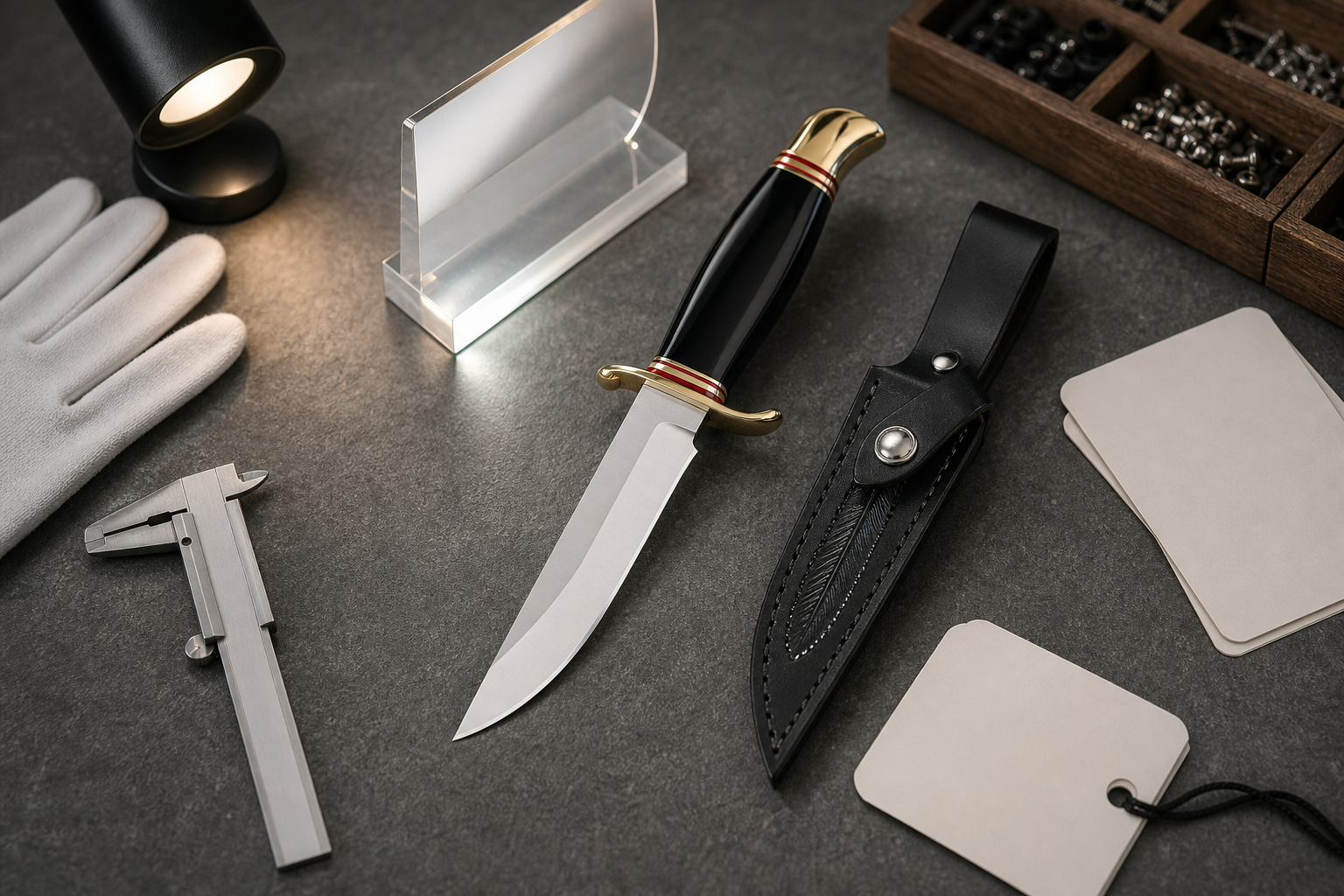
I Inspect Flex, Not Only Sharpness
Fillet knives can drift in production. Blade thickness may change. Heat treatment may shift stiffness. Polishing may affect geometry. Handle bonding may vary. Sheath fit may become loose if tooling changes. A buyer needs a QC plan that matches the product anatomy.
The CPSC manufacturing best practices page supports supplier controls, documentation, spot checks, and production records. The CPSC Handbook for Manufacturing Safer Consumer Products supports design review, production control, documentation, and product safety procedures.
QC fields should include:
- Blade length
- Edge length
- Blade width at stations
- Thickness at stations
- Flex or deflection check
- Hardness range
- Edge angle
- Burr inspection
- Handle pull or bond check
- Corrosion spot check
- Sheath fit
- Package protection
- Warning card presence
The NIST metrological traceability page is useful when buyers require documented gauge control or calibration records. At minimum, the inspection plan should state which tools are used and how records are saved.
How Should Marketing Explain Fillet Knife Legacy and Performance?
Claims should be specific and provable.
Marketing should explain the fillet knife's seafood-prep purpose, flexible anatomy, wet-grip handle, corrosion resistance, and care needs without making unsupported superiority claims.
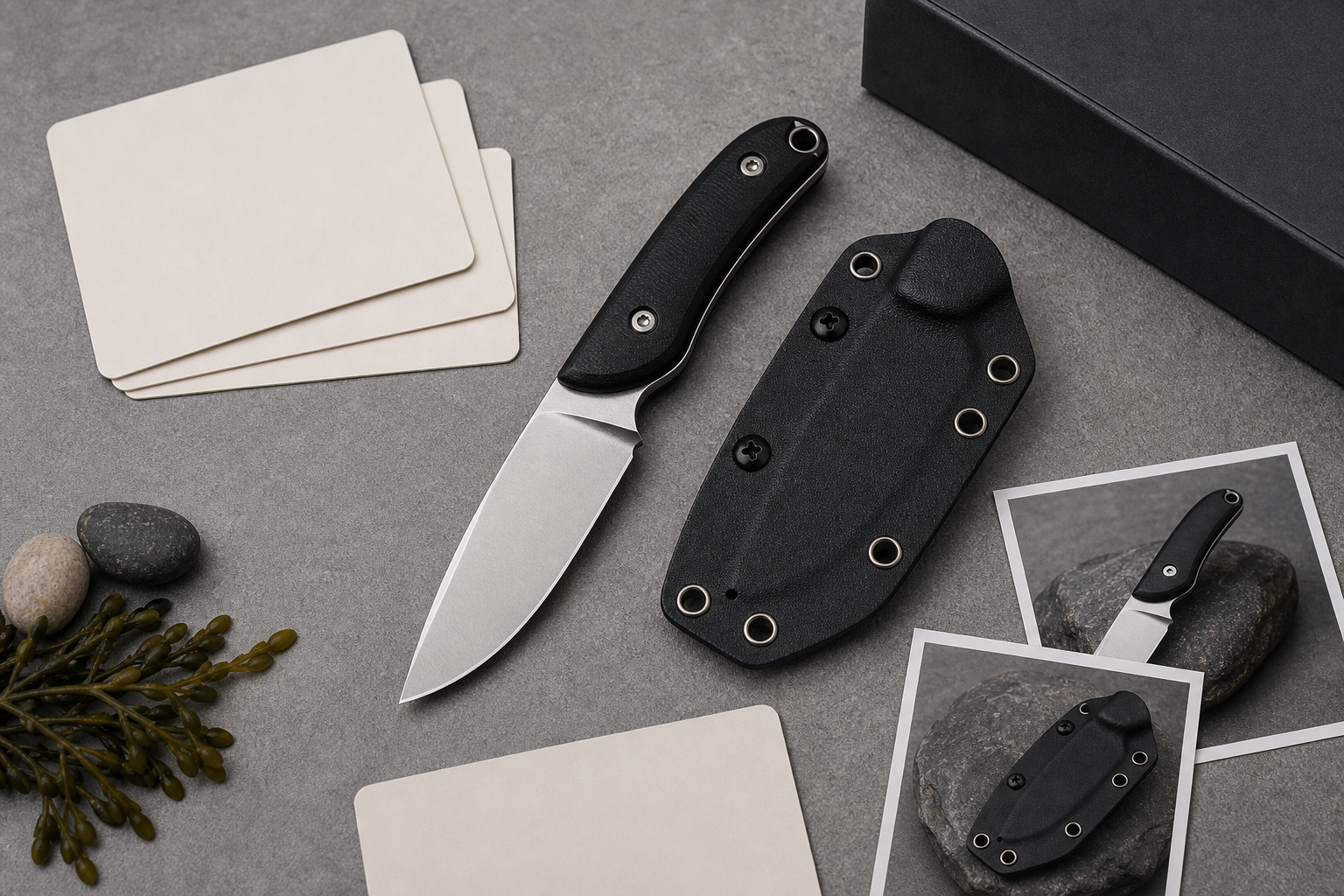
I Use "Legacy" as Design Logic, Not Romance
It is tempting to write emotional copy about tradition and fishing heritage. That can work, but only if the product still explains why the anatomy matters. A buyer can say the knife is inspired by seafood preparation needs. A buyer should be careful with claims like "best," "professional grade," "never rusts," or "stays sharp forever" unless the evidence is strong.
The FTC advertising and marketing basics page supports truthful, non-deceptive, evidence-based claims. If the buyer claims strong edge retention, the buyer should have a test record. If the buyer claims corrosion resistance, the buyer should have material logic or test data. If the buyer claims a non-slip handle, the buyer should have wet-hand sample review.
Safer claim examples:
- Flexible blade designed for controlled seafood prep
- Narrow profile helps follow fish contours
- Textured handle designed for wet-hand control
- Corrosion-resistant stainless steel, clean and dry after use
- Protective sheath or guard included
- Designed for adult kitchen, fishing, and outdoor utility use where lawful
Good copy turns anatomy into customer understanding. It does not pretend one fillet knife fits every fish, every user, and every condition.
What Should Go Into a Fillet Knife RFQ?
The RFQ should connect anatomy to testing.
A strong RFQ should define seafood task, blade profile, flex class, steel, heat treatment, handle, sheath, food-contact expectations, warning copy, performance claims, and QC records.
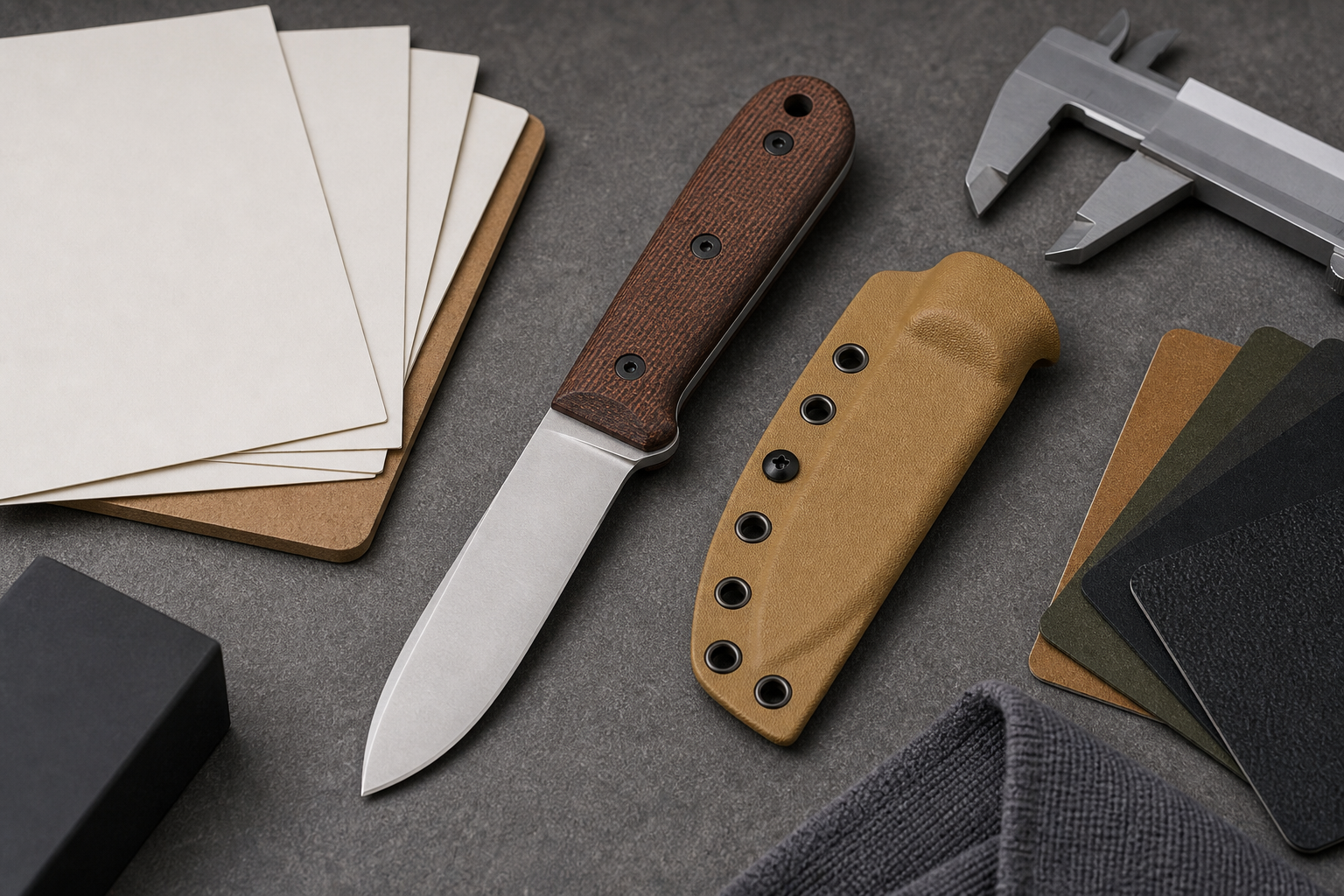
I Ask for Samples That Prove the Anatomy
The RFQ should not say only "fillet knife, stainless steel, rubber handle." That is too vague. A useful RFQ describes the user, fish size, cutting environment, blade profile, flex, handle, cleaning, sheath, and claims.
The supplier should provide:
- Technical drawing
- Steel and hardness proposal
- Flex sample or deflection method
- Grind and edge angle sample
- Handle material declaration
- Food-contact material notes where relevant
- Sheath or guard sample
- Packaging mockup
- Warning and care copy
- Sharpness or edge retention test plan
- Corrosion review plan
- Final inspection checklist
I also ask the supplier to identify the most likely failure point. A good supplier will talk honestly about flex consistency, tip damage, handle bonding, sheath fit, or corrosion claims. That conversation is often more valuable than another polished product photo.
Turn this article into a fixed blade project.
Send your target use, blade size, steel, handle direction, sheath needs, quantity, and packaging plan. Vast State can help shape it into a quote-ready project.
Conclusion
Buyers should source fillet knives by turning anatomy into measurable blade, flex, handle, hygiene, sheath, claim, and QC requirements before production.
OEM/ODM RFQ Checklist
Prepare these details to help Vast State review your project and provide a more accurate quotation.
| RFQ Field | What to Prepare |
|---|---|
| Project type | OEM from drawing / ODM private label / wholesale catalog |
| Product category | Folding knife / fixed blade / multi-tool / outdoor tool |
| Design status | Idea / sketch / 2D drawing / 3D CAD / physical sample |
| Target price | Ex-factory target price or retail price range |
| MOQ expectation | 500 / 1,000 / 3,000 / 5,000+ pcs |
| Logo method | Laser engraving / etching / printing / molded logo |
| Packaging | Standard packaging / custom retail box / Amazon-ready |
| Market | USA / EU / Japan / Korea / Middle East / other |
| Compliance needs | Buyer-specified testing / documentation / labeling |
| Timeline | Sample deadline / mass production deadline |