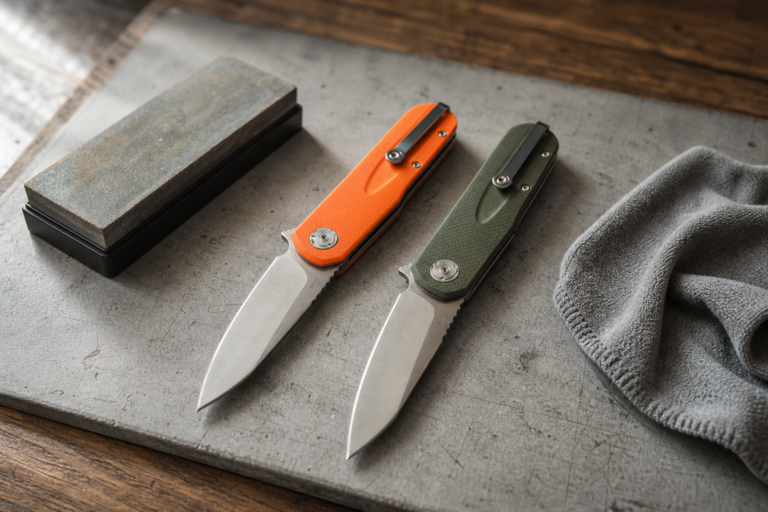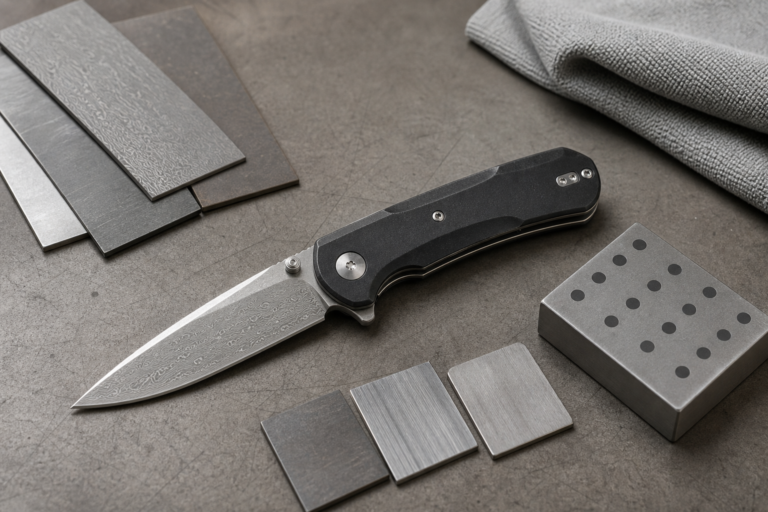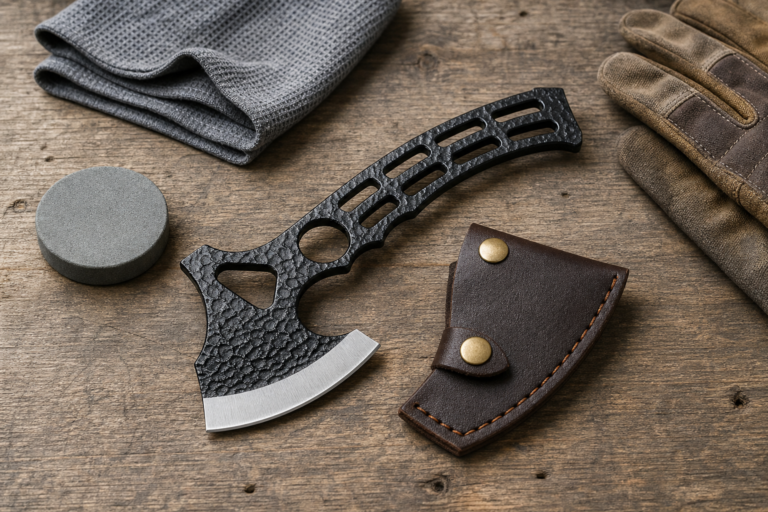
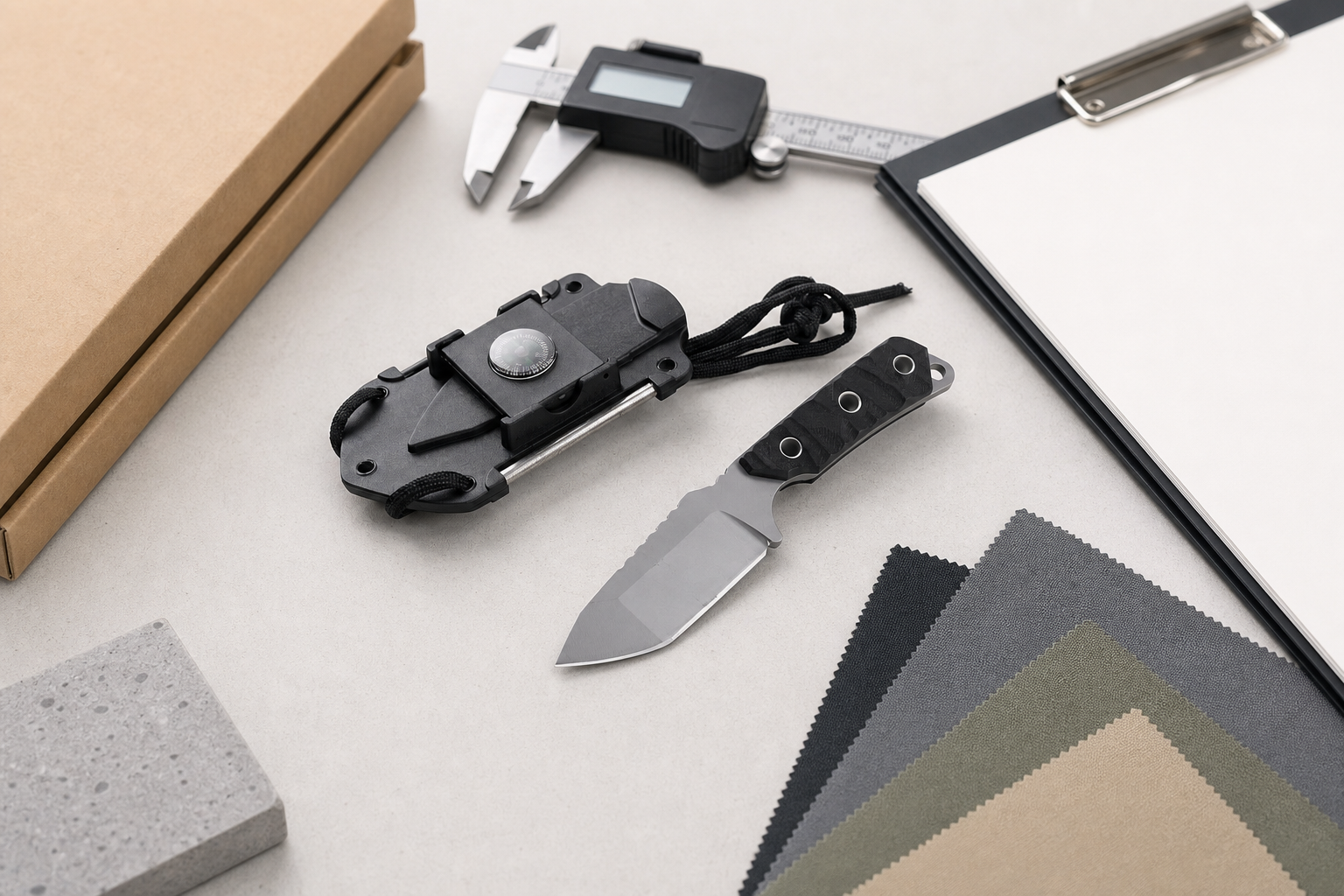
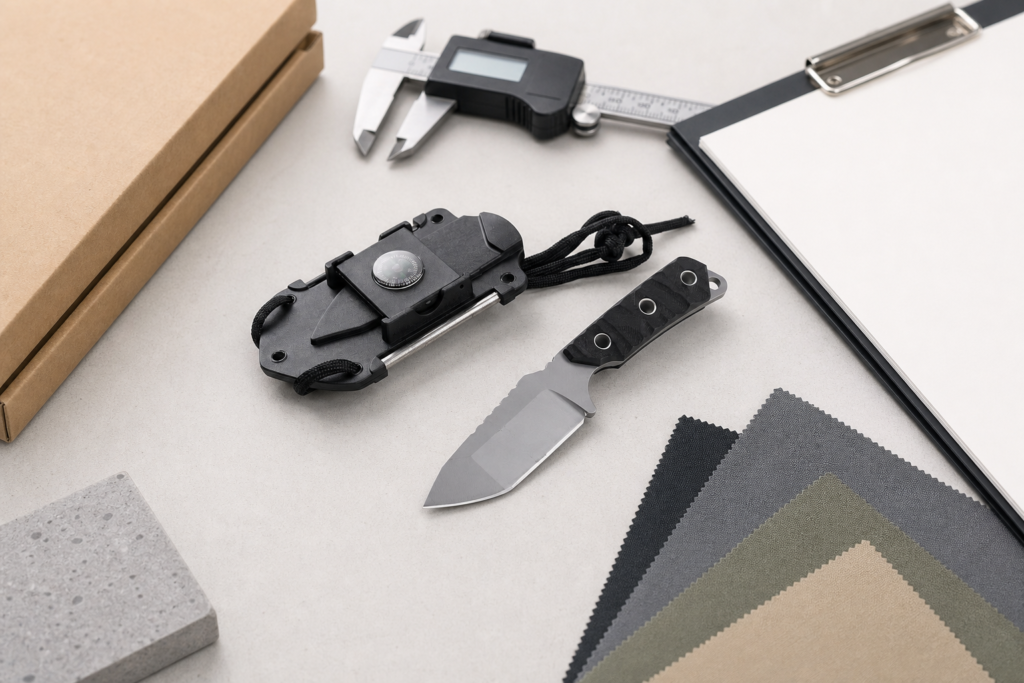
A neck knife looks simple to sell. If the sheath, cord, label, and channel wording are weak, the product can create avoidable risk.
Buyers should source neck knife products by treating the blade, sheath, neck-carry system, warning copy, packaging, travel limits, marketing claims, and QC tests as one controlled OEM/ODM product system.
Quick buyer brief:
- Answer: A neck knife is not just a small fixed blade with a cord. It is a sharp product worn close to the body, so retention, edge coverage, cord safety, age positioning, legal review, and claim control matter.
- Buyer context: This guide is for outdoor knife brands, utility knife buyers, private label teams, importers, distributors, catalog sellers, and OEM/ODM sourcing managers.
- Key checks: Adult-use positioning, lawful utility task, blade size, handle grip, sheath lock, retention force, cord material, breakaway option, warning copy, travel copy, packaging, sharp edge protection, and final inspection records.
Planning a private-label knife line for this market?
Use this article as an early planning reference, then prepare your target market, product category, labeling needs, and buyer-specified compliance requirements before production.
This article treats neck knives as adult outdoor, craft, work, or utility tools where lawful. It does not cover self-defense, hidden carry, combat, intimidation, or weapon-use advice. Buyers should confirm local law, retailer rules, and platform policies before selling any knife product.
The commercial point is direct: a neck knife has value only when the product is safe to package, clear to explain, lawful to sell, and stable in the sheath during ordinary movement. If the design cannot pass those checks, the buyer should change the product brief before production.
What Is a Neck Knife in OEM/ODM Product Planning?
The name can be misleading.
A neck knife is usually a compact fixed blade supplied with a protective sheath and a neck-carry cord, but buyers should define the lawful utility use before discussing style.
I Define the Use Before the Carry Method
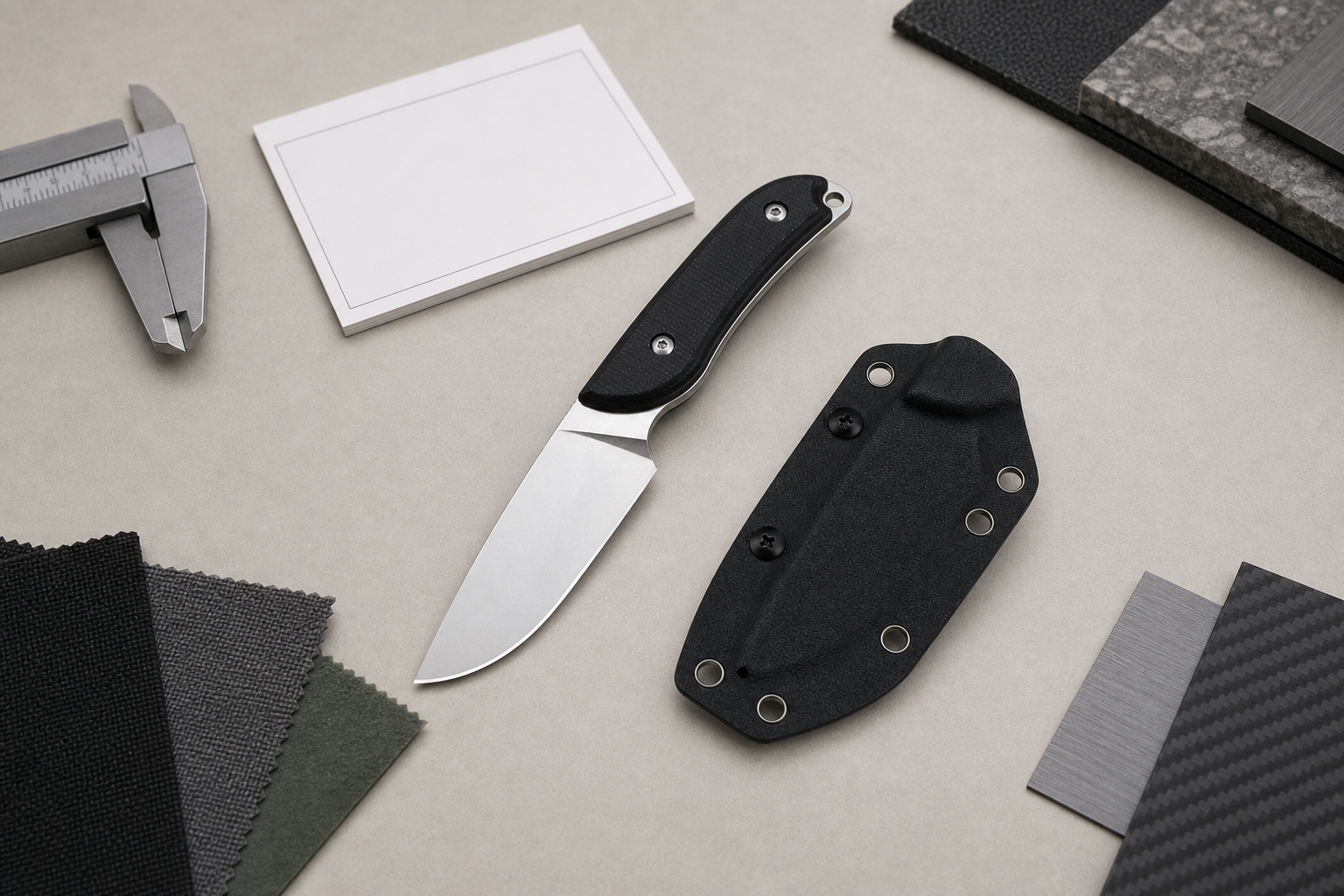
Many product briefs start with "neck knife" as a style. I prefer to start with the lawful task. Will the product be used for camping prep, cord cutting, box opening, light craft work, fishing support, workshop backup, or emergency kit use? The answer changes the blade profile, handle length, sheath retention, warning copy, and sales channel.
The buyer should avoid vague positioning such as "always ready" or "easy to hide." Those phrases can move the product toward unsafe or restricted marketing. A safer product file describes the tool by function: compact sheathed utility knife, small fixed blade for outdoor tasks, or lightweight kit knife for adult users where permitted.
The CCOHS sharp blades guidance supports a basic safety principle: sharp tools should match the job, be inspected, and be stored safely. For a neck knife, the sheath is part of that storage system. If the sheath does not fully cover the edge and tip, the product is not ready.
The RFQ should define:
- Intended lawful task
- Adult-use market
- Blade length and edge length
- Handle grip and control
- Sheath material and lock type
- Cord length and release design
- Warning and care copy
- Channel restrictions
- QC tests before shipment
Why Is Sheath Retention the First Safety Specification?
The blade must stay covered.
Sheath retention is the first neck knife specification because a loose sheath can expose a sharp edge during movement, unboxing, storage, or transport.
I Treat the Sheath as a Critical Component
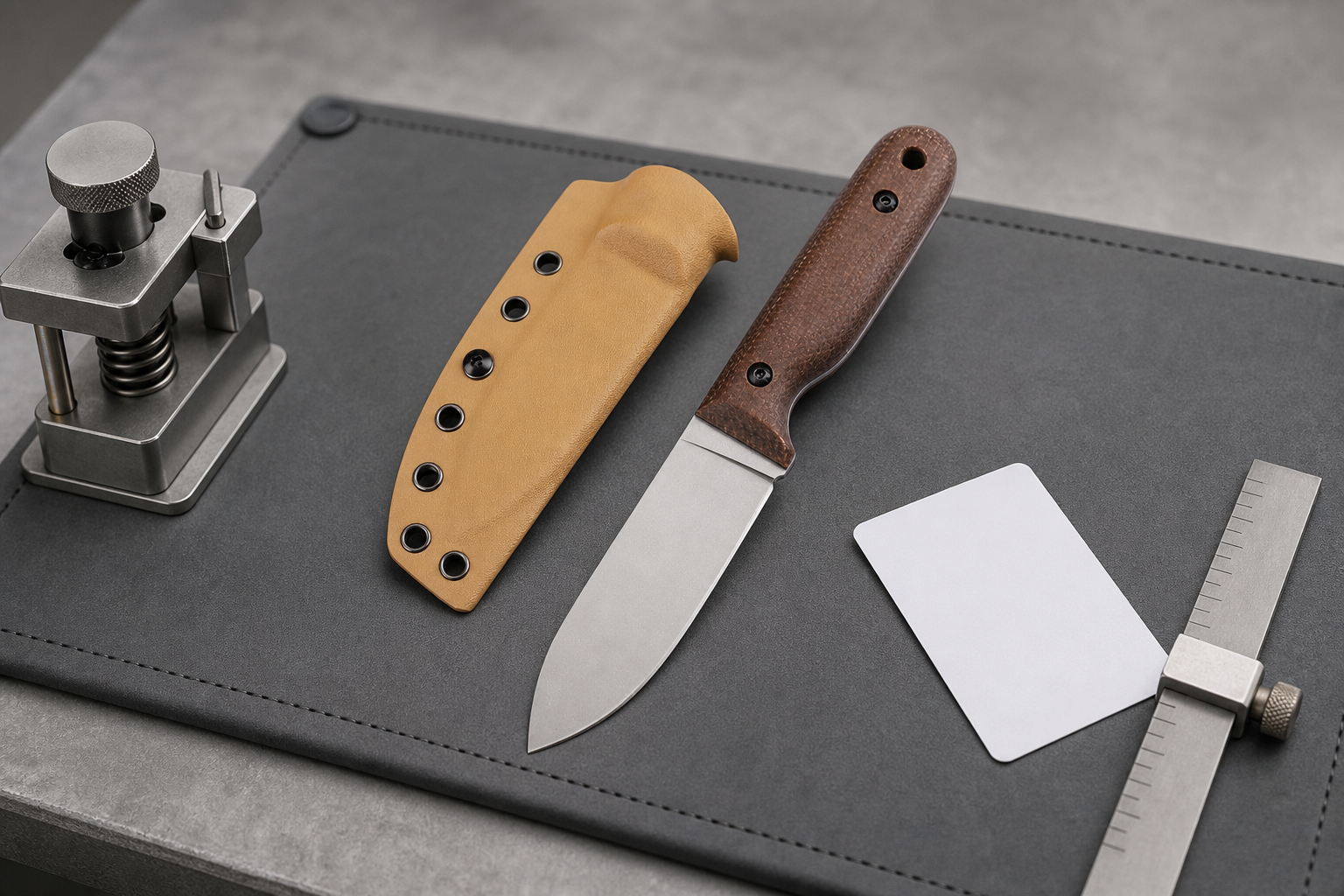
For a neck knife, the sheath is not an accessory. It is a safety component. The sheath should cover the full edge and tip. It should resist accidental release during normal movement. It should allow deliberate removal without requiring dangerous force. It should not dull the edge, pinch the tip, or crack after temperature and drop exposure.
The product file should set a retention target. The buyer can use an internal pull-force range, a shake test, a drop simulation, or a supplier fixture. The exact method depends on the product and market, but the method must be written down. "Feels tight" is not enough.
The CPSC manufacturing best practices page emphasizes safety by design, foreseeable use and misuse, supplier control, and documentation. That logic fits neck knife sourcing. Buyers should consider what happens if a customer jogs, bends, packs the product in a bag, or stores it in a drawer.
Important retention checks include:
- Full edge coverage
- Tip coverage
- No rattle that exposes the edge
- Defined removal direction
- Pull-force record
- Shake test result
- Cord attachment strength
- Sheath crack resistance
- Packaging fit with sheath attached
How Should Buyers Specify the Neck Cord or Carry System?
The cord is a risk point.
Buyers should specify cord material, length range, attachment method, release option, adult-use warning, and whether the product can be sold without neck carry in certain channels.
I Do Not Treat Any Neck Cord as Harmless
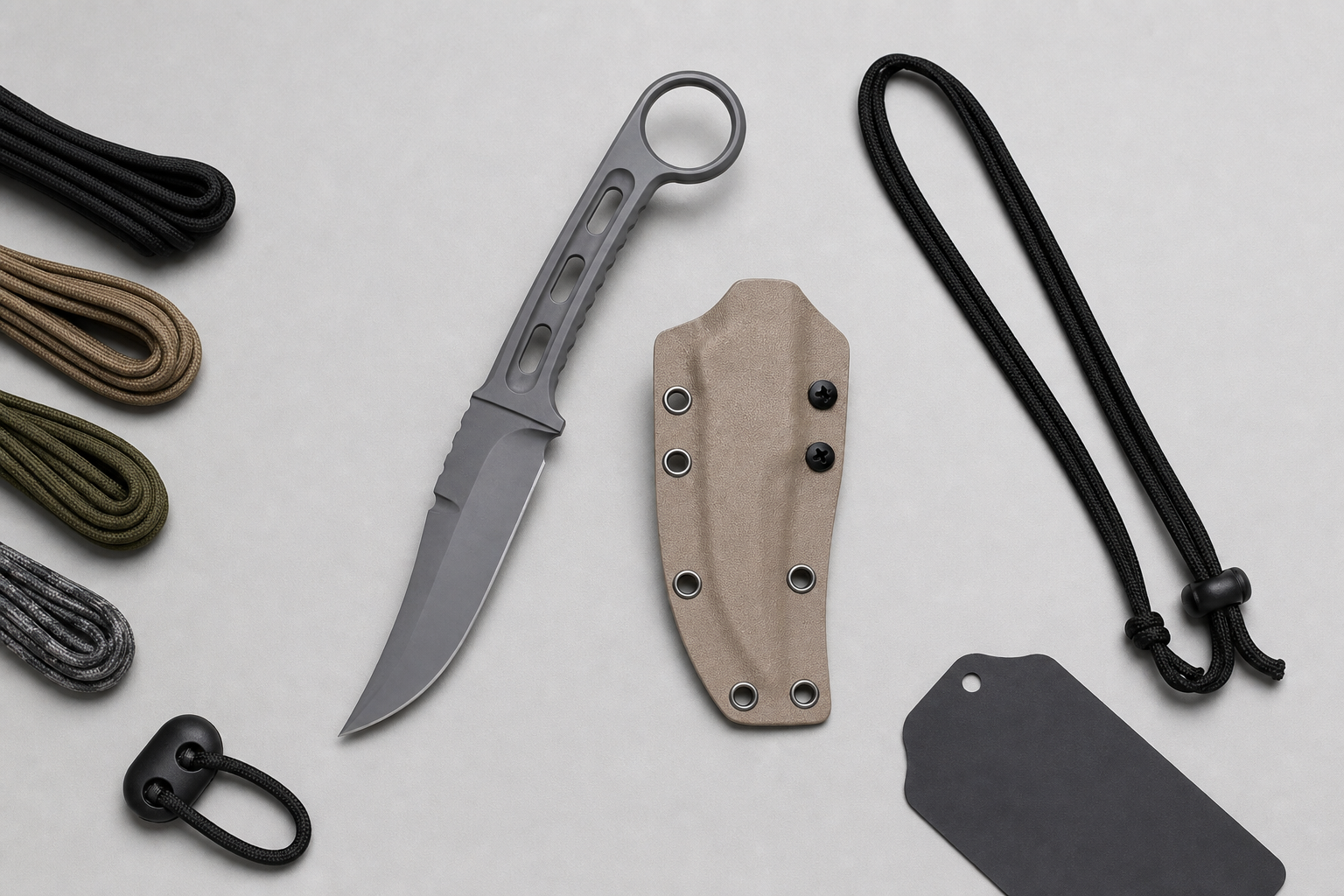
A cord worn around the neck needs careful design review. The buyer should decide whether the product needs a breakaway connector, an adjustable cord, a fixed-length cord, or an alternate clip mount. Some channels may prefer a belt clip or pack clip rather than a neck cord.
This is especially important for age positioning. Neck knife products should not be positioned for children. The CPSC drawstring guidance for children's upper outerwear is about apparel, not knives, but it shows why neck-area cords and child safety should be taken seriously. A buyer should avoid youth marketing, toy-like colors, child imagery, and any copy that implies children should wear a sharp tool around the neck.
Cord review should cover:
- Cord length and adjustment range
- Breakaway or release method
- Cord material and skin comfort
- Sweat and water exposure
- Attachment hole edges
- Pull strength
- Replacement cord policy
- Package warning location
- Channel-specific no-cord option
If the cord design is uncertain, the buyer should ask for prototypes before ordering molds. A cheap cord can make the entire product feel careless.
Which Blade and Handle Specs Keep a Neck Knife Practical?
Compact does not mean uncontrolled.
The blade and handle should be small enough for the product concept, but large enough to provide safe grip, controlled cutting, and predictable maintenance.
I Avoid Over-Styling the Blade
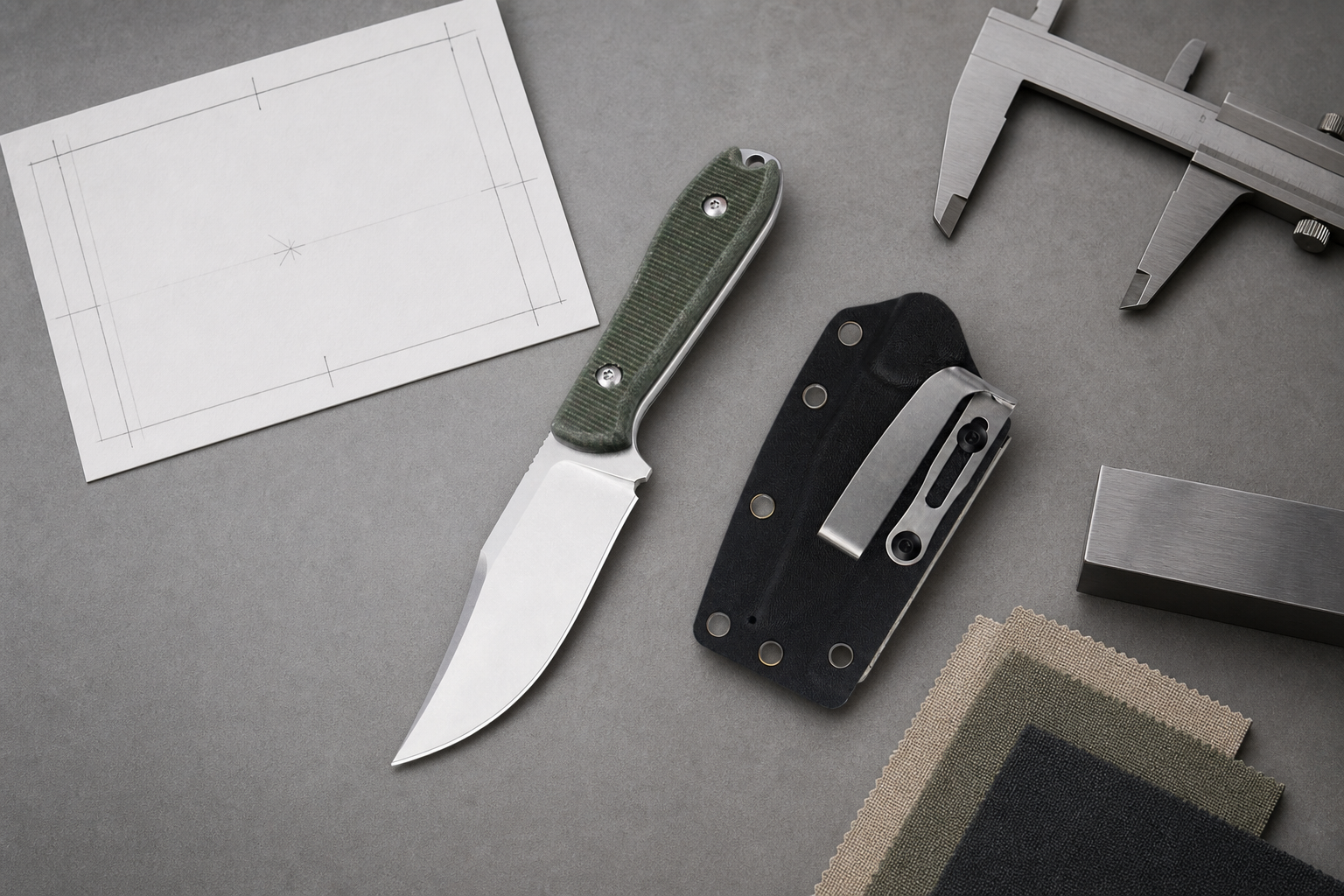
A neck knife does not need aggressive styling to be commercially useful. In many B2B projects, simple geometry is better. A moderate tip, useful belly, clear sharpening access, and comfortable handle can do more for customer satisfaction than dramatic shape language.
The buyer should define blade geometry around the task. A utility version may need a straight or slight-belly edge. An outdoor version may need corrosion-resistant steel and easy cleaning. A craft version may need tip control. A fishing or wet-use version may need handle texture and rust-resistance focus.
The NIST dimensional metrology page supports the general value of dimensional measurement for manufacturing control. For a neck knife, small differences in blade thickness, tip position, handle thickness, and sheath clearance can change both safety and user feel.
Useful specification fields include:
- Overall blade length
- Effective edge length
- Blade thickness
- Tip shape
- Grind type
- Edge angle target
- Steel grade or approved alternative
- Hardness range
- Handle thickness
- Handle texture
- Lanyard or cord hole finish
- Sheath clearance
Buyers should test grip with dry and damp hands. A tiny handle can look sleek but feel unsafe if the user cannot control the blade during normal utility work.
What Warning, Label, and Instruction Copy Belongs in the Product File?
Labels should match real risk.
Neck knife packaging should explain sharp-edge risk, adult use, safe storage, sheath use, local law responsibility, travel limits, inspection, and care.
I Write Warnings Before the Package Is Finished
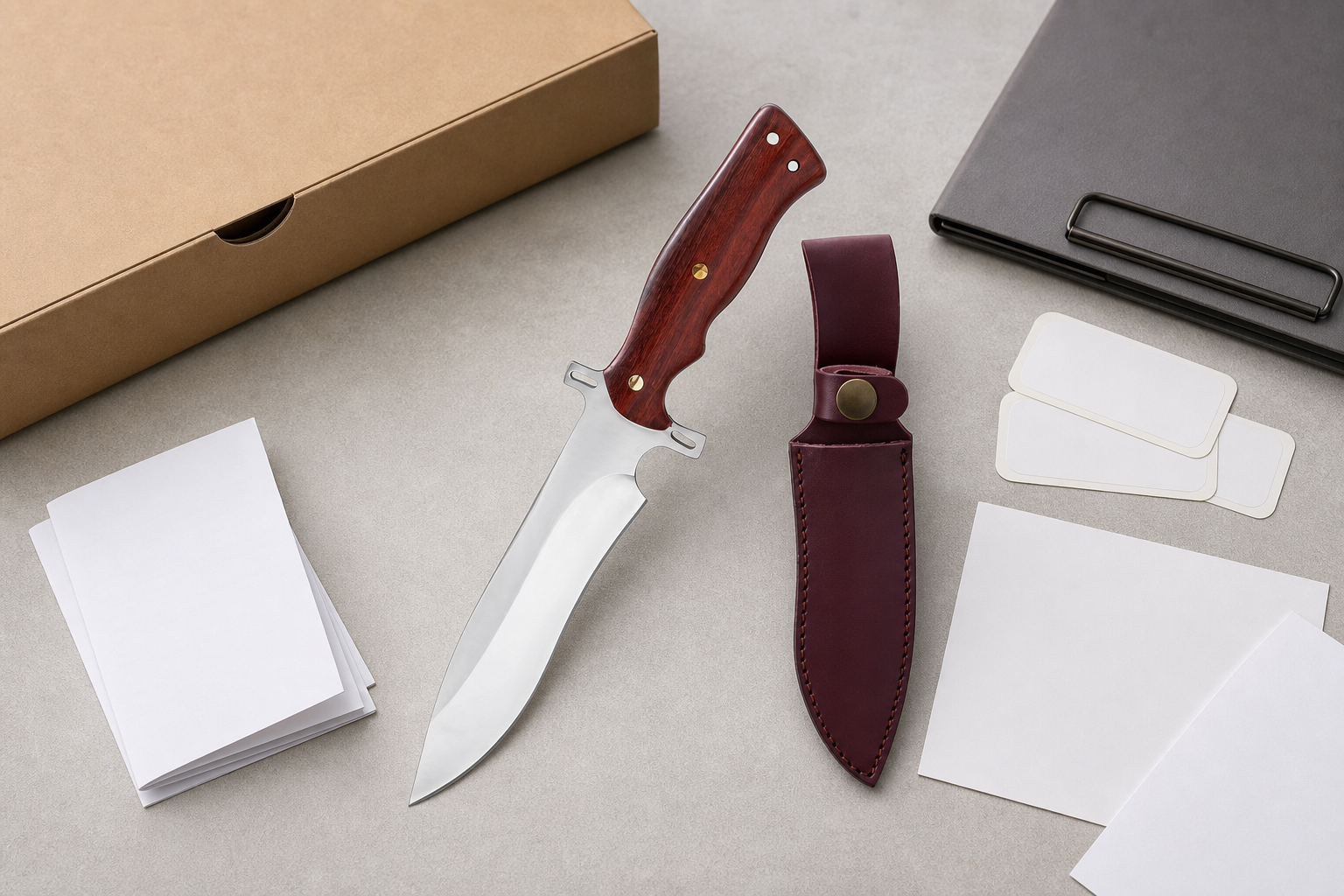
Warning copy should not be an afterthought. If the buyer waits until packaging artwork is final, the warning may be squeezed into a poor location or weakened to fit the design.
The CPSC labeling requirements overview reminds businesses that labels can depend on product type, design, components, and intended audience. For neck knives, the design includes the blade, sheath, cord, package, and instructions.
A practical instruction set should cover:
- Keep the blade sheathed when not in use
- Inspect sheath retention before wearing or packing
- Keep away from children
- Follow local laws and retailer rules
- Do not carry into restricted locations
- Remove before sleeping, sports, machinery work, or situations where a neck cord can snag
- Clean and dry after use
- Stop using damaged cord or cracked sheath
The buyer should also control translation. If the product is sold in multiple markets, warning copy should be reviewed in each language. Machine translation alone can create weak or confusing safety language.
What Travel and Channel Restrictions Should Buyers Avoid Misstating?
Do not imply universal carry.
Buyers should avoid saying a neck knife can be carried anywhere, because travel, workplace, school, event, platform, and local knife rules can vary.
I Keep Travel Copy Conservative
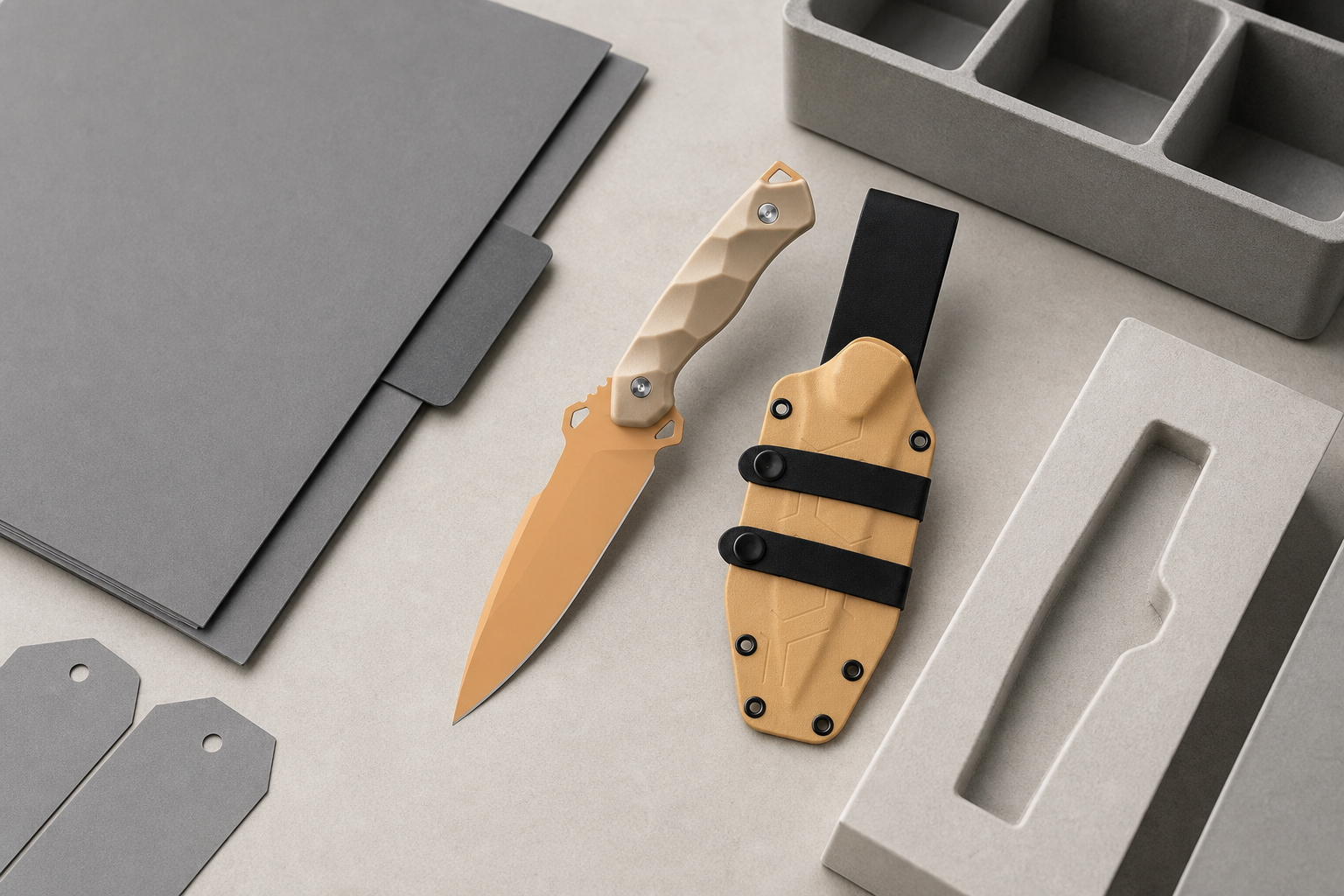
Travel copy is a common risk area. Buyers should not write "airport friendly" or "carry anywhere" for a knife product. The TSA What Can I Bring page states that knives are not allowed in carry-on bags except plastic or round-bladed butter knives, and that sharp objects in checked bags should be sheathed or securely wrapped to protect handlers and inspectors.
That official rule is not the same as a complete legal review. It does not replace state, local, event, school, workplace, airline, marketplace, or international rules. Buyers should write conservative copy and ask legal counsel or channel partners to review final claims.
Safe channel notes may include:
- Check local laws before purchase or carry
- Not for carry-on luggage
- Keep sheathed and secured during transport
- Follow workplace and event rules
- Confirm retailer policy before listing
- Do not market as hidden, tactical, or defensive
- Do not sell into restricted age groups or restricted regions without review
The buyer should also maintain a channel matrix. A product that is acceptable in one retail channel may be rejected by another because of wording, imagery, blade length, or carry style.
How Should QC Test a Neck Knife Before Shipment?
QC must include the carry system.
QC should test blade dimensions, edge finish, handle grip, sheath retention, cord attachment, package fit, warnings, corrosion exposure, and lot documentation.
I Inspect the Whole Kit, Not Only the Blade
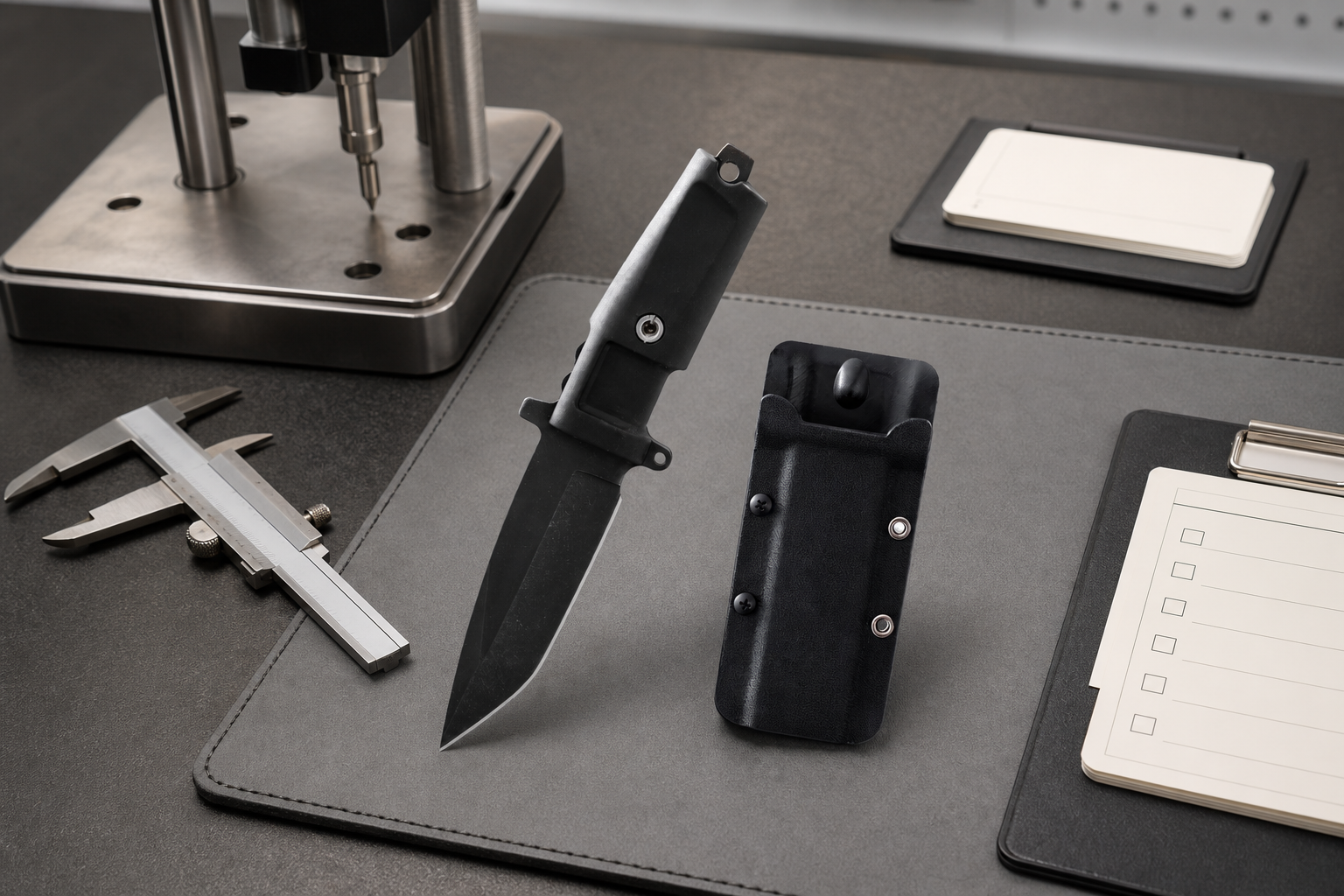
Many buyers focus on blade sharpness and forget the sheath and cord. That is a mistake. A neck knife is a kit. The kit fails if the blade is sharp but the sheath releases too easily, if the cord breaks, if the package bends the tip, or if the warning card is missing.
The CPSC Handbook for Manufacturing Safer Consumer Products supports safety planning, design review, production control, and documentation. Buyers can turn that mindset into a neck knife inspection plan.
QC checkpoints should include:
- Incoming material checks
- Blade dimension check
- Edge burr inspection
- Tip and edge coverage in sheath
- Sheath retention test
- Cord attachment pull check
- Cord release check if a breakaway connector is used
- Handle texture and finish inspection
- Corrosion or sweat exposure review when relevant
- Packaging movement test
- Warning card presence
- Lot traceability record
The NIST metrological traceability page is useful for buyers who require calibration records and documented measurement chains. A simple project may not need a complex traceability file, but the buyer should still define which gauges are used and how records are kept.
How Should Marketing Describe a Neck Knife Safely?
Claims should stay task-based.
Marketing should describe compact utility, sheath protection, lawful outdoor or craft use, and product care without implying concealment, intimidation, self-defense, or unrestricted carry.
I Remove Words That Create the Wrong Expectation
The product may be compact, lightweight, and easy to access during lawful utility tasks. That does not mean the marketing should say "concealed," "defensive," "last resort," or "carry everywhere." Those words create risk and may make retailers uncomfortable.
The FTC advertising and marketing basics page supports truthful, non-deceptive, evidence-based claims. If a listing says the sheath has strong retention, the buyer should have a retention test. If a listing says the steel is corrosion resistant, the buyer should have material data or test logic. If a listing says the product is comfortable, the buyer should have sample review notes.
Safer claim directions:
- Compact sheathed utility knife for adult outdoor use
- Molded sheath designed for secure retention
- Lightweight kit format for lawful field tasks
- Corrosion-resistant option available by steel choice
- Replacement cord or clip options available by project
- Clear warning and care card included
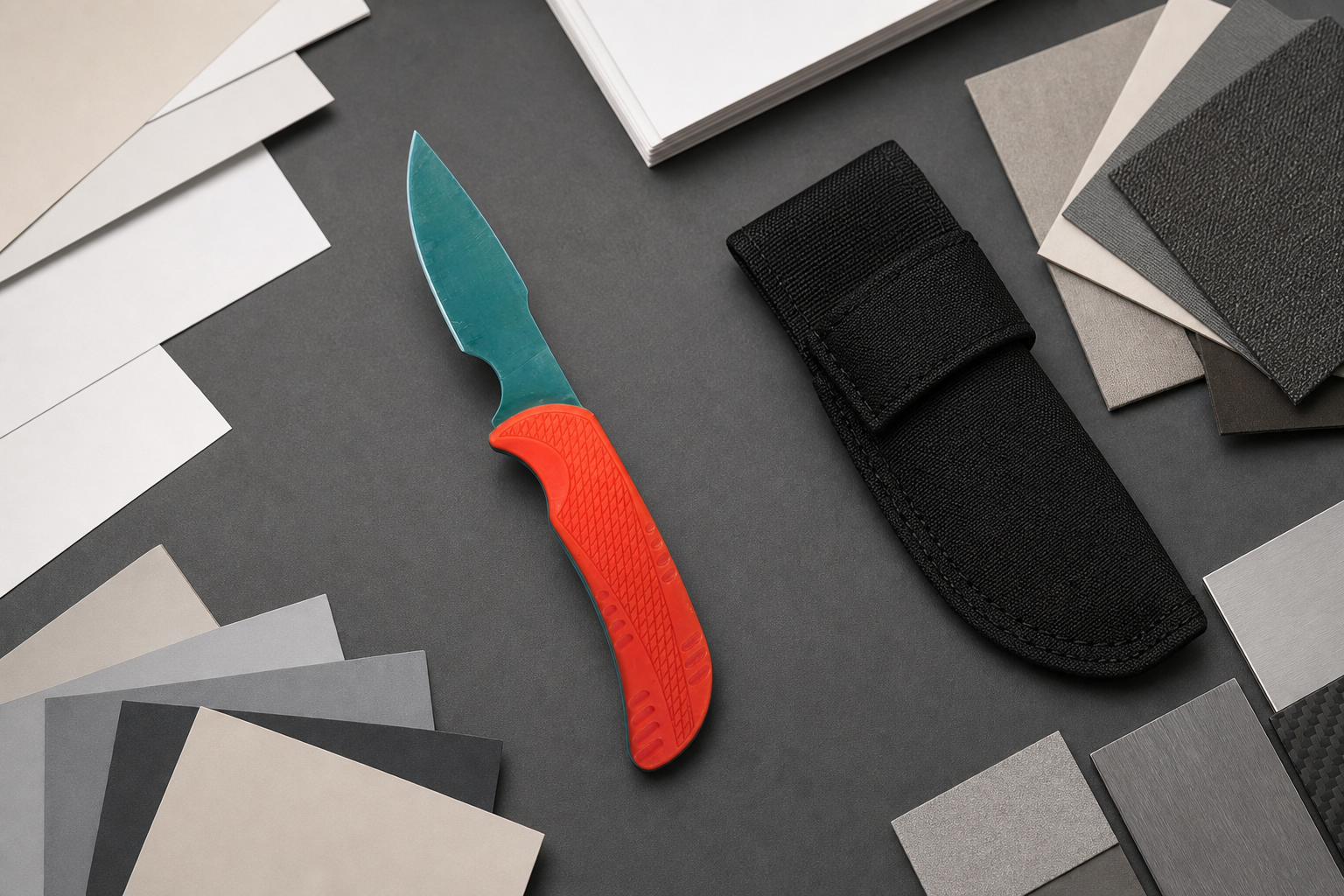
The buyer should keep marketing images neutral. Product photography should show the knife sheathed, on a workbench, in a kit, or beside outdoor utility gear. It should not show threatening poses or hidden carry.
What Should Go Into a Neck Knife RFQ?
The RFQ should remove guesswork.
A strong RFQ should combine blade specification, sheath retention, cord design, warnings, packaging, claim limits, legal review notes, and QC evidence.
I Ask the Supplier for Evidence, Not Only Photos
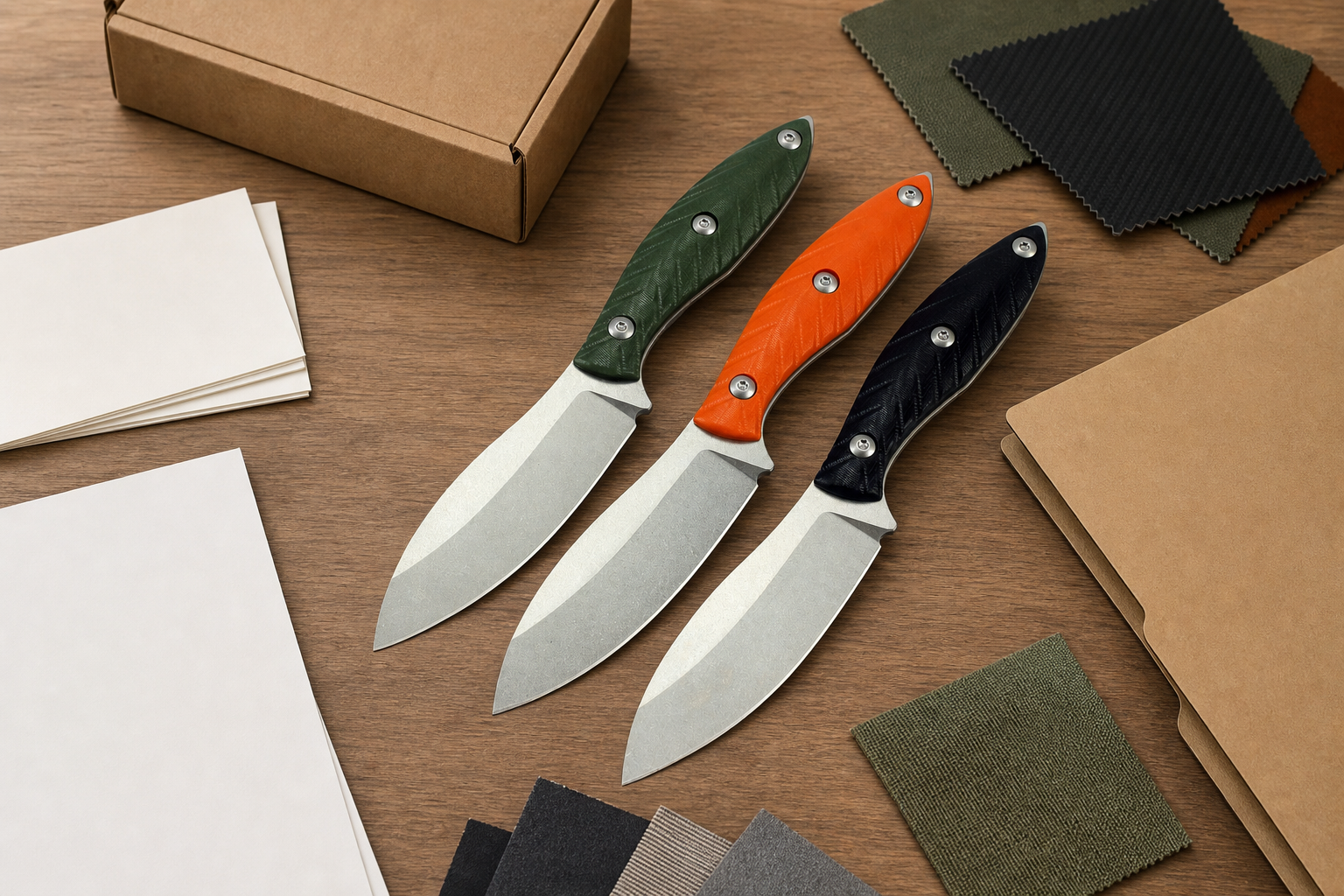
Photos are useful, but they do not prove safety. A buyer should ask the supplier for sample measurements, sheath retention records, cord specifications, material information, packaging fit photos, warning artwork, and inspection reports.
The RFQ should include:
- Adult-use market and restricted-channel notes
- Intended lawful utility task
- Blade dimensions and tolerance
- Steel, hardness, grind, and finish
- Handle material and grip texture
- Sheath material and retention target
- Cord type, length, attachment, and release method
- Packaging and warning copy
- Marking and traceability needs
- Test method for sheath retention
- Final inspection AQL or agreed sample plan
- Claim language that must be avoided
I also like to ask the supplier what they cannot guarantee. That question often reveals production limits early. If the supplier cannot hold the retention range, cannot provide consistent cord quality, or cannot package the edge safely, the buyer should revise the project before deposit.
Planning a private-label knife line for this market?
Use this article as a planning reference, then confirm local requirements with your importer or compliance advisor before OEM/ODM production.
Conclusion
Buyers should source neck knives as controlled adult utility products, with sheath retention, cord safety, warnings, travel limits, marketing claims, and QC documented before production.
Private-label Planning Checklist
Before starting production, prepare the market and product details your importer or compliance advisor needs to review.
| RFQ Field | What to Prepare |
|---|---|
| Target market | Country, state, region, or sales channel |
| Product category | Folding knife / fixed blade / multi-tool / outdoor tool |
| Intended use | EDC / camping / kitchen / hunting / rescue / promotional |
| Buyer requirements | Testing, labeling, documentation, or packaging rules |
| Blade and lock details | Blade length, opening method, lock type, edge style |
| Packaging text | Warnings, claims, care notes, language requirements |
| Documents | Drawing, sample photo, logo file, packaging artwork |
| Review owner | Importer, legal advisor, testing lab, or internal compliance team |