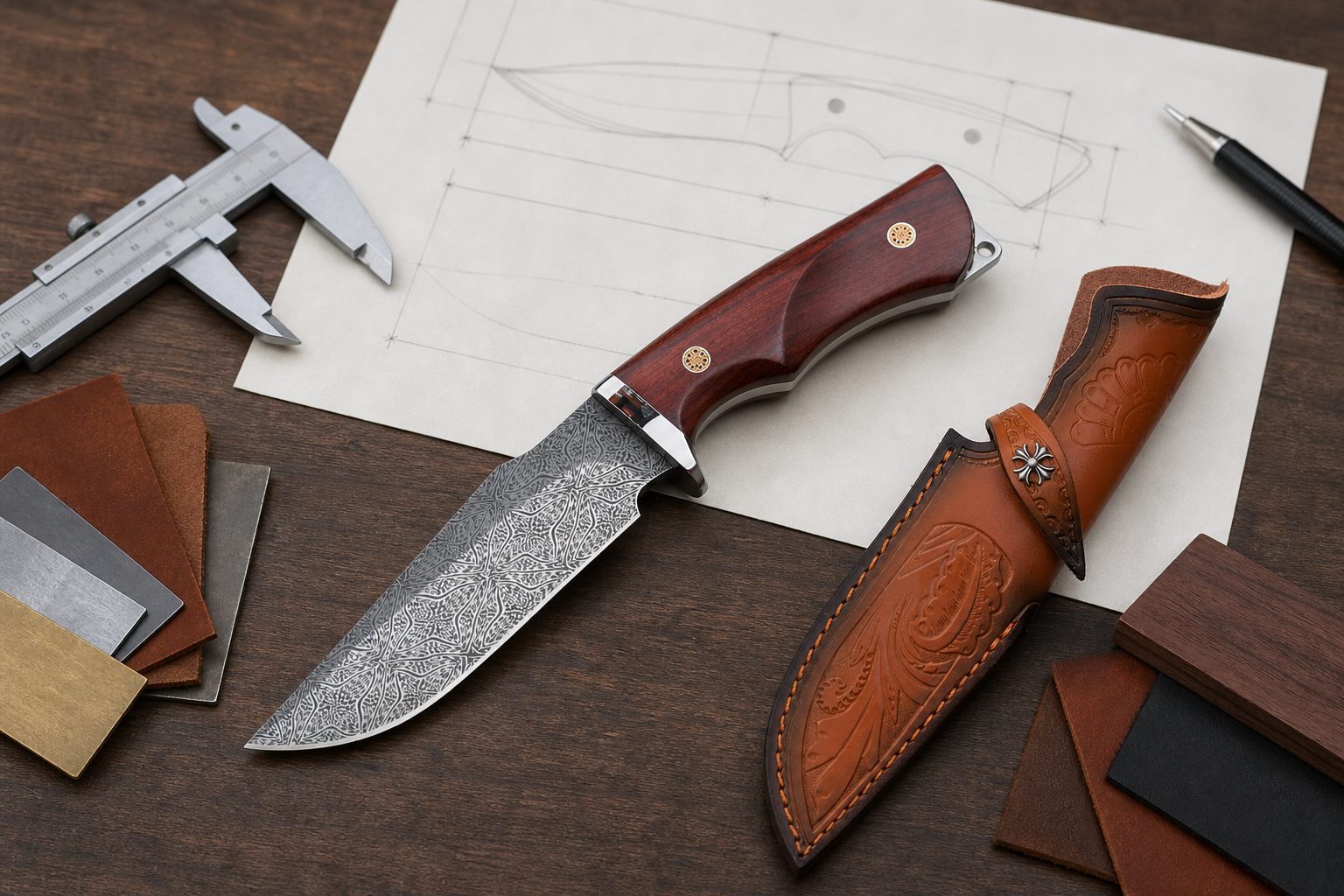
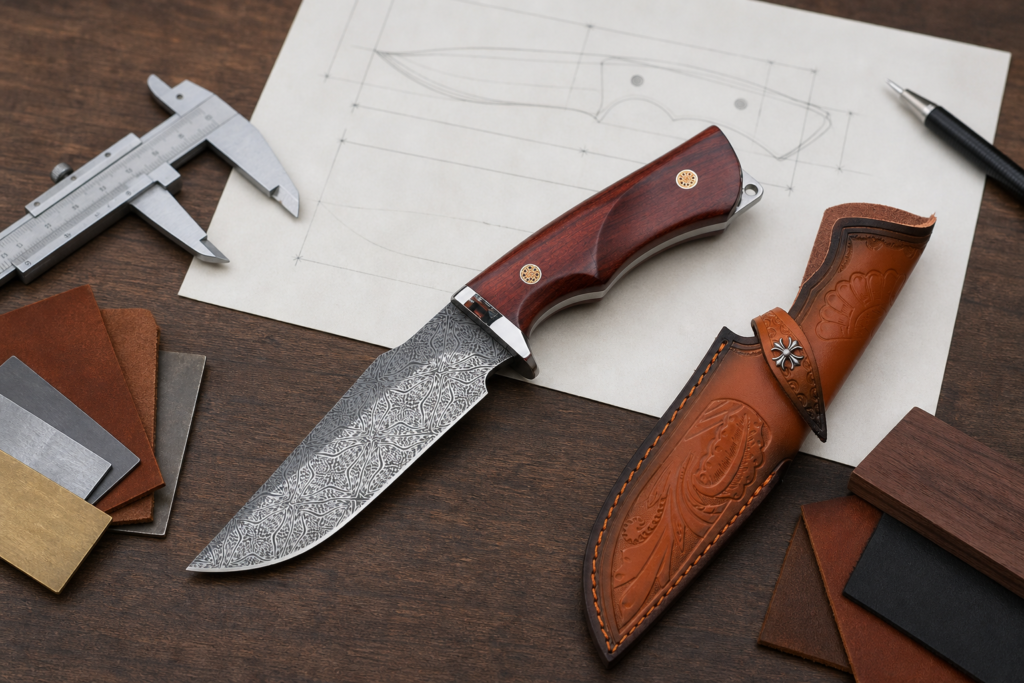
A curved blade can look special in a product photo. In sourcing, the curve must earn its place through task fit, manufacturability, and QC.
Buyers should specify curved blade knives by defining the cutting task, curve radius, belly, tip position, edge length, grind, steel, heat treatment, handle angle, sheath or packaging fit, safety copy, and inspection limits before approving OEM/ODM samples.
Quick buyer brief:
- Answer: A curved blade is special when the curve improves the intended cutting motion, contact path, pull cut, slicing control, or package identity without creating cleaning, sharpening, storage, or QC problems.
- Buyer context: This guide is for kitchen knife brands, outdoor knife brands, utility knife buyers, agricultural tool buyers, importers, distributors, private label teams, and OEM/ODM sourcing managers.
- Key checks: Intended task, curve type, blade belly, edge length, tip position, grind, edge angle, steel, hardness, handle alignment, sheath clearance, package tray, sharpness test, edge retention, warning copy, and final inspection records.
Have a knife or multi-tool project in mind?
Send your sketch, CAD file, sample photo, or product idea. Vast State can review manufacturability, suggest materials, estimate MOQ, and prepare a quote for your OEM/ODM project.
This article treats curved blades as lawful kitchen, outdoor, agricultural, craft, or utility tools. It does not cover combat, self-defense, or weapon positioning. The goal is to help buyers turn "curved blade" into a controlled specification, not a vague style request.
The practical point is simple: the curve should support the job. If it only makes the product look different, it may create unnecessary cost, sharpening complexity, packaging problems, and inconsistent production.
Why Does Blade Curve Matter in Product Design?
Blade curve changes how the edge meets the material.
Blade curve matters because it affects cutting contact, slicing motion, pull cuts, rocking cuts, tip control, edge length, sharpening access, storage, and customer expectations.
I Start With Motion, Not Style
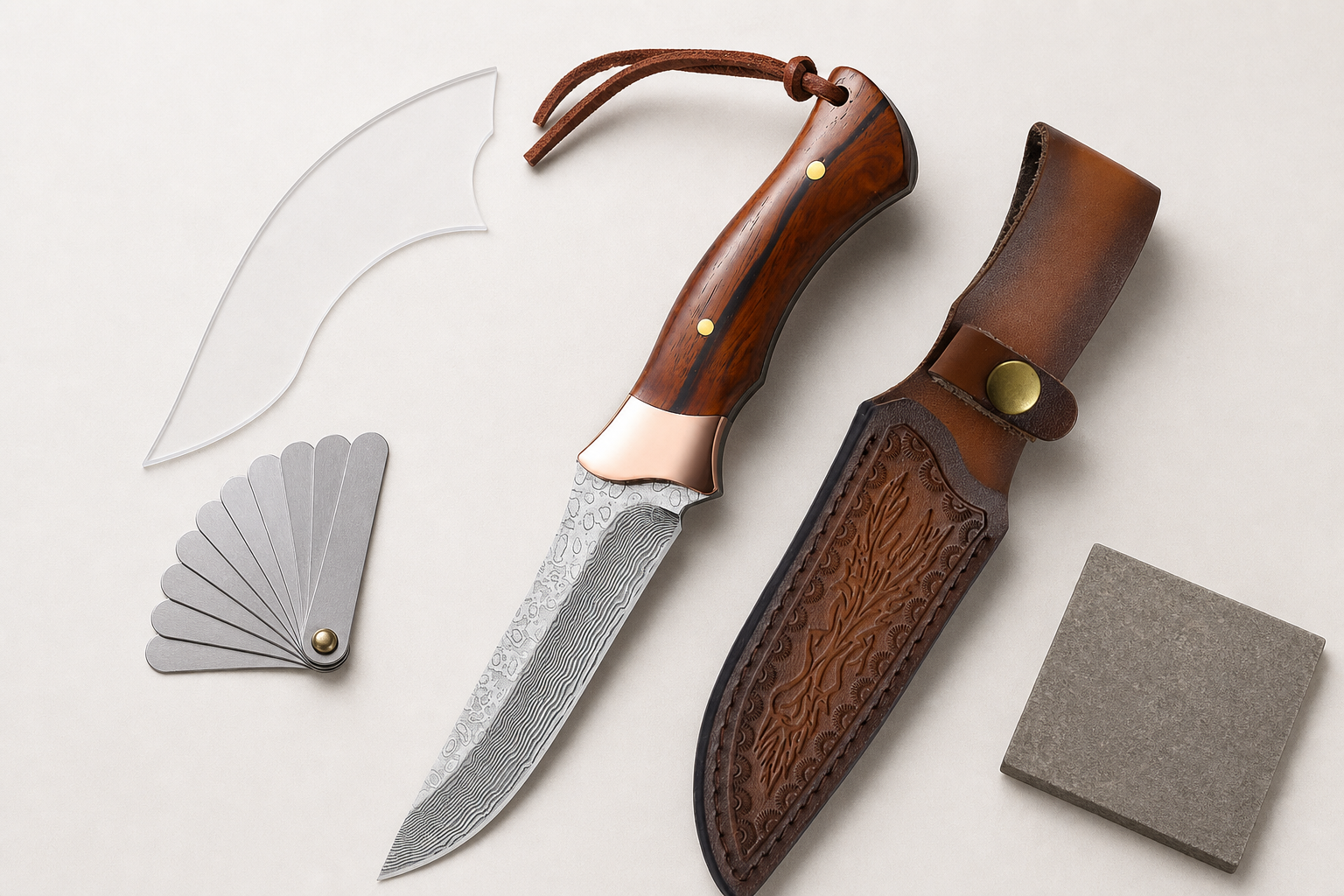
A blade curve should be tied to motion. Some curved edges support rocking cuts on a board. Some support draw cuts or pull cuts. Some create more edge contact during slicing. Some help a tool reach around a curved surface. But not every curve is helpful for every product.
For a kitchen knife, the curve may help board contact and food-prep motion. For an outdoor utility product, the curve may add belly for slicing. For a pruning or harvesting tool, a curved profile may support pull cutting around plant material. For a retail gift knife, the curve may look attractive, but the buyer still needs a practical reason.
The CCOHS sharp blades guidance supports the general principle of using the right tool for the job, inspecting tools, and storing sharp tools safely. For buyers, that means a curved blade should match the intended job and storage method.
The RFQ should answer:
- What material will the customer cut?
- Is the motion slicing, rocking, pulling, trimming, or utility cutting?
- Does the curve improve control?
- Does the curve make sharpening harder?
- Does the curve create packaging or sheath challenges?
- Does the curve need special warning copy?
Which Curved Blade Geometry Fields Should Buyers Define?
The curve must be measurable.
Buyers should define curve radius, blade belly, edge length, tip height, spine profile, blade width, thickness, grind height, edge angle, and tolerance limits.
I Do Not Let the Drawing Say Only "Curved"
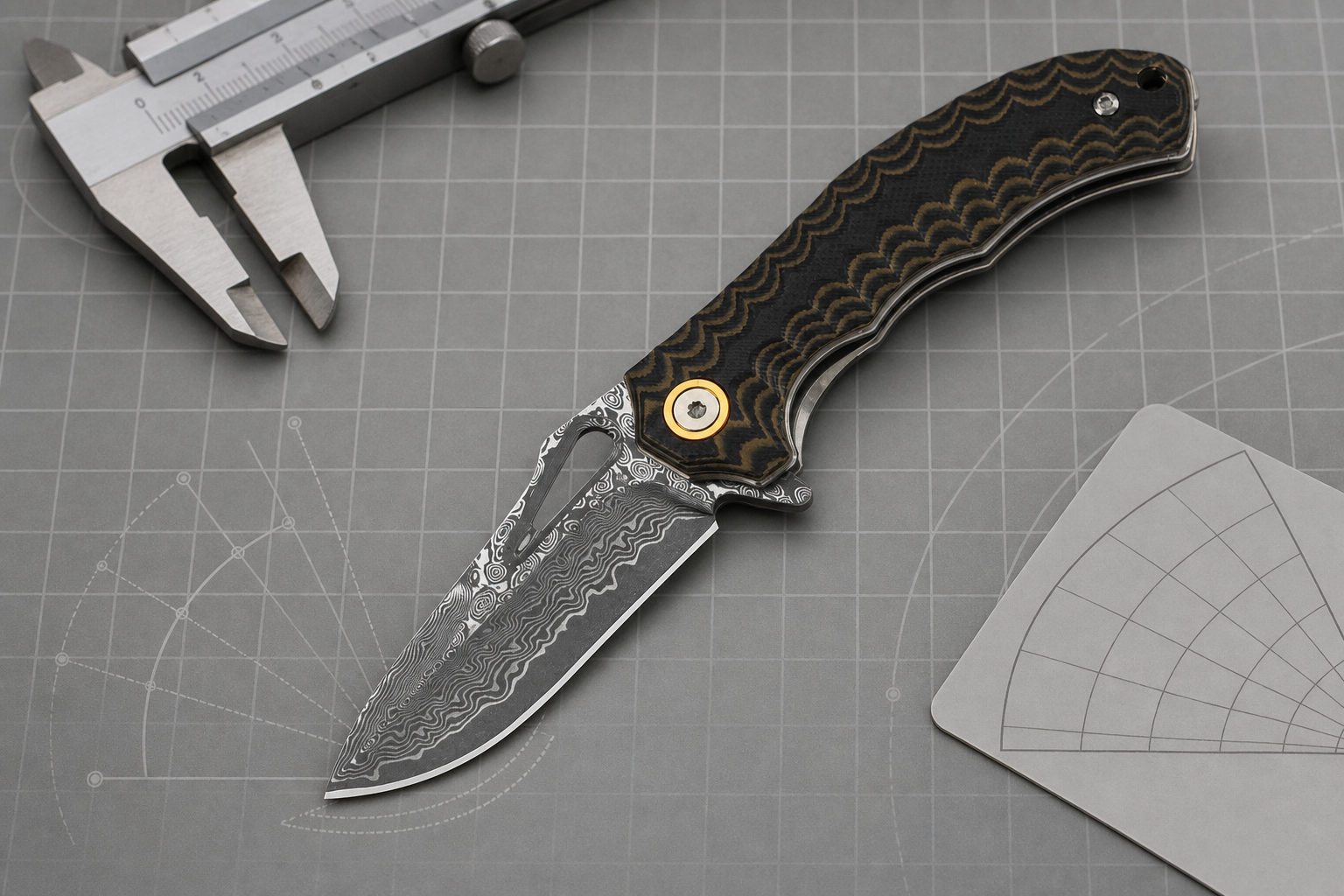
"Curved blade" is not a complete drawing note. A supplier needs measurable geometry. If the curve is too shallow, the product may not perform as intended. If it is too deep, it may become hard to sharpen, hard to package, or awkward to use.
The NIST dimensional metrology page supports the manufacturing idea that dimensional measurement helps part control and quality improvement. For curved blades, measurement is especially important because small profile changes can affect the cutting path, sheath fit, and visual consistency.
Important fields include:
- Overall blade length
- Effective edge length
- Curve radius or template profile
- Belly height
- Tip position
- Spine curve
- Blade thickness
- Width at key stations
- Grind line height
- Edge angle
- Allowed profile tolerance
Buyers should request a profile overlay or inspection template for production. A curved edge is easy to make inconsistent if the factory only follows a photo.
How Does Curve Affect Cutting Performance?
Performance depends on the task and test method.
Curve can improve cutting performance when it increases useful edge contact, supports the intended cutting motion, and works with the selected steel, grind, edge angle, and handle position.
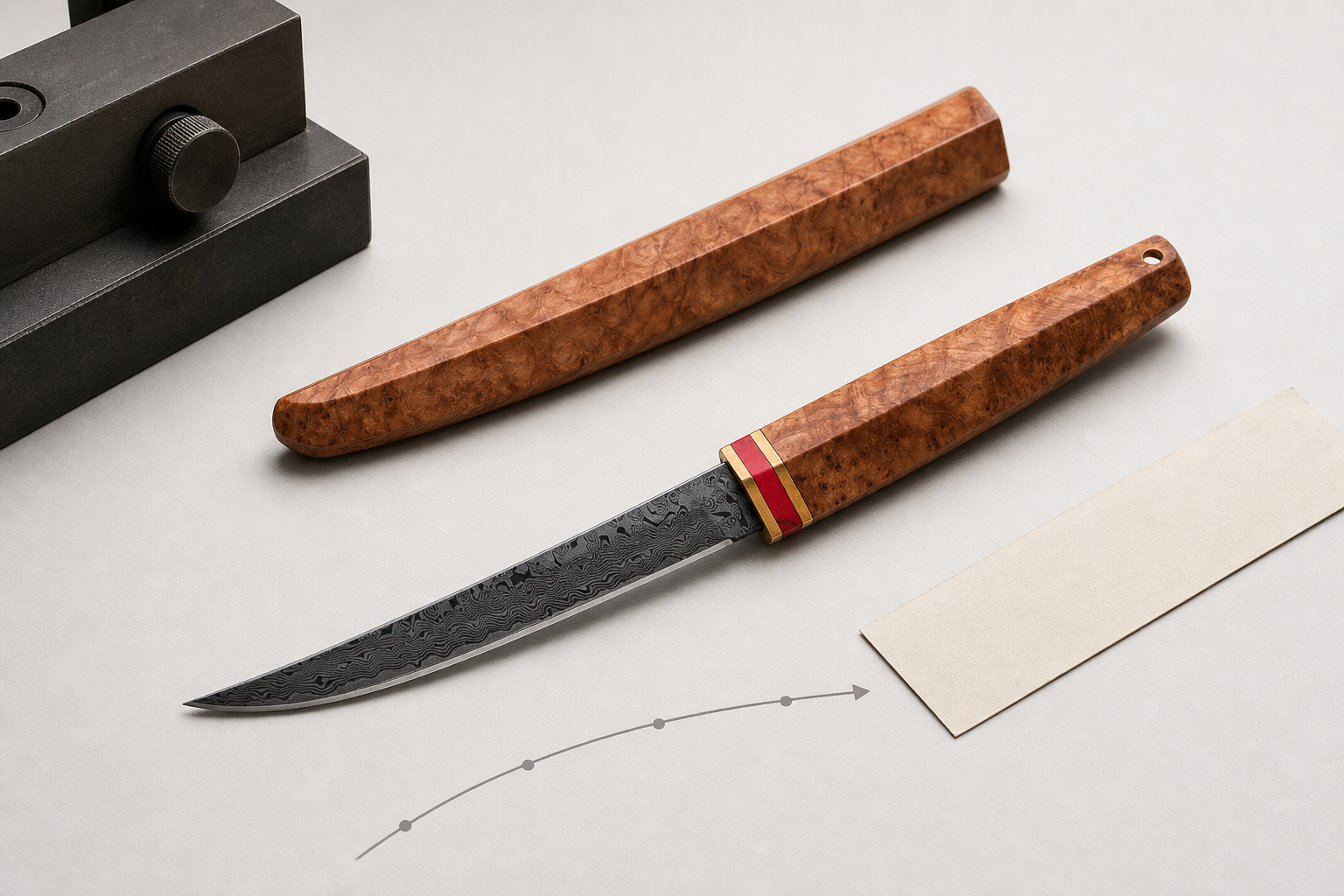
I Test the Curve Against the Product Promise
A curved blade may feel better for one task and worse for another. That is why buyers should avoid broad claims. The product file should define the task and then test whether the curve helps.
The ISO 8442-5:2004 page shows that sharpness and edge retention for professional and domestic food-preparation knives can be evaluated through a defined test framework. Even if a buyer uses a different internal method, the principle is the same: cutting performance should be tested under controlled conditions.
For curved blades, the buyer may need both performance and usability review:
- Initial sharpness
- Edge retention
- Cutting path stability
- Tip control
- Food release or material release
- Sharpening access
- Handle comfort during the intended motion
- Customer instruction clarity
The curve should not be judged only by a single photo or a supplier's claim. It should be reviewed through samples, testing, and user-context thinking.
How Should Steel, Heat Treatment, and Grind Be Matched to the Curve?
The edge system must support the blade profile.
Steel, heat treatment, grind, edge angle, thickness behind the edge, and finish should be selected around the curve's cutting task and durability needs.
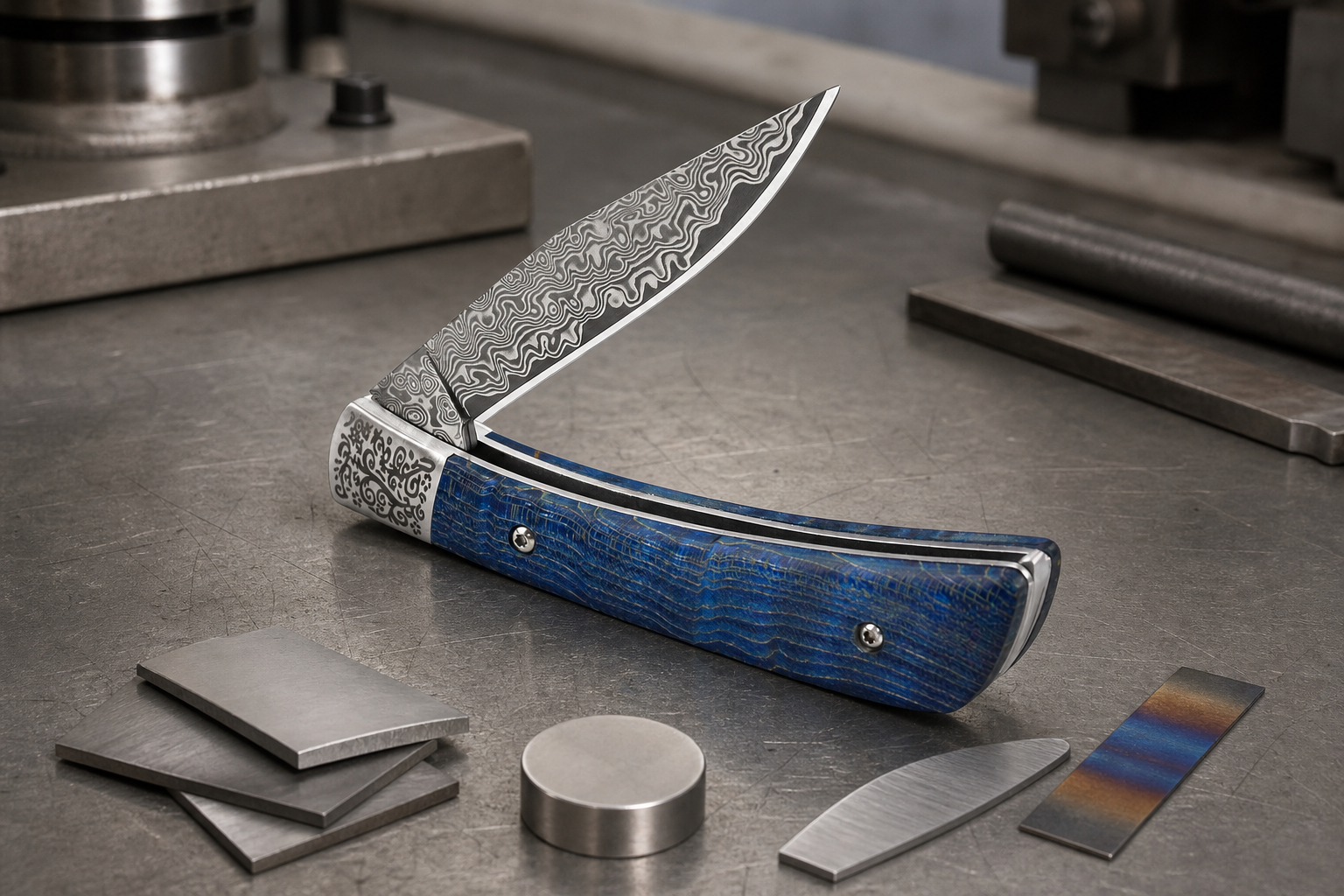
I Avoid Treating Curve and Steel as Separate Decisions
The blade profile and material system work together. A thin curved kitchen blade may need fine edge control and corrosion-resistant care. A heavier outdoor curved blade may need more robust geometry and a clearer maintenance plan. A utility curve may need easy resharpening more than delicate first-cut feel.
Buyers should ask the supplier for:
- Steel grade or acceptable alternatives
- Heat-treatment route
- Hardness range
- Grind type
- Edge angle target
- Finish or coating
- Burr removal method
- Sharpening method
- Retest plan after finishing
If the curve makes sharpening difficult, the buyer should know before production. A product that looks interesting but is hard for customers to maintain may create poor reviews and higher support costs.
The buyer should also control claims. A curved blade should not be described as "best for everything." It should be described for the task it was designed to do.
What Handle, Sheath, and Packaging Issues Does a Curved Blade Create?
The curve changes the whole product, not only the blade.
A curved blade can affect handle angle, hand clearance, sheath retention, edge protection, package tray shape, carton safety, product photos, and user instructions.
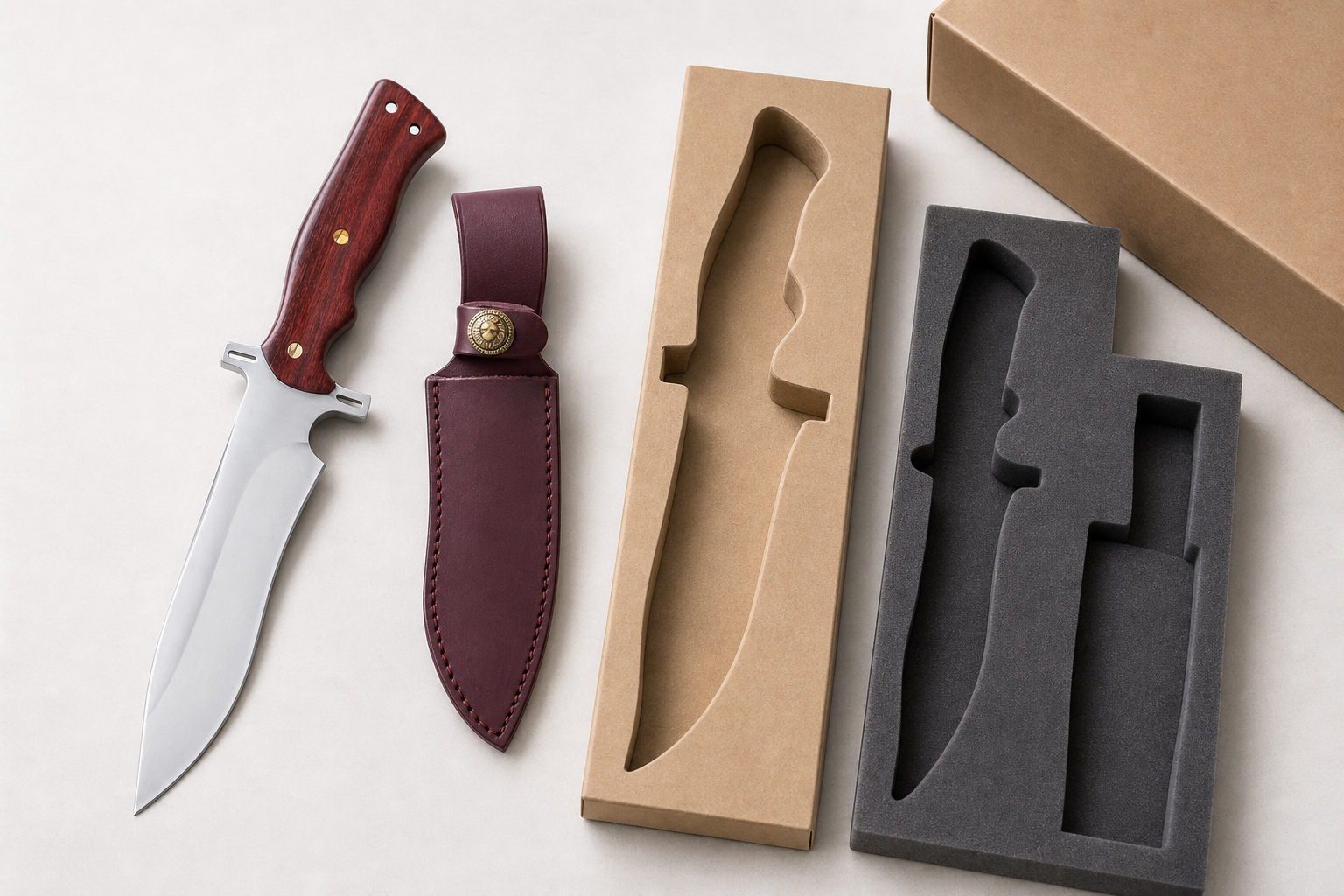
I Design the Storage Around the Edge Path
Curved blades often create storage challenges. A straight tray may not protect the edge. A sheath may pinch the belly. A cardboard sleeve may rub the tip. A package insert may expose the edge during unboxing. These problems can dull the edge or create safety complaints.
The CPSC labeling requirements overview reminds buyers that labels can depend on product type, design, components, and intended audience. For curved blades, warning and storage copy should match the actual package and use case.
Packaging review should include:
- Edge protection through shipping
- Tip protection
- Sheath insertion path
- Retention force
- Tray clearance
- Unboxing direction
- Warning card placement
- Care instruction placement
- Product image accuracy
The handle also matters. The curve may require a different wrist angle. The buyer should review handle contour, thickness, texture, and balance together with the blade profile.
What QC Checks Prevent Curved Blade Drift?
Curved profiles can drift during production.
QC should verify profile template fit, curve radius, blade length, edge length, tip position, grind symmetry, edge angle, sheath fit, packaging clearance, and final visual consistency.
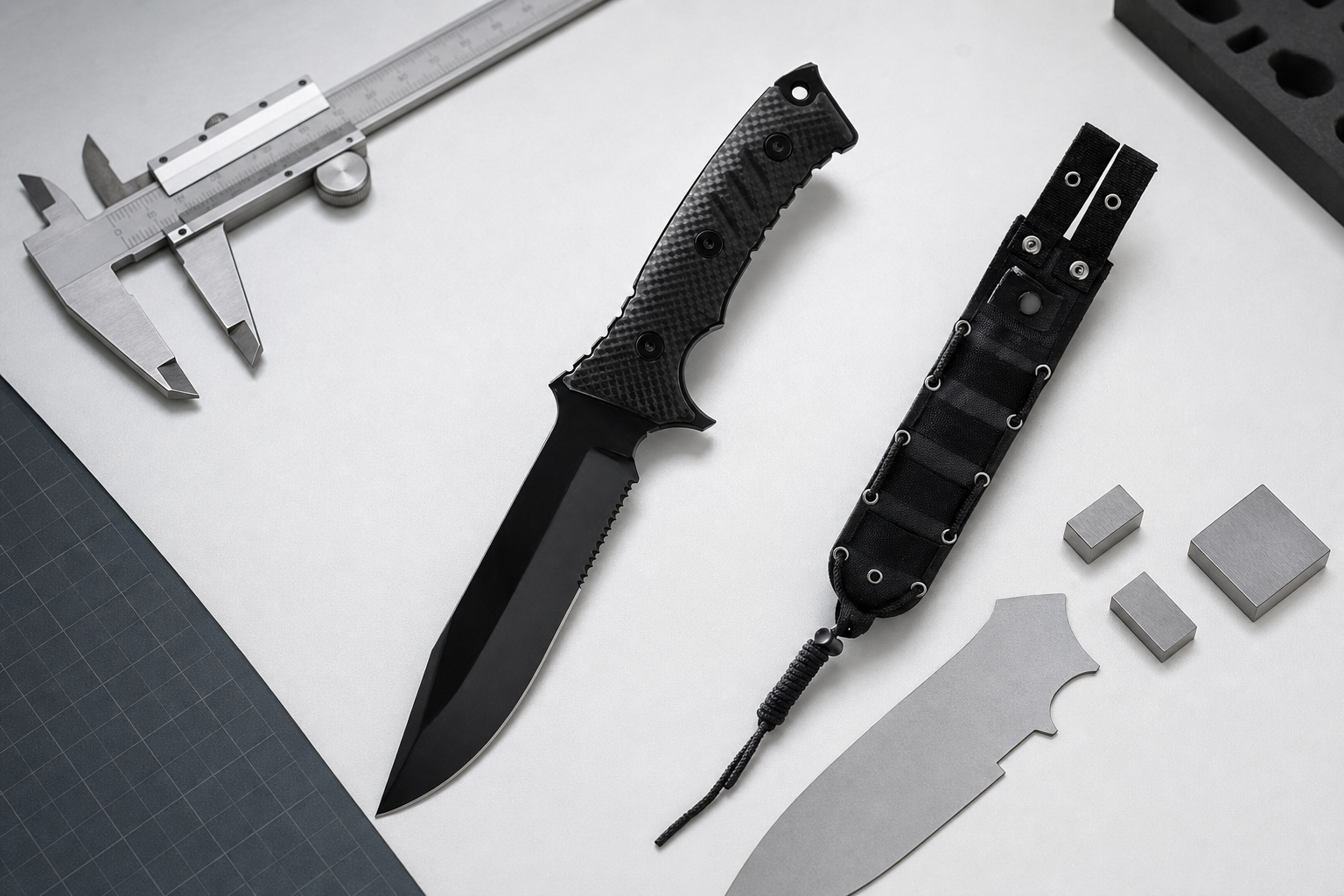
I Inspect the Profile as a Critical Dimension
Factories can produce curved blades inconsistently if the profile is not controlled. Grinding, polishing, heat treatment distortion, stamping variation, and hand finishing can all change the curve. A small change may affect cutting feel, visual identity, sheath fit, or packaging clearance.
The CPSC manufacturing best practices page supports supplier controls, documentation, spot checks, and production records. The CPSC Handbook for Manufacturing Safer Consumer Products also supports design review, documentation, production control, and product safety audits.
Curved blade QC fields should include:
- Profile template match
- Blade length and edge length
- Belly height
- Tip position
- Grind symmetry
- Edge angle
- Burr and finish inspection
- Handle alignment
- Sheath or tray fit
- Edge protection after packing
The buyer should keep approved profile samples and inspection photos for each production lot.
How Should Marketing Claims Describe a Curved Blade?
The claim should match the tested task.
Marketing claims should explain the intended cutting benefit, not imply that a curved blade is universally better than every other blade shape.
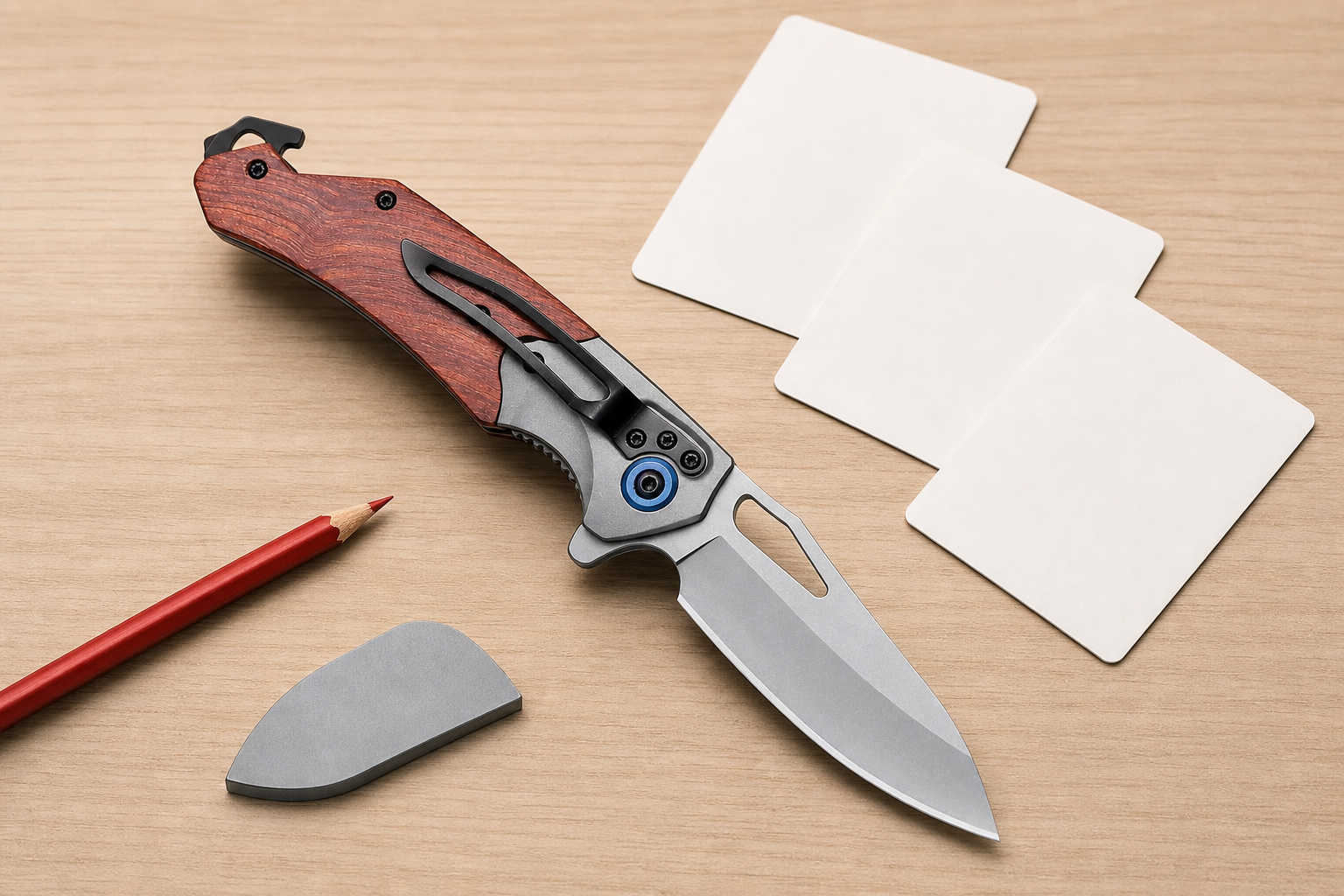
I Avoid "Better Than All Other Knives" Claims
Curved blade marketing should be specific. A curve can support slicing, pull cuts, board rocking, trimming, harvesting, or utility work depending on the design. It should not be described as automatically superior.
The FTC advertising and marketing basics page supports the principle that advertising should be truthful, not deceptive or unfair, and evidence-based. If the buyer claims the curve improves a task, the buyer should have testing, user review, or design rationale to support it.
Safer claim examples:
- Curved edge designed for controlled slicing
- Profile shaped for the intended cutting path
- Belly designed for smooth draw cuts
- Package includes edge protection for curved profile
- Tested against buyer-defined cutting target
Risky claim examples:
- Better than all straight blades
- Sharpest curved knife in the world
- Cuts anything
- Never needs sharpening
- Professional grade without evidence
- Tactical or self-defense positioning
Clearer claims reduce disputes and make the product easier for retailers to approve.
When Should Buyers Avoid a Curved Blade?
Not every product needs a curve.
Buyers should avoid a curved blade when the curve adds cost, makes sharpening difficult, weakens the tip, complicates packaging, creates unclear claims, or does not improve the intended task.
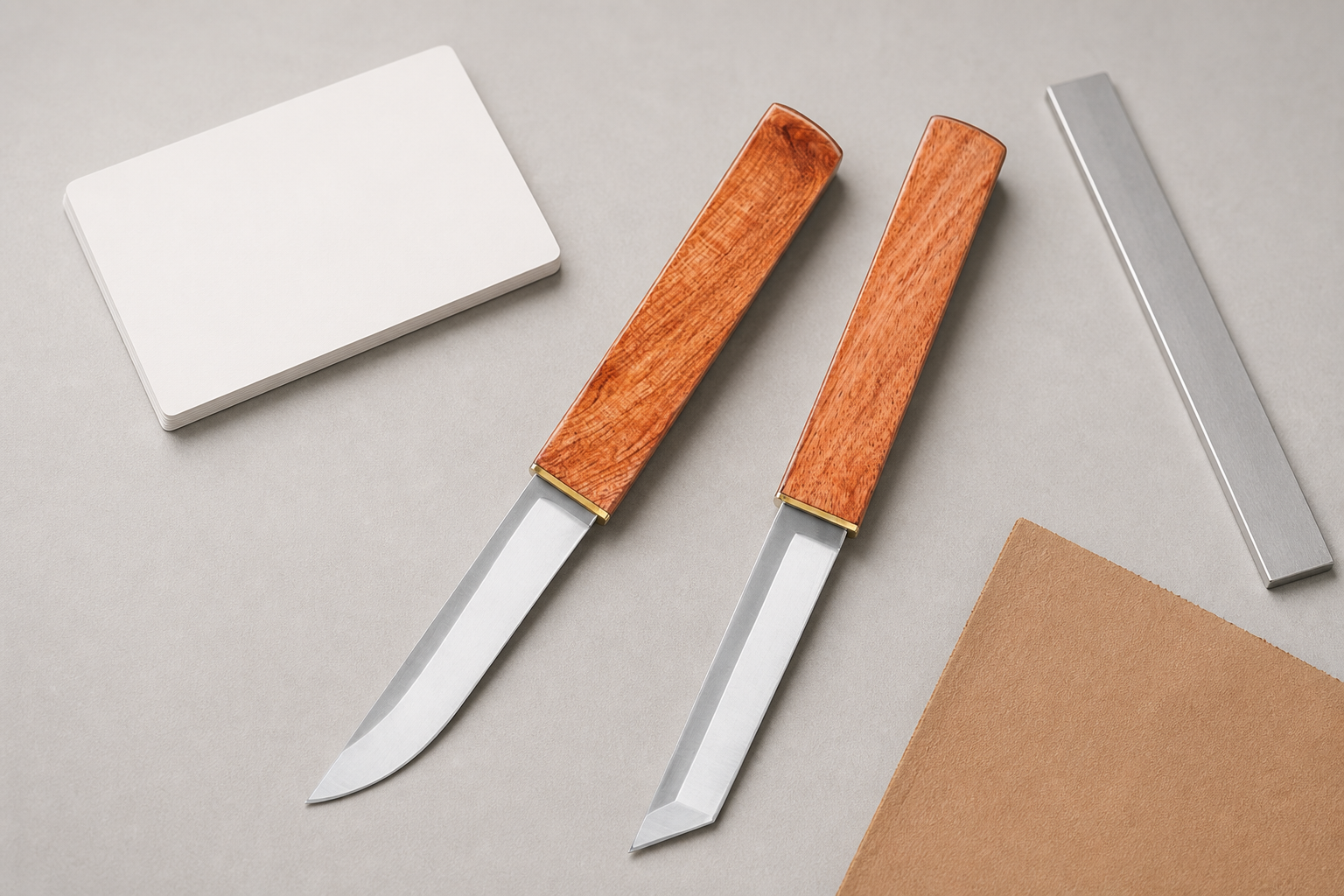
I Choose Simpler Geometry When It Serves the Customer Better
A curved blade can help the product stand out, but standing out is not enough. If the customer needs a simple kitchen utility knife, a straight or gently curved profile may be better. If the product needs compact packaging, a deep curve may create avoidable cost. If the customer will resharpen the edge often, a complex curve may frustrate them.
Avoid the curve when:
- The task does not benefit from it.
- The supplier cannot hold the profile tolerance.
- The sheath or tray does not protect the edge.
- The claim cannot be supported.
- The edge is hard to maintain.
- The product looks aggressive for the intended channel.
- The cost increase does not improve value.
Sometimes the best product decision is a smaller curve, a gentler belly, or a different blade profile entirely.
How Can Vast State Help Buyers Develop Curved Blade Specifications?
Vast State can turn a profile idea into a supplier-ready specification.
Vast State helps buyers define curved blade geometry, cutting task, material system, test method, handle angle, sheath or packaging fit, claim wording, and QC records before production.
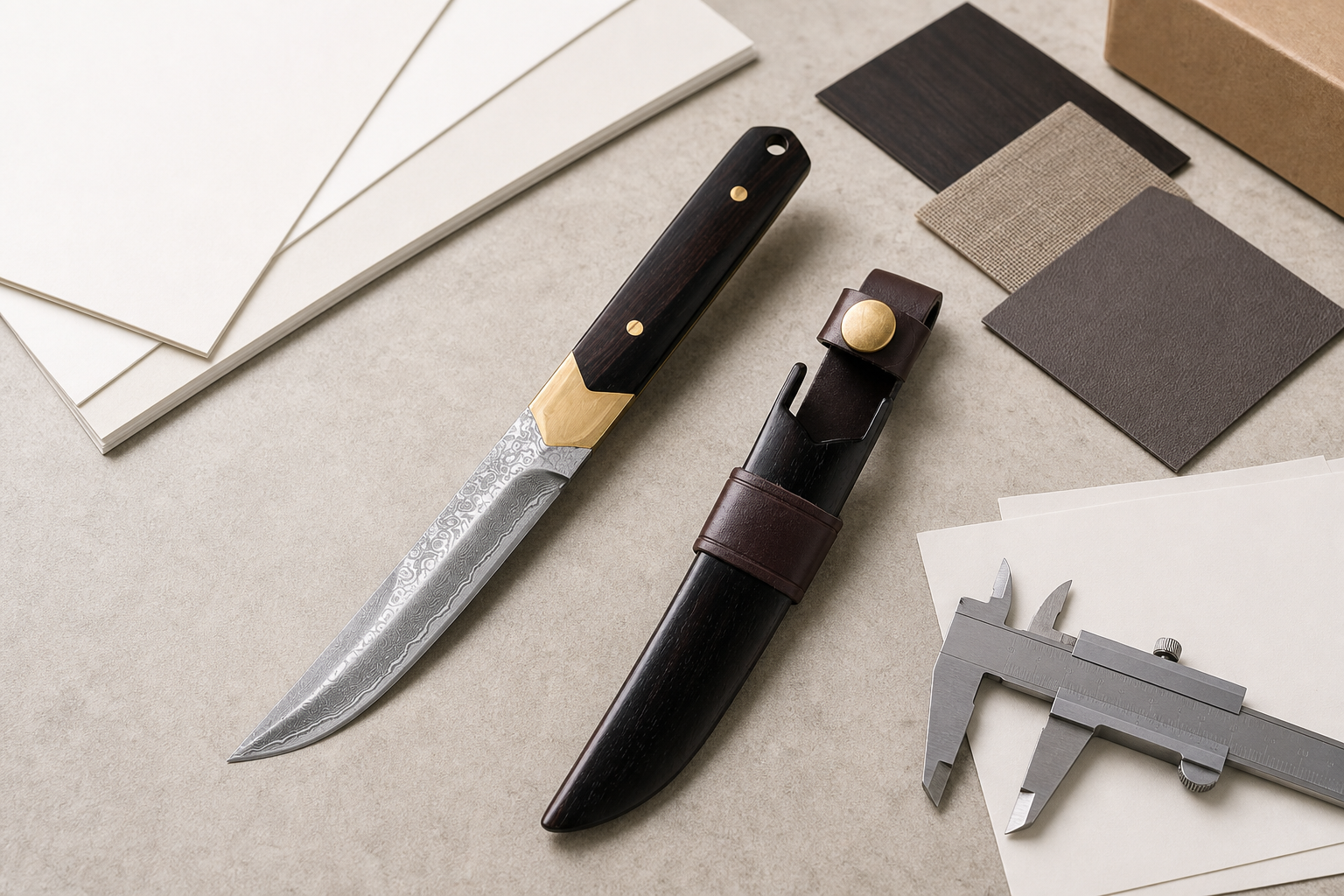
I Make the Curve Comparable Across Suppliers
Two suppliers can quote the same curved blade idea and mean very different profiles. Vast State can help buyers define the geometry, use case, materials, edge target, packaging, and inspection method so quotes are comparable.
We can support:
- Curved blade RFQ fields
- Profile drawing review
- Curve radius and belly definition
- Steel, grind, and edge target planning
- Sharpness and edge-retention test requests
- Handle, sheath, and package review
- Marketing claim review
- QC checklist and inspection photo plan
- Alternative profile planning
The goal is not just a special-looking blade. The goal is a product that cuts as intended, can be made consistently, and can be supported after launch.
Turn your idea into a quote-ready knife project.
Share your drawing, sample photo, target quantity, market, and packaging needs. Vast State will review manufacturability and prepare OEM/ODM options.
Conclusion
A curved blade is special only when the curve improves the task and stays controllable in sourcing, packaging, claims, and QC.
OEM/ODM RFQ Checklist
Prepare these details to help Vast State review your project and provide a more accurate quotation.
| RFQ Field | What to Prepare |
|---|---|
| Project type | OEM from drawing / ODM private label / wholesale catalog |
| Product category | Folding knife / fixed blade / multi-tool / outdoor tool |
| Design status | Idea / sketch / 2D drawing / 3D CAD / physical sample |
| Target price | Ex-factory target price or retail price range |
| MOQ expectation | 500 / 1,000 / 3,000 / 5,000+ pcs |
| Logo method | Laser engraving / etching / printing / molded logo |
| Packaging | Standard packaging / custom retail box / Amazon-ready |
| Market | USA / EU / Japan / Korea / Middle East / other |
| Compliance needs | Buyer-specified testing / documentation / labeling |
| Timeline | Sample deadline / mass production deadline |