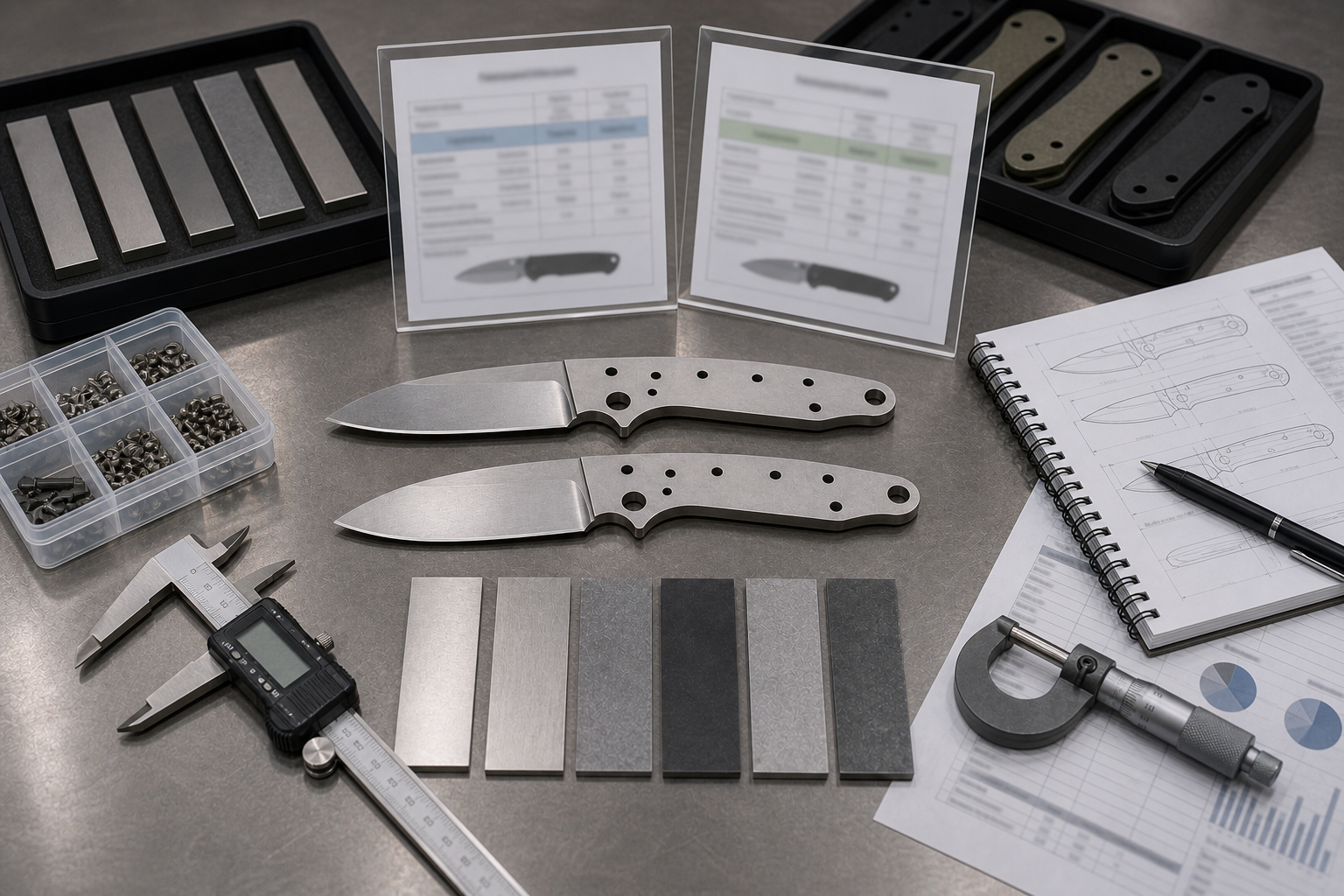
Two steels can look almost equal on a chart. But supply, heat treatment, corrosion story, and buyer trust can still change the right choice.
Knife sellers should choose Nitro-V when they want a fine-edge stainless steel with a custom-maker story and controlled heat treatment. They should choose 14C28N when they want a proven OEM-friendly stainless steel with strong corrosion positioning, stable supply, and clear production documentation.
Quick buyer brief:
- Answer: Nitro-V and 14C28N are close, but 14C28N is often easier for OEM scaling.
- Buyer context: This helps knife sellers, importers, dealers, and private label buyers plan product tiers.
- Key checks: Confirm steel source, heat treatment, hardness range, corrosion target, supply stability, edge geometry, and QC records.
Planning a knife project with this steel?
Send us your target market, MOQ, price range, and blade type. Vast State can help you choose the right steel, HRC range, finish, handle material, and QC requirements for OEM/ODM production.
When I compare Nitro-V and 14C28N for a customer, I do not look for a dramatic winner. These steels are too close for that. I ask which one is easier to buy, easier to explain, easier to control in heat treatment, and easier to repeat in production. For sellers, the better choice is often the steel that makes the whole product line easier to run.
What Is the Practical Difference Between Nitro-V and 14C28N?
Many steel comparisons make small differences sound huge. That can push buyers toward a steel story that does not really help sales or production.
Nitro-V is a stainless steel related to AEB-L and modified with nitrogen and vanadium. 14C28N is a martensitic stainless chromium steel optimized for edge sharpness, edge stability, and corrosion resistance.
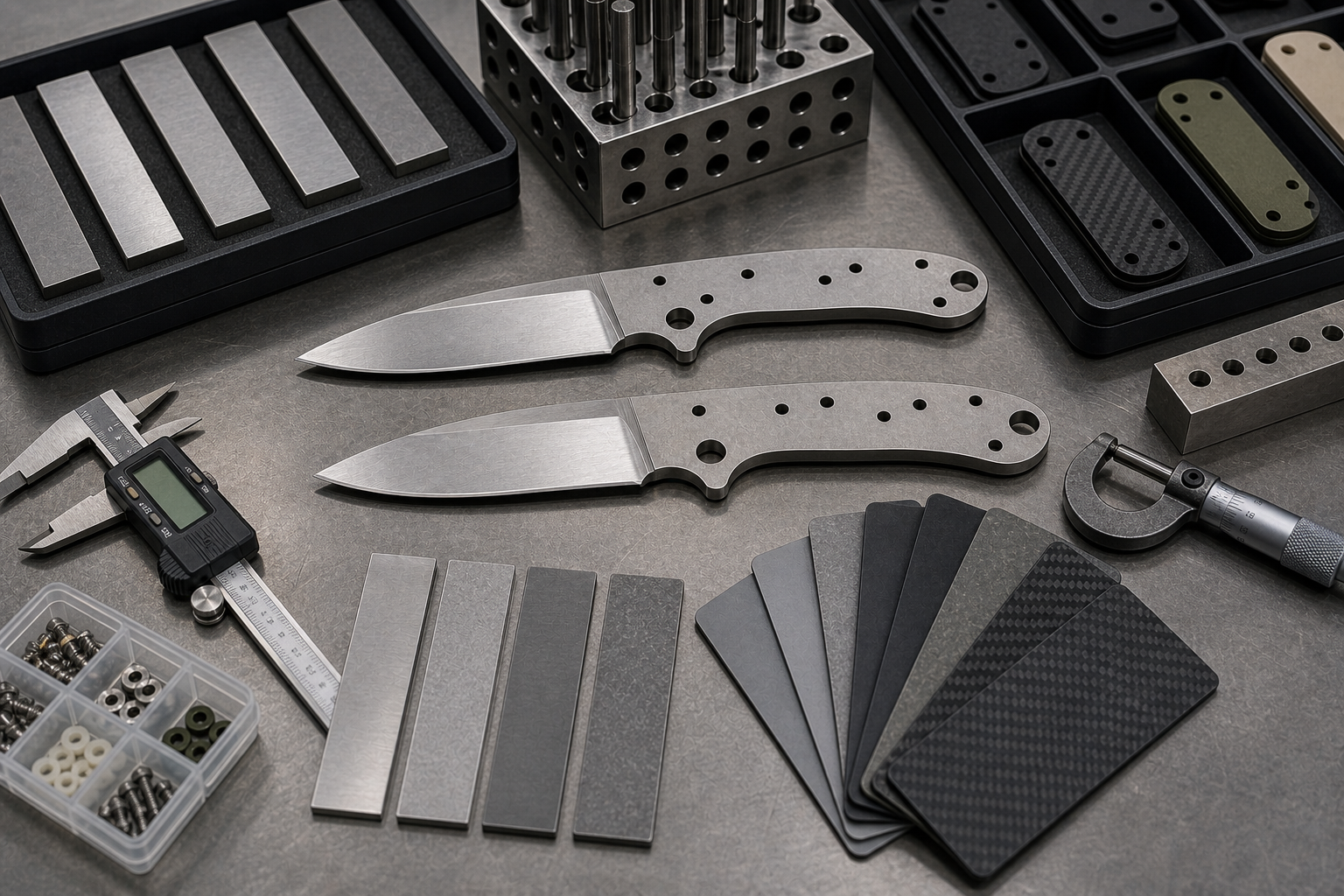
I Treat Them as Close Relatives, Not Opposites
Knife Steel Nerds explains in its article on Nitro-V properties and heat treatment that Nitro-V is a stainless steel sold by New Jersey Steel Baron, released in 2017, and designed with Buderus Steel as an AEB-L version modified with nitrogen and vanadium. The same article says an obvious comparison is 14C28N, which was designed as a 13C26 version modified for improved corrosion resistance.
That is why I do not present Nitro-V and 14C28N as distant choices. They are both fine-grained stainless steels for practical knives. Both can make useful EDC knives, kitchen knives, small outdoor knives, and light utility knives. Both can support thin edges better than many high-carbide steels when heat treated well.
The difference is more about product system. Nitro-V can carry a custom-maker or enthusiast story. 14C28N has a strong official steelmaker documentation base from Alleima, including corrosion, edge stability, and production notes. For an OEM or ODM knife buyer, that documentation and supply stability can matter as much as small performance differences.
| Factor | Nitro-V | 14C28N | Seller meaning |
|---|---|---|---|
| Steel family | AEB-L-related stainless with nitrogen and vanadium | Martensitic stainless chromium knife steel | Both are balanced stainless options |
| Main story | Fine edge, custom-maker interest, practical toughness | Proven corrosion and edge-stability positioning | Different marketing angles |
| Production angle | Needs source and heat-treatment confirmation | Strong datasheet and strip supply context | Important for OEM planning |
| Buyer risk | Overclaiming vanadium effect | Treating it as magic stainless | Both need honest copy |
Quote-ready RFQ Checklist for This Steel
To get an accurate OEM/ODM quote, prepare these details before contacting a knife manufacturer.
| RFQ Field | What to Prepare |
|---|---|
| Product type | Folding knife / fixed blade / multi-tool / kitchen knife |
| Target market | US / EU / outdoor retail / promotional / tactical / EDC |
| Steel option | 4116 / 14C28N / D2 / N690 / Nitro-V |
| Target HRC | Example: 55-57 HRC, 58-60 HRC |
| Blade finish | Satin / stonewash / black coating / bead blast |
| Handle material | G10 / micarta / aluminum / stainless steel / wood |
| Lock or structure | Liner lock / frame lock / slip joint / full tang |
| Estimated quantity | 500 / 1,000 / 3,000 / 5,000+ pcs |
| Packaging | White box / color box / blister / pouch / gift box |
| Required documents | Drawing / sample photo / logo file / packaging artwork |
When Does Nitro-V Make More Sense for Knife Sellers?
Nitro-V can sound more exciting than older steel names. But excitement only helps if the seller can control sourcing and process.
Nitro-V makes sense when a seller wants a fine-edge stainless steel for EDC, kitchen, or light outdoor knives, especially when the product story benefits from a newer enthusiast-friendly steel name.
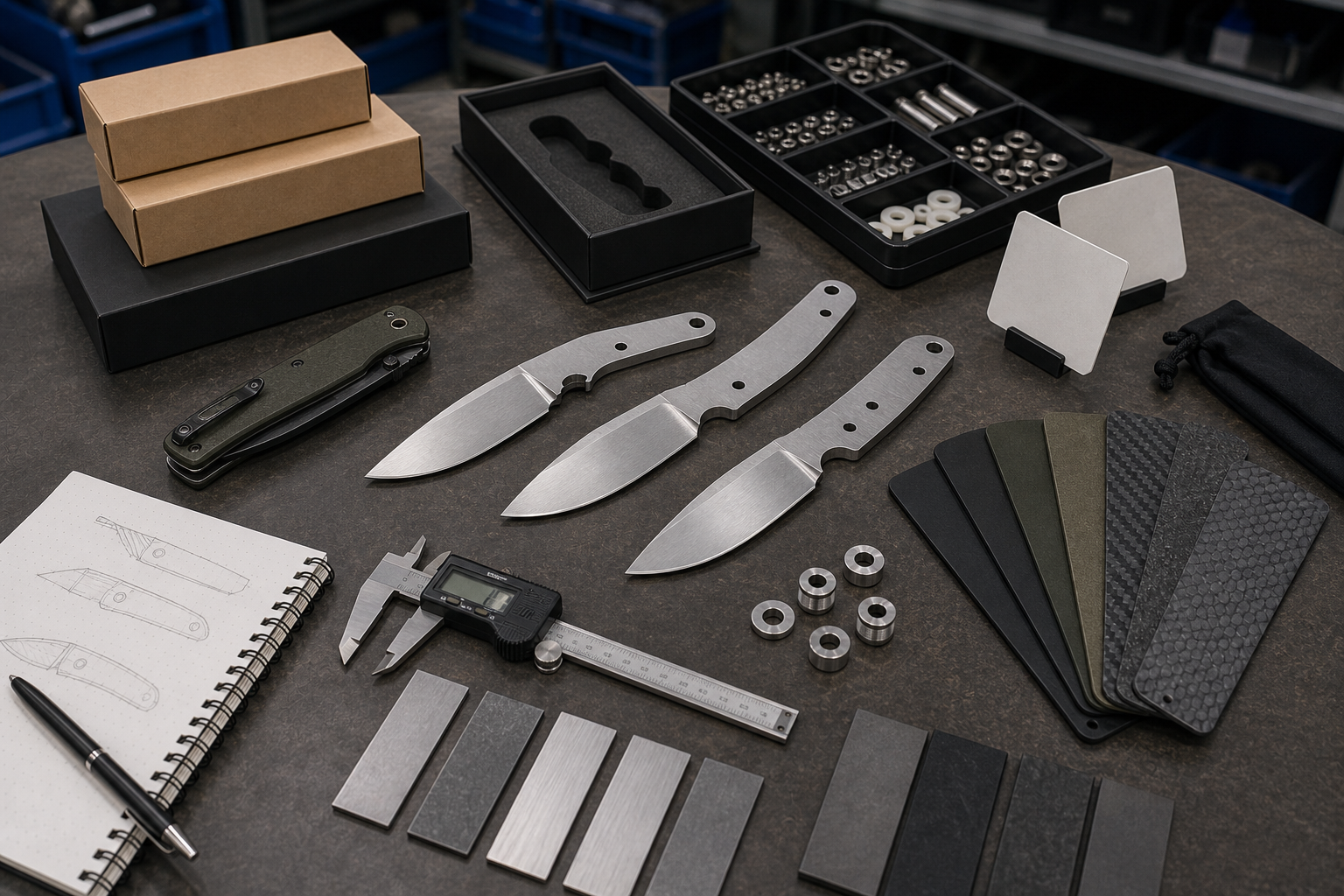
I Use Nitro-V When the Steel Story Helps the Product Feel Fresh
Nitro-V can work well for sellers who want a modern stainless steel message without moving into expensive powder metallurgy steels. The New Jersey Steel Baron Nitro-V heat treat document describes Nitro-V as a high carbon stainless steel with nitrogen and vanadium. It also says the steel was created from the idea of combining fine carbide structure and higher stain resistance, with a focus on being easy to work with, easy to finish, and easy to maintain.
That is a useful seller story. It fits knives where clean cutting, thin edges, and user-friendly maintenance matter. I would consider Nitro-V for small EDC folders, compact fixed blades, kitchen utility knives, fishing-adjacent tools, and premium-budget private label lines. It can give the product a less generic feel than common entry stainless steels.
The caution is supply and proof. Nitro-V is not the steel I would choose only because a forum says it is better than 14C28N. I want to know the steel source, batch availability, heat treatment route, target hardness, and test records. I also would not claim its small vanadium addition creates a large wear-resistance jump. Knife Steel Nerds notes that Nitro-V's vanadium addition is likely too small to meaningfully improve wear resistance and edge retention.
| Nitro-V use case | Why it can work | What I would control |
|---|---|---|
| Enthusiast EDC folder | Fresh steel story | Source and heat-treatment record |
| Kitchen utility knife | Fine edge and easy sharpening | Thin edge geometry and finish |
| Compact outdoor knife | Toughness and stainless balance | Corrosion testing and care copy |
| Private label upgrade | Less generic than basic stainless | Supply stability and batch consistency |
When Does 14C28N Make More Sense for OEM Production?
A steel can be good but hard to scale. For OEM buyers, repeat production is often more important than a more exciting name.
14C28N makes sense when buyers need a proven stainless knife steel with strong corrosion positioning, official datasheet support, efficient production fit, and clear communication for dealers.
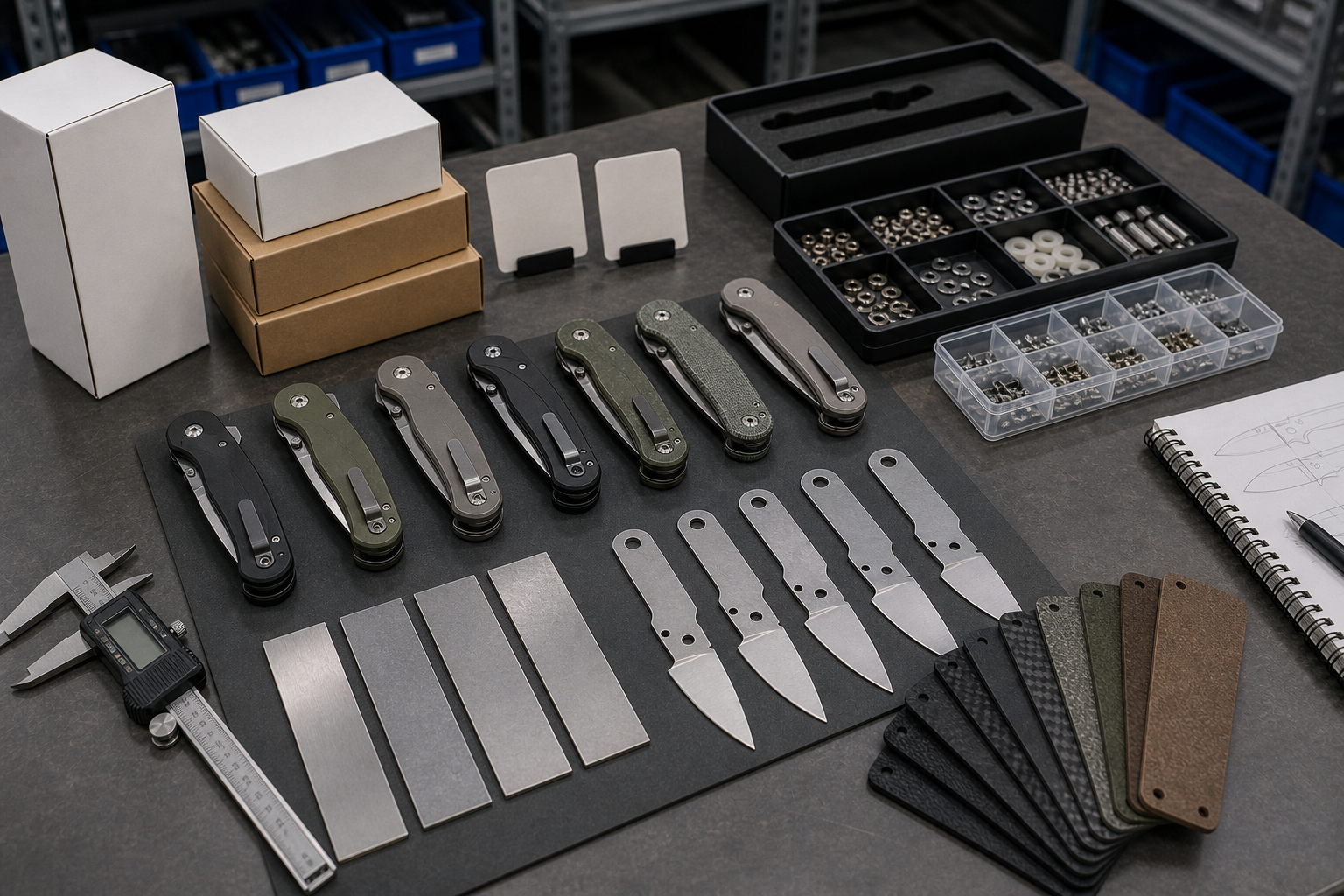
I Choose 14C28N When the Buyer Needs a Calm, Repeatable Steel Choice
The official Alleima 14C28N knife steel page describes 14C28N as having excellent edge performance, high hardness, good corrosion resistance, easy re-sharpening, and good edge stability. It also gives a recommended hardness range of 55-62 HRC for knife applications such as pocket knives, chef's knives, hunting knives, and fishing knives.
For OEM production, I also like the fact that Alleima says 14C28N is fineblankable, which helps efficient production. The Alleima 14C28N datasheet lists nominal composition and notes that the strip steel can be supplied in coils or straightened lengths. These details matter when the buyer is thinking about repeat orders, not only a single sample.
14C28N is also easy for dealers to explain. It is not a mystery steel. The message can be simple: stainless, sharp, stable edge, easy to maintain, and suitable for everyday carry, outdoor, fishing, and kitchen-style knives. When a buyer needs fewer customer service questions and a clean private label story, 14C28N is often the calmer option.
| 14C28N use case | Why it can work | What I would control |
|---|---|---|
| OEM EDC folder | Proven stainless story | Heat treatment and edge angle |
| Fishing or humid-market knife | Strong corrosion positioning | Finish and care message |
| Chef-style outdoor knife | Sharpness and edge stability | Thin geometry and final sharpening |
| Repeat private label line | Documentation and supply clarity | Batch records and sample standard |
How Do Heat Treatment and Hardness Control Change the Choice?
Similar steels can perform differently when the process changes. A weak heat treatment can erase the benefit of either steel.
Heat treatment, cryogenic or subzero steps, tempering, hardness testing, edge geometry, and grinding control decide whether Nitro-V or 14C28N performs as promised.
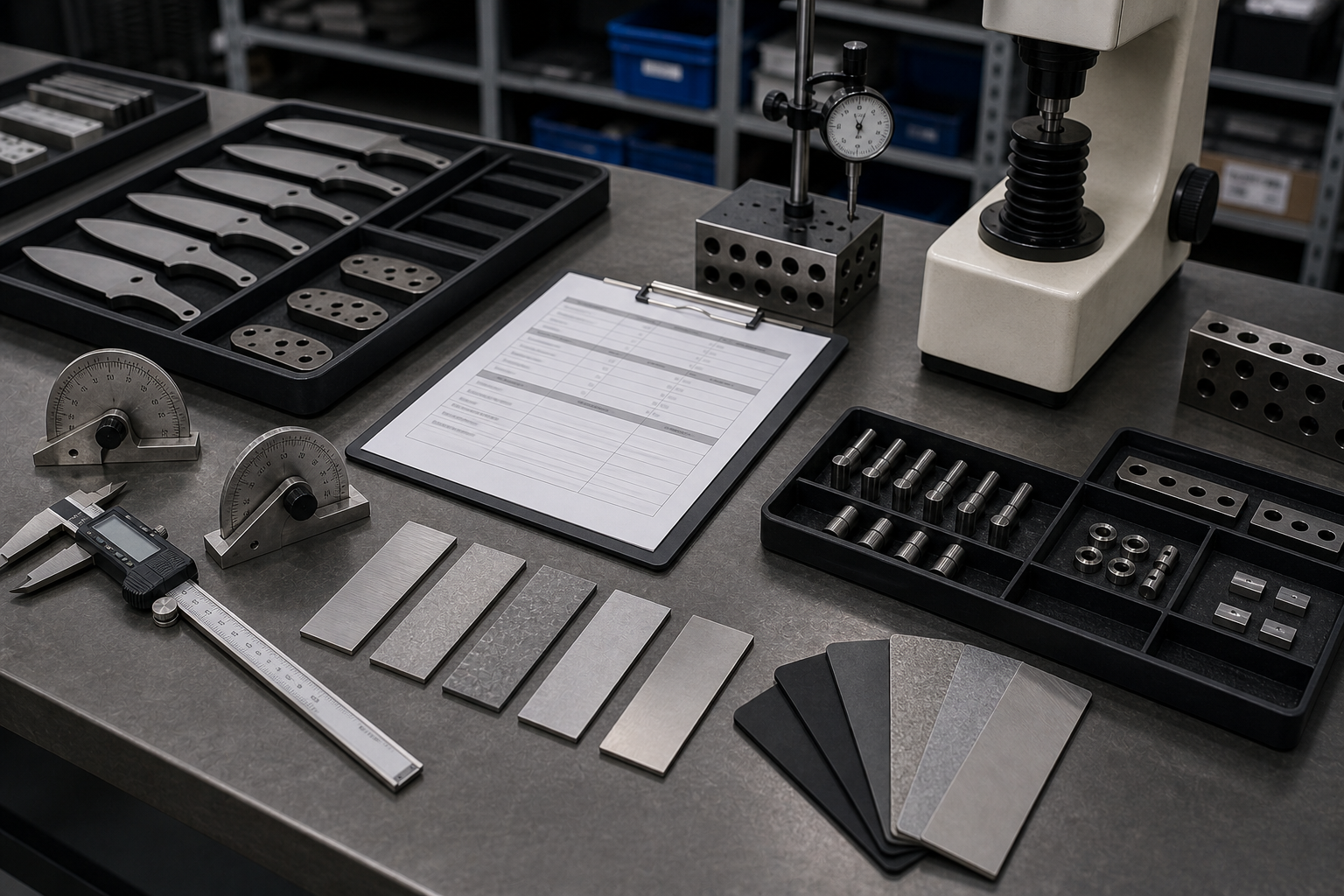
I Ask for Heat-Treat Records Before I Trust the Steel Label
The New Jersey Steel Baron heat treat document is very direct about process. It warns that skipping stages such as pre-heating, equalizing, or cryogenic treatment can result in lower hardness, more retained austenite, impaired stain resistance, or other issues. It also says reliable testing methods such as a calibrated Rockwell hardness tester provide actual hardness values. That is exactly the kind of process detail I want a seller to understand before approving mass production.
Alleima also makes the same point in another way. Its datasheet says hardening and tempering are needed to achieve the correct finish and meet the properties required by the end user. It also warns that certain hardening mistakes can reduce hardness, wear resistance, brittleness control, and corrosion resistance.
This is why I do not let customers choose only from steel names. I ask for target hardness, heat-treatment route, edge angle, blade thickness, final sharpening standard, and inspection plan. The NIST guide to Rockwell hardness measurement supports this mindset because hardness testing is a measurement practice, not a decorative number. For sellers, a steel claim without process proof is a weak promise.
| Process detail | Why it matters | Buyer request |
|---|---|---|
| Heat treatment route | Controls final structure and hardness | Written process or supplier standard |
| Cryo or subzero step | May affect hardness and retained austenite | Confirm whether used and why |
| Rockwell hardness | Checks production consistency | HRC target and test record |
| Edge geometry | Changes cutting feel and chipping risk | Approved bevel angle and sharpening standard |
How Should Sellers Position Nitro-V and 14C28N Without Overclaiming?
Small steel differences can become big marketing claims. That is risky when users cannot feel the difference in normal cutting.
Sellers should position Nitro-V as a fine-edge, modern stainless choice and 14C28N as a proven balanced stainless choice. Both should be described with real use cases, not exaggerated rankings.
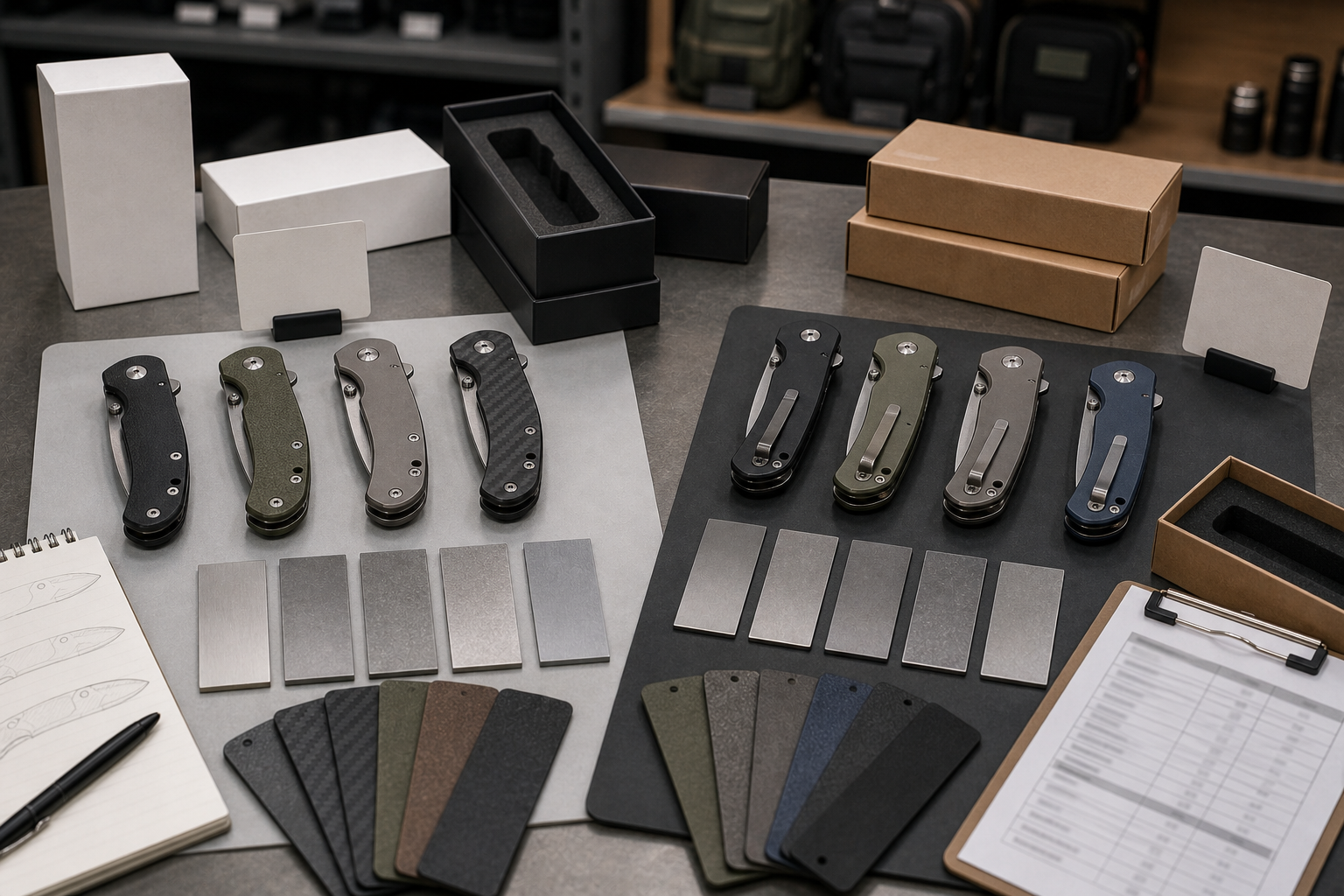
I Avoid Making Either Steel Sound Magical
For Nitro-V, I would say it is a modern stainless steel for fine edges, good sharpening feel, and practical daily use. I would avoid saying it clearly beats 14C28N in wear resistance. Knife Steel Nerds explains that the small vanadium addition is likely not enough to create meaningful wear-resistance improvement. If a seller says Nitro-V has dramatically better edge retention because of vanadium, the copy becomes easy to challenge.
For 14C28N, I would say it is a proven stainless knife steel with strong corrosion resistance, edge stability, and easy sharpening. I would not say it is the best steel in every category. It is not designed as a maximum wear-resistance steel. Its strength is balance.
The cleanest product ladder is simple. Nitro-V can be used for an enthusiast-friendly special line, custom-inspired EDC line, or kitchen utility line. 14C28N can be used for the main OEM stainless line, humid-market outdoor line, or distributor catalog line. This lets both steels have a job. It also helps dealers explain the products without turning the product page into a steel argument.
| Steel | Better seller message | Risky message to avoid |
|---|---|---|
| Nitro-V | Modern stainless steel for fine edges and easy care | Much higher wear resistance because of vanadium |
| Nitro-V | Good for EDC, kitchen utility, and light outdoor use | A super steel replacement |
| 14C28N | Proven balanced stainless steel for repeat product lines | Best steel in every category |
| 14C28N | Strong corrosion story with easy sharpening | No maintenance ever needed |
What RFQ Details Should Buyers Confirm Before Production?
A buyer can choose the right steel and still get the wrong product. The RFQ must turn steel choice into production controls.
Buyers should specify steel source, target market, hardness range, heat treatment, blade geometry, finish, handle material, lock type, packaging, quantity, supply risk, and inspection needs.
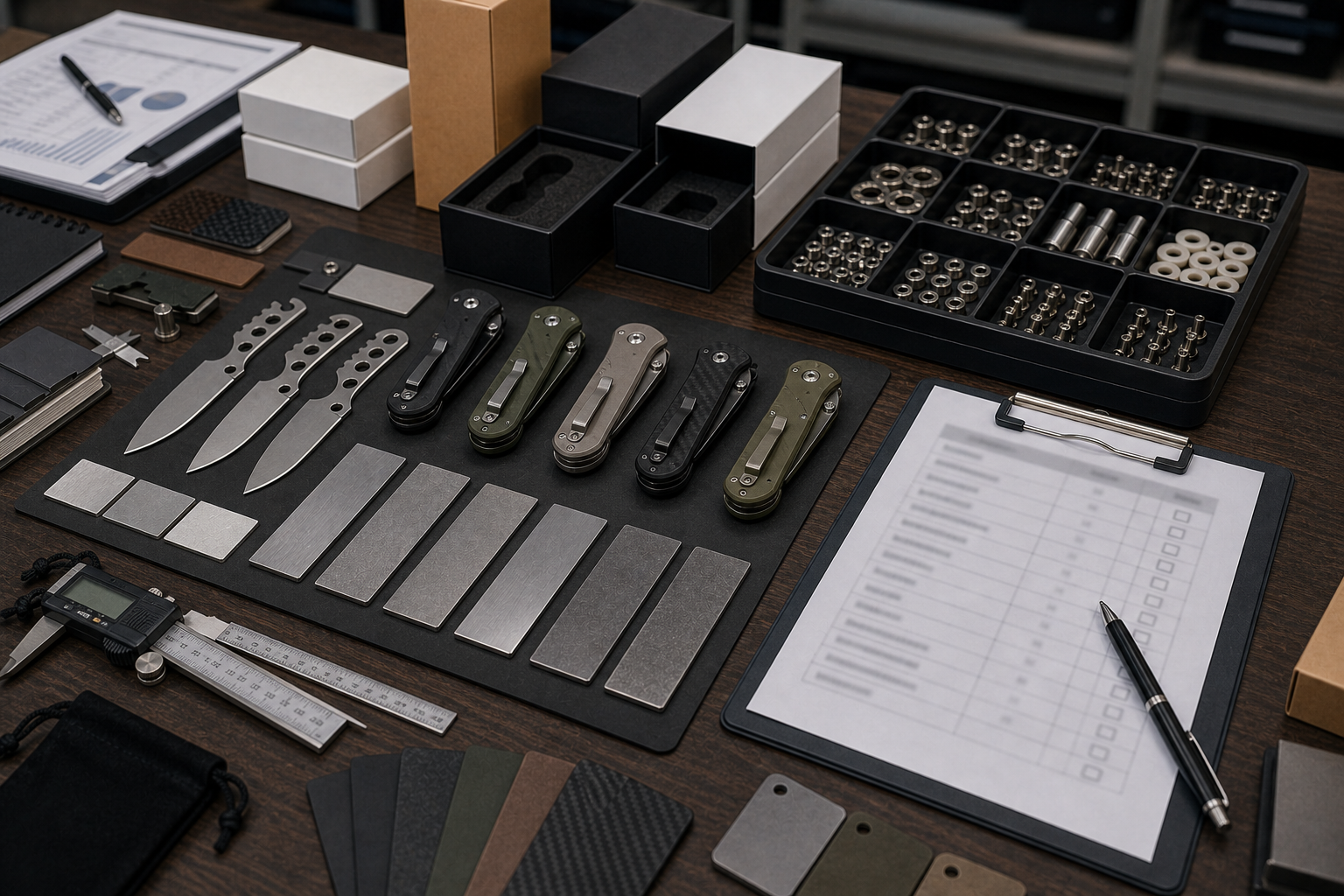
I Turn the Steel Decision Into a Product Brief
When a customer asks Vast State whether Nitro-V or 14C28N is better, I ask for the sales channel first. Is it a distributor catalog item, online EDC product, kitchen utility tool, fishing knife, outdoor knife, or limited enthusiast line? The answer changes the steel choice. It also changes packaging, finish, lock type, edge geometry, and quality inspection.
The RFQ should state whether the buyer wants the safest repeat-production option or a more distinctive steel story. If the buyer wants stable OEM production and a clean stainless message, 14C28N may be easier. If the buyer wants a newer steel story and can confirm material supply and heat treatment, Nitro-V can work. I would also ask whether the buyer already has approved copy, a care card, and a target retail price.
Quality and trade details should be included too. The ISO 9001 standard page supports a process-based approach to requirements and improvement. The US International Trade Administration page on Incoterms explains that trade terms define buyer and seller responsibilities. These sources do not choose the steel, but they support the need for a clear B2B order process.
| RFQ field | Why it matters | What to specify |
|---|---|---|
| Steel source | Prevents substitution and supply issues | Nitro-V, 14C28N, source preference |
| Target market | Defines user expectations | EDC, kitchen, outdoor, fishing, dealer line |
| Heat treatment | Controls final performance | Target HRC and process confirmation |
| Edge and finish | Affects user feedback | Bevel angle, stonewash, satin, coating |
| QC plan | Protects repeat orders | Hardness, sharpness, lockup, centering, packaging |
Ready to use this material in your next knife line?
Vast State can help you compare blade steels, heat treatment ranges, handle materials, finishes, packaging options, and QC requirements based on your target market and quantity.
Conclusion
Nitro-V is useful for a fresh fine-edge stainless story. 14C28N is often easier for stable OEM production and clear corrosion positioning.
Source Notes
- New Jersey Steel Baron Nitro-V heat treat document supports Nitro-V's heat-treatment cautions, hardness guidance, and maintenance-focused positioning.
- Knife Steel Nerds on Nitro-V supports Nitro-V's relationship to AEB-L and 14C28N, plus the caution that small vanadium content should not be overclaimed for wear resistance.
- Alleima 14C28N knife steel supports 14C28N's edge performance, hardness, corrosion resistance, and 55-62 HRC recommendation.
- Alleima 14C28N datasheet supports composition, supply forms, and heat-treatment cautions.
- NIST Rockwell hardness guide supports the need for reliable hardness measurement.
- ISO 9001 and Trade.gov Incoterms support the RFQ, quality, and trade-planning discussion.