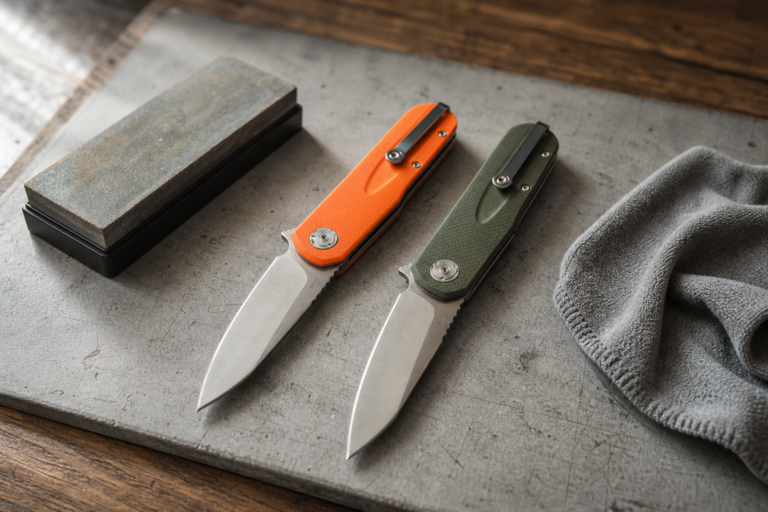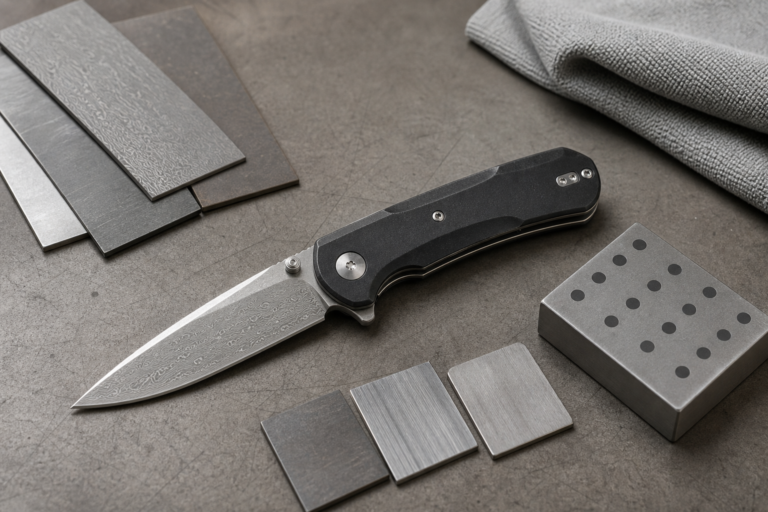
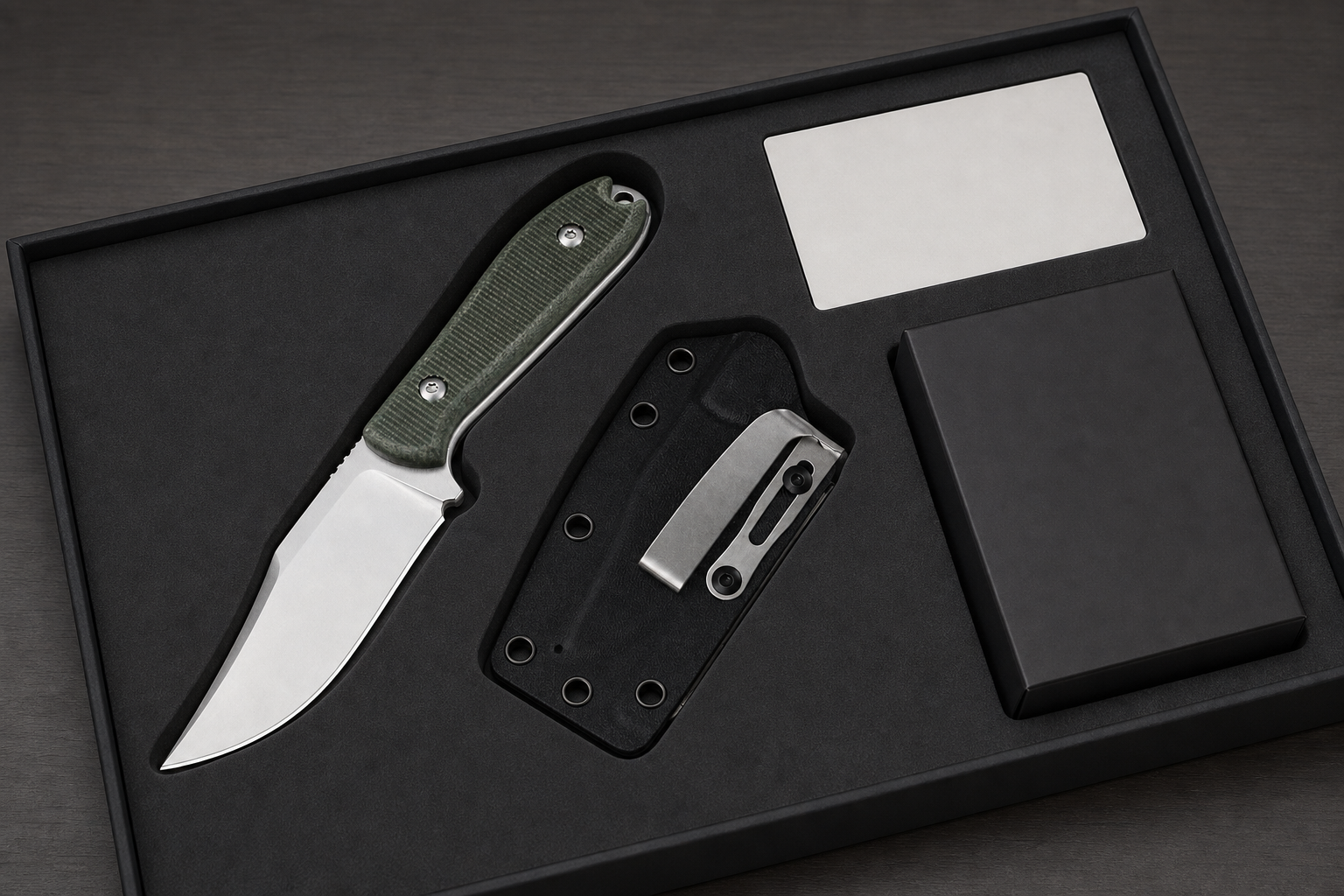
A knife can feel sharp at first but fail quickly. If the edge geometry is wrong, buyers may see chipping, rolling, and complaints.
OEM knife buyers should specify a secondary bevel when they need a practical balance of sharpness, edge strength, repeatable sharpening, and easier production control. The bevel angle, edge thickness, steel, heat treatment, and use case should be defined together.
Quick buyer brief:
- Answer: A secondary bevel can improve durability and make sharpening control easier, but it must match the knife's use.
- Buyer context: This helps knife brands, importers, wholesalers, distributors, and private label buyers define edge geometry before sampling.
- Key checks: Primary grind, secondary bevel angle, apex consistency, burr removal, sharpness target, steel, hardness, finish, QC, and user maintenance.
Have a knife or multi-tool project in mind?
Send your sketch, CAD file, sample photo, or product idea. Vast State can review manufacturability, suggest materials, estimate MOQ, and prepare a quote for your OEM/ODM project.
When a buyer asks whether a knife needs a secondary bevel, I do not answer only from a sharpening point of view. I look at the product as a whole. A camping knife, an EDC folder, a rescue tool, a chef-style outdoor knife, and a budget utility knife do not need the same edge. The edge must support the target user, the material, the price point, and the factory process. A secondary bevel is useful when it solves a real performance or production problem. It becomes a problem when it is added without a clear reason.
What Is a Secondary Bevel on a Knife?
Some buyers use edge terms loosely. That can create confusion between design, grinding, sharpening, and final inspection.
A secondary bevel is the small sharpened bevel near the cutting edge. It sits below the primary grind and forms the final cutting angle that contacts the material.
I Separate the Grind From the Cutting Edge
In production talks, I like to separate the primary grind from the secondary bevel. The primary grind controls the blade face geometry. It affects cutting resistance, weight, appearance, and how the blade moves through material. The secondary bevel controls the final cutting edge. It affects sharpness, edge stability, sharpening speed, and how easy the factory can inspect the edge.
Some knives use a visible secondary bevel. Some use a very small micro-bevel. Some use a convex edge where the transition is less obvious. Some traditional or Scandinavian-style designs may use a broad bevel differently. The buyer does not need to memorize every term. The buyer needs to define what the user should feel and what the factory should control.
Tormek's knife sharpening guide is useful because it explains the importance of consistent bevels, angle control, burr removal, and restoring the intended edge angle. In OEM work, this same idea becomes a production question. The drawing may show the blade shape, but the RFQ should also explain the final edge.
| Edge term | What it usually means | Buyer control point |
|---|---|---|
| Primary grind | Main blade face geometry | Cutting feel and blade thickness |
| Secondary bevel | Final sharpened edge bevel | Sharpness and durability balance |
| Micro-bevel | Very small higher-angle edge | Edge strength and quick touch-up |
| Apex | Where both sides meet | Sharpness and burr removal |
OEM/ODM RFQ Checklist
Prepare these details to help Vast State review your project and provide a more accurate quotation.
| RFQ Field | What to Prepare |
|---|---|
| Project type | OEM from drawing / ODM private label / wholesale catalog |
| Product category | Folding knife / fixed blade / multi-tool / outdoor tool |
| Design status | Idea / sketch / 2D drawing / 3D CAD / physical sample |
| Target price | Ex-factory target price or retail price range |
| MOQ expectation | 500 / 1,000 / 3,000 / 5,000+ pcs |
| Logo method | Laser engraving / etching / printing / molded logo |
| Packaging | Standard packaging / custom retail box / Amazon-ready |
| Market | USA / EU / Japan / Korea / Middle East / other |
| Compliance needs | Buyer-specified testing / documentation / labeling |
| Timeline | Sample deadline / mass production deadline |
How Does a Secondary Bevel Change Cutting Performance?
A knife can cut well in a sample and still fail in daily use. Edge geometry often decides that difference.
A secondary bevel changes cutting performance by setting the final edge angle. A lower angle can cut more easily, while a higher angle can improve edge strength and resistance to damage.
I Connect the Angle With the Real Cutting Job
The edge angle is not only a number. It is a choice about risk. If the final bevel is too thin for the job, the knife may feel sharp but chip or roll more easily. If the final bevel is too thick, the knife may feel strong but cut poorly. This is why I ask buyers what the knife will actually cut.
An EDC pocket knife may need a clean general-purpose edge. A camp knife may need more toughness. A rescue tool may need stable cutting on straps, rope, or webbing. A hunting-style fixed blade may need a balance between slicing and field durability. A low-cost utility knife may need an edge that is easy to sharpen consistently in mass production.
The Wicked Edge micro-bevel guide describes a micro-bevel as a small secondary or tertiary bevel at the very edge and notes that it can be created by increasing the angle for the final passes. I use that idea carefully in production. A micro-bevel can help, but it should not hide weak grinding, poor heat treatment, or unclear inspection.
| Final edge choice | Cutting benefit | Risk to watch |
|---|---|---|
| Lower angle | Easier slicing | More damage risk in hard use |
| Higher angle | Stronger edge feel | More cutting resistance |
| Micro-bevel | Faster edge strengthening | Harder to see without inspection |
| No clear standard | Flexible in theory | Inconsistent production result |
When Should Buyers Ask for a Secondary Bevel?
Some buyers add features because they sound technical. That can waste cost and create unclear QC standards.
Buyers should ask for a secondary bevel when they need repeatable sharpness, stronger edge support, easier resharpening, visible edge control, or a practical balance between slicing and durability.
I Use It When It Solves a Practical Problem
I usually recommend a defined secondary bevel when the buyer wants production repeatability. If the factory knows the final edge angle and inspection target, the sharpening team can work more consistently. The QC team can also check the edge more clearly. This matters for repeat orders because the buyer does not want batch one to feel different from batch three.
A secondary bevel also helps when the knife must be easy for end users to maintain. A clear final bevel gives the user a visible reference for sharpening. For outdoor, EDC, and work knives, that can reduce confusion. The buyer can also explain the product honestly in packaging or online content.
I also use a secondary bevel when the blade steel and hardness need support. Some steels can take fine edges well. Some budget steels benefit from a more conservative final angle. Some tough fixed blades should not chase extreme thinness. I want the edge to match the material and the market.
| Buyer situation | Why secondary bevel helps | RFQ note |
|---|---|---|
| Repeat production | Easier to control edge angle | Define final bevel target |
| Outdoor use | Better durability margin | Match angle to use case |
| User maintenance | Easier sharpening reference | Keep bevel visible enough |
| Budget products | More stable factory sharpening | Avoid over-thin apex |
When Is a Secondary Bevel Not the Best Choice?
More edge geometry is not always better. A wrong bevel can make a knife harder to sell or harder to maintain.
A secondary bevel may not be best when the product needs a traditional full bevel, a special convex feel, a very thin slicer profile, or a market story built around a different edge style.
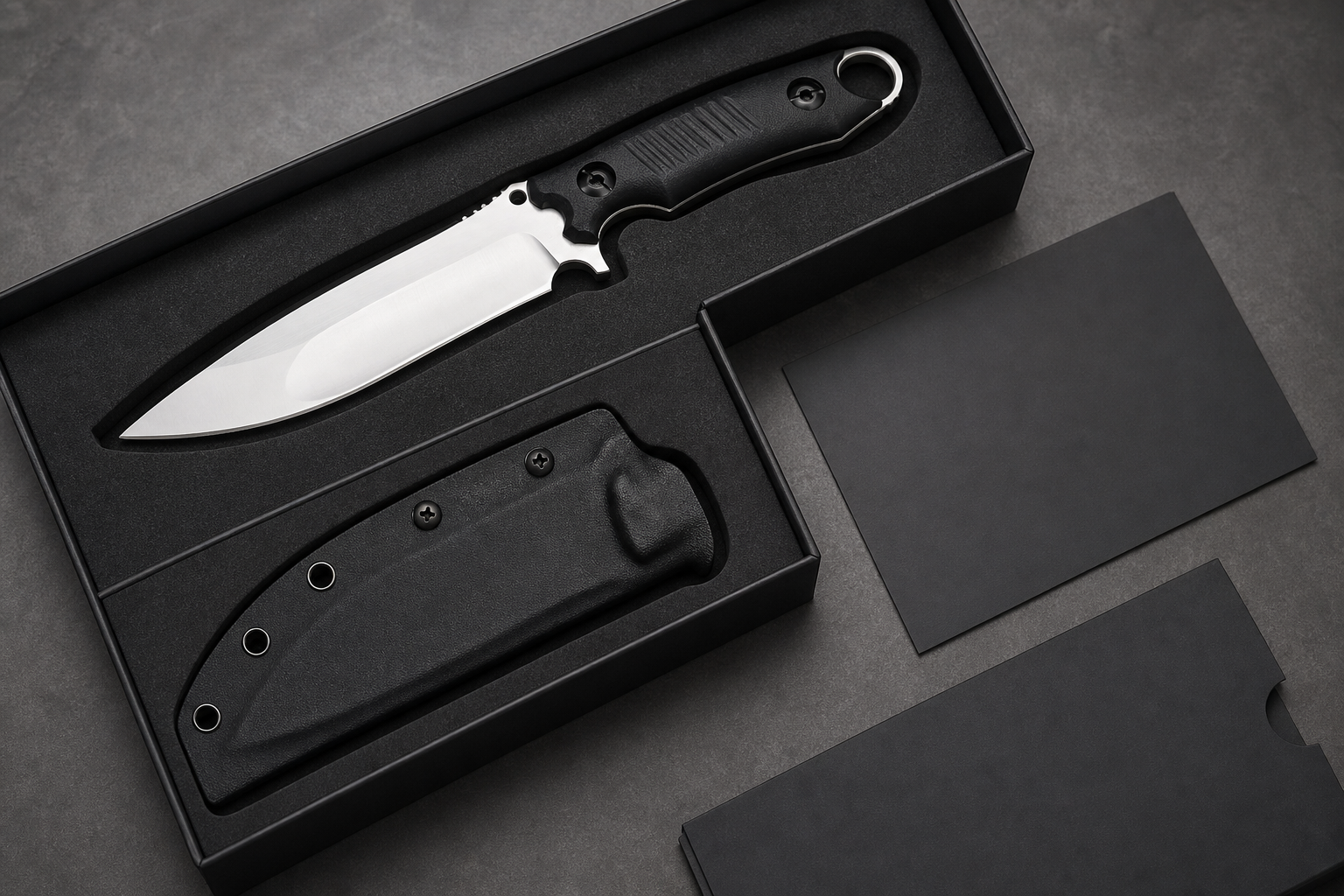
I Do Not Add It Just to Sound Professional
Some products do not need a visible secondary bevel. A thin slicing knife may need very low cutting resistance. A design inspired by a traditional grind may need a broad bevel that users expect to sharpen differently. A convex outdoor edge may use a rounded transition rather than a crisp secondary bevel. If the buyer wants that feel, I should not force a standard edge format onto the project.
The secondary bevel can also create appearance concerns. On some coated blades, the edge line may expose bright steel. On some premium satin finishes, an uneven bevel can look cheap. On some blackwash or stonewash products, the edge must still look clean. So I always connect the edge decision with the final finish.
There is also a cost issue. A secondary bevel is not expensive by itself, but inspection and rework can become expensive if the buyer asks for a tight visual standard without accepting normal production tolerance. The best choice is not always the most technical-looking one. The best choice is the one that fits the user and can repeat in production.
| Situation | Possible issue | Better approach |
|---|---|---|
| Thin slicer | Extra bevel may add drag | Keep geometry thin and controlled |
| Convex design | Crisp bevel changes the feel | Specify convex edge clearly |
| Coated blade | Bright edge line may stand out | Approve edge appearance sample |
| Low-cost order | Tight cosmetic demand raises rework | Define practical tolerance |
How Should Edge Angle Be Specified in an RFQ?
Many RFQs say "sharp edge" only. That is too vague for sampling, inspection, and repeat production.
An RFQ should specify the intended use, blade steel, hardness target, primary grind, secondary bevel angle or range, edge finish, burr removal, sharpness check, and acceptable visual tolerance.
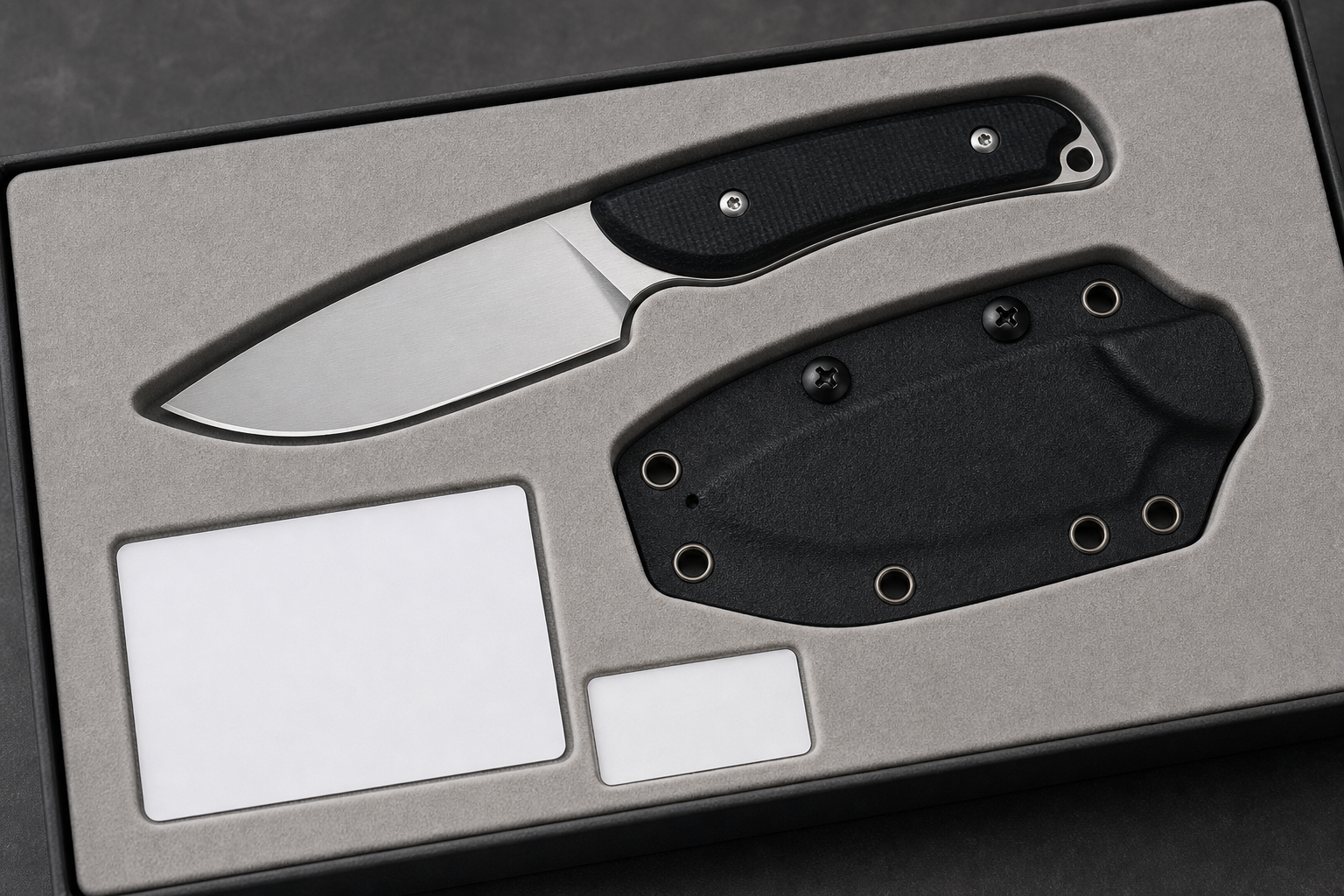
I Ask for Function Before Numbers
I do not like starting an RFQ with a random angle. I first ask what the knife must do. If the buyer needs a folding knife for general EDC, the edge can be different from a hard-use camp knife. If the buyer sells to outdoor users, the edge should be more forgiving. If the buyer sells a premium slicing product, the edge can be more refined but still needs testing.
After the function is clear, I define the final bevel as a target or practical range. I also ask for the blade steel and hardness target because angle without material context is incomplete. The same angle can behave differently on different steels and heat treatment conditions.
Angle setting should also be measurable. The Tormek AngleMaster page shows why measuring an existing bevel angle and setting a sharpening angle matters in controlled sharpening. A factory may use different tools, but the principle is the same: the edge target should be visible, measurable, and repeatable.
| RFQ field | What to define | Why it matters |
|---|---|---|
| Use case | EDC, outdoor, rescue, utility | Guides edge strength |
| Steel and HRC | Material and hardness target | Controls edge behavior |
| Edge angle | Target or range | Supports repeatability |
| Sharpness check | Paper, rope, or agreed method | Avoids vague approval |
How Do Grinding, Sharpening, and Burr Removal Affect the Result?
The bevel is not only a drawing detail. Bad grinding or poor burr removal can ruin a good edge design.
Grinding shapes the blade, sharpening forms the final bevel, and burr removal finishes the apex. All three steps must be controlled for a clean secondary bevel.
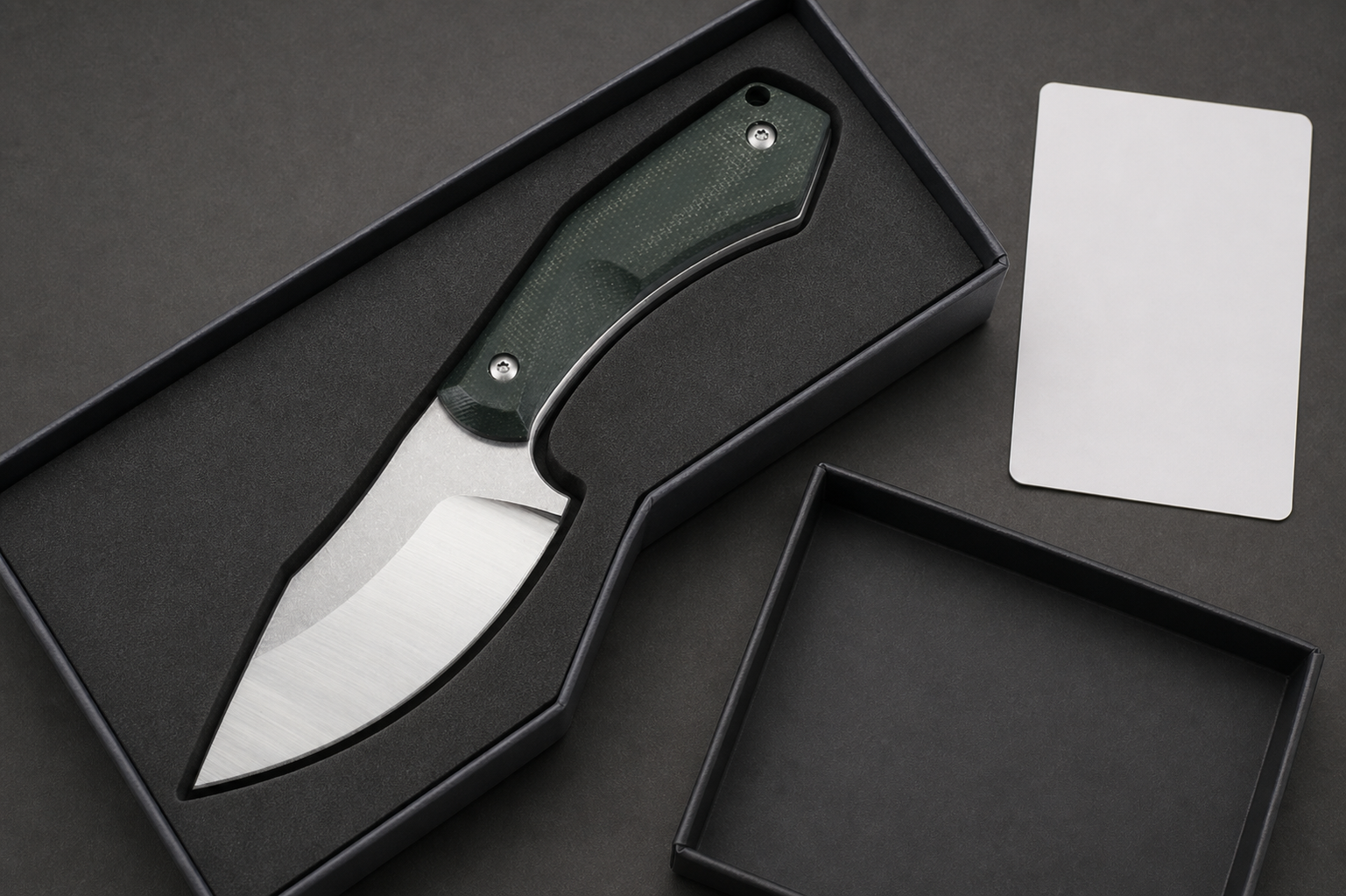
I Watch the Apex More Than the Words
In production, the edge is created step by step. First, the primary grind prepares the blade geometry. Then sharpening creates the final edge bevel. Then burr removal and finishing make the edge clean. A knife can look sharp but still have a wire edge, uneven bevel, or weak apex. That is why I do not trust the word "sharp" by itself.
The Tormek knife sharpening guide also explains that burr removal and polishing are needed after sharpening to create a clean, durable edge. This is useful for buyers because it reminds them that the final edge is a process result. If the sharpening step is rushed, the buyer may see rough edges, uneven bite, or poor repeatability.
The heat created during grinding and sharpening also matters. Overheating near the edge can harm performance, especially if the operator is careless. Factory methods differ, but the control idea is always the same. The edge should be sharp, clean, and consistent without damaging the steel near the apex.
| Process step | What can go wrong | What I check |
|---|---|---|
| Grinding | Uneven thickness behind edge | Symmetry and heat control |
| Sharpening | Uneven secondary bevel | Angle and apex consistency |
| Burr removal | Wire edge remains | Clean cut and edge feel |
| Final finish | Scratches or rough edge line | Approved sample match |
What Quality Checks Confirm a Consistent Secondary Bevel?
If the factory cannot inspect the bevel, the buyer cannot trust repeat production. Quality must be visible in the process.
Quality checks should confirm bevel symmetry, edge angle range, apex condition, burr removal, sharpness, edge damage, visual finish, and batch consistency against the approved sample.
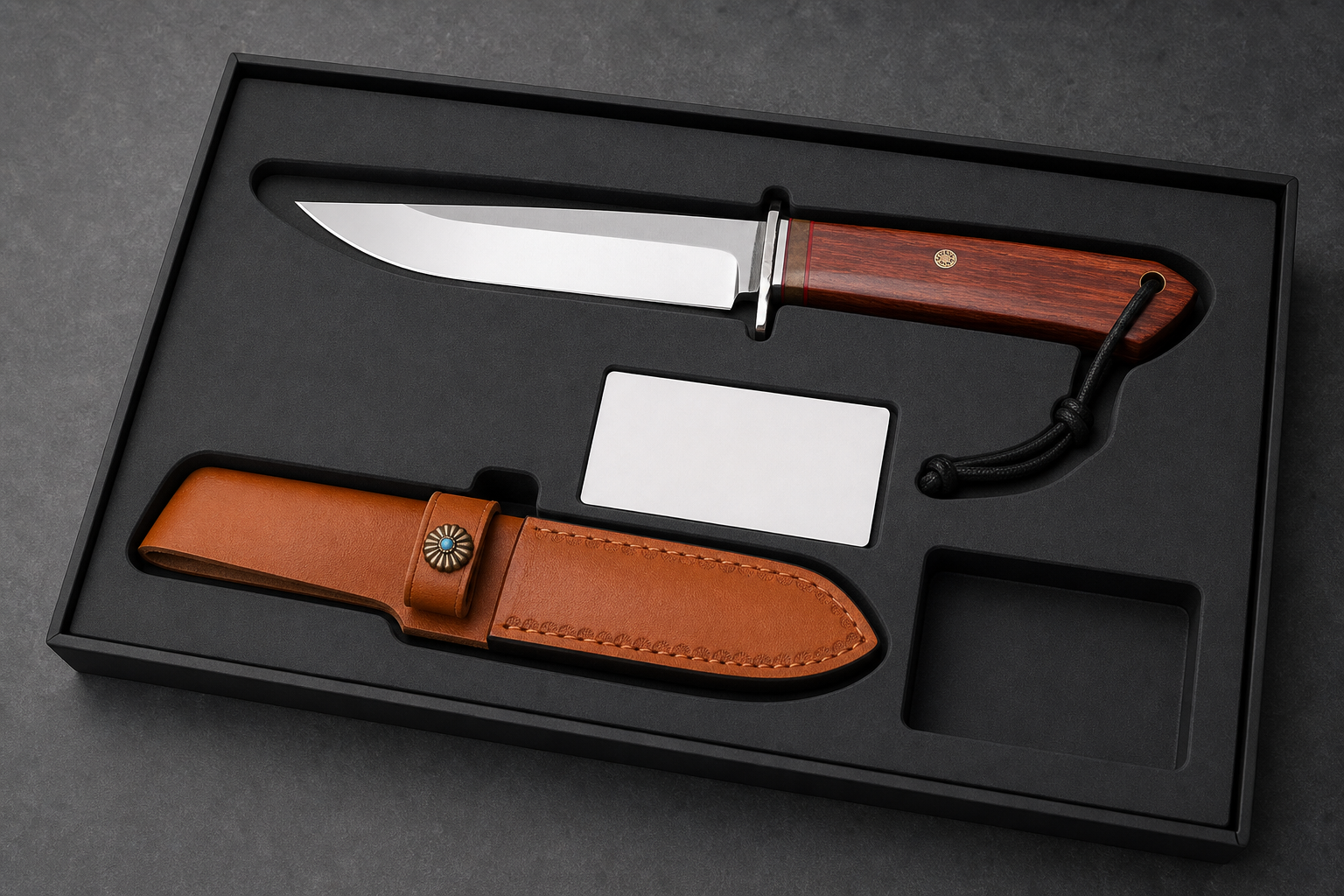
I Turn Edge Quality Into Checkable Items
A good edge standard should be simple enough for production and clear enough for the buyer. I usually start with the approved sample. The sample should show the bevel width, edge finish, sharpness feel, and acceptable appearance. Then I turn those points into an inspection checklist.
The QC team can check bevel symmetry by visual inspection and magnification. They can check whether the edge has obvious chips, rolls, burrs, or rough spots. They can use a simple cutting test that matches the product level. A premium product may need a stricter edge feel. A value product still needs a safe and usable edge, but the tolerance should match the price.
Quality systems also matter. ISO 9001 focuses on quality management requirements for meeting customer and applicable requirements. I do not treat ISO as a magic label. I use the thinking behind it: customer requirements should become process controls, records, checks, and improvement actions. For a secondary bevel, that means the edge target must move from conversation into production control.
| QC item | How to check it | Buyer benefit |
|---|---|---|
| Bevel symmetry | Visual and magnified check | Better appearance and consistency |
| Apex quality | Burr and damage inspection | More reliable sharpness |
| Sharpness | Agreed practical cutting test | Less subjective approval |
| Batch consistency | Compare to approved sample | Stable repeat orders |
How Can Vast State Help Buyers Balance Sharpness, Durability, and Cost?
Buyers often want sharp, strong, beautiful, and cheap at the same time. A real project needs tradeoffs.
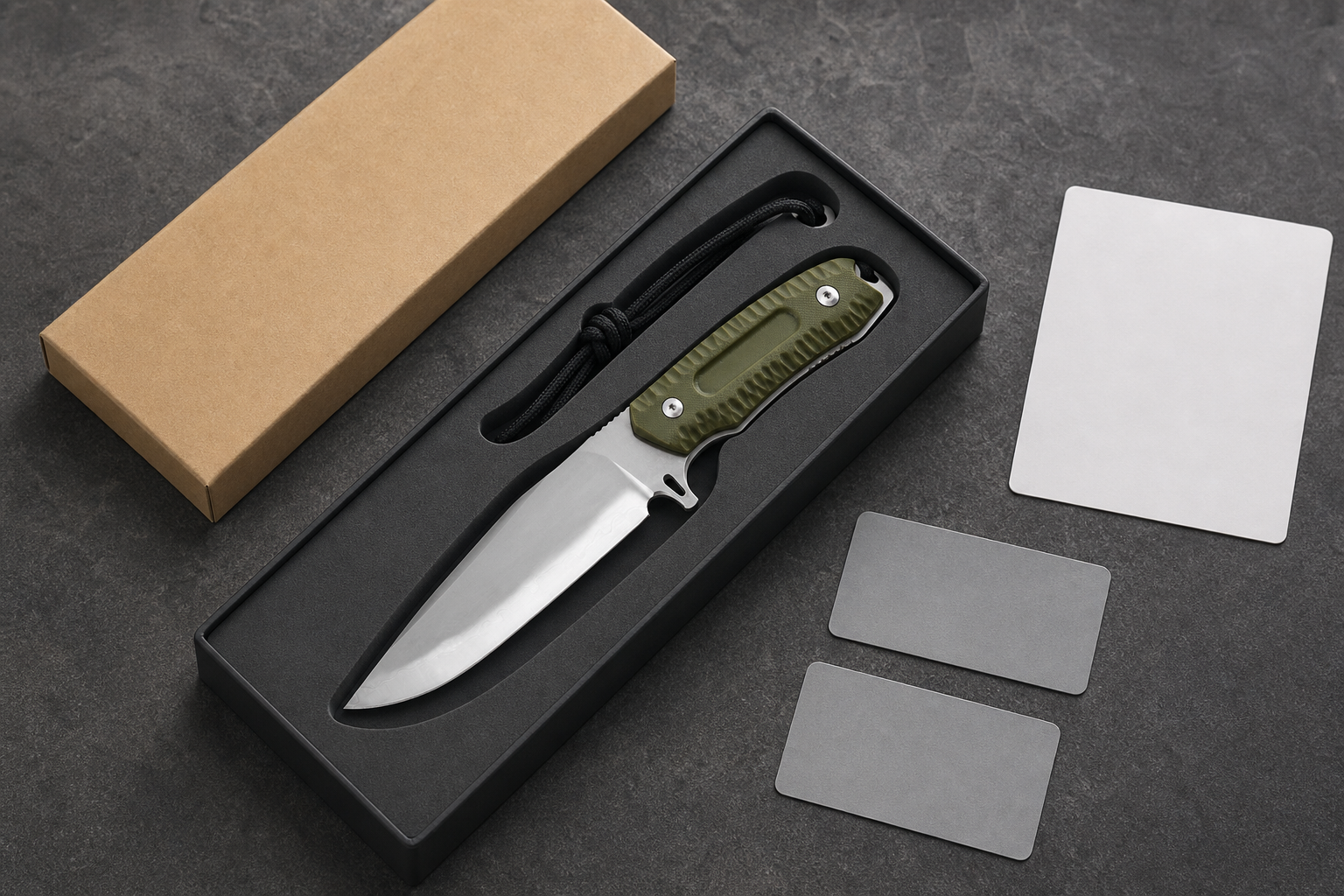
Vast State can help buyers choose a practical secondary bevel by reviewing use case, steel, hardness, blade grind, finish, target price, sample testing, packaging claims, and QC requirements together.
I Build the Edge Around the Product Goal
At Vast State, I do not see a secondary bevel as a small last-minute sharpening detail. I see it as part of product development. The edge connects to the steel, heat treatment, blade thickness, grind, surface finish, packaging promise, and user expectation. If the buyer wants a practical EDC knife, I help define an edge that feels sharp and remains easy to maintain. If the buyer wants a stronger outdoor knife, I help protect durability. If the buyer wants a value product, I help avoid edge standards that create unnecessary rework.
This is especially important for OEM and ODM projects. Some customers already have drawings. Some only have a target user and target price. In both cases, I like to make the edge decision early. The sample can then confirm cutting feel, appearance, sharpening result, and inspection method before mass production.
The best result is not always the thinnest edge. It is the edge that matches the product and can repeat across the order. That is how a buyer protects brand trust, margin, and customer experience.
| Buyer need | Vast State support | Production result |
|---|---|---|
| Better slicing | Review grind and edge angle | Cleaner cutting feel |
| More durability | Adjust bevel and edge thickness | Less chipping or rolling risk |
| Lower cost | Simplify edge control wisely | Less rework and stable output |
| Private label launch | Align edge, packaging, and QC | Better product story |
Turn your idea into a quote-ready knife project.
Share your drawing, sample photo, target quantity, market, and packaging needs. Vast State will review manufacturability and prepare OEM/ODM options.
Conclusion
I specify a secondary bevel only when it improves real use, production control, inspection, and long-term buyer confidence.
Source Notes
- Tormek knife sharpening guide supports the importance of consistent bevels, angle control, burr removal, and restoring intended edge angle.
- Tormek WM-200 AngleMaster supports the concept of measuring existing bevel angle and setting sharpening angle.
- Wicked Edge micro-bevel guide supports the definition and practical creation of a micro-bevel as a small bevel at the edge.
- ISO 9001 supports process-based quality management thinking for turning customer requirements into controlled production checks.