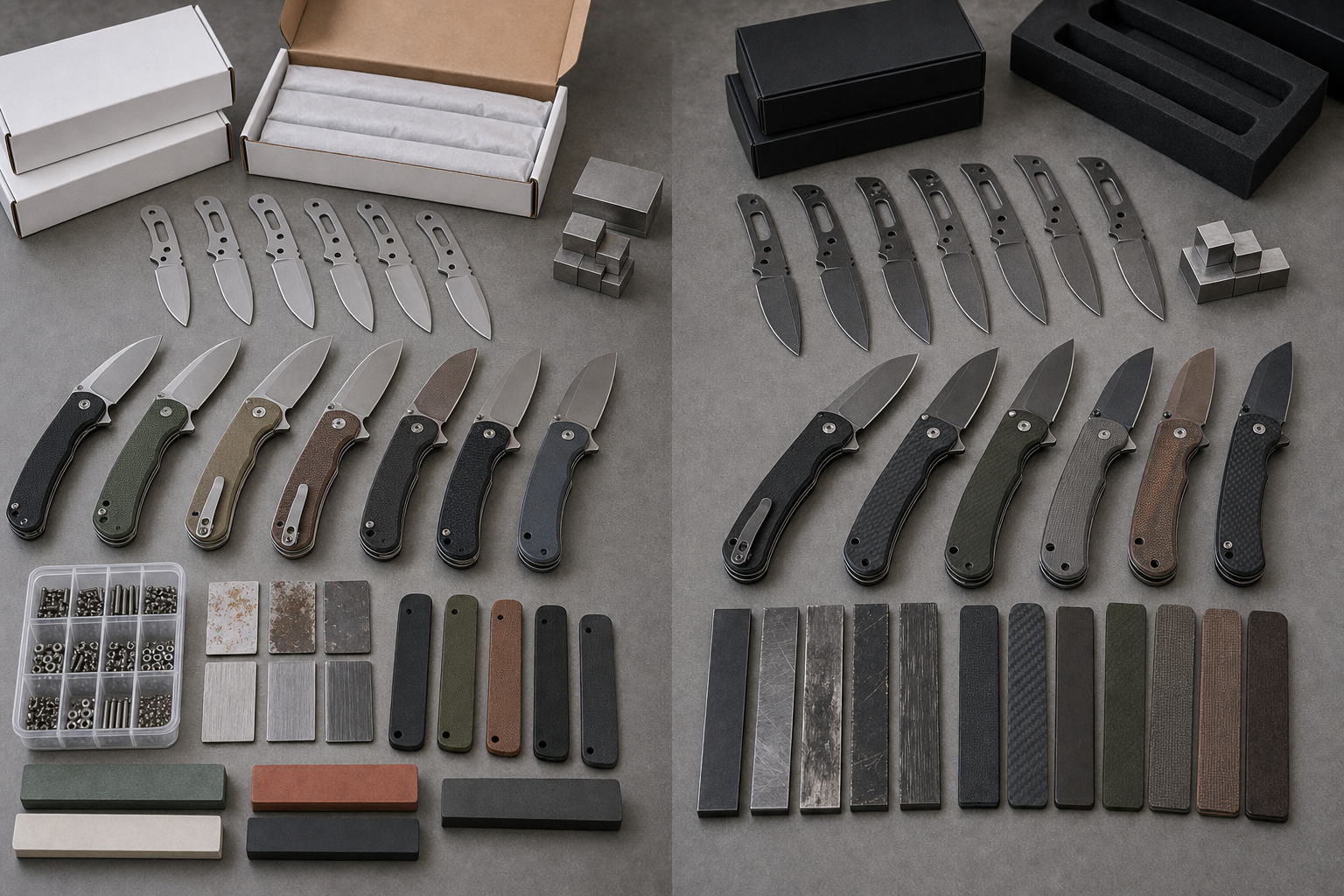
Nitro-V and D2 both sound strong on a spec sheet. But the wrong match can create rust complaints, chipping, or weak product positioning.
Knife buyers should choose Nitro-V when they need tougher, easier-maintenance stainless performance and choose D2 when they need stronger wear-resistance positioning at a practical cost. The best choice depends on target market, heat treatment, blade geometry, finish, price level, and user maintenance habits.
Quick buyer brief:
- Answer: Nitro-V usually fits wet-use, tough, easy-sharpening knives; D2 usually fits value knives where toothy edge retention matters.
- Buyer context: Both steels can work well in OEM production, but both punish vague heat-treatment and geometry requirements.
- Key checks: Confirm steel source, target HRC, heat-treatment route, edge thickness, finish, corrosion expectations, packaging claims, and QC records.
Planning a knife project with this steel?
Send us your target market, MOQ, price range, and blade type. Vast State can help you choose the right steel, HRC range, finish, handle material, and QC requirements for OEM/ODM production.
When a buyer asks me whether Nitro-V or D2 is better, I first ask where the knife will live. A pocket knife used in humid daily carry has different needs from a value work knife that cuts cardboard. A compact outdoor knife needs different edge stability than a display-heavy online SKU. Steel is only one part of the product. Heat treatment, blade thickness, edge angle, finish, handle comfort, lock safety, packaging claim, and customer care instructions all change the final result. For B2B buyers, the real question is not which steel wins online. The real question is which steel helps the product sell, perform, and repeat in production.
What Is the Practical Difference Between Nitro-V and D2?
A steel comparison can become too technical too fast. If the buyer misses the basic role, the final knife may not match the market.
Nitro-V is a stainless knife steel focused on toughness, fine edge potential, and easier maintenance. D2 is a high-carbon, high-chromium tool steel valued for wear resistance and a toothy working edge.
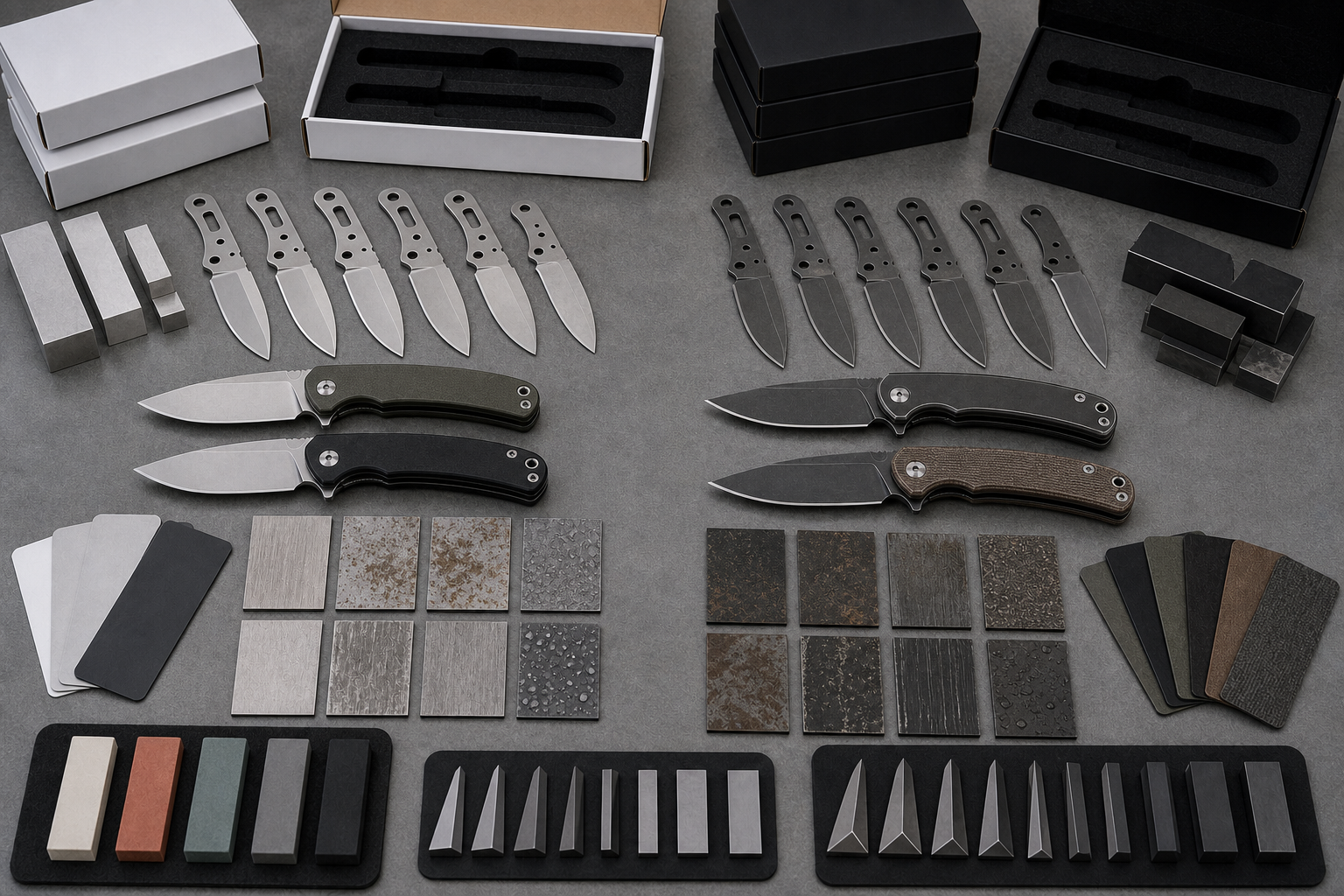
I Start With Product Role, Not Steel Reputation
Nitro-V and D2 can both be good knife steels, but they solve different buyer problems. The New Jersey Steel Baron Nitro-V heat treating document describes Nitro-V as a high carbon stainless steel with nitrogen and vanadium. It also explains that the steel was intended to offer fine carbide structure, higher stain resistance, and easier working compared with more expensive stainless options. In product terms, this makes Nitro-V useful when a buyer wants a knife that feels sharp, practical, and easy to maintain.
D2 has a different personality. A D2 data sheet from Niagara Specialty Metals describes D2 as an air-hardening, high-carbon, high-chromium tool steel with excellent abrasion resistance. This is why D2 has been popular in value EDC knives and work knives. It can hold a toothy edge well in many normal cutting tasks.
The problem is that buyers often treat both steels as simple upgrades from lower-cost stainless steels. That is too broad. Nitro-V is usually easier to explain to users who care about maintenance, toughness, and sharpening. D2 is usually easier to explain to users who want edge holding and accept more care against rust. I choose based on the user's problem, not only on the steel name.
| Steel | Practical identity | Main buyer reason |
|---|---|---|
| Nitro-V | Stainless knife steel with toughness and maintenance appeal | Useful for EDC, outdoor, kitchen-style utility, and wet-use products |
| D2 | High-carbon, high-chromium tool steel with wear resistance | Useful for value work knives and toothy cutting edges |
| Both | Heat-treatment-sensitive steels | Both need target hardness and grinding control |
| Main risk | Wrong claim or wrong geometry | Buyer complaints can come from expectations, not only steel quality |
Quote-ready RFQ Checklist for This Steel
To get an accurate OEM/ODM quote, prepare these details before contacting a knife manufacturer.
| RFQ Field | What to Prepare |
|---|---|
| Product type | Folding knife / fixed blade / multi-tool / kitchen knife |
| Target market | US / EU / outdoor retail / promotional / tactical / EDC |
| Steel option | 4116 / 14C28N / D2 / N690 / Nitro-V |
| Target HRC | Example: 55-57 HRC, 58-60 HRC |
| Blade finish | Satin / stonewash / black coating / bead blast |
| Handle material | G10 / micarta / aluminum / stainless steel / wood |
| Lock or structure | Liner lock / frame lock / slip joint / full tang |
| Estimated quantity | 500 / 1,000 / 3,000 / 5,000+ pcs |
| Packaging | White box / color box / blister / pouch / gift box |
| Required documents | Drawing / sample photo / logo file / packaging artwork |
When Does Nitro-V Make More Sense Than D2?
D2 can look attractive because buyers know the name. But in wet markets or thin-edge designs, that familiarity may not solve the user's real need.
Nitro-V makes more sense than D2 when buyers want better stain resistance, higher toughness positioning, easier sharpening, thin-edge utility, and fewer maintenance worries for everyday users.
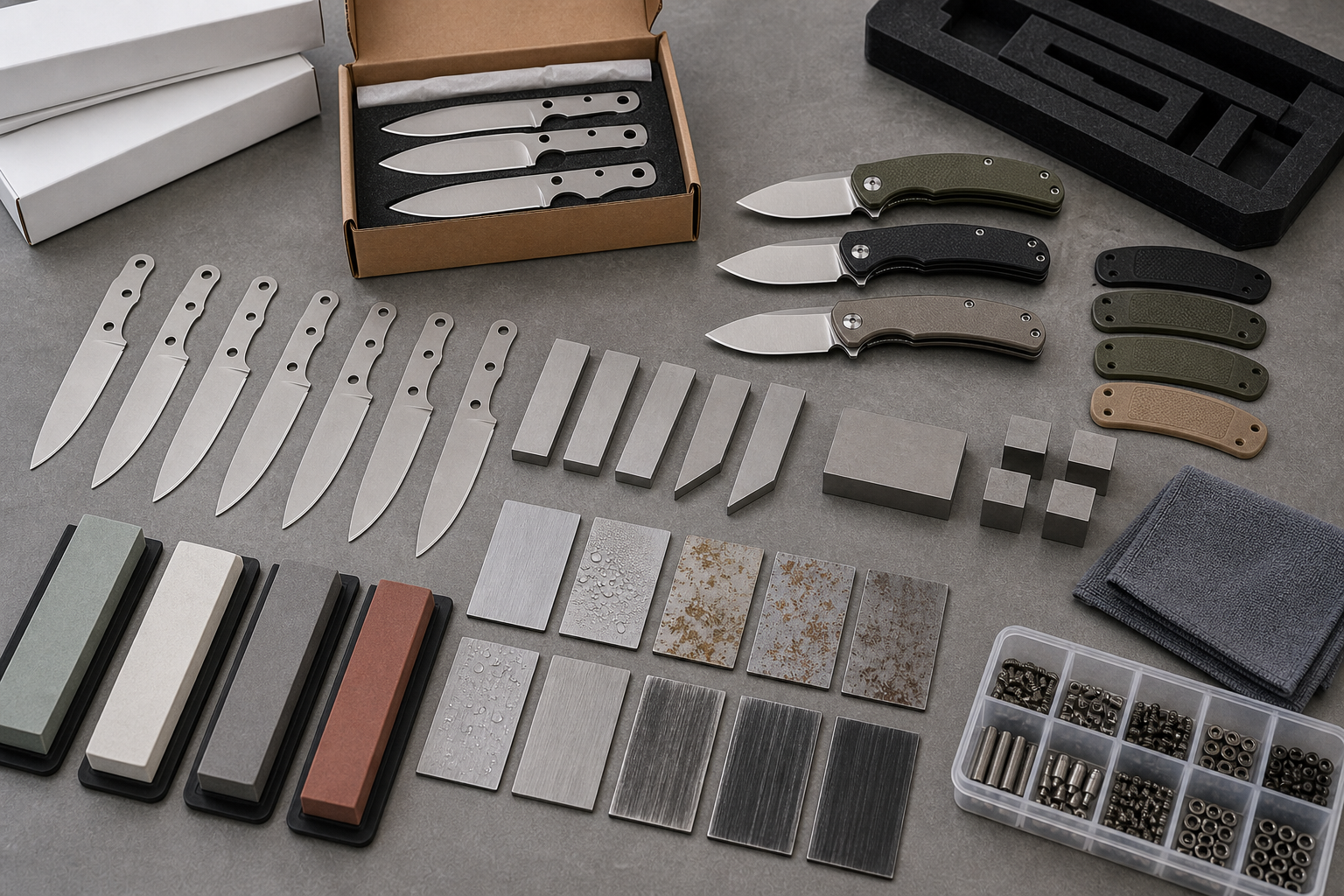
I Use Nitro-V When the End User Needs Less Friction
Nitro-V is often a better choice when the buyer wants fewer user-care problems. Many end users do not oil blades regularly. They carry knives in humid pockets. They cut food, wet rope, packaging, or outdoor materials. In those cases, a stainless steel story is easier to support than a semi-stainless tool steel story. Nitro-V is not rust-proof, but it is easier to position for lower-maintenance use than D2.
I also like Nitro-V for thinner blades and smaller folders. Knife Steel Nerds notes that Nitro-V has a very fine microstructure and very good toughness. This matters when a design needs a keen edge rather than a thick working edge. A thin blade can feel excellent in daily cutting, but it needs steel and heat treatment that support edge stability.
From a manufacturing view, Nitro-V can also be friendly. NJSB describes it as easy to work, easy to finish, and easy to maintain. That can help with grinding, polishing, and repeatable appearance, especially on OEM orders where small differences across a batch can become visible. Still, I do not treat it casually. The heat treatment route, cryo or no-cryo plan, grinding heat, and hardness check must be clear.
| Buyer situation | Why Nitro-V may fit | What I still verify |
|---|---|---|
| Humid or wet-use market | Easier stainless maintenance story | Finish and care instructions |
| Thin EDC slicer | Fine structure can support keen edges | Edge thickness and HRC target |
| User-friendly product line | Easier sharpening and maintenance | Heat treatment and burr removal |
| Repeat OEM order | Workability can support consistency | Steel source and batch QC |
When Does D2 Still Make Sense for Knife Buyers?
Some buyers dismiss D2 too quickly. That can be a mistake when the product needs practical wear resistance and the market accepts maintenance.
D2 still makes sense when the buyer needs a cost-aware steel with good wear resistance, a toothy working edge, strong market familiarity, and a user base that accepts basic blade care.
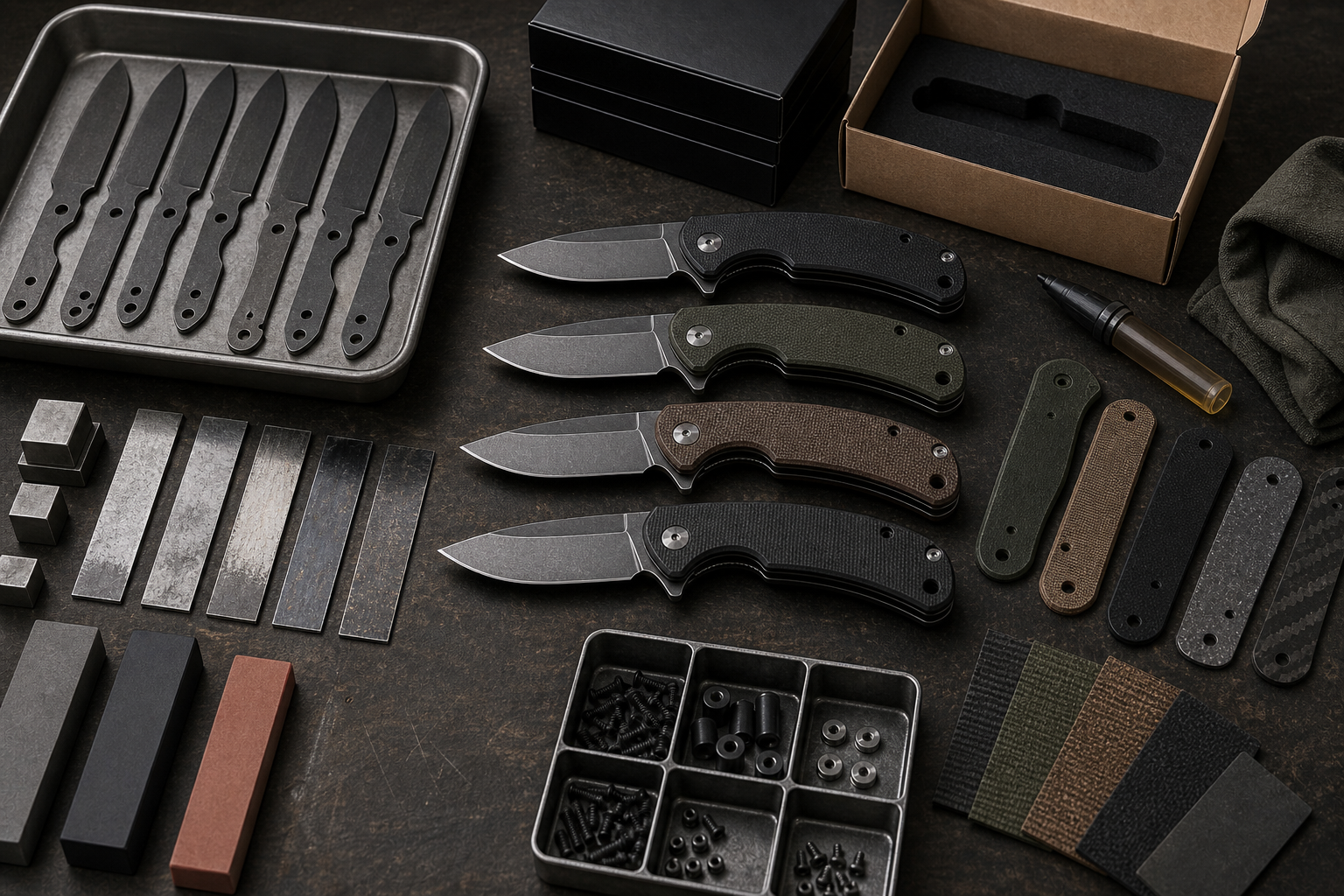
I Use D2 When the Product Story Is Honest
D2 remains useful because it has a clear buyer story. It is widely known, widely available, and often accepted by value-knife customers. It can hold a working edge well. It can make sense for knives that cut cardboard, rope, packaging, and general utility materials. For a distributor or private label buyer, D2 can also be easier to explain than unknown low-cost steels because many users already recognize the name.
But D2 must be positioned honestly. Knife Steel Nerds explains that D2 is a common tool steel and knife steel and notes its wear resistance history, but it also explains that large carbides limit toughness and edge stability. The same article also warns that D2's corrosion resistance has sometimes been over-promoted because a lot of chromium is tied up in carbides.
That point is important for B2B sales. If a product page calls D2 "stainless" without context, customers may feel misled when stains appear. I prefer language such as high-carbon, high-chromium tool steel with better stain resistance than simple carbon steels, but not the same maintenance profile as true stainless steels. That wording protects the seller. It also sets the correct user expectation.
| D2 product fit | Why it works | Main caution |
|---|---|---|
| Value work knife | Good wear resistance at practical cost | Needs honest corrosion messaging |
| Utility folder | Toothy edge can keep cutting well | Sharpening may feel harder for some users |
| Distributor SKU | D2 name is familiar in the market | Quality varies widely by heat treatment |
| Dry-use outdoor knife | Edge retention story can be strong | Finish and care instructions still matter |
How Should Buyers Compare Corrosion, Toughness, Edge Retention, and Sharpening?
One steel rarely wins every category. A buyer who chases only edge retention may create a knife that users dislike maintaining.
Nitro-V usually has the better toughness and maintenance profile. D2 usually has the stronger wear-resistance and toothy-edge story. Sharpening and corrosion expectations should be set before sampling.
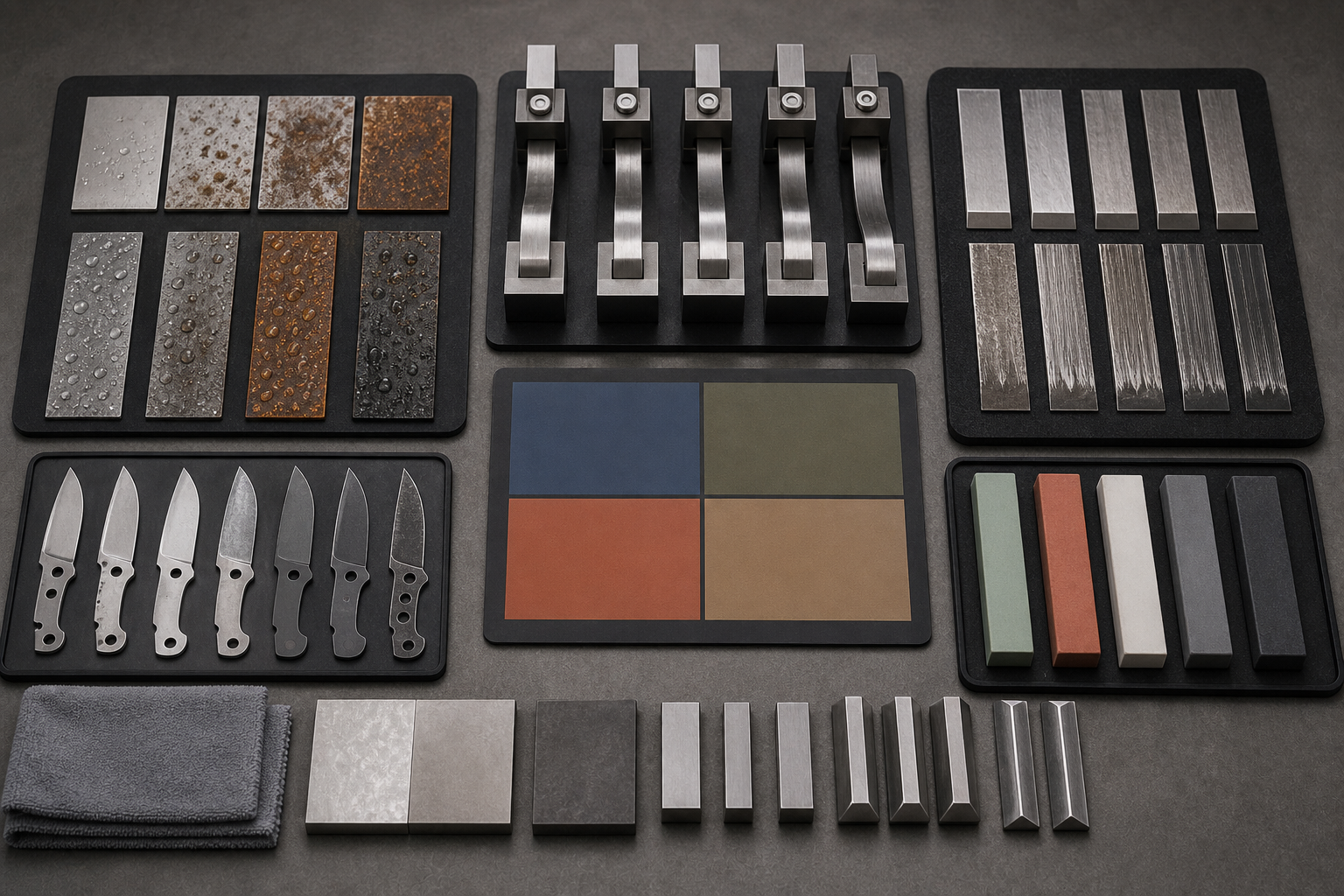
I Explain the Tradeoff Before I Quote the Steel
For corrosion resistance, Nitro-V is easier to position. It is a stainless steel, and the nitrogen addition helps the stain-resistance story. D2 has high chromium, but it is not the same as a true stainless knife steel in user expectations. In a humid market, Nitro-V can reduce the chance of customer disappointment. In a dry utility market, D2 may be acceptable if the care instructions are clear.
For toughness, Nitro-V is usually the easier choice. Knife Steel Nerds reports very good toughness for Nitro-V and points out that D2 has large carbides that limit toughness and edge stability. This does not mean every D2 knife is fragile. It means the edge geometry needs more care. A thick D2 work edge may do fine. A very thin D2 edge on a hard-use knife may be risky.
For edge retention, D2 has a real advantage in many abrasive cutting conversations. Its carbide structure supports wear resistance. Nitro-V will usually be easier to sharpen and may feel better for users who prefer quick maintenance. This is where the buyer must know the target customer. A warehouse user who wants a toothy utility edge may accept D2. A daily-carry user who sharpens with basic tools may prefer Nitro-V.
| Performance factor | Nitro-V direction | D2 direction |
|---|---|---|
| Corrosion behavior | Easier stainless maintenance story | Better than simple carbon steel, but not true stainless |
| Toughness | Strong practical advantage | Needs careful geometry and heat treatment |
| Edge retention | Good for normal use and thin edges | Stronger toothy wear-resistance story |
| Sharpening | Usually easier for many users | Can take more effort due to carbides |
Why Do Heat Treatment, Geometry, and Finish Change the Result?
Steel grade alone does not cut. Heat treatment and grinding decide whether the blade becomes a useful tool or a complaint.
Heat treatment controls hardness, retained austenite, toughness, corrosion behavior, and edge stability. Geometry and finish then decide how the steel performs in the user's hand.
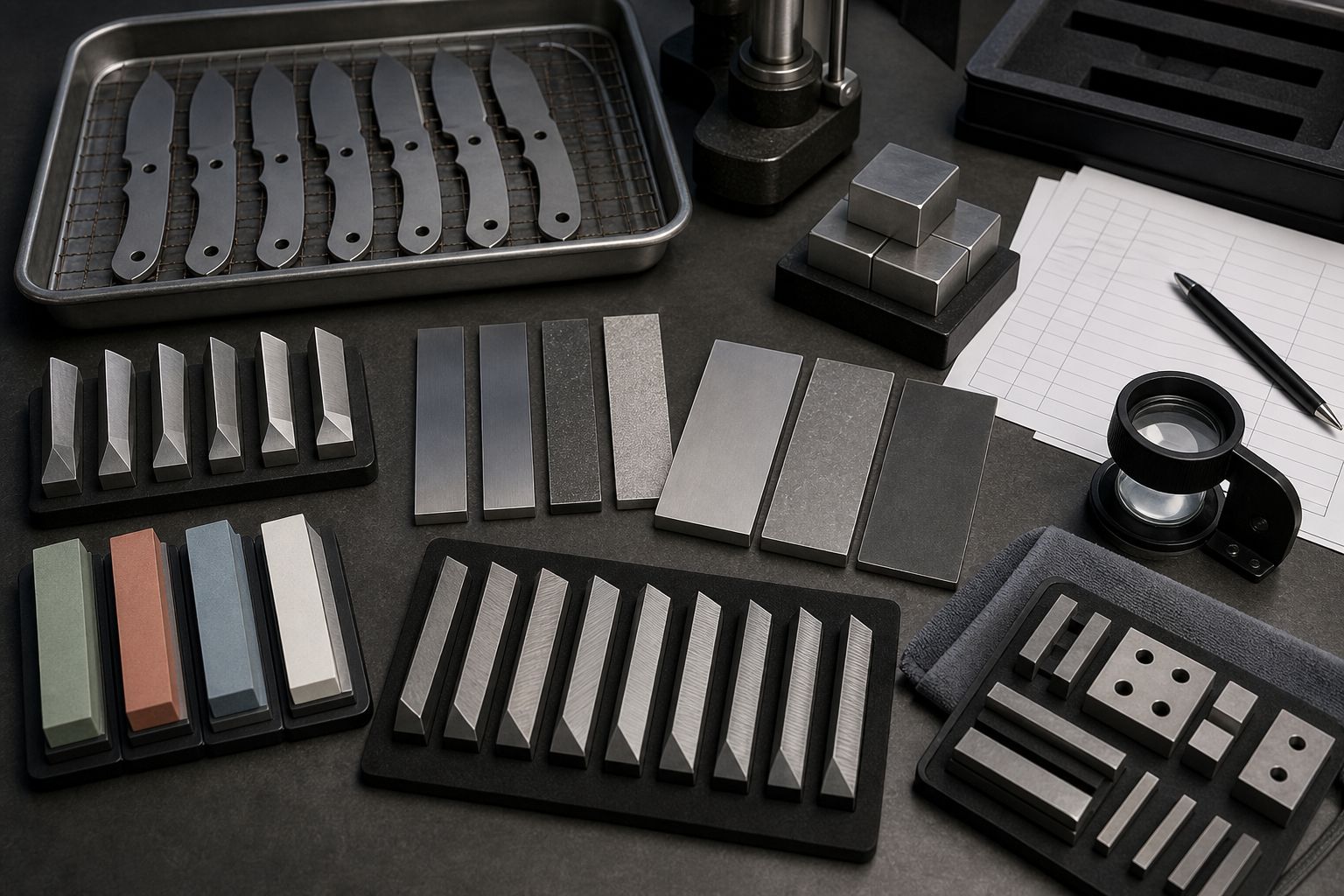
I Never Approve Steel Without the Process Behind It
The same steel can behave very differently after different heat treatment. NJSB's Nitro-V guide shows different hardness outcomes with and without cryogenic treatment. It also warns that skipping steps can cause lower hardness, retained austenite, impaired stain resistance, or other issues. NJSB's D2 heat treating document gives the same kind of warning for D2. That tells me the buyer should not simply ask for "Nitro-V" or "D2." The buyer should ask for the process target.
Blade geometry matters just as much. A D2 blade with a very thin edge may chip if the user twists it in hard material. A Nitro-V blade with an overheated edge can lose the benefit that made the steel attractive. Grinding, cooling, burr removal, and final sharpening must be controlled. Finish also matters. Satin, stonewash, bead blast, black coating, and polish all change appearance and maintenance expectations.
Hardness testing should also be handled with care. NIST explains that Rockwell hardness measurement needs good practice to reduce measurement errors. For OEM production, I prefer test coupons, calibrated equipment, sample records, and random batch checks. I also want the hardness range to match the product, not just look high on a product page.
| Process item | What I ask for | Why it protects the order |
|---|---|---|
| Target HRC | A practical range for the knife type | Prevents chasing hardness without purpose |
| Heat treatment route | Austenitize, quench, cryo or no-cryo, tempering plan | Helps repeat performance |
| Edge geometry | Blade thickness, behind-edge thickness, edge angle | Controls chipping, slicing, and sharpening |
| Finish and care | Stonewash, satin, coating, oiling note | Controls corrosion expectations |
What Should Buyers Put in an RFQ for Nitro-V or D2 Knives?
A vague RFQ creates vague samples. If the buyer only names the steel, the supplier must guess the real product goal.
An RFQ should include steel grade, knife type, target market, blade geometry, target HRC, heat-treatment expectation, finish, handle material, lock type, packaging, quantity, price range, and QC requirements.
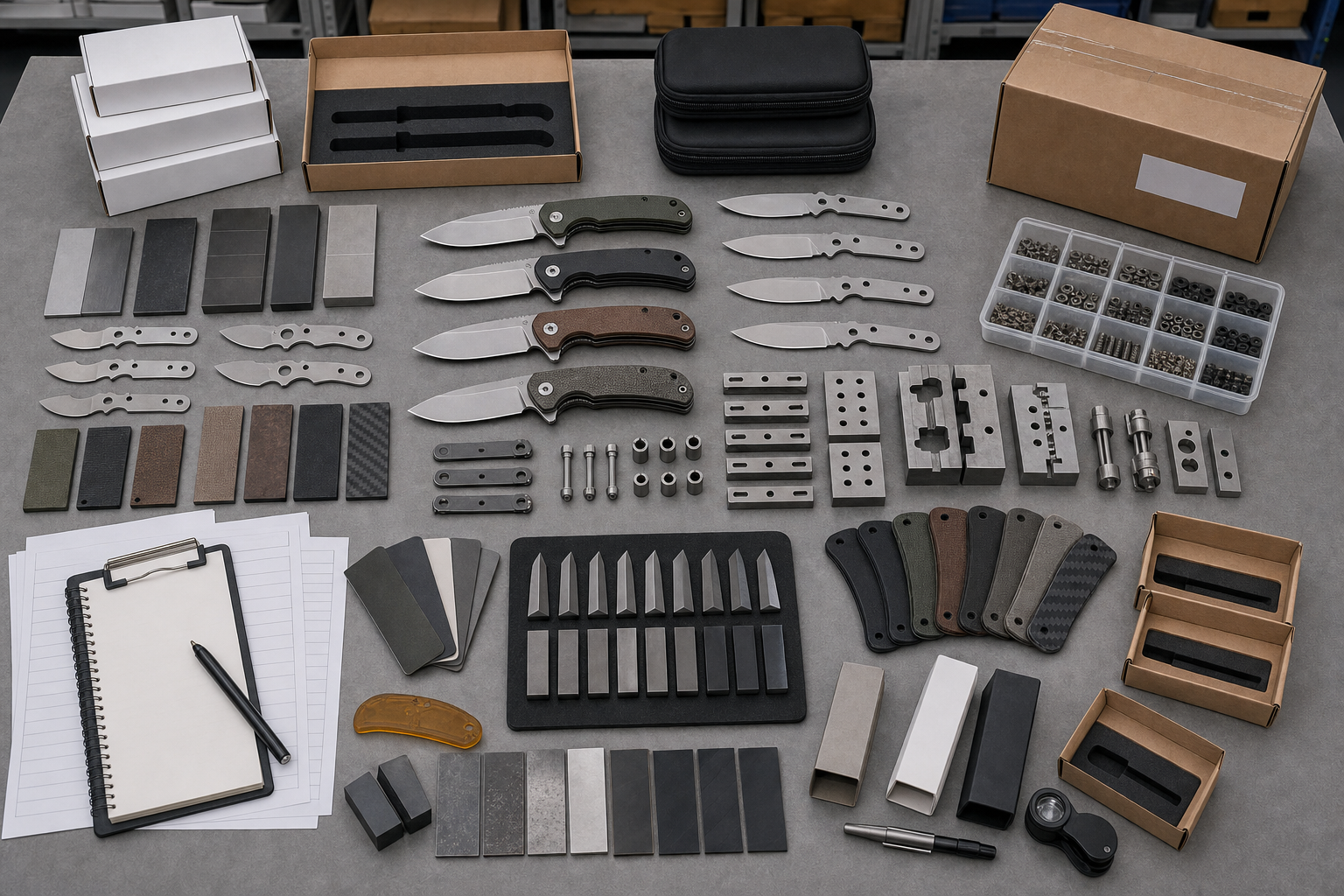
I Turn the Steel Decision Into a Production Brief
When I receive a Nitro-V vs D2 inquiry, I ask the buyer to describe the product before choosing the steel. Is it a value EDC folder? A compact outdoor knife? A work knife for distributors? A private label SKU for online retail? A higher-margin upgrade model? The answer changes the steel recommendation.
For Nitro-V, I want to know whether the buyer values stainless maintenance, thin slicing performance, and easy sharpening. For D2, I want to know whether the buyer values wear resistance, a toothy working edge, and a price point that customers understand. I also ask whether the buyer's market will complain about stains. If yes, D2 may need stronger care instructions or a different steel choice.
The RFQ should also include sample validation. I usually recommend checking blade hardness, edge grind, burr removal, cutting feel, finish consistency, lockup, centering, screw assembly, packaging, and care language. If the buyer plans to claim "D2 tool steel" or "Nitro-V stainless steel" on the package, the material source and marking should be consistent. For B2B orders, the strongest steel decision is the one that matches the user's real use and the seller's price structure.
| RFQ field | Nitro-V note | D2 note |
|---|---|---|
| Target market | Useful for low-maintenance EDC and wet-use products | Useful for value work knives and dry-use utility products |
| Blade geometry | Can support thin, keen edges with good process control | Needs edge support if used for rough tasks |
| Finish | Stainless story still needs clean finishing | Finish and care language are very important |
| QC requirement | HRC, edge, finish, and function checks | HRC, edge stability, finish, and corrosion expectation checks |
Ready to use this material in your next knife line?
Vast State can help you compare blade steels, heat treatment ranges, handle materials, finishes, packaging options, and QC requirements based on your target market and quantity.
Conclusion
I choose Nitro-V for tougher, easier-maintenance knives and D2 for cost-aware wear resistance, but only after heat treatment and geometry are defined.
Source Notes
- New Jersey Steel Baron Nitro-V heat treating supports Nitro-V background, workability, heat-treatment notes, and maintenance positioning.
- Knife Steel Nerds on Nitro-V supports the article's careful view of Nitro-V toughness, edge retention limits, and heat-treatment sensitivity.
- Niagara Specialty Metals D2 data sheet supports D2 composition, air-hardening tool steel description, abrasion resistance, and cold-work application background.
- Knife Steel Nerds on D2 supports D2 history, wear resistance, carbide-size cautions, and corrosion-resistance limits.
- New Jersey Steel Baron D2 heat treating supports D2 heat-treatment process cautions and production-control discussion.
- NIST Rockwell hardness guide supports the article's advice to treat hardness testing as a controlled measurement process.