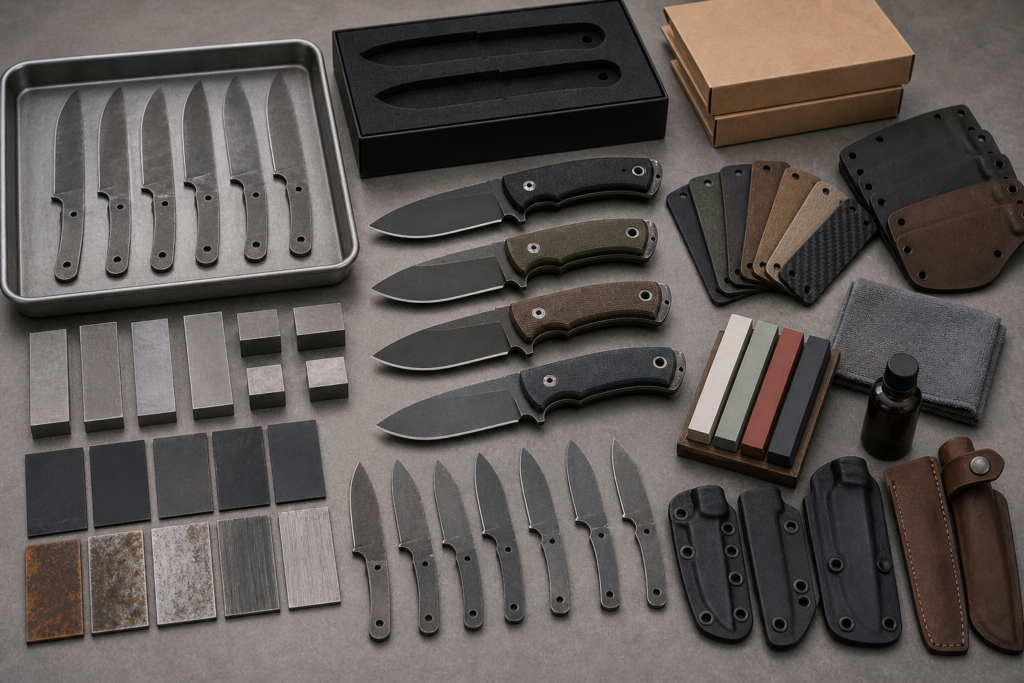
1095 sells because buyers understand carbon steel. But if the design ignores rust, heat treatment, and edge geometry, that simple choice becomes expensive.
Knife buyers should choose 1095 steel when the product needs a traditional high-carbon blade story, easy sharpening, practical cost, and dry-use outdoor or utility positioning. It is not a low-maintenance stainless option, so buyers must control heat treatment, coating, packaging claims, and care instructions.
Quick buyer brief:
- Answer: 1095 works best for practical carbon-steel fixed blades, outdoor knives, and value utility blades.
- Buyer context: It can support strong sales when the market accepts rust care and carbon-steel maintenance.
- Key checks: Confirm steel source, target hardness, heat treatment, blade thickness, coating, sharpening, corrosion warning, packaging wording, and QC records.
Planning a knife project with this steel?
Send us your target market, MOQ, price range, and blade type. Vast State can help you choose the right steel, HRC range, finish, handle material, and QC requirements for OEM/ODM production.
When I discuss 1095 with a buyer, I treat it as a product-positioning decision first. 1095 is not new. It is not stainless. It is not the highest edge-retention option. Still, it keeps selling because many knife users understand the appeal of simple carbon steel. They like the sharpening feel, traditional story, tough-looking blade style, and practical price. For B2B buyers, this can be useful. But the steel must match the target customer. A 1095 knife that sells well in a bushcraft or traditional outdoor line may fail in a humid EDC market if the buyer promises low maintenance. The steel is honest when the product is honest.
What Is 1095 Steel and Why Do Knife Buyers Still Use It?
Some buyers choose 1095 only because they have seen it in popular fixed blades. That is not enough. The steel must match the order goal.
1095 is a plain high-carbon steel with about 0.95 percent carbon. Knife buyers still use it because it is familiar, sharpens easily, supports a classic carbon-steel story, and can fit practical price points.
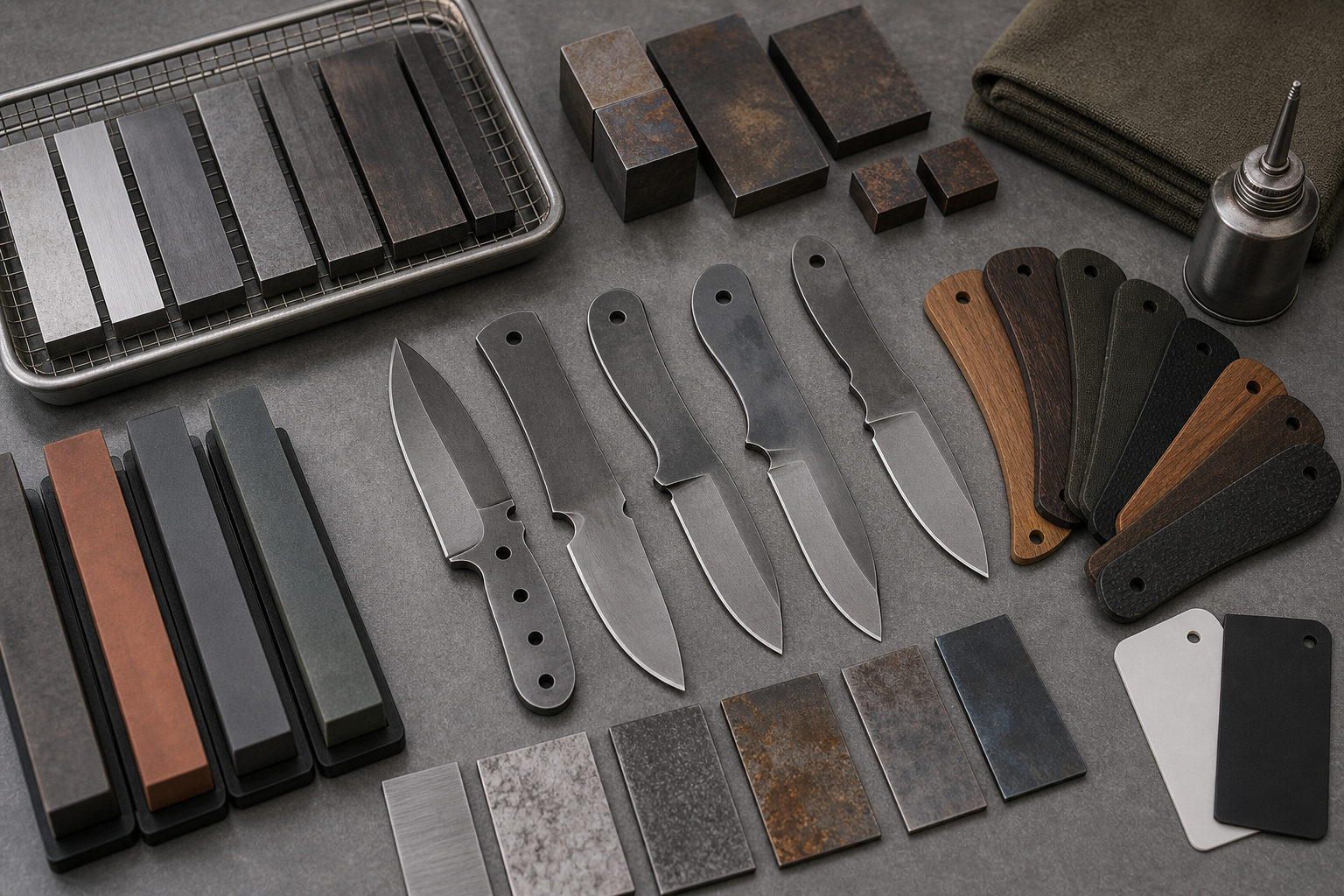
I Treat 1095 as a Simple Steel With a Clear Promise
1095 belongs to the 10xx carbon steel family. A Gibbs C1095 carbon strip data sheet lists carbon at 0.90 to 1.03 percent for its 1095 strip product. That high carbon content is the reason 1095 can harden well and take a crisp edge. It also explains why the steel needs correct heat treatment and careful rust control.
For knife buyers, 1095 is attractive because it is easy to understand. It does not need a complicated powder steel story. It works well in simple product language: high-carbon steel, easy to sharpen, practical for outdoor and utility use, and traditional in feel. That kind of message can sell well in fixed blade categories, bushcraft-style knives, survival knives, traditional knives, and value-oriented utility blades.
But I never present 1095 as a miracle material. It has low alloy content, and it does not have the chromium level needed for stainless behavior. Knife Steel Nerds describes 1095 as having no corrosion resistance in one corrosion testing discussion. That does not mean it cannot be used. It means the buyer must decide whether the customer will accept care, oiling, patina, coating wear, and possible staining. If yes, 1095 can be a strong, honest choice.
| Buyer question | Practical answer | Why it matters |
|---|---|---|
| Is 1095 stainless? | No | Packaging and care instructions must be honest |
| Why do buyers use it? | Carbon-steel story, easy sharpening, practical cost | It fits traditional and outdoor markets |
| What makes it risky? | Rust, heat-treatment sensitivity, edge geometry | These issues affect returns |
| Where does it fit best? | Fixed blades, outdoor knives, utility blades | These markets often understand carbon steel |
Quote-ready RFQ Checklist for This Steel
To get an accurate OEM/ODM quote, prepare these details before contacting a knife manufacturer.
| RFQ Field | What to Prepare |
|---|---|
| Product type | Folding knife / fixed blade / multi-tool / kitchen knife |
| Target market | US / EU / outdoor retail / promotional / tactical / EDC |
| Steel option | 4116 / 14C28N / D2 / N690 / Nitro-V |
| Target HRC | Example: 55-57 HRC, 58-60 HRC |
| Blade finish | Satin / stonewash / black coating / bead blast |
| Handle material | G10 / micarta / aluminum / stainless steel / wood |
| Lock or structure | Liner lock / frame lock / slip joint / full tang |
| Estimated quantity | 500 / 1,000 / 3,000 / 5,000+ pcs |
| Packaging | White box / color box / blister / pouch / gift box |
| Required documents | Drawing / sample photo / logo file / packaging artwork |
When Does 1095 Steel Make Sense for Top-Selling Blades?
A steel can sell well in one category and fail in another. 1095 works best when the market values carbon steel more than low maintenance.
1095 makes sense for top-selling blades when buyers want a practical high-carbon story, strong outdoor identity, easy field sharpening, and a price level that supports repeat orders.
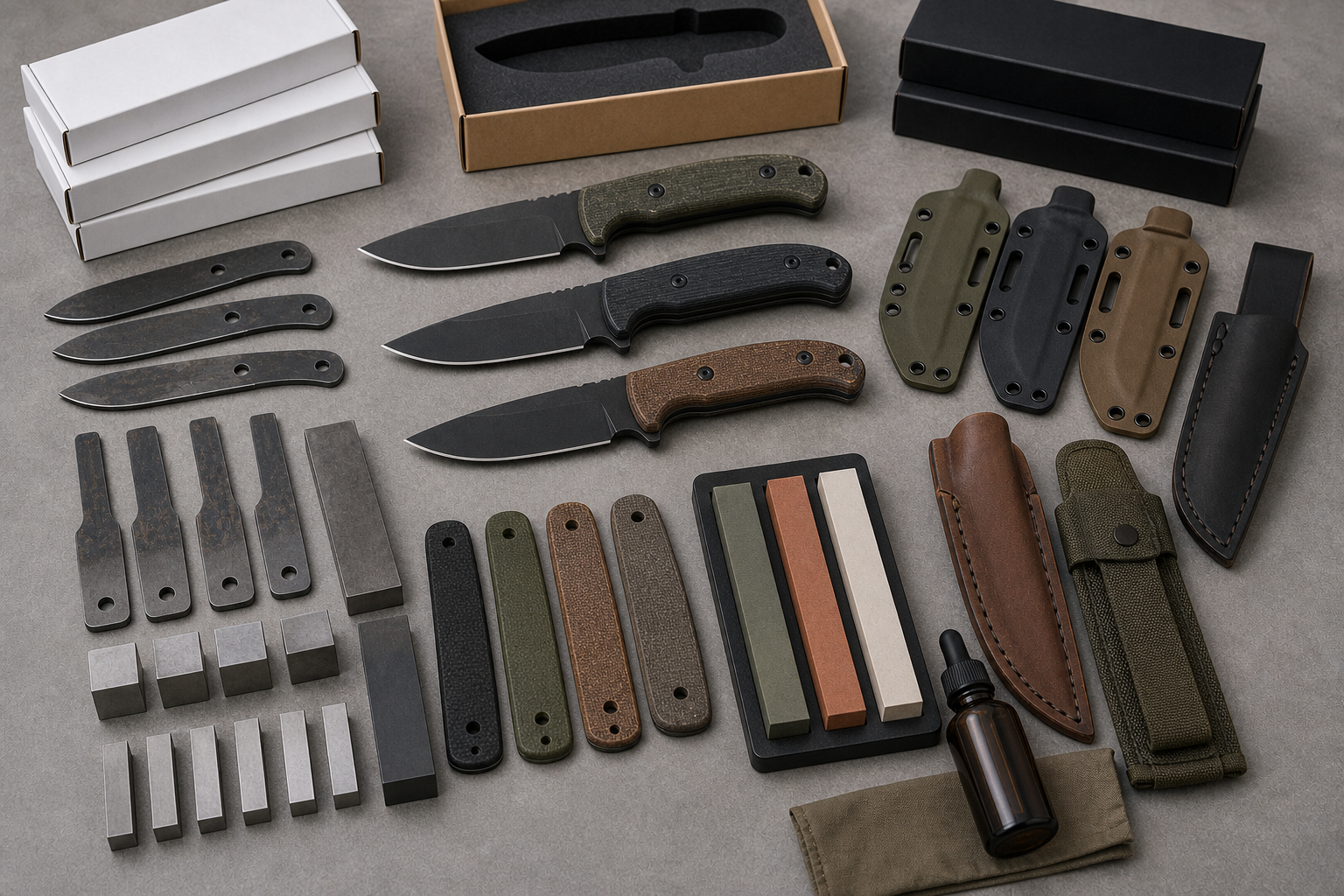
I Use 1095 When the Customer Already Accepts Carbon Steel
The best 1095 projects usually have a clear customer. Outdoor users, bushcraft buyers, traditional knife buyers, and some work-knife users already understand carbon steel. They may accept patina. They may oil the blade. They may prefer easy sharpening over stainless convenience. In these markets, 1095 can help the seller create a simple and believable product story.
I also consider 1095 when the buyer needs a practical fixed blade at a controlled cost. The steel can support many shapes, including camp knives, belt knives, traditional hunting-style knives, machete-style tools, and value outdoor blades. It is especially useful when the buyer wants a coated blade. A black coating, stonewash, or other finish can help manage rust expectations, although no finish removes the need for care.
Still, I do not recommend 1095 for every top-selling idea. If the buyer wants a pocket knife for humid daily carry, a fishing knife, a food-prep knife, or a low-maintenance gift product, stainless steel may be safer. If the buyer wants high abrasive cutting performance for cardboard-heavy use, D2 or another wear-resistant option may be more suitable. 1095 sells when the story, user, and care requirement match.
| Product type | 1095 fit | Reason |
|---|---|---|
| Outdoor fixed blade | Strong fit | Users often accept carbon-steel care |
| Bushcraft-style knife | Strong fit | Easy sharpening and traditional story matter |
| Humid EDC folder | Weak fit | Rust complaints may be more likely |
| Value utility blade | Case by case | Good if care wording and finish are clear |
What Are the Main Risks of 1095 Steel in B2B Knife Orders?
1095 looks simple, so buyers may under-specify it. That is the trap. Simple steel still needs serious process control.
The main risks of 1095 are rust, misleading stainless-like claims, heat-treatment variation, edge deformation, coating wear, and user complaints when care instructions are unclear.
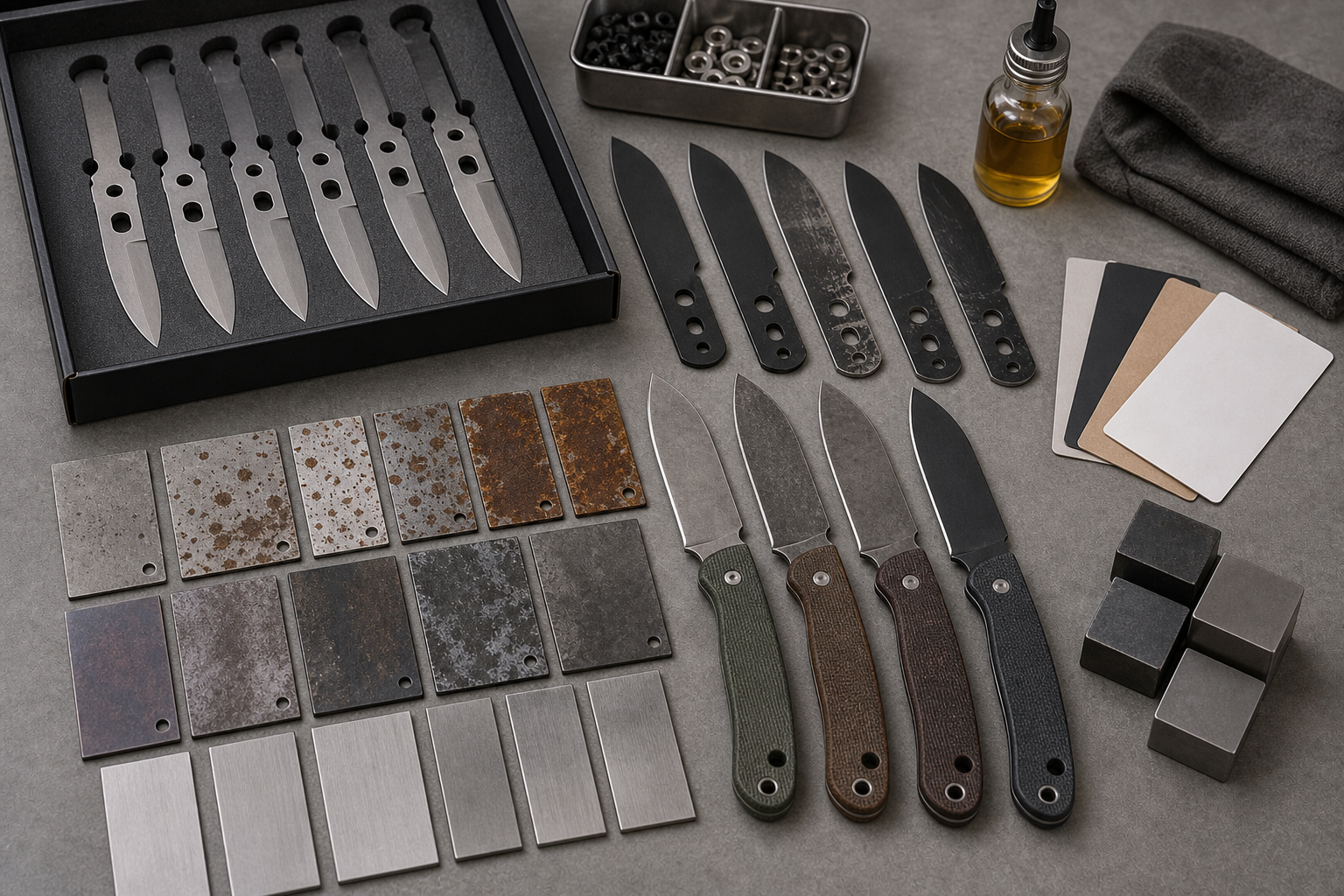
I Put Rust Expectations in the Product Brief
The first risk is corrosion. 1095 can rust quickly if it is wet, dirty, salty, or stored poorly. This can be normal for carbon steel, but it can feel like a defect if the product page or packaging does not explain care. I prefer to define the customer promise early. If the buyer wants a black coated 1095 blade, we should still say that the edge and worn areas need care. If the buyer wants a satin 1095 blade, the seller should expect patina and possible staining.
The second risk is heat treatment. 1095 can work well, but it has a narrower process window than some easier carbon steels. Knife Steel Nerds notes in a bainite heat-treatment article that 1095 is a simple carbon steel with about 0.95 percent carbon and small amounts of manganese and silicon. That simplicity is useful, but it does not remove the need for controlled temperature, quench speed, and tempering.
The third risk is edge geometry. Some users think 1095 is always tough because many famous outdoor knives use it. But actual performance depends on hardness, blade thickness, edge angle, and use. A thick 1095 camp knife may tolerate rougher use. A thin 1095 edge at the wrong hardness may roll or deform. For B2B orders, the factory and buyer should agree on the use case before finalizing the grind.
| Risk | How it appears | How I reduce it |
|---|---|---|
| Rust | Stains, orange spots, dark patina | Coating, oiling note, care card, honest packaging |
| Heat treatment variation | Soft edge, brittle edge, unstable batch | Target HRC, heat-treatment route, test coupons |
| Edge geometry mismatch | Rolling, deformation, chipping | Match thickness and edge angle to use |
| Coating wear | Edge and spine exposure | Define coating type and wear expectation |
How Should 1095 Compare With Stainless, D2, and 80CrV2?
Buyers often ask if 1095 is better. That question is too broad. The more useful question is what customer problem the steel solves.
1095 should be compared by corrosion care, sharpening feel, toughness need, wear resistance, price level, heat-treatment difficulty, and product story rather than by steel popularity alone.
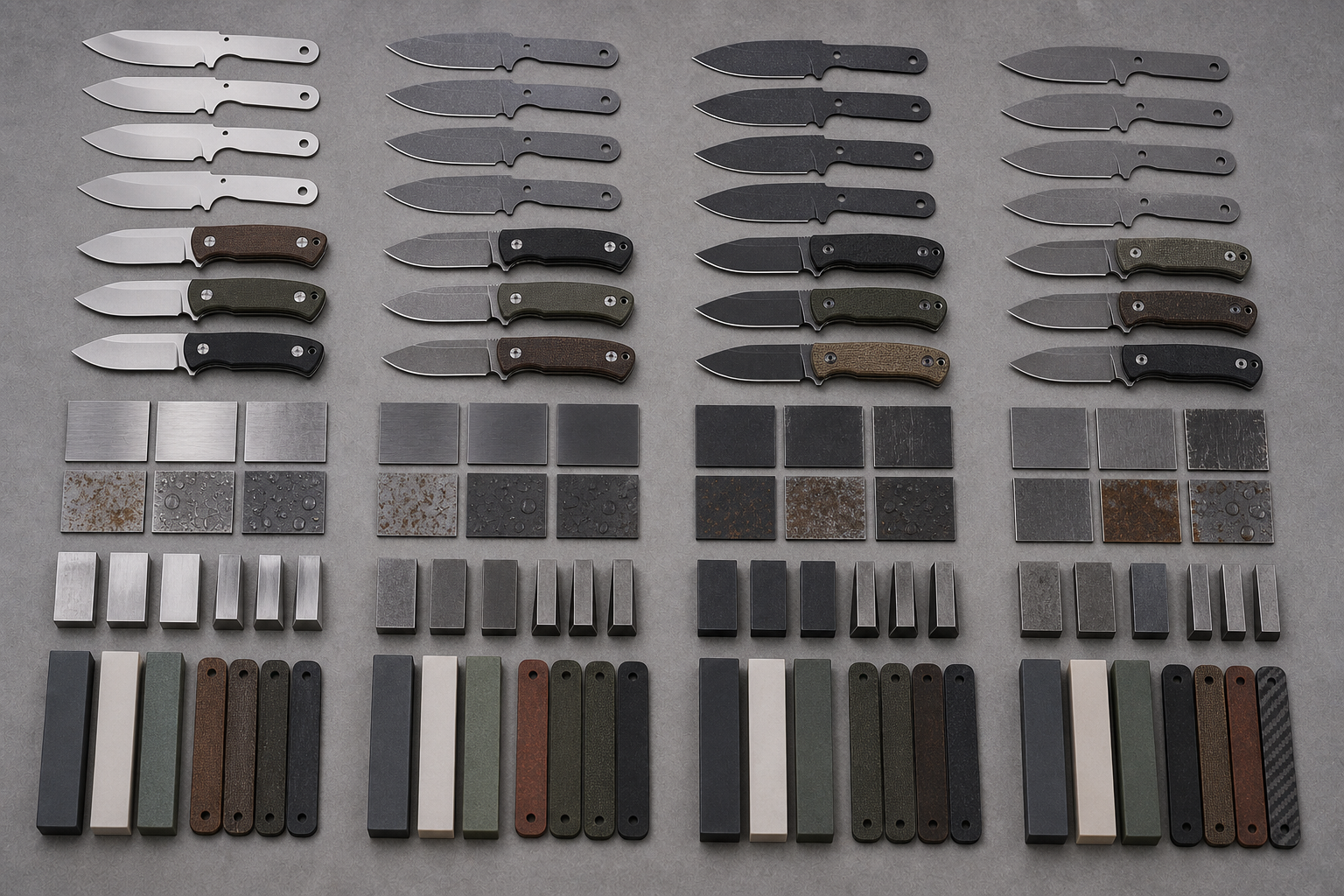
I Compare 1095 Against the Buyer"'"'s Real Sales Channel
Compared with common stainless steels, 1095 usually loses on corrosion resistance. That is the biggest practical difference. Stainless steels are easier to sell to users who do not want maintenance. 1095 can still win when the buyer wants carbon-steel character, easy sharpening, and a traditional outdoor story.
Compared with D2, 1095 is usually easier to sharpen and more honest as a simple carbon steel, while D2 usually has stronger wear-resistance positioning. D2 is also not true stainless in user expectations, but it can resist staining better than simple carbon steels in many conditions. If the buyer sells utility folders for cardboard and packaging, D2 may make sense. If the buyer sells a coated outdoor fixed blade that users can sharpen in the field, 1095 may make more sense.
Compared with 80CrV2, 1095 is not always the more forgiving option. Many makers and suppliers like 80CrV2 because it can offer a strong balance of toughness and ease of heat treatment. I may recommend 80CrV2 when the buyer wants a hard-use outdoor blade and does not need the exact 1095 story. I may still recommend 1095 when the brand message depends on classic high-carbon steel and the buyer can control heat treatment.
| Comparison | 1095 advantage | 1095 concern |
|---|---|---|
| 1095 vs stainless | Traditional carbon-steel feel and easy sharpening | Much higher rust-care need |
| 1095 vs D2 | Easier sharpening and simpler carbon-steel story | Lower wear-resistance positioning |
| 1095 vs 80CrV2 | Familiar classic name | May be less forgiving in heat treatment |
| 1095 vs premium PM steel | Lower cost and simpler message | Lower corrosion and wear-resistance story |
Why Do Heat Treatment, Coating, and Edge Geometry Matter?
Many buyers think 1095 is easy because it is common. Common does not mean automatic. Process details decide the real blade.
Heat treatment sets hardness and strength. Coating reduces visible rust risk. Edge geometry decides cutting feel and durability. All three must match the user and product claim.
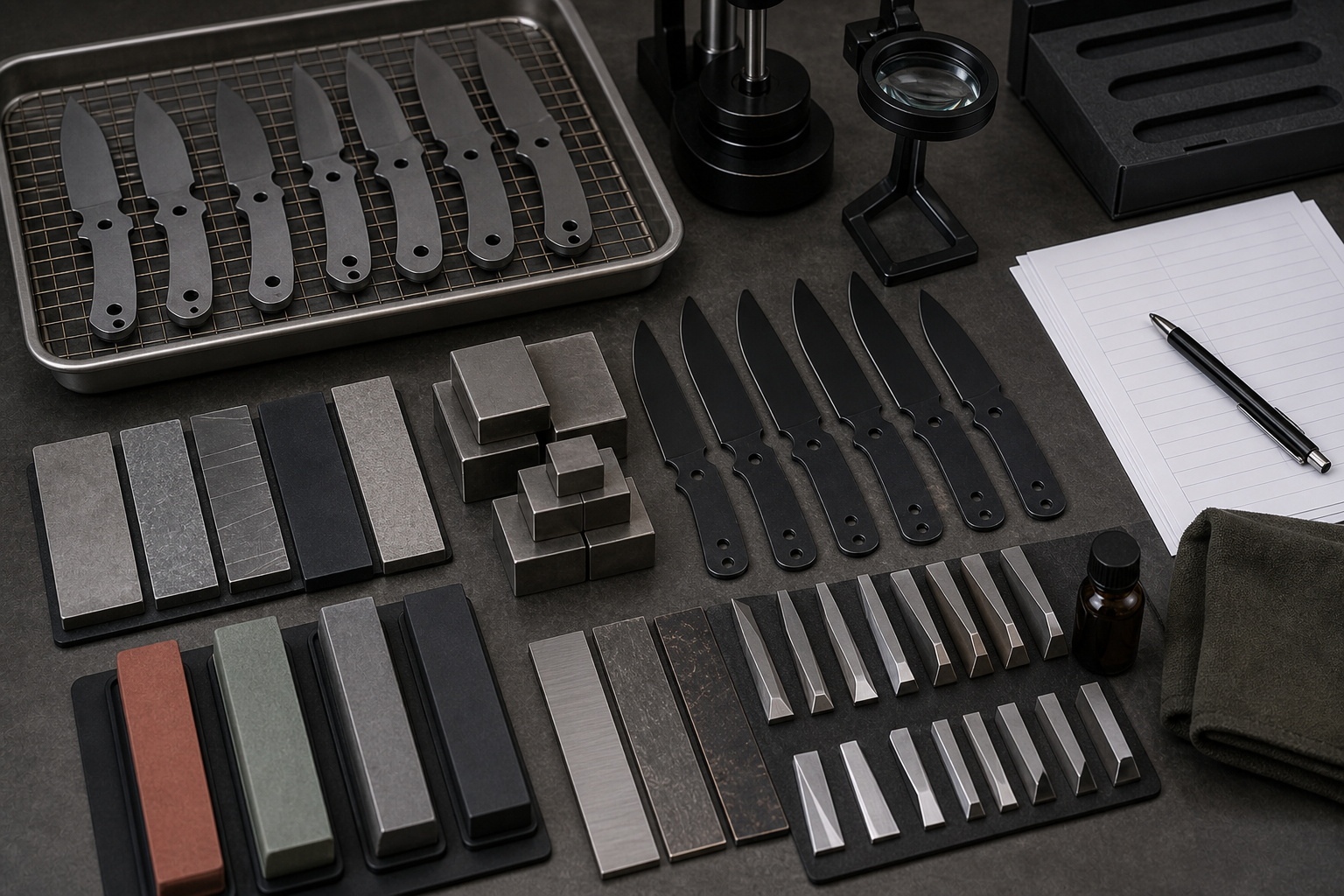
I Control the Process Before I Approve the Blade
The New Jersey Steel Baron 1095 heat treating document describes 1095 as a favorite steel for many knife makers and enthusiasts. That popularity is useful, but the same document also points buyers toward proper heat-treatment protocols and professional heat-treating services when needed. For OEM production, I take that seriously. I want a target hardness range, a controlled quench, tempering records, and sample verification.
Coating should also be part of the design discussion. A coated 1095 blade can reduce visible surface rust and support an outdoor look, but the edge, scratches, spine, and worn areas still need care. If the buyer chooses satin or polished 1095, the care language becomes even more important. The packaging should not create a stainless expectation.
Edge geometry is where the user feels the steel. A chopping knife, camp knife, neck knife, and thin utility blade should not all share the same behind-edge thickness. A softer 1095 blade may deform rather than chip. A harder blade may hold an edge better but can be less forgiving if the geometry is too thin. Hardness testing helps, but it must be done properly. NIST explains that Rockwell hardness measurement needs good practice to reduce measurement errors. I prefer test coupons and batch records instead of one casual number.
| Process detail | What to define | Why it matters |
|---|---|---|
| Heat treatment | Target HRC, quench, tempering, records | Controls hardness and repeatability |
| Coating or finish | Black coating, stonewash, satin, oiling note | Controls corrosion expectation |
| Edge geometry | Thickness, grind, edge angle | Balances cutting and durability |
| QC plan | Hardness checks, visual inspection, cutting checks | Reduces batch surprises |
What Should Buyers Put in an RFQ for 1095 Steel Knives?
A good RFQ prevents disappointment. If the buyer only says "1095 blade," the supplier must guess too much.
An RFQ for 1095 knives should include knife type, target market, blade thickness, target hardness, heat-treatment route, coating, handle material, packaging care wording, quantity, price range, and inspection needs.
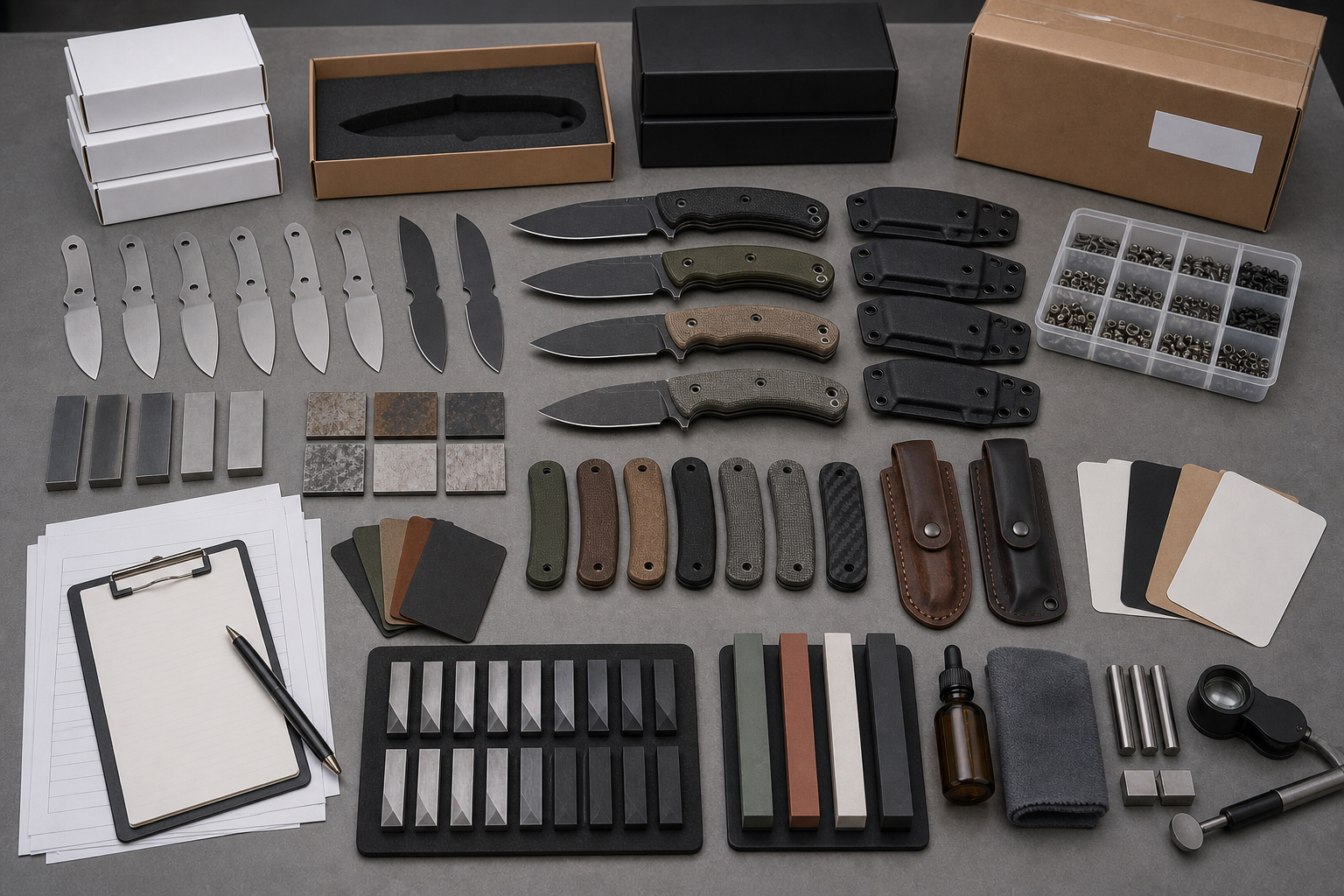
I Ask Buyers to Define the User Before the Steel
When a buyer asks Vast State for a 1095 knife, I first ask about the end user. Is the product for camping, bushcraft, hunting-style use, general utility, tactical-style branding, or traditional retail? The use case decides blade thickness, coating, handle texture, sheath, packaging, and care instructions. A 1095 camp knife can be excellent when the buyer expects carbon-steel maintenance. A 1095 pocket knife for casual users may create more after-sales questions.
The RFQ should also define commercial targets. Buyers should share target price, expected quantity, packaging type, destination market, and whether the product is a trial order or repeat line. These details affect steel sourcing, finishing, sheath choice, and QC level. If the buyer wants a black coated blade, the RFQ should state whether the coating is mainly cosmetic, protective, or part of the brand look. If the buyer wants a visible satin blade, the care card becomes more important.
Finally, I recommend sample validation before mass production. A useful sample review checks blade hardness, edge grind, burr removal, coating coverage, handle fit, sheath retention, packaging, and care wording. This is how 1095 becomes a dependable product instead of a risky carbon-steel claim. The strongest 1095 orders are not vague. They are clear about use, maintenance, and production controls.
| RFQ field | What to include | Why it helps |
|---|---|---|
| Product use | Outdoor, bushcraft, utility, traditional, private label | Guides steel and geometry decisions |
| Blade details | Thickness, grind, edge angle, target HRC | Controls performance |
| Finish and care | Coating, oiling note, care card, package wording | Reduces rust complaints |
| Commercial details | MOQ, target price, packaging, destination market | Makes the quote realistic |
Ready to use this material in your next knife line?
Vast State can help you compare blade steels, heat treatment ranges, handle materials, finishes, packaging options, and QC requirements based on your target market and quantity.
Conclusion
I choose 1095 when carbon-steel story, easy sharpening, and practical cost fit the buyer, but I protect the order with care and process control.
Source Notes
- Gibbs C1095 carbon strip data sheet supports the article's composition discussion for 1095 carbon steel.
- New Jersey Steel Baron 1095 heat treating supports the heat-treatment and process-control guidance.
- Knife Steel Nerds steel ratings supports the article's cautious view of corrosion resistance and the importance of heat treatment.
- Knife Steel Nerds bainite heat treatment article supports 1095 composition context and heat-treatment tradeoff discussion.
- NIST Rockwell hardness guide supports the advice to treat hardness testing as a controlled measurement process.