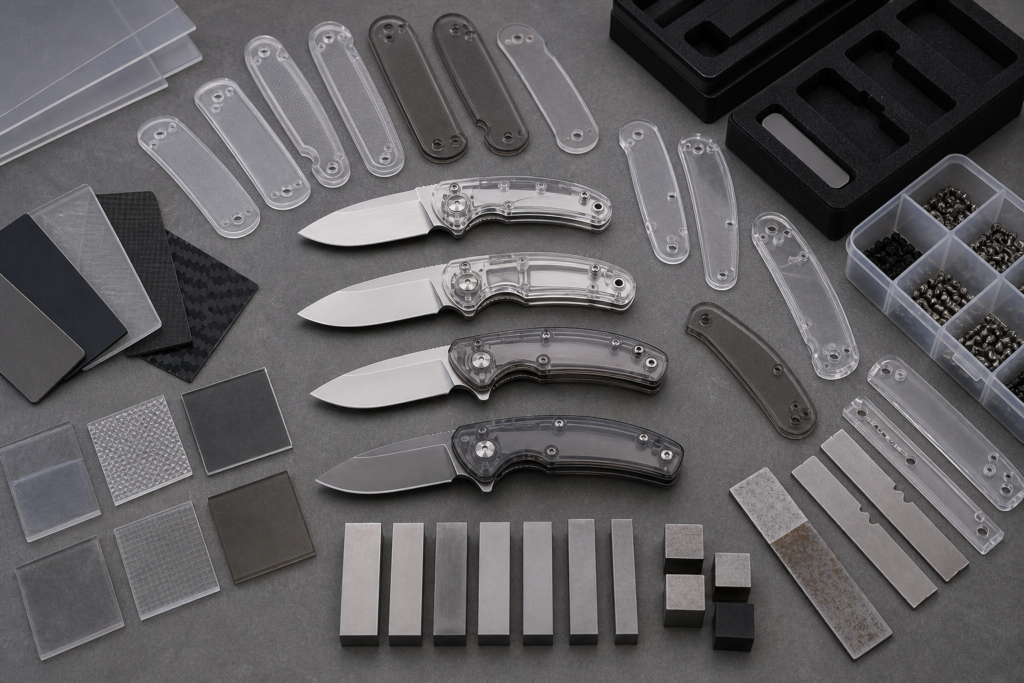
Lexan can make a knife look modern and clear. But if the design ignores scratches, chemicals, and screw stress, the handle becomes a complaint.
Lexan can be a practical knife handle material when buyers need transparent polycarbonate styling, impact resistance, light weight, and a special visual story. It is not the best default handle material for every knife, because scratch resistance, chemical exposure, grip, screw-hole stress, and finish consistency must be controlled.
Quick buyer brief:
- Answer: Lexan works best for display-friendly EDC, concept lines, and transparent handle designs with controlled structure.
- Buyer context: It is less suitable for rough grip, abrasive carry, harsh chemicals, or heavy screw stress without design support.
- Key checks: Confirm material grade, sheet or molded form, thickness, texture, hard coating, screw design, chemical exposure, UV need, and QC standard.
Have a knife or multi-tool project in mind?
Send your sketch, CAD file, sample photo, or product idea. Vast State can review manufacturability, suggest materials, estimate MOQ, and prepare a quote for your OEM/ODM project.
When a buyer asks me whether Lexan is good for knife handles, I do not answer only from the material name. I ask what the knife needs to do. A transparent showpiece folder, a light EDC design, and a rough outdoor knife do not need the same handle material. Lexan can create a clear and technical look. It can also show every scratch, stress mark, trapped dust spot, and screw mistake. For B2B buyers, the useful question is not whether Lexan is strong in general. The useful question is whether Lexan can support the product story, price level, manufacturing process, and after-sales expectation.
What Is Lexan and Why Do Buyers Ask About It?
Some buyers use Lexan as a broad word for clear plastic. That is risky. The material claim should be specific before production starts.
Lexan is SABIC's polycarbonate resin brand. Buyers ask about it because polycarbonate can offer transparency, impact resistance, light weight, and a technical appearance that can make a knife handle look different.
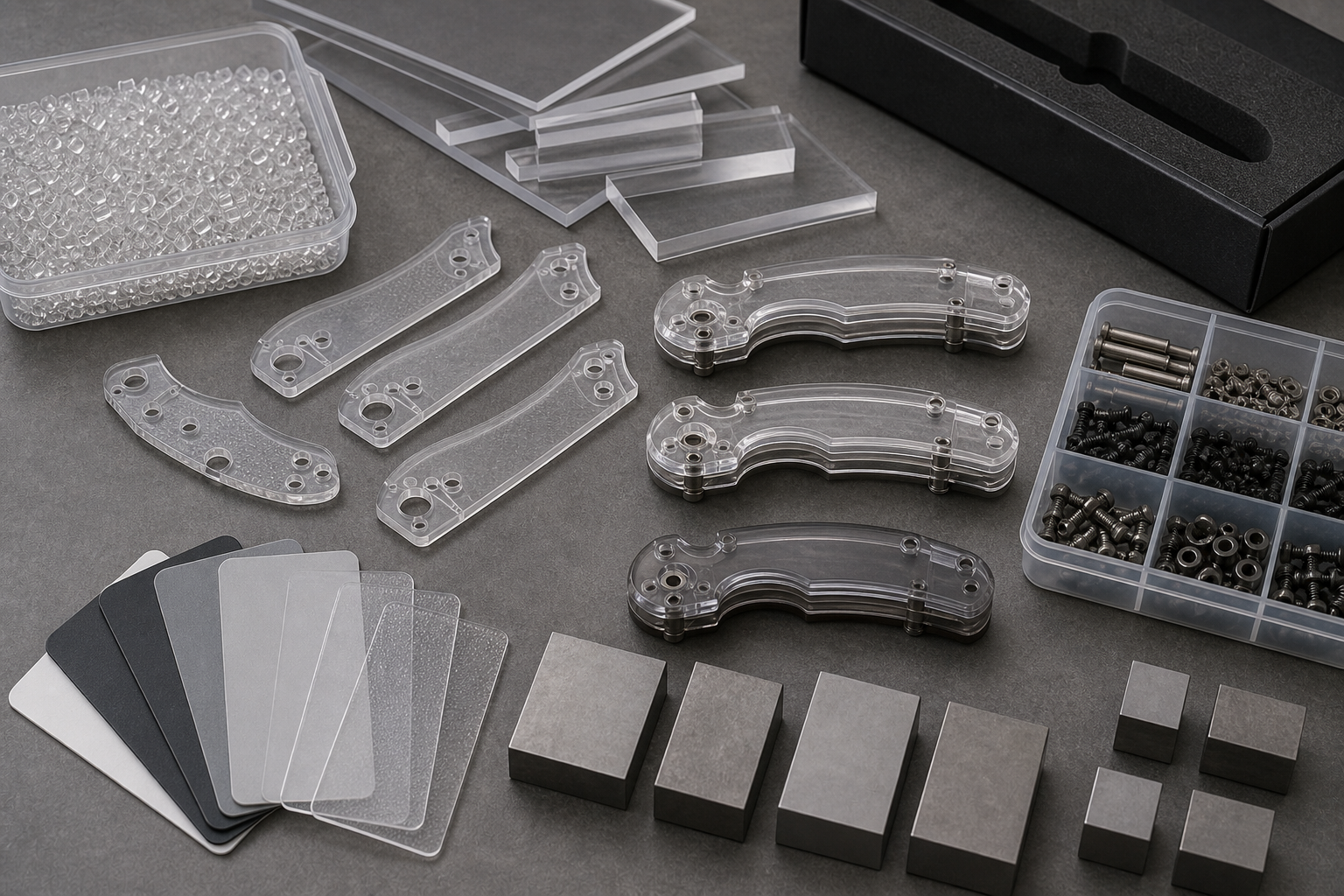
I First Clarify Whether the Buyer Means Lexan or Polycarbonate
SABIC describes Lexan resin as a high-performance polycarbonate thermoplastic with strength, impact resistance, and transparency. This is the basic material story buyers usually have in mind. In the knife market, however, the word Lexan is sometimes used loosely for any clear polycarbonate sheet or molded part. That can create trouble. A buyer may expect genuine Lexan resin, while a supplier may quote generic PC sheet. The color and clarity may look similar, but the grade, source, UV package, hard coating, and documentation can be different.
For OEM and ODM knife work, I prefer to write the material requirement clearly. The RFQ can say genuine Lexan required, polycarbonate acceptable with supplier document, or factory to recommend clear PC with sample approval. These are three different sourcing paths. The choice affects cost, availability, machining, finish, and claims on the product page.
I also remind buyers that polycarbonate strength in one application does not automatically mean a knife handle will be strong in every structure. Knife scales have holes, countersinks, pocket clips, liners, edges, chamfers, and repeated pocket contact. These details create stress. The material must be evaluated as part of the knife, not as a flat sheet alone.
| Buyer question | What I check | Why it matters |
|---|---|---|
| Is it genuine Lexan? | Resin or sheet source, document, grade | It protects material claims |
| Is generic PC acceptable? | Buyer expectation and price target | It changes sourcing options |
| Is the part transparent? | Clarity, tint, surface finish, internal marks | It affects perceived quality |
| Is the structure safe? | Holes, countersinks, clip area, liner support | It reduces cracking and stress marks |
OEM/ODM RFQ Checklist
Prepare these details to help Vast State review your project and provide a more accurate quotation.
| RFQ Field | What to Prepare |
|---|---|
| Project type | OEM from drawing / ODM private label / wholesale catalog |
| Product category | Folding knife / fixed blade / multi-tool / outdoor tool |
| Design status | Idea / sketch / 2D drawing / 3D CAD / physical sample |
| Target price | Ex-factory target price or retail price range |
| MOQ expectation | 500 / 1,000 / 3,000 / 5,000+ pcs |
| Logo method | Laser engraving / etching / printing / molded logo |
| Packaging | Standard packaging / custom retail box / Amazon-ready |
| Market | USA / EU / Japan / Korea / Middle East / other |
| Compliance needs | Buyer-specified testing / documentation / labeling |
| Timeline | Sample deadline / mass production deadline |
When Can Lexan Work Well for Knife Handle Designs?
A clear handle can make a product stand out online. It can also disappoint users if the design needs heavy grip or hidden wear.
Lexan can work well for knife handles when the product needs transparent styling, visible construction, light weight, impact resistance, and a modern EDC or display-friendly identity.
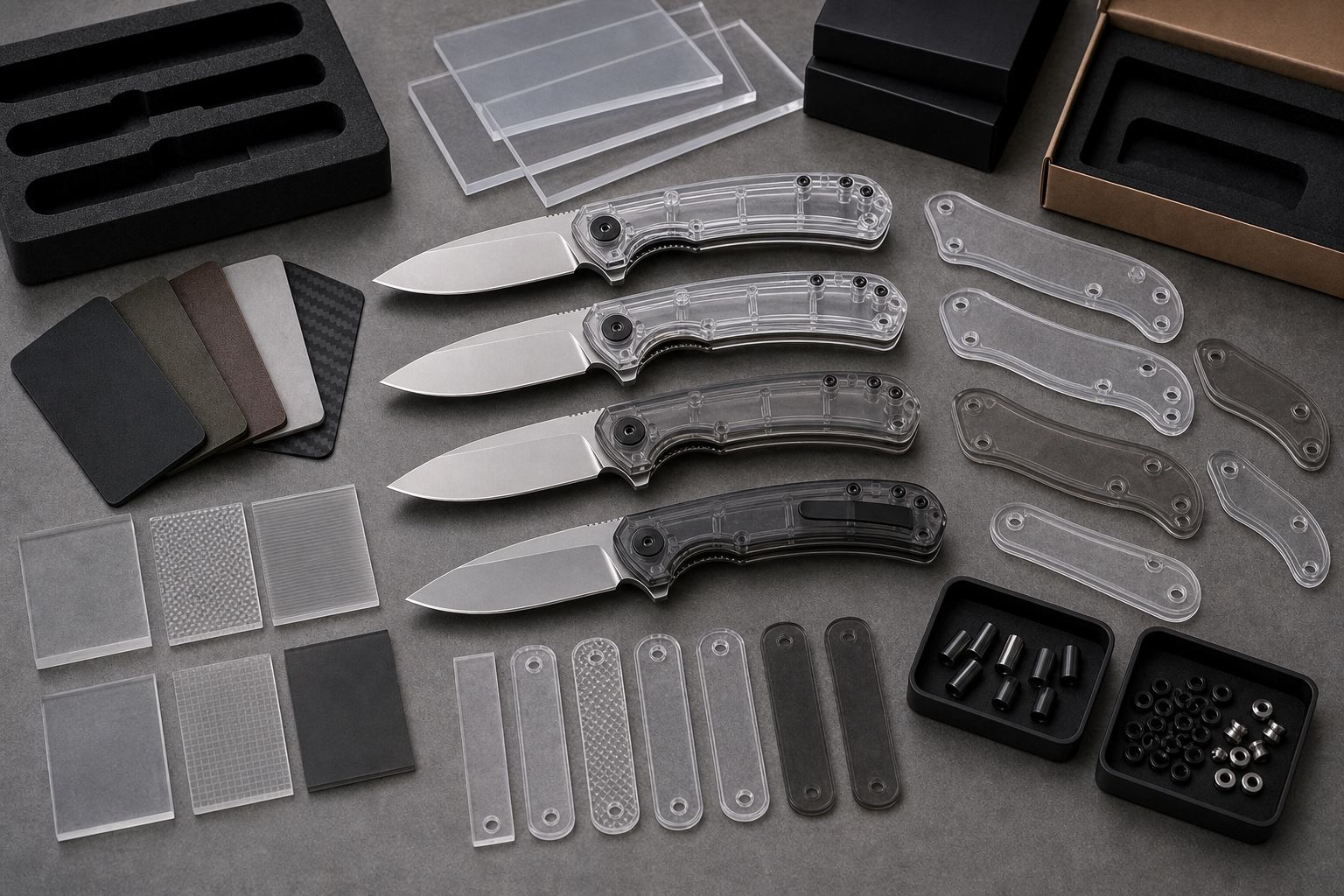
I Use Lexan When the Visual Story Is Worth the Controls
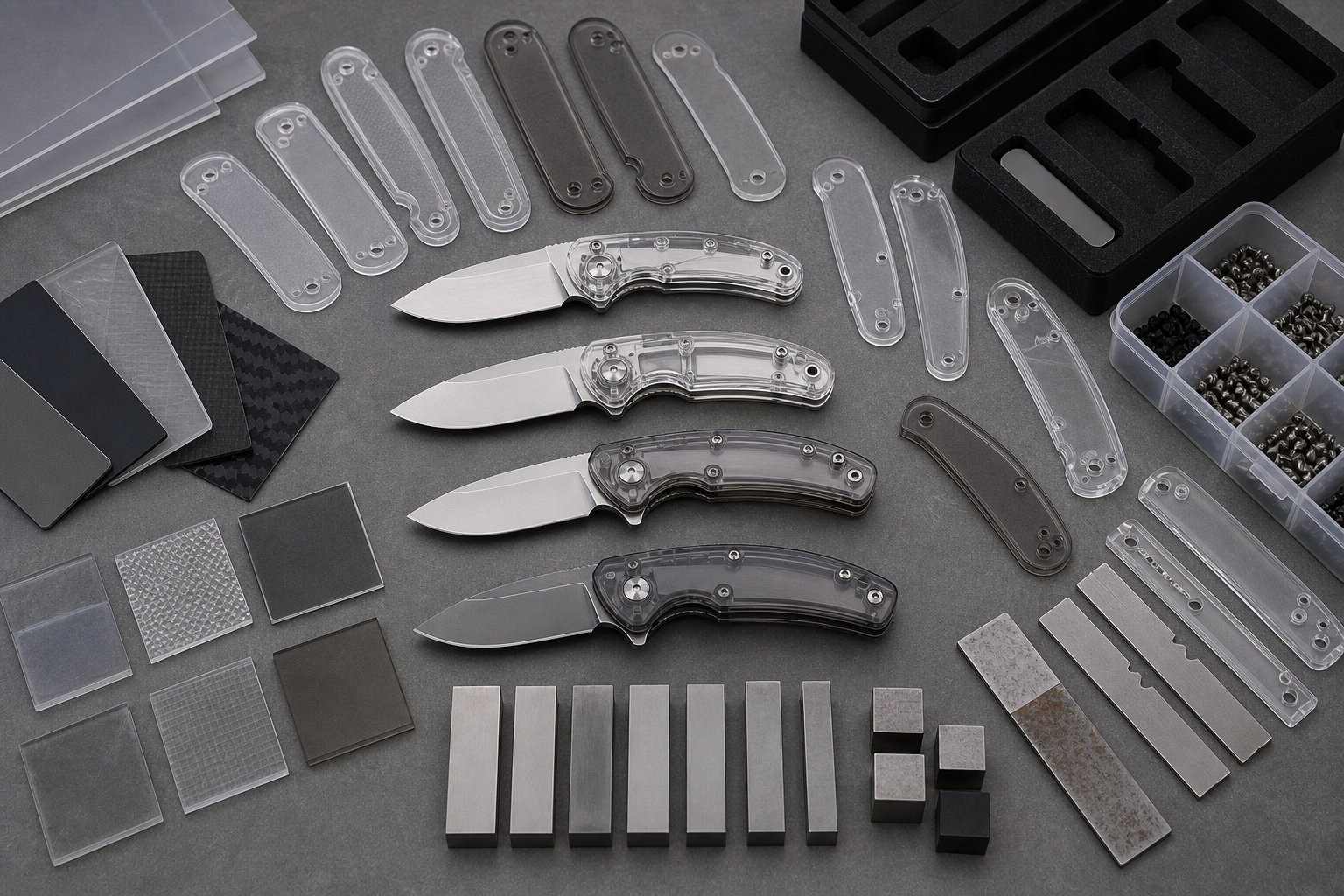
Lexan or polycarbonate can make sense when the buyer wants a transparent handle. A clear scale can show the liner, spacer, standoffs, color accents, or internal construction. This can help a small EDC knife feel more modern. It can also help a brand create a limited series or a product page that looks different from common black G10 or stainless handles.
The material can also help when impact resistance is part of the story. Ensinger describes its TECANAT natural polycarbonate as transparent and lists excellent impact strength, strength and stiffness, dimensional stability, and good machinability. That supports the idea that PC can be a serious engineering plastic. But I still connect the material to the knife's use. A knife handle is touched, carried, rubbed by clips, tightened with screws, and exposed to oils or cleaners. The handle needs more than sheet strength.
In my view, Lexan works best for compact folders, concept-driven EDC knives, display-friendly private label lines, light-duty utility knives, and designs where the internal structure is clean enough to be visible. It is less attractive for products where rough grip, abrasive pocket carry, aggressive outdoor use, or chemical exposure are the main concern. In those cases, G10, micarta, aluminum, or textured reinforced plastics may be easier to manage.
| Design goal | Lexan fit | Practical reason |
|---|---|---|
| Transparent EDC handle | Strong fit | It creates a visible technical identity |
| Lightweight visual series | Possible fit | PC can reduce weight versus metal scales |
| Heavy grip outdoor knife | Weak fit | Surface texture and scratch resistance become concerns |
| Low-cost work knife | Case by case | The added controls may not match the price |
What Are the Main Risks of Lexan Knife Handles?
The danger is not that Lexan is weak. The danger is assuming impact resistance solves every handle problem.
The main risks are scratches, stress cracking, chemical sensitivity, visible dust or machining marks, weak grip texture, screw-hole stress, and unclear buyer expectations.
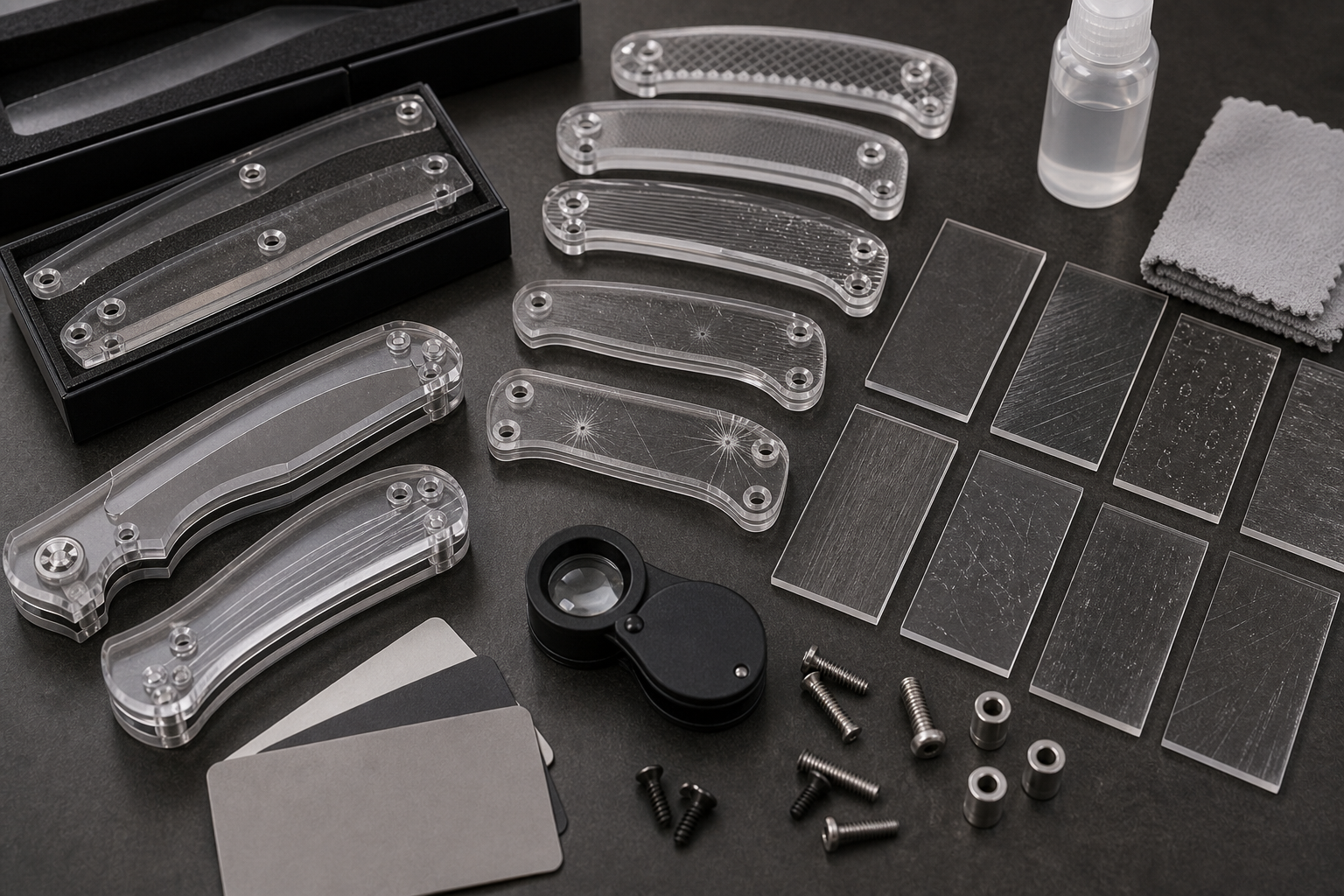
I Check the Screw Holes and Surface Before I Trust the Sample
Polycarbonate is known for impact strength, but knife handles fail in more specific ways. The screw holes matter first. Countersunk screws can create stress. Pocket clips can concentrate load. Sharp internal corners can become crack-starting points. If the scale is too thin, the material may show whitening, cracking, or stress marks around hardware. I like wide support, smooth radii, controlled countersink depth, correct screw length, and torque control during assembly.
The second risk is surface appearance. A transparent handle shows more than a dark handle. Small scratches, polishing haze, fingerprints, oil marks, burrs, and trapped dust become visible. Curbell's polycarbonate page notes that abrasion-resistant hard-coated sheet options exist to improve weatherability, chemical resistance, abrasion resistance, and surface hardness compared with basic polycarbonate benefits. That tells me the buyer should decide whether a hard-coated material or a specific surface requirement is needed before production.
The third risk is chemical exposure. Ensinger's TECANAT page says lower chemical resistance may be a limiting factor in material selection. Its engineering plastics manual also notes that polycarbonate is sensitive to solvents and alkalis and has a tendency to stress crack formation. This matters during assembly and customer use. Threadlocker, cleaners, oils, solvents, and packaging chemicals should be checked. I do not want a beautiful transparent sample to develop cracks after the wrong chemical touches a stressed screw area.
| Risk area | What can happen | How I reduce the risk |
|---|---|---|
| Screw holes | Whitening, stress marks, cracking | Radius, support, countersink control, torque control |
| Surface wear | Scratches, haze, visible pocket wear | Hard coat option, texture, finish standard |
| Chemicals | Stress cracking or cloudy marks | Check cleaners, oils, threadlocker, packaging contact |
| Transparency | Dust and machining marks are visible | Clean machining, washing, inspection standard |
How Should Lexan Compare With G10, Micarta, Aluminum, and Ultem?
Buyers often ask which handle material is best. That is the wrong starting point. The right material depends on the product promise.
Lexan should be compared by clarity, impact strength, scratch resistance, grip, rigidity, chemical resistance, machining control, cost, and customer expectation, not by one property alone.
I Match the Handle Material to the Sales Channel
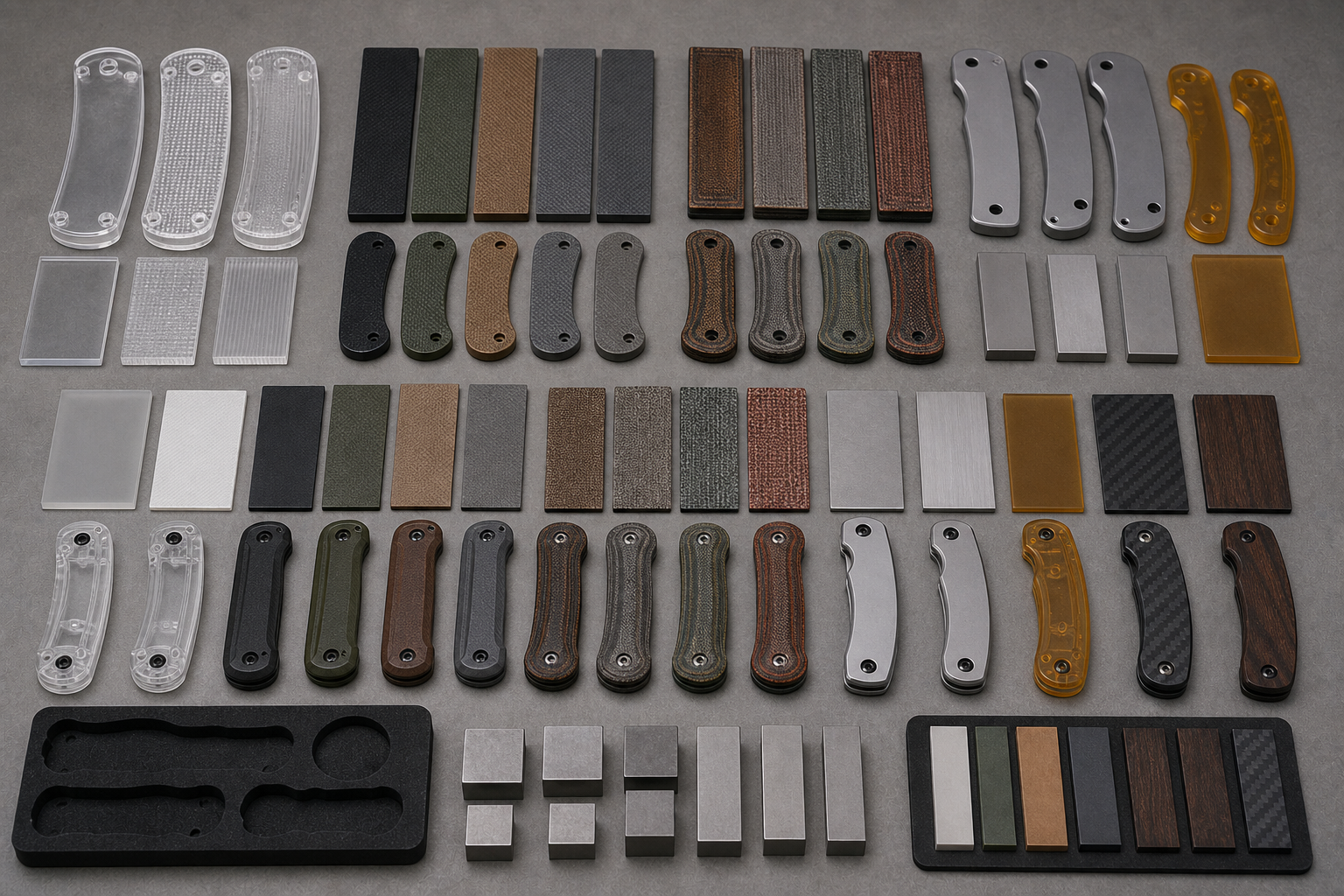
G10 is usually easier when the buyer needs grip, color options, toughness, and stable handle texture. Micarta gives a warmer outdoor feel and often fits bushcraft or traditional designs. Aluminum gives a clean modern look and can use anodized colors, but scratches and color consistency need control. Ultem or PEI gives a technical amber look with a higher material story, but it also needs careful screw and finish control.
Lexan sits in a different position. It is most useful when transparency matters. It can show construction and create a clear product identity. It can also support impact-resistance language when the material and structure are specified carefully. But I do not use it as a direct replacement for G10 in rough-use knives. A smooth clear handle may look good but feel slippery. A glossy surface may photograph well but scratch in pocket carry. A transparent scale may look premium in a sample but show every production mark in a batch.
I compare materials by the buyer's sales channel. If the customer sells to outdoor users who want grip, I will usually prefer G10 or micarta. If the buyer sells a compact EDC knife with visible hardware and a clean online visual story, Lexan may be interesting. If the buyer wants a high heat or chemical story, Lexan may not be the best first choice. The material must support the real product, not only the product photo.
| Material | Main advantage | Main concern |
|---|---|---|
| Lexan or PC | Clear impact-resistant visual story | Scratches, chemicals, screw stress, grip |
| G10 | Grip, stability, color options | Dust control and edge finish |
| Micarta | Warm outdoor feel and texture | Batch color and surface variation |
| Aluminum | Light modern metal handle | Scratches and anodizing consistency |
| Ultem or PEI | Amber technical material story | Cost, stress points, finish marks |
What Manufacturing and QC Details Should Buyers Control?
Lexan can look good as one sample. The challenge is making a full batch look and fit the same.
Buyers should control material grade, sheet thickness, machining marks, chamfers, screw torque, hard coating, texture, cleaning method, chemical contact, assembly checks, and final appearance standard.
I Build the QC Plan Around Visibility and Stress
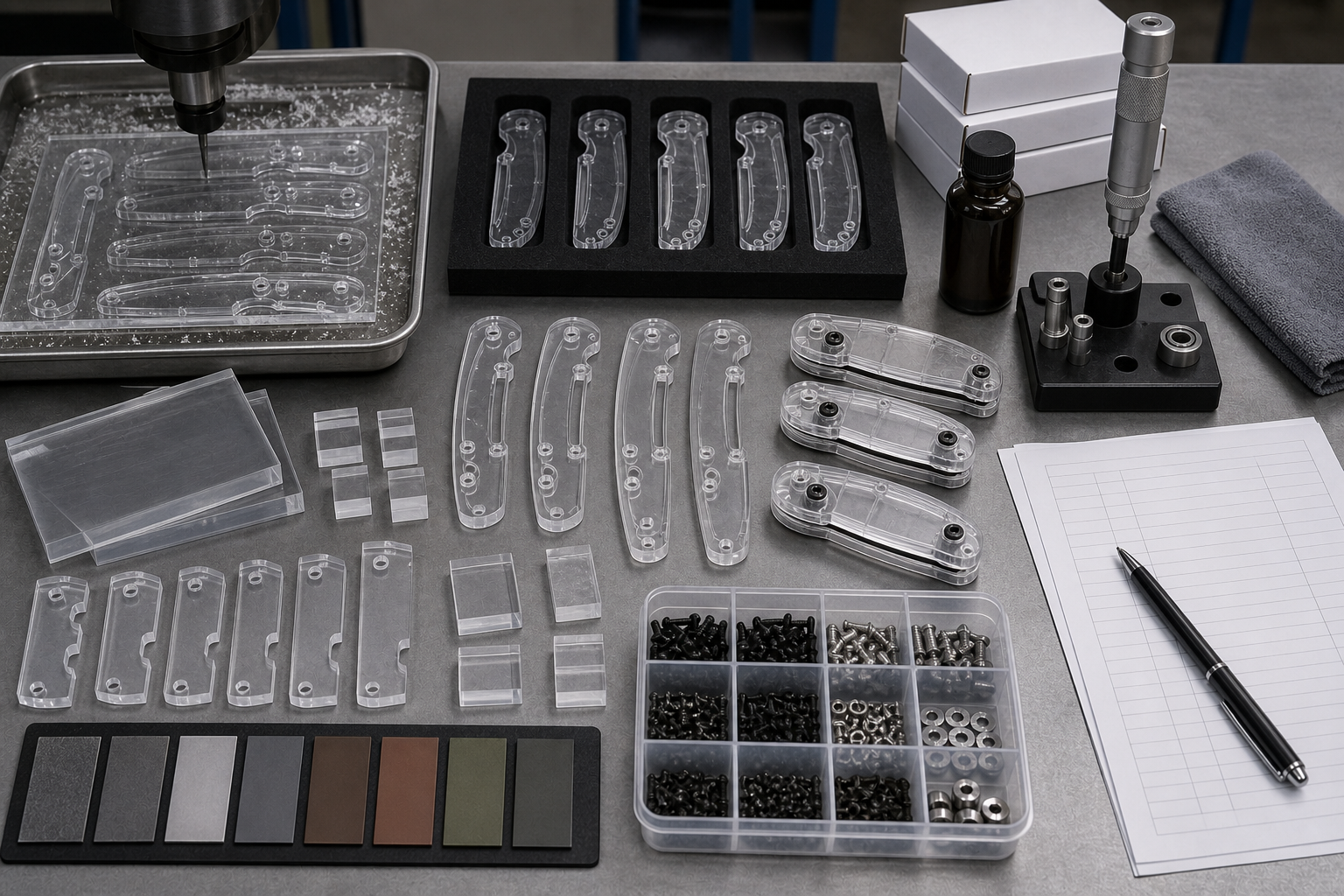
For Lexan handle knives, I start QC from the approved sample. The buyer and supplier should agree on clarity, tint, allowed tiny marks, edge polish, chamfer quality, and surface finish. Transparent material needs this because small marks become visible. If the buyer wants a hard-coated sheet, the supplier should confirm which surface is coated and how machining affects the edge. If the buyer wants a textured surface, the drawing should show where the texture goes and how deep it can be.
Then I check the stress points. Screw holes, countersinks, pocket clip screws, stop pin areas, standoff contact, and liner support should be inspected. Torque control is important. A screw that feels normal in G10 may create too much stress in a clear PC scale. I also care about cleaning. The wrong cleaner or solvent can create clouding or stress cracks, especially around loaded areas.
The quality system should also be practical. ISO explains that ISO 9001 provides a framework for consistent products, process control, risk-based thinking, monitoring, and continual improvement. A buyer does not need to paste ISO language into every RFQ, but the thinking helps. Define the material, control the process, check the result, record problems, and improve the next batch.
| QC point | What to inspect | Buyer benefit |
|---|---|---|
| Material | Grade, source, thickness, tint, coating | Reduces material mismatch |
| Machining | Hole position, chamfer, burr, polish | Improves fit and appearance |
| Assembly | Screw torque, clip contact, liner support | Reduces stress damage |
| Finish | Scratches, haze, dust, cleaning marks | Protects sellable appearance |
What Should Buyers Put in an RFQ for Lexan Handle Knives?
A weak RFQ creates weak samples. If the buyer only says clear Lexan handle, the factory must guess too many details.
An RFQ should specify Lexan or generic PC requirement, grade documentation, handle thickness, color, clarity, texture, hard coating, screw design, knife type, blade steel, lock type, packaging, quantity, price target, and QC needs.
I Ask for the Details That Prevent a Pretty but Weak Sample
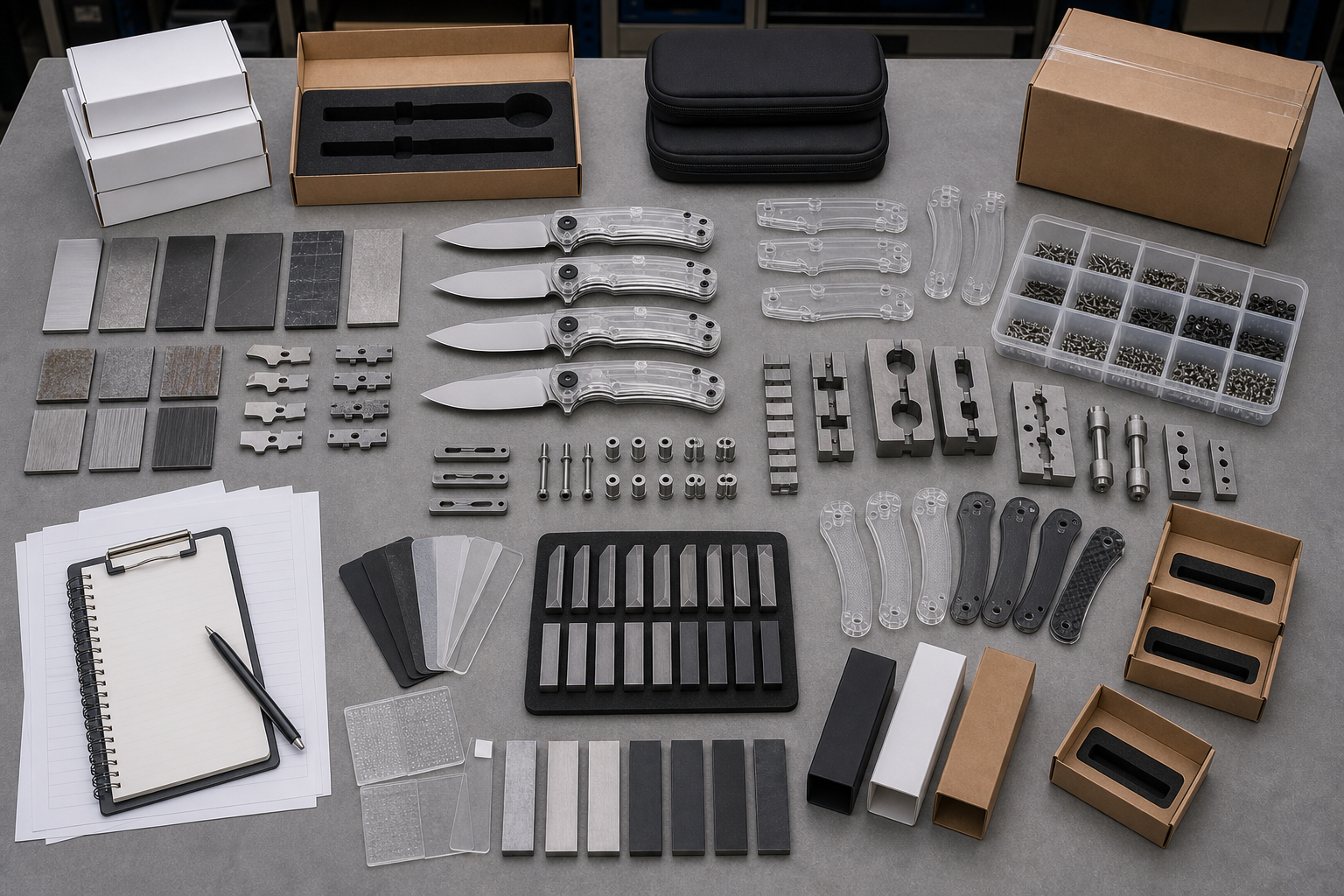
For a Lexan handle knife RFQ, I first ask what the buyer wants to claim. If the product page will say Lexan, the material source and document matter. If the buyer only needs clear PC styling, the RFQ can allow supplier-recommended polycarbonate with sample approval. This simple wording can prevent misunderstanding and price mismatch.
Then I ask about the structure. Is the knife a liner lock, frame lock, slip joint, or fixed blade? How thick are the scales? Will the pocket clip mount through the scale? Are the screws countersunk? Is the handle smooth, textured, frosted, polished, or hard-coated? Will the knife be used outdoors, around oils, or in humid pockets? Each answer changes the design.
The RFQ should also include commercial and inspection details. Buyers should share target price, expected quantity, packaging type, destination market, and whether the order is a test run or repeat program. I also recommend a sample review checklist: clarity, scratches, hole quality, screw torque result, clip installation, blade centering, lockup, cleaning marks, and package protection. Lexan can work, but it needs a clear brief. That is how a transparent handle becomes a controlled product, not just a clear piece of plastic.
| RFQ field | What to include | Why it helps |
|---|---|---|
| Material requirement | Lexan, PC, grade, sheet, molded part, document | Prevents vague sourcing |
| Handle design | Thickness, texture, coating, screw, clip, support | Reduces stress and scratch issues |
| Product details | Knife type, blade steel, lock type, target market | Matches material to use |
| QC standard | Appearance limit, torque check, chemical check, packaging | Protects batch consistency |
Turn your idea into a quote-ready knife project.
Share your drawing, sample photo, target quantity, market, and packaging needs. Vast State will review manufacturability and prepare OEM/ODM options.
Conclusion
I use Lexan only when transparency and impact-resistant styling support the product, and I control scratches, chemicals, screw stress, and QC before production.
Source Notes
- SABIC Lexan resin supports the article's basic description of Lexan as polycarbonate with strength, impact resistance, and transparency.
- Ensinger TECANAT natural supports the discussion of transparent PC, impact strength, dimensional stability, machinability, and chemical-resistance limits.
- Curbell polycarbonate materials supports the article's guidance on hard-coated polycarbonate options and scratch, chemical, and weatherability considerations.
- Ensinger engineering plastics manual supports the caution about solvents, alkalis, notching, stress cracking, and high mechanical loads.
- ISO 9001 explained supports the process-based QC approach used in the sourcing guidance.