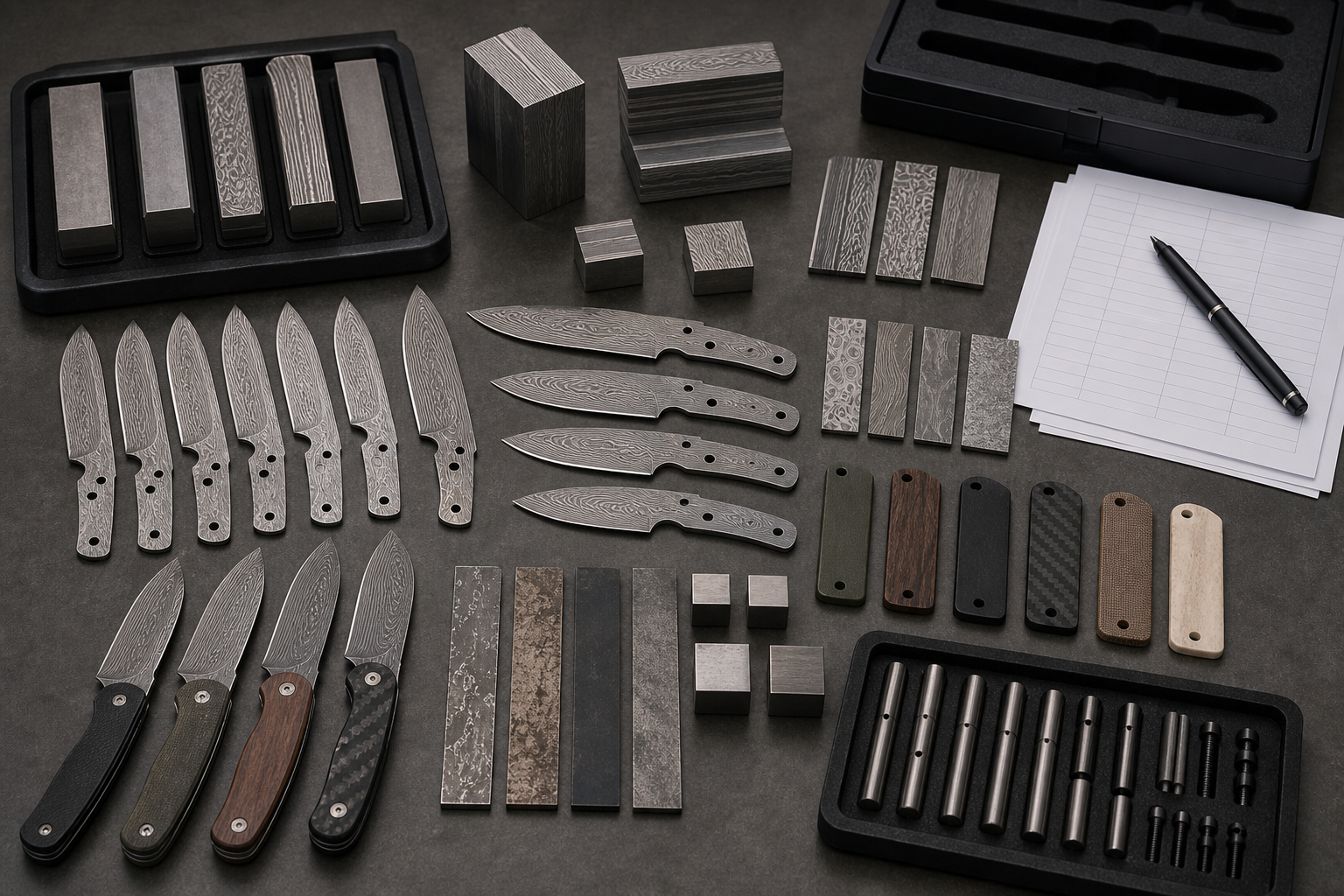
Damascus steel looks valuable. But if buyers only chase the pattern, they can miss steel choice, welding quality, heat treatment, and honest product claims.
Modern Damascus knife steel is usually made by forge-welding layers of different steels, manipulating the billet, heat treating the blade, and etching the surface to reveal the pattern. Buyers should check steel combination, weld integrity, pattern depth, heat treatment, corrosion behavior, and whether the claim means pattern-welded, wootz, or powder metallurgy Damascus.
Quick buyer brief:
- Answer: Most modern Damascus knives use pattern-welded steel, not ancient wootz crucible steel.
- Buyer context: Damascus is strongest as a design and positioning choice, but performance still depends on the steels, heat treatment, geometry, and QC.
- Key checks: Confirm steel type, process, pattern, hardness, etch quality, corrosion expectation, material proof, sample cutting result, and packaging wording.
Planning a knife project with this steel?
Send us your target market, MOQ, price range, and blade type. Vast State can help you choose the right steel, HRC range, finish, handle material, and QC requirements for OEM/ODM production.
When a buyer sends me a Damascus knife idea, I do not start with the most beautiful pattern. I start with the claim. Does the buyer mean pattern-welded carbon Damascus, stainless powder metallurgy Damascus, Damascus cladding over a core steel, or just a surface pattern? These are very different products. They cost differently, perform differently, and create different expectations for the end user. For B2B knife brands and importers, the safest way to buy Damascus knives is to define the steel, process, heat treatment, etch, finish, and inspection standard before making samples.
What Does Damascus Steel Mean in Today's Knife Market?
The word Damascus can sound simple, but it hides several meanings. If the buyer and supplier use different definitions, the product can go wrong fast.
In today's knife market, Damascus usually means modern pattern-welded steel with visible layers. Historic Damascus often refers to wootz crucible steel, while some modern premium versions use powder metallurgy patterned steel.
I Separate the Claim Before I Separate the Steel
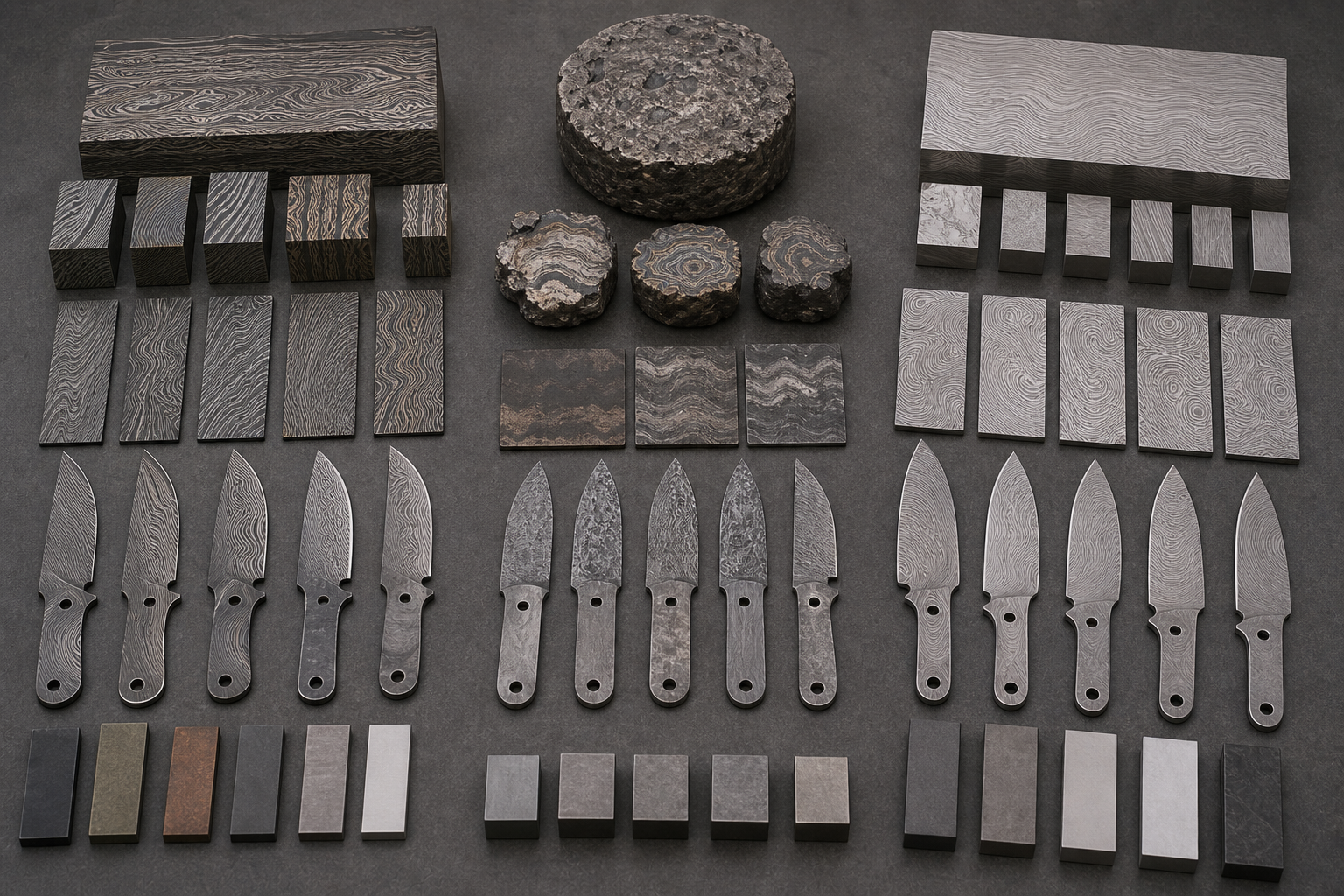
The first sourcing problem is language. Many customers say Damascus when they mean any visible steel pattern. Knife Steel Nerds explains that ancient wootz Damascus is a high-carbon steel with carbide banding, while pattern-welded Damascus can be made from many steel combinations. That difference matters. Wootz is not made by stacking layers and forge-welding them. Modern pattern-welded Damascus usually is.
For commercial knives, most Damascus-style products are modern pattern-welded steel or patterned stainless steel. This is not automatically fake. It is a different process. The problem comes when product copy promises too much or uses unclear words. A buyer should not claim ancient wootz if the blade is modern forge-welded steel. A buyer should not claim stainless Damascus if the blade uses carbon steels that need rust care. A buyer should not claim layered steel if the pattern is only a surface treatment.
I like to define the claim in the RFQ. The buyer can ask for pattern-welded carbon Damascus, stainless powder metallurgy Damascus, Damascus-clad blade with a named core steel, or decorative etched pattern. Each option has a different cost and inspection plan. Clear language protects the brand and helps the factory quote honestly.
| Term buyers use | What it may mean | What to confirm |
|---|---|---|
| Damascus steel | Usually modern pattern-welded steel | Steel combination and real layer construction |
| Wootz Damascus | Historic crucible steel style | Whether it is truly crucible steel |
| Stainless Damascus | Patterned stainless steel | Alloy system, corrosion expectation, heat treatment |
| Damascus look | Could be surface decoration only | Whether the pattern goes into the steel |
Quote-ready RFQ Checklist for Damascus Projects
To get an accurate OEM/ODM quote, prepare construction, core steel, pattern, layer, hardness, and etch details before contacting a knife manufacturer.
| RFQ Field | What to Prepare |
|---|---|
| Damascus construction | Pattern-welded / clad / stainless patterned / decorative etch |
| Core steel | 10Cr15CoMoV / VG10 / 14C28N / buyer-specified |
| Pattern | Random / ladder / twist / raindrop |
| Layer specification | Supplier standard or verified target |
| Target HRC | Based on core or full construction |
| Etch standard | Contrast, depth, residue and variation limits |
How Is Modern Pattern-Welded Damascus Usually Made?
A good pattern can hide a weak process. If the billet is poorly welded or heat treated, the knife may look better than it works.
Modern pattern-welded Damascus is made by stacking compatible steels, forge-welding them into a billet, drawing and manipulating the layers, shaping the blade, heat treating it, and etching the surface.
I Look at the Weld, Not Only the Water Pattern
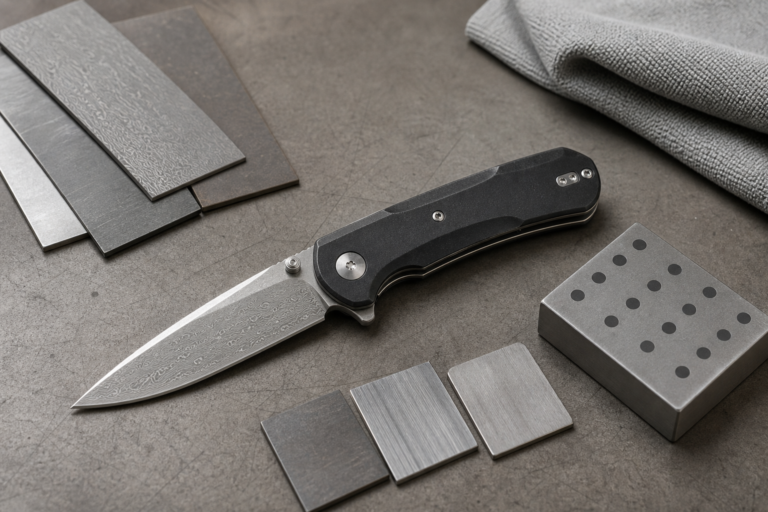
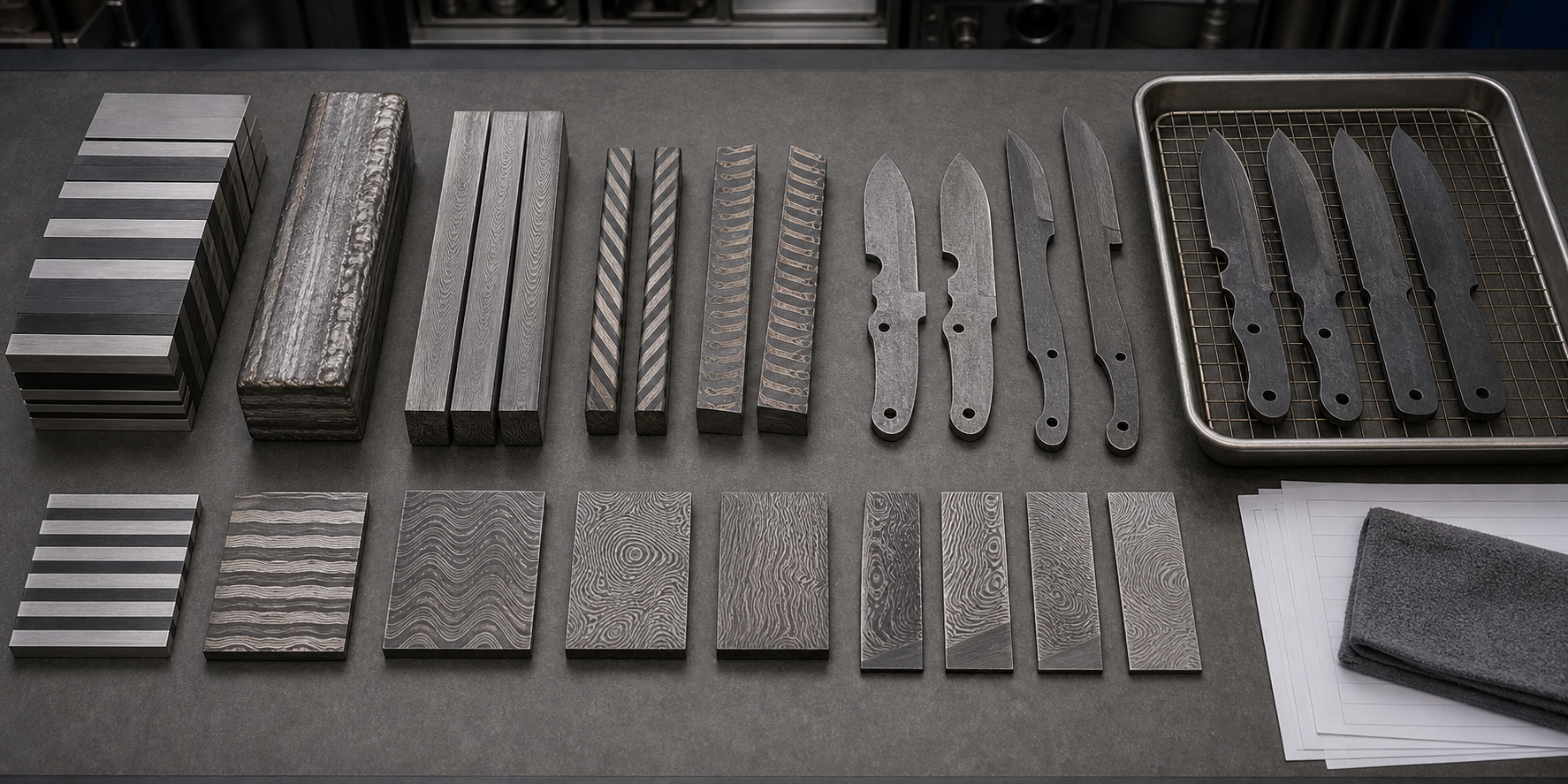
The basic modern process starts with steel selection. A maker stacks layers of steels that can forge-weld and heat treat together. Common combinations often use one darker etching carbon steel and one brighter nickel-bearing steel, but the exact choice matters. The billet is heated, fluxed or controlled in a suitable environment, welded under pressure, drawn out, cut, restacked, twisted, laddered, or otherwise manipulated. After the blade is shaped and heat treated, acid etching reveals contrast between the different layers.
For buyers, the visual pattern is only one part. Weld integrity matters more. A bad weld can create delamination, cracks, hidden voids, or weak spots. Heat treatment also matters because the blade is still a cutting tool. A beautiful blade with a soft edge or unstable heat treatment is still a poor product. The pattern should support the product story, not replace performance.
I also check whether the pattern is deep and real. A real pattern-welded billet should show layer structure through the material. A simple surface print, laser texture, or shallow decorative etch is a different product. It may still be acceptable for some low-cost decorative items, but it should not be sold as forged layered Damascus. For OEM orders, I want the buyer and factory to agree on the pattern type, layer style, etch darkness, surface finish, and acceptable variation.
| Process step | What happens | Buyer check |
|---|---|---|
| Steel selection | Compatible steels are chosen | Confirm steel names and corrosion behavior |
| Forge welding | Layers become one billet | Check delamination and cracks |
| Pattern manipulation | Layers are twisted, laddered, pressed, or restacked | Approve a pattern sample |
| Heat treatment and etch | Blade is hardened, tempered, finished, and etched | Check HRC, edge, pattern depth, and finish |
How Is Stainless Powder Metallurgy Damascus Different?
Some buyers want Damascus beauty with better stainless behavior. That is possible, but it is not the same as simple forge-welded carbon Damascus.
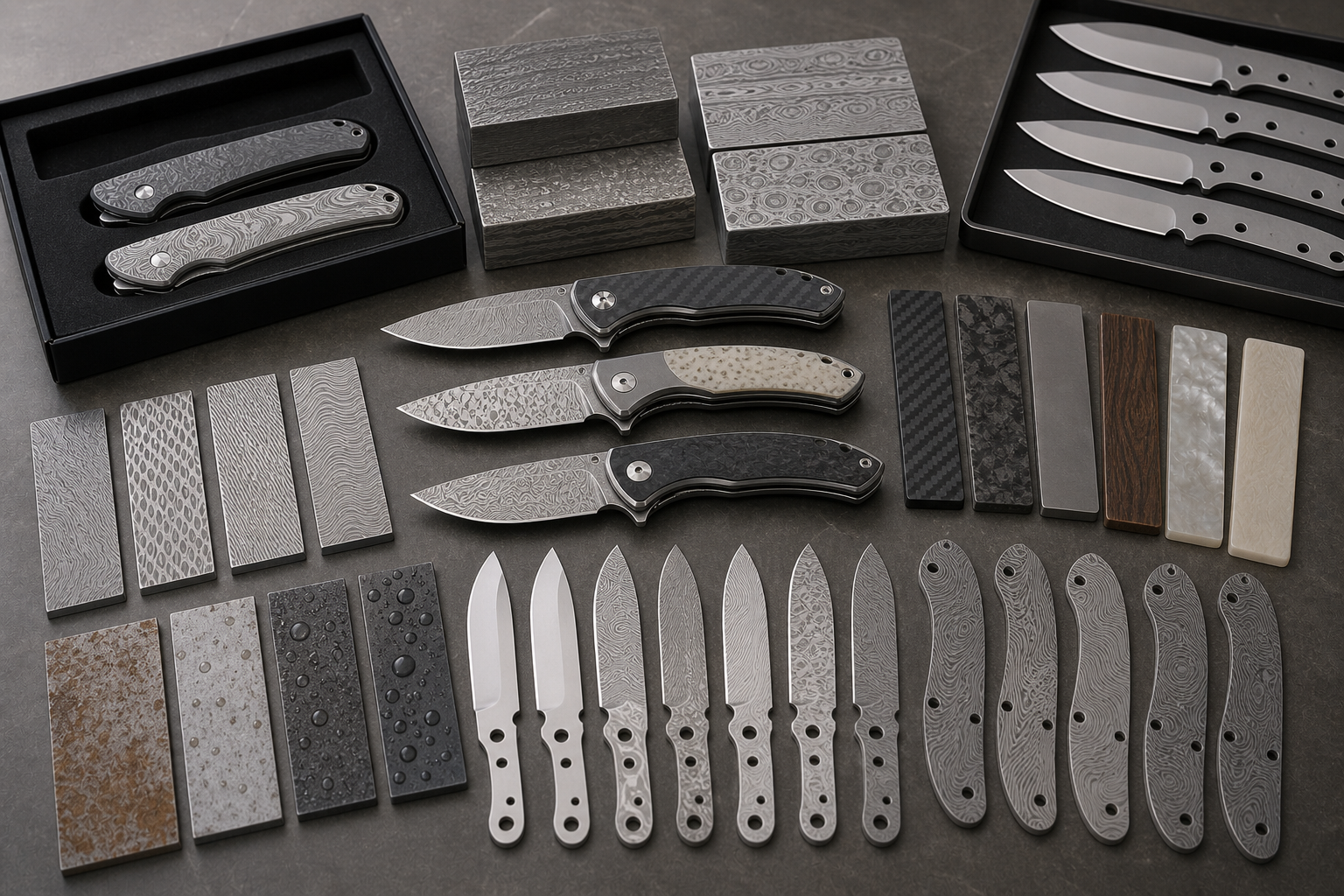
Stainless powder metallurgy Damascus uses powder-based steel technology to create patterned stainless material. It can offer better cleanliness, corrosion resistance, and consistency, but it usually costs more.
I Treat Stainless Patterned Steel as a Different Product Level
Stainless powder metallurgy Damascus is not just normal Damascus with a nicer name. It is a different manufacturing route. Damasteel says its stainless Damascus patterned steel began as a powder metallurgy method, and its story page explains that the company began applying for patents in 1995 for stainless Damascus patterned steel through powder metallurgy. Its DS93X data sheet describes a powder-based martensitic Damascus patterned steel made with RWL34 and PMC27, both stainless steel variations.
For a buyer, this matters because stainless Damascus can solve some problems of carbon Damascus. It can support stronger corrosion-resistance claims when the grade and heat treatment are correct. It can also support a higher product level because the material itself has documentation, pattern names, and technical data. This is useful for premium EDC knives, collector editions, and brand upgrade models.
But it also changes the sourcing conversation. The buyer should expect higher material cost, stronger document requirements, and careful heat treatment. The same Damasteel data sheet warns that heating temperature needs good control and that overheating can be risky. It also notes etching as the step that reveals the pattern. This tells me that premium patterned steel still needs disciplined manufacturing. A famous material name does not remove the need for proper grinding, heat treatment, etching, and inspection.
| Damascus type | Main benefit | Main sourcing concern |
|---|---|---|
| Carbon pattern-welded | Strong visual story and traditional feel | Rust care and weld quality |
| Stainless powder metallurgy | Better corrosion story and material documentation | Higher cost and heat-treatment control |
| Damascus cladding | Patterned appearance with named core steel | Core steel, cladding thickness, grind exposure |
| Decorative pattern only | Low-cost visual effect | Claim honesty and customer expectation |
Does Damascus Steel Make a Knife Perform Better?
Pattern can make a knife more desirable. It does not automatically make the edge better, tougher, or more corrosion resistant.
Damascus performance depends on the steels used, weld quality, heat treatment, blade geometry, and finish. The pattern itself is not a guarantee of better cutting performance.
I Sell the Pattern, but I Test the Blade
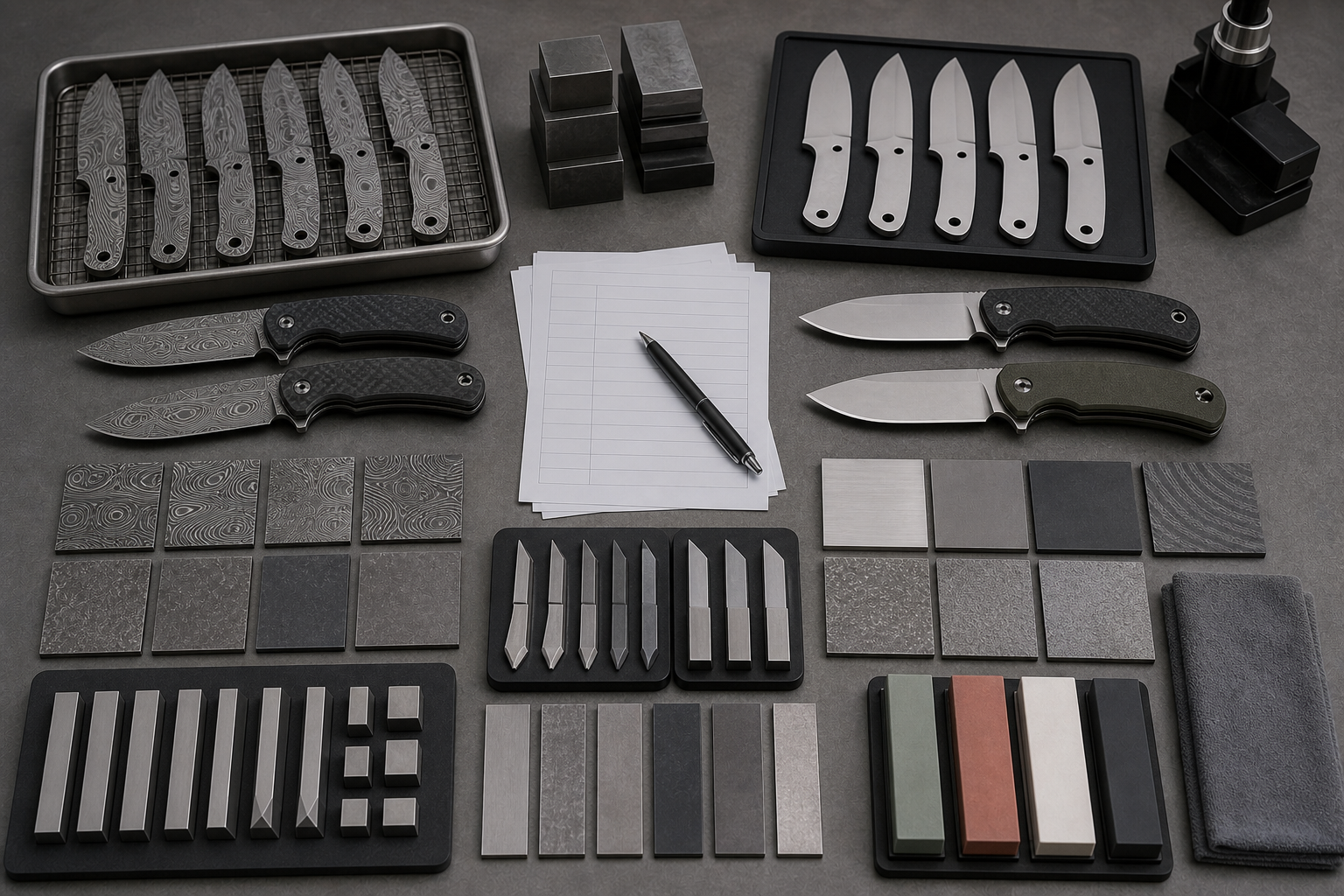
Damascus steel often sells because it looks special. That is valid. A knife is not only a cutting tool; it is also a product with a story, identity, and visual value. Many buyers choose Damascus for limited editions, gift knives, premium-looking EDC folders, and outdoor knives with a traditional feel. But performance should still be described carefully.
Knife Steel Nerds notes that comparing wootz, pattern-welded Damascus, and modern steels is difficult because wootz can mean different things and pattern-welded Damascus can use many steel combinations. That is the point. A Damascus blade made from 1095 and 15N20 is not the same as stainless powder metallurgy Damascus. A Damascus-clad kitchen knife with a VG-10 core is not the same as a full pattern-welded blade. The label does not tell the whole story.
In production, I focus on ordinary blade performance checks. What is the target hardness? What is the edge angle? Is the grind overheated? Does the pattern etch affect the edge or finish? Is the steel stainless or carbon? Does the packaging explain care? NIST explains that Rockwell hardness measurement needs good practice to reduce measurement errors. This is useful for Damascus too. A buyer should not rely on beauty alone. The blade should be tested like any other knife steel.
| Performance factor | What really controls it | Damascus-specific note |
|---|---|---|
| Edge retention | Steel composition, hardness, carbides, edge geometry | Pattern alone does not prove it |
| Toughness | Steel choice, weld quality, heat treatment, blade thickness | Bad welds create risk |
| Corrosion resistance | Alloy system, finish, care, environment | Carbon Damascus still needs care |
| Perceived value | Pattern, story, finish, packaging | This is a real commercial benefit |
What Quality Risks Should Buyers Control in Damascus Knife Production?
Damascus has more visible charm and more hidden risk. A weak process may not appear until grinding, etching, assembly, or customer use.
Buyers should control steel combination, weld integrity, layer count claims, pattern consistency, heat treatment, etch depth, surface finish, corrosion care, and final inspection.
I Build the Inspection Plan Around the Extra Variables
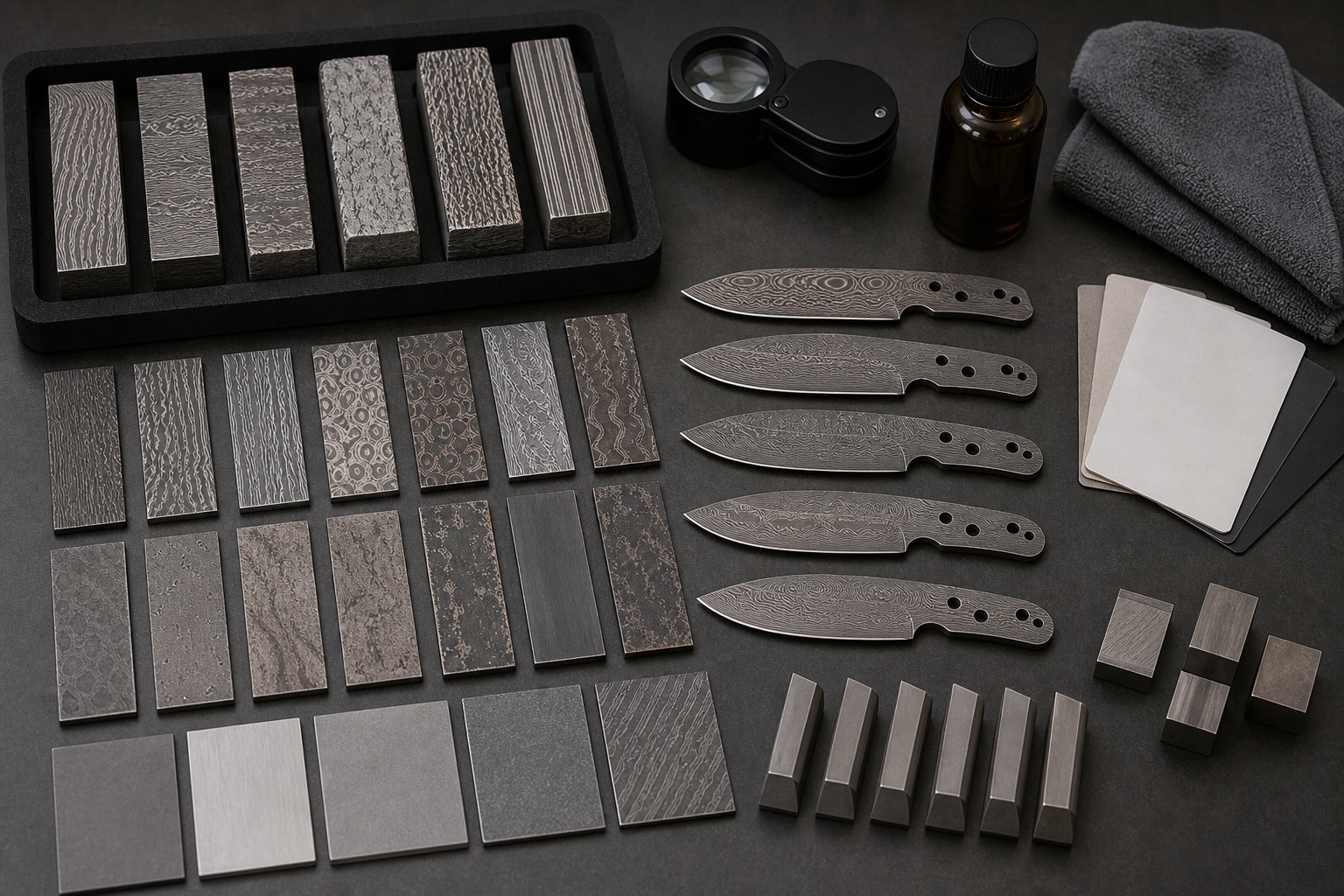
Damascus knives need the normal knife checks plus extra pattern checks. Normal checks include hardness, blade centering for folders, lockup, edge sharpness, screw security, handle fit, and packaging. Damascus-specific checks include pattern visibility, pattern location, etch darkness, weld lines, delamination, surface pits, over-etching, inconsistent polishing, and corrosion expectations.
The buyer should also control claims. If a listing says 300 layers, the supplier should explain how that count is calculated. If the product says stainless Damascus, the steel combination should support that claim. If the blade is Damascus-clad, the core steel and cladding should be clear. If the buyer only needs a Damascus look for a low-cost line, the product page should not imply premium forged layered steel.
This is where process control matters. ISO explains that ISO 9001 gives a framework for consistent products, meeting customer requirements, and continual improvement. For Damascus production, I translate that into practical steps: approve the pattern sample, define the finish standard, record heat treatment, inspect for weld defects, check edge function, and protect the blade in packaging. The goal is not only to make one beautiful sample. The goal is to repeat it in a sellable batch.
| Quality risk | What to inspect | Why it matters |
|---|---|---|
| Delamination | Weld lines, cracks, edge and spine | Protects safety and durability |
| Pattern mismatch | Approved sample vs batch | Protects brand consistency |
| Over-etching | Surface roughness, dark spots, edge effect | Protects finish and cutting feel |
| Wrong claim | Steel type, core steel, stainless or carbon | Protects buyer trust |
What Should Buyers Put in an RFQ for Damascus Knives?
A vague Damascus RFQ almost guarantees confusion. The supplier cannot quote correctly if the buyer does not define the steel and pattern.
An RFQ should specify Damascus type, steel combination, pattern style, blade structure, target hardness, heat treatment, etch finish, corrosion expectation, handle material, quantity, price target, packaging, and QC needs.
I Ask Buyers to Define the Pattern, Claim, and User
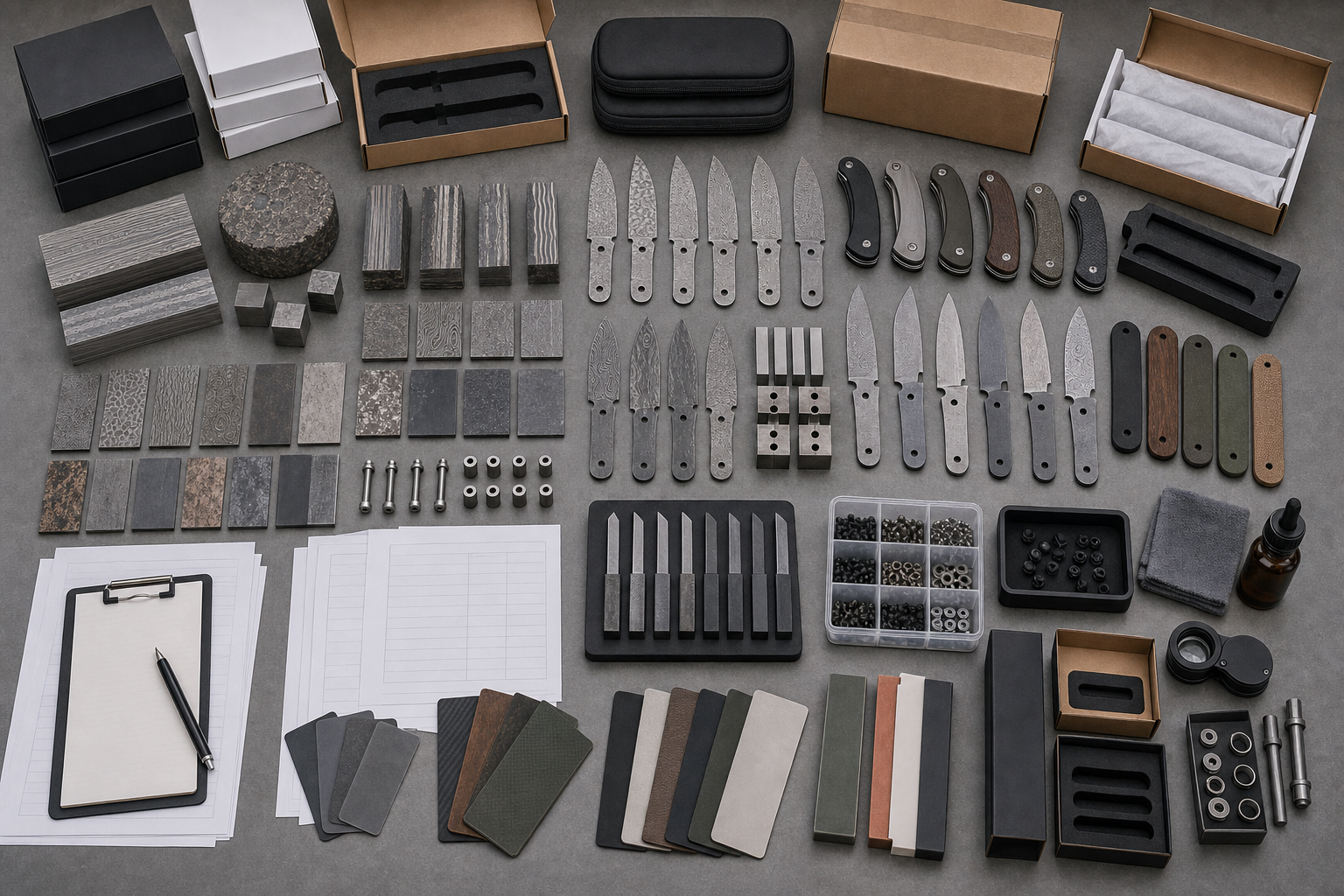
When a buyer asks Vast State for a Damascus knife, I first ask what type of Damascus they want. If the buyer wants a value decorative folder, carbon pattern-welded steel may be enough. If the buyer wants a premium stainless EDC model, powder metallurgy patterned steel or a documented stainless Damascus option may be more suitable. If the buyer wants a sharp performance core with a visual surface, Damascus cladding may be the right structure.
Then I ask about the user and sales channel. Is the knife for collectors, outdoor users, gift buyers, dealer-exclusive sales, online retail, or private label distribution? A collector may care more about pattern and finishing. An outdoor buyer may care more about corrosion and toughness. A dealer may need material proof and clean packaging language. The RFQ should make that clear.
I also ask buyers to define sample approval. A useful approval checklist includes pattern sample, steel source, target HRC, grind, edge, etch darkness, corrosion care wording, handle fit, lock function, packaging protection, and final appearance limits. Damascus adds beauty, but it also adds variables. A strong RFQ turns those variables into controlled specifications.
| RFQ field | What to include | Why it helps |
|---|---|---|
| Damascus type | Pattern-welded, stainless PM, clad, decorative | Prevents claim confusion |
| Pattern and finish | Twist, ladder, random, raindrop, etch darkness | Controls visual result |
| Blade performance | Steel combination, HRC, grind, edge angle | Keeps the knife useful |
| Commercial details | MOQ, target price, packaging, market | Makes the quote realistic |
Ready to use this material in your next knife line?
Vast State can help you compare blade steels, heat treatment ranges, handle materials, finishes, packaging options, and QC requirements based on your target market and quantity.
Conclusion
I treat Damascus as both material and message: define the process, prove the steel, control the pattern, and test the blade before production.
Source Notes
- Knife Steel Nerds on wootz supports the distinction between wootz, pattern-welded Damascus, and modern steels.
- Damasteel story supports the explanation of stainless Damascus patterned steel through powder metallurgy.
- Damasteel DS93X data sheet supports the discussion of powder-based stainless patterned steel, heat treatment, machining, and etching.
- NIST Rockwell hardness guide supports the advice to treat hardness testing as a controlled measurement process.
- ISO 9001 explained supports the process-based QC approach used in the sourcing guidance.