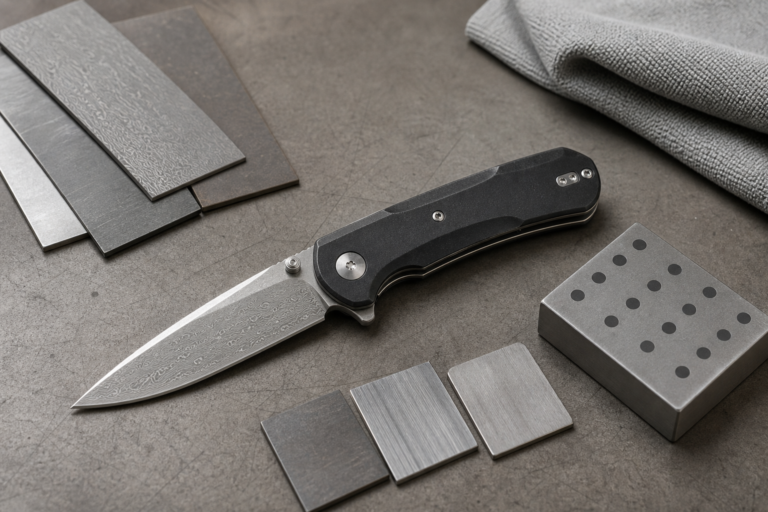
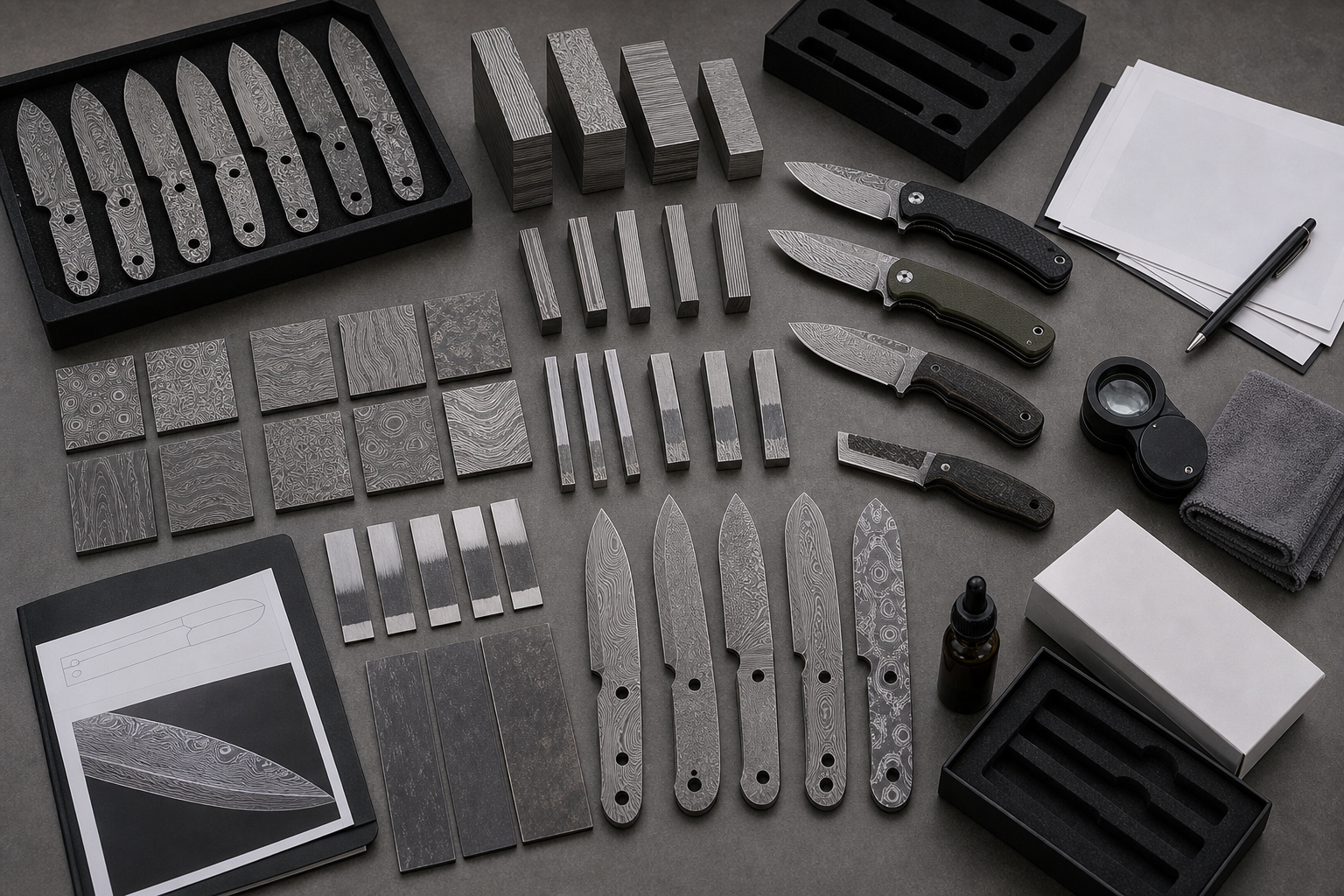
A Damascus pattern can look convincing in photos. But a beautiful surface can hide weak steel, shallow decoration, poor welding, or unsupported claims.
Knife buyers can tell if Damascus steel is real by confirming the Damascus type, checking whether the pattern continues through the blade geometry, asking for steel and process records, testing a sample coupon, inspecting after grinding and re-etching, and verifying hardness, edge function, corrosion expectation, and packaging claims before mass production.
Quick buyer brief:
- Answer: Real modern Damascus should be defined by process and material proof, not by surface appearance alone.
- Buyer context: Pattern-welded, clad, stainless powder metallurgy, wootz-style, and decorative patterns are different products.
- Key checks: Confirm steel combination, cross-section, spine, tang, etch depth, sample coupon, HRC, supplier records, care wording, and QC limits.
Planning a knife project with this steel?
Send us your target market, MOQ, price range, and blade type. Vast State can help you choose the right steel, HRC range, finish, handle material, and QC requirements for OEM/ODM production.
When a buyer asks me how to tell if Damascus is real, I first ask what "real" means for that order. Does the buyer need modern pattern-welded steel? Stainless powder metallurgy Damascus? Damascus cladding over a core steel? A wootz-style material? Or only a decorative Damascus look for a lower-cost SKU? These are not the same. For OEM and ODM knife sourcing, the safest answer is to define the material first, then inspect the product with a sample plan. A picture is useful, but it is not proof.
What Does Real Damascus Mean for Knife Buyers?
The word real can create confusion fast. One buyer may mean historic wootz, while another may mean modern pattern-welded steel.
For most modern knife orders, real Damascus means a blade made from patterned steel, usually pattern-welded or powder metallurgy patterned steel, not only a printed or shallow surface pattern.
I Define the Claim Before I Judge the Blade
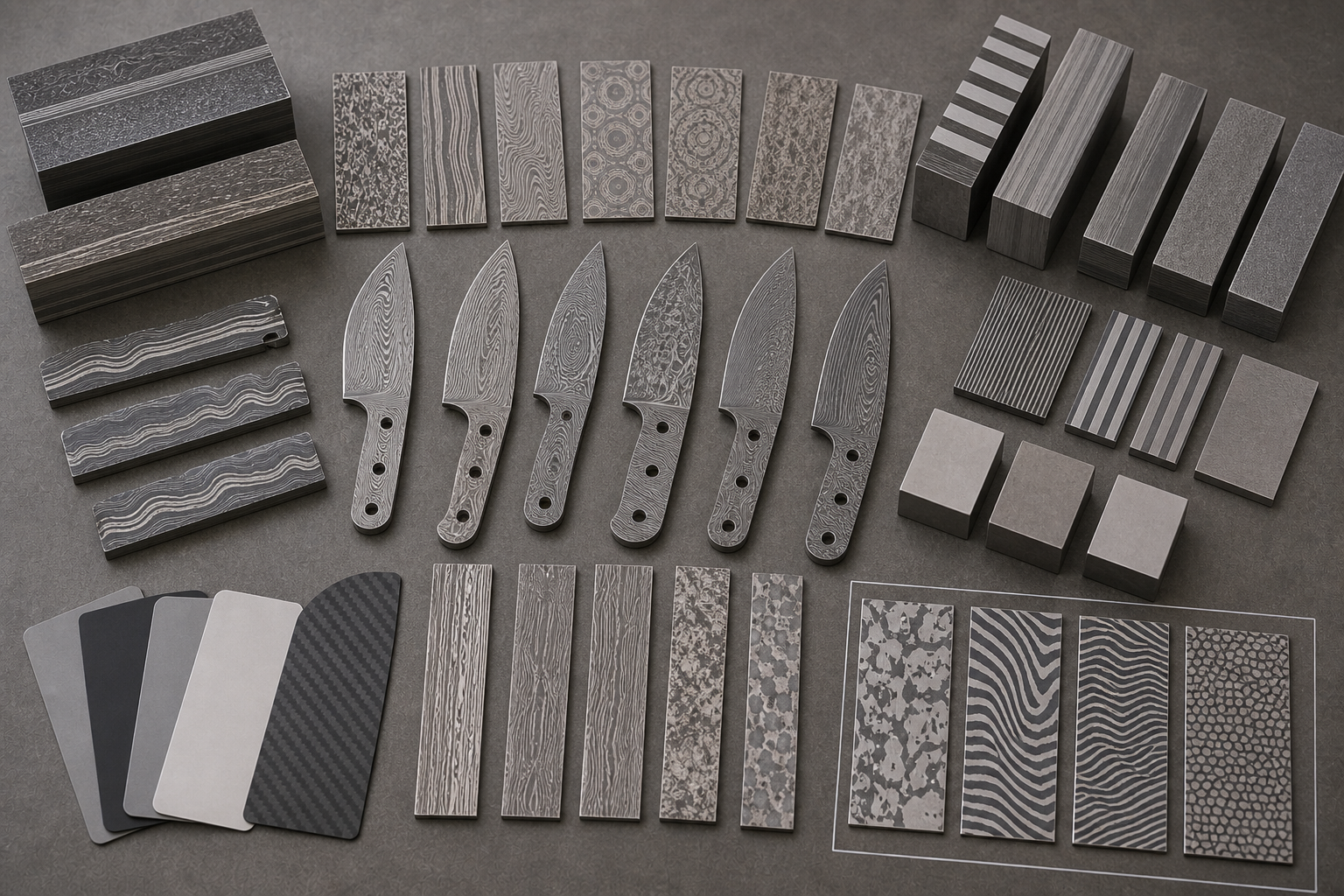
The first step is language. Knife Steel Nerds explains that wootz Damascus is not the same as pattern-welded Damascus. Wootz gets its pattern from alloying and thermal cycling in a single material, while pattern-welded Damascus can use many steel combinations. That means a buyer should not use one definition for every blade with a pattern.
In today's commercial knife market, most Damascus knives are modern pattern-welded steel, Damascus-clad steel, or stainless patterned steel. A pattern-welded blade is usually made from layered steels that are forge-welded, manipulated, ground, heat treated, and etched. A clad blade may have a patterned outer layer and a different core steel. A stainless powder metallurgy Damascus product uses a different process and often comes with stronger material documentation.
The problem is not that modern Damascus is "fake." The problem is when a seller uses a claim that the product cannot support. If the pattern is only printed or laser-marked on plain steel, that is not the same as patterned steel. If the blade is only clad, the seller should not imply the full blade is one continuous pattern-welded billet. If the steel is carbon Damascus, the seller should not promise stainless behavior. Clear definitions protect the buyer.
| Buyer term | What it may mean | What to verify |
|---|---|---|
| Real Damascus | Usually pattern-welded steel in modern knife trade | Steel layers and process proof |
| Wootz | Crucible-style steel with carbide banding | Material route and supplier credibility |
| Stainless Damascus | Stainless patterned steel, often premium | Grade, data sheet, heat treatment |
| Damascus look | May be decorative surface pattern | Whether pattern continues beyond the surface |
Quote-ready RFQ Checklist for Damascus Projects
To get an accurate OEM/ODM quote, prepare construction, core steel, pattern, layer, hardness, and etch details before contacting a knife manufacturer.
| RFQ Field | What to Prepare |
|---|---|
| Damascus construction | Pattern-welded / clad / stainless patterned / decorative etch |
| Core steel | 10Cr15CoMoV / VG10 / 14C28N / buyer-specified |
| Pattern | Random / ladder / twist / raindrop |
| Layer specification | Supplier standard or verified target |
| Target HRC | Based on core or full construction |
| Etch standard | Contrast, depth, residue and variation limits |
What Visual Clues Help Buyers Screen Damascus Samples?
Photos can be useful, but they can also fool the buyer. A flat surface pattern alone is not enough evidence.
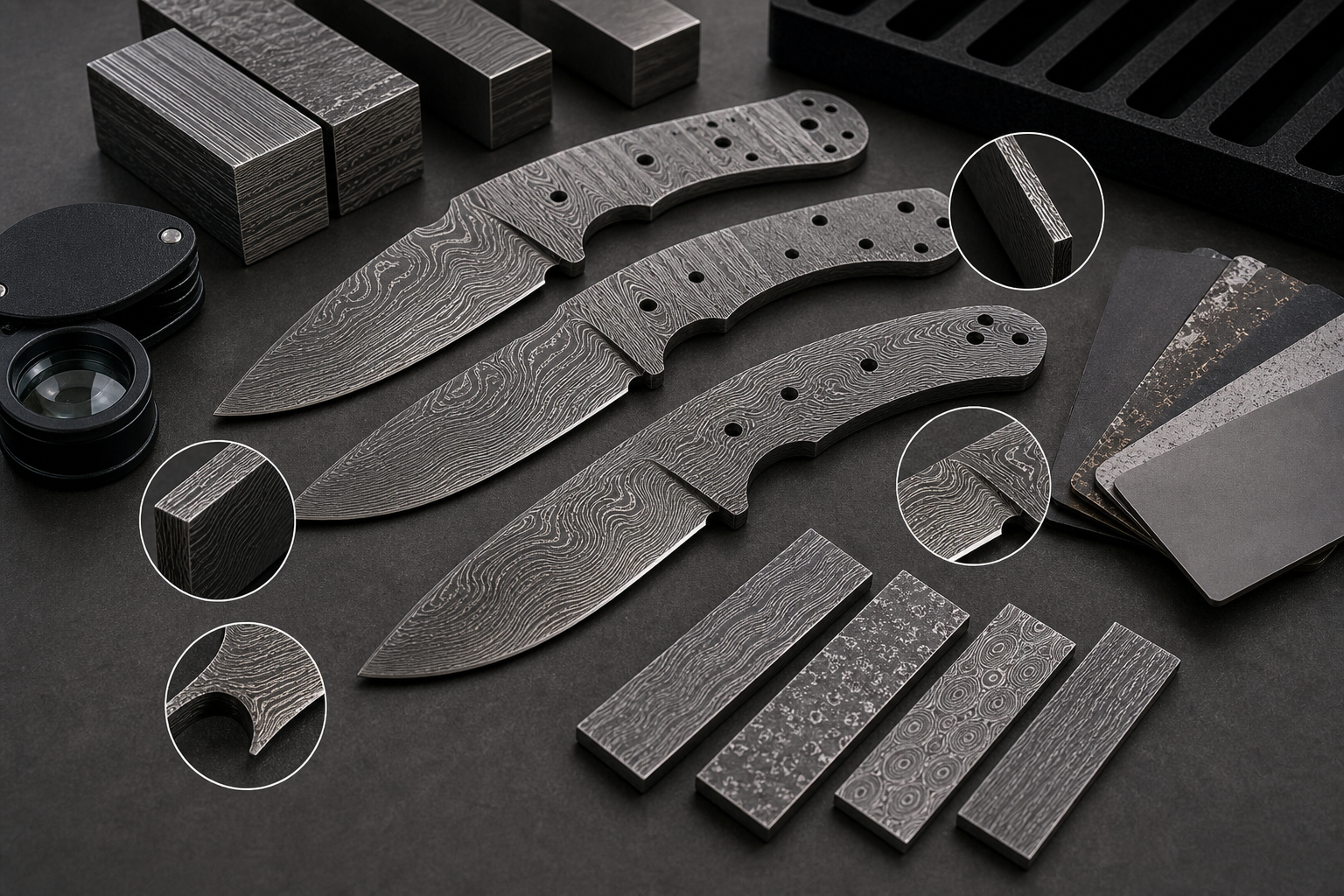
Useful visual clues include pattern continuity on the spine, tang, bevel, and choil, natural variation through the blade, no repeated printed texture, clean etching, and no sudden pattern stop at geometry changes.
I Look Where Decorative Patterns Usually Fail
I do not judge Damascus only from the flat face of the blade. The flat face is the easiest place to make a pattern look good. I look at the spine, tang, bevel, plunge line, choil, and any drilled area. If the blade is truly pattern-welded through the material, the pattern should make sense around the geometry. It may look lighter after grinding or polishing, but the structure should not suddenly disappear in a way that feels like surface decoration.
I also look for repeated pattern behavior. Real pattern manipulation can repeat in some ways, but it should still feel like metal structure, not a copied graphic. If the same pattern repeats perfectly like a printed texture, I ask more questions. If the contrast is very flat and sits only on the surface, I ask for a test coupon. If the spine is plain while the blade face is highly patterned, I ask whether it is clad, surface-decorated, or simply finished differently.
Visual inspection is only a screen. It does not prove heat treatment, steel quality, or cutting performance. A low-quality pattern-welded blade can still be real layered steel. A good-looking blade can still be soft, brittle, rusty, or poorly welded. That is why I use visual clues to decide what to test next, not to approve the whole order.
| Visual area | What I look for | What it may suggest |
|---|---|---|
| Spine | Layer lines or pattern continuation | Full patterned steel or clad structure |
| Bevel | Pattern still visible after grinding and etching | Pattern goes beyond face decoration |
| Tang or choil | Pattern and steel structure near cutouts | More confidence in real material |
| Flat face | Natural variation and etch depth | Helps screen surface-only patterns |
How Can Buyers Test Whether the Pattern Is Only on the Surface?
Surface checks can reduce risk, but finished goods should not be damaged randomly. The right test should be agreed before production.
Buyers can test a Damascus claim by using a sample coupon, lightly grinding or sanding a controlled area, re-etching it, and checking whether the pattern returns from the underlying steel.
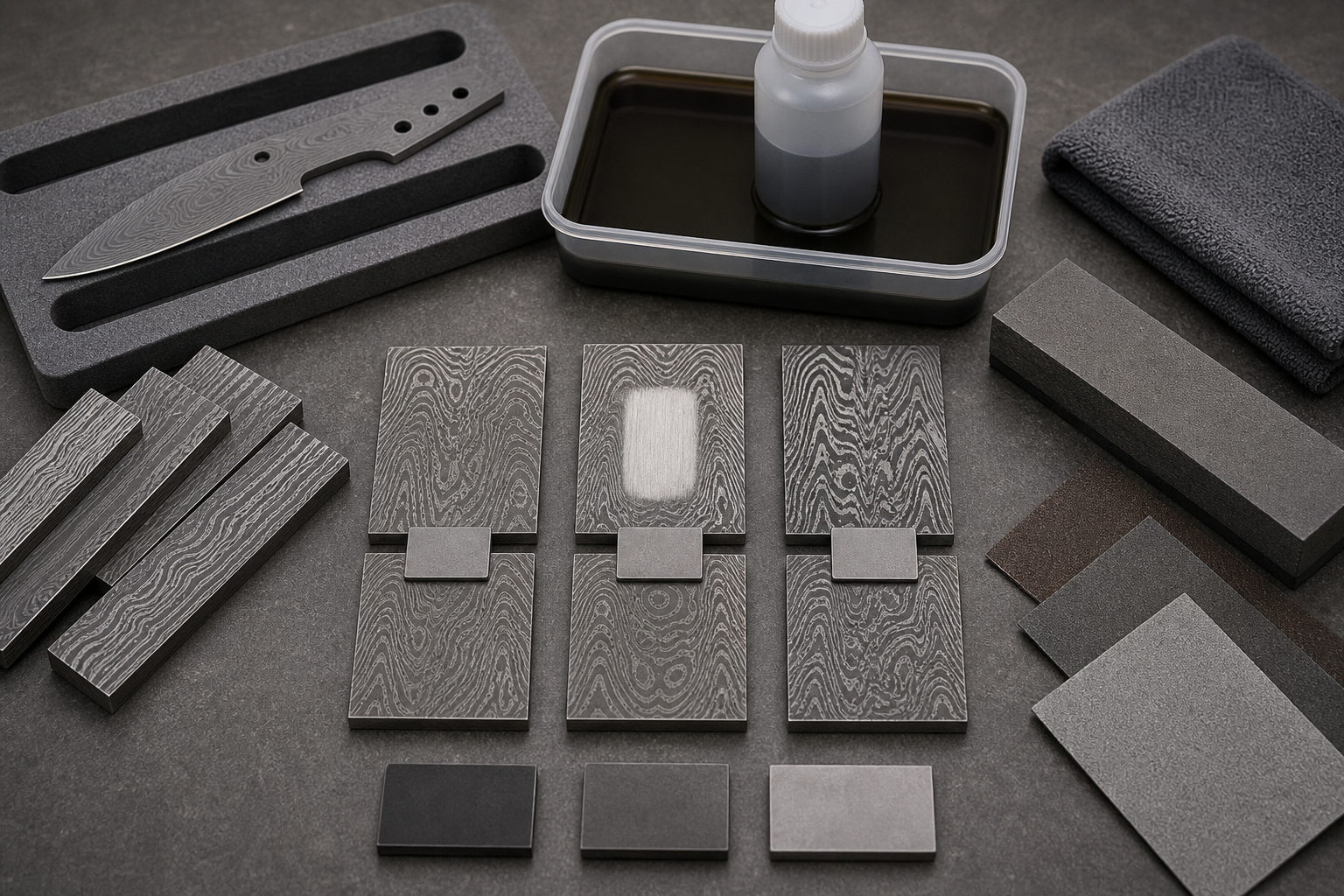
I Prefer Test Coupons Over Guessing From Photos
The cleanest way to verify material is to ask for a coupon from the same billet or same material batch. A coupon can be ground, polished, etched, and inspected without damaging a sellable sample. If the pattern is only a surface decoration, it should disappear when the surface is removed and should not return in a natural layered way after re-etching. If it is real patterned steel, the contrast should come back because the pattern is inside the material.
This test should be controlled. I do not suggest that a buyer casually scrape a finished knife and then make a final decision from one scratch. Surface finish, etch depth, polishing, and lighting can change what the buyer sees. The factory should provide a repeatable process: sample before test, ground area, re-etched area, photos, and written notes. For higher-value orders, the buyer can ask for a cross-section sample or third-party material review.
The same idea applies to Damascus cladding. If the blade is clad, the pattern may be real on the outer layer, but the core may be different steel. That is not automatically bad. Many clad knives are legitimate products. The issue is claim accuracy. If the buyer wants a clad product, the RFQ should state the core steel and cladding type. If the buyer wants full pattern-welded steel, the test plan should check that.
| Test method | What it checks | Best use |
|---|---|---|
| Sample coupon grind and re-etch | Whether pattern returns from material | OEM approval before mass production |
| Spine and cross-section inspection | Whether layers continue through geometry | Pattern-welded or clad verification |
| Supplier billet photos | Process traceability | Early screening only |
| Third-party material review | Higher-confidence verification | Higher-value or risky projects |
What Documents Should a Supplier Provide for Real Damascus Orders?
If a supplier can only show a nice picture, the buyer still has a sourcing risk. Real proof should include process and material details.
A supplier should provide Damascus type, steel combination, billet or material source, pattern style, target hardness, heat treatment route, etch finish, care notes, and sample approval records.
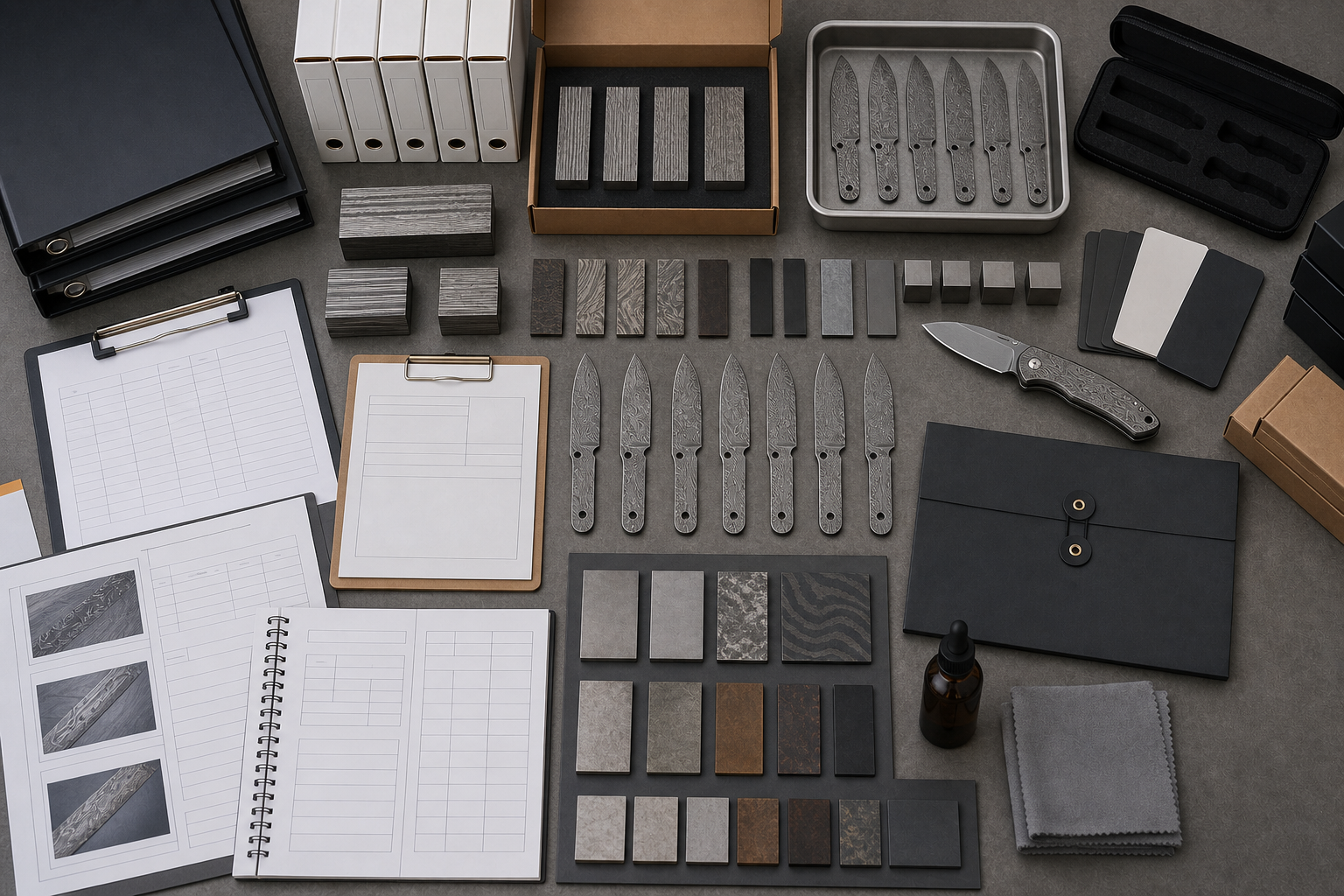
I Ask for Proof That Matches the Claim
The document need depends on the product level. For basic pattern-welded carbon Damascus, I want to know the steel combination, pattern style, heat treatment target, and care requirement. For stainless powder metallurgy Damascus, I expect more formal material information. Damasteel's process page explains that its powder metallurgy route uses gas atomization and HIP, then forging and rolling, and that patterns become visible after etching. Its DS93X data sheet identifies a powder-based patterned steel made from RWL34 and PMC27. That kind of documentation is useful because it tells the buyer what the material actually is.
For lower-cost orders, the documents may be simpler, but they should still be specific. A supplier should not only write "Damascus steel." The buyer needs to know whether the steel is carbon or stainless, whether it is clad or full pattern-welded, how it should be heat treated, how it should be etched, and what maintenance language should go into packaging.
I also ask for sample approval records. The buyer and supplier should agree on pattern darkness, allowed variation, surface pits, weld marks, etch finish, edge appearance, and rust-care wording. Damascus is naturally variable, but variability still needs a boundary in mass production.
| Document or record | What it should show | Why it matters |
|---|---|---|
| Material description | Steel combination or grade | Prevents vague Damascus claims |
| Process description | Pattern-welded, clad, PM, or decorative | Defines what the buyer is paying for |
| Heat treatment record | Target HRC and process route | Protects blade performance |
| Sample approval sheet | Pattern, etch, finish, and limits | Supports repeat production |
Does Real Damascus Always Mean Better Knife Performance?
A real pattern does not automatically make a better knife. Buyers can still get poor steel, weak heat treatment, or bad geometry.
Real Damascus can add visual value, but performance depends on steel choice, weld quality, heat treatment, blade geometry, edge finish, corrosion behavior, and quality control.
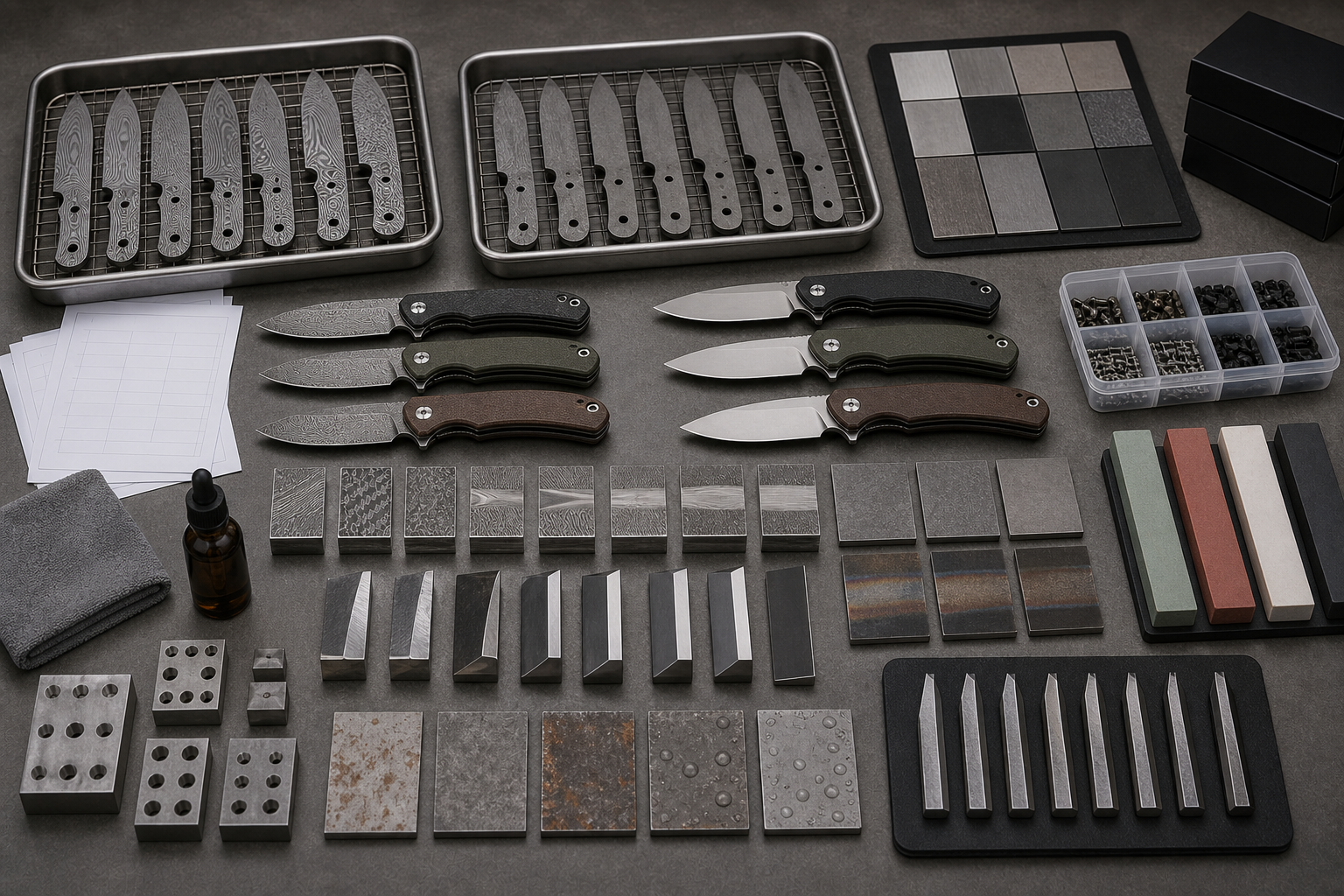
I Approve the Blade, Not Only the Pattern
This is the part many buyers forget. A real pattern-welded blade can still be poor. The welds may be weak. The heat treatment may be wrong. The edge may be too thick. The etch may be too rough. The steel combination may not fit the use. The blade may rust faster than the buyer expects. Real does not always mean good.
Knife Steel Nerds explains that comparing wootz, pattern-welded Damascus, and modern steels is difficult because the materials can vary widely. This is exactly why B2B buyers should avoid simple performance claims. Do not tell customers that Damascus is automatically sharper, tougher, or better at edge retention. Say what is true for the actual material and heat treatment.
For production, I want the same checks I would use for other knife steels. The blade should have a target hardness. It should pass edge and function checks. The lock should work if it is a folder. The finish should match the sample. The packaging should explain care if the blade is carbon Damascus. NIST's Rockwell hardness measurement guide supports the idea that hardness testing needs good measurement practice. One casual hardness number is not enough for a batch claim.
| Performance factor | What controls it | Damascus buyer note |
|---|---|---|
| Edge retention | Steel, hardness, carbides, geometry | Pattern alone does not prove it |
| Toughness | Steel mix, weld quality, heat treatment | Delamination is a special risk |
| Corrosion behavior | Alloy, finish, care, environment | Carbon Damascus still needs care |
| Perceived value | Pattern, story, packaging, finish | This is real commercial value |
What Should Buyers Put in an RFQ to Avoid Fake Damascus Problems?
A vague RFQ invites misunderstanding. If the buyer only says real Damascus, every supplier may quote a different product.
An RFQ should specify Damascus type, steel combination, pattern style, full blade or clad structure, sample coupon test, target hardness, heat treatment, etch finish, corrosion care, packaging claim, and inspection standard.
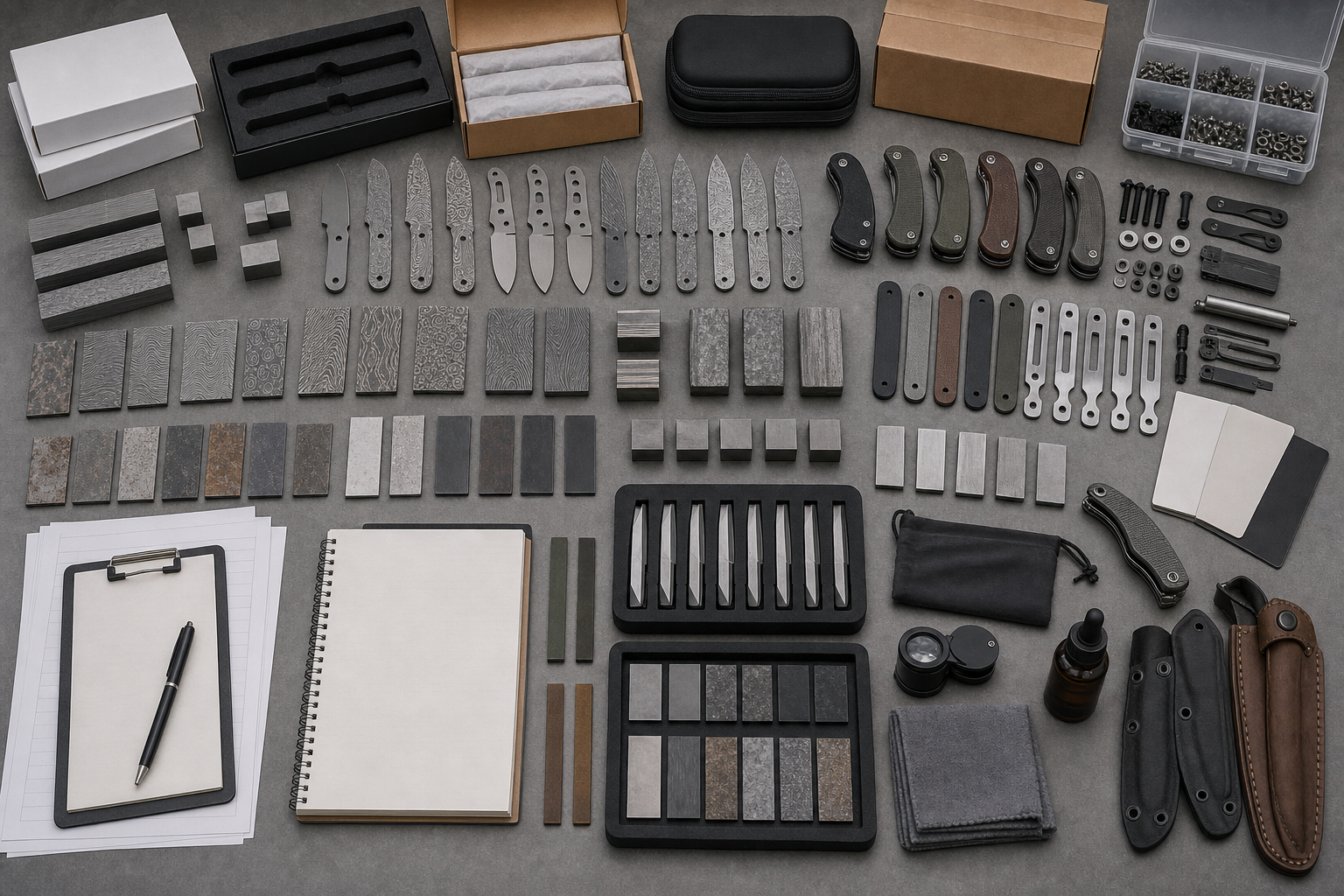
I Turn the Word Real Into Specifications
When a buyer says they want real Damascus, I turn that into a specification. I ask whether they want carbon pattern-welded steel, stainless powder metallurgy patterned steel, Damascus cladding, or a decorative pattern for a budget item. Then I ask what the product must do. Is it a collector folder, outdoor fixed blade, gift knife, kitchen-style knife, or display-heavy private label product? The use case changes the steel and inspection plan.
The RFQ should also define proof. I recommend asking for a material description, sample coupon, pattern approval photo, grind and re-etch option, target HRC, heat treatment route, and finish standard. If the buyer wants to claim stainless Damascus, the steel and heat treatment must support that claim. If the buyer wants carbon Damascus, packaging should include care language. If the buyer wants Damascus cladding, the core steel and cladding should be named.
Finally, the RFQ should define what counts as a defect. Are small pattern variations acceptable? How dark should the etch be? Are small forge marks acceptable? What about pits, weld lines, over-etching, or pattern mismatch? ISO explains that ISO 9001 gives a quality-management framework for consistent products and meeting customer requirements. That thinking is useful here. Define the requirement, approve the sample, inspect the batch, and record problems before shipment.
| RFQ field | What to include | Why it helps |
|---|---|---|
| Damascus type | Pattern-welded, clad, PM, wootz-style, decorative | Prevents quote mismatch |
| Proof request | Coupon, cross-section, grind and re-etch, documents | Reduces fake-pattern risk |
| Performance target | HRC, edge geometry, heat treatment, steel | Keeps the knife useful |
| Claim wording | Real Damascus, stainless, carbon, clad, care note | Protects buyer trust |
Ready to use this material in your next knife line?
Vast State can help you compare blade steels, heat treatment ranges, handle materials, finishes, packaging options, and QC requirements based on your target market and quantity.
Conclusion
I verify Damascus by process, proof, sample testing, and honest claims, because a real-looking pattern is not enough for a real production order.
Source Notes
- Knife Steel Nerds on wootz supports the difference between wootz, pattern-welded Damascus, and modern steels.
- Damasteel process page supports the explanation of powder metallurgy patterned steel and pattern visibility after etching.
- Damasteel DS93X data sheet supports the need for documented stainless patterned steel grades, heat treatment, machining, and etching.
- NIST Rockwell hardness guide supports the article's advice to treat hardness testing as a controlled measurement process.
- ISO 9001 explained supports the process-based QC approach used in the RFQ guidance.