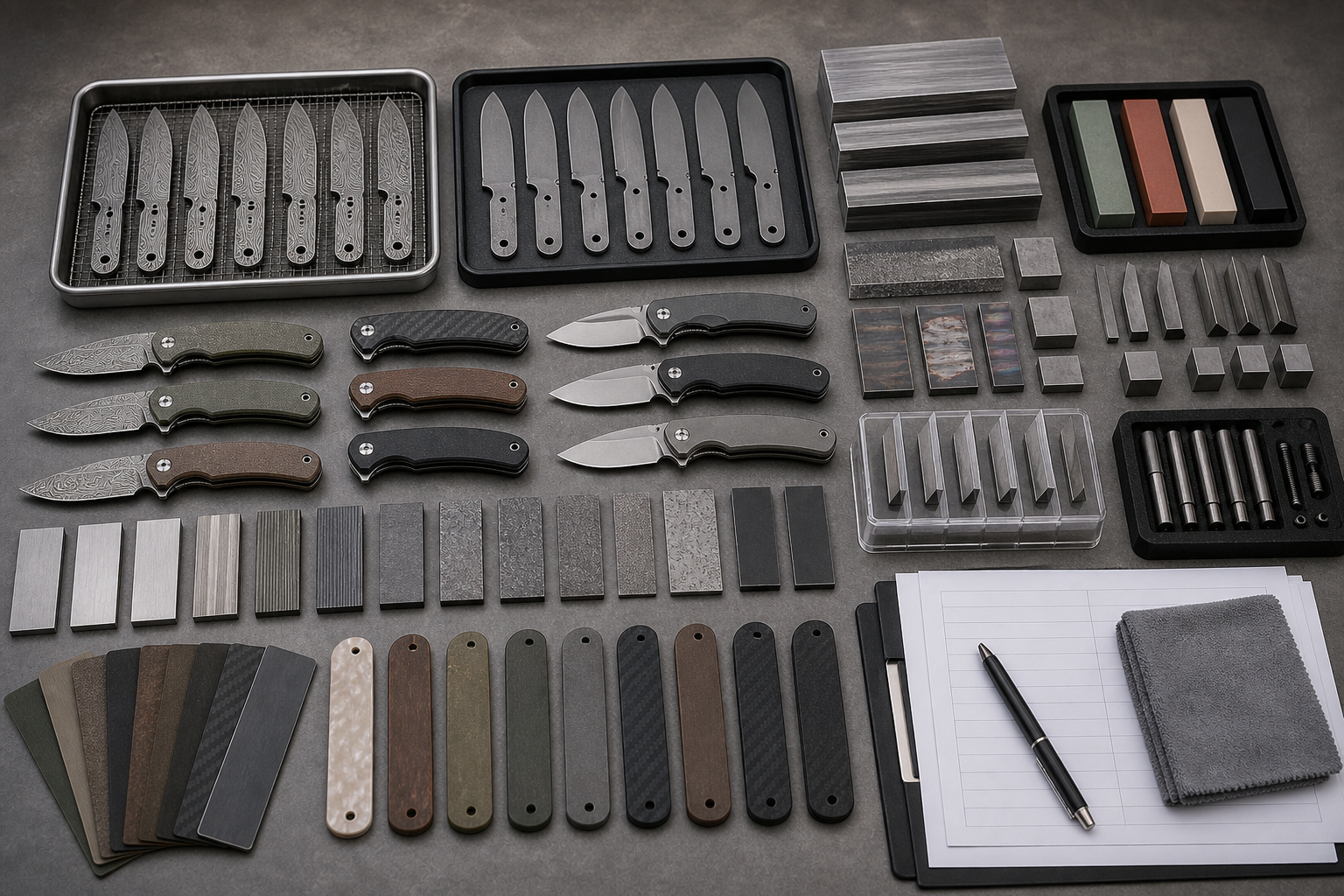
Damascus sells well because it looks special. But if the blade is weak, the pattern becomes a costly complaint. Strength needs proof.
Damascus steel can be strong when the steel combination, weld quality, heat treatment, hardness range, blade geometry, and QC process fit the knife use. The pattern alone does not prove strength. Buyers should treat Damascus as a material system, not a magic upgrade over mono-steel.
Quick buyer brief:
- Answer: Damascus strength depends on material, process, heat treatment, geometry, and inspection.
- Buyer context: This helps knife brands, importers, and private label buyers decide whether Damascus fits a product line.
- Key checks: Confirm Damascus type, steel combination, HRC target, weld quality, edge geometry, corrosion expectation, sample testing, and claim wording.
Planning a knife project with this steel?
Send us your target market, MOQ, price range, and blade type. Vast State can help you choose the right steel, HRC range, finish, handle material, and QC requirements for OEM/ODM production.
When a buyer asks whether Damascus steel is strong, I do not answer with yes or no first. I ask what the knife must do. A display folder, an outdoor fixed blade, a premium EDC knife, and a gift knife do not need the same balance of toughness, hardness, corrosion resistance, and edge behavior. Damascus can be a strong and useful blade material. It can also be a risky choice if the buyer only pays for the pattern and ignores the technical specification. For business orders, strength must be defined before production starts.
What Does Strong Mean When Buyers Discuss Damascus Steel?
The word strong sounds simple. But one buyer may mean toughness, another may mean edge retention, and another may mean customer-perceived value.
For Damascus knives, strong should mean the blade meets the product's use case through suitable steel, weld integrity, heat treatment, hardness, edge geometry, corrosion behavior, and repeatable QC.
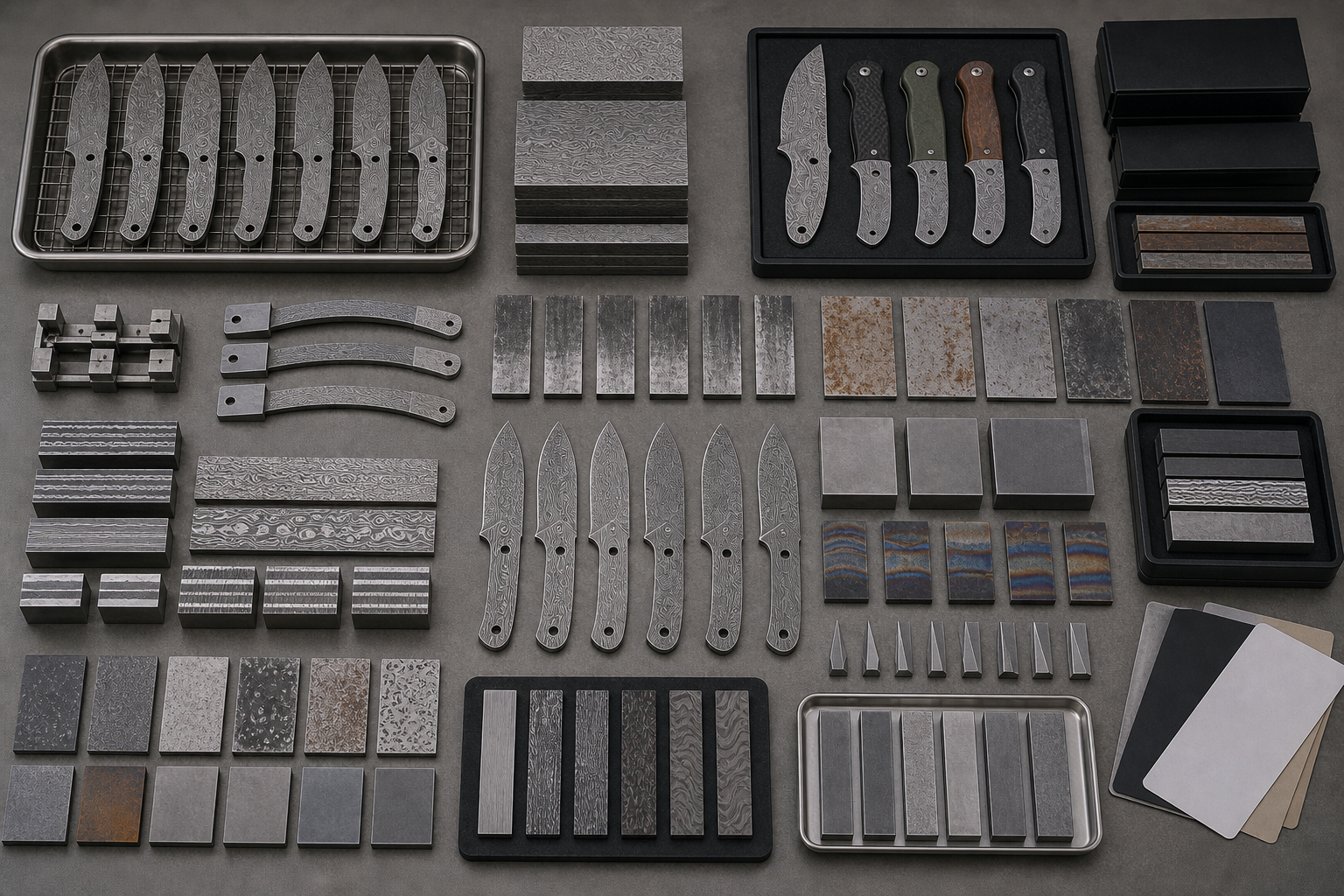
I Separate Strength Into Buyer-Friendly Terms
I usually break strength into several practical questions. Will the edge hold up for the target task? Will the blade avoid chipping? Will it resist bending or breaking under normal use? Will the surface resist corrosion enough for the target market? Will the pattern and finish stay acceptable after sharpening and customer use? These questions are more useful than asking whether Damascus is strong in a general way.
The reason is simple. Damascus is not one single steel. It may be pattern-welded carbon steel. It may be stainless powder metallurgy patterned steel. It may be Damascus cladding over a different core steel. It may also be a decorative surface pattern with little relationship to material strength. Each version has a different risk profile.
For a B2B knife project, I define strength through the product plan. A hunting-style fixed blade may need more toughness and a thicker geometry. A folding knife may need stable hardness, a clean edge, and good blade movement around the pivot. A gift knife may need strong visual consistency, but it still cannot be too soft or brittle. Once the buyer defines the use case, I can match the Damascus type, target hardness, edge thickness, and inspection method.
| Strength question | What it really means | Buyer takeaway |
|---|---|---|
| Will it cut well? | Edge geometry, hardness, steel choice | Pattern does not replace blade design |
| Will it resist damage? | Toughness, weld quality, heat treatment | Test samples before mass production |
| Will it resist rust? | Alloy, finish, care instructions | Carbon Damascus needs clearer care wording |
| Will quality repeat? | Process control and inspection | Approve limits, not only one nice sample |
Quote-ready RFQ Checklist for Damascus Projects
To get an accurate OEM/ODM quote, prepare construction, core steel, pattern, layer, hardness, and etch details before contacting a knife manufacturer.
| RFQ Field | What to Prepare |
|---|---|
| Damascus construction | Pattern-welded / clad / stainless patterned / decorative etch |
| Core steel | 10Cr15CoMoV / VG10 / 14C28N / buyer-specified |
| Pattern | Random / ladder / twist / raindrop |
| Layer specification | Supplier standard or verified target |
| Target HRC | Based on core or full construction |
| Etch standard | Contrast, depth, residue and variation limits |
Does Pattern-Welded Damascus Outperform Modern Mono-Steel?
Some sellers describe Damascus as automatically better. That claim can create wrong expectations and weak product positioning.
Pattern-welded Damascus does not automatically outperform modern mono-steel. Its performance depends on the steels used, welding quality, heat treatment, geometry, and QC. Many mono-steels can outperform poorly made Damascus.
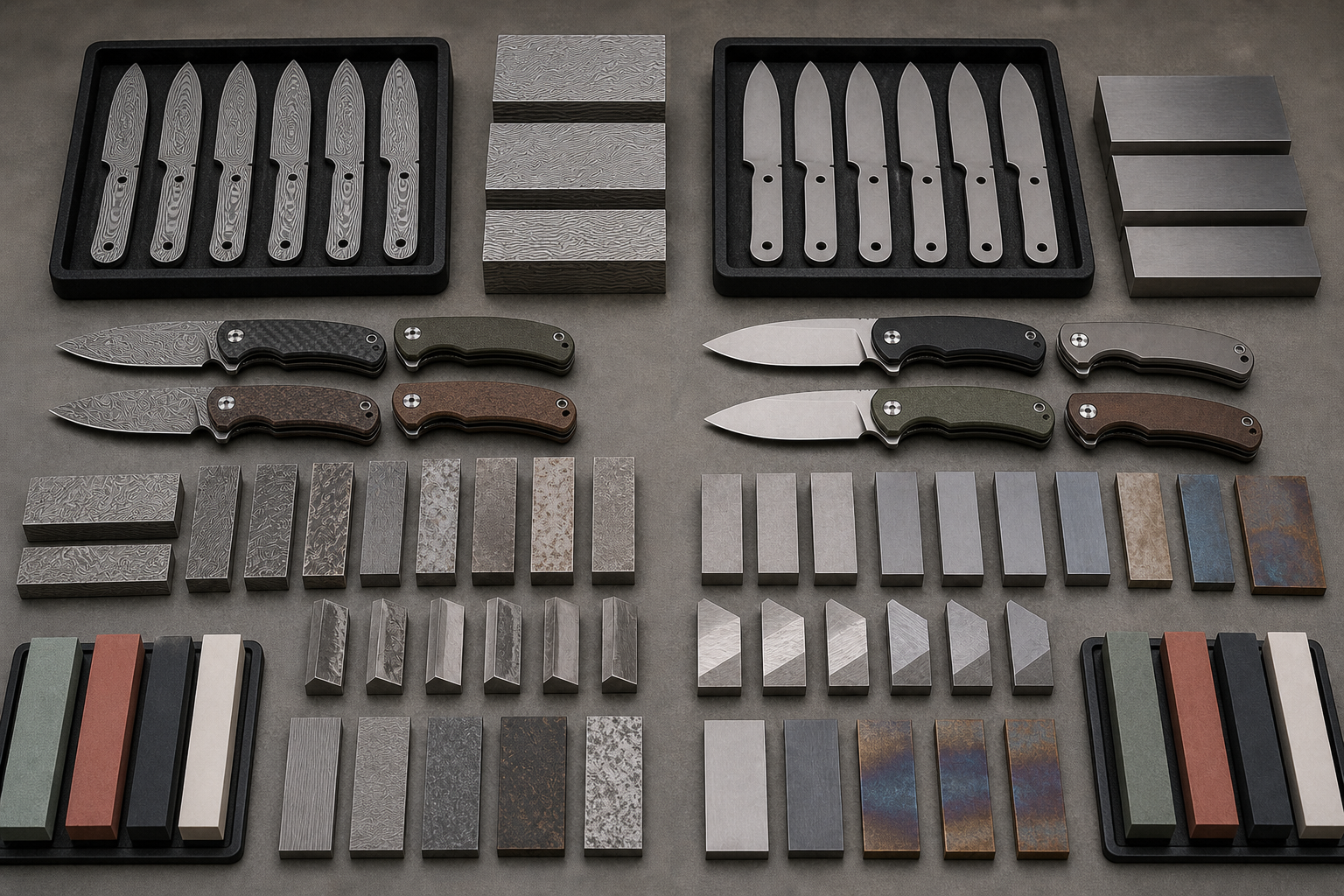
I Do Not Sell the Pattern as a Performance Guarantee
Modern knife buyers are more educated than before. Many buyers know blade steel names. They compare D2, 14C28N, 9Cr18MoV, Nitro-V, S35VN, and other steels by price, corrosion resistance, toughness, and edge retention. If a brand claims that Damascus is simply stronger because it has a pattern, the claim may sound weak to serious customers.
Knife Steel Nerds' article on Damasteel heat treatment and properties is useful because it treats Damascus as a testable steel product, not as a magic category. The article discusses edge retention, toughness, heat treatment, and the role of the steels inside the patterned material. That is the correct mindset for business buyers.
In my own product discussions, I present Damascus as a design and material choice. It can add strong visual value. It can support a premium story. It can make a private label line look more distinctive. But performance still comes from real engineering. If the Damascus uses low-performing steels, weak welds, poor heat treatment, or an overly thin edge for the use case, the knife can fail even if the pattern is real. A good mono-steel blade with correct heat treatment may be a better working knife than a low-cost Damascus blade.
| Comparison point | Damascus buyer risk | Practical decision |
|---|---|---|
| Edge retention | Pattern may distract from steel choice | Ask for steel combination and HRC |
| Toughness | Weld quality and weaker layer may limit use | Test samples by use case |
| Corrosion resistance | Carbon Damascus may rust faster | Use clear care notes or stainless option |
| Marketing value | Pattern can raise perceived value | Do not overstate performance claims |
How Do Steel Choice and Heat Treatment Control Damascus Strength?
A good-looking billet can still become a bad blade. Wrong heat treatment can waste the material and damage customer trust.
Damascus strength is controlled by the steel combination, heat treatment route, tempering, hardness target, blade geometry, and final edge finish. The pattern itself is only one visible result.
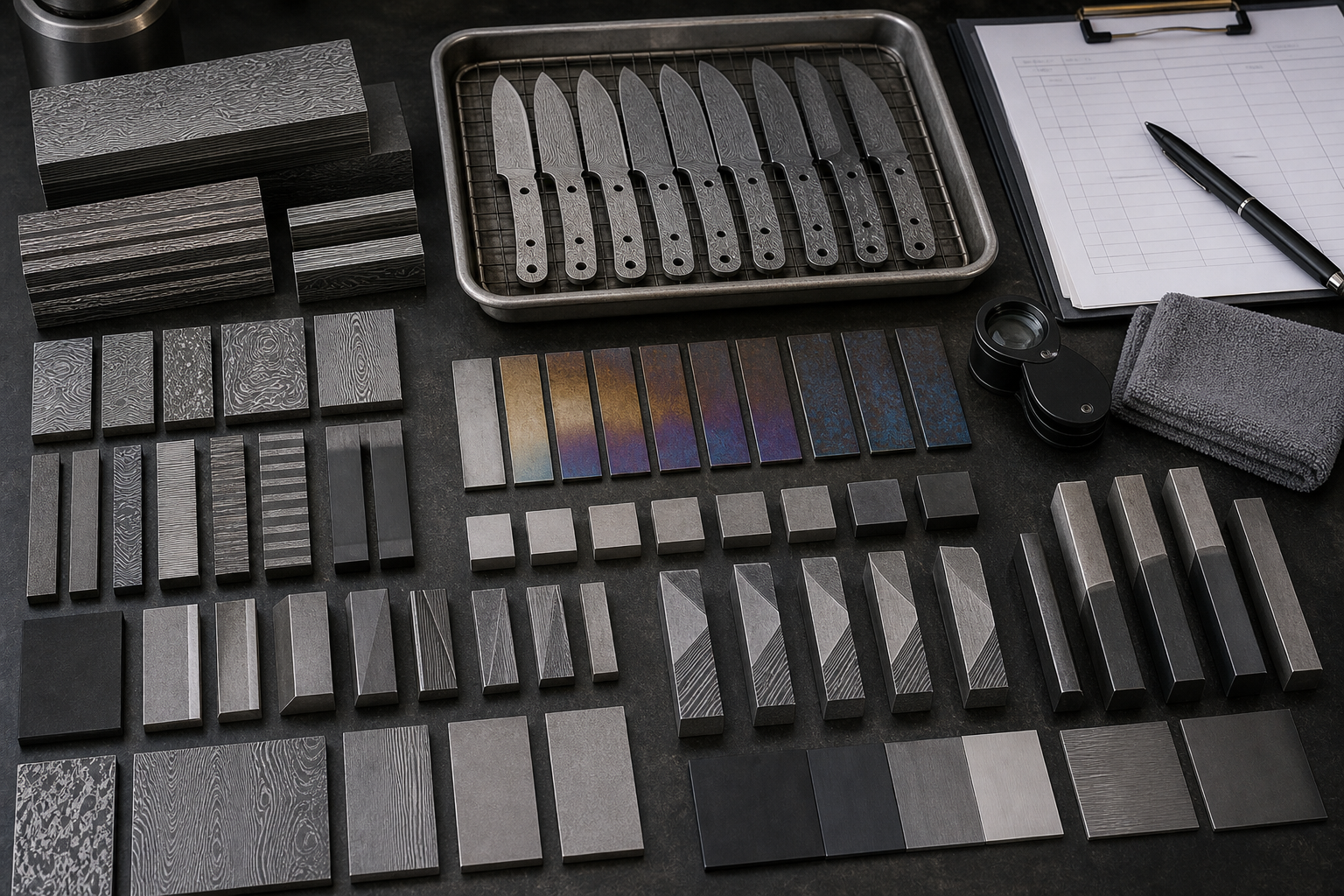
I Treat Damascus as a System, Not Decoration
The first technical control is steel selection. If two steels are combined, the final blade is affected by both. A buyer should ask what the steels are and why they fit the intended knife. A tough steel combined with a more wear-resistant steel may create a useful balance, but it still needs correct welding and heat treatment. If the supplier cannot explain the steel combination, the buyer should slow down.
The second control is heat treatment. A Damascus blade needs a hardening and tempering route that fits the steels used. If the material is stainless powder metallurgy Damascus, the data sheet may give a more specific route. Damasteel's process page explains a powder metallurgy path using gas atomization, HIP, forging, rolling, and pattern development after etching. Its DS93X data sheet gives material information and processing guidance for a specific stainless patterned steel. This is the type of documentation that helps buyers move beyond appearance.
The third control is measurement. Hardness should be checked with a controlled method, not guessed from a supplier message. NIST's Rockwell hardness measurement guide explains why good practice matters when reducing measurement errors. For knife production, I want a target range and batch checks. A single attractive sample is not enough.
| Control point | What to ask | Why it affects strength |
|---|---|---|
| Steel combination | Which steels or grades are used? | It sets the performance ceiling |
| Heat treatment | What route and HRC range are planned? | It controls hardness and toughness balance |
| Geometry | What edge thickness and grind are approved? | It affects chipping and cutting feel |
| Measurement | How is HRC checked and recorded? | It supports batch consistency |
What Production Risks Can Make Damascus Blades Weak?
Damascus can fail for reasons that a photo will not show. The buyer may only discover the problem after complaints start.
Production risks include poor weld integrity, delamination, overheating, uneven heat treatment, excessive etching, weak edge geometry, corrosion misunderstanding, and inconsistent pattern approval across the batch.
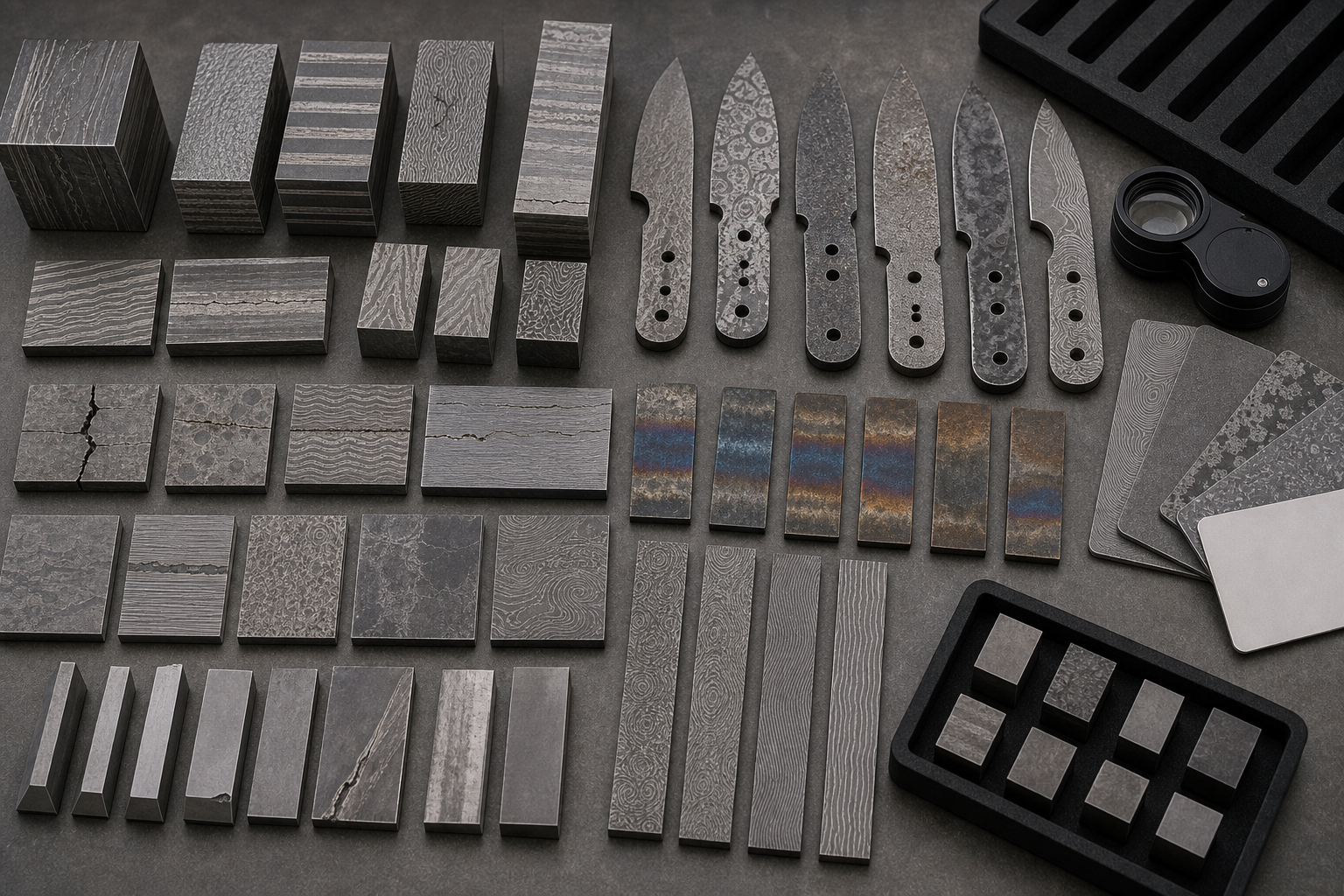
I Inspect the Problems That Usually Hide Under the Pattern
The first risk is weld quality. Pattern-welded steel depends on solid bonding between layers. If the weld is poor, the blade may show delamination or weak spots. Some defects can appear during grinding, etching, sharpening, or use. The buyer should inspect the spine, bevel, tang, and any ground areas. A beautiful face pattern does not prove the billet is clean inside.
The second risk is heat damage. During blade grinding and finishing, too much heat can harm the edge area. This is true for mono-steel blades too, but Damascus adds cosmetic pressure because the factory may spend extra time trying to make the pattern look good. Process discipline still matters. The finish should not damage the working edge.
The third risk is claim mismatch. A carbon Damascus knife may be strong enough for the product, but it may rust if the buyer sells it as low-care stainless. A clad Damascus knife may be legitimate, but it should not be described as full pattern-welded steel if that is not true. A surface-only decorative pattern may fit a low-cost display item, but it should not be sold as real performance Damascus.
This is why I prefer written defect limits. The buyer and supplier should agree on acceptable pattern variation, pitting, dark/light contrast, etch depth, surface marks, edge finish, and corrosion-care wording before mass production.
| Risk | What can happen | How I reduce it |
|---|---|---|
| Poor weld | Delamination or weak spots | Use coupon checks and spine inspection |
| Bad heat treatment | Soft edge or brittle blade | Define HRC range and batch testing |
| Over-etching | Rough surface or weak appearance | Approve finish limits before production |
| Wrong claim | Customer trust problem | Match packaging copy to actual material |
When Is Damascus a Good Business Choice for Knife Brands?
Damascus is not right for every SKU. If the product goal is unclear, the buyer may pay for beauty without profit.
Damascus is a good business choice when visual value, brand story, price positioning, gift appeal, and target customer expectations justify the higher material, inspection, and communication requirements.
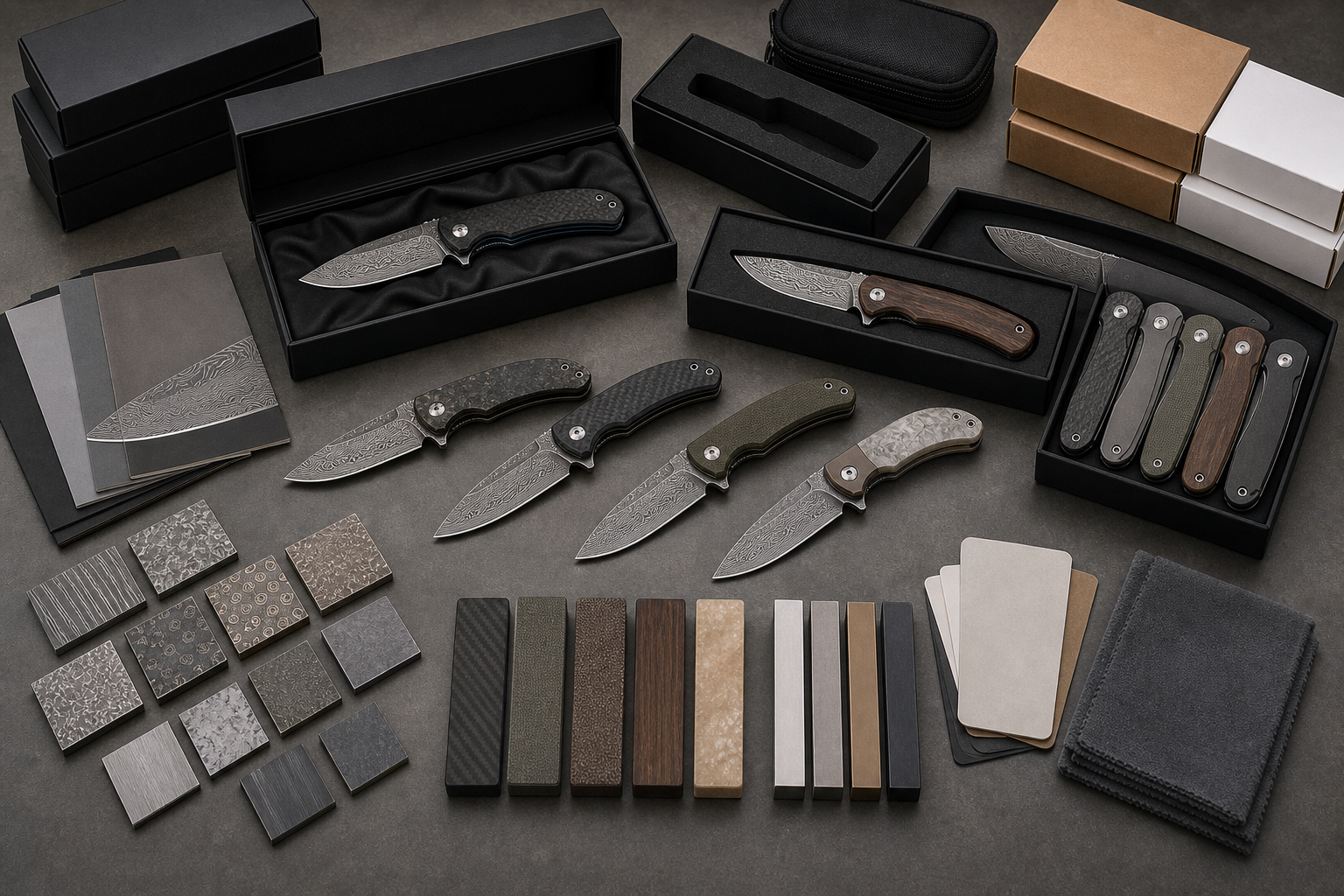
I Use Damascus Where the Story Can Carry the Cost
Damascus can be useful for premium-looking folders, gift knives, collector-style products, outdoor knives with a strong visual identity, and private label lines that need differentiation. The pattern helps the product stand out in photos, retail displays, and catalog pages. This is real commercial value. For many buyers, the question is not only whether Damascus is stronger. The question is whether Damascus helps the product sell at the right margin without creating quality risk.
At Vast State, I look at the buyer's channel before I recommend a Damascus option. A wholesale buyer selling budget utility knives may be better with a stable mono-steel and a clean finish. A brand building a premium gift line may benefit from Damascus if the packaging, care instructions, and quality control match the promise. A buyer selling into outdoor or EDC markets may need to decide whether performance or appearance leads the product story.
I also consider after-sales risk. If the end customer expects stainless behavior but receives carbon Damascus, rust complaints can appear. If the pattern varies too much from sample to batch, retailers may reject the product. If the edge is not consistent, the pattern cannot save the knife. Damascus is a good business choice only when the buyer is ready to specify, test, and communicate it properly.
| Business use | Why Damascus may help | Caution |
|---|---|---|
| Gift knife | Strong visual appeal | Packaging claim must be honest |
| Premium folder | Distinctive product photos | Fit and finish must match price |
| Outdoor fixed blade | Story and appearance | Toughness and corrosion care matter |
| Budget SKU | Decorative value possible | Avoid unsupported performance claims |
What Should Buyers Specify in a Damascus Steel RFQ?
A vague RFQ creates vague quotes. Suppliers may price different materials under the same Damascus name.
A Damascus RFQ should specify Damascus type, steel combination, blade use, target hardness, heat treatment, geometry, pattern style, finish, sample coupon test, QC limits, packaging claim, and corrosion-care wording.
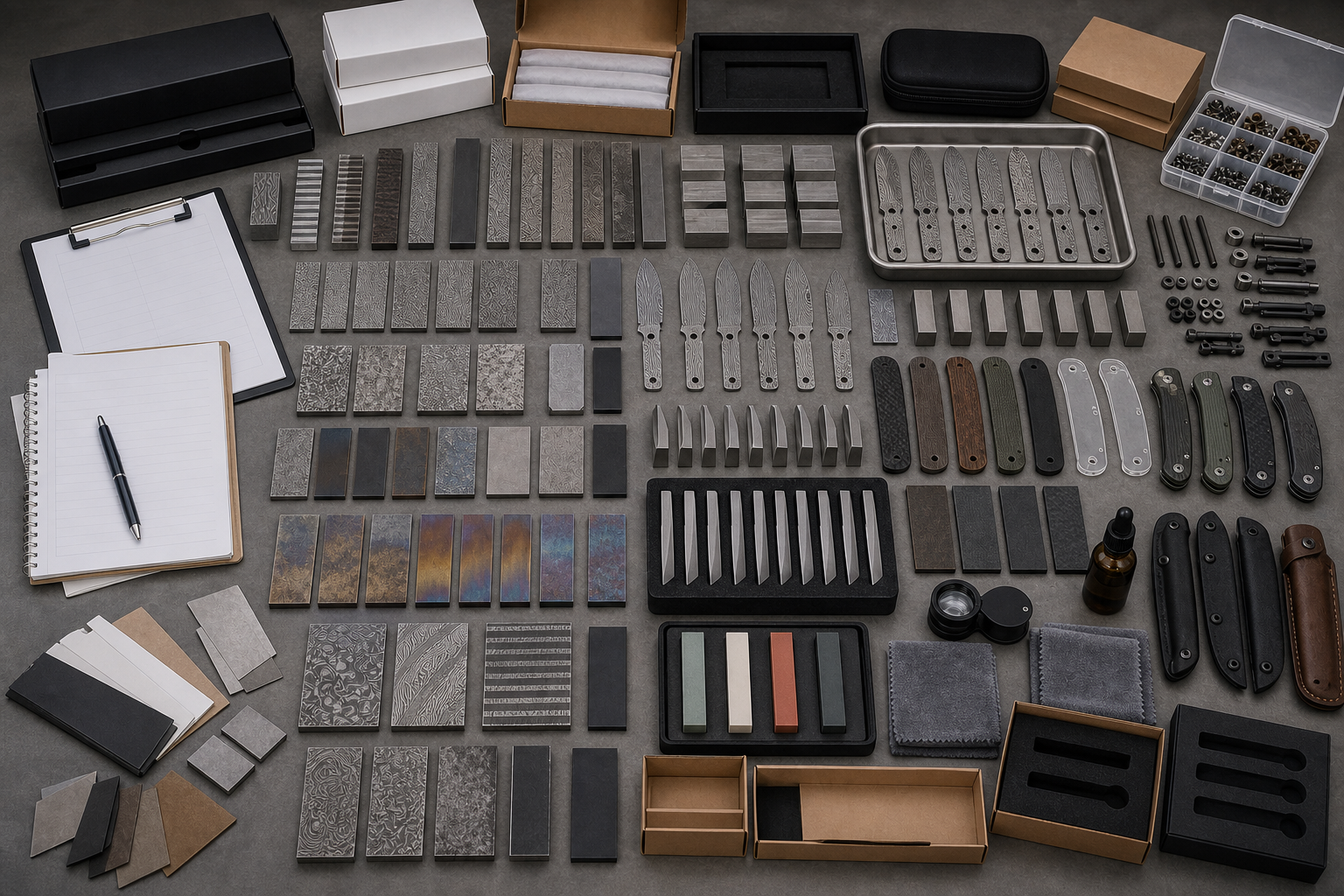
I Turn Damascus Strength Into Purchase Requirements
When a buyer asks for a strong Damascus knife, I turn the request into RFQ fields. First, I define the Damascus type. Is it pattern-welded carbon Damascus, stainless powder metallurgy Damascus, clad Damascus, or a decorative surface pattern? Second, I define the use case. A folding EDC knife, fixed blade, camping knife, and gift knife need different geometry and strength priorities.
Then I define measurable requirements. The RFQ should include blade steel or steel combination, target HRC range, grind type, edge thickness target if available, heat treatment route, finish, etch level, and sample testing plan. If the buyer wants proof, the RFQ can request a sample coupon from the same material batch, a grind and re-etch check, or a cross-section review. It should also request supplier records for material, heat treatment, and final inspection.
Finally, I define communication. The packaging should not promise what the material cannot support. If the blade is carbon Damascus, the care note should be clear. If it is stainless patterned steel, the claim should match the actual grade and data. ISO's explanation of ISO 9001 is useful here because it focuses on consistent products and meeting customer requirements. That is the practical goal: not a perfect word, but a repeatable product that matches the buyer's promise.
| RFQ field | What to include | Why it protects the buyer |
|---|---|---|
| Damascus type | Pattern-welded, clad, stainless PM, decorative | Prevents price and claim confusion |
| Strength target | Use case, HRC, geometry, edge finish | Makes performance measurable |
| Proof method | Coupon, re-etch, cross-section, batch HRC | Reduces surface-only risk |
| Claim wording | Stainless, carbon, real Damascus, care note | Aligns marketing with material facts |
Ready to use this material in your next knife line?
Vast State can help you compare blade steels, heat treatment ranges, handle materials, finishes, packaging options, and QC requirements based on your target market and quantity.
Conclusion
I trust Damascus when the buyer defines strength, verifies the material, tests samples, and controls production claims before mass production.
Source Notes
- Knife Steel Nerds on Damasteel properties supports the article's point that Damascus performance should be tested by steel behavior, heat treatment, toughness, and edge retention.
- Damasteel process information supports the explanation of stainless powder metallurgy patterned steel and pattern development after processing and etching.
- Damasteel DS93X data sheet supports the need for grade-specific material, processing, heat treatment, and etching guidance.
- NIST Rockwell hardness guide supports using controlled hardness measurement instead of casual HRC claims.
- ISO 9001 explained supports the article's process-based approach to defining requirements and controlling repeat production.