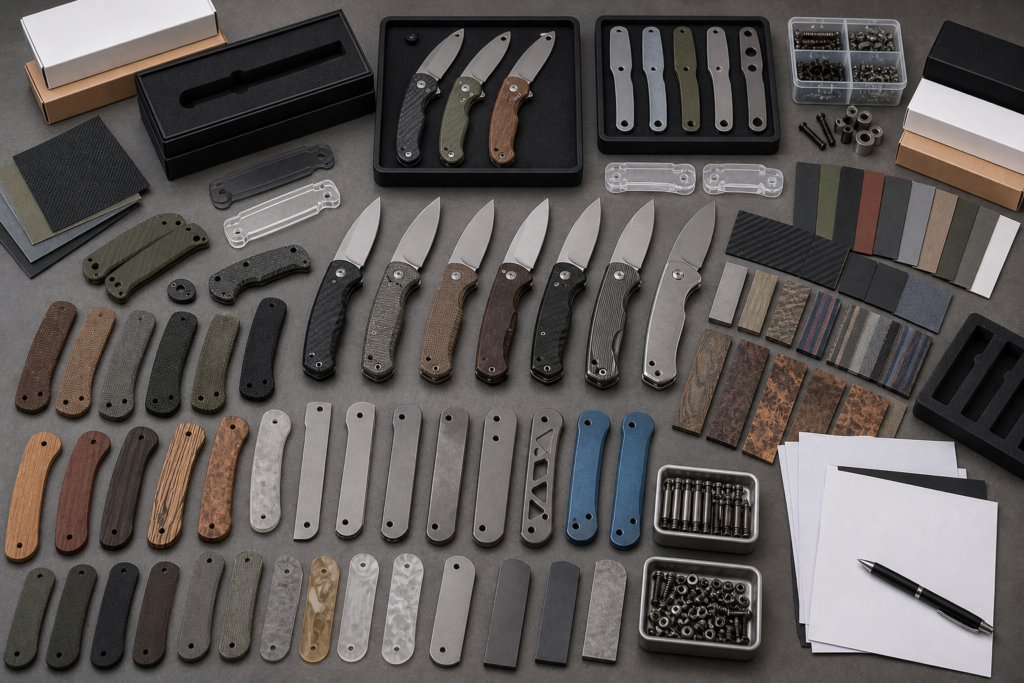
A handle material can make a knife feel right or wrong immediately. If sellers choose by appearance only, returns and complaints follow.
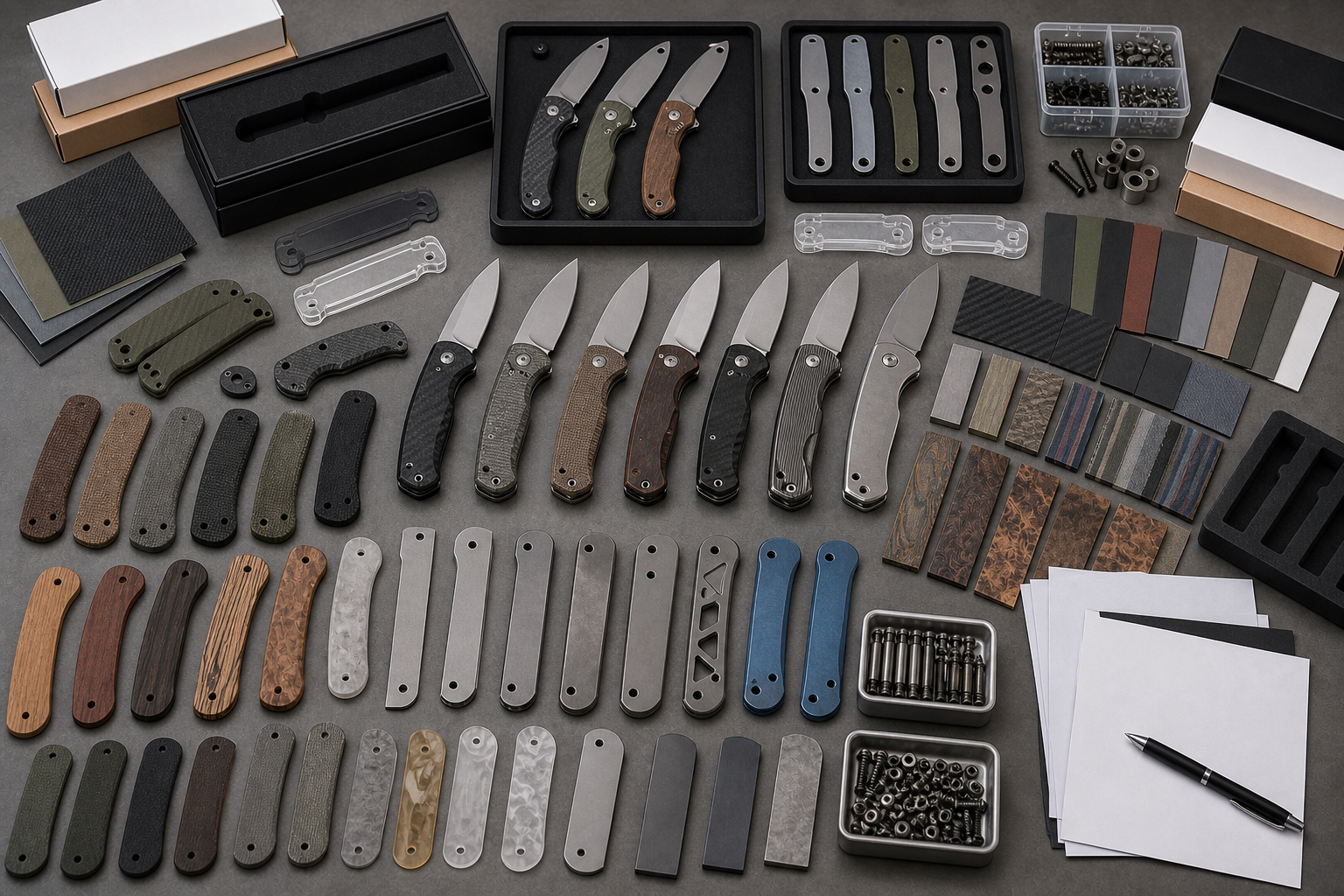
Knife sellers should choose handle materials by matching target user, price tier, grip, weight, machining cost, finish stability, moisture resistance, packaging claim, and repeat production needs. G10, micarta, aluminum, stainless steel, wood, FRN, carbon fiber, titanium, and plastic each fit different business goals.
Quick buyer brief:
- Answer: The best handle material is the one that fits the product role, not the most expensive option.
- Buyer context: This helps knife brands, importers, wholesalers, and private label buyers plan sellable product lines.
- Key checks: Confirm market, target price, MOQ, grip, weight, finish, machining risk, logo method, packaging claim, and QC limits.
Have a knife or multi-tool project in mind?
Send your sketch, CAD file, sample photo, or product idea. Vast State can review manufacturability, suggest materials, estimate MOQ, and prepare a quote for your OEM/ODM project.
When I help a buyer choose handle material, I do not start with the material name. I start with the product job. Is the knife for budget EDC, outdoor use, gift packaging, rescue work, camping, tactical-style display, or a premium private label line? The handle affects the user's first touch, the factory's machining plan, the product's weight, the packaging claim, and the final margin. That is why handle choice should be a sourcing decision, not a decoration decision.
What Should Sellers Decide Before Choosing a Handle Material?
Many handle mistakes happen before the supplier quotes. The buyer chooses a material without defining the user, price, or channel.
Before choosing a handle material, sellers should define the knife type, target user, retail price tier, grip requirement, weight target, environment, branding need, MOQ, and acceptable production variation.
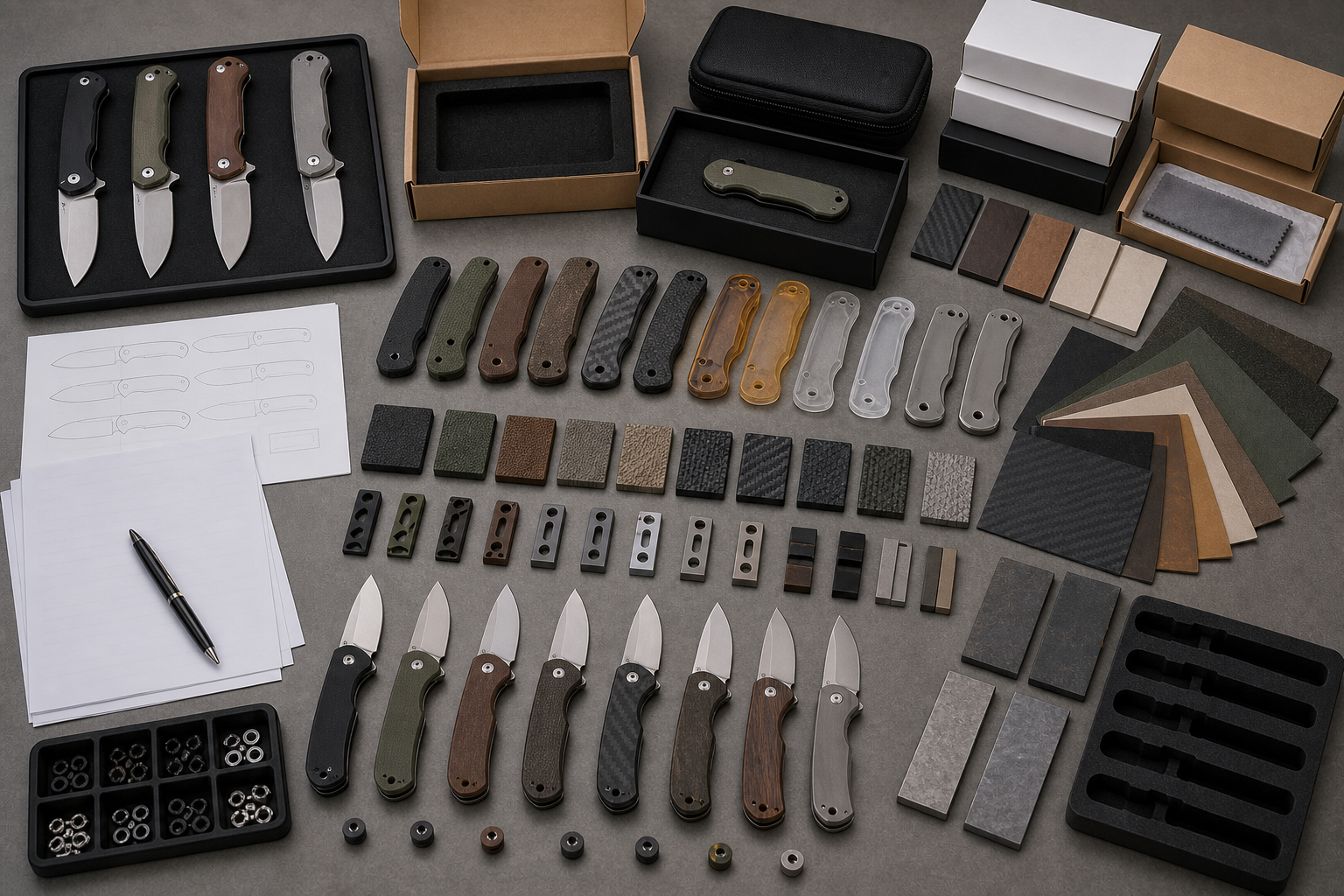
I Match the Material to the Product Role First
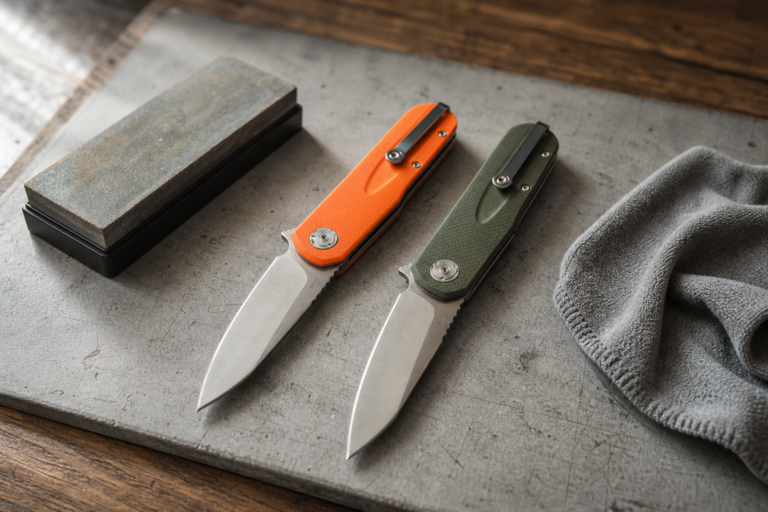
The same handle material can be a good choice in one product and a poor choice in another. G10 may be practical for an EDC folder because it gives stable grip and can be machined in many textures. Aluminum may help a modern lightweight folder, but it needs surface treatment control. Wood can make a gift knife feel warm, but natural variation must be accepted. Stainless steel can feel solid and durable, but it can make a knife heavy. Plastic or FRN can support value and volume, but the tooling decision matters.
I ask buyers to define the knife role first. A distributor selling utility folders may need stable cost, clear packaging, and simple colors. An outdoor brand may need texture, wet-hand grip, and a handle that does not look cheap. A premium private label buyer may need a stronger visual story, tighter finish, and more careful packaging. The material decision follows that business direction.
I also ask about repeat orders. A beautiful sample is not enough if the material color changes too much, the texture is hard to repeat, or the handle scale warps after machining. A seller should approve practical limits before production starts. This includes color tolerance, texture depth, edge chamfer, screw fit, logo method, and acceptable natural variation.
| Decision | What to define | Why it matters |
|---|---|---|
| Product role | EDC, outdoor, rescue, gift, utility | Guides grip, weight, and price |
| Price tier | Value, mid-range, premium | Controls material and machining budget |
| User environment | Wet, dusty, pocket carry, display | Changes texture and finish needs |
| Branding | Logo, color, packaging story | Affects material and surface method |
OEM/ODM RFQ Checklist
Prepare these details to help Vast State review your project and provide a more accurate quotation.
| RFQ Field | What to Prepare |
|---|---|
| Project type | OEM from drawing / ODM private label / wholesale catalog |
| Product category | Folding knife / fixed blade / multi-tool / outdoor tool |
| Design status | Idea / sketch / 2D drawing / 3D CAD / physical sample |
| Target price | Ex-factory target price or retail price range |
| MOQ expectation | 500 / 1,000 / 3,000 / 5,000+ pcs |
| Logo method | Laser engraving / etching / printing / molded logo |
| Packaging | Standard packaging / custom retail box / Amazon-ready |
| Market | USA / EU / Japan / Korea / Middle East / other |
| Compliance needs | Buyer-specified testing / documentation / labeling |
| Timeline | Sample deadline / mass production deadline |
When Is G10 or FR-4 the Right Knife Handle Choice?
G10 is popular because it works in many knives. But it still needs good machining, dust control, and texture planning.
G10 or FR-4 is a good handle choice when sellers need stable grip, good strength, many color options, CNC texture flexibility, and a practical balance between performance and cost.
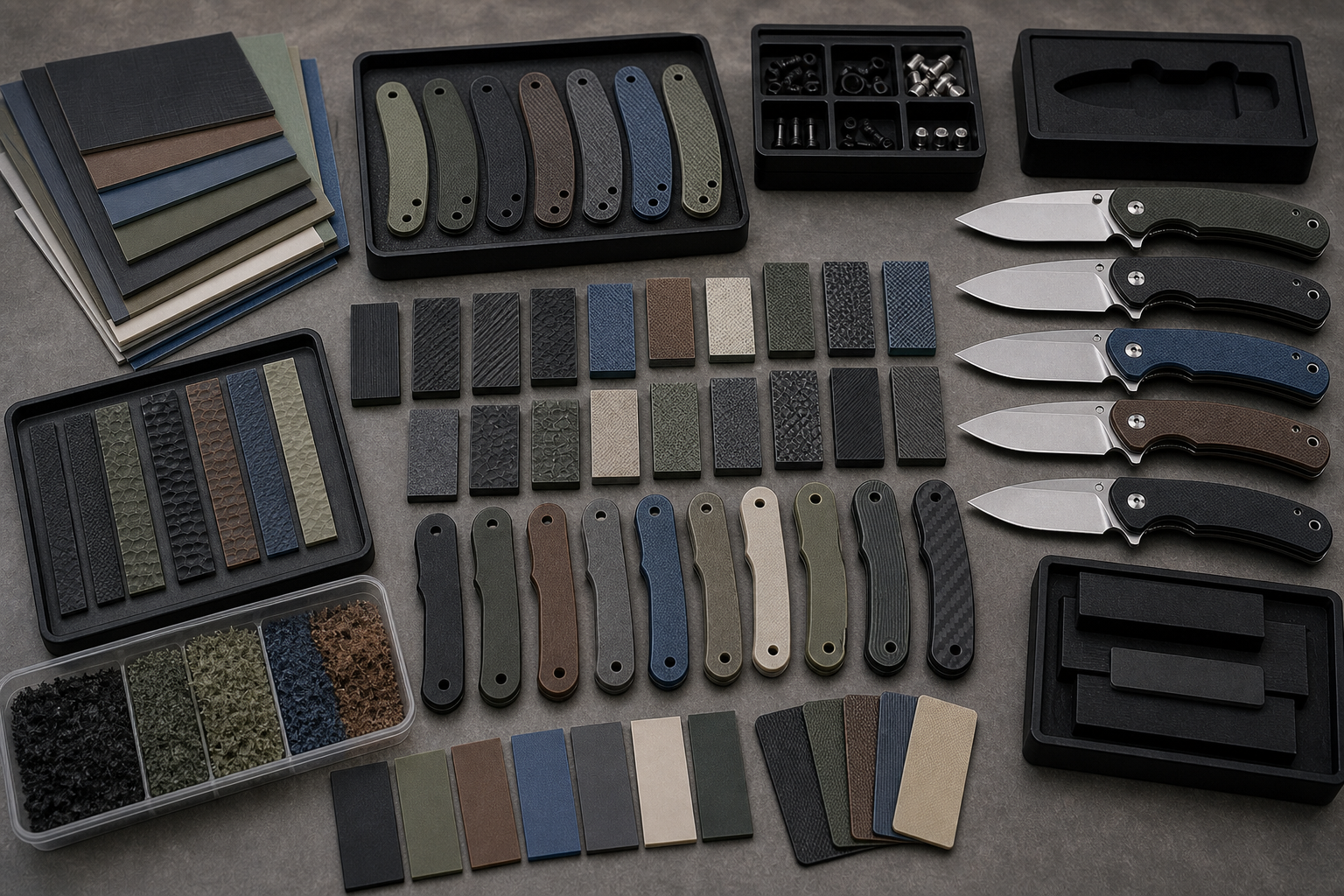
I Use G10 When Grip and Repeatability Matter
G10 is common in folding knives because it is strong enough for many handle applications, stable in normal use, and flexible for machining. Curbell Plastics describes G-10 and FR-4 glass epoxy laminate as glass fabric reinforced epoxy laminate. That structure explains why buyers often choose it for knife scales. It can be textured, layered, contoured, and offered in many colors.
For sellers, the advantage is product-line flexibility. A brand can use black G10 for a practical EDC knife, green or tan G10 for outdoor positioning, layered G10 for visual effect, or milled patterns for better grip. It supports many price tiers without becoming too unusual for customers to understand.
The risk is that G10 still needs process control. CNC texture can feel too sharp, too shallow, or inconsistent. Edges need chamfering. Screw holes need accurate positioning. Dust control during machining matters for the factory. Color batches should be checked before mass production. If the buyer wants a soft pocket feel, a rough texture may create complaints. If the buyer wants hard outdoor grip, a smooth finish may feel weak. The RFQ should define texture and finish, not only say "G10 handle."
| G10 factor | Buyer benefit | Production concern |
|---|---|---|
| Texture | Strong grip and product identity | Needs approved depth and edge comfort |
| Color | Easy product-line variation | Batch color should be checked |
| Machining | Many shapes and patterns possible | Dust and tool wear need control |
| Cost | Good mid-range balance | Complex milling raises price |
When Should Sellers Choose Micarta, Wood, or Natural-Looking Handles?
Natural-looking handles can make a knife feel warmer and more collectible. But variation can surprise buyers if it is not managed.
Micarta, wood, and natural-looking materials work well when sellers want warmth, grip character, gift appeal, outdoor style, or a craft feeling, but they require clear variation limits.
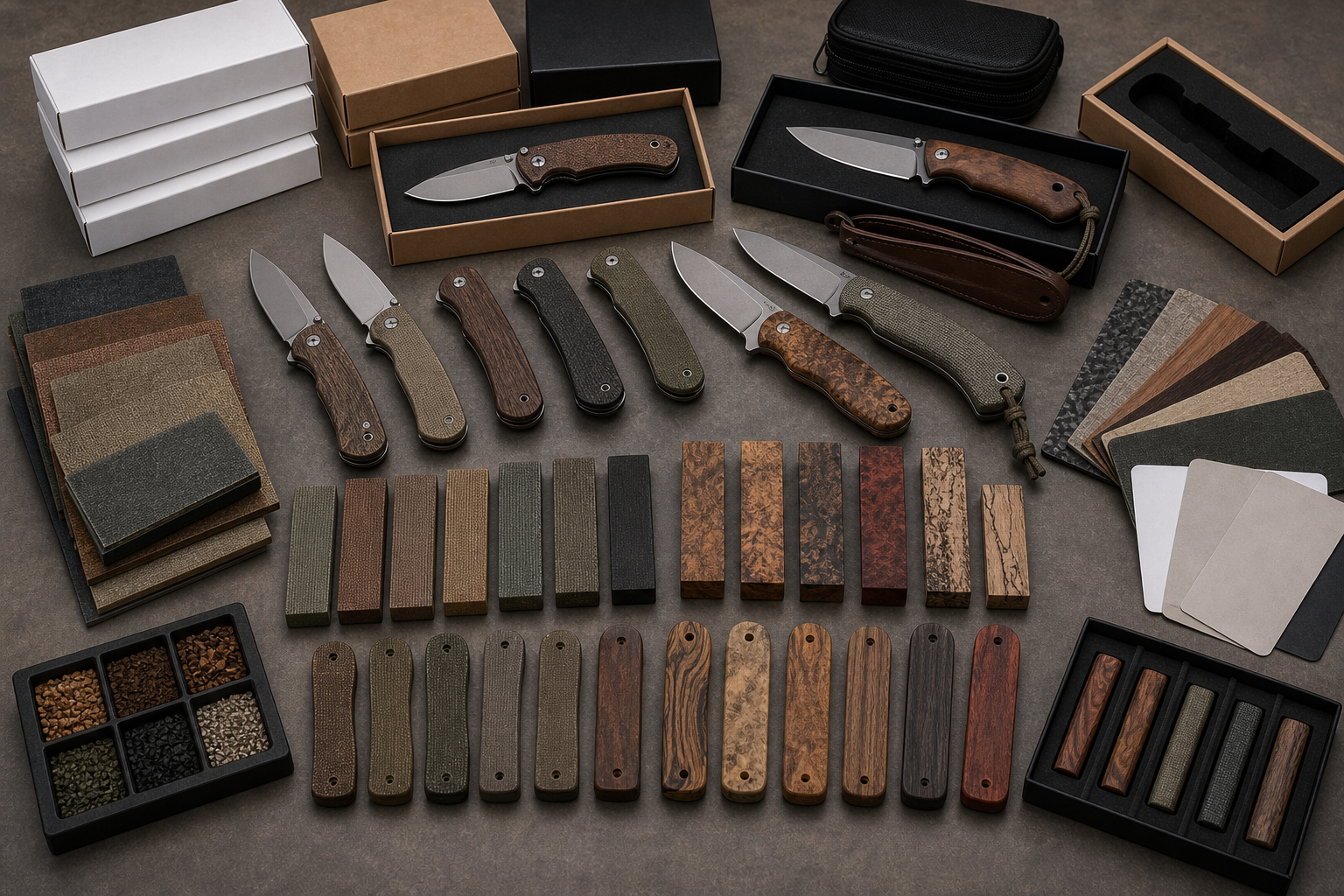
I Use Natural Character Only When the Buyer Accepts Variation
Micarta is often chosen because it gives a practical and warm feel. Norplex-Micarta explains that Micarta composite laminates are made by combining reinforcement materials with thermoset resin. In knife handles, this creates a different feeling from plastic, metal, or G10. Canvas micarta can feel grippy and outdoor-focused. Linen micarta can feel finer. Paper-based laminate can look cleaner and more refined.
Wood is different. It can support a gift, heritage, camping, or classic product story. But wood brings natural variation. Grain, color, density, oil absorption, and small visual differences are part of the material. A buyer who wants every handle scale to look identical should be careful with wood. Stabilized wood or laminated wood can reduce some risk, but the buyer still needs sample boundaries.
Natural-looking materials are strongest when the seller explains them honestly. A small color difference should not become a defect if the material is sold as natural. But cracks, poor fit, loose scales, sharp edges, or badly sealed surfaces are still defects. If a buyer wants an environmental or responsible-sourcing claim, the claim should be supported. The Forest Stewardship Council explains chain of custody certification for tracking FSC-certified material through supply chains. Sellers should not use sourcing claims without records.
| Material | Best fit | What to control |
|---|---|---|
| Canvas micarta | Outdoor and work-style handles | Texture, color, edge comfort |
| Linen micarta | Cleaner mid-range or premium feel | Finish consistency and color tone |
| Wood | Gift, classic, collector, outdoor story | Grain variation and sealing |
| Stabilized wood | More controlled natural appearance | Cost and supplier consistency |
When Do Metal and Carbon Fiber Handles Make Sense?
Metal and carbon fiber can look premium. But they can also raise cost, weight, machining time, or surface-control risk.
Aluminum, stainless steel, titanium, and carbon fiber make sense when the product needs a modern look, premium feel, slim construction, special finish, or higher perceived value.
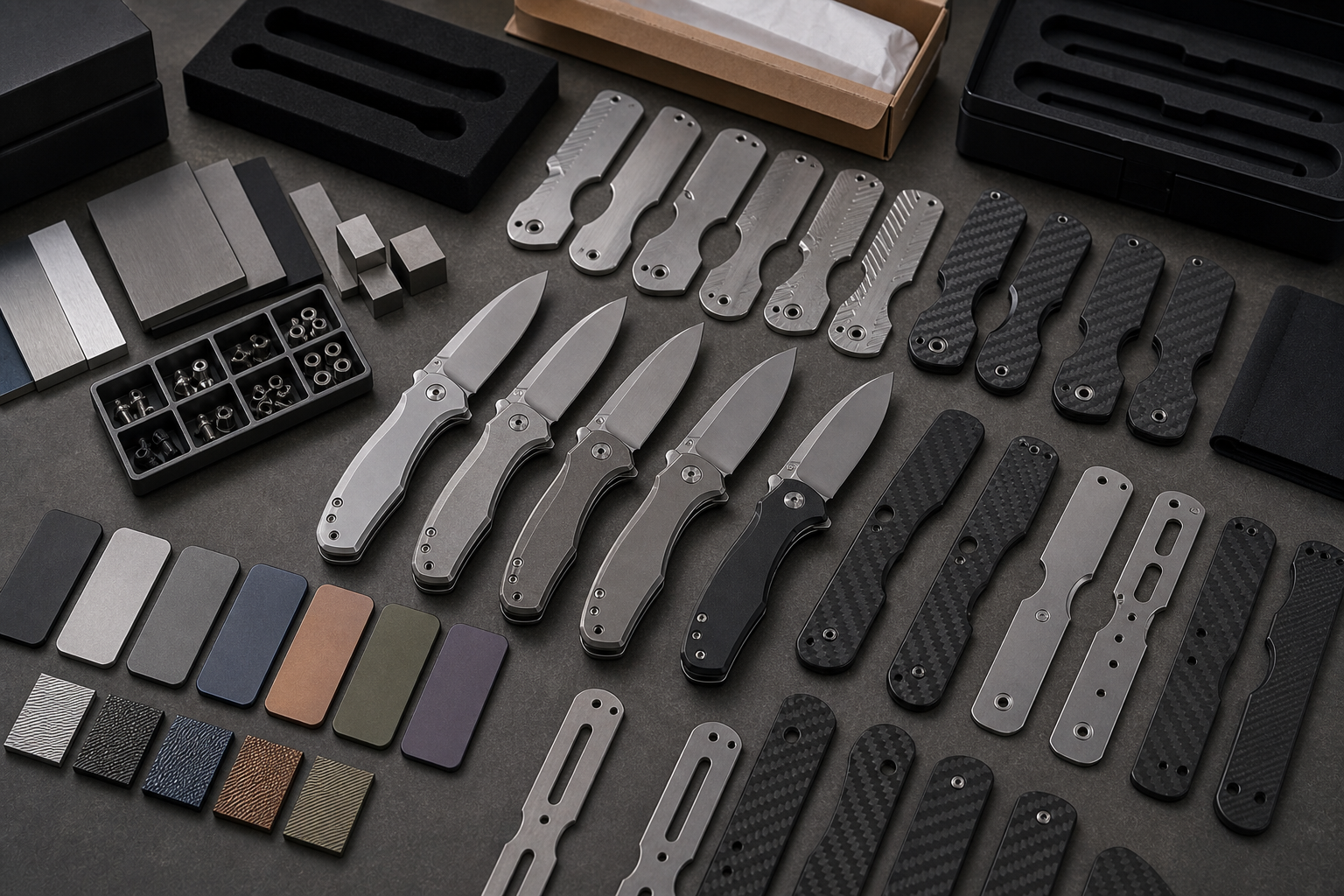
I Choose Metal When the Product Story Can Pay for It
Aluminum is useful when the buyer wants a lightweight modern handle with color options. It can be machined cleanly and anodized. The Aluminum Anodizers Council describes anodizing as an electrochemical process that changes aluminum's surface into an oxide finish. That finish can improve wear and corrosion behavior when the process is controlled. For knife sellers, the main concern is consistency. Anodized color can vary by batch, alloy, surface preparation, and process conditions.
Stainless steel handles feel strong and durable. They can support simple value knives, frame-style structures, or slim designs. But weight can become a problem. A pocket knife that feels solid in the hand may feel too heavy in daily carry. Stainless handles can also feel slippery if texture and contour are not planned.
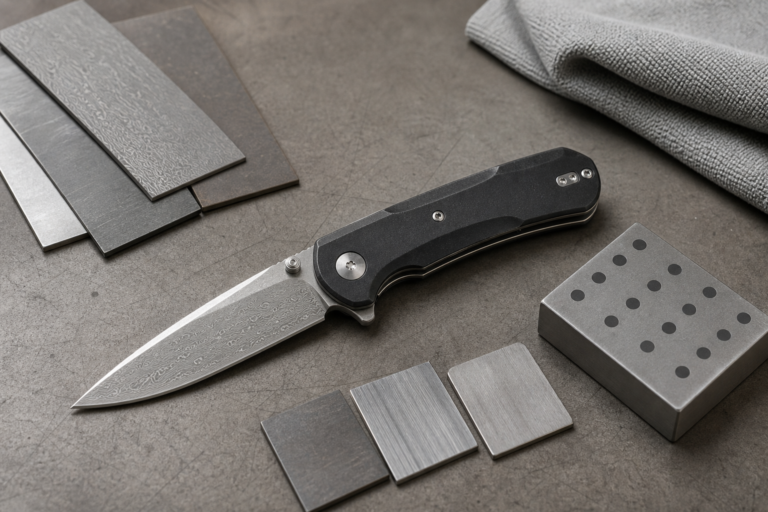
Titanium and carbon fiber usually sit in higher price tiers. Titanium can support a premium frame lock or lightweight metal story, but cost and machining must fit the margin. Carbon fiber can offer a light and high-tech look. Rock West Composites describes carbon fiber composites as combining carbon fiber with resin, creating strong and lightweight composite materials. For knife handles, the seller still needs to check real construction, surface finish, edge comfort, and whether the material is solid carbon fiber, laminate, overlay, or carbon-fiber-look decoration.
| Material | Why sellers use it | Main risk |
|---|---|---|
| Aluminum | Light, modern, color options | Anodizing color and scratch control |
| Stainless steel | Solid, simple, durable feel | Weight and slippery surface |
| Titanium | Premium, light metal story | Cost and machining time |
| Carbon fiber | Light and high-tech appearance | Claim accuracy and edge finish |
How Do Handle Materials Affect Production and Quality Control?
Handle material problems often appear late. A sample may look fine, but mass production exposes fit, color, texture, and assembly issues.
Handle material affects CNC machining, screw fit, liner alignment, blade centering, lock function, surface finish, logo method, packaging protection, and final inspection standards.
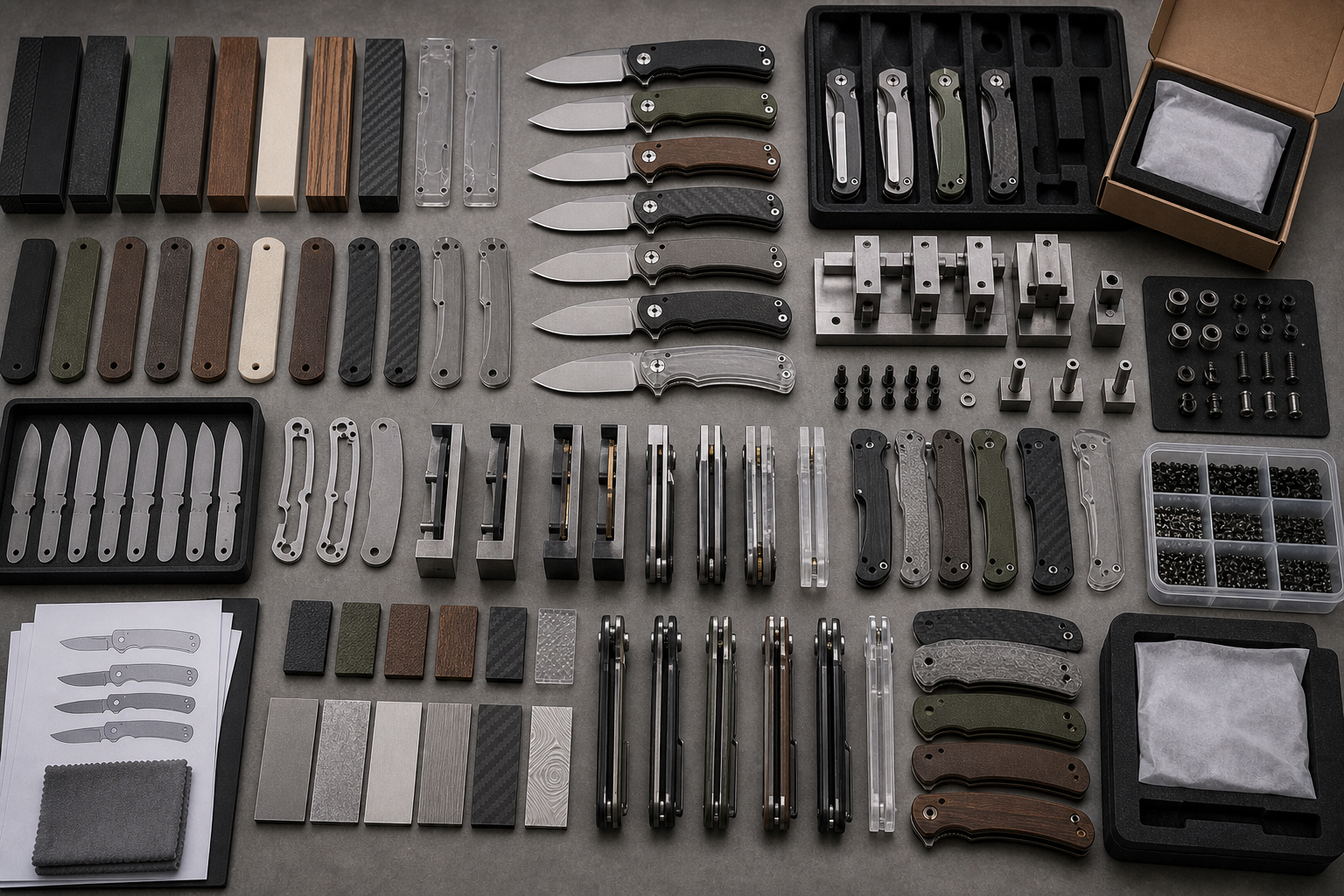
I Check the Handle as Part of the Mechanism
On a folding knife, the handle is not only a grip. It is part of the working structure. The handle scale, liner, spacer, pivot, washer, bearing, clip, screws, and lock all interact. If the handle material moves, warps, chips, or is machined poorly, the knife may have blade play, poor centering, screw problems, or rough action. This is why I do not treat handle material as a cosmetic part.
Different materials create different QC needs. G10 needs texture and edge checks. Micarta needs color and fiber-finish checks. Aluminum needs anodizing and scratch checks. Wood needs grain, moisture, and sealing checks. Stainless steel needs burr and weight checks. Carbon fiber needs edge safety and construction verification. Plastic or FRN needs tooling, shrinkage, and surface consistency checks.
The quality plan should start before final inspection. Incoming material checks help catch color, thickness, or surface problems early. In-process checks catch hole position, chamfer, flatness, and fit. Assembly checks confirm centering, lockup, and screw stability. Final checks confirm appearance, grip comfort, packaging, and label accuracy. ISO's ISO 9001 explained is useful because it focuses on meeting requirements and delivering consistent products. That mindset fits handle material control very well.
| QC stage | What I check | Why it matters |
|---|---|---|
| Incoming material | Thickness, color, surface, supplier batch | Prevents wrong inputs |
| Machining | Hole position, texture, chamfer, flatness | Protects assembly and comfort |
| Assembly | Screw fit, centering, lock function | Keeps the knife working correctly |
| Final inspection | Finish, logo, packaging, claim wording | Protects seller reputation |
What Should Buyers Put in a Knife Handle Material RFQ?
A vague RFQ creates vague samples. If the buyer only says "good handle," the supplier must guess too much.
A handle material RFQ should include knife type, target user, price tier, handle material, texture, color, finish, logo method, packaging claim, MOQ, target price, and inspection limits.
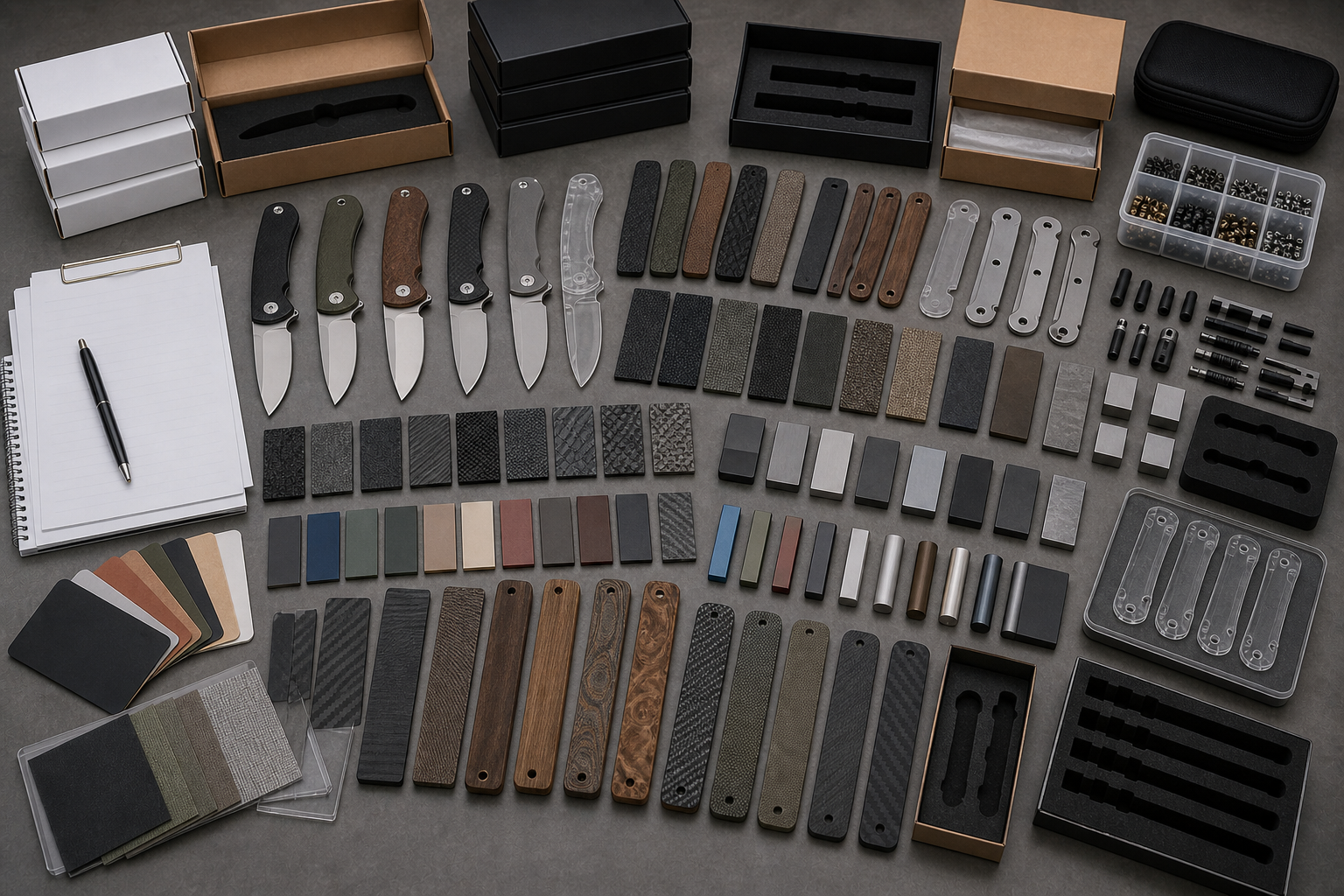
I Make Handle Choices Easy to Quote and Easy to Repeat
When a buyer sends a handle material RFQ to Vast State, I want to see the product goal first. A good RFQ tells me whether the knife is for EDC, outdoor, rescue, camping, gift, utility, or a private label product line. It should also tell me the target price range and MOQ. Without that, I may suggest a material that looks good but does not fit the seller's margin.
The technical section should name the preferred handle material or ask for recommendations. It should include texture level, color, finish, logo method, edge comfort, screw color, clip color, and packaging needs. If the buyer wants a claim such as carbon fiber, natural wood, micarta, titanium, or recycled material, the RFQ should ask what proof or limitations the supplier can support.
The QC section should define the approval method. I recommend approved color samples, texture samples, packaging samples, and final inspection limits. For natural materials, define acceptable variation. For anodized aluminum, define color tolerance and scratch limits. For G10, define texture and edge feel. For plastic or FRN, define surface finish and mold marks. A strong RFQ does not remove every problem, but it gives the supplier enough detail to quote honestly and produce repeatably.
| RFQ field | What to include | Why it helps |
|---|---|---|
| Product direction | Knife type, user, market, price tier | Guides material recommendation |
| Material spec | G10, micarta, aluminum, wood, plastic, titanium | Makes quotation comparable |
| Finish details | Texture, color, logo, edge comfort | Prevents sample surprises |
| QC limits | Color, scratches, fit, packaging, variation | Supports repeat production |
Turn your idea into a quote-ready knife project.
Share your drawing, sample photo, target quantity, market, and packaging needs. Vast State will review manufacturability and prepare OEM/ODM options.
Conclusion
I choose knife handle materials by matching user need, price, manufacturability, QC, and honest claims, not by chasing the most expensive option.
Source Notes
- Curbell Plastics G-10/FR-4 supports the explanation of glass epoxy laminate structure and practical G10/FR-4 material behavior.
- Norplex-Micarta supports the explanation of micarta-style composite laminate construction.
- Aluminum Anodizers Council supports the explanation of anodizing as a controlled aluminum surface process.
- Rock West Composites supports the basic description of carbon fiber composites as strong, lightweight fiber-resin materials.
- FSC chain of custody certification supports the warning that wood sourcing claims need traceable records.
- ISO 9001 explained supports the process-based QC approach for repeatable handle material quality.