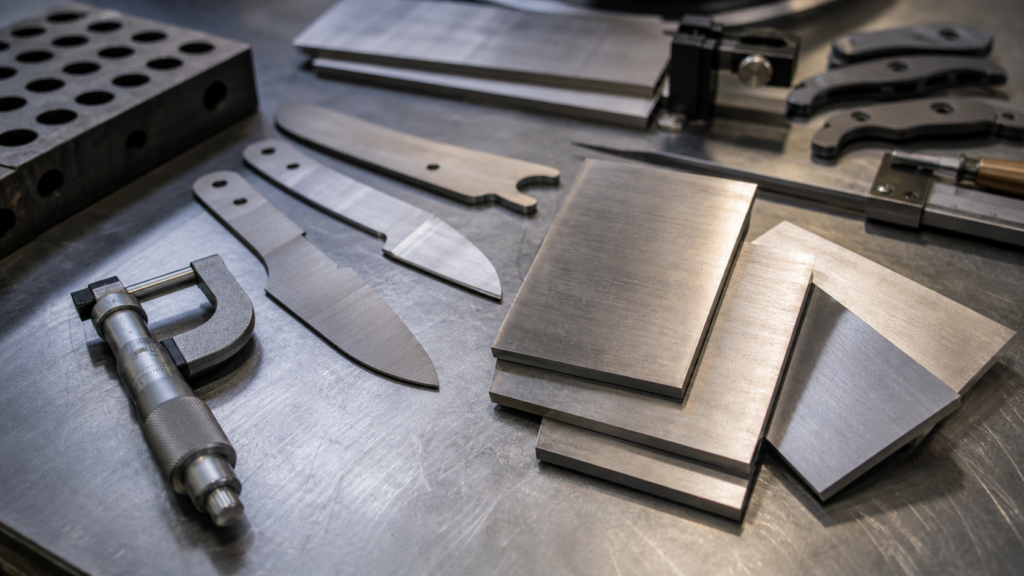
440C can look old-fashioned beside newer steels. But dismissing it too fast can remove a practical option from the buyer's toolbox.
440C steel is still useful when buyers need a stainless blade steel with good hardness potential, familiar sourcing, reasonable cost, and balanced everyday performance. It is not a super steel, so buyers should control heat treatment, edge geometry, finish, hardness testing, and marketing claims before production.
Quick buyer brief:
- Answer: 440C remains valuable for the right knife category, price tier, and QC plan.
- Buyer context: This helps knife brands, importers, wholesalers, and private label buyers decide whether 440C fits a product line.
- Key checks: Confirm material grade, target HRC, heat treatment, edge geometry, corrosion expectation, sharpening story, finish, packaging claim, and batch inspection.
Planning a knife project with this steel?
Send us your target market, MOQ, price range, and blade type. Vast State can help you choose the right steel, HRC range, finish, handle material, and QC requirements for OEM/ODM production.
When a buyer asks me if 440C is still worth using, I do not answer from internet reputation alone. I ask about the product. Is it a value EDC folder, a display-friendly pocket knife, a camping tool, a gift knife, or a general utility product? 440C is not the newest steel story, but it can still make sense when the buyer wants stainless behavior, familiar processing, and a realistic price. The mistake is treating the steel name as the whole product.
What Is 440C Steel, and Why Is It Still Discussed?
Steel names can become emotional. Some buyers call 440C outdated, while others remember it as a respected stainless knife steel.
440C is a high-carbon chromium stainless steel. It is valued because it can reach high hardness for stainless steel, offers useful corrosion resistance, and remains familiar to many factories and buyers.
I Treat 440C as a Mature Stainless Option
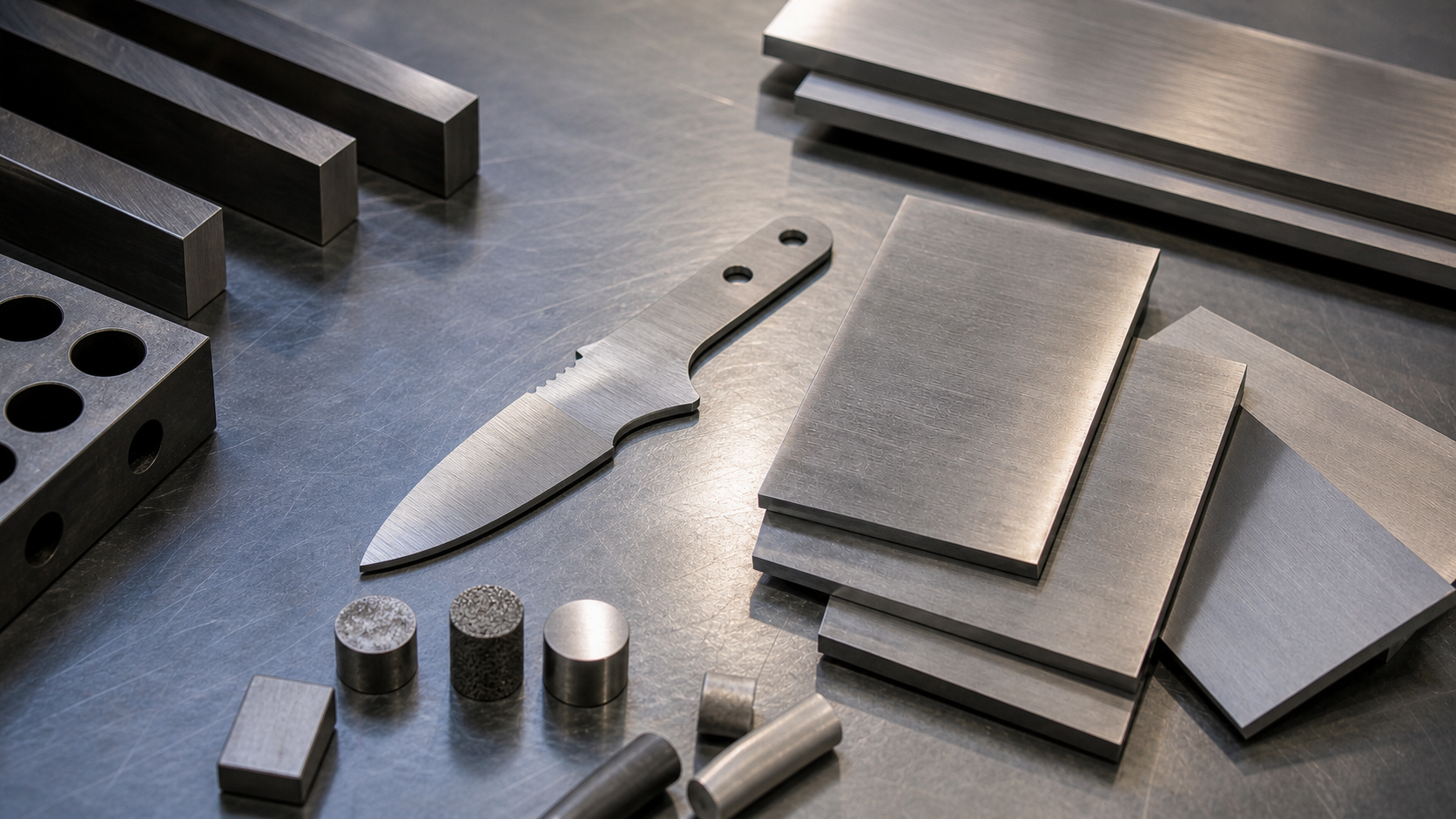
Carpenter Technology describes 440C stainless as a high-carbon chromium steel designed to provide stainless properties with maximum hardness. Carpenter also identifies it as UNS S44004 and lists chromium in the 16 to 18 percent range with carbon at 0.95 to 1.20 percent. That basic chemistry explains why 440C is still part of knife conversations. It has enough carbon for hardness and wear resistance, and enough chromium to support stainless behavior when heat treated and finished correctly.
For B2B buyers, this makes 440C a practical middle-ground steel. It is not positioned like MagnaCut, M390, S35VN, or other modern premium steels. It also should not be treated like a vague "440 stainless" label. The "C" matters because 440A, 440B, and 440C are not the same product. A supplier should state the grade clearly.
I like 440C most when the buyer needs a familiar stainless option for everyday knives, gift knives, value folders, or general utility products. It can polish well, hold a practical edge, and give corrosion resistance that many buyers expect from stainless knives. But the final result depends on heat treatment, edge geometry, finish, and inspection. The steel name is only the beginning.
| 440C factor | What it means | Buyer takeaway |
|---|---|---|
| High carbon | Supports hardness and wear resistance | Control heat treatment carefully |
| High chromium | Supports stainless behavior | Finish and care still matter |
| Mature grade | Many suppliers know it | Verify actual grade, not only "440" |
| Familiar market name | Easier for buyers to understand | Avoid overclaiming it as premium steel |
Quote-ready RFQ Checklist for This Steel
To get an accurate OEM/ODM quote, prepare these details before contacting a knife manufacturer.
| RFQ Field | What to Prepare |
|---|---|
| Product type | Folding knife / fixed blade / multi-tool / kitchen knife |
| Target market | US / EU / outdoor retail / promotional / tactical / EDC |
| Steel option | 4116 / 14C28N / D2 / N690 / Nitro-V |
| Target HRC | Example: 55-57 HRC, 58-60 HRC |
| Blade finish | Satin / stonewash / black coating / bead blast |
| Handle material | G10 / micarta / aluminum / stainless steel / wood |
| Lock or structure | Liner lock / frame lock / slip joint / full tang |
| Estimated quantity | 500 / 1,000 / 3,000 / 5,000+ pcs |
| Packaging | White box / color box / blister / pouch / gift box |
| Required documents | Drawing / sample photo / logo file / packaging artwork |
When Is 440C a Good Choice for Knife Product Lines?
A steel can be good and still wrong for a project. The buyer should match 440C to the product role and price tier.
440C is a good choice for knives that need stainless behavior, practical edge retention, easier sourcing, polished appearance, moderate cost, and familiar customer language.
I Use 440C Where the Business Case Fits
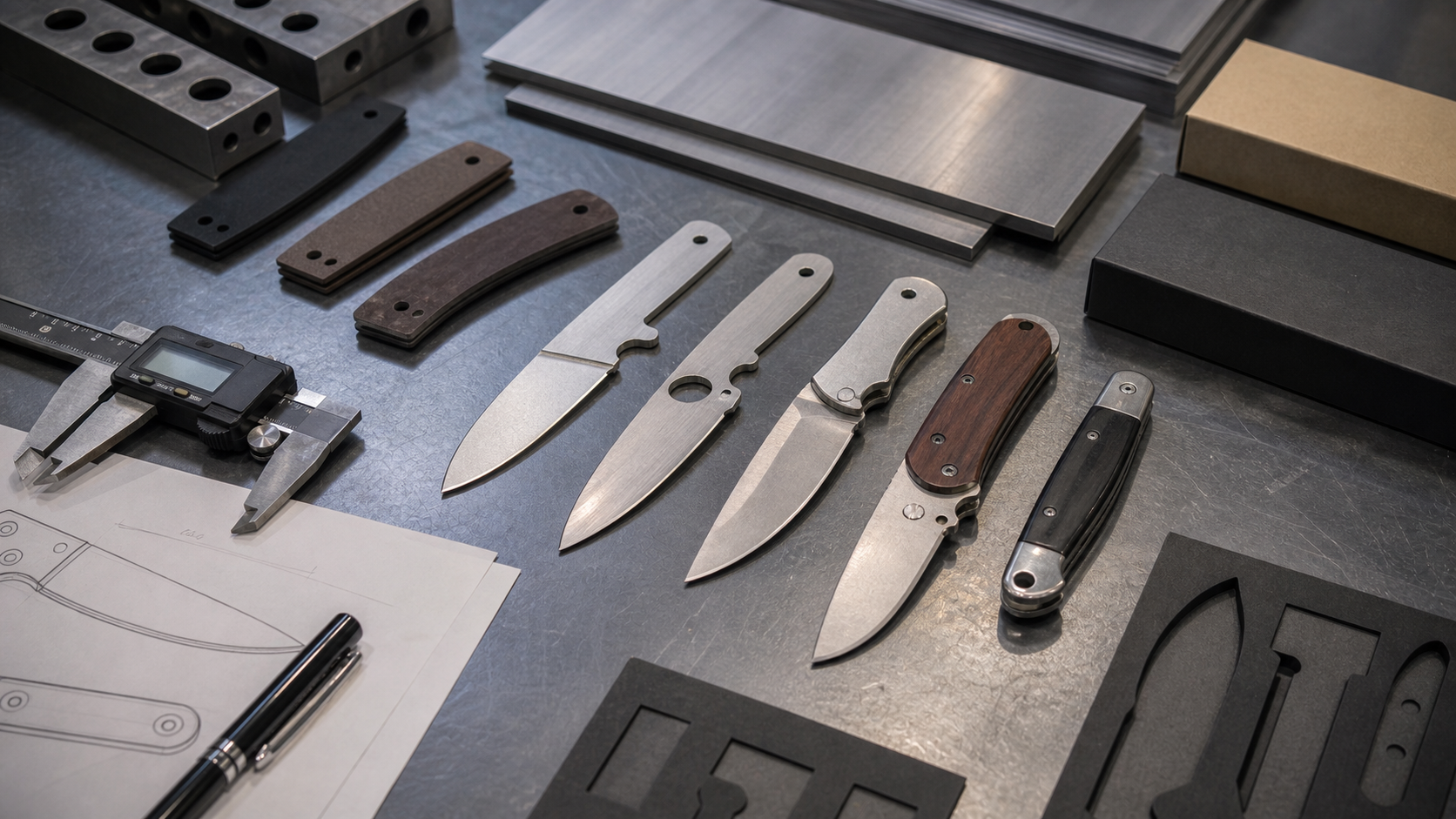
In OEM and ODM work, the best steel is not always the newest steel. The best steel is the one that supports the product's user, price, margin, and positioning. 440C can fit a value or mid-range stainless product line when the buyer wants a known steel name and does not need the extreme wear resistance of higher-cost powder metallurgy steels.
For example, a seller may choose 440C for a pocket knife line where corrosion resistance and clean appearance matter more than heavy-duty toughness. A gift knife may benefit from a polished stainless blade and a clear, familiar material claim. A general EDC folder may use 440C if the target customer wants a practical stainless knife at a reasonable price. In these cases, 440C can be easier to explain than a low-recognition steel name.
I become more careful when the buyer wants hard-use outdoor performance, very thin edges, or strong premium positioning. 440C may not be the best choice for every heavy-duty knife. It also may not excite steel-focused enthusiasts who expect modern names. That does not make it bad. It means the buyer should use it where its strengths matter and avoid using it where the market expects something else.
| Product type | 440C fit | Reason |
|---|---|---|
| Value EDC folder | Good fit | Stainless, familiar, practical cost |
| Gift pocket knife | Good fit | Clean finish and easy material story |
| Heavy outdoor fixed blade | Case by case | Toughness and geometry need review |
| Premium steel-focused line | Usually weaker fit | Market may expect newer steels |
How Does 440C Compare With D2, 8Cr13MoV, 14C28N, and VG10?
Comparisons can mislead buyers when they become one-line rankings. Real product decisions need price, market, and process context.
Compared with common knife steels, 440C usually stands out for stainless behavior and familiar hardness potential, while D2 may offer more wear resistance, and 14C28N may offer better toughness balance.
I Compare Steel by Use Case, Not by Hype
Knife Steel Nerds' article on knife steel ratings is useful because it explains that toughness, edge retention, corrosion resistance, hardness, carbides, and edge geometry all interact. It also warns against treating one property as the only important factor. That is exactly how I compare 440C.
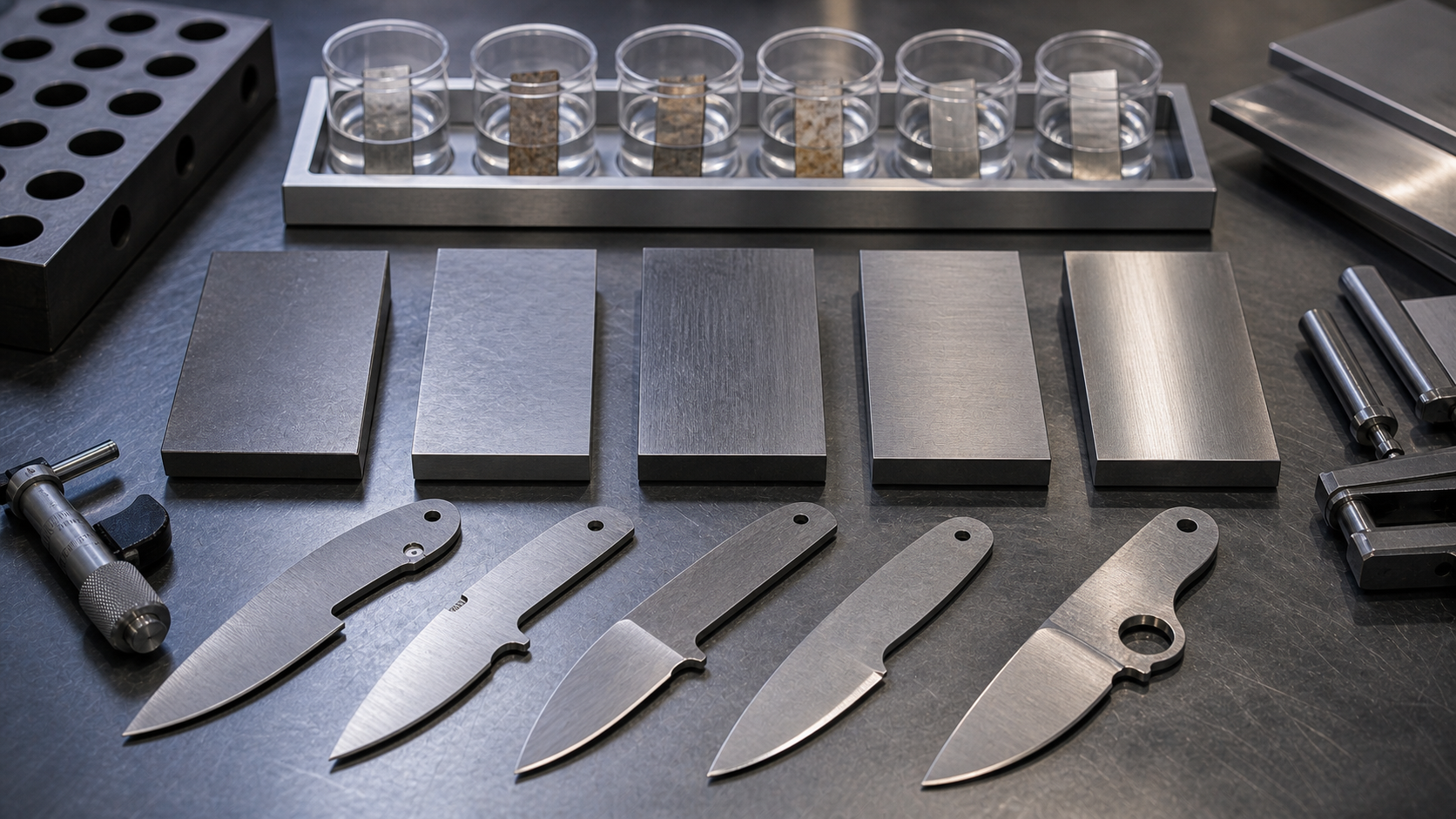
Against D2, 440C often wins on stainless behavior and easier corrosion-care messaging. D2 can offer strong wear resistance, but it is not the same kind of stainless choice. Against 8Cr13MoV, 440C can support a stronger material story when the buyer wants a better-known stainless grade. Against 14C28N, 440C may offer familiarity and polishability, while 14C28N can be attractive for buyers who care about toughness and corrosion balance. Against VG10, the decision often depends on price, market recognition, supplier access, and the buyer's steel story.
The table is not a universal ranking. Heat treatment can change results. Edge angle can change cutting life. Finish can affect corrosion. A well-made 440C knife can outperform a poorly made knife in a more fashionable steel. That is why I ask buyers to compare the full product, not only the steel name.
| Steel comparison | 440C advantage | Buyer caution |
|---|---|---|
| 440C vs D2 | Better stainless positioning | D2 may appeal to wear-resistance buyers |
| 440C vs 8Cr13MoV | Stronger material story | Cost may be higher |
| 440C vs 14C28N | Familiar and polish-friendly | 14C28N may fit toughness-focused lines |
| 440C vs VG10 | Practical alternative in some price tiers | Market recognition varies by region |
Why Do Heat Treatment and Edge Geometry Matter So Much With 440C?
440C can disappoint when buyers chase only the steel name. A wrong heat treatment or edge geometry can ruin the experience.
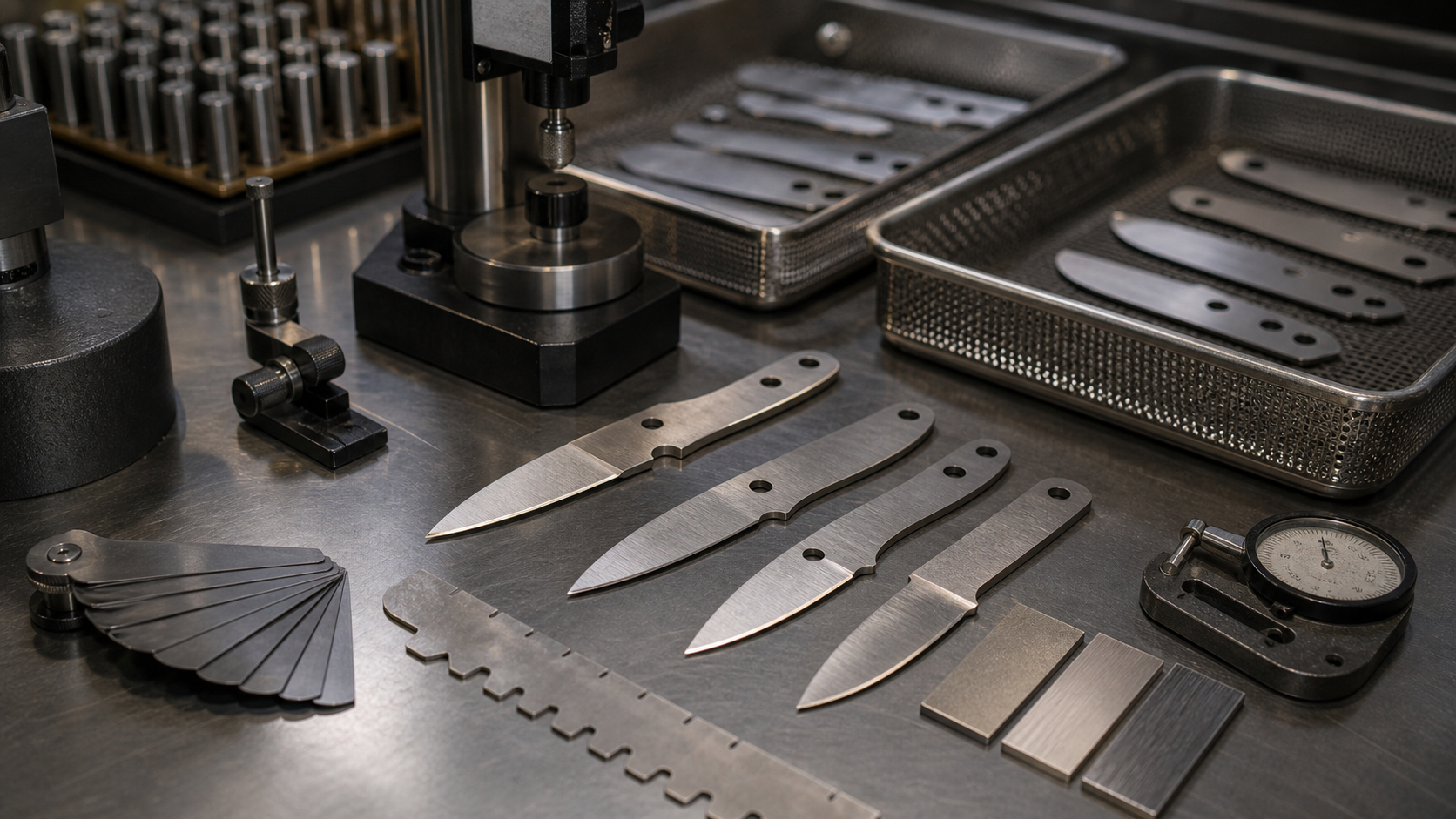
440C performance depends on heat treatment, target hardness, tempering, edge thickness, sharpening angle, finish, and final inspection. Buyers should approve these details before mass production.
I Do Not Approve 440C Without a Process Target
Carpenter states that heat-treated 440C can reach about Rockwell C 60. That does not mean every 440C knife should be pushed to the highest possible hardness. Higher hardness can support edge retention, but it can also reduce toughness if the process and geometry are not matched to the use. The target should fit the knife category.
For a folding knife, I care about stable hardness, edge consistency, blade centering, and lock function. For a fixed blade, I also care about edge thickness, tip strength, and expected use. If the buyer wants a thin slicer, the edge can be more acute. If the buyer wants a utility knife, the edge may need more support. Knife Steel Nerds explains that edge geometry can greatly control cutting performance and resistance to chipping. This is why I never treat HRC as the whole answer.
Hardness testing should also be controlled. The NIST Rockwell hardness measurement guide explains that good practice helps reduce measurement errors. For production, this means the buyer should ask for a target range, test method, sample size, and batch record. A casual "about 60 HRC" message is not enough for repeat orders.
| Process detail | What to define | Why it matters |
|---|---|---|
| Heat treatment | Hardening and tempering route | Controls hardness and toughness balance |
| Target HRC | Practical range for product use | Prevents vague hardness claims |
| Edge geometry | Angle, thickness, grind type | Controls cutting feel and chipping risk |
| Testing record | Batch checks and method | Supports repeat production |
What Quality Risks Should Buyers Watch With 440C Knives?
440C is mature, but mature does not mean automatic. A familiar steel can still fail through poor sourcing or weak QC.
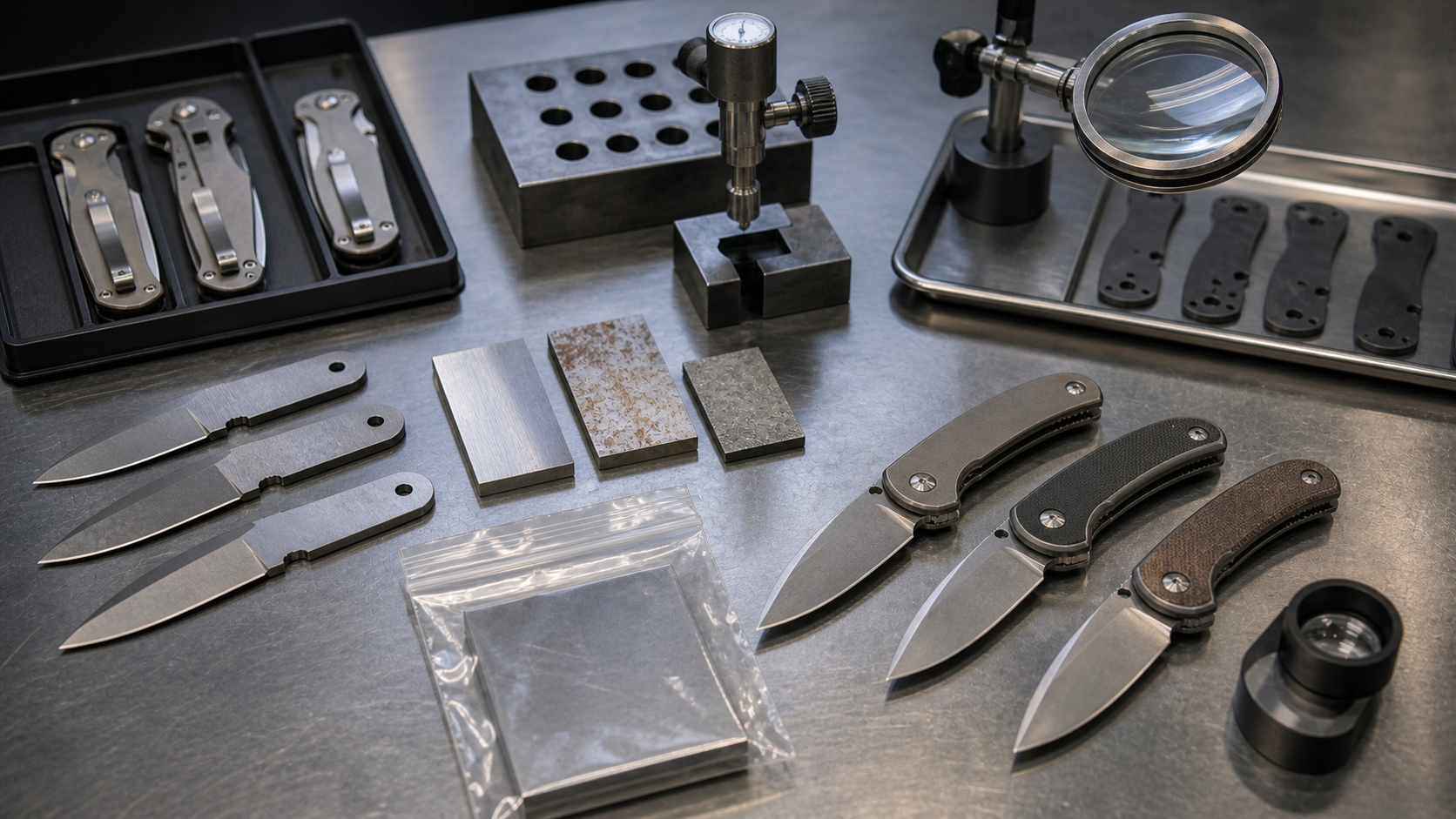
Main 440C risks include vague "440 stainless" claims, wrong grade substitution, poor heat treatment, inconsistent hardness, rough grinding, corrosion from poor finish, and overbroad marketing claims.
I Check the Grade, Finish, and Batch Before Shipment
The first risk is vague material wording. If a supplier says "440 stainless," I ask whether it is 440A, 440B, 440C, 440F, or another related grade. The buyer should not let a product listing say 440C unless the supplier can support that specific grade. A small wording difference can change customer expectation and pricing.
The second risk is heat treatment inconsistency. A sample may cut well, but a batch may vary. This is why I want hardness checks across production, not only one sample. I also check edge consistency. A knife can have good steel but a thick edge that cuts poorly, or a thin edge that chips too easily for its use case.
The third risk is corrosion expectation. 440C is stainless, but stainless does not mean no care. Surface finish matters. Knife Steel Nerds notes that rough finish can increase corrosion risk compared with mirror finish. For sellers, this means blade finish and packaging care language should match the market. A polished gift knife, stonewashed EDC knife, and bead-blasted utility knife may not age the same way in customer hands.
Finally, I check the packaging claim. 440C should be presented as practical and proven, not exaggerated as the strongest or most advanced steel. Honest positioning protects repeat orders.
| Risk | What can go wrong | How I reduce it |
|---|---|---|
| Vague grade | 440C claim may be unsupported | Ask for material grade records |
| Heat treatment drift | Edge performance varies by batch | Use target HRC and batch checks |
| Grinding issue | Edge overheats or geometry changes | Inspect edge and finish process |
| Claim mismatch | Customer expects premium steel | Use honest product copy |
What Should Buyers Put in a 440C Steel RFQ?
A short RFQ creates long back-and-forth. If the buyer only writes "440C blade," the supplier must guess the real target.
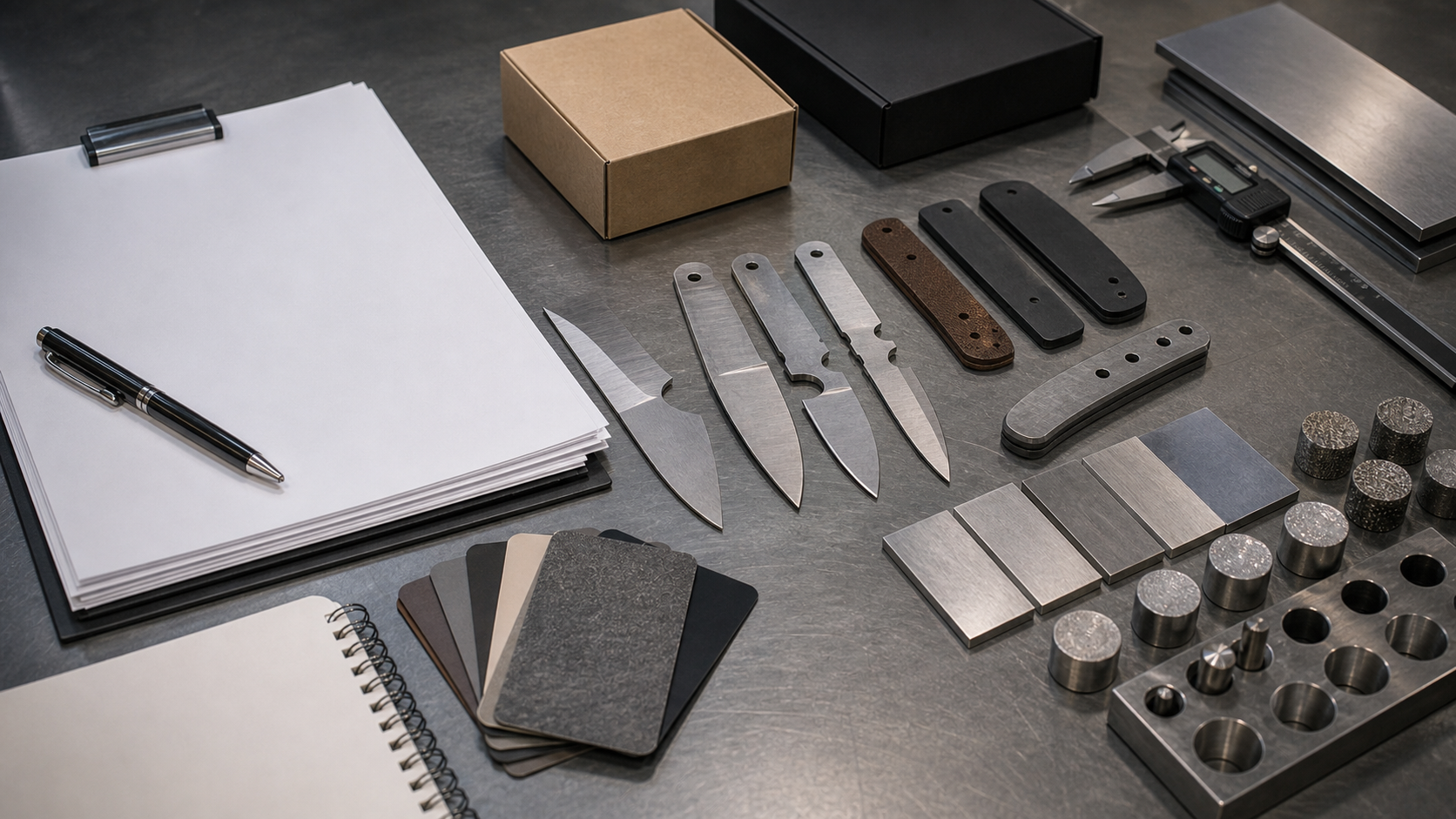
A 440C RFQ should include knife type, target market, blade thickness, heat treatment target, HRC range, edge geometry, finish, handle material, MOQ, packaging claim, inspection plan, and price target.
I Turn the Steel Name Into Production Requirements
When a buyer asks Vast State for a 440C knife, I want to know the use case first. An EDC folder, gift pocket knife, camping knife, and fixed blade do not need the same geometry. I also ask about target price and MOQ. A buyer may want 440C because it sounds better than entry-level steels, but the budget must still cover heat treatment, grinding, inspection, and packaging.
The RFQ should clearly state "440C" and ask the supplier to confirm the grade. It should include target HRC range, blade thickness, grind type, edge angle if known, finish, and corrosion-care expectations. If the buyer wants a polished blade, satin blade, stonewash, coating, or bead blast, that should be included. Finish affects appearance, cost, and sometimes corrosion behavior.
The RFQ should also include inspection points. I recommend material verification, hardness checks, blade centering for folders, lockup, edge sharpness, finish limits, screw assembly, packaging inspection, and label accuracy. ISO's ISO 9001 explained supports the process-based idea: define requirements, control production, and improve consistency. For 440C, that is the difference between an old steel name and a reliable product line.
| RFQ field | What to include | Why it helps |
|---|---|---|
| Steel requirement | 440C grade confirmation | Prevents vague "440" substitution |
| Performance target | HRC, edge geometry, use case | Connects steel to user need |
| Finish and care | Satin, polish, stonewash, care wording | Sets appearance and corrosion expectations |
| QC plan | Material, HRC, function, packaging | Supports repeat orders |
Ready to use this material in your next knife line?
Vast State can help you compare blade steels, heat treatment ranges, handle materials, finishes, packaging options, and QC requirements based on your target market and quantity.
Conclusion
I use 440C when the product needs practical stainless performance, honest positioning, controlled heat treatment, and repeatable QC at a realistic price.
Source Notes
- Carpenter Technology 440C supports the material description, UNS number, composition range, and hardness potential.
- Knife Steel Nerds steel ratings supports the explanation that toughness, edge retention, corrosion resistance, hardness, and edge geometry must be balanced.
- NIST Rockwell hardness guide supports the advice to treat HRC testing as a controlled measurement process.
- ISO 9001 explained supports the process-based approach to RFQ requirements, QC, and repeat production.