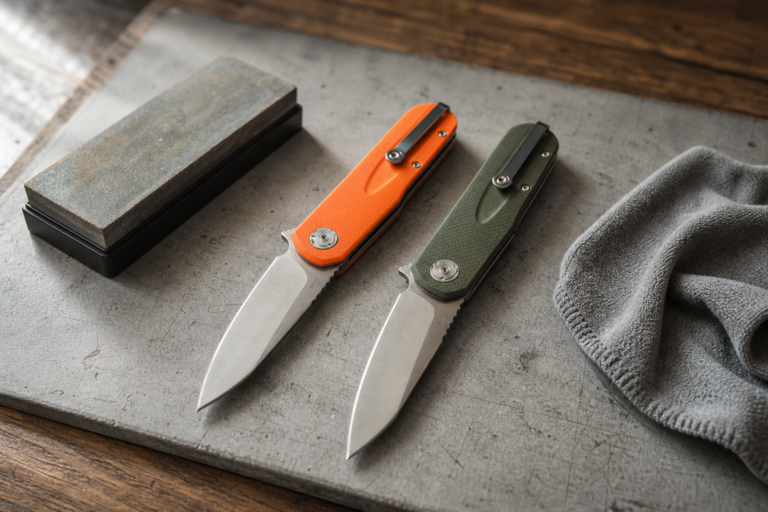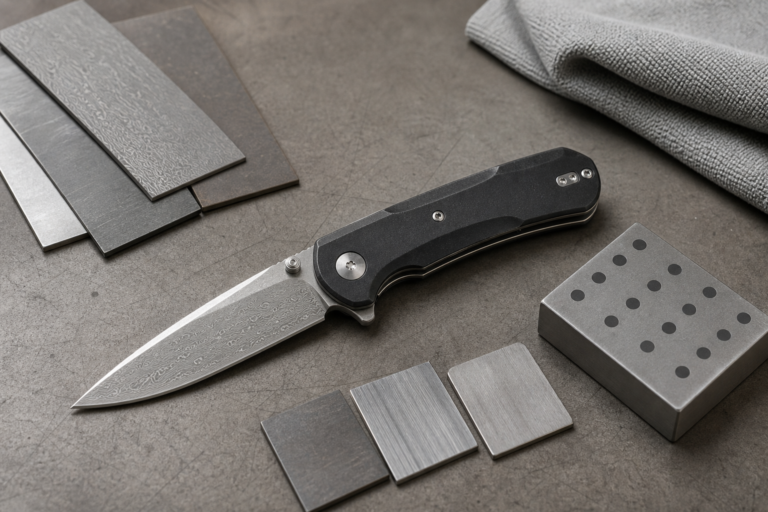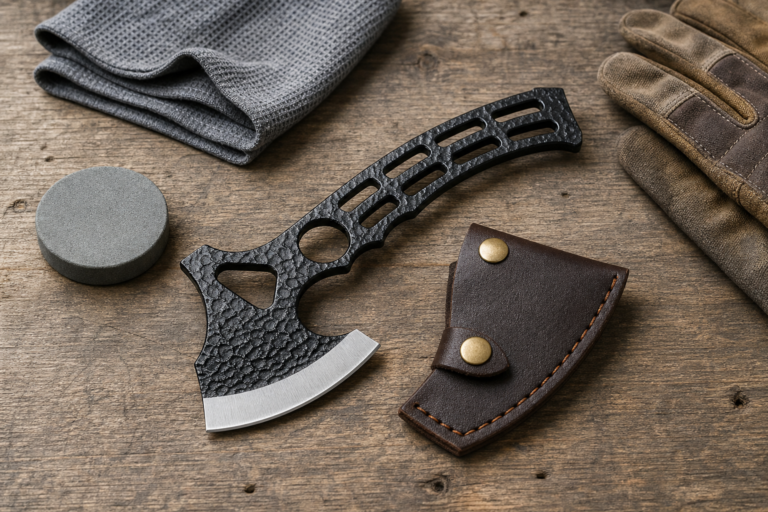
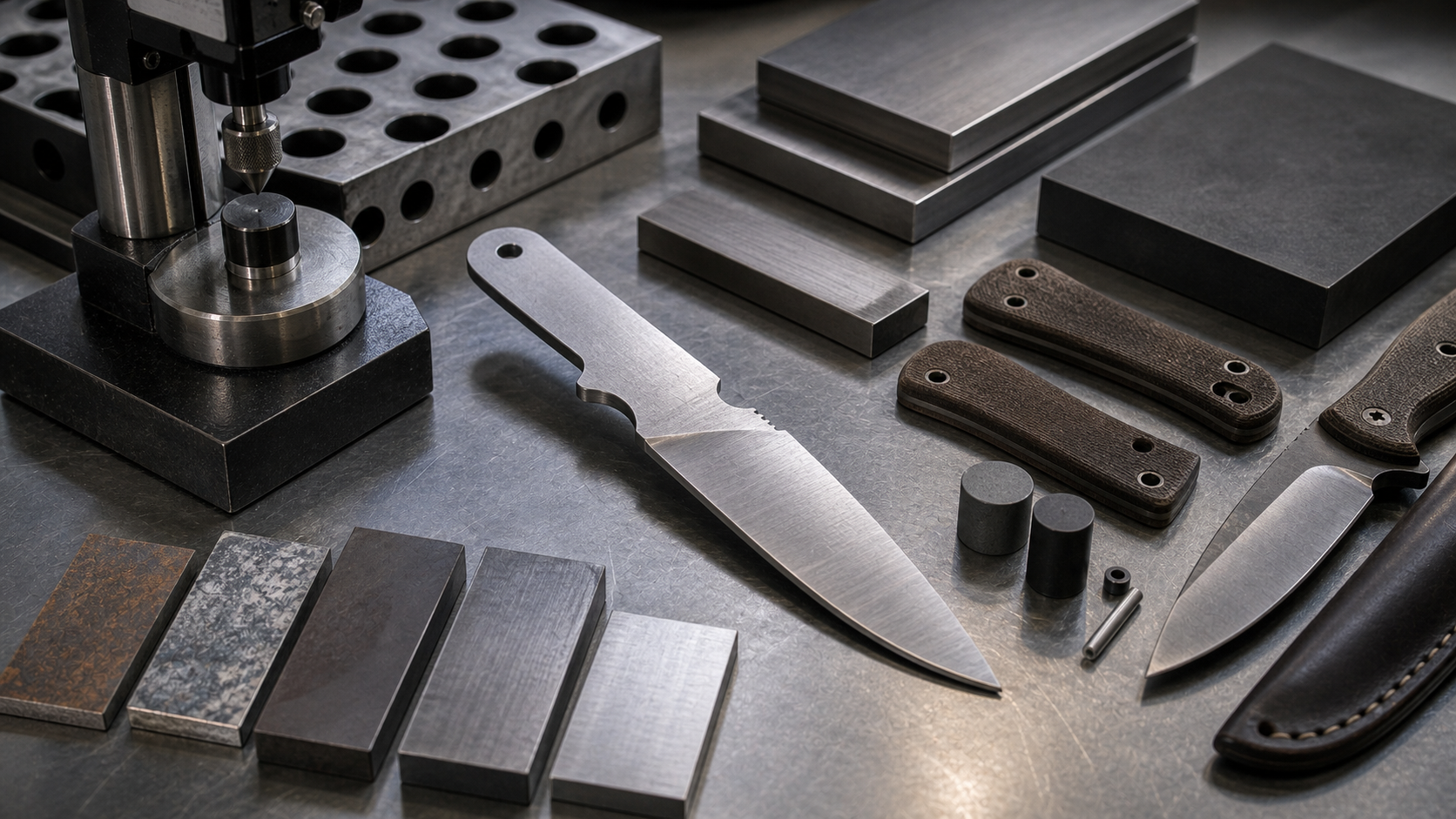
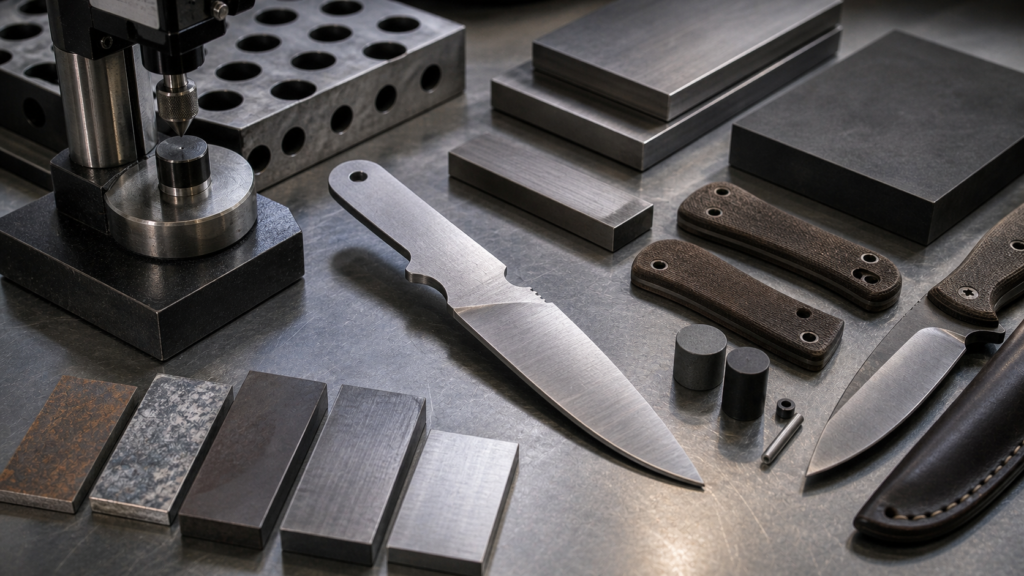
W2 steel sounds exciting. But if buyers only hear "sharp performance," they may miss the heat-treatment and maintenance risks behind it.
W2 steel is a high-carbon, water-hardening tool steel that can support very sharp edges and attractive differential-hardening effects. It works best for buyers who value cutting feel, controlled heat treatment, clear maintenance messaging, and smaller differentiated knife programs.
Quick buyer brief:
- Answer: W2 can be good for sharp carbon steel knives, but it needs careful heat treatment.
- Buyer context: It helps brands selling enthusiast, outdoor, hunting, or specialty knives.
- Key checks: Confirm chemistry, heat treatment plan, hardness range, corrosion messaging, and inspection records.
Planning a knife project with this steel?
Send us your target market, MOQ, price range, and blade type. Vast State can help you choose the right steel, HRC range, finish, handle material, and QC requirements for OEM/ODM production.
When I discuss W2 steel with a B2B buyer, I do not start by saying it is better than every other steel. That would be too simple. I start with the product goal. W2 is not stainless. It is not the easiest steel for every mass-production folding knife. It is also not a magic answer for every outdoor brand. But when the design, heat treatment, finish, and customer education are aligned, W2 can give a knife a clear character. For OEM and ODM work, that matters. A steel choice should help the buyer build a product that fits the market, price range, story, and repeat production plan.
What Is W2 Steel in Practical Knife Manufacturing?
A steel name can create false confidence. If buyers do not understand what W2 is, they may ask for the wrong knife.
W2 is a high-carbon, water-hardening tool steel. In knife projects, I treat it as a sharp, responsive carbon steel that needs careful heat treatment and honest maintenance communication.
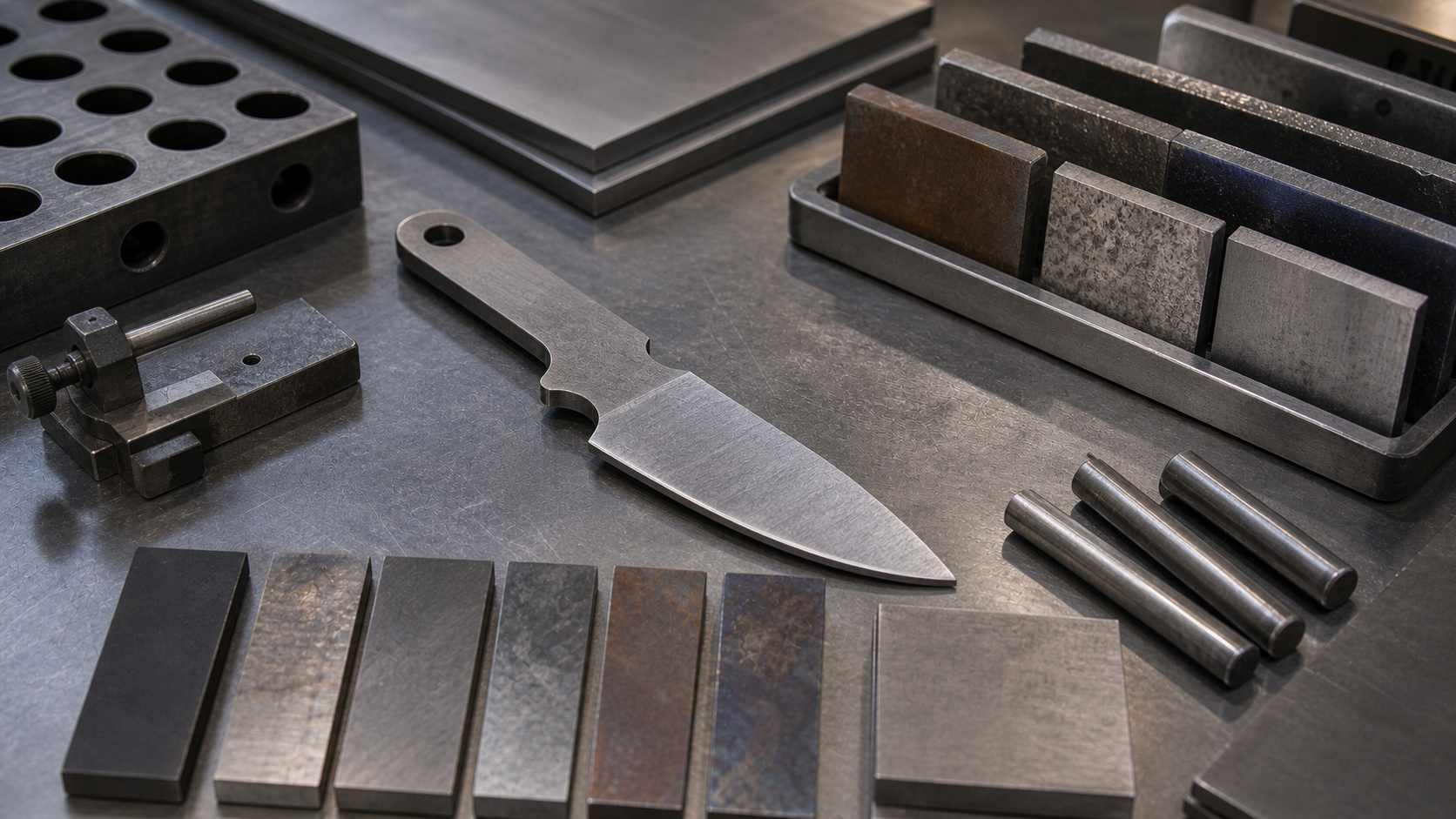
I Treat W2 as a Product Direction, Not Only a Steel Grade
W2 belongs to the water-hardening tool steel family. AZoM describes group W steels as W1, W2, and W3 types, with carbon as the main alloying element in this group of steels. Alro's tool steel guide lists W2 with a broad carbon range, small amounts of manganese and silicon, low chromium, and vanadium. This is why I do not describe W2 like a stainless EDC steel. It behaves more like a carbon tool steel with strong edge potential and limited corrosion resistance.
In a knife project, this matters before the first sample is made. A W2 fixed blade may fit an enthusiast outdoor product. A W2 hunting knife can support a traditional carbon steel story. A W2 kitchen or collector-style blade may benefit from visible differential hardening if the process is controlled. But a humid-market budget pocket knife may need a different material if the end user expects low maintenance.
For B2B buyers, the practical question is not "Is W2 good?" The better question is "Does W2 match the buyer's user, care instructions, finish, packaging, and complaint risk?" That is the question I try to answer before recommending it.
| W2 factor | What it means | Buyer takeaway |
|---|---|---|
| High carbon base | Supports hardness and sharp edge potential | Ask for heat treatment details |
| Low chromium | It is not stainless | Plan anti-rust finish and care copy |
| Vanadium addition | Helps grain control in W2 data references | Confirm actual mill chemistry |
| Water-hardening family | Fast quench response | Control distortion and cracking risk |
Quote-ready RFQ Checklist for This Steel
To get an accurate OEM/ODM quote, prepare these details before contacting a knife manufacturer.
| RFQ Field | What to Prepare |
|---|---|
| Product type | Folding knife / fixed blade / multi-tool / kitchen knife |
| Target market | US / EU / outdoor retail / promotional / tactical / EDC |
| Steel option | 4116 / 14C28N / D2 / N690 / Nitro-V |
| Target HRC | Example: 55-57 HRC, 58-60 HRC |
| Blade finish | Satin / stonewash / black coating / bead blast |
| Handle material | G10 / micarta / aluminum / stainless steel / wood |
| Lock or structure | Liner lock / frame lock / slip joint / full tang |
| Estimated quantity | 500 / 1,000 / 3,000 / 5,000+ pcs |
| Packaging | White box / color box / blister / pouch / gift box |
| Required documents | Drawing / sample photo / logo file / packaging artwork |
When Does W2 Steel Make Sense for B2B Knife Projects?
Some buyers choose W2 because it sounds special. That can backfire if the product is aimed at low-maintenance everyday users.
W2 makes sense when the knife needs sharp cutting feel, carbon steel character, possible hamon-style visual appeal, and a buyer who can explain care requirements to end users.
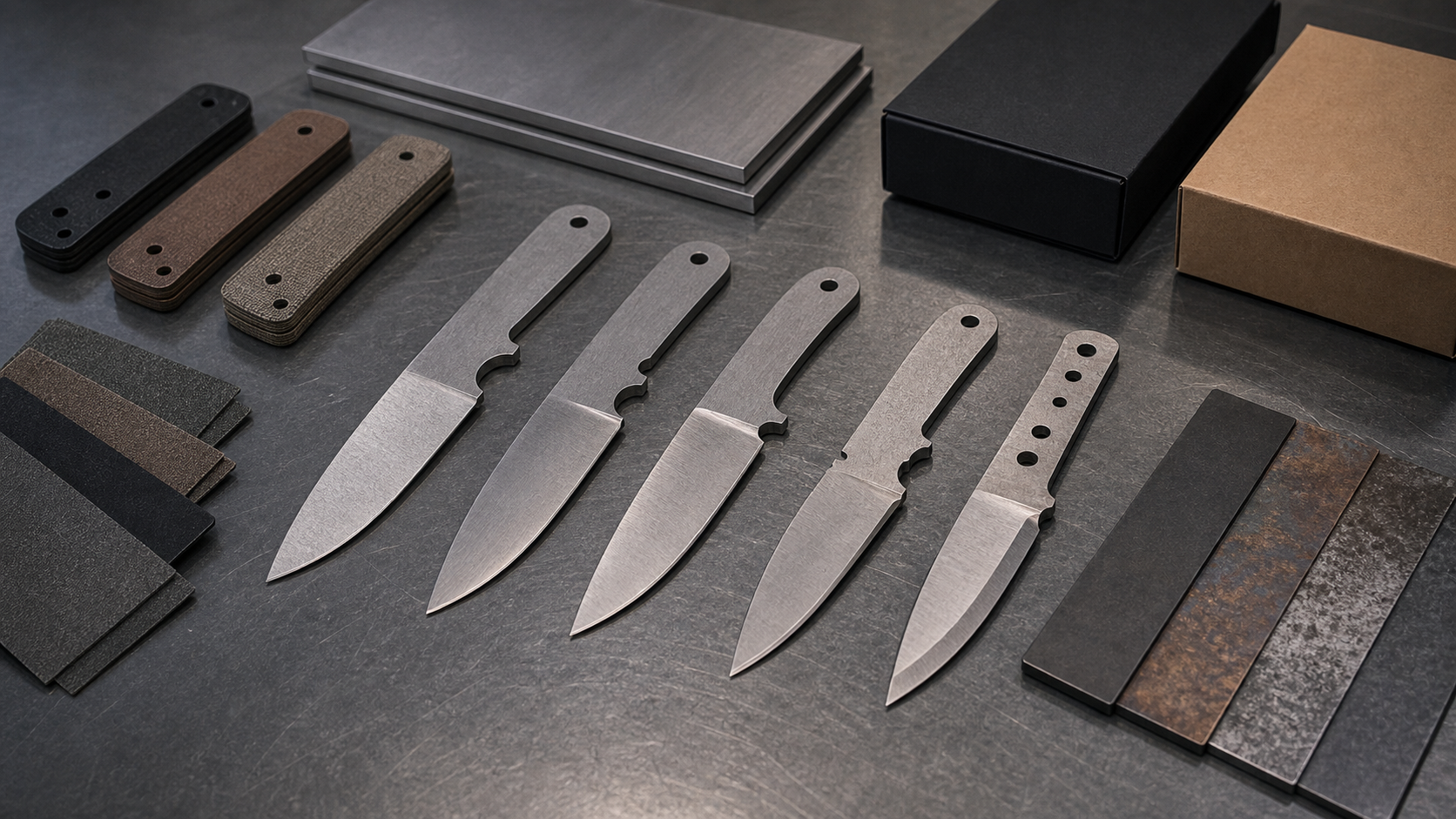
I Match W2 to the Brand Story and Sales Channel
I usually see W2 as a good candidate for knives where the buyer wants more character than a common stainless model. This may include fixed blade outdoor knives, hunting knives, special edition blades, traditional carbon steel products, or products where a visible hamon-style line is part of the selling point. I use careful language here because the final visual result depends on steel chemistry, blade geometry, clay or differential treatment method, quench control, polishing, and etching. It should not be promised casually.
W2 is less suitable when the buyer needs a very low-care product for broad retail channels. Many end users understand stainless steel better than carbon steel. If the user leaves a W2 blade wet, the result may be staining or rust. That does not mean W2 is poor. It means the buyer must be honest in product positioning.
For Vast State projects, I would first ask about the target market. Is the knife for outdoor enthusiasts, collectors, bushcraft users, or general utility buyers? What price range does the brand need? Does the package include care instructions? Does the buyer want a satin finish, forced patina, coating, or etched finish? These answers decide whether W2 supports the product or creates avoidable after-sales pressure.
| Good W2 fit | Why it can work | What to confirm |
|---|---|---|
| Enthusiast fixed blade | Buyers may value carbon steel feel | Heat treatment and finish plan |
| Hunting or outdoor knife | Sharp edge and easy field sharpening can matter | Corrosion care instructions |
| Special edition knife | W2 can support a stronger material story | Visual expectations and sample approval |
| Budget mass EDC | Often a weaker fit | Consider stainless or simpler carbon steel |
How Should Buyers Think About W2 Heat Treatment?
W2 performance can disappear in heat treatment. A good steel name cannot protect a poor quench, temper, or hardness target.
Buyers should treat W2 heat treatment as the core control point. The RFQ should define hardness range, quench approach, tempering plan, sample testing, and acceptable distortion limits.
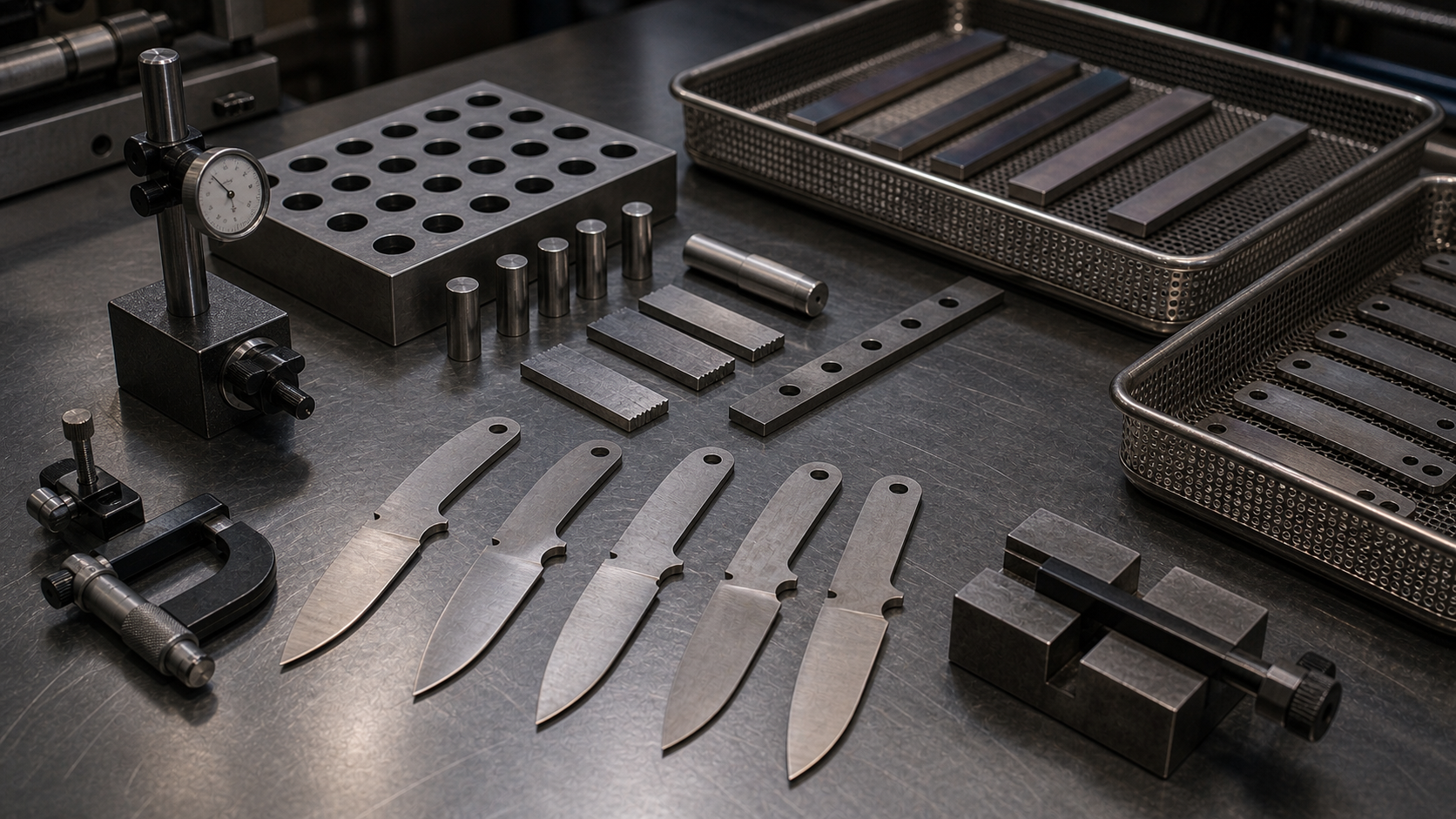
I Focus on Process Control Before I Talk About Hardness
Cincinnati Tool Steel's W2 sheet explains that carbon grades can be quenched in water, and it gives quenching temperature ranges based on carbon content. The same sheet also notes that light sections may use oil when maximum hardness is not required. This is important for knife buyers because a knife blade is thinner and more shape-sensitive than many industrial tools. The wrong quench can create cracks, warp, or inconsistent hardness.
Alro's guide lists W2 hardening around 1400 to 1550 F, tempering around 350 to 650 F, and an approximate tempered hardness range of Rockwell C 50 to 64. I do not treat these values as a universal knife recipe. I treat them as reference ranges. A real knife heat treatment plan must match steel chemistry, blade thickness, edge thickness before heat treatment, grind state, oven control, quench medium, tempering cycle, and the user's performance target.
This is why I prefer to build heat treatment approval around samples. A buyer can request test coupons or sample blades. The team can check hardness, warpage, edge behavior, and finishing result before confirming mass production. For W2, this early control matters more than a dramatic steel description.
| Heat treatment item | Why it matters | RFQ wording idea |
|---|---|---|
| Austenitizing range | Sets up hardening response | Ask supplier to propose process by actual steel lot |
| Quench medium | Affects hardness, cracks, and distortion | Define water, brine, fast oil, or approved method |
| Tempering plan | Reduces brittleness after hardening | Request target HRC after tempering |
| Sample testing | Confirms process before bulk order | Approve hardness and function before production |
What Performance Trade-Offs Should Buyers Expect From W2?
Steel marketing often hides trade-offs. W2 can cut well, but it also asks more from production and user care.
W2 offers sharpness potential, good cutting feel, and carbon steel character. Its trade-offs include low corrosion resistance, heat-treatment sensitivity, possible distortion, and the need for clear user maintenance.
I Explain the Good Points and the Friction Points Together
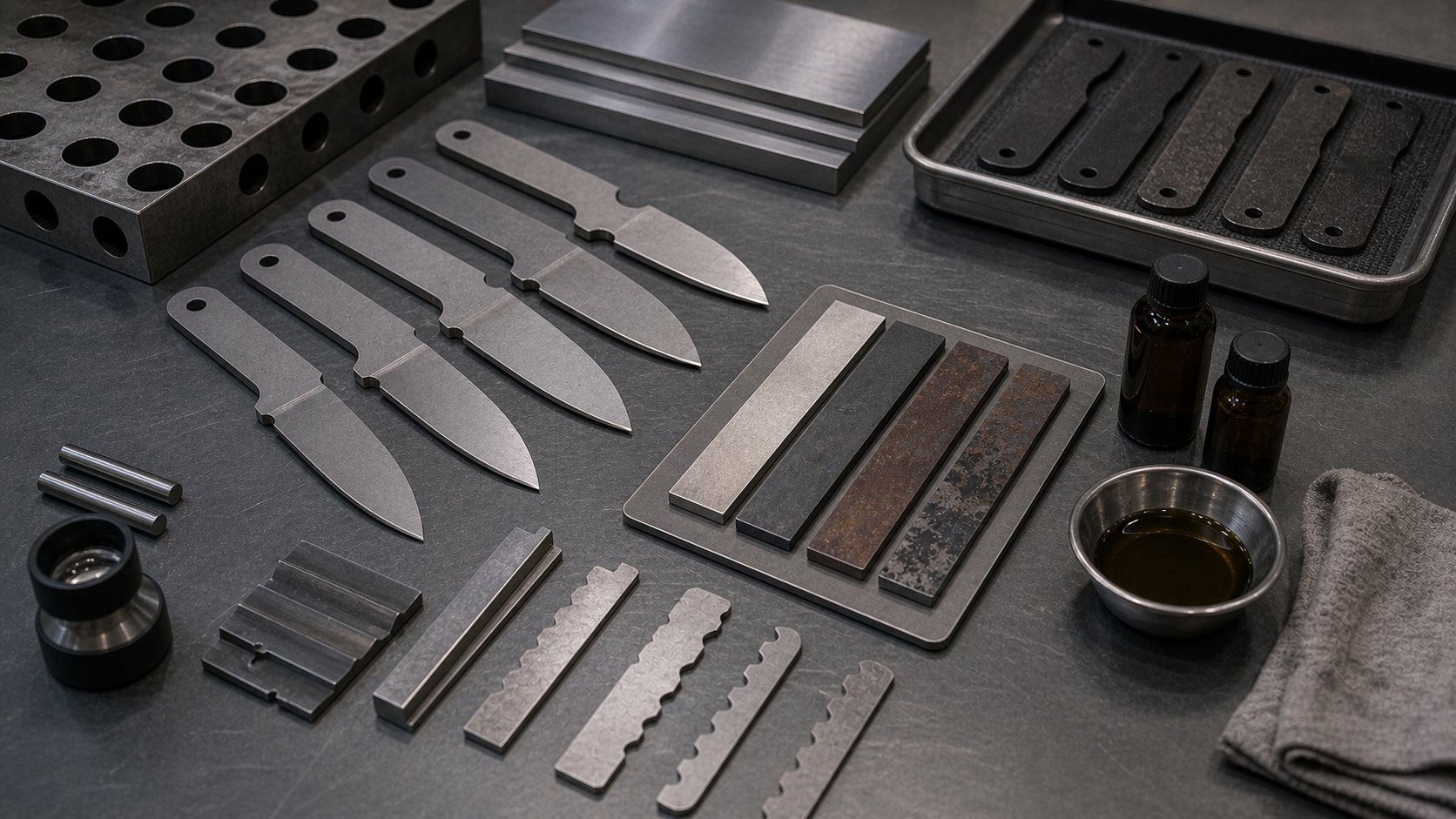
W2 can support a very keen edge when the heat treatment and grinding are done well. Many buyers like this because a sharp first impression helps a knife feel serious. W2 can also be easier to sharpen than many high-alloy wear-resistant steels. That can be useful for outdoor buyers who expect practical maintenance in the field.
But W2 should not be sold as an easy-care steel. AZoM notes that W-group steels are shallow hardening and have low resistance to softening at high temperatures. Alro also lists W2 with shallow depth of hardening, high distortion in heat treating, and low to medium safety in hardening. For a manufacturer, those are not small details. They affect blade thickness planning, pre-heat-treatment grinding, straightening allowance, reject risk, and inspection time.
The other trade-off is corrosion. W2 has low chromium compared with stainless knife steels. It can stain or rust if the user leaves it wet or stores it poorly. A coating or forced finish can reduce visible corrosion risk, but it does not change the basic nature of the steel. In B2B projects, I prefer honest product pages. Clear care instructions protect both the brand and the supplier.
| Performance area | W2 advantage | W2 caution |
|---|---|---|
| Sharpness | Can take a keen edge | Depends on heat treatment and grinding |
| Sharpening | Often practical to resharpen | User still needs basic skill |
| Corrosion | Traditional carbon steel character | Not stainless; needs care |
| Production stability | Strong result when controlled | Higher attention to quench and distortion |
How Should W2 Steel Be Specified in an RFQ?
A vague RFQ creates vague samples. With W2, missing details can turn into delays, rework, and mismatched buyer expectations.
A W2 RFQ should include knife type, blade size, target hardness, finish, edge geometry, handle material, packaging, care copy, sample tests, order quantity, and target market.
I Ask Buyers to Define the Product Before Asking for a Quote
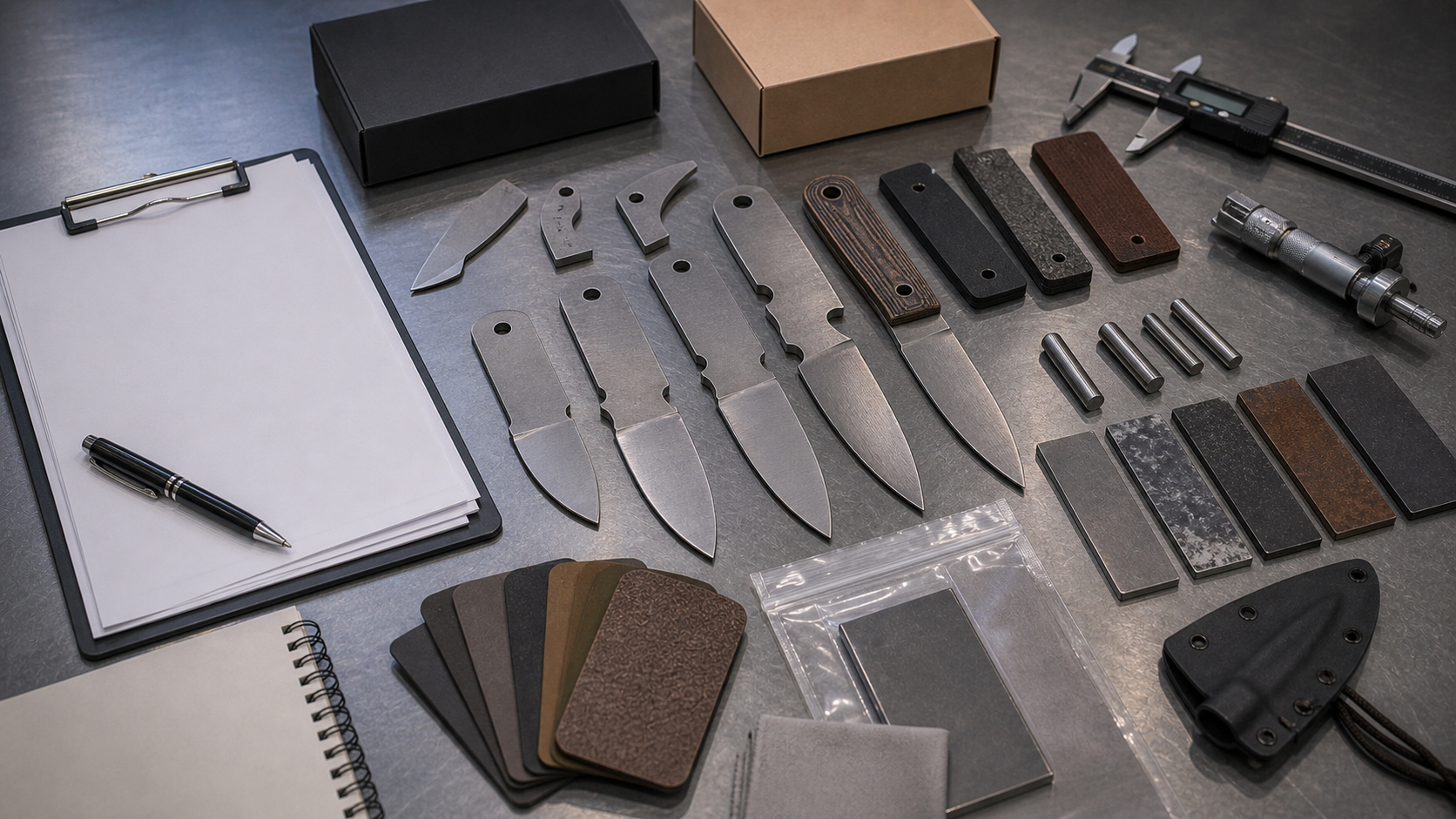
When a buyer sends only "W2 knife price," I cannot give the most useful answer. W2 is only one part of the product. A small neck knife, a thick bushcraft knife, and a collector-style blade with visible differential hardening will not have the same process, reject risk, or finishing cost. The RFQ should turn the idea into something the engineering team can evaluate.
I usually ask for blade length, blade thickness, grind type, edge angle target, surface finish, handle material, sheath or packaging requirement, logo method, target hardness, and expected order quantity. If the buyer wants a hamon-style visual effect, I ask whether this is a must-have approval point or a preferred visual direction. This difference matters. A required visual effect needs a tighter sample process.
The buyer should also state the target market. A product for collectors can accept more maintenance education. A product for broad outdoor retail needs simpler care copy and stable appearance. If the buyer has a target price, I want to know it early. Then I can suggest whether W2 is realistic or whether another steel gives a better balance of cost, delivery, and user expectation.
| RFQ field | Why I need it | Example buyer input |
|---|---|---|
| Knife type | Controls structure and process | Fixed blade outdoor knife |
| Blade steel target | Confirms W2 intent | W2 or approved equivalent |
| Hardness range | Guides heat treatment | Final HRC target after temper |
| Finish and care | Manages corrosion expectation | Satin plus oiling care card |
| Sample approval | Reduces mass-production risk | Approve hardness, finish, edge, and packaging |
How Should Quality Control Protect W2 Knife Production?
Final inspection is too late if W2 problems started in material, heat treatment, or grinding. Buyers need process checks.
W2 quality control should cover material identity, heat treatment records, hardness checks, straightness, edge geometry, finish consistency, corrosion-care packaging, and functional inspection before shipment.
I Control W2 Like a Process, Not Like a Claim
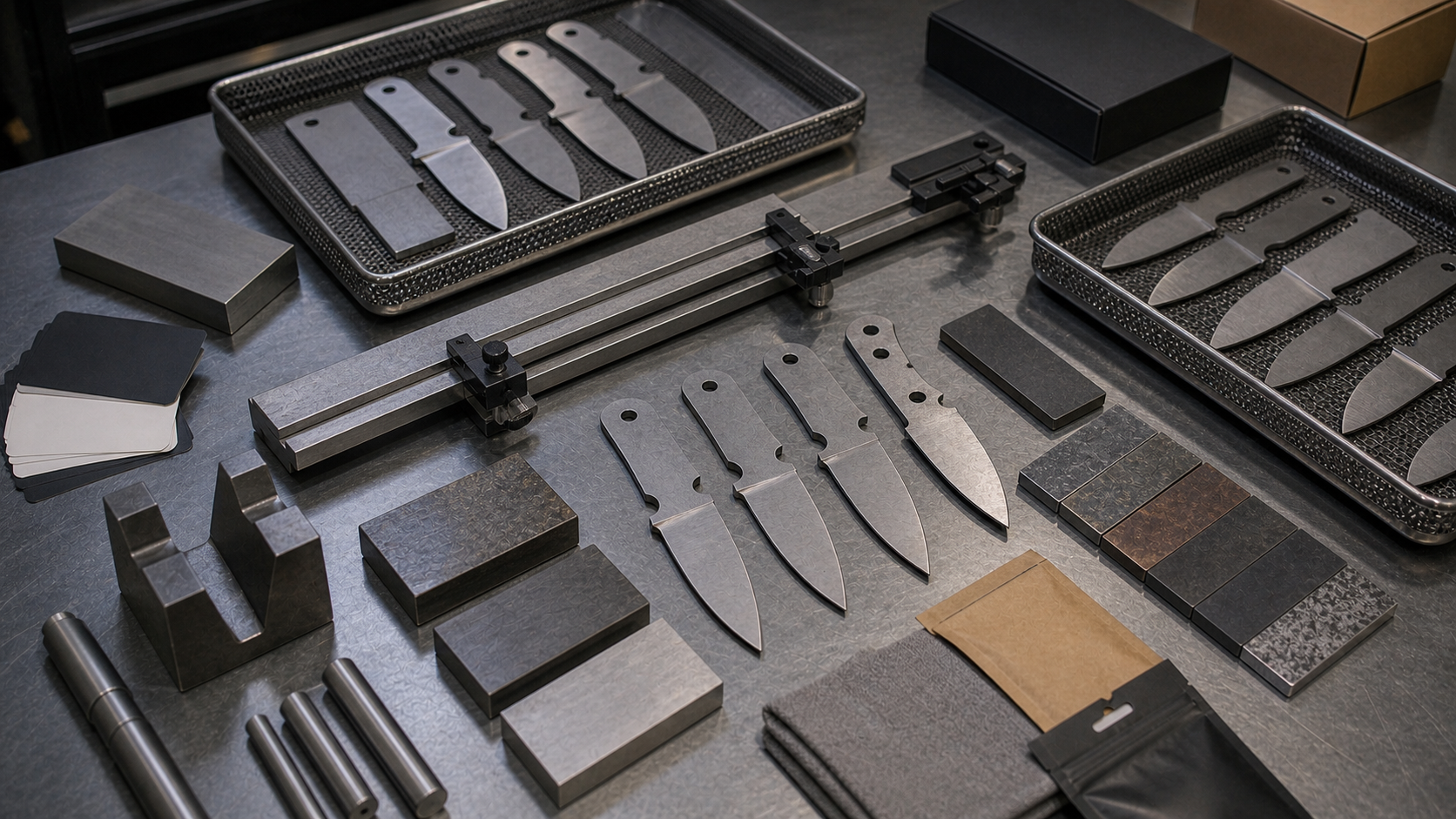
For W2 knife production, I like to start QC with incoming material. The steel lot should match the purchase requirement. If the buyer requests W2 specifically, the supplier should keep material records and avoid quiet substitutions. Then the heat treatment process should be documented. This includes batch identity, target process, hardness checks, and sample approval.
Hardness testing needs proper practice. NIST's guide on Rockwell hardness measurement explains that good measurement procedure helps reduce errors in Rockwell test results. That point is very practical. A hardness number is only useful if the test method, sample surface, machine condition, and operator practice are controlled.
After hardness, I still check the knife as a product. A blade can hit a hardness target and still fail buyer expectations. I check straightness, grind symmetry, edge consistency, tip condition, surface finish, handle fit, sheath fit, packaging, and care instruction clarity. This fits the broader idea behind ISO 9001 quality management, which focuses on stable processes, documented information, monitoring, measurement, and continual improvement. For a B2B buyer, the goal is not only one impressive sample. The goal is a repeatable order that customers can sell with confidence.
| QC stage | What to check | Why it matters |
|---|---|---|
| Incoming material | Grade, lot, and basic records | Prevents wrong-steel risk |
| Heat treatment | Process record and HRC target | Protects real performance |
| Blade inspection | Straightness, grind, edge, finish | Protects user experience |
| Packaging review | Care note and corrosion warning | Reduces after-sales misunderstanding |
Ready to use this material in your next knife line?
Vast State can help you compare blade steels, heat treatment ranges, handle materials, finishes, packaging options, and QC requirements based on your target market and quantity.
Conclusion
I see W2 as a strong specialty steel when buyers control heat treatment, product fit, corrosion messaging, and repeatable quality checks.
Source Notes
- Alro tool steel guide supports W2 composition, heat treatment ranges, shallow hardening, and distortion concerns.
- Cincinnati Tool Steel W2 sheet supports W2's high-carbon tool steel behavior and quenching/tempering considerations.
- AZoM water-hardening tool steels gives general context for group W steels, carbon content, shallow hardening, and vanadium grain control.
- NIST Rockwell hardness guide supports the need for good hardness testing practice.
- ISO 9001 explained supports process-based quality management ideas used in supplier evaluation.