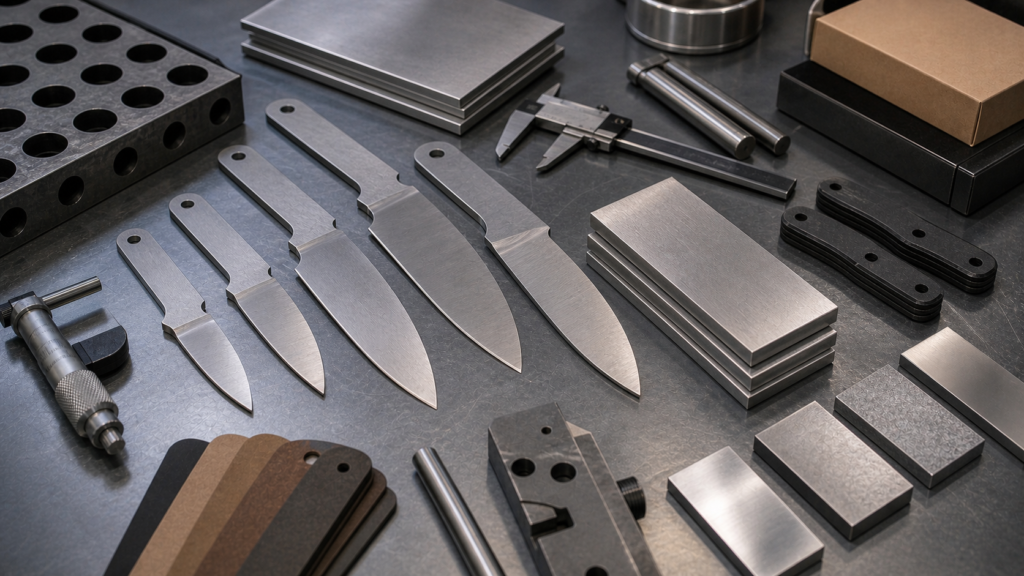
X50CrMoV15 sounds technical. But if buyers only chase the name, they may miss the product fit, heat treatment, and target-user needs.
X50CrMoV15, also known as 1.4116, is a martensitic stainless knife steel that balances corrosion resistance, toughness, sharpening ease, and practical production cost. It is often a smart choice for kitchen, outdoor, utility, and private label knives when buyers need dependable everyday performance.
Quick buyer brief:
- Answer: X50CrMoV15 is useful when the product needs balanced stainless performance rather than extreme edge retention.
- Buyer context: It helps brands building practical knives for broad users, retail channels, or repeat orders.
- Key checks: Confirm steel grade, heat treatment, hardness target, finish, edge geometry, packaging claims, and QC records.
Planning a knife project with this steel?
Send us your target market, MOQ, price range, and blade type. Vast State can help you choose the right steel, HRC range, finish, handle material, and QC requirements for OEM/ODM production.
When I evaluate X50CrMoV15 for a buyer, I do not treat it as a luxury word. I treat it as a practical product decision. Some knife steels are chosen because they sound advanced. Some are chosen because they solve a real buyer problem. X50CrMoV15 often belongs to the second group. It can support a knife that is easy to maintain, not too difficult to sharpen, and stable enough for repeat production. For B2B buyers, that can be more valuable than chasing a steel that looks stronger on a chart but does not fit the sales channel.
What Is X50CrMoV15 Steel in Simple Buyer Terms?
A steel grade can look confusing on paper. If the buyer cannot explain it, the final customer may not understand the knife either.
X50CrMoV15 is the EN chemical name for 1.4116 martensitic stainless steel. It contains about 0.5% carbon, about 14% to 15% chromium, plus molybdenum and vanadium.
I Read the Grade Name as a Product Clue
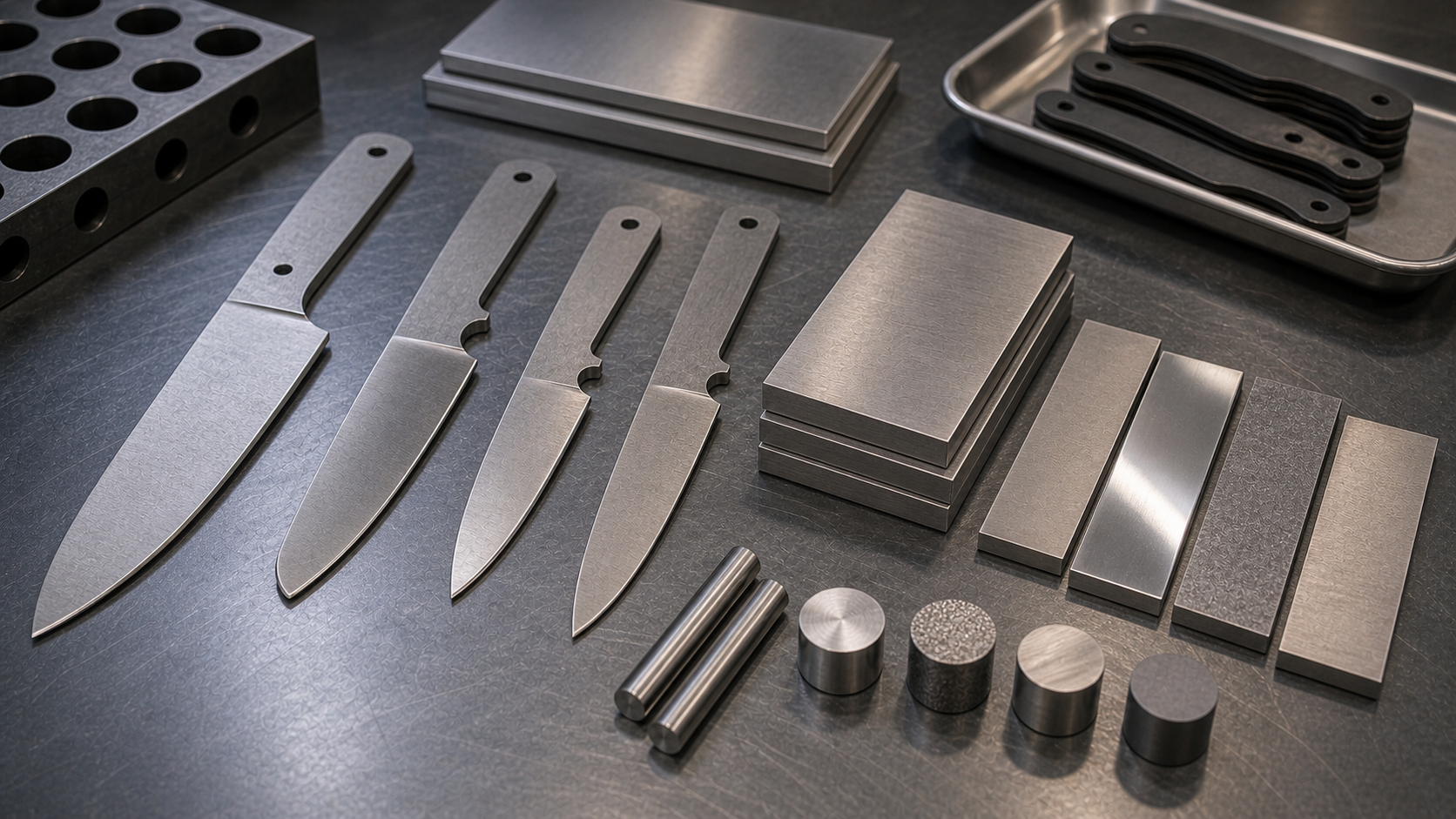
X50CrMoV15 looks complicated, but it gives useful clues. "X" means it is a high-alloy steel under the EN naming system. "50" points to roughly 0.50% carbon. "CrMoV" tells buyers that chromium, molybdenum, and vanadium are important alloying elements. "15" points to roughly 15% chromium. This is why many buyers also see it as 1.4116 stainless steel.
The Acerinox 1.4116 / X50CrMoV15 sheet lists 0.45% to 0.55% carbon, 14% to 15% chromium, 0.50% to 0.80% molybdenum, and 0.10% to 0.20% vanadium for its ACX 380 product. The SINOXX 4116 data sheet also identifies 1.4116 as X50CrMoV15 and describes it as martensitic stainless steel used for cutlery, knives, and cutting tools.
In practical sourcing, this means X50CrMoV15 is not a powder steel, not a simple carbon steel, and not a maximum-wear-resistance steel. It is a balanced stainless option. I usually place it in projects where corrosion resistance, easy maintenance, cost control, and user comfort matter more than extreme edge holding.
| Grade clue | What it tells me | Buyer meaning |
|---|---|---|
| X50 | Around 0.50% carbon | Enough carbon for hardenable stainless knife use |
| Cr15 | Around 15% chromium | Useful stainless behavior for daily care |
| Mo | Molybdenum addition | Helps corrosion-resistance positioning |
| V | Vanadium addition | Supports the material story and heat-treatment behavior |
Quote-ready RFQ Checklist for This Steel
To get an accurate OEM/ODM quote, prepare these details before contacting a knife manufacturer.
| RFQ Field | What to Prepare |
|---|---|
| Product type | Folding knife / fixed blade / multi-tool / kitchen knife |
| Target market | US / EU / outdoor retail / promotional / tactical / EDC |
| Steel option | 4116 / 14C28N / D2 / N690 / Nitro-V |
| Target HRC | Example: 55-57 HRC, 58-60 HRC |
| Blade finish | Satin / stonewash / black coating / bead blast |
| Handle material | G10 / micarta / aluminum / stainless steel / wood |
| Lock or structure | Liner lock / frame lock / slip joint / full tang |
| Estimated quantity | 500 / 1,000 / 3,000 / 5,000+ pcs |
| Packaging | White box / color box / blister / pouch / gift box |
| Required documents | Drawing / sample photo / logo file / packaging artwork |
When Is X50CrMoV15 a Good Fit for Knife Products?
Some buyers ask for the hardest steel. But many customers want a knife that performs well and stays easy to live with.
X50CrMoV15 fits practical knives where corrosion resistance, sharpening ease, toughness, stable production, and reasonable cost matter more than maximum wear resistance.
I Match the Steel to the User's Real Habits
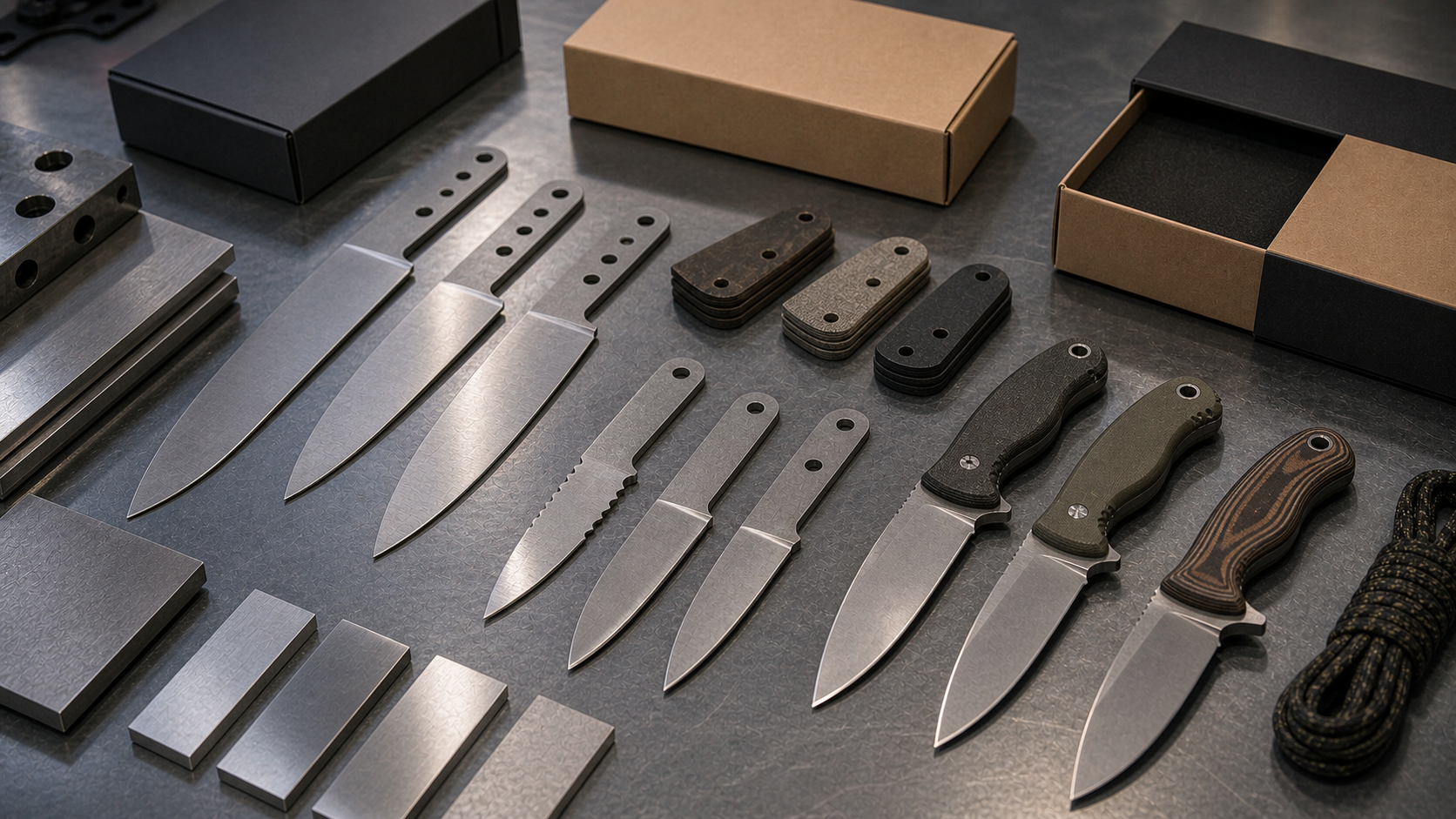
I like X50CrMoV15 when the buyer needs a practical stainless knife for broad use. Kitchen knives are an obvious example because users care about corrosion resistance, food preparation, cleaning, and easy sharpening. But the steel can also be considered for outdoor utility knives, fishing-related knives, general-purpose fixed blades, pocket knives, and private label products where the buyer wants a clear stainless steel story without moving into expensive high-alloy grades.
The important point is expectation. If the buyer's audience wants very high edge retention and is willing to accept more difficult sharpening, X50CrMoV15 may not be the strongest choice. If the audience wants a knife that sharpens easily, resists normal moisture better than carbon steel, and feels dependable in daily use, the steel can make sense.
The British Stainless Steel Association article on X50CrMoV15 / 1.4116 describes it as a martensitic grade used for knife blades and highlights its combination of hardness, corrosion resistance, molybdenum, vanadium, and chromium. I treat that as useful industry context, not as a guarantee for every knife. The finished product still depends on heat treatment, edge geometry, grinding, polishing, and quality control.
| Product type | Why X50CrMoV15 can fit | Buyer warning |
|---|---|---|
| Kitchen knife | Stainless behavior and easy care matter | Do not overclaim edge retention |
| Utility knife | Balanced maintenance and sharpening | Confirm toughness by design and heat treatment |
| Outdoor knife | Practical corrosion resistance helps | Match finish and sheath to use environment |
| Private label knife | Good value story for broad buyers | Keep steel claims simple and accurate |
How Should Buyers Balance Corrosion Resistance, Hardness, and Sharpening?
Every steel has trade-offs. If buyers only ask for one property, the final product may disappoint users in another area.
X50CrMoV15 is best evaluated as a balance steel. Buyers should set a realistic hardness target, easy sharpening goal, corrosion expectation, and edge geometry before approving samples.
I Do Not Sell Balance as Weakness
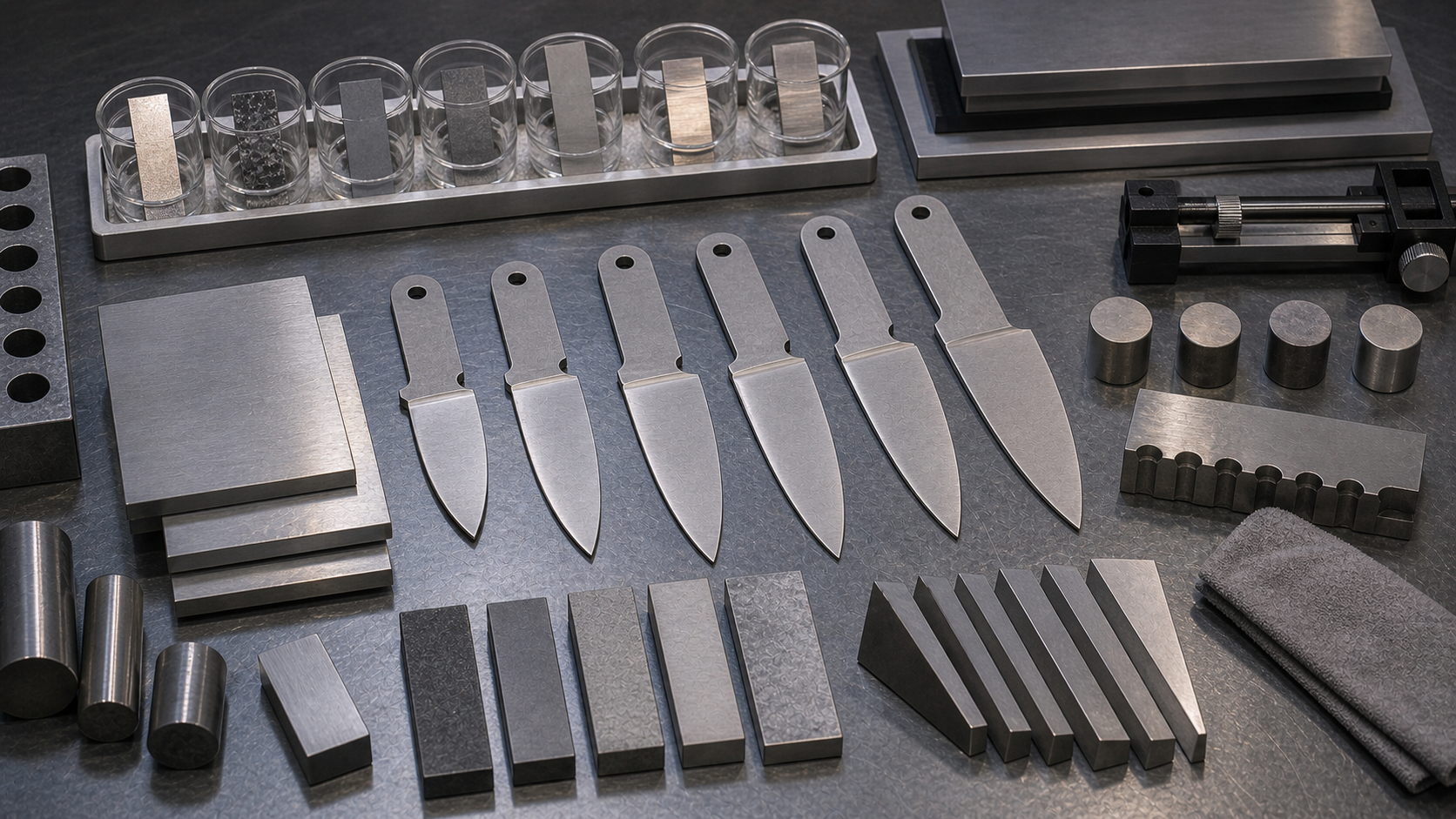
In knife marketing, balanced steels can sound less exciting than super steels. I think that is unfair. A balanced steel can be the better business choice when the target buyer wants fewer complaints, easier maintenance, and repeatable production. X50CrMoV15 is a good example. Its chromium level supports stainless behavior. Its carbon level allows hardening. Molybdenum and vanadium help the technical story. But it is still a practical martensitic stainless steel, not a miracle material.
The MakeItFrom 1.4116 page lists X50CrMoV15 as EN 1.4116 stainless steel and gives composition ranges that match the idea of a chromium, molybdenum, and vanadium stainless grade. Acerinox also notes that martensitic stainless steels can develop mechanical resistance and hardness through suitable thermal treatment. This tells buyers that heat treatment matters. It is not enough to stamp the steel name on a box.
For a buyer, I would compare three user needs. First, how much corrosion resistance does the customer expect? Second, how long should the edge last under normal use? Third, how easy should sharpening be for the end user? X50CrMoV15 often wins when all three need to be acceptable, not when one needs to be extreme.
| Buyer need | X50CrMoV15 strength | Practical control |
|---|---|---|
| Corrosion resistance | Better daily care than carbon steel | Use correct finish and cleaning guidance |
| Hardness | Can be hardened for knife use | Confirm HRC target after heat treatment |
| Sharpening | Friendly for many mainstream users | Match edge angle to product use |
| Edge retention | Good enough for practical products | Avoid super-steel promises |
What Production Details Matter for X50CrMoV15 Blades?
A good steel can still produce a poor knife. Heat treatment, grinding, finish, and assembly decide whether the product feels right.
For X50CrMoV15 blades, production should control heat treatment, blade straightness, edge thickness, surface finish, polishing quality, and final sharpening consistency.
I Watch the Process More Than the Steel Name
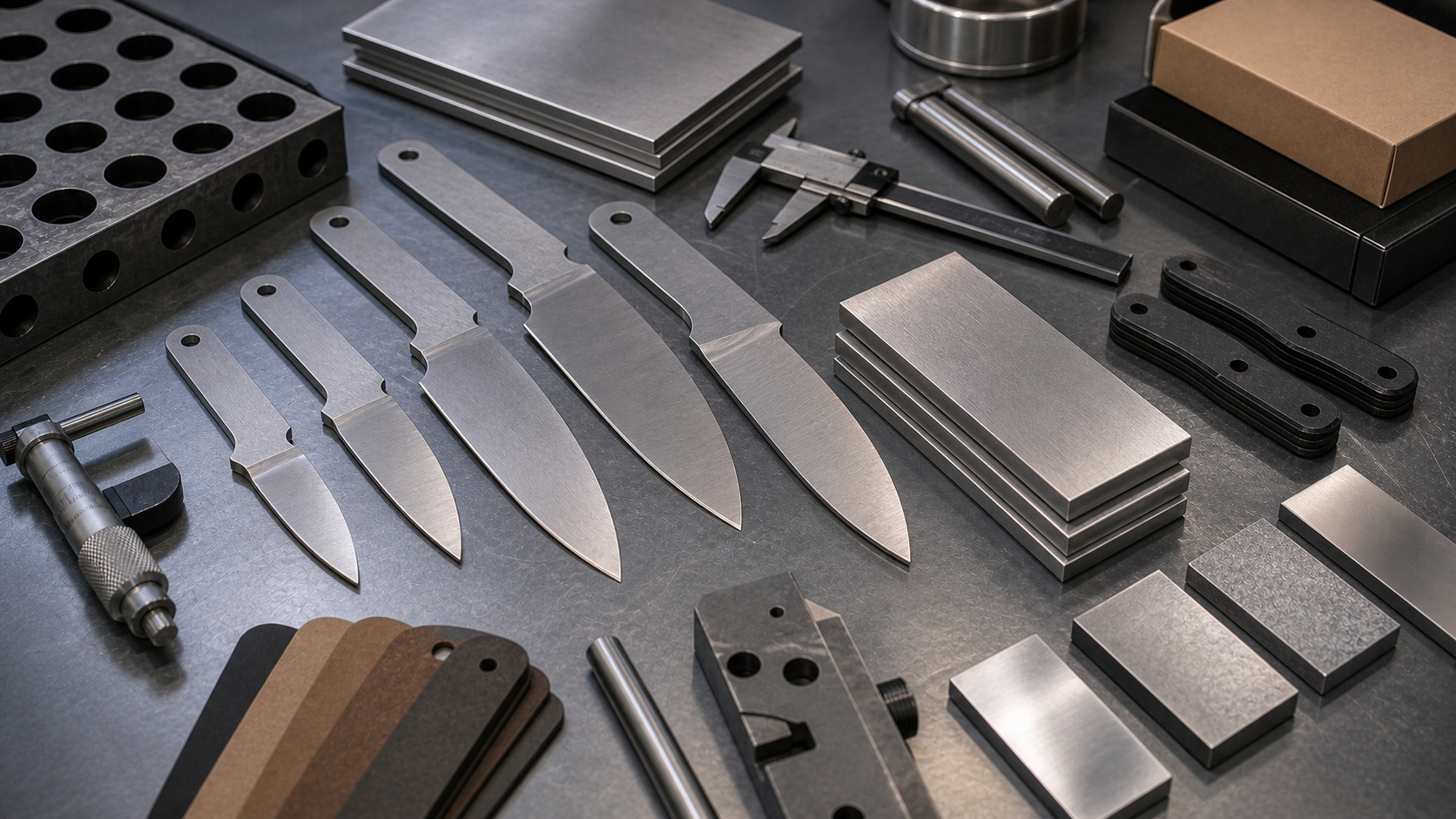
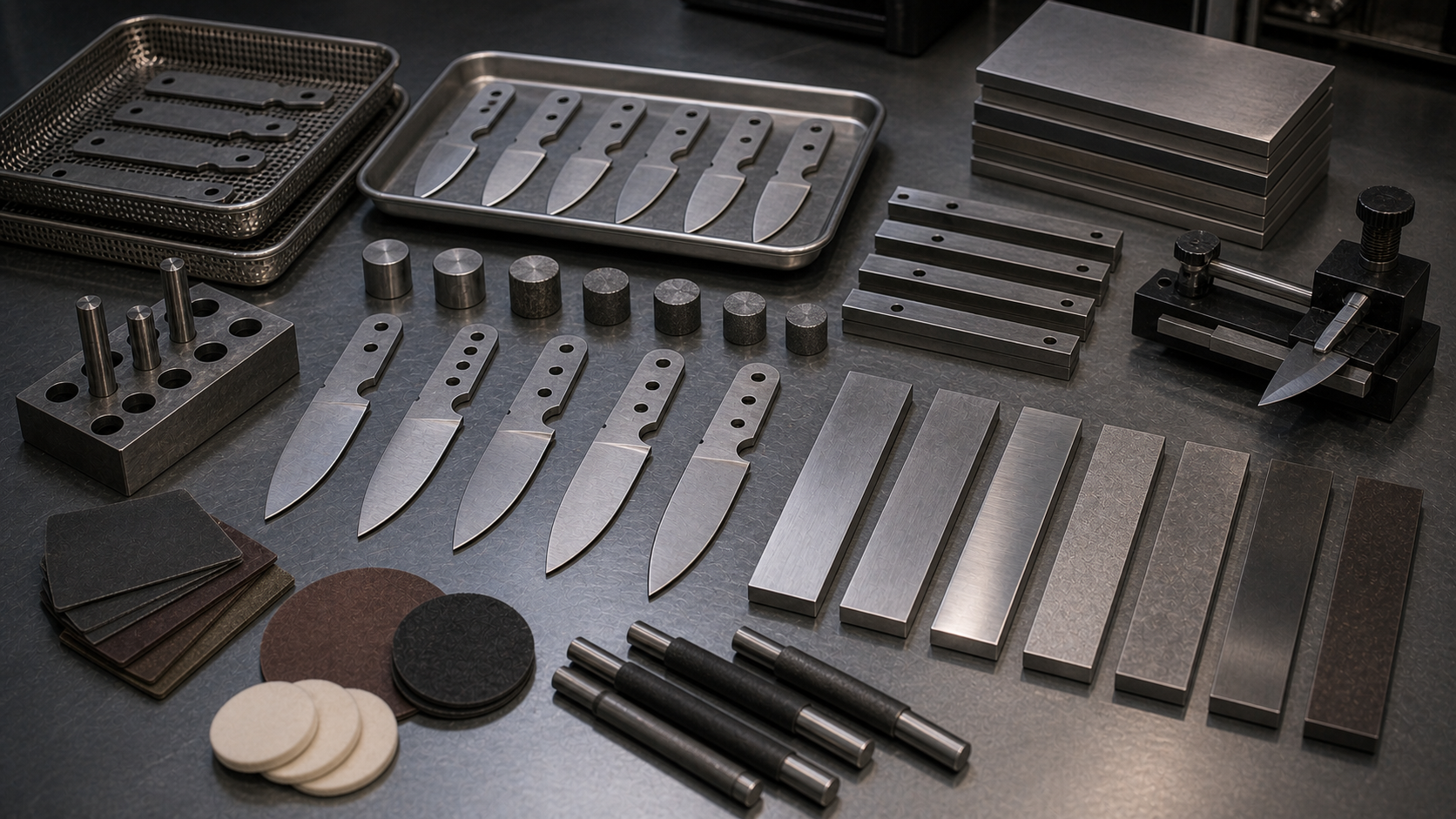
X50CrMoV15 is attractive for OEM and ODM projects because it can be practical to process compared with more demanding high-alloy steels. But easy relative processing does not mean careless processing. The blade still needs clean blanking or laser cutting, controlled drilling or machining, correct heat treatment, careful grinding, and stable finishing. If the grind is too thick, the knife may feel dull even if the steel is fine. If the finish is inconsistent, the buyer may see quality complaints even when the material is correct.
The SINOXX data sheet gives a hardening range of 980 to 1030 C followed by oil or air quenching for its 4116 steel. I do not copy that as a universal factory instruction. I use it to show buyers that heat treatment is part of the grade's performance. The supplier should choose and document the final process based on the actual material, blade size, equipment, and target hardness.
Surface finish also matters. A satin kitchen blade, a polished utility blade, and a coated outdoor blade create different production risks. Polished surfaces reveal scratches. Satin finishes need consistent direction. Coatings need adhesion and edge control. In B2B production, these details decide whether a sample can become a repeatable order.
| Production stage | What I check | Why buyers should care |
|---|---|---|
| Cutting and drilling | Shape, holes, and tolerance | Controls assembly and consistency |
| Heat treatment | Target hardness and distortion | Creates real blade performance |
| Grinding | Edge thickness and bevel symmetry | Controls cutting feel |
| Finishing | Satin, polish, coating, or stonewash | Controls appearance and corrosion behavior |
How Should Buyers Specify X50CrMoV15 in an RFQ?
Short RFQs create long corrections. If a buyer only writes "X50CrMoV15 knife," the supplier must guess too much.
A good RFQ should define knife type, use case, steel grade, hardness target, blade size, grind, finish, handle material, packaging, order quantity, target market, and inspection needs.
I Turn the Steel Request Into a Product Brief
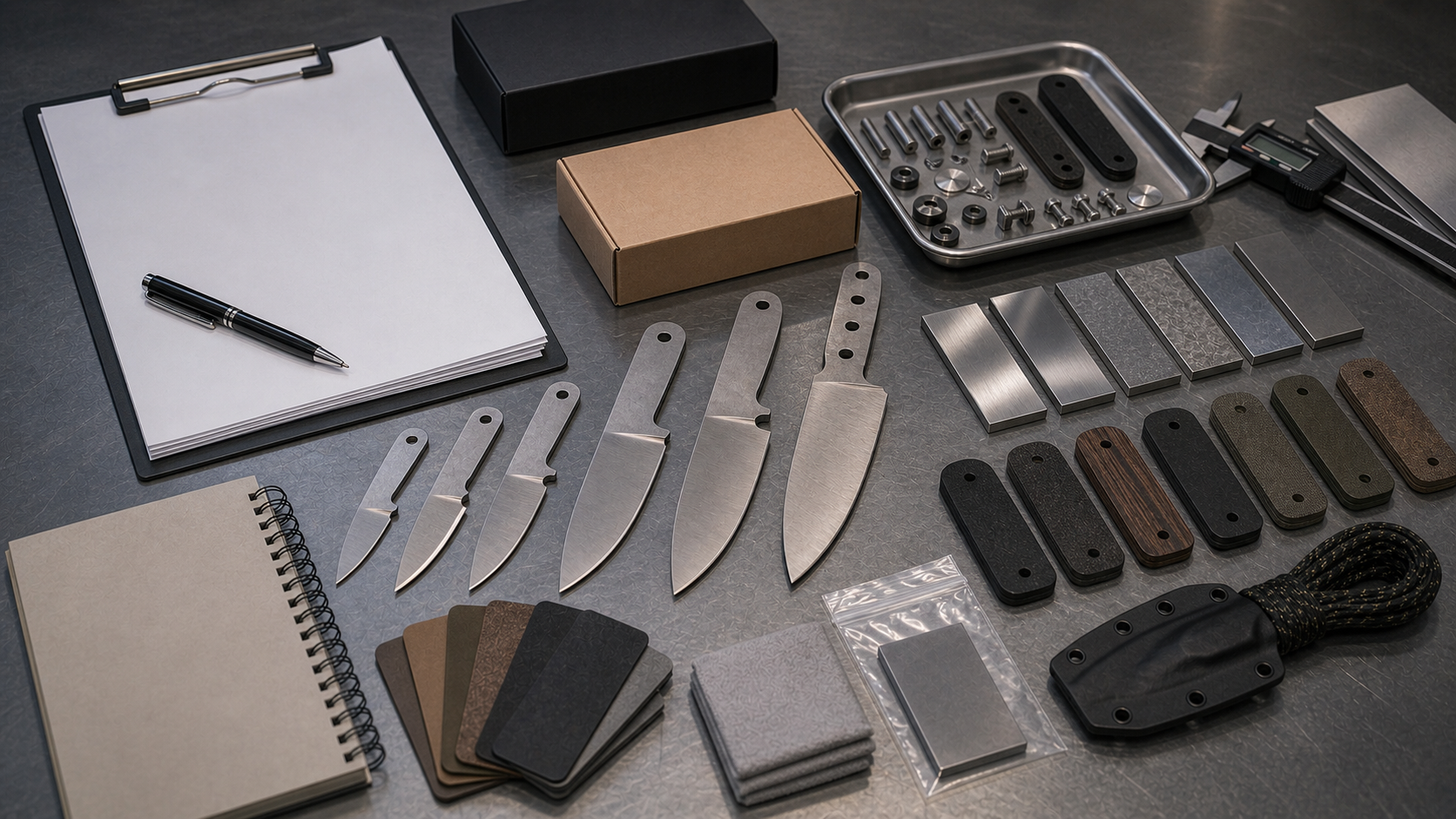
When a buyer asks me about X50CrMoV15, I first ask what product they are building. A kitchen knife, a folding knife, and a fishing knife may all use stainless steel, but they do not need the same blade thickness, finish, handle material, edge angle, or packaging. The RFQ should make those choices clear before price discussion becomes serious.
The buyer should state whether X50CrMoV15 is required or whether an equivalent stainless steel can be considered. This matters for sourcing. Some markets recognize the X50CrMoV15 name. Other markets may accept 1.4116 or a comparable grade if the performance and documentation are clear. I prefer to confirm this early, because steel availability can affect price, lead time, and minimum order planning.
The RFQ should also include the claim strategy. Will the packaging say "X50CrMoV15 stainless steel"? Will it say "German-style stainless steel"? Will it mention food preparation or outdoor corrosion resistance? Claims must match the material, source documentation, and target market. A practical product can be damaged by careless wording. I would rather write a modest, accurate claim than a strong claim that creates risk.
| RFQ field | Why it matters | Buyer input example |
|---|---|---|
| Steel requirement | Controls sourcing and documentation | X50CrMoV15 / 1.4116 required |
| Knife type | Controls structure and process | Kitchen utility knife |
| Hardness target | Guides heat treatment | Supplier to propose HRC after samples |
| Finish | Affects appearance and corrosion behavior | Satin finish with clean grind lines |
| Packaging claim | Affects compliance and trust | Simple stainless steel care message |
What Quality Checks Protect an X50CrMoV15 Knife Order?
Quality problems often hide behind nice samples. If mass production is not checked, the steel name cannot protect the order.
Quality control should check material identity, heat treatment records, hardness, blade geometry, corrosion-sensitive finish areas, edge consistency, handle fit, packaging, and care instructions.
I Use QC to Protect Repeat Orders
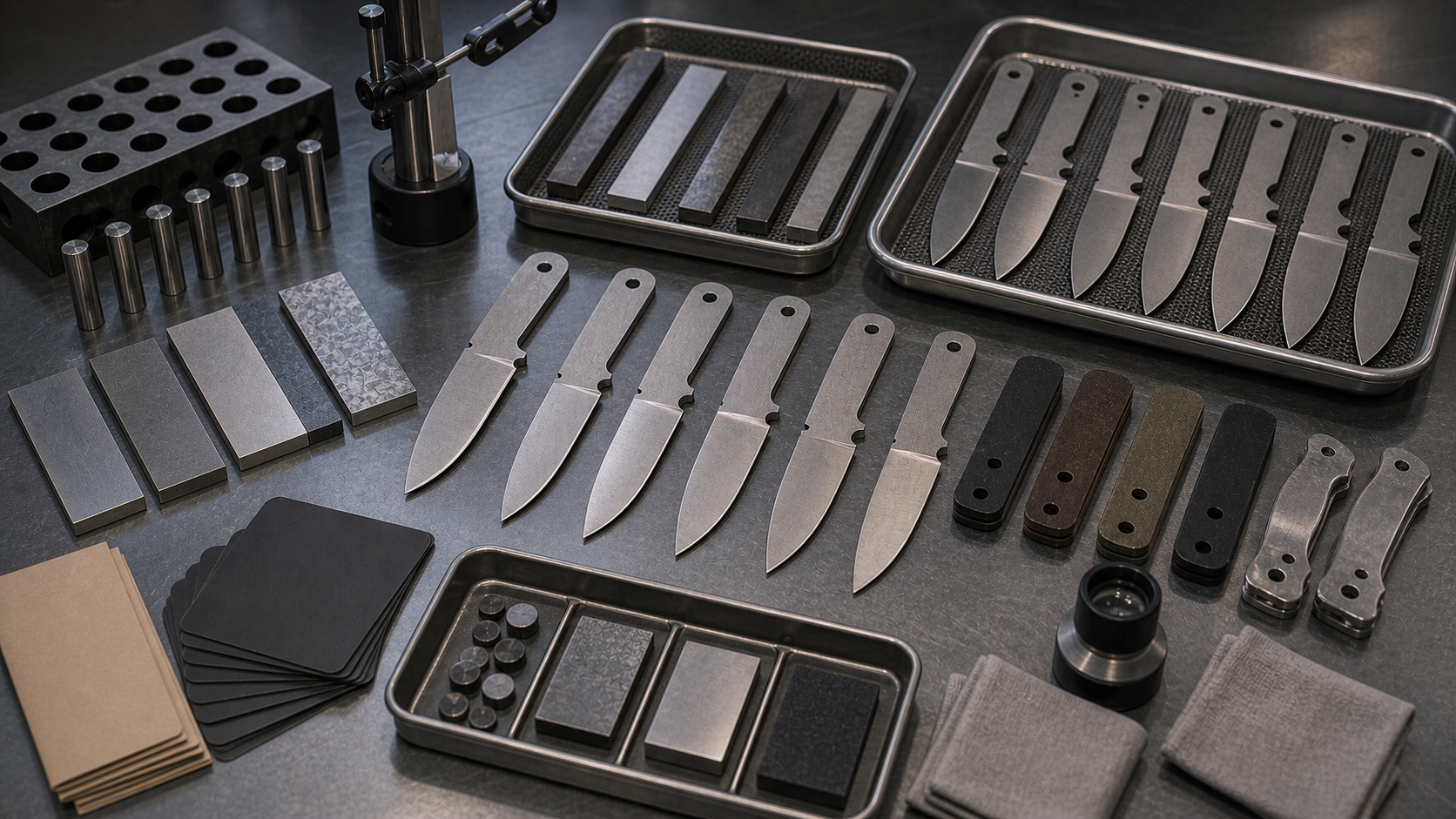
For X50CrMoV15 orders, QC should begin before final inspection. Incoming material records should match the grade requirement. Heat treatment should be recorded by batch. Hardness testing should be done with proper surface preparation and measurement practice. The NIST Rockwell hardness measurement guide explains why good measurement practice helps reduce errors. That matters because an HRC number is only useful when the test is done properly.
After hardness, I check what the user will feel. Is the blade straight? Is the edge even? Does the tip look clean? Does the grind match the approved sample? Is the surface finish consistent? Are there scratches near the spine, ricasso, or handle joint? Is the handle fitted tightly? Does the packaging explain care in simple language?
This is where a process mindset helps. ISO 9001 explained describes quality management as a framework for consistent products, documented information, monitoring, measurement, and improvement. For knife manufacturing, I translate that into clear sample approval, process records, in-process checks, and final inspection. The goal is not only to ship one good batch. The goal is to make the next order easier and more stable.
| QC area | What to check | Why it protects buyers |
|---|---|---|
| Material identity | Grade and lot records | Prevents wrong-steel confusion |
| Heat treatment | Batch record and hardness | Protects performance consistency |
| Blade geometry | Straightness, bevel, edge, tip | Protects cutting feel and appearance |
| Packaging | Care copy and material claim | Reduces complaints and claim risk |
Ready to use this material in your next knife line?
Vast State can help you compare blade steels, heat treatment ranges, handle materials, finishes, packaging options, and QC requirements based on your target market and quantity.
Conclusion
I recommend X50CrMoV15 when buyers need balanced stainless performance, clear claims, controlled heat treatment, and repeatable production for practical knife products.
Source Notes
- Acerinox ACX 380 / 1.4116 sheet supports composition, martensitic stainless behavior, corrosion-resistance context, and cutting-tool applications.
- SINOXX 4116 data sheet supports 1.4116 / X50CrMoV15 identity, cutlery and knife applications, and heat treatment context.
- BSSA X50CrMoV15 / 1.4116 article gives industry context for knife use, composition, hardness, and corrosion positioning.
- MakeItFrom 1.4116 page supports the EN 1.4116 and X50CrMoV15 naming relationship and composition ranges.
- NIST Rockwell hardness guide supports careful hardness measurement practice.
- ISO 9001 explained supports process-based quality management ideas for repeatable production.