ATS-34 still has a strong name. But a familiar steel name can hide sourcing, heat-treatment, and positioning questions for today's buyers.
ATS-34 is a Japanese high-carbon stainless knife steel closely related to 154CM. It can support good edge retention, corrosion resistance, and polished product positioning, but buyers should verify availability, heat treatment, hardness, finish quality, and whether a newer steel fits the project better.
Quick buyer brief:
- Answer: ATS-34 is useful for classic stainless knife positioning, but it needs careful sourcing and heat treatment control.
- Buyer context: It helps brands building enthusiast, legacy-style, outdoor, EDC, or special edition knives.
- Key checks: Confirm steel availability, equivalent options, target hardness, heat treatment, finish, edge geometry, and QC records.
Planning a knife project with this steel?
Send us your target market, MOQ, price range, and blade type. Vast State can help you choose the right steel, HRC range, finish, handle material, and QC requirements for OEM/ODM production.
When a buyer asks me about ATS-34, I pay attention to the reason behind the request. Some buyers want it because they know its history in custom and production knives. Some buyers saw it in an old knife specification. Some buyers only need a stainless steel that sounds stronger than entry-level materials. These are different situations. I do not treat ATS-34 as only a steel grade. I treat it as a product decision. The best answer depends on market position, steel availability, heat treatment, finish expectation, target price, and whether an equivalent steel can do the job better.
What Is ATS-34 Steel in Practical Knife Sourcing?
Steel names can become shortcuts. If buyers use them without context, the quotation may miss material, process, and claim details.
ATS-34 is a Hitachi Japanese ingot stainless knife steel. ZKnives lists it as Hitachi's version of Crucible 154CM, with about 1.05% carbon, 14% chromium, and 4% molybdenum.
I Read ATS-34 as a Classic Stainless Steel Choice
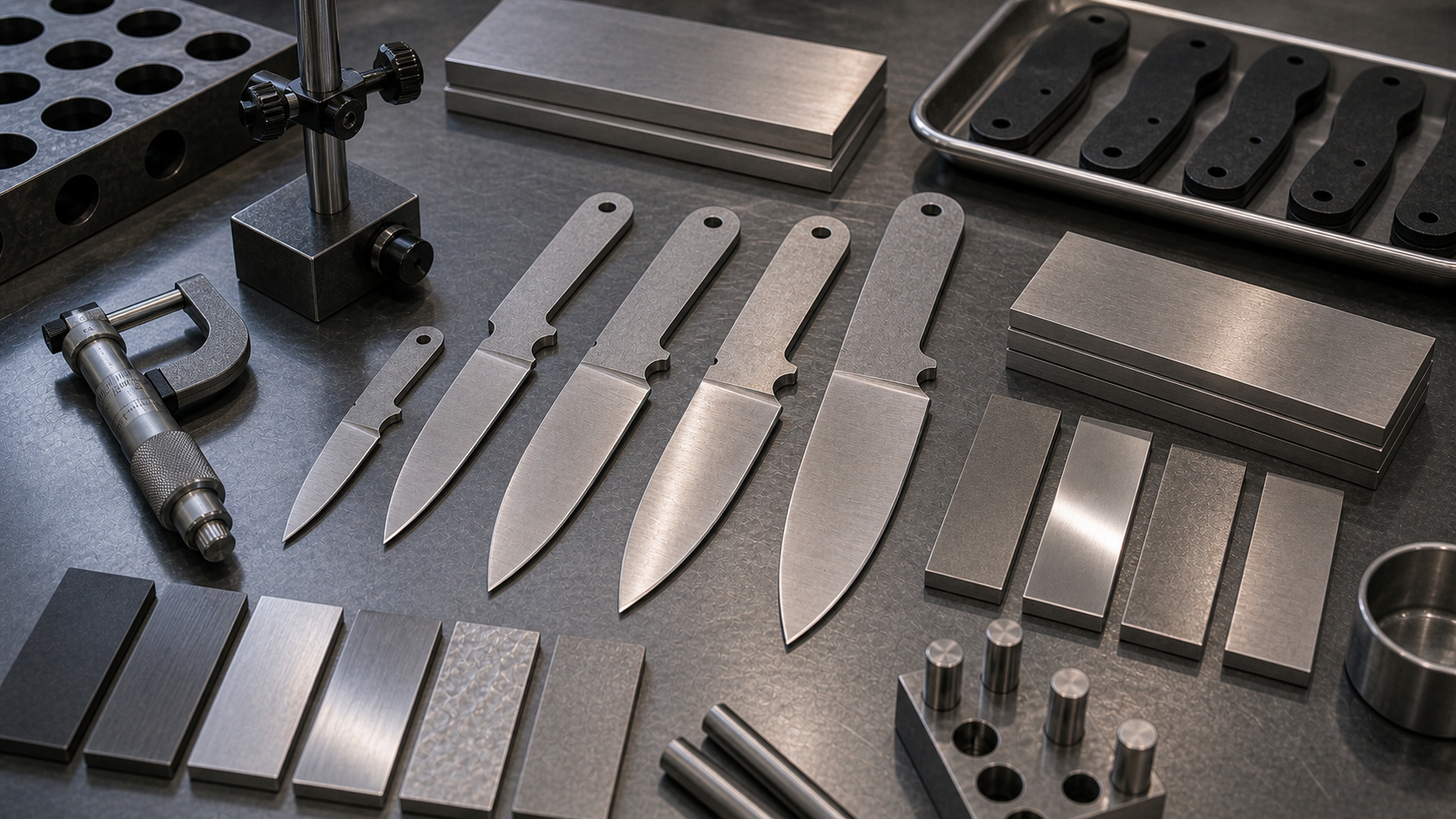
ATS-34 is not a new marketing steel. It is a classic high-carbon stainless knife steel with a long history in the knife world. The ZKnives ATS-34 page identifies it as Hitachi ATS-34, lists Japan as the country, describes it as an ingot alloy, and shows proprietary equivalents including Crucible 154CM, Crucible CPM154, and Damasteel RWL-34. That makes it useful for understanding where ATS-34 sits in the steel family.
In practical terms, ATS-34 should be treated as a performance stainless steel with a carbon, chromium, and molybdenum base. The carbon supports hardness and edge holding. Chromium supports stainless behavior. Molybdenum helps the steel story around wear resistance, hardenability, and corrosion behavior. But these elements do not turn the final knife into a guaranteed success. The finished blade still depends on steel source, heat treatment, grinding, edge geometry, polish, and inspection.
For B2B buyers, ATS-34 is most useful when the steel name supports the product story. It may fit a special edition knife, a classic-style folder, a higher-position outdoor knife, or a product aimed at enthusiasts who recognize older knife steels. It is less useful if the buyer only wants a low-cost broad retail product.
| ATS-34 clue | What it means | Buyer takeaway |
|---|---|---|
| Japanese Hitachi origin | Classic knife steel identity | Good for enthusiast positioning |
| Ingot alloy | Not a powder metallurgy steel | Do not compare it directly with PM steels |
| Similar to 154CM | Equivalent options may exist | Ask if substitutes are acceptable |
| High carbon and molybdenum | Good edge and wear potential | Heat treatment must be controlled |
Quote-ready RFQ Checklist for This Steel
To get an accurate OEM/ODM quote, prepare these details before contacting a knife manufacturer.
| RFQ Field | What to Prepare |
|---|---|
| Product type | Folding knife / fixed blade / multi-tool / kitchen knife |
| Target market | US / EU / outdoor retail / promotional / tactical / EDC |
| Steel option | 4116 / 14C28N / D2 / N690 / Nitro-V |
| Target HRC | Example: 55-57 HRC, 58-60 HRC |
| Blade finish | Satin / stonewash / black coating / bead blast |
| Handle material | G10 / micarta / aluminum / stainless steel / wood |
| Lock or structure | Liner lock / frame lock / slip joint / full tang |
| Estimated quantity | 500 / 1,000 / 3,000 / 5,000+ pcs |
| Packaging | White box / color box / blister / pouch / gift box |
| Required documents | Drawing / sample photo / logo file / packaging artwork |
When Does ATS-34 Make Sense for a Knife Brand?
Some steels are chosen for users. Some are chosen for stories. ATS-34 can work only when both sides are honest.
ATS-34 makes sense when the buyer wants a classic stainless steel story, good edge holding, clean finish potential, and a product level that justifies careful heat treatment and sourcing.
I Match ATS-34 to Buyers Who Need More Than a Generic Steel
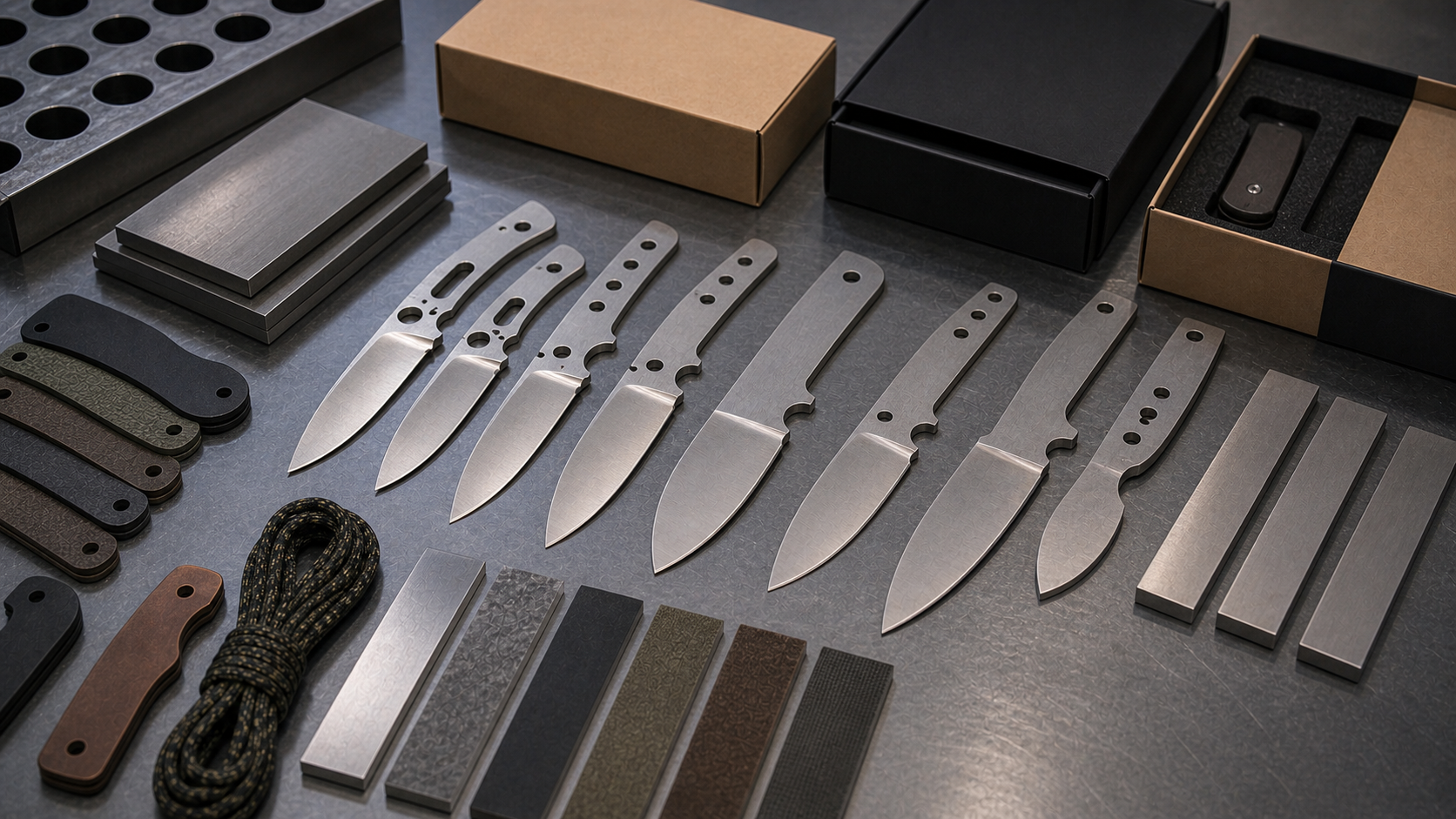
ATS-34 is not the first steel I suggest for every project. If a buyer wants a simple, easy-to-sharpen, low-cost stainless EDC knife, other options may be more practical. If the buyer wants a premium modern steel story, powder steels may be easier to explain. But if the buyer wants a classic stainless steel with a known knife history, ATS-34 can still carry meaning.
I usually see two possible use cases. The first is a product for buyers who like older knife steels and understand the 154CM family. The second is a private label product where the brand wants stronger technical positioning than basic stainless steel. In both cases, the buyer must check supply. ATS-34 may not be as commonly requested in some modern supply chains as 154CM, CPM 154, VG-10, 14C28N, D2, or 440C. That does not make it bad. It means the RFQ must ask about availability early.
I also think about finish. ATS-34 and related steels are often valued for a clean, polished knife appearance when processed well. For a brand, that can support a higher perceived level. But polishing costs time, and poor polishing makes scratches obvious. So I do not recommend ATS-34 only because of the name. I recommend it when the buyer can support the material with the right product level.
| Product plan | Why ATS-34 may fit | What to confirm |
|---|---|---|
| Classic EDC folder | Steel name has enthusiast recognition | Lock, pivot, and heat treatment plan |
| Outdoor fixed blade | Good stainless edge-holding story | Toughness and edge geometry |
| Special edition knife | Legacy steel can support differentiation | Material availability and sample approval |
| Low-cost retail knife | Often a weaker fit | Consider simpler stainless options |
How Should Buyers Compare ATS-34 With 154CM and CPM 154?
Comparison can create confusion. A buyer may ask for ATS-34 but actually need a more available equivalent.
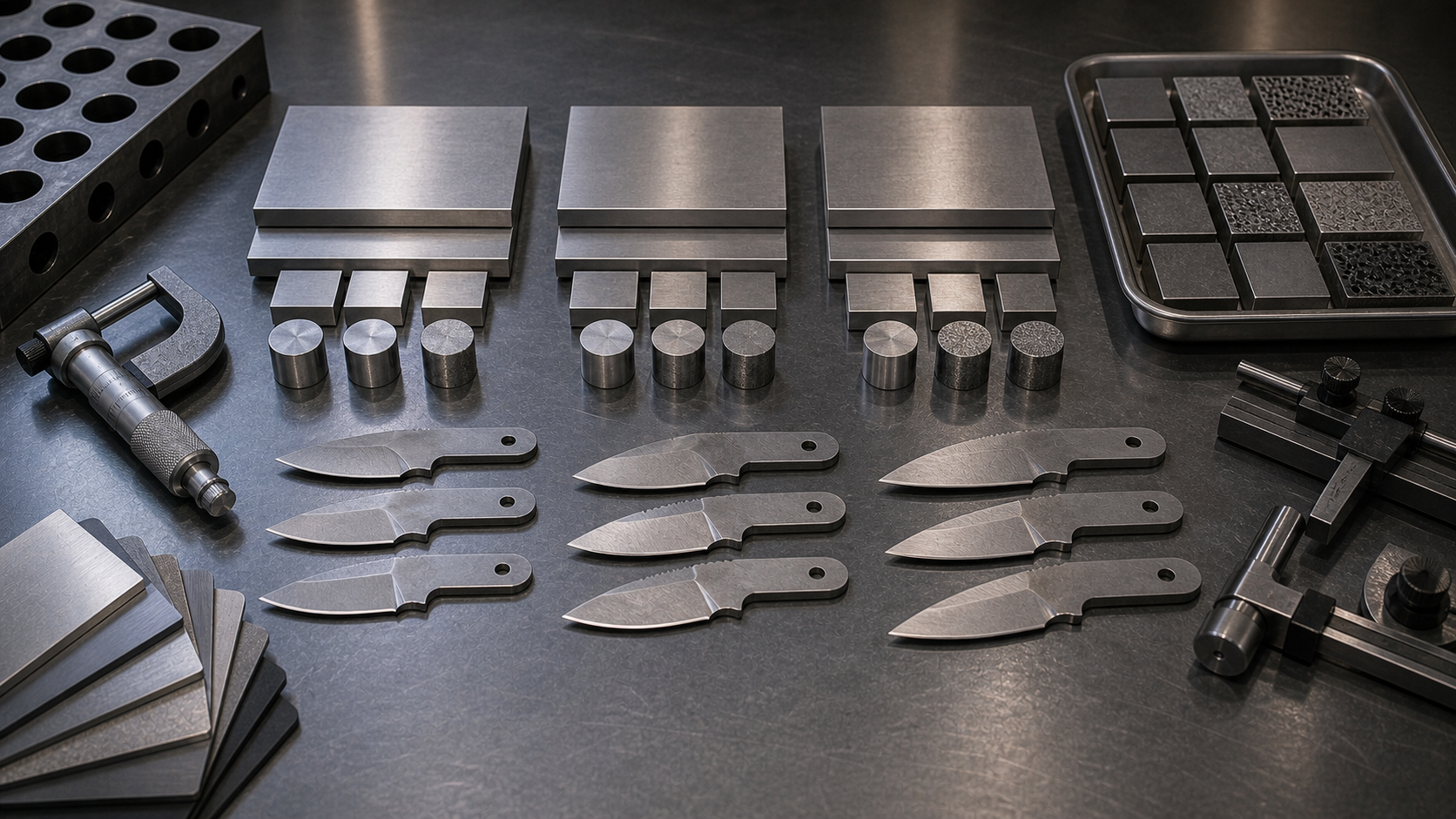
ATS-34 is closely related to 154CM. CPM 154 uses a powder metallurgy route with similar chemistry, so buyers should compare cost, availability, toughness needs, finish goals, and marketing value.
I Ask Whether the Steel Name Is Required or the Performance Target Is Required
This is an important sourcing question. If the buyer's marketing plan specifically says ATS-34, then we need to source ATS-34 and document it. If the buyer only wants a 154CM-family performance level, then 154CM or CPM 154 may be considered. The answer changes cost, lead time, and supplier options.
ZKnives lists ATS-34 as Hitachi's version of Crucible 154CM and also lists CPM154 and RWL-34 among proprietary equivalents. The Crucible 154CM data sheet describes 154CM as a modification of 440C martensitic stainless steel with molybdenum added. It also lists carbon at 1.05%, chromium at 14.00%, and molybdenum at 4.00%. This supports the idea that ATS-34 and 154CM sit very close to each other. But I still avoid saying any two steels are always identical in production. Steel source, melt quality, stock form, heat treatment, and blade geometry can change the final result.
CPM 154 is a different conversation because powder metallurgy can improve carbide distribution and processing behavior compared with conventional ingot versions. If the buyer wants the best performance from the family and has the budget, CPM 154 may be worth discussing. If the buyer wants a classic Japanese ATS-34 story, then ATS-34 itself may matter more.
| Option | Practical meaning | Buyer question |
|---|---|---|
| ATS-34 | Classic Japanese ingot stainless steel | Is this exact steel name required? |
| 154CM | Closely related American stainless steel | Is equivalent performance acceptable? |
| CPM 154 | Powder metallurgy version of the family | Does the budget support an upgrade? |
| RWL-34 | Powder metallurgy relative in this family | Is polishing or premium positioning important? |
What Heat Treatment Issues Matter Most With ATS-34?
A steel name cannot replace process control. ATS-34 can disappoint if hardness, retained austenite, tempering, or grinding are mishandled.
Buyers should define target hardness, heat-treatment route, sample testing, quench or cooling method, tempering plan, edge thickness before heat treatment, and post-treatment inspection.
I Use 154CM Data as Context, Then Confirm With Samples
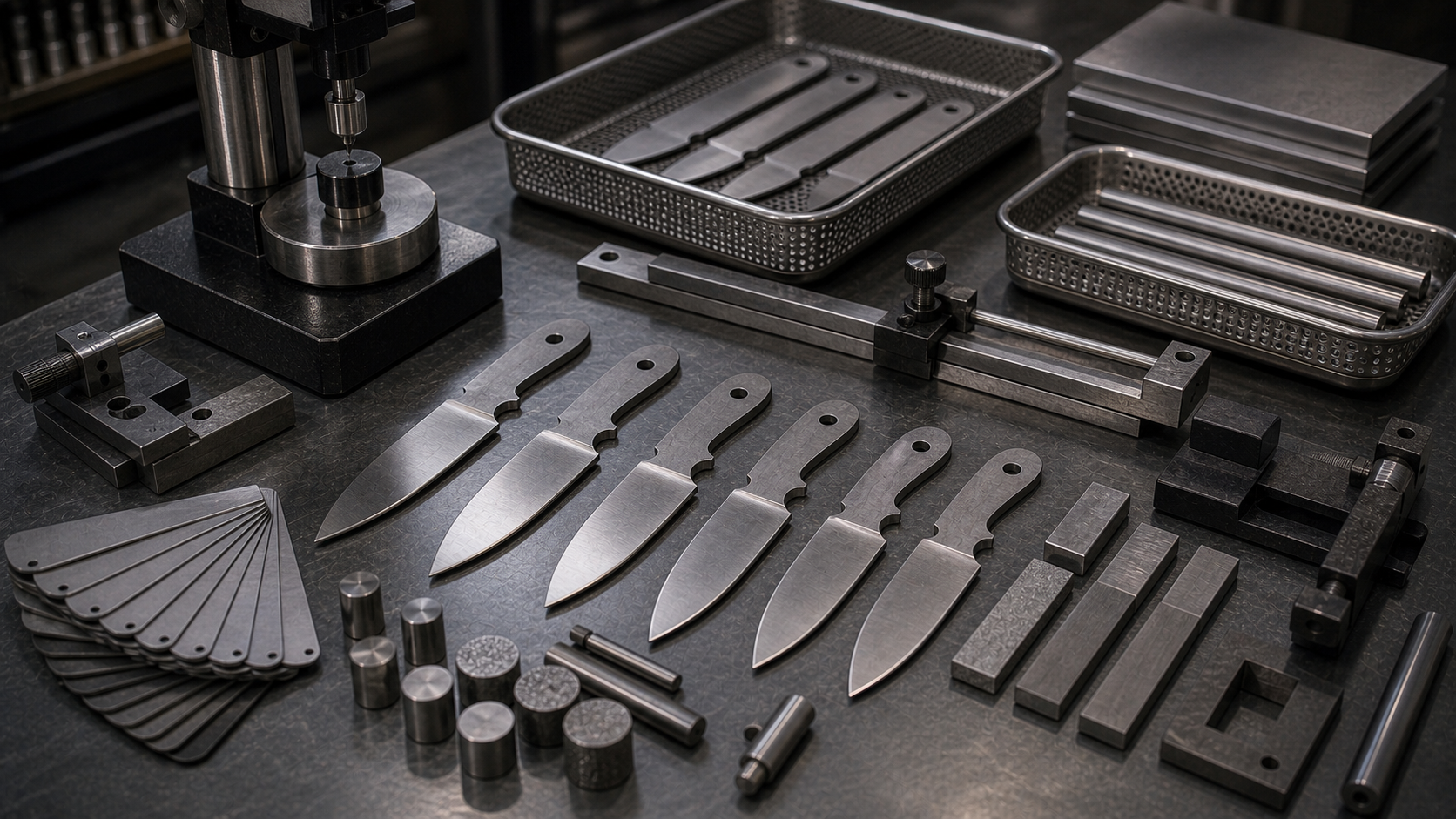
Because ATS-34 is closely related to 154CM, 154CM data can help buyers understand the process family. The Crucible 154CM data sheet gives hardening guidance, including austenitizing around 1900 to 2000 F, oil or pressure quench options, double tempering, and an aim hardness of HRC 55 to 62. It also notes that results may vary with hardening method, section size, and heat treatment conditions.
That last point is the one I care about most. A knife blade is not a simple block of steel. It has a thin edge, a tip, holes, a tang, and sometimes complex geometry. Small changes in thickness can affect heat treatment response, distortion, and grinding. A folding knife blade has even more structure-related concerns because the pivot, detent, lock face, stop pin area, and blade centering all depend on stable geometry.
For an ATS-34 project, I would not approve bulk production from theory alone. I would request sample blades, hardness checks, cutting feel review, sharpening test, finish approval, and functional checks for the knife structure. If the product is a folding knife, I would also check lockup, blade play, centering, and opening feel after heat treatment and finishing. Good heat treatment should make the steel useful. It should not create assembly problems.
| Heat treatment item | Why it matters | Buyer action |
|---|---|---|
| Target HRC | Controls balance of edge and toughness | Define range before sampling |
| Austenitizing and quench | Controls hardening response | Ask supplier for process plan |
| Tempering | Reduces brittleness and sets final hardness | Request batch record |
| Sample testing | Confirms real knife behavior | Approve before mass production |
What Performance Trade-Offs Should Buyers Expect?
Marketing often says steel is strong, sharp, and stainless. Real buyers need to know where the trade-offs sit.
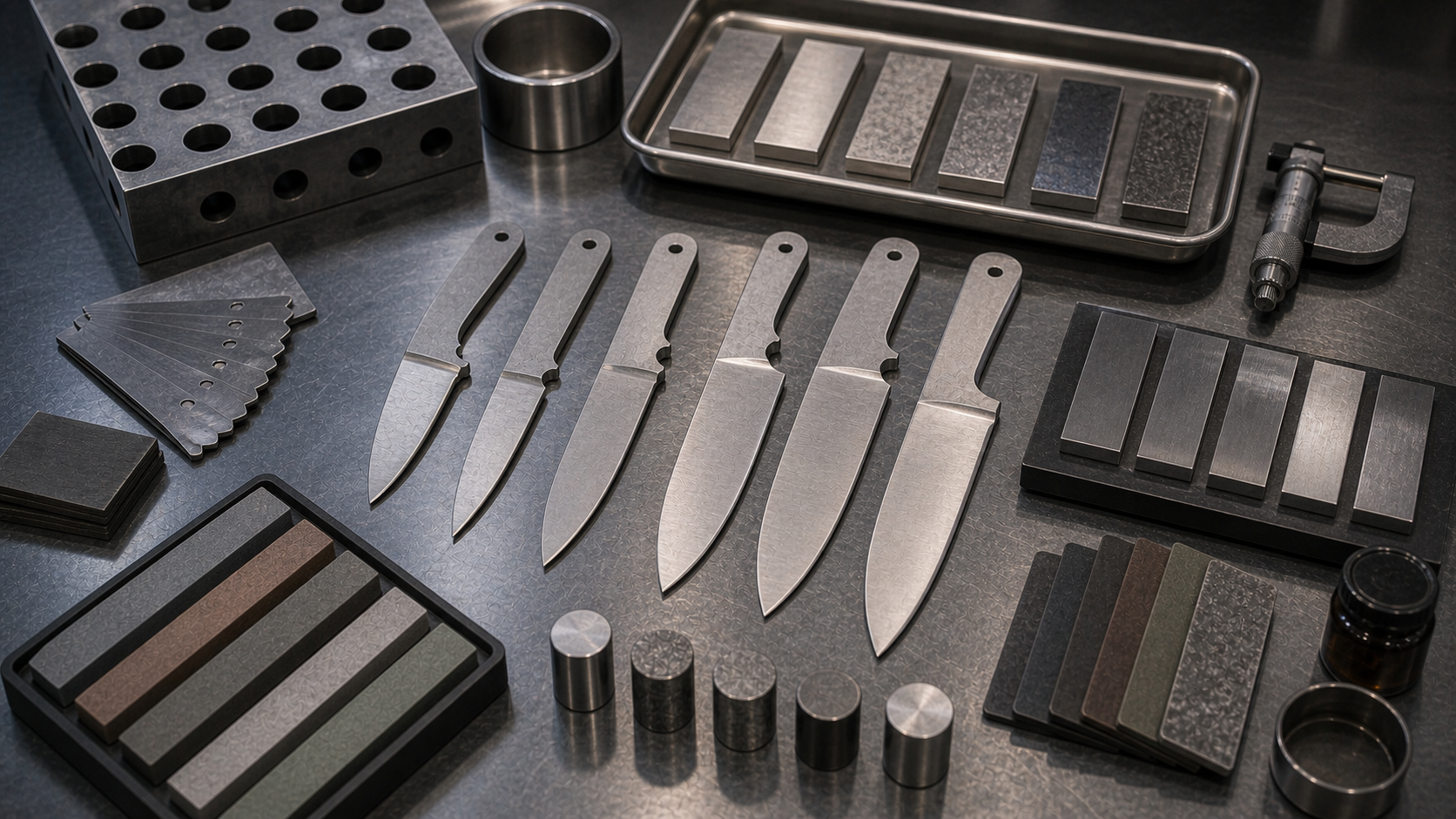
ATS-34 can offer good edge retention and stainless behavior, but it is not the easiest steel to sharpen and it should not be described as rust-proof or tougher than all modern options.
I Explain ATS-34 as Strong but Not Effortless
ATS-34 is attractive because it can hold an edge better than simpler stainless steels when heat treated and ground well. That can help a product feel serious in use. It also has stainless behavior because of its chromium content, which is useful for EDC, outdoor, and general utility knives. But stainless does not mean maintenance-free. Users still need to clean and dry the knife, especially around pivots, screws, liners, and sheaths.
Sharpening is another trade-off. ATS-34 has more wear resistance than many simple stainless options, so it may take more time to sharpen. For some enthusiast users, that is acceptable. For broad retail buyers who want easy sharpening, a simpler steel may be a better match. I do not see this as good or bad. I see it as product positioning.
The British Stainless Steel Association page on martensitic stainless steels explains that martensitic stainless steels can be hardened and strengthened by heat treatment, and that higher carbon grades can reach high hardness but may trade ductility and toughness. That is exactly why I ask buyers to avoid extreme claims. A knife should be designed around real use. A thin slicer, a heavy outdoor blade, and a folding knife do not need the same edge geometry.
| Performance area | ATS-34 advantage | Practical caution |
|---|---|---|
| Edge retention | Stronger than many simple stainless steels | Needs correct heat treatment |
| Corrosion resistance | Stainless behavior for daily use | Not rust-proof |
| Sharpening | Good edge can last longer | Sharpening may take more effort |
| Toughness | Can work well in proper designs | Do not use poor geometry for hard use |
How Should ATS-34 Be Written Into an RFQ?
Vague RFQs create supplier guessing. ATS-34 needs a clear product brief because steel availability and equivalents can change the project.
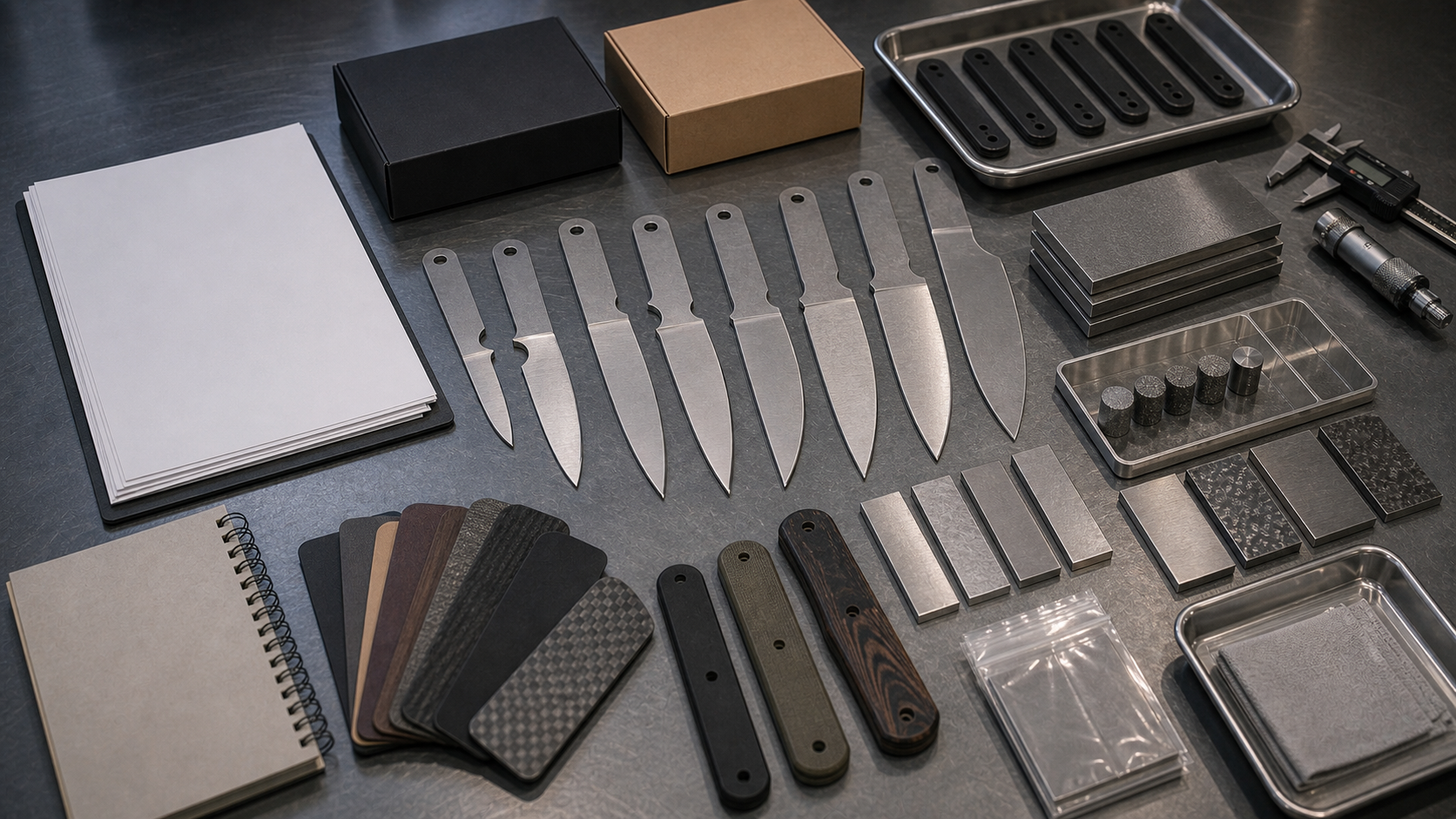
An ATS-34 RFQ should define exact steel requirement, acceptable equivalents, knife type, target hardness, finish, edge geometry, handle material, packaging claims, quantity, target price, and inspection requirements.
I Separate Must-Have Steel From Must-Have Performance
The first RFQ question is simple. Does the buyer require ATS-34 specifically, or can the supplier propose 154CM, CPM 154, RWL-34, or another stainless option? This should be decided before quotation. If the exact steel is required, the buyer should ask for material documentation and understand possible lead-time effects. If the performance target is more important than the name, the supplier can suggest a practical option that better fits availability and price.
The RFQ should also state the knife type. A small EDC folding knife, a hunting fixed blade, and a kitchen utility knife use the steel differently. The buyer should include blade length, blade thickness, grind type, finish, handle material, lock type if folding, packaging, logo method, and target market. If the product needs a mirror polish or fine satin finish, that should be stated early because finishing time affects cost.
I also ask buyers to include claim language. Will the packaging say "ATS-34 stainless steel"? Will the web page compare it with 154CM? Will the customer expect a high-end steel? Claims must match documentation and product performance. A clean, accurate claim builds trust. A dramatic claim creates after-sales risk.
| RFQ field | Why it matters | Buyer example |
|---|---|---|
| Steel requirement | Controls sourcing | ATS-34 required or equivalent accepted |
| Knife structure | Controls engineering | Folding knife, liner lock, 3.2 inch blade |
| Target hardness | Guides heat treatment | Final HRC range after sample approval |
| Finish | Controls cost and appearance | Satin, stonewash, polish, or coating |
| QC requirement | Protects repeat production | Material record, HRC test, function check |
How Should Quality Control Protect ATS-34 Production?
One good ATS-34 sample is not enough. Without process records, mass production may drift away from the approved sample.
QC should confirm material identity, heat-treatment records, hardness, blade geometry, finish consistency, sharpening, corrosion-sensitive areas, assembly fit, packaging, and claim accuracy.
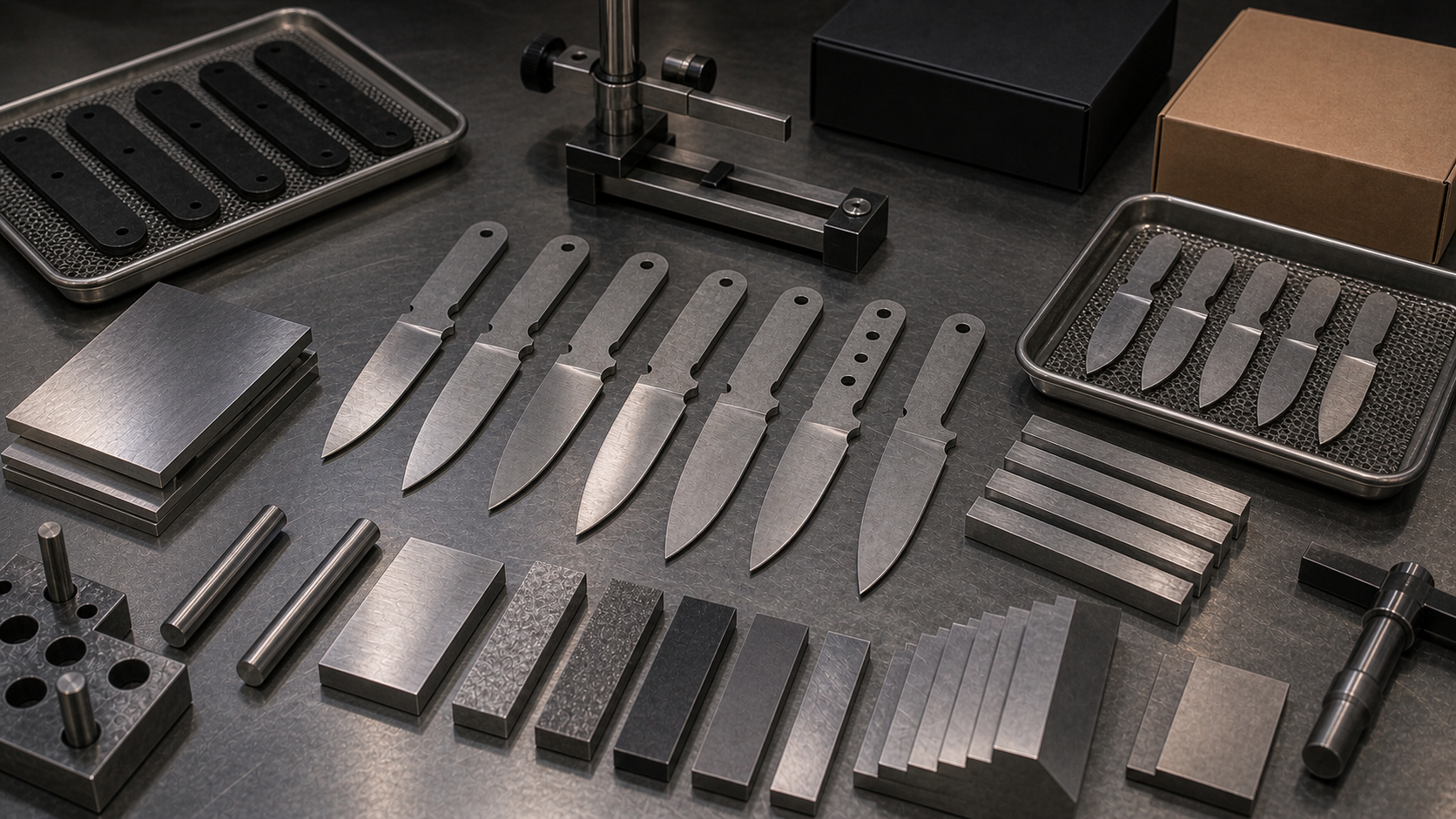
I Check the Steel, Then I Check the Knife
QC for ATS-34 starts with material identity. If the buyer requires ATS-34, the supplier should keep material records. If an equivalent is approved, that decision should be written clearly before production. The next step is heat treatment. Batch records, hardness checks, and sample approval help protect repeat production.
Hardness testing should be handled carefully. The NIST Rockwell hardness measurement guide explains the importance of proper Rockwell measurement practice. In knife production, that means the tester, sample surface, test location, and procedure matter. A hardness number without proper context can mislead the buyer.
After the steel checks, I inspect the knife as a product. I look at grind symmetry, edge thickness, sharpness, tip condition, scratches, polishing marks, screw fit, lockup, blade centering, handle fit, and packaging. This process-based thinking matches the broader idea behind ISO 9001 quality management: consistent output depends on controlled processes, documented information, monitoring, and improvement. For B2B buyers, that is the real value. The steel name may attract attention, but stable execution protects the order.
| QC stage | What to check | Why it protects buyers |
|---|---|---|
| Incoming material | ATS-34 record or approved equivalent | Prevents grade confusion |
| Heat treatment | Batch record and hardness | Protects performance consistency |
| Blade finishing | Grind, polish, edge, scratches | Protects perceived quality |
| Final inspection | Function, packaging, claims | Protects repeat sales and trust |
Ready to use this material in your next knife line?
Vast State can help you compare blade steels, heat treatment ranges, handle materials, finishes, packaging options, and QC requirements based on your target market and quantity.
Conclusion
I see ATS-34 as a classic stainless choice when buyers control sourcing, heat treatment, claims, finish quality, and repeatable inspection.
Source Notes
- ZKnives ATS-34 page supports ATS-34 composition, Hitachi origin, ingot technology, and equivalent steel relationships.
- Crucible 154CM data sheet supports 154CM composition, heat-treatment context, and properties for a closely related alloy family.
- BSSA martensitic stainless steels supports the general explanation of heat-treatable martensitic stainless steels and trade-offs.
- NIST Rockwell hardness guide supports careful hardness measurement practice.
- ISO 9001 explained supports process-based quality management ideas for repeatable production.