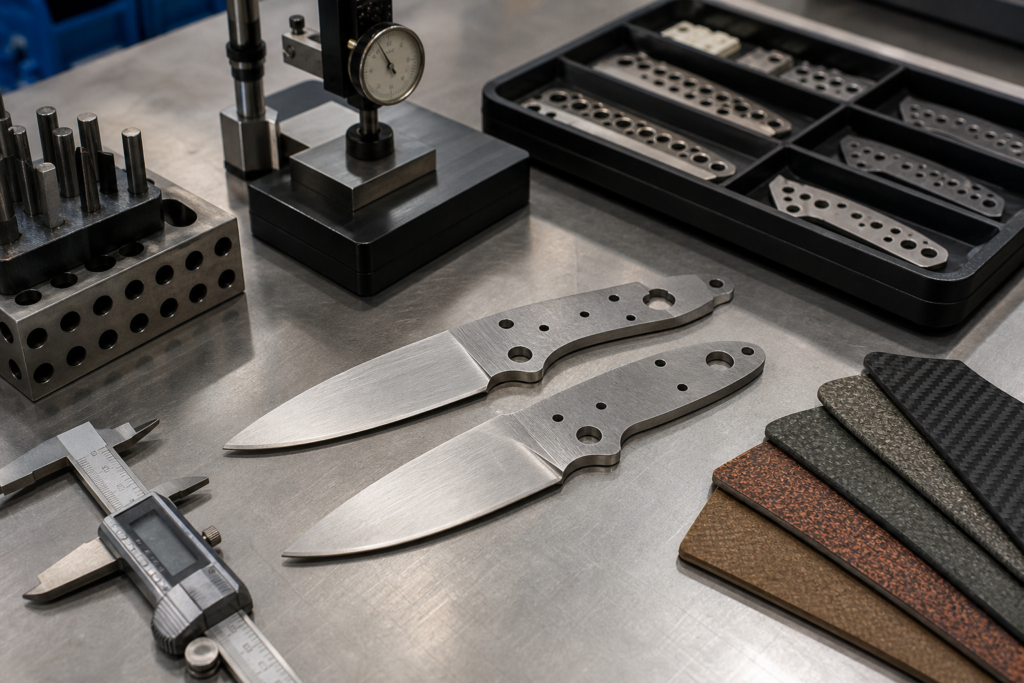
A steel upgrade can help a knife line, but the wrong upgrade wastes margin. Buyers need a product decision, not steel hype.
OEM knife buyers should choose S35VN for premium EDC and outdoor knives needing better corrosion resistance, toughness, and cleaner brand positioning. They should choose D2 for cost-sensitive knives needing strong wear resistance and edge retention, if the market accepts more corrosion care and tighter QC.
Quick buyer brief:
- Answer: S35VN fits higher-positioned knives; D2 fits value-focused cutting tools when maintenance expectations are clear.
- Buyer context: This helps knife brands, importers, wholesalers, distributors, and private label buyers plan steel tiers.
- Key checks: Confirm steel source, HRC target, heat treatment, edge geometry, finish, corrosion expectations, MOQ, target price, packaging copy, Incoterm, and inspection plan.
Planning a knife project with this steel?
Send us your target market, MOQ, price range, and blade type. Vast State can help you choose the right steel, HRC range, finish, handle material, and QC requirements for OEM/ODM production.
When a buyer asks me whether S35VN is better than D2, I first ask what the knife must sell for, where it will be used, and what the customer expects from the blade. S35VN and D2 are both useful steels, but they serve different product stories. A premium EDC folder, a value outdoor knife, and a private label work knife do not need the same answer.
What Is the Core Difference Between S35VN and D2?
Steel names can sound like simple rankings. That is dangerous because S35VN and D2 solve different product problems.
S35VN is a powder metallurgy stainless knife steel with strong corrosion resistance, useful toughness, and premium positioning. D2 is a high-carbon, high-chromium tool steel with strong wear resistance, lower stainless protection, and better value-line economics.
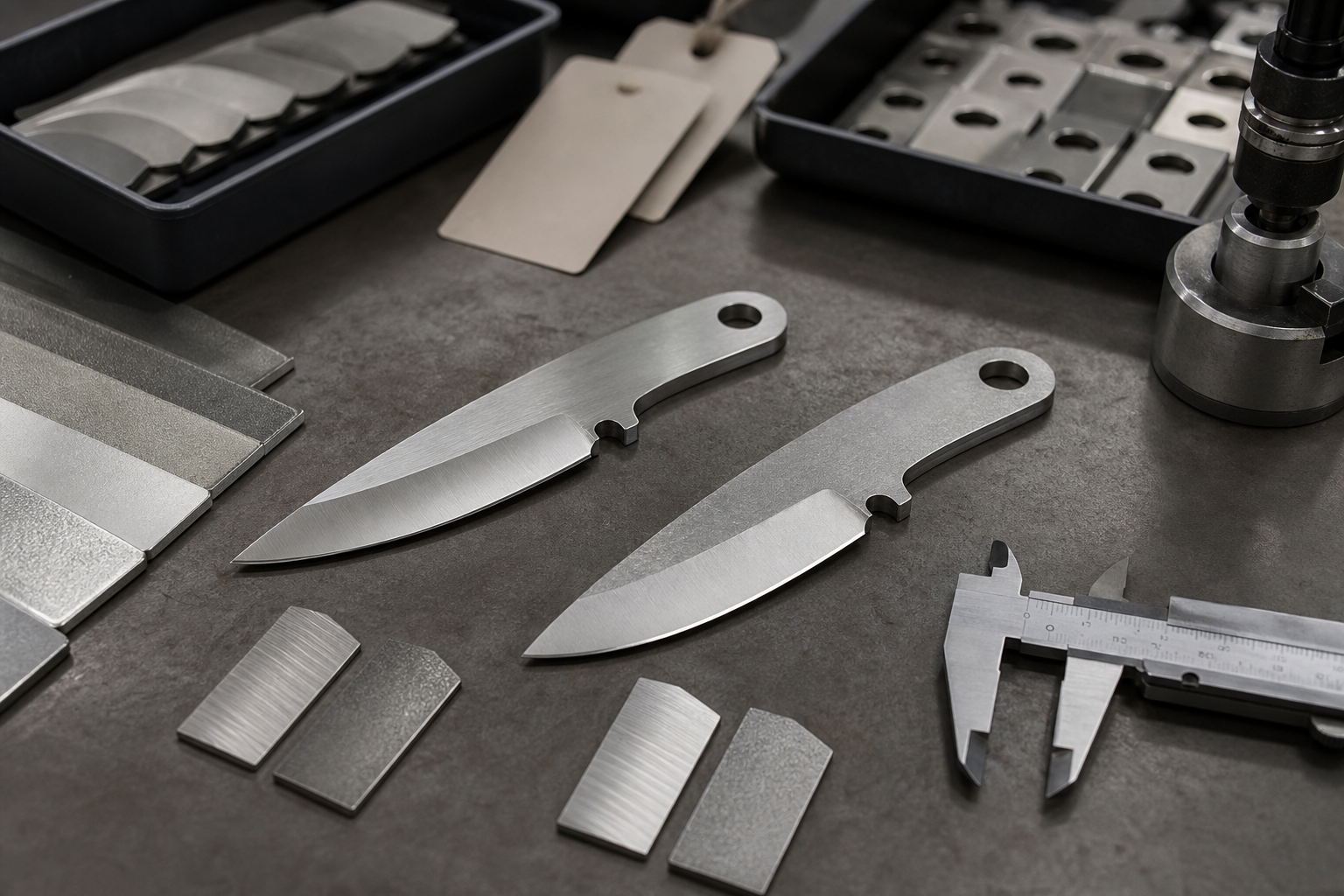
I Start With the Steel Family and the Buyer Promise
S35VN and D2 are not direct substitutes in every knife line. S35VN is commonly treated as a premium stainless knife steel. The CPM S35VN data sheet lists a typical composition of 1.40 carbon, 14.00 chromium, 2.00 molybdenum, 3.00 vanadium, and 0.50 niobium. It also describes S35VN as a martensitic stainless steel designed to improve toughness over S30V and to be easier to machine and polish than S30V. That gives buyers a strong material story for higher-positioned knives.
D2 is different. The D-2 cold work tool steel data sheet lists a typical composition of 1.42 carbon, 11.50 chromium, 0.90 molybdenum, and 0.80 vanadium. It describes D2 as an air-hardening, high-carbon, high-chromium tool steel with excellent abrasion resistance from a large carbide volume. This is why D2 can make sense when the buyer wants cutting value and edge holding at a controlled cost.
The practical difference is this: S35VN gives a more balanced premium knife story, especially where corrosion resistance and toughness matter. D2 gives a value performance story, especially where cutting wear resistance matters and the buyer can explain maintenance. I do not call one steel always better. I match each steel to the product line, target buyer, and margin.
| Decision point | S35VN | D2 |
|---|---|---|
| Steel family | Powder metallurgy stainless knife steel | Conventional high-carbon, high-chromium tool steel |
| Main commercial role | Premium EDC and outdoor positioning | Value performance and work-knife positioning |
| Corrosion story | Stronger stainless story | Needs more care than true stainless choices |
| Edge story | Balanced edge retention and toughness | Strong wear resistance and edge holding |
| Buyer risk | Higher cost and sourcing expectation | Corrosion complaints if expectations are unclear |
Quote-ready RFQ Checklist for This Steel
To get an accurate OEM/ODM quote, prepare these details before contacting a knife manufacturer.
| RFQ Field | What to Prepare |
|---|---|
| Product type | Folding knife / fixed blade / multi-tool / kitchen knife |
| Target market | US / EU / outdoor retail / promotional / tactical / EDC |
| Steel option | 4116 / 14C28N / D2 / N690 / Nitro-V |
| Target HRC | Example: 55-57 HRC, 58-60 HRC |
| Blade finish | Satin / stonewash / black coating / bead blast |
| Handle material | G10 / micarta / aluminum / stainless steel / wood |
| Lock or structure | Liner lock / frame lock / slip joint / full tang |
| Estimated quantity | 500 / 1,000 / 3,000 / 5,000+ pcs |
| Packaging | White box / color box / blister / pouch / gift box |
| Required documents | Drawing / sample photo / logo file / packaging artwork |
When Does S35VN Make More Sense for OEM Knife Buyers?
A premium steel name can help sales, but only if the knife around it deserves the claim.
S35VN makes more sense when buyers need a higher-positioned EDC, outdoor, or premium private label knife with good corrosion resistance, useful toughness, solid edge retention, and credible material storytelling.
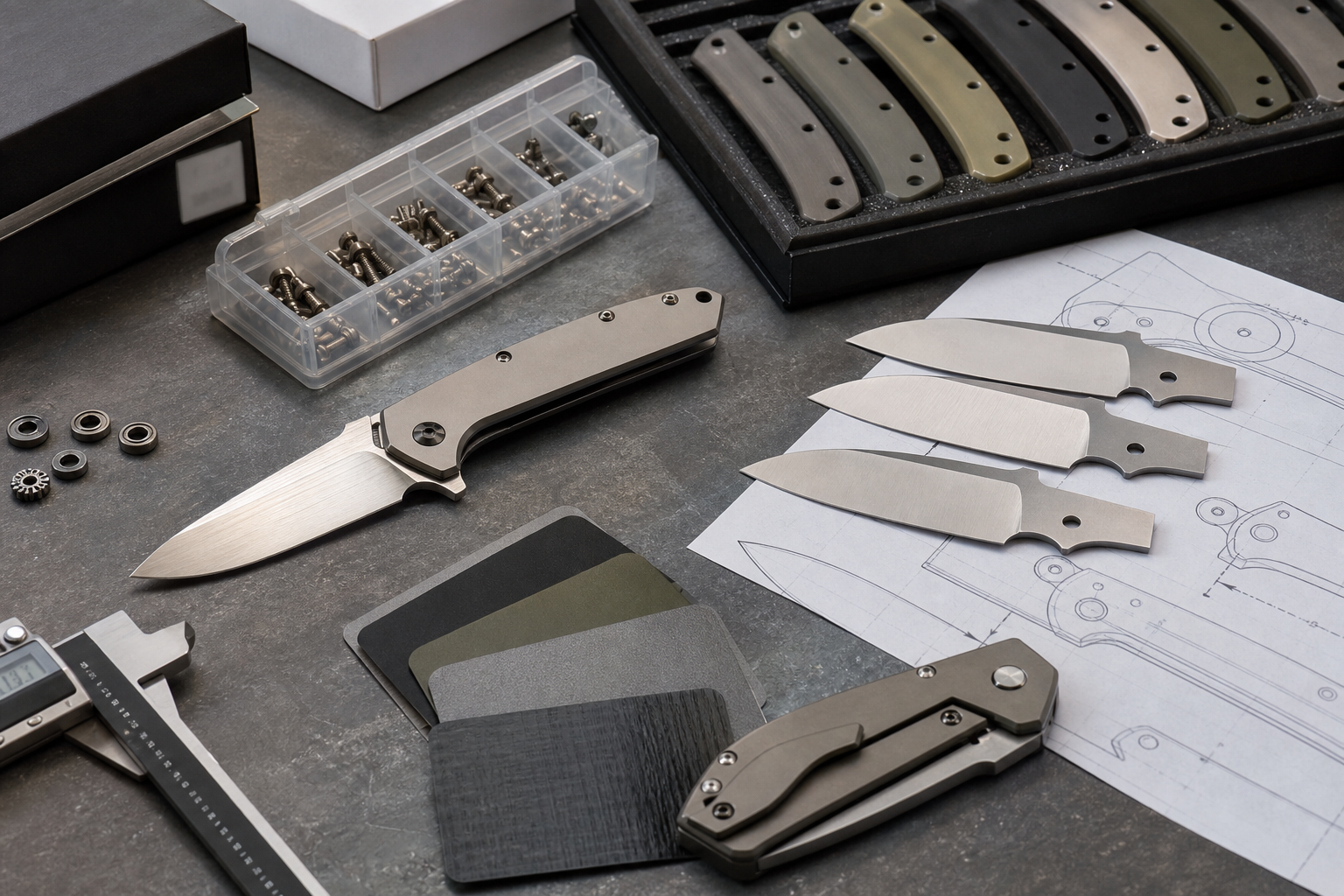
I Use S35VN When the Whole Knife Can Support It
S35VN is a good option when the buyer wants a knife that feels more serious than a basic value folder. It can support a product page that talks about premium stainless blade steel, balanced performance, corrosion resistance, and daily use. But I do not recommend using S35VN if the rest of the knife is clearly entry level. A premium blade steel paired with rough action, loose lockup, thin hardware, poor finishing, or weak packaging can confuse the customer.
The S35VN data sheet says the steel was designed to offer improved toughness over S30V and that niobium carbides replace some vanadium carbides. It also states that S35VN offers better resistance to edge chipping and that the CPM process supports homogeneous steel with good dimensional stability, grindability, and toughness. These are useful points for a buyer, but they do not remove the need for controlled heat treatment and inspection.
Knife Steel Nerds also gives a practical view. Its article on S35VN properties and heat treatment says S35VN has good potential hardness, toughness, edge retention, and corrosion resistance, while not being extreme in any one category. I like that description because it fits how I see the steel in product planning. S35VN is a balanced premium choice, not a magic answer.
For B2B buyers, I would use S35VN when the target customer values a cleaner stainless story, better corrosion margin, stronger perceived quality, and a price point that can absorb the material cost. I would also ask for clear steel marking, batch documentation, HRC target, edge geometry, and final functional inspection.
| S35VN use case | Why it fits | What I still check |
|---|---|---|
| Premium EDC folder | Strong material story and balanced use | Lock feel, centering, finish, sharpening |
| Outdoor pocket knife | Better corrosion story than D2 | Edge angle and handle grip |
| Private label upgrade line | Easy to explain as a higher tier | Packaging copy and price position |
| Gift or enthusiast channel | Recognized steel name helps listing | Source proof and steel marking |
| Repeat production | Good if sourcing is stable | Batch records and hardness control |
When Does D2 Still Make Commercial Sense?
Some buyers dismiss D2 too quickly. Others use it where corrosion complaints are predictable. Both mistakes cost money.
D2 still makes sense for value-focused knives when buyers want strong wear resistance, good edge holding, and controlled cost. It works best when packaging and product copy explain maintenance and the supplier controls heat treatment, grinding, and finish.
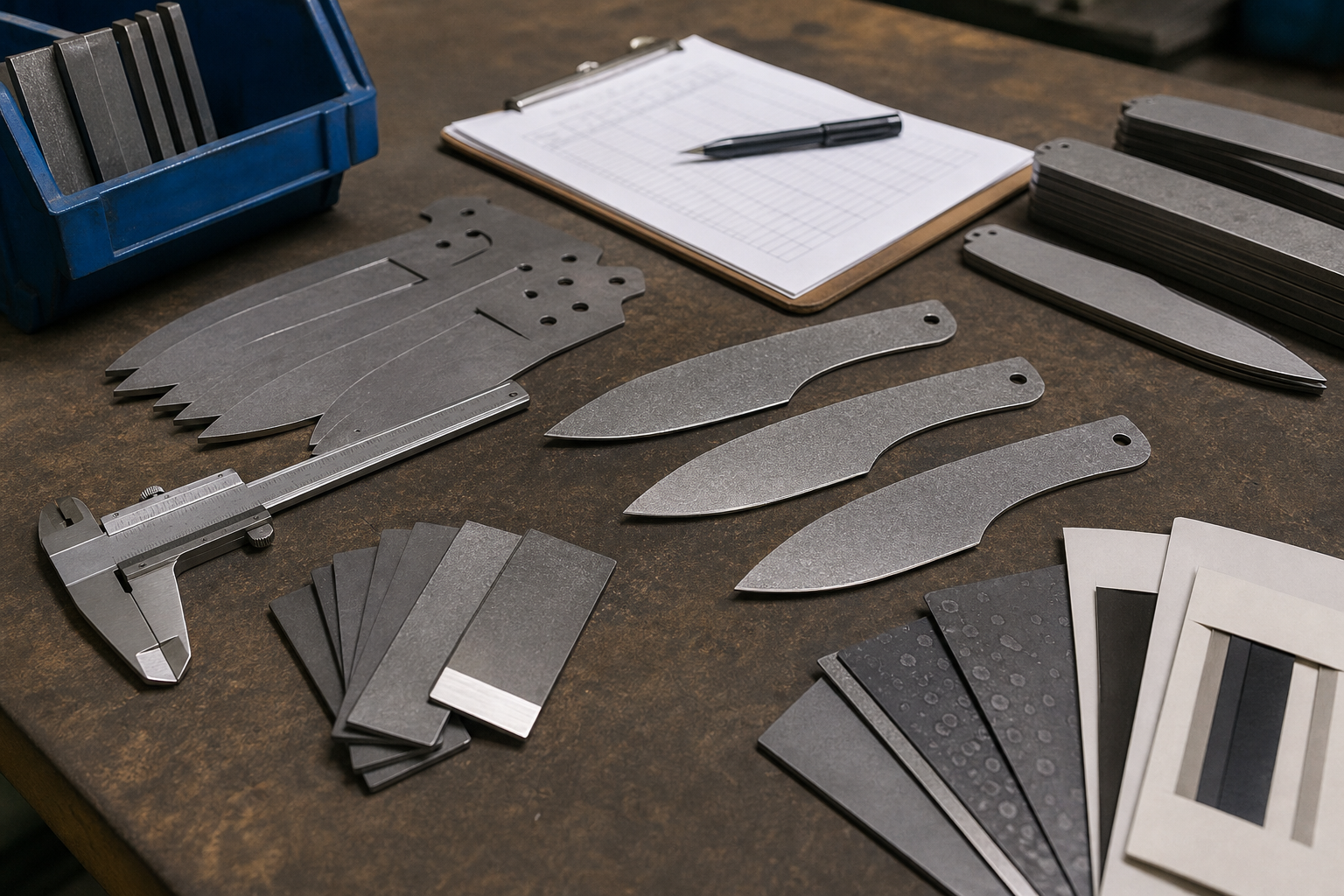
I Treat D2 as a Value Performance Steel With Conditions
D2 has a strong place in many OEM knife programs because it gives a clear performance story at a lower material tier than S35VN. A buyer can position it as a high-carbon tool steel for cutting work, wear resistance, and edge holding. This can fit work knives, budget outdoor knives, tactical-style value models, and private label lines where the buyer wants more than basic stainless but cannot move into premium powder metallurgy pricing.
The D-2 data sheet describes D2 as heat treatable to HRC 60-62 and notes its excellent abrasion resistance. It also lists industrial knives and slitters among typical applications. That supports the idea that D2 is useful when cutting wear matters. But knife buyers must understand the tradeoff. D2 has enough chromium to resist corrosion better than simple carbon steels, but it is not the same stainless story as S35VN in normal buyer language. If the product will be used in humid, coastal, fishing, food, or sweaty pocket environments, D2 needs more careful finishing, packaging language, and end-user care guidance.
I also watch edge geometry. Many D2 knives are left thick behind the edge because brands want to avoid chipping complaints. That can make the knife feel less sharp in real use. If the target user cuts cardboard, rope, straps, or packaging, the grind and edge angle matter. A well-ground D2 blade can feel strong and useful. A thick D2 blade can make the steel look worse than it is.
D2 is not a bad choice. It is a conditional choice. It works best when the buyer accepts the corrosion story, uses a suitable finish, controls heat treatment, and avoids overselling it as a premium stainless steel.
| D2 use case | Why it fits | Main caution |
|---|---|---|
| Value work knife | Strong wear resistance story | Needs corrosion-care messaging |
| Budget outdoor knife | Good cutting value | Humid use may increase complaints |
| Tactical-style folder | Strong steel perception at lower cost | Edge thickness can hurt cutting feel |
| Wholesale knife line | Good margin control | Batch consistency matters |
| Upgrade from basic stainless | Easy product tier step | Do not call it premium stainless |
How Do Heat Treatment, Hardness, and Geometry Change the Comparison?
Steel choice can look right on paper and fail in the user's hand. Process control decides the final blade.
Heat treatment, HRC target, grind, edge angle, blade thickness, and sharpening finish can change how both S35VN and D2 perform. Buyers should compare finished samples under the same geometry, not just compare steel names.
I Judge the Finished Blade, Not Only the Material Sheet
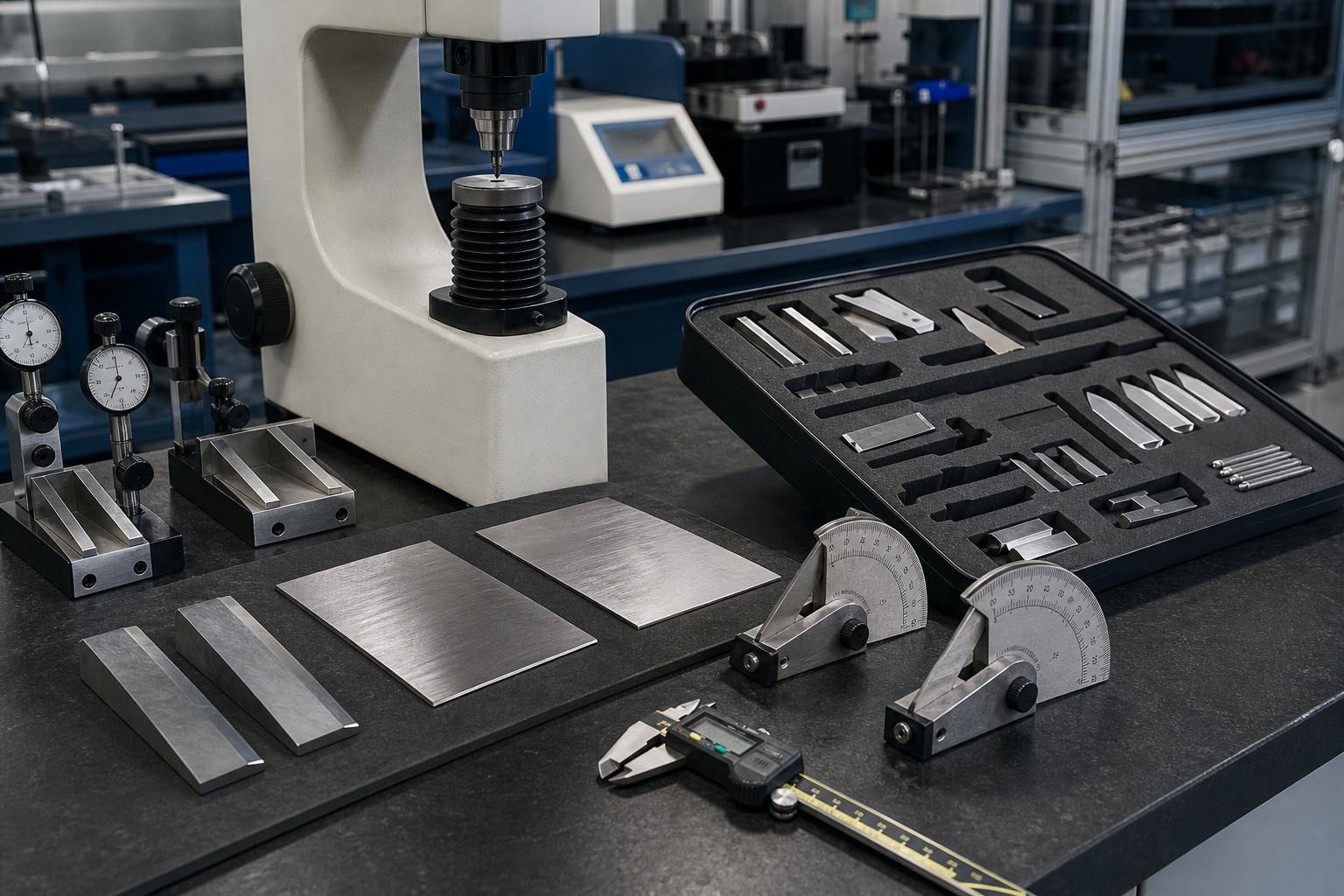
Heat treatment is where many steel comparisons become unfair. A properly heat-treated D2 blade can outperform a poorly heat-treated S35VN blade in some real cutting tasks. A well-ground S35VN blade can feel better than a thick D2 blade even if both have good steel. That is why I ask buyers to compare samples with the same blade shape, thickness, grind, edge angle, finish, and test method.
The S35VN data sheet recommends an aim hardness of 58-61 HRC for a listed heat treatment path. The D-2 data sheet says D2 is heat treatable to HRC 60-62. These numbers help buyers set expectations, but they are not enough by themselves. The NIST Rockwell hardness guide explains that good Rockwell hardness practice helps reduce measurement errors. For production orders, this means the buyer should ask how the supplier tests hardness, how many pieces are checked, and what happens when a batch falls outside the agreed range.
Knife Steel Nerds makes another important point in its article on knife steel toughness, edge retention, and corrosion resistance. It explains that edge geometry and sharpening strongly affect cutting and chipping behavior, and that heat treatment and geometry can matter more than the steel name. This fits factory reality. A steel name can help marketing, but edge thickness, bevel symmetry, burr removal, and sharpening consistency decide how the knife feels.
For RFQ work, I suggest defining a hardness range, not just "hard blade." I also suggest defining blade thickness, grind type, edge angle target, final sharpness standard, and inspection sampling. This makes the comparison between S35VN and D2 more honest.
| Control point | Why it matters for S35VN | Why it matters for D2 |
|---|---|---|
| HRC target | Balances toughness, edge holding, and stainless performance | Balances wear resistance and chipping risk |
| Edge thickness | Helps premium steel feel sharp and refined | Prevents a thick blade from feeling dull |
| Edge angle | Supports intended EDC or outdoor use | Reduces chipping risk when matched to use |
| Finish | Protects visual quality and brand feel | Helps reduce corrosion complaints |
| Sampling | Confirms repeat production matches sample | Catches hardness and grind variation |
How Should Buyers Position S35VN and D2 in Product Copy?
Good steel copy sells the right expectation. Bad copy creates returns, reviews, and customer disappointment.
Buyers should position S35VN as a balanced premium stainless blade steel and D2 as a value performance tool steel. Product copy should explain real use, care, steel source, finish, hardness target, and intended market without exaggeration.
I Keep Claims Specific and Defensible
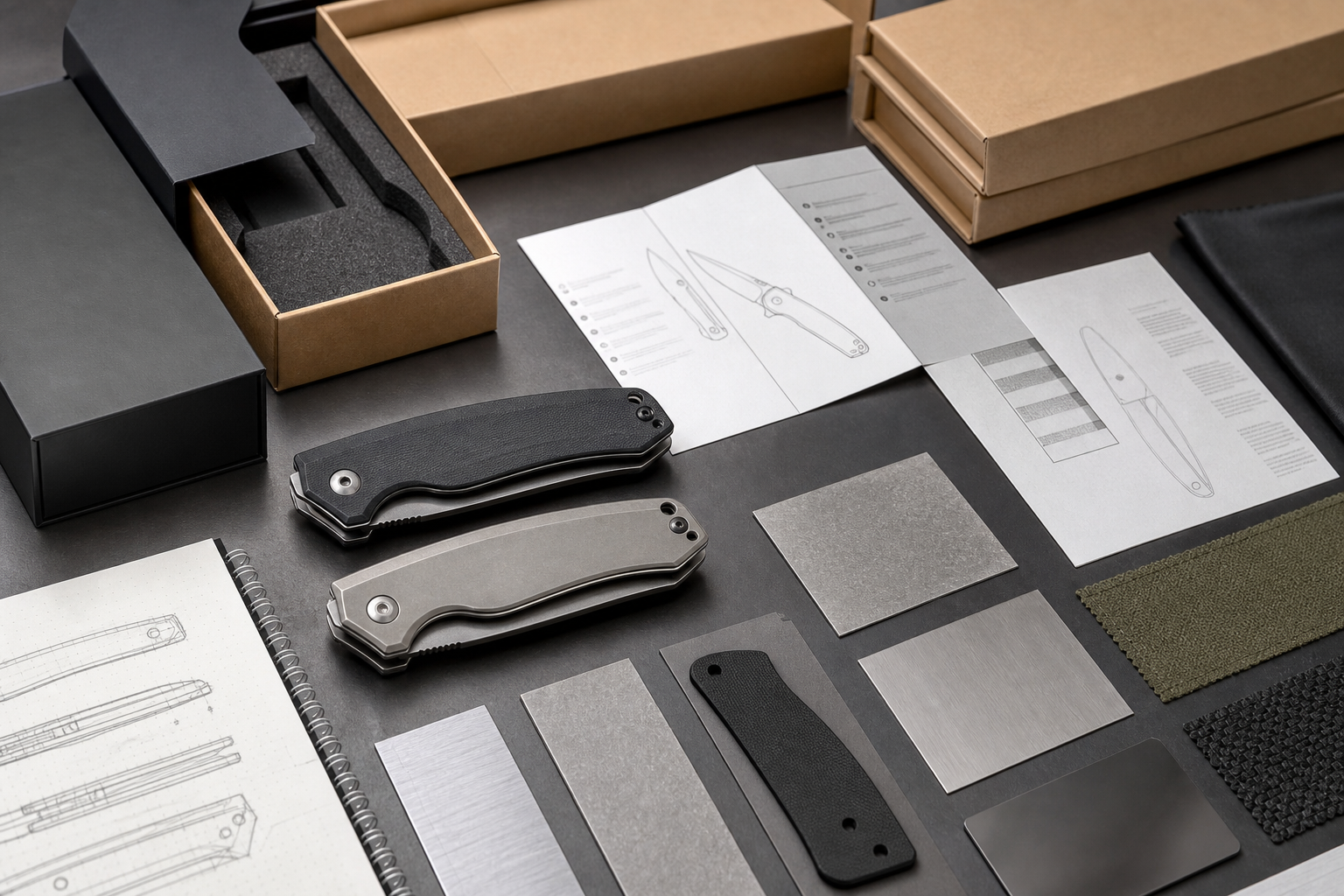
For S35VN, I would use wording such as "premium stainless blade steel," "balanced edge retention and toughness," "good corrosion resistance," and "suitable for EDC and outdoor carry." I would avoid saying it is the best steel or that it needs no maintenance. Even stainless steel benefits from cleaning, drying, and sensible use.
For D2, I would use wording such as "high-carbon tool steel," "strong wear resistance," "good edge holding," and "built for practical cutting tasks." I would also include care language. If the product is sold into humid or outdoor channels, I would not hide the maintenance issue. A short care note can prevent the wrong expectation. It also helps the brand look honest.
The packaging should match the channel. A premium S35VN folder may deserve better handle material, smoother action, cleaner finishing, and a more technical product card. A D2 value knife may need a simpler but very clear explanation: what the steel does well, how to care for it, and what use case it is built for. The steel story should support the product, not overload it.
I also recommend that buyers avoid unsupported HRC claims if they do not have batch checks. If the product page says a specific hardness, the inspection plan should support it. If the buyer wants a more flexible approach, it is safer to use a controlled range on internal documents and write consumer copy in more general but honest terms.
| Steel | Strong product copy | Copy to avoid |
|---|---|---|
| S35VN | Balanced premium stainless blade steel | Maintenance-free super steel |
| S35VN | Good corrosion resistance for EDC use | Best steel for every user |
| D2 | High-carbon tool steel with strong wear resistance | Fully stainless steel |
| D2 | Good value for practical cutting tasks | Premium stainless performance |
| Both | Heat treated and inspected to project requirements | Unsupported hardness claims |
How Should Cost, MOQ, and Supply Chain Affect the Choice?
A steel can look perfect until the quote arrives. Buyers need the final landed product, not only a blade upgrade.
S35VN usually fits higher price tiers and smaller premium programs, while D2 often fits larger value programs. Buyers should compare material availability, MOQ, scrap risk, machining cost, finishing cost, packaging tier, and landed cost.
I Compare the Total Product, Not Only the Steel Price
S35VN normally creates a higher product expectation. That can be good when the buyer has a sales channel that accepts the price. It may also require better handle material, better action, better finishing, and better packaging so the whole product feels aligned. If a buyer puts S35VN into a very cheap handle and rough assembly, the steel name may not save the product.
D2 can help buyers build a stronger value line. It can give a better steel story than basic entry stainless while keeping the total product more cost controlled. But the buyer should budget for corrosion-resistant finish options, clear care instructions, and strong QC. If D2 rust complaints appear in reviews, the lower steel cost can disappear quickly through returns or brand damage.
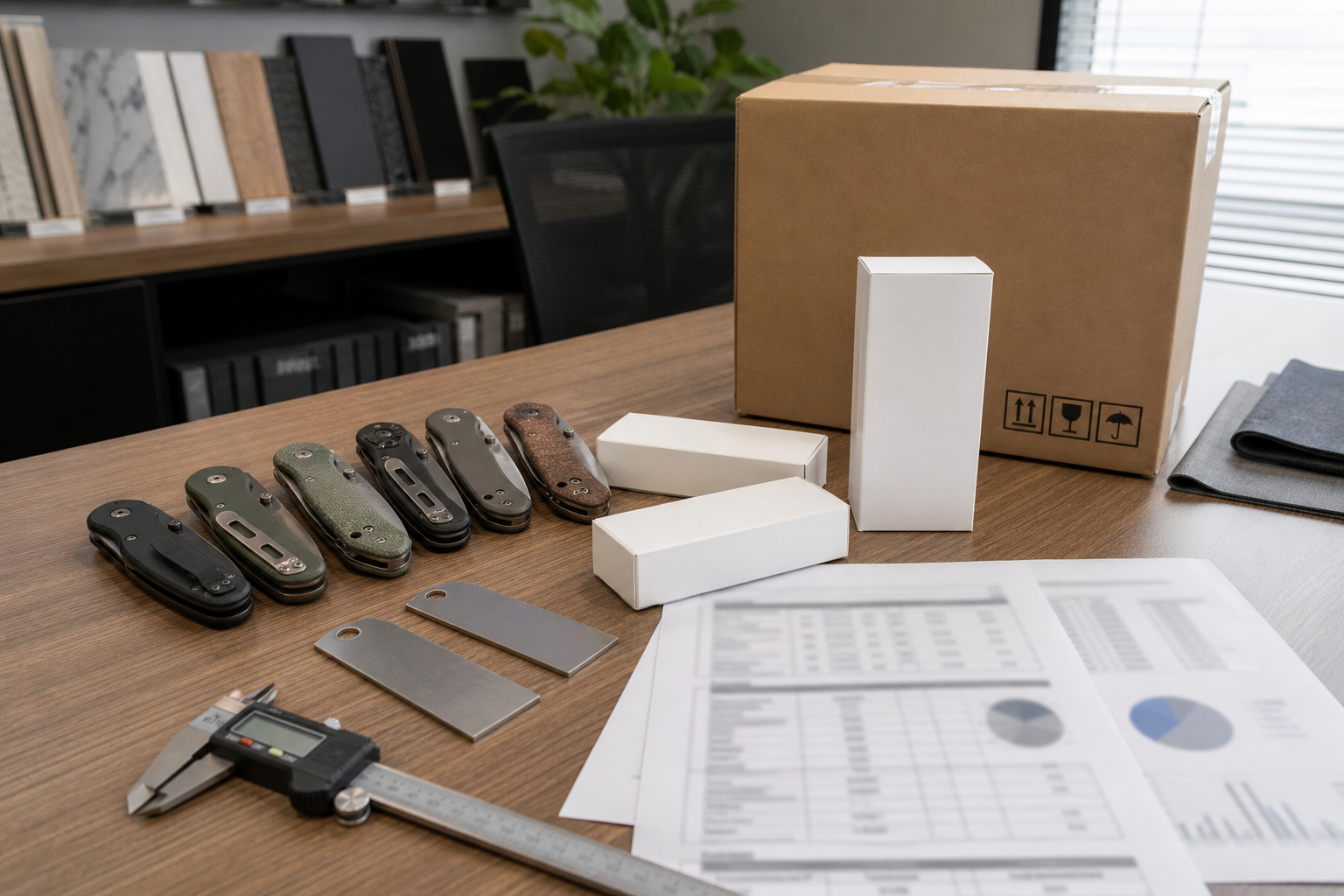
Machining and finishing also matter. S35VN can cost more as a material and may require careful sourcing. D2 can be more economical, but heat treatment, grinding, and finish choices still affect scrap, rework, and consistency. A buyer should not compare only raw steel price. The right comparison is total product cost: steel, machining, heat treatment, finishing, sharpening, assembly, inspection, packaging, shipping, after-sales risk, and retail positioning.
For international orders, trade terms should also be clear. The U.S. International Trade Administration explains that Incoterms clarify buyer and seller responsibilities, costs, and risks. When a buyer compares S35VN and D2 quotes from different suppliers, the Incoterm, packaging, inspection level, and shipping scope must be the same. Otherwise, the cheaper quote may not really be cheaper.
| Cost factor | S35VN impact | D2 impact |
|---|---|---|
| Material cost | Usually higher | Usually more value-oriented |
| Product tier | Supports premium positioning | Supports value performance tier |
| Finishing | Should match premium claim | Should help manage corrosion expectation |
| Packaging | Needs stronger product story | Needs clear care and use notes |
| Landed cost | Must include inspection and shipping terms | Must include after-sales risk |
What RFQ and QC Details Should Buyers Control Before Production?
A vague RFQ lets the factory guess. That is how steel, hardness, finish, and packaging drift away from the approved sample.
Buyers should define steel grade, source expectation, HRC range, heat treatment plan, blade geometry, finish, corrosion-care language, lock type, packaging, MOQ, Incoterm, inspection sampling, and required documents before mass production.
I Turn the Steel Choice Into a Production Checklist
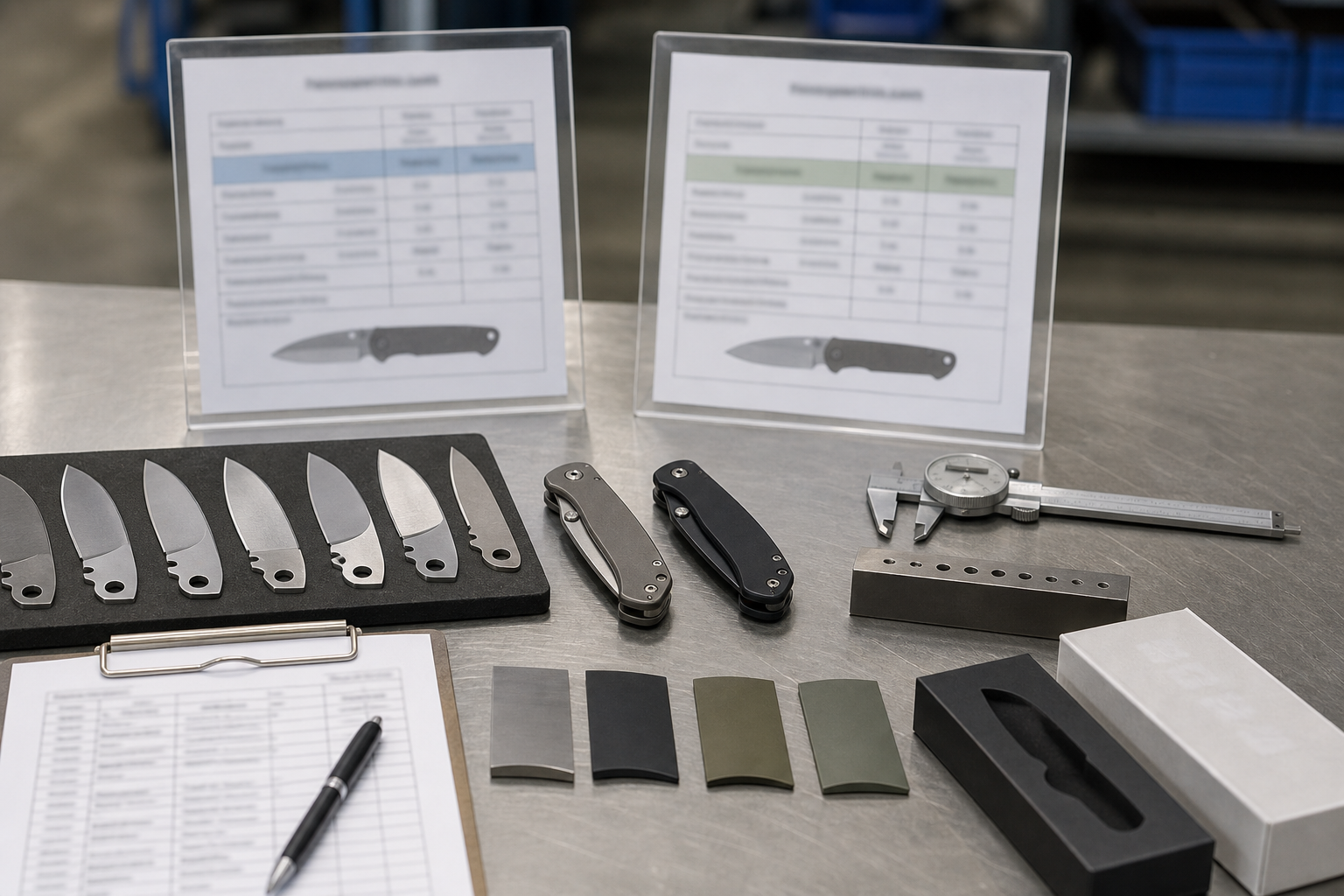
For S35VN and D2 projects, I want the RFQ to include the knife type, blade steel, blade length, blade thickness, blade shape, grind type, edge angle, finish, target HRC, handle material, lock type, opening method, logo method, packaging requirement, target market, MOQ expectation, and target price. If the buyer already has a drawing, I ask for it. If the buyer only has a concept, I ask for the target retail range and key use case so we can suggest a manufacturable direction.
The QC plan should match the claim. For S35VN, I would check material confirmation, HRC sampling, finish quality, blade centering, lockup, edge quality, and packaging. For D2, I would add more attention to corrosion-related finish, oiling or protection before packaging, storage conditions, and care instructions. Both steels need blade geometry checks, not only material checks.
Quality language should also be process-based. The ISO 9001 page explains that ISO 9001 covers quality management topics such as operation, performance evaluation, and improvement. I use that as a useful framework for thinking about supplier control, but I do not treat it as proof that any supplier is certified unless documents prove it.
For Vast State projects, the most useful RFQ is specific but open to engineering feedback. If a buyer says, "I want S35VN at this price," we may need to adjust handle material or finish. If a buyer says, "I want D2 but my market is coastal," we may suggest another stainless steel or stronger care language. The goal is not just to quote a knife. The goal is to build a knife that fits the market and can repeat in production.
| RFQ or QC item | What to define | Why it matters |
|---|---|---|
| Steel grade | S35VN or D2, with source expectation | Prevents material confusion |
| HRC range | Target and sampling method | Controls edge and toughness balance |
| Geometry | Thickness, grind, edge angle | Shapes real cutting feel |
| Finish | Satin, stonewash, coating, bead blast | Affects appearance and corrosion expectation |
| Function checks | Lockup, centering, side play, action | Protects user experience |
| Packaging | Steel claim, care note, barcode, carton | Supports sales and reduces complaints |
Ready to use this material in your next knife line?
Vast State can help you compare blade steels, heat treatment ranges, handle materials, finishes, packaging options, and QC requirements based on your target market and quantity.
Conclusion
I choose S35VN for balanced premium positioning and D2 for value cutting performance, then let heat treatment, geometry, QC, and market fit decide.
Source Notes
- CPM S35VN data sheet supports S35VN composition, toughness, edge retention, heat treatment, and machining context.
- D-2 cold work tool steel data sheet supports D2 composition, wear-resistance role, HRC range, and industrial cutting applications.
- Knife Steel Nerds S35VN article supports S35VN history, balanced performance, and heat-treatment discussion.
- Knife Steel Nerds steel ratings article supports the importance of toughness, edge retention, heat treatment, and edge geometry.
- NIST Rockwell hardness guide supports careful hardness-measurement practice.
- Trade.gov Incoterms page supports RFQ advice about buyer and seller responsibilities, costs, and risks.
- ISO 9001:2015 page supports quality-management context, but it does not prove supplier certification.