A steel upgrade sounds simple. But if the steel does not match the product tier, it can create cost and market confusion.
Choose S35VN for proven premium EDC knives with stable cost, familiar positioning, and practical production control. Choose MagnaCut for flagship, outdoor, fishing, coastal, and hard-use knives where corrosion resistance, toughness, and modern buyer appeal matter more.
Quick buyer brief:
- Answer: S35VN is the safer proven premium choice; MagnaCut is the stronger flagship and wet-use choice.
- Buyer context: This helps knife brands, outdoor brands, importers, wholesalers, distributors, and private label buyers plan OEM/ODM steel tiers.
- Key checks: Target market, price tier, steel availability, HRC target, heat treatment, corrosion claim, edge geometry, finish, MOQ, inspection plan, and backup steel.
Planning a knife project with this steel?
Send us your target market, MOQ, price range, and blade type. Vast State can help you choose the right steel, HRC range, finish, handle material, and QC requirements for OEM/ODM production.
When I help a buyer choose between S35VN and MagnaCut, I do not treat the question as a trophy contest. I treat it as product-line planning. A knife brand may need one steel for a stable premium EDC folder and another steel for a flagship outdoor model. The buyer also has to think about MOQ, target price, machining, sharpening, surface finish, after-sales risk, and how the steel story will be explained to the final customer. S35VN still makes sense when a brand wants a proven premium stainless steel with wide market recognition. MagnaCut makes sense when the product promise depends on corrosion resistance, toughness, and a newer steel story.
What Is the Direct Answer for S35VN vs. MagnaCut?
Many buyers ask which steel is better. That question can hide the real issue: which steel helps the brand sell and repeat production well.
S35VN is better for proven premium EDC value and familiar manufacturing control. MagnaCut is better for flagship, outdoor, wet-use, and hard-use knives that need higher corrosion resistance and toughness with similar practical edge retention.
I Start With the Sales Tier
S35VN and MagnaCut are both serious CPM knife steels, but they do not solve the same business problem. The Niagara S35VN data sheet describes S35VN as a martensitic stainless steel designed to improve toughness over S30V. It also notes easier machining and polishing than S30V. That matters in OEM production because a steel is not only a spec line. It is a cost, grinding, finishing, sharpening, and quality-control decision.
MagnaCut has a different role. The Niagara MagnaCut data sheet describes MagnaCut as a powder metallurgy stainless tool steel designed to eliminate chromium carbide in the heat-treated microstructure. This gives it a strong story around toughness and corrosion resistance while keeping useful wear resistance.
So my first question is simple. What is the product meant to be? If the buyer is building a stable premium EDC folder, S35VN can be a strong fit. If the buyer is building a flagship outdoor knife, a coastal-market knife, or a model that will be marketed around modern steel performance, MagnaCut is usually easier to justify.
| Buyer goal | Better starting point | Why I would choose it |
|---|---|---|
| Proven premium EDC folder | S35VN | Familiar market position and practical cost control |
| Flagship outdoor knife | MagnaCut | Strong toughness and corrosion story |
| Private label premium line | S35VN | Easier to explain without pushing price too high |
| Fishing or humid-market knife | MagnaCut | Better fit for corrosion-risk messaging |
Quote-ready RFQ Checklist for This Steel
To get an accurate OEM/ODM quote, prepare these details before contacting a knife manufacturer.
| RFQ Field | What to Prepare |
|---|---|
| Product type | Folding knife / fixed blade / multi-tool / kitchen knife |
| Target market | US / EU / outdoor retail / promotional / tactical / EDC |
| Steel option | 4116 / 14C28N / D2 / N690 / Nitro-V |
| Target HRC | Example: 55-57 HRC, 58-60 HRC |
| Blade finish | Satin / stonewash / black coating / bead blast |
| Handle material | G10 / micarta / aluminum / stainless steel / wood |
| Lock or structure | Liner lock / frame lock / slip joint / full tang |
| Estimated quantity | 500 / 1,000 / 3,000 / 5,000+ pcs |
| Packaging | White box / color box / blister / pouch / gift box |
| Required documents | Drawing / sample photo / logo file / packaging artwork |
How Do Composition and Carbide Design Change the Buying Decision?
Two steels can both be stainless and still behave differently. The difference often starts in composition and carbide design.
S35VN uses 14 percent chromium with vanadium, molybdenum, niobium, and carbon for balanced premium stainless performance. MagnaCut uses lower chromium, more niobium, nitrogen, and no chromium carbide design to improve corrosion resistance and toughness.
I Look Past the Steel Name
The name on the blade can help marketing, but composition affects production and user experience. Niagara lists S35VN with carbon, niobium, chromium, molybdenum, and vanadium. The data sheet explains that niobium carbides replace some vanadium carbides compared with S30V, which supports toughness without losing wear resistance. It also says S35VN has better resistance to edge chipping than S30V. For buyers, this means S35VN is not a weak or outdated steel. It is a practical premium stainless steel with a long record in EDC knives.
MagnaCut is more unusual. Niagara lists MagnaCut with carbon, chromium, vanadium, molybdenum, niobium, and nitrogen. Its design avoids chromium carbide after heat treatment. This is important because chromium tied inside chromium carbides is less available for corrosion resistance. MagnaCut keeps wear resistance through small vanadium and niobium carbides while keeping a stronger corrosion-resistance story. Knife Steel Nerds gives more background on this design in its article on CPM MagnaCut.
For a brand, this chemistry difference becomes a positioning difference. S35VN says proven, balanced, premium, and familiar. MagnaCut says newer, technical, corrosion resistant, tough, and flagship ready. Both can be right. The wrong choice is using either one without a clear sales reason.
| Steel factor | S35VN | MagnaCut |
|---|---|---|
| Chromium direction | 14 percent chromium with chromium, vanadium, and niobium carbides | Lower chromium but no chromium carbide design |
| Main buyer message | Balanced premium stainless EDC steel | Modern stainless steel with strong toughness and corrosion balance |
| Production meaning | Familiar machining, polishing, and finishing expectations | Stronger heat-treatment and claim-control expectations |
| Best use in line | Premium core model | Flagship or wet-use upgrade |
Which Steel Performs Better in Edge Retention, Toughness, and Corrosion?
Performance claims can sound too clean. A buyer should separate cutting wear, chipping resistance, corrosion risk, and real product use.
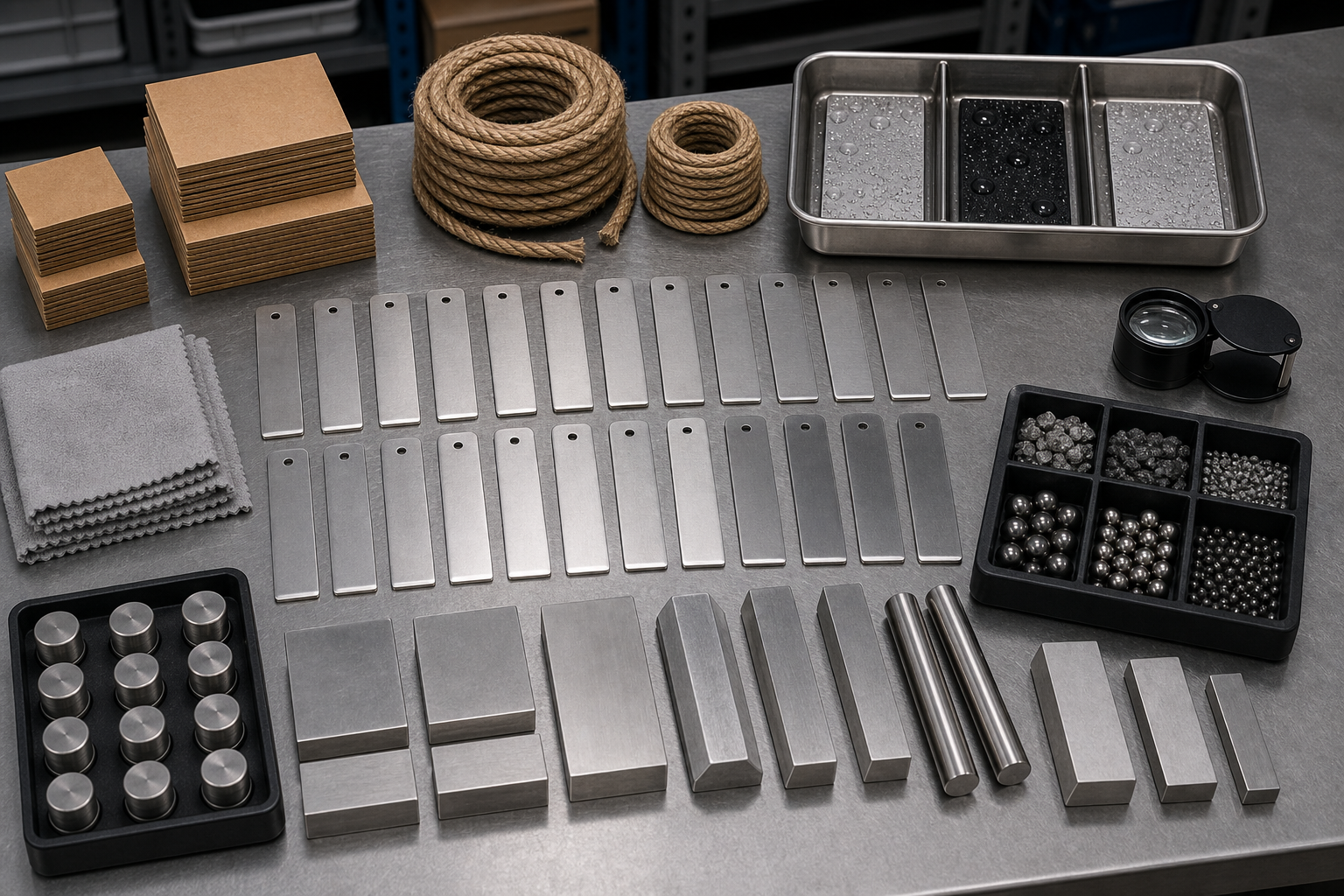
S35VN gives strong premium EDC edge retention and practical toughness. MagnaCut has similar listed CATRA wear data, but it shows stronger toughness and corrosion-resistance positioning, especially for wet-use and hard-use knives.
I Separate the Three Performance Questions
Edge retention is only one part of the decision. Niagara's S35VN page reports CATRA edge retention relative to 440C ESR in its table, and the MagnaCut page reports MagnaCut and S35VN in a CATRA comparison table under a different test context. These tables should not be treated as final knife guarantees, but they do show that both steels sit in a premium performance range. In practical B2B language, MagnaCut should not be sold mainly as a huge edge-retention upgrade over S35VN. Its stronger story is the combination of corrosion resistance and toughness.
Toughness changes the discussion. Niagara's MagnaCut table lists MagnaCut with higher toughness values than S35VN under its stated test conditions. That helps explain why many buyers connect MagnaCut with thinner edges, outdoor knives, and larger blades. The steel can support a stronger design story if the heat treatment, edge angle, and geometry are controlled.
Corrosion is another major divider. S35VN has good stainless behavior for daily carry. MagnaCut is better when the brand expects sweat, rain, fishing, coastal air, or lower-maintenance users. I still avoid saying any steel is maintenance free. Surface finish, heat treatment, cleaning habits, and chloride exposure all matter. But if a buyer wants the strongest corrosion story between these two, I would start with MagnaCut.
| Performance question | S35VN answer | MagnaCut answer |
|---|---|---|
| Edge retention | Strong premium EDC cutting wear | Similar useful premium cutting wear |
| Toughness | Good for many folders and EDC fixed blades | Stronger story for hard use and thinner edges |
| Corrosion resistance | Good for normal pocket carry | Better for wet, humid, and coastal use |
| Main caution | Do not oversell as the newest steel | Do not sell it as magic edge retention |
What Heat Treatment and Hardness Controls Should Buyers Specify?
Good steel can fail if heat treatment is vague. A logo on the blade cannot replace process control and hardness checks.
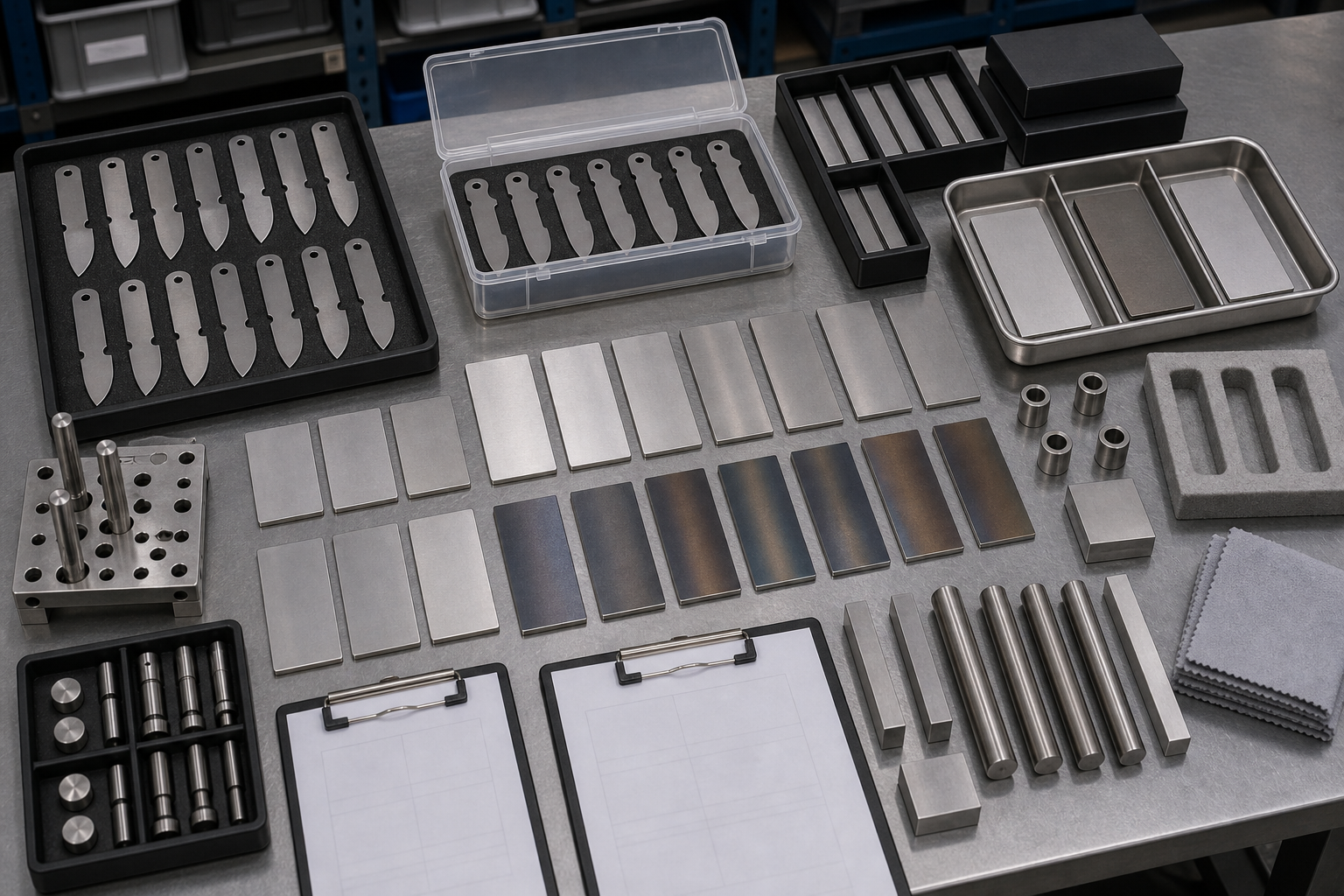
Buyers should specify target hardness, heat-treatment route, sample approval, blade geometry, finish, and Rockwell inspection method. S35VN often targets 58-61 HRC, while MagnaCut commonly targets 60-63 HRC in Niagara's data sheets.
I Treat HRC as a Controlled Range, Not a Decoration
The S35VN data sheet gives a recommended heat treatment with an aim hardness of 58-61 HRC. The MagnaCut data sheet gives an aim hardness of 60-63 HRC. These ranges matter, but they are not enough by themselves. Two knives can have the same HRC number and still perform differently because geometry, tempering, grinding heat, edge thickness, and finishing all affect the final product.
This is why I ask buyers to put hardness control in the RFQ instead of waiting until mass production. I want the buyer to confirm the target HRC range, test sample quantity, acceptable tolerance, blade thickness, edge angle, and whether the supplier will test after heat treatment or after final finishing. The NIST guide to Rockwell hardness measurement is useful because it reminds us that hardness testing has sources of variation and needs good practice.
For OEM work, I also care about grinding heat after heat treatment. A blade can meet hardness in the center area and still suffer at the edge if sharpening or grinding is poorly controlled. This is where supplier experience matters. A good RFQ should not only say "S35VN" or "MagnaCut." It should say what result the buyer expects and how the supplier will verify it.
| Control point | What to specify | Why it matters |
|---|---|---|
| Target HRC | S35VN or MagnaCut range by model | Prevents vague performance expectations |
| Test location | Flat blade area or agreed sample coupon | Improves repeatability |
| Heat-treatment record | Austenitize, quench, temper, freeze or cryo if used | Helps trace production stability |
| Edge geometry | Thickness behind edge and final angle | Changes real cutting and chipping risk |
Which Product Lines Fit S35VN and MagnaCut Better?
A brand can lose money by using the strongest-sounding steel everywhere. Product lines need clear tiers.
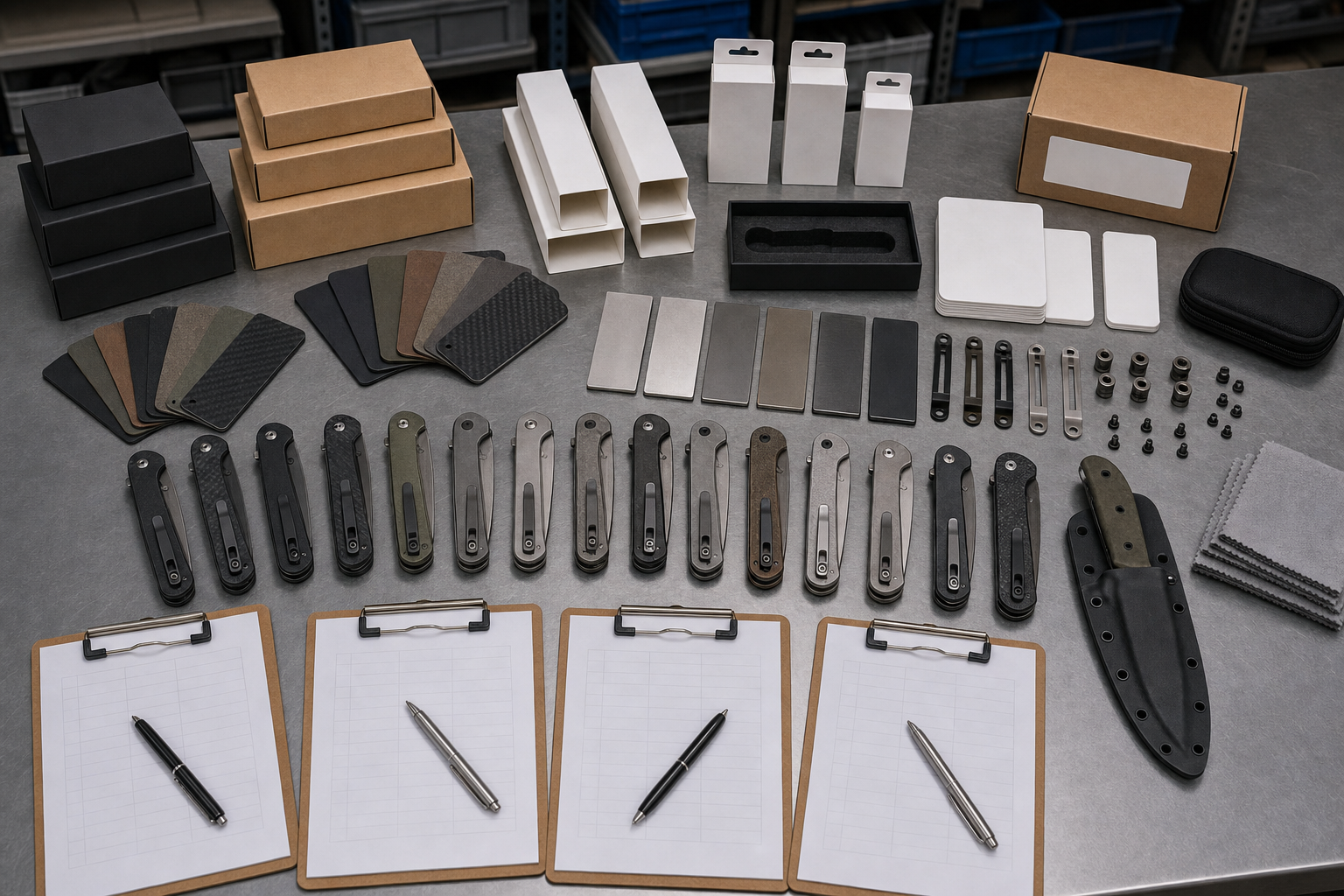
Use S35VN for proven premium EDC, private label upgrades, and balanced folders. Use MagnaCut for flagship outdoor folders, fixed blades, fishing knives, humid markets, and premium models where the steel story must carry the price.
I Build a Steel Ladder for the Buyer
For many brands, the best answer is not one steel. It is a steel ladder. A buyer may use 14C28N, D2, or 9Cr18MoV for value models, S35VN for premium core models, and MagnaCut for the flagship. This lets the customer understand the line quickly. It also helps the buyer control margin. If every SKU uses MagnaCut, the line may become too expensive. If every SKU uses S35VN, the flagship model may not feel different enough in a market where MagnaCut is already recognized by many knife buyers.
S35VN works well when the buyer wants a premium stainless steel but still needs predictable sourcing and production. It can fit frame lock folders, liner lock folders, compact EDC knives, premium private label knives, and some outdoor fixed blades. It is also easier to explain to customers who already know S30V, S35VN, and S45VN.
MagnaCut is stronger when the steel itself is part of the product story. I would consider it for outdoor fixed blades, fishing knives, rescue tools exposed to moisture, premium EDC folders for humid markets, and flagship models where the buyer can support the higher expectation with design, finish, and QC. It should not be treated as a label upgrade only. The whole knife should match the steel level.
| Product type | S35VN fit | MagnaCut fit |
|---|---|---|
| Premium EDC folder | Very strong fit | Strong fit if flagship pricing works |
| Outdoor fixed blade | Good fit | Better fit for hard-use or wet-use story |
| Fishing or coastal knife | Acceptable with care | Better starting point |
| Private label upgrade | Strong commercial fit | Use for hero SKU or limited premium line |
How Should Buyers Turn This Steel Choice Into an OEM RFQ?
Steel choice becomes messy when the RFQ is too short. The supplier then guesses about price, process, and quality expectations.
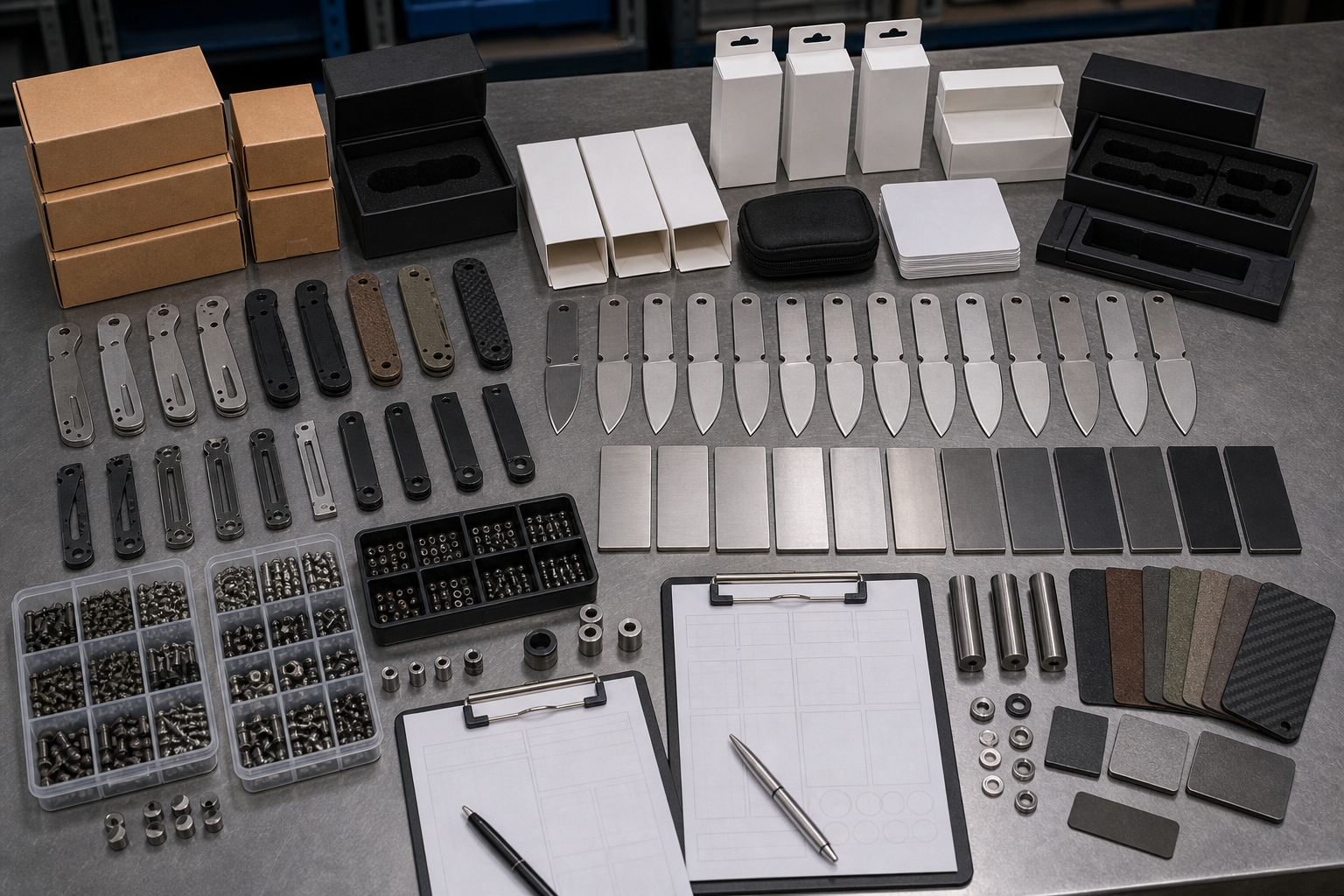
An OEM RFQ should list steel grade, target hardness, blade geometry, finish, lock type, handle material, MOQ, packaging, inspection needs, delivery term, target market, and backup material options before quotation.
I Ask for the Details That Affect Price
When a buyer asks for a quote on S35VN or MagnaCut, I need more than the steel name. I need the knife type, blade length, blade thickness, grind, finish, lock type, handle material, clip style, logo method, packaging, target quantity, target price, and inspection needs. I also ask about the sales market. A knife for general EDC does not need the same story as a knife for fishing, camping, or rescue use.
Trade terms also matter. The U.S. International Trade Administration explains that Incoterms help define tasks, costs, and risks between buyer and seller in export transactions. For knife sourcing, the buyer should be clear about EXW, FOB, CIF, DAP, or other agreed terms. Steel choice affects product cost, but trade terms affect landed cost and responsibility.
Quality planning should also be part of the RFQ. An ISO 9001 quality management mindset is useful because buyers need process control, not only a good sample. I prefer to confirm incoming material checks, heat-treatment records, hardness checks, assembly checks, function checks, appearance standards, packaging checks, and final inspection before mass production. For S35VN and MagnaCut, this is the difference between a nice prototype and a repeatable product line.
| RFQ item | What the buyer should provide | Why it affects the quote |
|---|---|---|
| Steel and HRC | S35VN 58-61 HRC or MagnaCut 60-63 HRC target | Controls heat treatment and inspection |
| Knife structure | Folder, fixed blade, lock type, pivot system | Affects machining and assembly |
| Blade details | Length, thickness, grind, edge angle, finish | Affects cutting behavior and cost |
| Commercial terms | MOQ, packaging, Incoterm, delivery target | Affects landed cost and planning |
Ready to use this material in your next knife line?
Vast State can help you compare blade steels, heat treatment ranges, handle materials, finishes, packaging options, and QC requirements based on your target market and quantity.
Conclusion
I choose S35VN for proven premium value and MagnaCut for flagship toughness, corrosion resistance, and stronger modern positioning.
Source Notes
- Niagara S35VN data sheet supports S35VN composition, toughness-over-S30V positioning, machining notes, heat treatment, and aim hardness.
- Niagara MagnaCut data sheet supports MagnaCut composition, no-chromium-carbide design, toughness, CATRA comparison, and aim hardness.
- Knife Steel Nerds MagnaCut article gives technical background on MagnaCut's design logic and performance balance.
- NIST Rockwell hardness guide supports the need for careful hardness measurement practice.
- Trade.gov Incoterms page supports the RFQ advice about clarifying export responsibilities, costs, and risks.
- ISO 9001:2015 page supports the quality-management context, but it does not prove any specific supplier's certification.