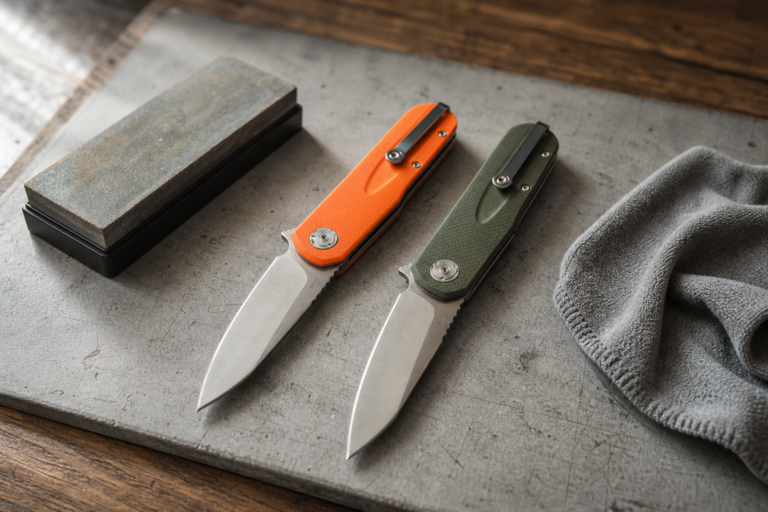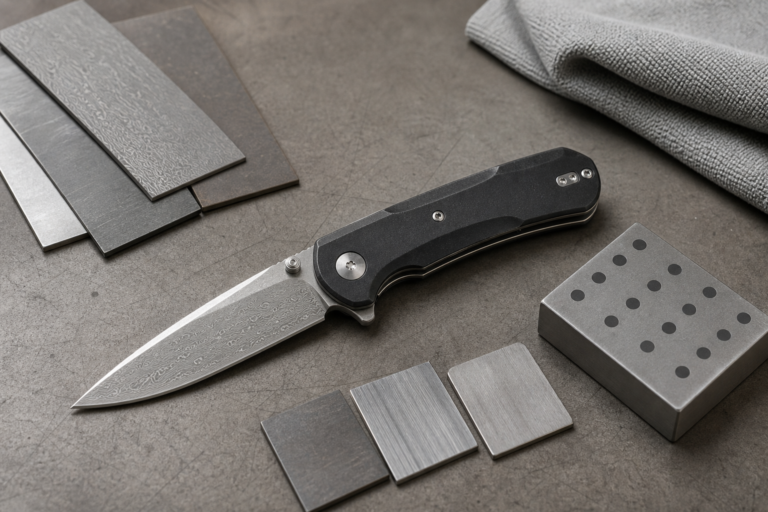
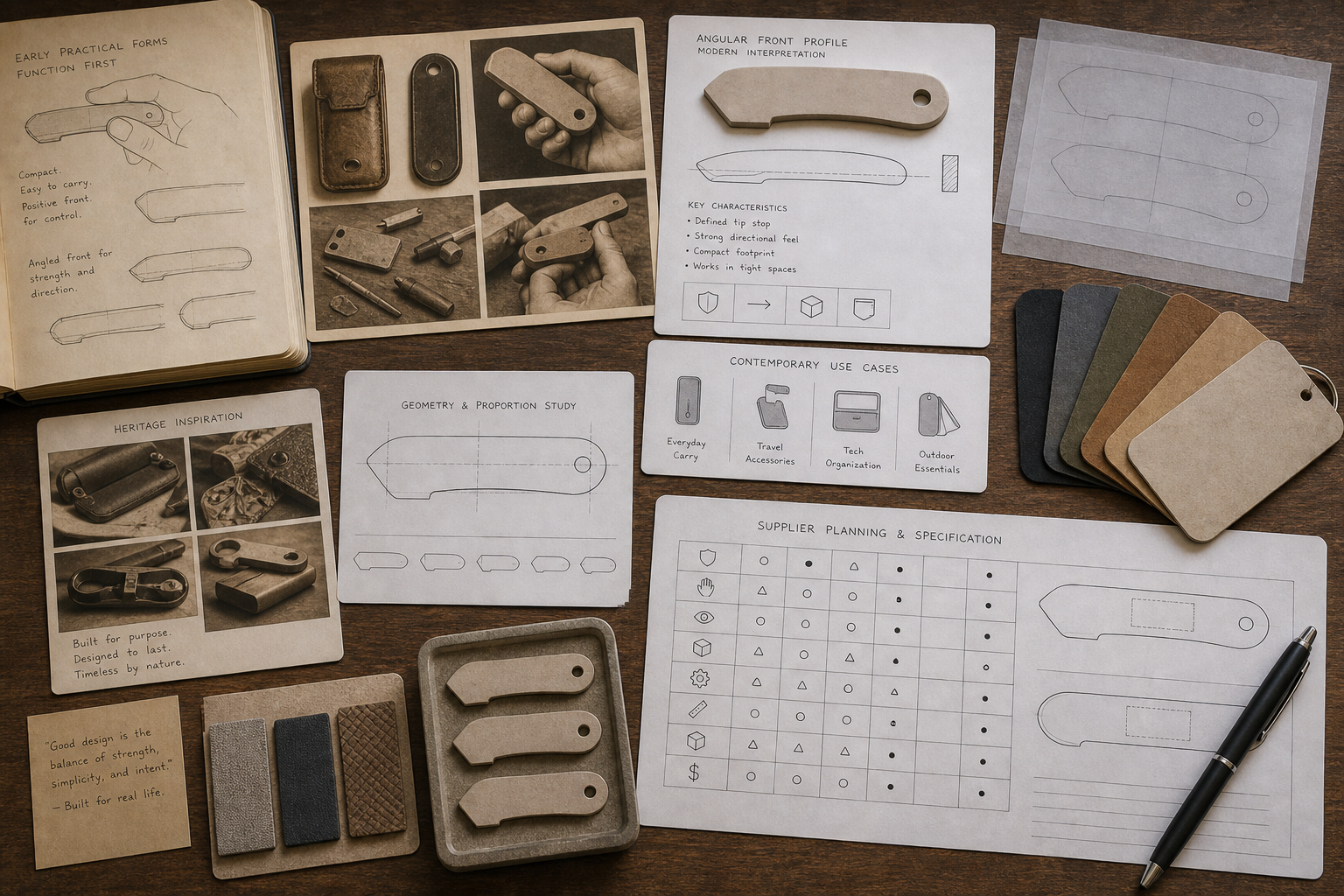
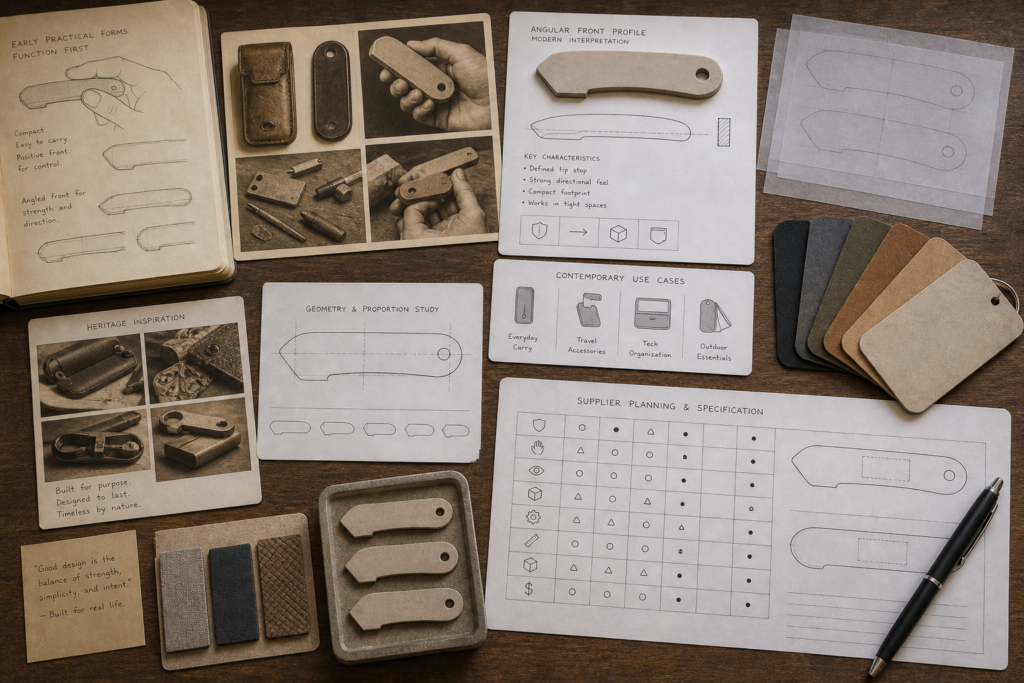
A tanto blade carries history and strong visual identity. But if buyers copy the look without context, the product can feel gimmicky or hard to produce.
Knife buyers should understand tanto blades as historically inspired short-blade geometry that modern OEM projects must translate into clear tip design, edge layout, steel, heat treatment, handle control, manufacturing checks, and market positioning.
Quick buyer brief:
- Answer: Tanto history gives the blade strong identity, but modern sourcing must focus on function, manufacturability, and user expectations.
- Buyer context: This helps knife brands, outdoor brands, importers, wholesalers, distributors, and private label buyers develop modern tanto folders or fixed blades.
- Key checks: Confirm traditional inspiration, modern tanto style, tip thickness, front edge, steel, hardness, handle, lock or sheath, finish, packaging, cultural sensitivity, and QC standard.
Have a knife or multi-tool project in mind?
Send your sketch, CAD file, sample photo, or product idea. Vast State can review manufacturability, suggest materials, estimate MOQ, and prepare a quote for your OEM/ODM project.
When a buyer asks me for a tanto blade, I slow the conversation down. Some buyers want a Japanese-inspired story. Some want the modern angular tip used in many tactical-style and utility knives. Some only like the strong point shape. These are different product directions. A traditional tanto and a modern OEM tanto are not the same thing. One carries cultural and historical meaning. The other is usually a modern blade profile that borrows the name and visual idea. I can help a buyer develop a strong modern tanto knife, but I always want the design, sourcing language, and quality checks to be honest, practical, and repeatable.
What Does Tanto Blade History Mean for Modern Knife Buyers?
History can make a product more meaningful. It can also be misused if the modern knife does not respect the original context.
For modern buyers, tanto history means the blade name carries Japanese short-sword associations. The sourcing job is to translate that identity into a practical modern knife without pretending it is a traditional sword.
I Treat History as Context, Not a Shortcut
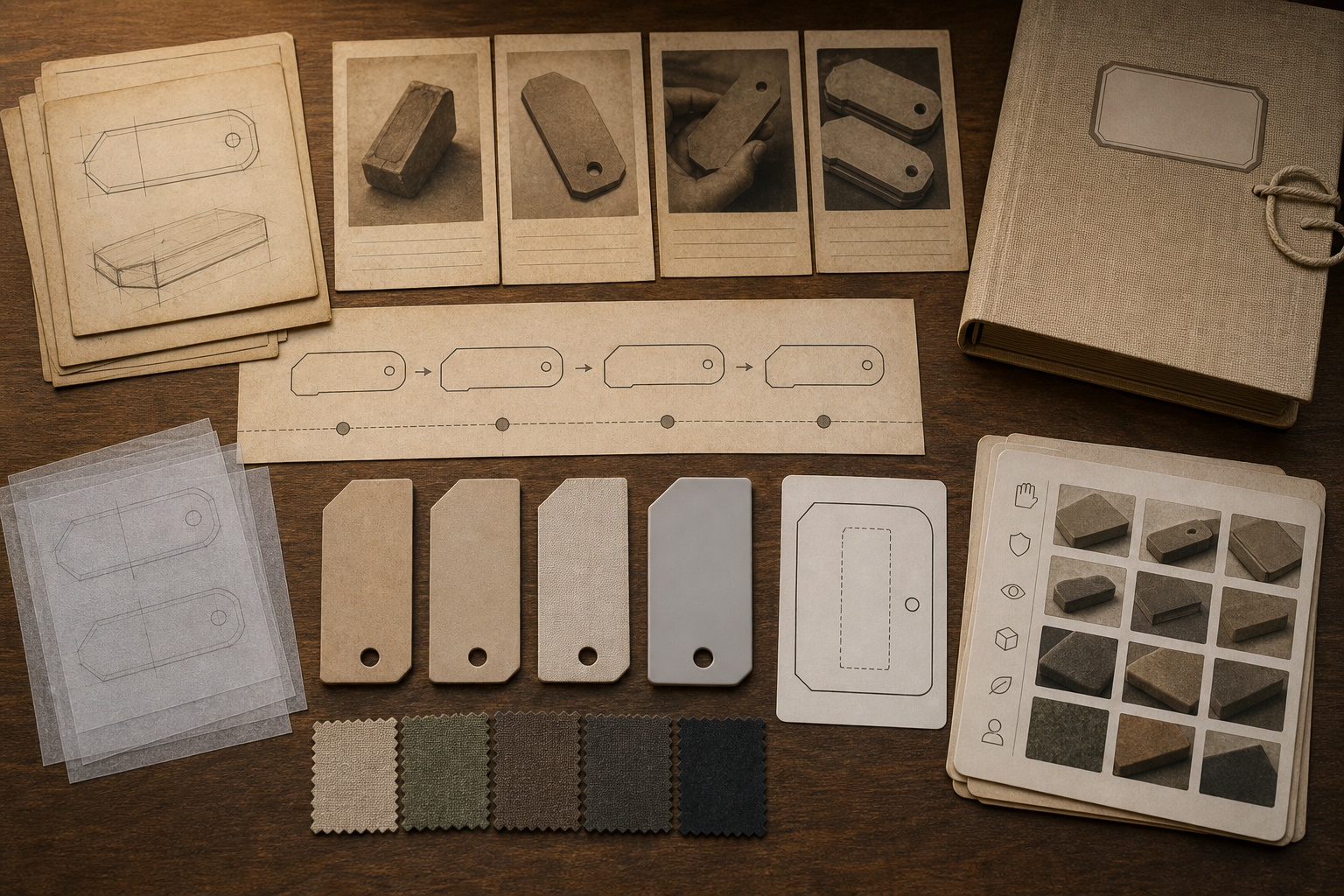
The word tanto comes from Japanese short-sword tradition. The Shusui Museum of Art describes "Tantou" as a type of Japanese short sword with almost no curvature and notes that short swords have been valued across generations. The British Museum also documents historical tanto examples, including a short tanto blade with a thick-bodied triangular cross-section described as a yoroi doshi, or armor-piercer type. These sources remind me that the original cultural object is not just a modern blade profile.
For OEM sourcing, this matters because many buyers use "tanto" to mean a modern angular blade with a reinforced-looking tip. That is acceptable as modern product language, but it should not be confused with making a traditional Japanese sword. Traditional swords involve history, craft, mountings, cultural context, and specialized terminology. A modern folding tanto or outdoor tanto is usually a practical knife design inspired by the visual language.
This is why I encourage buyers to use careful wording. A product page can say "modern tanto-style blade" or "tanto-inspired profile" when that is accurate. It should avoid exaggerated claims about samurai history, traditional forging, or cultural authenticity unless the buyer truly has the evidence and the product is made in that tradition.
| History point | What it means | Buyer takeaway |
|---|---|---|
| Traditional tanto | Japanese short-sword category | Treat as cultural context |
| Modern tanto | Angular blade profile used in modern knives | Define geometry and function |
| Historical story | Adds identity and meaning | Avoid unsupported authenticity claims |
| OEM sourcing | Needs repeatable specs | Translate style into production details |
OEM/ODM RFQ Checklist
Prepare these details to help Vast State review your project and provide a more accurate quotation.
| RFQ Field | What to Prepare |
|---|---|
| Project type | OEM from drawing / ODM private label / wholesale catalog |
| Product category | Folding knife / fixed blade / multi-tool / outdoor tool |
| Design status | Idea / sketch / 2D drawing / 3D CAD / physical sample |
| Target price | Ex-factory target price or retail price range |
| MOQ expectation | 500 / 1,000 / 3,000 / 5,000+ pcs |
| Logo method | Laser engraving / etching / printing / molded logo |
| Packaging | Standard packaging / custom retail box / Amazon-ready |
| Market | USA / EU / Japan / Korea / Middle East / other |
| Compliance needs | Buyer-specified testing / documentation / labeling |
| Timeline | Sample deadline / mass production deadline |
How Is a Modern Tanto Blade Different From a Traditional Tanto?
Many buyers use the same word for two different things. That can confuse design, marketing, and customer expectations.
A traditional tanto is a Japanese short sword or dagger category. A modern tanto knife usually means an angular blade profile with a main edge, front edge, and strong-looking point.
I Separate Cultural Reference From Product Specification
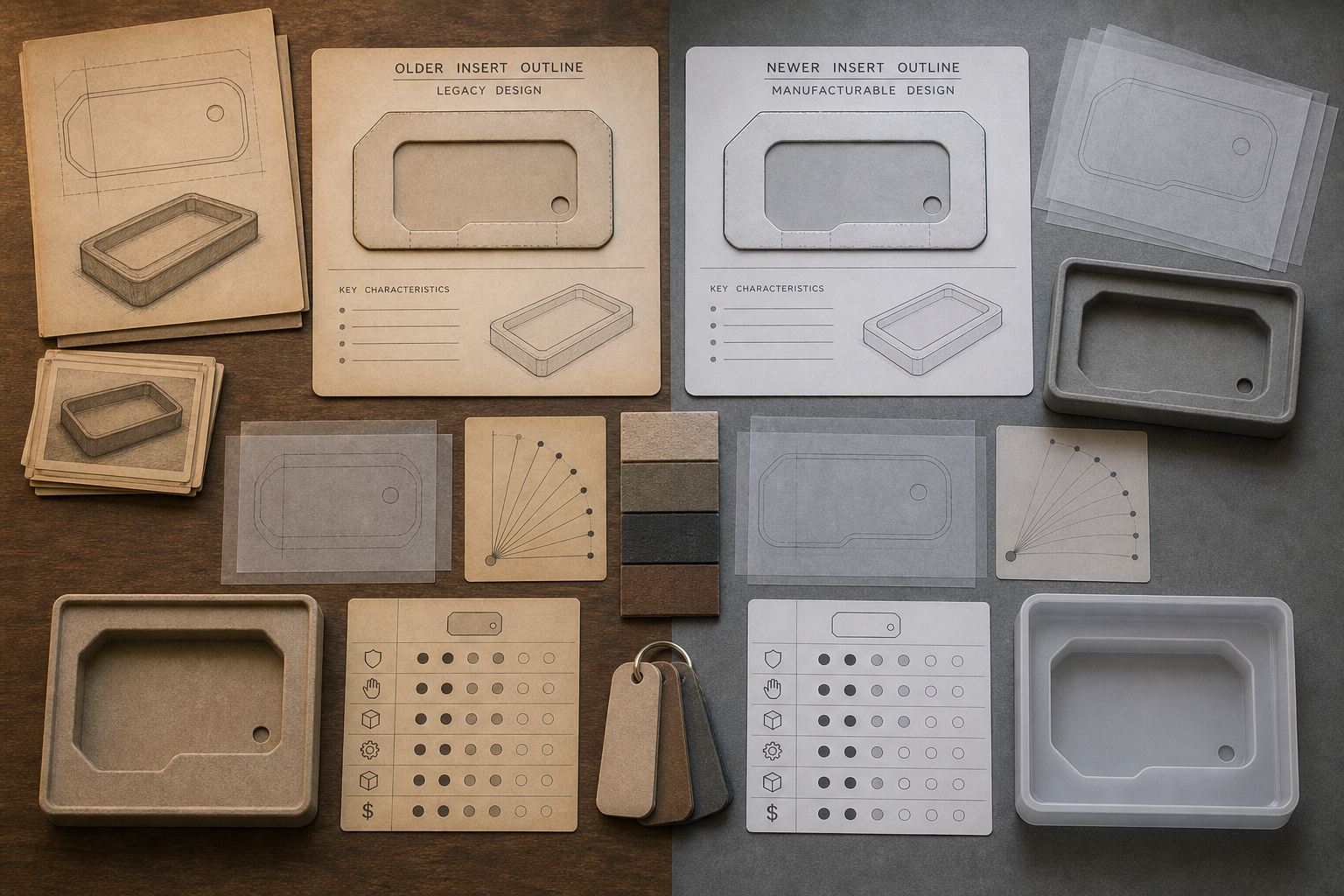
In modern sourcing, "tanto" often means the American-style angular blade profile. It normally has a long main edge, a shorter front edge, and a corner where the two edges meet. The tip can look strong because more material remains near the point. That is the design many buyers are asking for when they send a tanto knife reference.
A traditional tanto can be very different. It may not have the same angular point that many modern buyers expect. It may have different cross-section, tang, mounting, curvature, and craft meaning. The British Museum object record shows how specific historical terminology can be, including tang shape, grain, hamon, and mounting details. That level of detail is not what most modern OEM knife orders are trying to reproduce.
So I ask buyers to define the modern design in plain terms. Do they want a hard angular point or a softer modified tanto? How long should the front edge be? Should the tip be thick and reinforced? Should the blade be a folder or fixed blade? Should the shape look technical, outdoor, rescue-style, or EDC-friendly? These questions create a usable production brief.
| Design meaning | Traditional context | Modern OEM context |
|---|---|---|
| Blade identity | Historical short sword or dagger | Modern angular knife profile |
| Tip shape | Varies by historical blade | Usually angular and reinforced-looking |
| Edge layout | Not always modern segmented edge | Often main edge plus front edge |
| Buyer action | Use respectful wording | Specify geometry clearly |
What Modern Uses Fit Tanto Blade Knives Best?
A tanto can look strong, but it is not the right answer for every knife. The task should lead the design.
Modern tanto blades fit technical utility, work-style folders, rescue-inspired tools, outdoor fixed blades, and private label knives when buyers want a strong point story, front edge control, and bold visual identity.
I Match Tanto to a Real Product Role
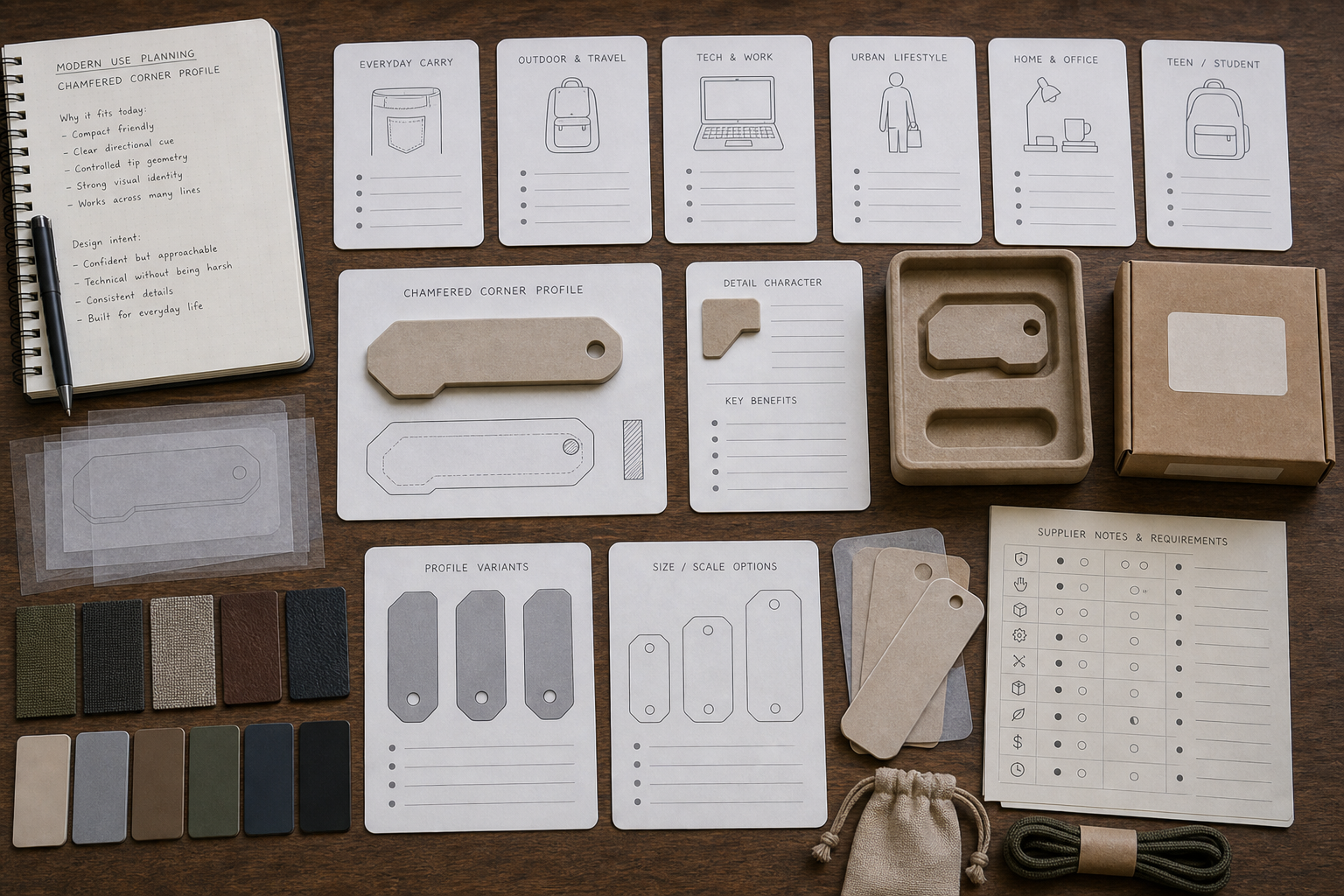
Modern tanto blades often work best when the buyer wants a strong design identity and a clear tip story. The angular point can suggest strength. The front edge can be useful for controlled short cuts. The straight main edge can feel simple and direct. These features can fit modern outdoor knives, technical utility folders, work-style private label knives, and some rescue-inspired tools.
But tanto is less ideal when the buyer wants the smoothest slicing belly or the easiest consumer sharpening experience. A drop point often feels more natural for broad EDC and outdoor slicing. A sheepsfoot or utility blade may be better for packaging-focused safety. A hawkbill may be better for pull cuts on rope or webbing. Tanto should be chosen because the product needs its shape, not because the word sounds strong.
Safety guidance supports this task-first habit. The UK HSE guidance on safe knife use says users should use a knife suitable for the task. That applies to product development too. I want the buyer to define the primary use, secondary uses, and user skill level before finalizing the blade. A strong visual product that does not match real use creates complaints later.
| Modern use | Why tanto may fit | Buyer caution |
|---|---|---|
| Work utility folder | Straight edge sections feel controlled | Sharpening must be explained |
| Rescue-inspired tool | Strong point story and technical look | Compliance and safety language matter |
| Outdoor fixed blade | Bold design and tip support | Sheath and handle grip need control |
| Private label line | Clear visual identity | Avoid exaggerated history claims |
How Should Buyers Define Tanto Geometry Before Sampling?
The tanto profile has more control points than many buyers expect. Small changes can change the whole knife.
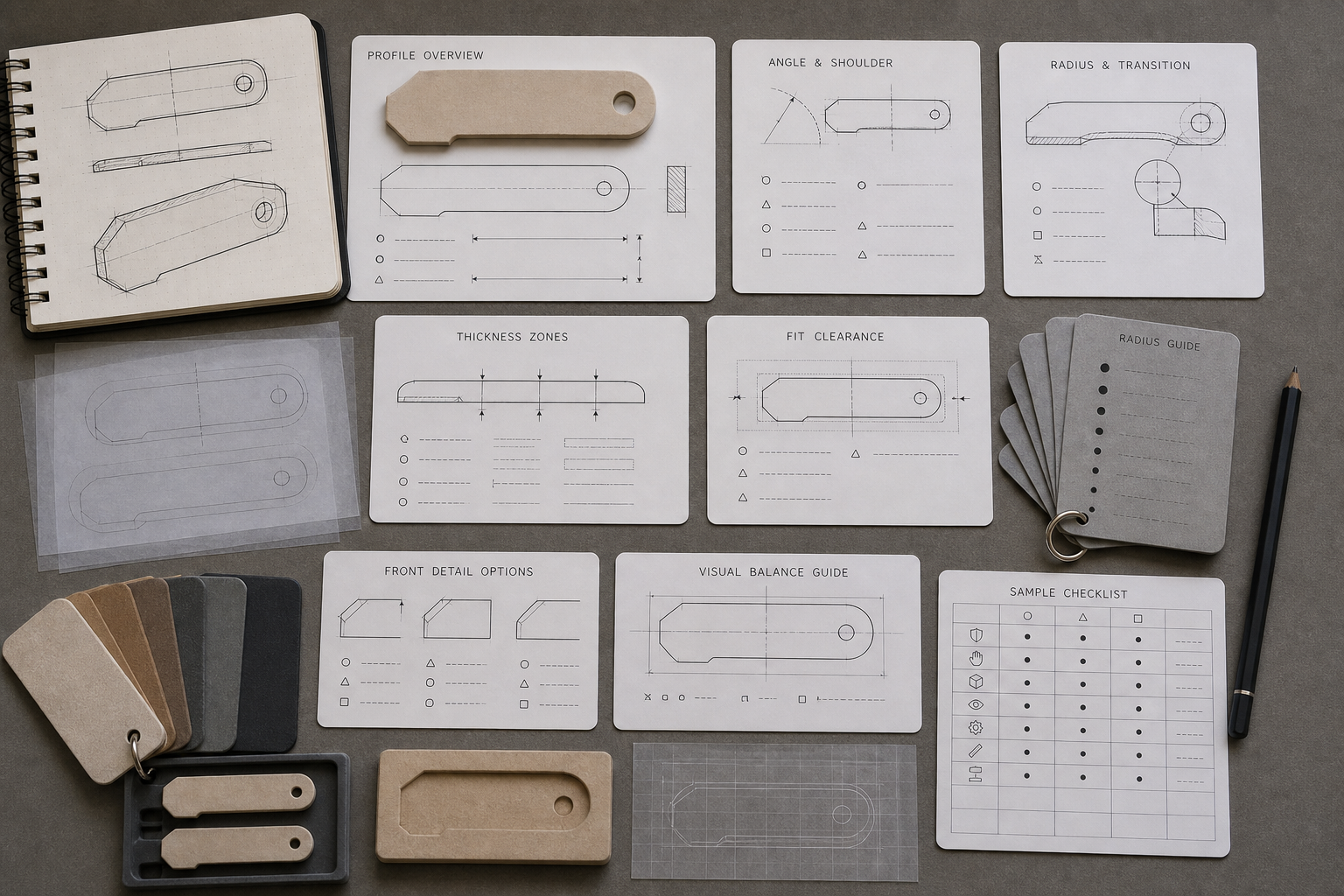
Buyers should define front-edge length, main-edge length, secondary point, tip thickness, blade thickness, primary grind, edge angles, point height, and handle clearance before approving a tanto sample.
I Define the Front Edge and Secondary Point Early
The front edge is one of the most important tanto decisions. A long front edge gives the tip area a stronger visual presence and a larger straight cutting section. A short front edge can make the knife feel more compact and less aggressive. The secondary point, where the main edge meets the front edge, must be crisp enough to show the design but not so fragile that it becomes a defect point.
Tip thickness is another core decision. A thick tip supports the tanto story, but it can reduce cutting refinement. A thin tip can cut more easily but may weaken the shape's main selling point. Blade thickness, distal taper, and primary grind all affect this balance. A hollow grind, flat grind, or saber grind can change strength, appearance, and cost.
For folding knives, I also check how the tanto closes into the handle. The front edge and angular tip need safe clearance. The edge must not touch liners, backspacers, screws, or lock parts. For fixed blades, the sheath must protect the tip and front edge without rubbing the finish. These details should be tested on production-intent samples, not only drawings.
| Geometry item | What to define | Why it matters |
|---|---|---|
| Front edge length | Short, medium, or long | Controls cutting role and visual style |
| Secondary point | Crisp or softened transition | Affects look, sharpening, and QC |
| Tip thickness | Fine, balanced, or reinforced | Controls durability and cutting feel |
| Primary grind | Flat, saber, hollow, or other | Affects cost, strength, and performance |
Which Steel and Heat Treatment Choices Matter for Tanto Blades?
A strong-looking tip still depends on steel and heat treatment. Poor material control can make the design promise fail.
Steel and heat treatment for tanto blades should balance tip toughness, edge retention, corrosion resistance, hardness, sharpening ease, finish compatibility, cost, and repeatability.
I Choose Steel Around the Tip and Edge Layout
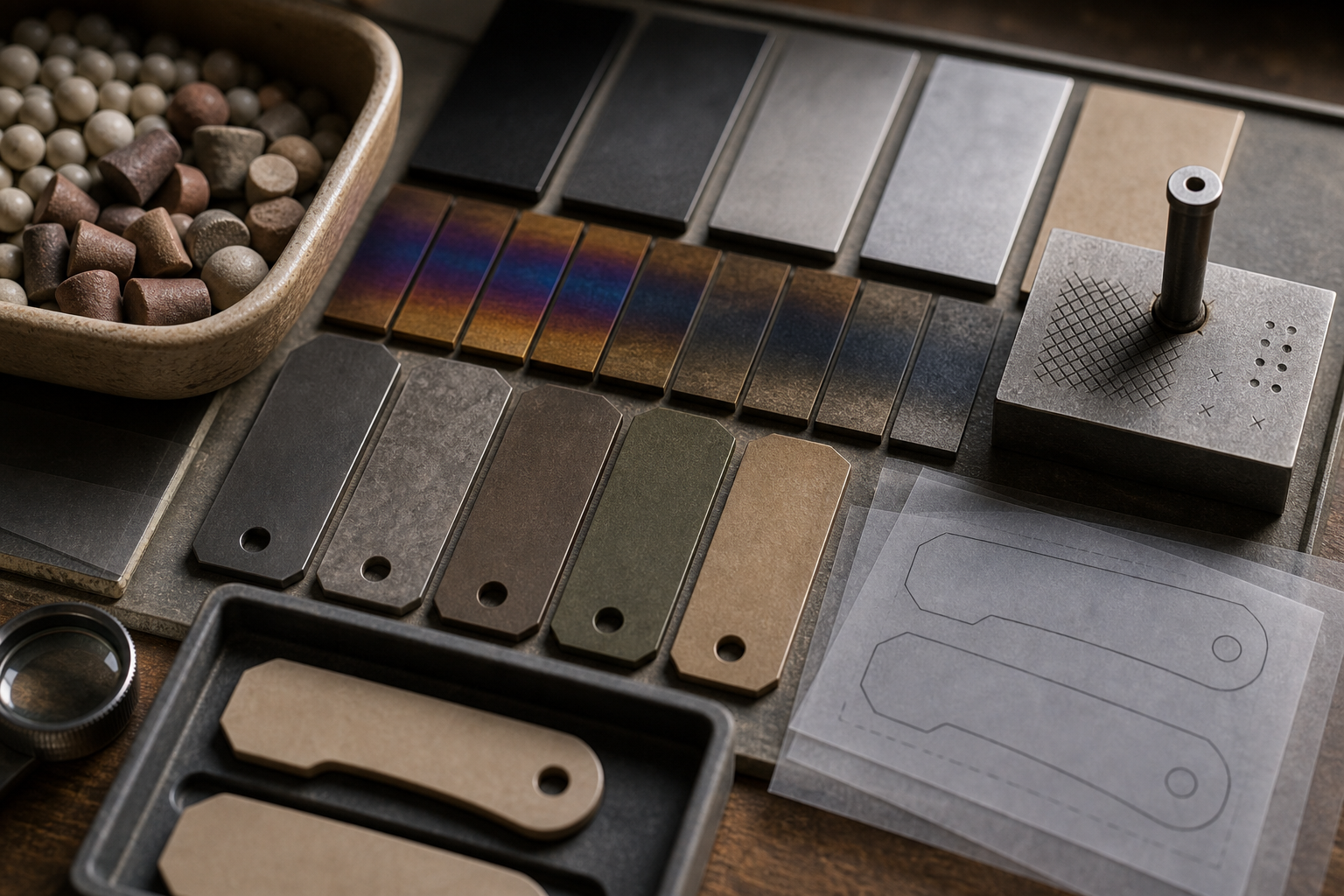
The steel decision should follow the use case. A work-style tanto may need toughness and stable edge geometry. An EDC tanto may need corrosion resistance and easier sharpening. A coated outdoor tanto may need both corrosion support and realistic care language. A budget private label tanto may need a steel that is stable in production and easy to explain to end users.
Alleima describes 14C28N knife steel as a knife steel designed for applications where hardness, edge performance, and corrosion resistance matter. I use this as a material reference, not as the answer for every buyer. Buyers may choose 8Cr, 9Cr, D2, 14C28N, or another steel based on target price, brand position, and use environment.
Heat treatment is just as important. A tanto has multiple edge control zones. The main edge, front edge, secondary point, and tip all need stable hardness and proper grinding. The NIST guide to Rockwell hardness measurement supports controlled hardness measurement. In sourcing work, I ask for target hardness range, batch check method, and sample review after grinding and finishing.
| Steel factor | Why it matters | Buyer checkpoint |
|---|---|---|
| Toughness | Supports angular point and secondary point | Match hardness to tip thickness |
| Corrosion resistance | Supports EDC and outdoor use | Match steel to environment and care |
| Edge retention | Keeps both edge sections useful | Confirm heat treatment and edge angle |
| Sharpening ease | Affects customer maintenance | Explain the segmented edge clearly |
How Do Handle, Lock, and Sheath Details Affect Tanto Knives?
The tanto point gets attention, but the user controls the knife through the handle and structure.
Handle, lock, and sheath design should support grip security, finger clearance, opening control, lock engagement, blade centering, closed safety, sheath retention, carry comfort, and stable hand posture.
I Design the Structure Around Control
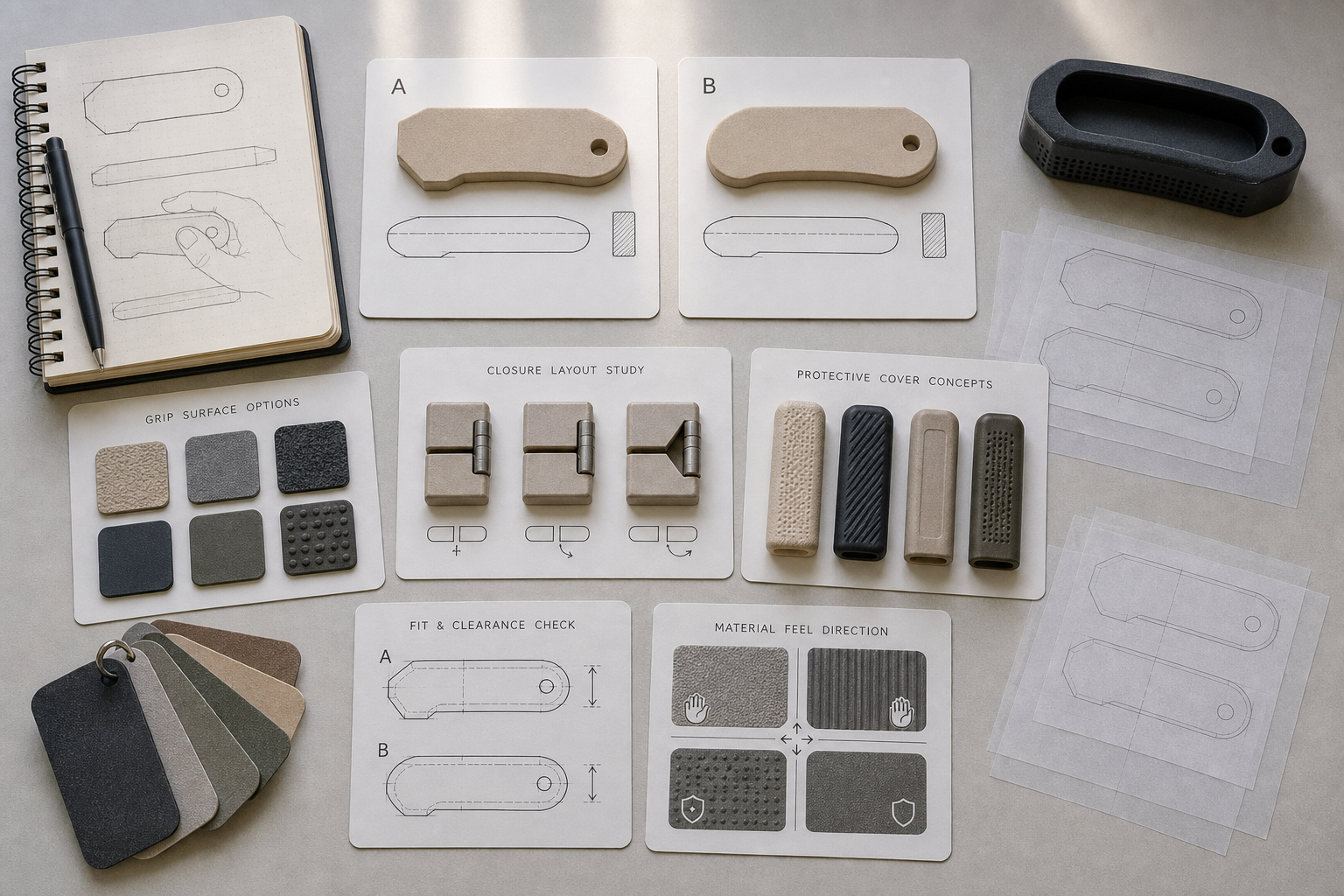
The handle should support the expected cutting motion. A tanto chosen for front-edge control needs a handle that feels secure near the tip. A tanto chosen for work utility needs enough grip texture and finger clearance. A tanto chosen for private label style should still feel comfortable, not just look bold.
The CCOHS hand tool ergonomics guide discusses tool fit, grip, neutral wrist posture, handle dimensions, and non-slip material. I use that thinking in knife development by checking handle contour, texture, finger clearance, balance, pocket clip position, and opening method. A strong-looking tanto blade loses value if the handle makes the user feel unsure.
For folding tantos, I check lockup, blade centering, detent, opening action, closing path, screw control, and tip clearance. The angular point and front edge must close safely into the handle. For fixed blade tantos, I check sheath retention, draw path, front-edge clearance, coating rub, and packaging movement. These details protect the product before it reaches the buyer and after it reaches the end user.
| Structure area | What I check | Why it matters |
|---|---|---|
| Handle texture | Grip during controlled cuts | Improves user confidence |
| Lock geometry | Engagement, release, and blade play | Protects folding knife function |
| Closed position | Angular tip and front-edge clearance | Protects pocket and packaging safety |
| Sheath fit | Retention, draw path, and rub marks | Protects fixed blade edge and finish |
What Manufacturing Challenges Should Buyers Expect With Tanto Blades?
Tanto blades can look simple in a drawing. In production, the segmented edge creates extra control points.
Tanto manufacturing challenges include front-edge consistency, secondary point shape, bevel transition, tip thickness, heat-treatment distortion, edge-angle control, sharpening, finishing, blade centering, and sheath or handle clearance.
I Watch the Edge Transition Through the Whole Process
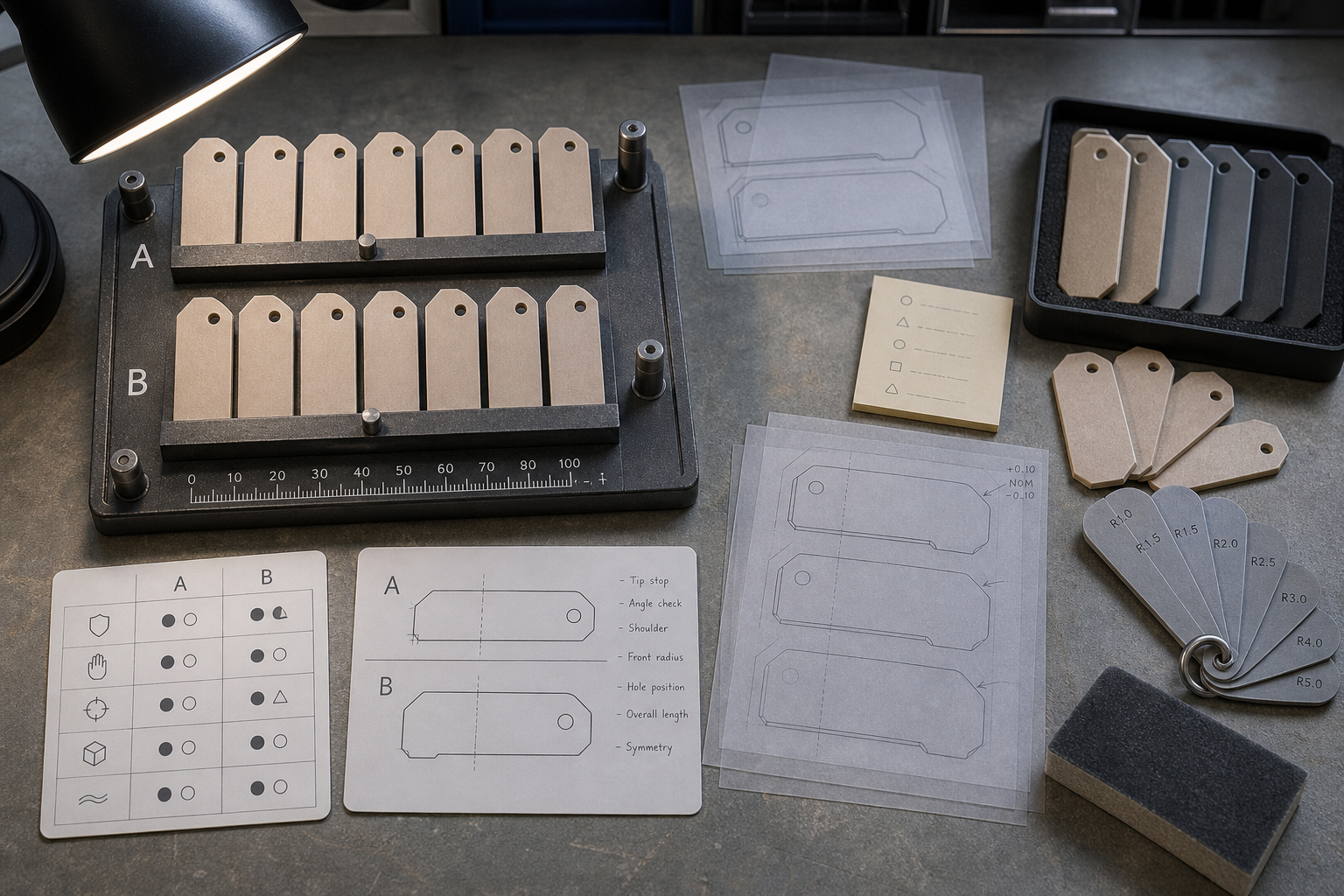
The front edge and main edge must meet correctly. If the transition is rounded by mistake, the blade loses its tanto identity. If the secondary point is too sharp or too thin, it may become fragile. If the front edge angle is inconsistent, the blade can look uneven in a batch. These issues can appear during grinding, sharpening, polishing, coating, or final assembly.
Heat treatment can also affect the tip and edge transition. Thin sections may distort. Grinding after heat treatment must control heat at the edge and point. Sharpening should maintain both edge sections separately. If the operator treats the tanto like one continuous curved edge, the result will not match the approved sample.
Finishing adds more control points. Satin lines should follow the blade shape. Stonewash can hide small marks but should not erase the edge transition. Coating can highlight uneven grinding around the secondary point. Laser marking should avoid the front edge, main edge, and transition area. For OEM orders, I prefer production-intent samples because they show whether the design can repeat with real materials and real processes.
| Manufacturing point | Main risk | Control method |
|---|---|---|
| Profile cutting | Front edge length variation | Use templates or CNC tolerance checks |
| Bevel grinding | Uneven transition | Define edge sections and inspection standard |
| Sharpening | Rounded secondary point | Sharpen main and front edge separately |
| Assembly | Tip or front edge rub | Test closed position and sheath clearance |
Which Finish, Edge, and Branding Options Work Best?
The tanto shape already has a strong identity. Finish and branding should support it, not make it look confused.
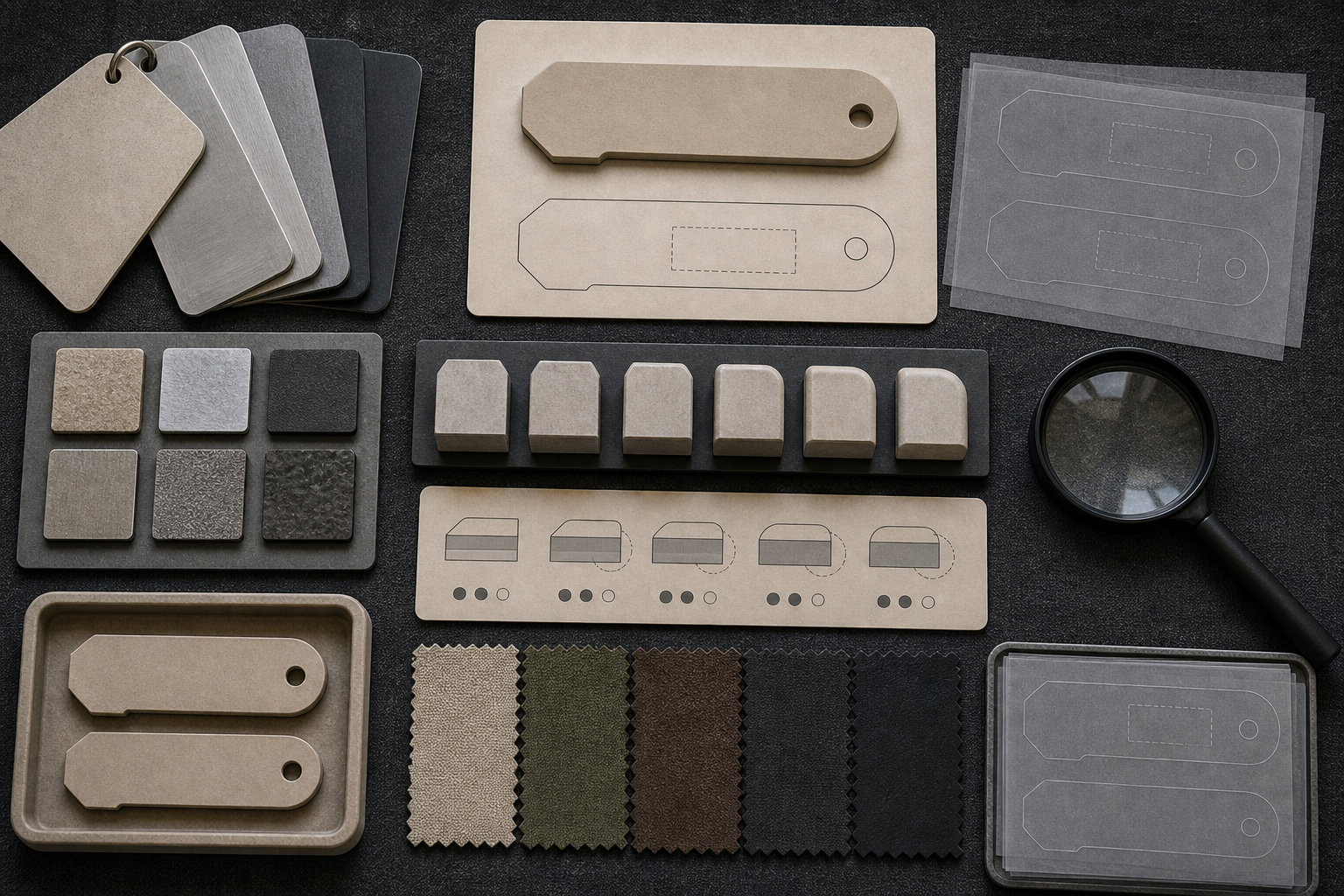
Tanto blades can use satin, stonewash, bead blast, coated, black oxide, plain edge, partial serration, or logo marking, but each option changes cost, maintenance, perception, and inspection.
I Use Finish to Match the Product Story
A satin tanto can show the angular grind clearly. This can look clean, but it also exposes mistakes. A stonewashed tanto can feel more practical and hide small marks, but the edge transition must remain clear. A coated tanto can support a technical or outdoor look, but the buyer should not overstate coating performance. The front edge, tip, and contact points can still show wear.
Edge style also matters. Many tanto knives work best with a plain edge because the shape already has two edge sections. Adding serrations can make sharpening and inspection harder. If the buyer wants serrations, the RFQ should define where they start and how much plain edge remains. The buyer should also consider whether serrations support the real task or only add visual complexity.
Branding should be placed carefully. A tanto blade has strong lines, and a logo near the secondary point or front edge can look crowded. Laser marking should avoid the edge, tip, pivot area, and grind transition. Packaging can mention modern tanto-style geometry, but it should avoid unsupported traditional claims. Good branding respects both the historical reference and the modern product reality.
| Option | Good fit | Buyer caution |
|---|---|---|
| Satin finish | Clean angular visual style | Shows grinding mistakes more easily |
| Stonewash finish | Utility and outdoor positioning | Keep edge transition visible |
| Coating | Technical or low-reflection look | Contact points and edge can wear |
| Serration | Specific rope or fibrous use | Adds sharpening and QC complexity |
What Quality Control Should a Tanto Blade Order Include?
Tanto quality is not only sharpness. The shape needs extra checks around the edge transition and tip.
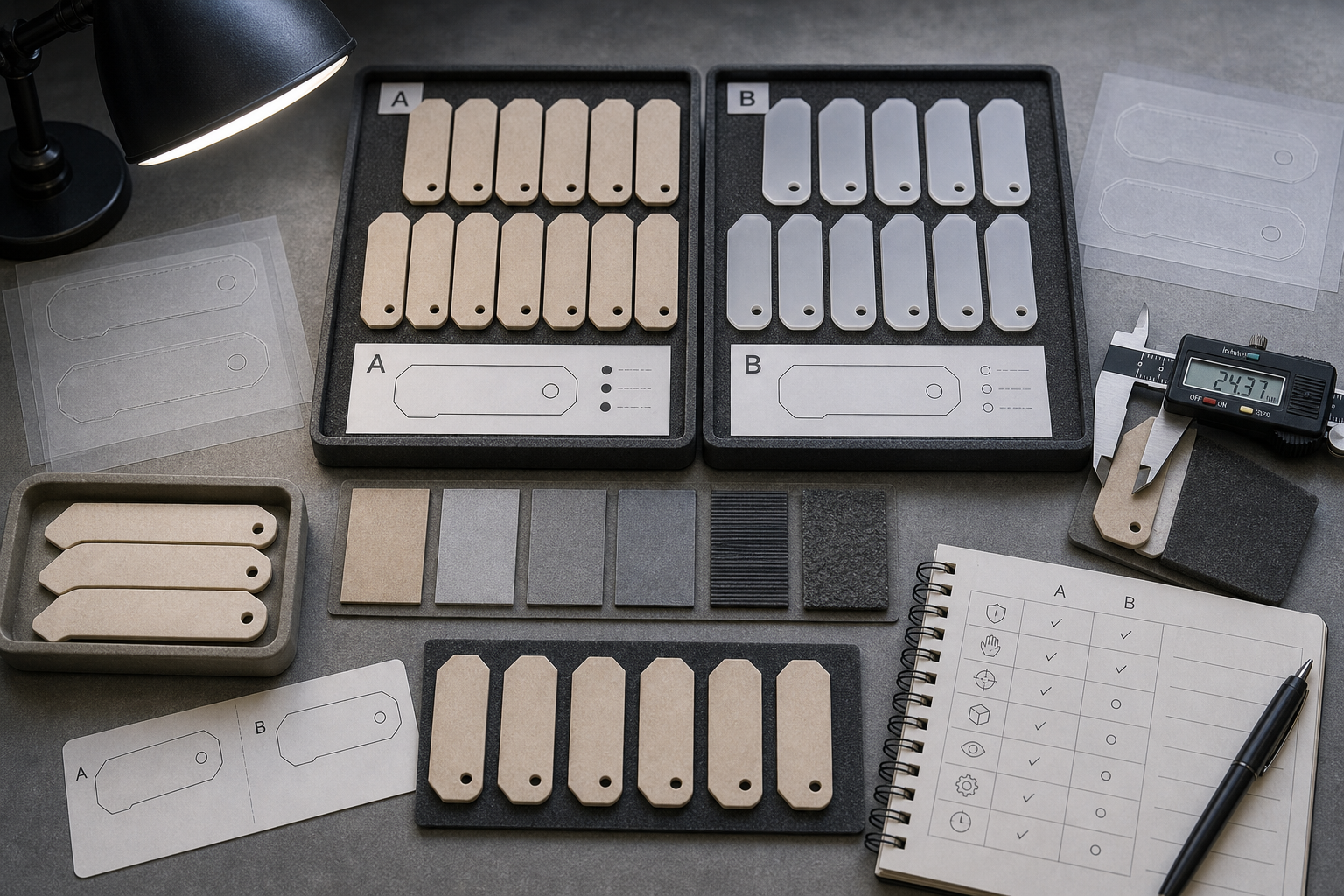
Tanto QC should check front-edge length, main edge, secondary point, tip thickness, edge sharpness, hardness, bevel consistency, finish, lockup, centering, closed safety, sheath fit, packaging, and batch consistency.
I Inspect the Tanto as a Segmented Edge System
Quality control should start with the blade blank. The front edge length, main edge, secondary point, tip, holes, tang, and stop area should match the approved sample. After heat treatment, hardness and straightness should be checked. After grinding, the bevel transition should be clean and the edge should not show overheating. After sharpening, both edge sections should be sharp and the secondary point should match the approved standard.
After finishing, I check scratches, coating coverage, stonewash consistency, satin direction, logo placement, and edge exposure. After assembly, I check lockup, side play, vertical play, detent, opening action, closing path, blade centering, screw tightness, and whether the tip and front edge are fully enclosed. For fixed blades, I check handle fit, sheath retention, draw path, edge protection, and packaging movement.
ISO describes ISO 9001 quality management as a standard for quality management system requirements. I use that as a process mindset. Buyers should ask how the supplier controls incoming material, heat treatment, grinding, assembly, and final inspection. Final inspection catches defects. Process control helps prevent repeated defects.
| QC stage | What I check | Why it matters |
|---|---|---|
| Blade blank | Front edge, secondary point, holes, tang | Protects geometry and assembly fit |
| Heat treatment | Hardness range and distortion | Protects edge and tip performance |
| Assembly | Lockup, centering, closed safety | Protects user experience |
| Final inspection | Sharpness, finish, packaging | Protects sellable condition |
What Should Buyers Put in a Tanto Knife RFQ?
If a buyer only says tanto, the supplier has to guess the front edge, tip thickness, and product level.
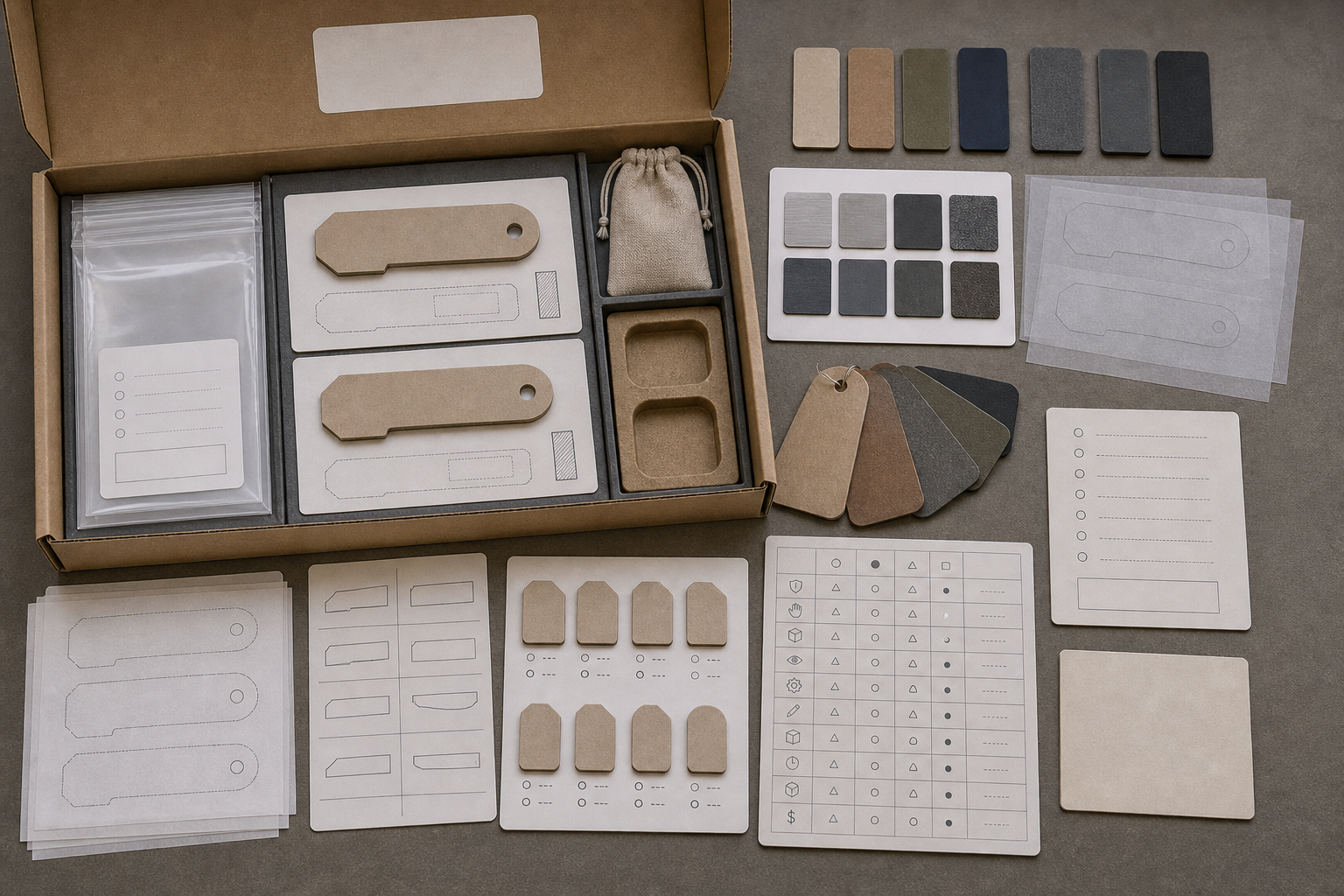
A tanto knife RFQ should include target market, knife type, front-edge length, blade length, steel, hardness, tip thickness, grind, handle material, lock or sheath type, finish, branding, packaging, quantity, target price, and inspection needs.
I Turn the Tanto Idea Into a Production Brief
A clear RFQ should explain what kind of tanto the buyer wants. I want to know whether the product is an EDC folder, outdoor fixed blade, work utility knife, rescue-inspired tool, or private label series. Then I need blade length, blade thickness, front-edge length, tip thickness, steel preference, hardness target, primary grind, edge style, handle material, lock type, sheath type, opening method, finish, logo method, packaging style, quantity, target price, and inspection requirements.
If the buyer wants historical inspiration, I ask how the brand will describe it. I prefer "modern tanto-style blade" or "tanto-inspired profile" when the product is a modern OEM knife. If the buyer wants to claim traditional Japanese craftsmanship, that needs a completely different evidence path and production context. A normal Yangjiang OEM tanto project should not overclaim cultural authenticity.
Buyers should also mention market restrictions early. Blade length, locking mechanism, assisted opening, edge style, carry method, and packaging claims can matter by target market. I cannot replace legal review, but I can help buyers identify which design details need review before sampling. A clear RFQ helps the supplier quote accurately and helps the buyer compare samples fairly.
| RFQ field | What to specify | Why it helps |
|---|---|---|
| Product role | EDC, outdoor, work, rescue-inspired, private label | Guides design and material choices |
| Tanto geometry | Front edge, tip thickness, secondary point | Prevents wrong sample direction |
| Structure | Folder, fixed blade, lock, sheath | Controls tooling and assembly plan |
| Inspection needs | Hardness, edge transition, lockup, packaging | Makes quality expectations clear |
Turn your idea into a quote-ready knife project.
Share your drawing, sample photo, target quantity, market, and packaging needs. Vast State will review manufacturability and prepare OEM/ODM options.
Conclusion
I develop better modern tanto knives by respecting the history, then defining geometry, materials, structure, QC, branding, and RFQ details clearly.
Source Notes
- Shusui Museum of Art supports the historical context that Tantou is a Japanese short sword with little curvature.
- British Museum tanto object provides historical object context, including a yoroi doshi type with thick-bodied form.
- Gear Patrol blade-shape guide provides modern blade-shape context for how tanto is discussed today.
- HSE knife guidance supports matching knives to tasks, keeping knives sharp, and safe handling.
- CCOHS hand tool ergonomics supports handle fit, grip, neutral wrist posture, and non-slip material thinking.
- Alleima 14C28N knife steel gives material context for hardness, edge performance, and corrosion resistance.
- NIST Rockwell hardness guidance supports the need for controlled hardness measurement.
- ISO 9001 supports the value of quality management systems and documented process control.