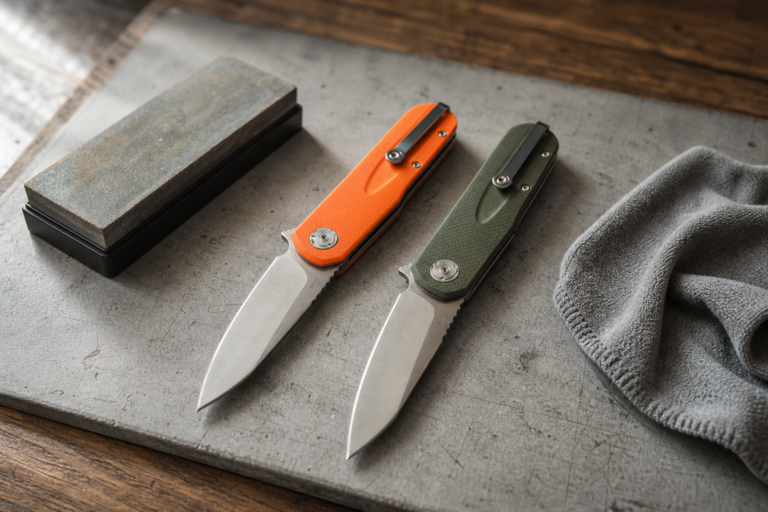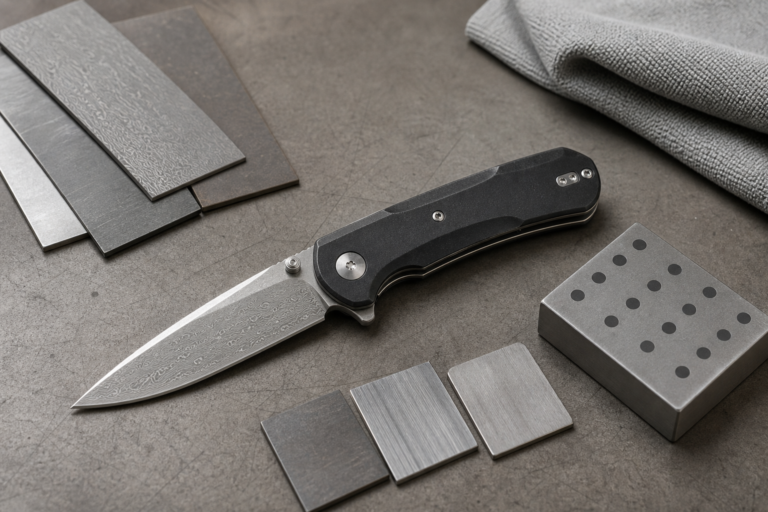
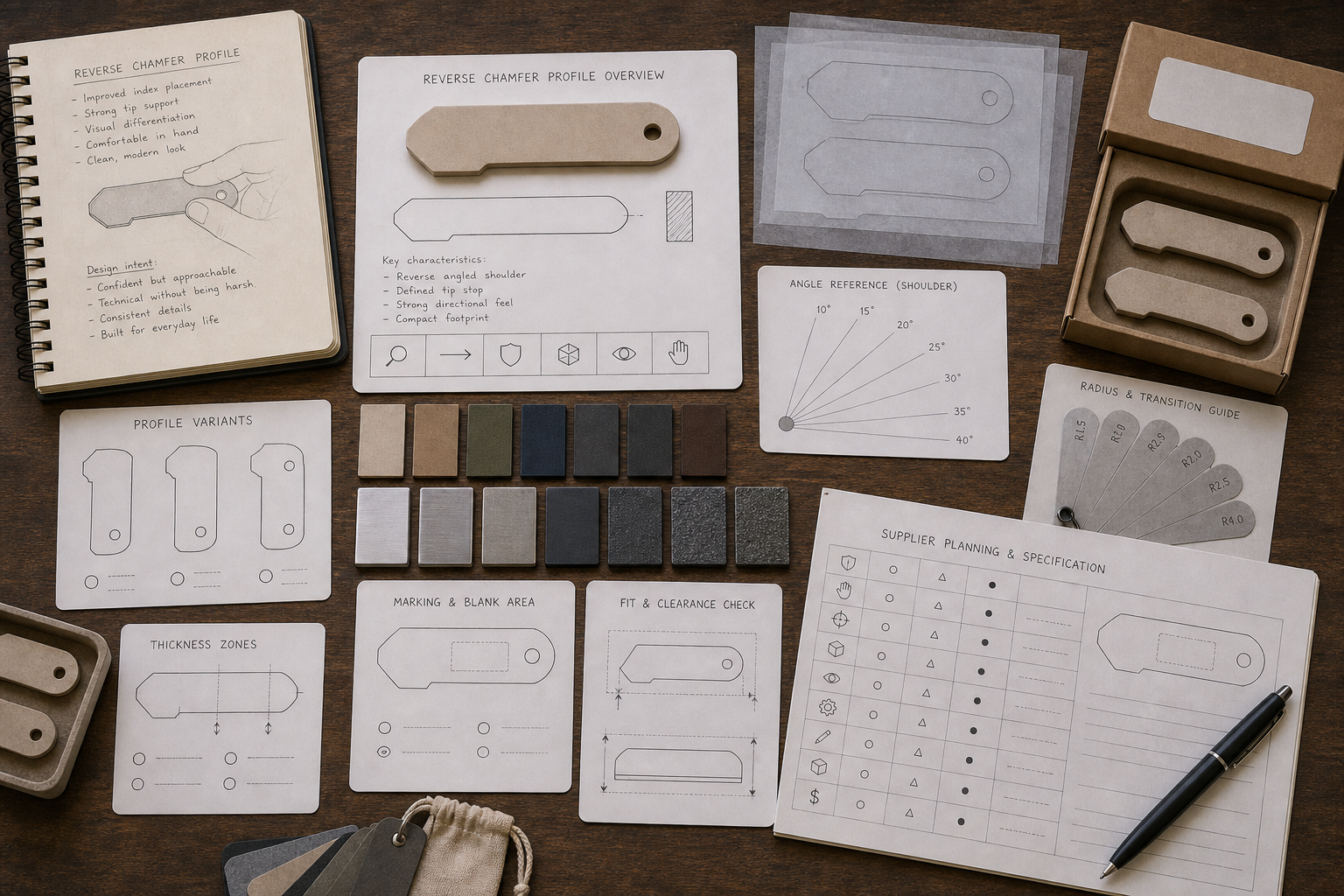
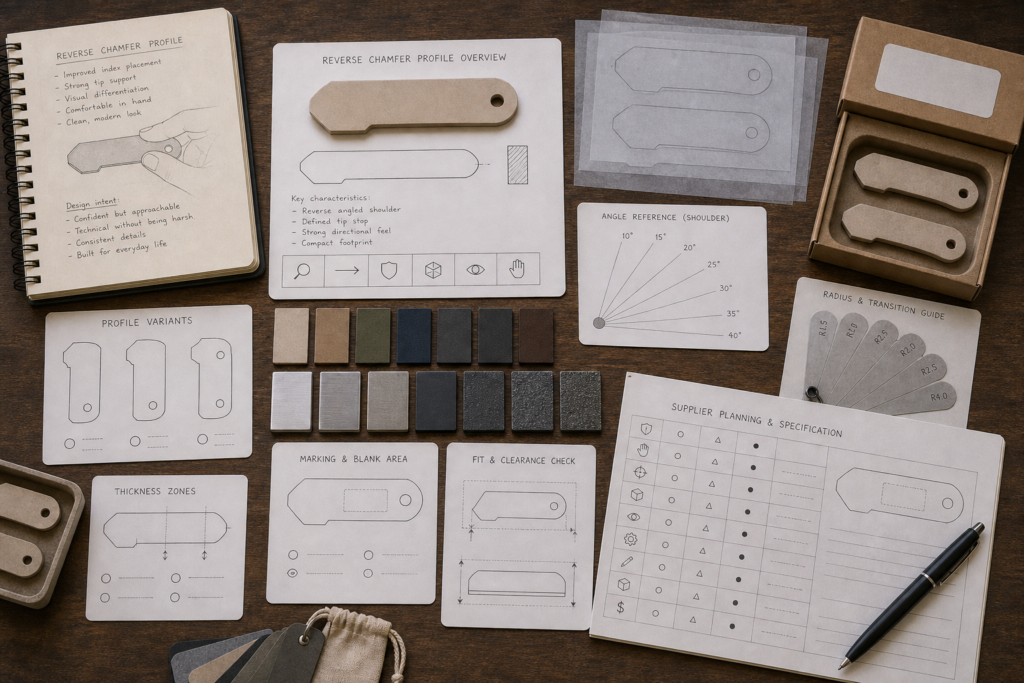
A reverse tanto blade looks strong and modern. But if buyers only copy the shape, the knife may cut poorly or cost too much.
Knife buyers should specify reverse tanto blades by defining the target user, tip strength, front swedge, main cutting edge, steel, heat treatment, grind, handle control, lock or sheath fit, finish, and inspection standard. The shape works best when its visual style supports real function.
Quick buyer brief:
- Answer: Reverse tanto is a modern blade profile that needs clear geometry, material, and QC decisions before OEM production.
- Buyer context: This helps knife brands, outdoor brands, importers, wholesalers, distributors, and private label buyers develop EDC, utility, and outdoor knives.
- Key checks: Tip shape, spine angle, edge belly, grind, blade thickness, steel, hardness, handle ergonomics, lock clearance, finish, packaging, and RFQ details.
Have a knife or multi-tool project in mind?
Send your sketch, CAD file, sample photo, or product idea. Vast State can review manufacturability, suggest materials, estimate MOQ, and prepare a quote for your OEM/ODM project.
When a buyer asks for a reverse tanto blade, I first ask why. Some buyers want a strong modern look. Some want a compact EDC knife with a useful point. Some want a utility knife that feels different from a drop point. Some only saw a photo and liked the style. These are not the same project. A reverse tanto can be a good OEM direction, but the design needs careful decisions. The angled spine affects the tip. The edge line affects cutting feel. The grind affects sharpness and strength. The handle and lock affect whether the knife feels controlled. At Vast State, I treat reverse tanto as a product system, not only a blade outline.
What Is a Reverse Tanto Blade in Practical OEM Terms?
The name can sound clear, but buyers often imagine different shapes. Without a shared definition, sample revisions can waste time quickly.
In practical OEM terms, a reverse tanto blade usually has an angled spine or front spine transition that creates a modern pointed tip while keeping a mostly useful cutting edge for EDC or utility work.
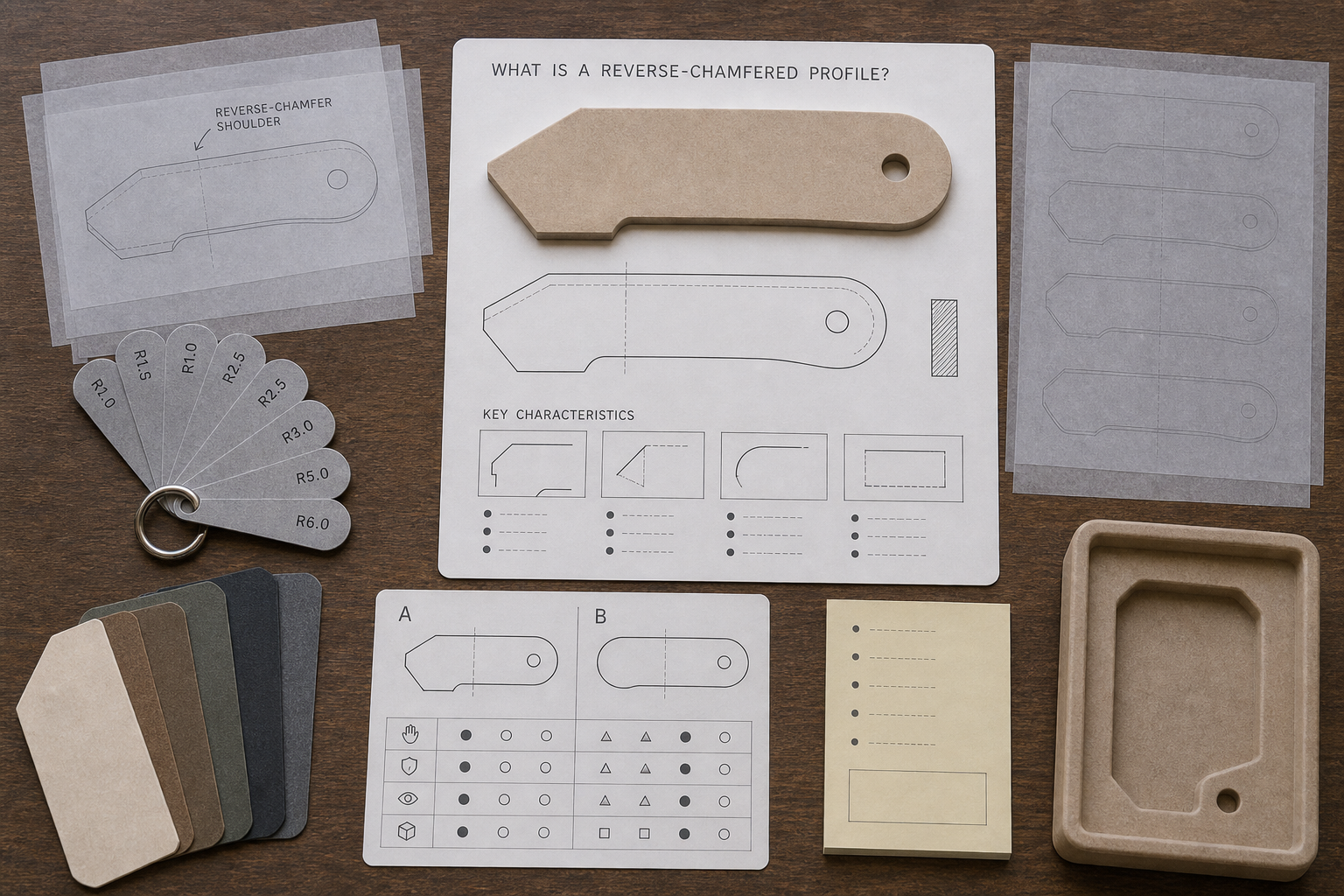
I Define the Shape Before I Quote the Knife
Reverse tanto is a modern naming style, not one single fixed geometry. In most OEM projects, the buyer means a blade with a straighter or slightly curved main cutting edge and an angular spine transition near the tip. The visual result feels more technical than a drop point and less traditional than a clip point. It can work well for EDC, utility, outdoor, and private label products when the buyer wants a strong visual identity.
However, I do not quote from the name alone. I ask for a drawing, reference image, or simple profile sketch. One buyer may want a long straight edge with a sharp angular spine. Another may want more belly for slicing. Another may want a compact utility point. These differences affect cutting, grinding, steel thickness, handle clearance, lock fitting, and appearance. A good specification should define blade length, spine angle, tip height, edge belly, thickness, grind type, and finish. That gives the factory a clear target and reduces sample surprises.
| Reverse tanto feature | What it means | OEM note |
|---|---|---|
| Angled spine transition | Creates the recognizable reverse tanto look | Must be drawn clearly |
| Main cutting edge | Can be straight or slightly curved | Affects slicing and utility feel |
| Tip height | Controls point strength and handling | Must fit the use case |
| Blade thickness | Supports strength but affects cutting | Needs balance with grind |
OEM/ODM RFQ Checklist
Prepare these details to help Vast State review your project and provide a more accurate quotation.
| RFQ Field | What to Prepare |
|---|---|
| Project type | OEM from drawing / ODM private label / wholesale catalog |
| Product category | Folding knife / fixed blade / multi-tool / outdoor tool |
| Design status | Idea / sketch / 2D drawing / 3D CAD / physical sample |
| Target price | Ex-factory target price or retail price range |
| MOQ expectation | 500 / 1,000 / 3,000 / 5,000+ pcs |
| Logo method | Laser engraving / etching / printing / molded logo |
| Packaging | Standard packaging / custom retail box / Amazon-ready |
| Market | USA / EU / Japan / Korea / Middle East / other |
| Compliance needs | Buyer-specified testing / documentation / labeling |
| Timeline | Sample deadline / mass production deadline |
Why Do Buyers Choose Reverse Tanto Blades for EDC and Utility Knives?
Reverse tanto looks attractive, but appearance alone is a weak reason. The shape should support the product's real use.
Buyers choose reverse tanto blades for EDC and utility knives because the profile gives a modern visual identity, a practical point, useful edge length, and a strong product difference from common drop point designs.
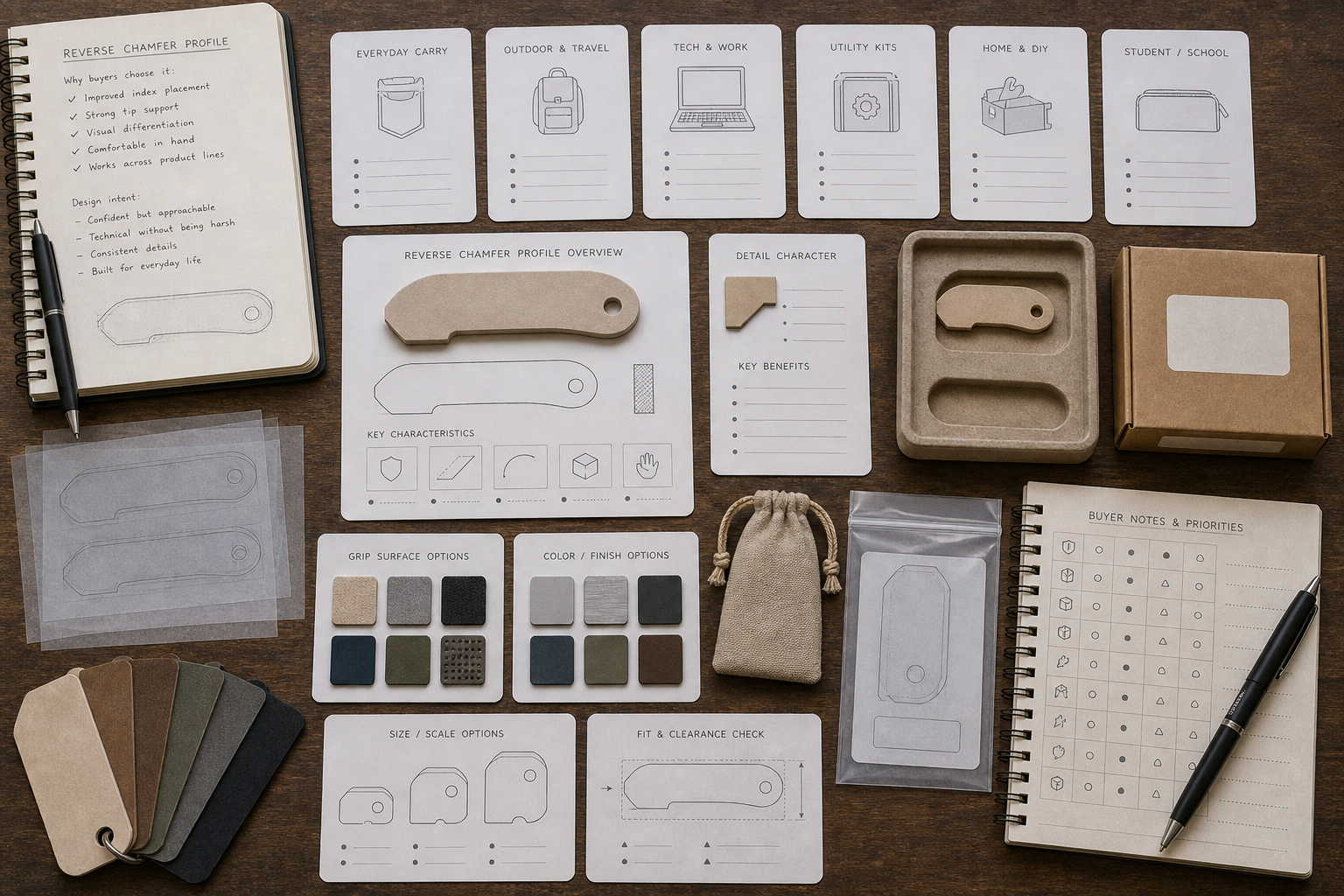
I Match the Shape to the Sales Channel
Many buyers choose reverse tanto because it feels modern and recognizable. That matters. In a crowded EDC market, blade shape can help a product stand out. But I also want the shape to match the user's daily tasks. A reverse tanto can be useful for opening packages, general cutting, light outdoor work, and daily carry. If the main edge is not too thick and the tip is not too abrupt, the knife can still cut smoothly.
Industry blade-shape guides, such as Gear Patrol's overview of knife blade shapes, show that blade profiles are often chosen for different cutting tasks and design priorities. I treat reverse tanto the same way. It is not automatically better than a drop point, tanto, spear point, or wharncliffe. It is a design choice. The buyer should know whether the market wants a clean EDC profile, a tactical-style look, a compact utility tool, or a premium-looking outdoor knife.
For OEM projects, the shape also affects packaging and product description. If the knife is sold as practical EDC, I avoid over-aggressive language. I describe the profile in terms of control, utility, and clean design.
| Buyer goal | Why reverse tanto may fit | Caution |
|---|---|---|
| EDC identity | Modern look and useful point | Avoid making the tip too thick |
| Utility cutting | Long usable edge can help daily tasks | Keep geometry practical |
| Outdoor style | Strong visual difference from drop point | Do not oversell heavy-duty use |
| Private label line | Easy to separate from common profiles | Confirm repeatable grind and finish |
How Is Reverse Tanto Different From Standard Tanto and Drop Point Blades?
Confusing blade names can create wrong samples. A buyer may ask for reverse tanto while expecting standard tanto or drop point behavior.
Reverse tanto usually differs from standard tanto by placing the angular transition on the spine side, while it differs from drop point by using a more angular and technical-looking front profile.
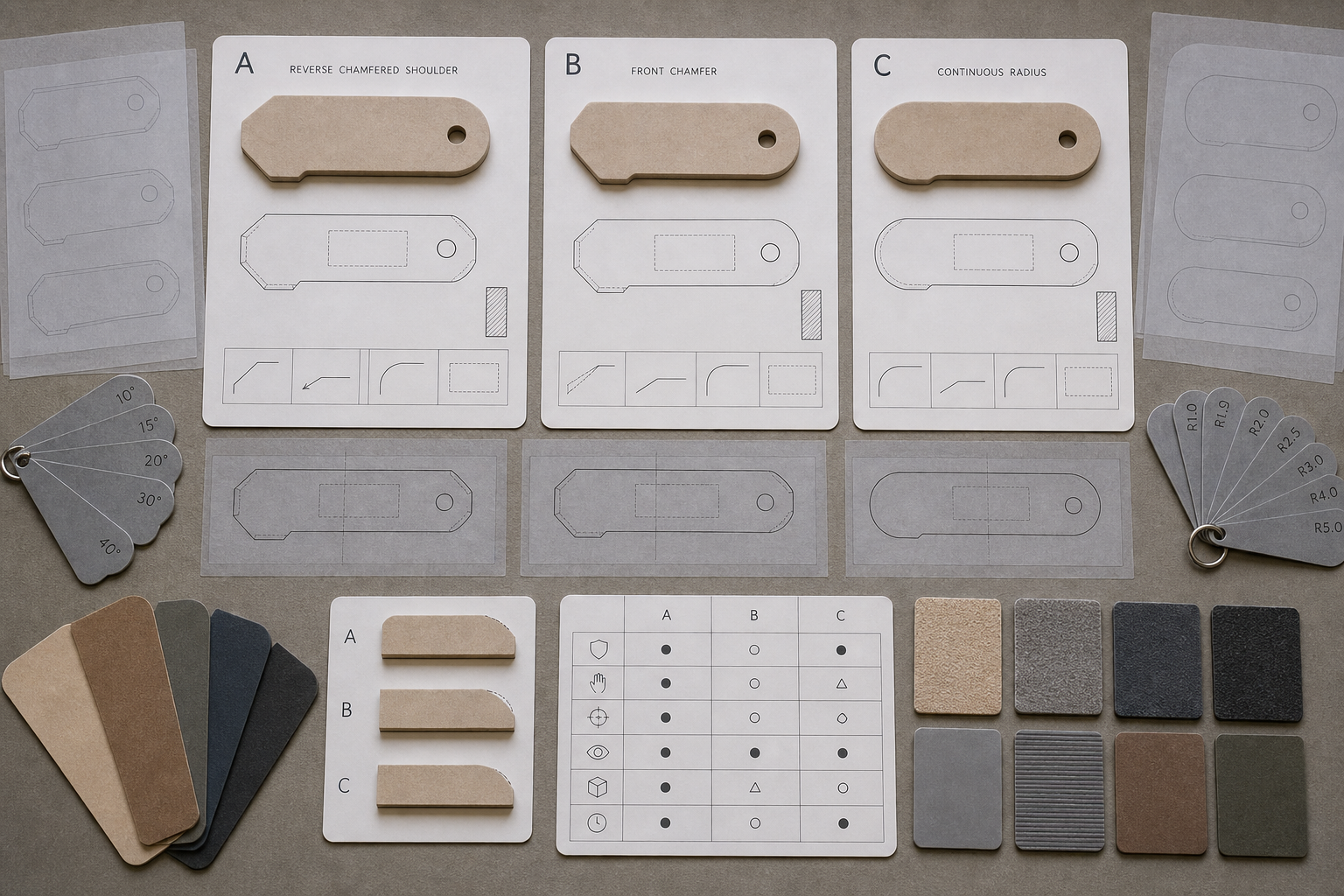
I Compare Shapes by Function, Not Only by Name
A standard tanto-style blade often has a front edge or secondary edge that creates a strong angular tip. A reverse tanto usually keeps the angular design more on the spine side, with the main edge staying more continuous. A drop point usually has a smoother spine curve toward the point. These differences change the look, the cutting feel, and the manufacturing checks.
For B2B buyers, the practical question is not which shape is most famous. The question is which shape fits the product. A standard tanto can look strong and technical, but the front edge may create sharpening and user-experience questions. A drop point is widely understood and easy to position for outdoor and general use. A reverse tanto can sit between these ideas: modern, distinctive, and still practical if the edge is designed well.
The comparison should happen before sample making. If a buyer wants a slicing-focused EDC knife, I may add more belly. If the buyer wants a compact utility style, I may keep a straighter edge. If the buyer wants a strong visual identity, I may sharpen the spine angle visually without making the point fragile.
| Blade shape | Typical visual feeling | OEM design concern |
|---|---|---|
| Reverse tanto | Modern, angular, practical | Spine angle and tip geometry |
| Standard tanto | Strong, tactical-style, segmented | Front edge and sharpening consistency |
| Drop point | Familiar, outdoor-friendly, versatile | Less distinctive in crowded lines |
| Wharncliffe-like utility | Straight edge and controlled tip | May feel too specialized |
What Geometry Details Should Buyers Specify Clearly?
Reverse tanto design can fail in small details. A few millimeters around the point can change the whole product.
Buyers should specify blade length, blade thickness, tip height, spine angle, edge belly, grind height, sharpening angle, pivot or tang area, handle clearance, and finish before approving a reverse tanto sample.
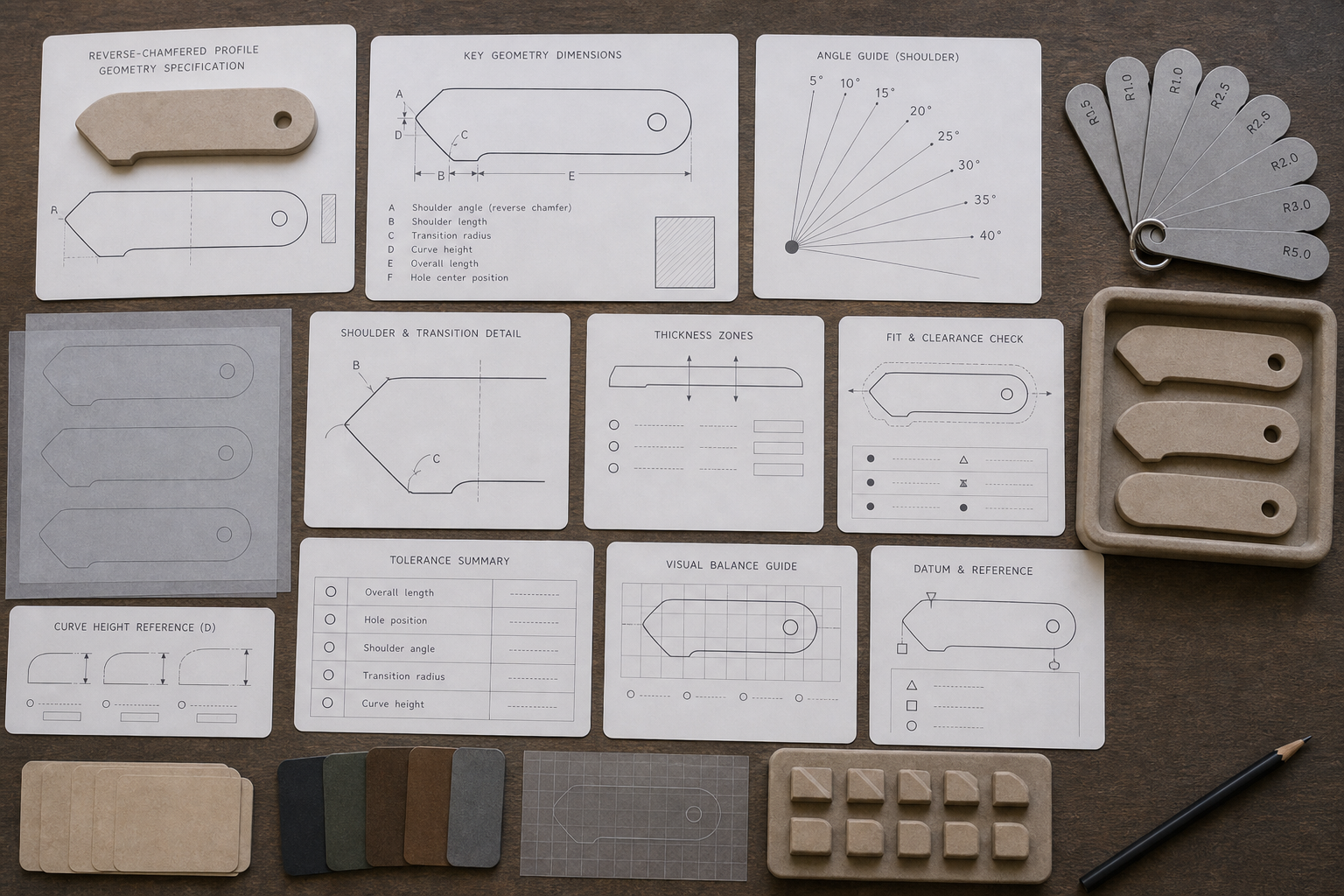
I Turn the Blade Name Into Measurable Details
The most important step is turning the name into measurable geometry. A reverse tanto blade should not be approved only from a picture. The buyer should confirm blade length, overall length, cutting edge length, blade thickness, spine angle, point position, edge belly, grind type, and finish. For folding knives, I also need the closed position, handle clearance, stop pin contact, lock surface, pivot hole, and tip safety inside the handle. For fixed blades, I need tang shape, handle attachment, sheath clearance, and tip protection.
Tip geometry deserves extra attention. If the point is too thin, it may look sharp but become fragile. If the point is too thick, the knife may feel strong but cut poorly. The spine angle also affects grinding. A clean angular profile needs consistent machining and finishing, especially if the blade has satin lines, stonewash, or coating.
I also recommend buyers approve a reference sample before bulk production. The sample becomes a practical standard for edge line, tip shape, grind height, finish, and overall feel.
| Geometry item | What to define | Why it matters |
|---|---|---|
| Tip height | Point position and support behind the tip | Controls strength and visual balance |
| Edge belly | Straightness or curve of main edge | Affects slicing and utility work |
| Grind height | Flat, hollow, saber, or other grind direction | Controls cutting feel and appearance |
| Handle clearance | Tip location when closed or sheathed | Protects safety and assembly fit |
Which Blade Steel Works Best for Reverse Tanto OEM Knives?
Steel choice can become a marketing argument, but performance depends on the full system. Steel alone does not make a good knife.
The best blade steel for a reverse tanto OEM knife depends on target price, corrosion resistance, edge retention, toughness, sharpening ease, heat treatment control, and the market position of the product.
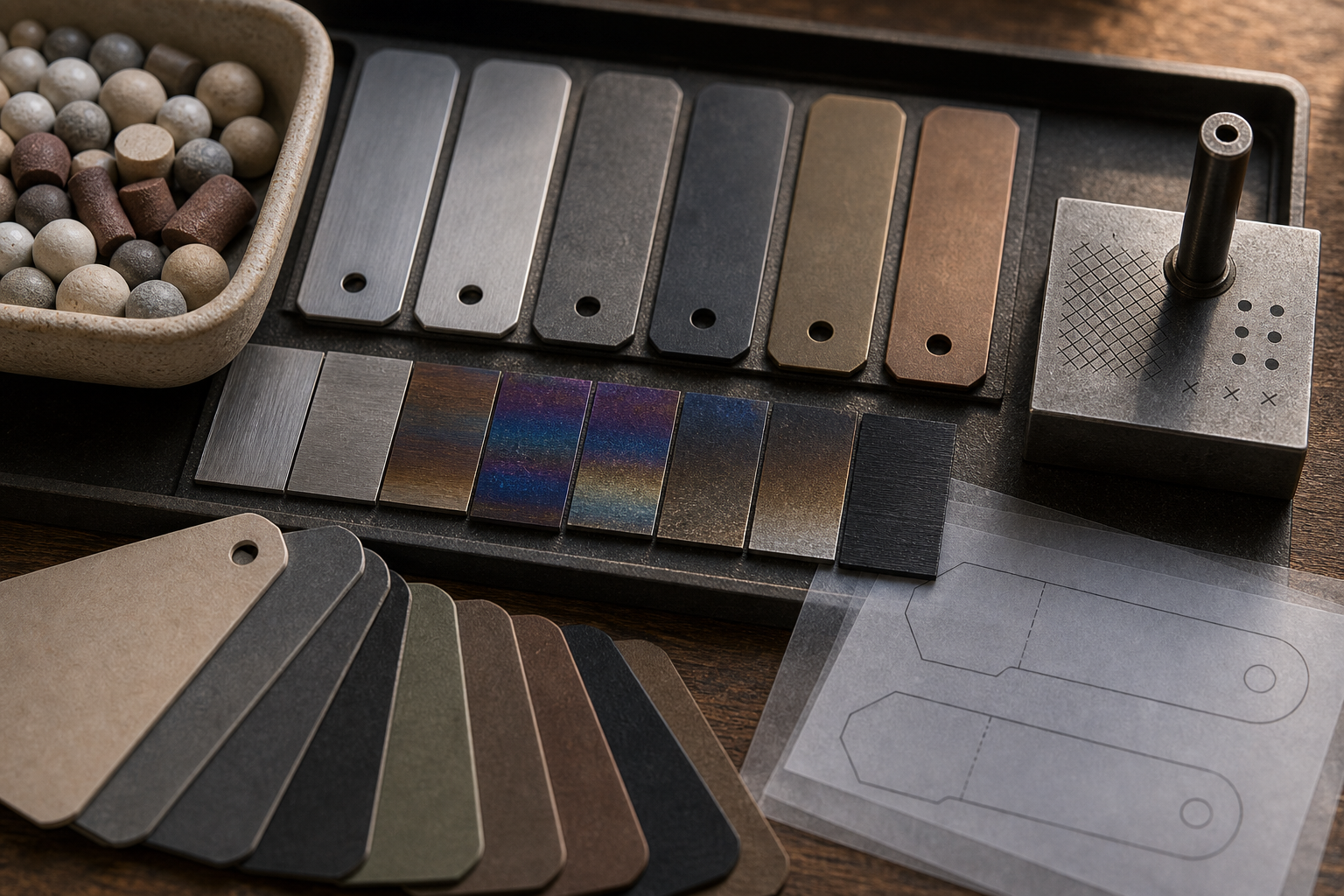
I Choose Steel After I Understand the Market
I do not start by asking for the most expensive steel. I start with the buyer's market. A budget EDC line may need a stable and cost-friendly stainless steel. A higher-positioned outdoor knife may need better edge performance and a stronger material story. A humid-market product may need more corrosion resistance. A utility product may need easy sharpening and practical toughness.
Alleima describes 14C28N knife steel as a knife steel with edge performance, high hardness, and corrosion resistance. That makes it a useful reference when buyers want to understand why steel grade matters. But I still avoid saying one steel is best for every reverse tanto. The blade shape, thickness, heat treatment, grind, and user expectation all affect performance.
For OEM buyers, the steel conversation should include availability, MOQ, price, heat treatment route, hardness target, and final finish. Some steel grades support a stronger marketing story. Others support better cost control. The right answer is the one that fits the product and can be repeated in production.
| Steel decision | What to ask | Practical result |
|---|---|---|
| Target price | What cost level must the product hit? | Prevents over-specification |
| Corrosion resistance | Will the knife face humidity or outdoor use? | Guides stainless choices |
| Edge expectation | Is the knife for EDC, utility, or outdoor work? | Guides hardness and grind |
| Supply stability | Can the steel be sourced consistently? | Protects repeat orders |
How Do Heat Treatment and Hardness Affect Reverse Tanto Performance?
A reverse tanto blade can look strong but still underperform. Poor heat treatment can make the edge too soft or too brittle.
Heat treatment and hardness affect reverse tanto performance by controlling edge holding, toughness, chipping risk, sharpening behavior, and consistency across production batches.
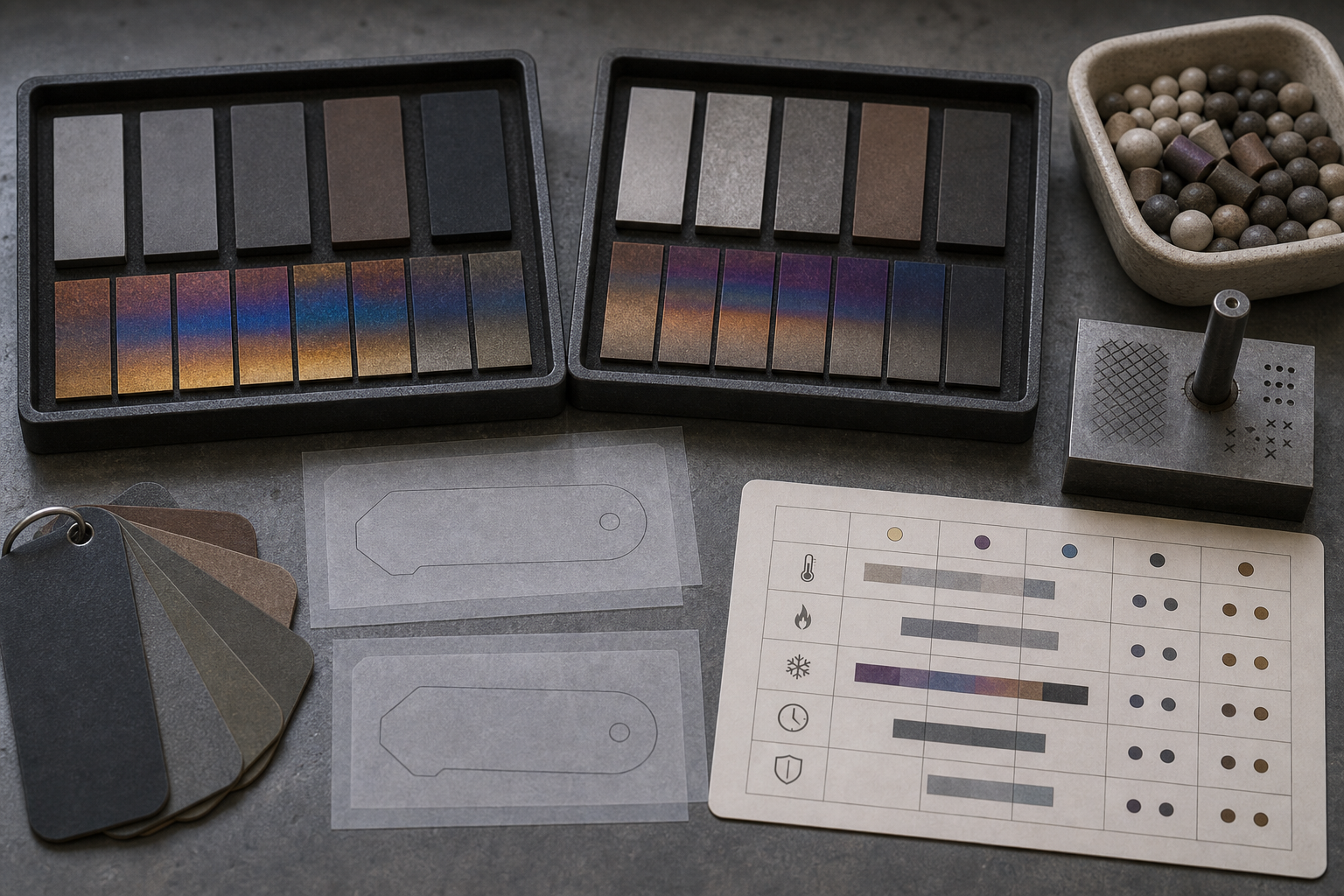
I Check the Balance Between Hardness and Real Use
Heat treatment is where blade steel becomes a working blade. The process must match the steel grade, blade thickness, grind plan, and target use. A high hardness number may sound attractive, but it is not always the right answer. If the blade becomes too brittle, the edge or tip may be more likely to chip. If the blade is too soft, the edge may lose performance too quickly.
For reverse tanto blades, I pay attention to the tip and edge geometry. A hard, thin point may not be suitable for rough utility expectations. A thick, hard blade may feel strong but cut poorly. The buyer should ask the supplier what hardness target is realistic for the chosen steel and why. The buyer should also ask how hardness is checked.
The NIST Rockwell hardness measurement guide explains why good measurement practice helps reduce testing errors. For knife sourcing, this means hardness numbers should connect to controlled testing, not only a line in a quotation.
| Heat treatment question | What I want to know | Buyer value |
|---|---|---|
| Steel match | Is the heat treatment route correct for this grade? | Avoids wrong process settings |
| Hardness target | What range fits the use case? | Balances edge and toughness |
| Tip risk | Is the geometry too thin for the target hardness? | Reduces chipping complaints |
| Test practice | How is hardness checked and recorded? | Supports batch consistency |
How Should Grinding and Sharpening Be Controlled?
The profile may look correct before grinding. But poor bevel control can make the finished knife feel cheap or inconsistent.
Grinding and sharpening should be controlled by defining bevel symmetry, grind height, edge thickness, sharpening angle, tip finish, surface scratch level, and final sharpness inspection.
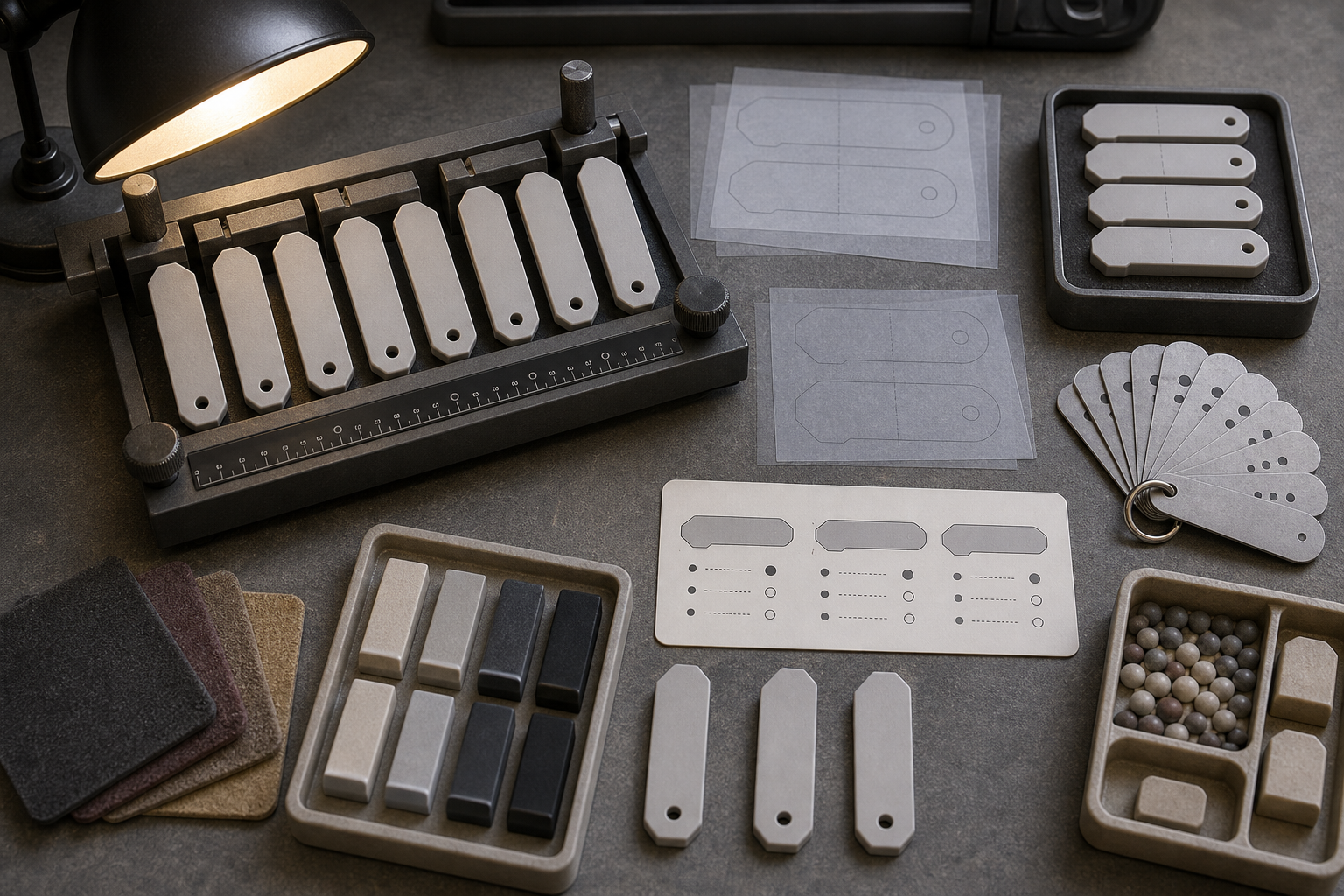
I Make the Edge Match the Promise
Grinding is one of the most visible process stages for a reverse tanto blade. The angled spine and point create a strong visual line, so uneven bevels are easy to notice. If the grind line is not controlled, the blade can look unbalanced. If the edge thickness is too high, the knife may feel strong but cut poorly. If the edge is too thin for the use case, the buyer may face durability complaints.
Sharpening also needs a clear standard. Some reverse tanto designs have a long main edge and a defined point. The factory must keep the tip clean without rounding it too much. The sharpening angle should fit the steel, blade thickness, and target use. For private label orders, I like to confirm a reference sample for bevel height, edge feel, point finish, and surface texture.
I also connect grinding to finish. Satin lines, bead blast, stonewash, coating, and polishing all show defects differently. A finish that hides small marks may be easier to repeat than a clean satin line on a complex angular blade.
| Grinding item | What to control | Why it matters |
|---|---|---|
| Bevel symmetry | Left and right sides match | Improves perceived quality |
| Edge thickness | Thickness behind the edge | Controls cutting feel |
| Tip finish | Clean point without over-rounding | Protects the profile identity |
| Surface scratches | Scratch direction and finish preparation | Reduces visual defects |
What Handle and Lock Details Matter for Reverse Tanto Folding Knives?
A reverse tanto blade may be attractive, but the folding knife can fail if the handle or lock does not support it.
For reverse tanto folding knives, buyers should check pivot position, blade centering, lock engagement, closed-tip clearance, handle grip, clip placement, screw fit, and opening or closing feel.
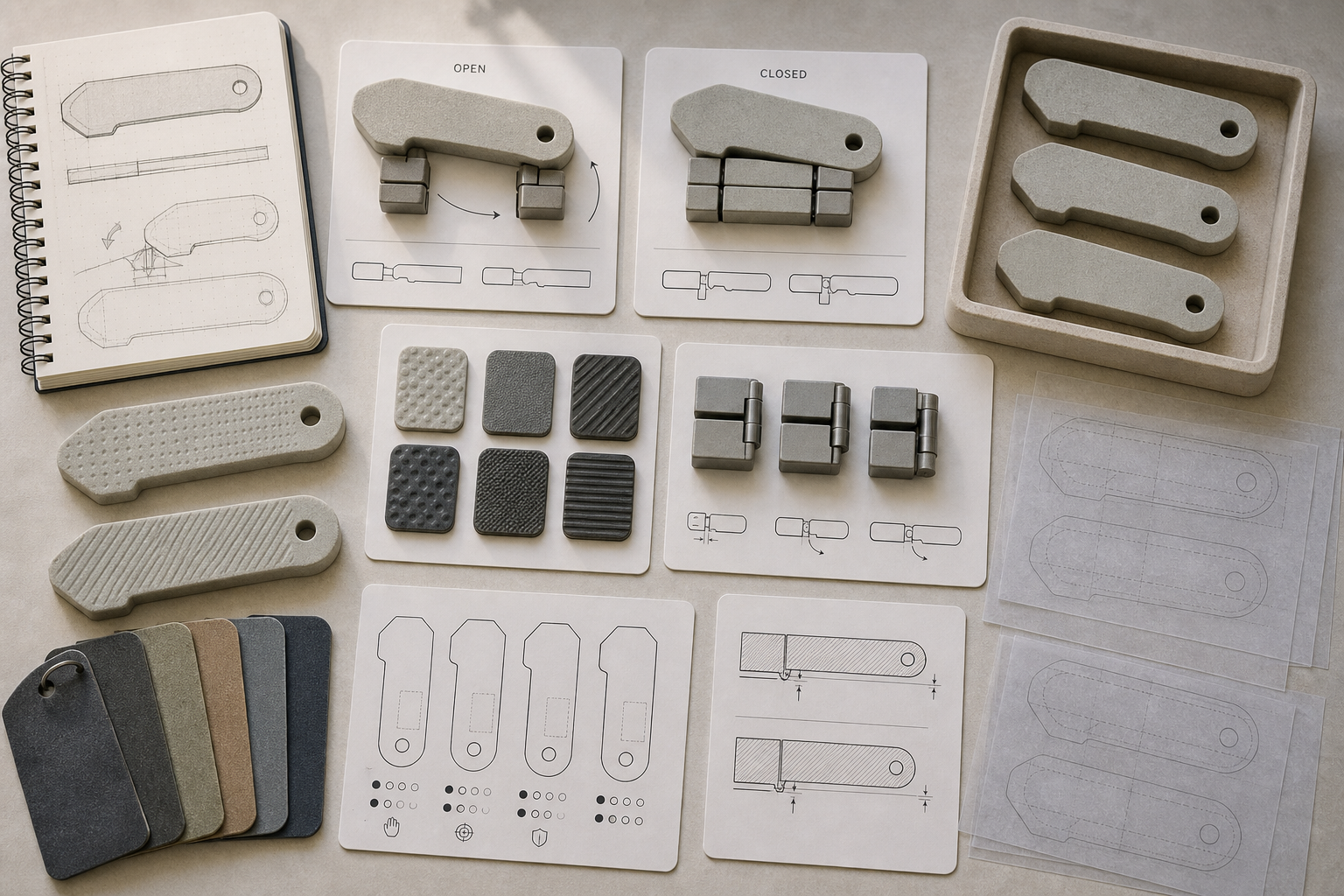
I Treat the Blade as a Moving Part
In a folding knife, the reverse tanto blade is not only a cutting part. It is a moving part. The pivot hole, stop pin contact, tang shape, lock surface, washer or bearing space, and handle clearance must work together. The angular tip also needs safe clearance when the blade is closed. If the point sits too close to the handle edge, it can create safety and assembly concerns.
Handle design also matters. A reverse tanto often has a modern, technical look. The handle should support that look while still feeling comfortable. The Canadian Centre for Occupational Health and Safety discusses hand tool ergonomics, including how handle shape can affect wrist and force direction. A knife is a specific product, but the general idea is useful: a handle should help the user control the tool.
For OEM buyers, I recommend checking blade centering, lockup, side play, vertical play, detent or opening feel, clip position, screw security, and handle edge comfort before approving a sample.
| Folding detail | What to inspect | Why it matters |
|---|---|---|
| Pivot and stop | Alignment, smooth action, stop position | Controls movement |
| Lock engagement | Contact surface and release feel | Supports user confidence |
| Closed-tip clearance | Tip location inside handle | Protects safety and assembly |
| Handle shape | Grip, corners, clip, texture | Improves user control |
What Should Buyers Check for Fixed Blade Reverse Tanto Designs?
Fixed blades remove lock complexity, but they add other risks. Tang structure, handle attachment, and sheath fit become more important.
For fixed blade reverse tanto designs, buyers should check blade thickness, tang structure, handle fit, pin or bolt layout, balance, sheath retention, tip protection, and packaging safety.
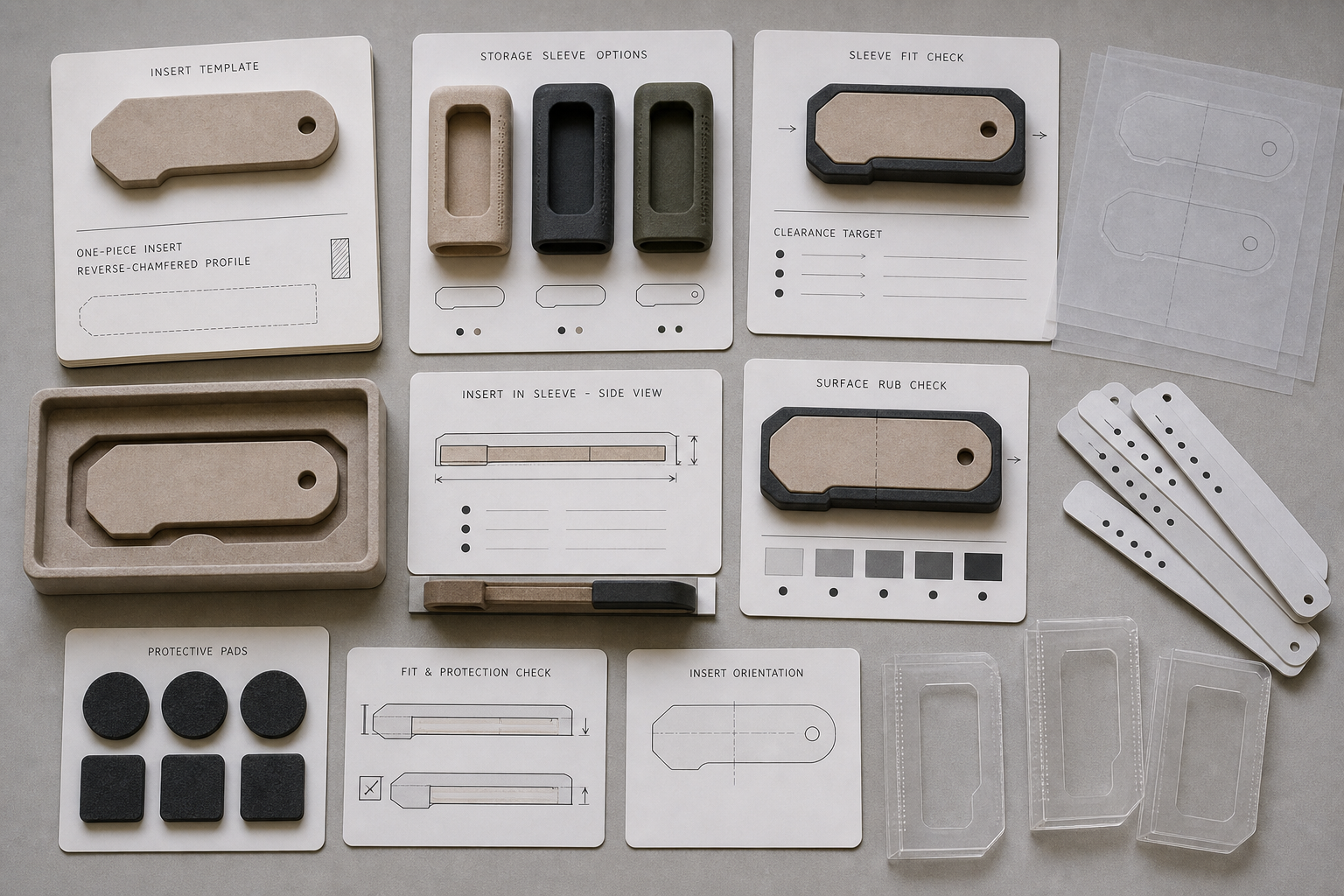
I Focus on Structure, Balance, and Carry
For fixed blade reverse tanto projects, I pay attention to the connection between blade and handle. A full tang, partial tang, hidden tang, or skeletonized tang changes strength, weight, cost, and assembly. The buyer should confirm how the handle is attached and how the design will be inspected. Gaps, uneven scales, poor pins, and rough handle edges can make a good blade profile feel low quality.
Sheath fit is another key point. A reverse tanto point needs proper tip clearance and retention. If the sheath scratches the blade, rattles too much, or grips the knife poorly, the product will disappoint buyers. The sheath material, belt attachment, clip, drainage, and packaging all affect the final user experience. HSE's guidance on safe use of knives is written for workplace knife handling, not OEM knife design, but it gives useful context: sharp tools need controlled handling, storage, and user awareness. For fixed blades, that makes sheath design and packaging safety important.
I also check balance. A reverse tanto fixed blade can feel front-heavy if the blade is too thick or the handle is too light.
| Fixed blade item | What to check | OEM risk |
|---|---|---|
| Tang structure | Full tang, partial tang, hidden tang | Strength and cost balance |
| Handle attachment | Pins, bolts, adhesive, fit | Gaps or weak assembly |
| Sheath retention | Fit, draw, tip clearance | Safety and product feel |
| Balance | Blade thickness and handle weight | User comfort |
How Should Finishing, Branding, and Packaging Be Planned?
The reverse tanto shape creates strong visual lines. Poor finishing or logo placement can make the whole knife look careless.
Finishing, branding, and packaging should be planned by confirming surface finish, logo method, logo position, handle color, packaging artwork, carton setup, and approved reference samples before production.
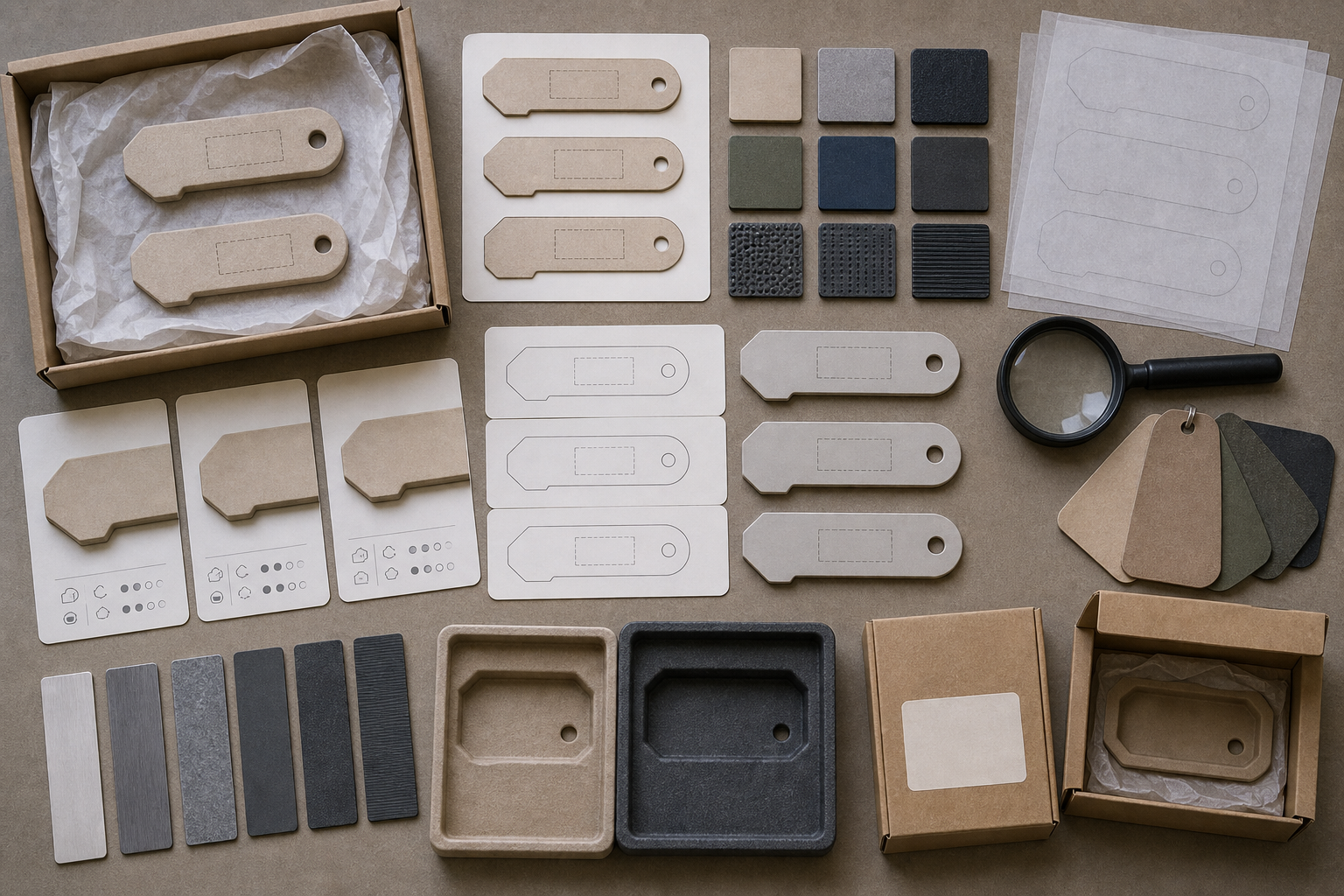
I Make the Visual Style Repeatable
Reverse tanto knives often sell partly through visual identity. That means finishing matters. A stonewash finish may hide small handling marks and give a practical look. A satin finish may look cleaner but requires more control. A coating can support a tactical-style product, but buyers should check adhesion expectations, scratch visibility, and color consistency. Handle finish also matters. G10 texture, aluminum anodizing, micarta surface, stainless polish, or polymer molding all create different product feelings.
Branding must be planned with the blade shape. A reverse tanto profile may not have much flat visual space near the point, so logo placement should be tested on the sample. Laser marking, etching, printing, and packaging branding all have different costs and risks. The buyer should approve artwork, size, position, color reference, and packaging structure before mass production.
I also like to confirm packaging around the knife's sharp point and clip. The product should arrive clean, protected, and ready for sale. A good package is not only attractive. It prevents scratches, loose movement, and mixed-SKU mistakes.
| Finish or branding item | What to confirm | Why it matters |
|---|---|---|
| Blade finish | Satin, stonewash, bead blast, coating | Controls appearance and repeatability |
| Logo placement | Size, method, position, depth | Protects brand presentation |
| Handle color | Material batch and color reference | Reduces variation |
| Packaging | Insert, pouch, box, carton | Protects product and sales channel |
What Quality Checks Protect Reverse Tanto Production?
Final inspection alone is too late. Reverse tanto knives need process checks because geometry, grind, tip, and fit can drift.
Quality checks for reverse tanto production should cover material, blade dimensions, tip geometry, hardness, grind symmetry, edge sharpness, handle fit, lock or sheath function, finish, logo, packaging, and cartons.
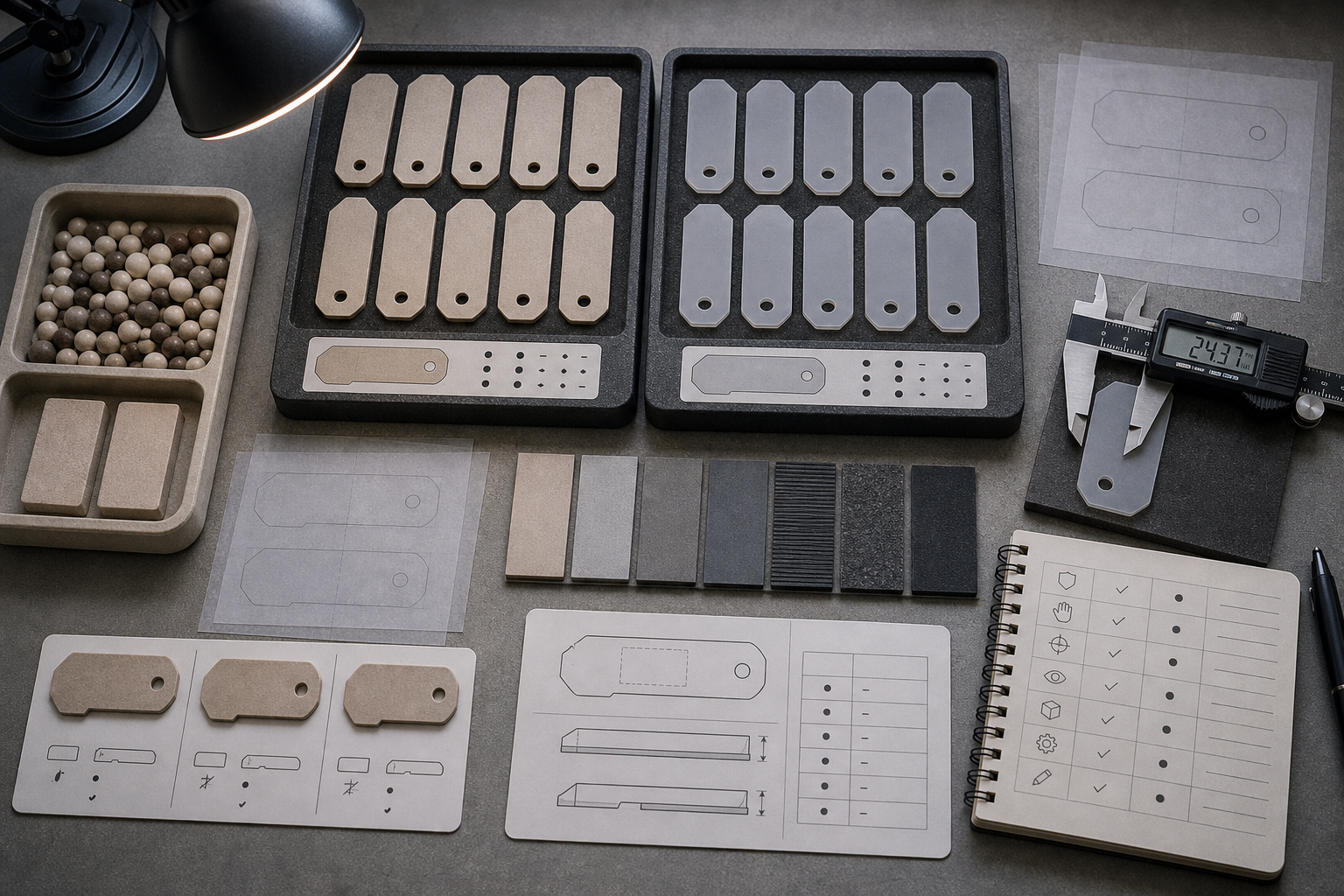
I Use QC to Protect the Approved Sample
Quality control should start with the approved sample. The sample should define blade shape, grind height, tip finish, handle feel, lock or sheath function, logo placement, finish, and packaging. Then production checks should compare real pieces against that standard. This is better than only checking products after everything is packed.
The ISO page for ISO 9001 quality management discusses customer requirements, process control, performance evaluation, and continual improvement. I use this as a useful quality-management framework, not as a claim about any specific certification. For knife production, the mindset matters: define requirements, control the process, check results, and correct problems.
For reverse tanto knives, I especially watch tip consistency and grind symmetry. These details are easy for buyers to see. I also check function. Folding knives need centering, lockup, action, and screw security. Fixed blades need handle fit and sheath retention. Packaging should protect the knife and match the buyer's private label plan.
| QC stage | What to check | Why it matters |
|---|---|---|
| Incoming QC | Steel, handle material, hardware, packaging | Prevents weak inputs |
| In-process QC | Profile, tip, grind, heat treatment | Finds drift early |
| Functional QC | Lock, centering, sheath, sharpness | Protects user experience |
| Final QC | Finish, logo, packaging, cartons | Supports sellable delivery |
What Should Buyers Include in a Reverse Tanto RFQ?
An RFQ that only says "reverse tanto knife" is too vague. It invites wrong quotes and mismatched samples.
A reverse tanto RFQ should include knife type, target market, size, blade steel, thickness, tip geometry, grind, handle material, lock or sheath, finish, logo, packaging, quantity, target price, and inspection needs.
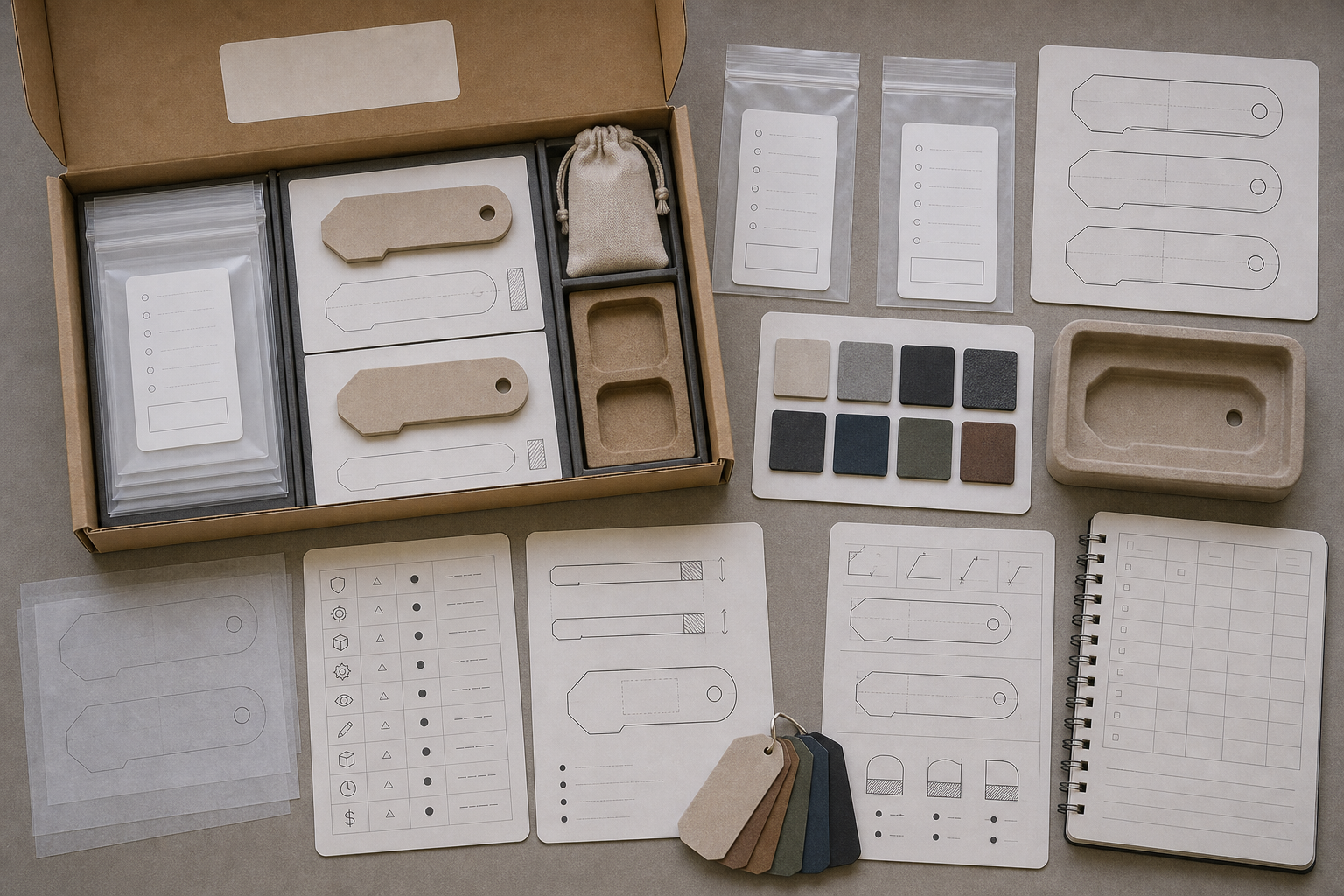
I Use the RFQ to Reduce Guesswork
The best RFQ gives the supplier enough information to recommend a realistic path. The buyer does not need to know every technical answer before asking. But the buyer should explain the target market, product use, price range, and order plan. If the buyer has a drawing or reference sample, that helps a lot. If the buyer only has an idea, I can still help, but I need clear priorities.
For a folding reverse tanto, the RFQ should include blade length, closed length, steel grade or performance target, handle material, lock type, opening method, clip, finish, logo, packaging, quantity, target price, and target market. For a fixed blade, it should include blade length, overall length, tang structure, handle material, sheath type, finish, logo, packaging, and use case. Buyers should also mention any market restrictions or retailer requirements they know.
I also recommend asking the supplier to explain tradeoffs. If the supplier can suggest a better steel, simpler finish, stronger handle structure, or more stable packaging plan, the buyer gets more value than a simple price.
| RFQ field | What to provide | Why it helps |
|---|---|---|
| Product type | Folding knife or fixed blade | Defines structure and process |
| Blade details | Length, steel, thickness, tip, grind | Reduces geometry mistakes |
| Handl [TRUNCATED: see Source Markdown File for full content]
Turn your idea into a quote-ready knife project.
Share your drawing, sample photo, target quantity, market, and packaging needs. Vast State will review manufacturability and prepare OEM/ODM options.