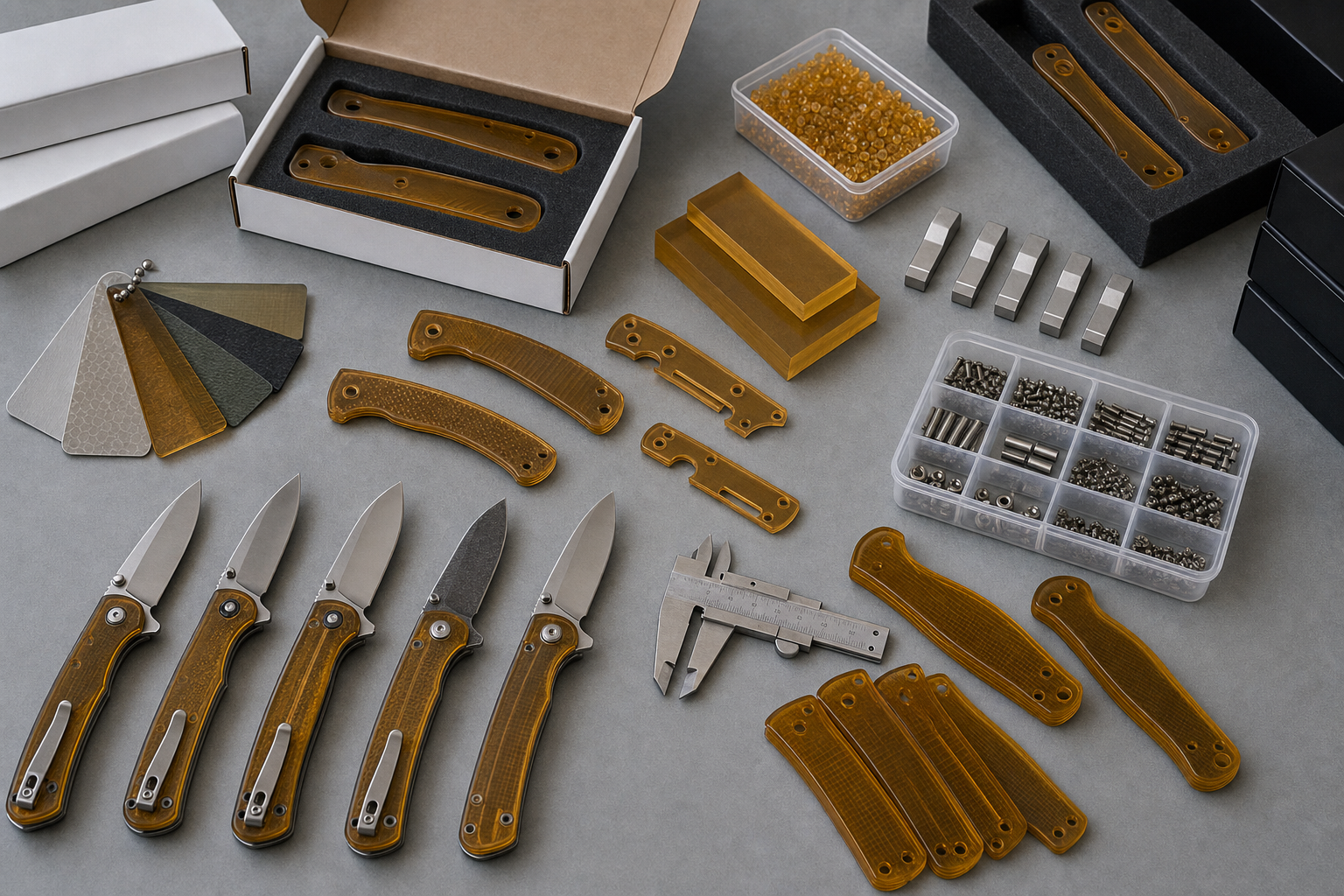
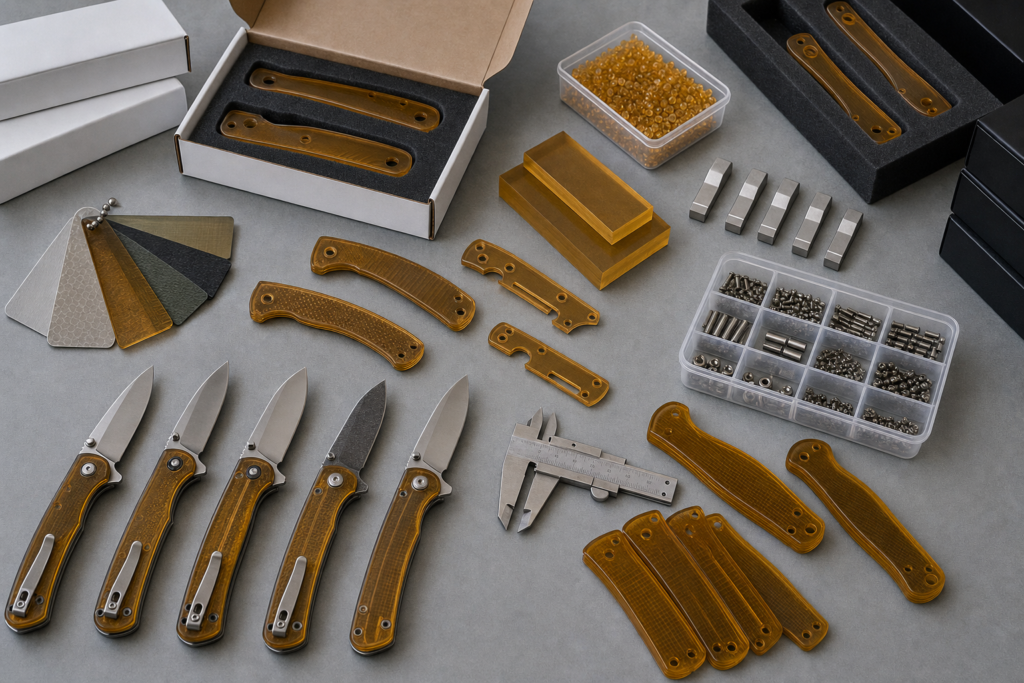
Ultem handles can sell a knife fast. They can also create returns if the design ignores cracks, scratches, and assembly stress. Evaluation keeps the material honest.
Knife sellers should evaluate Ultem handle material by checking the resin grade, handle thickness, screw design, surface finish, grip texture, supplier documents, and batch QC plan. Ultem can support a distinctive technical look, but it needs controlled machining, careful assembly, and clear buyer expectations.
Quick buyer brief:
- Answer: Ultem can work well when the design controls stress points, finish marks, and screw pressure.
- Buyer context: It is useful for EDC, outdoor, and display-friendly product lines that need a technical amber look.
- Key checks: Confirm material source, scale thickness, countersink design, texture, clip area, batch color, and final assembly QC.
Have a knife or multi-tool project in mind?
Send your sketch, CAD file, sample photo, or product idea. Vast State can review manufacturability, suggest materials, estimate MOQ, and prepare a quote for your OEM/ODM project.
When a buyer asks me about Ultem handle knives, I do not answer with one simple yes or no. I first ask what the knife is trying to sell. Is the main value a modern EDC look, a lighter handle, a transparent design story, or a higher perceived material level? Then I check whether the structure can protect the material in real use. That is the difference between using Ultem as a serious handle option and using it only as a trend word. For B2B knife sellers, the material choice must support price, margin, repeat production, and after-sales confidence.
What Is Ultem Material and Why Do Knife Buyers Ask About It?
Some sellers treat Ultem as just a color trend. That is risky. The real question is whether the material fits the knife structure.
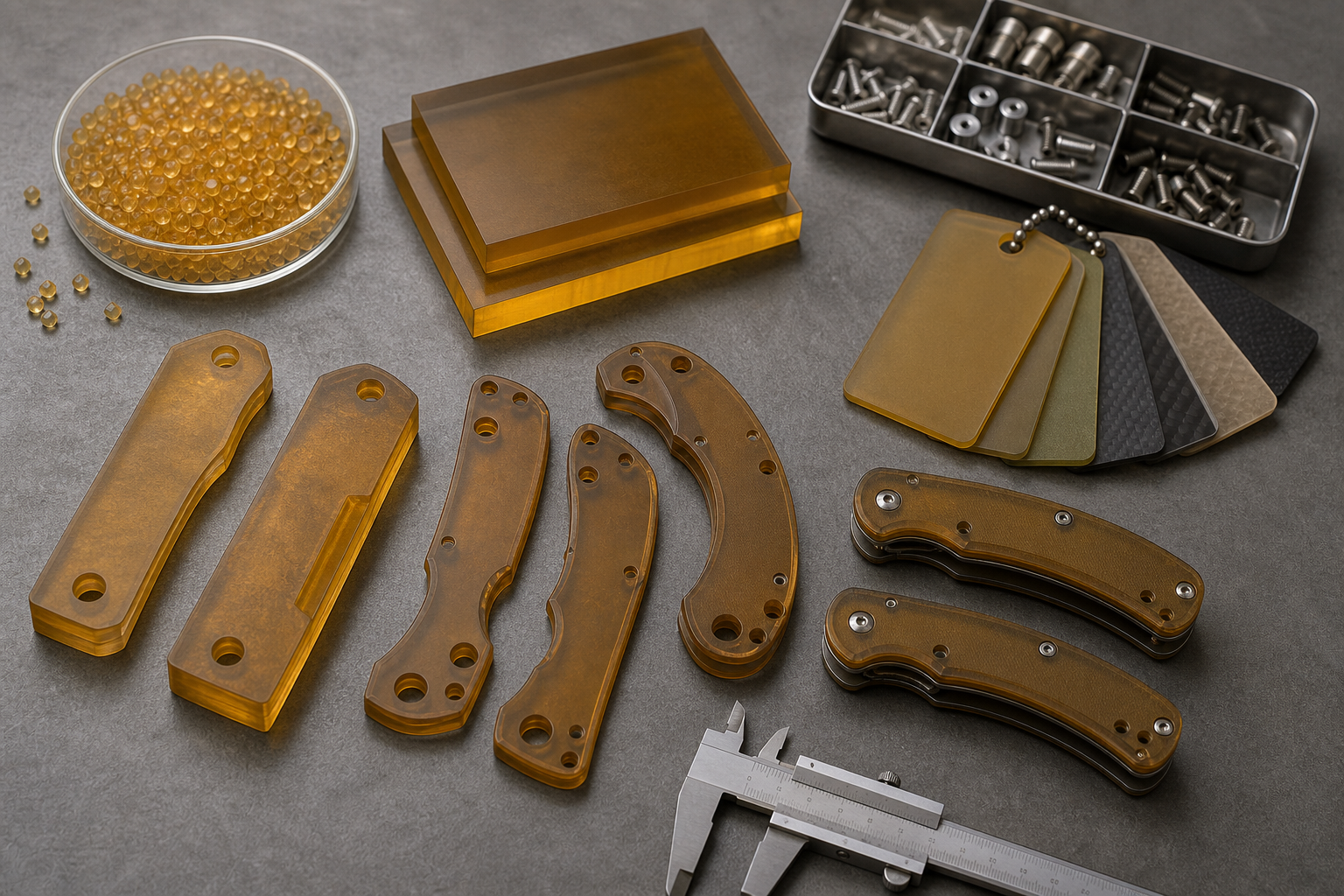
Ultem is a SABIC brand name for a family of PEI engineering thermoplastics. Knife buyers usually ask about it because amber transparent PEI scales give a folding knife a modern technical look.
I Treat Ultem as a Material Choice, Not a Fashion Word
ULTEM is not only a color. SABIC describes its ULTEM resin family as amorphous thermoplastic polyetherimide materials with elevated heat resistance, strength, stiffness, chemical resistance, and dimensional stability. In the knife market, many buyers use the word Ultem to describe amber transparent PEI handle scales. That can be useful, but it also creates confusion. Not every amber plastic has the same origin, grade, or performance.
When I evaluate an Ultem handle project, I ask for the real material description. I want to know whether the buyer needs genuine ULTEM resin, PEI stock shape, a specific sheet supplier, a target amber color, or simply a transparent high-performance look. These are different purchasing requirements. If a seller advertises the material too loosely, end users may challenge the claim. If a factory sources only by color, the batch may look right but perform differently.
For OEM and ODM work, I prefer to define the material at the RFQ stage. The drawing should show thickness, screw positions, countersinks, chamfers, texture, and whether liners or inserts support the scale. A good-looking scale is not enough. The handle must survive assembly, shipping, pocket carry, and repeat production.
| Buyer question | What I check | Why it matters |
|---|---|---|
| Is it real Ultem or PEI? | Resin grade, stock shape supplier, color sample | It avoids vague material claims |
| Is it for appearance or function? | Target market and product story | It sets the right expectations |
| Is the design stress-safe? | Screw holes, clip area, corners, thickness | It reduces cracking risk |
| Is it repeatable? | Batch color, finish sample, QC limit | It protects repeat orders |
OEM/ODM RFQ Checklist
Prepare these details to help Vast State review your project and provide a more accurate quotation.
| RFQ Field | What to Prepare |
|---|---|
| Project type | OEM from drawing / ODM private label / wholesale catalog |
| Product category | Folding knife / fixed blade / multi-tool / outdoor tool |
| Design status | Idea / sketch / 2D drawing / 3D CAD / physical sample |
| Target price | Ex-factory target price or retail price range |
| MOQ expectation | 500 / 1,000 / 3,000 / 5,000+ pcs |
| Logo method | Laser engraving / etching / printing / molded logo |
| Packaging | Standard packaging / custom retail box / Amazon-ready |
| Market | USA / EU / Japan / Korea / Middle East / other |
| Compliance needs | Buyer-specified testing / documentation / labeling |
| Timeline | Sample deadline / mass production deadline |
When Does Ultem Make Sense for Knife Handles?
A material can be impressive but still wrong for the product. If the buyer's market does not value it, the extra cost becomes waste.
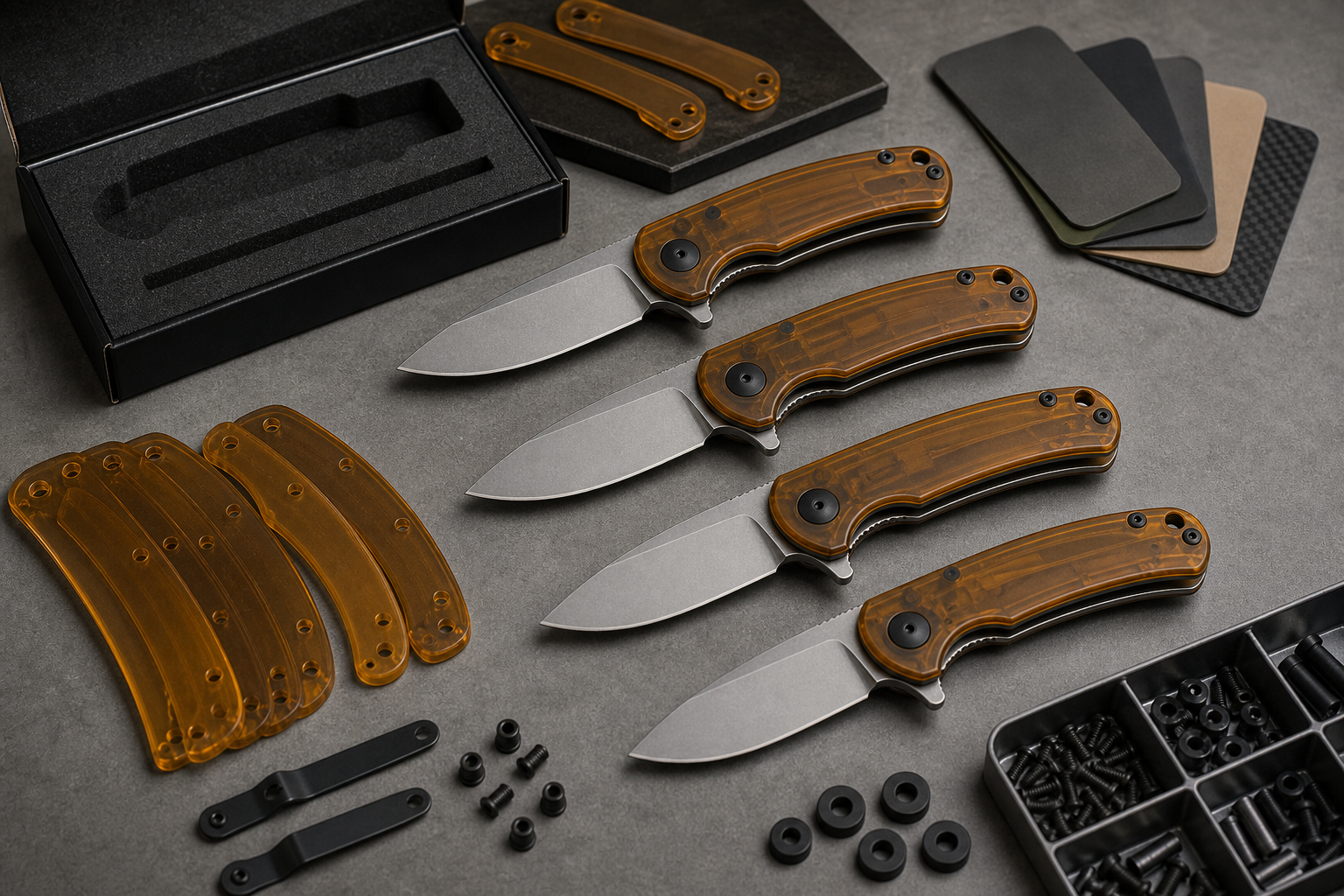
Ultem makes sense when the knife needs a modern technical appearance, light handle feel, visible construction, and a clear material story that supports the target price.
I Use It When the Look Supports the Product Story
Ultem is strongest as a selling feature when the whole knife design supports it. A transparent amber scale can show the liner, spacer, hardware, and internal structure. This can make an EDC knife feel more technical and more designed. It can also help a brand create a recognizable product line without changing the blade steel or lock type too much.
I usually consider Ultem for compact folders, modern pocket knives, display-friendly EDC models, and private label series that need a different visual identity. It can also work when the buyer wants a lighter feel than full stainless steel or aluminum scales. But I do not push it into every project. If the customer sells to a hard-use outdoor market that values rough grip, impact confidence, and dark non-reflective appearance, G10 or micarta may be a more practical choice.
Cost also matters. A seller should not add Ultem only because it looks trendy online. The material should help the product reach a clear customer group. If the final retail buyer does not understand the value, the higher material and machining cost may reduce margin. The best use case is a knife where appearance, material story, and structure all point in the same direction.
| Product goal | Ultem fit | Practical reason |
|---|---|---|
| Modern EDC look | Strong fit | Amber transparent scales create a clear visual identity |
| Lightweight handle feel | Possible fit | PEI can reduce weight compared with metal scales |
| Heavy grip outdoor knife | Case by case | Texture and thickness become more important |
| Budget utility knife | Weak fit | Cost may not match the buyer's price range |
What Are the Practical Risks of Ultem Knife Scales?
The danger is not that Ultem is useless. The danger is using it like metal, G10, or micarta without changing the design.
The main risks are cracking around screws, visible scratches, weak grip texture, batch color variation, solvent stress, and surface marks that show through transparent scales.
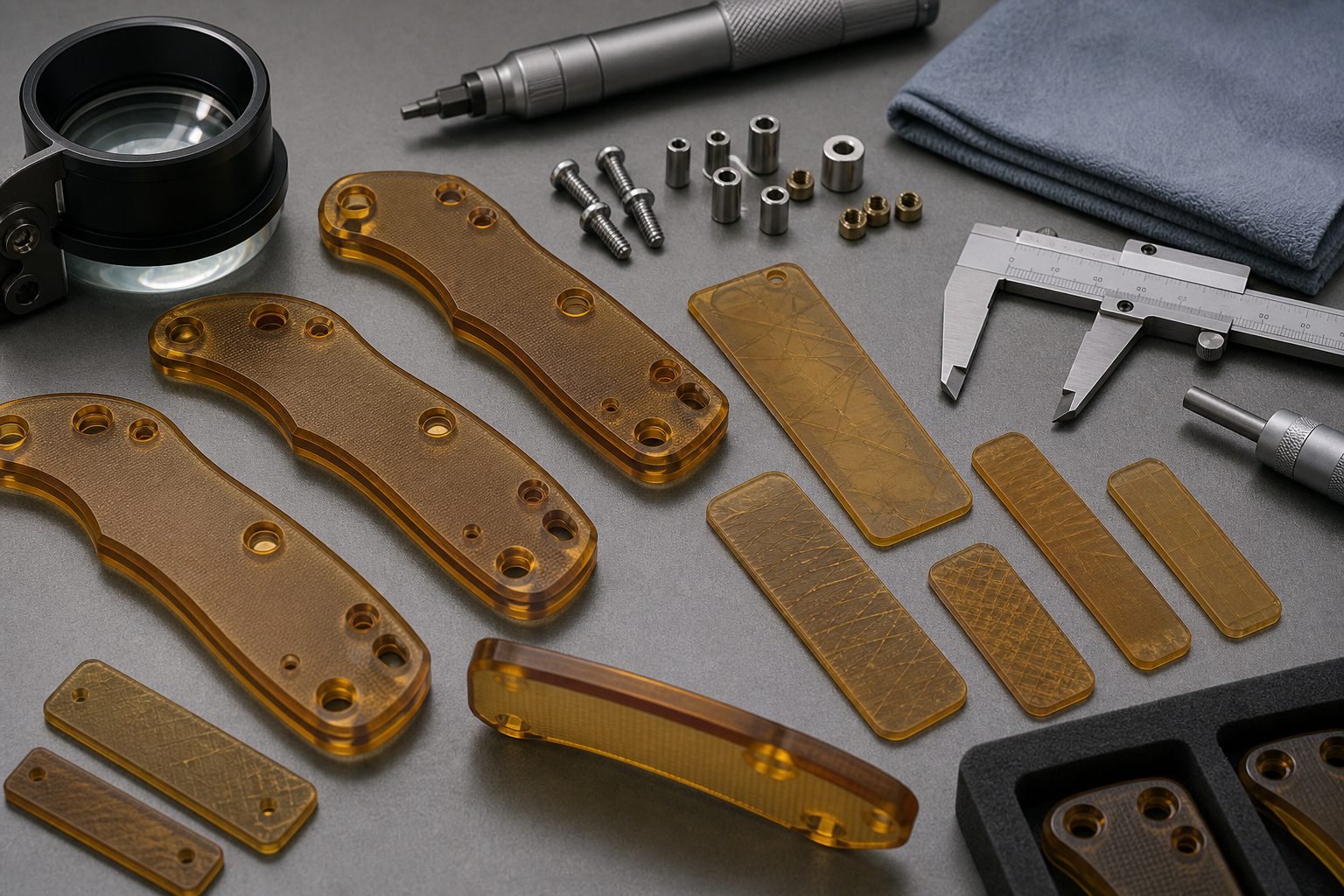
I Check Screw Holes Before I Check the Marketing Photo
The first area I inspect is the screw hole area. A handle scale can look perfect as a flat part, but assembly changes everything. Countersunk screws create pressure. Pocket clips create local stress. Sharp internal corners concentrate force. If the design is too thin around the screw, the scale may crack during assembly or later during use. This is why I want enough wall thickness, smooth chamfers, correct countersink depth, and controlled screw torque.
Transparent material also exposes process problems. A small scratch, burr, trapped dust mark, polishing line, or oil stain can be more visible than it would be on black G10. The buyer may like the transparency, but transparency means the factory must control cleaning and finish better.
Chemical exposure is another point. Ensinger's engineering plastics manual describes PEI as having strong properties, but it also warns that strong solvents may cause stress crack formation. I treat this as a design and instruction issue. Knife sellers should not promise that Ultem is immune to every chemical, cleaner, threadlocker, or oil. During assembly, the factory should keep incompatible chemicals away from the scale and control any threadlocker application.
| Risk area | What can go wrong | How I reduce the risk |
|---|---|---|
| Screw holes | Cracks or whitening around countersinks | Add radius, control depth, use torque control |
| Pocket clip area | Local stress from clip pressure | Add support, check screw length, test clip installation |
| Surface finish | Scratches and haze are visible | Define acceptable finish and cleaning method |
| Chemicals | Stress marks or cracks | Avoid harsh solvents and messy threadlocker use |
How Should Ultem Compare With G10, Micarta, Aluminum, and Other Handle Materials?
Many buyers ask which material is best. That question is too broad. A better question is which material matches the product line.
Ultem should be compared by appearance, grip, cost, machinability, impact confidence, finish stability, weight, and the buyer's sales channel, not by trend value alone.
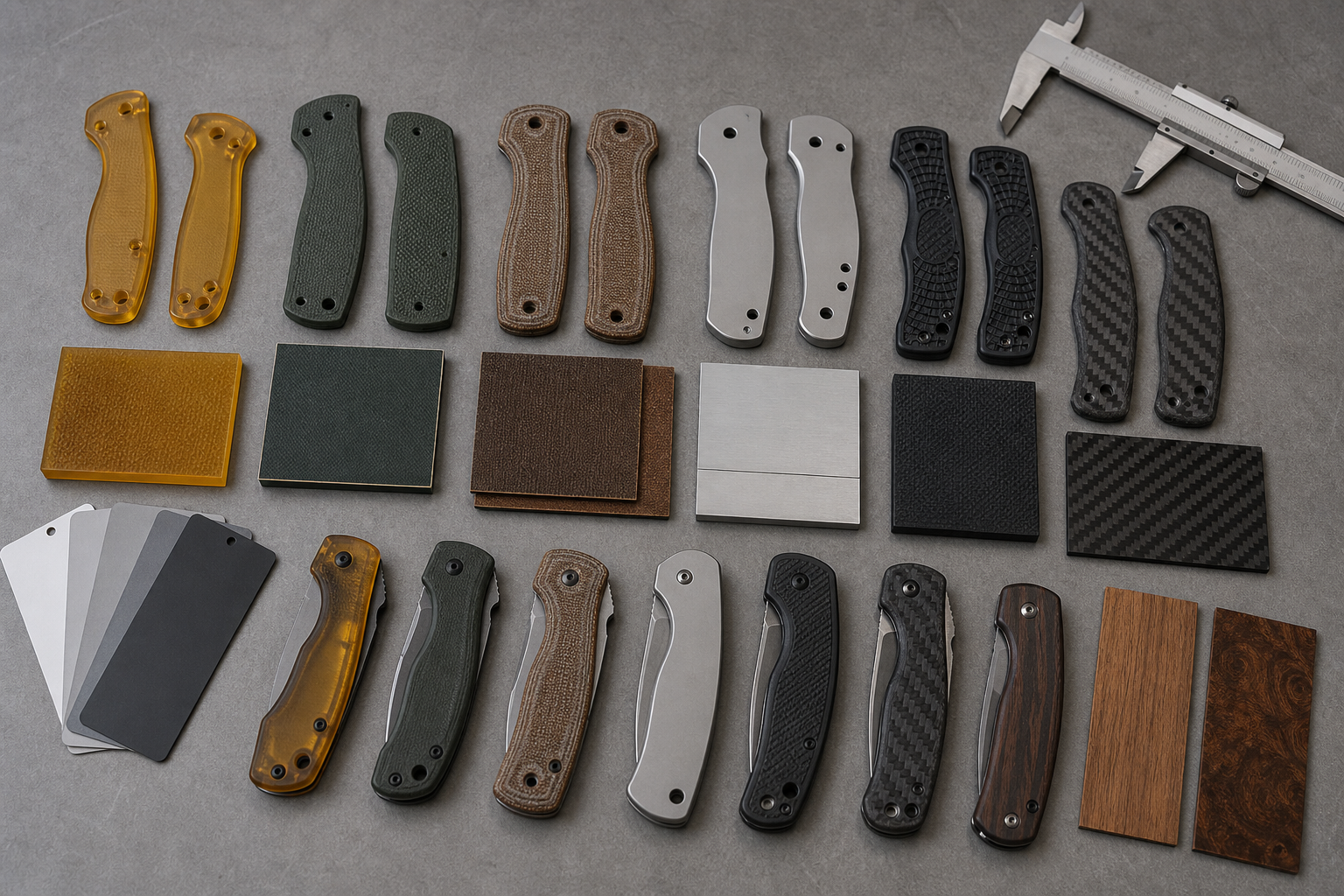
I Compare Materials by the Buyer, Not by the Internet Trend
G10 is practical when a seller needs grip, color options, stable machining, and a familiar handle material. Micarta gives a warmer outdoor feel and can suit traditional or work-focused knives. Aluminum supports a clean modern look and can take anodized colors, but it needs controlled surface treatment. Stainless steel feels solid but adds weight. Plastic options can help cost, but they need honest positioning.
Ultem sits in a different space. It is usually chosen for a technical appearance, amber transparency, and high-performance material story. It can make a knife stand out in photos. It can also make internal construction more visible, which means the internal construction should look clean. I would not compare it only by strength. I compare it by how it helps the buyer sell a product and how many extra production controls it requires.
For a knife brand, the best material is not always the hardest or most expensive option. It is the material that fits the end user, price range, product story, manufacturing process, and return risk. If a buyer wants a rugged field knife, I may recommend G10 or micarta first. If the buyer wants a compact EDC knife with a modern collectible look, Ultem may be more interesting.
| Material | Main advantage | Main concern |
|---|---|---|
| Ultem or PEI | Technical amber look and stable engineering material story | Stress points, finish marks, grip texture |
| G10 | Good grip, color options, stable use | Dust control and edge finish matter |
| Micarta | Warm outdoor feel and natural texture | Color and surface can vary by batch |
| Aluminum | Light, clean, anodized appearance | Scratches and color consistency need control |
| Stainless steel | Strong solid feel | Higher weight and possible cost pressure |
What Manufacturing and QC Details Should Buyers Control?
Ultem problems often appear late because the sample looks good. Batch control must start before mass production, not after complaints.
Buyers should control material documents, scale thickness, CNC settings, chamfers, screw torque, surface finish, cleaning, assembly checks, and final inspection standards.
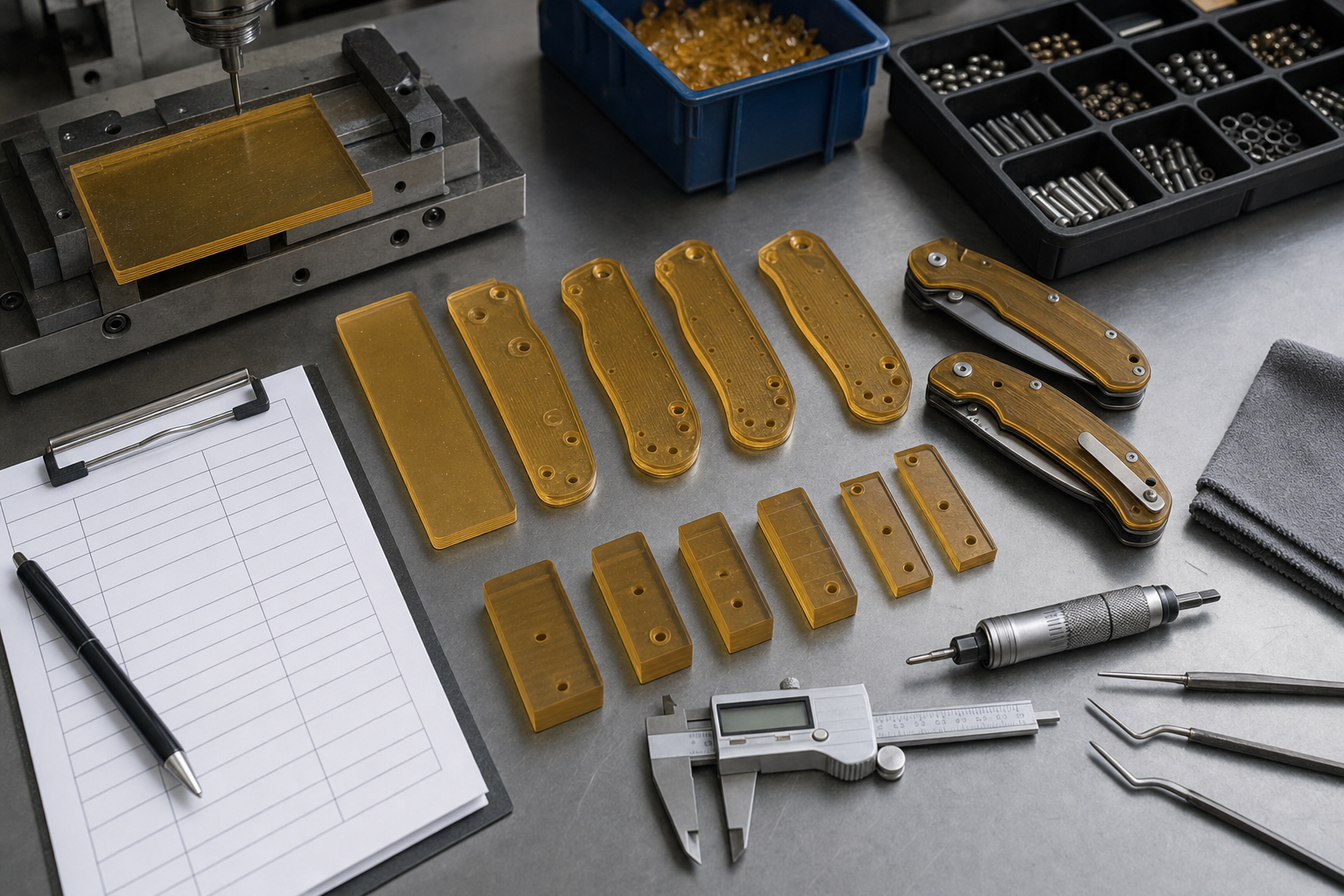
I Build the QC Plan Around the Material's Weak Points
For Ultem handle knives, I do not rely only on final appearance. I build a simple QC plan around the material's risk points. First, I confirm the material source and approved color sample. Then I check scale thickness, hole position, countersink quality, chamfer smoothness, and surface finish. During assembly, I check screw torque, clip installation, blade centering, lockup, and handle fit.
The quality plan should also define what is acceptable. A transparent scale may show tiny internal marks. A buyer and supplier should agree on the limit before production. Without an approved sample and inspection standard, one side may call it normal and the other side may call it defective. That creates avoidable conflict.
This is where a process mindset helps. ISO explains that ISO 9001 gives a quality management framework for consistent products and continual improvement. Even if a buyer is not asking for certification, the idea is useful. Define requirements, control the process, inspect the result, record problems, and improve the next batch. That is practical for OEM and ODM knife production.
| QC point | Inspection method | Buyer benefit |
|---|---|---|
| Material source | Check supplier document and approved sample | Reduces fake or inconsistent material risk |
| Screw area | Inspect holes, countersinks, and torque result | Reduces cracks and assembly damage |
| Finish | Compare against approved surface sample | Keeps visible appearance consistent |
| Function | Check opening, centering, lockup, and screw security | Confirms the knife still works as a tool |
What Should Buyers Put in an RFQ for Ultem Handle Knives?
A weak RFQ creates weak samples. If the buyer only says "Ultem handle," the factory must guess too many details.
An RFQ should specify knife type, blade steel, lock type, Ultem or PEI grade need, scale thickness, texture, finish, hardware, packaging, quantity, target price, inspection needs, and trade term.
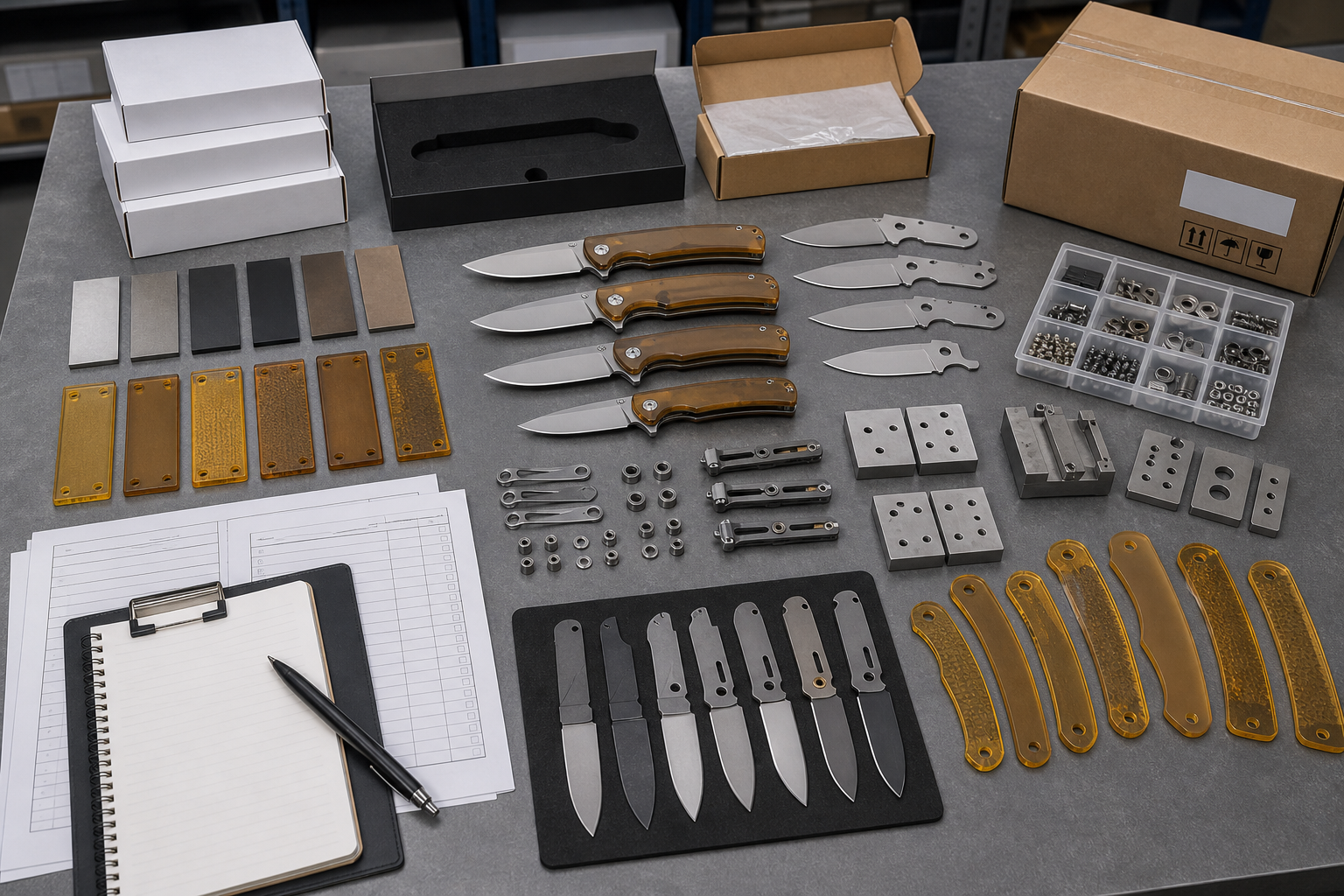
I Ask for the Details That Prevent Rework
For a serious RFQ, I want the buyer to tell me the target market first. A compact EDC folder for online retail and a heavier outdoor folder for distributors may both use Ultem, but they need different thickness, texture, hardware, packaging, and inspection focus. Then I need the commercial frame: target price, expected MOQ, trial order quantity, annual forecast if available, packaging type, and delivery market.
The material section should be specific. The buyer can write "genuine ULTEM resin required," "PEI amber transparent scale acceptable," or "factory to recommend PEI stock shape with sample approval." These are not the same. The buyer should also define whether surface polish, matte texture, milled pattern, or bead-like texture is needed. Grip is especially important because smooth transparent handles may look good but feel slippery in some uses.
For international orders, shipping terms should also be clear. Trade.gov explains that Incoterms define delivery responsibilities between sellers and buyers. In knife sourcing, the RFQ should say whether the buyer wants EXW, FOB, CIF, DAP, or another term. This helps the factory quote correctly and reduces confusion later.
| RFQ field | What to write | Why it helps |
|---|---|---|
| Material requirement | Genuine ULTEM, PEI, grade, color, sample standard | Prevents vague sourcing |
| Structure | Scale thickness, liner, screw, clip, lock type | Prevents weak assembly design |
| Finish and grip | Polished, matte, milled, textured, edge chamfer | Controls appearance and hand feel |
| Commercial terms | MOQ, target price, packaging, Incoterms, market | Makes the quote realistic |
Turn your idea into a quote-ready knife project.
Share your drawing, sample photo, target quantity, market, and packaging needs. Vast State will review manufacturability and prepare OEM/ODM options.
Conclusion
I choose Ultem for knife handles only when the design, sourcing, machining, assembly, and QC plan can protect both appearance and function.
Source Notes
- SABIC ULTEM resin supports the basic PEI material description and key property claims.
- Ensinger TECAPEI EF natural supports PEI stock-shape details such as amber transparency, machinability, strength, rigidity, and dimensional stability.
- Ensinger engineering plastics manual supports practical notes about PEI transparency, low moisture absorption, dimensional stability, and caution around strong solvents.
- ISO 9001 explained supports the article's process-based quality-control guidance.
- Trade.gov Incoterms overview supports the RFQ advice about defining delivery responsibilities in international trade.