A steel upgrade can raise sales. It can also raise cost, sharpening complaints, rust issues, and QC pressure if the market is wrong.
Knife brands should use 8Cr13MoV for entry-level knives that need low cost, easy sharpening, and basic stainless behavior. They should use D2 for mid-range knives that need stronger wear resistance and a better edge-retention story, while accepting more care and process control.
Quick buyer brief:
- Answer: 8Cr13MoV fits entry-level value knives; D2 fits mid-range wear-resistance positioning.
- Buyer context: This helps knife brands, sellers, importers, and private label buyers plan steel tiers.
- Key checks: Confirm target price, steel source, hardness range, edge geometry, corrosion message, finish, packaging, and QC records.
Planning a knife project with this steel?
Send us your target market, MOQ, price range, and blade type. Vast State can help you choose the right steel, HRC range, finish, handle material, and QC requirements for OEM/ODM production.
When I compare 8Cr13MoV and D2 for a customer, I first ask what the knife is supposed to be. Is it an entry-level pocket knife that must be easy to sell at a low price? Or is it a mid-range knife where the seller needs a stronger steel story? The answer changes the right steel, the packaging, and the quality checks.
What Is the Practical Difference Between 8Cr13MoV and D2?
Many buyers treat D2 as an automatic upgrade. That can be true in edge holding, but it is not always true for the full product.
8Cr13MoV is a budget stainless knife steel with moderate carbon, chromium, molybdenum, and vanadium. D2 is a high carbon, high chromium tool steel with stronger abrasion resistance and a less simple corrosion message.
I Compare the Steel With the Product Tier
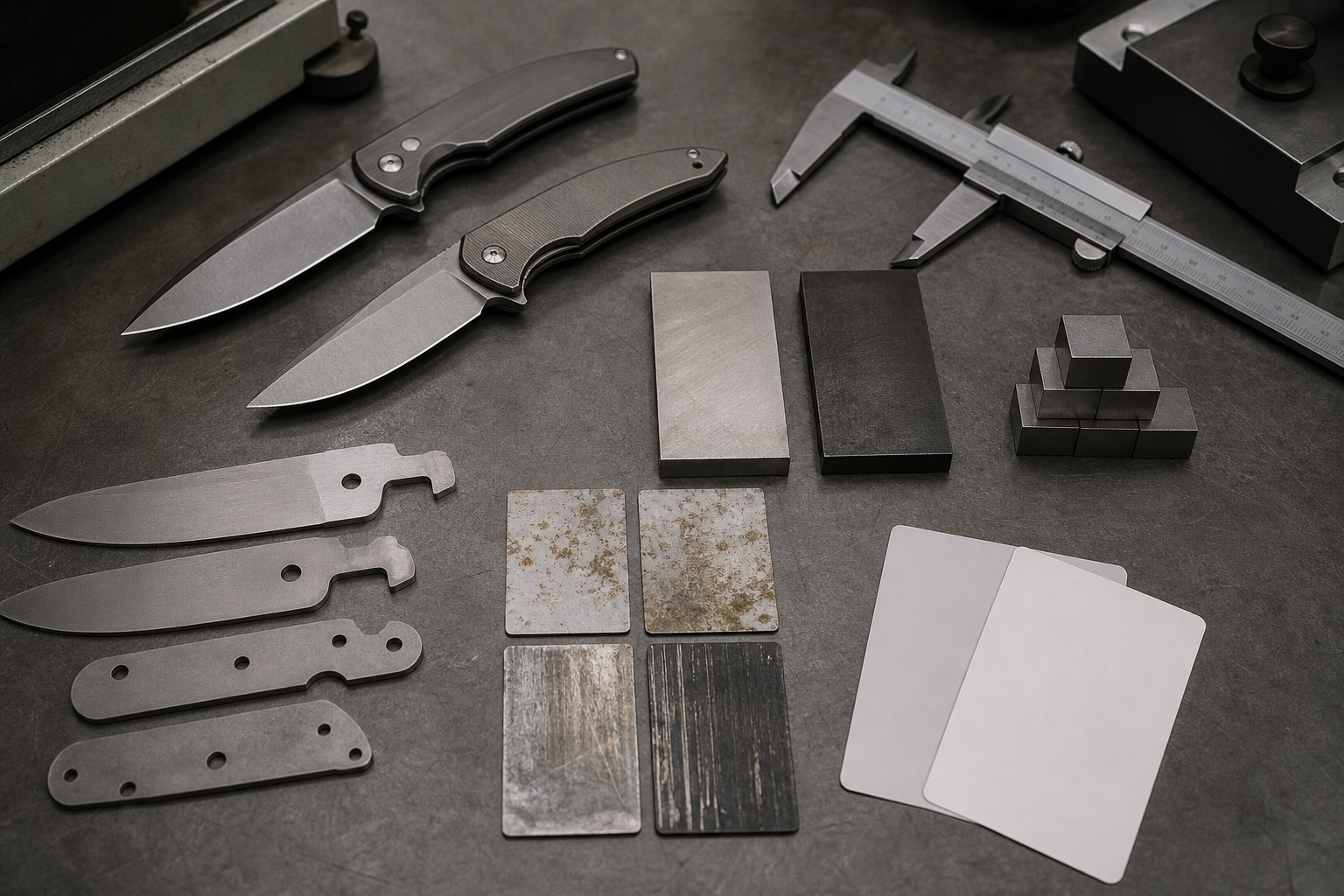
8Cr13MoV is often used because it supports a low product cost while still giving a familiar stainless knife-steel message. The ZKnives composition graph for 8Cr13MoV lists 8Cr13MoV with carbon around 0.70-0.80 percent, chromium around 13.00-14.50 percent, molybdenum around 0.10-0.30 percent, vanadium around 0.10-0.25 percent, nickel around 0.20 percent, manganese around 1.00 percent, and silicon around 1.00 percent. In plain seller language, it is a practical budget stainless steel, not a premium wear-resistance steel.
D2 is different. The Niagara Specialty Metals D-2 data sheet describes D-2 as an air-hardening, high carbon, high chromium tool steel that can be heat treated to HRC 60-62 and offers excellent abrasion resistance because of a large volume of carbides. That makes D2 useful when the product needs stronger edge-retention value.
The trade-off is user experience. 8Cr13MoV is usually easier to sharpen and easier to position for simple daily use. D2 can hold an edge longer in abrasive cutting, but it can be harder to sharpen and needs clearer corrosion-care wording. For B2B buyers, both can be good when the product tier is honest.
| Factor | 8Cr13MoV | D2 | Buyer meaning |
|---|---|---|---|
| Steel family | Budget stainless knife steel | High carbon, high chromium tool steel | Different product tiers |
| Main appeal | Low cost and easy sharpening | Wear resistance and edge-holding story | Different sales promises |
| Corrosion message | Easier basic stainless story | Needs clearer care guidance | Important for outdoor use |
| Production risk | Inconsistency can hurt reputation | Heat treatment and geometry matter | QC must match the steel |
Quote-ready RFQ Checklist for This Steel
To get an accurate OEM/ODM quote, prepare these details before contacting a knife manufacturer.
| RFQ Field | What to Prepare |
|---|---|
| Product type | Folding knife / fixed blade / multi-tool / kitchen knife |
| Target market | US / EU / outdoor retail / promotional / tactical / EDC |
| Steel option | 4116 / 14C28N / D2 / N690 / Nitro-V |
| Target HRC | Example: 55-57 HRC, 58-60 HRC |
| Blade finish | Satin / stonewash / black coating / bead blast |
| Handle material | G10 / micarta / aluminum / stainless steel / wood |
| Lock or structure | Liner lock / frame lock / slip joint / full tang |
| Estimated quantity | 500 / 1,000 / 3,000 / 5,000+ pcs |
| Packaging | White box / color box / blister / pouch / gift box |
| Required documents | Drawing / sample photo / logo file / packaging artwork |
When Does 8Cr13MoV Make More Sense for Knife Brands?
A budget knife can fail when it becomes too expensive. Sometimes a simple steel with better overall value is the smarter business choice.
8Cr13MoV makes sense when a brand needs an entry-level knife with low cost, easy sharpening, basic corrosion resistance, and a simple user-friendly message.
I Use 8Cr13MoV When Price and Ease of Ownership Matter Most
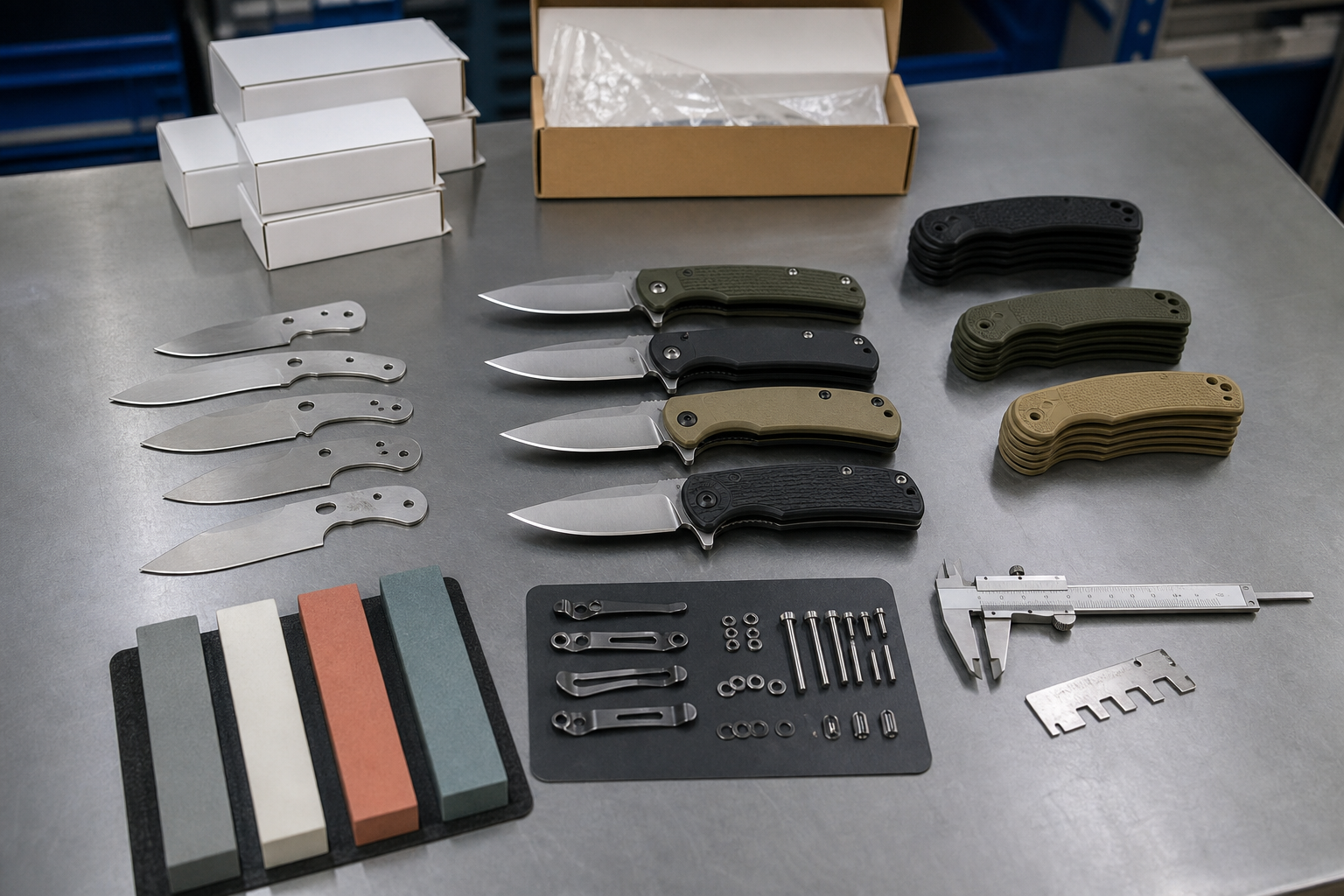
For entry-level products, the customer may care less about steel charts and more about first-use satisfaction. Does the knife open smoothly? Does it feel safe? Does it cut out of the box? Can the user sharpen it without special tools? Does the price make sense on the shelf? In this situation, 8Cr13MoV can be the right choice.
I would consider 8Cr13MoV for starter EDC knives, promotional pocket knives, private label budget lines, camping kits, light utility knives, and distributor catalog items where the buyer needs a low entry price. If the handle, lock, finish, and packaging are also controlled well, the product can feel honest rather than cheap.
The caution is consistency. Knife Steel Nerds includes discussion that 8Cr13MoV is a generic name for a composition, while AUS-8 is a named product by a specific company. That means different suppliers can vary more in execution. I do not use that as a reason to reject 8Cr13MoV. I use it as a reason to ask for steel source, hardness range, sample approval, and batch inspection. Good 8Cr13MoV can be useful. Poorly controlled 8Cr13MoV can damage a brand quickly.
| 8Cr13MoV use case | Why it can work | What I would control |
|---|---|---|
| Starter EDC folder | Low cost and easy sharpening | Sharpness and lock feel |
| Promotional knife | Price-sensitive order | Finish and packaging consistency |
| Light camping kit | Simple stainless message | Corrosion care and blade geometry |
| Distributor catalog item | Broad customer fit | Batch hardness and sample standard |
When Does D2 Make More Sense for Sellers?
Some buyers want more than a low price. If the knife is sold as a working tool, edge-holding perception can drive reviews.
D2 makes sense when sellers need a mid-range steel story, stronger abrasion resistance, and better edge-retention positioning for utility, work, outdoor, or upgraded EDC knives.
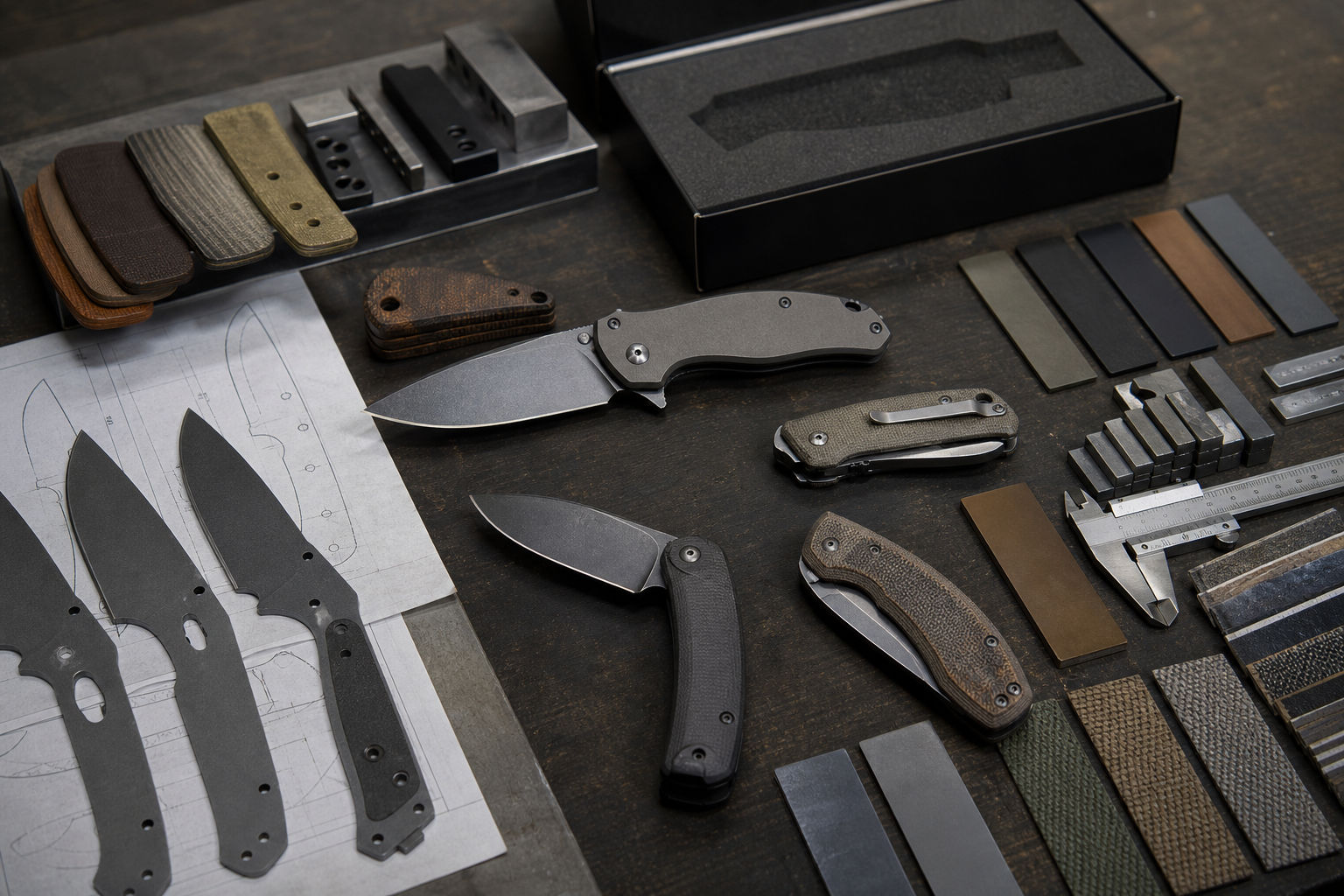
I Use D2 When the Product Must Defend a Higher Price
D2 can help sellers move above the entry-level category. Many buyers recognize D2 as a stronger steel than 8Cr13MoV. It gives the product page a clearer upgrade message: better wear resistance, stronger edge-holding story, and a more serious mid-range feel. That can be useful for utility folders, work knives, outdoor EDC knives, and private label upgrade lines.
The Niagara data sheet supports this positioning because it connects D2 with high carbon, high chromium, HRC 60-62 heat treatability, and excellent abrasion resistance. But I still do not call D2 an automatic better knife. A D2 blade in a poor handle, with rough action, weak lockup, bad sharpening, or cheap packaging can feel worse than a well-made 8Cr13MoV knife.
I also watch corrosion wording. D2 has high chromium, but the user should not be told it is maintenance-free stainless. In wet or humid markets, D2 needs a better finish, better care note, and realistic product copy. If the seller cannot explain the care trade-off, D2 can create avoidable support issues. The steel is good for the right product, not every product.
| D2 use case | Why it can work | What I would control |
|---|---|---|
| Mid-range EDC knife | Stronger steel story | Heat treatment and edge angle |
| Work utility knife | Better wear-resistance positioning | Grinding heat and sharpening standard |
| Outdoor seller line | Higher perceived value | Finish and corrosion-care message |
| Private label upgrade | Clear step above entry steel | Steel marking and QC record |
How Do Heat Treatment and Edge Geometry Change Real Performance?
Steel names do not cut anything by themselves. Heat treatment, hardness, edge angle, and grinding quality decide how the final knife feels.
Heat treatment, hardness range, edge geometry, blade thickness, sharpening quality, and finish can make a good 8Cr13MoV knife outperform a poorly made D2 knife in real customer experience.
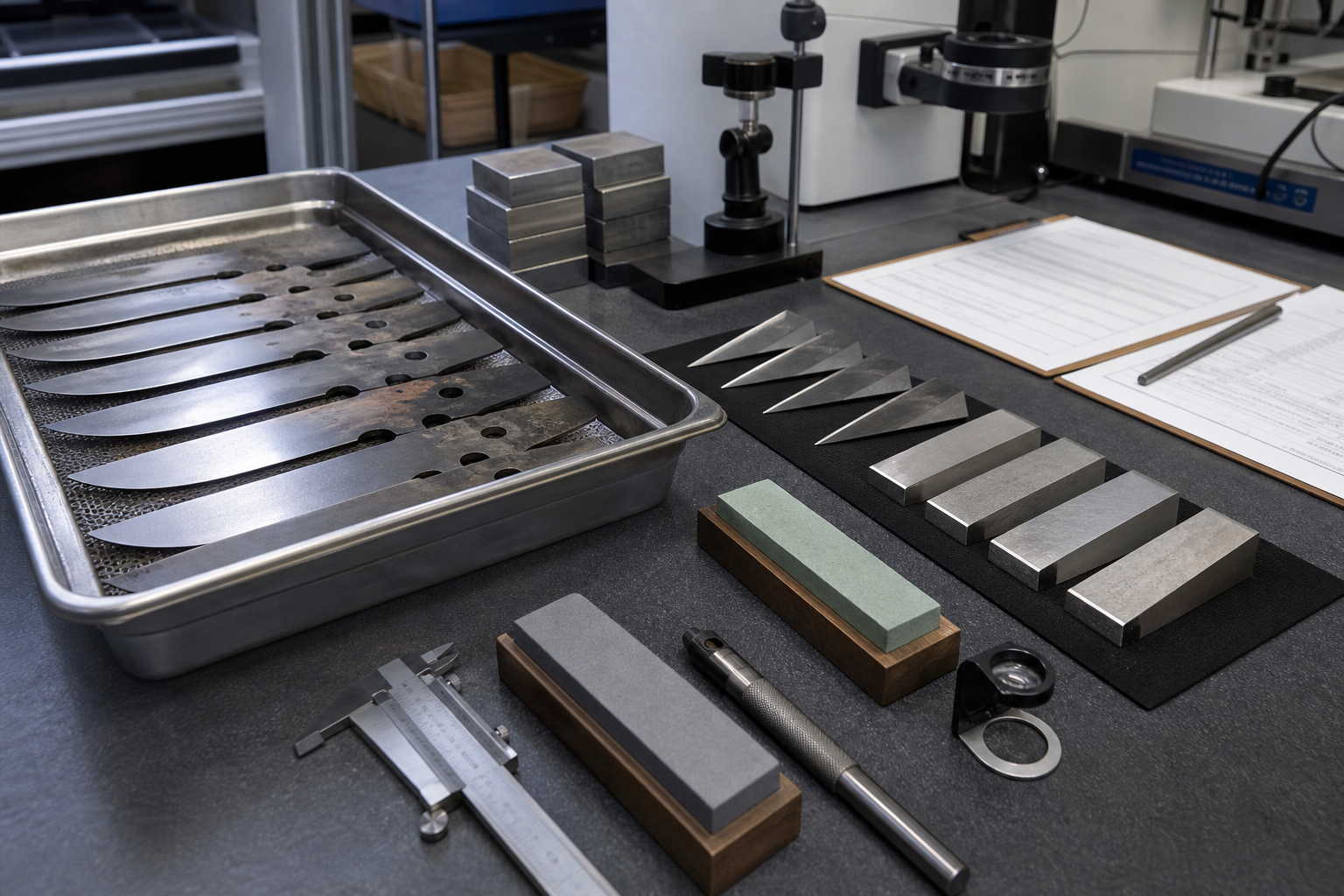
I Ask for Process Proof Before I Trust the Steel Label
Knife Steel Nerds explains that sharpening and edge geometry can greatly control cutting life and chipping resistance. It also explains that toughness and edge retention are often opposing properties, and that edge angle can change cutting results dramatically. This matters a lot in 8Cr13MoV vs D2 discussions.
For 8Cr13MoV, the buyer should not accept a vague "budget steel" mindset. A reasonable hardness range, clean sharpening, and good geometry can make the knife feel much better than expected. For D2, the buyer should not accept only the steel name. D2 needs careful heat treatment, stable hardness, good grinding control, and a suitable edge angle. Too thin an edge can chip. Too thick an edge can feel dull. A high hardness claim without a test record does not protect the buyer.
The NIST guide on Rockwell hardness measurement supports the need for good hardness measurement practice. In an OEM order, I like to confirm the HRC target, test method, sample approval, and final edge standard. For repeat production, I also want the inspection team to check lockup, blade centering, sharpness, finish, packaging, and sample matching.
| Process detail | Why it matters | Buyer request |
|---|---|---|
| Heat treatment | Controls hardness and stability | Target HRC range and process standard |
| Edge angle | Changes sharpness and chipping risk | Approved bevel angle |
| Grinding control | Prevents overheated or weak edges | In-process blade inspection |
| Final sharpening | Controls out-of-box experience | Sharpness standard and batch check |
How Should Sellers Position 8Cr13MoV and D2 Honestly?
Bad steel copy can create more problems than bad steel. If the product promise is wrong, the buyer will notice fast.
Sellers should position 8Cr13MoV as an entry-level stainless value steel and D2 as a mid-range wear-resistant tool steel. Both descriptions should explain use case, care, and limits.
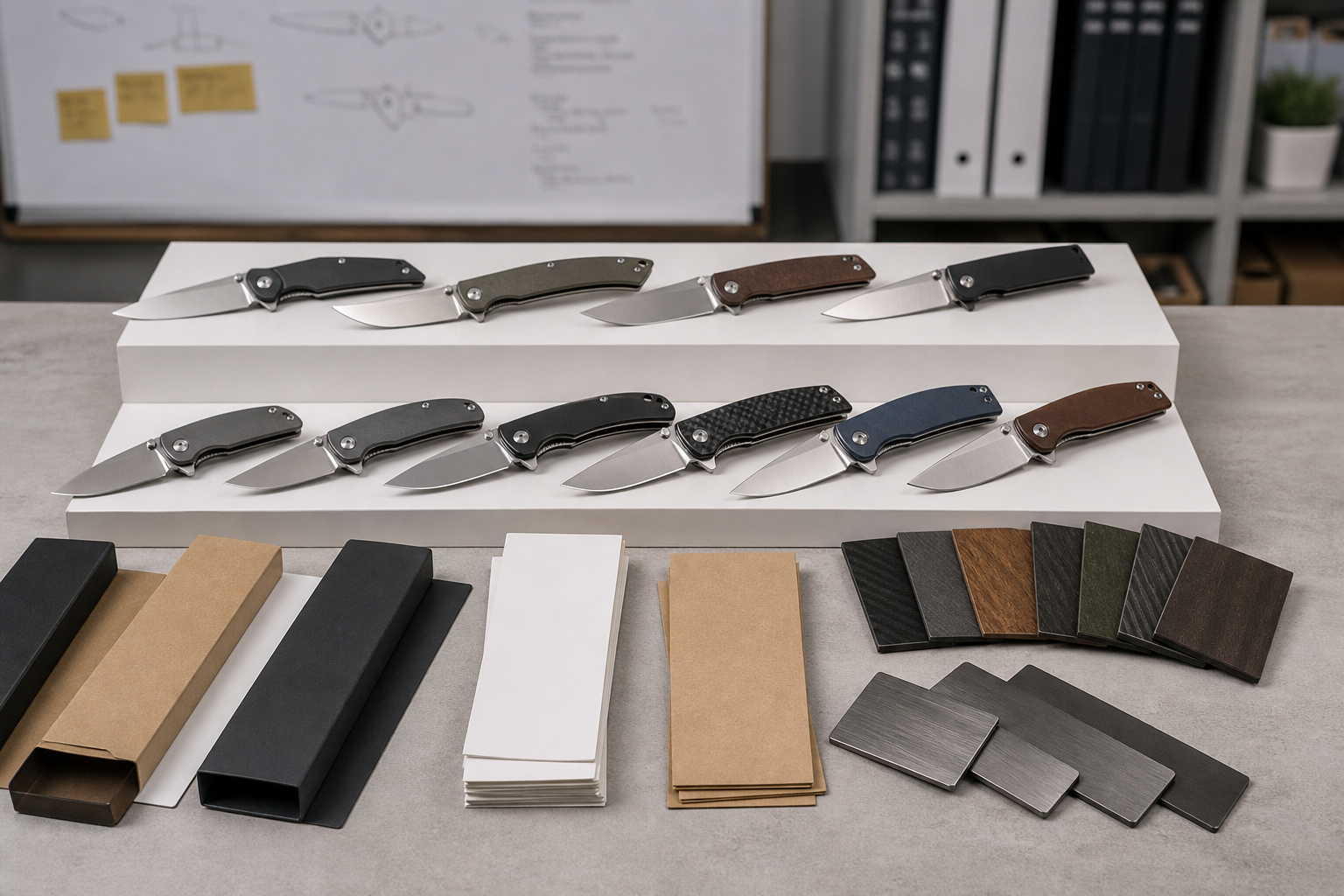
I Build the Product Ladder Around Real Buyer Expectations
For 8Cr13MoV, I would not pretend it is a premium steel. I would say it is a practical stainless steel for value-focused users, easy sharpening, and normal everyday cutting. That message fits an entry-level product and avoids disappointment. The seller can compete on total value: smooth action, safe lockup, clean edge, useful handle, and fair price.
For D2, I would not say it is rust-proof. I would say it gives stronger wear resistance and edge-holding value for users who want a more serious tool steel, while still needing basic care after wet use. That message protects the seller and makes the upgrade easier to understand.
The best product line may use both. 8Cr13MoV can be the entry model. D2 can be the upgrade. The packaging and copy should make that clear. If both knives look the same but one costs more, the buyer needs to understand what changed. Steel is only part of that answer. Better handle material, better finish, better packaging, and stronger QC can also support the upgrade.
| Steel | Better seller message | Risky message to avoid |
|---|---|---|
| 8Cr13MoV | Entry-level stainless value for daily cutting | Premium high-end edge retention |
| 8Cr13MoV | Easy to sharpen and simple to maintain | Same performance as D2 |
| D2 | Wear-resistant mid-range upgrade | Fully stainless or maintenance-free |
| D2 | Better for users who want stronger edge-holding value | Impossible to chip or rust |
What RFQ and QC Details Should Buyers Confirm Before Production?
A short RFQ may get a quick price. It will not protect the buyer from steel substitution, weak hardness, or unclear product positioning.
Buyers should confirm steel grade, steel source, target hardness, heat treatment, edge geometry, finish, handle material, lock type, packaging, quantity, price target, and inspection requirements before production.
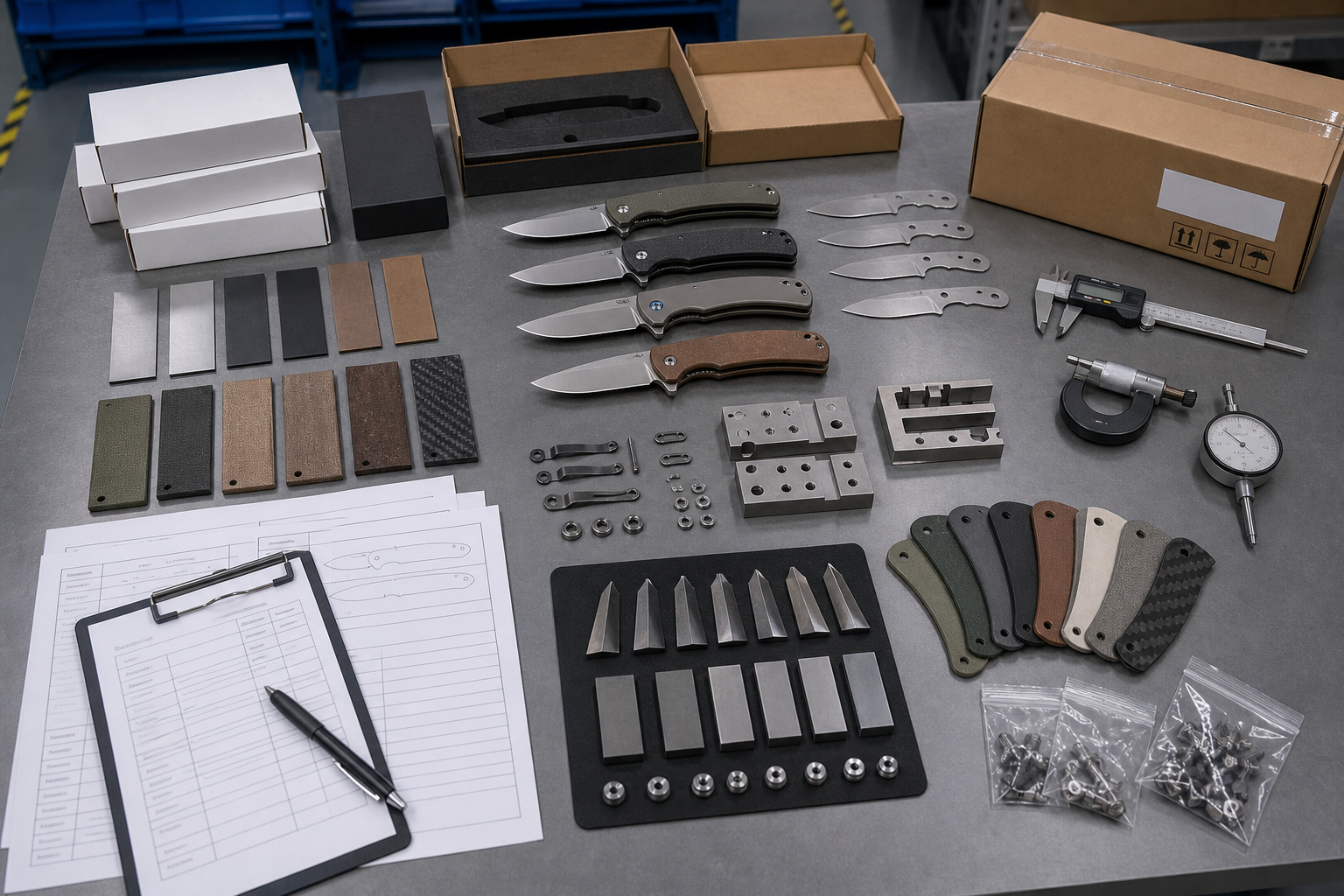
I Turn the Steel Choice Into a Production Brief
When a customer asks Vast State for 8Cr13MoV or D2, I ask for the commercial goal first. Is the buyer trying to hit a low price point? Is the buyer building a step-up product? Is the knife for a distributor catalog, online marketplace, retail blister pack, or branded outdoor line? The answer decides whether 8Cr13MoV or D2 is the better fit.
The RFQ should include more than steel name. I want knife type, target price, expected order quantity, blade thickness, finish, edge angle, handle material, lock type, packaging, logo method, target market, and inspection needs. If the buyer wants 8Cr13MoV, I want a clear sample and hardness target so the entry product does not feel weak. If the buyer wants D2, I want heat-treatment and corrosion-care details so the upgrade is real.
Quality and trade details should also be clear. The ISO 9001 standard page supports a process-based quality mindset around requirements and improvement. The US International Trade Administration page on Incoterms explains that trade terms define buyer and seller responsibilities. For B2B knife orders, material, quality, packaging, and trade terms should be part of one plan.
| RFQ field | Why it matters | What to specify |
|---|---|---|
| Steel grade and source | Prevents substitution confusion | 8Cr13MoV, D2, and source preference |
| Target market | Defines buyer expectations | Entry EDC, utility, outdoor, dealer line |
| Hardness range | Controls performance consistency | HRC target or supplier recommendation |
| Finish and edge | Affects rust, sharpness, and reviews | Stonewash, satin, coating, bevel angle |
| QC plan | Protects repeat orders | Hardness, lockup, centering, sharpness, packaging |
Ready to use this material in your next knife line?
Vast State can help you compare blade steels, heat treatment ranges, handle materials, finishes, packaging options, and QC requirements based on your target market and quantity.
Conclusion
8Cr13MoV is best for honest entry value. D2 is best for mid-range wear-resistance positioning when heat treatment, care wording, and QC are controlled.
Source Notes
- ZKnives 8Cr13MoV composition chart supports the composition and budget stainless steel context for 8Cr13MoV.
- Niagara Specialty Metals D-2 data sheet supports D2 composition, HRC 60-62 heat-treatability, and abrasion-resistance positioning.
- Knife Steel Nerds steel ratings supports the article's focus on edge geometry, toughness, edge retention, carbides, and steel trade-offs.
- NIST Rockwell hardness guide supports the need for reliable hardness measurement.
- ISO 9001 and Trade.gov Incoterms support the RFQ, quality, and trade-planning discussion.