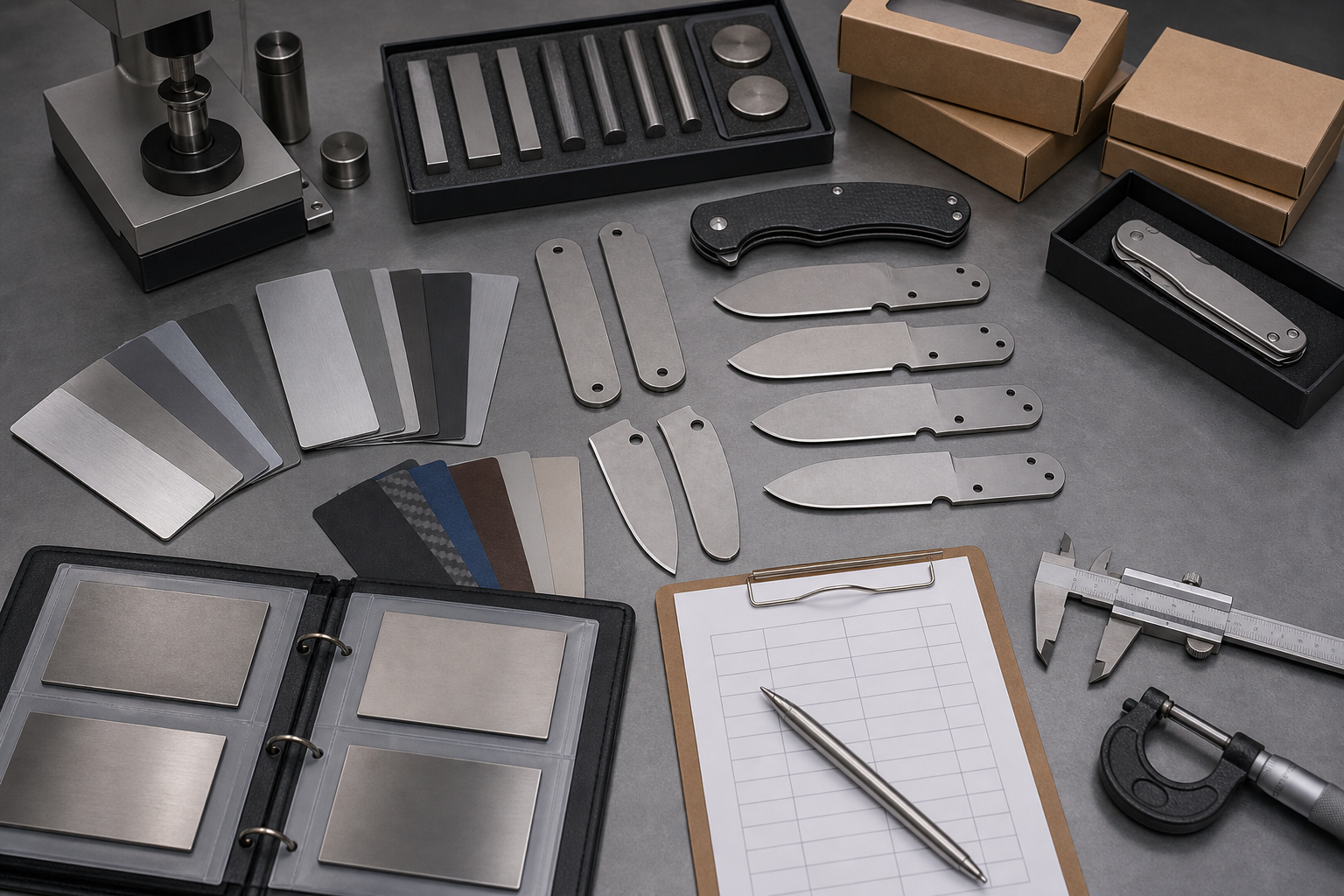
A better steel can still hurt margin. If the market will not pay for it, the knife becomes expensive instead of profitable.
AEB-L usually protects margin when buyers need sharpness, toughness, corrosion resistance, and controlled cost. MagnaCut can protect margin when the brand can charge for premium steel, strong corrosion resistance, wear resistance, toughness, and a clear technical story.
Quick buyer brief:
- Answer: AEB-L suits value-driven performance; MagnaCut suits premium positioning when the selling price supports it.
- Buyer context: This helps knife brands, outdoor brands, importers, distributors, and private label buyers.
- Key checks: Target retail price, steel cost, heat treatment, grinding time, product tier, buyer education, warranty risk, and repeat production control.
Planning a knife project with this steel?
Send us your target market, MOQ, price range, and blade type. Vast State can help you choose the right steel, HRC range, finish, handle material, and QC requirements for OEM/ODM production.
When a buyer asks me whether AEB-L or MagnaCut is better, I do not answer with steel enthusiasm first. I ask about the product tier. A steel choice must support the brand's price, customer expectation, production plan, and after-sales risk. AEB-L and MagnaCut are both serious knife steels, but they solve different commercial problems. AEB-L can make sense when the buyer wants fine cutting, toughness, good corrosion resistance, and a more approachable cost structure. MagnaCut can make sense when the buyer wants a premium story and the market will pay for it. The wrong steel can reduce margin even if the performance is good.
What Is the Real Margin Question Behind AEB-L vs MagnaCut?
Steel discussions often become emotional. Buyers may chase a famous name and forget the selling price, defect risk, and production cost.
The real margin question is whether the steel helps the knife sell at the planned price while keeping material cost, heat treatment, grinding, scrap, warranty risk, and customer education under control.
I Look at Margin as a System
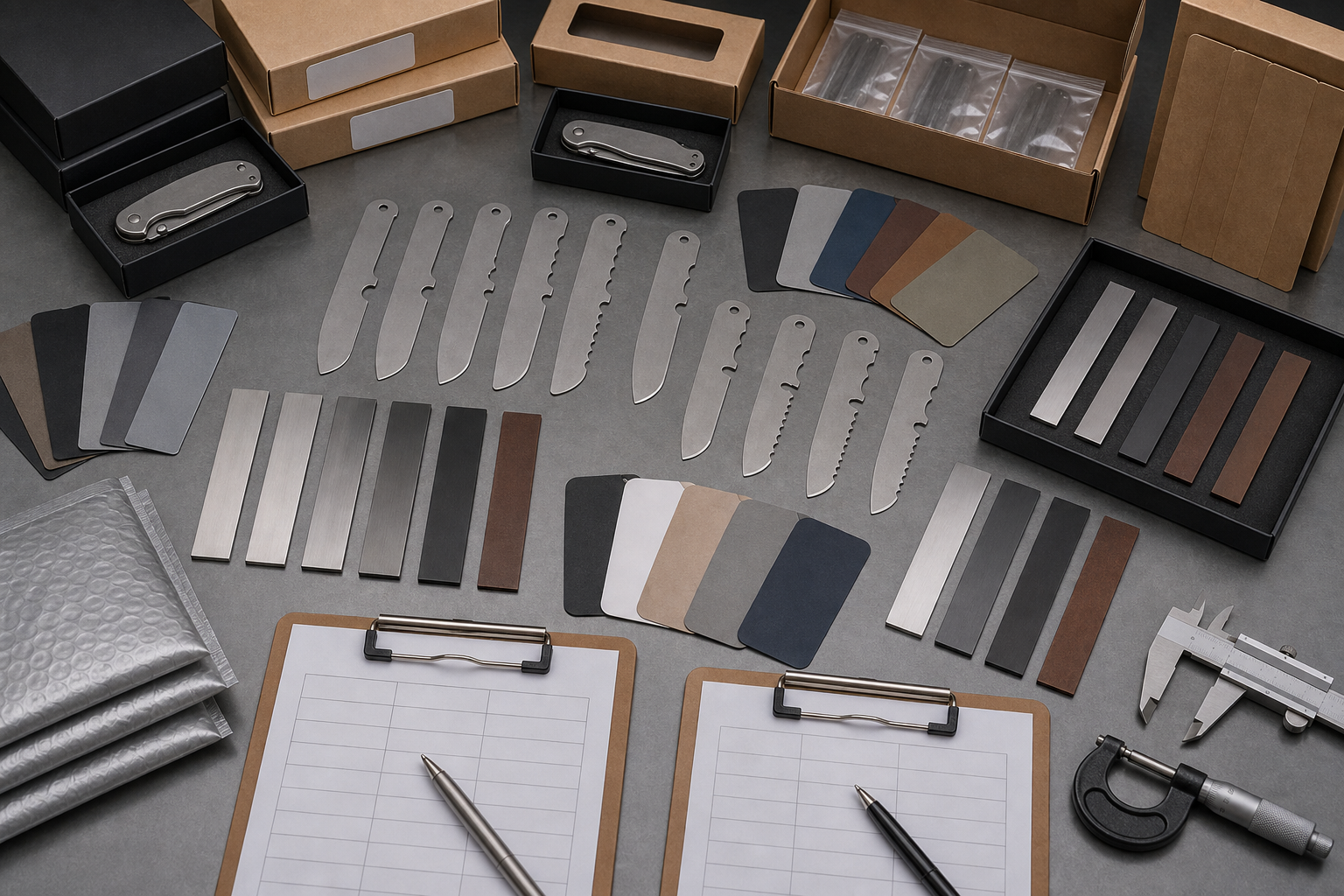
Margin is not only material price. It is the relationship between product cost and what the market will accept. A knife with a popular steel may support a higher selling price. But it may also need higher material cost, more careful heat treatment, slower grinding, better documentation, and more customer education. If the buyer cannot recover those costs in the sale price, the better steel does not improve margin.
I treat steel choice as one part of product positioning. AEB-L often works well when the buyer wants a knife that cuts very cleanly, can be sharpened well, has good toughness, and does not need a premium steel headline to sell. Uddeholmstrip describes UHB AEB-L as a stainless grade with 13% chromium and a strong fit for knife applications, edge sharpness, wear resistance, and good corrosion resistance. That makes it useful for practical knives where performance matters but the customer may not pay a large premium for steel branding.
MagnaCut is different. The Crucible data sheet distributed by Niagara Specialty Metals describes CPM MagnaCut as a powder metallurgy stainless tool steel designed to avoid chromium carbide in the heat-treated microstructure, giving a strong combination of toughness, wear resistance, and corrosion resistance. That story can support a higher product tier. But the buyer must know whether the end customer understands it.
| Margin factor | AEB-L effect | MagnaCut effect |
|---|---|---|
| Material story | Practical, sharp, tough stainless choice | Strong premium steel story |
| Cost pressure | Usually easier to fit into mid-range products | Needs higher selling price |
| Customer education | Simple performance message | More technical explanation needed |
| Brand positioning | Value-performance and cutting-focused | Premium, enthusiast, or high-end outdoor |
Quote-ready RFQ Checklist for This Steel
To get an accurate OEM/ODM quote, prepare these details before contacting a knife manufacturer.
| RFQ Field | What to Prepare |
|---|---|
| Product type | Folding knife / fixed blade / multi-tool / kitchen knife |
| Target market | US / EU / outdoor retail / promotional / tactical / EDC |
| Steel option | 4116 / 14C28N / D2 / N690 / Nitro-V |
| Target HRC | Example: 55-57 HRC, 58-60 HRC |
| Blade finish | Satin / stonewash / black coating / bead blast |
| Handle material | G10 / micarta / aluminum / stainless steel / wood |
| Lock or structure | Liner lock / frame lock / slip joint / full tang |
| Estimated quantity | 500 / 1,000 / 3,000 / 5,000+ pcs |
| Packaging | White box / color box / blister / pouch / gift box |
| Required documents | Drawing / sample photo / logo file / packaging artwork |
When Does AEB-L Make Better Commercial Sense?
Some buyers skip AEB-L because it is not the loudest steel name. That can be a mistake for practical product lines.
AEB-L makes better commercial sense when the product needs fine cutting, toughness, good corrosion resistance, easier sharpening, controlled cost, and a performance story that does not depend on premium steel hype.
I Use AEB-L When the Knife Must Cut Well Without Becoming Too Expensive
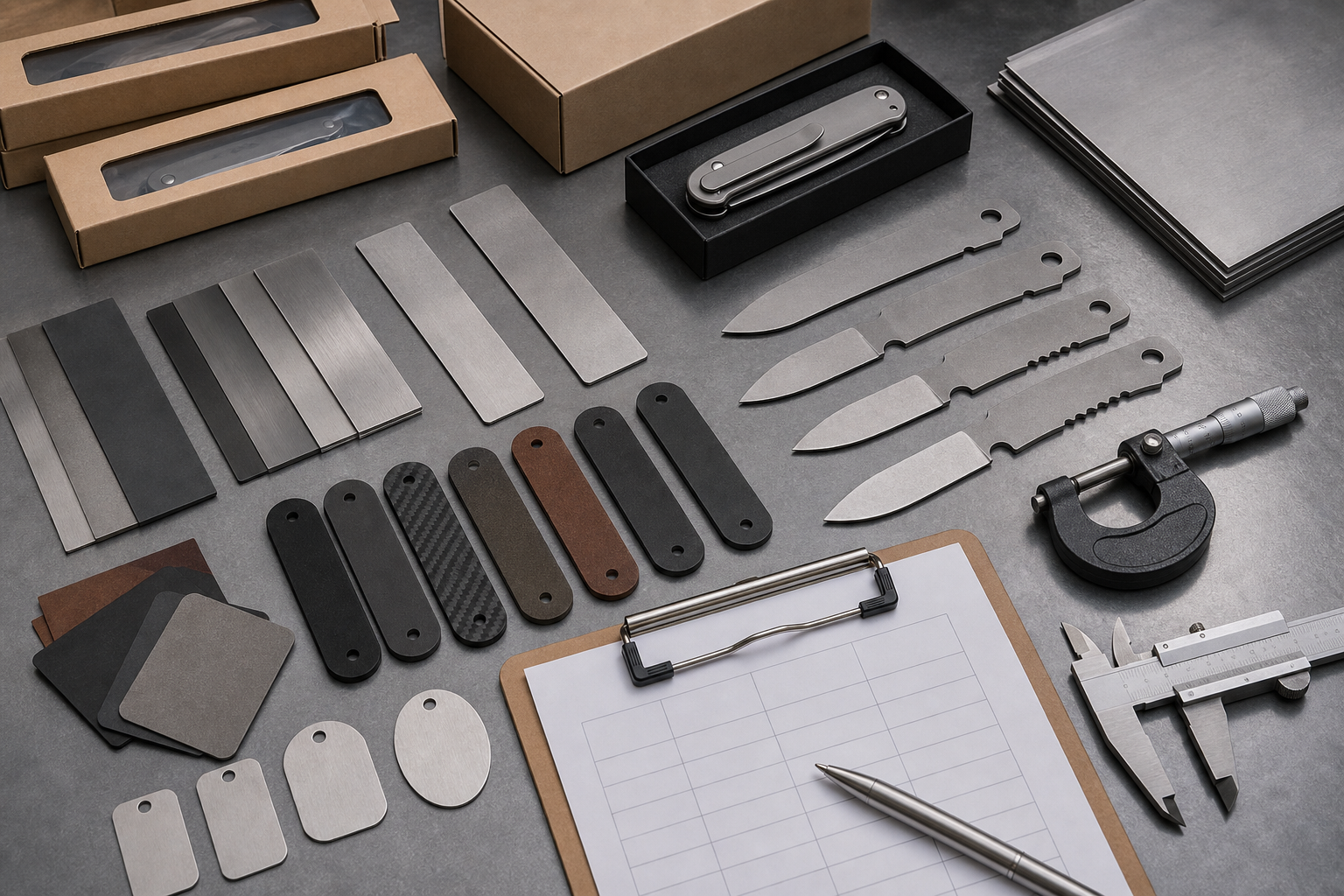
AEB-L is attractive when the buyer wants a practical knife that feels good in real cutting. It has a reputation for fine edge behavior, and the official Uddeholmstrip industrial knife page supports the idea that UHB AEB-L was developed for cutting-edge performance. For many buyers, that is enough. They do not need to sell the knife to steel collectors. They need the knife to cut well, sharpen well, resist corrosion reasonably, and fit the target price.
In OEM/ODM work, I may consider AEB-L for slicier folding knives, kitchen-adjacent outdoor tools, compact utility knives, and products where edge stability matters more than extreme wear resistance. If the buyer wants a thin grind, the heat treatment and edge geometry matter a lot. A steel that can take a fine edge can help the product feel better in use.
The commercial benefit is that AEB-L can support a strong user experience without forcing the buyer into the highest material-cost tier. That can protect margin in mid-range products. It can also reduce customer friction because the message is simple: sharp, tough, corrosion-resistant stainless steel for practical cutting.
The limitation is the same reason it works. AEB-L is not usually chosen for maximum edge retention or premium steel buzz. If the buyer's market expects high-end steel names, AEB-L may need a better explanation. The product must sell on cutting feel, thin geometry, value, and reliable execution.
| AEB-L buyer need | Why it can fit | What I still check |
|---|---|---|
| Fine cutting | Supports sharp, clean edge geometry | Grind consistency and edge thickness |
| Controlled cost | Helps mid-range margin planning | Material availability and scrap rate |
| Practical stainless performance | Good corrosion resistance for many uses | Target environment and care instructions |
| Simple brand message | Easy to explain to general buyers | Whether the market expects a premium steel name |
When Does MagnaCut Justify a Higher Product Cost?
MagnaCut can be powerful for sales. But the buyer must know whether the customer will pay for that steel story.
MagnaCut justifies higher product cost when the knife targets premium buyers who value corrosion resistance, toughness, wear resistance, modern metallurgy, and a steel name that can support higher retail pricing.
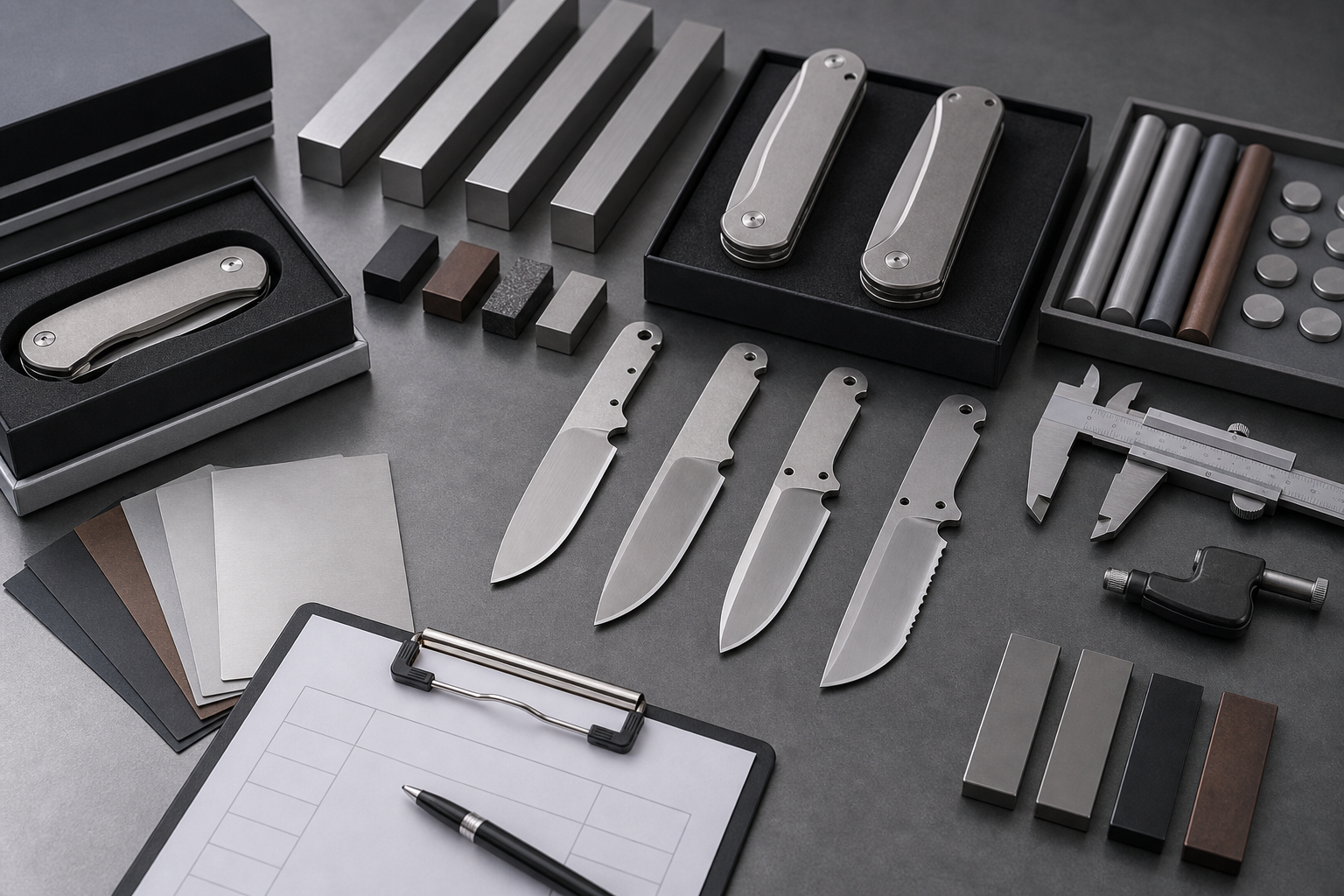
I Use MagnaCut When the Steel Name Helps the Sale
MagnaCut is not only a material choice. It is also a positioning choice. The Crucible MagnaCut data sheet describes a steel designed to avoid chromium carbide in the heat-treated structure and to achieve a strong mix of toughness, wear resistance, and corrosion resistance. The same sheet lists typical applications including long-wearing specialty cutlery, and it gives recommended heat treatment targets around 60-63 HRC. Knife Steel Nerds, where Larrin Thomas explains the steel's development, also gives useful technical context about the design goal: a stainless steel with a balance closer to tough non-stainless powder metallurgy steels.
For a premium outdoor or EDC product, this can matter. Customers in that segment may search for MagnaCut by name. They may understand corrosion resistance, edge retention, and toughness better than general buyers. A knife brand can build a stronger product page around the steel, especially if the design, finish, lock, handle, and packaging match the premium tier.
But I do not suggest MagnaCut only because it is popular. If the knife is a cost-sensitive private label product, MagnaCut may create a price gap that the buyer cannot recover. It may also require more careful sourcing, heat treatment documentation, and sales education. The product must be designed as a premium knife, not only labeled with premium steel.
| MagnaCut buyer need | Why it can fit | What I still check |
|---|---|---|
| Premium positioning | Strong steel recognition among enthusiasts | Whether the buyer's market knows the steel |
| Corrosion resistance story | Data sheet supports strong corrosion-resistance design logic | Finish and real-use environment |
| Toughness and edge retention balance | Useful for outdoor and EDC products | Heat treatment and geometry |
| Higher retail price | Steel story can support pricing | Total cost and target margin |
How Do Heat Treatment and Quality Control Change the Result?
Steel grade alone does not make a good knife. Poor heat treatment can waste an expensive steel and damage trust.
Heat treatment and QC control hardness, toughness, edge behavior, corrosion performance, warping, grinding stability, and batch consistency. Buyers should ask for target hardness, process route, inspection points, and final testing.
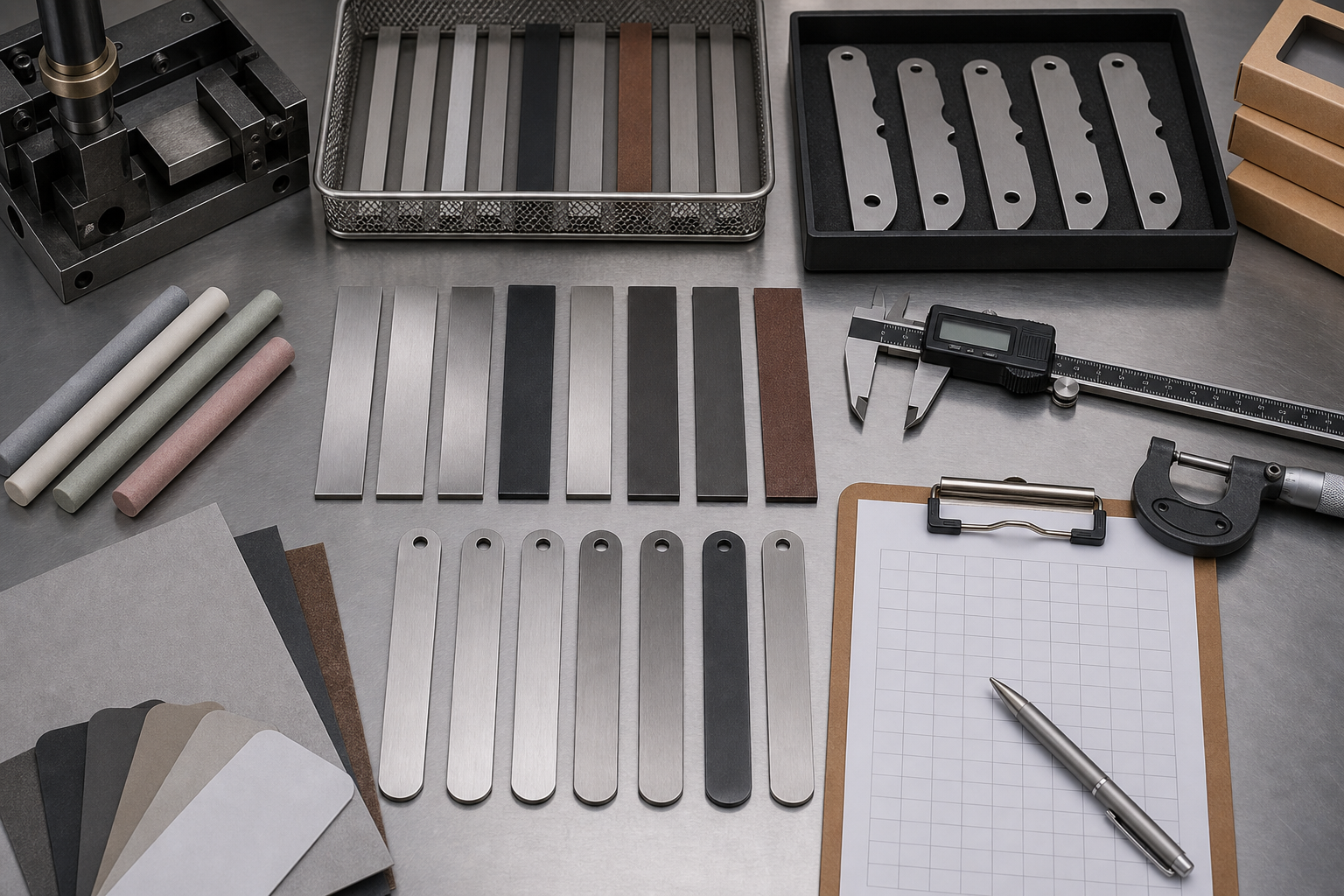
I Treat Heat Treatment as Part of the Steel Choice
A steel comparison is not complete without heat treatment. MagnaCut has a detailed data sheet with hardening, tempering, cold treatment, and hardness guidance. The data sheet also notes that properties are typical values and can vary with chemistry, size, and heat treatment conditions. That matters for OEM/ODM production because a thin blade blank, a thicker fixed blade, and a compact folding blade may not behave the same way.
AEB-L also needs correct processing. It can reward a good heat treatment and thin edge geometry, but it can still warp, underperform, or create inconsistent results if the process is not controlled. For buyers, the question should not be "What steel is on the blade?" only. The question should be "What hardness range, heat-treatment route, grinding process, and inspection method will the supplier use?"
NIST's Rockwell hardness measurement guide is useful because it explains why measurement practice matters when hardness tolerances are tight. In knife production, hardness readings are not decoration. They help confirm whether the batch is close to the approved performance plan.
I also connect QC with margin. A higher steel cost increases the pain of scrap, rework, and returns. If a buyer chooses MagnaCut but does not control heat treatment and inspection, the premium steel can become a premium problem. If a buyer chooses AEB-L but pushes the grind too thin without process control, the product can still fail. Steel choice and process control must move together.
| QC point | Why it matters | Buyer request |
|---|---|---|
| Target hardness | Controls strength, edge behavior, and toughness balance | Ask for target HRC range |
| Heat treatment route | Different steels need different cycles | Ask for process summary |
| Warping control | Thin blades can move during heat treatment | Ask how straightness is checked |
| Final inspection | Confirms batch consistency | Ask for hardness, function, finish, and edge checks |
How Should Brands Match Steel Choice to Product Tier?
A knife can fail commercially when the steel does not match the audience. The product may be overbuilt or under-explained.
Brands should match AEB-L or MagnaCut to price tier, customer knowledge, use case, warranty expectation, and marketing message instead of choosing only by technical ranking.
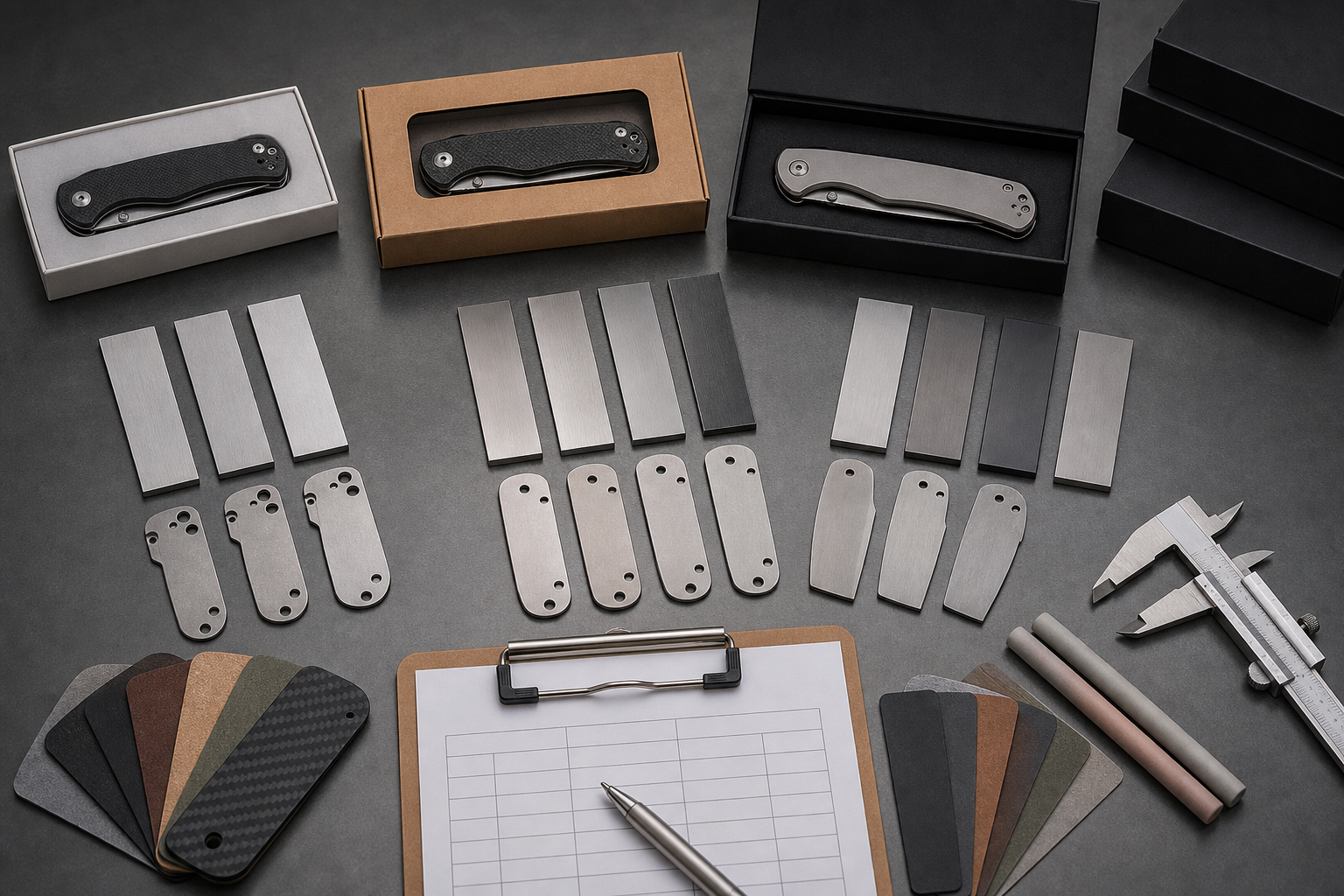
I Match the Steel to the Customer, Not My Personal Preference
For a value-performance line, AEB-L can be a smart choice. The buyer can talk about sharp cutting, stainless performance, toughness, and practical usability. This works well when the end customer wants a dependable knife but does not want to pay a major premium for steel branding. It can also help a brand offer a better cutting feel at a reasonable price.
For a premium line, MagnaCut may be stronger. The steel name can help the product stand out in search, reviews, and enthusiast discussions. But the rest of the knife must support the story. If the handle feels cheap, the lock action is rough, the edge is uneven, or the packaging looks generic, the premium steel will not save the product. A high-end steel raises expectations across the whole knife.
This is where I ask buyers to show me the target retail price and competitor set. If the buyer wants a budget knife, MagnaCut may be wrong even if it is technically attractive. If the buyer wants to enter a premium EDC segment, AEB-L may be harder to explain unless the knife has a strong cutting-performance identity.
The right answer can also be a product ladder. A brand can use AEB-L for a practical series and MagnaCut for a premium upgrade. That gives the buyer more price points and makes the steel choice easier for customers to understand.
| Product tier | Better fit | Why |
|---|---|---|
| Entry practical | Usually not AEB-L or MagnaCut first | Cost may need simpler steels |
| Mid-range performance | Often AEB-L | Strong cutting feel without extreme price pressure |
| Premium EDC | Often MagnaCut | Steel name and performance story support pricing |
| Product ladder | Both | AEB-L base model, MagnaCut upgrade model |
What Should Buyers Put in the RFQ Before Choosing AEB-L or MagnaCut?
A vague RFQ makes steel comparison impossible. The supplier may quote different assumptions and the buyer may compare the wrong numbers.
The RFQ should include target retail tier, steel options, blade geometry, hardness target, heat treatment expectation, finish, handle material, lock type, quantity, packaging, target price, and inspection requirements.
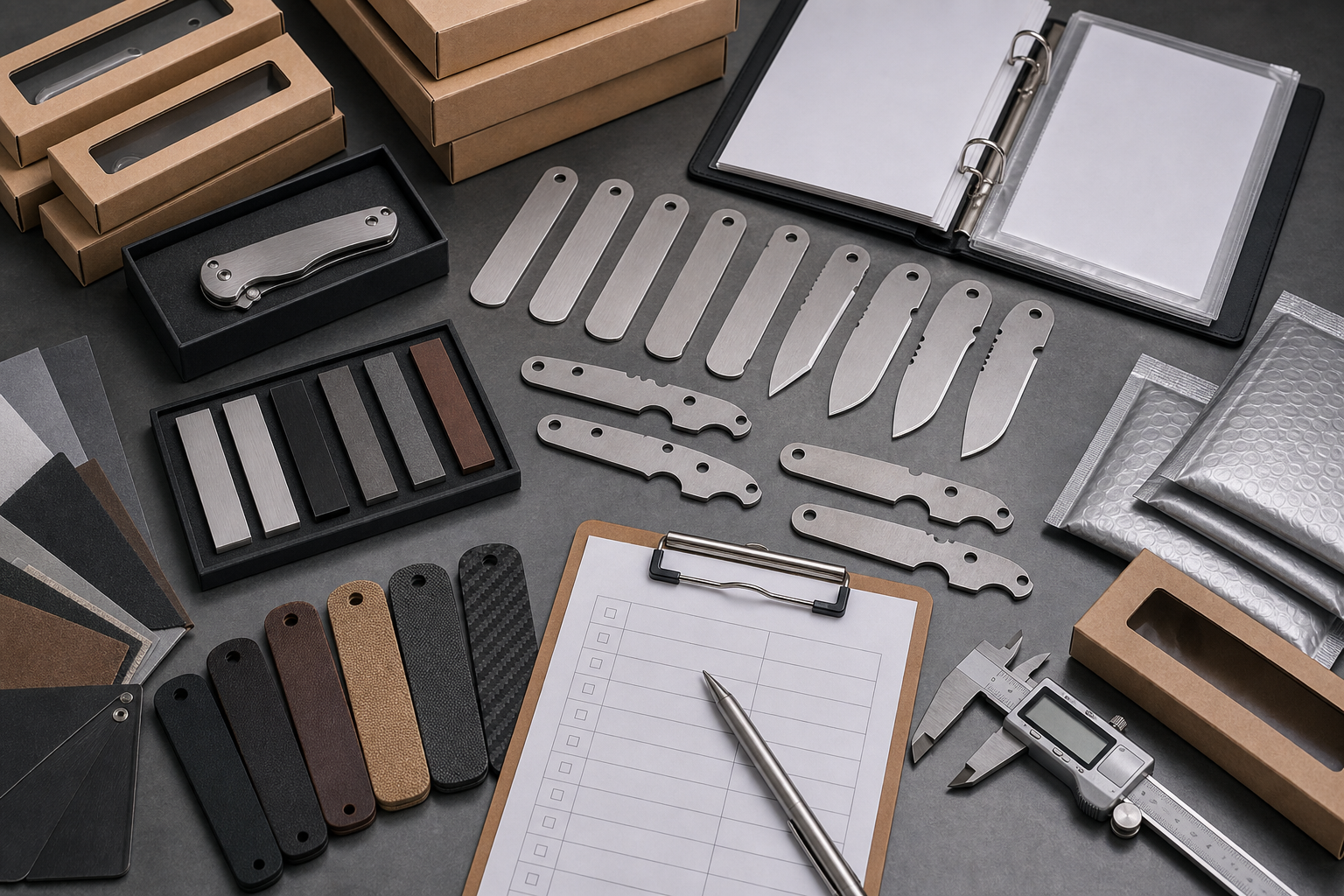
I Need Commercial and Technical Details Together
When a buyer asks for AEB-L vs MagnaCut, I need both commercial and technical information. Commercial information tells me what the product must cost. Technical information tells me whether the steel can be processed correctly for that design. A buyer who only asks "How much for MagnaCut?" may receive a price, but not a useful product plan.
The RFQ should state the product type first. Is it a folding knife, fixed blade, pocket knife, camping tool, or multi-tool? Then it should include blade length, blade thickness, grind style, edge expectation, handle material, lock type, finish, logo method, packaging, order quantity, target price, and target market. If the buyer wants both AEB-L and MagnaCut options, the supplier can compare cost and manufacturing concerns in a realistic way.
I also recommend asking for a sample plan. The buyer should know whether the prototype will use the final steel or a substitute. The buyer should ask when hardness will be checked, what finish will be used, and what quality points will be inspected. For premium steel, the buyer may also want steel documentation or batch traceability where practical.
At Vast State, I prefer to discuss steel selection early. A steel choice affects cutting, grinding, heat treatment, cost, story, and packaging. If the buyer explains the market and margin goal, I can suggest a practical path instead of only quoting a material name.
| RFQ field | Why it matters | Example buyer input |
|---|---|---|
| Steel options | Lets supplier compare cost and process | AEB-L base option, MagnaCut premium option |
| Target tier | Controls margin logic | Mid-range EDC or premium outdoor |
| Heat treatment | Protects performance | Target HRC and process expectation |
| Geometry | Affects cutting and toughness | Blade thickness, grind, edge target |
| Packaging story | Helps sell the steel honestly | Practical steel note or premium steel callout |
Ready to use this material in your next knife line?
Vast State can help you compare blade steels, heat treatment ranges, handle materials, finishes, packaging options, and QC requirements based on your target market and quantity.
Conclusion
AEB-L can protect value-performance margin. MagnaCut can protect premium margin. The right choice depends on market, price, process control, and product story.
Source Notes
- Uddeholmstrip supports AEB-L as a stainless knife steel focused on edge sharpness, wear resistance, and corrosion resistance.
- Niagara Specialty Metals provides access to the MagnaCut data sheet used for technical context.
- Crucible CPM MagnaCut data sheet supports MagnaCut's composition, property balance, typical applications, CATRA reference, and heat treatment guidance.
- Knife Steel Nerds gives technical background on MagnaCut's design goals and development context.
- NIST Rockwell hardness guidance supports the need for controlled hardness measurement.
- ISO 9001 supports the broader point that repeatable process control matters in manufacturing quality systems.