Knife law looks simple after a quick search. But one missed exception can create bad product copy, blocked shipments, or buyer complaints.
As of May 21, 2026, Ohio is relatively knife-friendly under state law, but B2B sellers should still review official statutes, restricted locations, federal switchblade and ballistic knife rules, shipping policies, age controls, and target-market compliance before selling or importing knives.
Quick buyer brief:
- Answer: Ohio state law is broad, but sellers still need a documented compliance review.
- Buyer context: This helps knife brands, distributors, importers, wholesalers, and private label sellers.
- Key checks: Ohio Revised Code sections, local preemption, restricted locations, federal law, product type, sales copy, shipping route, and buyer legal review.
I do not treat knife law articles as final legal advice. I treat them as a risk checklist for product planning. Ohio is important because many U.S. buyers ask whether folding knives, assisted-opening knives, automatic knives, pocket knives, and outdoor tools can be sold there. The answer can be more open than some older online summaries suggest. But B2B sellers still need care. A state-law carry rule is not the same as an import rule, a shipping rule, a school-zone rule, a marketplace rule, or a product-labeling policy. That difference matters when a knife brand asks a manufacturer like Vast State to build products for the U.S. market.
What Is the Practical Starting Point for Ohio Knife Law in 2026?
Old knife-law summaries can mislead sellers. Ohio has changed, and B2B decisions should start with the current official code.
The practical starting point is the official Ohio Revised Code. Sellers should review current Ohio sections on concealed weapons, definitions, state preemption, unlawful transactions, restricted places, and signage before writing product claims.
I Start With the Official Code, Not a Forum Summary
For Ohio, I first look at the official Ohio Revised Code pages, not only blogs or forum comments. The reason is simple. Knife-law content online often repeats older rules. Ohio changed important parts of its knife law in recent years, including the 2021 reform to unlawful weapon transactions and the 2025 update to statewide preemption.
For B2B sellers, the practical question is not only "Can someone own a knife in Ohio?" The better question is "Can I safely describe, sell, ship, and support this knife model for Ohio customers without making unsupported legal claims?" Those are different questions. A seller may need to review state law, federal law, marketplace policy, carrier policy, age policy, school or government facility restrictions, and product documentation.
I also separate product categories. A simple manual folding knife, a fixed blade, an assisted-opening knife, an automatic knife, a butterfly-style knife, and a ballistic knife do not carry the same legal and commercial risk. Even when a state law is broad, a seller should not copy one compliance statement across all knife types. A careful seller uses a compliance matrix.
| Starting point | What I check | Why it matters |
|---|---|---|
| Current state code | Ohio Revised Code sections and effective dates | Prevents outdated legal copy |
| Product type | Manual, assisted, automatic, fixed, multi-tool, ballistic | Different products carry different risk |
| Sales channel | Retail, wholesale, online marketplace, distributor | Channel rules may be stricter than state law |
| Buyer market | Ohio only or multi-state U.S. sales | Federal and other state rules may still apply |
How Does Ohio Treat Knives Under Concealed Weapon Rules?
Many sellers remember old concealed weapon concerns. If they do not read the current wording, they may overstate or understate the rule.
Ohio Revised Code section 2923.12 says that, for that concealed-weapons section, a knife, razor, or cutting instrument is not a deadly weapon or weapon if it was not used as a weapon.
I Avoid Turning a Statute Into a Marketing Slogan
The key Ohio carry provision for many knife discussions is Ohio Revised Code section 2923.12. Division (A) addresses carrying concealed deadly weapons, handguns, and dangerous ordnance. Division (H) then says that, for purposes of that section, "deadly weapon" or "weapon" does not include a knife, razor, or cutting instrument if the instrument was not used as a weapon.
For a buyer, that wording is useful. For a seller, it is still not a license to write careless copy. I would not write "legal everywhere in Ohio" on a product page. I would write internal notes such as: Ohio concealed-weapons analysis depends on current statute wording, product type, use, location, and other applicable laws. Then I would ask the buyer to confirm with counsel before using consumer-facing legal claims.
This is especially important for OEM/ODM development. A product can shift legal perception by design and marketing. A compact EDC folder sold as a utility tool has a different message from a product marketed with aggressive self-defense claims. The law may focus on use or purpose in some contexts, and the seller's wording can create risk. I always prefer practical product language: cutting tasks, outdoor use, utility, materials, ergonomics, safety handling, age policy, and local law responsibility.
| Seller question | Practical answer | B2B action |
|---|---|---|
| Can I say Ohio allows knives? | Too broad for product copy | Use a legal-review note, not a blanket claim |
| Does concealed carry language matter? | Yes, but section-specific wording matters | Read section 2923.12 and keep records |
| Does product marketing matter? | Yes, wording can affect risk perception | Avoid aggressive or unsupported claims |
| Should customers verify local rules? | Yes, especially for multi-state sales | Add responsible compliance language |
What Does Ohio Preemption Mean for Knife Sellers?
Local rules can confuse national sellers. Ohio preemption reduces that problem, but it does not remove every sales and zoning issue.
Ohio Revised Code section 9.68 provides statewide preemption for knives and includes owning, possessing, carrying, selling, transferring, manufacturing, and keeping knives, subject to state and federal law exceptions.
I Read Preemption as a Sales Planning Tool
The current Ohio Revised Code section 9.68 is important for sellers because it addresses statewide uniformity. As amended effective April 9, 2025, it includes knives in the regulation of arms and states that, except as specifically provided by federal or state law, a person may own, possess, purchase, acquire, transport, store, carry, sell, transfer, manufacture, or keep any knife without further local license, permission, restriction, delay, or process. It also defines "knife" as a cutting instrument including a sharpened or pointed blade.
This helps B2B sellers because state preemption can reduce the risk of conflicting city-by-city knife ordinances. But the same section also preserves specific federal and state law exceptions. It also leaves room for certain zoning ordinances that regulate or prohibit commercial sales in residential or agricultural areas, and for zoning rules about hours or geographic areas, if those rules meet the conditions in the statute.
So I see preemption as a planning aid, not a reason to stop checking. If a distributor sells to retail stores in Ohio, the preemption rule is useful. If a seller runs an online store, it still needs age policy, product-type review, shipping policy, and federal review. If a buyer wants to open a physical store, zoning and local retail rules can still matter. For OEM/ODM manufacturing, I would record Ohio as a relatively open state-law market, but I would not mark the entire U.S. as open based on Ohio.
| Preemption point | What it helps | What it does not replace |
|---|---|---|
| Statewide uniformity | Reduces city-by-city conflict risk | Federal law review |
| Sales and transfer language | Helps retail and wholesale planning | Marketplace or carrier rules |
| Knife definition | Gives broad state-law context | Product-specific legal advice |
| Zoning exceptions | Keeps some retail location rules alive | Online compliance documentation |
Which Restricted Places Still Matter in Ohio?
A broad carry rule can create false confidence. Restricted locations can still create serious problems for end users and sellers.
Restricted-place rules still matter in Ohio. Sellers should avoid suggesting that knives may be carried into schools, government facilities, courts, airports, detention facilities, or other posted or controlled locations.
I Keep Location Rules Out of Product Hype
Ohio law has restricted-place rules that sellers should not ignore. Section 2923.122 addresses illegal conveyance or possession of a deadly weapon or dangerous ordnance in a school safety zone. Section 2923.1212 addresses required signage in several locations, including certain government, jail, court, airport, child day-care, and school-related settings.
This does not mean every ordinary pocket knife is automatically treated the same way in every context. Ohio definitions matter. Section 2923.11 defines "deadly weapon" and also defines "ballistic knife" and includes ballistic knives in "dangerous ordnance." For sellers, the safer commercial practice is not to give customer-by-customer carry advice. Instead, sellers should provide a responsible statement: customers are responsible for checking applicable federal, state, local, workplace, school, facility, and carrier rules before possession, carry, transport, or use.
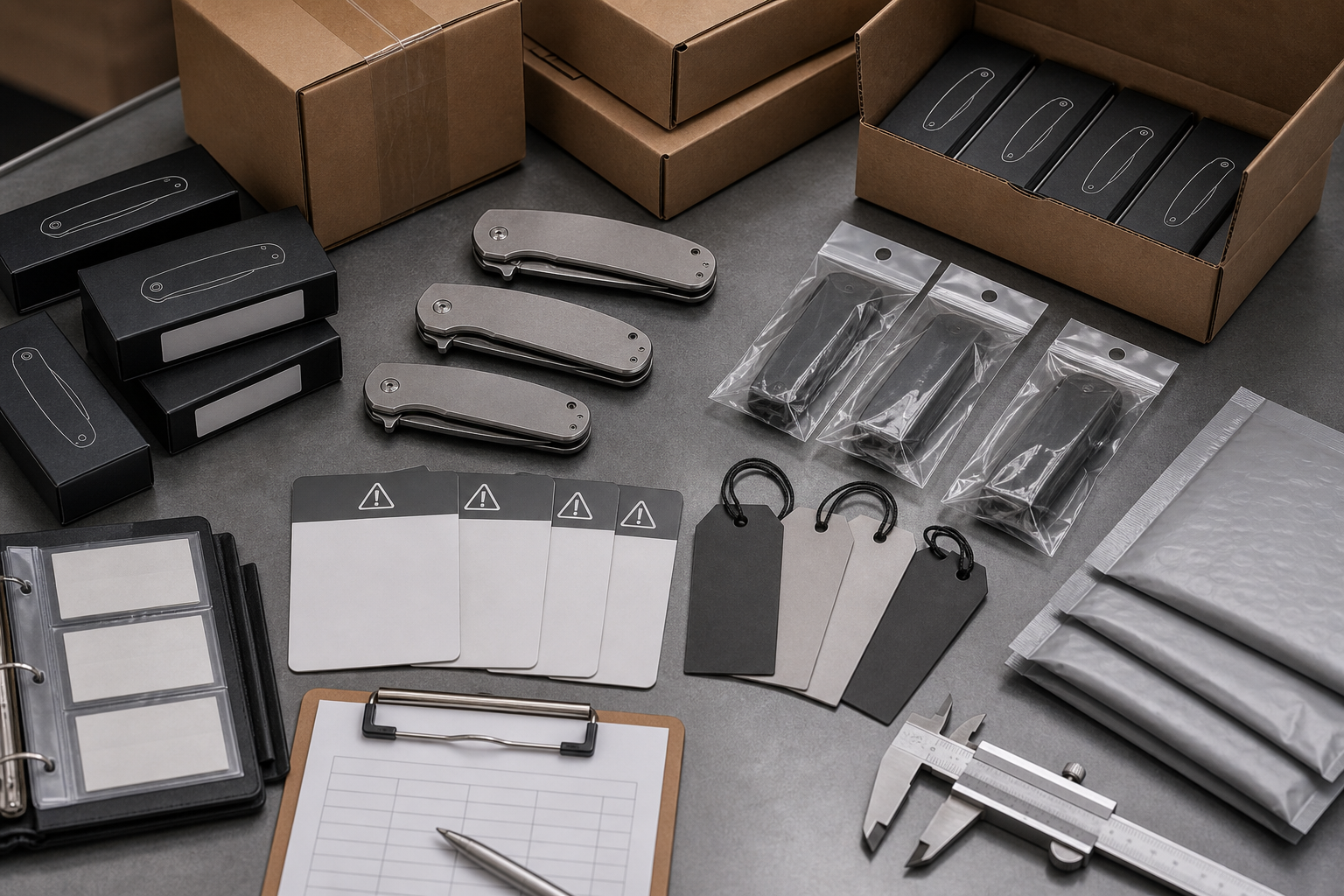
For B2B sellers, this matters in packaging and listings. A distributor may ask for a short compliance line. A brand may ask whether it should include a warning card. A marketplace may have its own restricted-products policy. I would keep the text simple, factual, and reviewed by counsel. I would avoid naming restricted locations in a way that sounds like permission. A good knife product page should sell the product's utility, materials, construction, and quality. It should not try to become a legal guide.
| Restricted context | Seller risk | Practical response |
|---|---|---|
| School safety zones | Customers may misunderstand carry rules | Avoid permissive claims and use legal-review language |
| Government or court facilities | Posted signs and rules may apply | Do not write "carry anywhere" copy |
| Airports and detention facilities | Security rules can override normal carry assumptions | Keep travel and facility guidance conservative |
| Private workplaces or events | Private policies may be stricter than law | Tell buyers to check location-specific rules |
What Federal Rules Can Still Affect Automatic or Ballistic Knives?
State law is only one layer. A seller can still face federal, import, or interstate-commerce issues.
Federal law can still matter for switchblade and ballistic knives. Sellers should review 15 U.S.C. Chapter 29, import rules, shipping policies, and counsel advice before selling automatic or ballistic designs across state lines.

I Separate Ohio State Law From U.S. Federal Law
This is the part many sellers miss. Ohio's current state-law position does not erase federal law. The U.S. House official code page for 15 U.S.C. Chapter 29 covers the manufacture, transportation, or distribution of switchblade knives. It defines a switchblade knife and includes restrictions on introduction, transportation, or distribution in interstate commerce, with stated exceptions. The same chapter also covers ballistic knives and includes a definition of a ballistic knife as a knife with a detachable blade propelled by a spring-operated mechanism.
This matters for importers and wholesalers. A buyer may ask Vast State to produce an automatic knife and ship it into the United States. Even if the buyer says Ohio allows the product, that does not answer federal import and interstate-commerce questions. It also does not answer marketplace policy, shipping-carrier policy, or the laws of other states where the product may be resold.
For U.S. importers, I also look at documentation discipline. CBP's Reasonable Care publication is not knife-specific legal advice, but it reminds importers to manage entry information carefully. For knives, that means product description, classification, country of origin, valuation, customer documentation, and compliance review should not be casual.
As a manufacturer, I do not decide U.S. legal clearance for the buyer. I help the buyer document the product accurately. The buyer should confirm whether the design can be imported, shipped, sold, and marketed in the target channel.
| Federal issue | Why it matters | B2B seller action |
|---|---|---|
| Switchblade definition | Automatic-opening products may trigger federal review | Get legal and import review before sales |
| Interstate distribution | State permission may not answer federal restrictions | Check federal law and carrier policy |
| Ballistic knife rules | Ohio and federal law treat ballistic knives separately | Avoid unsafe or prohibited designs |
| Import documentation | CBP entry details need care | Keep product specs and descriptions accurate |
What Should B2B Sellers Put Into Their Ohio Compliance File?
Compliance work is easy to forget during product launch. Later, the seller may not know what was checked or approved.
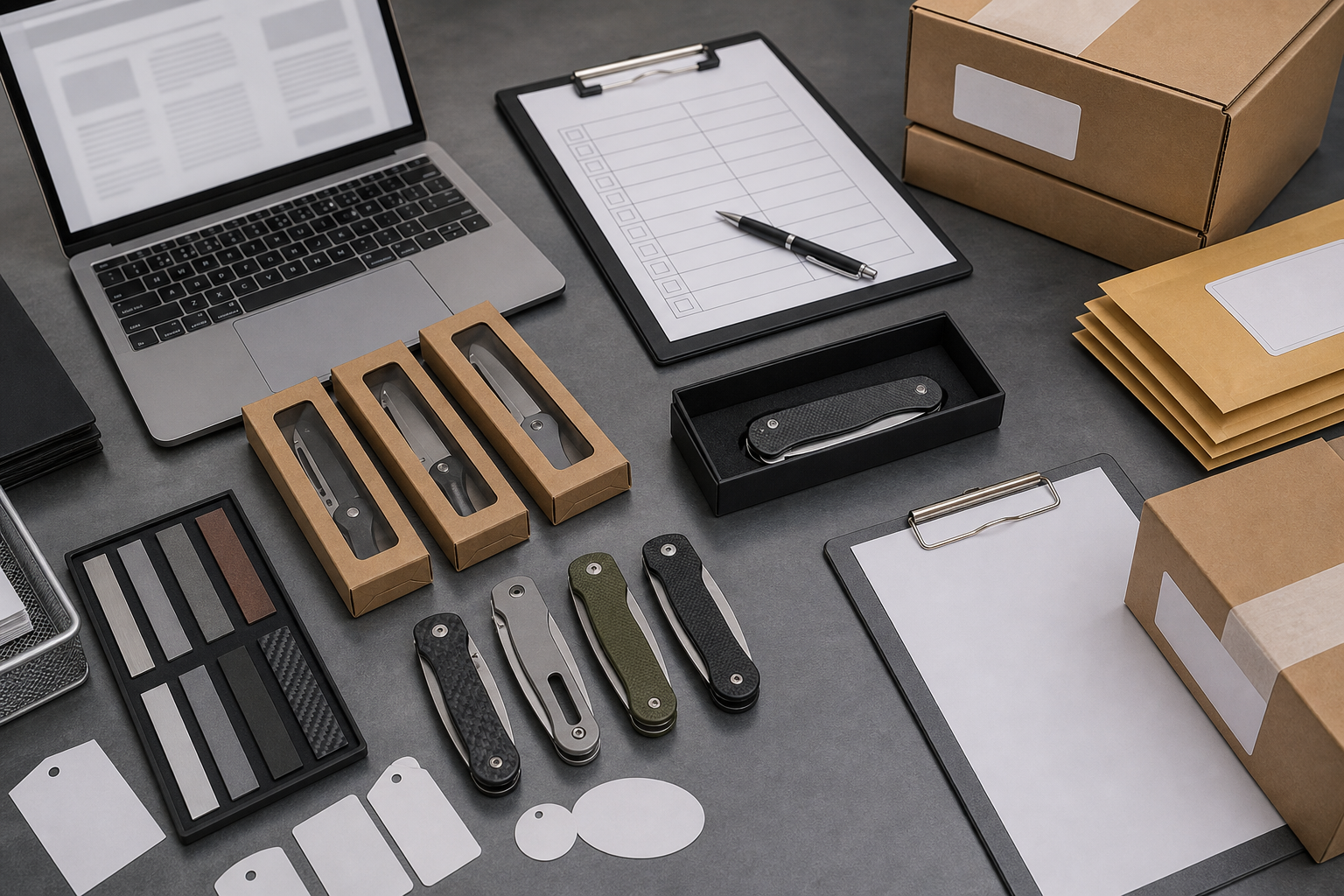
B2B sellers should keep an Ohio compliance file with statute links, review date, product type, opening mechanism, blade details, sales-channel policy, shipping policy, age policy, restricted-location wording, and legal-review notes.

I Build a Record Before the Product Page Goes Live
For a knife brand, distributor, importer, or wholesaler, the compliance file should be practical. It does not need to be a long legal memo for every simple product. But it should show that the seller checked the right issues. I would record the article or code sections reviewed, the date of review, the product category, opening mechanism, blade style, blade length if relevant, packaging claims, sales channel, shipping method, and who approved the final listing.
This file should also separate "Ohio state law" from "U.S. sales policy." A product might be reasonable under Ohio state law, but still blocked by a marketplace, carrier, payment processor, or another state's law. If the buyer sells nationally, the Ohio answer is only one part of the matrix. A strong seller should have state-by-state rules, product type restrictions, age checks, warning language, and customer-service scripts reviewed.
From a manufacturing side, I ask buyers to tell me the target market before production. If the product is for Ohio only, the buyer should say that. If it is for the broader U.S. market, the buyer should not rely on Ohio law alone. We can support product specs, labeling, packaging, and documentation, but the buyer's compliance team or counsel should approve the legal position.
This is how I prefer to work at Vast State. We help develop and manufacture practical products, but we also want buyers to think clearly before production. A good compliance file protects the brand, the importer, the distributor, the retailer, and the manufacturing relationship.
| Compliance file item | What to record | Why it helps |
|---|---|---|
| Review date | Exact date and source links | Laws and policies can change |
| Product facts | Knife type, opening mechanism, blade style, materials | Prevents vague legal assumptions |
| Sales channel | Website, marketplace, distributor, retail store | Policies differ by channel |
| Shipping route | Import, domestic carrier, destination states | Federal and carrier rules may apply |
| Approval record | Counsel, compliance manager, buyer sign-off | Shows who made the final decision |
Conclusion
Ohio is relatively open for knives, but B2B sellers still need official-source review, careful copy, federal checks, and documented compliance before launch.
Source Notes
- Ohio Revised Code section 2923.12 supports the concealed-weapons discussion and the knife-specific wording in division (H).
- Ohio Revised Code section 9.68 supports statewide preemption and the 2025 knife-related update.
- Ohio Revised Code section 2923.20 supports the current unlawful-transactions review after the 2021 reform.
- Ohio Revised Code section 2923.11 supports definitions for deadly weapon, ballistic knife, and dangerous ordnance.
- Ohio Revised Code sections 2923.122 and 2923.1212 support restricted-location and signage caution.
- 15 U.S.C. Chapter 29 supports the federal switchblade and ballistic knife review.
- CBP Reasonable Care supports the importer documentation and compliance-file discussion.