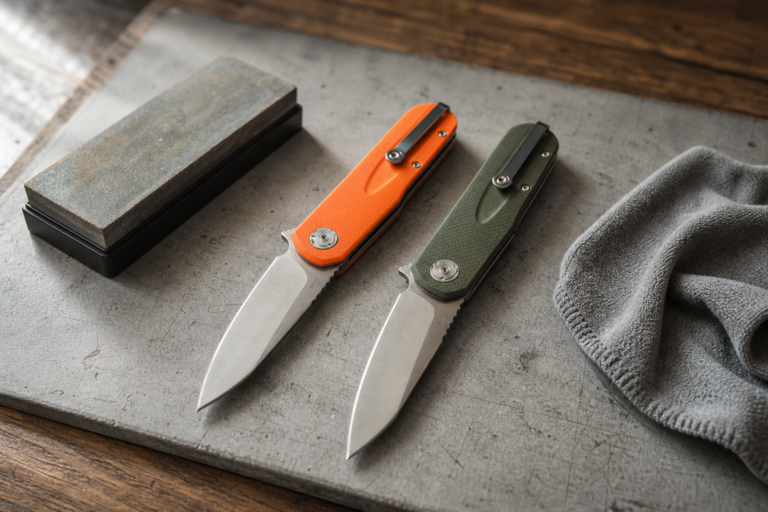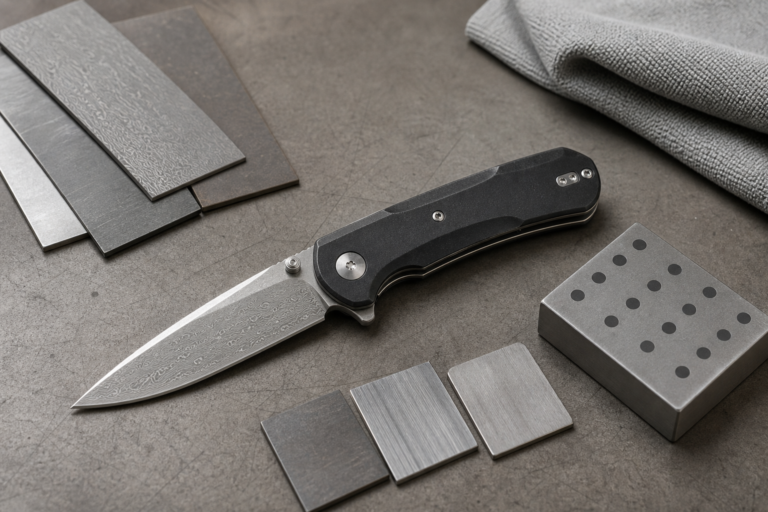
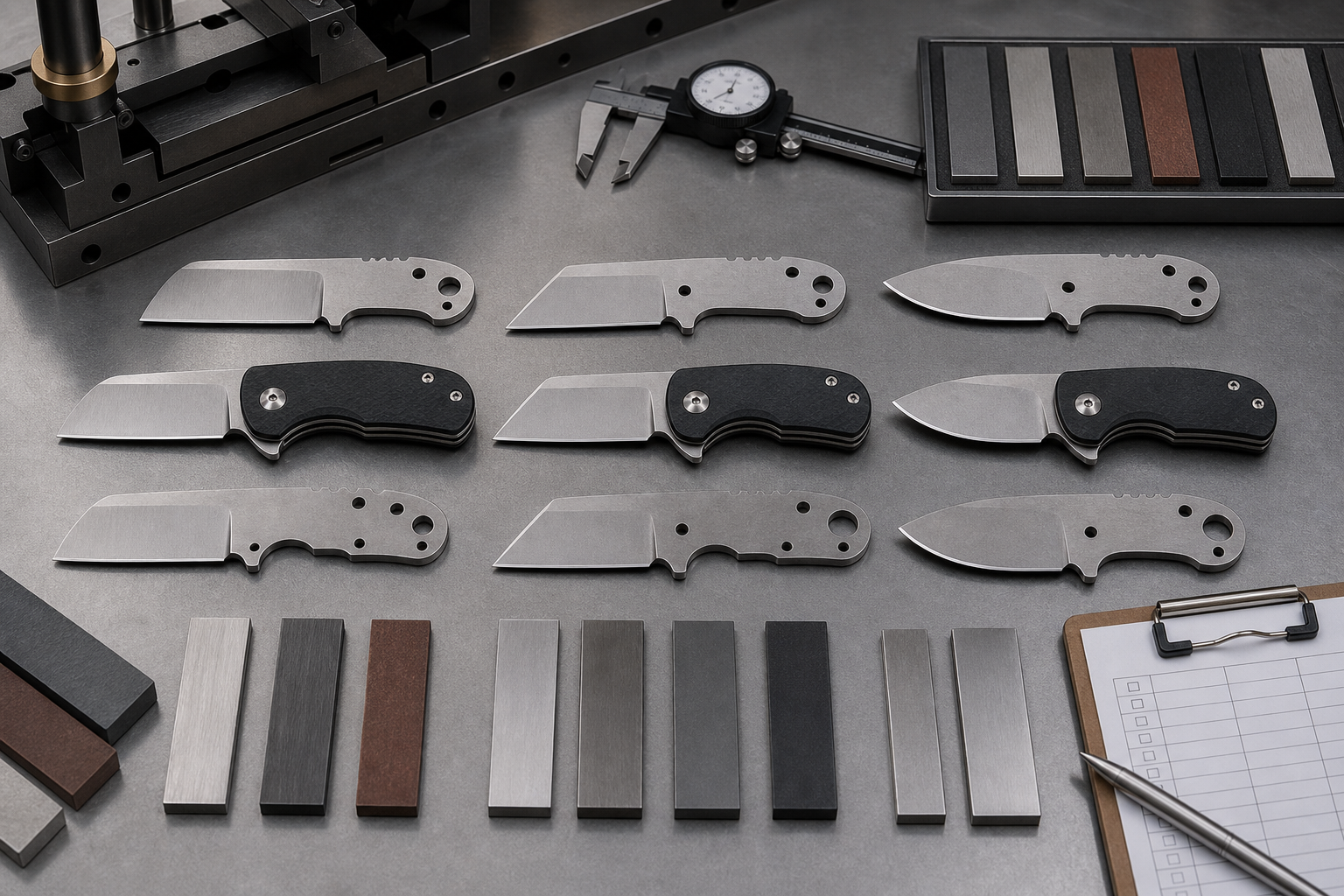
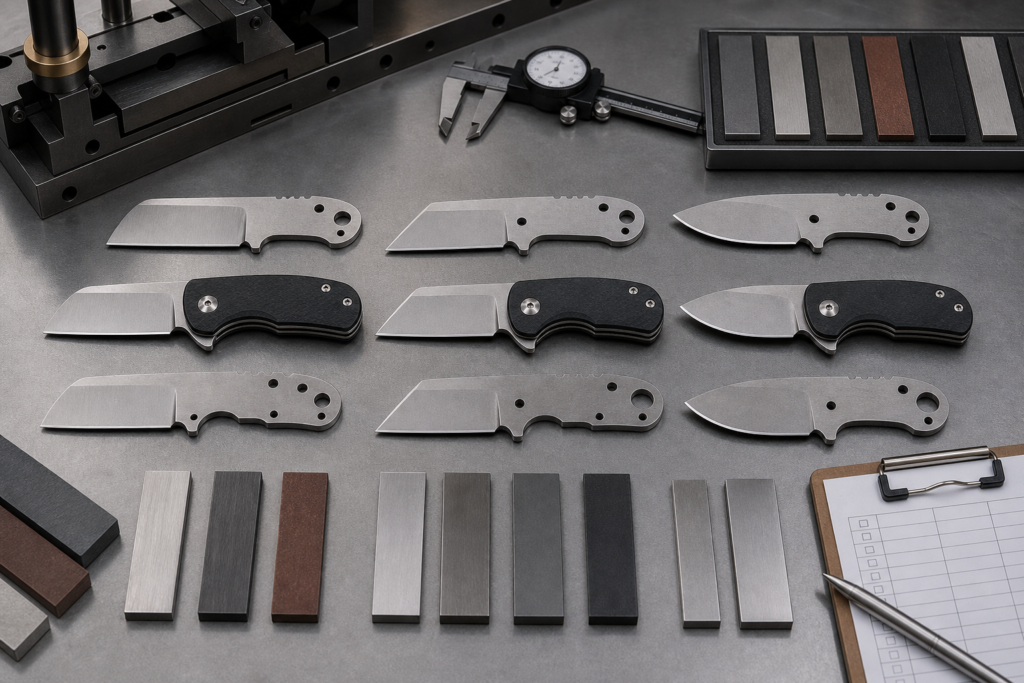
A blade shape can look like a style choice. But the wrong profile can change safety, cutting control, market fit, and production cost.
A sheepsfoot blade is best when buyers want a straight cutting edge and reduced puncture risk. A Wharncliffe is better for detail cutting with a finer tip. A drop point is better for all-around outdoor, EDC, and slicing use.
Quick buyer brief:
- Answer: Choose sheepsfoot for controlled utility and safer tip behavior; choose Wharncliffe for precision; choose drop point for versatility.
- Buyer context: This helps knife brands, outdoor brands, importers, wholesalers, distributors, and private label buyers.
- Key checks: Target use, tip safety, cutting edge shape, blade belly, lock structure, sharpening, market positioning, and packaging wording.
Have a knife or multi-tool project in mind?
Send your sketch, CAD file, sample photo, or product idea. Vast State can review manufacturability, suggest materials, estimate MOQ, and prepare a quote for your OEM/ODM project.
When I discuss blade shape with a buyer, I do not start by asking which profile looks cooler. I ask what the knife must do and who will use it. A sheepsfoot blade can be a very practical choice for utility cutting, controlled work, rescue-style products, and situations where a less aggressive tip is helpful. But it is not the same as a Wharncliffe or a drop point. Each blade profile sends a different product message and creates different production details.
What Is a Sheepsfoot Blade and Why Do Buyers Use It?
Some buyers see the rounded tip and think the blade is less capable. That is not always true. It is a different kind of capability.
A sheepsfoot blade usually has a straight cutting edge and a spine that drops toward a rounded or blunt tip. It supports controlled slicing while reducing accidental puncture risk.
I Look at the Tip First
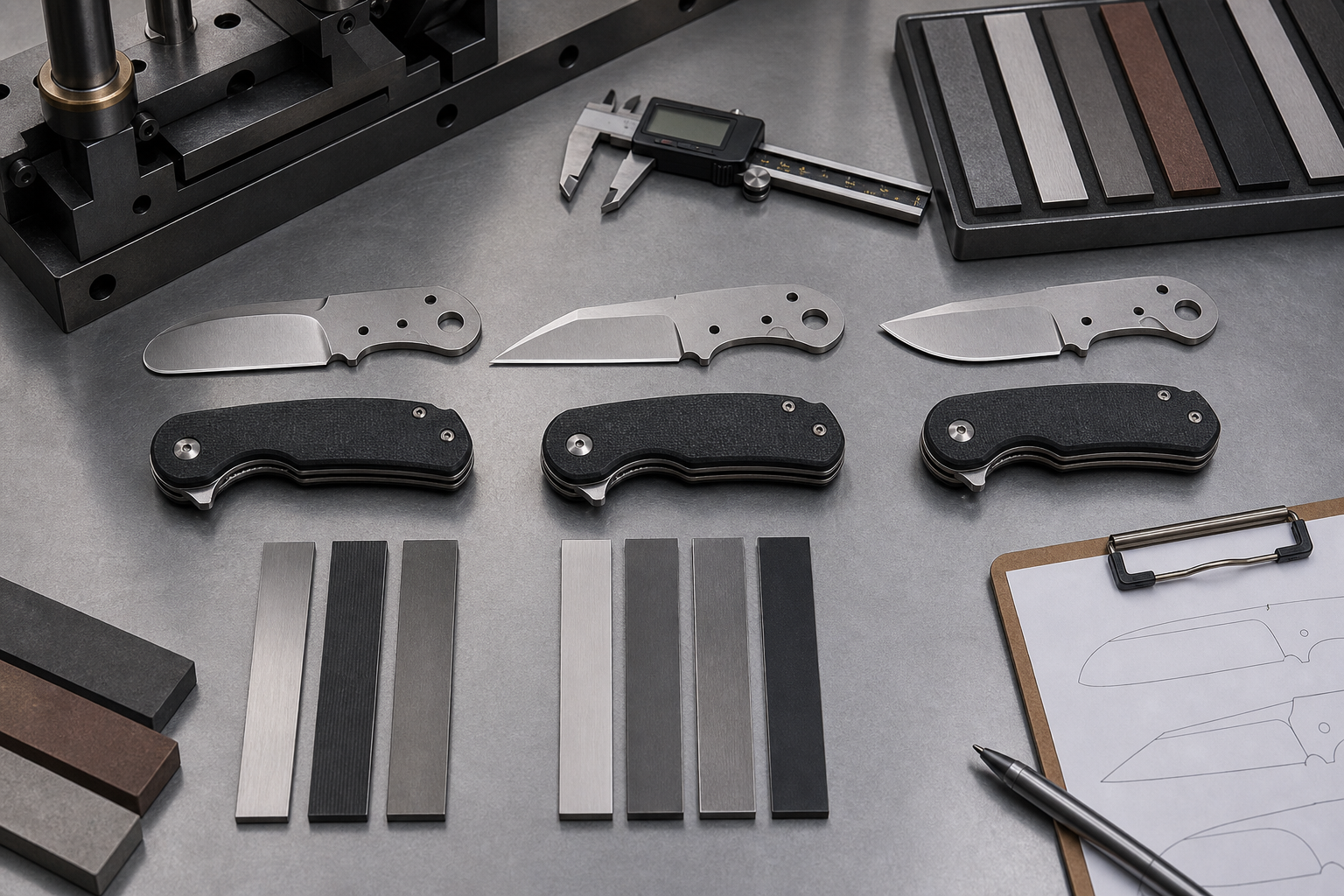
The main feature of a sheepsfoot blade is the controlled tip. Spyderco describes a sheepfoot blade as having a straight edge and rounded blunt tip, which reduces accidental puncture risk. Benchmade also describes a sheepsfoot profile as a blade where the spine drops abruptly to a rounded tip, creating a straight edge with reduced piercing ability. For B2B buyers, that matters because the tip changes the product's purpose.
I often consider sheepsfoot shapes for utility knives, rescue-style tools, work knives, marine-related products, and general task knives where controlled cutting is more important than piercing. The straight edge can be useful for cutting against a surface, opening packages, trimming material, and doing repetitive utility cuts. The reduced point can also help when a brand wants a less aggressive product appearance.
However, a sheepsfoot is not perfect for every use. It usually has less belly than a drop point, so it may not feel as natural for sweeping slicing tasks. It also lacks the fine tip of a Wharncliffe, so it may not be the first choice for detailed tip work. I see it as a practical and safety-aware blade, not as a universal blade.
| Sheepsfoot feature | Practical meaning | Buyer takeaway |
|---|---|---|
| Straight cutting edge | Strong contact along the edge | Good for utility and controlled cuts |
| Rounded or blunt tip | Reduced puncture behavior | Useful for rescue or safer utility positioning |
| Low blade belly | Less sweeping slice than drop point | Match it to task, not only style |
| Practical appearance | Less aggressive visual signal | Helpful for work, marine, and utility markets |
OEM/ODM RFQ Checklist
Prepare these details to help Vast State review your project and provide a more accurate quotation.
| RFQ Field | What to Prepare |
|---|---|
| Project type | OEM from drawing / ODM private label / wholesale catalog |
| Product category | Folding knife / fixed blade / multi-tool / outdoor tool |
| Design status | Idea / sketch / 2D drawing / 3D CAD / physical sample |
| Target price | Ex-factory target price or retail price range |
| MOQ expectation | 500 / 1,000 / 3,000 / 5,000+ pcs |
| Logo method | Laser engraving / etching / printing / molded logo |
| Packaging | Standard packaging / custom retail box / Amazon-ready |
| Market | USA / EU / Japan / Korea / Middle East / other |
| Compliance needs | Buyer-specified testing / documentation / labeling |
| Timeline | Sample deadline / mass production deadline |
How Is a Sheepsfoot Different From a Wharncliffe Blade?
The two shapes are often confused. If buyers do not define the tip and spine clearly, samples may miss the intended function.
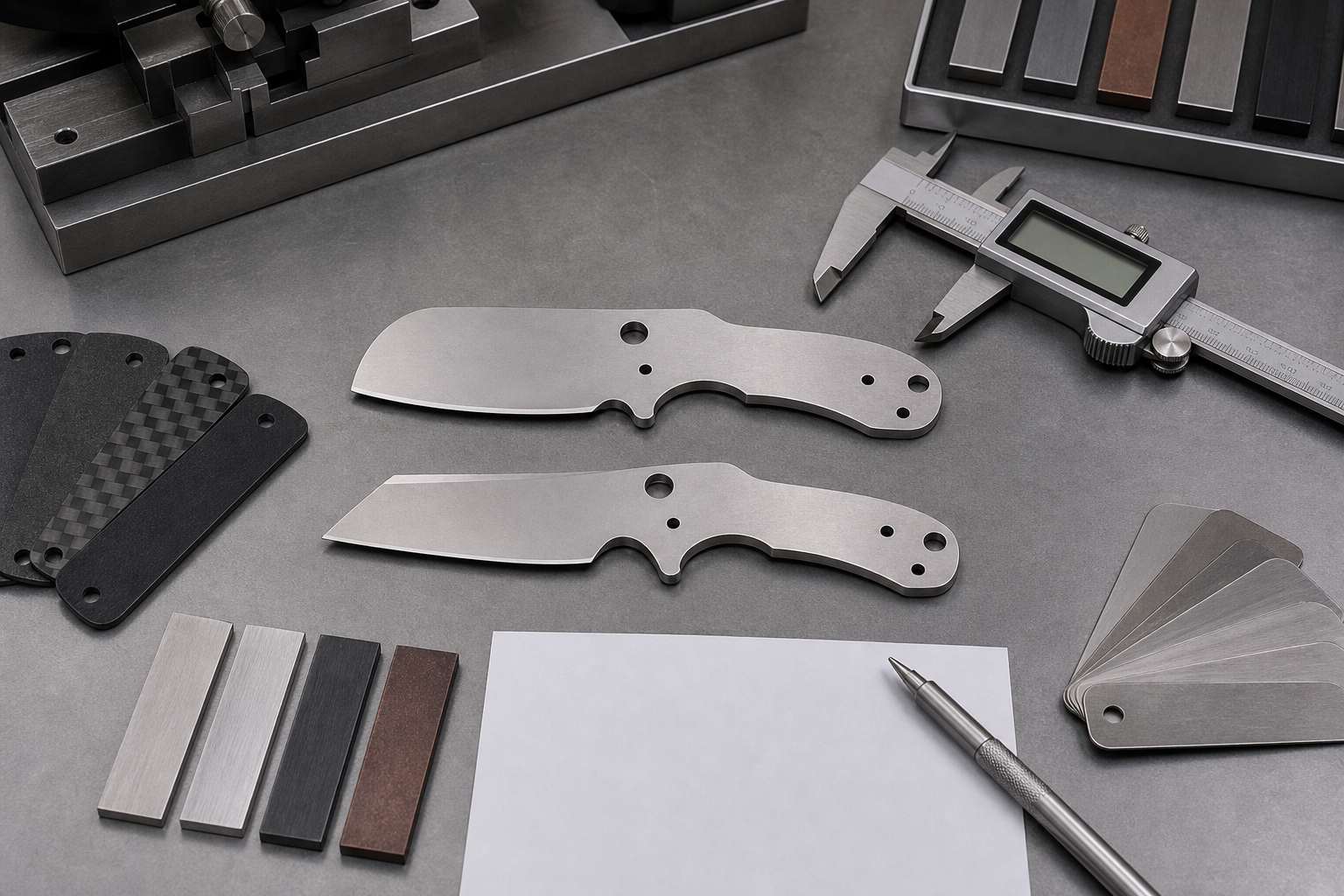
A sheepsfoot has a straighter edge with a more rounded or blunt tip. A Wharncliffe has a straight edge too, but the spine slopes gradually to a finer point for more detailed cutting.
I Separate Safer Tip From Finer Tip
Sheepsfoot and Wharncliffe blades can both have a straight cutting edge. That is why buyers sometimes mix them together. The key difference is the tip. A sheepsfoot generally has a more rounded or blunt tip. A Wharncliffe usually has a finer point because the spine slopes or curves down toward an acute tip. Spyderco describes the Wharncliffe profile as a straight cutting edge with a spine that slopes or curves downward to an acute point, allowing the blade to cut with power to the tip and excel at detail work.
This difference affects product positioning. If the buyer wants a utility knife with reduced accidental puncture risk, I lean toward sheepsfoot. If the buyer wants a box cutter-like EDC blade, detail work, controlled tip cuts, or a more precise point, I consider Wharncliffe. A Wharncliffe can feel very efficient because the straight edge gives strong contact, and the fine tip can start cuts cleanly.
Production also changes. A fine Wharncliffe tip may need more protection in packaging and more careful grinding. It can also be more sensitive to rough use. A sheepsfoot tip may be more forgiving, but the buyer should still define the exact radius and tip shape. Small profile changes can make the knife look like a modified sheepsfoot, rescue blade, reverse tanto, or Wharncliffe hybrid.
| Comparison point | Sheepsfoot | Wharncliffe |
|---|---|---|
| Tip shape | Rounded or less pointed | Finer and more acute |
| Main strength | Controlled utility and reduced puncture | Detail work and full-edge cutting power |
| Market fit | Rescue, work, marine, utility | EDC, precision utility, box-cutting tasks |
| Production concern | Tip radius and edge straightness | Fine tip strength and grind consistency |
How Is a Sheepsfoot Different From a Drop Point Blade?
A drop point is popular because it does many things well. But that versatility can be less focused than a sheepsfoot utility profile.
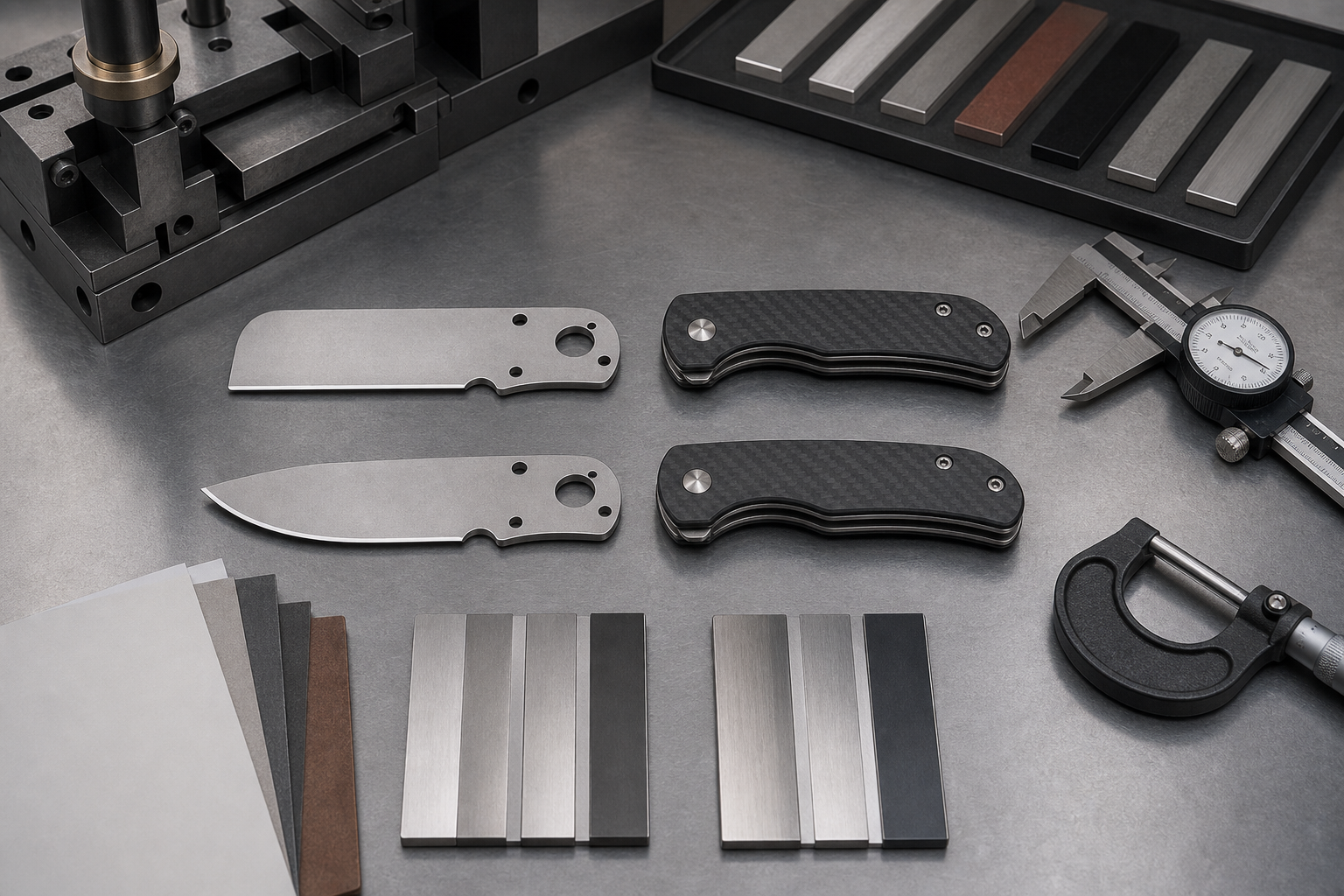
A sheepsfoot favors straight-edge control and reduced tip risk. A drop point has a gently lowered point and more belly, making it more versatile for outdoor, EDC, slicing, and general-purpose knives.
I Use Drop Point When the Buyer Needs Range
Drop point is often the safer choice for broad product lines. Benchmade describes drop point as one of the most versatile shapes, with a gently sloping spine, strength, control, and a large belly for slicing. That is why drop point works well for many EDC, outdoor, camping, hunting-style, and general utility products. It gives the user a point, a belly, and enough control for many tasks.
Sheepsfoot is more focused. It can be excellent when the user needs controlled cuts and lower puncture risk. But it does not give the same belly for sweeping cuts. A drop point can slice through curved motions more naturally. It can also be easier to sell in broad markets because many users already understand the shape.
For OEM/ODM projects, I usually ask buyers how specialized the knife should be. If the knife is meant to be a broad everyday product, drop point often makes sense. If the knife is meant for utility, rescue-style, marine, or work tasks where tip safety and straight cuts are important, sheepsfoot can create clearer positioning.
Packaging should reflect this difference. Drop point can be explained as all-around utility. Sheepsfoot should be explained as controlled cutting with a less aggressive tip. That kind of wording helps the buyer avoid vague claims.
| Buyer need | Sheepsfoot fit | Drop point fit |
|---|---|---|
| Controlled straight cuts | Strong | Good, but less focused |
| Slicing belly | Limited | Stronger |
| Broad EDC appeal | Moderate | Strong |
| Reduced puncture risk | Stronger | Moderate |
What Products Benefit Most From a Sheepsfoot Blade?
A sheepsfoot blade should not be used only because it looks different. It works best when the product purpose is clear.
Sheepsfoot blades work well for rescue-style tools, marine utility knives, work knives, warehouse knives, controlled EDC cutting, and products where buyers want less piercing-focused behavior.
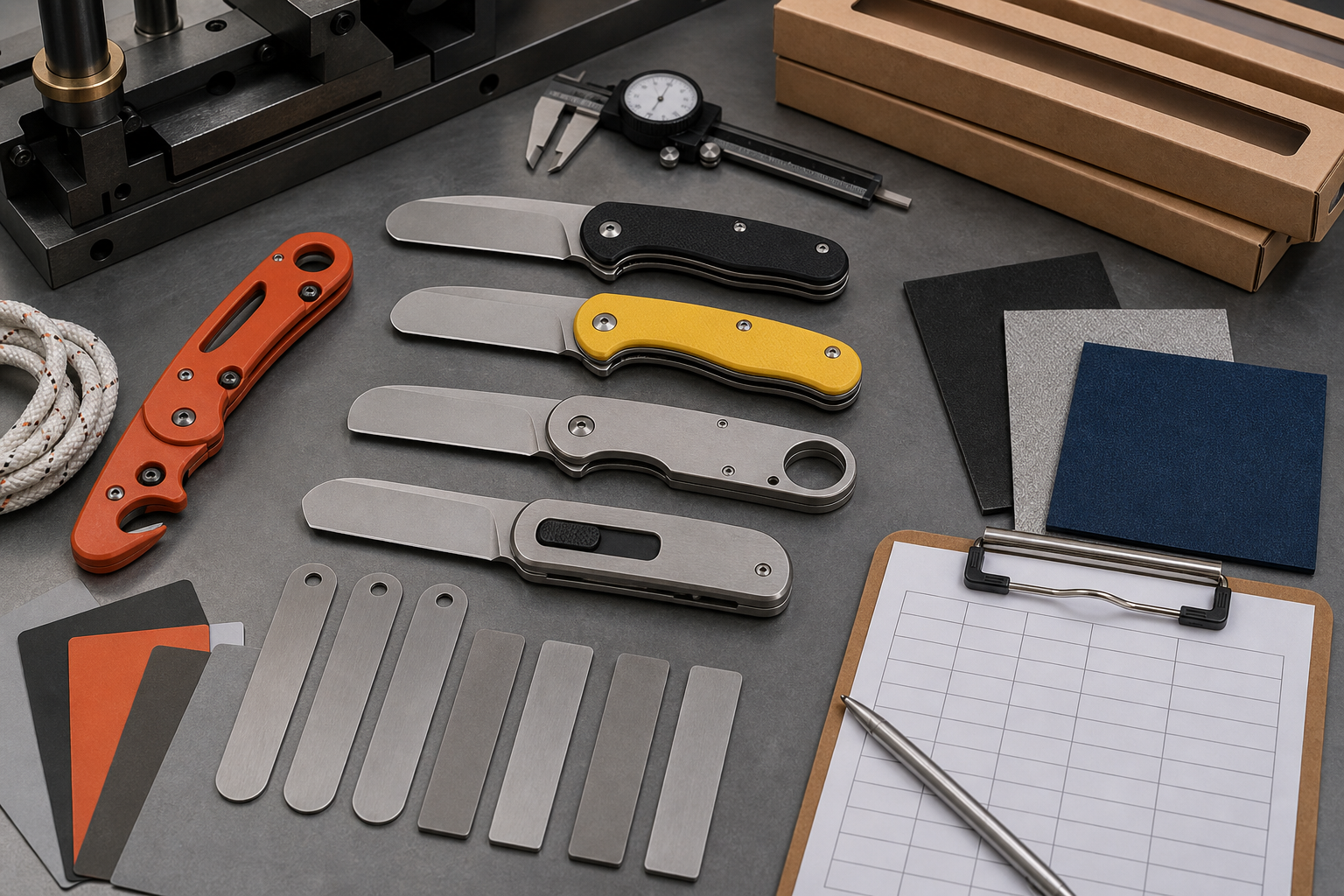
I Match Sheepsfoot to Utility, Not Decoration
I like sheepsfoot blades when the buyer can explain the reason. For rescue-style tools, the reduced puncture tip can support a safer product message. For marine and rope-related utility, the straight edge can be useful, especially if paired with suitable steel, corrosion-resistant finish, and a grip-focused handle. For warehouse or work knives, the straight edge can help users make controlled cuts on packaging, straps, and flat materials.
For EDC products, sheepsfoot can also be attractive. It gives a modern utility look and can make the knife feel less aggressive. Some buyers want that because their customers use knives mostly for packages, tape, cardboard, and daily tasks. In those cases, a sheepsfoot blade can be a smart product decision.
But I also warn buyers not to force it into every product. A camping knife may need more belly. A hunting-style knife may need a different point and slicing curve. A food-prep-adjacent outdoor knife may need a blade shape that supports rocking or longer slicing. The sheepsfoot profile is practical, but it should match the task.
The handle and lock also matter. A sheepsfoot utility knife still needs good ergonomics, controlled opening, stable lockup, and edge geometry that matches its use. Blade shape alone cannot fix a weak product.
| Product type | Why sheepsfoot can fit | What I still check |
|---|---|---|
| Rescue-style tool | Reduced accidental puncture risk | Tip radius and safe packaging wording |
| Marine utility knife | Controlled cuts around rope or line | Steel, finish, and grip material |
| Work knife | Straight edge for packaging tasks | Edge angle and durability |
| EDC utility folder | Practical, less aggressive look | Pocket carry, lockup, and sharpening |
How Does Sheepsfoot Design Affect Manufacturing and Quality Control?
A simple-looking blade can still create production problems. Straight edges, rounded tips, and tang geometry must be controlled.
Sheepsfoot manufacturing should control blade profile, tip radius, edge straightness, bevel symmetry, heat treatment, sharpening, blade centering, lockup, packaging fit, and final appearance.
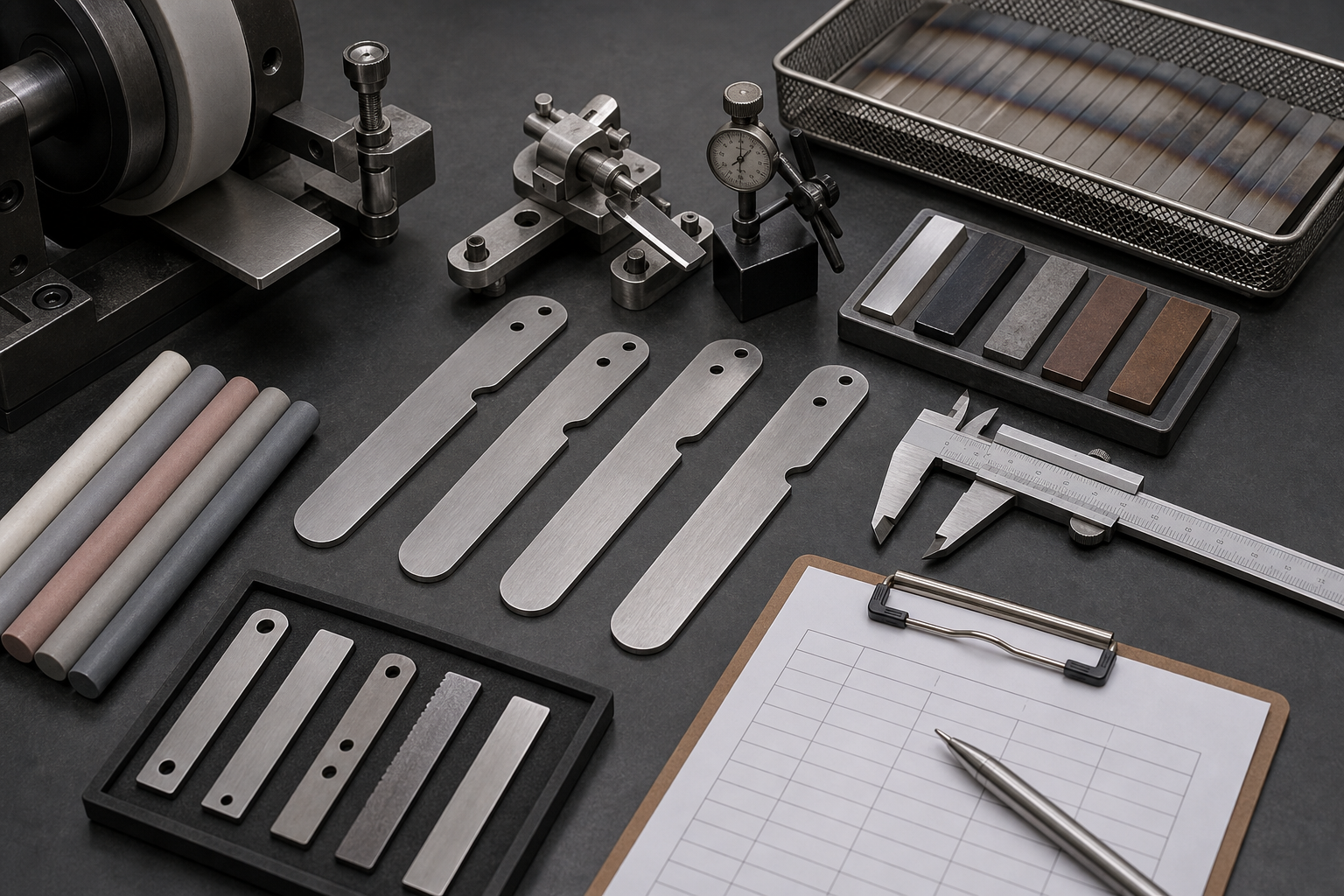
I Define the Profile Before Sampling
The sheepsfoot profile needs clear drawings. The buyer should define blade length, edge length, tip radius, spine drop, blade thickness, grind style, and lock structure. If the profile is not clear, the factory may create a sample that looks close but behaves differently. A small change in the tip radius can make the blade more blunt, more pointed, more rescue-focused, or closer to a Wharncliffe.
Grinding is another key point. A straight cutting edge can reveal uneven bevels quickly. If the bevel line waves, the blade may look poorly made even if the steel is acceptable. Sharpening also needs control. The straight edge should feel clean and consistent along its length.
For folding knives, blade centering and closed-blade safety must also be reviewed. A sheepsfoot blade often has a broad tip area, so the closed position and handle clearance matter. The tang, pivot, stop pin, and lock face must all work together.
Heat treatment and hardness checking should match the steel. The NIST Rockwell hardness guide supports the point that hardness testing needs good measurement practice. I use hardness as one process signal, not as the whole answer. Final QC should include action, lockup, edge, finish, packaging, and appearance.
| QC point | What I check | Why it matters |
|---|---|---|
| Profile | Tip radius and spine drop | Keeps sheepsfoot identity clear |
| Edge | Straightness and sharpness | Supports controlled utility cuts |
| Folding action | Centering, lockup, handle clearance | Protects user experience |
| Finish | Bevel, coating, polish, markings | Supports retail value |
What Should Buyers Put in the RFQ for a Sheepsfoot Knife?
If the RFQ only says "sheepsfoot blade," the factory still has to guess too much. That can lead to sample revisions.
The RFQ should define target use, blade length, tip radius, steel, heat treatment, edge geometry, handle material, lock type, finish, packaging, inspection requirements, and target market.
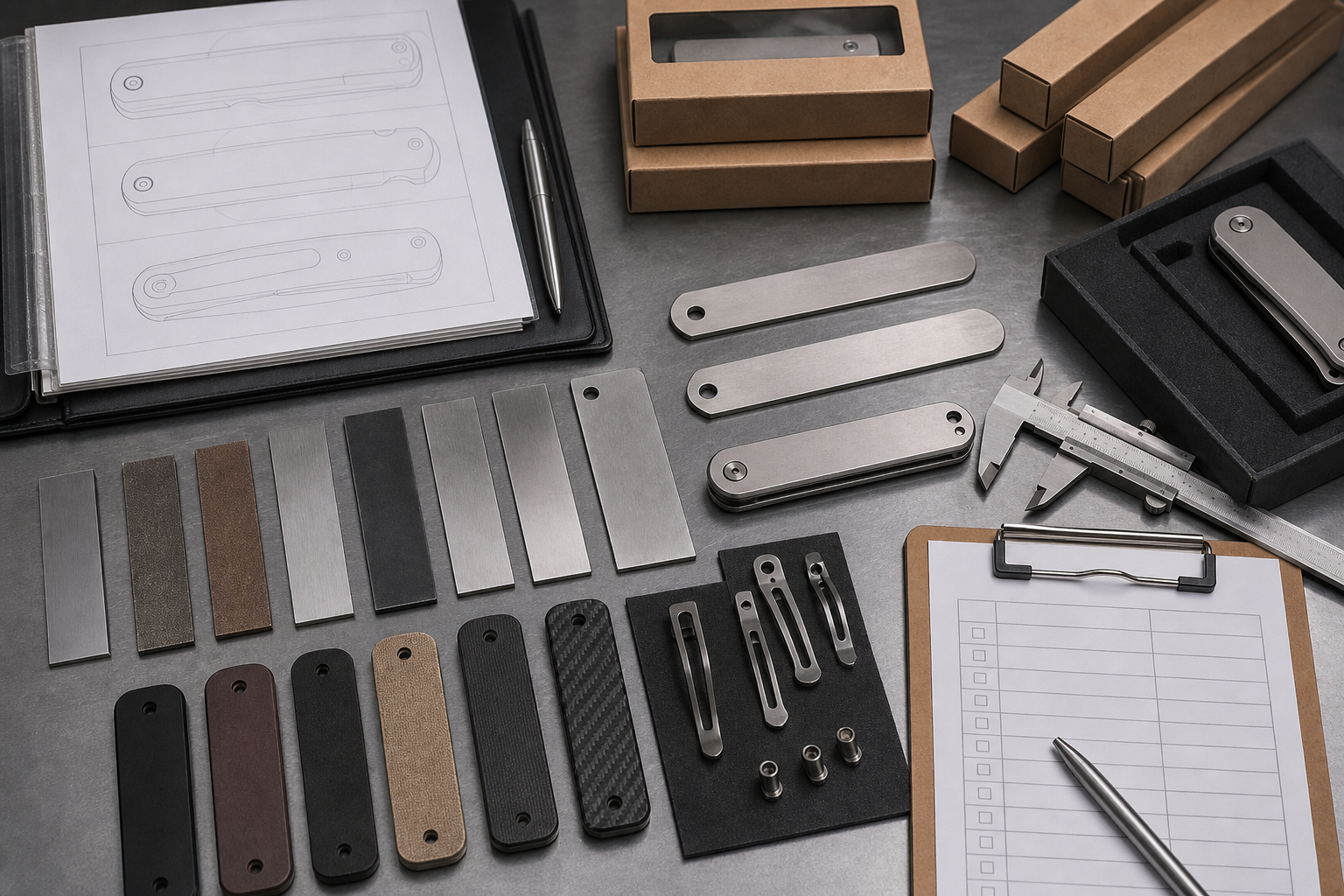
I Ask Buyers to Define the Job Before the Shape
Before I quote a sheepsfoot knife, I want to know why the buyer wants that blade shape. Is the knife for work utility, rescue-style use, marine use, EDC, or retail differentiation? This answer changes the steel, handle, lock, finish, edge geometry, and packaging. A rescue-style product may need a rounded tip and high-visibility handle. A work knife may need strong edge durability and simple maintenance. An EDC knife may need a clean pocket profile and attractive finish.
I also want the buyer to clarify the comparison point. If they are choosing between sheepsfoot and Wharncliffe, I ask how much tip precision they need. If they are choosing between sheepsfoot and drop point, I ask how much slicing belly and broad-market familiarity they need.
The RFQ should include drawings or reference dimensions whenever possible. It should also state the target price, expected quantity, sample standard, and inspection needs. For B2B buyers, a good sheepsfoot project is not only about the blade shape. It is about making that shape fit production, sales, and repeat orders.
| RFQ detail | What to define | Why it matters |
|---|---|---|
| Target use | Utility, rescue, marine, EDC | Guides profile and packaging |
| Tip design | Radius and puncture expectation | Separates sheepsfoot from Wharncliffe |
| Blade geometry | Thickness, grind, edge angle | Controls cutting feel |
| Inspection plan | Profile, edge, lockup, finish | Protects batch consistency |
Turn your idea into a quote-ready knife project.
Share your drawing, sample photo, target quantity, market, and packaging needs. Vast State will review manufacturability and prepare OEM/ODM options.
Conclusion
I choose sheepsfoot blades for controlled utility and lower puncture risk, Wharncliffe for precision, and drop point for broader all-around use.
Source Notes
- Spyderco blade shapes supports the definitions of sheepfoot, Wharncliffe, and drop point blade behavior.
- Benchmade blade shapes supports the buyer-facing differences between drop point, sheepsfoot, and utility/rescue use cases.
- Zero Tolerance blade styles provides additional industry context for sheepsfoot and drop point blade descriptions.
- NIST Rockwell hardness guide supports the need for careful hardness testing when steel process control is discussed.
- ISO 9001:2015 supports the process-based quality control mindset for profile control, inspection, and repeat production.