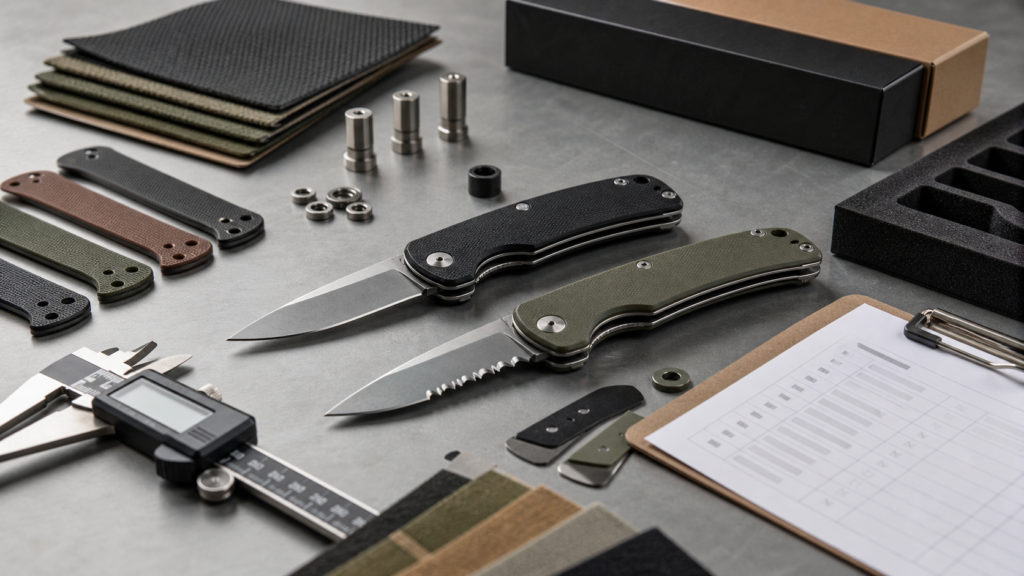
A blade edge can look like a small detail. But the wrong edge choice can create user complaints, sharpening problems, and poor product fit.
Knife buyers should choose a plain edge for clean, precise, general-purpose cutting and easier sharpening. They should choose a serrated edge when the knife must bite into fibrous, slippery, or tough materials such as rope, webbing, or crusted surfaces.
Quick buyer brief:
- Answer: Plain edges fit most general EDC cutting; serrated edges fit aggressive draw cuts on fibrous materials.
- Buyer context: This helps knife brands, outdoor brands, importers, wholesalers, distributors, and private label buyers.
- Key checks: Target use, user maintenance, grind type, sharpening method, edge length, packaging claims, cost, and QC standard.
Have a knife or multi-tool project in mind?
Send your sketch, CAD file, sample photo, or product idea. Vast State can review manufacturability, suggest materials, estimate MOQ, and prepare a quote for your OEM/ODM project.
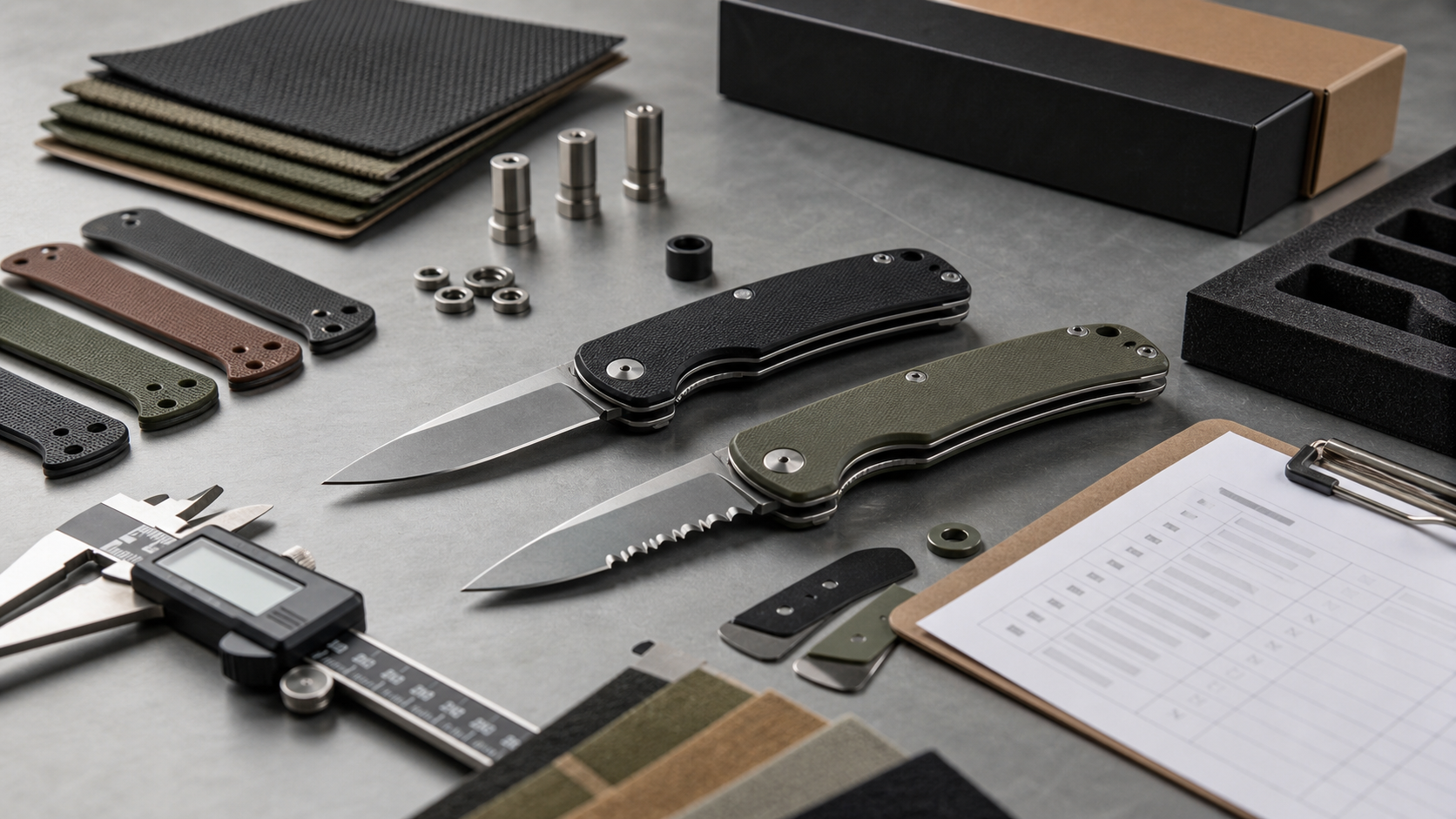
Main image prompt: Use ChatGPT Image 2. Avoid AI-looking knife shapes, fantasy blades, fake mechanisms, impossible screws, distorted multi-tools, and overly perfect 3D-rendered surfaces. Realistic industrial product photography comparing serrated and plain edge folding knife blades, showing blade blanks, serration grinding samples, plain edge bevel samples, calipers, sharpening rods, packaging mockups, and QC checklist on a clean factory workbench, neutral lighting, sharp focus, no text, no logo, no watermark, no violence, no blood.
When I help a buyer choose between serrated and plain edge knives, I do not start with personal preference. I start with the real cutting job. A general EDC knife, a rescue-oriented knife, a fishing knife, and a camping tool may need different edge logic. The edge also affects grinding, sharpening, inspection, packaging wording, and after-sales feedback. For B2B buyers, the best choice is not the edge that looks more special. It is the edge that fits the user's task and the buyer's market.
What Is the Practical Difference Between Serrated and Plain Edge Knives?
Many buyers compare the two edges by appearance only. That misses the real issue: how each edge contacts material during cutting.
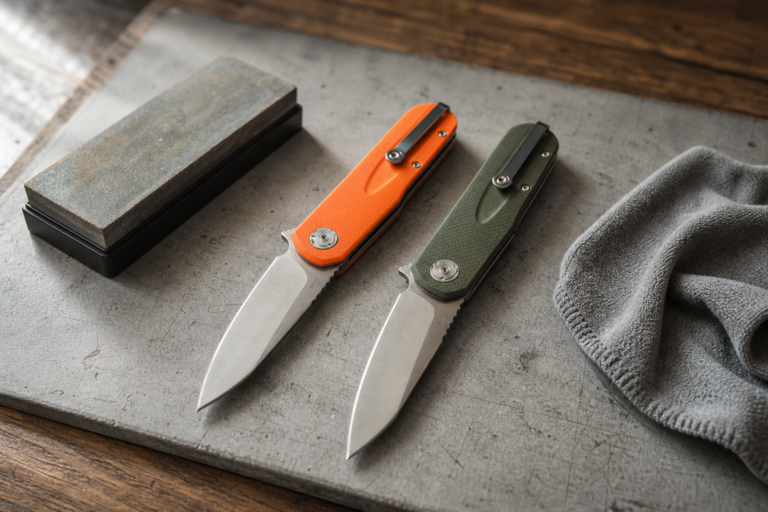
A plain edge uses one continuous sharpened line for clean cuts and easier maintenance. A serrated edge uses teeth or scallops to grab material and saw through tougher or fibrous surfaces.
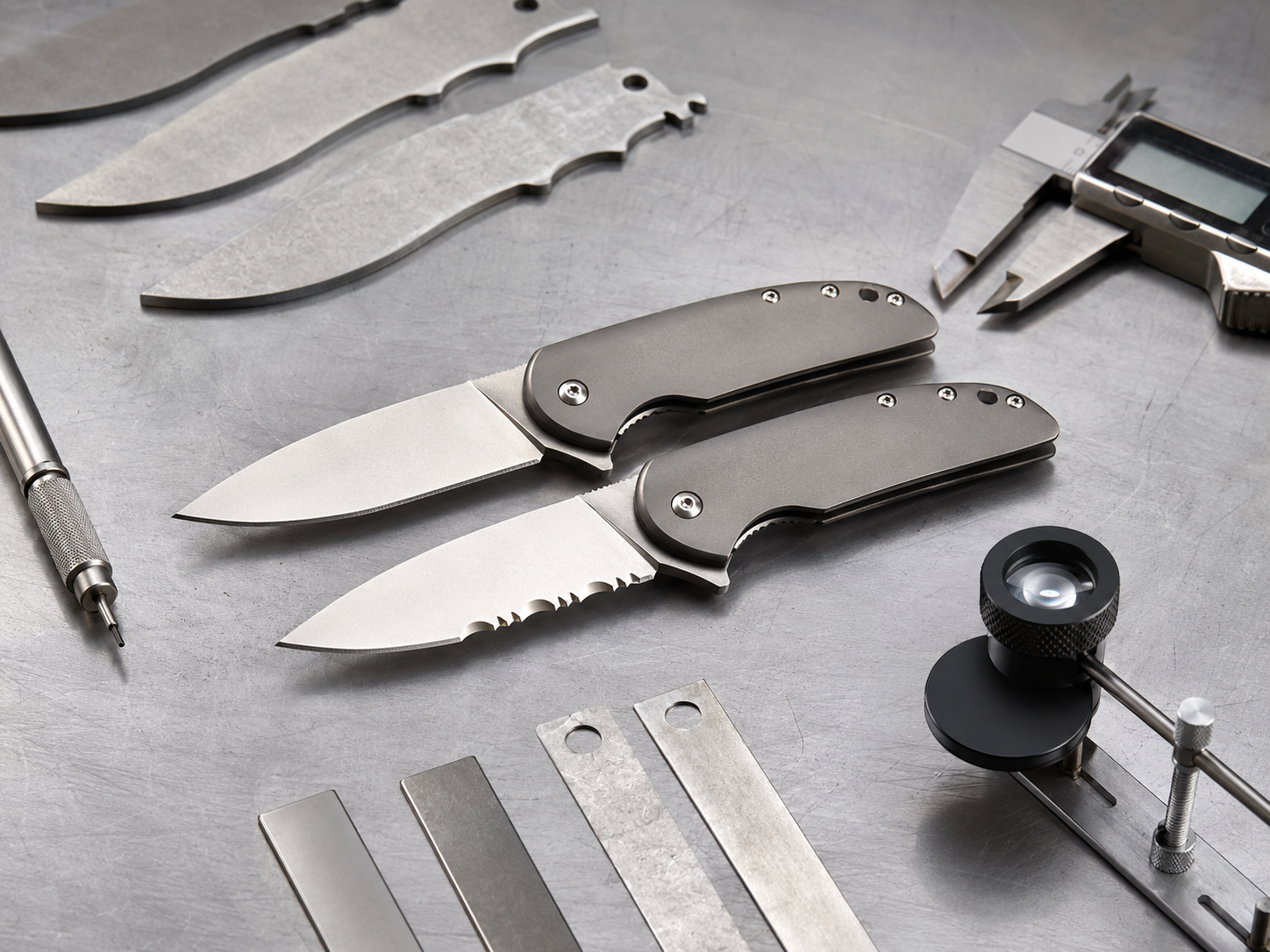
I Judge the Edge by Cutting Motion
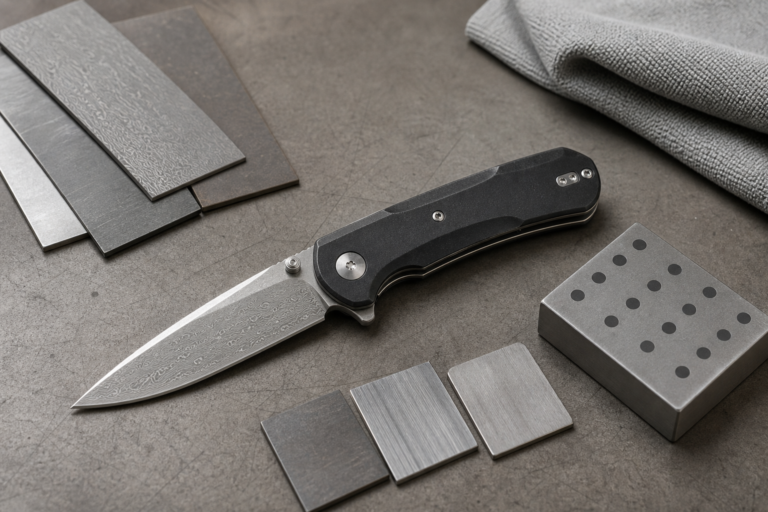
A plain edge is usually better for push cuts, slicing, controlled trimming, and general everyday tasks. It gives the user a clean cutting line. It is also easier for many users to sharpen because the edge is continuous. This matters for EDC knives, pocket knives, camping knives, and utility knives that buyers expect to maintain with common sharpeners.
A serrated edge behaves differently. The teeth contact the material at multiple points. This can help the blade bite into rope, webbing, cord, some plastics, and other fibrous or slippery materials. BLADE Magazine notes that serrated edges are often chosen for rougher slicing tasks such as rope, cardboard, webbing, and plastic straps. The University of Illinois Extension also explains that serrated kitchen knives are often used for soft foods because the scalloped edge cuts without smashing items such as tomatoes and bread. These examples are not the same as folding knife production, but they explain the cutting logic well.
For OEM/ODM development, I treat the edge as part of the product brief. A plain edge says "general control." A serrated edge says "aggressive draw cutting." A combo edge tries to offer both, but it also reduces the usable length of each section.
| Edge type | Main cutting behavior | Practical buyer meaning |
|---|---|---|
| Plain edge | Clean continuous cut | Best for general EDC and easy sharpening |
| Serrated edge | Aggressive bite and saw action | Best for fibrous or slippery materials |
| Combo edge | Mixed plain and serrated sections | Useful only when each section has enough length |
| Wavy kitchen-style edge | Scalloped slicing | Helpful for soft or crusted surfaces |
OEM/ODM RFQ Checklist
Prepare these details to help Vast State review your project and provide a more accurate quotation.
| RFQ Field | What to Prepare |
|---|---|
| Project type | OEM from drawing / ODM private label / wholesale catalog |
| Product category | Folding knife / fixed blade / multi-tool / outdoor tool |
| Design status | Idea / sketch / 2D drawing / 3D CAD / physical sample |
| Target price | Ex-factory target price or retail price range |
| MOQ expectation | 500 / 1,000 / 3,000 / 5,000+ pcs |
| Logo method | Laser engraving / etching / printing / molded logo |
| Packaging | Standard packaging / custom retail box / Amazon-ready |
| Market | USA / EU / Japan / Korea / Middle East / other |
| Compliance needs | Buyer-specified testing / documentation / labeling |
| Timeline | Sample deadline / mass production deadline |
When Should Buyers Choose a Plain Edge Knife?
A plain edge may look less dramatic, but it often solves more daily cutting needs. It is usually the safer default.
Buyers should choose a plain edge when the knife is for everyday carry, clean slicing, controlled cutting, simple sharpening, broad user acceptance, and repeatable private label production.
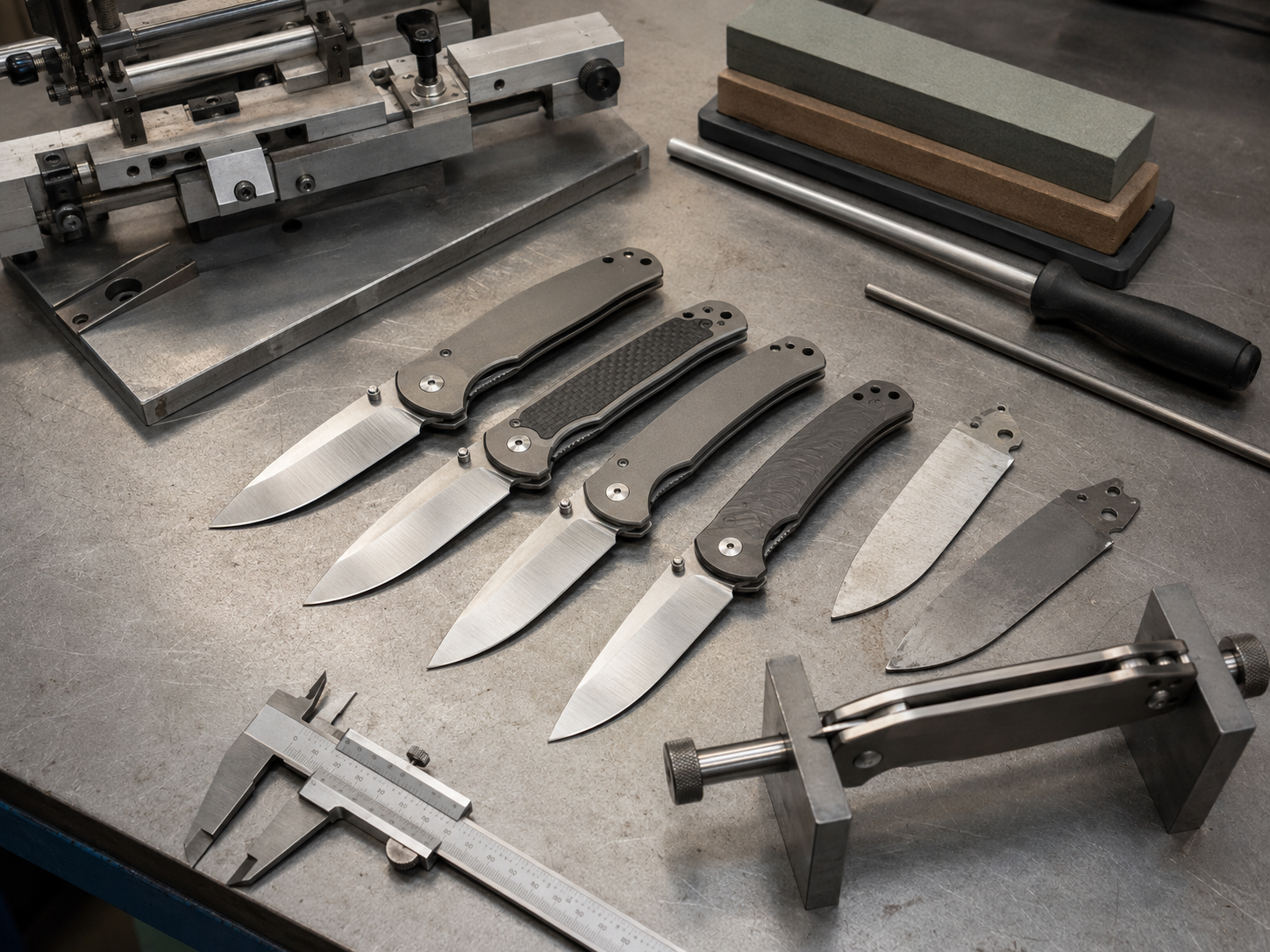
I Use Plain Edge as the Default for Broad Markets
For many B2B projects, I recommend a plain edge first. The reason is simple. A plain edge works for more general tasks. Users can open boxes, cut cord, trim materials, prepare light camp tasks, and maintain the edge more easily. It also gives the buyer a cleaner product story. The packaging can focus on everyday utility, blade steel, handle material, lock structure, and finish instead of explaining a special edge pattern.
Plain edges are also easier to control in mass production. The factory still needs good grinding, edge symmetry, heat control, sharpening, and inspection, but the process is more straightforward than producing consistent serration geometry. The QC checklist can focus on bevel consistency, edge sharpness, burr removal, blade centering, lockup, and finish.
For private label buyers, a plain edge is often better when the target audience includes general users rather than specialists. It reduces maintenance friction. If the buyer sells through distributors, online stores, or outdoor retail, this matters. A product that is easy to explain and easy to maintain often creates fewer after-sales questions.
Plain edge is not perfect for every job. It may slide more on tough rope or webbing if the edge is dull or too polished. But for broad markets, it is usually the most practical starting point.
| Plain edge factor | Why it helps | What I still check |
|---|---|---|
| Easy maintenance | Many users understand sharpening | Steel and edge angle must match |
| Clean cuts | Better control for daily tasks | Bevel symmetry and burr removal |
| Simple production | Easier repeatability | Grinding heat and sharpness standard |
| Broad market fit | Easier retail explanation | Packaging should avoid vague claims |
When Should Buyers Choose a Serrated Edge Knife?
A serrated edge can impress buyers quickly. But it should be chosen for a real task, not only for appearance.
Buyers should choose a serrated edge when the knife must cut rope, webbing, straps, fibrous material, crusted surfaces, or emergency-use materials where aggressive draw cutting matters.
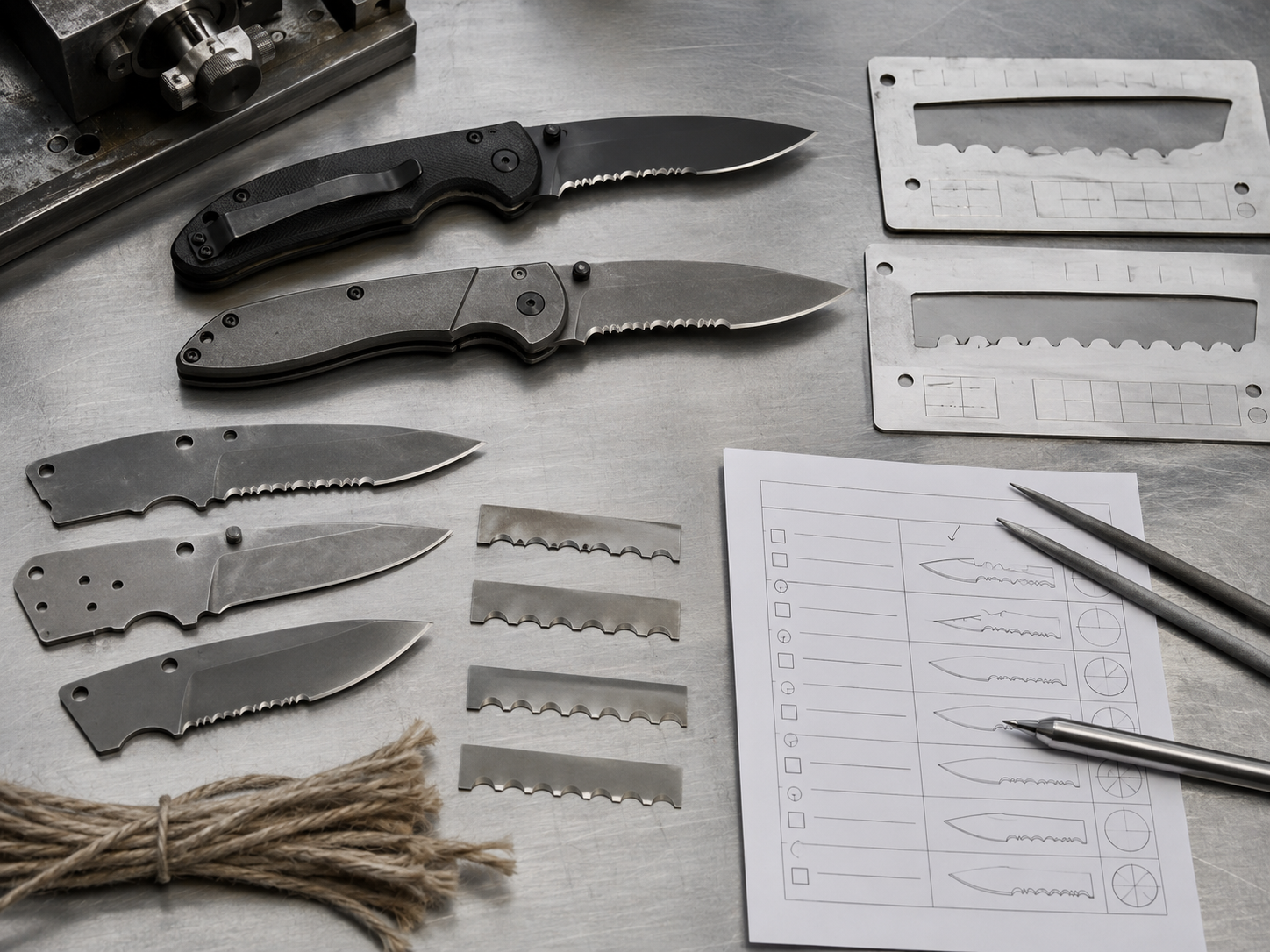
I Use Serrations When Bite Matters More Than Clean Finish
Serrations make sense when the product's main cutting task needs bite. Outdoor, rescue-style, marine, fishing, workwear, and utility markets may value this. A serrated section can help on rope, webbing, cord, and similar materials because the teeth catch and break fibers during a draw cut. The user does not need the same smooth slicing motion used with a plain edge.
This does not mean every outdoor knife should be serrated. A serrated edge can be harder for common users to sharpen. It can also cut less cleanly on flat materials. If the buyer sells to general EDC users, the serrations may become a feature that looks good in photos but adds maintenance difficulty later.
Production also needs more attention. Serration shape, spacing, depth, and grind side should be consistent. If the serrations are too aggressive, the blade may snag more than cut. If they are too shallow, the buyer may not get the performance story they wanted. If the heat treatment or sharpening is not controlled, the serrated section can feel inconsistent between pieces.
So I choose serrations when the target market can explain and use them. The feature should be tied to real user need, not decorative styling.
| Serrated edge factor | Why it helps | What I still check |
|---|---|---|
| Aggressive bite | Better on fibrous material | Tooth shape and spacing |
| Draw cutting | Useful for rope or webbing | Edge sharpness and snagging |
| Strong feature story | Helps rescue or work positioning | Packaging must stay practical |
| Longer perceived sharpness | Teeth can keep cutting after wear | Sharpening method and user care |
Are Partially Serrated Combo Edges Worth It?
Combo edges look like a perfect compromise. But if the blade is short, each section may become too limited to work well.
Partially serrated combo edges are worth it only when the blade has enough length for both clean plain-edge cuts and useful serrated draw cuts. Otherwise, a dedicated edge is usually better.
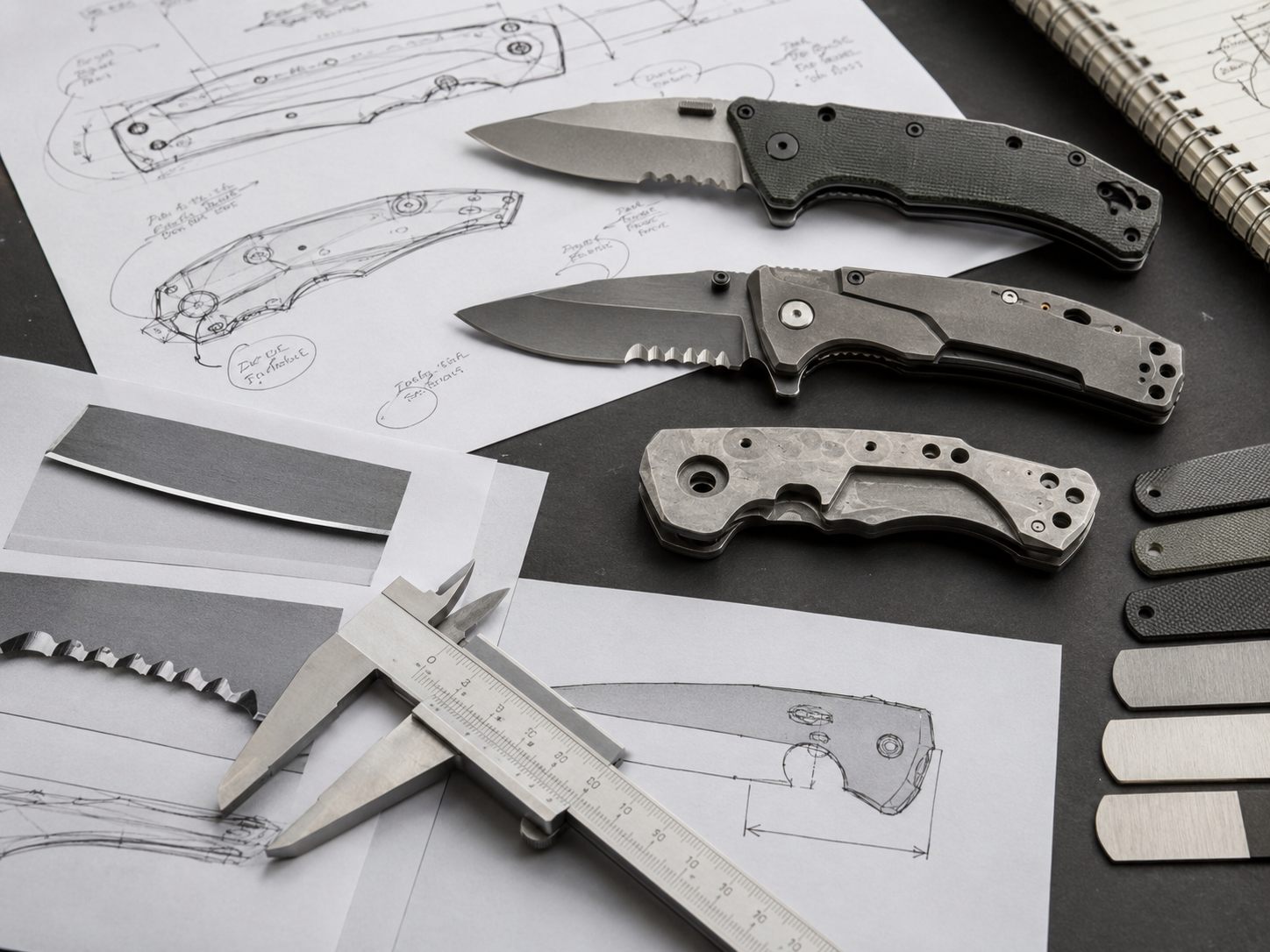
I Check Whether Each Edge Section Has Enough Room
Combo edges are common because they seem to offer two tools in one blade. The plain section handles daily cuts. The serrated section handles rope or webbing. This idea can work, but only when the blade length and serration placement are practical. On a short folding knife, a combo edge may leave the user with too little plain edge for clean cuts and too little serrated edge for hard draw cuts.
For B2B buyers, I ask three questions. First, what is the main task? Second, where should the serrations sit? Third, can the user maintain the edge? If the buyer cannot answer these questions, a plain edge may be safer. If the product has a rescue, marine, or workwear purpose, a combo edge may be useful because the buyer can explain the serrated section clearly.
Production planning also matters. Combo edges add grinding and inspection complexity. The factory must control the transition between plain and serrated sections. Packaging should also explain the feature without overpromising. A vague claim such as "cuts everything better" is not helpful. A clearer claim such as "plain section for clean cuts, serrated section for rope and webbing" is more practical.
| Combo edge question | Why it matters | Practical choice |
|---|---|---|
| Is the blade long enough? | Each section needs useful length | Avoid combo edge on very short blades |
| What is the main task? | Feature must match user need | Choose plain edge for general EDC |
| Can users sharpen it? | Maintenance affects satisfaction | Include care guidance if needed |
| Can production repeat it? | Serrations add QC work | Define serration geometry clearly |
How Do Edge Types Affect Manufacturing, QC, and Cost?
The edge is not just a user feature. It changes grinding, sharpening, inspection, packaging, and after-sales expectations.
Plain edges are usually easier to manufacture and inspect. Serrated edges need more controlled tooth geometry, sharpening method, batch consistency, and user-care communication.
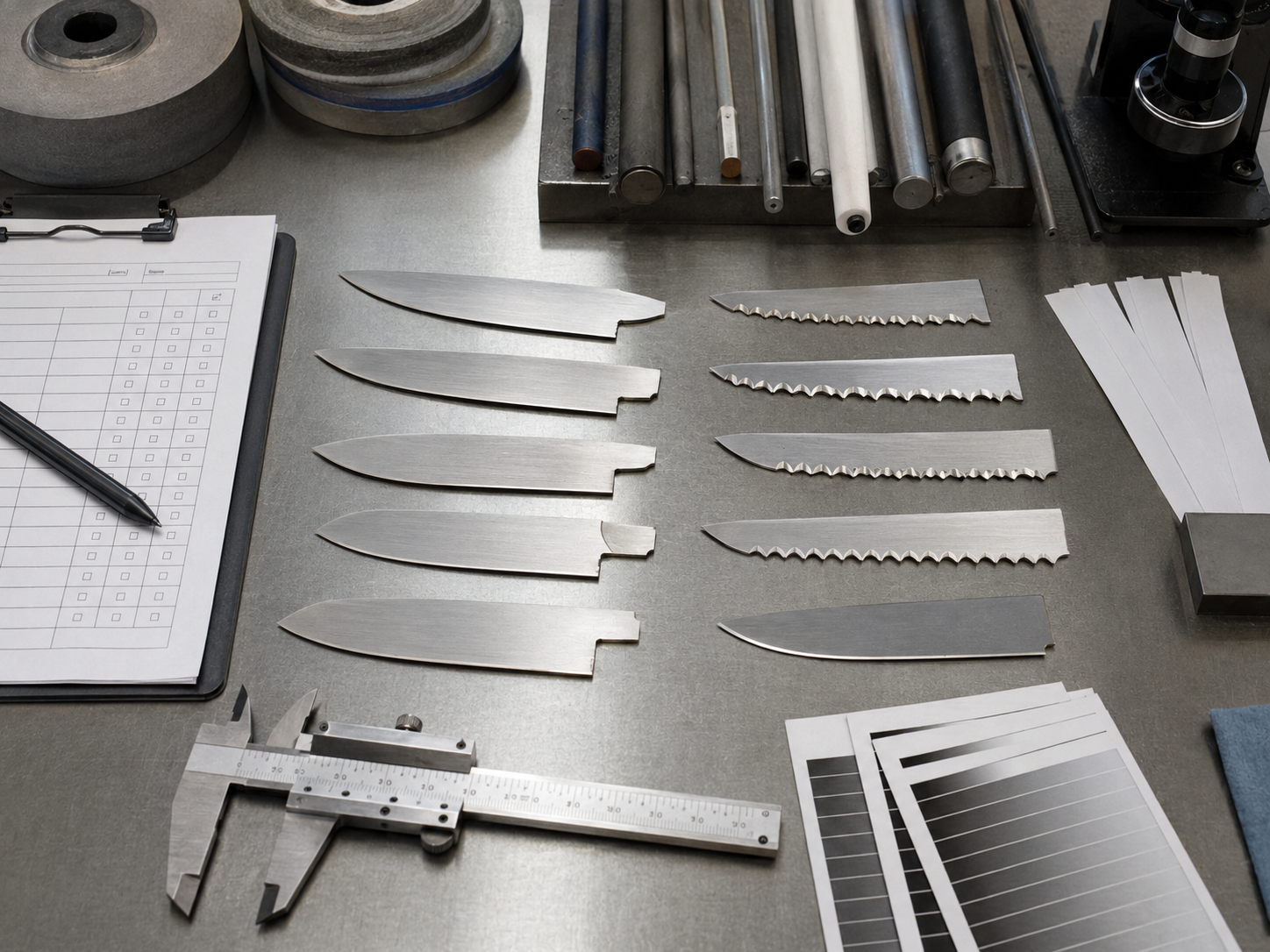
I Treat Edge Choice as a Production Specification
From a factory view, a plain edge is more direct. The process still needs skill, but the inspection points are easier to standardize. I check bevel symmetry, edge angle, burr removal, grinding marks, sharpness, and consistency across the batch. The buyer should define whether the edge is for general utility, food-adjacent use, outdoor use, or harder work use.
Serrated edges add more variables. The serration pattern must be selected. The tooth depth, tooth spacing, grind side, transition area, and finishing method must be controlled. A small difference can change how the blade feels. It can also affect appearance, packaging photos, and user feedback.
Sharpness testing can support this process, but it must match the edge type and product goal. CATRA's razor edge sharpness tester materials show that sharpness measurement can be approached in a controlled way for plain edge blades. For hardness and steel process control, the NIST Rockwell hardness guide explains why proper measurement practice matters. In real production, I use these ideas as reminders: performance should not rely on a steel name or edge name alone. It should be supported by process checks.
| Production area | Plain edge focus | Serrated edge focus |
|---|---|---|
| Grinding | Bevel angle and symmetry | Tooth shape, spacing, and depth |
| Sharpening | Continuous edge finish | Correct rod or shaped abrasive method |
| Inspection | Burr, sharpness, finish | Serration consistency and transition |
| Packaging | Easy maintenance message | Clear feature and care explanation |
What Should Buyers Put in the RFQ Before Choosing an Edge?
An RFQ that says only "serrated or plain" is not enough. The factory needs the cutting task and edge standard.
The RFQ should include target use, blade length, steel grade, edge type, serration position, sharpening expectation, target market, packaging wording, inspection needs, and sample approval standard.
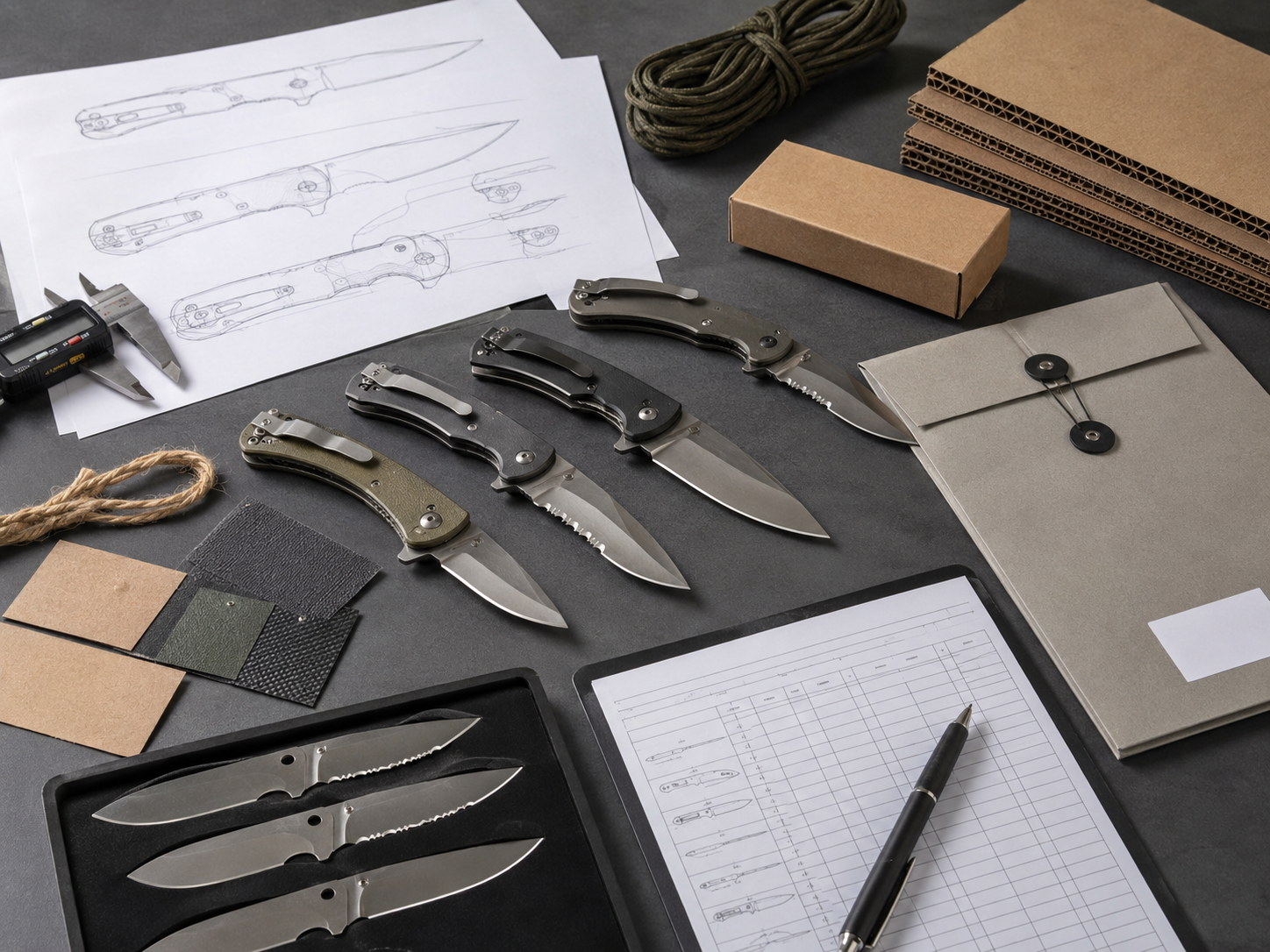
I Ask for the Cutting Job First
Before I quote the edge type, I want to understand the buyer's real use case. If the knife is for general EDC, I usually start with a plain edge. If the knife is for rope, webbing, rescue-style kits, marine use, or industrial utility, I consider serrations or a combo edge. If the buyer wants a combo edge, I check whether the blade has enough length for both sections to be useful.
The RFQ should also include steel and heat treatment expectations. A serrated edge on poor steel or weak heat treatment will not solve the product problem. A plain edge with poor geometry will also disappoint users. Edge type, steel, heat treatment, and grinding must work together.
For packaging, I suggest clear wording. Do not write that one edge is "best" for every use. Plain edge can be described as clean and easy to maintain. Serrated edge can be described as useful for rope, webbing, and fibrous materials when that is true for the product. If a buyer sells in markets with product safety or local knife restrictions, the importer should also confirm the allowed product description and legal requirements.
| RFQ detail | Plain edge note | Serrated edge note |
|---|---|---|
| Use case | General EDC, clean slicing | Rope, webbing, fibrous materials |
| Blade length | Full edge is usable | Serrated section needs enough length |
| Maintenance | Easier for most users | Needs proper sharpening method |
| Inspection | Bevel and sharpness | Tooth geometry and transition area |
Turn your idea into a quote-ready knife project.
Share your drawing, sample photo, target quantity, market, and packaging needs. Vast State will review manufacturability and prepare OEM/ODM options.
Conclusion
I choose plain edges for broad daily utility and serrated edges for specific aggressive cutting tasks, then match the edge to production, QC, and market needs.
Source Notes
- University of Illinois Extension supports the basic serrated-edge use case for soft foods and tool selection.
- BLADE Magazine provides industry context for plain, serrated, and combo edge tradeoffs.
- CATRA REST brochure supports the idea that sharpness can be measured through controlled testing for plain edge blades.
- NIST Rockwell hardness guide supports the need for careful hardness testing when steel process control is discussed.
- ISO 9001:2015 supports the process-based quality control mindset for edge grinding, inspection, and repeat production.