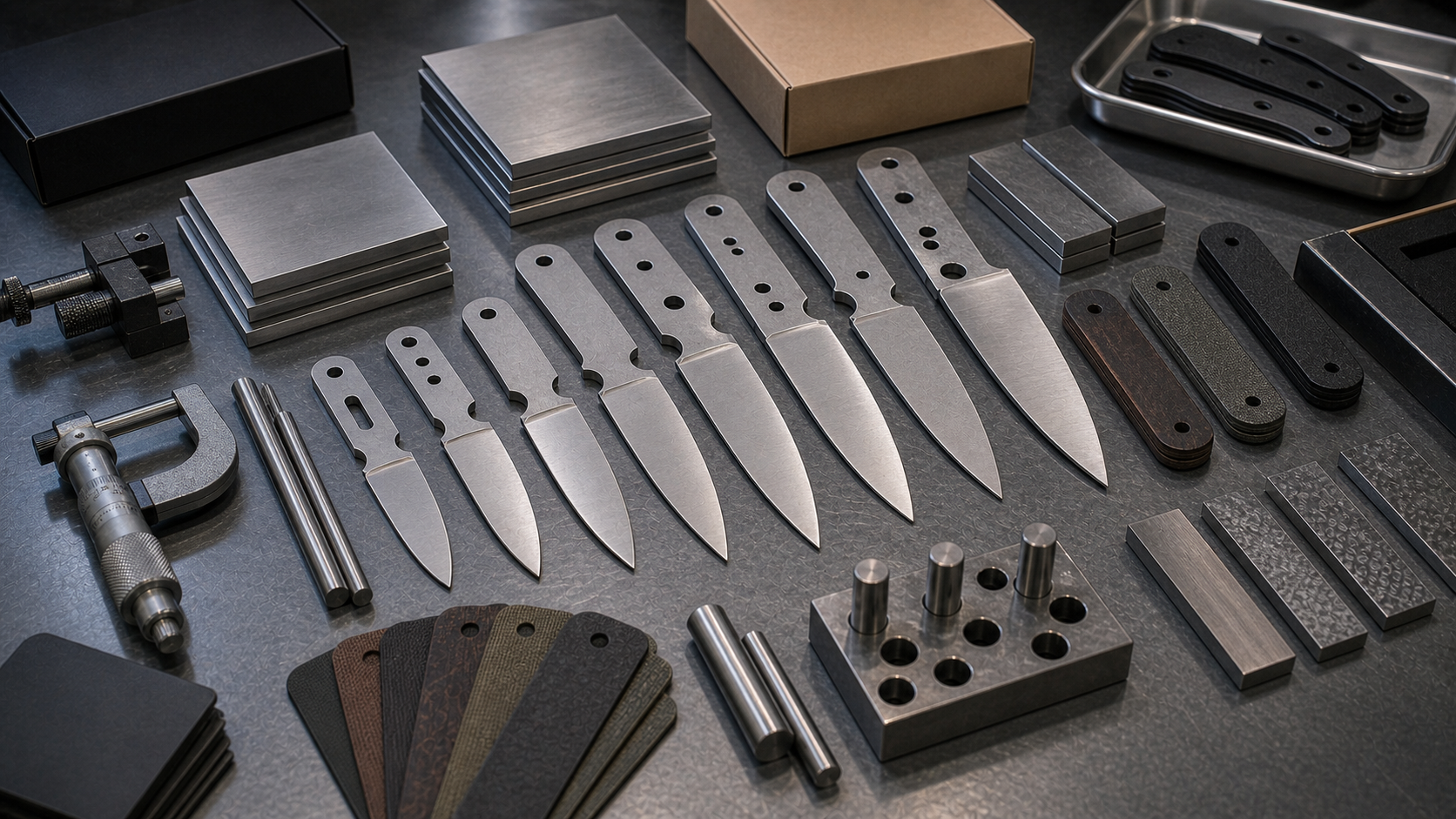
AUS-8 is often judged too quickly. Some buyers dismiss it as basic, while others oversell it. Both mistakes can hurt the product.
AUS-8 is a Japanese mid-range stainless knife steel from the Aichi family. It can support practical knives with good corrosion resistance, easy sharpening, reasonable toughness, and controlled cost when heat treatment, blade geometry, finish, and claims are handled honestly.
Quick buyer brief:
- Answer: AUS-8 works best as a practical value steel, not as a premium super-steel claim.
- Buyer context: It helps brands selling entry-to-mid EDC, kitchen, outdoor, utility, and private label knives.
- Key checks: Confirm material grade, heat treatment, hardness target, edge geometry, finish, packaging claims, and QC records.
Planning a knife project with this steel?
Send us your target market, MOQ, price range, and blade type. Vast State can help you choose the right steel, HRC range, finish, handle material, and QC requirements for OEM/ODM production.
When a buyer asks me about AUS-8, I usually see a practical sourcing question. The buyer may want a knife that looks good, sharpens easily, resists normal rust, and stays within a realistic price range. That is exactly where AUS-8 can be useful. But the steel should not be marketed like a high-end powder steel. It also should not be treated like low-grade mystery stainless. For Vast State, I look at AUS-8 as a value-building material. It can help a product sell well when the design, heat treatment, and user promise match the steel's real strengths.
What Is AUS-8 Steel in Practical Knife Sourcing?
A steel name alone does not tell buyers enough. Without context, AUS-8 can be underpriced, overclaimed, or replaced without control.
AUS-8 is a Japanese ingot stainless knife steel associated with Aichi. ZKnives describes it as mid-range performance stainless steel, similar to 440B, with aliases such as AUS-8A and 8A.
I Treat AUS-8 as a Known Value Steel
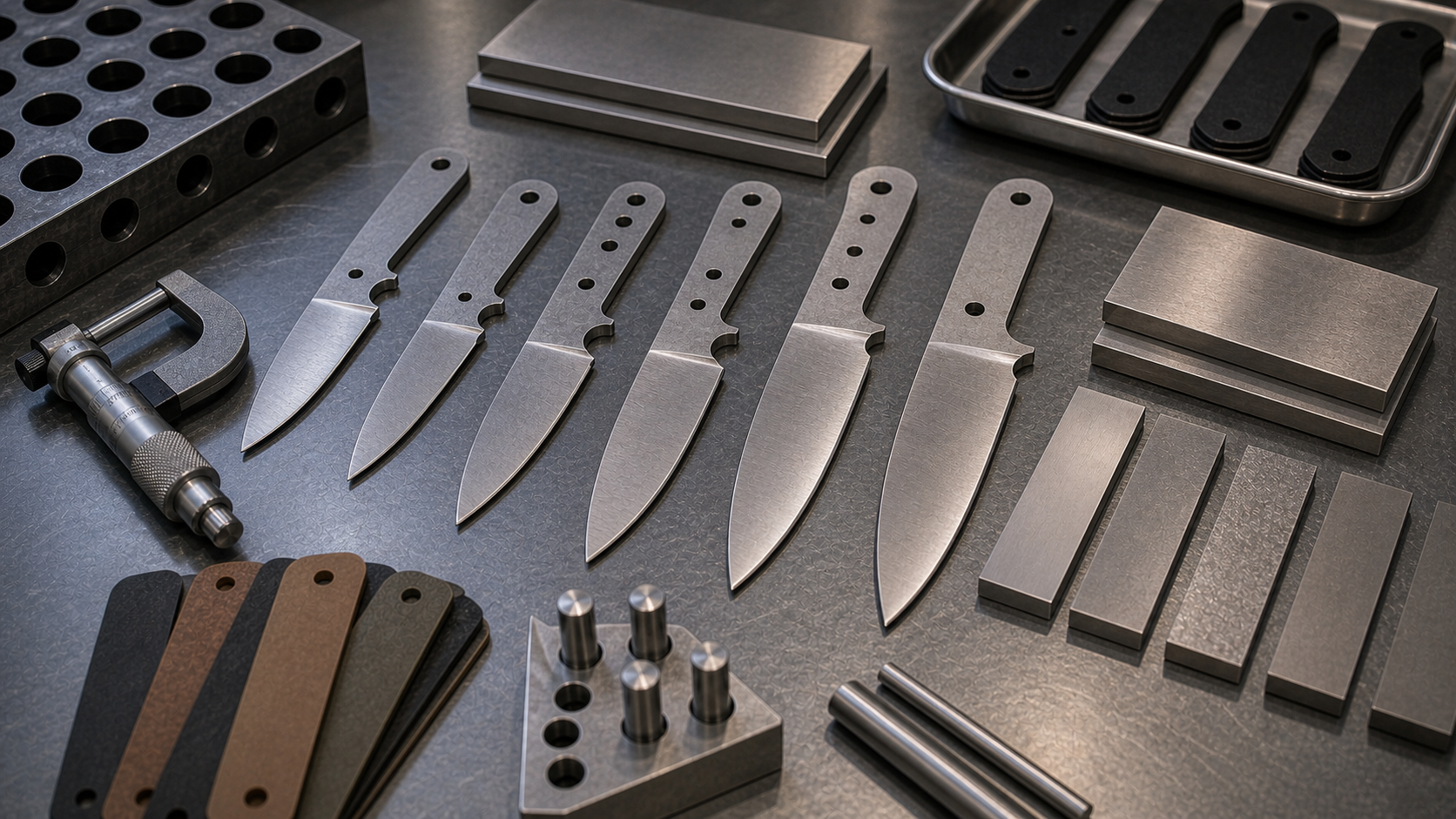
AUS-8 is not a new boutique steel. It is a known Japanese stainless steel that has been used for many years in folding knives, kitchen knives, outdoor tools, and utility products. The ZKnives AUS8 page identifies it as Aichi AUS8, describes it as mid-range performance stainless steel, and lists Japan as the country. It also notes that AUS8A is the same steel in annealed condition.
For buyers, this matters because many steel labels can be confusing. A supplier may use AUS-8, AUS8, 8A, or AUS-8A in discussion. The buyer should decide what wording will appear on the product page, packaging, or quotation. If exact grade identity matters, the RFQ should request material records and approved equivalent rules.
Composition references from public knife-industry sources usually place AUS-8 around 0.70% to 0.75% carbon and 13% to 14.5% chromium, with small additions of molybdenum and vanadium. That chemistry supports a useful stainless knife steel, but it does not make AUS-8 a high-carbide powder steel. I usually explain it as a practical material for buyers who want balance, not extremes.
| AUS-8 point | What it means | Buyer takeaway |
|---|---|---|
| Japanese stainless | Recognizable value-grade steel | Good for honest product positioning |
| Ingot steel | Conventional production route | Do not compare it with powder steels directly |
| Moderate carbon | Supports useful hardness | Heat treatment still matters |
| Chromium base | Supports corrosion resistance | It is rust-resistant, not rust-proof |
Quote-ready RFQ Checklist for This Steel
To get an accurate OEM/ODM quote, prepare these details before contacting a knife manufacturer.
| RFQ Field | What to Prepare |
|---|---|
| Product type | Folding knife / fixed blade / multi-tool / kitchen knife |
| Target market | US / EU / outdoor retail / promotional / tactical / EDC |
| Steel option | 4116 / 14C28N / D2 / N690 / Nitro-V |
| Target HRC | Example: 55-57 HRC, 58-60 HRC |
| Blade finish | Satin / stonewash / black coating / bead blast |
| Handle material | G10 / micarta / aluminum / stainless steel / wood |
| Lock or structure | Liner lock / frame lock / slip joint / full tang |
| Estimated quantity | 500 / 1,000 / 3,000 / 5,000+ pcs |
| Packaging | White box / color box / blister / pouch / gift box |
| Required documents | Drawing / sample photo / logo file / packaging artwork |
When Is AUS-8 a Good Fit for Knife Brands?
Some buyers chase expensive steel too early. The end user may care more about price, sharpening, comfort, and maintenance.
AUS-8 fits entry-to-mid knives where buyers need corrosion resistance, easy sharpening, decent edge performance, toughness, stable cost, and a clear value story.
I Match AUS-8 to the Customer, Not the Steel Hype
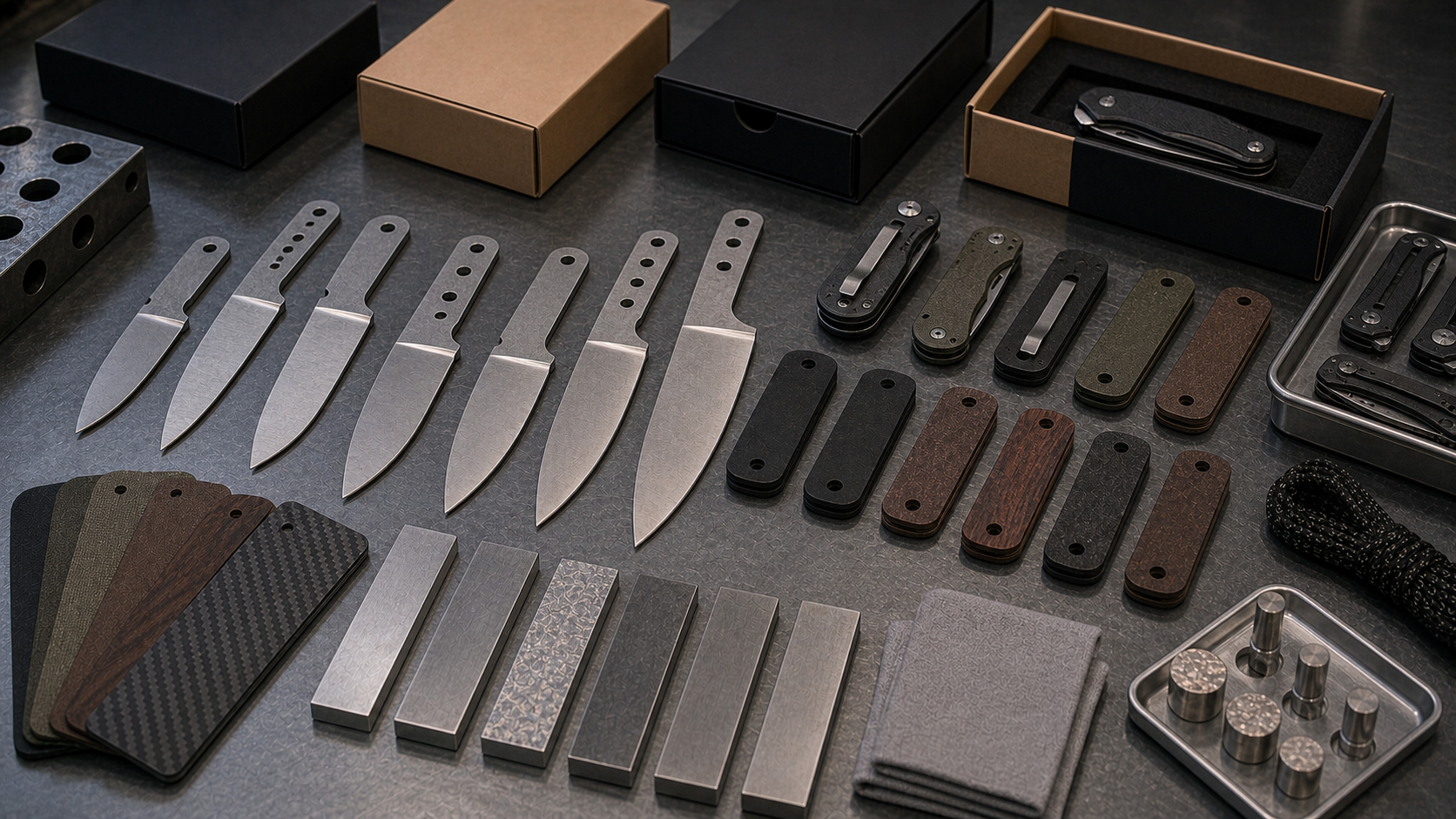
AUS-8 can be a smart choice for EDC folders, general utility knives, kitchen utility knives, rescue-style tools, camping knives, promotional private label knives, and first-price outdoor products. The steel helps when the buyer's customer wants a knife that is easy to sharpen and simple to maintain. It also helps when the brand wants stable cost and repeat production.
It is less suitable when the buyer wants to sell a product as high-end steel performance. If the market expects S35VN, M390, MagnaCut, SG2, or another premium steel, AUS-8 will not carry that same story. It can still make a good knife, but the product message must be different. The message should be practical value, easy maintenance, honest stainless performance, and good usability.
I also look at user behavior. A beginner user may prefer a steel that sharpens easily. A professional kitchen user may need quick maintenance during work. A broad retail customer may not want complicated steel education. AUS-8 can fit these cases because it does not demand specialist sharpening tools or high-end maintenance language. The buyer should support it with good blade geometry, comfortable handles, simple packaging, and clean QC.
| Product type | Why AUS-8 can fit | What to avoid |
|---|---|---|
| Entry EDC folder | Balanced cost and sharpening | Do not call it premium powder steel |
| Kitchen utility knife | Easy care and easy sharpening | Do not overclaim edge retention |
| Outdoor utility knife | Practical stainless behavior | Avoid too-thin hard-use geometry |
| Private label program | Stable value story | Avoid vague "surgical steel" wording |
How Should Buyers Balance Edge Retention, Toughness, and Sharpening?
AUS-8 can be judged unfairly. It is not the longest-lasting edge steel, but it often gives users an easy ownership experience.
Buyers should evaluate AUS-8 as a balance steel. It offers useful corrosion resistance, easy sharpening, and practical toughness, while edge retention depends heavily on heat treatment and geometry.
I Sell AUS-8 by Its Real Strengths
The Boker AUS-8 glossary lists carbon at 0.7% to 0.75%, chromium at 13% to 14.5%, molybdenum at 0.1% to 0.3%, vanadium at 0.1% to 0.25%, and Rockwell hardness at 57 to 58 HRC. These values help explain why AUS-8 behaves the way it does. It has enough carbon for useful hardness. It has enough chromium for stainless behavior. It has small additions that help more than plain low-end stainless, but it does not have the carbide volume of premium wear-resistant steels.
That balance can be commercially useful. A harder, higher-wear steel may hold an edge longer, but it may also cost more and take more effort to sharpen. AUS-8 can be refreshed more easily by many users. For budget and mid-range buyers, that can reduce frustration. A sharp AUS-8 knife with good geometry may feel better than a more expensive steel with poor edge design.
The buyer should therefore avoid one-dimensional steel comparison. If the customer uses the knife for normal daily cutting, AUS-8 may be enough. If the customer cuts abrasive materials all day, the buyer may need better wear resistance. If the customer abuses the knife with twisting or prying, blade shape and thickness matter more than steel name alone.
| Performance need | AUS-8 strength | Buyer control point |
|---|---|---|
| Corrosion resistance | Good daily stainless behavior | Use suitable finish and care copy |
| Sharpening | Friendly for many users | Match edge angle to target user |
| Edge retention | Practical but not extreme | Control HRC and grind geometry |
| Toughness | Forgiving for value knives | Avoid poor blade design |
Why Does Heat Treatment Matter So Much for AUS-8?
AUS-8 can perform well or poorly depending on heat treatment. A low-cost steel still needs a controlled process.
Heat treatment controls AUS-8 hardness, edge stability, corrosion behavior, and repeatability. Buyers should define target HRC, sample approval, batch records, and final functional checks.
I Do Not Let the Price Level Lower the Process Standard
Because AUS-8 is often used in value knives, some buyers treat it casually. That is a mistake. The steel still belongs to the martensitic stainless family, where heat treatment creates the working hardness. The British Stainless Steel Association page on martensitic stainless steels explains that martensitic stainless steels can be hardened and strengthened by heat treatment and that the strength obtained depends on carbon content. It also notes that higher carbon can increase hardness potential but reduce ductility and toughness.
For AUS-8, the buyer should not only ask, "What steel is it?" The buyer should ask, "What hardness range will the finished blade target?" A realistic target depends on product type. A kitchen utility knife, an EDC folder, and an outdoor fixed blade may not need the same hardness or edge thickness.
In sample approval, I like to check hardness, straightness, cutting feel, edge stability, sharpening response, and finish. If the knife is a folding knife, I also check pivot fit, blade centering, lockup, detent, screw stability, and opening feel. Heat treatment can affect flatness and assembly. If the sample looks good but mass production lacks batch control, the final order may feel different from the approved piece.
| Heat treatment item | Why it matters | Buyer action |
|---|---|---|
| Target HRC | Sets edge and toughness balance | Define a realistic range |
| Sample approval | Confirms real knife performance | Test before bulk production |
| Batch record | Connects sample to mass order | Request heat treatment records |
| Final function | Confirms product usability | Inspect cutting, assembly, and edge |
How Should AUS-8 Be Specified in an RFQ?
Vague value-steel RFQs can create substitutions. The buyer may receive a knife that looks right but lacks material control.
An AUS-8 RFQ should define exact grade, accepted equivalents, knife type, target market, hardness range, blade geometry, finish, handle material, packaging claims, quantity, price target, and QC.
I Ask Buyers to Define Equivalents Early
For AUS-8 projects, the RFQ should say whether AUS-8 is required or whether equivalent steels are acceptable. Some suppliers may suggest 8Cr13MoV, 8Cr14MoV, 440B-like materials, or other molybdenum-vanadium stainless options. That can be fine if the buyer approves it and the product goal allows it. It is not fine if the substitution happens quietly.
The buyer should also state the sales channel. A budget online EDC knife, a retail kitchen knife, and an outdoor private label knife need different packaging and claims. If the product page says "AUS-8 stainless steel," material records should support that. If the page says "molybdenum-vanadium stainless steel," the buyer should understand that this is broader and may hide exact grade identity.
The RFQ should include the practical details that control real cost: blade length, thickness, grind, edge angle, finish, handle material, lock type, packaging, logo method, MOQ, target price, and inspection level. AUS-8 can be very useful for cost-controlled programs, but the quote must be tied to a real product. A low price without geometry, finish, or QC details is not a real production plan.
| RFQ field | Why it matters | Buyer example |
|---|---|---|
| Steel requirement | Prevents hidden substitution | AUS-8 required or equivalent accepted |
| Product use | Guides geometry and hardness | EDC folder for daily utility tasks |
| Target price | Keeps design commercial | Price range by quantity tier |
| Finish | Controls appearance and corrosion behavior | Satin, bead blast, stonewash, or coating |
| QC checks | Protects repeat orders | Material, HRC, edge, function, packaging |
How Should Quality Control Protect AUS-8 Knife Orders?
Value products still need discipline. If QC is weak, a practical steel becomes an after-sales problem.
AUS-8 quality control should confirm material identity, hardness, blade geometry, edge consistency, surface finish, corrosion-sensitive areas, handle fit, lock function, packaging, and claim accuracy.
I Use QC to Keep the Value Promise Honest
For AUS-8 orders, I start by checking the material requirement. If the buyer requires AUS-8, the supplier should keep material records. If an equivalent is allowed, that approval should be documented before production. Then I check heat treatment records and hardness. A value steel can vary too much if heat treatment is not controlled.
Hardness measurement should follow good practice. The NIST Rockwell hardness guide explains that good Rockwell measurement practice helps reduce errors. In a knife factory, that means the test surface, tester, calibration, operator, and location matter. The hardness number should support the production process, not just decorate the product sheet.
After that, I check the knife like a user would experience it. Is the edge even? Is the tip clean? Does the blade cut smoothly? Is the surface finish consistent? Does the folding knife lock safely? Are screws secure? Does the package make accurate steel claims? This also follows the broader spirit of ISO 9001 quality management, which focuses on stable processes, documented information, monitoring, measurement, and improvement. For B2B buyers, that is the difference between a cheap-looking knife and a value product that can repeat.
| QC stage | What to check | Why it protects buyers |
|---|---|---|
| Material check | AUS-8 or approved equivalent | Prevents grade confusion |
| Heat treatment | Batch record and HRC | Protects consistency |
| Blade inspection | Edge, tip, grind, finish | Protects user experience |
| Final review | Function, packaging, claims | Protects repeat sales |
Ready to use this material in your next knife line?
Vast State can help you compare blade steels, heat treatment ranges, handle materials, finishes, packaging options, and QC requirements based on your target market and quantity.
Conclusion
I recommend AUS-8 when buyers want honest value, easy maintenance, controlled cost, and repeatable quality instead of inflated steel marketing.
Source Notes
- ZKnives AUS8 page supports Aichi/Japan identity, ingot technology, aliases, and mid-range positioning.
- Boker AUS-8 glossary supports composition ranges, HRC context, Japanese origin, and 440C comparison context.
- BSSA martensitic stainless steels supports the heat-treatment and martensitic stainless steel explanation.
- NIST Rockwell hardness guide supports careful hardness measurement practice.
- ISO 9001 explained supports process-based quality management ideas for repeatable production.