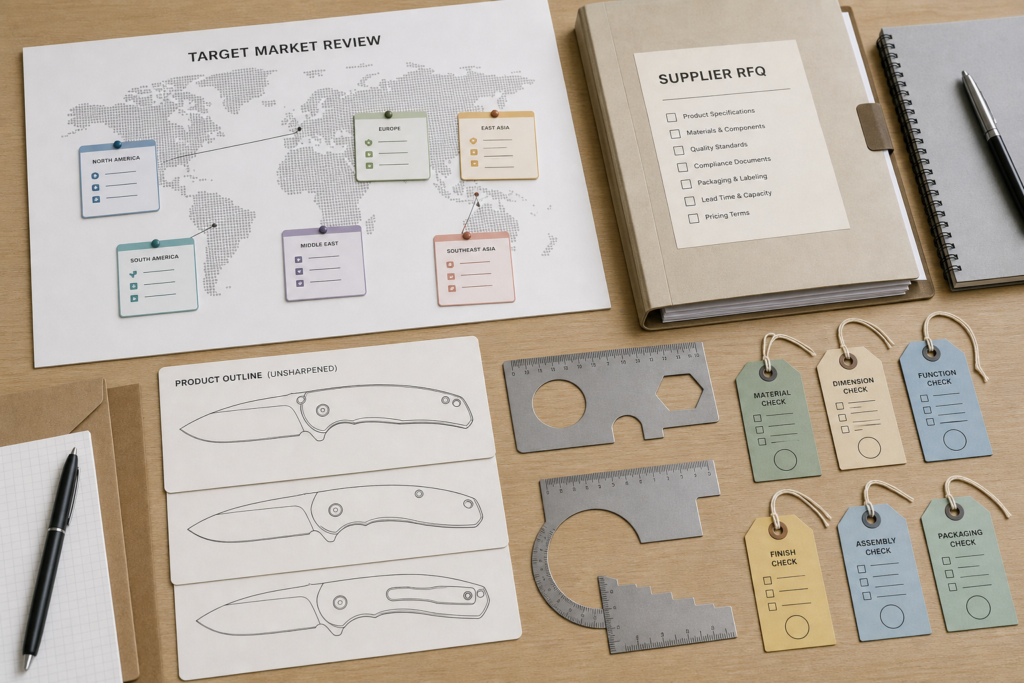
Automatic folding knives can fail at the market review stage. One unclear feature can delay sales. A careful target-market check protects the project.
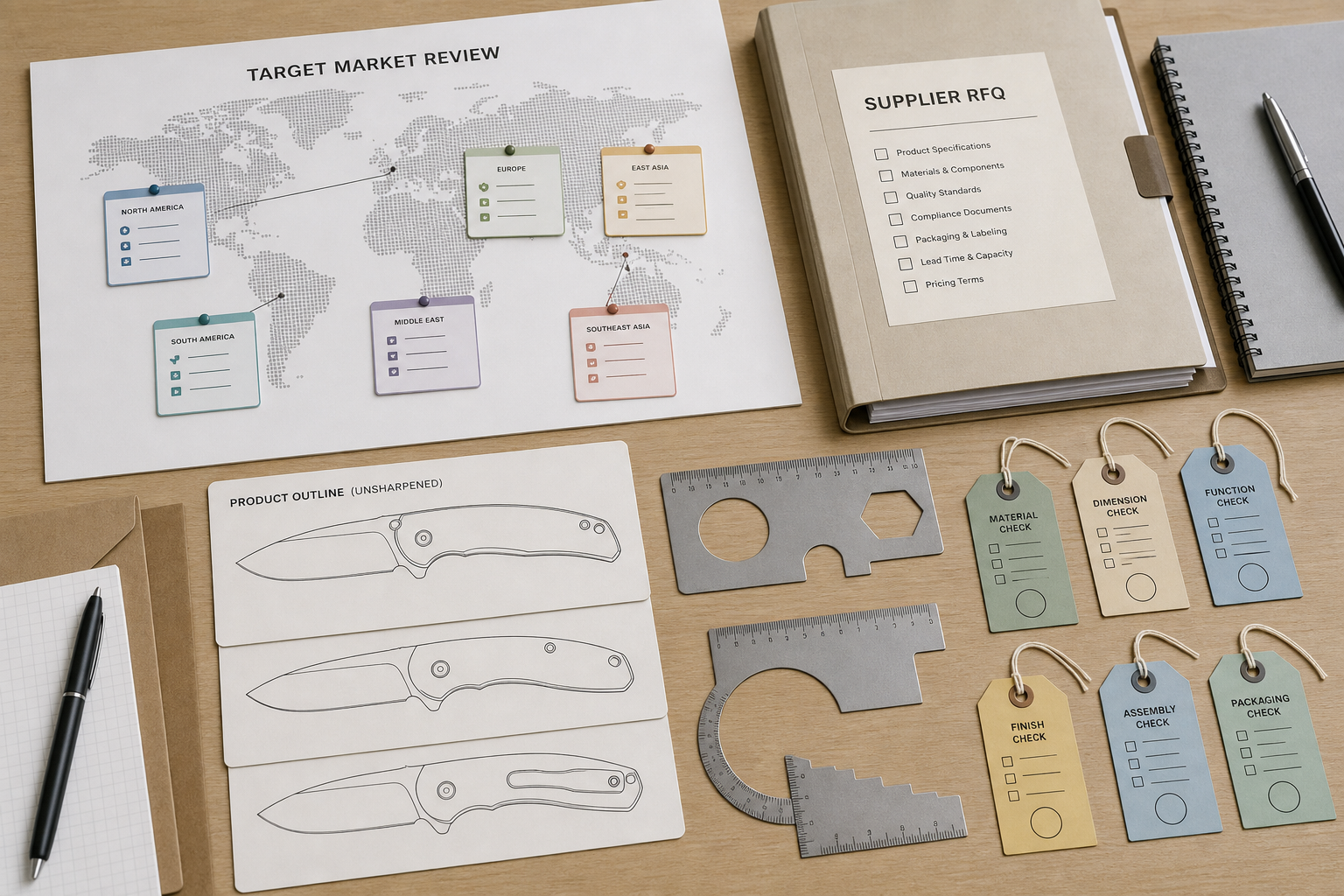
Buyers should check the target market, automatic opening definition, state or national rules, import controls, sales channel policy, packaging claims, inspection needs, and RFQ details before sourcing automatic folding knives or OTF automatic knives.
Quick buyer brief:
- Answer: Confirm the market and mechanism before quoting or tooling.
- Buyer context: This helps knife brands, importers, wholesalers, and private label buyers.
- Key checks: Destination rules, opening structure, blade length, import path, channel policy, packaging language, QC plan, and RFQ records.
Planning a private-label knife line for this market?
Use this article as an early planning reference, then prepare your target market, product category, labeling needs, and buyer-specified compliance requirements before production.
I treat automatic folding knife projects as compliance-sensitive B2B work, not as simple catalog selection. I am not a lawyer, so this article is not legal advice. But in OEM/ODM production, I have learned that buyers need to settle the market question early. A knife can be manufacturable, attractive, and still unsuitable for one sales region or sales channel. That is why I start with rules, definitions, and buyer records before I talk too much about finish, packaging, or price.
Why Should the Target Market Come Before the Knife Design?
A strong design can still be a poor sourcing choice. If the market is unclear, the supplier may quote the wrong product.
The target market should come before design because automatic folding knife rules, sales permissions, import controls, and channel policies can vary by country, state, platform, and customer type.
I Ask Where the Product Will Actually Be Sold
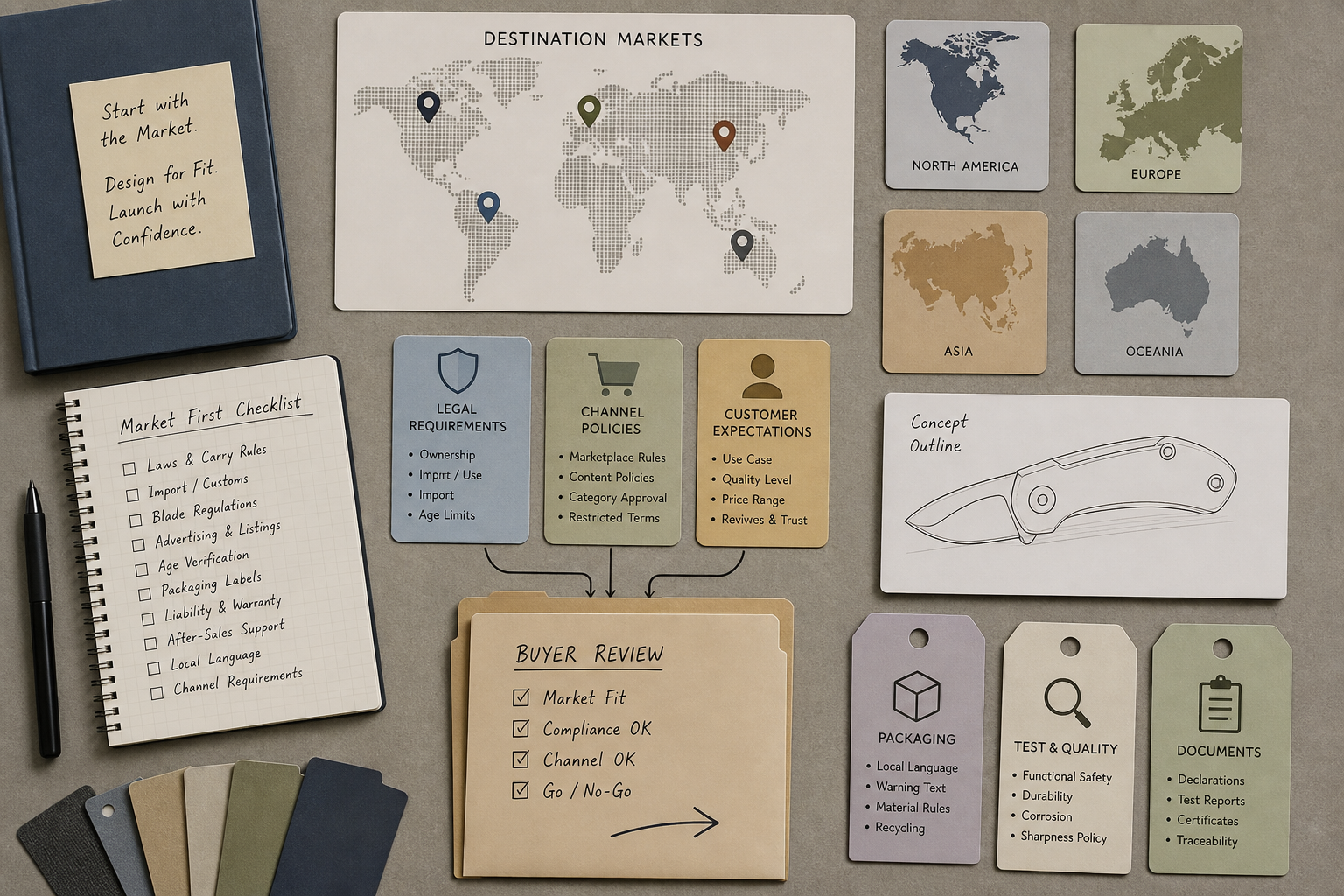
When a buyer asks for an automatic folding knife or an OTF automatic knife, my first question is not the steel grade. My first question is the target market. A product for one U.S. state, a U.S. national distributor, a European buyer, a Canada-bound importer, or a private label channel can require different review steps. A buyer may also sell through an online platform that has its own product policy. These rules may be stricter than the buyer expects.
This matters before design because the structure affects the whole project. Blade length, opening method, lock style, packaging wording, spare parts, and even photography direction may need review. If the buyer wants a broad market product, a manual folder or assisted-opening design may be more practical. If the buyer has a specific approved channel, an automatic design may still need documented confirmation. I prefer to define the market first, then design within that lane. It saves sampling cost and protects repeat production.
| Market question | Why I ask it | What it changes |
|---|---|---|
| Destination country | Import rules may differ | Product class and shipment plan |
| U.S. state or region | State-level rules may vary | Blade length and sales review |
| Sales channel | Platform policy may apply | Listing and packaging language |
| Buyer type | Retail, distributor, or private label | Documentation and approval steps |
Private-label Planning Checklist
Before starting production, prepare the market and product details your importer or compliance advisor needs to review.
| RFQ Field | What to Prepare |
|---|---|
| Target market | Country, state, region, or sales channel |
| Product category | Folding knife / fixed blade / multi-tool / outdoor tool |
| Intended use | EDC / camping / kitchen / hunting / rescue / promotional |
| Buyer requirements | Testing, labeling, documentation, or packaging rules |
| Blade and lock details | Blade length, opening method, lock type, edge style |
| Packaging text | Warnings, claims, care notes, language requirements |
| Documents | Drawing, sample photo, logo file, packaging artwork |
| Review owner | Importer, legal advisor, testing lab, or internal compliance team |
How Should Buyers Define the Automatic Opening Mechanism?
One product name can hide several mechanisms. If the mechanism is vague, the compliance and production review becomes weak.
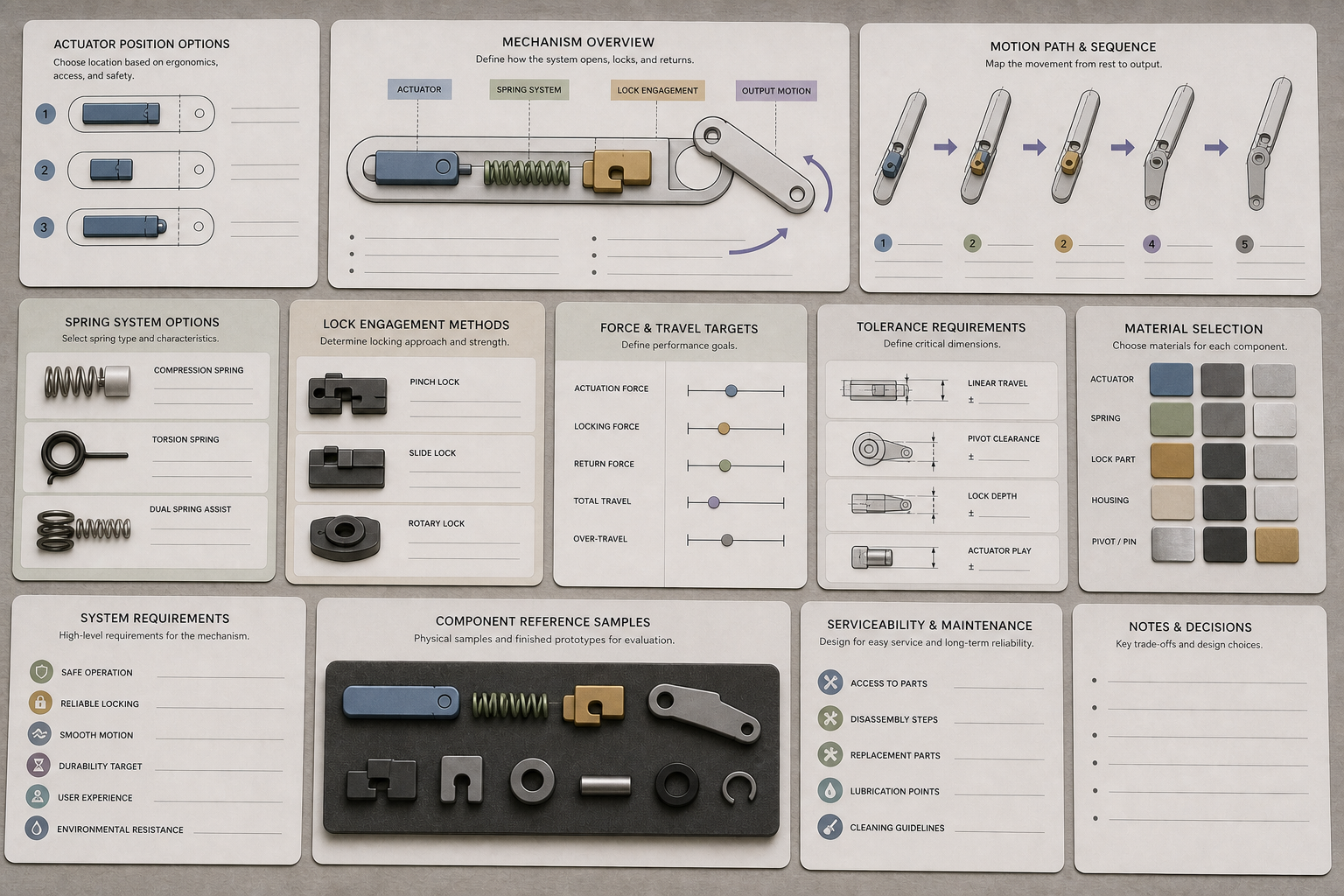
Buyers should define the automatic opening mechanism by actuator location, blade path, spring structure, lock system, closure bias, blade length, and whether the design is side-opening or out-the-front.
I Write the Mechanism Like an Engineering Note
I do not like RFQs that only say "auto knife." That can mean a side-opening automatic folding knife, an OTF automatic knife, a button-actuated structure, or a design that the buyer is comparing with an assisted-opening option. For a factory, these are not the same project. The tooling, assembly, spring selection, tolerance control, function testing, and quality risks are different.
The official U.S. Code text for the Federal Switchblade Act defines a switchblade knife by automatic opening through hand pressure on a button or similar device in the handle, or by inertia, gravity, or both. That official definition is important for U.S. federal review, but it is not the only review a buyer may need. In factory work, I translate the concept into measurable details. I ask where the actuator is, how the blade travels, what returns or holds the blade, how the lock engages, and how the product will be inspected. This helps the buyer understand whether the concept is truly automatic, assisted, or manual.
| Mechanism detail | What to define | Why it matters |
|---|---|---|
| Blade path | Side-opening or out-the-front | Changes tooling and testing |
| Actuator | Button, slider, or other control | Affects classification review |
| Lock system | Lock style and engagement surface | Affects safety and QC |
| Closure bias | How the blade is held closed | Helps compare design types |
Which U.S. Rules Should Buyers Review Before Sourcing?
The United States is not one simple rule set. A buyer may clear one issue and still miss another review point.
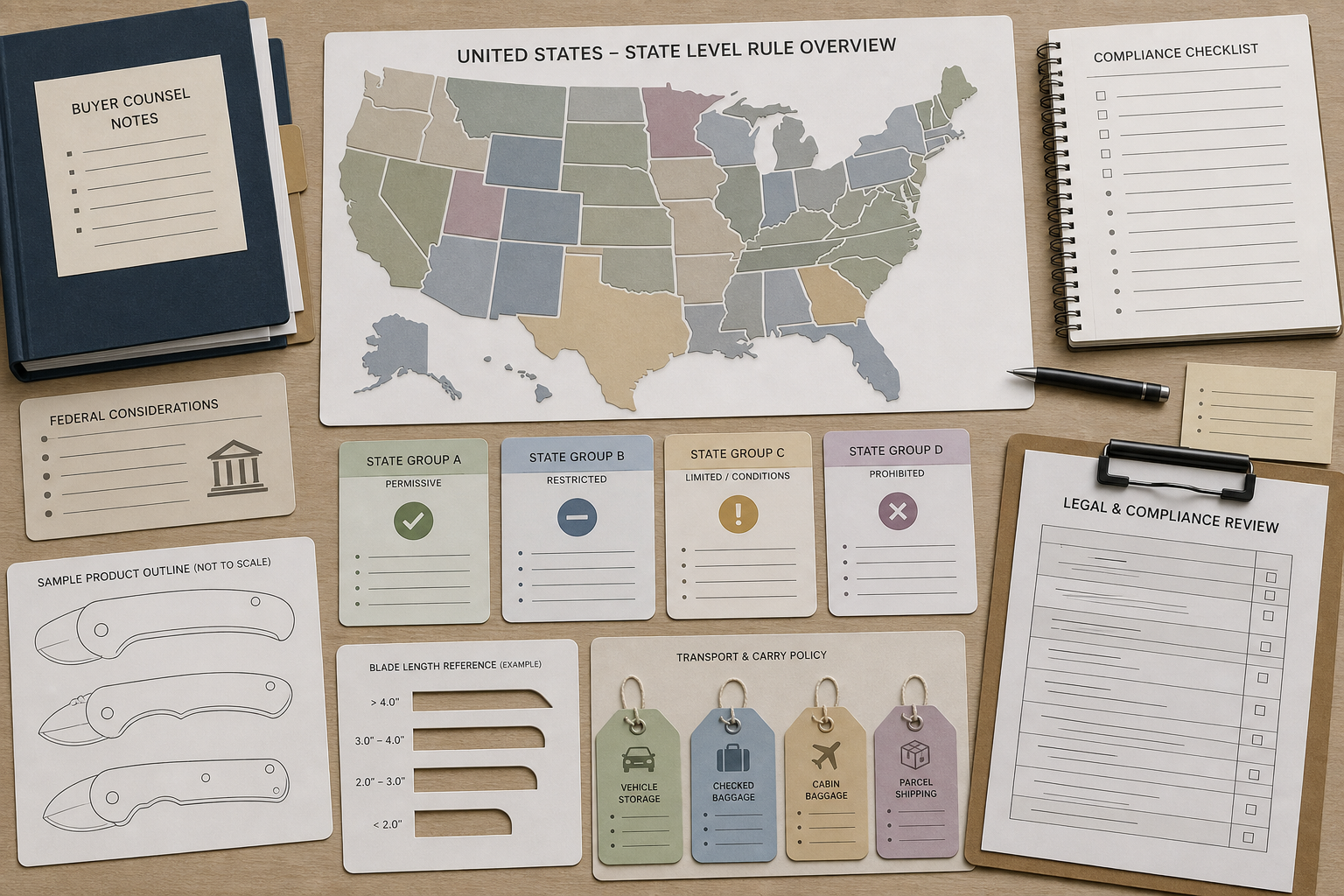
U.S. buyers should review federal rules, state-level automatic knife references, blade-length limits, sales restrictions, manufacturing limits, transport rules, and channel policies before sourcing.
I Separate Federal Review From State Review
For U.S.-bound projects, I tell buyers to review more than one level. The federal rule may matter for interstate commerce, import, or specific federal areas. State and local rules may affect sale, distribution, or product acceptance. Channel rules may add another layer. This is why I do not tell buyers that an automatic knife is simply "legal" or "not legal." That wording is too broad for B2B sourcing.
The AKTI state auto-open laws page is a useful reference because it points buyers to state-specific details and notes that some states may apply restrictions on possession, carrying, manufacturing, or sale. The AKTI state knife laws page also explains that its summaries are references and not legal advice. I use these kinds of sources to guide the conversation, not to replace buyer-side legal review. A responsible buyer should record the review result before tooling. The record should state the destination states, allowed product class, blade length range, packaging notes, and any sales-channel limits.
| Review layer | What to check | B2B sourcing action |
|---|---|---|
| Federal | Definitions and interstate rules | Confirm product class early |
| State | Sale, manufacturing, and blade limits | Record approved destinations |
| Channel | Marketplace or retailer policy | Adjust listing and packaging |
| Buyer counsel | Final market decision | Keep notes with the RFQ |
How Do Import Rules Change the Project Plan?
Import review can stop a shipment after production. This risk is expensive because the buyer has already paid for goods.
Import rules can change the product class, mechanism choice, shipping plan, documentation, packaging claim, and even whether an automatic folding knife project should move forward.
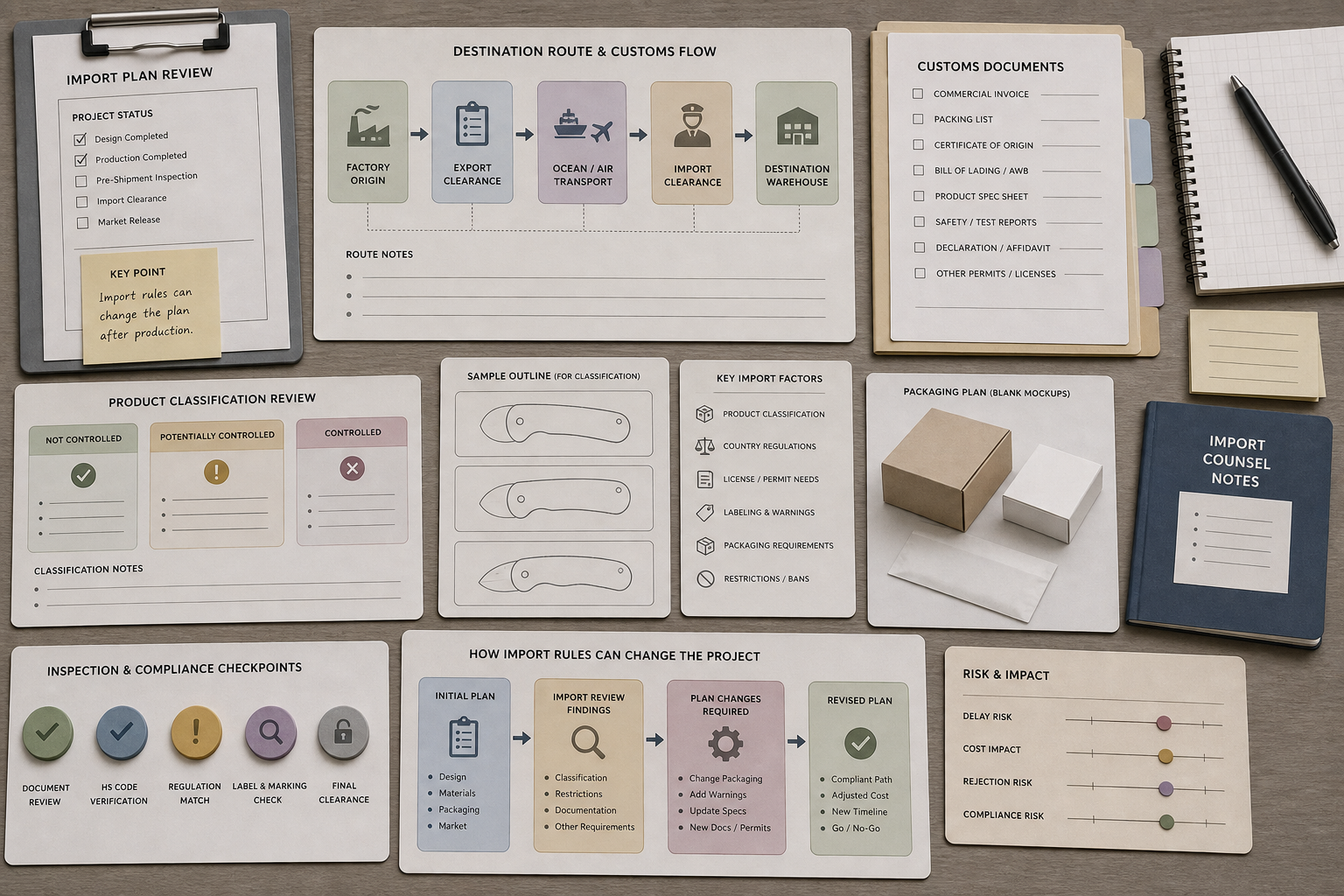
I Treat Import Review as a Design Gate
For international buyers, import review is not paperwork at the end. It is a design gate near the beginning. The United Kingdom, Canada, the United States, and other markets can treat automatic opening mechanisms differently. The UK import controls page lists automatic and gravity-opening folding knives among restricted items, subject to exceptions. The CBSA memorandum D19-13-2 gives Canada-specific context for regulated goods and import handling. These sources remind me that destination-market review must be practical, written, and early.
In production, this affects the project plan. If the buyer cannot confirm that an automatic product is suitable for the destination, we may discuss manual alternatives, assisted-opening alternatives, or a different product category. If the buyer has approval for a specific channel, we still need the documents, product description, material list, HS code discussion, packaging wording, and shipment records to match the approved product. A small wording mismatch can create questions later. A small mechanism change can also change the review.
| Import factor | Why it matters | Project response |
|---|---|---|
| Destination rule | It decides whether the product can ship | Confirm before sample approval |
| Product description | It affects declaration and review | Keep wording factual |
| Mechanism detail | It may affect classification | Document structure clearly |
| Shipment record | It supports buyer follow-up | Keep approved files together |
What Packaging and Listing Claims Need Extra Care?
A product can be reviewed again after production through packaging or listings. Poor wording can create trouble even when the sample is clean.
Packaging and listings need careful wording around product type, mechanism, intended market, age or buyer limits where applicable, safety notes, material claims, and legal disclaimers.
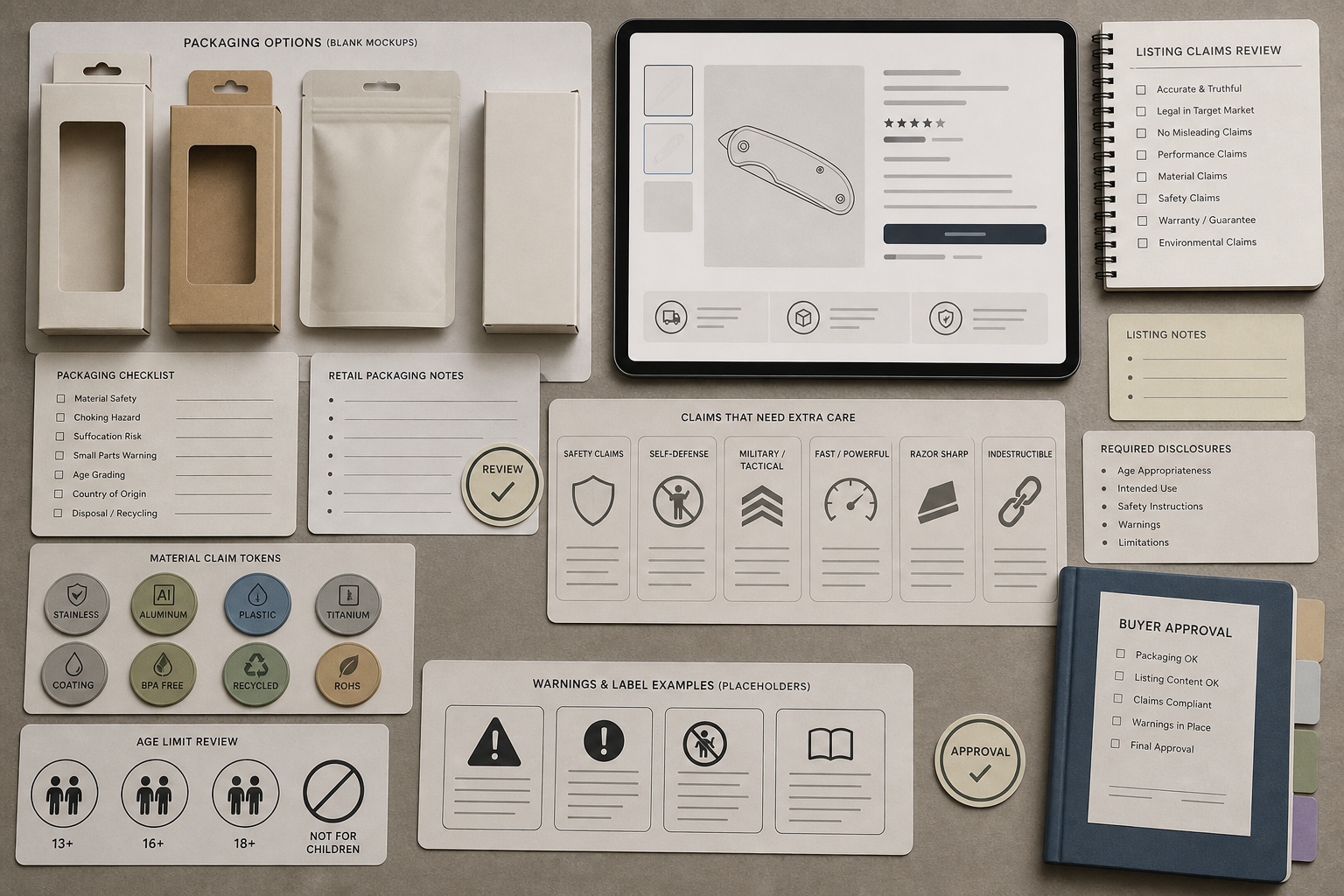
I Keep Claims Factual and Checkable
Packaging is not decoration only. It is part of the product record. For automatic folding knives, I want packaging and listing language to be calm, factual, and aligned with the buyer's market review. The package can mention steel grade, handle material, lock type, finish, size, and maintenance notes if those claims are supported. It should not make broad legal promises. It should not use dramatic language that creates channel risk. It should not imply a market permission that the buyer has not confirmed.
This is especially important for private label buyers. They may ask the factory to print a retail box, insert card, user note, warning label, or barcode sticker. If those files are not reviewed early, production may be delayed while artwork changes. I prefer to ask for packaging files before the production order is locked. Then we can compare the artwork with the approved product class. If the buyer plans to sell through online marketplaces, I also suggest checking listing words and photography rules before mass production. That saves rework after the goods are ready.
| Claim area | Safer approach | Evidence needed |
|---|---|---|
| Material claim | State steel and handle material | Material record or approved sample |
| Mechanism claim | Describe structure neutrally | Engineering and QC notes |
| Legal claim | Avoid broad promises | Buyer market review |
| Channel claim | Match platform policy | Listing approval or buyer notes |
How Should Buyers Compare Automatic, Assisted, and Manual Options?
An automatic mechanism may not always be the best commercial route. Buyers can miss lower-risk options if they start too narrowly.
Buyers should compare automatic, assisted, and manual options by target market, product feel, compliance burden, assembly complexity, QC needs, cost, MOQ, and sales-channel fit.
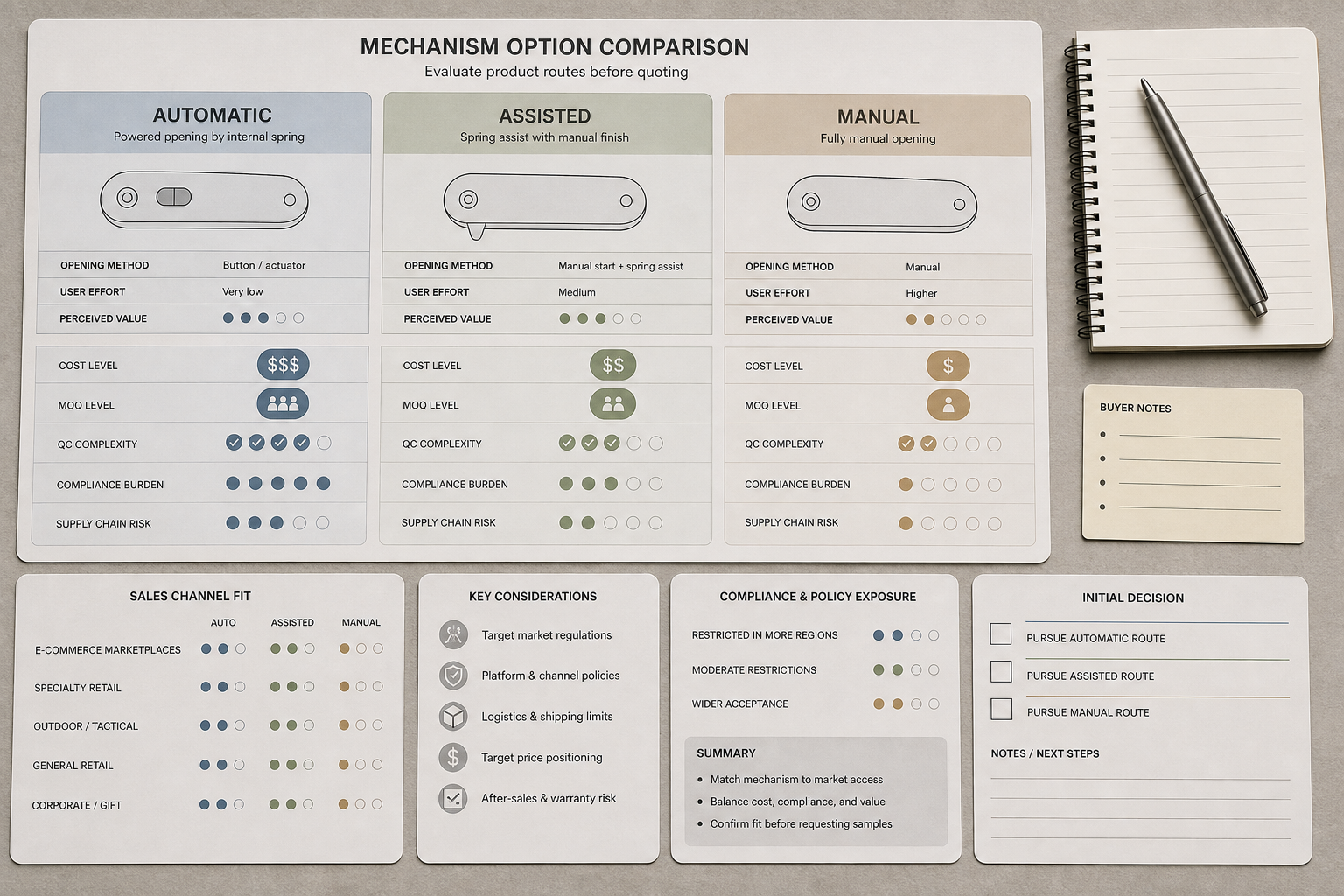
I Match the Mechanism to the Buyer Goal
Many buyers ask for automatic knives because they want a strong product feel or a higher-end selling point. That may be valid for a narrow channel. But it may not be the best option for a broad-market private label line. A manual folding knife with a good pivot, clean detent, and stable lock can still feel strong. An assisted-opening design may offer a different user experience and a different review profile. The right choice depends on the buyer's market, budget, and compliance tolerance.
This is where ODM development can help. I ask what the buyer is trying to achieve. Is the goal a premium feel, fast sample launch, lower MOQ, easier import review, lower assembly risk, or a special catalog category? Once I know the goal, I can suggest the mechanism. Automatic and OTF automatic designs often need tighter tolerance and more function testing. Manual folders may be easier to scale. Assisted designs need careful definition and buyer review. None of these choices should be made from a name alone.
| Option | Main advantage | Main sourcing question |
|---|---|---|
| Automatic | Distinct product category | Can the market and channel accept it? |
| OTF automatic | Compact blade path and special structure | Can tolerances and review be managed? |
| Assisted | Different opening feel | How is the mechanism defined by market? |
| Manual | Broad development flexibility | Can fit, finish, and action meet the brand goal? |
What Quality Checks Matter for Automatic Folding Knife Projects?
Automatic mechanisms can expose small production problems. A loose screw, weak spring, or rough tolerance can damage the order.
Quality checks should cover blade travel, lock engagement, actuator function, spring consistency, blade centering, screw torque, edge condition, finish, packaging, and batch records.
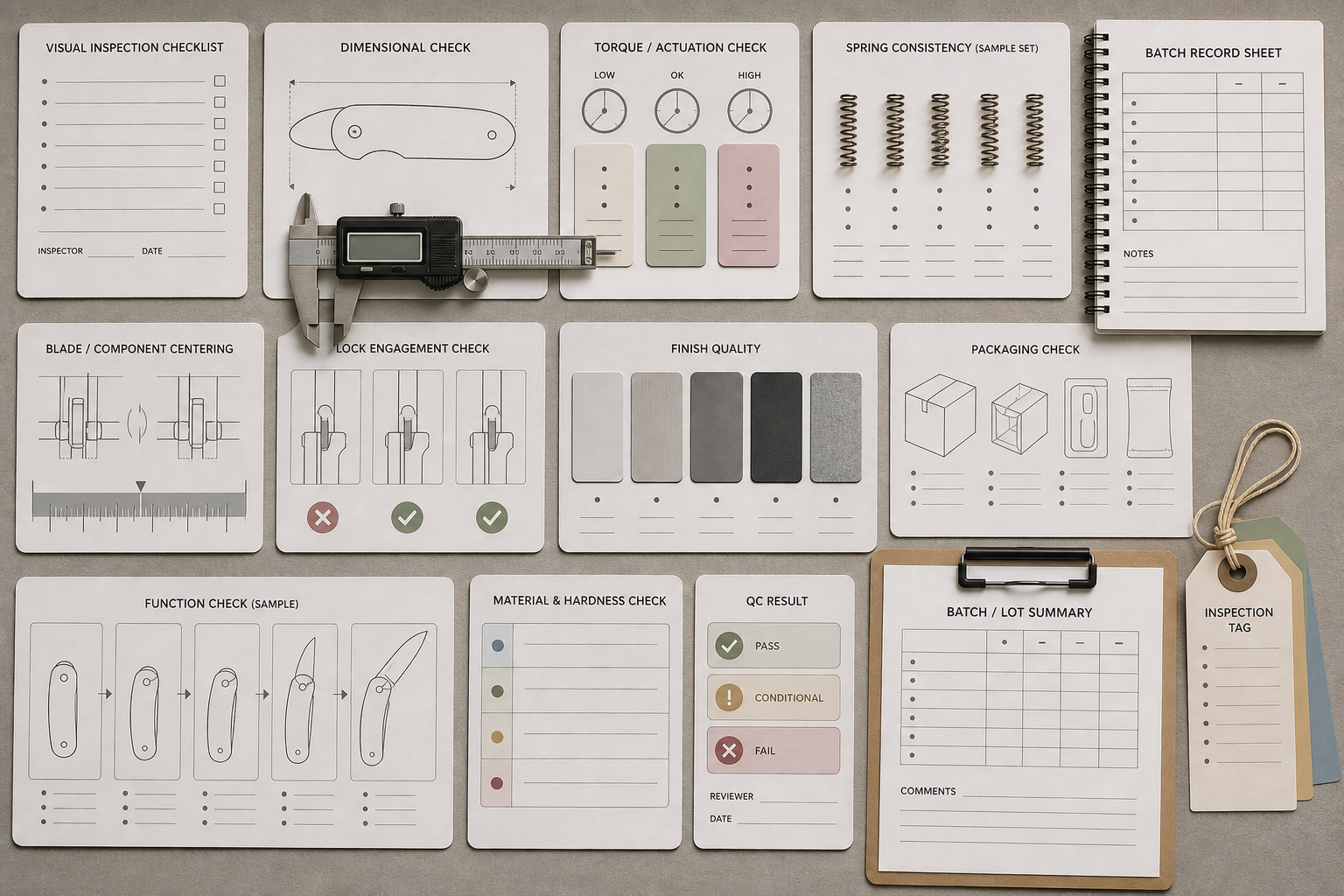
I Inspect Function Before Appearance Becomes Final
In automatic folding knife projects, function and appearance must be checked together. The product may look clean but still have inconsistent action. The actuator may feel different across a batch. The blade may not sit centered. The lock may need a tighter engagement surface. Screws may need thread treatment or torque control. Springs may need sampling and batch checks. These are not small details for a repeat order. They affect product feel, warranty risk, and buyer confidence.
I also connect quality checks to buyer requirements. The ISO guide to ISO 9001 in the supply chain explains that customers should make requirements clear and define needed approvals, monitoring, or inspections. In my work, that means the buyer should say whether they need sample approval, in-process checks, final inspection, packaging inspection, or third-party inspection. The factory can then build a practical QC plan. For automatic projects, I like to add function sampling, screw checks, appearance grading, and packaging verification. A good plan is not complicated. It is clear, repeatable, and written before production.
| QC item | What I check | Why it matters |
|---|---|---|
| Actuator function | Smooth, consistent operation | Protects user experience |
| Lock engagement | Stable lock surface | Protects functional reliability |
| Screw and spring control | Torque and consistency | Reduces batch variation |
| Packaging match | Artwork and product alignment | Supports channel review |
What Should an RFQ Include Before a Supplier Quotes?
A short RFQ can produce a fast price but a weak project. The missing details usually return as delays later.
An automatic folding knife RFQ should include destination market, approved product class, mechanism type, blade length, steel, handle material, finish, packaging, target price, MOQ, timeline, and inspection needs.
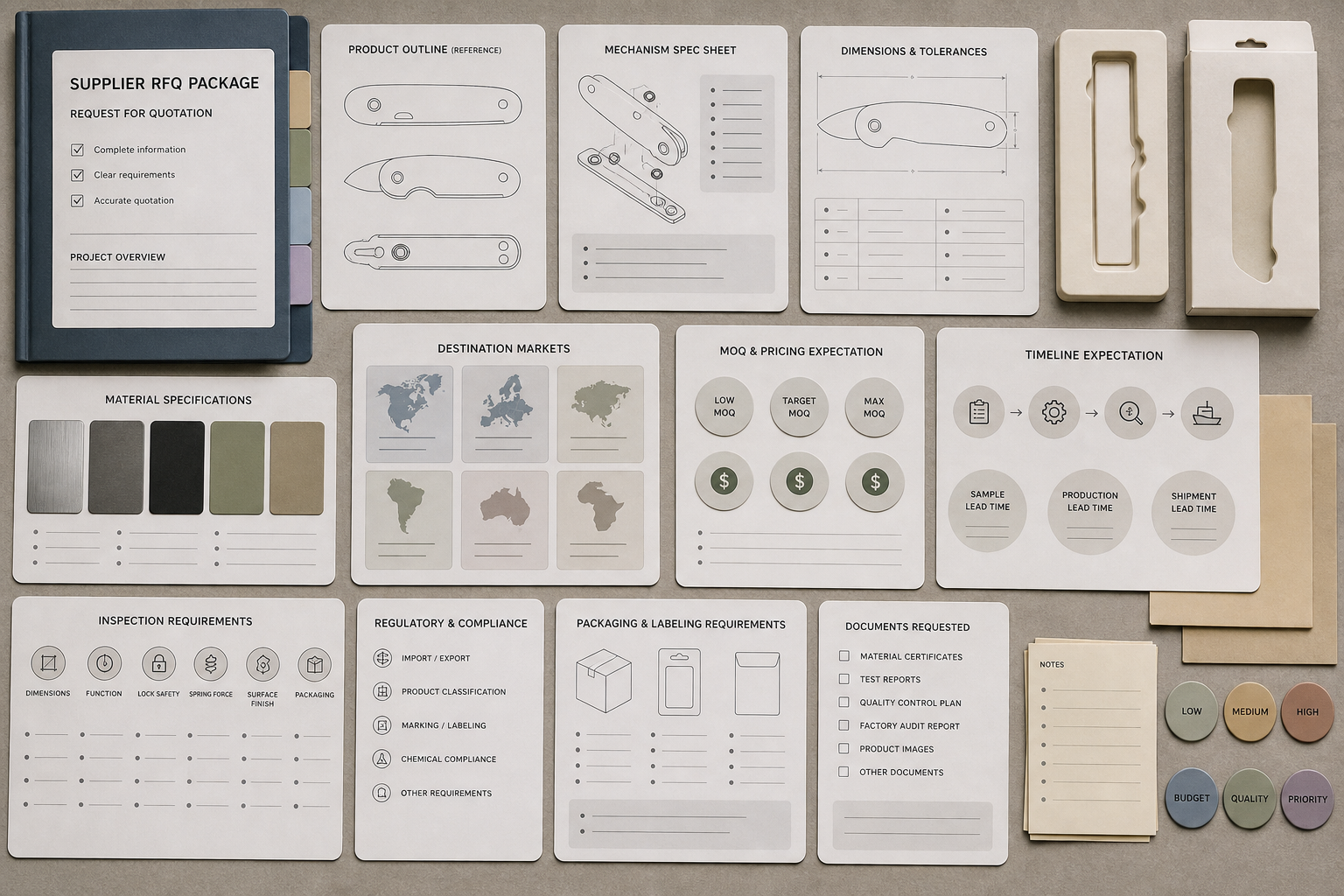
I Need the Business Case, Not Only the Picture
Before I quote an automatic folding knife, I need more than a photo. I need the product class, target market, sales channel, mechanism type, blade length, blade steel, handle material, finish, packaging plan, logo method, estimated order quantity, target price, and timeline. I also need to know whether the buyer has reviewed the product for the intended market. If the buyer has not done that yet, I will flag the risk and suggest holding tooling decisions until the review is clearer.
For Vast State, a good RFQ helps us support both OEM and ODM buyers. If the buyer has a finished drawing, we can check manufacturability and cost. If the buyer only has a concept, we can suggest structure, material, and packaging options. Automatic projects need more early alignment because changes can affect mechanism, tooling, and legal review at the same time. The better the RFQ, the more honestly we can answer. The buyer gets a better path for prototype, sampling, production, and inspection.
| RFQ field | What to provide | Why it helps quoting |
|---|---|---|
| Market review | Destination and channel notes | Prevents wrong product direction |
| Mechanism | Automatic, OTF automatic, assisted, or manual | Defines engineering complexity |
| Specification | Size, steel, handle, finish, lock | Supports cost and sampling |
| Quality plan | Inspection and approval needs | Supports repeat production |
Planning a private-label knife line for this market?
Use this article as a planning reference, then confirm local requirements with your importer or compliance advisor before OEM/ODM production.
Conclusion
Automatic folding knife sourcing works best when buyers confirm the market, define the mechanism, control claims, and write a complete RFQ before tooling.
Source Notes
- Federal Switchblade Act text supports the U.S. federal definition and exceptions discussion.
- AKTI state auto-open laws supports the need for state-specific review of automatic knife rules.
- AKTI state knife laws provides legal-reference context and states that summaries are not legal advice.
- UK import controls supports the need for destination-market import review.
- CBSA memorandum D19-13-2 gives Canada-specific government context for regulated imports and handling.
- ISO 9001 in the supply chain supports clear supplier requirements, approvals, monitoring, and inspection planning.