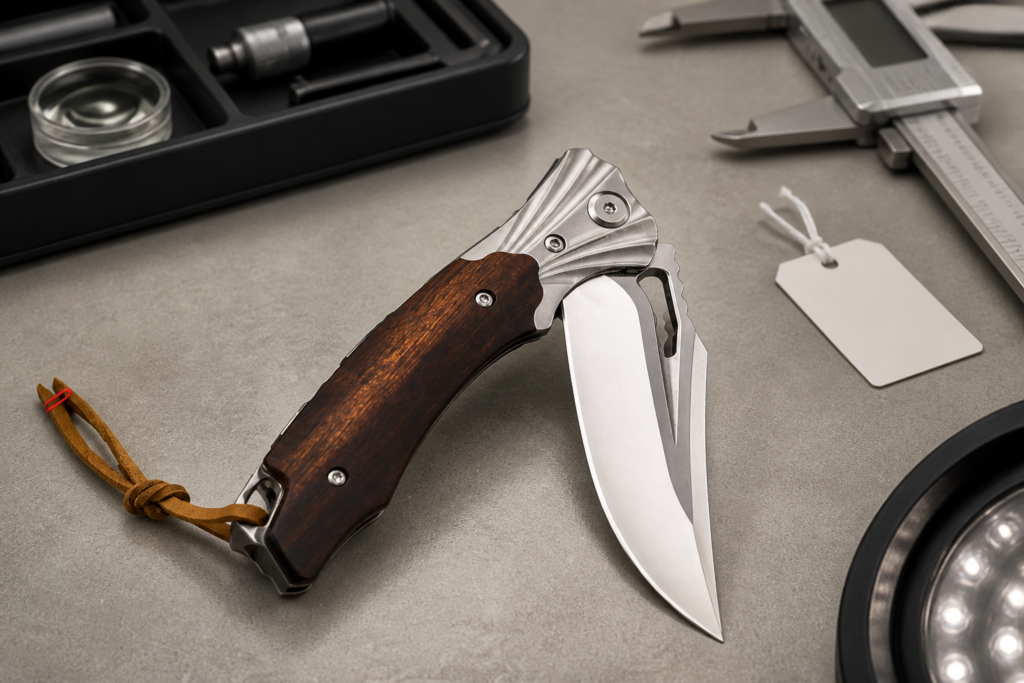
Automatic knife features can look simple in a product photo. If buyers do not classify the mechanism first, sourcing risk can grow quickly.
Buyers should verify automatic knife features by documenting the opening mechanism, bias toward closure, blade length, lock design, target market rules, import limits, adult-use positioning, warning labels, marketing claims, and QC tests before production.
Quick buyer brief:
- Answer: An automatic knife is defined by how the blade opens, not by its styling. Buyers must confirm whether the product opens automatically, whether it has an assisted-opening exception, and whether it can be sold in each intended market.
- Buyer context: This guide is for knife brands, importers, distributors, private label sellers, e-commerce teams, and OEM/ODM sourcing managers.
- Key checks: Manual, assisted, or automatic classification; button, spring, lever, gravity, or inertia action; bias toward closure; blade length; lockup; closed retention; import restrictions; state or local review; marketplace rules; sharp-edge warning; adult audience; safe storage language; and final inspection records.
Have a knife or multi-tool project in mind?
Send your sketch, CAD file, sample photo, or product idea. Vast State can review manufacturability, suggest materials, estimate MOQ, and prepare a quote for your OEM/ODM project.
This article covers automatic knife features as a product classification, sourcing, labeling, and QC topic for adult tools. It does not provide self-defense advice, combat instruction, intimidation copy, concealed-carry guidance, or law-bypass tactics. It is not legal advice. Buyers should confirm the rules in every target country, state, province, marketplace, and shipping channel before selling.
Automatic features deserve separate review because a small mechanism difference can change the product category. A sample that opens by hand, a sample that opens with spring assistance after thumb pressure, and a sample that opens automatically by a handle button should not be treated as the same item.
What Counts as an Automatic Knife Feature?
Mechanism decides the category.
An automatic knife feature usually means the blade opens automatically through a button, pressure device, spring, gravity, inertia, or similar mechanism, but buyers must verify the exact construction.
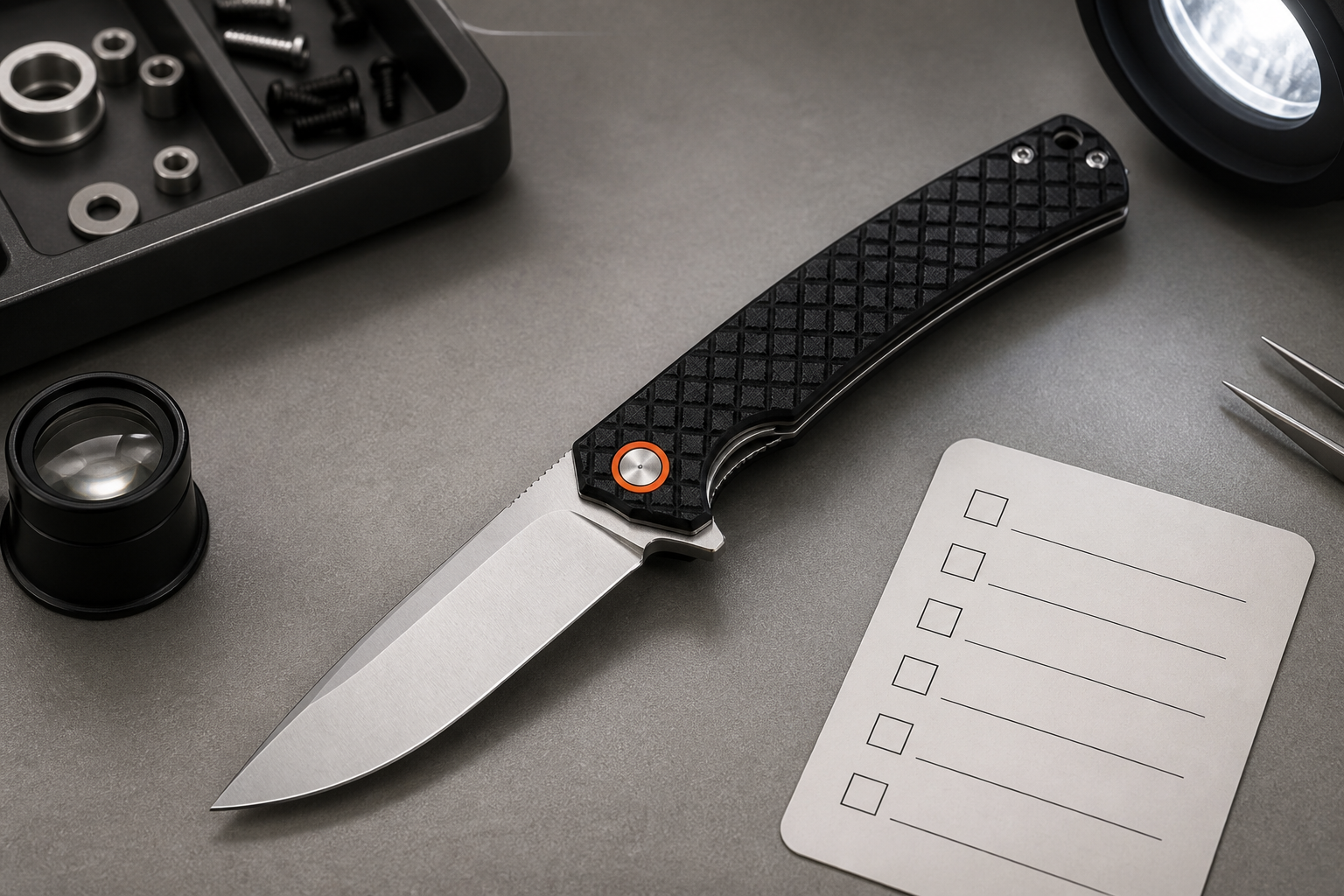
I Start With Mechanism, Not the Sales Name
The factory name may say automatic, assisted, tactical, spring knife, push button, quick open, switch, or folding knife. Those words are not enough. A buyer needs to know what physically happens when the user interacts with the product.
The official 15 U.S.C. 1241 definitions describe switchblade classification around a blade that opens automatically by pressure on a button or device in the handle, or by inertia, gravity, or both. For a buyer, the important lesson is that opening behavior matters more than catalog style.
The RFQ should ask:
- What opens the blade?
- Is there a button, lever, slider, trigger, spring, or gravity action?
- Does the blade open from the side or out the front?
- Is user thumb pressure required on the blade itself?
- Is there a bias toward closure?
- Does the blade stay safely closed during normal handling?
- What lock holds the blade open?
- Can the supplier provide an exploded drawing and sample video?
This is not about finding clever wording. It is about recording facts so the buyer, compliance reviewer, supplier, inspector, and marketplace team are all discussing the same product.
| Product Question | Why It Matters | Buyer Evidence |
|---|---|---|
| Button or handle device | May affect automatic classification | Photos, drawings, sample inspection |
| Gravity or inertia action | May affect switchblade classification | Physical test and supplier declaration |
| Bias toward closure | Important for assisted-opening review | Mechanism description and sample test |
| Lock and retention | Affects product safety and QC | Lock test and closed-state inspection |
OEM/ODM RFQ Checklist
Prepare these details to help Vast State review your project and provide a more accurate quotation.
| RFQ Field | What to Prepare |
|---|---|
| Project type | OEM from drawing / ODM private label / wholesale catalog |
| Product category | Folding knife / fixed blade / multi-tool / outdoor tool |
| Design status | Idea / sketch / 2D drawing / 3D CAD / physical sample |
| Target price | Ex-factory target price or retail price range |
| MOQ expectation | 500 / 1,000 / 3,000 / 5,000+ pcs |
| Logo method | Laser engraving / etching / printing / molded logo |
| Packaging | Standard packaging / custom retail box / Amazon-ready |
| Market | USA / EU / Japan / Korea / Middle East / other |
| Compliance needs | Buyer-specified testing / documentation / labeling |
| Timeline | Sample deadline / mass production deadline |
How Is Automatic Different From Assisted or Manual Opening?
Small details matter.
Automatic, assisted-opening, and manual folding knives can look similar online, so buyers should classify them by the user's action, spring behavior, blade retention, and lock design.
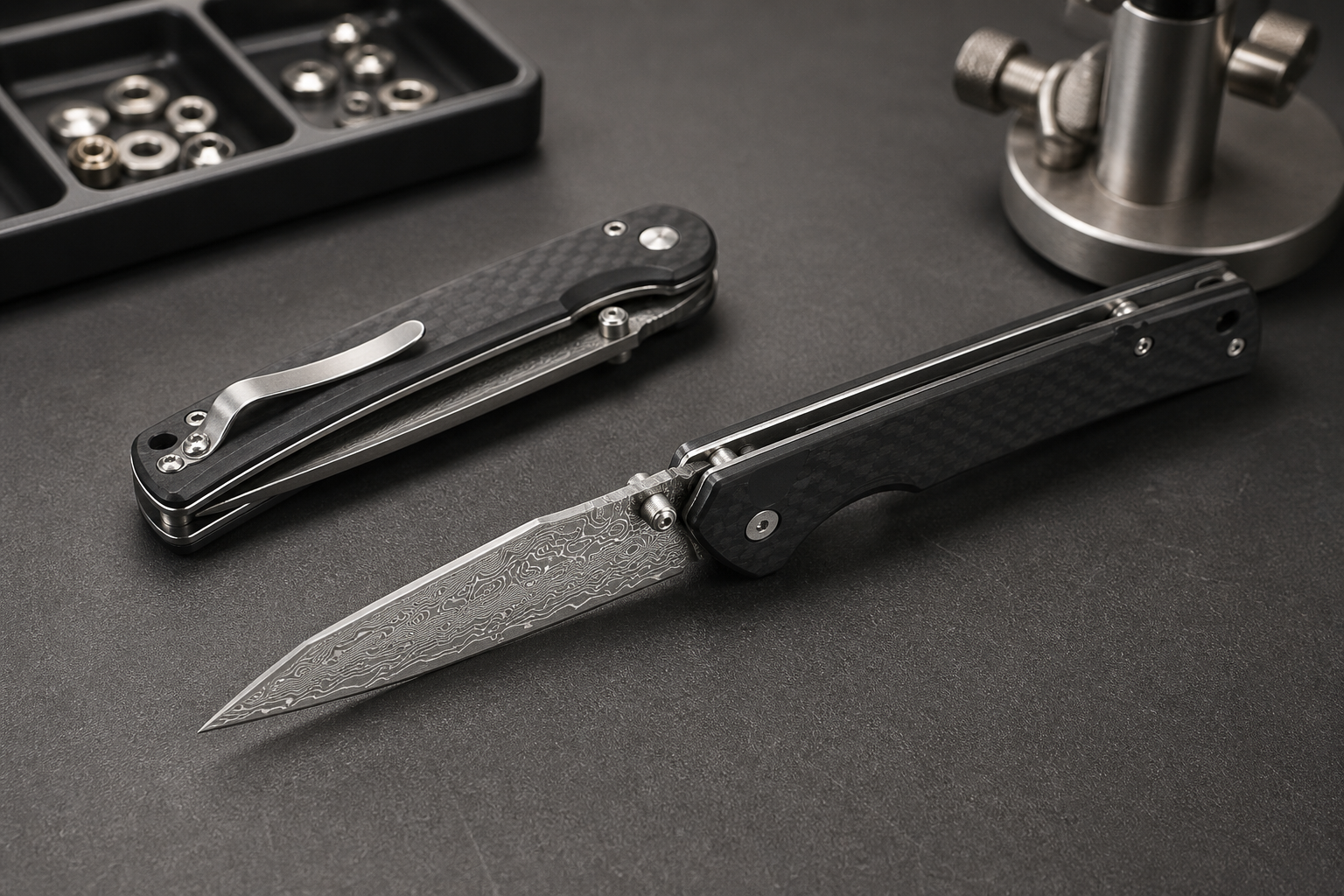
I Do Not Approve Mechanism by Photo
A product photo can hide the most important detail. A side-opening automatic knife, an assisted-opening folder, and a manual button-lock folder can all appear similar in a thumbnail. The buyer should review physical samples or detailed videos before placing the order.
The official 15 U.S.C. 1244 exceptions includes exception language related to a spring, detent, or other mechanism designed to create a bias toward closure and requiring user exertion applied to the blade by hand, wrist, or arm to overcome that bias. A buyer should not paraphrase that casually as "all assisted knives are fine." The actual product should be reviewed.
Useful comparison fields include:
- Manual opening point
- Assisted-opening trigger point
- Spring location
- Button function
- Detent strength
- Bias toward closure
- Lock engagement
- Blade travel path
- Closed-state retention
- Closing force
The buyer should keep three labels separate: internal engineering classification, legal review classification, and public marketing name. These may not always use the same wording, but they must not contradict each other.
Which Legal and Import Checks Should Come Before Production?
Rules should lead the project.
Buyers should check federal restrictions, import rules, state and local laws, marketplace policies, customer eligibility, carrier rules, and export/import documentation before approving automatic knife production.
I Check the Market Before I Check the Finish
Automatic knife projects should not begin with handle color, coating, or logo placement. They should begin with market feasibility. A product that cannot be imported, shipped, listed, or sold through the intended channel is not ready for tooling.
The official 15 U.S.C. 1242 text addresses introduction, manufacture for introduction, transportation, or distribution of switchblade knives in interstate commerce. Import treatment also appears in customs rules. The 19 CFR 12.95 text in the Code of Federal Regulations describes switchblade knife definitions for import control, and 19 CFR 12.96 addresses importations.
Buyer review should cover:
- Target market
- Buyer eligibility
- Import classification
- State or local restrictions
- Sales channel rules
- Marketplace policy
- Carrier acceptance
- Customer age policy
- Product description on invoice
- Labeling and warning language
Automatic products are not a good category for assumptions. The buyer should keep written approval notes in the purchase file before paying for production.
What Features Should the RFQ Define in Detail?
Vague RFQs create disputes.
An automatic knife RFQ should define mechanism type, blade dimensions, steel, lock, handle, button or actuator design, retention, labeling, packaging, target market, and inspection method.
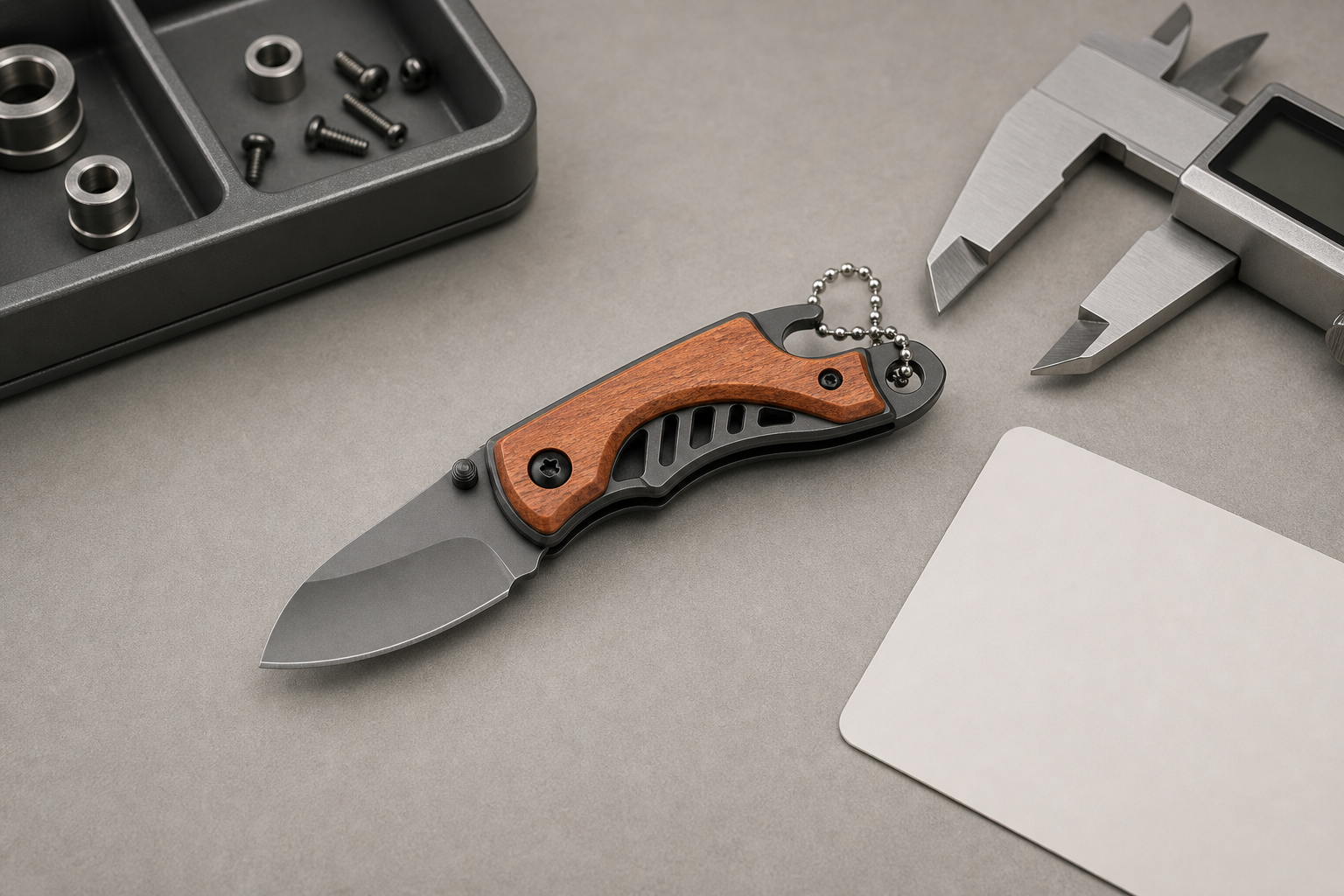
I Ask for the Parts That Control Risk
The RFQ should not only say "automatic knife, black handle, stainless blade." That is not enough for a factory or a compliance reviewer. Automatic features depend on small parts, spring force, tolerances, button geometry, lock engagement, detent behavior, blade travel, and closed-state retention.
Strong RFQ fields include:
- Mechanism type
- Blade length and edge length
- Blade thickness
- Steel grade and heat treatment
- Opening actuator type
- Spring or drive component description
- Lock type
- Closed retention standard
- Button exposure control
- Handle material
- Screw and pivot specification
- Pocket clip or sheath requirement
- Warning label
- Target market
- Sample approval steps
- Lot inspection requirements
The buyer should require supplier confirmation that no mechanism change, blade length change, spring change, actuator change, or lock substitution can happen after approval without written buyer review. That requirement protects both sides. It makes the order easier to inspect and easier to defend.
How Should Safety, Labeling, and Adult Positioning Be Written?
Sharp products need plain warnings.
Automatic knife packaging should clearly state adult-use positioning, sharp-edge warnings, safe storage instructions, local-law reminders, mechanism identification, care limits, and keep-away-from-children language.
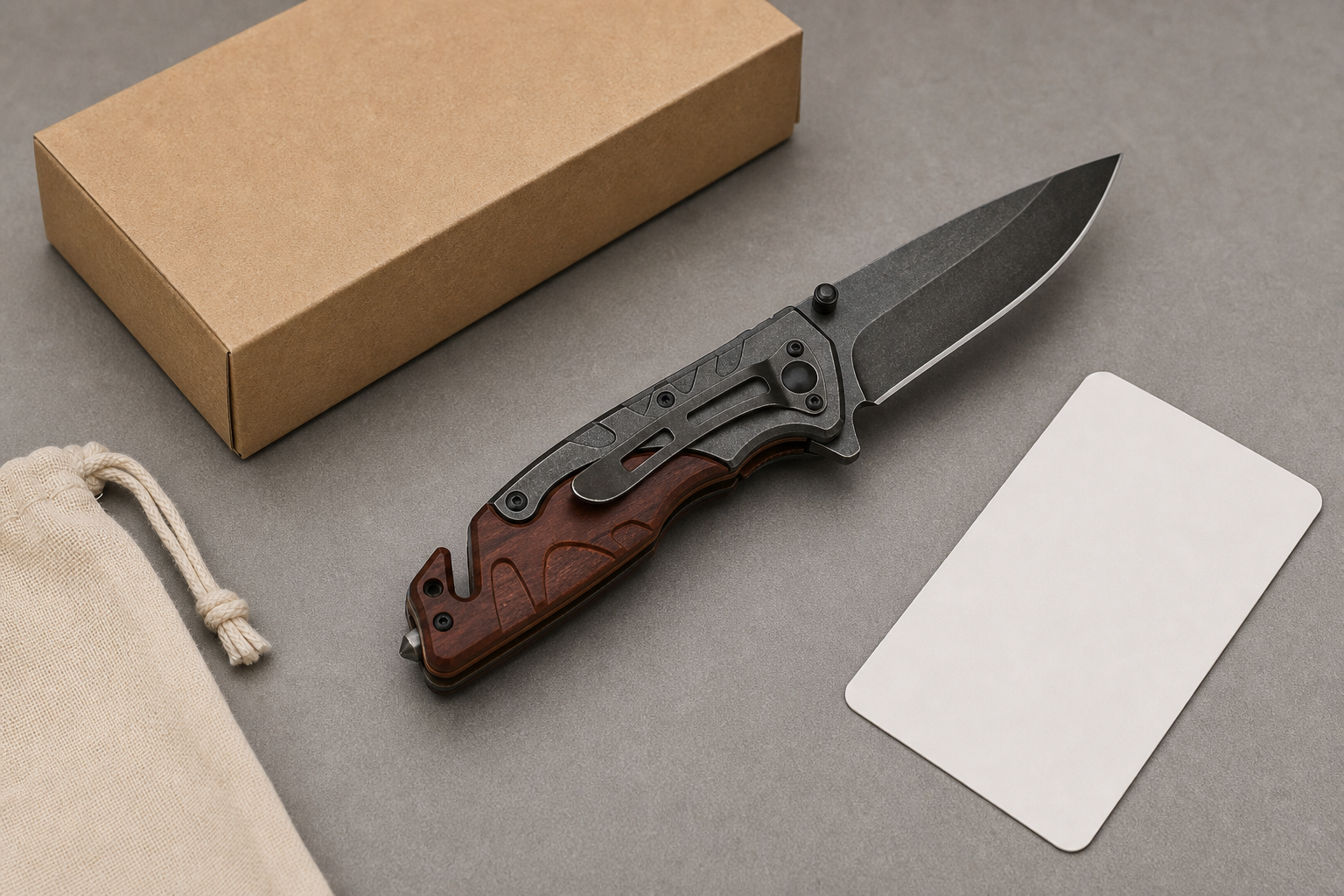
I Let the Label Tell the Truth
Automatic features can make a product feel exciting. The label should pull the product back into responsible adult-tool language. The buyer should not use toy-like packaging, youth appeal, combat claims, concealment claims, or unrestricted carry promises.
The CPSC labeling requirements overview explains that labeling may depend on product type, design, components, and intended age group. The CPSC children's products guidance also explains that packaging, display, promotion, advertising, manufacturer statements, and consumer recognition can matter when determining whether a consumer product is intended for children.
For automatic knife projects, practical label themes include:
- Sharp edge
- Adult product
- Keep away from children
- Check local laws before purchase, possession, transport, or carry
- Keep closed, locked, or protected when not in use
- Do not use a damaged product
- Follow care instructions
- Product mechanism identified accurately
The CCOHS sharp blades guidance supports the broader safety idea that sharp tools should be selected, inspected, handled, and stored carefully. Buyers can convert those principles into simple consumer instructions.
How Should Marketing Explain Features Without Overclaiming?
Claims need evidence.
Marketing should describe automatic knife features with neutral specifications and documented performance claims, not self-defense language, "legal everywhere" claims, military claims, or exaggerated durability promises.
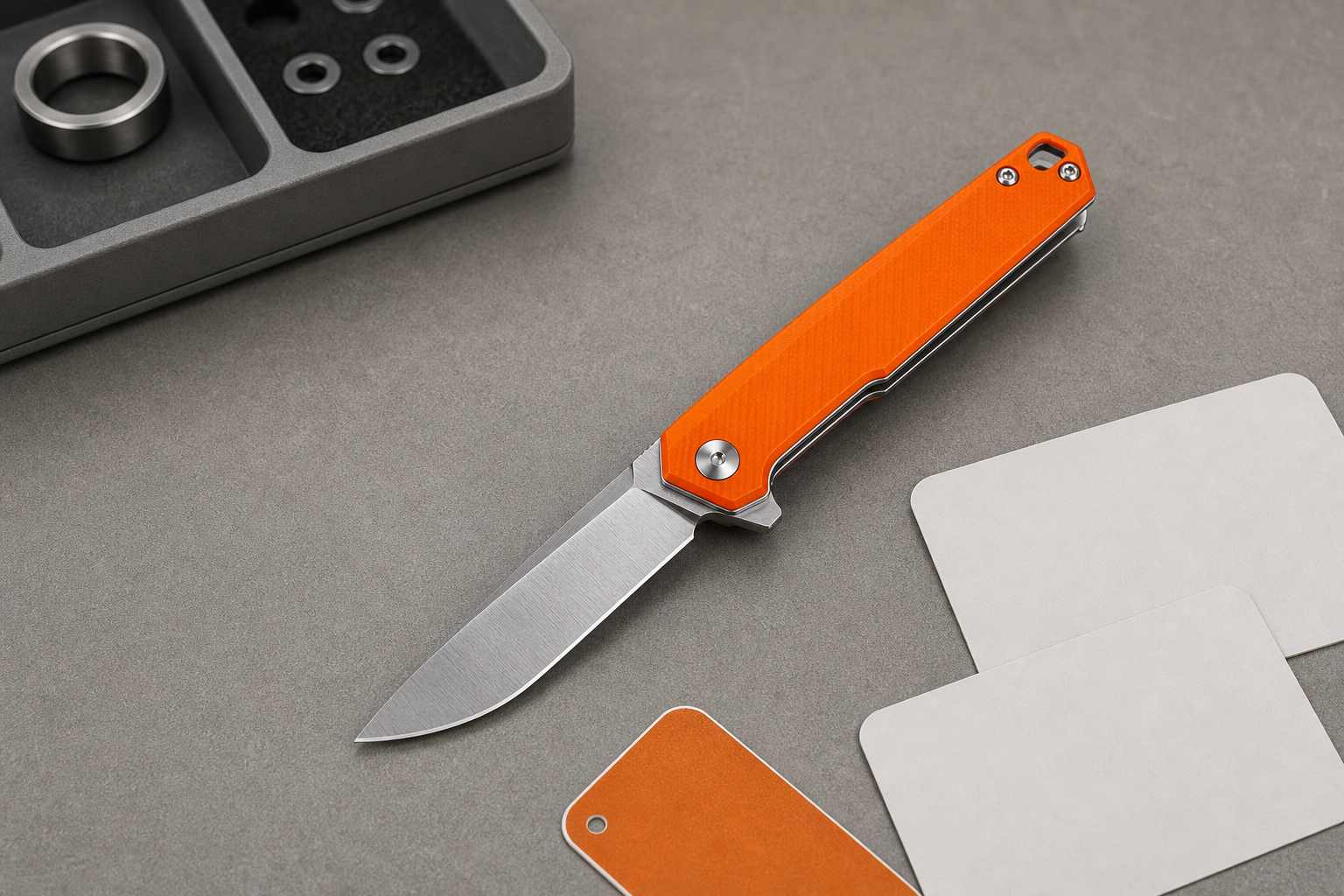
I Replace Hype With Verifiable Details
Automatic knife copy often becomes risky when it tries to sound exciting. Words like fastest, ultimate, tactical, self-defense, unstoppable, military grade, or legal anywhere can create problems if the buyer cannot support them or if they imply the wrong use case.
The FTC advertising and marketing basics explain that advertising claims should be truthful, not deceptive or unfair, and evidence-based. A buyer should apply that principle to every feature claim.
Safer marketing details include:
- Blade steel
- Blade length
- Handle material
- Opening classification after review
- Lock type
- Finish
- Weight
- Closed length
- Care instructions
- Adult-use warning
- Local-law reminder
If the product has a tested lock strength, corrosion resistance, coating durability, or cycle life, the test method and sample size should be recorded. If the buyer does not have evidence, the claim should be softened or removed.
What Should Final QC Inspect Before Shipment?
Inspection must match the mechanism.
Final QC should inspect opening function, lock engagement, closed retention, actuator safety, blade centering, tip condition, screw security, labels, packaging, and sample consistency.
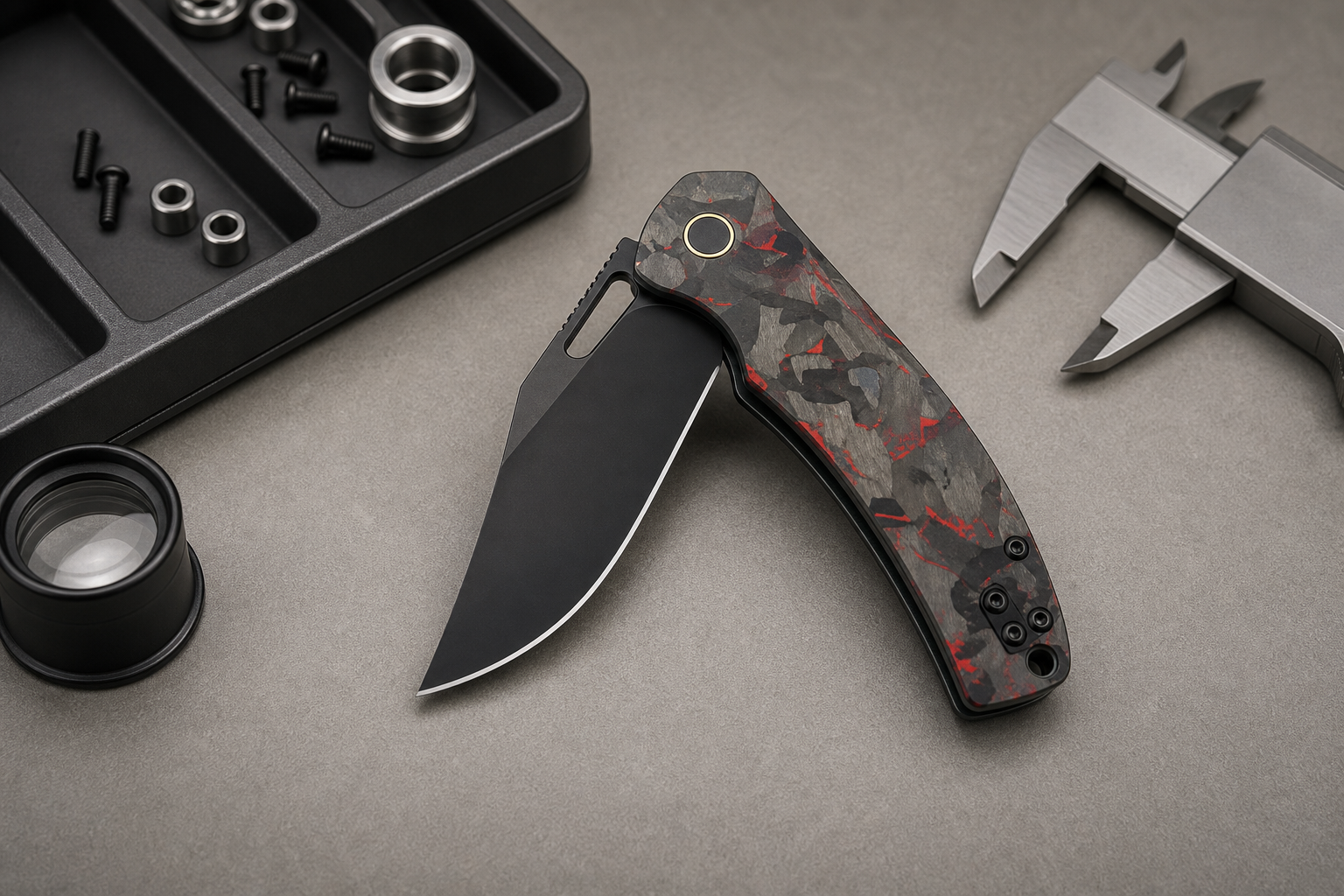
I Inspect the Feature That Makes the Product Sensitive
For an automatic knife project, final inspection should not stop at cosmetic checks. The mechanism is the category-defining feature, so it needs specific inspection steps.
Inspection should include:
- Approved sample comparison
- Blade length measurement
- Closed length measurement
- Opening function review
- Closed-state retention
- Lock engagement
- Blade play
- Button or actuator exposure
- Screw and pivot tightness
- Tip condition
- Burr and sharp-edge check
- Handle fit and gaps
- Label and warning check
- Packaging protection
- Carton marking review
The inspector should record any mechanism deviation. If a spring, detent, button, lever, or lock changes from the approved sample, the buyer should pause shipment and reclassify the product. A small mechanical change can become a large commercial risk.
Turn your idea into a quote-ready knife project.
Share your drawing, sample photo, target quantity, market, and packaging needs. Vast State will review manufacturability and prepare OEM/ODM options.
Conclusion
Automatic knife features need mechanism classification before design approval. Verify law, labeling, claims, adult positioning, and QC before production.