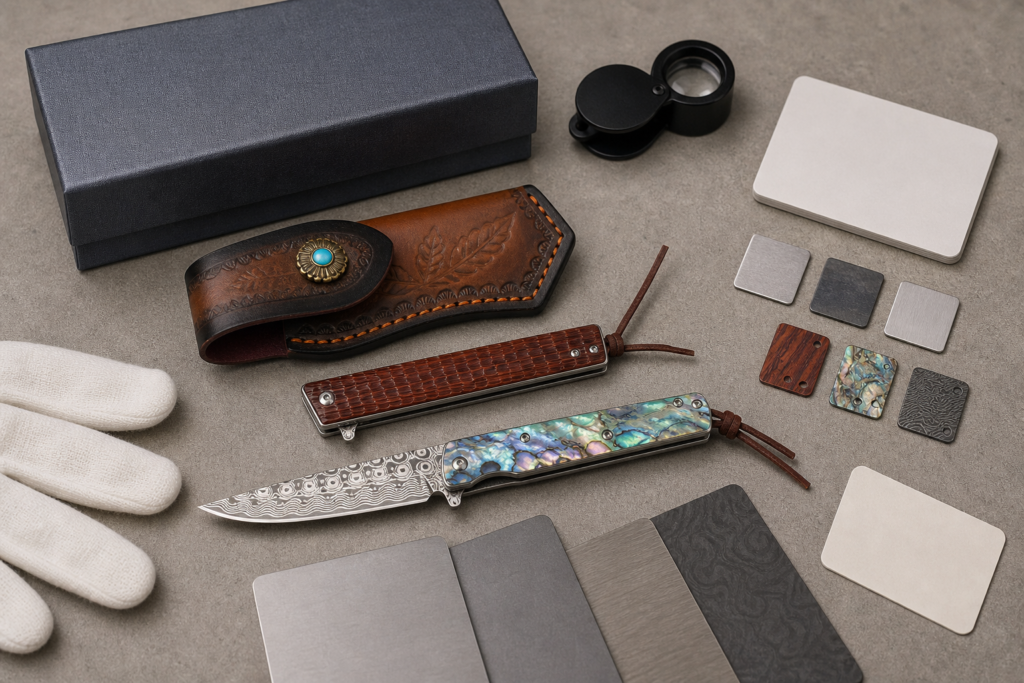
Damascus steel creates instant visual interest. If buyers only chase the pattern, they can miss material truth, cost, care, and QC risk.
Damascus steel is popular because its visible pattern suggests craft, heritage, uniqueness, and premium value. OEM buyers should still verify the actual material type, base steels, heat treatment, hardness, corrosion care, food-contact status, pattern tolerance, labeling, and marketing claims.
Quick buyer brief:
- Answer: Damascus steel popularity comes from a mix of appearance, story, differentiation, gift appeal, and perceived craftsmanship. Those benefits are useful only when the buyer turns the pattern into a controlled product specification.
- Buyer context: This guide is for kitchen knife brands, EDC brands, outdoor tool brands, giftware buyers, importers, wholesalers, private label teams, and OEM/ODM sourcing managers.
- Key checks: Historical wording, modern pattern-welded material, steel combination, hardness method, heat treatment, corrosion behavior, etching contrast, pattern range, food-contact review, care label, truthful claims, packaging protection, and final inspection records.
Planning a knife project with this steel?
Send us your target market, MOQ, price range, and blade type. Vast State can help you choose the right steel, HRC range, finish, handle material, and QC requirements for OEM/ODM production.
This article treats Damascus steel as a knife material and product-positioning topic for adult kitchen, outdoor, EDC, craft, and gift-oriented tools. It does not cover combat, self-defense, intimidation, weapon-use advice, or myth-based superiority claims. The buyer's job is to separate customer appeal from engineering proof.
The practical rule is simple: Damascus steel can help a knife look special, but the pattern does not replace base steel selection, heat treatment, edge geometry, corrosion care, safe labeling, or honest advertising.
Why Do Customers Notice Damascus Steel So Quickly?
The pattern tells a story fast.
Customers notice Damascus steel because the flowing pattern is visible, distinctive, and easy to associate with craft, heritage, uniqueness, and premium positioning.
I Treat Popularity as a Market Signal, Not a Quality Proof
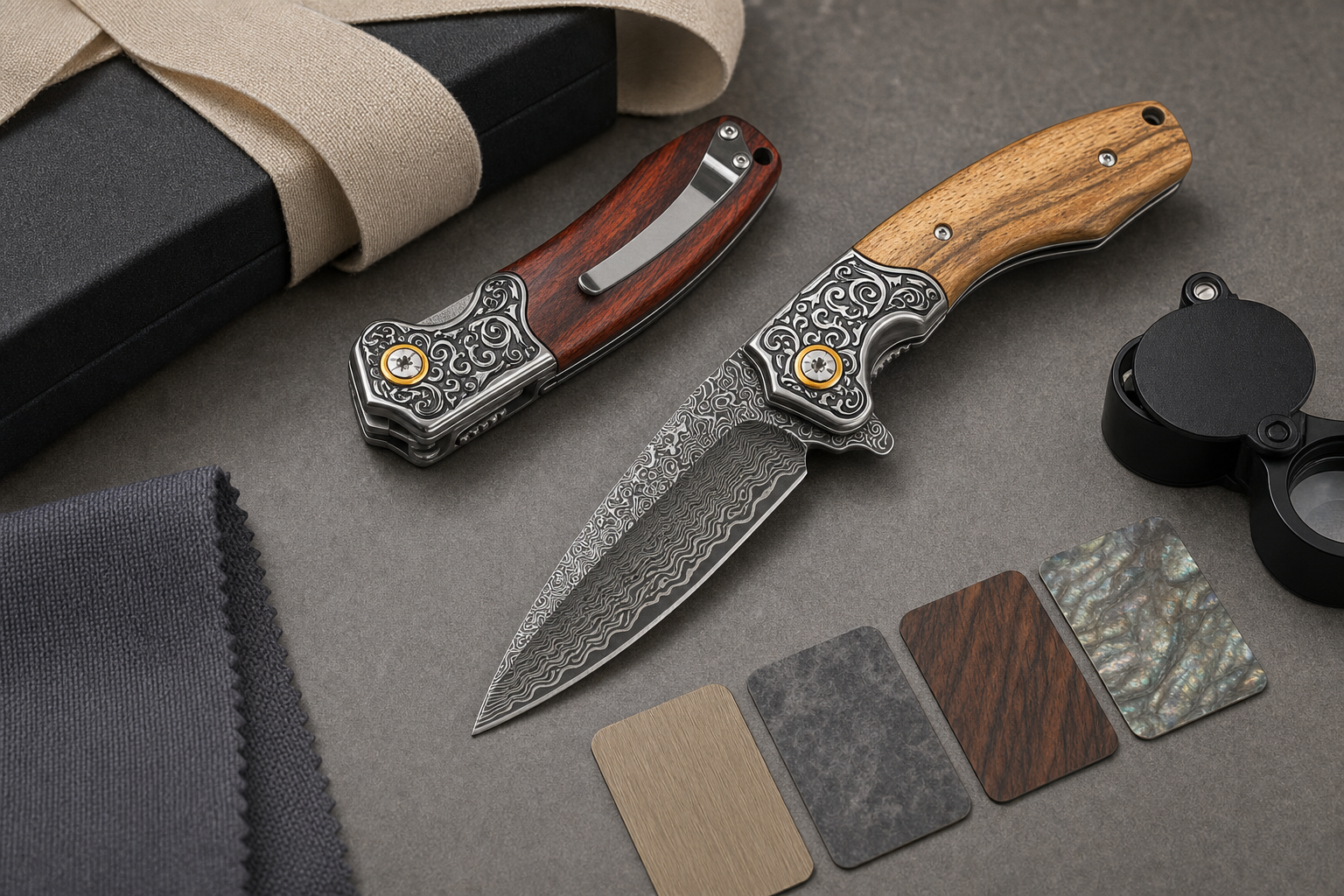
Damascus steel is popular because it is easy to understand visually. A buyer does not need a technical lecture to see that the blade looks different from a plain satin or stonewashed blade. The pattern photographs well, gives a product a stronger shelf presence, and supports gift or premium positioning.
The appeal also comes from history. The MIT module on Damascus and pattern-welded steels explains that Damascus steel drew European interest because of its legendary properties and distinctive appearance, and that pattern-welded steels created a similar appearance through forge-welding. That history still affects how customers react to the word today.
For a B2B buyer, popularity should become a question: what does the target customer actually value? Some customers value the visual pattern. Some value a hand-crafted story. Some want a premium kitchen knife gift. Some want a collector-style folding knife. These motivations are useful, but they are not the same as measurable cutting performance.
| Appeal Driver | Why It Helps Sales | Buyer Risk |
|---|---|---|
| Visible pattern | Strong product photo | Pattern may vary by piece |
| Heritage story | Adds perceived craft | Wording can become inaccurate |
| Premium look | Supports higher tier | Fit and finish must match |
| Gift appeal | Easy emotional value | Care instructions must be clear |
Quote-ready RFQ Checklist for Damascus Projects
To get an accurate OEM/ODM quote, prepare construction, core steel, pattern, layer, hardness, and etch details before contacting a knife manufacturer.
| RFQ Field | What to Prepare |
|---|---|
| Damascus construction | Pattern-welded / clad / stainless patterned / decorative etch |
| Core steel | 10Cr15CoMoV / VG10 / 14C28N / buyer-specified |
| Pattern | Random / ladder / twist / raindrop |
| Layer specification | Supplier standard or verified target |
| Target HRC | Based on core or full construction |
| Etch standard | Contrast, depth, residue and variation limits |
What Should Buyers Mean by "Damascus Steel" Today?
The term needs control.
Modern commercial Damascus usually refers to patterned steel, often pattern-welded and etched, while historical Damascus is commonly discussed through wootz or crucible steel traditions.
I Define the Material Before I Approve the Sample
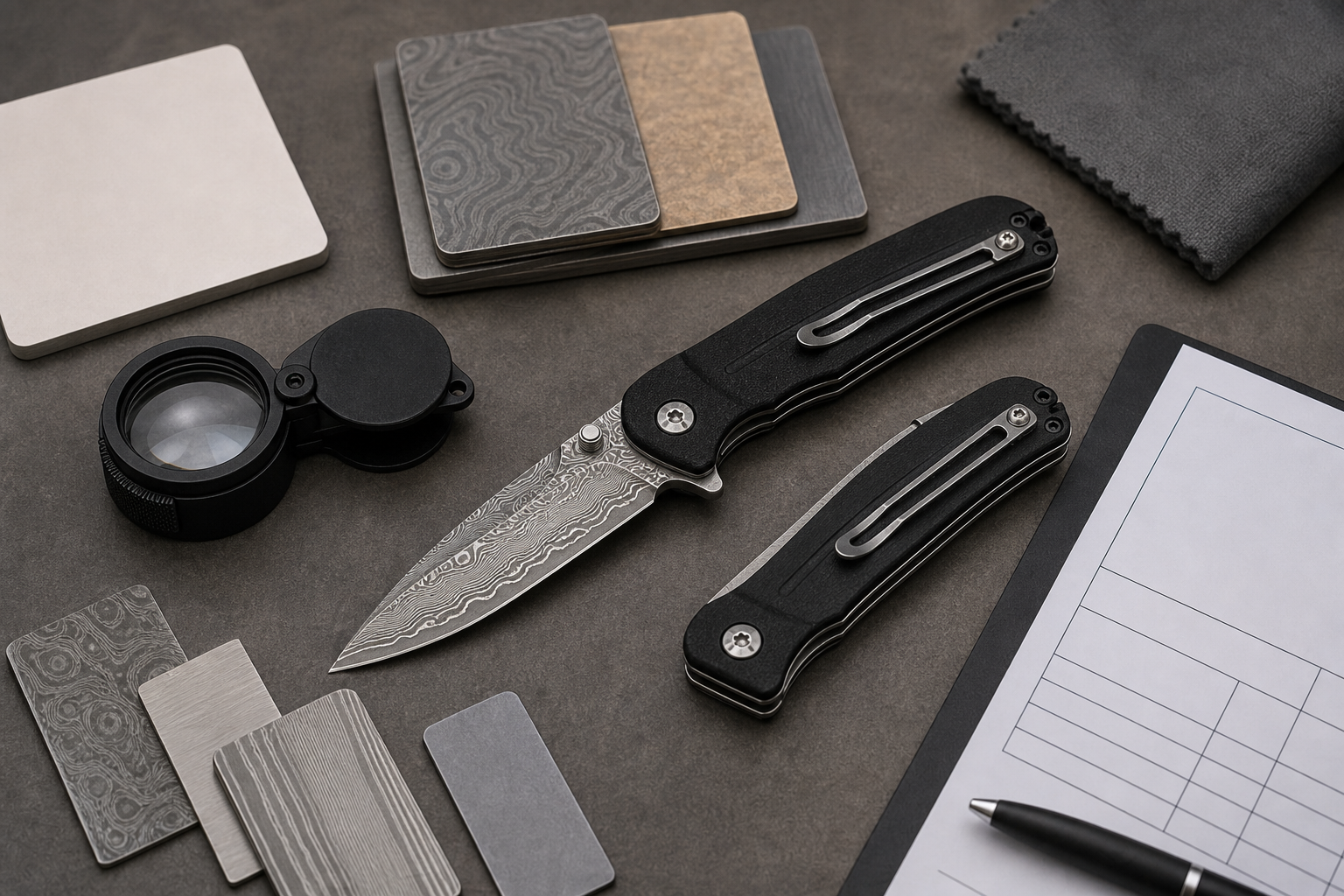
"Damascus" is not one universal material. Historical references often point to wootz or crucible steel. Britannica's wootz steel entry connects wootz with medieval Damascus swords and describes a historical steelmaking process. Modern commercial knife projects usually use pattern-welded or Damascus-style layered steel made for repeatable production.
This difference matters because a buyer may want the story, while the factory must deliver a batch. The RFQ should not simply say "Damascus blade." It should define the base steels, pattern style, layer approach if relevant, heat treatment, finish, etch contrast, corrosion expectations, and acceptable variation.
Buyers should ask suppliers direct questions:
- Is this pattern-welded steel, stainless Damascus-style steel, printed pattern, etched pattern, or another process?
- What steels or alloys are used?
- What heat treatment is used?
- What hardness range is targeted?
- How is the pattern revealed?
- What variation is normal?
- Is the blade suitable for food contact if used in kitchen knives?
If the supplier cannot explain the material, the buyer should treat the sample as decorative until proven otherwise.
Which Product Categories Benefit Most From Damascus?
Not every knife needs it.
Damascus steel works best where visual identity, gift value, collector appeal, premium positioning, or private label differentiation matters more than lowest cost.
I Match the Pattern to the Sales Channel
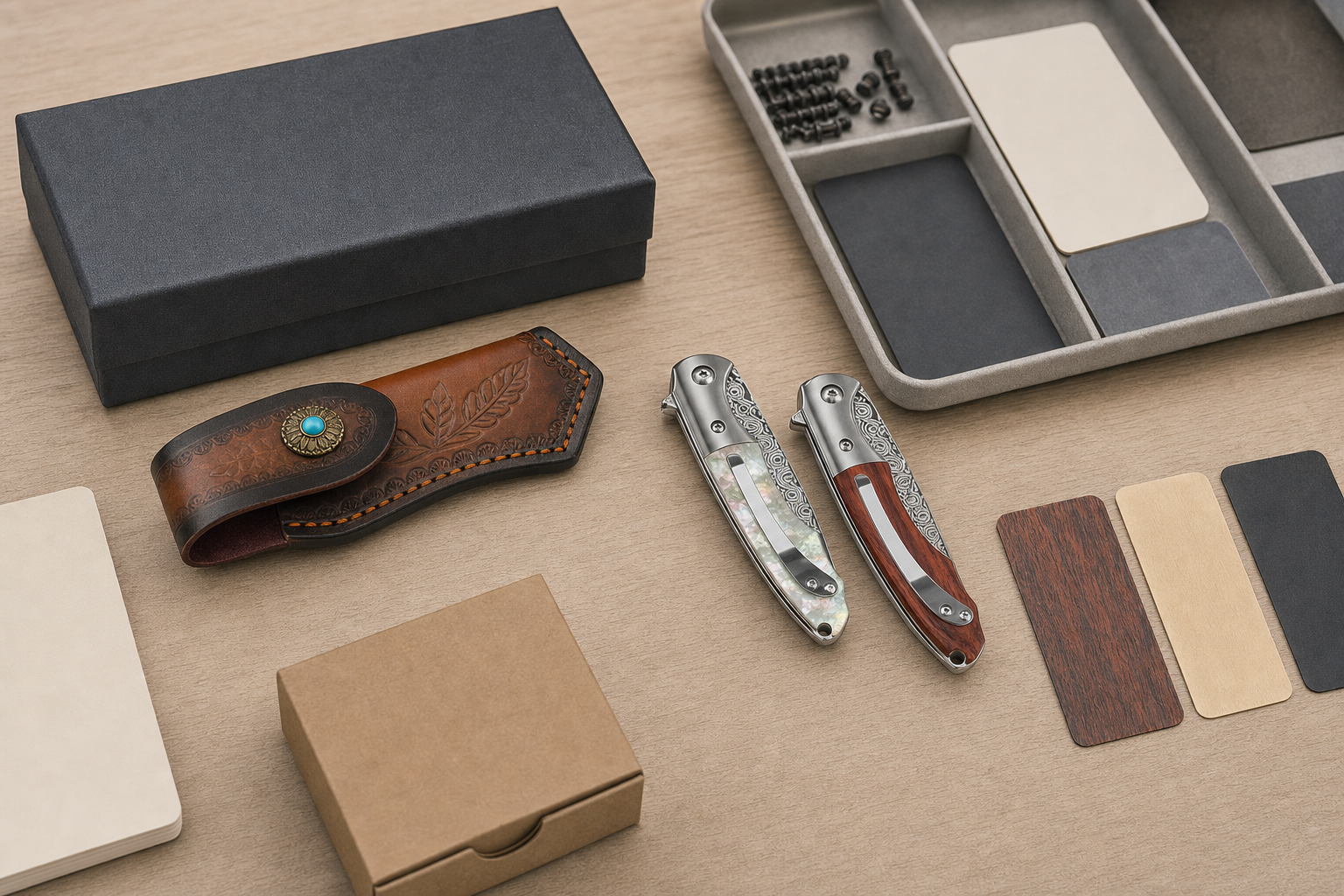
Damascus steel can be useful in premium kitchen knives, gift sets, collector-style EDC folders, outdoor accessory lines, and limited private label runs. These categories benefit from a blade that looks different at first glance. The buyer can build a stronger product story around material, pattern, finish, and packaging.
It may be less useful for a low-cost utility line, a no-frills work knife, or a product where simple corrosion resistance and low maintenance are more important than visual story. In those cases, a clear mono-steel specification may be easier to control and explain.
The category decision should include price target. Damascus-style steel can increase material cost, processing time, finish inspection, and packaging needs. The buyer needs enough margin to support that cost. If the final handle, sheath, lock, or packaging looks cheap, the patterned blade can feel mismatched.
| Category | Why Damascus May Help | Watch Point |
|---|---|---|
| Kitchen gift set | Strong gift appeal | Food-contact and care review |
| Premium EDC folder | Visual differentiation | Lock and action still matter |
| Outdoor accessory line | Distinctive private label look | Corrosion care must be honest |
| Limited run | Supports scarcity story | Pattern tolerance must be clear |
What Material and Performance Checks Matter Most?
The pattern is not the performance.
Buyers should verify base steels, hardness method, heat treatment, edge geometry, weld quality, corrosion behavior, sharpening expectations, and intended use before making performance claims.
I Ask for Testable Facts
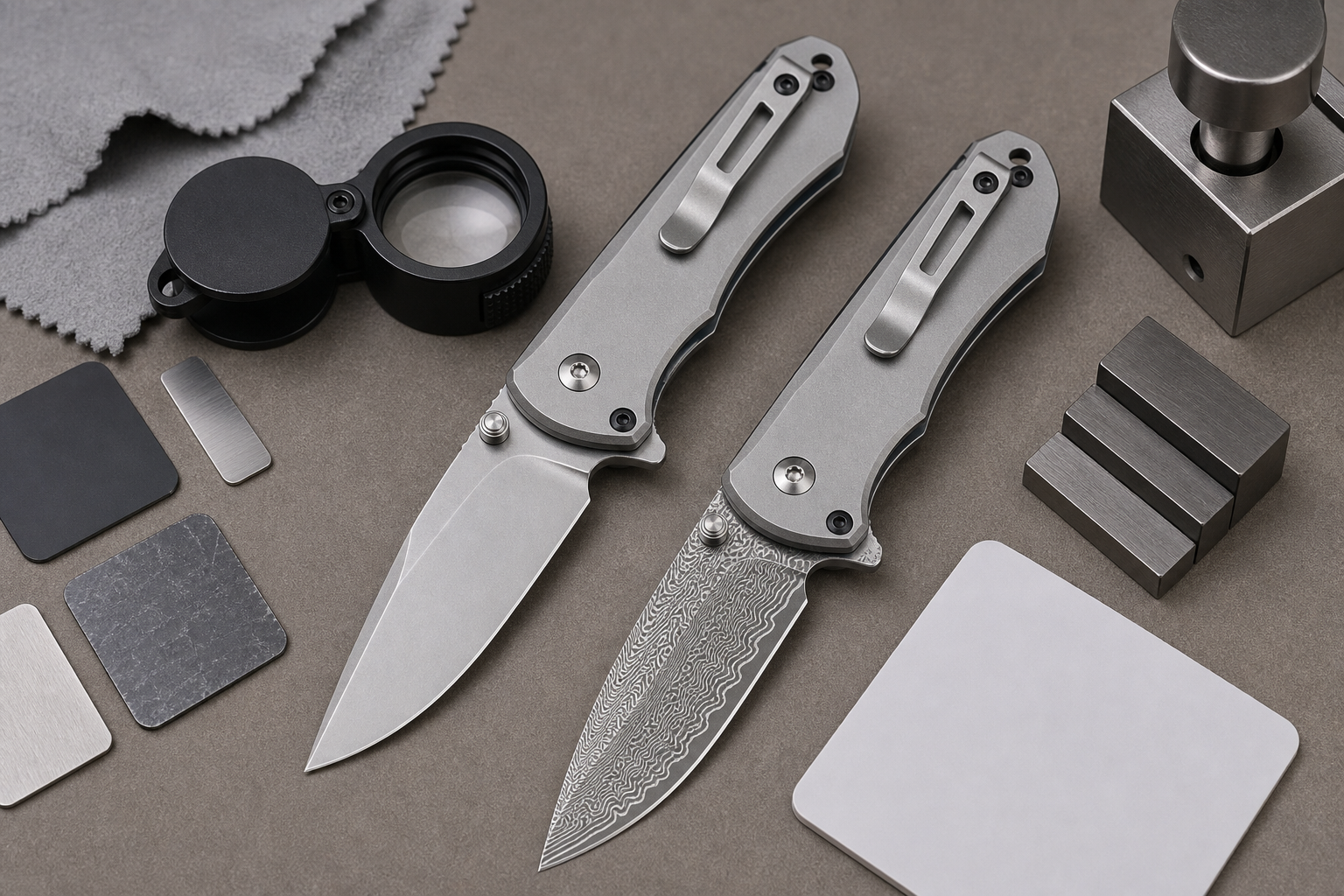
Damascus-style steel can be excellent, average, or poor depending on how it is made. The visible pattern does not tell the buyer enough. Base steel selection, forge welding quality, heat treatment, grinding, edge angle, and final finish all affect the final knife.
Hardness is one useful data point, but it needs a method. The NIST Rockwell hardness measurement guide is a reminder that hardness testing is a measurement process, not a decorative number. Buyers should ask where hardness is measured, how many samples are checked, and what range is acceptable.
Buyers should also request evidence for any performance claim. If the copy says long edge retention, stain resistance, high toughness, or premium heat treatment, the buyer should keep test records or soften the wording. A supplier's beauty photo is not evidence.
| Check | Buyer Question | Why It Matters |
|---|---|---|
| Base steels | What materials are layered? | Defines performance potential |
| Heat treatment | What process and target range? | Controls hardness and toughness |
| Edge geometry | What grind and edge angle? | Controls cutting feel |
| Corrosion behavior | What care is required? | Prevents customer surprise |
How Should Kitchen and Food-Contact Projects Be Reviewed?
Kitchen use raises the bar.
For kitchen Damascus knives, buyers should review blade material, etching chemistry, handle materials, adhesives, coatings, care instructions, cleaning limits, and food-contact declarations.
I Do Not Assume Premium Means Food-Ready
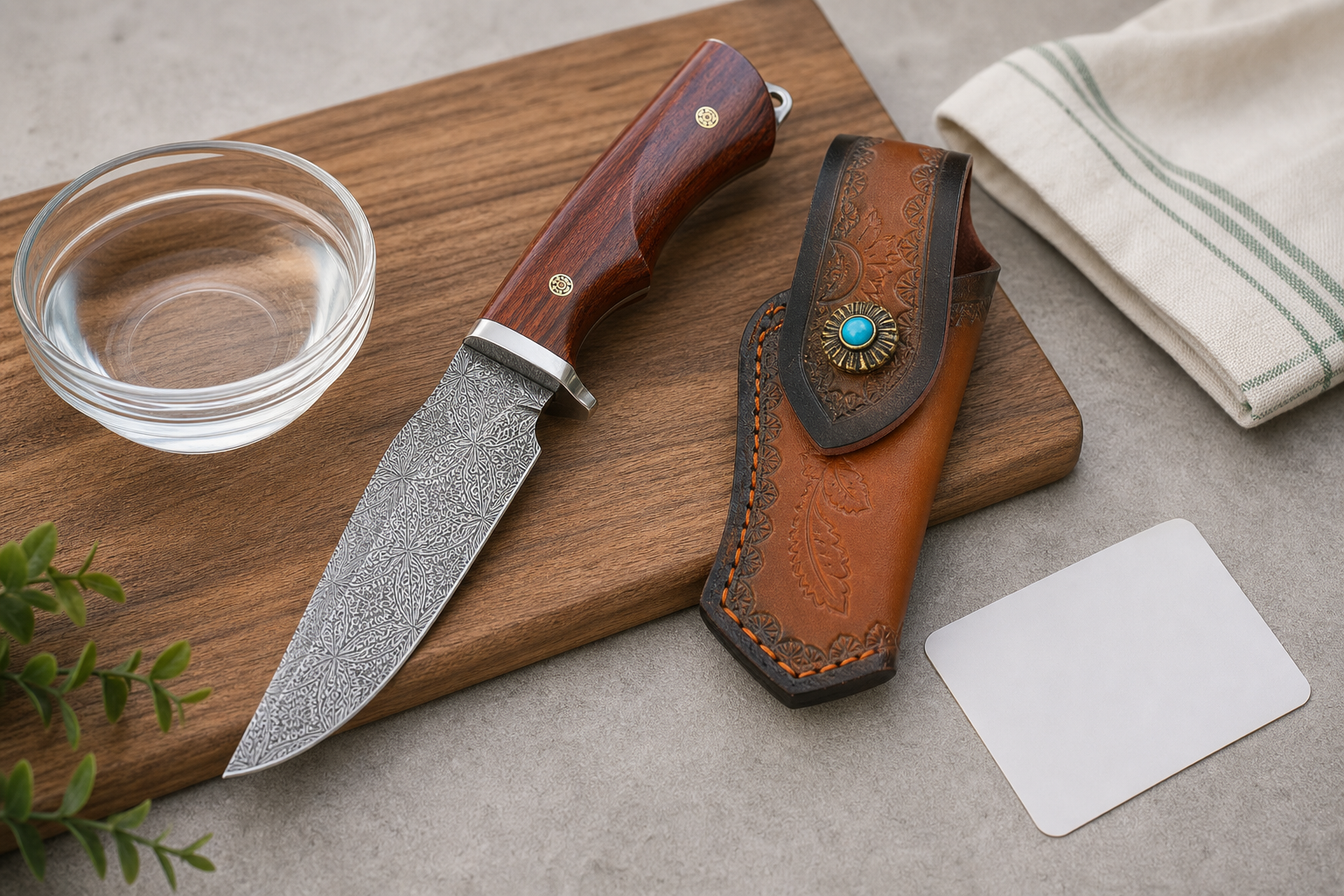
A Damascus kitchen knife has a different review path from a collector-style folding knife. If the blade touches food, the buyer should ask for material declarations and review any surface treatment, etching residue, coatings, adhesives, handle inserts, and packaging materials that may contact the product.
The FDA explains that a food contact substance is a substance that comes into contact with food and is not intended to have a technical effect in food. Its food-contact substances information page includes examples such as food preparation surfaces, cookware, adhesives, and colorants. That mindset is useful for kitchen knife projects.
Care instructions are especially important. Some Damascus-style steels may need drying after washing, careful storage, or light oiling depending on the material. If the knife is not dishwasher-safe, the package should say so. If the blade can patina or stain, the buyer should explain that honestly.
For kitchen products, the buyer should also inspect handle sealing, tang construction, gaps, and cleaning access. A beautiful blade does not make up for a handle that traps moisture or residue.
How Much Pattern Variation Should Buyers Accept?
Variation can be charm or defect.
Buyers should approve a realistic Damascus pattern range covering contrast, flow, etch depth, color tone, logo visibility, bevel interaction, and piece-to-piece variation.
I Approve a Range, Not One Perfect Blade
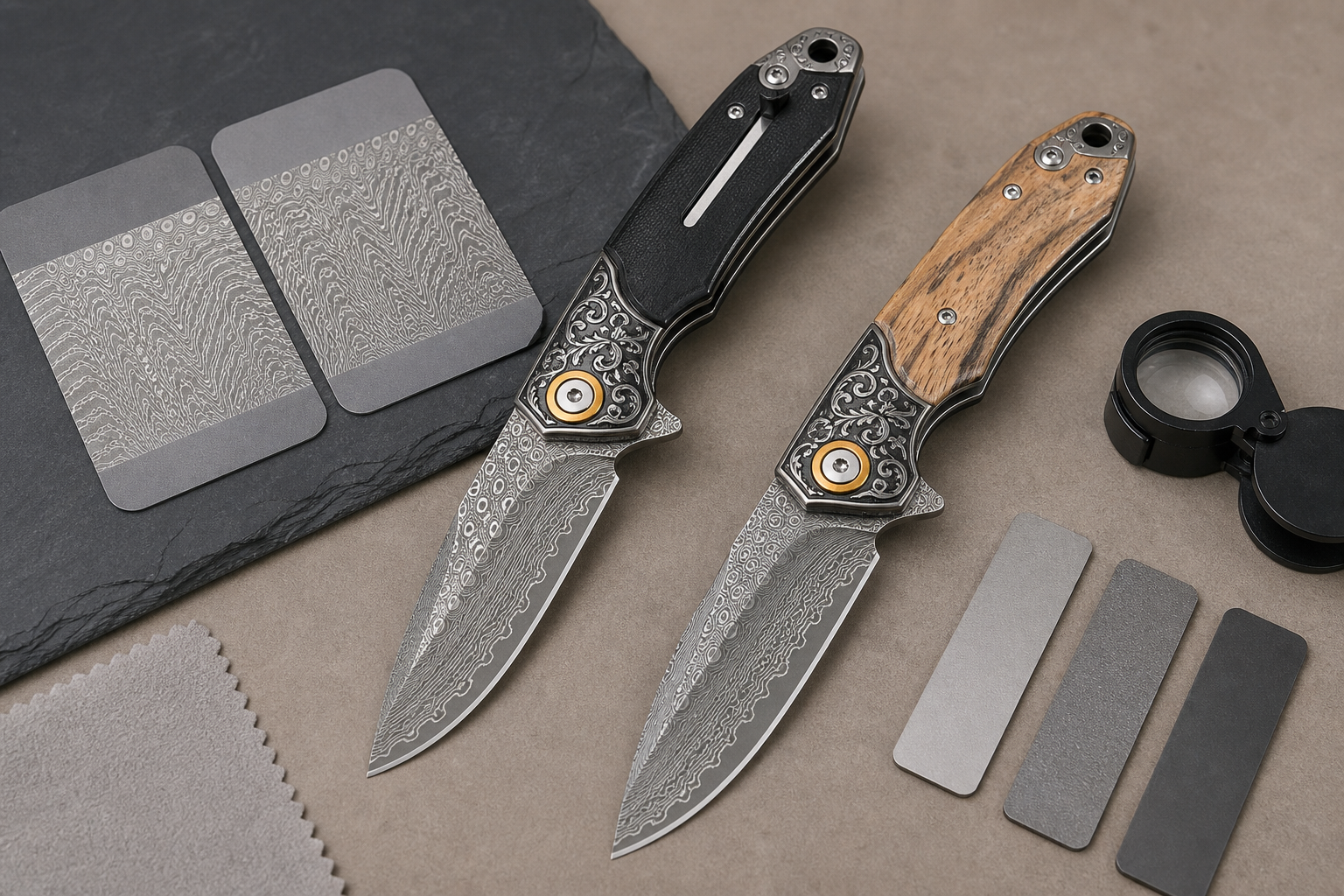
Damascus steel is popular partly because each pattern can look slightly unique. That uniqueness can help gift and collector positioning. It can also create complaints if the production piece looks too different from the photo.
The buyer and supplier should agree on a visual range before production. This can include approved photos, golden samples, rejected samples, lighting conditions, finish notes, and logo placement examples. The goal is not to make every blade identical. The goal is to avoid surprises.
Pattern controls should cover:
- Contrast strength
- Direction and flow
- Etch depth
- Surface smoothness
- Bevel consistency
- Logo readability
- Handle and blade color match
- Acceptable dark or light zones
- Protection during packing
For online sales, photography matters too. Studio lighting can make patterns look stronger than they appear in normal use. The listing should not show a perfect one-off sample if production will vary naturally.
How Should Buyers Keep Marketing Claims Honest?
The story needs evidence.
Marketing should explain Damascus steel through material, pattern, craft, care, and target use without claiming automatic superiority, impossible sharpness, or unsupported durability.
I Replace Myth With Specifics
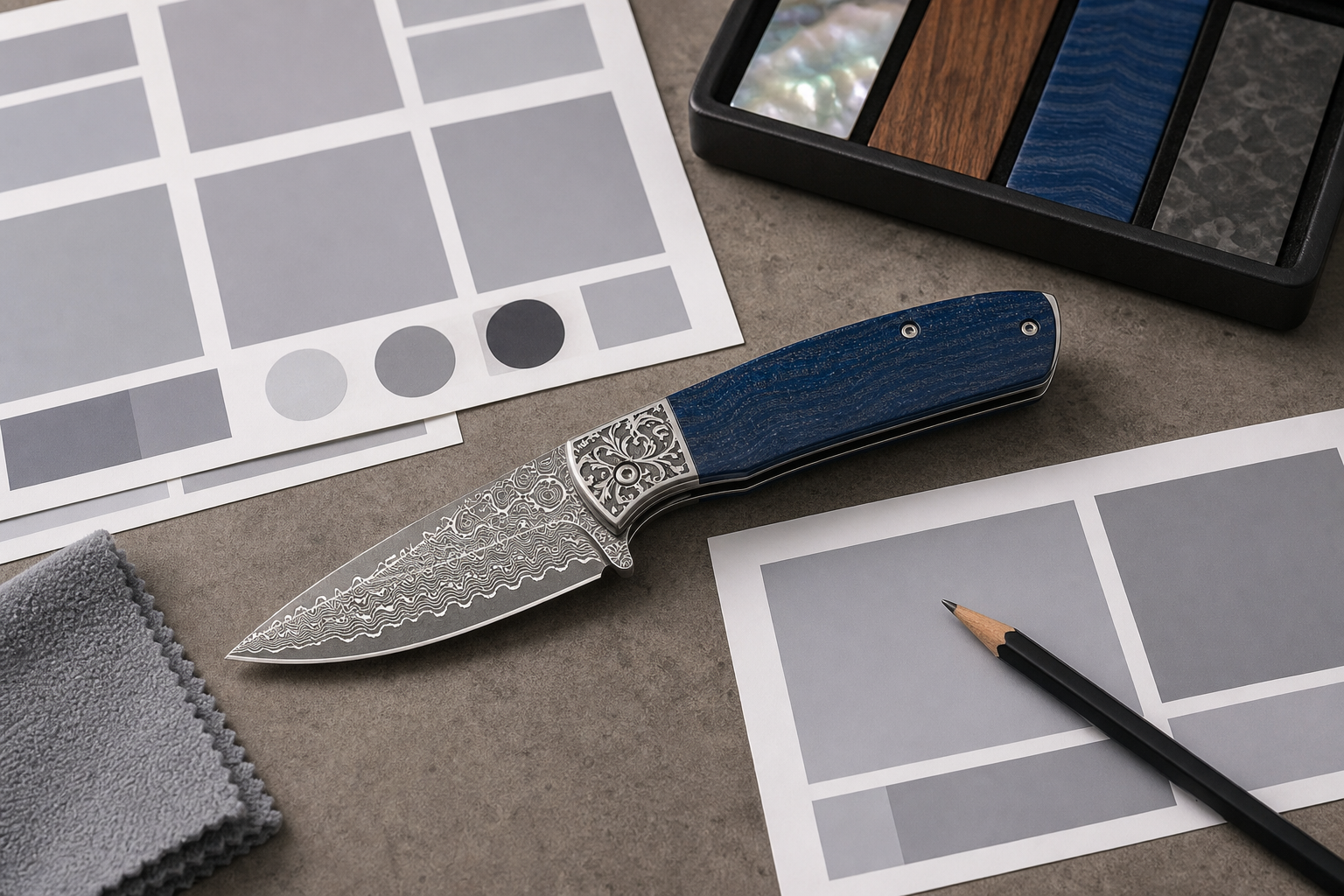
Damascus marketing often becomes myth-heavy. Buyers should avoid claims such as "strongest steel," "never rusts," "always sharper," "ancient secret," or "best knife steel" unless they have strong proof and careful context. The pattern can be premium without pretending to be magic.
The FTC advertising and marketing basics state that advertising claims should be truthful, not deceptive or unfair, and evidence-based. That is the right standard for Damascus copy.
Safer marketing language may describe:
- Visible layered pattern
- Each blade may vary
- Steel combination if known
- Heat treatment range if verified
- Care and cleaning needs
- Intended kitchen, EDC, outdoor, or craft use
- Packaging and gift presentation
The CPSC labeling overview also reminds businesses that labeling can depend on product type, design, components, and intended age group. A Damascus knife should still carry clear sharp-edge warnings and adult-use safety language where appropriate.
What Should the RFQ and Final QC Plan Include?
Popularity needs paperwork.
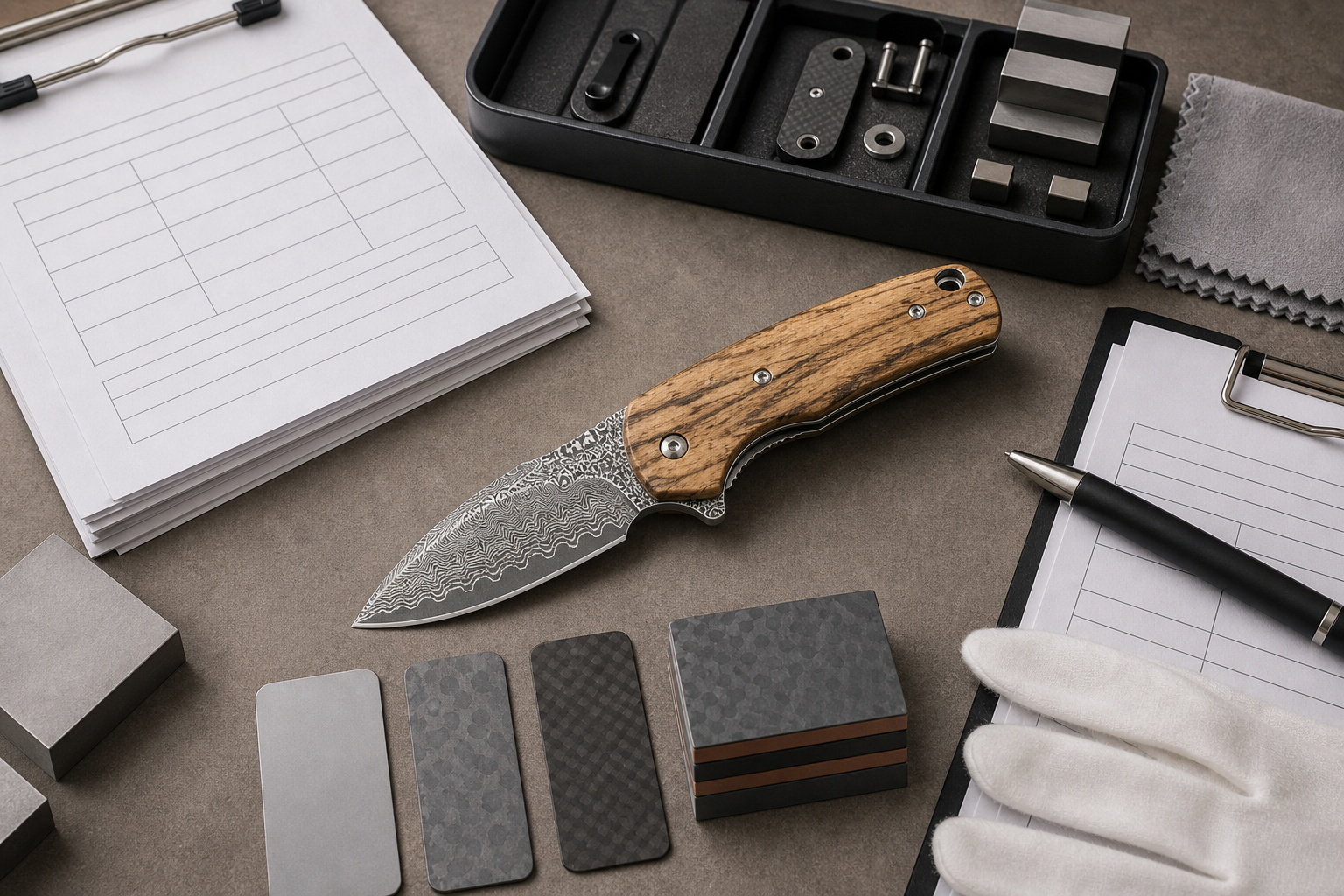
The RFQ should define Damascus material type, base steels, hardness range, pattern tolerance, food-contact status, care label, packaging protection, claim evidence, and final inspection steps.
I Turn the Popular Feature Into Inspection Points
If Damascus steel is the reason a buyer chooses a product, the QC plan must inspect the Damascus-specific details. A generic knife inspection is not enough. The inspector should check both the normal knife requirements and the patterned material requirements.
RFQ and QC items should include:
- Material type
- Base steels or supplier material declaration
- Target hardness range
- Heat treatment record
- Pattern range
- Etching contrast
- Surface finish
- Blade straightness
- Edge geometry
- Corrosion or care note
- Food-contact review for kitchen products
- Logo method
- Packaging protection
- Sharp-edge warning
- Claim evidence file
- Approved sample comparison
The CCOHS sharp blades guidance supports practical sharp-tool safety themes such as using the right tool and storing sharp tools safely. Those ideas belong in consumer care language. The NIST traceability policy page also reinforces that measurement claims need a traceability system and cannot be assumed from a name alone. Buyers should keep test and inspection records with the order.
Ready to use this material in your next knife line?
Vast State can help you compare blade steels, heat treatment ranges, handle materials, finishes, packaging options, and QC requirements based on your target market and quantity.
Conclusion
Damascus steel is popular because it looks and feels special. Buyers should protect that appeal with clear specs, honest claims, and real QC.