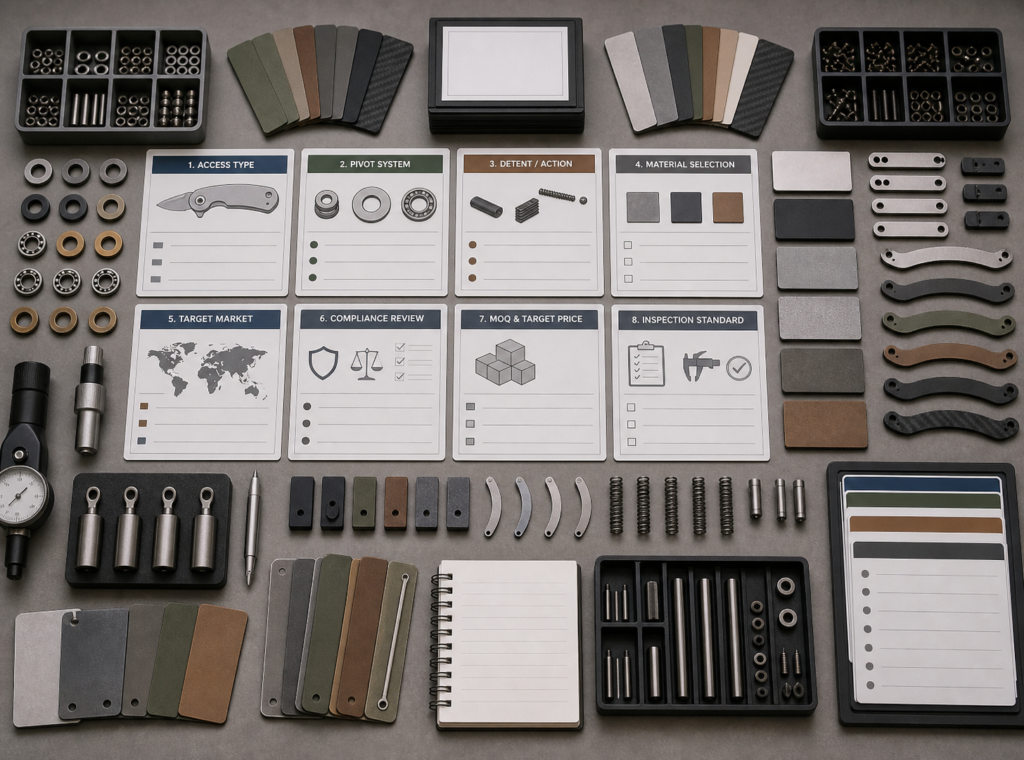
Automatic pocket knives can create strong market interest. They can also create legal, import, safety, and quality problems when buyers specify them loosely.
B2B buyers should evaluate automatic pocket knives through mechanism definition, destination-market law, import rules, blade size, lock reliability, spring system, quality control, packaging claims, and RFQ clarity. Automatic mechanisms should never be treated like ordinary manual folding knives.
Quick buyer brief:
- Answer: Review legality, mechanism design, QC, and sales wording before sampling automatic pocket knives.
- Buyer context: This helps knife brands, importers, wholesalers, distributors, and private label buyers avoid risky RFQs.
- Key checks: Button location, spring system, blade path, lock engagement, closed retention, blade length, destination market, import route, packaging claims, and inspection plan.
Planning a private-label knife line for this market?
Use this article as an early planning reference, then prepare your target market, product category, labeling needs, and buyer-specified compliance requirements before production.
When a buyer asks me about automatic pocket knives, I slow the project down. I do not start with a price. I first ask where the knife will be sold, how the blade opens, what part releases the mechanism, what law applies, and what the buyer wants to say on the package. Automatic knives are not only a mechanism choice. They are a sourcing risk category. The buyer needs a clear product plan before asking a factory to build samples.
What Does Automatic Pocket Knife Mean in a B2B RFQ?
Automatic knife wording can sound simple. But different markets may use automatic, switchblade, flick knife, and button knife differently.
In a B2B RFQ, an automatic pocket knife usually means a folding knife whose blade opens automatically after a release control is pressed. Buyers should define the release control, spring system, blade path, lock, and destination market.
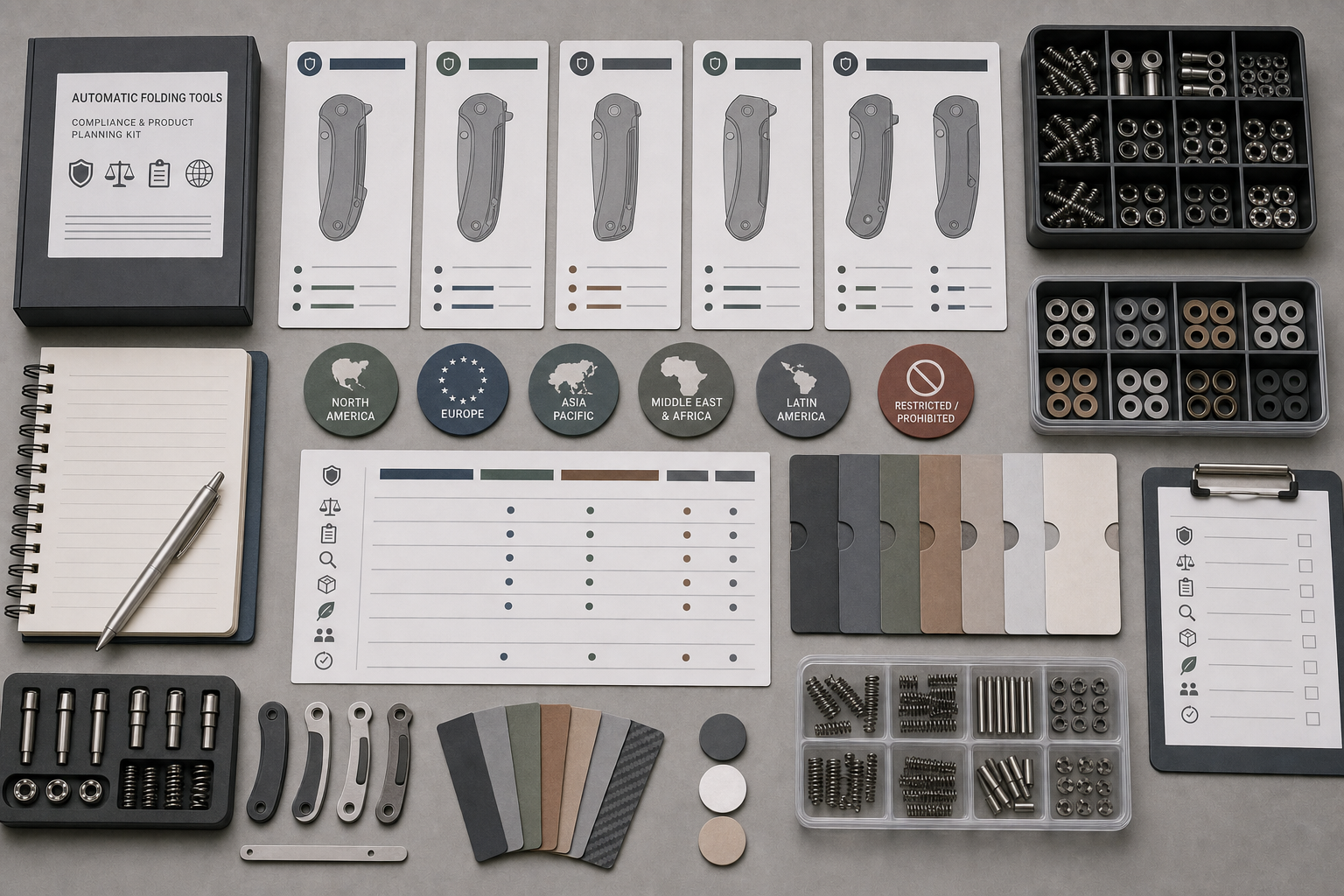
I Define the Mechanism Before I Discuss the Sample
For sourcing, "automatic pocket knife" is not enough. The supplier needs to know whether the buyer means a side-opening automatic knife, an out-the-front automatic knife, a button-release folder, or another mechanism direction. The buyer also needs to define whether the blade opens by a button or other control on the handle, by gravity, by inertia, or by another system. These details affect law, structure, testing, and price.
The AKTI approved knife definitions describe an automatic knife as a functional category where stored energy moves the blade after a release control is activated. That industry language is useful, but it is not enough for trade compliance. A buyer should also review legal definitions in each destination market.
In product development, I ask for drawings or reference samples. If the buyer has only a concept, I ask for the intended user, blade length, opening direction, lock type, handle material, target price, packaging claim, and selling market. If the buyer cannot answer these questions, I usually suggest pausing the automatic mechanism decision. A manual folder may be simpler for multi-market private label programs.
| RFQ term | What to define | Why it matters |
|---|---|---|
| Automatic | Release control and spring system | Affects law and engineering |
| Pocket knife | Size, blade length, handle layout | Affects market and packaging |
| Lock system | Lock type and release method | Affects function checks |
| Destination market | Country, state, channel, importer | Affects compliance review |
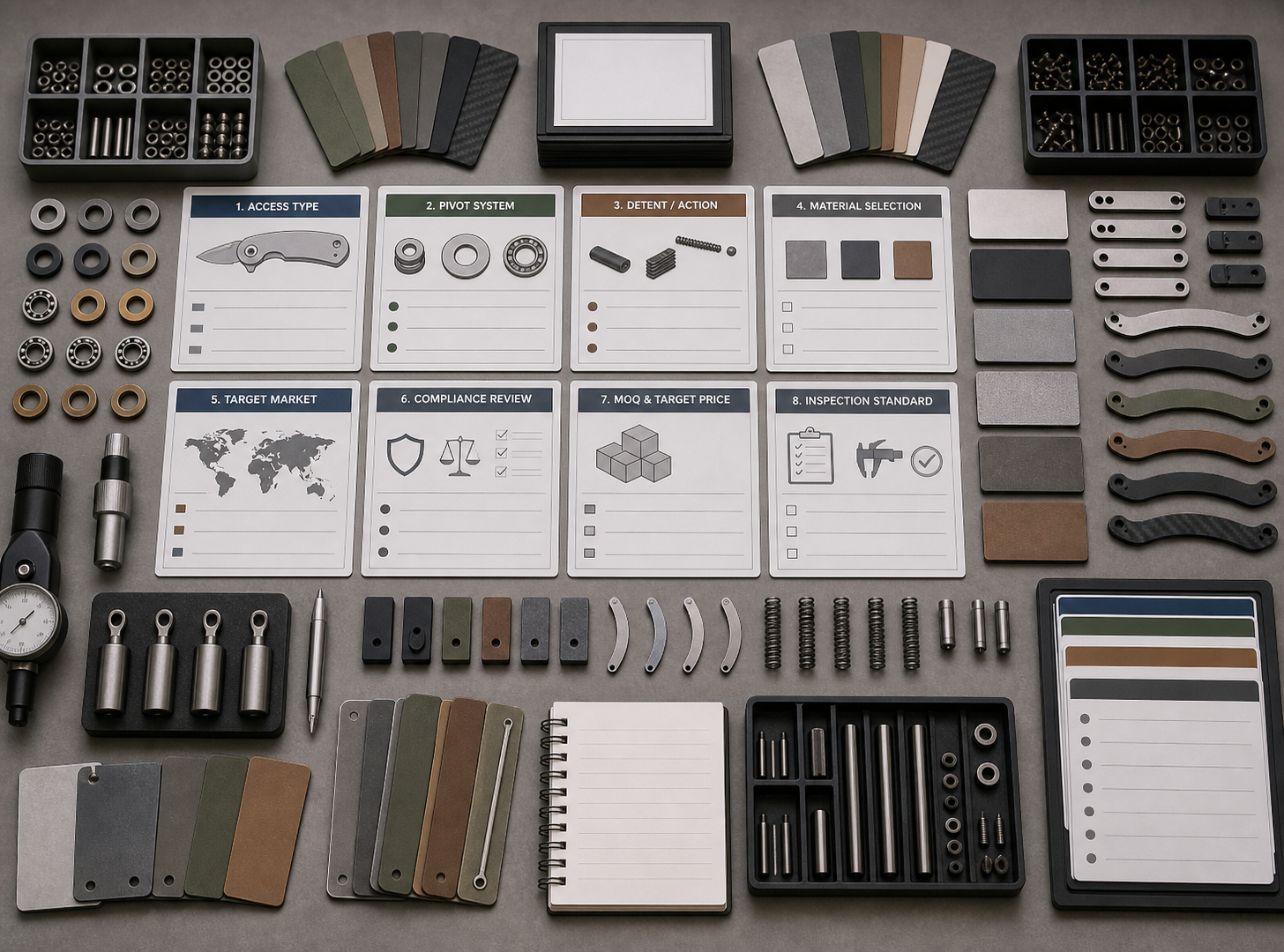
Private-label Planning Checklist
Before starting production, prepare the market and product details your importer or compliance advisor needs to review.
| RFQ Field | What to Prepare |
|---|---|
| Target market | Country, state, region, or sales channel |
| Product category | Folding knife / fixed blade / multi-tool / outdoor tool |
| Intended use | EDC / camping / kitchen / hunting / rescue / promotional |
| Buyer requirements | Testing, labeling, documentation, or packaging rules |
| Blade and lock details | Blade length, opening method, lock type, edge style |
| Packaging text | Warnings, claims, care notes, language requirements |
| Documents | Drawing, sample photo, logo file, packaging artwork |
| Review owner | Importer, legal advisor, testing lab, or internal compliance team |
Why Is Compliance Review More Important Than the Mechanism Name?
A buyer may call a product automatic. A customs officer, marketplace, or retailer may classify it differently.
Compliance review matters because automatic knife rules vary by country, state, import route, retailer, and blade mechanism. Buyers should not rely on catalog names, supplier promises, or old articles.
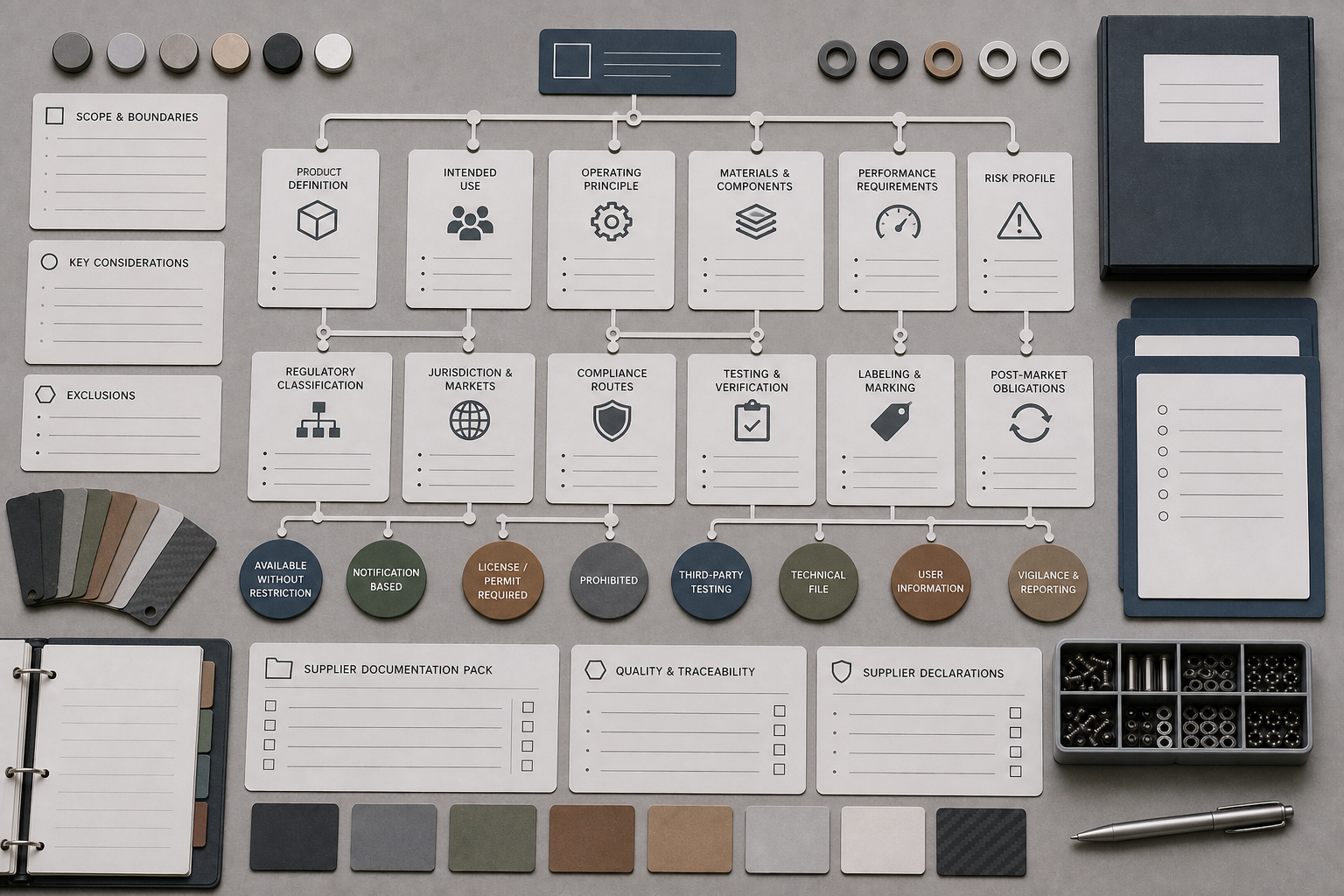
I Treat the Name as a Warning Signal
Automatic knife projects need compliance review before sampling, not after production. The U.S. federal 15 USC Chapter 29 defines switchblade knives and includes restrictions and exceptions. The same chapter includes language about a knife with a spring, detent, or other mechanism designed to create a bias toward closure, where exertion is applied to the blade by hand, wrist, or arm. That wording is important for assisted-opening and manual-opening discussions, but it does not make every spring-related product low risk.
Import rules also matter. The CFR text for switchblade knives includes definitions and import treatment. For example, 19 CFR 12.97 states that switchblade knife importations are contrary to law except as permitted by statutory exceptions. A buyer should involve a customs broker or legal adviser before importing automatic knives into a regulated market.
This article is not legal advice. It is a sourcing guide. My practical advice is simple: define the mechanism, identify the market, confirm the import path, and verify the sales channel before money is spent on tooling. A supplier can help explain the product, but the buyer owns market compliance.
| Compliance question | Why it matters | Buyer action |
|---|---|---|
| What is the legal category? | Names may differ by market | Review local law |
| Where is it imported? | Import rules may restrict entry | Ask broker or adviser |
| How is it sold? | Retailers may add rules | Check channel policy |
| What does packaging claim? | Wording can raise risk | Keep claims precise |
Which Mechanism Details Should Buyers Define Before Sampling?
Automatic mechanisms are sensitive to small design choices. A rough concept can become an unsafe or unsellable sample.
Buyers should define opening direction, release control, spring type, blade path, lock type, closed retention, blade length, handle material, safety feature if needed, and test method before sampling.
I Break the Mechanism Into Checkable Parts
Automatic knife design is a system. The release control must be accessible but controlled. The spring must match blade size and weight. The blade path must be clear. The lock must engage reliably. The closed position must be stable. Screws, pivot, handle frame, and button parts must stay aligned after repeated checks. If one part is weak, the whole product feels poor.
I ask buyers to describe the mechanism in manufacturing language. Is the blade side-opening or out-the-front? Is the release control on the handle? Is the blade single-action or double-action? What is the blade length? What lock holds the blade open? What returns or closes the blade? What materials are used for the handle and internal parts? What surface treatment is required? What test will decide whether the sample is acceptable?
I also ask the buyer what can be changed. Sometimes the buyer wants the look of an automatic knife but does not need the automatic mechanism. In that case, a manual button lock or manual opener may reduce compliance risk. Sometimes the buyer truly needs an automatic mechanism for a specific market. Then the specification must be much more detailed.
| Mechanism detail | What to define | Production concern |
|---|---|---|
| Opening direction | Side-opening or out-the-front | Blade path and handle layout |
| Release control | Button or other handle control | User access and compliance category |
| Spring system | Type, force direction, durability target | Action consistency |
| Lock and retention | Open lock and closed control | Function and inspection |
How Do Destination Markets Affect Automatic Knife Product Decisions?
One automatic knife design may be sellable in one place and blocked in another. Market choice must come first.
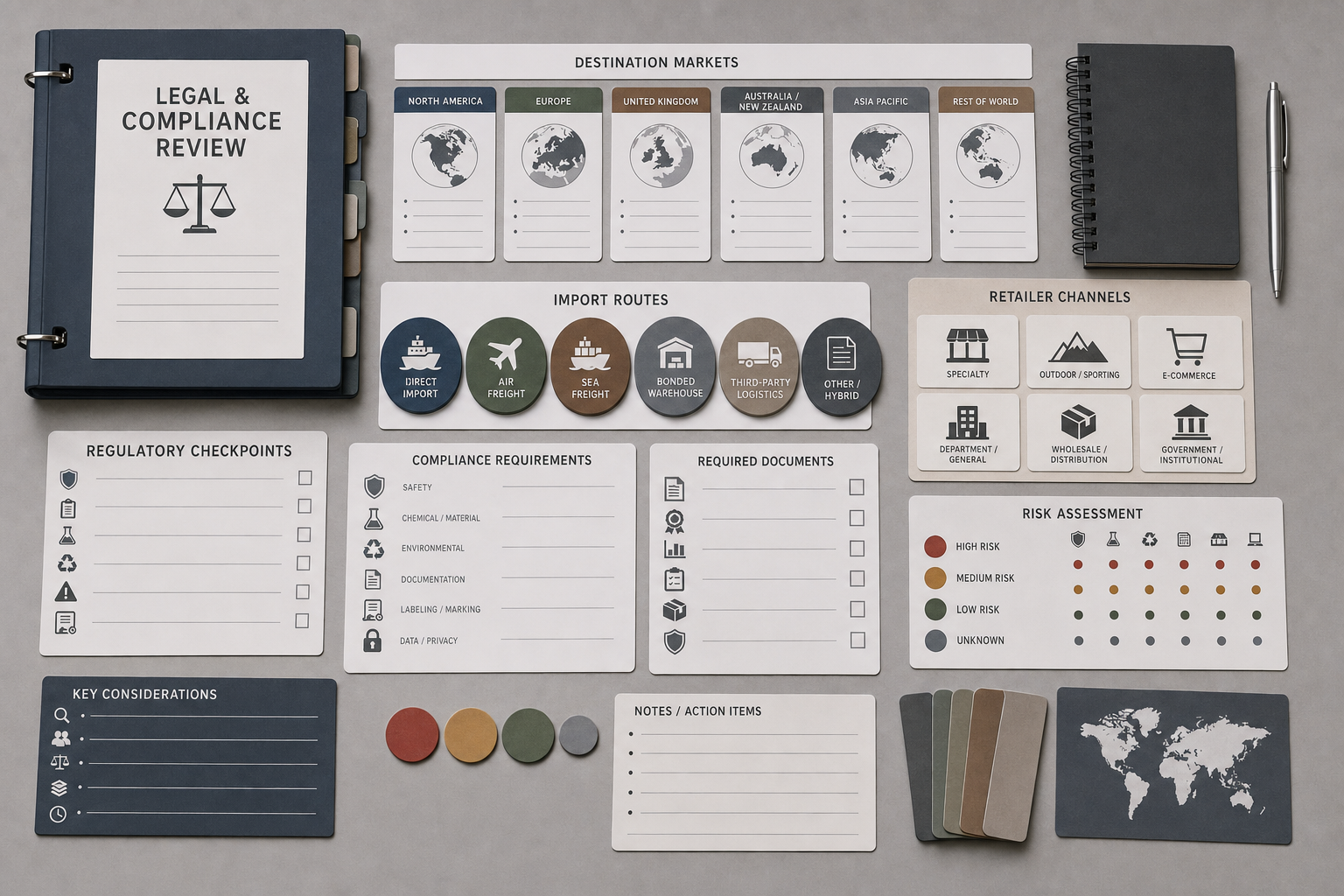
Destination markets affect automatic knife decisions through import rules, possession rules, retail channel policies, age restrictions, packaging wording, origin marking, and product category definitions.
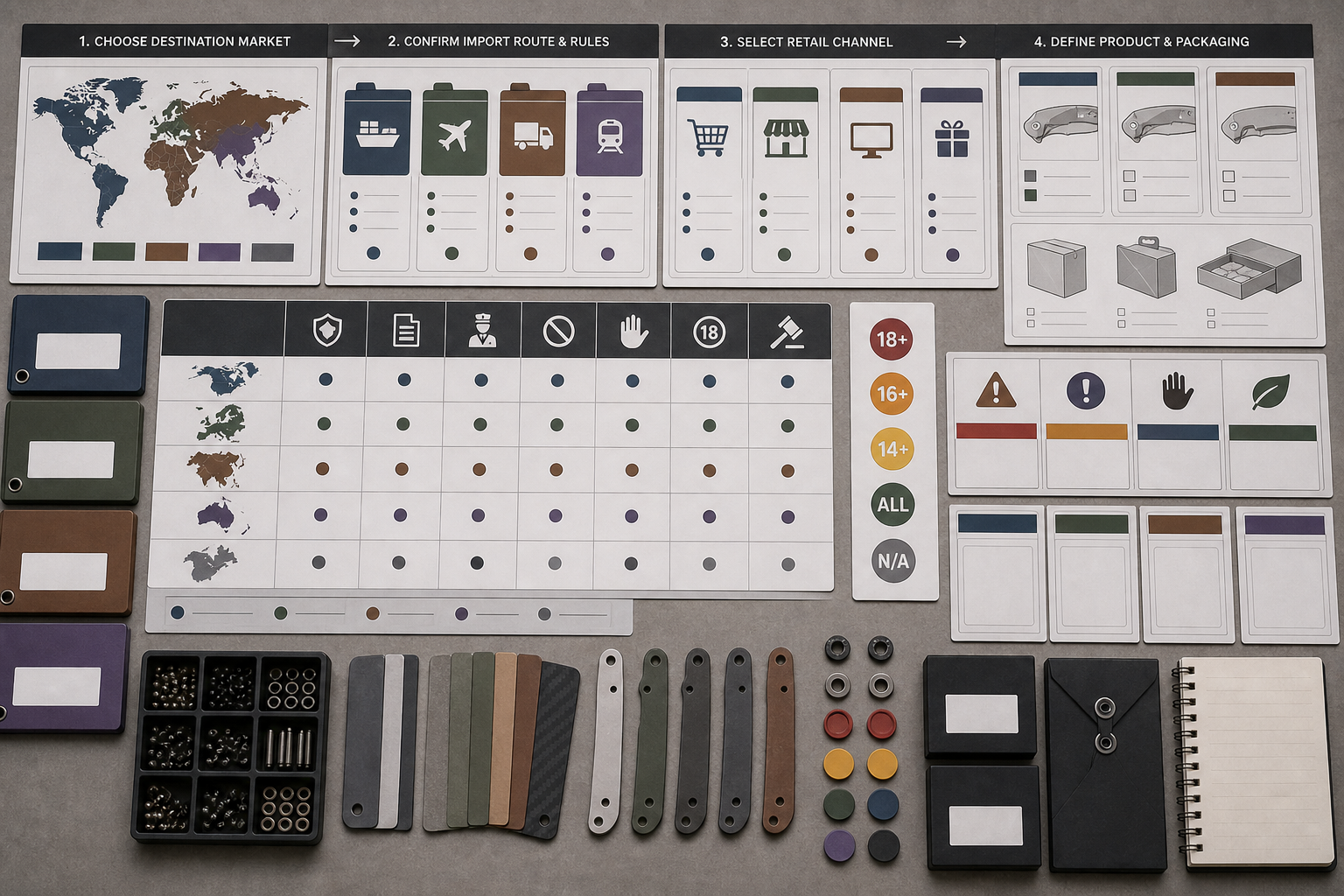
I Ask the Buyer to Choose the Market Before the Mechanism
The destination market can decide the product. In the UK, the official GOV.UK knife guidance lists flick knives, gravity knives, switchblades, and automatic knives among banned knife categories and describes knives where the blade opens automatically or is released from the handle by gravity, a button, or something else on the knife. The UK statutory guidance also explains that the Offensive Weapons Act 2019 updated the flick knife definition to include modern designs.
This does not mean every market follows UK rules. It means a buyer cannot build one automatic knife and assume global sale. The buyer needs a country-by-country or channel-by-channel review. The same issue appears inside the United States, where federal law, state rules, and import rules may all matter. A buyer should also check marketplace and retailer policies because they can be stricter than law.
For B2B projects, I ask the buyer to list target countries first. Then we discuss whether an automatic knife is practical, whether a manual alternative is safer commercially, and what wording should appear in the RFQ. If the buyer sells through distributors, I also ask whether each distributor has its own policy.
| Market factor | What to check | Why it changes the product |
|---|---|---|
| Country rules | Legal category and import rules | May block the mechanism |
| State or local rules | Regional restrictions | May limit distribution |
| Retail channel | Marketplace and store policy | May affect listing approval |
| Packaging wording | Claims and warnings | May affect compliance review |
What Manufacturing Risks Come With Automatic Pocket Knives?
Automatic mechanisms add moving parts. More moving parts usually mean more tolerance, assembly, and QC risk.
Automatic pocket knives can create risks around spring fatigue, button fit, blade path friction, lock engagement, closed retention, screw loosening, handle alignment, surface wear, and batch consistency.
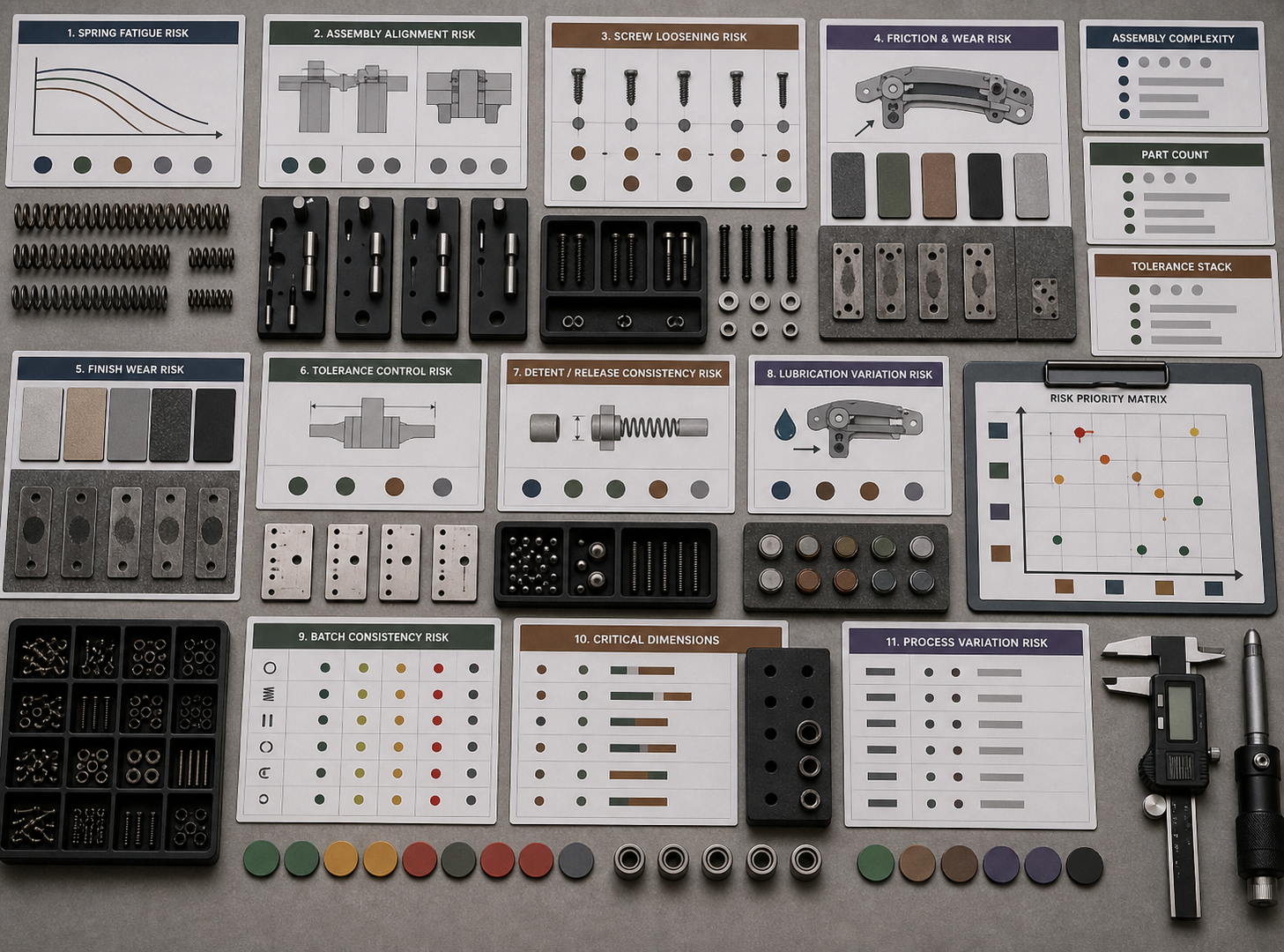
I Look for Repeatable Action, Not One Good Sample
An automatic knife can feel impressive as a single sample. That is not enough. The real question is whether the same action can repeat across a batch. The spring force should stay within the approved feel. The button should not rattle or stick. The blade should travel cleanly. The lock should engage fully. The closed position should be controlled. The handle should not flex in a way that changes the mechanism.
Automatic mechanisms also create more assembly checks. The internal parts must align. Screws must hold. Surface finish must not add friction where movement is needed. If the handle is too soft or too thin, the mechanism may feel unstable. If the blade is too heavy for the spring, action can feel weak. If the spring is too strong, other parts may wear faster or user control may feel poor.
I also review material choices. Blade steel, heat treatment, handle material, and internal part hardness all affect the product. A technical material source such as Alleima 14C28N knife steel is useful because it shows how knife steel selection connects hardness, edge performance, corrosion resistance, and pocket knife use. Automatic projects need the same material thinking, plus tighter mechanism control.
| Risk area | Possible issue | Control method |
|---|---|---|
| Spring | Weak or inconsistent action | Define spring and cycle checks |
| Button | Sticky or loose release | Control fit and surface finish |
| Blade path | Friction or rubbing | Check alignment and clearance |
| Lock | Incomplete engagement | Inspect lock contact and travel |
What Quality Checks Should Buyers Require for Automatic Mechanisms?
Final inspection cannot only look at scratches. Automatic mechanisms need functional checks that match the approved sample.
Buyers should require closed retention, release-control check, opening completion, lock engagement, blade play, blade centering, spring consistency, screw torque, surface finish, edge quality, packaging check, and batch comparison.
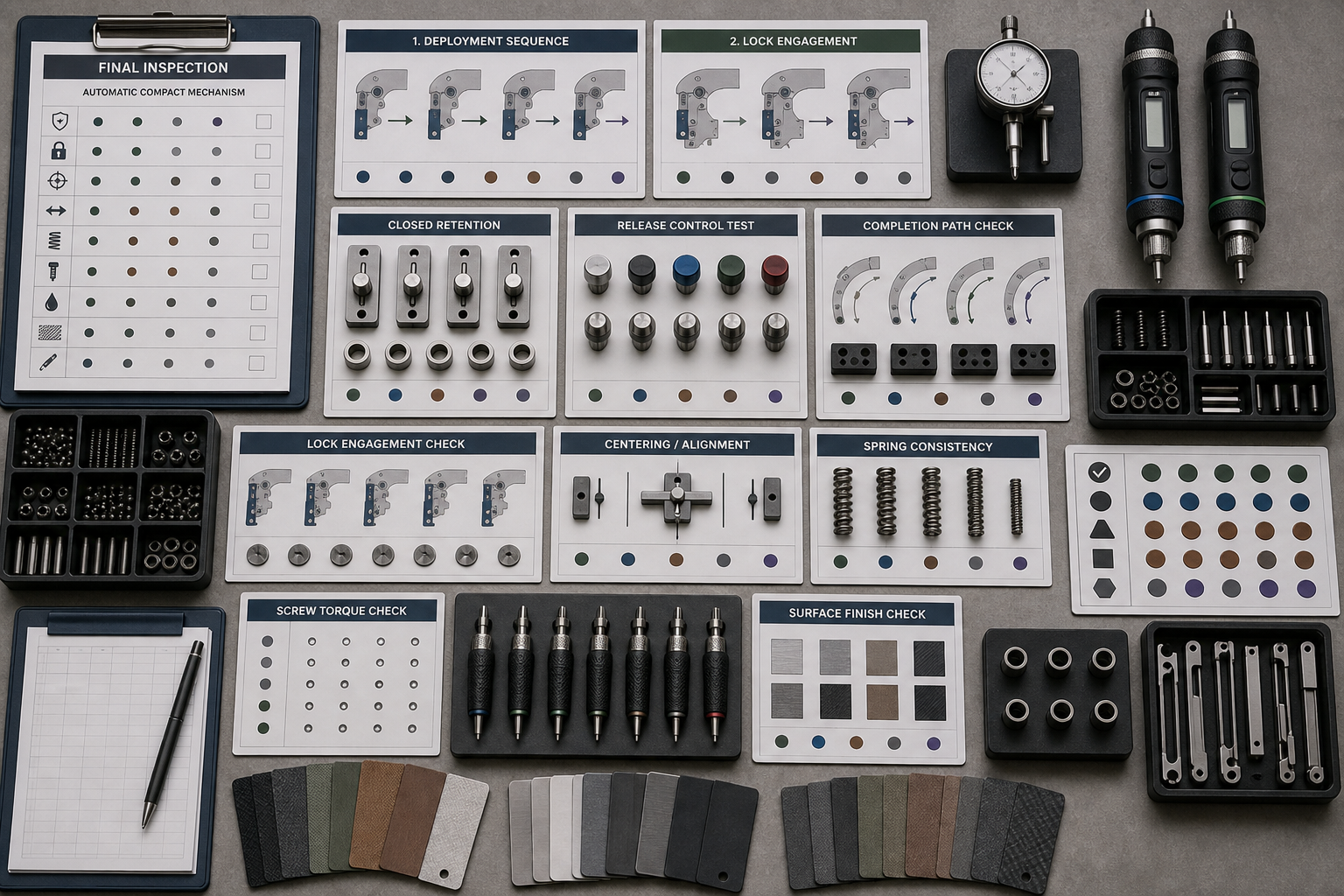
I Turn the Approved Sample Into a QC Standard
For automatic pocket knives, the approved sample should become the benchmark. I check whether each production piece holds the blade closed under normal handling. I check whether the release control works as approved. I check whether the blade opens fully and locks correctly. I check blade play, centering, handle alignment, spring feel, screw torque, edge quality, finish consistency, logo position, and packaging.
Hardness and material checks may also be needed, depending on the blade steel and internal parts. The NIST Rockwell hardness guide is useful because it explains why good hardness measurement practice helps reduce measurement error. For supplier management, ISO 9001 in the supply chain supports the idea that buyers should make purchasing information, approvals, monitoring, and inspection needs clear.
I do not recommend approving automatic knife production only by appearance. The inspection plan should include functional checks. If the buyer sells through distributors, the buyer may also need documented QC evidence. Clear records help reduce disputes if a shipment does not match the approved sample.
| QC check | What to inspect | Why it matters |
|---|---|---|
| Closed retention | Blade stays closed as intended | Supports handling safety |
| Release control | Button or control works consistently | Confirms mechanism fit |
| Lock engagement | Blade locks at approved position | Protects function |
| Batch comparison | Production matches approved sample | Supports repeat orders |
How Should Packaging, Marking, and Sales Claims Be Reviewed?
Packaging can create problems even when the product is well made. Bad wording can increase import or retail risk.
Buyers should review automatic knife packaging for mechanism claims, age statements, warnings, country-of-origin marking, barcode needs, retailer rules, carton labels, and destination-market language before printing.
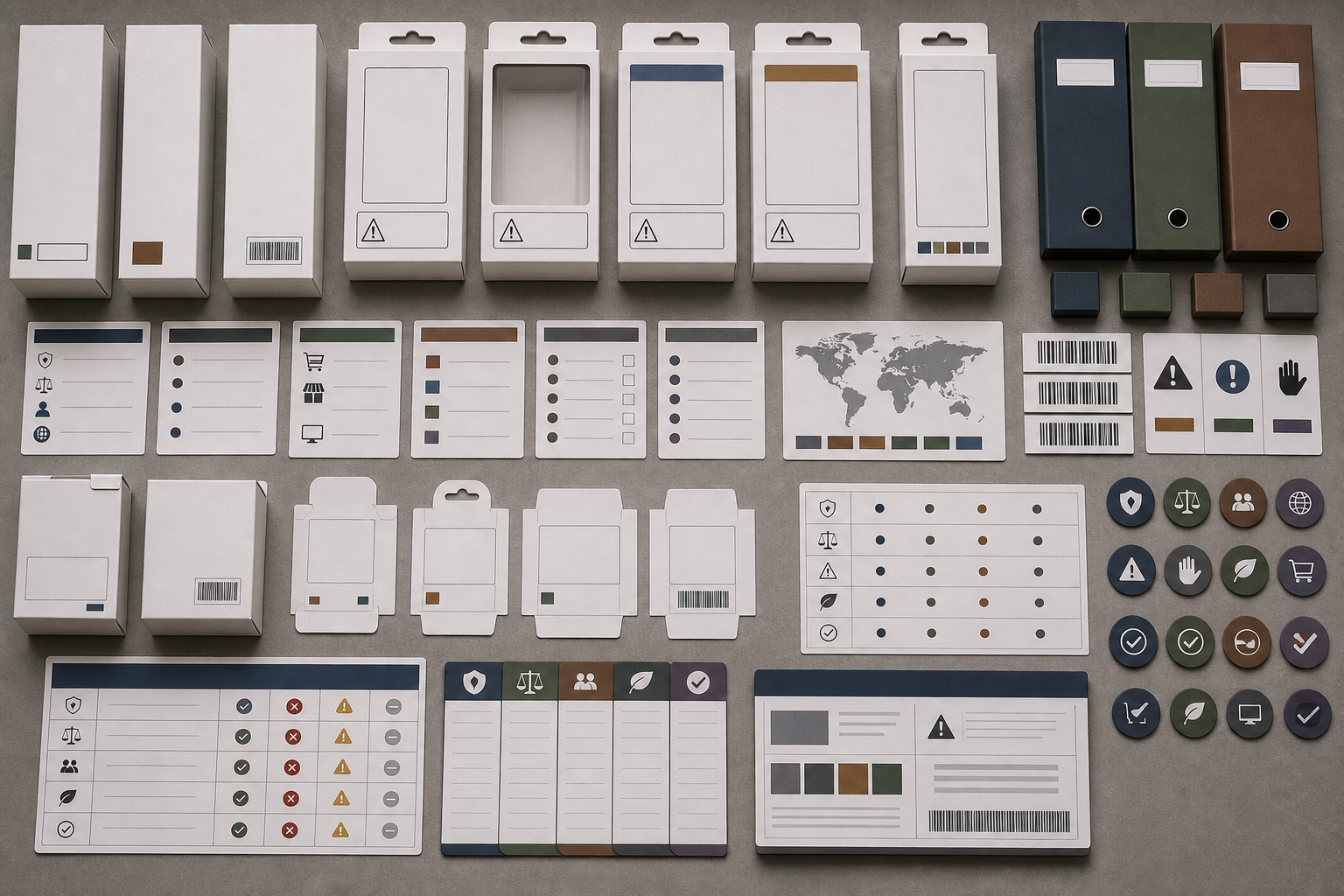
I Review the Box Before Mass Printing
Automatic knife projects need careful packaging review. The box should not make a claim that the product or market cannot support. If the product is automatic, assisted, manual, or button-release, the wording should be accurate. If the buyer is unsure, the wording should wait until legal and channel review is complete. A packaging error can be costly because printed boxes, inserts, labels, and cartons may all need replacement.
Country-of-origin marking also matters for imported goods. For U.S. planning, buyers can review 19 CFR Part 134, which covers origin marking rules. The buyer should also confirm carton labels, SKU labels, barcode placement, warning language, retailer requirements, and importer instructions.
I also ask buyers to review sales copy. Avoid vague claims that can be misunderstood. Do not copy language from another market without checking it. If distributors will translate the packaging, review the translation before printing. In a private label program, packaging is not only decoration. It is a business document that follows the product through import, warehouse, retail, and after-sales support.
| Packaging item | What to review | Why it matters |
|---|---|---|
| Mechanism wording | Automatic, assisted, manual, or other wording | Reduces category confusion |
| Origin marking | Country and placement | Supports import planning |
| Retail labels | Barcode, SKU, warning, carton marks | Supports channel handling |
| Translation | Local market wording | Reduces claim mistakes |
What Should Buyers Include in an Automatic Pocket Knife RFQ?
A vague RFQ invites risky assumptions. Automatic knives need more detail than ordinary catalog items.
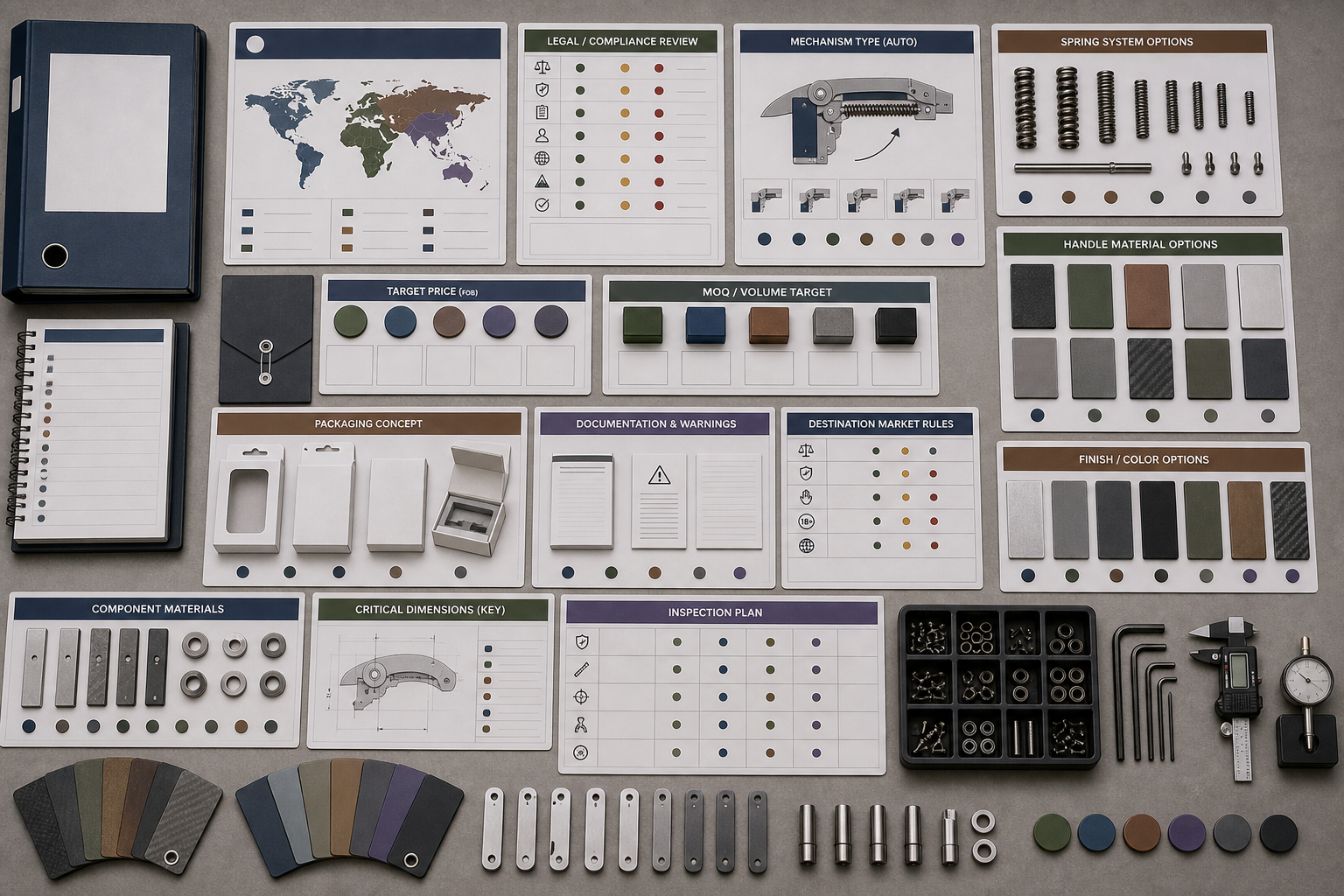
A strong automatic pocket knife RFQ should include destination market, legal review status, mechanism type, blade length, lock system, spring system, handle material, target price, MOQ, packaging, import term, and inspection requirements.
I Ask for Compliance First, Then Engineering
When a buyer sends an automatic pocket knife RFQ, I want the destination market first. If the market is unclear, the mechanism decision is not ready. After that, I want the knife type, blade length, blade steel, handle material, opening direction, release control, lock type, spring direction, finish, logo method, packaging, target price, MOQ, trade term, and inspection needs.
I also ask whether the buyer already has legal or importer review. If not, I recommend doing that before tooling. The supplier can help describe the product and make samples, but the buyer needs market approval. This is especially important for automatic knives because law, marketplace policy, and import practice can differ.
If the buyer wants a safer sourcing path, I may suggest comparing an automatic version with a manual alternative. Sometimes the manual version can enter more channels, reduce QC complexity, and protect price. Sometimes the automatic version is the right project, but then the buyer should prepare a tighter RFQ and a stronger inspection plan. The key is to make the decision deliberately.
| RFQ field | What to include | Why it helps |
|---|---|---|
| Destination market | Country, state, channel, importer | Sets compliance path |
| Mechanism | Side-opening, out-the-front, button, spring | Sets engineering direction |
| Product details | Steel, handle, blade length, lock, finish | Supports accurate quote |
| QC requirements | Functional checks and sample standard | Protects production consistency |
Planning a private-label knife line for this market?
Use this article as a planning reference, then confirm local requirements with your importer or compliance advisor before OEM/ODM production.
Conclusion
I evaluate automatic pocket knives by starting with compliance, then checking mechanism design, manufacturing risk, QC, packaging, and RFQ clarity.
Source Notes
- 15 USC Chapter 29 supports the U.S. federal switchblade definition, restrictions, and exceptions context.
- 19 CFR 12.97 supports the import-risk discussion for switchblade knives in the United States.
- GOV.UK knife guidance supports the UK category discussion for flick knives, gravity knives, switchblades, and automatic knives.
- UK Offensive Weapons Act statutory guidance supports the explanation that the flick knife definition was updated for modern designs.
- AKTI approved knife definitions supports industry terminology around automatic knives and bias toward closure.
- NIST Rockwell hardness guidance and ISO 9001 in the supply chain support the quality and inspection-planning discussion.