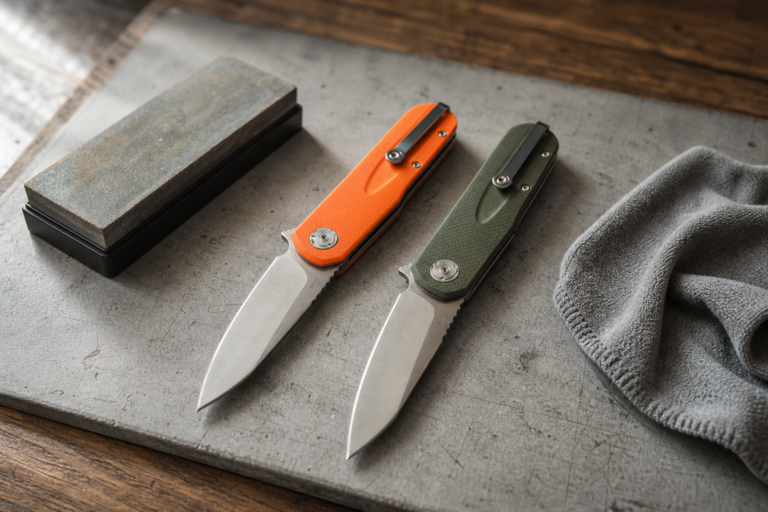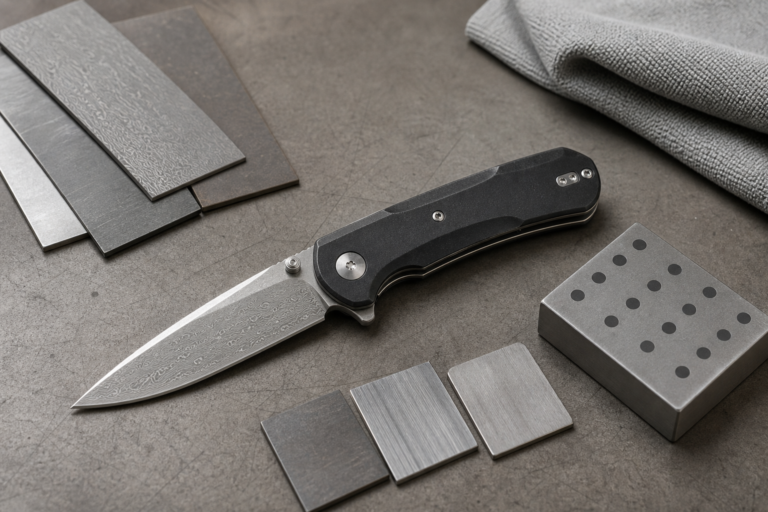
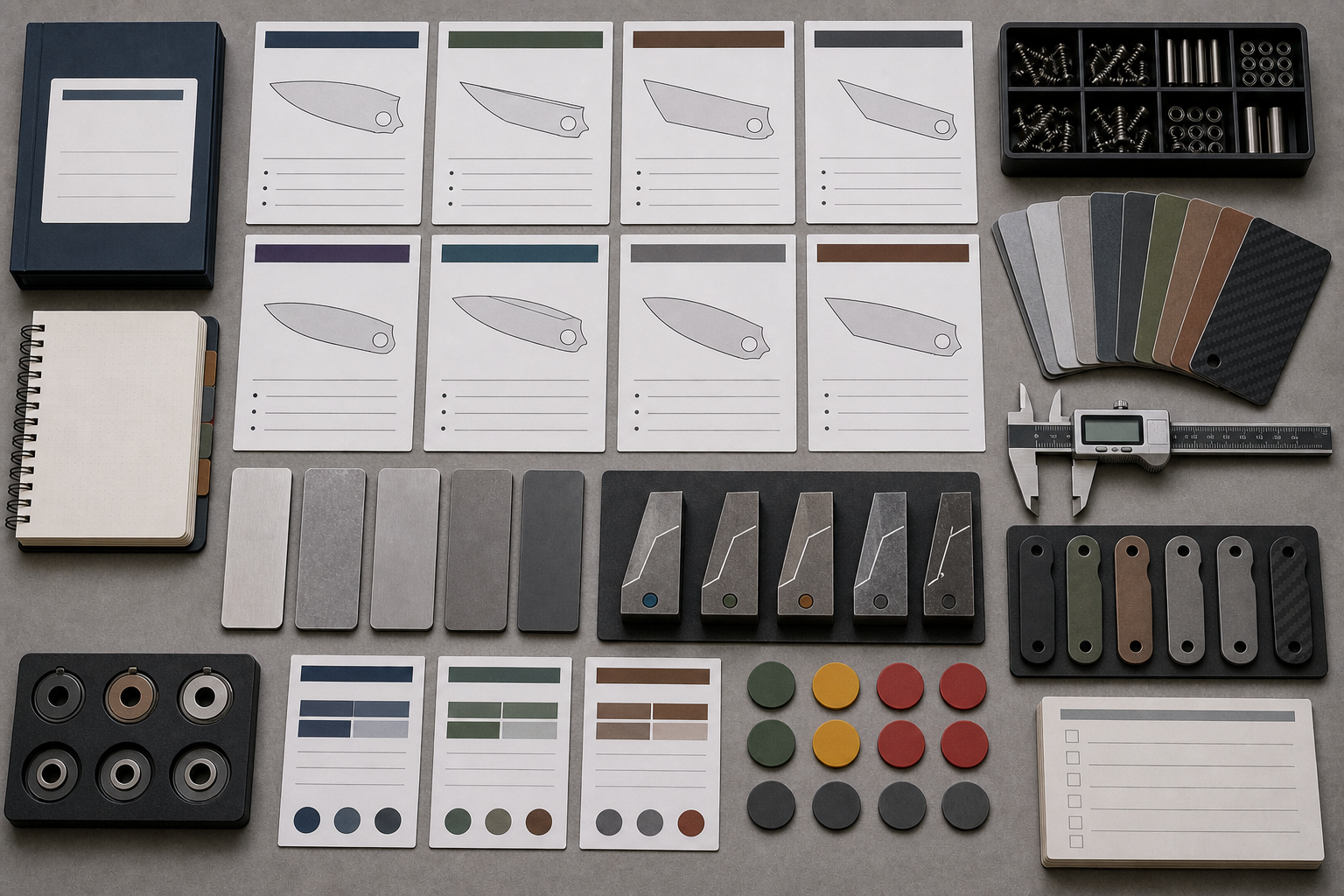
A blade shape can look attractive but fail in use. Wrong geometry hurts cutting, cost, safety perception, and repeat orders. I start with function.
B2B buyers should choose pocket knife blade shapes by matching the target task, user group, blade length, tip strength, belly, edge length, steel, heat treatment, grind, handle layout, compliance, and production tolerance. The right profile supports both product performance and commercial positioning.
Quick buyer brief:
- Answer: Choose blade shape by use case, manufacturability, compliance, and QC needs.
- Buyer context: This helps knife brands, outdoor brands, importers, wholesalers, distributors, and private label buyers brief OEM suppliers clearly.
- Key checks: Target task, blade length, point shape, belly, spine line, grind, steel, hardness, handle clearance, packaging claim, and inspection standard.
Developing a folding knife line for your brand?
Vast State supports OEM/ODM folding knife projects, including blade steel, lock structure, handle material, finish, logo method, packaging, and quality inspection planning.
When I discuss blade shapes with a buyer, I do not begin by asking which profile looks better. I ask what the customer will cut, where the knife will be sold, what price point the product needs, what steel is planned, how the blade will close into the handle, and what quality level the brand wants to defend. A pocket knife blade shape is not only a silhouette. It is a production decision that affects grinding time, tip strength, sharpening, user trust, packaging claims, and the chance of repeat orders.
Why Should Blade Shape Start With the Target User?
A catalog blade shape can look right on screen. But if it misses the real user task, the knife becomes hard to sell.
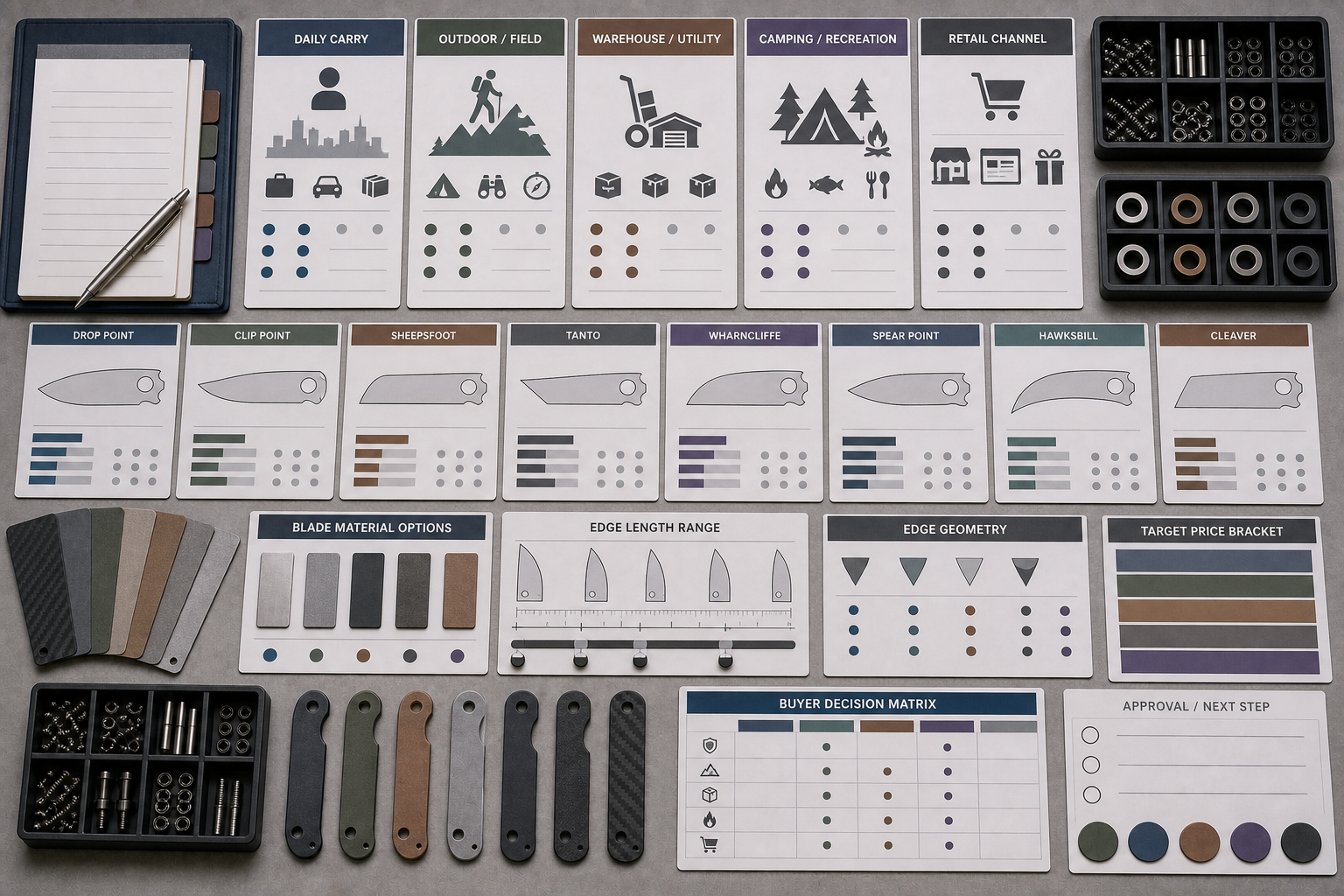
Blade shape should start with the target user because daily carry, outdoor, rescue, warehouse, camping, and private label retail products need different edge length, tip control, belly, thickness, and handle balance.
I Match the Shape to the Buying Reason
For OEM and ODM work, the first blade shape question is not "which one is best?" The better question is "what should this product do well for its market?" A compact EDC knife often needs a balanced shape that handles common cutting tasks and fits inside a slim handle. A camping knife may need more belly for slicing and food preparation. A warehouse or utility knife may need a straight, easy-to-control edge. A rescue-style product may need a tip shape that reduces accidental damage to nearby material. A retail gift set may need a profile that looks familiar and easy to understand.
I also think about the buyer's sales channel. A specialist outdoor brand may explain a unique profile well. A wholesaler may prefer a familiar blade shape that sales teams can understand quickly. A private label buyer with a target price must also consider grinding time, scrap risk, and finish consistency. The profile should support the market story, but it should not create unnecessary production problems. When a buyer gives me the intended user, target price, blade length, steel direction, handle material, lock type, and packaging style, I can suggest a blade shape with much less guessing.
| Buyer question | What I check | Practical direction |
|---|---|---|
| Who will use it? | EDC, outdoor, camping, utility, rescue, retail gift | Choose a profile that fits the real task |
| What will it cut? | Cardboard, rope, packaging, food, light outdoor material | Match belly and edge length to cutting work |
| Where will it sell? | Retail, online, distributor, brand catalog | Avoid confusing claims and unclear positioning |
| What is the target price? | Grinding time, steel use, QC burden | Keep the shape realistic for mass production |
OEM/ODM RFQ Checklist
Prepare these details to help Vast State review your project and provide a more accurate quotation.
| RFQ Field | What to Prepare |
|---|---|
| Project type | OEM from drawing / ODM private label / wholesale catalog |
| Product category | Folding knife / fixed blade / multi-tool / outdoor tool |
| Design status | Idea / sketch / 2D drawing / 3D CAD / physical sample |
| Target price | Ex-factory target price or retail price range |
| MOQ expectation | 500 / 1,000 / 3,000 / 5,000+ pcs |
| Logo method | Laser engraving / etching / printing / molded logo |
| Packaging | Standard packaging / custom retail box / Amazon-ready |
| Market | USA / EU / Japan / Korea / Middle East / other |
| Compliance needs | Buyer-specified testing / documentation / labeling |
| Timeline | Sample deadline / mass production deadline |
Which Common Pocket Knife Blade Shapes Should Buyers Compare First?
Too many blade names can confuse a new buyer. The project becomes easier when the first shortlist is practical.
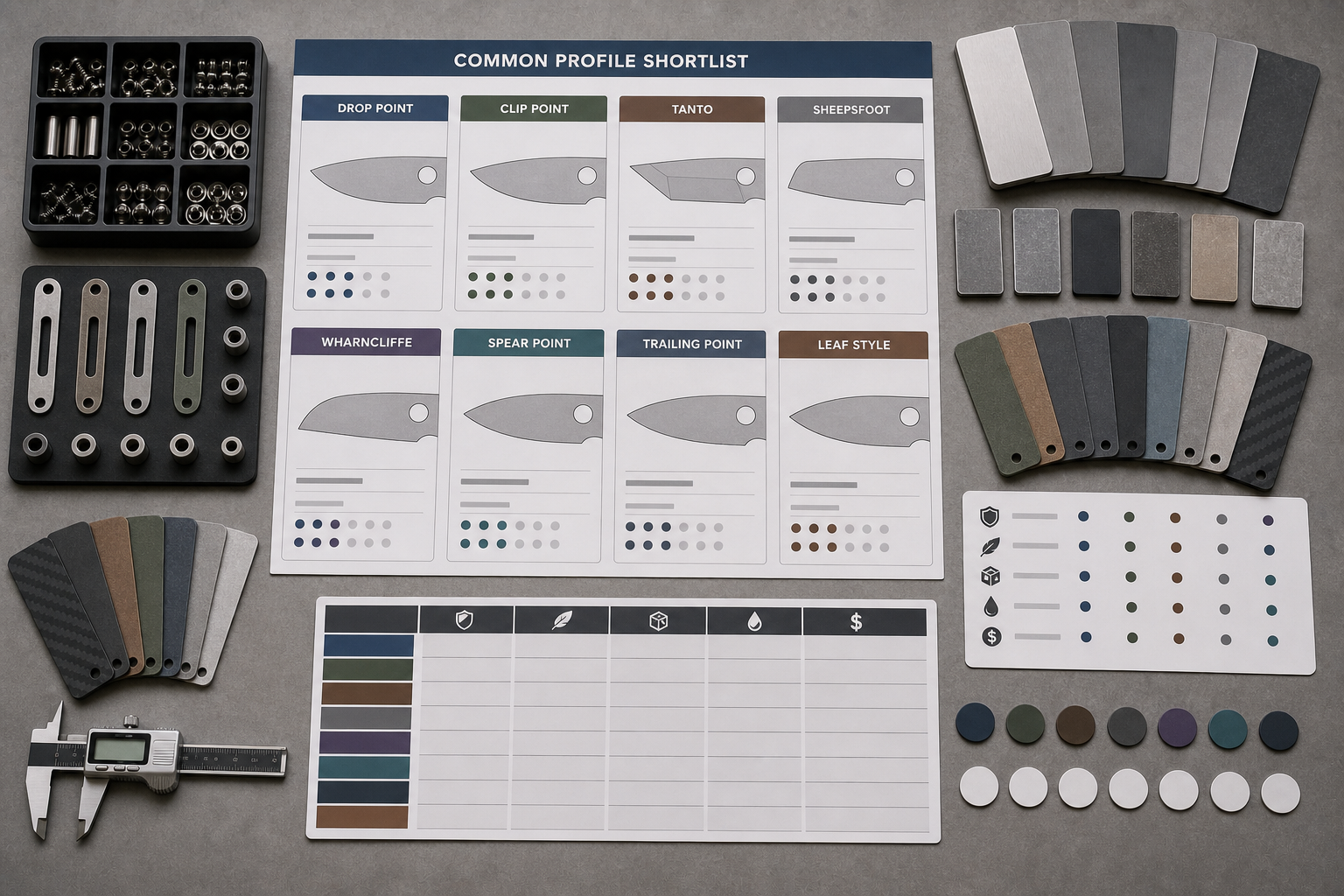
Buyers should compare drop point, clip point, tanto, sheepsfoot, wharncliffe, spear point, trailing point, and leaf-style profiles first. These cover most EDC, outdoor, utility, and private label pocket knife needs.
I Reduce the List Before Sampling
The original search idea says "15+ blade shapes," but most B2B projects do not need to sample fifteen shapes. A buyer usually needs a practical shortlist. Drop point is often the safest starting point because it gives useful belly, a controlled point, and broad market familiarity. Clip point can look more traditional and sharper at the front, but the fine point can increase damage risk if the buyer expects heavy outdoor use. Tanto can support a stronger angular tip, but it may feel less natural for continuous slicing. Sheepsfoot and wharncliffe profiles can offer controlled cutting with a lower point, which can fit utility or rescue-style product concepts. Spear point and leaf-style profiles can look balanced, but the handle layout and blade centering must be checked carefully.
I avoid treating blade names as fixed promises. Different factories and brands may label similar profiles differently. This is why drawings matter. I prefer a side-view blade drawing with tip height, edge curve, spine line, blade length, thickness, hole positions, stop pin contact, lock contact, and closed-handle clearance. The name helps communication. The drawing controls production.
| Blade shape | Strong fit | Sourcing caution |
|---|---|---|
| Drop point | General EDC and outdoor lines | Must control belly and tip thickness |
| Clip point | Traditional styling and detail cutting | Fine tip may need stronger steel or geometry |
| Tanto | Strong visual identity and angular front | Secondary edge increases grind control needs |
| Sheepsfoot | Utility and controlled slicing | Handle must protect the low point when closed |
| Wharncliffe | Straight cuts and packaging tasks | Straight edge must be ground evenly |
| Spear point | Balanced appearance | Tip location must match handle and lock design |
| Trailing point | Slicing and outdoor food tasks | Raised tip may affect pocket carry shape |
| Leaf-style | Broad EDC appeal | Wide blade may need handle and clip review |
How Do Tip, Belly, Spine, and Edge Change Cutting Performance?
Small geometry changes can change the whole user experience. A few millimeters can affect control, comfort, and perceived quality.
Tip, belly, spine, and edge shape control how a pocket knife starts a cut, follows material, slices curves, handles force, and sharpens. Buyers should specify these parts clearly.
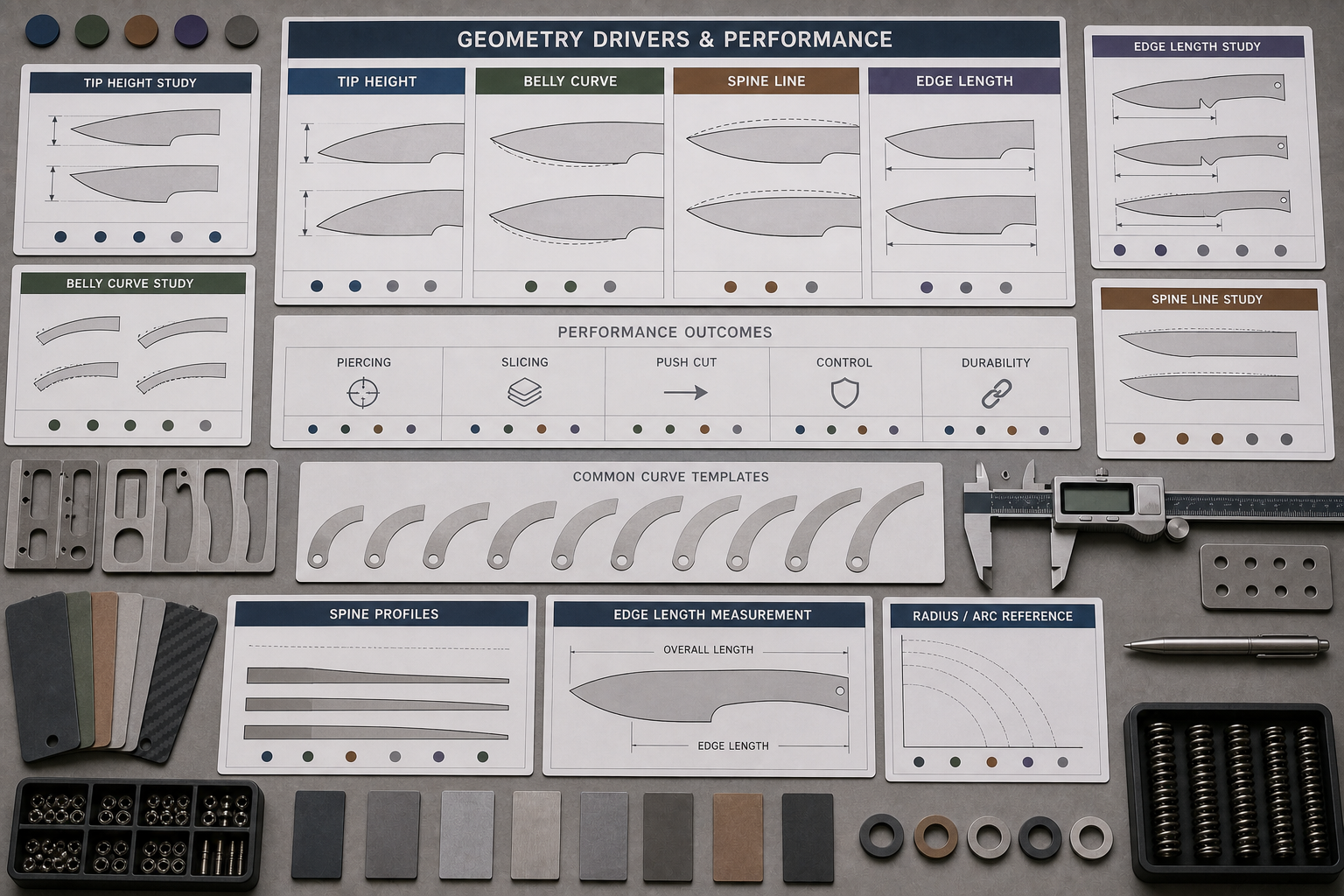
I Look at the Blade as a Working Geometry
Blade shape is easier to control when the buyer understands the basic parts. The Institute of Child Nutrition knife safety resource explains simple knife parts such as blade, spine, tip, edge, heel, and handle. That language is basic, but it is useful for B2B communication. If a buyer says "make the tip stronger," the supplier still needs to know whether that means a lower point, thicker stock near the front, less aggressive swedge, different grind, or different steel.
The belly is the curved part of the edge. More belly helps slicing on curved motion, but it can make straight utility cuts less controlled. A straighter edge can be easier for packaging and draw cuts, but it may feel less versatile for outdoor tasks. The spine line affects point position and closed-handle clearance. The point position affects user control and perceived safety. The heel affects how much usable edge remains near the handle. These details also affect sharpening. A dramatic curve or recurve may look attractive, but it can be harder for ordinary users to maintain and harder for production teams to grind consistently.
| Geometry area | What it changes | Buyer decision |
|---|---|---|
| Tip | Control, strength, front-end accuracy | Choose fine, centered, dropped, or reinforced point |
| Belly | Slicing curve and edge contact | Use more belly for outdoor slicing, less for utility cuts |
| Spine | Visual line and tip position | Check handle clearance and closed safety |
| Edge | Cutting path and sharpening ease | Keep edge shape realistic for the target user |
How Should Blade Shape Match Steel, Heat Treatment, and Grind?
A good profile can fail with the wrong material plan. Shape, steel, heat treatment, and grind must work together.
Blade shape should match steel, heat treatment, and grind because a thin point, long edge, angular front, or straight utility profile creates different demands for toughness, wear resistance, corrosion resistance, and edge stability.
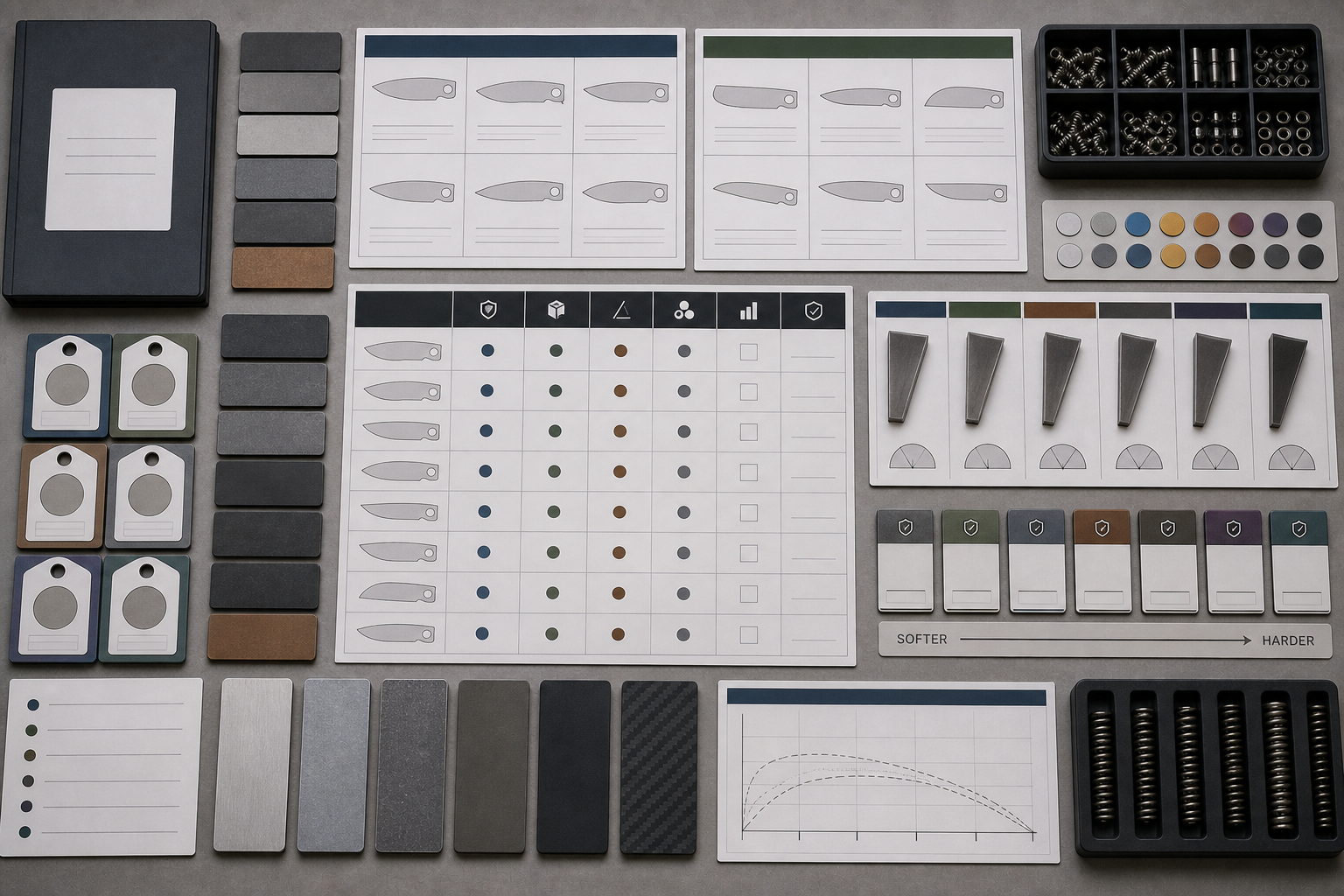
I Do Not Separate Profile From Material
Some buyers choose blade shape first and steel later. I prefer to connect them early. A fine clip point, thin wharncliffe, or narrow tip can feel precise, but it needs proper steel choice, heat treatment, and grind control. A thicker outdoor drop point can tolerate more use, but it may feel heavy if the blade stock, handle material, and grind are not balanced. A tanto profile has two edge lines, so the transition area needs clean grinding and inspection. A straight utility edge can be easy to sharpen, but the factory must control edge straightness across the batch.
Official steel data helps buyers understand tradeoffs. The Alleima 10C28Mo2 datasheet describes a knife and razor blade steel direction where corrosion resistance, hardness, toughness, and re-sharpening are part of the material discussion. The Alleima 19C27 knife steel page is also useful because it explains that high wear resistance can come with limits on keen edge angles and corrosion resistance. That is exactly the point I make to buyers: the blade shape is not magic. It needs material support.
| Shape demand | Material or process concern | RFQ note |
|---|---|---|
| Fine point | Toughness and tip thickness | Define steel, hardness range, and tip geometry |
| Long belly | Even bevel and edge consistency | Ask for grind tolerance and sample photos |
| Tanto front | Clean secondary edge transition | Require visual and edge inspection |
| Straight utility edge | Straightness and sharpening ease | Confirm edge line and bevel symmetry |
What Manufacturing Risks Appear When Blade Profiles Become Complex?
Complex blade profiles can make a sample look special. They can also raise cost, scrap, grinding time, and inspection burden.
Manufacturing risks increase when blade profiles use deep curves, sharp transitions, very fine points, unusual hole locations, tight handle clearance, or difficult grind lines. Buyers should simplify where possible.
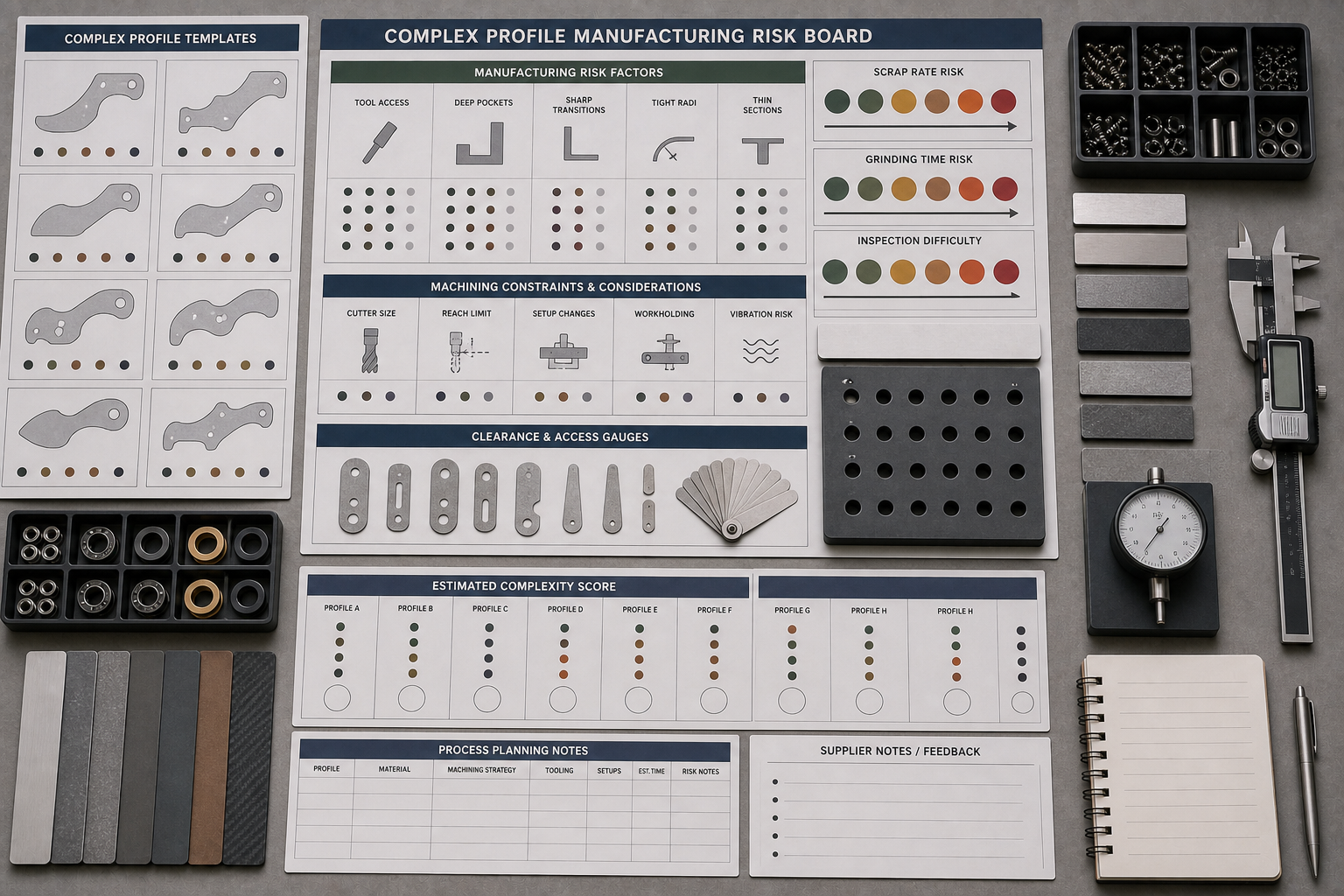
I Check Whether the Shape Can Repeat
In a showroom, a dramatic blade profile can attract attention. In production, the same shape may create problems. Tight inside curves can be harder to cut cleanly. Sharp transitions can create stress points or finishing defects. Long thin tips can be damaged during grinding, polishing, assembly, or transport. A wide blade may look strong, but it may not close cleanly into a slim handle. A tall blade may affect pocket clip placement or handle comfort. A deep recurve may look aggressive, but it can complicate sharpening and QC.
I usually ask a practical question: can this profile repeat well across hundreds or thousands of pieces? If the answer depends on heavy hand adjustment, the buyer should know before approving the design. Handwork is not always bad, but it affects cost, lead time, and consistency. A shape that requires several extra grinding checks may be fine for a higher-positioned product. It may be a poor fit for a price-sensitive wholesale line.
For Vast State OEM/ODM projects, I prefer to identify difficult areas before sampling. I mark the point, edge curve, bevel line, tang, pivot hole, lock contact, stop pin contact, and closed position. Then I decide whether the blade shape supports the buyer's target market and production volume.
| Risk area | Possible issue | Practical control |
|---|---|---|
| Very fine point | Damage during grinding or packing | Add tip thickness and inspection |
| Deep curve | Harder cutting and sharpening consistency | Simplify curve or define tolerance |
| Wide blade | Handle clearance and weight issue | Check closed CAD and prototype |
| Multiple grind lines | Appearance variation | Add sample standard and QC photos |
How Do Blade Shapes Affect Compliance, Packaging, and Buyer Claims?
Blade shape is not only a product feature. In some markets, shape language, length, and claims can create questions.
Blade shapes affect compliance and packaging because buyers may need to define blade length, edge type, product category, intended use, warning language, and destination-market restrictions before production and shipment.
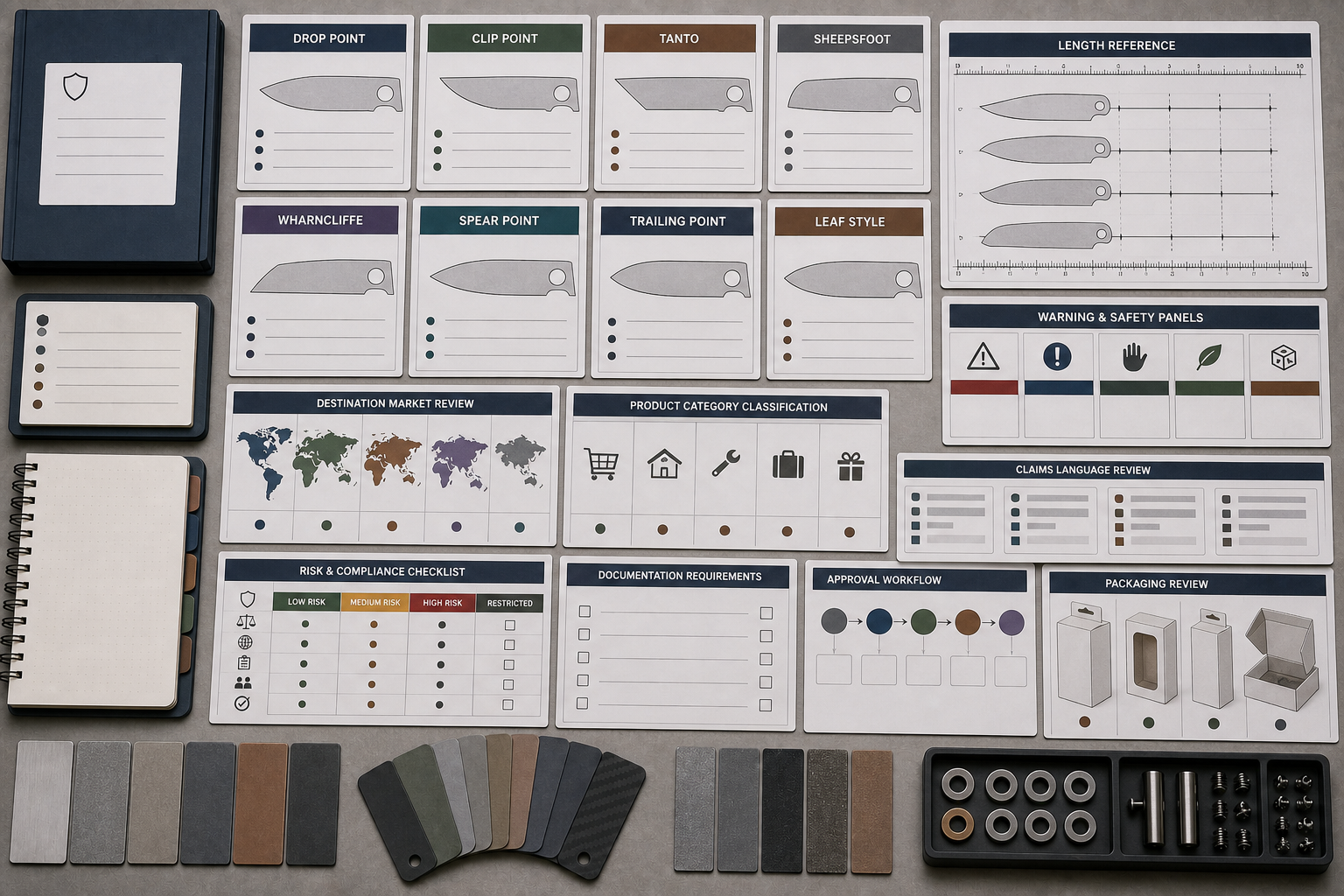
I Keep Product Language Practical and Clear
Compliance is one reason I do not like loose blade names in RFQs. Some terms may be used differently by brands, retailers, customs teams, and local authorities. The AKTI approved knife definitions page shows why knife terms can matter in legal and public communication. The same organization also gives a blade length measuring protocol that uses a straight-line approach from the tip to the forward part of the handle or hilt. This is useful for buyers because blade length is often part of product descriptions, marketplace rules, and destination-market review.
I do not ask a factory to act as the buyer's legal adviser. But I do expect a good supplier to ask where the product will be sold and what words the buyer plans to print on packaging. A blade shape can be described in a calm, practical way: drop point EDC folder, utility sheepsfoot pocket knife, outdoor folding knife, packaging cutter, or camping tool. Overstated claims create avoidable risk. The buyer should also decide whether the package needs age warnings, origin marking, retailer barcode fields, material claims, care instructions, or local compliance review.
| Compliance item | Why it matters | Buyer action |
|---|---|---|
| Blade length | Affects descriptions and market review | Define measurement method |
| Blade name | Can be interpreted differently | Use clear product language |
| Packaging claim | Shapes buyer and regulator expectations | Avoid exaggerated use claims |
| Sales market | Rules vary by destination | Ask importer or legal adviser early |
What QC Checks Should Buyers Require for Blade Shape Consistency?
A blade profile can pass one sample and drift in production. Buyers need measurable checks, not only photos.
Buyers should require blade shape checks for length, tip height, profile outline, edge curve, bevel symmetry, thickness, hardness when specified, lock contact, closed clearance, finish, sharpness, and packaging protection.
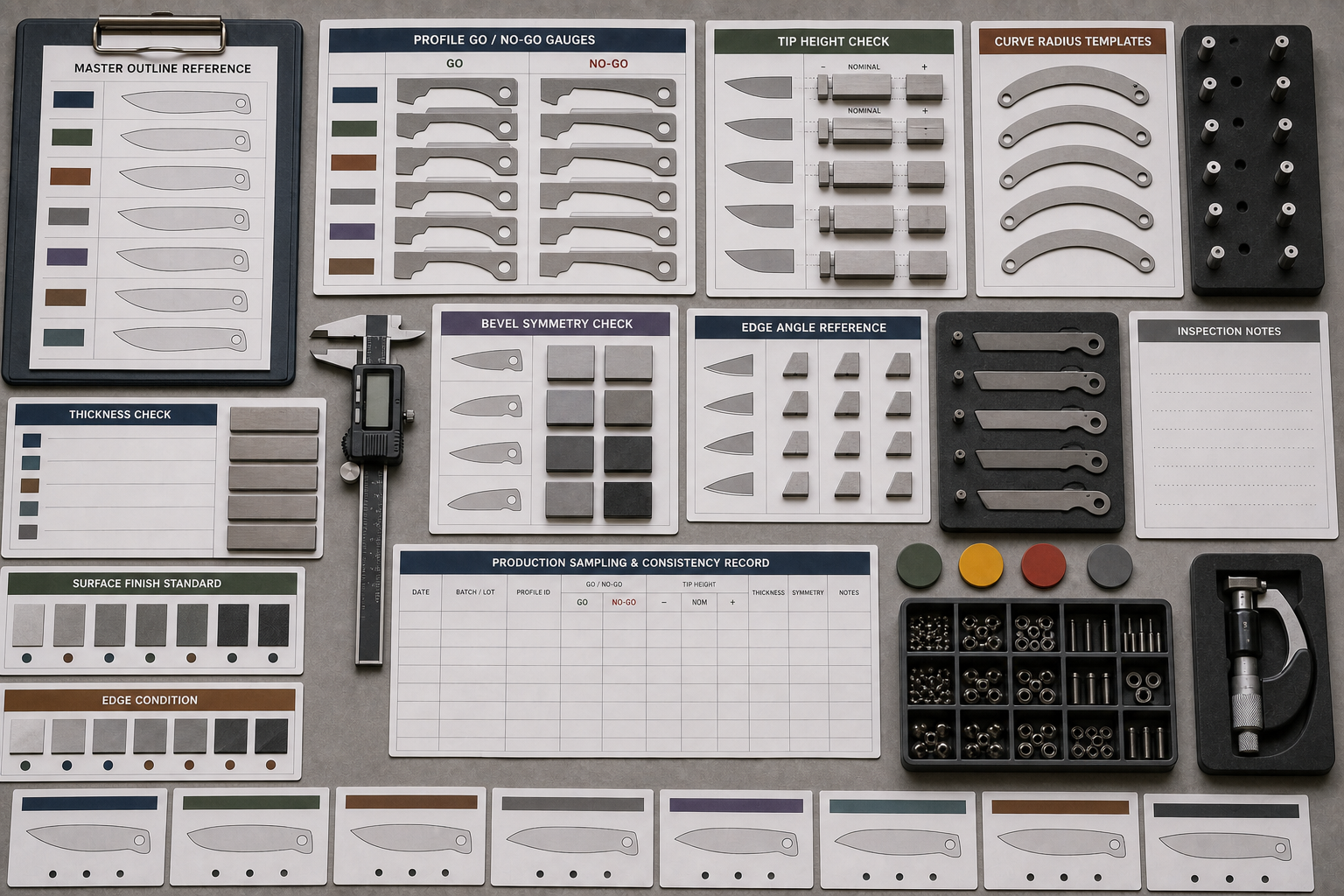
I Turn Shape Into Inspection Points
If a buyer only approves a photo, the production team has too much room for interpretation. I prefer measurable inspection points. Blade length should have a method. Tip height should be defined from a reference line. Edge curve should match the approved drawing or profile template. Bevel width should be visually consistent from side to side. The point should not be over-polished. The blade should close without rubbing the liner or handle scale. The grind should not create heat damage near the edge. The final knife should match the approved sample in finish, action, and packaging.
Hardness is not a blade shape check, but it supports blade performance. The NIST Rockwell hardness guide explains that good practice helps reduce measurement error in Rockwell hardness testing. I use that idea as a reminder: if a buyer specifies hardness, the test method and acceptable range should be clear. Quality control also needs a management system. The ISO 9001 supply chain guidance says buyers should make their needs clear and can use requirements, drawings, standards, and inspection needs as purchasing information. That fits knife sourcing very well.
| QC check | Tool or method | What it protects |
|---|---|---|
| Profile outline | Drawing, template, caliper | Shape consistency |
| Tip height | Reference measurement | Visual and functional repeatability |
| Bevel symmetry | Visual standard and gauge | Appearance and edge performance |
| Closed clearance | Assembly inspection | Safety perception and user trust |
| Hardness | Defined test method | Material performance consistency |
What Should Buyers Put in an RFQ for Custom Blade Shapes?
A vague RFQ creates slow replies and weak samples. A clear RFQ lets the supplier solve real problems faster.
For custom blade shapes, buyers should include target market, blade profile, blade length, steel, hardness range, grind, finish, handle and lock plan, MOQ, target price, packaging, compliance market, and inspection requirements.
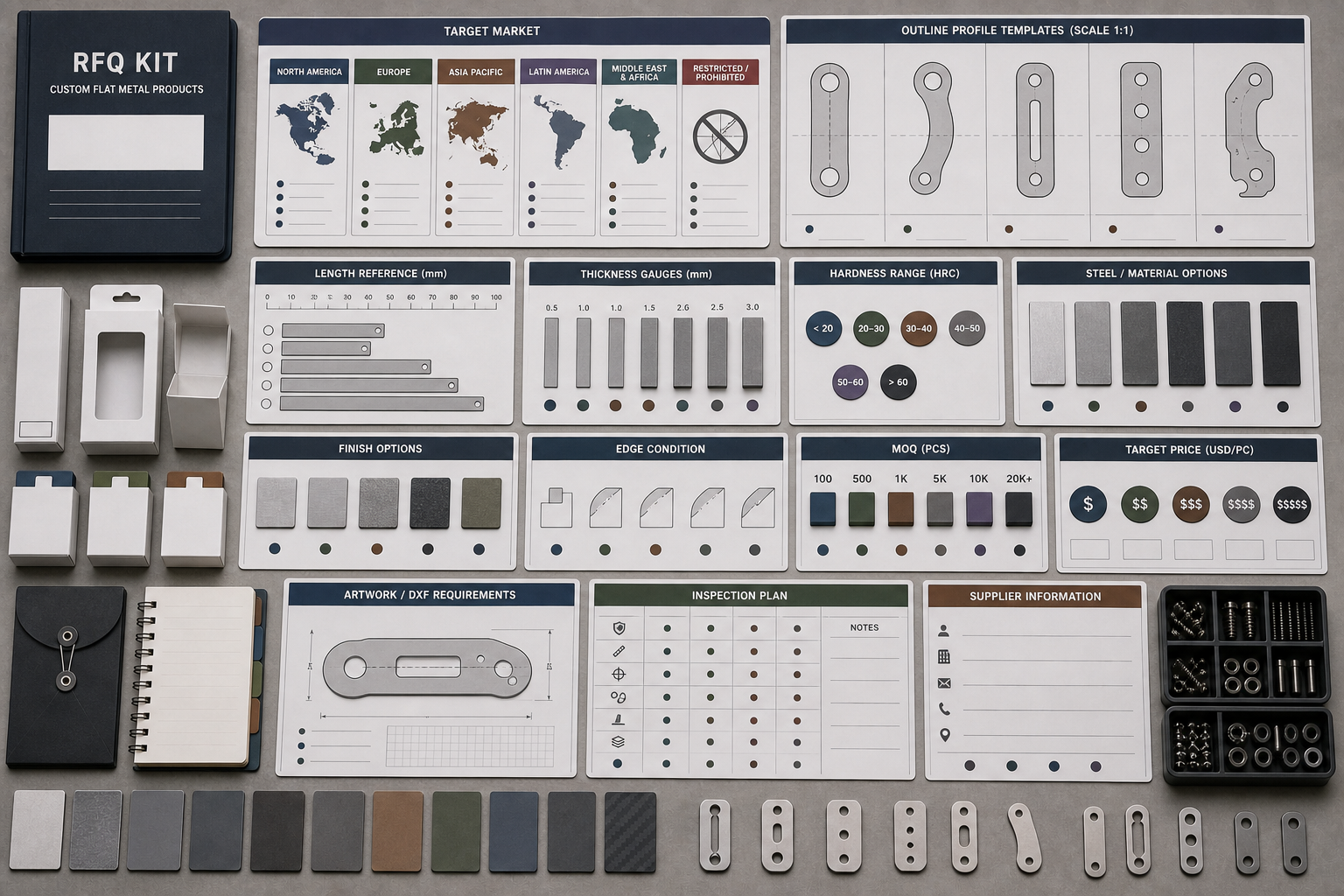
I Ask Buyers to Brief the Product, Not Just the Shape
The best RFQ does not say only "we need a drop point knife" or "quote this blade shape." It explains the full product direction. I want to know who will buy the knife, what tasks it should handle, what price range the buyer needs, what order quantity is expected, what steel is acceptable, what handle material is planned, what lock or opening structure is needed, what packaging is required, and where the product will sell. Then I can comment on whether the blade shape is realistic.
If the buyer has drawings, I ask for 2D profile drawings and, when possible, 3D files. If the buyer has only a reference image, I ask for target dimensions and usage priorities. I also ask whether the buyer wants a familiar market shape or a differentiated private label design. These two goals lead to different choices. Familiar shapes reduce explanation. Distinctive shapes may support branding, but they need stronger sample review and packaging language.
For Vast State, a good RFQ lets us support concept review, material selection, finish options, lock and structure suggestions, packaging customization, sample improvement, and production follow-up. A blade shape decision becomes much stronger when it is connected to the whole product.
| RFQ field | What to include | Why it helps |
|---|---|---|
| Blade profile | Drawing, reference, or profile name | Reduces misunderstanding |
| Use case | EDC, outdoor, utility, camping, rescue, retail | Guides geometry and material |
| Material plan | Steel, hardness range, finish | Connects shape to performance |
| Product structure | Lock, handle, pivot, clip, closed position | Prevents fit and clearance issues |
| Quality needs | Inspection points and sample approval | Supports repeat production |
Turn this article into a folding knife project.
Share your blade type, lock direction, steel preference, handle material, quantity, target market, and packaging needs. Vast State can prepare OEM/ODM options.
Conclusion
I choose pocket knife blade shapes by matching user tasks, material limits, production control, compliance review, and RFQ clarity before sampling.
Source Notes
- AKTI approved knife definitions provides industry context for why knife terminology should be used carefully.
- AKTI blade length protocol supports the need for a clear blade length measurement method.
- Institute of Child Nutrition knife safety resource supports basic blade part language such as spine, tip, edge, and heel.
- Alleima 10C28Mo2 datasheet and Alleima 19C27 knife steel support material tradeoff discussion.
- NIST Rockwell hardness guide supports the need for good hardness measurement practice.
- ISO 9001 in the supply chain supports clear purchasing information, supplier process review, and inspection expectations.