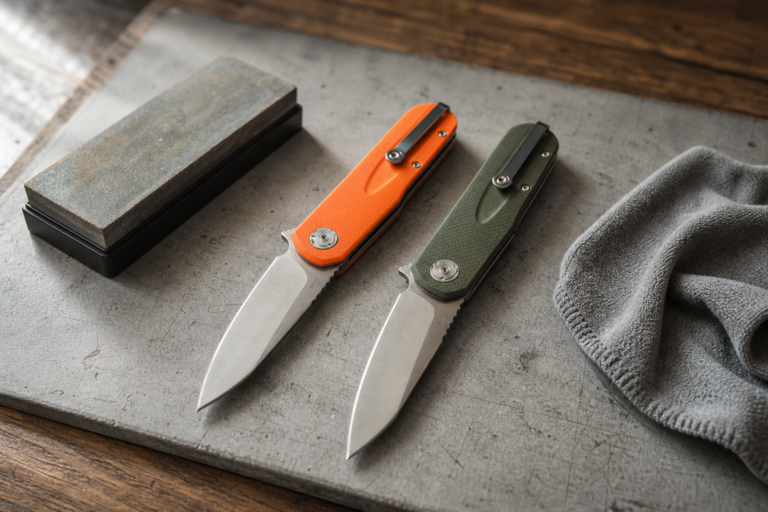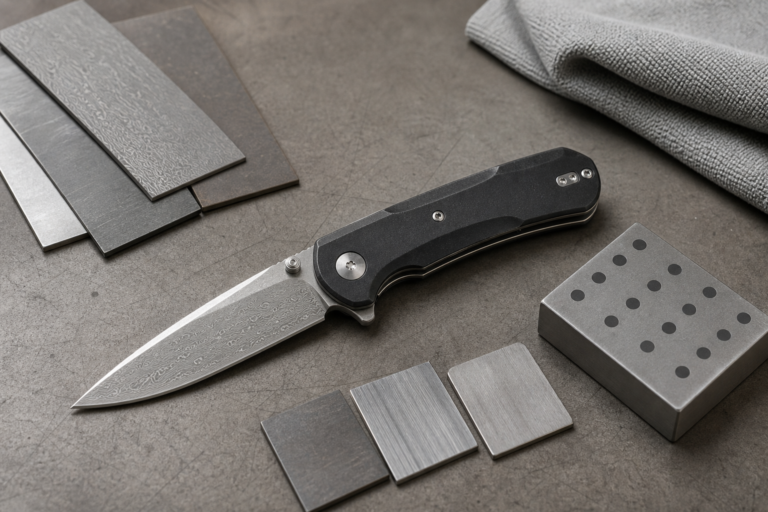
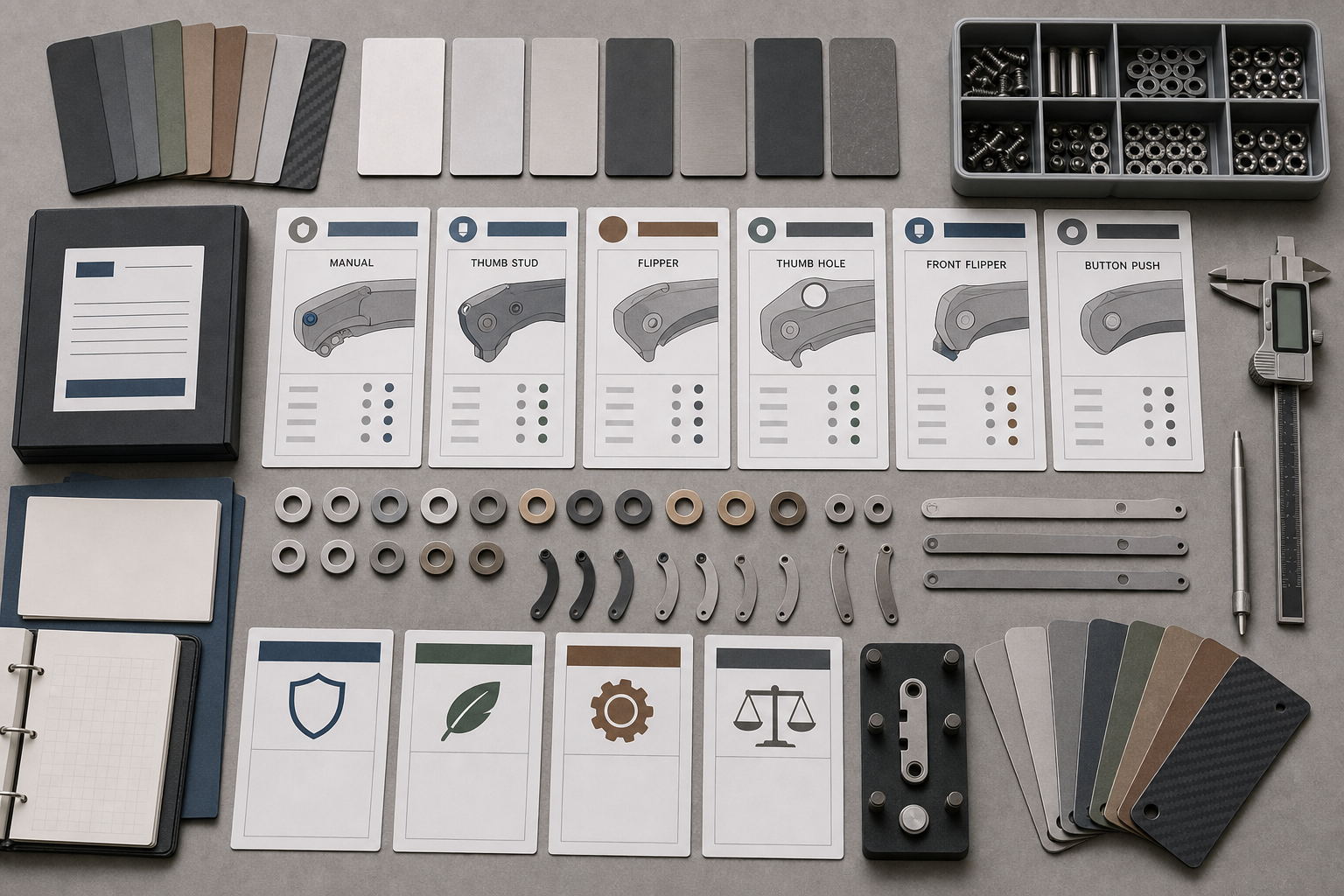
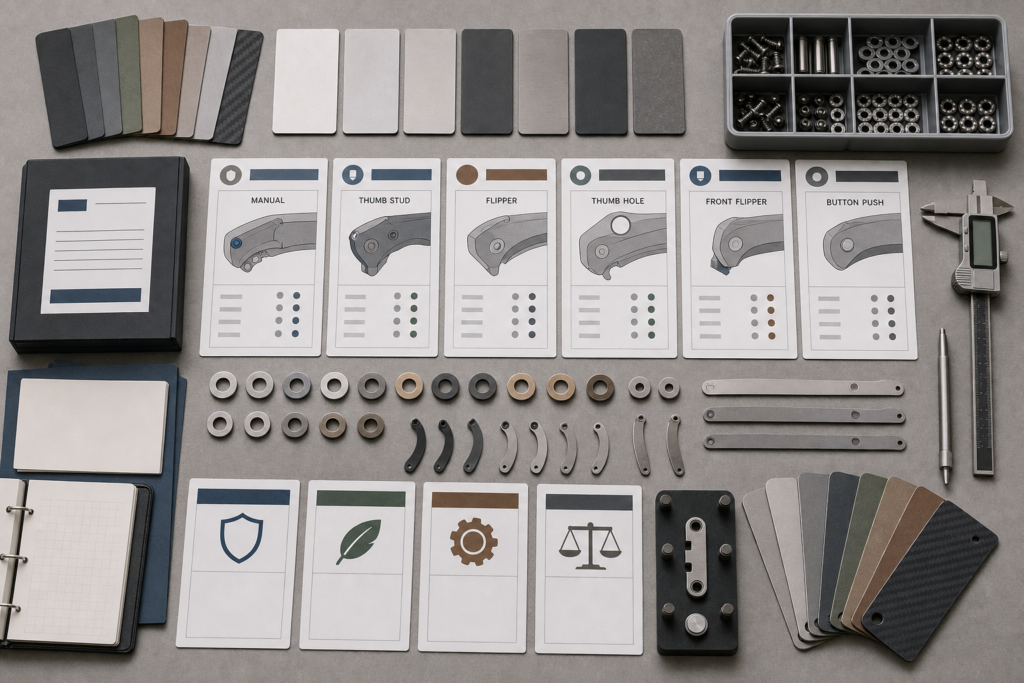
An opening feature looks simple in a product photo. But poor specification can cause rough action, weak retention, compliance risk, and costly rework.
B2B buyers should specify pocket knife opening mechanisms by user need, legal market, blade size, detent, pivot system, washer or bearing choice, lock type, handle access, cost target, and inspection method. The opener must match the whole knife structure.
Quick buyer brief:
- Answer: Define the opening feature as part of the full folding knife system.
- Buyer context: This helps knife brands, outdoor brands, importers, wholesalers, distributors, and private label buyers avoid vague RFQs.
- Key checks: Detent, bias toward closure, pivot tension, washer or bearing choice, opener access, blade centering, lock engagement, packaging wording, and destination-market review.
Developing a folding knife line for your brand?
Vast State supports OEM/ODM folding knife projects, including blade steel, lock structure, handle material, finish, logo method, packaging, and quality inspection planning.
When I review a pocket knife project, I do not treat the opener as decoration. The opening feature controls first impression, user comfort, compliance wording, assembly tolerance, and quality control. A thumb stud, nail nick, thumb hole, flipper tab, assisted-opening system, washer pivot, or bearing pivot can all work. But each one changes the handle space, blade tang geometry, detent strength, lock relationship, and production cost. This is why I ask buyers to define the opening mechanism before we talk about final sample approval.
What Pocket Knife Opening Mechanisms Should Buyers Know First?
Opening mechanism names can sound familiar, but they often hide different production risks. A vague RFQ makes the factory guess too much.
Buyers should know manual openers, nail nicks, thumb studs, thumb holes, flipper tabs, assisted-opening systems, button-activated systems, washers, bearings, and detents. Each part affects opening feel, retention, cost, inspection, and compliance wording.
I Define the Opener Before I Define the Feeling
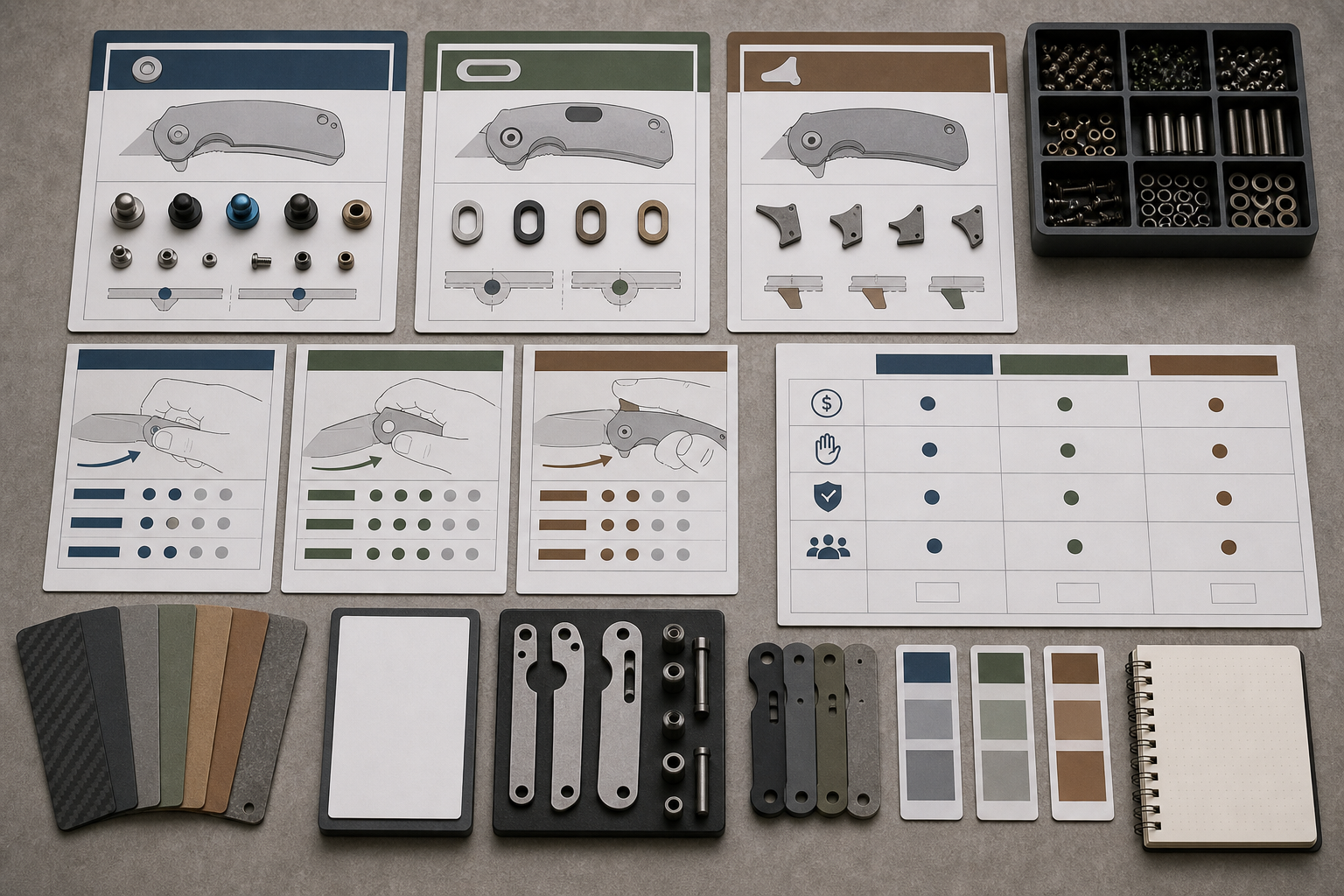
The opener is the part the user touches or uses to start blade movement. The mechanism is the full system that controls how the blade moves from closed to open. These two ideas are related but not the same. A thumb stud is an opener. A detent and pivot system are part of the mechanism. A washer or bearing changes friction. A spring-assisted design changes the way energy is added after the user starts movement. A button-activated automatic design can fall into different legal categories in some markets.
The AKTI explanation of bias toward closure and knife mechanisms is useful because it explains that a folding knife should tend to remain closed unless the user intends to open it. This is not only a legal idea. It is also a manufacturing idea. If the detent is too weak, the blade may feel unsafe in handling. If the detent is too strong, the product may feel hard to open. I ask buyers to separate the product story from the mechanical requirement. The RFQ should say which opener is wanted, what opening feel is expected, and what destination markets need compliance review.
| Feature | What it means | OEM concern |
|---|---|---|
| Nail nick | Cutout for slower manual opening | Simple structure and traditional style |
| Thumb stud or hole | Direct blade contact opener | Position, comfort, and clearance matter |
| Flipper tab | Tang extension used to start opening | Detent and pivot tuning matter |
| Assisted or automatic system | Spring or button-related movement | Compliance wording and testing matter |
OEM/ODM RFQ Checklist
Prepare these details to help Vast State review your project and provide a more accurate quotation.
| RFQ Field | What to Prepare |
|---|---|
| Project type | OEM from drawing / ODM private label / wholesale catalog |
| Product category | Folding knife / fixed blade / multi-tool / outdoor tool |
| Design status | Idea / sketch / 2D drawing / 3D CAD / physical sample |
| Target price | Ex-factory target price or retail price range |
| MOQ expectation | 500 / 1,000 / 3,000 / 5,000+ pcs |
| Logo method | Laser engraving / etching / printing / molded logo |
| Packaging | Standard packaging / custom retail box / Amazon-ready |
| Market | USA / EU / Japan / Korea / Middle East / other |
| Compliance needs | Buyer-specified testing / documentation / labeling |
| Timeline | Sample deadline / mass production deadline |
How Do Manual Openers Affect Cost, Comfort, and Market Fit?
Manual openers often look simple. But the wrong shape or location can make the knife feel awkward or cheap.
Manual openers such as nail nicks, thumb studs, thumb holes, and flipper tabs affect grip, handle clearance, blade geometry, opening effort, user expectation, and production cost.
I Match the Opener to the Buyer, Not Only the Trend
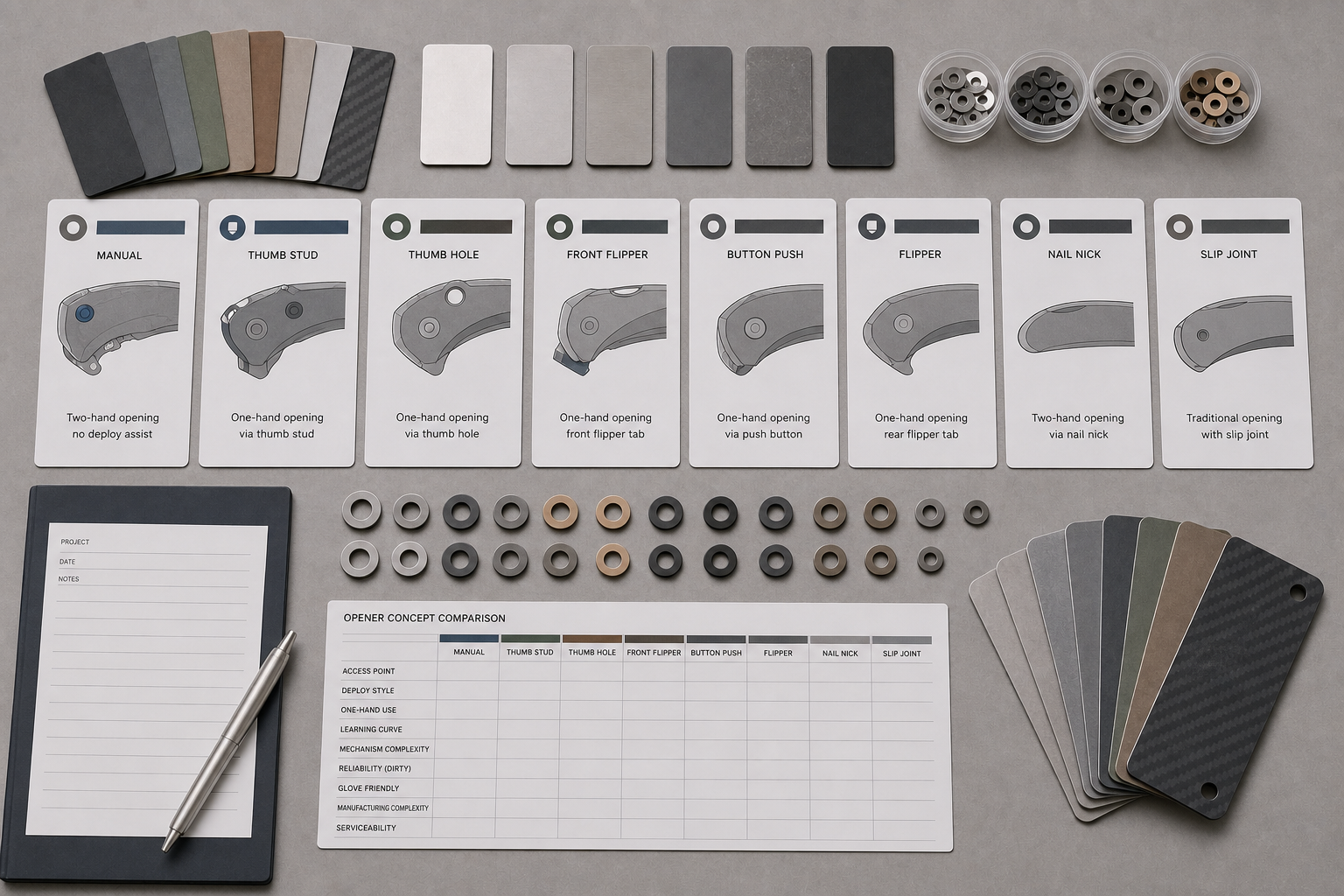
Manual opening features are common because they can be practical, cost-controlled, and easier to explain. A nail nick fits traditional pocket knives and slip joint designs. It keeps the blade profile clean and supports a slower, deliberate opening style. A thumb stud gives the user a small contact point on the blade. It is common on liner lock, frame lock, and back lock folders. A thumb hole can create a wider contact area, but it changes blade shape and may affect brand look. A flipper tab can create a modern action feel, but it needs correct detent strength, pivot friction, and lock relationship.
I do not choose an opener only because it is popular. I ask who will buy the knife. A budget utility knife may need simple, low-risk opening. A colorful private label EDC line may need thumb studs and washer pivots for cost control. A higher-positioned product may use bearings and a flipper tab, but the buyer must accept tighter tuning. A traditional outdoor design may use a nail nick or back lock structure because the market expects that feeling.
| Manual opener | Best fit | Key production check |
|---|---|---|
| Nail nick | Traditional and compact knives | Blade access and spring tension |
| Thumb stud | Practical EDC and outdoor folders | Stud position and handle clearance |
| Thumb hole | Broad contact opening | Blade profile and edge layout |
| Flipper tab | Modern manual action | Detent, pivot, and lock timing |
Why Do Detent and Bias Toward Closure Matter So Much?
Buyers often focus on how a knife opens. They may forget that safe closed retention is just as important.
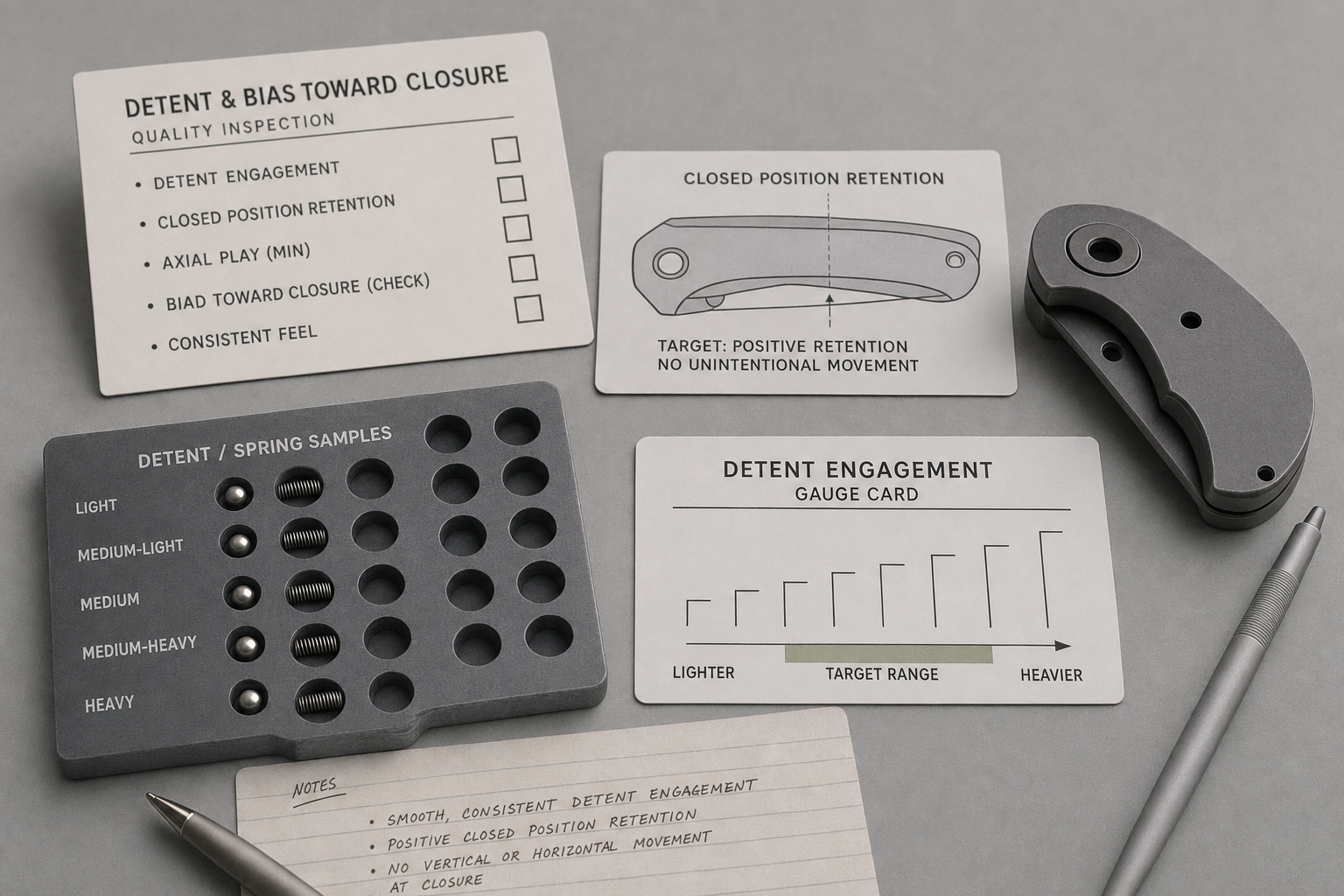
Detent and bias toward closure help keep the blade closed until the user intentionally starts opening. They affect safety perception, compliance wording, opening effort, and final inspection standards.
I Check the Closed Position Before I Approve the Action
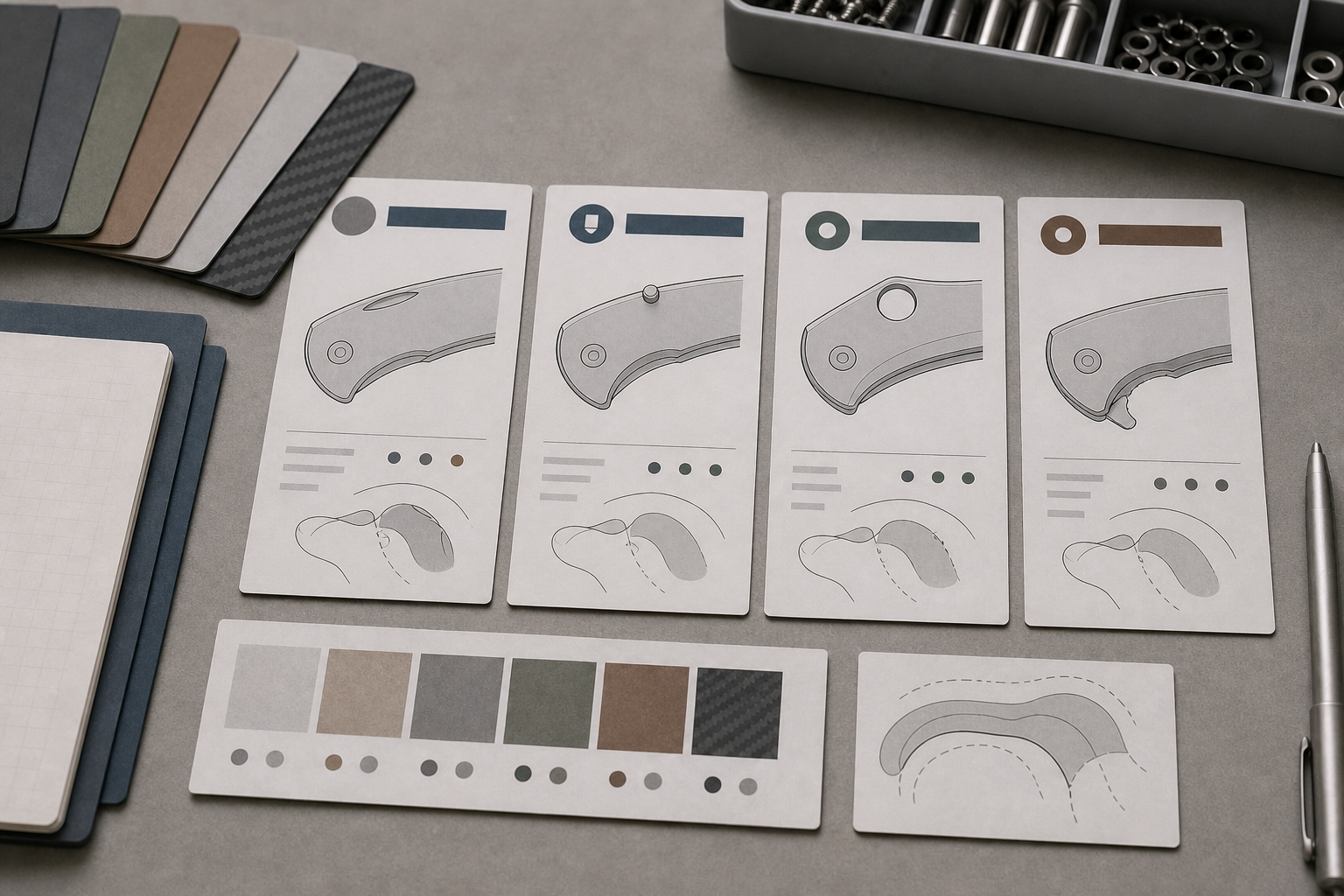
Detent is one of the small details that buyers feel immediately, even when they do not know the word. In many liner lock and frame lock designs, a small ball in the liner or frame engages a small hole or track in the blade. This helps keep the blade closed and creates resistance before opening starts. In slip joint and back lock designs, spring pressure and blade tang geometry can also create closed-position control.
The AKTI article explains that folding knives need a way to remain closed unless the user intends to expose the blade. It also describes detent and spring load concepts. The 15 USC Chapter 29 language also matters for U.S. compliance context because it refers to a spring, detent, or other mechanism designed to create bias toward closure, with exertion applied to the blade by hand, wrist, or arm to assist in opening.
For OEM buyers, this means the detent should be treated as a specification, not a surprise. If the detent is weak, the knife may feel unsafe in handling. If it is too strong, the opener may feel rough. If the detent location varies, production pieces may feel different from the approved sample. I usually ask buyers to approve action feel with a real sample and then define the inspection method.
| Detent factor | What I check | Why it matters |
|---|---|---|
| Closed retention | Blade stays closed under normal handling | Supports user confidence |
| Opening effort | User can start movement intentionally | Controls comfort and market fit |
| Detent location | Ball and blade hole match | Reduces batch variation |
| Compliance wording | Mechanism description is accurate | Helps avoid risky sales claims |
How Should Buyers Compare Washers and Bearings?
Smooth action can be built in different ways. Buyers who only ask for "smooth" may get the wrong cost and maintenance tradeoff.
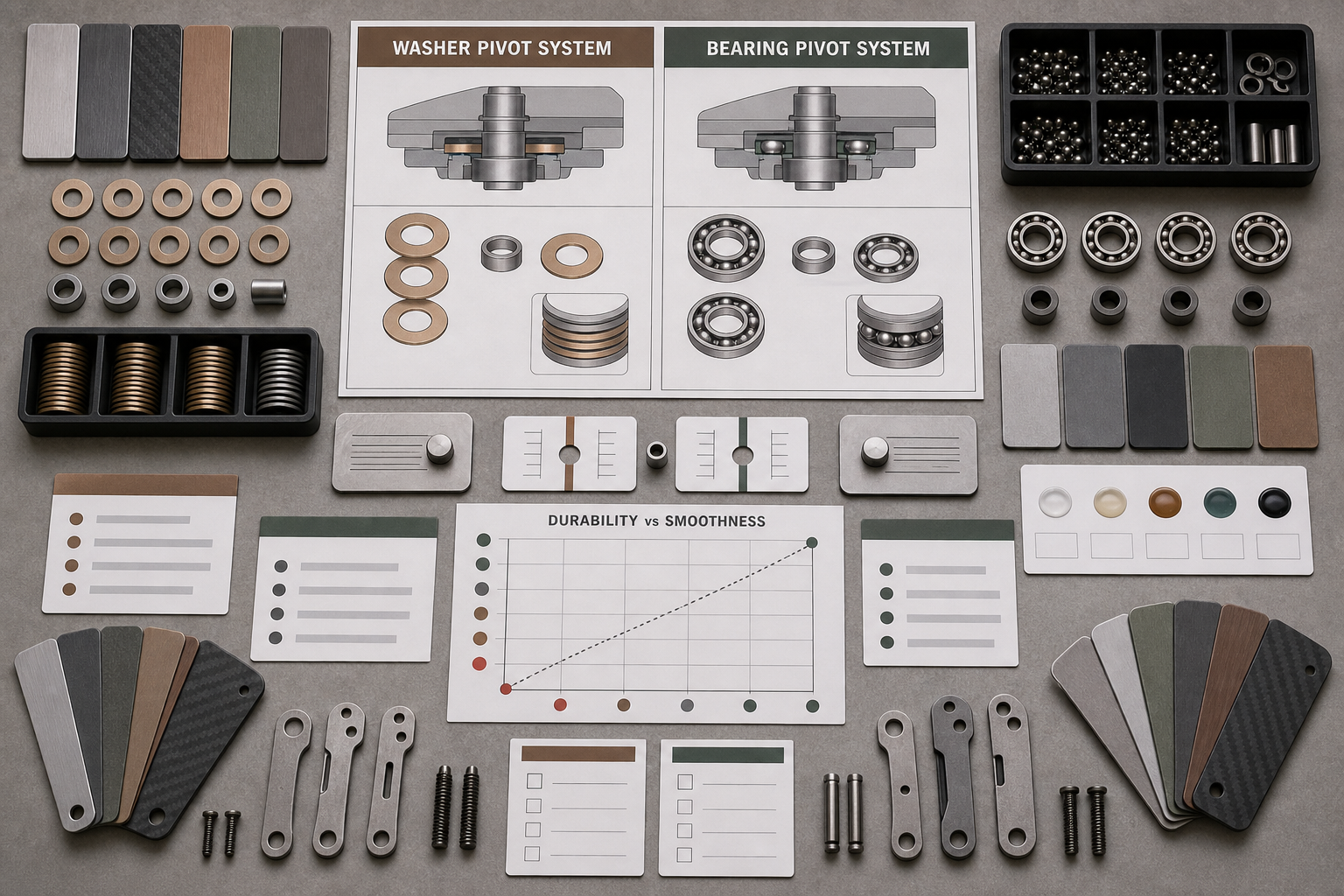
Washers often support durable, cost-controlled action. Bearings can create smoother low-friction action but need cleaner machining, better part consistency, and careful debris control.
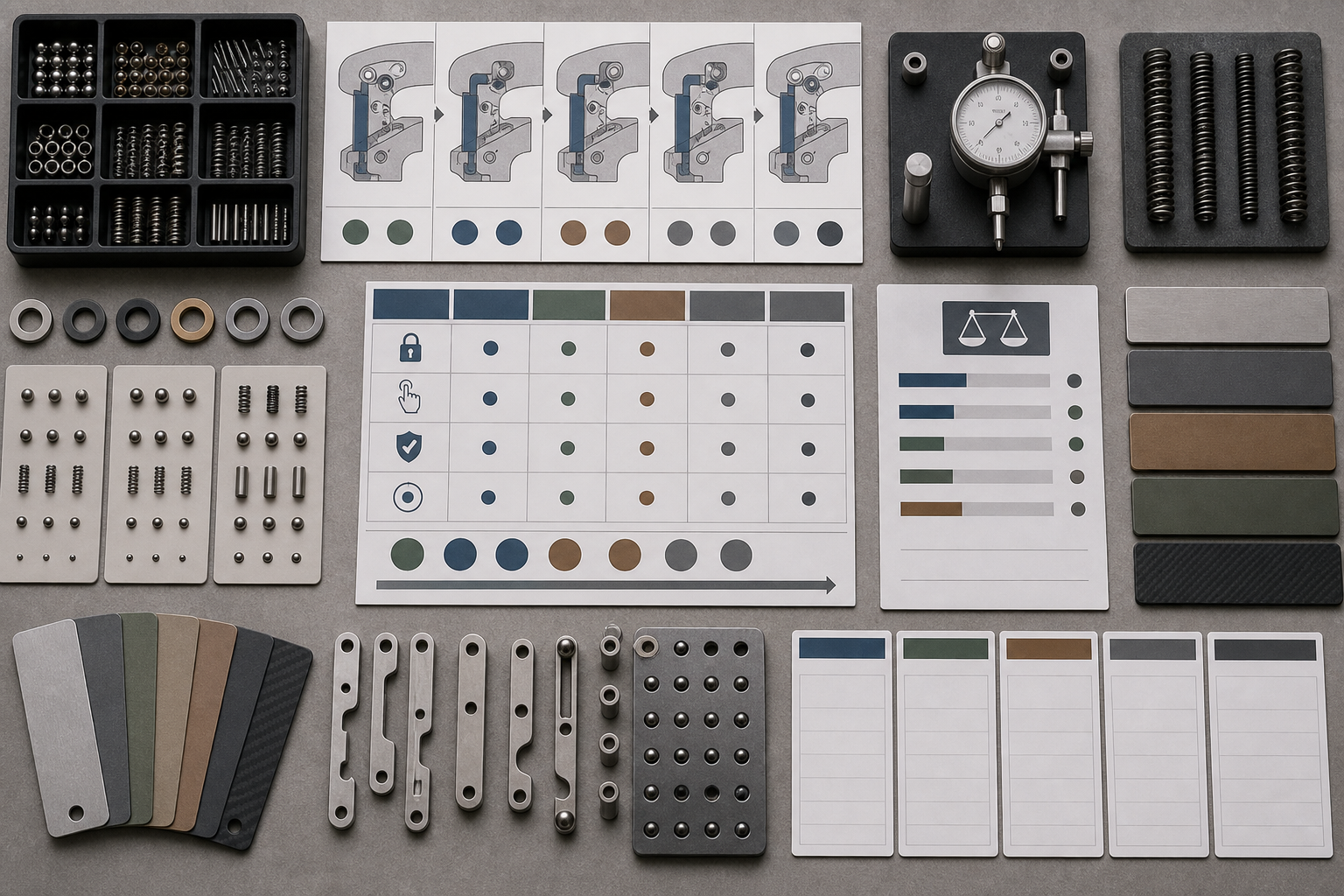
I Choose Pivot Feel With the Product Position in Mind
The pivot system is not the opener, but it strongly affects opening feel. Washers are simple and practical. They can support outdoor, work, and cost-controlled products. Different washer materials create different friction, durability, and cost profiles. A washer system can feel very good when the pivot hole, flatness, screw tension, and surface finish are controlled.
Bearings can create a lighter and smoother action. They are common in higher-positioned manual folders and flipper-tab designs. But bearings are not automatically better for every buyer. They may need cleaner machining, consistent race surfaces, good alignment, and better debris control. In dusty outdoor use, some buyers prefer washers because the structure is simpler. In a retail EDC line where action feel matters, bearings may help the product stand out.
I often suggest two sample directions when the buyer is unsure. One uses washers for cost and durability. One uses bearings for smoother action. Then the buyer can compare real feel, target price, and market expectation. The right answer is not "washer versus bearing." The right answer is which pivot system supports the intended user and order plan.
| Pivot system | Main advantage | Production concern |
|---|---|---|
| Nylon-style washer | Low cost and simple assembly | Wear and feel consistency |
| Bronze-style washer | Stable and practical feel | Surface flatness and lubrication |
| Bearing | Smooth low-friction action | Clean machining and debris control |
| Any pivot | Controls blade movement | Screw torque and alignment |
What Should Buyers Know About Assisted Opening and Automatic Categories?
Assisted and automatic wording can create real sourcing risk. A product that looks similar can be treated differently by market rules.
Buyers should review assisted-opening and automatic categories before sampling, packaging, or import planning. The key questions are how movement starts, where force is applied, and whether local rules allow that mechanism.
I Keep Mechanism Claims Conservative Until the Market Is Clear
This is the section where I become careful with words. I do not give legal advice, and I do not assume one country's rule applies everywhere. I ask buyers to review the destination market before using assisted-opening, automatic, button, slider, gravity, or similar mechanism claims. The same physical idea can create different legal risk depending on how the blade starts moving, where the user applies force, and how local law defines the product.
The U.S. Code source above includes an exception related to bias toward closure, but that does not mean every assisted or spring-related knife is automatically safe to import or sell. U.S. Customs and Border Protection rulings can be highly fact-specific. One CBP ruling discussion around spring-assisted out-the-front knives shows how technical details, force application, and mechanism design can affect admissibility. For a buyer, the practical lesson is simple: do not rely on a short catalog name.
In OEM work, I prefer to record the mechanism clearly in the RFQ. I also ask the buyer to confirm destination countries, marketplace rules, retail channel rules, packaging wording, and import restrictions before tooling. If the buyer is not sure, I may recommend a manual opener first. Manual designs often provide a clearer development path, especially for multi-market distribution.
| Mechanism topic | Buyer question | Practical action |
|---|---|---|
| Manual opening | Does the user directly start blade movement? | Define opener and detent |
| Assisted opening | What force starts and assists movement? | Review local rules before claims |
| Automatic category | Is a button or handle device involved? | Get legal and import review |
| Packaging wording | What does the box or listing say? | Keep claims precise and conservative |
How Do Handle Design and User Access Affect Opening Performance?
Even a good opener can fail if the handle blocks access. Small clearance problems can ruin the user experience.
Handle design affects opening performance through cutouts, chamfers, scale thickness, clip position, lockbar pressure, thumb access, flipper tab clearance, and blade path clearance.
I Review Access With Real Hands, Not Only CAD
Drawings can show dimensions, but they do not always show comfort. A thumb stud may look correct in CAD, but the handle scale may block the user's thumb. A nail nick may be too shallow. A flipper tab may be hidden too deeply inside the handle. A pocket clip may sit where the user naturally wants to press. A frame lock can also create another issue: the user's grip may press the lockbar and change opening feel if the design is not balanced.
This is why I ask for prototype handling before mass production. I check whether the user can reach the opener without awkward pressure. I check whether the blade path has enough clearance. I check whether the handle chamfers feel comfortable. I check whether left-hand and right-hand use matter for the buyer's market. I check whether glove use is relevant for outdoor, camping, or work products. These are simple checks, but they prevent many weak samples.
For B2B buyers, handle access also affects return risk. If end users think the knife is hard to open, they may blame the mechanism even when the problem is the handle shape. Good OEM development connects the opener, handle, lock, pivot, clip, and packaging promise into one product plan.
| Handle factor | What can go wrong | What I review |
|---|---|---|
| Scale thickness | Opener becomes hard to reach | Thumb access and cutout depth |
| Chamfering | Handle edge feels sharp or awkward | Comfort and finishing |
| Clip location | Clip blocks natural grip | Clip position and screw height |
| Lockbar pressure | Action feel changes in hand | Grip test and lock design |
What Quality Control Checks Should Buyers Require for Opening Mechanisms?
Opening quality can change from sample to batch. Without clear QC, the final shipment may not match the approved sample.
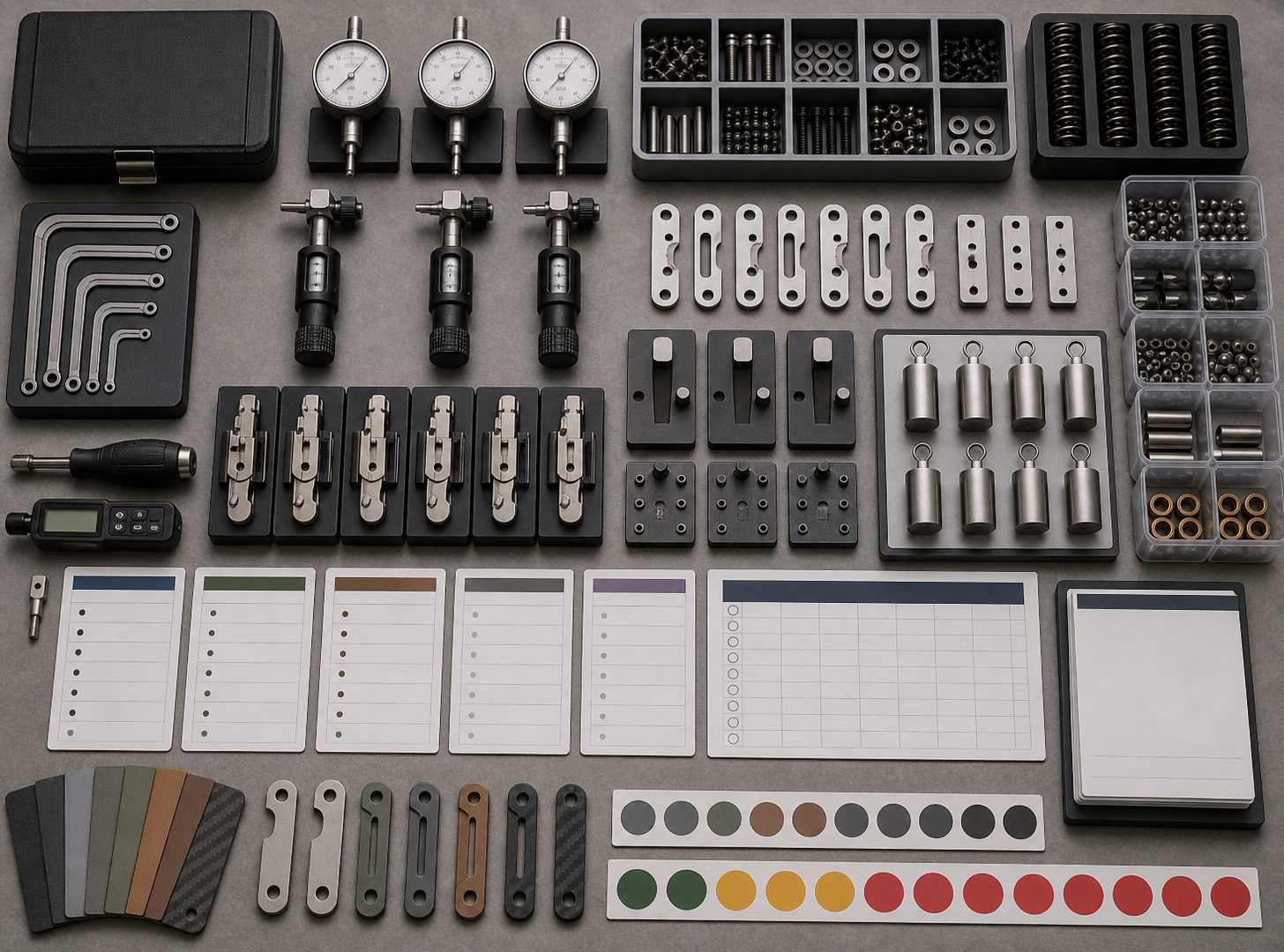
Buyers should require checks for closed retention, opening effort, pivot tension, blade centering, blade play, lock engagement, screw torque, opener fit, edge clearance, surface finish, and batch consistency.
I Turn Action Feel Into Inspection Points
Action feel can sound subjective, but production still needs objective checks. I start with the approved sample. Then I define what must stay consistent. The blade should stay closed under normal handling. The opener should be accessible. The pivot should not be too loose or too tight. The blade should center inside the handle. The lock should engage correctly after opening. Screws should be secure. The blade should not rub the liners or handle scales.
For material and heat treatment checks, the NIST Rockwell hardness guide is useful because it explains why good hardness measurement practice reduces error. For supplier process control, ISO 9001 in the supply chain is useful because it reminds buyers to make requirements, approvals, monitoring, and inspections clear. Those ideas fit opening mechanisms well. A buyer should not only say "smooth action." The buyer should define what will be checked.
I also pay attention to packaging and listing language. If the knife is manual, the package should not imply something different. If it has an assisted mechanism, the buyer should confirm the market before using that phrase. QC is not only about the product in hand. It is also about the promise made to the market.
| QC item | What to check | Why it matters |
|---|---|---|
| Closed retention | Blade stays closed as intended | Supports safe handling |
| Opening effort | Opener works within approved feel | Protects user experience |
| Pivot and centering | Smooth movement and blade alignment | Reduces complaints |
| Packaging wording | Mechanism claim matches product | Reduces compliance confusion |
How Should Buyers Write an RFQ for Pocket Knife Openers?
A weak RFQ says only "smooth opening." That leaves the factory to guess the structure, parts, cost, and test method.
A strong RFQ should specify opener type, lock type, blade size, blade steel, handle material, pivot system, detent expectation, target market, compliance market, target price, MOQ, packaging, and inspection requirements.
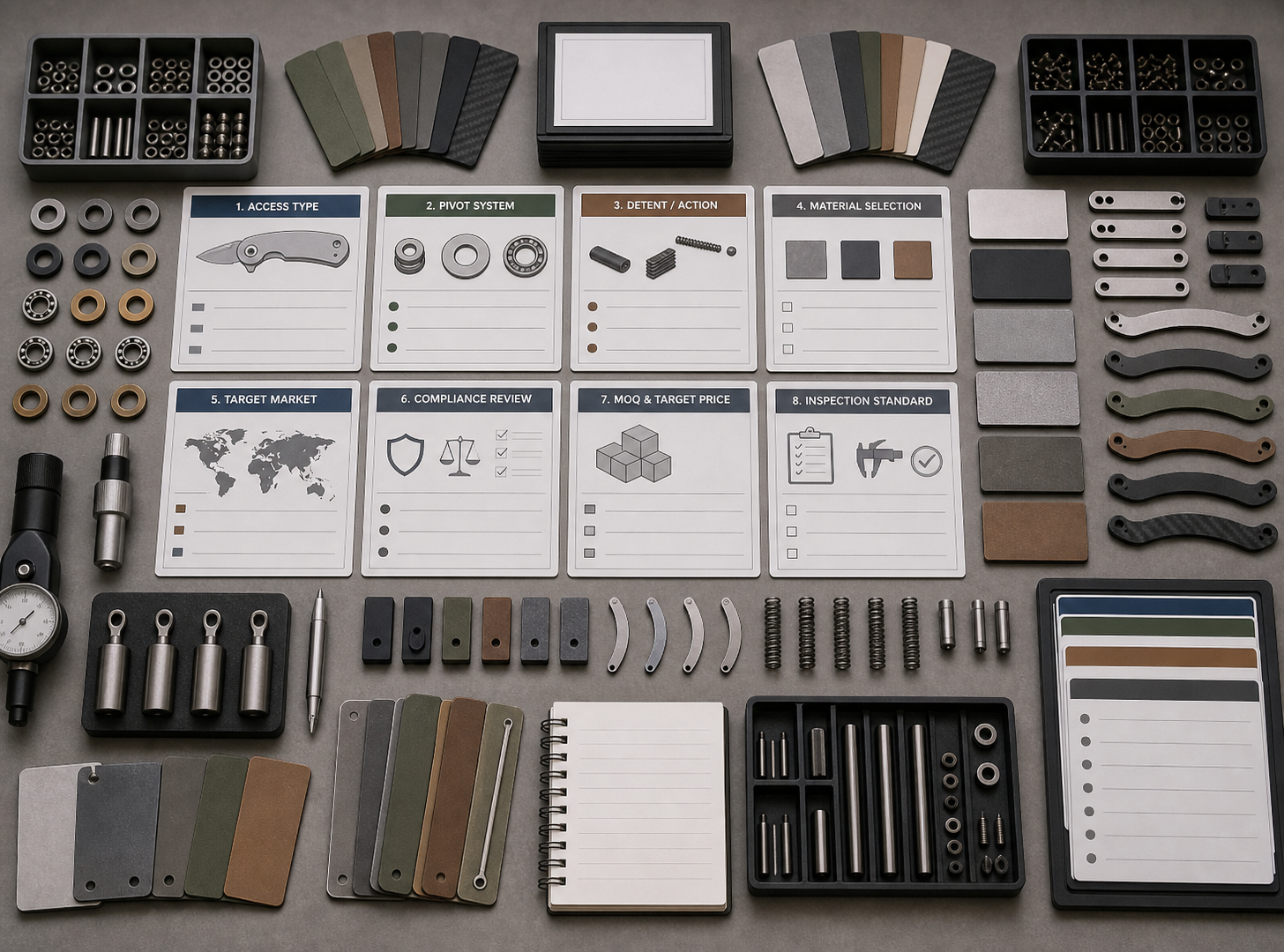
I Ask Buyers to Specify the Whole Opening System
When a buyer asks for a quote, I want the opener type first. Nail nick, thumb stud, thumb hole, flipper tab, assisted-opening direction, or supplier recommendation all lead to different design work. Then I need the lock type, because the opener must work with the lock. A flipper tab with a liner lock has different tuning needs from a nail nick with a slip joint. A thumb stud with a back lock has different handle clearance needs from a frame lock with bearings.
I also ask for blade size, blade steel, handle material, washer or bearing preference, finish, logo method, clip need, packaging type, target market, target price, MOQ, and destination countries. If the buyer already has drawings, I review the blade tang, pivot, detent, opener access, and handle clearance. If the buyer has only a concept, I help choose a simpler structure first and improve from there.
The most useful RFQ is not the longest one. It is the clearest one. It should tell the factory what kind of user experience the buyer wants, what price range must be protected, what market rules must be respected, and what checks will decide whether the sample is approved. That is how an opener becomes a controlled manufacturing feature instead of a surprise.
| RFQ field | What to include | Why it helps |
|---|---|---|
| Opener type | Nail nick, thumb stud, thumb hole, flipper tab, or recommendation | Sets blade and handle direction |
| Pivot system | Washer, bearing, or supplier option | Controls cost and action feel |
| Detent need | Closed retention and opening effort | Defines sample approval |
| Compliance market | Destination countries and channels | Guides mechanism wording |
Turn this article into a folding knife project.
Share your blade type, lock direction, steel preference, handle material, quantity, target market, and packaging needs. Vast State can prepare OEM/ODM options.
Conclusion
I specify pocket knife openers by connecting user feel, detent, pivot, lock, handle access, compliance wording, QC, and RFQ details.
Source Notes
- AKTI knife mechanisms supports the discussion of bias toward closure, detent, slip joint, liner lock, and frame lock mechanisms.
- 15 USC Chapter 29 supports the compliance context around bias toward closure and switchblade exceptions in the United States.
- CBP ruling HQ H322343 gives fact-specific context on how technical mechanism details can affect import treatment.
- NIST Rockwell hardness guidance supports controlled hardness measurement practice for blade production.
- ISO 9001 in the supply chain supports the need for clear purchasing requirements, approvals, monitoring, and inspections.