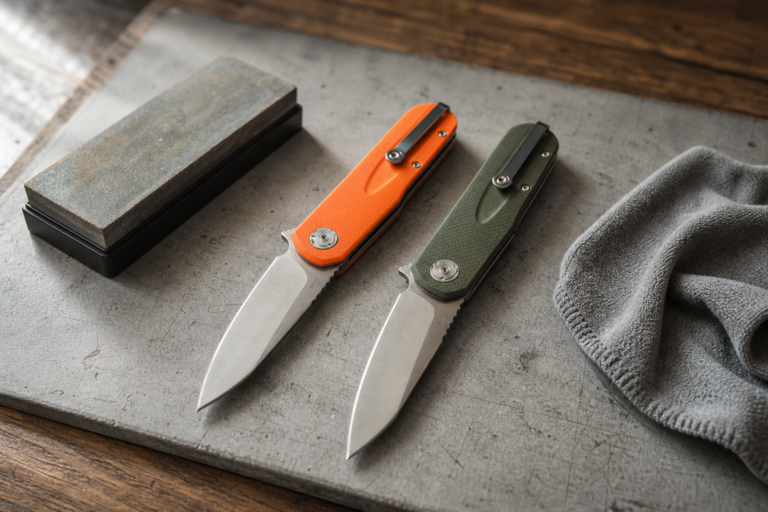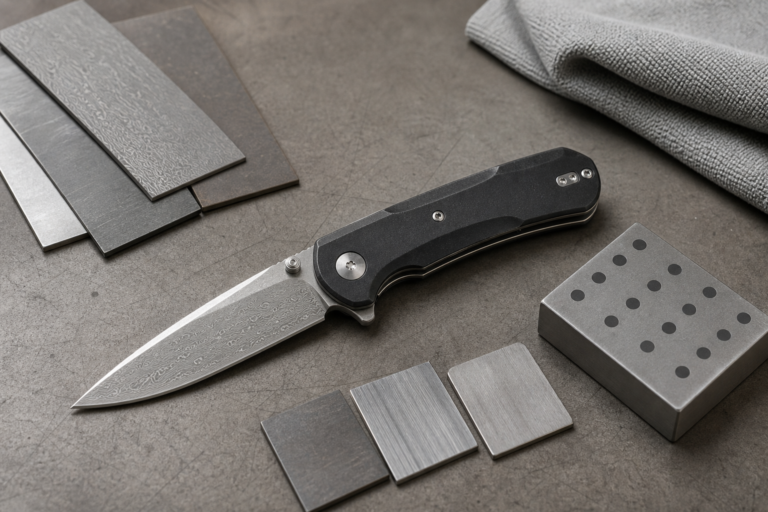
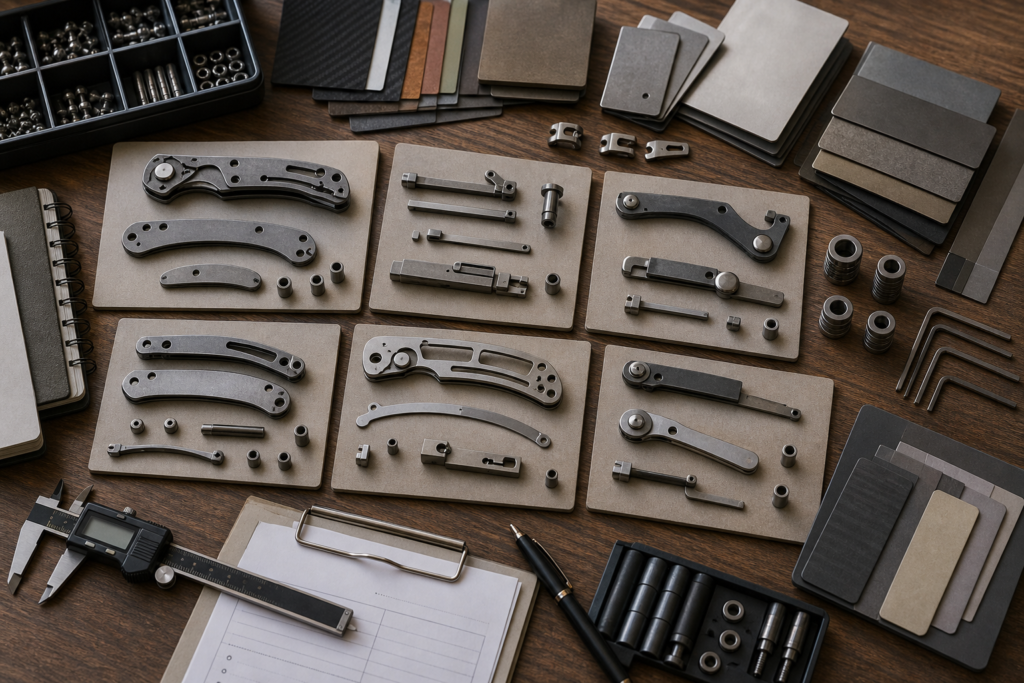
A pocket knife lock can look like a small detail. But a wrong choice can create cost, safety, compliance, and after-sales problems.
B2B buyers should choose a pocket knife lock type by target market, user expectation, handle material, blade size, opening system, assembly tolerance, inspection method, price range, and local compliance risk. The lock should fit the whole product, not only the catalog description.
Quick buyer brief:
- Answer: Match the lock type to market position, structure, cost, and QC capability.
- Buyer context: This helps knife brands, importers, wholesalers, distributors, and private label buyers write clearer OEM RFQs.
- Key checks: Lock engagement, blade play, detent, pivot alignment, release feel, handle material, screw torque, packaging claims, and compliance review.
Developing a folding knife line for your brand?
Vast State supports OEM/ODM folding knife projects, including blade steel, lock structure, handle material, finish, logo method, packaging, and quality inspection planning.
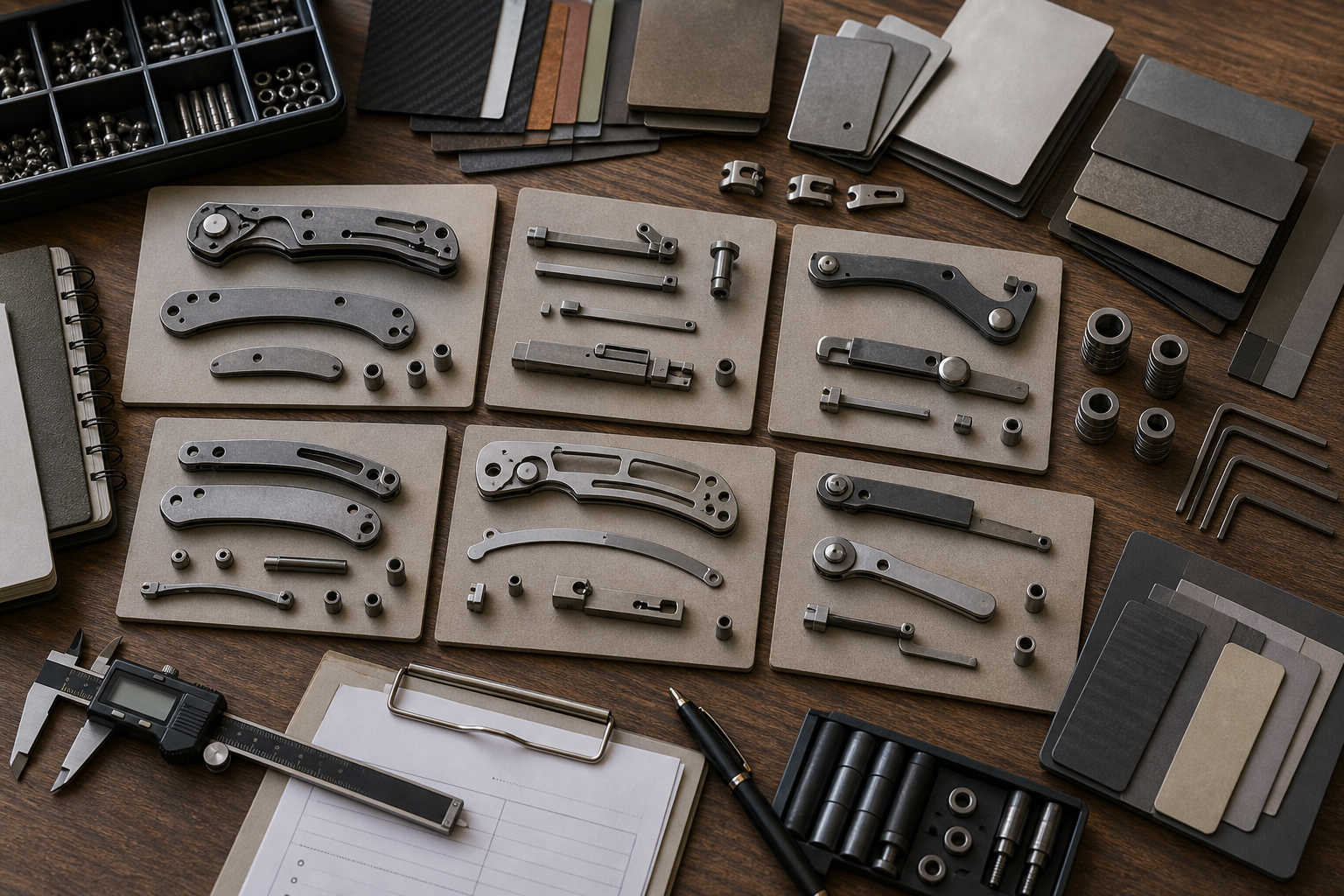
When buyers ask me for "the best lock," I usually slow the conversation down. A lock is not only a feature name. It is a system that connects the blade tang, pivot, handle frame, liner, spring, detent, hardware, and final inspection plan. A good lock choice supports the buyer's price target, market story, user feeling, and repeat production. A poor lock choice can make even a good-looking knife feel weak, rough, or hard to sell.
What Pocket Knife Lock Types Should Buyers Know First?
Lock names can become confusing fast. If the buyer and factory use different meanings, the first sample may miss the real target.
Buyers should first understand liner lock, frame lock, back lock, button lock, bar-style lock, and slip joint structures. Each type changes handle design, assembly method, cost, user feel, and inspection standards.
I Treat Lock Type as a Product Architecture Choice
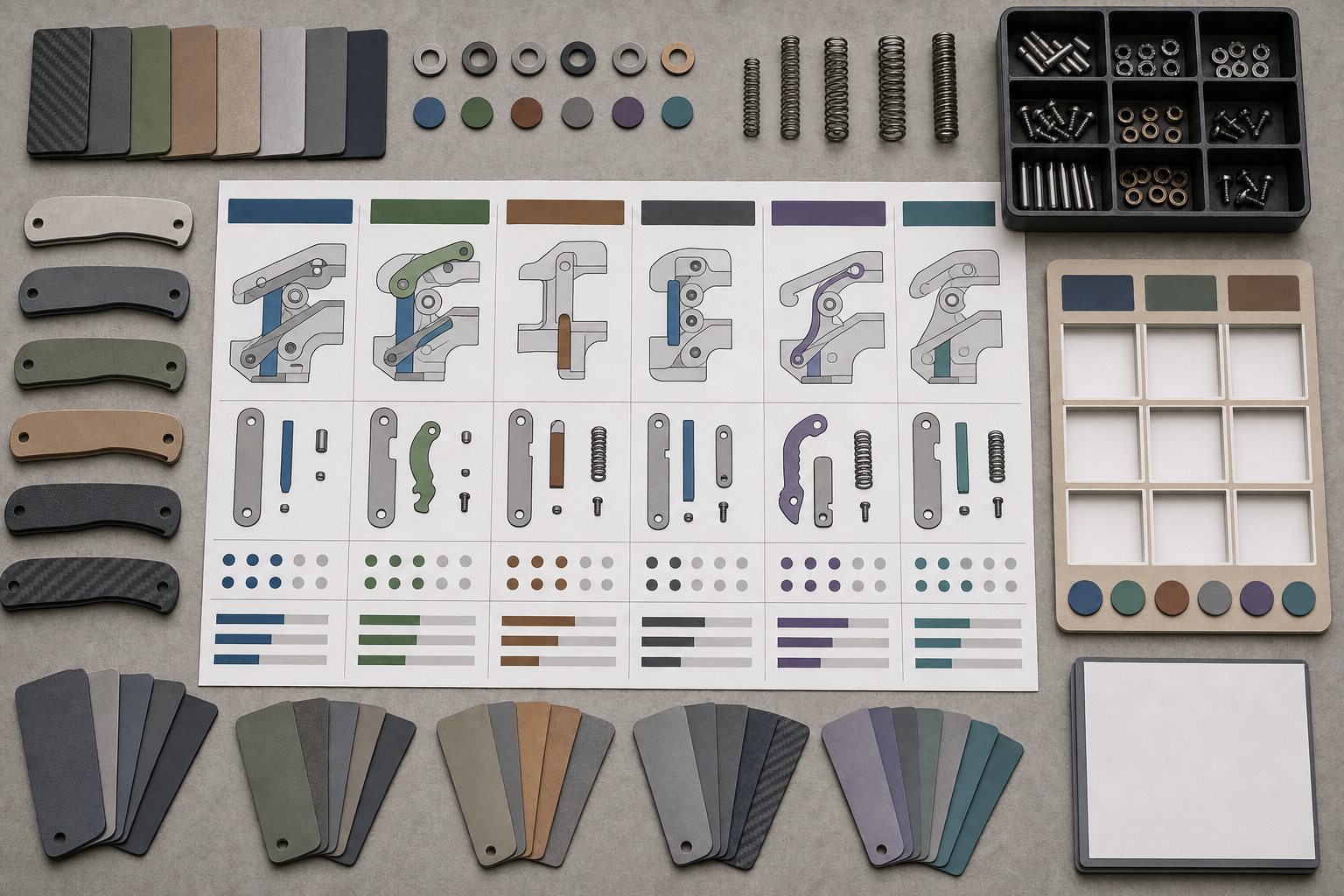
The first lock types I explain to buyers are the practical ones used in many pocket knife projects. A liner lock uses a spring liner that moves behind the blade tang. A frame lock uses part of the metal handle frame as the lock bar. A back lock uses a spring bar along the handle back that engages a notch in the blade tang. A button lock or plunge-style lock uses a button-driven part to hold and release the blade. A bar-style lock uses a sliding bar or similar cross handle part to engage the blade. A slip joint is not a true positive lock, but it uses spring pressure to hold the blade open and closed.
The AKTI explanation of knife mechanisms is useful because it describes slip joint, lock back, liner lock, and frame or integral lock ideas in a clear industry context. For OEM sourcing, this matters because the lock name affects the drawing, tooling, material choice, sample cost, and QC checklist. I always ask the buyer to define the intended lock type early. If the buyer is unsure, I compare the lock options against the target price, end user, handle material, opening system, and sales market.
| Lock type | Basic structure | Common OEM meaning |
|---|---|---|
| Liner lock | Internal liner supports the blade tang | Flexible and cost-controlled |
| Frame lock | Handle frame acts as lock bar | Solid metal-handle direction |
| Back lock | Spring bar locks into blade tang notch | Traditional and controlled |
| Button or bar style | Button or bar controls engagement | More complex action and QC needs |
OEM/ODM RFQ Checklist
Prepare these details to help Vast State review your project and provide a more accurate quotation.
| RFQ Field | What to Prepare |
|---|---|
| Project type | OEM from drawing / ODM private label / wholesale catalog |
| Product category | Folding knife / fixed blade / multi-tool / outdoor tool |
| Design status | Idea / sketch / 2D drawing / 3D CAD / physical sample |
| Target price | Ex-factory target price or retail price range |
| MOQ expectation | 500 / 1,000 / 3,000 / 5,000+ pcs |
| Logo method | Laser engraving / etching / printing / molded logo |
| Packaging | Standard packaging / custom retail box / Amazon-ready |
| Market | USA / EU / Japan / Korea / Middle East / other |
| Compliance needs | Buyer-specified testing / documentation / labeling |
| Timeline | Sample deadline / mass production deadline |
How Do Liner Locks and Frame Locks Compare for OEM Pocket Knives?
Many buyers compare liner lock and frame lock by strength only. That misses cost, material, weight, and repeat production.
Liner locks usually fit flexible OEM programs with many handle materials. Frame locks usually fit metal-handle knives where structure, slim design, and perceived build matter more than low cost.
I Compare the Handle System Before I Compare the Lock Name
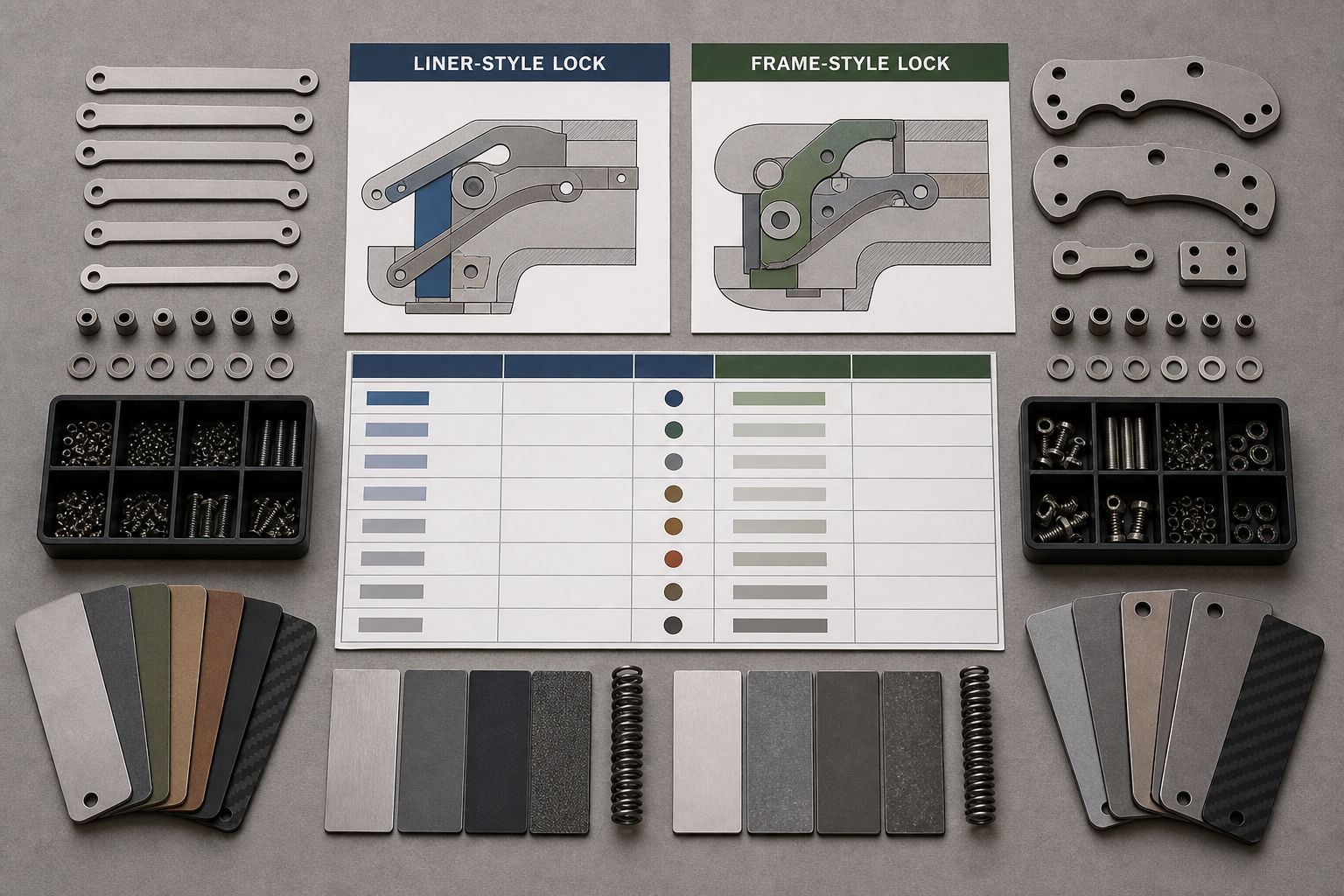
Liner lock and frame lock are related ideas, but they lead to different product plans. In a liner lock, the lock part is inside the handle. The outer scale can be G10, wood, plastic, aluminum, stainless steel, micarta-style material, or another custom surface. This gives buyers freedom to create different colors, textures, and price levels from one structure. For importers and private label buyers, this flexibility is useful.
In a frame lock, the lock bar is cut from the handle frame itself. This can create a stronger metal-handle impression. It can also make the mechanism more visible to the user. But it asks more from the frame material, lockbar cut, surface treatment, chamfering, and assembly tuning. A low-budget frame lock can disappoint if the lock travel is poor or the release feels sticky. A well-made liner lock can be better than a poorly controlled frame lock.
When I quote these two structures, I do not only compare unit price. I compare machining time, handle material, lockbar tuning, screw assembly, inspection time, and SKU flexibility. The better choice is the one that the buyer can produce consistently at the target market level.
| Decision point | Liner lock | Frame lock |
|---|---|---|
| Handle options | Broad material and color options | Usually metal-frame focused |
| Cost control | Often easier for private label lines | Can cost more if machining is demanding |
| User impression | Practical and familiar | Solid and structural |
| QC focus | Liner tension, tang fit, detent | Frame cut, lock travel, contact face |
When Does a Back Lock Make Sense for Pocket Knife Sourcing?
Some buyers overlook back locks because they feel traditional. That can be a mistake for certain product lines.
A back lock makes sense when the buyer wants a traditional lock position, strong closed-handle symmetry, controlled two-hand closing, and a design that does not depend on side liner access.
I Use Back Lock When the Brand Wants Familiar Control
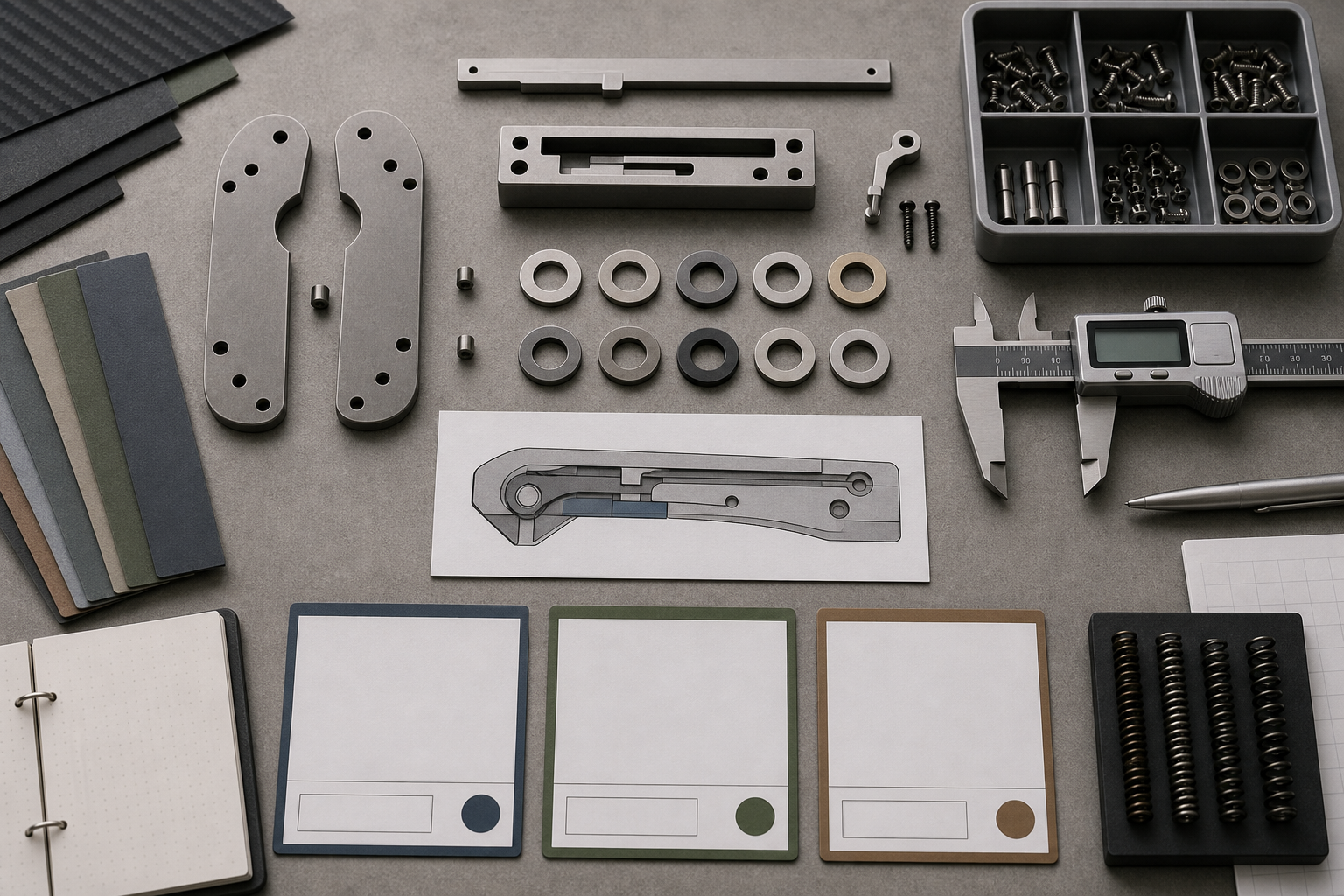
A back lock has a different feeling from a liner lock or frame lock. The release is usually on the handle back, not inside the handle side. This can create a clean side profile and a familiar traditional product style. For some outdoor, utility, and classic pocket knife programs, this lock feels more appropriate than a modern side lock.
The AKTI mechanism explanation describes the lock back as a design that uses a notch at the blade base and a projection on the back spring to create a positive open-position lock. That idea is simple to understand, but production still needs care. The blade tang notch, spring tension, lock contact surface, pivot location, handle pin position, and release pressure all need to be controlled. If the spring is too strong, the user may dislike the release feel. If the engagement is loose, the knife may feel poor. If the parts vary, the final action will vary.
Back locks can also be good when the buyer wants left-hand and right-hand user experience to feel more balanced. But they may need more work in spring fitting and handle alignment. I usually recommend a back lock when the buyer's market values simple, traditional, stable operation more than fast one-hand action.
| Back lock factor | What I check | Buyer impact |
|---|---|---|
| Tang notch | Clean engagement and release | Supports stable open position |
| Back spring | Tension and fit | Controls user feel |
| Handle symmetry | Side profile and grip | Helps traditional product style |
| Assembly variation | Pin and pivot alignment | Affects repeat production feel |
How Should Buyers Think About Button Locks and Bar-Style Locks?
Button and bar-style locks can create a smoother user experience. But they can also add tolerance and compliance questions.
Buyers should use button locks or bar-style locks when the target market expects easy release, modern action, and higher perceived mechanism value. These structures need tighter tolerance control, spring checks, and compliance review.
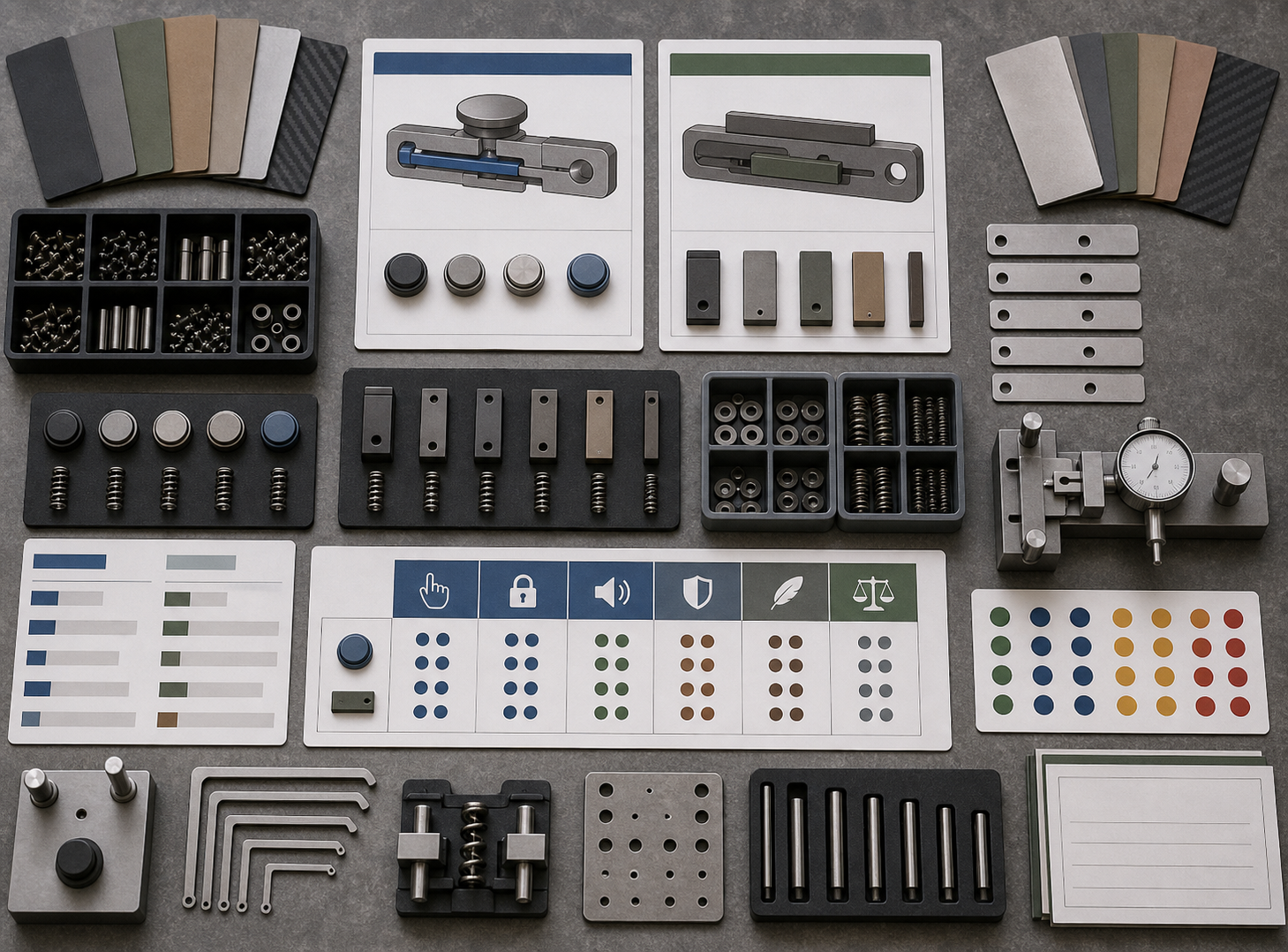
I Separate User Feel From Legal and Production Risk
Button locks and bar-style locks can be attractive because they feel modern. They can allow easy release and a clean handle side. Some buyers like them for EDC and outdoor product lines because they create a smoother product story. But I treat these structures with extra care. The more moving parts a lock has, the more the factory must control tolerance, spring force, surface finish, assembly order, and final test.
Button locks also create an important sourcing question: is the knife manual, assisted, automatic, or another mechanism type in the buyer's target market? I do not give legal advice, but I do ask buyers to review local rules before using mechanism claims in packaging or sales copy. The U.S. Code includes language about a spring, detent, or other mechanism designed to create a bias toward closure, which is one reason mechanism details should be reviewed carefully. The same product can be described differently by different sellers, so the RFQ should be clear.
For bar-style locks, the sliding bar, spring, handle cut, and blade tang interface must be stable. If the handle machining is loose, the action can feel weak. If the spring is inconsistent, the user experience changes. I recommend these locks when the buyer accepts tighter sample review and stronger function testing.
| Mechanism type | Main buyer benefit | Main production concern |
|---|---|---|
| Button lock | Easy release and modern feel | Button fit, spring force, compliance review |
| Bar-style lock | Ambidextrous-style operation | Bar travel and spring consistency |
| Both types | Higher perceived mechanism value | More tolerance and QC control |
| Both types | Distinct product story | Clear sales wording and testing needed |
Should Buyers Consider Slip Joint or Non-Locking Pocket Knives?
Not every pocket knife needs a positive lock. But a non-locking design still needs serious engineering control.
Buyers should consider slip joint or non-locking pocket knives when the target market values traditional carry, simple structure, lower mechanical complexity, or certain compliance needs. Spring tension and blade closing control remain important.
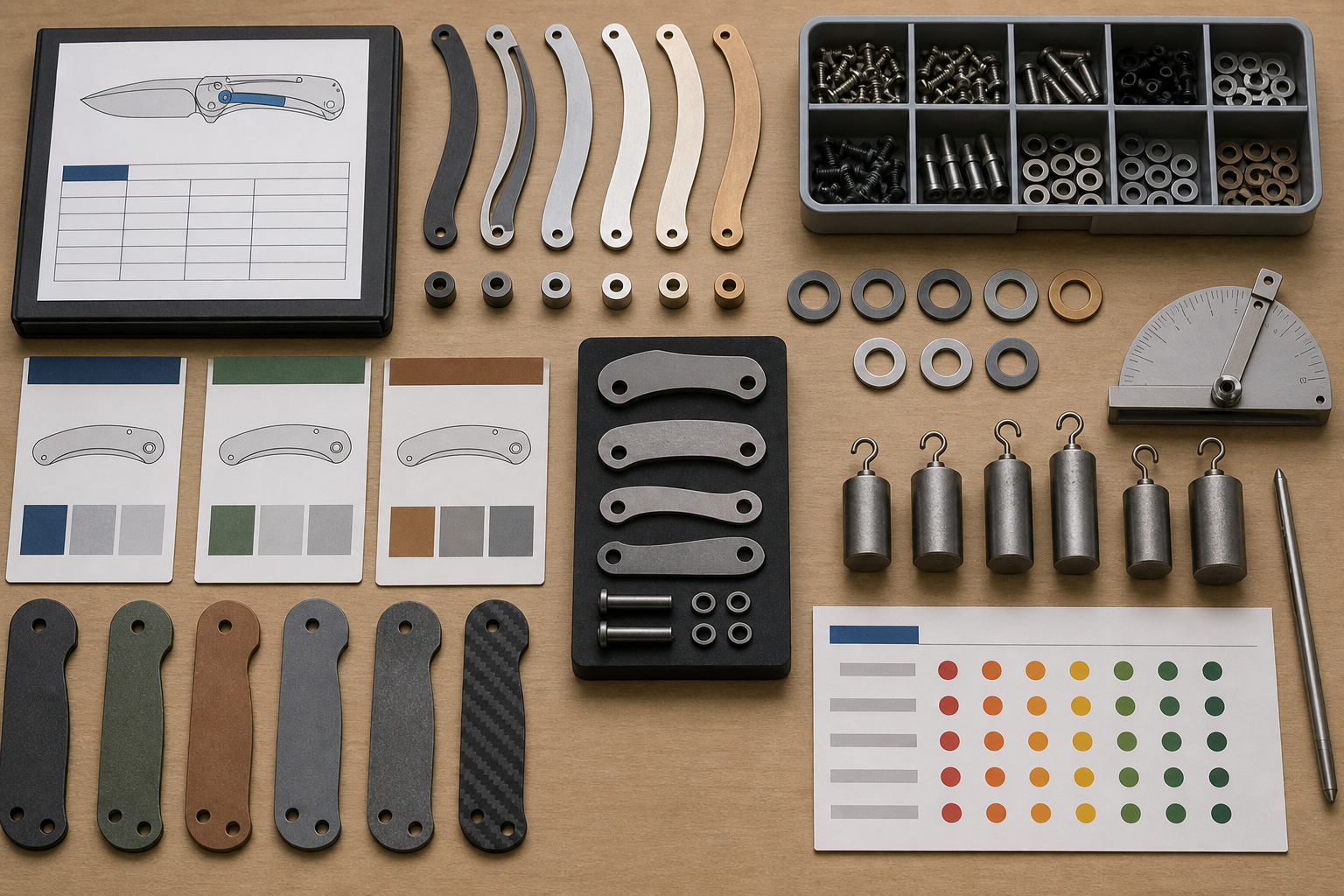
I Do Not Treat Simple as Careless
A slip joint does not lock the blade open in the same way as a liner lock, frame lock, or back lock. It uses spring pressure and blade tang geometry to create resistance in the open and closed positions. For some markets, this can be a practical choice. Buyers may choose it for traditional pocket knives, compact utility knives, lower mechanical complexity, or market rules that treat locking and non-locking knives differently.
But simple does not mean loose. The spring must hold the blade closed with enough control. The open position should feel stable for the intended use. The half-stop, if used, should feel consistent. The blade should sit safely inside the handle when closed. The pivot should not be so tight that the knife feels cheap, and it should not be so loose that the blade moves sideways. The AKTI discussion of slip joint design is useful because it explains how spring load can create bias toward closed and open positions.
For buyers, a slip joint RFQ should still include blade size, spring strength direction, handle material, nail nick or opening feature, finish, packaging claims, and inspection needs. I also ask buyers to be careful with the words used in listings. A non-locking knife should not be marketed as if it has a positive lock.
| Slip joint point | What to define | Why it matters |
|---|---|---|
| Spring tension | Closed and open resistance | Controls user confidence |
| Tang shape | Cam and stop geometry | Controls action feel |
| Handle fit | Blade clearance when closed | Protects appearance and function |
| Market wording | Non-locking description | Reduces claim confusion |
How Do Materials, Blade Size, and Tolerances Affect Lock Reliability?
A lock type cannot save a weak structure. Poor material choice or loose tolerance can make any lock feel unreliable.
Lock reliability depends on blade tang geometry, pivot alignment, liner or frame material, spring behavior, heat treatment, screw stability, handle stiffness, and repeated assembly consistency.
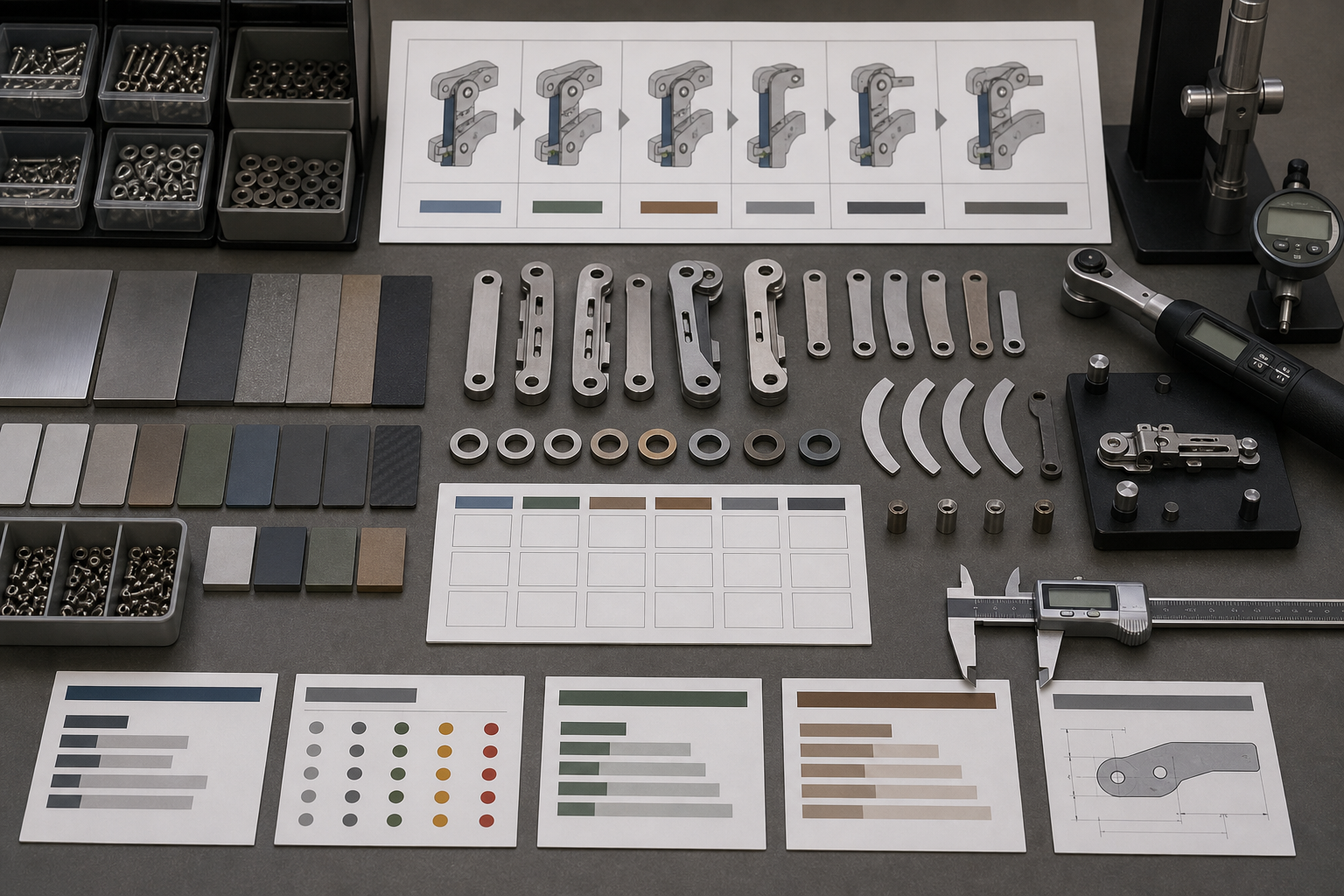
I Check the Contact Surface Before I Trust the Lock Name
In production, I care about contact. The lock part must meet the blade tang in a controlled way. The pivot hole must be accurate. The stop area must be stable. The liner, frame, spring, or bar must have the right stiffness. The handle should not flex in a way that changes lock engagement. Screws should hold the structure without over-tightening the pivot. The lock should feel similar from sample to batch, not only on one hand-tuned sample.
Blade size also matters. A small pocket knife can often use a simpler lock and still feel appropriate. A larger outdoor folder may need stronger structure and more careful testing. The blade steel and heat treatment do not define the lock by themselves, but they affect the blade tang and contact surfaces. An official material page such as Alleima 14C28N knife steel is useful because it shows that pocket knife steels are selected for hardness, edge stability, corrosion resistance, and production suitability. Those material decisions should sit beside the lock decision.
Tolerance control is just as important. A buyer may approve a nice prototype, but mass production can drift if drawings, fixtures, gauges, and inspection points are weak. I prefer to set practical pass standards for lock travel, blade play, centering, release feel, detent, and screw security before the order moves forward.
| Technical factor | What can go wrong | Practical control |
|---|---|---|
| Pivot alignment | Rough action or blade play | Accurate drilling and assembly check |
| Blade tang geometry | Poor lock engagement | Controlled machining and inspection |
| Handle stiffness | Lock movement changes | Match material to structure |
| Heat treatment | Contact surfaces wear poorly | Hardness and process verification |
What Quality Control Checks Should Buyers Add to Lock Type RFQs?
Many lock problems are preventable. They happen because the RFQ only names the lock and does not define the test.
Buyers should add function tests for lock engagement, blade play, lock release, detent, blade centering, pivot tension, screw torque, edge sharpness, appearance, packaging, and batch consistency.
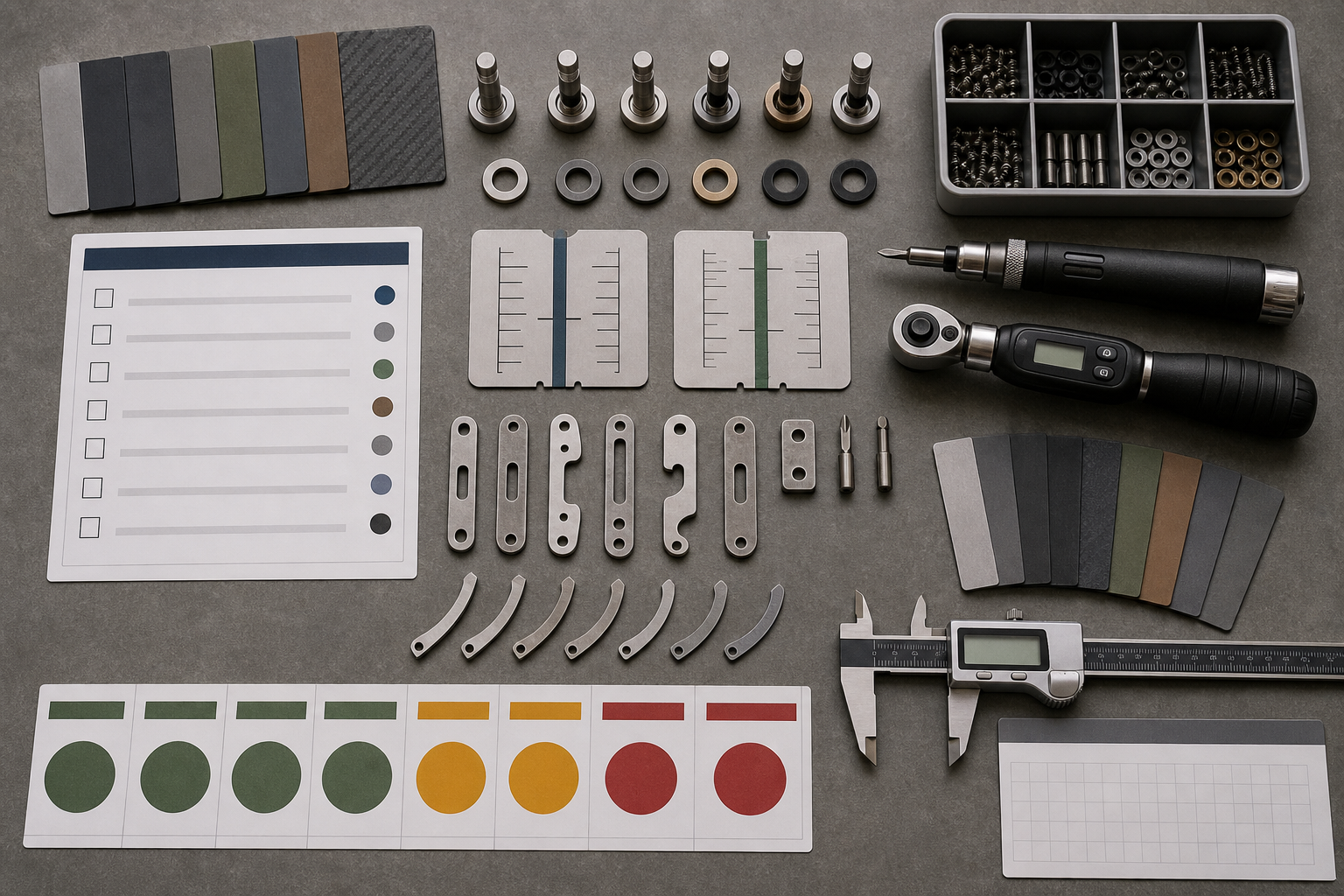
I Turn Lock Choice Into Measurable Checks
For B2B production, lock type should become an inspection plan. I check whether the lock engages at the approved position. I check whether the blade has side play or vertical movement. I check whether the release is too sticky, too soft, or too hard. I check whether the detent keeps the blade closed with the expected feel. I check whether the pivot tension is stable after repeated opening and closing during inspection. I also check whether the final product matches the approved sample.
For blade hardness and heat treatment, the NIST Rockwell hardness guide is useful background because it explains why good practice reduces measurement error. For supplier process control, ISO 9001 in the supply chain is useful because it reminds buyers that supplier requirements, approvals, monitoring, and inspections should be made clear. A certificate or factory profile does not replace a product-specific inspection plan.
In my RFQ discussions, I ask buyers to approve a lock standard before mass production. This can include a golden sample, photos of acceptable lock travel, written checks for blade play, and packaging wording. These details reduce arguments later.
| QC check | What to inspect | Why buyers need it |
|---|---|---|
| Lock engagement | Position, contact, and travel | Confirms functional consistency |
| Blade play | Side and vertical movement | Shows pivot and lock fit quality |
| Detent or closure | Closed retention and action feel | Supports safe product handling |
| Batch comparison | Sample versus production pieces | Protects repeat order quality |
How Should Buyers Match Lock Types to Market Position and RFQ Details?
A lock type can help a product sell, or it can push the product into the wrong cost level.
Buyers should match lock type to target user, retail price range, handle material, blade steel, opening method, compliance needs, packaging promise, MOQ, and inspection standard before requesting samples.
I Build the RFQ Around the Whole Knife
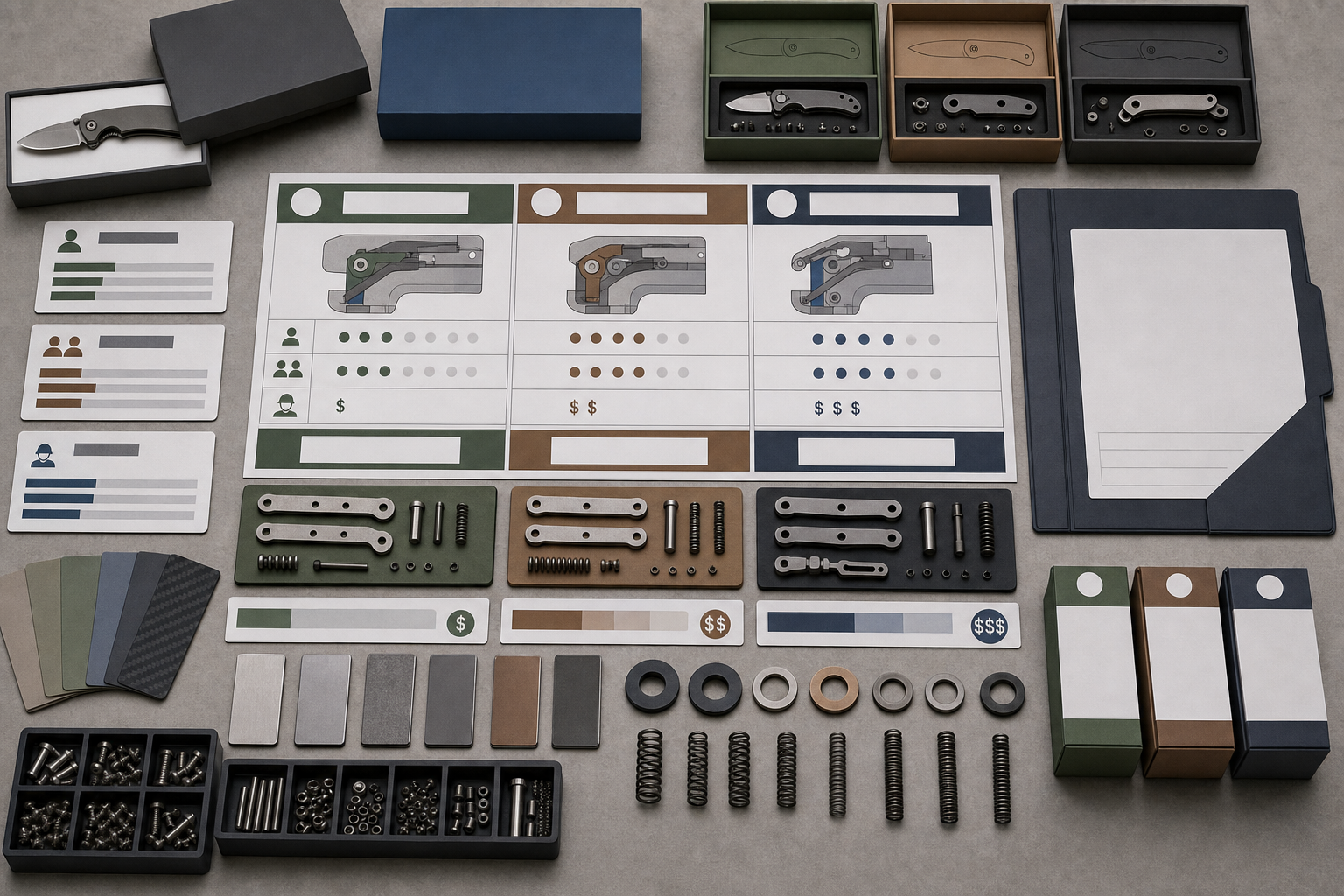
When a buyer sends an RFQ, I want more than "liner lock pocket knife" or "button lock folder." I want the target market, target price, MOQ, blade size, blade steel, handle material, lock type, opening feature, washer or bearing direction, finish, logo method, clip need, packaging type, and inspection focus. If the buyer has a finished drawing, I review the lock geometry and manufacturability. If the buyer only has a product idea, I help choose a lock that matches the price and brand direction.
For entry or mid-range private label lines, liner locks and slip joints can be practical because they support cost control and customization. For classic outdoor or utility designs, a back lock may fit the product story. For metal-handle EDC designs, a frame lock may support a stronger structure. For modern mechanism-led projects, button locks and bar-style locks can work, but they need tighter tolerance control and clearer compliance review.
I also remind buyers that packaging claims must match the product. If the package says "secure lock," the factory and buyer should agree what that means in inspection. If the product is non-locking, the copy should not imply a positive lock. A strong RFQ makes the sample faster, the quote clearer, and the production risk lower.
| Buyer goal | Lock direction to review | RFQ detail to prepare |
|---|---|---|
| Cost-controlled private label | Liner lock or slip joint | Target price, MOQ, handle material |
| Traditional outdoor product | Back lock or slip joint | Spring feel, handle style, packaging wording |
| Metal-handle EDC line | Frame lock | Frame material, finish, lock travel |
| Modern mechanism story | Button or bar-style lock | Tolerance, spring, compliance, QC checks |
Turn this article into a folding knife project.
Share your blade type, lock direction, steel preference, handle material, quantity, target market, and packaging needs. Vast State can prepare OEM/ODM options.
Conclusion
I choose pocket knife lock types by matching structure, market, material, price, compliance wording, and QC checks before sampling or production.
Source Notes
- AKTI knife mechanisms supports the explanations of slip joint, lock back, liner lock, frame lock, detent, and bias toward closure.
- 15 USC Chapter 29 supports the need to review mechanism wording around bias toward closure and automatic knife categories.
- Alleima 14C28N knife steel supports the material selection discussion for pocket knife blades.
- NIST Rockwell hardness guidance supports controlled hardness measurement practice.
- ISO 9001 in the supply chain supports the need for clear purchasing requirements, approvals, monitoring, and inspections.