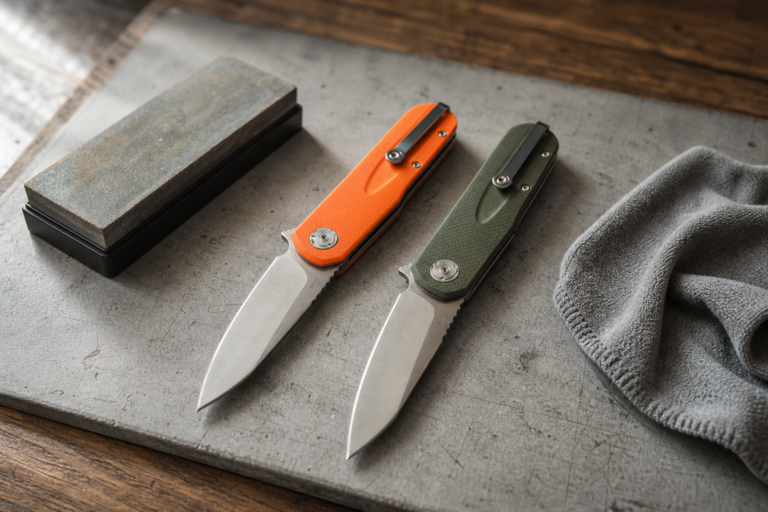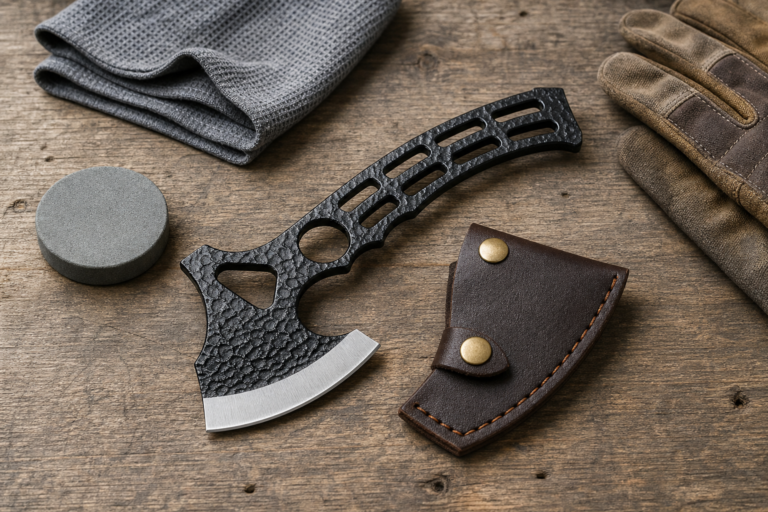
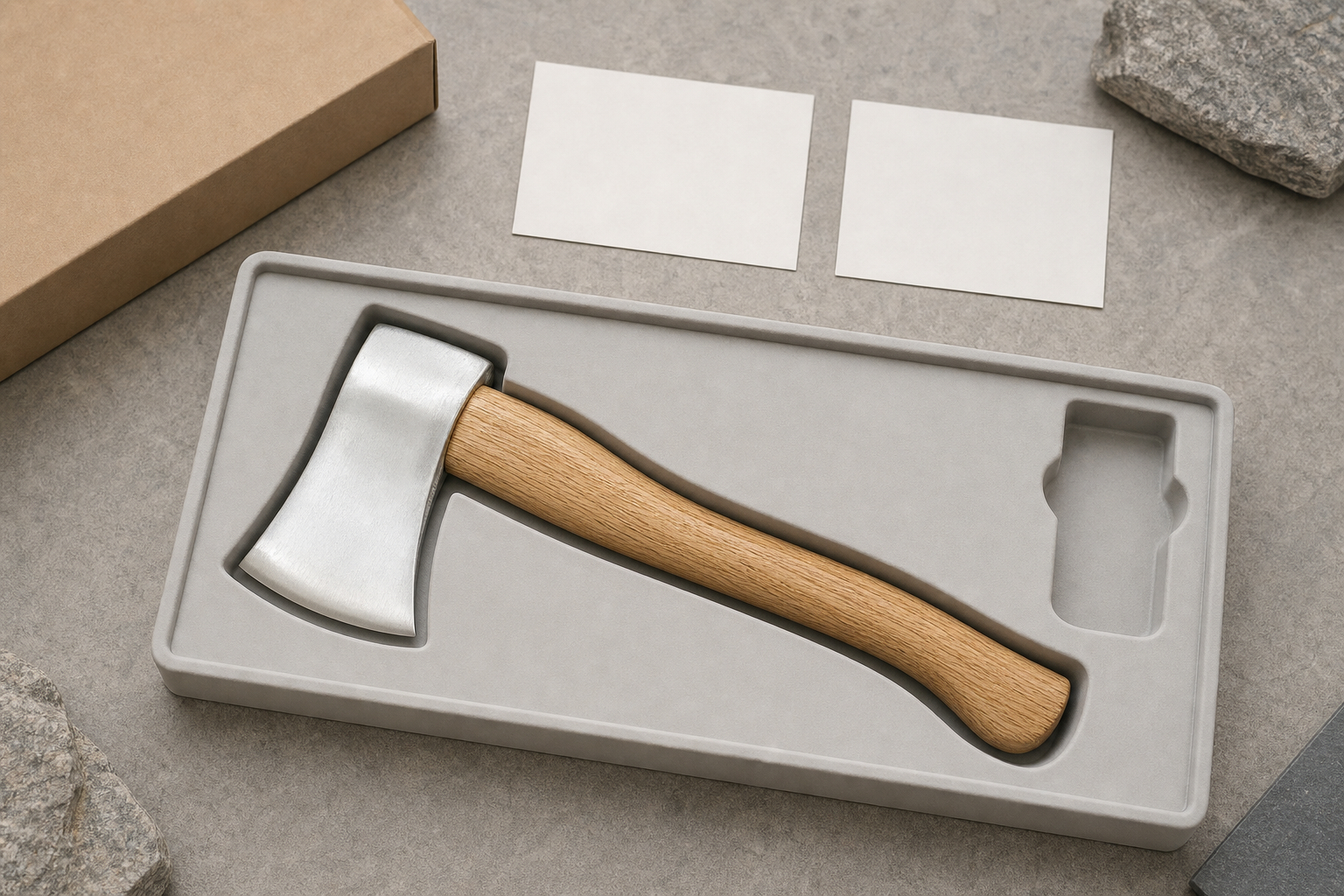
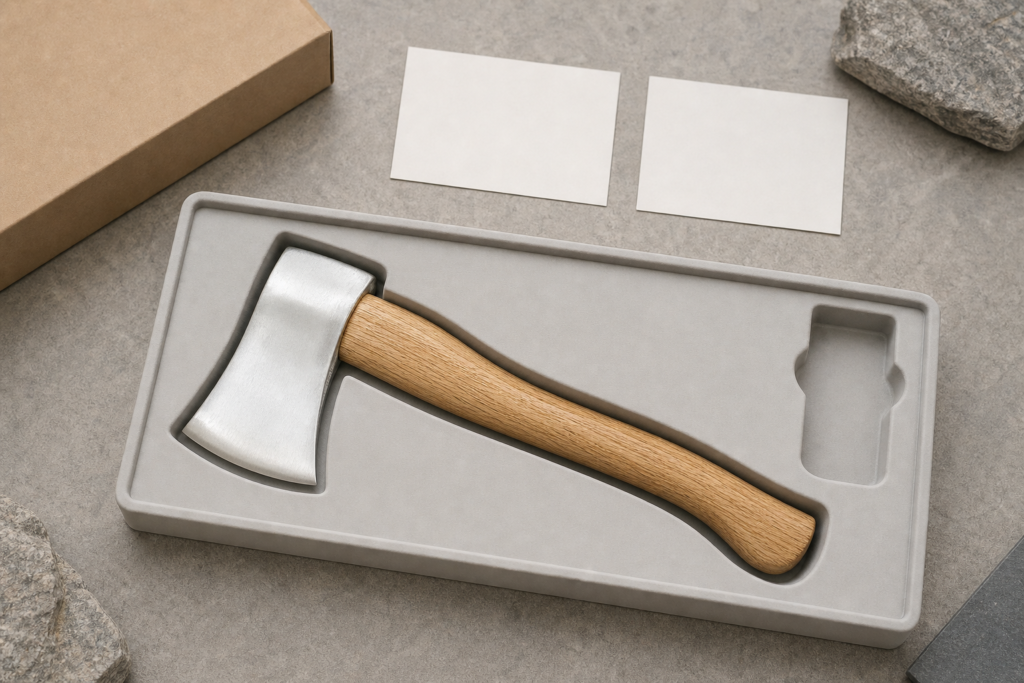
An axe and a hatchet can look similar in a catalog. But wrong positioning can create unsafe use, poor reviews, and costly returns.
Buyers should choose between axes and hatchets by defining the user's task, tool size, head weight, handle length, cutting power, carry method, sheath protection, safety instructions, and packaging. Hatchets suit compact camp tasks. Axes suit larger wood work and require stronger safety guidance.
Quick buyer brief:
- Answer: The choice depends on task scale, user skill, portability, and safety boundary.
- Buyer context: This helps outdoor brands, camping brands, knife brands, importers, wholesalers, distributors, private label buyers, and sourcing managers.
- Key checks: Head weight, handle length, steel, heat treatment, edge geometry, handle retention, grip, sheath, packaging, care card, local wood-use guidance, and QC.
Have a knife or multi-tool project in mind?
Send your sketch, CAD file, sample photo, or product idea. Vast State can review manufacturability, suggest materials, estimate MOQ, and prepare a quote for your OEM/ODM project.
When I help a buyer plan an outdoor tool line, I do not treat an axe and a hatchet as two sizes of the same product only. They create different user behavior. A hatchet is easier to carry and fits small camp tasks. A larger axe can do more serious wood work but needs more space, more skill, and more safety control. For B2B buyers, the right choice is not the tool that looks more rugged. It is the tool that matches the customer, the use case, the packaging, and the brand promise.
Why Should Buyers Separate Axe and Hatchet Positioning?
If the product role is unclear, the customer may use the tool in the wrong way. That can damage trust quickly.
Buyers should separate axe and hatchet positioning because they serve different wood-processing scales. A hatchet is compact and camp-friendly. An axe offers more reach and power but needs more skill, space, and safety guidance.
I Start With the User's Real Task
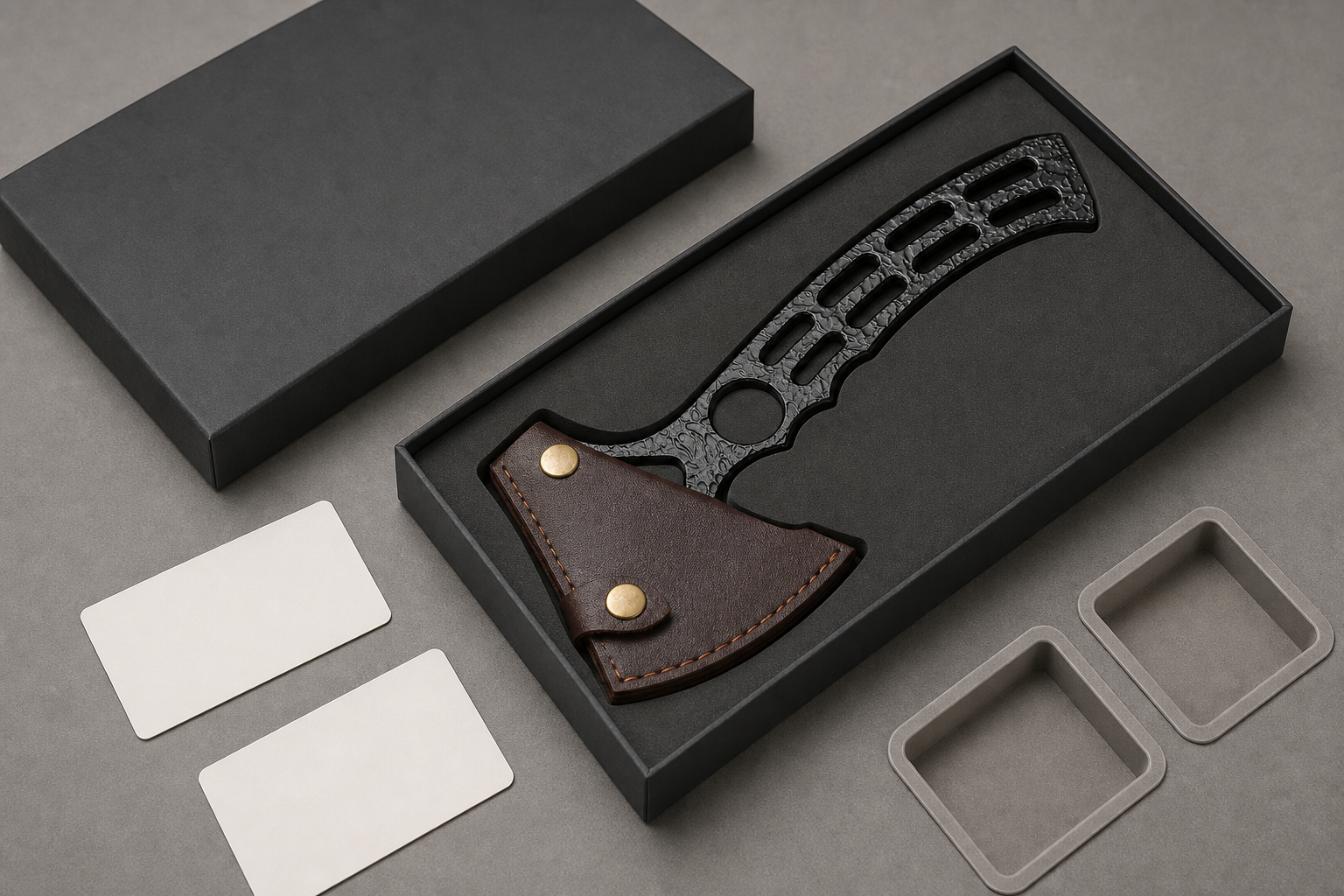
The buyer should not start with the question, "Which one looks better?" The better question is, "What work should the user do?" A compact hatchet can split small kindling, trim small branches when allowed, prepare firewood pieces, and fit into a camping kit. A larger axe can handle bigger wood, longer strokes, and heavier tasks, but it is harder to pack and less forgiving for beginners.
The USDA Forest Service manual An Ax to Grind treats axes as tools with history, different types, handle selection, sharpening, and safe use. That alone tells buyers something important. An axe is not just an outdoor decoration. It is a serious edged tool that needs proper selection and instruction.
For retail positioning, I like simple language. A hatchet can be described as a compact camp tool for small wood tasks. A full axe can be positioned for more capable wood processing, but only if the user has enough space and skill. If the buyer sells to beginners, the product page and packaging should avoid aggressive claims. It should explain the task boundary clearly.
| Product type | Best fit | Buyer warning |
|---|---|---|
| Hatchet | Camp kits, car camping, kindling | Do not overclaim heavy chopping |
| Camp axe | Outdoor tool line, larger wood prep | Needs clear safety instructions |
| Splitting axe | Firewood-focused product | Not ideal for compact kits |
| Decorative axe | Gift or display item | Must not imply unsafe use |
OEM/ODM RFQ Checklist
Prepare these details to help Vast State review your project and provide a more accurate quotation.
| RFQ Field | What to Prepare |
|---|---|
| Project type | OEM from drawing / ODM private label / wholesale catalog |
| Product category | Folding knife / fixed blade / multi-tool / outdoor tool |
| Design status | Idea / sketch / 2D drawing / 3D CAD / physical sample |
| Target price | Ex-factory target price or retail price range |
| MOQ expectation | 500 / 1,000 / 3,000 / 5,000+ pcs |
| Logo method | Laser engraving / etching / printing / molded logo |
| Packaging | Standard packaging / custom retail box / Amazon-ready |
| Market | USA / EU / Japan / Korea / Middle East / other |
| Compliance needs | Buyer-specified testing / documentation / labeling |
| Timeline | Sample deadline / mass production deadline |
How Do Size, Weight, and Handle Length Change Tool Behavior?
A small change in head weight or handle length can change the whole user experience. Buyers should not ignore balance.
Size, weight, and handle length affect cutting force, control, fatigue, packing space, safety distance, and user skill level. Hatchets are easier to carry. Axes provide more leverage and power.
I Match Leverage to the User
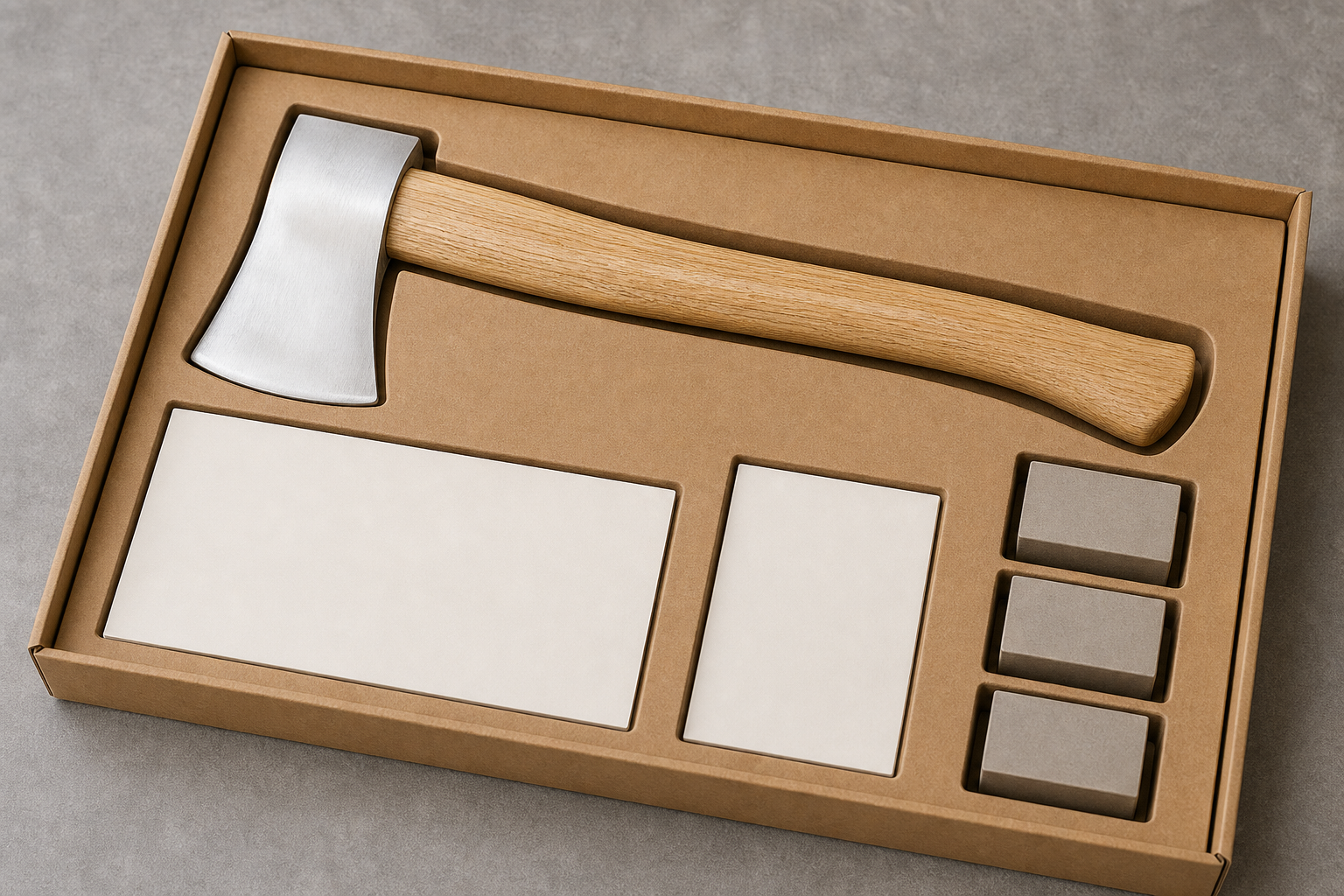
Handle length creates leverage. A longer handle can generate more force, but it also needs more space and better control. A shorter handle is easier to pack and use around camp, but it gives less power. This is why a hatchet and an axe should not be sold as interchangeable.
Head weight matters too. A heavier head can split better, but it can tire a beginner and increase risk if the user misses. A lighter head is easier to carry, but it may bounce or stick if the geometry is poor. The buyer should also think about the total kit weight. If the product is bundled with a fixed blade, saw, gloves, sheath, and pouch, a heavy axe may make the kit less attractive.
Balance is one of the details that users feel but do not always describe. A well-balanced tool feels controlled. A badly balanced tool feels clumsy. For mass production, this means the supplier should control head weight, handle length, handle material, and head fit. Small variations can change the product feel.
For B2B buyers, I usually suggest creating target dimensions instead of choosing from catalog photos. The RFQ should include approximate head weight, handle length, overall weight, sheath type, and intended user. This makes sample development more focused.
| Design factor | Hatchet direction | Axe direction |
|---|---|---|
| Handle length | Shorter and packable | Longer and stronger leverage |
| Head weight | Light to medium | Medium to heavy |
| User skill | Beginner-friendly with warnings | Needs more skill and space |
| Product line | Camping kit or car kit | Wood-processing or outdoor tool line |
What Head Shape and Edge Geometry Should Buyers Review?
A sharp edge alone is not enough. Poor geometry can make the tool stick, chip, or cut badly.
Buyers should review head shape, cheek thickness, bit profile, bevel angle, edge finish, steel choice, heat treatment, and intended wood task before approving an axe or hatchet.
I Design the Edge for the Job
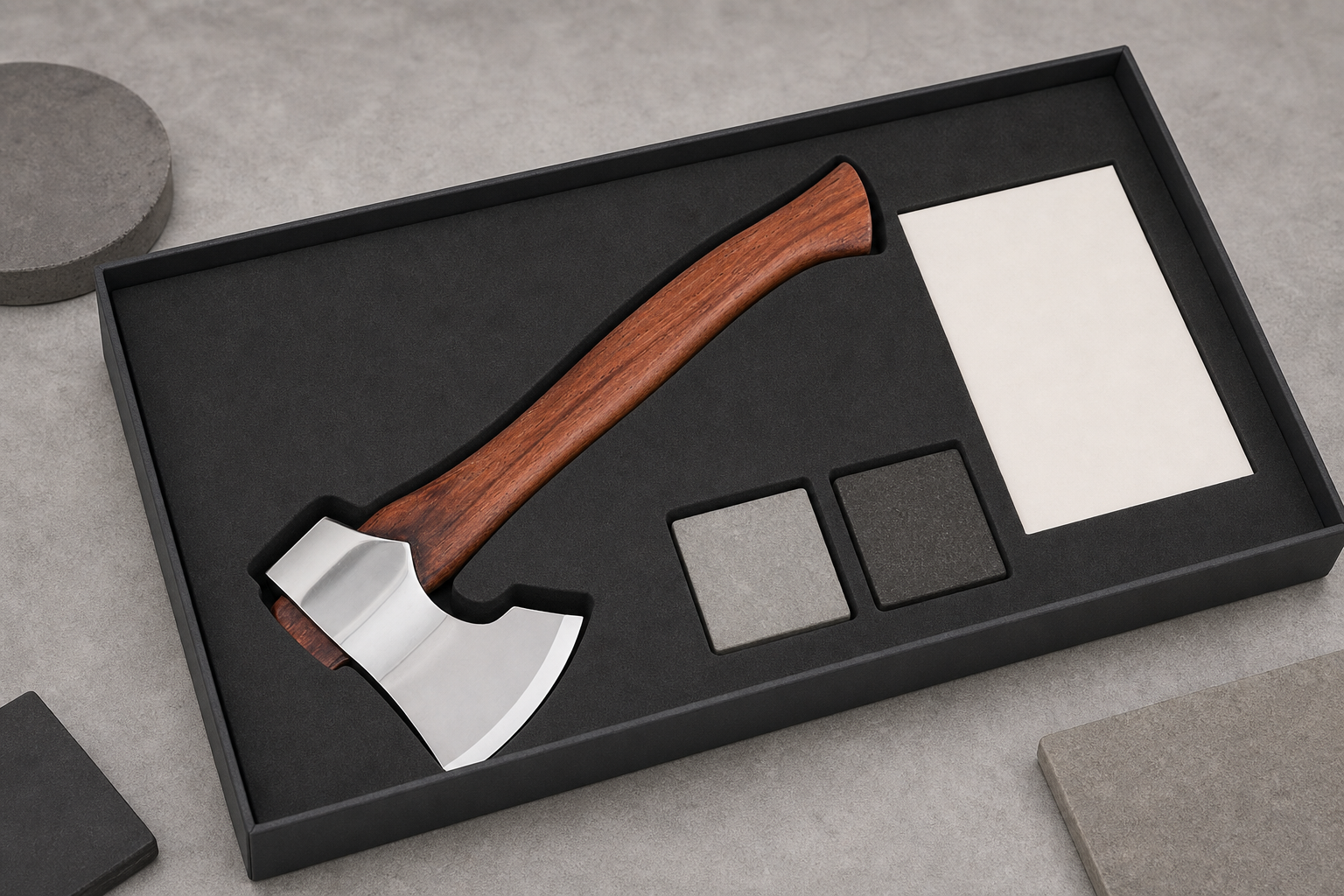
The head shape should match the task. A tool for splitting kindling needs a different geometry from a tool for chopping across grain. A thin edge can bite well but may be fragile if used badly. A thick wedge can split better but may not cut deeply. For a beginner camping tool, I usually prefer forgiving geometry over extreme sharpness claims.
Steel and heat treatment also matter. If the edge is too soft, it will roll or dull quickly. If it is too brittle, it may chip. The supplier should understand the target hardness and test method. The buyer does not need to publish every technical detail on the retail page, but the production file should include steel grade, heat treatment target, and inspection process.
The USDA Forest Service axe manual warns against striking knots directly when possible and against using an axe in ways that can damage the tool. It also notes that axes are sharp wedge tools that can be dangerous if used without care. For product development, this reminds me to build realistic instructions into the kit. A tool can be well made and still fail if the user is encouraged to abuse it.
For buyers, edge geometry should be approved with physical samples. Photos do not show wedge behavior. The sample should be tested on the kind of wood the product claims to handle.
| Head detail | What it affects | Buyer check |
|---|---|---|
| Bit profile | Cutting bite | Match task and wood type |
| Cheek thickness | Splitting ability | Test on kindling |
| Heat treatment | Edge life and toughness | Hardness record |
| Edge finish | First-use performance | Sharpness and burr check |
Why Are Handle Material and Head Retention Critical?
The head and handle create one working tool. If that connection is weak, the whole product becomes unsafe.
Handle material and head retention are critical because they control grip, shock, durability, weather resistance, balance, and user safety. Buyers should inspect cracks, looseness, fit, wedges, molding, and finish.
I Treat the Handle as a Safety Part
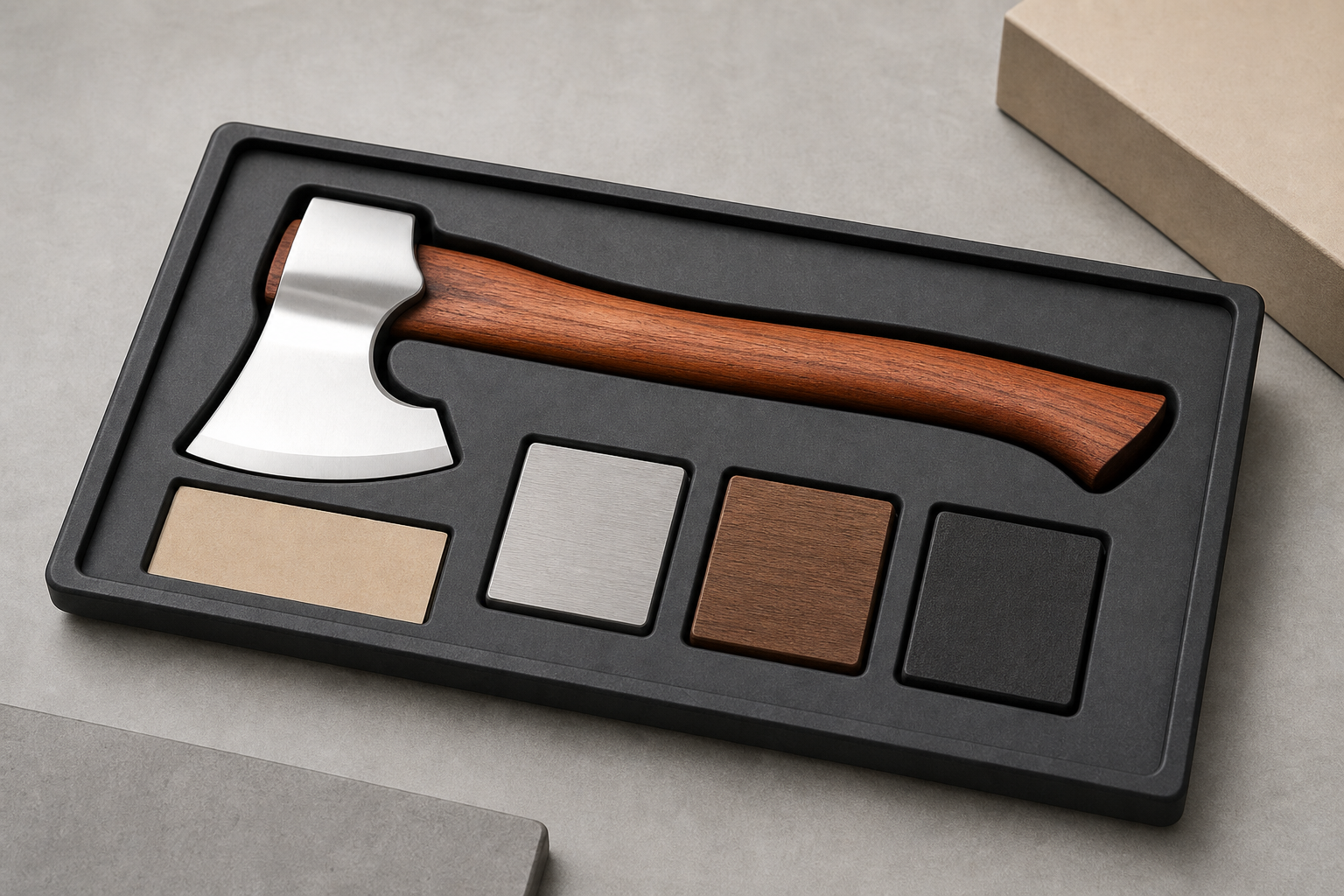
Many buyers focus on the head because it looks more technical. I pay equal attention to the handle. A wooden handle can feel traditional and comfortable, but it needs good grain, finish, moisture control, and secure hanging. A fiberglass handle can resist weather and impact well, but the grip design and head connection must be checked. A steel or full-tang style handle can feel strong, but it can add weight and transmit shock. A polymer overmold can improve grip, but it must not loosen or split.
OSHA's hand tools standard says hand tools should not be unsafe and that wooden handles should be free from splinters or cracks and tight in the tool. This is a workplace rule, not a retail camping rule, but it gives a simple quality lesson. A buyer should never accept loose heads, cracked handles, sharp handle edges, or poor grip finish.
Head retention should be tested before shipment. The test method may differ by design, but the principle is the same: the head must stay secure under expected use. For wood handles, wedge fit and grain direction matter. For molded designs, bonding and molding quality matter. For repeat orders, the supplier should document the inspection.
| Handle type | Main benefit | Risk to control |
|---|---|---|
| Wood | Traditional feel and shock comfort | Cracks, grain, wedge fit |
| Fiberglass | Weather resistance | Bonding and grip comfort |
| Steel | Strong integrated look | Weight and shock |
| Polymer overmold | Grip and color options | Loosening and surface wear |
How Should Buyers Think About Sheaths, Guards, and Packaging?
An axe or hatchet without edge protection is not a complete retail product. Packaging must protect people and the tool.
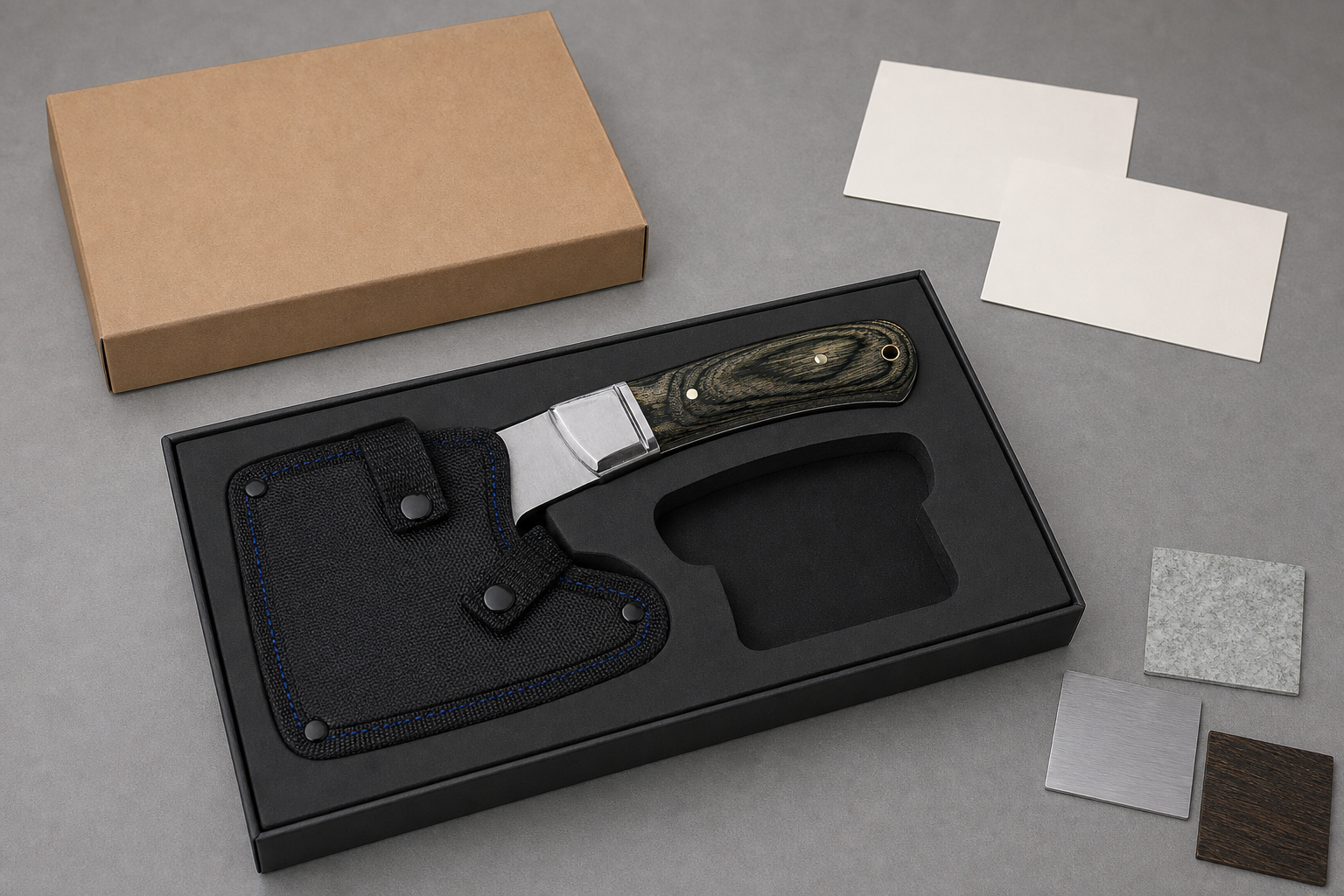
Buyers should require sheaths, edge guards, secure inserts, warning cards, and shipping protection. The sharp edge should be covered during storage, transport, retail handling, and customer unpacking.
I Design Packaging Around the Edge
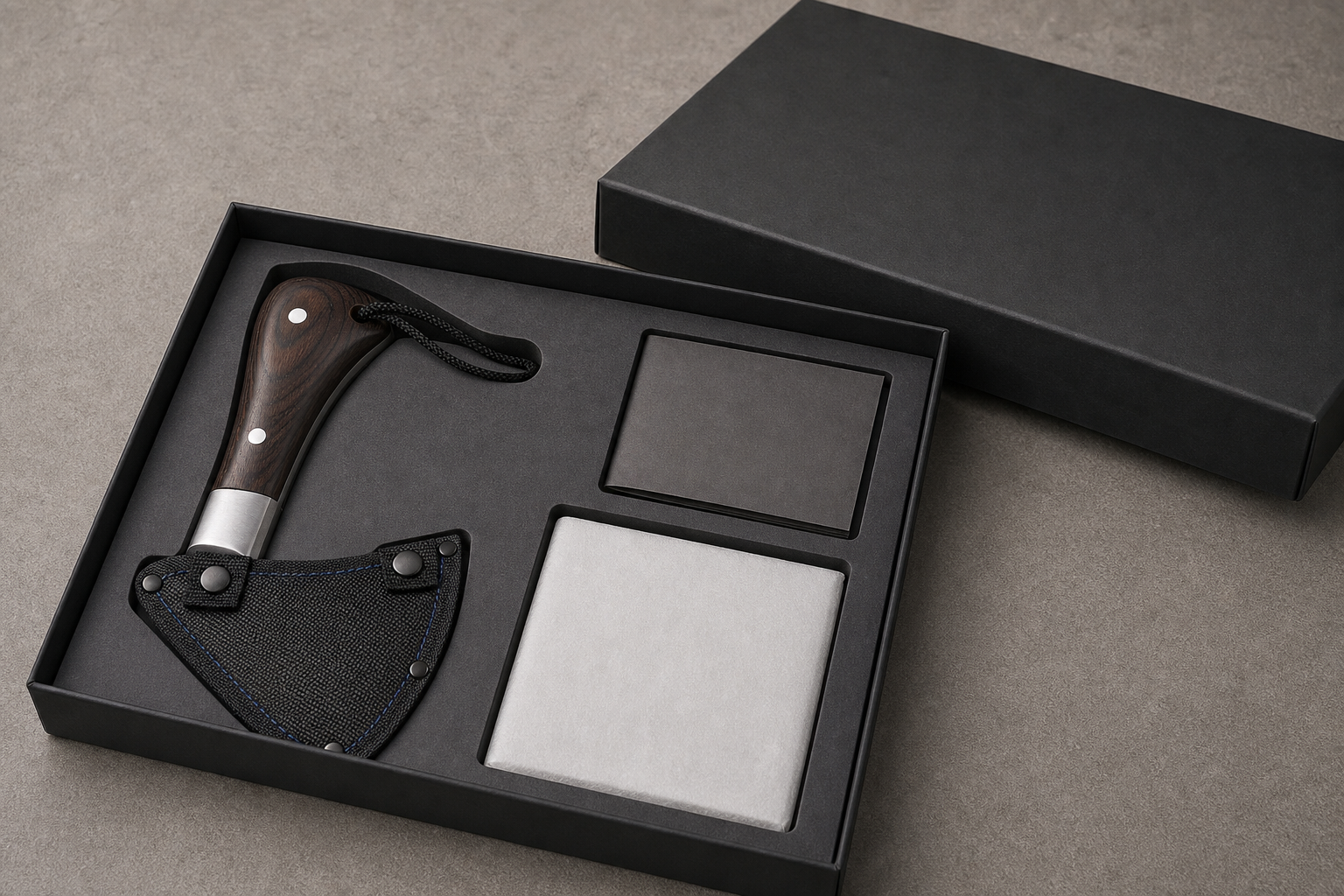
A hatchet or axe is sharp, heavy, and sometimes awkward to pack. The product may pass through factory workers, warehouse staff, inspectors, retailers, couriers, and consumers before it is used. Every person in that chain needs the edge protected.
The USDA Forest Service axe manual states that an axe should be sheathed or boxed during transport. That is a practical product-design lesson. A sheath is not only an accessory. It protects the edge, the package, and the user. It also improves perceived value. A good sheath can make a simple hatchet feel complete. A weak sheath can make a premium tool feel unfinished.
Packaging should also stop movement. A hatchet head can scratch the handle, dent the box, or damage another item in a kit if the insert is loose. Foam, cardboard dividers, molded pulp, fabric sleeves, or plastic guards can help. The buyer should review packaging by shaking sample boxes and checking for rub marks after transit.
Warning cards should be clear. They should explain safe storage, local firewood rules, adult use, proper grip, edge care, and the fact that the tool should not be used for throwing, prying, hammering steel wedges, or other unsuitable tasks unless specifically designed for them.
| Packaging part | Function | Buyer check |
|---|---|---|
| Edge guard | Covers sharp bit | Retention and coverage |
| Sheath | Protects storage and carry | Closure strength |
| Box insert | Prevents movement | Transit abrasion test |
| Care card | Guides safe use | Clear, market-ready wording |
Which Tool Fits Camping, Bushcraft, and Retail Gift Sets Better?
Different channels want different tools. A rugged-looking axe may not be the best seller for every audience.
Hatchets often fit camping kits and gift sets better because they are compact. Larger axes fit wood-processing lines better. Bushcraft buyers may want either, depending on task, skill, and carry style.
I Match the Tool to the Sales Channel
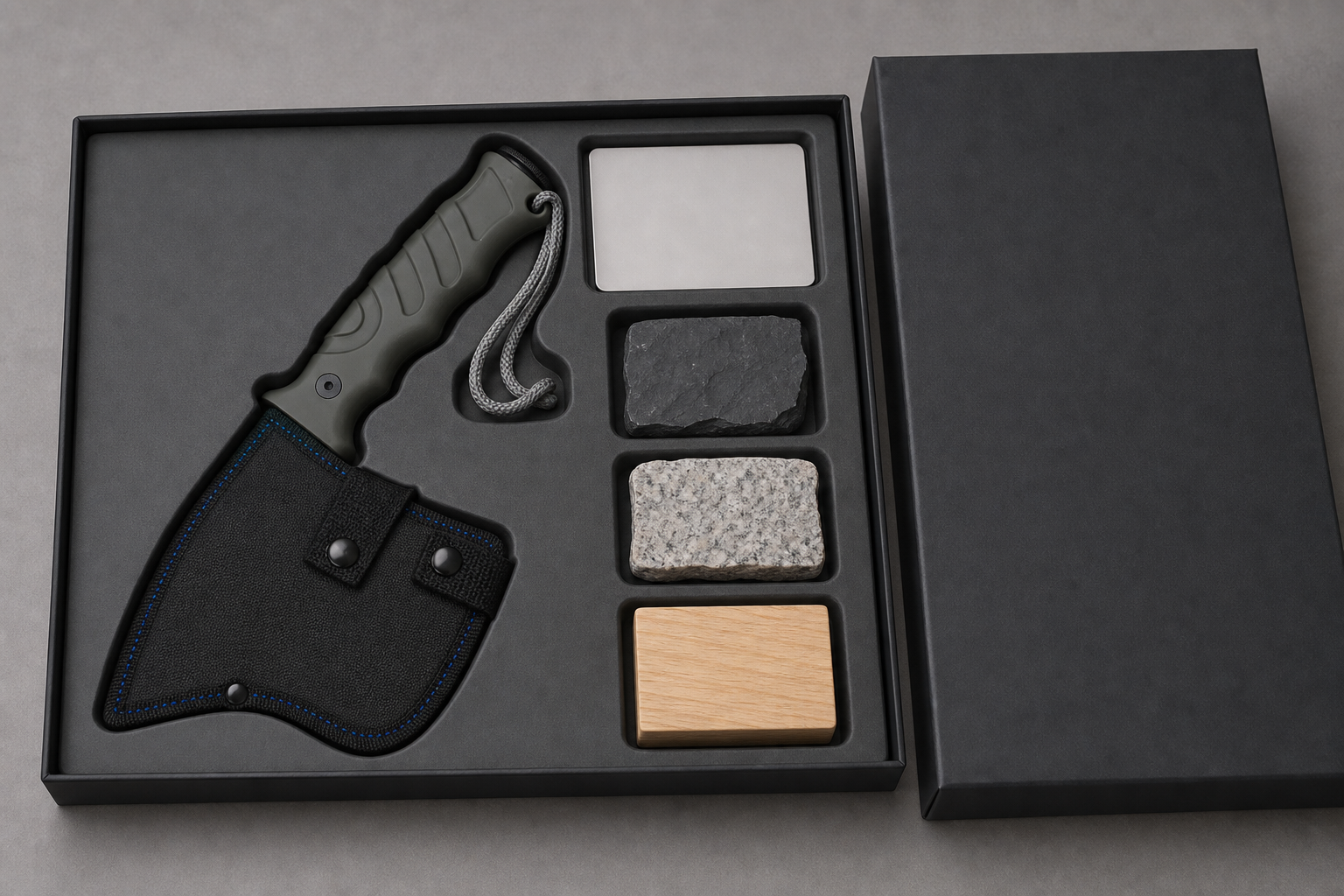
For entry-level camping, I often prefer a compact hatchet or a kit that combines a folding saw with a small hatchet. It is easier to pack, easier to explain, and more realistic for small camp tasks. For car camping, a slightly larger hatchet or small camp axe may work. For bushcraft-focused buyers, the decision depends on what the user expects. Some users value portability. Others value chopping power.
For retail gift sets, the hatchet usually has an advantage because the package can stay manageable. A large axe needs bigger packaging, higher shipping cost, more safety wording, and a more serious customer. If the buyer sells through online marketplaces, oversize shipping and restricted-goods rules may matter. If the buyer sells through specialty outdoor retailers, the store may accept a more technical tool if the quality and documentation are strong.
Responsible outdoor positioning also matters. The National Park Service's Leave No Trace materials remind users to minimize campfire impacts and follow local wood collection rules. A product page should not encourage users to cut live trees or gather wood where it is not allowed. This is especially important for beginner products. The product should support good outdoor behavior, not just sell a rugged fantasy.
| Channel | Better fit | Reason |
|---|---|---|
| Beginner camping kit | Hatchet or saw plus hatchet | Compact and easier to explain |
| Bushcraft line | Hatchet or axe | Depends on user skill |
| Gift set | Hatchet | Easier package size |
| Firewood product line | Larger axe | More suitable for heavier work |
What Quality Checks Should Buyers Require Before Shipment?
Sharp tools need more than a visual check. A loose head or weak sheath can create real customer risk.
Buyers should require checks for head retention, handle condition, edge quality, hardness, balance, sheath fit, packaging protection, surface finish, logo placement, and warning card accuracy.
I Build QC Around the Highest-Risk Details
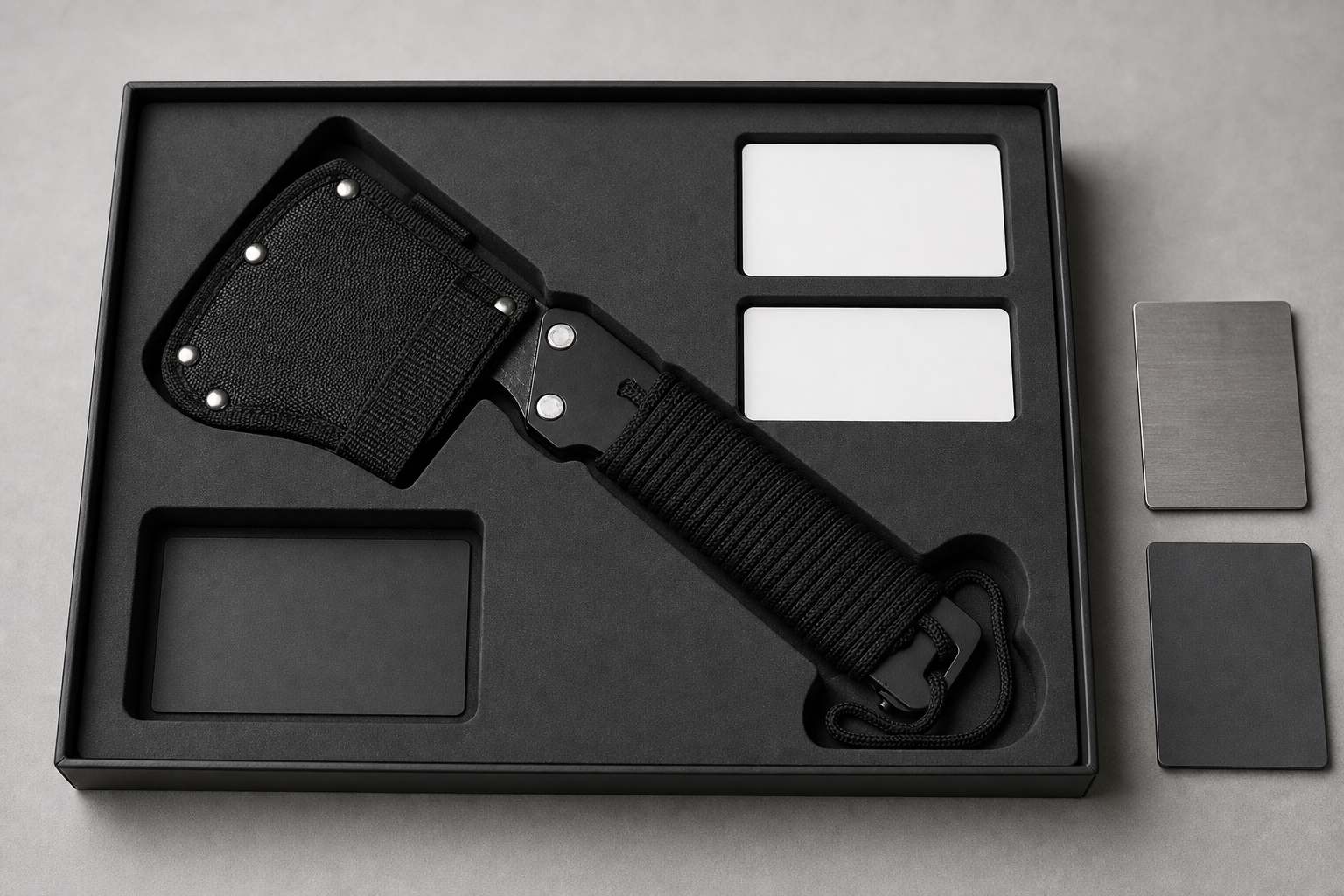
For axes and hatchets, the highest-risk details are clear. The head must be secure. The handle must be sound. The edge must be protected. The tool must not have burrs, cracks, loose parts, or packaging damage. These details should be checked before shipment, not after customers complain.
QC should include both function and appearance. Function checks include head retention, handle integrity, sheath fit, edge condition, and balance. Appearance checks include finish, logo, coating, rust, handle color, and packaging. If the product includes a wooden handle, the buyer should define acceptable grain, knots, color variation, and finish. If the product uses fiberglass or polymer, the buyer should define molding defects and grip texture limits.
The inspection checklist should be simple enough for real production. If the checklist is too vague, inspectors cannot apply it. If it is too complicated, the factory may ignore it. A good checklist uses clear pass/fail items and sample photos. For repeat orders, the buyer should keep approved samples and defect examples.
For B2B buyers, this matters commercially. A tool that fails at the head or handle can damage the brand more than a cosmetic defect on a small accessory. Sharp outdoor tools deserve stricter control.
| QC item | What to inspect | Why it matters |
|---|---|---|
| Head retention | Looseness and fit | Safety and durability |
| Handle condition | Cracks, splinters, grip | User control |
| Edge and sheath | Sharpness and coverage | Safe carry and storage |
| Packaging | Movement and rub marks | Retail presentation |
How Can Vast State Support Axe and Hatchet Product Development?
A good axe or hatchet project needs clear positioning, not only a factory quote. The product must fit the market.
Vast State can support axe and hatchet projects through tool role planning, material suggestions, sample development, sheath and packaging customization, QC standards, kit matching, and production follow-up.
I Connect Axes and Hatchets to the Whole Outdoor Line
Vast State is an OEM and ODM knife and outdoor tool manufacturer based in Yangjiang, China. We are focused on folding knives, fixed blade knives, pocket knives, camping tools, rescue tools, and multi-tools for international B2B customers. Axe and hatchet projects fit this outdoor tool direction when the buyer wants a practical product line rather than a single disconnected item.
I can help buyers decide whether a compact hatchet, camp axe, saw-and-hatchet bundle, or full wood-processing kit makes more sense. I can also help with material selection, handle direction, sheath design, packaging, finish options, and QC criteria. If the buyer has a target price, we can adjust size, material, finish, and packaging to match the market. If the buyer has a premium position, we can improve sheath, finish, and inspection standards.
The best projects start with specific information. The buyer should tell me the target market, user level, wood task, packaging format, expected price range, material preference, handle style, sheath requirement, MOQ, and delivery timeline. Then we can turn the idea into a manufacturable product.
For me, the core point is simple. A hatchet is not just a small axe. An axe is not just a bigger hatchet. Each tool needs its own purpose, safety boundary, and production standard.
| Buyer need | Vast State support | Result |
|---|---|---|
| Product direction | Axe vs hatchet positioning | Clearer market fit |
| Custom design | Head, handle, sheath suggestions | Better product usability |
| Outdoor kit | Tool matching and packaging | Stronger retail bundle |
| Repeat order | QC and production follow-up | More stable supply |
Turn your idea into a quote-ready knife project.
Share your drawing, sample photo, target quantity, market, and packaging needs. Vast State will review manufacturability and prepare OEM/ODM options.
Conclusion
I choose axes and hatchets by matching the tool to the task, user skill, carry method, safety wording, and repeatable production control.
Source Notes
[1] USDA Forest Service, "An Ax to Grind: A Practical Ax Manual", https://www.fs.usda.gov/t-d/pubs/htmlpubs/htm99232823/toc.htm [2] USDA Forest Service, "An Ax to Grind: Using Axes", https://www.fs.usda.gov/t-d/pubs/htmlpubs/htm99232823/page04.htm [3] USDA Forest Service, "Handtools for Trail Work", https://www.fs.usda.gov/t-d/pubs/htmlpubs/htm05232810/page05.htm [4] OSHA, "1926.301 - Hand tools", https://www.osha.gov/laws-regs/regulations/standardnumber/1926/1926.301 [5] National Park Service, "Leave No Trace Principle #5 - Minimize Campfire Impacts", https://www.nps.gov/articles/000/idkt-lnt5.htm [6] National Park Service, "Leave No Trace - Point Reyes National Seashore", https://www.nps.gov/pore/planyourvisit/leavenotrace.htm