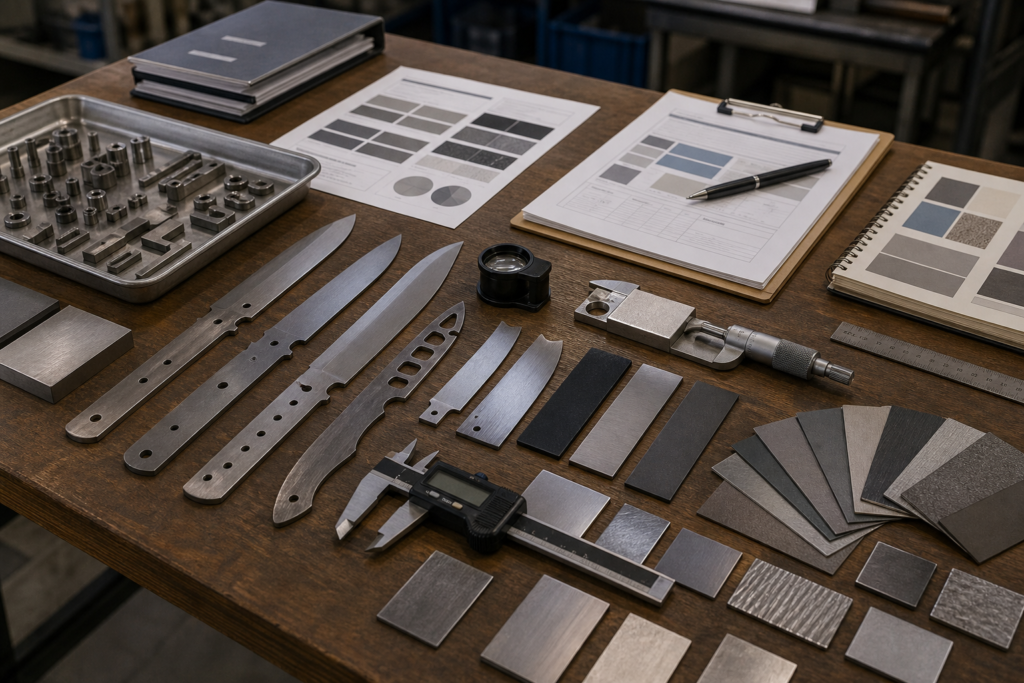
Some suppliers talk about quality as a slogan. Buyers need proof. Without process control, even a beautiful sample can fail in repeat production.
OEM knife buyers can learn from strong regional metalworking cultures by looking for process discipline, skilled workers, stable supplier networks, accurate measurement, finish control, inspection records, and continuous improvement. The real lesson is not to copy one region, but to build a repeatable quality system.
Quick buyer brief:
- Answer: Regional manufacturing quality comes from systems, not only reputation.
- Buyer context: This helps knife brands, outdoor brands, importers, wholesalers, distributors, private label buyers, and sourcing managers.
- Key checks: Process flow, skilled operations, material control, dimensional inspection, heat treatment control, surface finish standards, supplier network, batch traceability, corrective actions, and communication.
Have a knife or multi-tool project in mind?
Send your sketch, CAD file, sample photo, or product idea. Vast State can review manufacturability, suggest materials, estimate MOQ, and prepare a quote for your OEM/ODM project.
When I hear buyers praise a famous manufacturing region, I understand the feeling. A region with a long metalworking history can create trust. But I also remind myself that reputation alone does not ship consistent products. A buyer still needs to ask how the supplier controls materials, tolerances, heat treatment, assembly, surface finish, packaging, and communication. This is the useful lesson for knife sourcing. Good quality is not magic. It is repeated work, measured steps, and clear standards.
Why Should Buyers Look Beyond Regional Reputation?
A famous production area can open the door. But a brand name or region name cannot replace supplier verification.
Buyers should look beyond regional reputation because real quality depends on the actual factory, process control, inspection system, worker skill, material traceability, and production follow-up for each order.
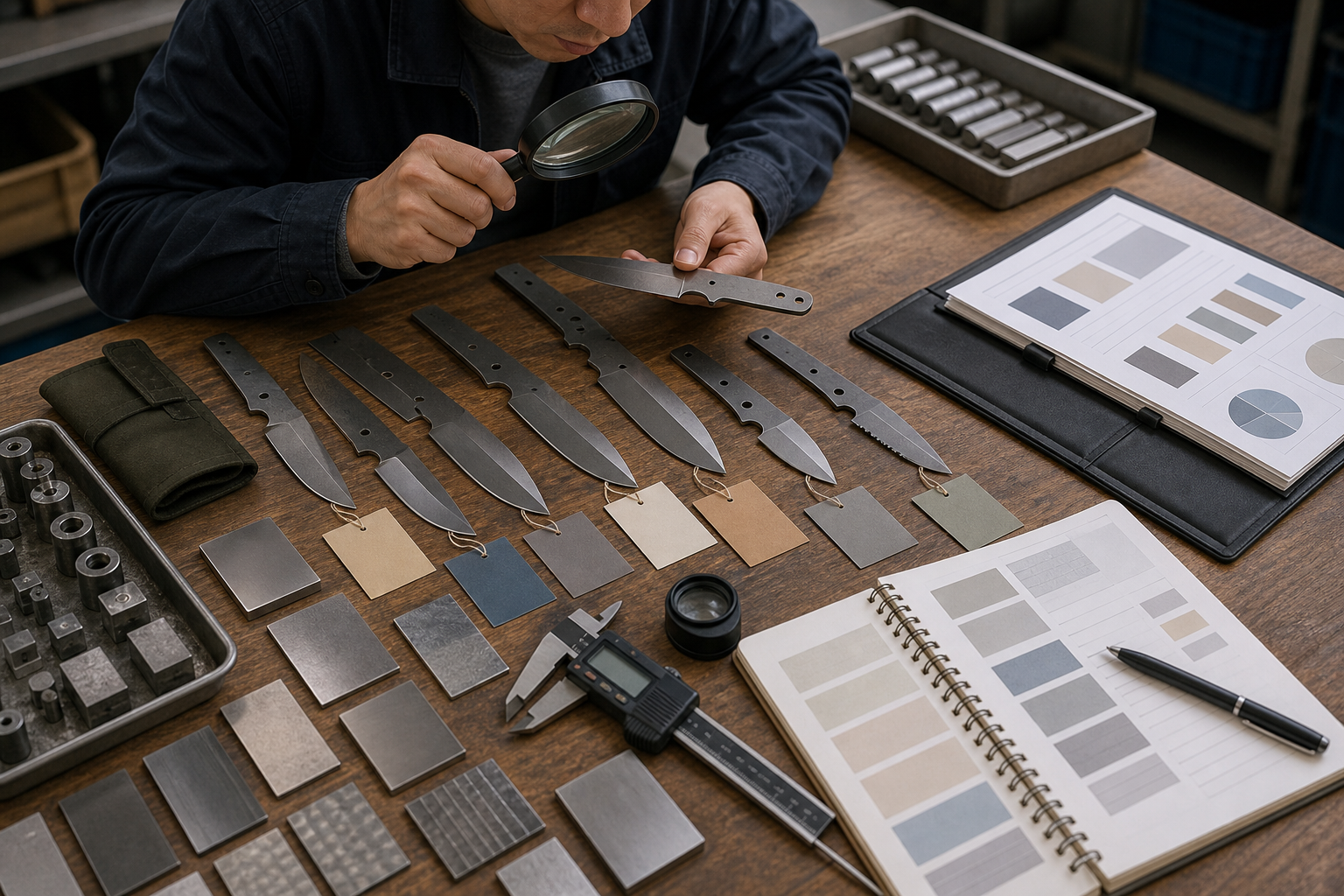
I Respect Reputation, but I Verify the Process
Tsubame-Sanjo in Japan is a good example of a regional metalworking story. Official regional sources describe it as an industrial cluster with a long history in metalworking, cutting tools, metal tableware, and work tools. JETRO also describes Niigata's home and living industry as a kitchenware and knife production hub. This kind of regional reputation matters because it usually comes from many years of skill, supplier networks, and shared manufacturing culture.
But B2B buyers should not stop there. A regional reputation does not tell you whether one supplier can meet your target price, MOQ, tolerance, lead time, packaging need, or repeat-order quality. It also does not tell you whether the supplier understands your market. A good supplier must convert skill into a controlled process.
When I work with knife buyers, I use regional quality stories as a benchmark, not a shortcut. I ask: what can we learn from strong metalworking clusters? The answer is practical. They value craft skill, process discipline, material knowledge, finishing detail, and long-term reputation. A buyer can use those same ideas when evaluating any OEM or ODM supplier, including a supplier in Yangjiang. The location is only the starting point. The system decides the order result.
| Reputation factor | What it suggests | What buyers still need to verify |
|---|---|---|
| Long metalworking history | Skill may be available | Actual factory process |
| Regional cluster | Supplier network may be strong | Capacity and lead time |
| Famous finish quality | Detail may be valued | Approved sample and finish standard |
| Export experience | Market awareness may be better | Documentation and communication |
OEM/ODM RFQ Checklist
Prepare these details to help Vast State review your project and provide a more accurate quotation.
| RFQ Field | What to Prepare |
|---|---|
| Project type | OEM from drawing / ODM private label / wholesale catalog |
| Product category | Folding knife / fixed blade / multi-tool / outdoor tool |
| Design status | Idea / sketch / 2D drawing / 3D CAD / physical sample |
| Target price | Ex-factory target price or retail price range |
| MOQ expectation | 500 / 1,000 / 3,000 / 5,000+ pcs |
| Logo method | Laser engraving / etching / printing / molded logo |
| Packaging | Standard packaging / custom retail box / Amazon-ready |
| Market | USA / EU / Japan / Korea / Middle East / other |
| Compliance needs | Buyer-specified testing / documentation / labeling |
| Timeline | Sample deadline / mass production deadline |
What Makes a Metalworking Cluster Valuable to Knife Buyers?
A cluster is useful because it gathers people, parts, services, and knowledge. But buyers need to know which parts help their project.
A metalworking cluster helps knife buyers when it provides skilled labor, material access, surface finishing, machining support, heat treatment knowledge, packaging resources, and problem-solving experience.
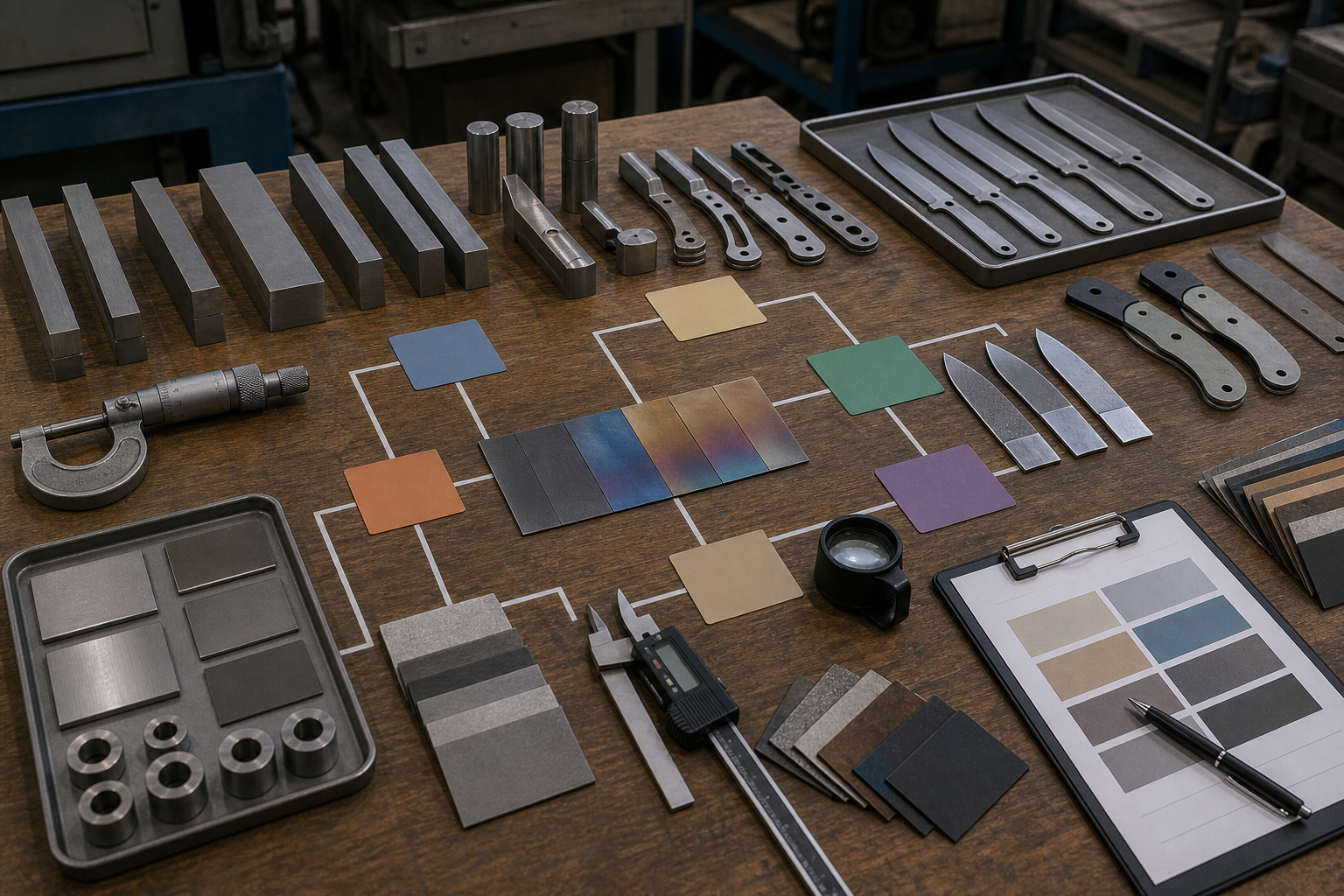
I Look for the Network Behind the Product
A knife is not made by one operation. Blade steel must be selected. Blanks must be cut. Holes must be accurate. Bevels must be ground. Heat treatment must match the steel. Handles must fit. Screws, washers, locks, sheaths, clips, and packaging must all come together. A strong manufacturing cluster can make this easier because related suppliers and workers already understand metal products.
The TSUBAMESANJO Regional Industries Promotion Center describes the region as a major industrial cluster with cutting tools, work tools, metal tableware, and related products. I read that as a useful reminder. A cluster is not only a place. It is a system of shared knowledge. When many related companies work near each other, problems can be solved faster. Specialized processes become easier to source. Workers understand the product language.
For OEM knife buyers, this idea applies directly. If a supplier can coordinate blade processing, lock fitting, handle finishing, sharpening, sheath production, packaging, and inspection, the buyer has fewer gaps to manage. If every operation is disconnected, problems move from one step to the next. The buyer may only discover the issue after final assembly.
Vast State's strength is also based on practical coordination. We support folding knives, fixed blades, pocket knives, camping tools, rescue tools, and multi-tools. The real value is not only making parts. It is helping customers turn a concept into a manufacturable product with stable communication.
| Cluster advantage | Why it helps | Buyer question |
|---|---|---|
| Skilled workers | Better handling of small details | Who performs key operations? |
| Local services | Faster process coordination | Which steps are in-house or nearby? |
| Shared know-how | Faster problem solving | How are defects corrected? |
| Product culture | Better attention to finish | What is the approved standard? |
How Should Buyers Evaluate Process Discipline?
A good sample can hide weak discipline. Mass production shows whether the supplier really controls each step.
Buyers should evaluate process discipline by reviewing process flow, work instructions, material control, in-process checks, inspection records, nonconformance handling, and sample-to-batch consistency.
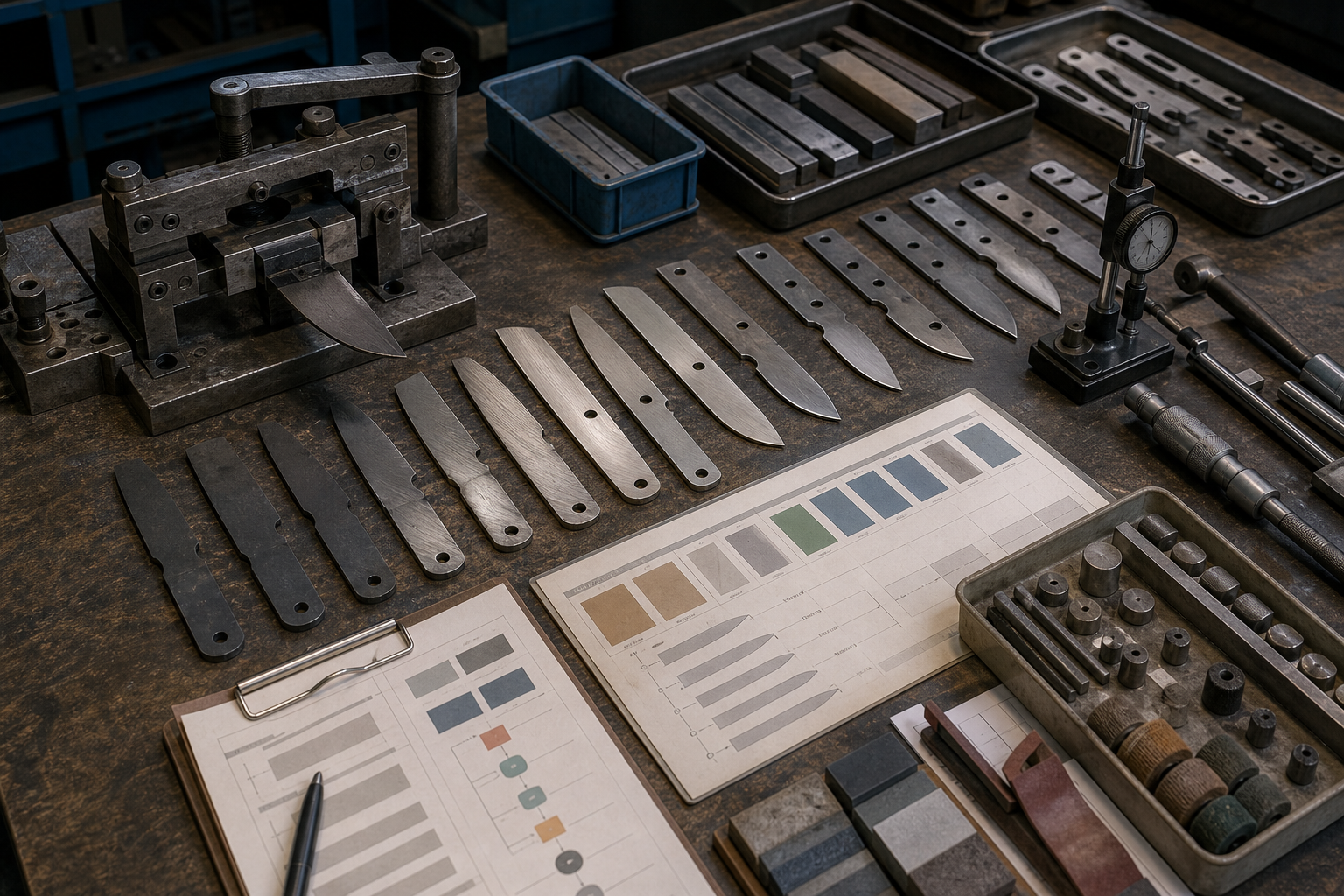
I Ask How the Supplier Repeats the Sample
The sample stage is important, but it is not the final proof. Some suppliers can make one good sample by hand adjustment. The harder question is whether they can repeat that sample in 500, 2,000, or 10,000 pieces. This is where process discipline matters.
ISO 9001 is useful as a reference point because it focuses on quality management systems, customer requirements, process improvement, and consistent products and services. A buyer does not need every small supplier to use the same system in the same way. But the buyer should look for the same thinking: define the process, control the inputs, check the outputs, record problems, and improve.
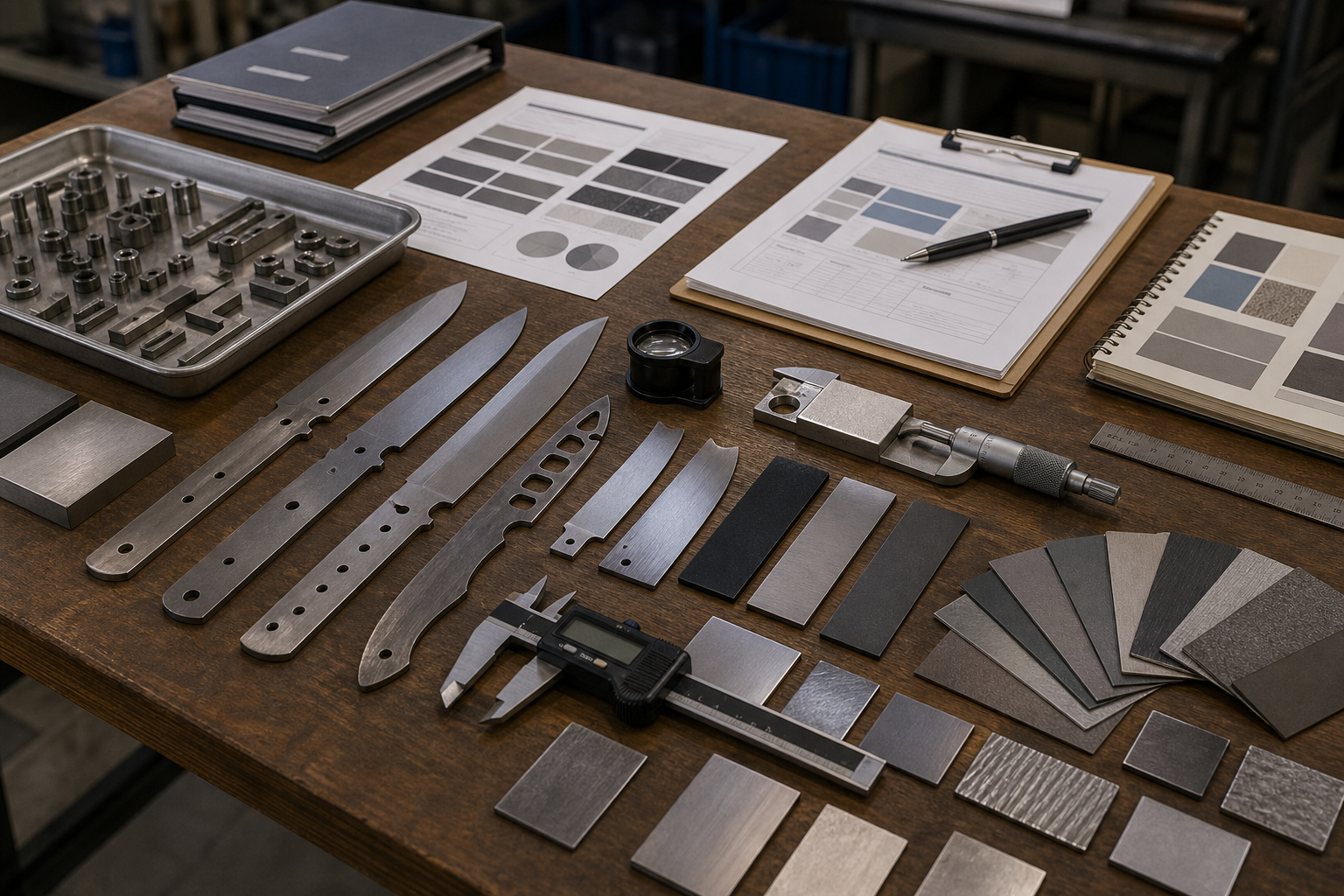
For knives, I want to see control points. Blade blanking should have dimensional checks. Pivot and screw holes should be checked before assembly. Heat treatment should have hardness targets and records. Handle fitting should be controlled. Lockup, blade centering, opening action, edge sharpness, surface finish, logo, and packaging should all have acceptance standards.
If the supplier cannot explain the process, the buyer has risk. If the supplier can explain the process clearly, the buyer has a better chance of stable repeat orders. Process discipline does not remove every problem. It makes problems easier to find and solve.
| Process stage | Control point | Buyer evidence |
|---|---|---|
| Material intake | Steel, handle material, hardware | Material record or inspection note |
| Blade processing | Hole, profile, bevel | Dimension and visual checks |
| Heat treatment | Hardness and distortion | Hardness record |
| Assembly | Lockup, centering, action | Functional inspection checklist |
Why Do Measurement and Tolerance Control Matter So Much?
Small metal parts do not forgive guesswork. A tiny hole error can change the whole folding knife action.
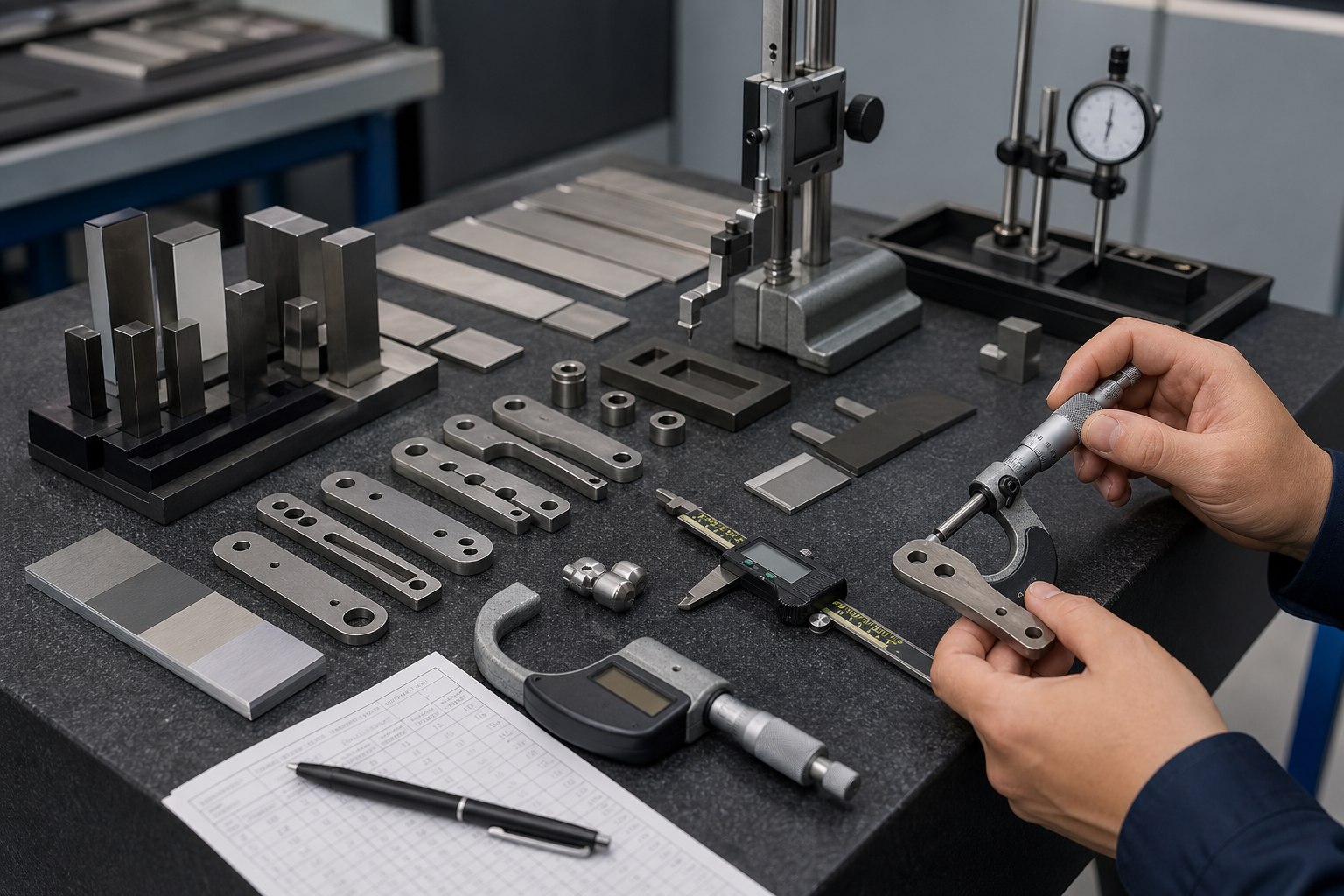
Measurement and tolerance control matter because pivots, locks, screws, liners, blades, clips, and handles must fit together consistently. Buyers should require clear dimensions, gauges, and calibrated measuring tools.
I Connect Measurement to User Feeling
Knife buyers often talk about smooth action, solid lockup, blade centering, and premium feel. These are user-facing words. Behind them are measurements. The pivot hole must be accurate. The lock surface must be controlled. The stop pin area must repeat. The washer or bearing space must be correct. Screws must fit without stripping. If the tolerance stack is poor, the final knife feels loose, rough, off-center, or inconsistent.
NIST explains measurement traceability as a chain of calibration and comparison to precise standards. In simple sourcing language, this means measuring tools should not be treated as decoration. Calipers, micrometers, hardness testers, gauges, and fixtures need control. If a supplier's measuring tools are inaccurate, inspection results can mislead everyone.
For OEM and ODM projects, I like to define critical dimensions early. Not every dimension needs the same tight tolerance. Over-controlling every feature increases cost. Under-controlling pivot, lock, blade thickness, screw holes, and handle fit creates quality problems. The buyer and supplier should decide which dimensions are critical to function and which are mainly cosmetic.
This is also where communication matters. A drawing should show important dimensions clearly. If the buyer only sends a photo, the supplier must guess. If the buyer and supplier agree on measurement points, the project becomes more stable.
| Feature | Why it matters | Measurement focus |
|---|---|---|
| Pivot hole | Opening action and blade play | Diameter and position |
| Lock contact | Safety and confidence | Engagement surface |
| Handle scale | Fit and appearance | Thickness and hole location |
| Clip and screws | Assembly stability | Hole alignment and thread quality |
How Should Buyers Judge Finish Quality?
Finish quality is easy to praise but hard to define. Without a standard, buyers and suppliers may disagree.
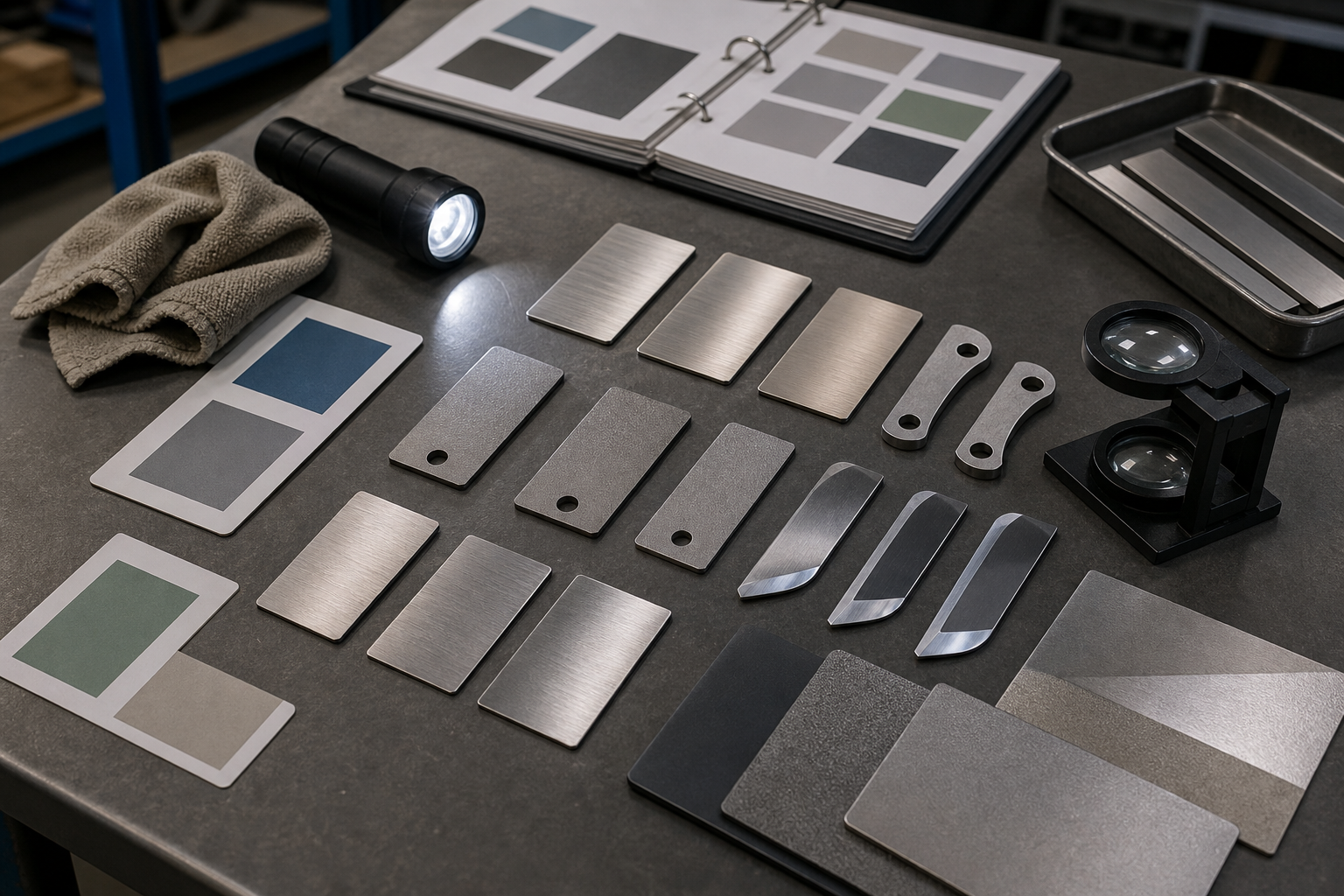
Buyers should judge finish quality by approved samples, scratch limits, edge rounding, coating adhesion, color range, logo clarity, surface texture, and packaging protection during transport.
I Make Finish Standards Visible
Strong metalworking regions are often praised for finish. That can mean polishing, brushing, grinding, coating, or small edge details. In knife production, finish is not only beauty. It affects perceived value, hand feel, corrosion behavior, packaging safety, and brand trust.
The problem is that words like "good finish" or "premium finish" are too vague. A buyer should approve physical samples or clear photo standards. For satin blades, the direction and depth of the lines matter. For stonewash, the texture and darkness matter. For black coating, scratch resistance and edge wear matter. For anodized handles, color range and batch consistency matter. For logos, position and contrast matter.
A finish standard should also include what is not acceptable. Are small hidden tool marks allowed inside the handle? Are small marks acceptable under the clip? What is the scratch limit on the front face? How should the cutting edge look after sharpening? These details may sound small, but they decide whether the buyer accepts the batch.
I also check packaging. A beautiful finish can be damaged by poor packing. Metal tools should not rub against each other during shipping. The insert, pouch, oil paper, sheath, or plastic cover should protect the product until the customer opens it.
| Finish area | What to define | Why it matters |
|---|---|---|
| Blade surface | Satin, stonewash, bead blast, coating | Controls appearance and price level |
| Handle finish | Texture, color, edge rounding | Controls user feel |
| Logo | Method, size, position | Protects brand identity |
| Packaging | Separation and protection | Prevents transit scratches |
What Supplier Questions Reveal Real Quality Capability?
Some suppliers answer only with price. Serious buyers need questions that show how the supplier thinks.
Useful supplier questions cover process flow, critical tolerances, inspection timing, defect handling, heat treatment records, finish standards, packaging protection, lead time risk, and communication responsibility.
I Listen for Practical Answers
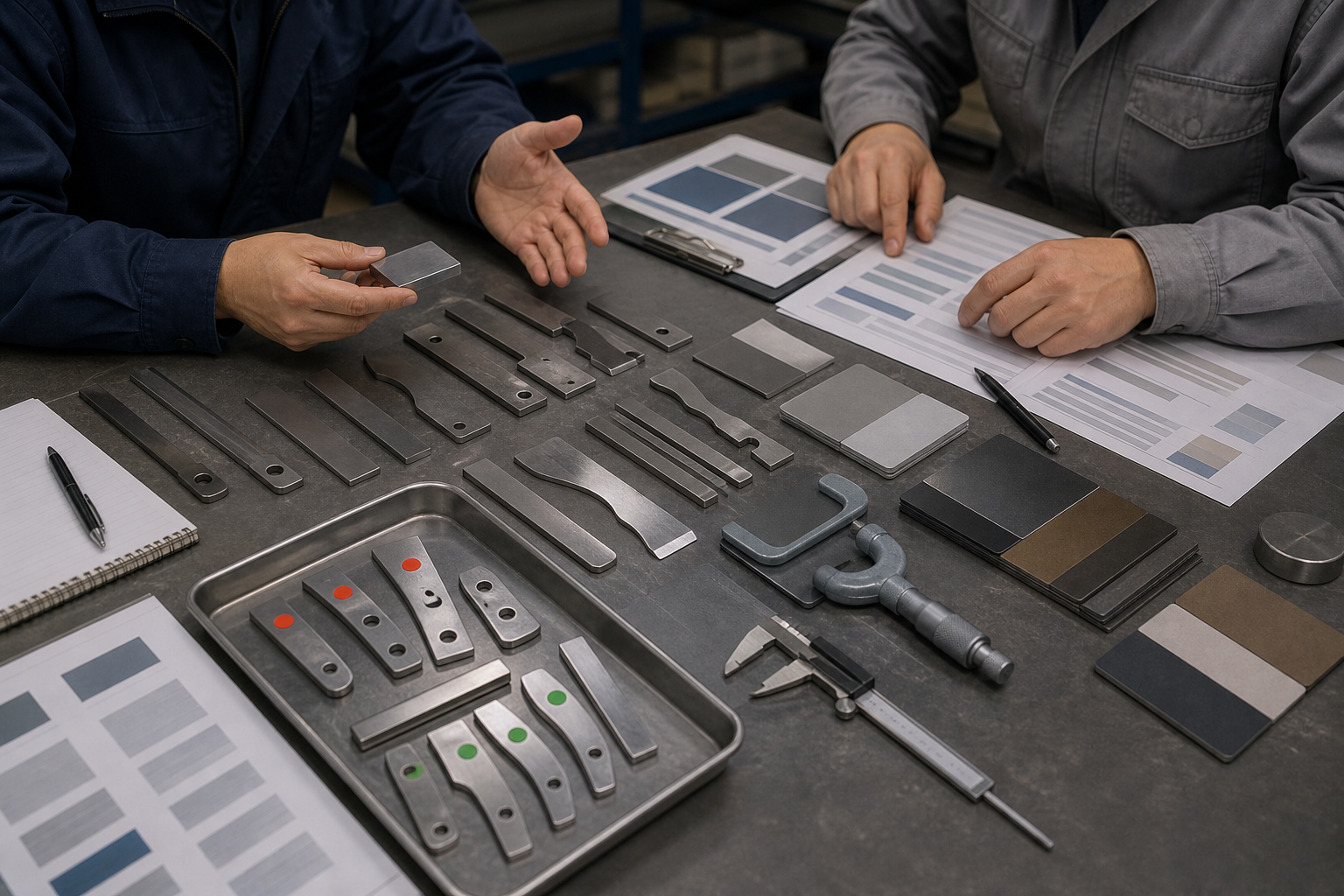
When I evaluate a supplier, I listen to the style of the answer. A weak answer says, "No problem, we can do it." A useful answer says, "This tolerance is critical, this finish has batch variation, this lock type needs more assembly time, this steel needs a controlled heat treatment window, and this packaging should be changed to avoid scratches." Practical answers show experience.
Buyers should ask about the production route. Which steps are done in-house? Which steps are outsourced? How are outside processes checked? Who approves the first article? What happens if hardness is out of range? How are finish defects sorted? How are customer complaints recorded? How does the supplier prevent the same problem in the next batch?
These questions help the buyer see whether the supplier is only a trader, only a sample maker, or a real manufacturing partner. A good partner does not only accept drawings. A good partner helps the buyer adjust the design to fit cost, lead time, function, and repeat production.
For Vast State, this is where our practical style matters. We support OEM and ODM buyers with material selection, lock and structure suggestions, packaging customization, and production follow-up. The goal is not to sound impressive. The goal is to reduce surprises.
| Supplier question | Good sign | Risk sign |
|---|---|---|
| Which dimensions are critical? | Supplier identifies function points | Supplier says all are easy |
| How is heat treatment checked? | Hardness targets and records exist | No clear record |
| How are finish defects judged? | Approved sample and limits exist | Only verbal standard |
| Who follows production? | Named responsible person | No clear owner |
How Can Buyers Apply These Lessons to OEM/ODM Knife Projects?
Quality culture only matters if it changes decisions. Buyers need a checklist they can use before ordering.
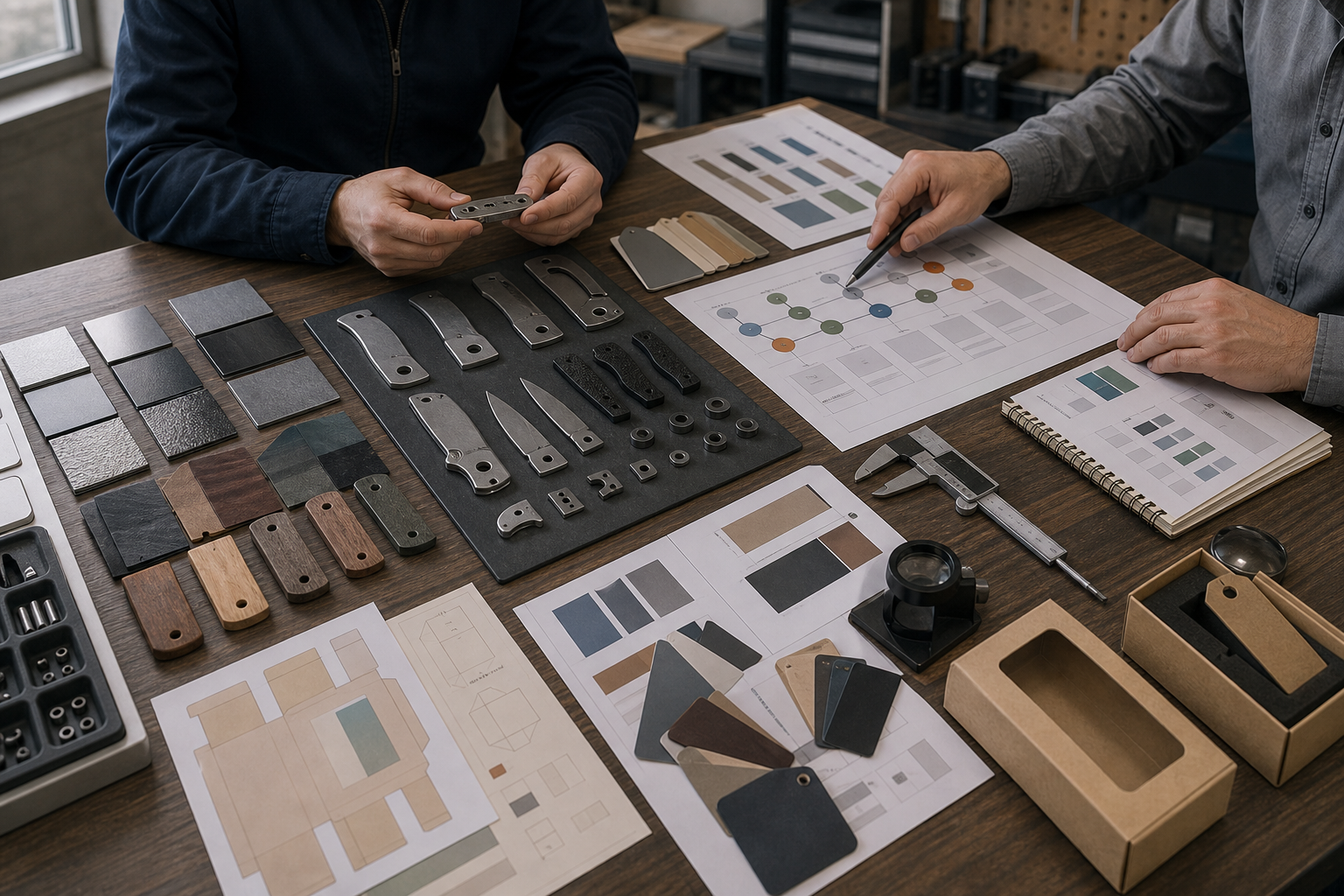
Buyers can apply regional metalworking lessons by building a supplier scorecard, approving physical standards, defining critical dimensions, confirming QC records, and discussing manufacturability before mass production.
I Turn Quality Ideas Into Buying Rules
The buyer does not need to become a manufacturing historian. The buyer needs practical buying rules. First, do not choose a supplier only because of a region name, low price, or attractive sample. Second, ask how the supplier repeats the sample. Third, define quality standards in a way that can be checked. Fourth, separate critical function points from cosmetic preferences. Fifth, keep communication clear through the whole order.
For knife projects, I like a supplier scorecard with simple categories: engineering support, material control, process control, finish capability, assembly stability, packaging support, communication, lead time, and corrective action. The scorecard does not need to be complicated. It just needs to force the buyer to compare suppliers on more than price.
The buyer should also decide what kind of partner is needed. If the buyer has a finished design, they may need production discipline and QC. If the buyer has only a concept, they need ODM development support. If the buyer has a target price, the supplier must suggest practical material and process choices. If the buyer sells in strict markets, documentation and traceability become more important.
This is the real lesson from strong metalworking cultures. Quality is built into habits. For B2B knife sourcing, those habits must become drawings, samples, records, inspection standards, and production communication.
| Buying rule | How to apply it | Result |
|---|---|---|
| Verify process | Review flow and QC points | Less sample-to-batch risk |
| Define standards | Use samples and checklists | Fewer disputes |
| Control measurements | Identify critical dimensions | Better function |
| Track improvements | Record defects and actions | Stronger repeat orders |
How Can Vast State Support Buyers Who Want Stable Quality?
Buyers need a supplier who can turn quality expectations into production steps. Words alone are not enough.
Vast State supports stable OEM/ODM knife quality through product development, material selection, structure review, prototype sampling, process follow-up, inspection standards, packaging customization, and clear communication.
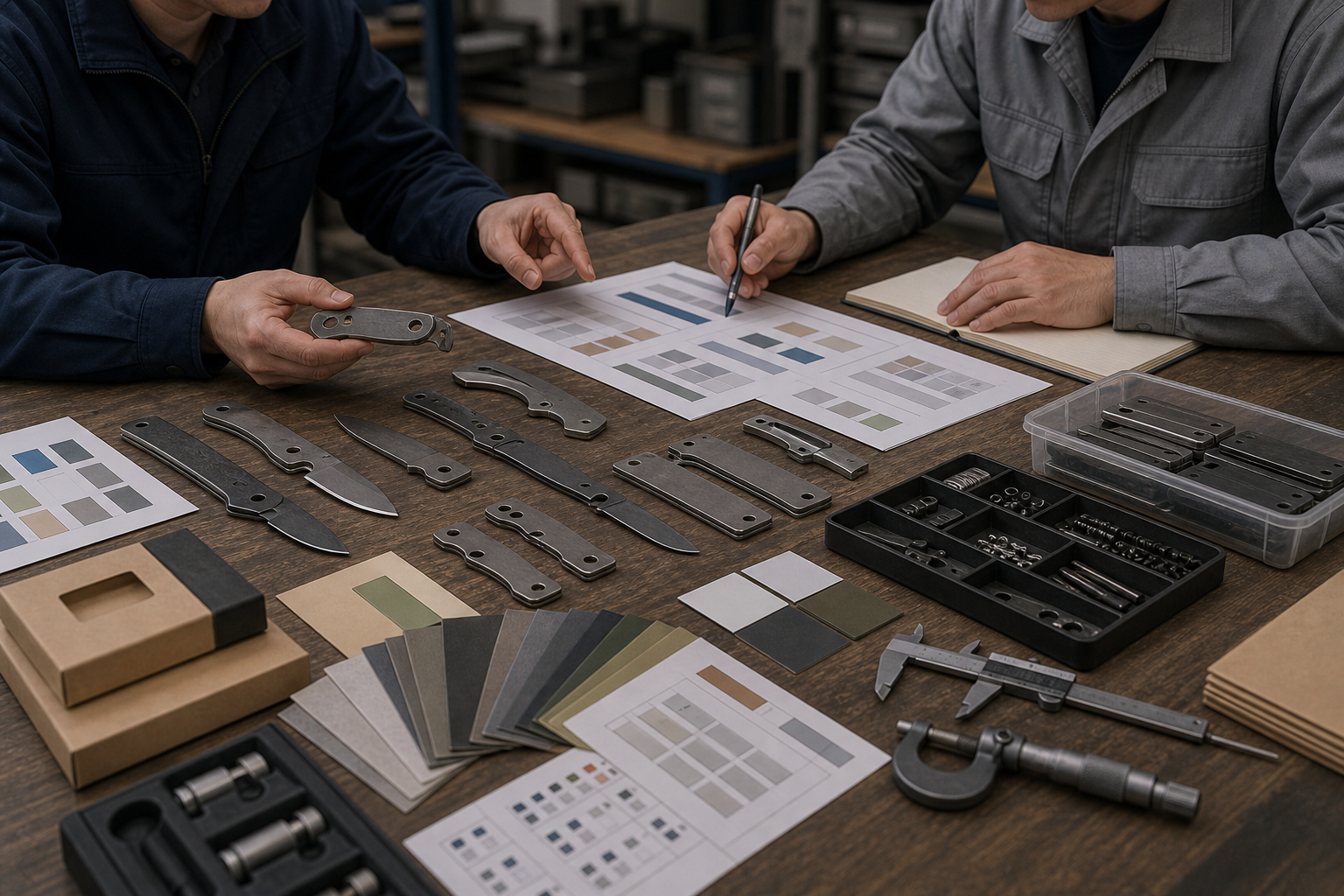
I Focus on Practical Quality, Not Empty Prestige
Vast State is an OEM and ODM knife and outdoor tool manufacturer based in Yangjiang, China. We focus on folding knives, fixed blade knives, pocket knives, camping tools, rescue tools, and multi-tools for international B2B customers. Our work is built around practical product development, stable manufacturing, flexible customization, and efficient communication.
When a buyer comes to us with a concept, I help connect the idea to production reality. I look at material, structure, lock type, finish, packaging, target price, and target market. If the design is too costly, I suggest alternatives. If the structure is risky, I explain the risk. If the finish is difficult to repeat, I try to define a realistic standard before production.
This is how I interpret quality culture. It is not only a beautiful tradition or a famous region. It is the habit of doing the same important things carefully: checking materials, measuring parts, controlling heat treatment, fitting mechanisms, inspecting finish, protecting packaging, and answering buyer questions clearly.
For knife brands, outdoor brands, importers, wholesalers, and distributors, this kind of support matters. They care about cost, lead time, consistency, function, and whether the supplier can solve problems during development and production. That is the kind of long-term manufacturing partner Vast State aims to be.
| Buyer need | Vast State support | Business value |
|---|---|---|
| Concept to sample | ODM development support | Faster workable product |
| Finished design | Manufacturability review | Fewer production issues |
| Repeat order | Process and QC follow-up | More stable consistency |
| Brand project | Packaging and customization | Better market fit |
Turn your idea into a quote-ready knife project.
Share your drawing, sample photo, target quantity, market, and packaging needs. Vast State will review manufacturability and prepare OEM/ODM options.
Conclusion
I respect regional quality culture, but I trust repeatable systems: clear standards, skilled production, measured parts, inspection records, and honest communication.
Source Notes
[1] TSUBAMESANJO Regional Industries Promotion Center, "What kind of place is Tsubame-Sanjo?", https://www.tsjiba.or.jp/en/kind/ [2] TSUBAMESANJO Regional Industries Promotion Center, "Business", https://www.tsjiba.or.jp/en/business/ [3] JETRO, "Discovery NIIGATA - Home & Living", https://www.jetro.go.jp/en/discoveryniigata/home/ [4] ISO, "ISO 9001:2015 Quality management systems - Requirements", https://www.iso.org/standard/62085.html [5] NIST, "Measurements and Standards", https://www.nist.gov/standards-measurements [6] NIST, "NIST Quality System", https://www.nist.gov/nist-quality-system