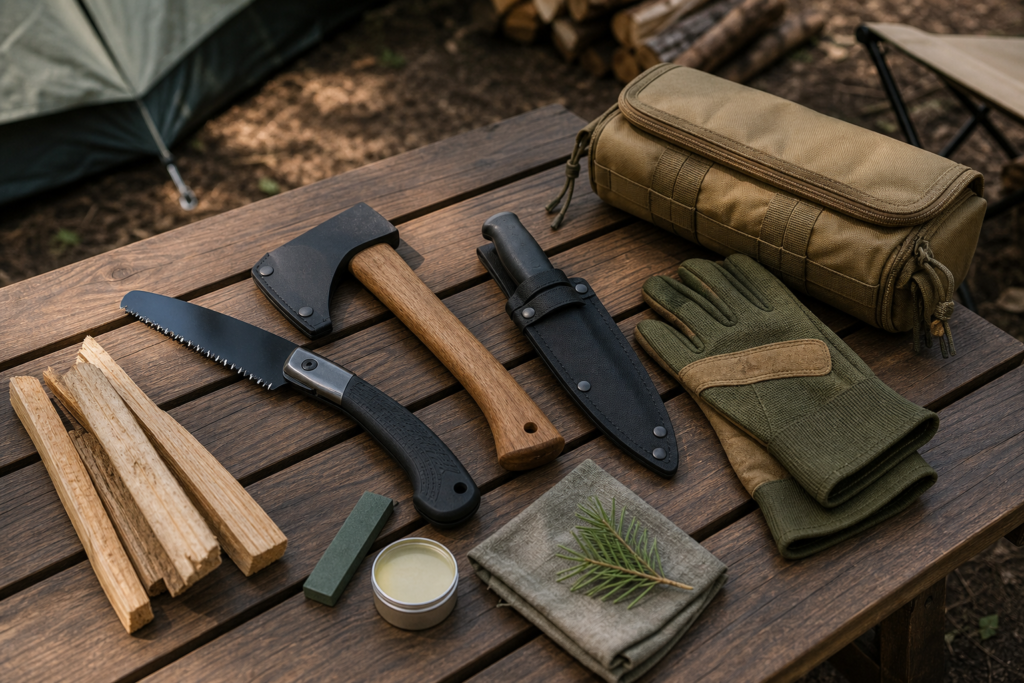
Beginners often buy the wrong wood tools. A kit can look complete, but poor matching creates unsafe use, slow cutting, and avoidable complaints.
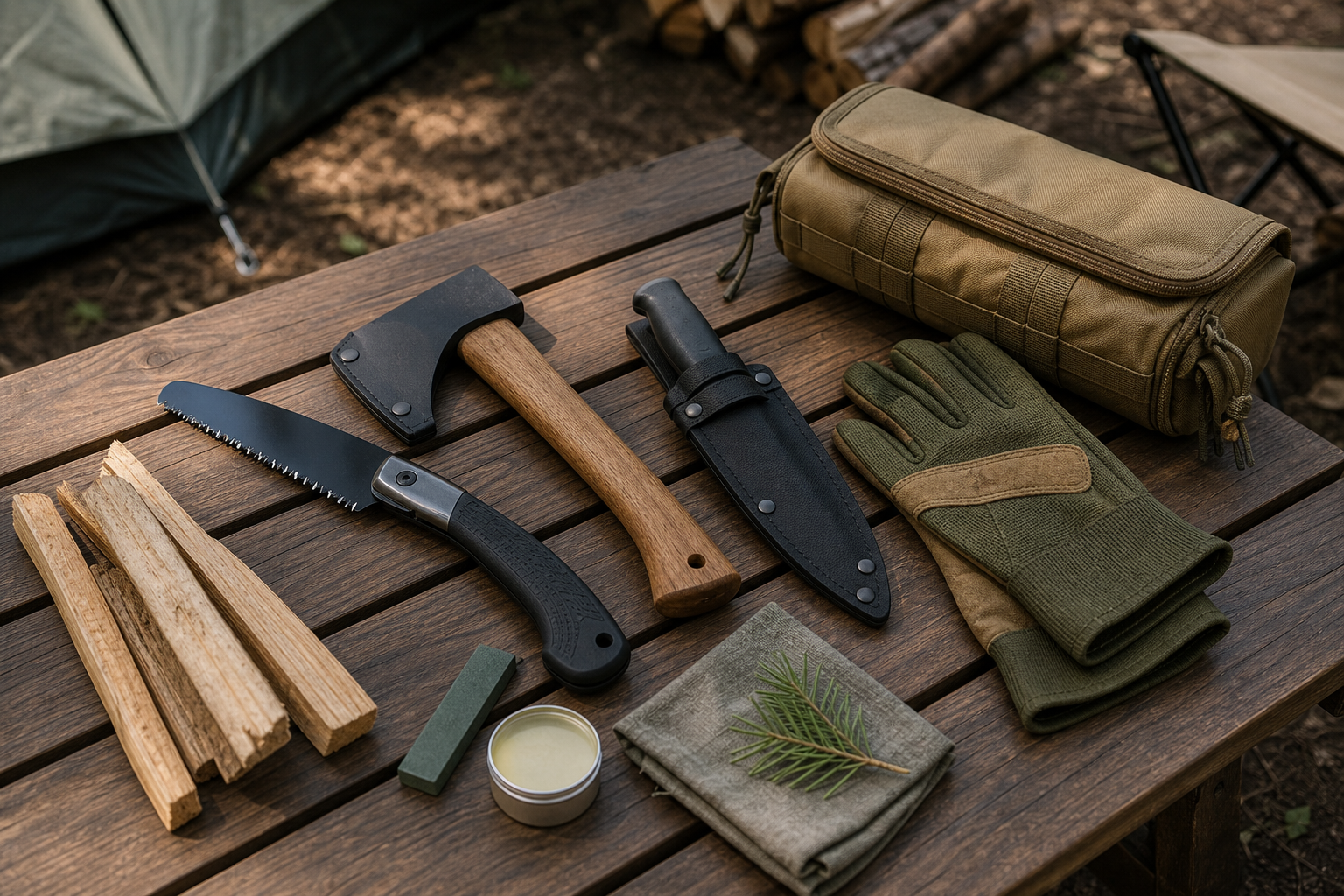
Buyers should build a beginner camping wood-processing kit around five practical needs: a folding saw for cutting, a compact hatchet for splitting, a fixed blade for controlled camp tasks, gloves and protection for safety, and care or storage items for long-term use. The kit must also explain responsible campfire rules.
Quick buyer brief:
- Answer: A beginner kit should focus on safe, clear, non-professional camp wood processing.
- Buyer context: This helps outdoor brands, knife brands, camping brands, importers, wholesalers, distributors, private label buyers, and sourcing managers.
- Key checks: Intended use, tool size, blade protection, sheath design, handle grip, saw teeth, axe head fit, care card, warning text, packaging layout, and responsible wood-use guidance.
Have a knife or multi-tool project in mind?
Send your sketch, CAD file, sample photo, or product idea. Vast State can review manufacturability, suggest materials, estimate MOQ, and prepare a quote for your OEM/ODM project.
When I discuss a beginner camping wood-processing kit with a buyer, I do not start by adding as many tools as possible. I start by removing confusion. A beginner does not need a heavy professional axe, a large survival knife, and a complicated saw all at once. A beginner needs tools that are easy to understand, easy to carry, protected during transport, and matched to small camp tasks. The product should also teach the user not to cut live trees, not to misuse sharp tools, and not to treat every campsite as a firewood source.
Why Should Buyers Define Wood Processing More Carefully Than Chopping Wood?
The phrase "chopping wood" sounds simple. But it can mean cutting branches, splitting kindling, preparing firewood, or unsafe tree damage.
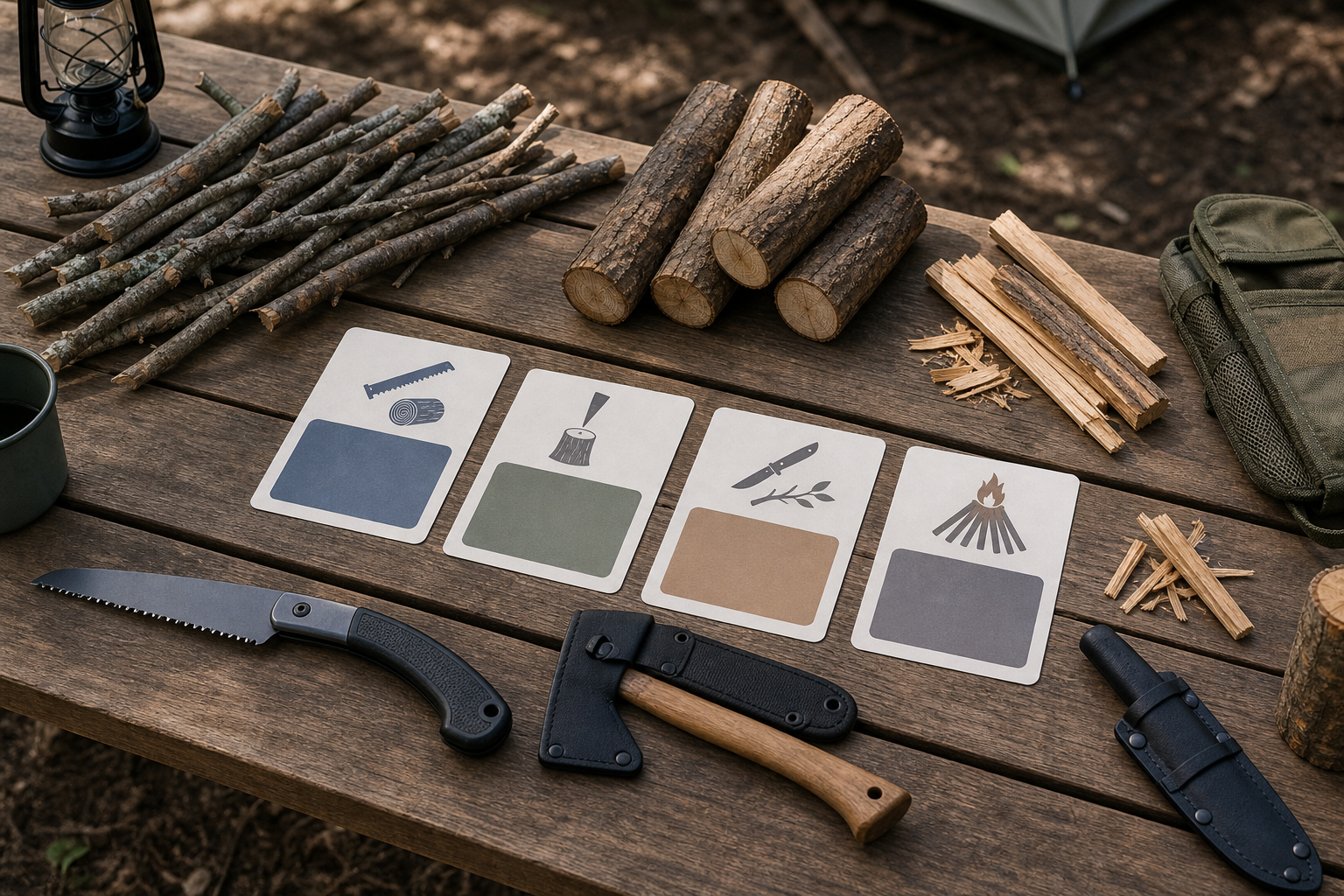
Buyers should define wood processing as small camp tasks: cutting dead and permitted wood, splitting kindling, preparing tinder, storing tools safely, and following local fire rules.
I Start With the Job, Not the Tool Count
For B2B buyers, the wording matters. "Chopping wood" can push the product toward heavy axe use, large swings, and unrealistic outdoor behavior. "Camp wood processing" is more practical. It can include sawing small deadwood, splitting prepared firewood into kindling, shaving tinder, cleaning tools after use, and carrying everything safely back to camp.
This also protects the brand. Many beginner users do not know what wood they are allowed to collect. They may not know whether campfires are permitted. They may not know that cutting live trees or damaging dead standing trees can be restricted or harmful. The National Park Service's Leave No Trace guidance reminds visitors to minimize campfire impacts, use designated fire rings when allowed, and make sure ashes are cold before leaving. Another NPS Leave No Trace page from Point Reyes says users should not snap branches off live, dead, or downed trees and should gather only permitted wood in permitted areas.
This affects product development. A good beginner kit should not only contain tools. It should contain instructions. The packaging should explain that users must follow local fire rules, collect only allowed wood, keep fires small, and use tools only for suitable camp tasks. That small care card can reduce misuse and make the kit feel more professional.
| Buyer question | Why it matters | Practical direction |
|---|---|---|
| What wood is processed? | Prevents oversized tool claims | Small dead or prepared camp wood |
| Where is it used? | Fire rules vary by location | Add local-law reminder |
| Who is the user? | Beginners need simpler tools | Choose safer, lighter formats |
| How is it packed? | Sharp tools need protection | Include sheaths and guards |
OEM/ODM RFQ Checklist
Prepare these details to help Vast State review your project and provide a more accurate quotation.
| RFQ Field | What to Prepare |
|---|---|
| Project type | OEM from drawing / ODM private label / wholesale catalog |
| Product category | Folding knife / fixed blade / multi-tool / outdoor tool |
| Design status | Idea / sketch / 2D drawing / 3D CAD / physical sample |
| Target price | Ex-factory target price or retail price range |
| MOQ expectation | 500 / 1,000 / 3,000 / 5,000+ pcs |
| Logo method | Laser engraving / etching / printing / molded logo |
| Packaging | Standard packaging / custom retail box / Amazon-ready |
| Market | USA / EU / Japan / Korea / Middle East / other |
| Compliance needs | Buyer-specified testing / documentation / labeling |
| Timeline | Sample deadline / mass production deadline |
Which Five Items Make a Practical Beginner Kit?
Adding more tools can make the kit look premium, but it may also confuse the user and raise cost.
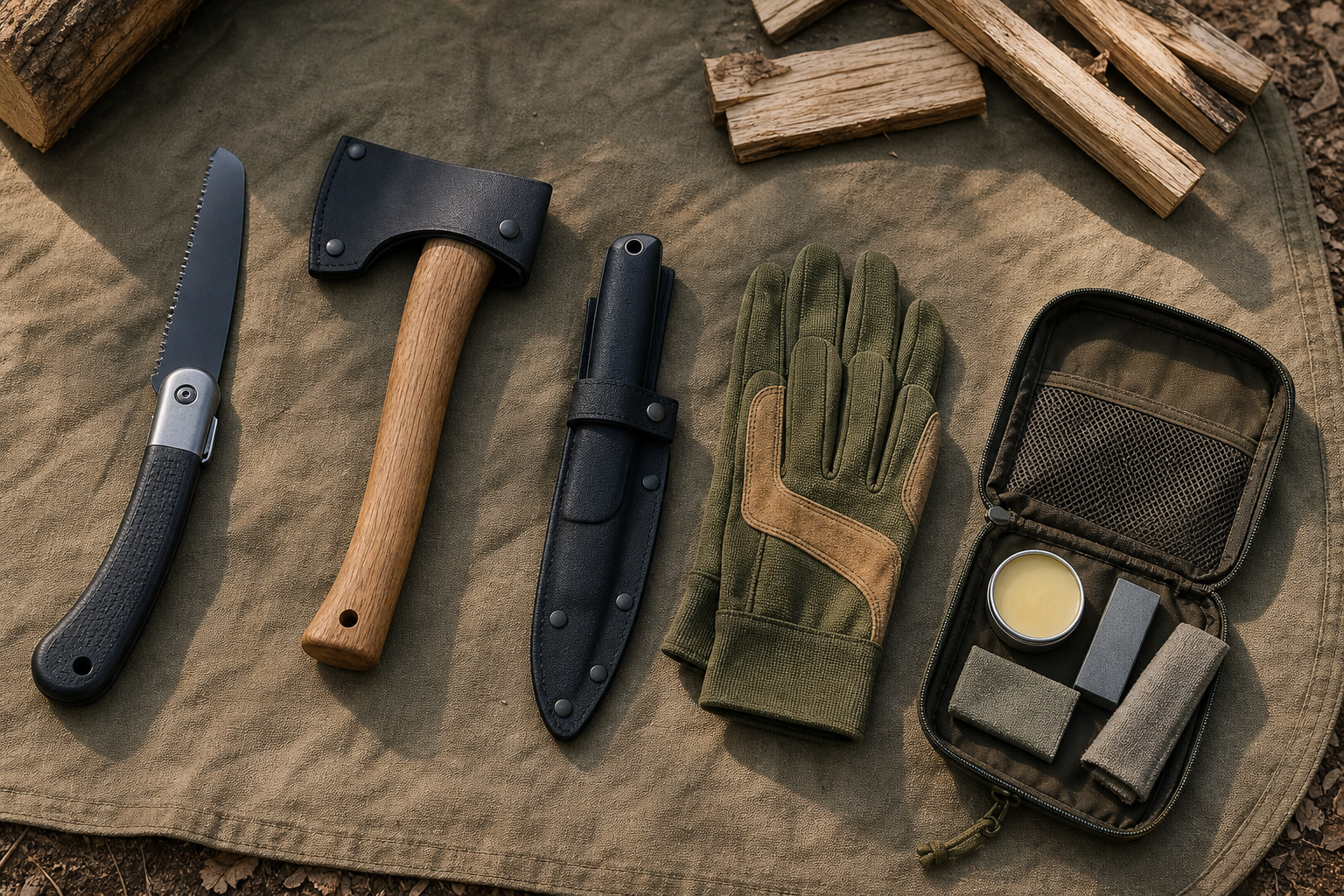
A practical beginner kit can include a folding saw, compact hatchet, fixed blade camp knife, gloves or hand protection, and a care and storage set. Each item should have a clear role.
I Give Every Tool a Separate Role
The first item is a folding saw. It cuts small branches and prepared wood more cleanly than a knife or hatchet. The second item is a compact hatchet. It can split small pieces and prepare kindling when the user has a safe chopping surface. The third item is a fixed blade camp knife. It handles food prep, rope, light carving, tinder preparation, and small camp chores. It should not be marketed as a tool for heavy abuse unless the structure is designed for that.
The fourth item is hand protection. Gloves are not exciting, but they reduce small cuts, splinters, and friction problems. The fifth item is care and storage. This can include sheaths, blade guards, a small sharpening stone, oil cloth, cleaning cloth, or a storage pouch. These items help the user keep sharp edges covered and tools maintained.
For buyers, the kit should not look like a random bundle. It should feel like a system. The saw cuts length. The hatchet splits thickness. The knife handles small controlled work. Gloves protect hands. Care items protect the tools. This division is easier to explain on packaging and easier for distributors to sell.
| Kit item | Main role | Buyer control point |
|---|---|---|
| Folding saw | Cut small wood to length | Teeth, lock, handle, blade guard |
| Compact hatchet | Split kindling | Head fit, handle grip, sheath |
| Fixed blade knife | Light camp tasks | Blade thickness, tang, sheath |
| Gloves | Hand protection | Size, material, grip |
| Care and storage | Long-term value | Pouch, oil cloth, sharpener, instructions |
How Should Buyers Choose the Folding Saw?
A saw is often safer than swinging a blade, but a poor saw still frustrates beginners.
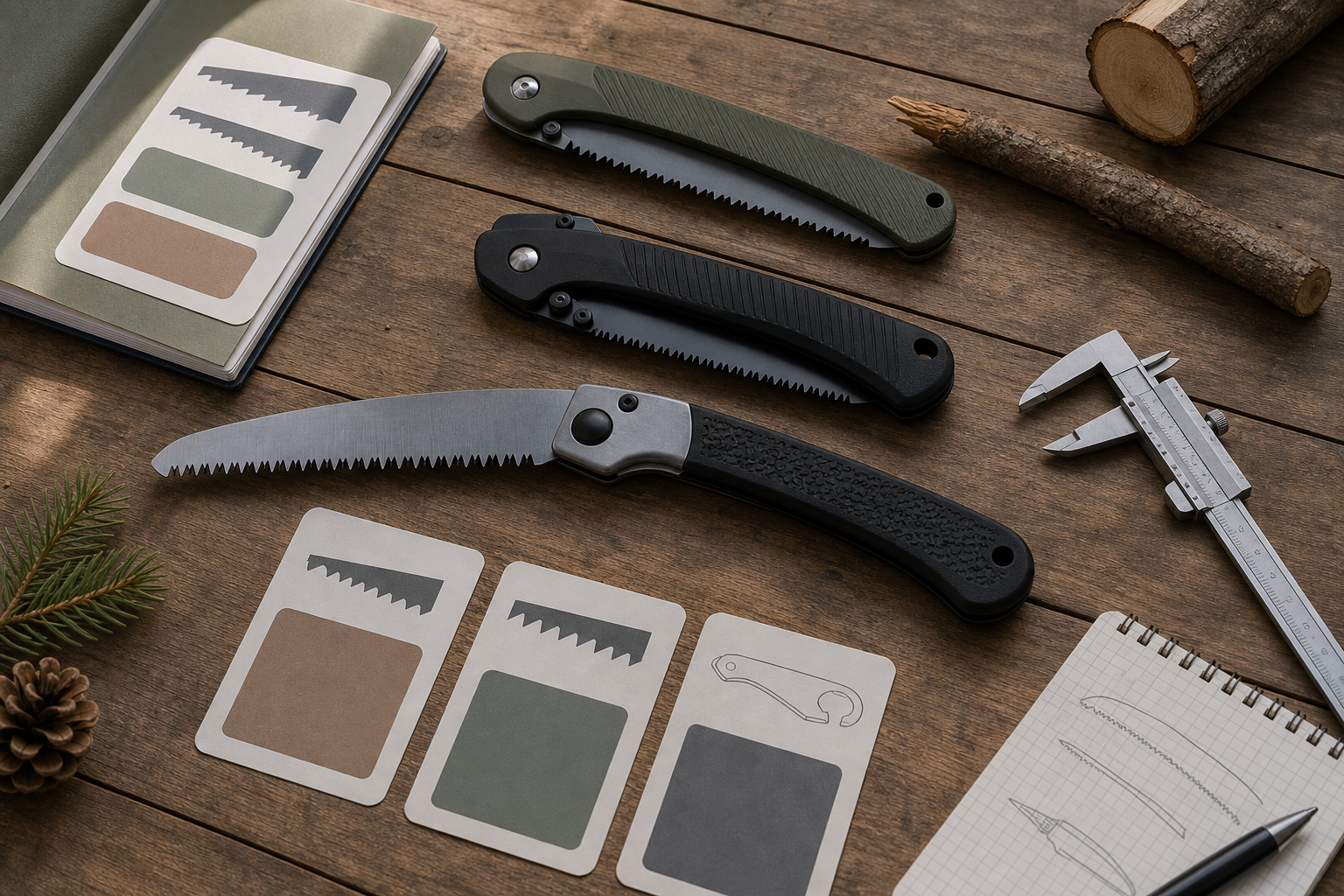
Buyers should choose a folding saw by blade length, tooth pattern, blade thickness, lock strength, handle grip, closed safety, replacement options, and packaging protection.
I Use the Saw for Clean Cutting, Not Drama
For beginners, the saw is often the most practical wood-processing tool. It cuts small dead branches or prepared wood without requiring a large swing. It also helps users make controlled cuts before splitting. The buyer should choose a saw size that fits the kit. A very short saw may be compact but slow. A long saw may cut better but take more package space and feel less portable.
The tooth pattern should match the intended wood. Aggressive teeth cut fast but can feel rough. Fine teeth cut smoother but may clog or move slowly in green wood. Many camping saws use pull-cut style teeth, which can feel efficient, but the product page and instructions should explain the cutting motion clearly. A folding saw also needs a secure lock. If the blade closes unexpectedly or feels loose, user trust disappears.
The USDA Forest Service Crosscut Saw Manual is focused on larger saws, but it is still useful because it treats saws as tools that need correct selection, maintenance, and technique. For B2B camping products, the same thinking applies in a smaller format. A saw is not only a blade with teeth. It is a cutting system that needs geometry, handle comfort, protection, and clear user guidance.
| Saw feature | Why it matters | Buyer decision |
|---|---|---|
| Blade length | Controls cutting speed and pack size | Match wood size and kit size |
| Tooth pattern | Affects speed and smoothness | Choose for dry or mixed camp wood |
| Lock strength | Protects user confidence | Test open and closed positions |
| Handle grip | Affects control | Avoid slippery or sharp handle edges |
How Should Buyers Choose a Compact Hatchet?
A hatchet can be useful, but it can also be the riskiest item in a beginner kit.
Buyers should choose a compact hatchet by head weight, edge geometry, handle length, grip texture, head retention, sheath quality, balance, warning text, and realistic splitting tasks.
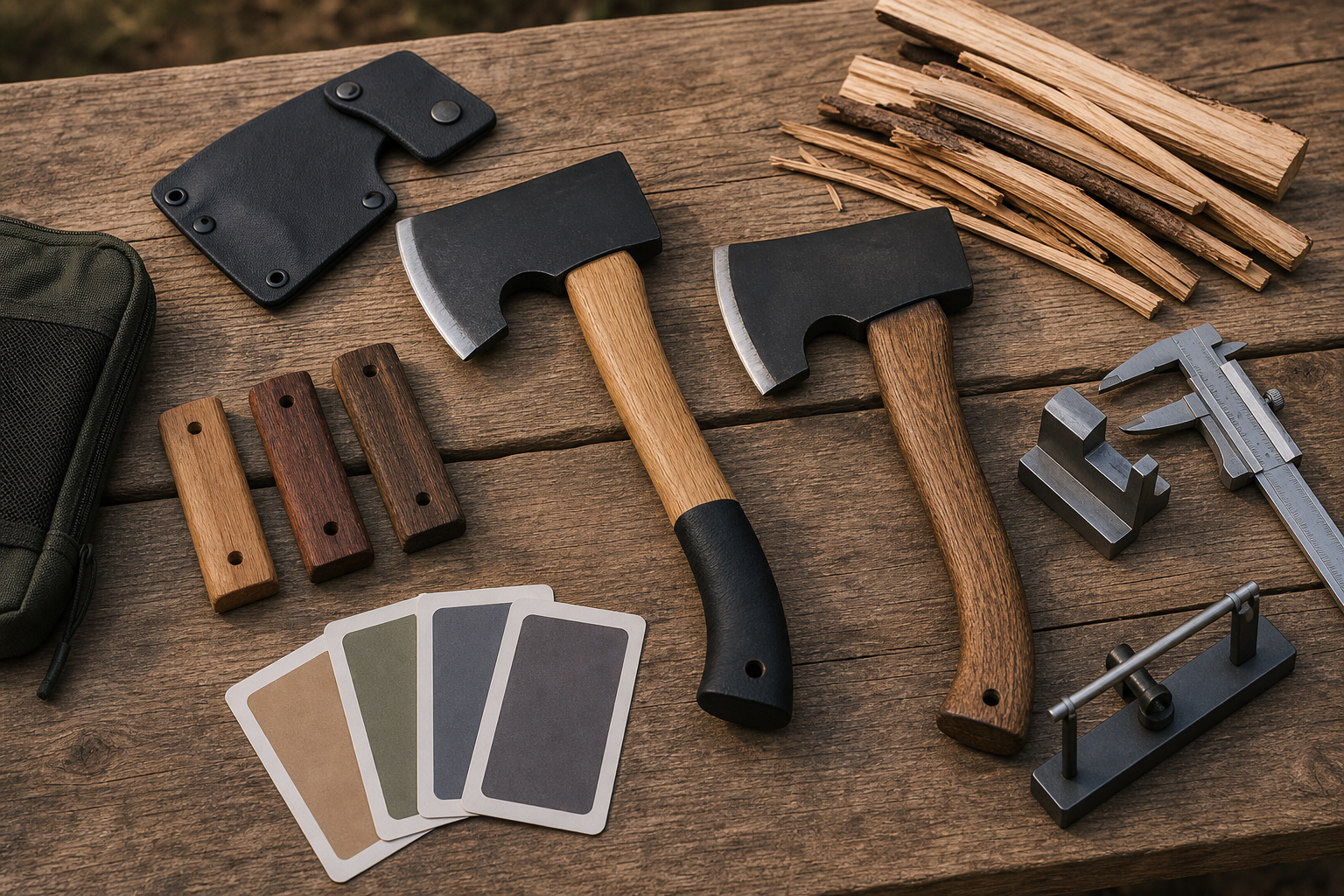
I Keep the Hatchet Small, Protected, and Honest
The hatchet should not be sold as a professional forestry tool. For a beginner camping kit, it should be sized for prepared firewood, small kindling, and controlled splitting. The head should be secure. The handle should not be cracked, loose, slippery, or too short for safe control. The sheath should cover the edge fully and stay in place during storage.
The USDA Forest Service manual An Ax to Grind emphasizes that axes are sharp wedge tools and that safe use, care, and sheathing matter. It also explains that an axe should be sheathed or boxed during transport. This point is directly useful for product planning. A hatchet without a serious sheath is not a complete retail product.
OSHA's hand tools standard also provides a useful safety principle for handles: wooden handles should be free from splinters or cracks and tight in the tool. This is workplace regulation, not camping retail law, but it supports a simple quality idea. A buyer should inspect handle condition and head retention before shipment.
For packaging, I avoid aggressive claims. I prefer wording such as "for small camp kindling tasks" rather than "heavy-duty chopping weapon." The tool should be useful, not theatrical.
| Hatchet feature | What I check | Why it matters |
|---|---|---|
| Head retention | Head is secure | Prevents dangerous looseness |
| Handle quality | No cracks, splinters, or slippery finish | Improves control |
| Edge geometry | Splits small wood effectively | Supports real use |
| Sheath | Covers edge during transport | Protects user and package |
What Role Should a Fixed Blade Knife Play in the Kit?
Some kits ask the knife to do everything. That is not fair to the tool or the user.
A fixed blade in a beginner wood-processing kit should handle controlled camp tasks, tinder preparation, light carving, food prep when suitable, and backup utility work. It should not replace a saw or hatchet.
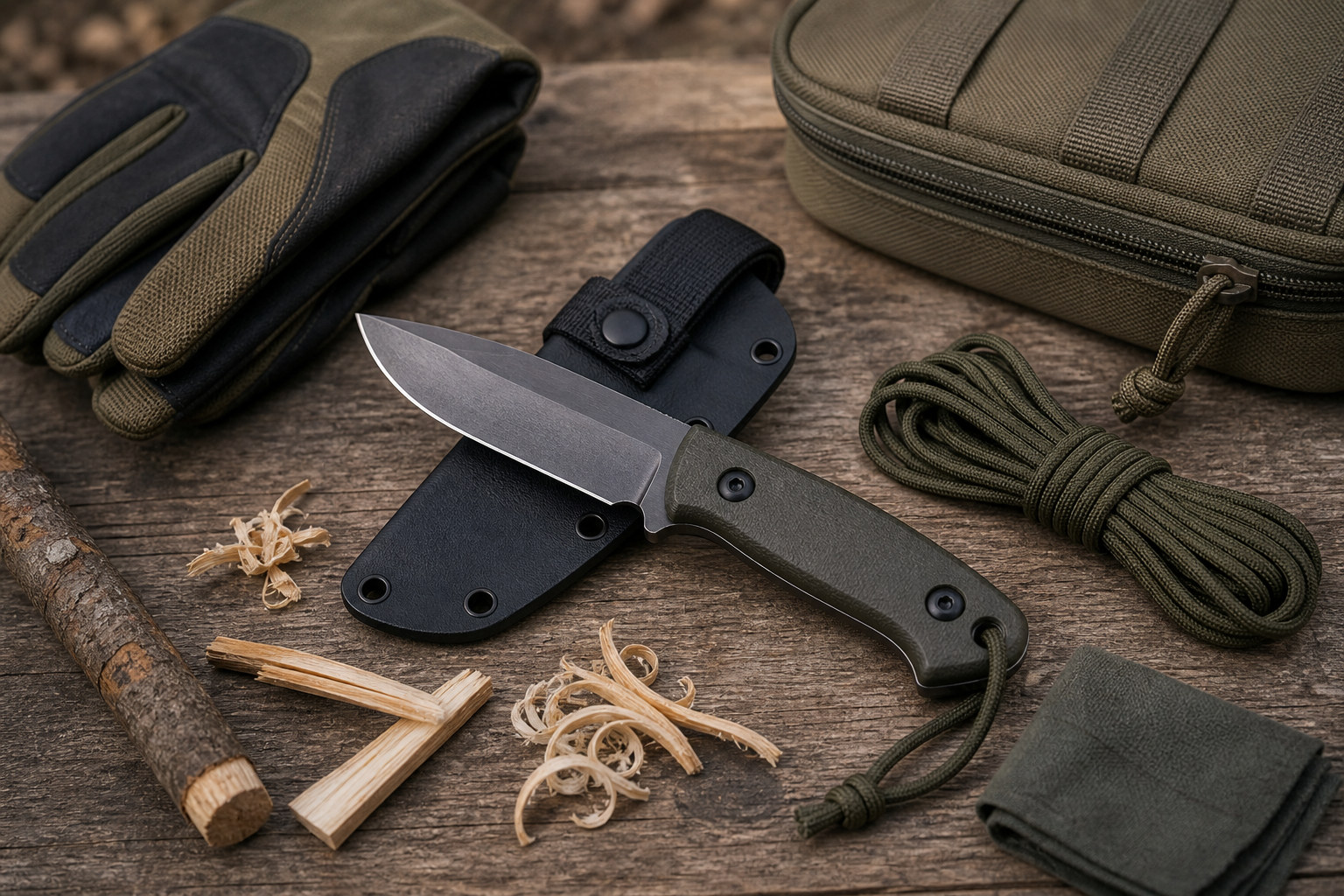
I Avoid Overloading the Knife
As a knife manufacturer, I like fixed blades. But I do not like unrealistic knife claims. A fixed blade can be very useful in a camping kit. It can cut cord, prepare food, make light shavings, trim small materials, and help with controlled camp tasks. If the blade is thick enough and the construction is suitable, some buyers may design it for light splitting support. But that must be a deliberate design choice, not a marketing afterthought.
The knife should match the target user. A beginner does not need an oversized blade with a poor sheath. The user needs a secure handle, clear edge, easy care, and safe carry. The sheath should retain the knife well and protect the edge. The handle should not become slippery when wet. The blade steel should match the buyer's market. Stainless steel may reduce rust complaints, while carbon steel may need clearer drying and oiling instructions.
For B2B buyers, this is also where the kit can connect back to the brand. If the buyer sells knives, the fixed blade can be the hero item. If the buyer sells camping accessories, the knife can be one part of a balanced kit. Either way, the instruction card should explain that the saw and hatchet are better for wood length and splitting. The knife is for controlled utility tasks.
| Knife role | Good use | Buyer warning |
|---|---|---|
| Tinder prep | Fine shavings and light carving | Use controlled cuts |
| Camp utility | Cord, packaging, small tasks | Keep edge protected |
| Food prep | If material and finish are suitable | Separate hygiene guidance |
| Heavy splitting | Only if designed for it | Do not overclaim |
Why Are Gloves, Sheaths, and Storage Not Optional Details?
Accessories can look less important than sharp tools. But they often decide whether the kit feels safe and complete.
Gloves, sheaths, guards, pouches, and storage inserts are not optional details because they protect hands, edges, packaging, transport, and after-sales satisfaction.
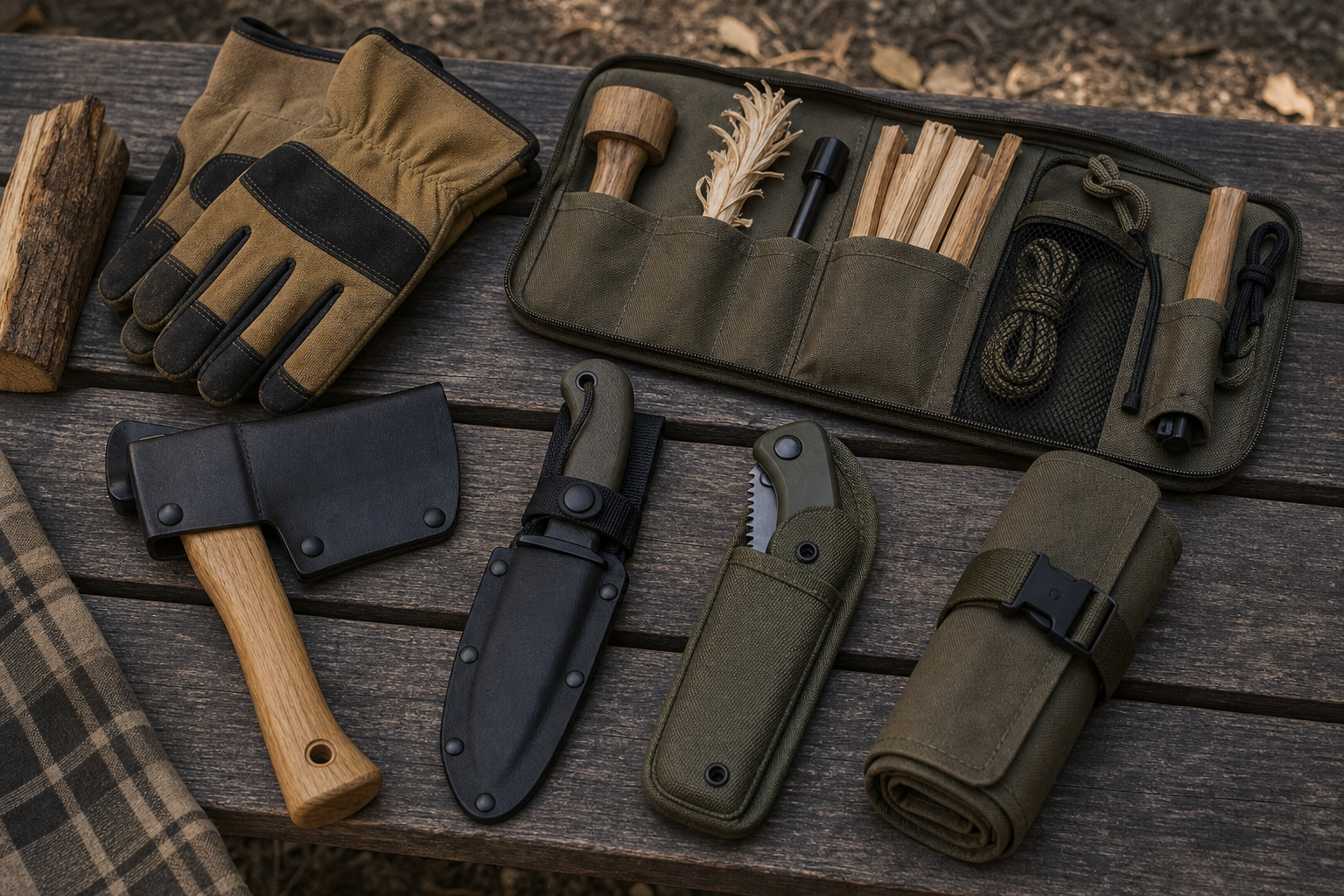
I Design the Kit Around Transport
A beginner kit will be carried, packed, unpacked, stored in a car, placed in a camping box, and handled by people who may not know the edge positions. This means protection matters. A good hatchet sheath covers the edge and stays closed. A knife sheath holds the knife securely. A folding saw should close safely or include a blade guard. A storage pouch should keep tools from rubbing against each other.
Gloves can also be part of the product value. They help with splinters, rough wood, and tool grip. They also make the kit feel more complete. The buyer should not treat gloves as a random low-cost item. Material, size, stitching, grip surface, and packaging all affect user perception.
The packaging insert is another important part. If a metal hatchet head rubs against a knife handle or saw finish during shipping, the buyer receives a damaged product before anyone uses it. Foam, molded pulp, cardboard dividers, fabric pouches, or separate sleeves can solve this. For private label kits, I like to check the packaging with shake tests and sample shipments before mass production.
| Protection item | What it protects | Buyer check |
|---|---|---|
| Hatchet sheath | Edge and user | Retention and coverage |
| Knife sheath | Blade and hand | Fit and draw control |
| Saw guard | Teeth and package | Closed safety |
| Storage pouch | Whole kit | Tool separation and abrasion |
What Care Instructions Should the Kit Include?
Good tools can still fail if users store them wet or dull. Care content prevents many avoidable complaints.
Care instructions should explain cleaning, drying, sharpening, oiling when suitable, sheath drying, safe storage, rust prevention, handle inspection, and local firewood rules.
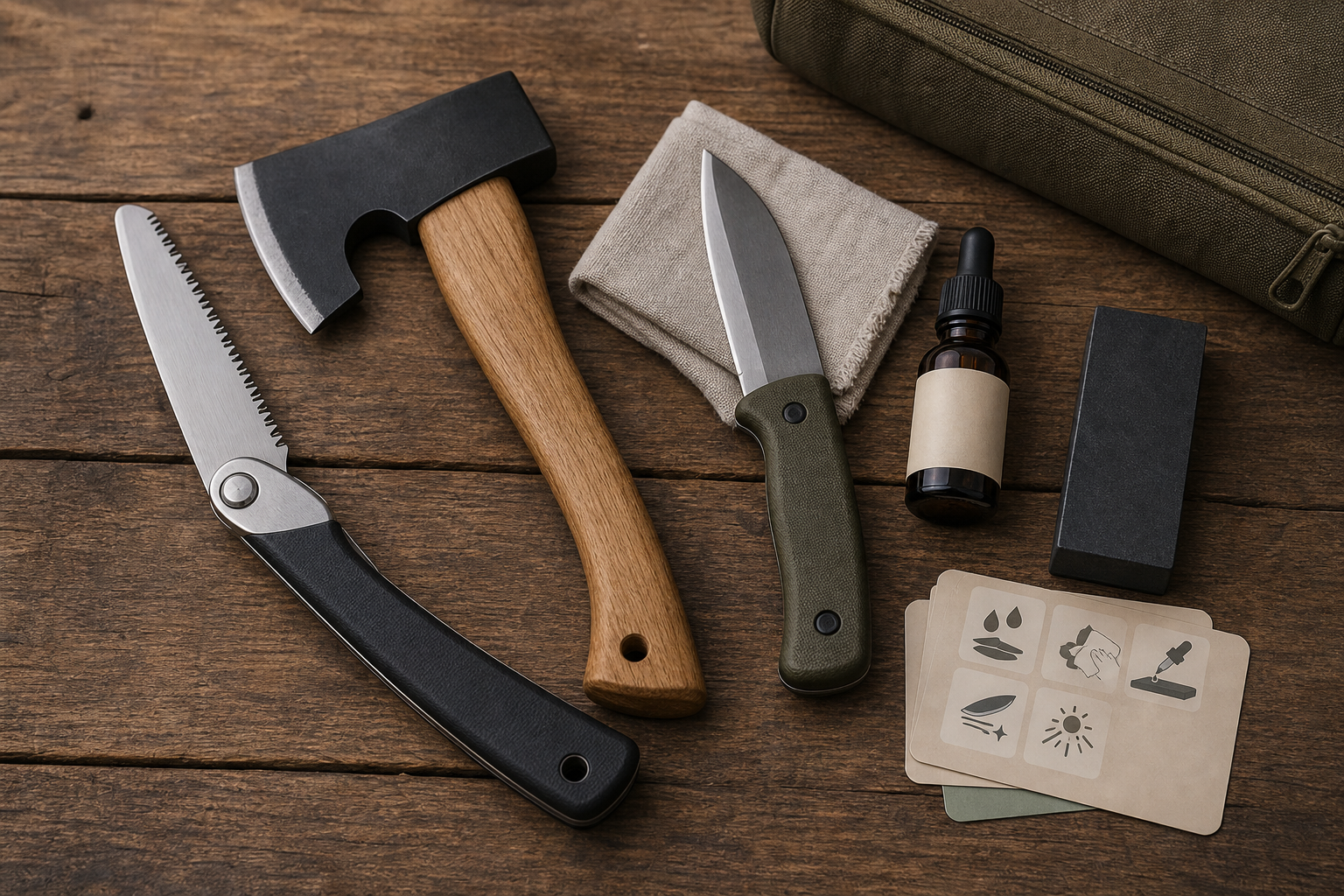
I Make Maintenance Simple Enough to Follow
Maintenance content should be practical. A beginner does not need a long technical manual. The user needs simple steps: clean dirt and sap, dry the steel, do not store tools wet inside sheaths, sharpen when needed, inspect handles, keep fasteners secure, and cover sharp edges before transport. If the kit includes carbon steel, the care card should mention rust prevention clearly. If the kit includes stainless steel, it should still explain drying and cleaning.
For saws, users should avoid twisting the blade, forcing cuts, or storing teeth dirty. For hatchets, users should inspect the handle and sheath. For knives, users should clean the blade and check the sheath. For gloves and pouches, users should dry them before storage because damp fabric can hold moisture near steel.
This is also useful for after-sales control. If a customer complains about rust after leaving wet tools in a closed pouch, the brand can point to clear care instructions. That does not remove the need for good materials and finishes, but it helps separate product defects from misuse. For importers and distributors, a care card can be a small cost with a large support value.
| Care topic | Simple instruction | Why it matters |
|---|---|---|
| Cleaning | Remove sap, dirt, and moisture | Protects finish and edge |
| Drying | Dry tools before storage | Reduces rust risk |
| Sharpening | Maintain edge when dull | Keeps performance stable |
| Storage | Use sheaths and dry pouch | Protects users and tools |
How Can Vast State Support Beginner Wood-Processing Kit Projects?
A kit is harder than one tool. Every item must match the user, packaging, price, and brand promise.
Vast State can support beginner wood-processing kit projects through tool selection, knife and outdoor tool development, material suggestions, sheath and packaging customization, quality checks, and production follow-up.
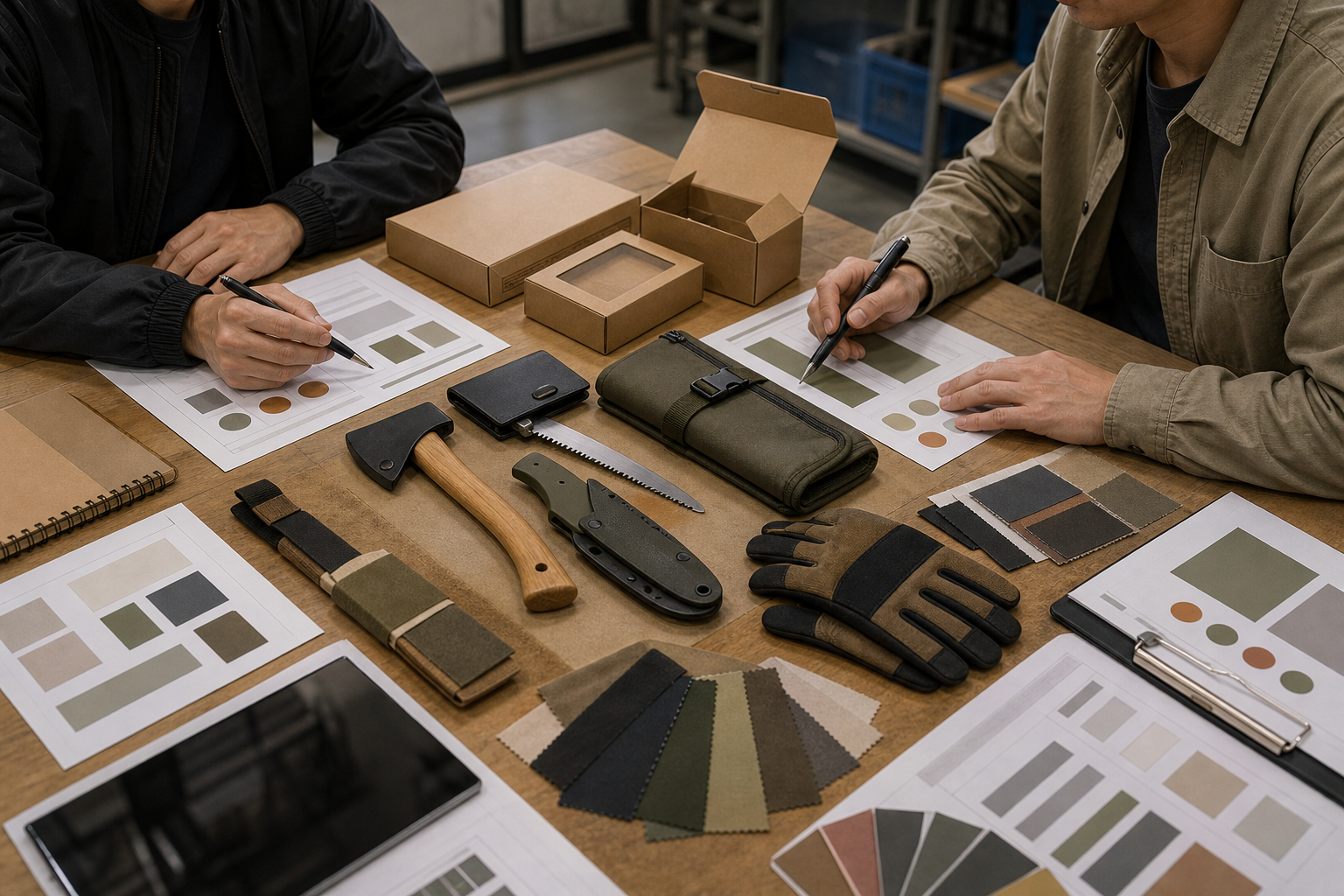
I Build the Kit Around the Customer's Market
Vast State is an OEM and ODM knife and outdoor tool manufacturer based in Yangjiang, China. We support customers from concept to production, including prototype development, material selection, finish options, lock and structure suggestions, packaging customization, and production follow-up. For a beginner wood-processing kit, this means I can help the buyer avoid a random bundle and build a clear product system.
If the buyer targets entry-level camping, I may suggest lighter tools, clear safety cards, and affordable packaging. If the buyer targets a premium outdoor brand, I may suggest better sheaths, cleaner finish, stronger packaging, and a more complete care kit. If the buyer sells through distributors, I may prepare clearer specifications and QC criteria. If the buyer sells online, I may help with product details that reduce misunderstanding.
The most useful RFQ is specific. The buyer should share target market, target user, expected wood tasks, preferred tool count, material preference, packaging style, MOQ target, price range, and any compliance or warning text required by the market. Then we can develop a kit that is practical, manufacturable, and easier to repeat.
| Buyer need | Vast State support | Result |
|---|---|---|
| Beginner kit concept | Tool role planning | Clearer product direction |
| Knife and saw matching | Material and structure suggestions | Better user experience |
| Packaging bundle | Sheath, pouch, and box support | Safer retail presentation |
| Repeat orders | QC and production follow-up | More stable supply |
Turn your idea into a quote-ready knife project.
Share your drawing, sample photo, target quantity, market, and packaging needs. Vast State will review manufacturability and prepare OEM/ODM options.
Conclusion
I build beginner wood-processing kits by matching each tool to one clear job, then controlling safety, packaging, care, and repeat production.
Source Notes
[1] USDA Forest Service, "An Ax to Grind: A Practical Ax Manual", https://www.fs.usda.gov/t-d/pubs/htmlpubs/htm99232823/page04.htm [2] USDA Forest Service, "Crosscut Saw Manual", https://www.fs.usda.gov/t-d/pubs/htmlpubs/htm77712508/toc.htm [3] National Park Service, "Leave No Trace Principle #5 - Minimize Campfire Impacts", https://www.nps.gov/articles/000/idkt-lnt5.htm [4] National Park Service, "Leave No Trace - Point Reyes National Seashore", https://www.nps.gov/pore/planyourvisit/leavenotrace.htm [5] OSHA, "1926.301 - Hand tools", https://www.osha.gov/laws-regs/regulations/standardnumber/1926/1926.301