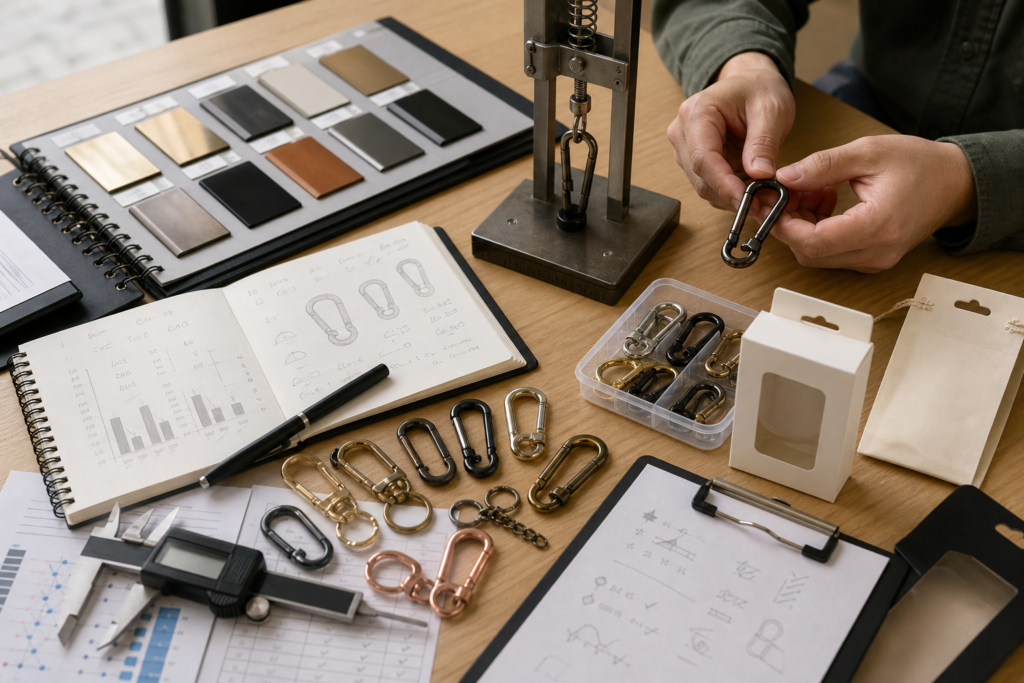
A carabiner looks easy to source until customers misuse it. Weak gates, poor coating, and unclear labels can turn a small accessory into a brand problem.
Buyers should choose fashion carabiners by defining non-climbing use, target load expectations, material, gate design, surface finish, color consistency, skin-contact compliance, packaging warnings, and QC standards. If the product is for climbing, rescue, or fall protection, it needs certified safety design and testing, not fashion-accessory sourcing.
Quick buyer brief:
- Answer: Fashion carabiner selection should start with intended use and safety boundaries.
- Buyer context: This helps outdoor brands, EDC brands, camping brands, gift-set buyers, importers, wholesalers, distributors, and private label buyers.
- Key checks: Non-climbing label, material, gate tension, coating durability, edge finishing, size, color, logo method, packaging, child-use risk, nickel risk, and batch QC.
Have a knife or multi-tool project in mind?
Send your sketch, CAD file, sample photo, or product idea. Vast State can review manufacturability, suggest materials, estimate MOQ, and prepare a quote for your OEM/ODM project.
When a buyer asks me about a fashion carabiner, I first ask what the product is supposed to do. Is it a key holder, bottle clip, bag accessory, glove hook, small EDC organizer, gift item, or outdoor-style decoration? That question matters because a fashion carabiner should never be confused with a climbing connector. The product may look similar from far away, but the design goal, material control, testing level, marking, and legal responsibility are different. I prefer to make this boundary clear before sample development starts.
Why Should Buyers Define the Carabiner's Real Use First?
A vague carabiner brief creates hidden risk. The factory may quote a nice shape, but the buyer may need a very different product.
Buyers should define the real use first because a keychain carabiner, bag clip, camping accessory, climbing connector, and fall-protection connector require different strength, materials, testing, marking, and warnings.
I Separate Accessory Use From Safety Use
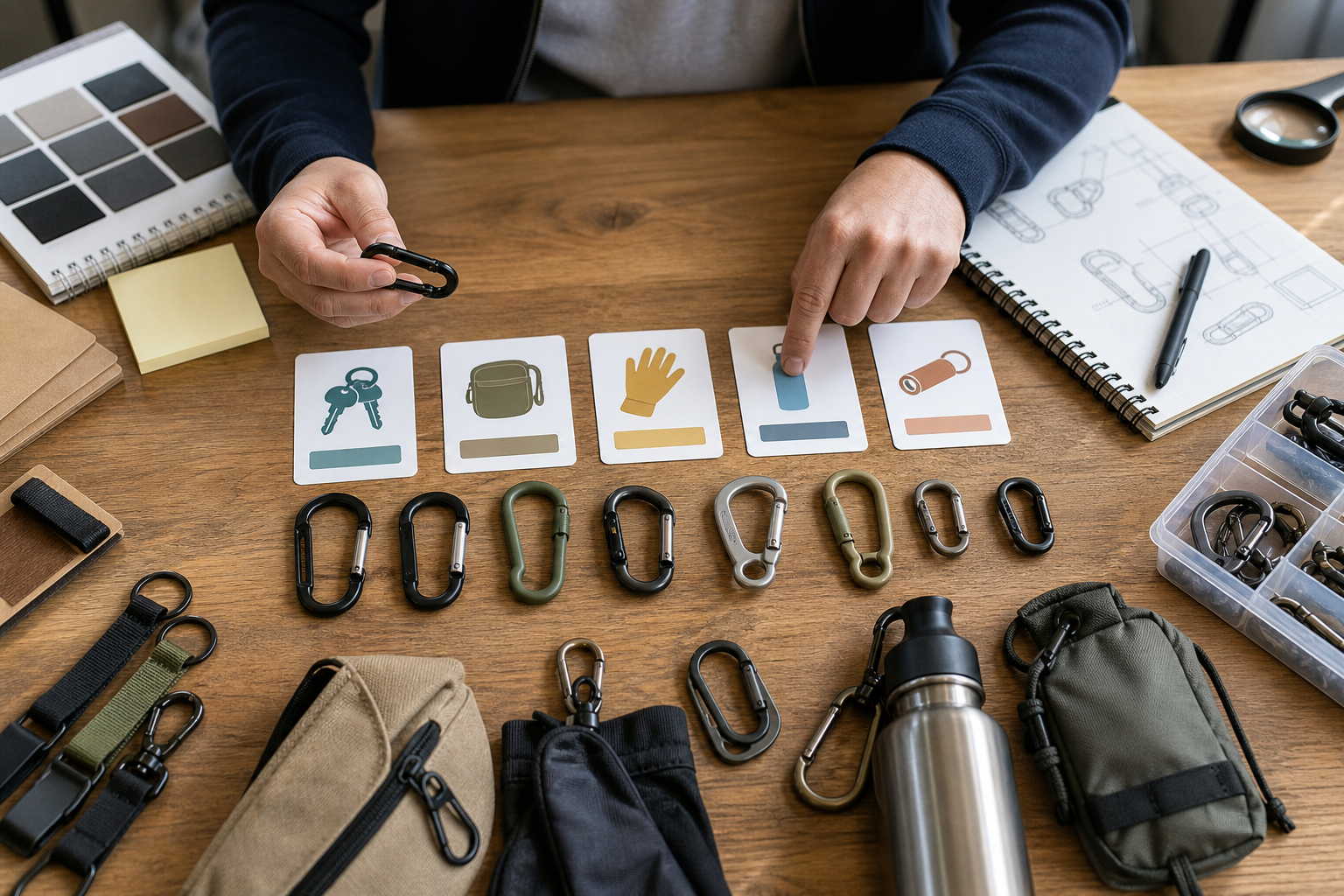
The first decision is not shape. It is intended use. A fashion carabiner can be a useful accessory for keys, bags, pouches, bottles, caps, gloves, small outdoor tools, and light EDC organization. It can also be a branding item in a camping kit or gift set. But it is not automatically a climbing product. If the buyer wants a carabiner for climbing, rope work, rescue, fall arrest, or work positioning, the project changes completely.
The UIAA publishes UIAA 121 for connectors, which is focused on climbing and mountaineering equipment. OSHA also has requirements for snap hooks and carabiners in personal fall protection systems. These are not fashion-accessory references. I use them to show the boundary. A buyer should not imply safety use unless the product is designed, tested, certified, marked, and documented for that use.
For a normal fashion carabiner, I usually recommend clear packaging language such as "not for climbing" or "accessory use only," depending on the target market and legal review. This protects the user and the brand. It also helps the supplier develop the right product instead of guessing whether the buyer expects real load-bearing performance.
| Intended use | Product direction | Buyer warning |
|---|---|---|
| Keychain | Light accessory | Do not imply load-bearing safety |
| Bag clip | Appearance and convenience | Check gate strength and coating |
| Outdoor gift set | Branding and packaging | Use clear accessory wording |
| Climbing or PPE | Certified safety equipment | Do not source as fashion accessory |
OEM/ODM RFQ Checklist
Prepare these details to help Vast State review your project and provide a more accurate quotation.
| RFQ Field | What to Prepare |
|---|---|
| Project type | OEM from drawing / ODM private label / wholesale catalog |
| Product category | Folding knife / fixed blade / multi-tool / outdoor tool |
| Design status | Idea / sketch / 2D drawing / 3D CAD / physical sample |
| Target price | Ex-factory target price or retail price range |
| MOQ expectation | 500 / 1,000 / 3,000 / 5,000+ pcs |
| Logo method | Laser engraving / etching / printing / molded logo |
| Packaging | Standard packaging / custom retail box / Amazon-ready |
| Market | USA / EU / Japan / Korea / Middle East / other |
| Compliance needs | Buyer-specified testing / documentation / labeling |
| Timeline | Sample deadline / mass production deadline |
What Materials Work Best for Fashion Carabiners?
The cheapest material may look fine in photos. But weight, strength, surface finish, and corrosion behavior decide repeat value.
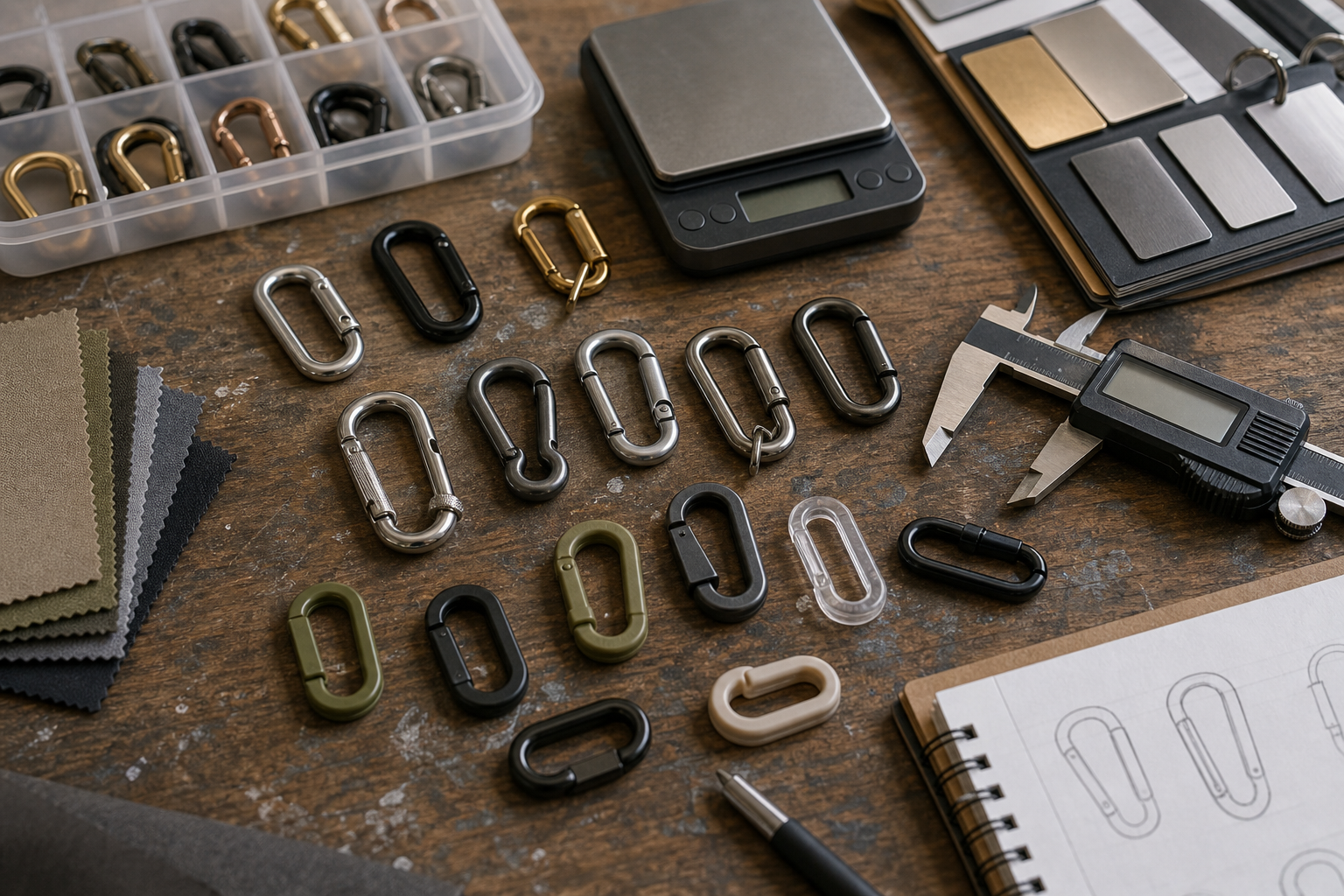
Fashion carabiners commonly use aluminum alloy, zinc alloy, stainless steel, or plastic. Buyers should choose material by weight, cost, finish quality, corrosion resistance, feel, logo method, and target price.
I Match Material to Brand Positioning
Aluminum alloy is popular because it is light and can accept anodized color. It suits outdoor-style accessories, EDC kits, and colorful private label products. The concern is that thin sections can bend if the shape is too weak. The buyer should define thickness, gate style, finish, and expected light-duty use.
Zinc alloy can look solid and can support molded shapes, but it is usually heavier. It may fit gift items, promotional products, or fashion accessories where shape detail matters more than low weight. Stainless steel feels stronger and resists corrosion better, but it may cost more and weigh more. Plastic can reduce cost and weight, but it may not match a premium outdoor brand unless the design is intentional.
For B2B projects, material choice should connect to the product line. A knife brand may want a clean anodized aluminum carabiner that matches handle colors. An outdoor brand may want a matte finish and simple utility look. A gift-set buyer may want custom colors, logo printing, and small packaging. A sourcing manager may care most about stable MOQ, color consistency, and cost.
I also ask about skin contact. If the carabiner may hang on clothing, bags, or key rings, it can touch hands often. For EU markets, ECHA's REACH Annex XVII nickel restriction is a useful reference when metal articles may have direct and prolonged skin contact. The final requirement depends on the product and market, but the topic should not be ignored.
| Material | Main benefit | Production concern |
|---|---|---|
| Aluminum alloy | Light and colorful | Section thickness and anodizing consistency |
| Zinc alloy | Detailed shape and solid feel | Weight and plating control |
| Stainless steel | Corrosion resistance | Cost and heavier feel |
| Plastic | Low weight and low cost | Perceived value and durability |
How Should Buyers Evaluate Gate Design and User Feeling?
A carabiner fails emotionally before it fails physically. A loose, sharp, or sticky gate makes the product feel cheap.
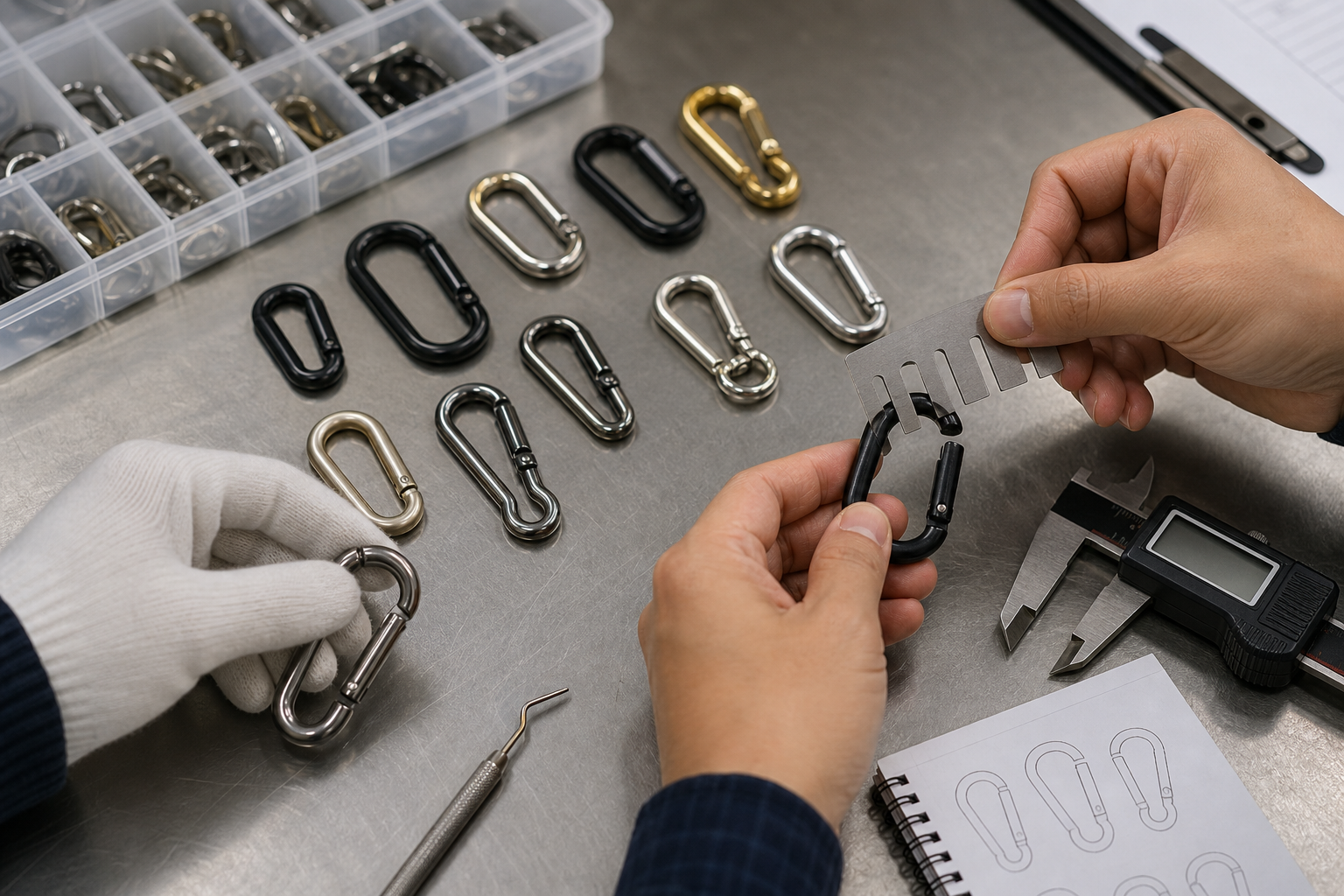
Buyers should evaluate gate design by spring return, opening clearance, finger comfort, closing alignment, snag risk, edge smoothness, and repeat opening feel. The gate should match the accessory's real use.
I Check the Moving Part First
The gate is the part the user touches most. If the spring is weak, the user notices. If the gate does not close cleanly, the product feels unreliable. If the opening is too small, the user cannot clip it to a bag loop or key ring easily. If the nose catches fabric, the user gets annoyed. These small details decide whether a cheap accessory feels useful or disposable.
There are several basic gate directions. A wire gate can feel light and simple. A solid straight gate can look cleaner and stronger. A bent gate may improve access in some designs, but it may look too technical for a fashion accessory. A screw lock or twist lock can be attractive, but it may also suggest safety use if the product is not certified. That is why I avoid adding technical-looking features only for decoration unless the buyer is very clear about positioning and warnings.
The gate also affects assembly and inspection. The spring should return consistently. The pin should not loosen. The gate should align with the nose. Edges should be smooth. Coating should not build up so much that the gate sticks. For repeat orders, I prefer a simple gate structure that can be inspected quickly and consistently.
| Gate detail | User-facing result | QC check |
|---|---|---|
| Spring return | Reliable closing feel | Open and close cycle check |
| Opening clearance | Easier clipping | Measure gap and test key ring fit |
| Nose shape | Less snagging | Fabric and cord snag check |
| Edge finish | Better hand feel | Burr and sharp-edge inspection |
How Do Finish, Color, and Branding Affect Buyer Value?
A carabiner is often bought for look and brand fit. Poor color matching can make the whole product line feel inconsistent.
Finish, color, and branding affect perceived value, shelf appeal, and line consistency. Buyers should control anodizing, plating, coating, laser engraving, printing, logo position, and packaging match.
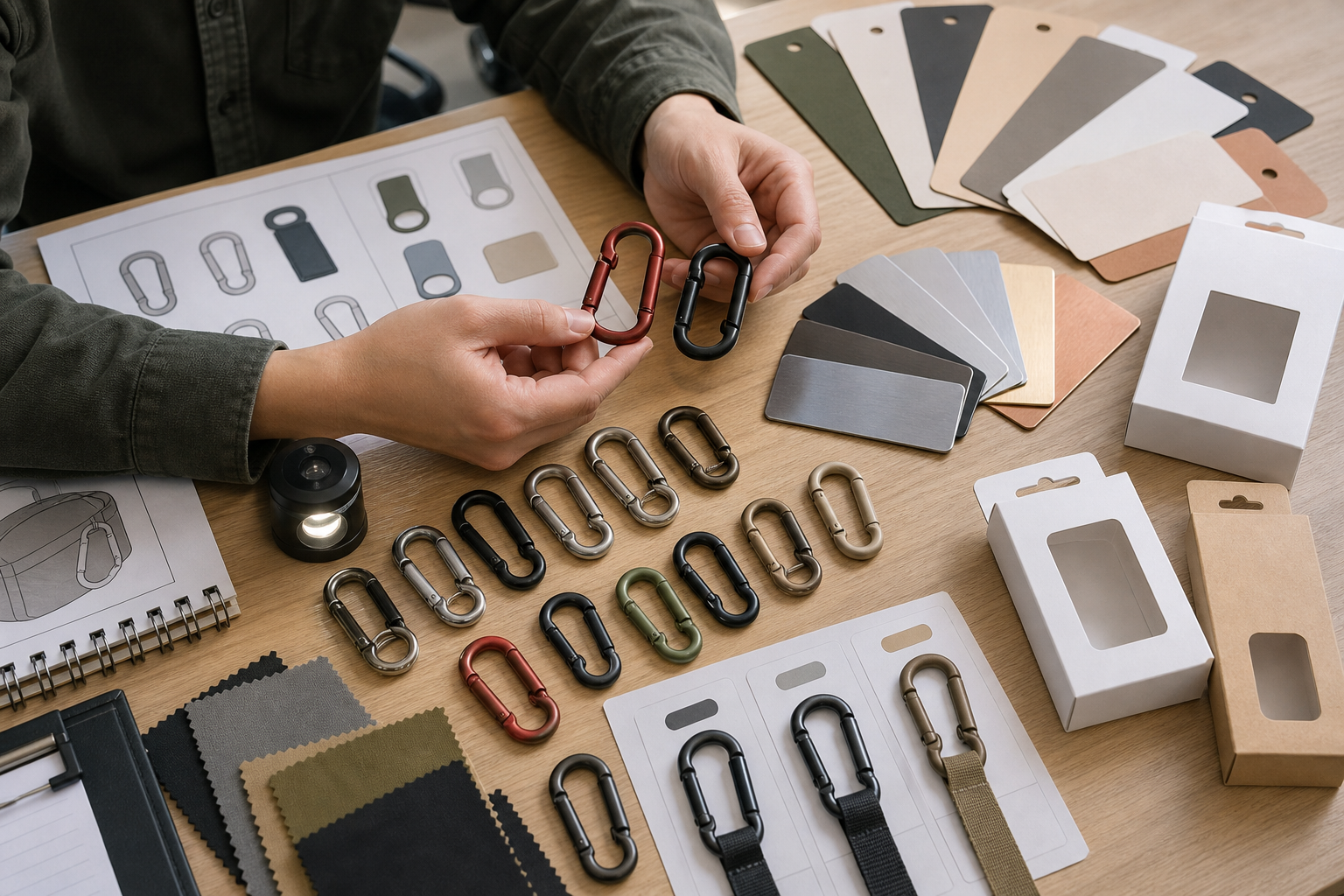
I Treat Color as a Controlled Specification
Fashion carabiners often win or lose on finish. A black anodized carabiner, a brushed stainless hook, and a bright promotional color can target very different buyers. But color is not only a creative choice. It is a production control point. The buyer should define acceptable color range, finish texture, logo size, logo method, and scratch expectations before mass production.
Anodizing is common for aluminum. It can create attractive colors, but batch variation can happen. Plating can work well on zinc alloy or steel, but adhesion and corrosion resistance should be controlled. Powder coating or painting can give special colors, but chips may show if the part hits keys or metal tools. Laser engraving can look clean and durable, while pad printing or screen printing can support color logos but may wear faster.
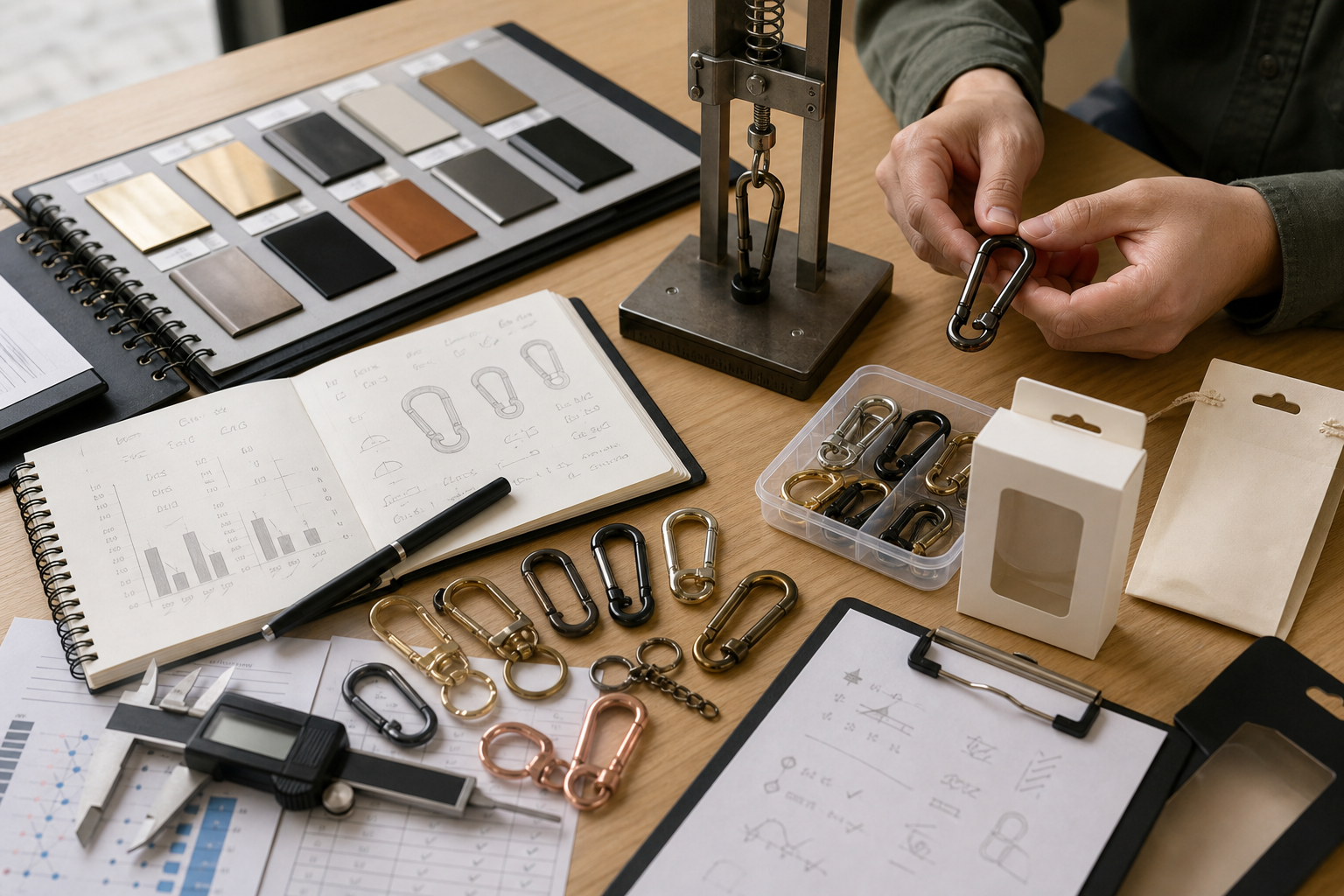
For B2B buyers, I like to prepare a simple finish board before production. It can include approved color samples, logo samples, surface texture, and packaging color. This saves arguments later. If the buyer wants the carabiner to match a knife handle, sheath, pouch, or gift box, the color sample should be checked under normal lighting, not only in edited photos.
| Finish choice | Main advantage | Risk to control |
|---|---|---|
| Anodizing | Light, colorful, outdoor look | Batch color variation |
| Plating | Bright or premium metal look | Adhesion and corrosion |
| Painting or coating | Wide color options | Chipping and wear |
| Laser engraving | Durable logo | Contrast and position |
What Safety Labels and Compliance Points Matter for Accessory Carabiners?
Accessory carabiners can be misunderstood. A missing warning can create customer misuse and channel risk.
Fashion carabiners should use clear non-climbing or accessory-use labeling when appropriate, avoid false load claims, check skin-contact material rules, consider child-use rules, and maintain product safety documentation.
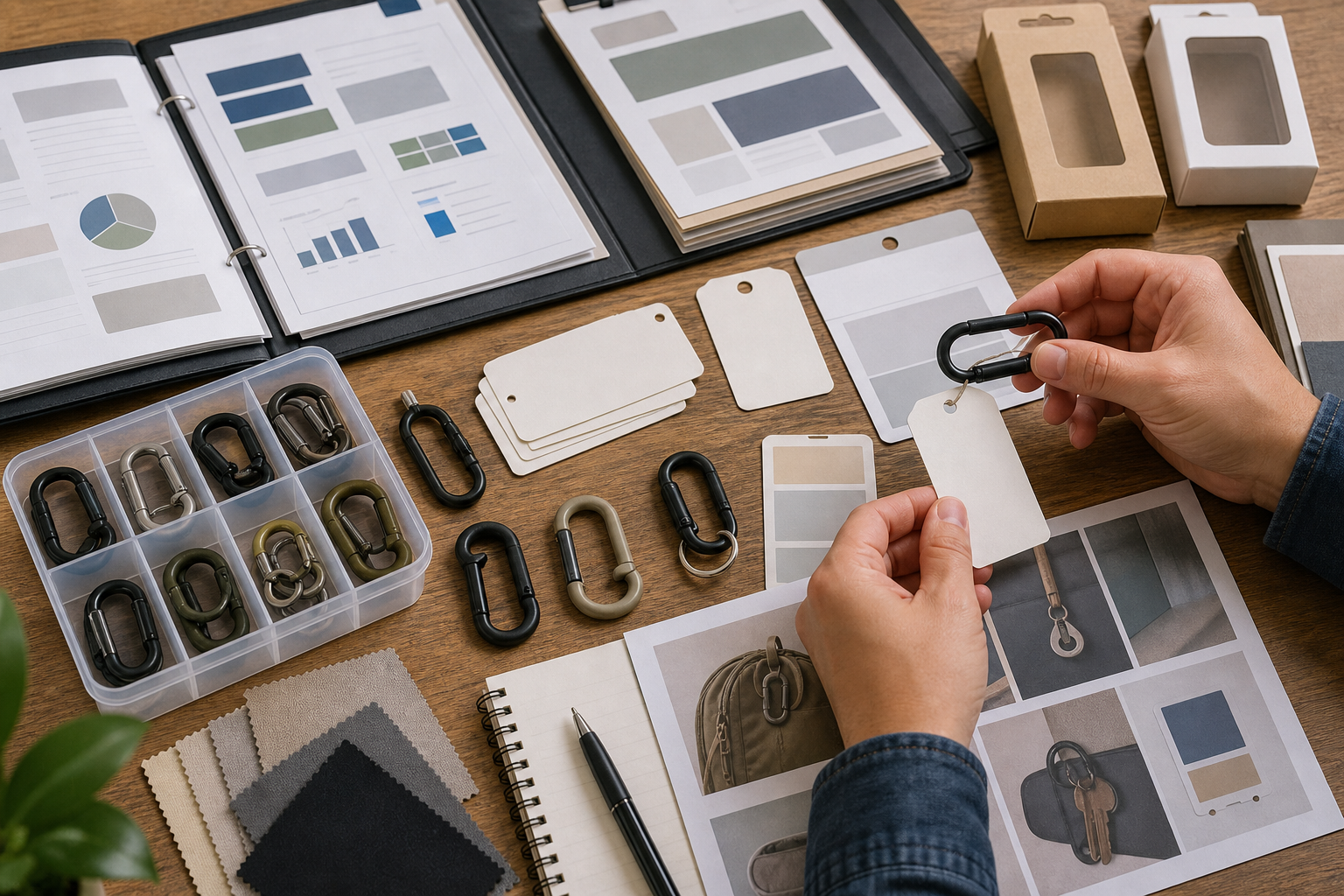
I Do Not Let the Product Promise Too Much
The safest fashion carabiner is honest. If it is not designed for climbing, rescue, fall protection, towing, hammocks, swings, or body support, the packaging should not suggest those uses. If the buyer wants a load rating, the supplier and buyer need to define what that rating means, how it is tested, and whether it is appropriate for the target market. A decorative or keychain clip should not carry safety-style markings unless the full safety path is real.
For the EU, the General Product Safety Regulation is useful background because it focuses on safe consumer products, traceability, and consumer information. For the United States, if an item is designed or marketed mainly for children, the CPSC's children's products guidance is a reminder that children's products can trigger extra testing and certificate requirements. These topics do not apply the same way to every carabiner, but buyers should ask the question before selling.
This is also where packaging and product page wording matter. "Outdoor style clip" is different from "climbing grade connector." "Accessory use only" is different from "supports body weight." The buyer should review wording with local compliance advisers. The supplier can help with product details, material records, and warning placement, but the importer owns the final market decision.
| Compliance point | Why it matters | Buyer action |
|---|---|---|
| Non-climbing label | Reduces misuse risk | Add clear warning if applicable |
| Skin contact | Metal may touch hands often | Review nickel or chemical restrictions |
| Children's use | Extra requirements may apply | Avoid child claims unless reviewed |
| Traceability | Supports recalls and QC | Use batch and supplier records |
What Quality Checks Should Be Done Before Shipment?
A small accessory can still create returns. Scratches, weak springs, sharp edges, and color variation are easy to miss.
Quality checks should cover dimensions, gate return, burrs, surface finish, color consistency, logo accuracy, coating adhesion, corrosion resistance when needed, packaging protection, and batch traceability.
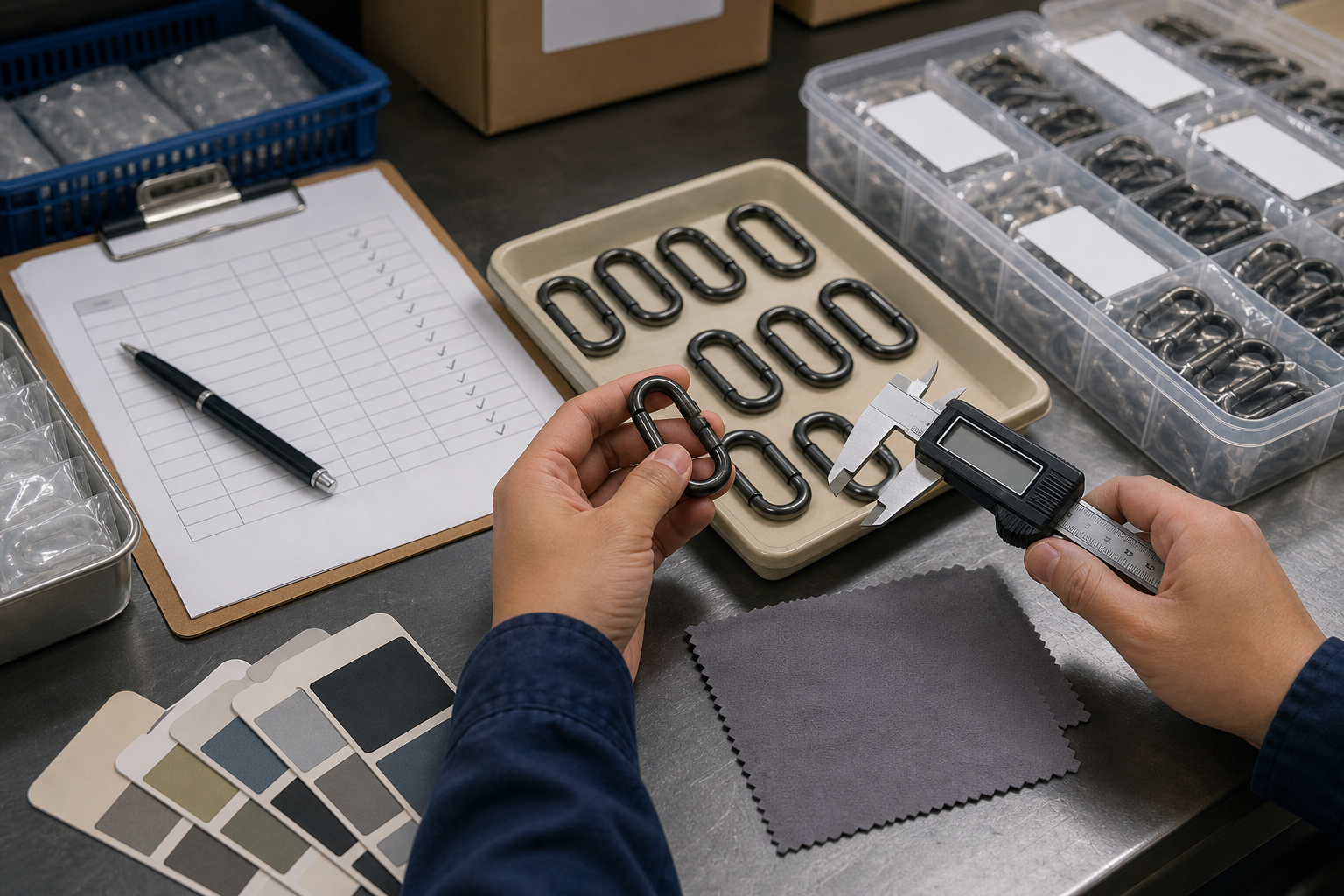
I Make the Inspection Match the Real Complaint Risk
For fashion carabiners, I do not build QC around one dramatic test. I build it around likely complaints. Will the gate close? Are there sharp edges? Does the color match the approved sample? Is the logo centered? Is the surface scratched? Does the clip fit the key ring or strap size? Does the packaging protect the finish during shipping? These are simple questions, but they matter for customer satisfaction.
The inspection plan should also match the order type. A promotional giveaway may focus on logo, color, and packaging count. A premium outdoor accessory may need stricter surface finish and smoother gate feel. A carabiner bundled with a knife, pouch, or camping tool may need packaging tests to make sure metal parts do not scratch each other in transit.
I also like to define acceptable defects clearly. A tiny hidden tooling mark may be acceptable for a low-cost item, but a front-face scratch on a matte black carabiner may not be. If the buyer does not define this, the factory and buyer may judge quality differently. A good pre-shipment checklist prevents that gap.
| QC item | What I check | Why it matters |
|---|---|---|
| Gate function | Opens and closes cleanly | Protects user feeling |
| Edge finishing | No burrs or sharp corners | Protects hand feel |
| Surface finish | Color and scratch control | Protects brand look |
| Packaging | No rubbing or loose parts | Reduces transit damage |
How Can Vast State Support Custom Fashion Carabiner Projects?
A carabiner may be small, but it still needs practical development. A good supplier should help with more than unit price.
Vast State can support custom fashion carabiner projects through material advice, sample development, finish options, logo methods, packaging customization, quality checks, accessory kit planning, and production follow-up.

I Connect the Accessory to the Whole Product Line
Vast State is mainly known as an OEM and ODM knife and outdoor tool manufacturer in Yangjiang, China. But many buyers also need accessories that support the product line. A fashion carabiner can be used with pouches, keychain tools, small EDC kits, camping gift sets, bottle holders, and outdoor packaging bundles. When it is developed well, it adds value without making the main product more complex.
My role is to help the buyer turn the idea into a manufacturable accessory. That means choosing material, thickness, gate type, finish, logo method, packaging, MOQ direction, and QC points. If the buyer wants a safety-rated connector, I will treat that as a different project and ask for the required standard, certification path, and test documents. If the buyer wants an accessory clip, I will focus on honest use, good hand feel, clean finish, stable production, and clear packaging.
This practical approach fits the way many B2B customers buy. They care about appearance, but they also care about cost, lead time, consistency, and repeat orders. A nice sample is not enough. The accessory must be easy to produce, easy to inspect, easy to pack, and clear to sell.
| Buyer need | Vast State support | Practical result |
|---|---|---|
| New accessory concept | ODM shape and material suggestions | Faster product direction |
| Private label branding | Logo and color options | Better line identity |
| Packaging bundle | Box, pouch, or kit planning | Cleaner retail presentation |
| Repeat production | QC and production follow-up | More stable supply |
Turn your idea into a quote-ready knife project.
Share your drawing, sample photo, target quantity, market, and packaging needs. Vast State will review manufacturability and prepare OEM/ODM options.
Conclusion
I choose fashion carabiners by defining use first, then controlling material, gate feel, finish, labeling, packaging, and batch quality.
Source Notes
[1] UIAA, "UIAA 121 Connectors / Karabiners", https://theuiaa.org/documents/safety-standards/121_UIAAConnectors_V4_2018.pdf [2] OSHA, "1910.140 - Personal fall protection systems", https://www.osha.gov/laws-regs/regulations/standardnumber/1910/1910.140 [3] ECHA, "Annex XVII to REACH - Conditions of restriction", https://echa.europa.eu/documents/10162/3bbe9024-52a6-8e63-5581-e686331eb459 [4] EUR-Lex, "Regulation (EU) 2023/988 on general product safety", https://eur-lex.europa.eu/eli/reg/2023/988/oj/eng [5] U.S. Consumer Product Safety Commission, "Children's Products", https://www.cpsc.gov/Business--Manufacturing/Business-Education/Childrens-Products