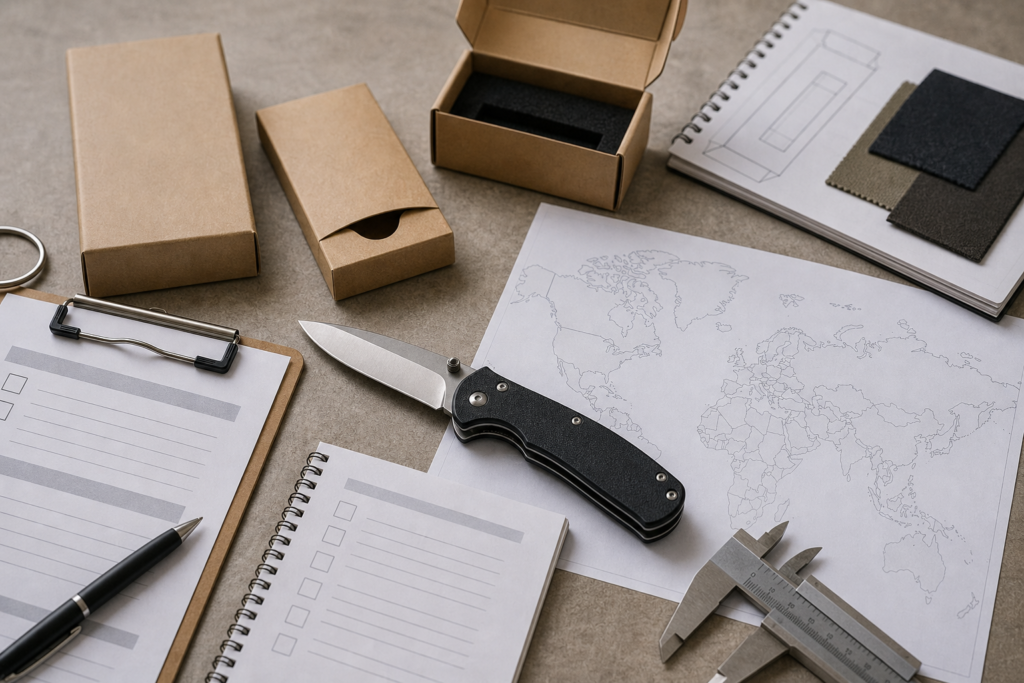
A pocket knife can be well made and still create trouble. The risk often starts when design, sales copy, and local rules are checked too late.
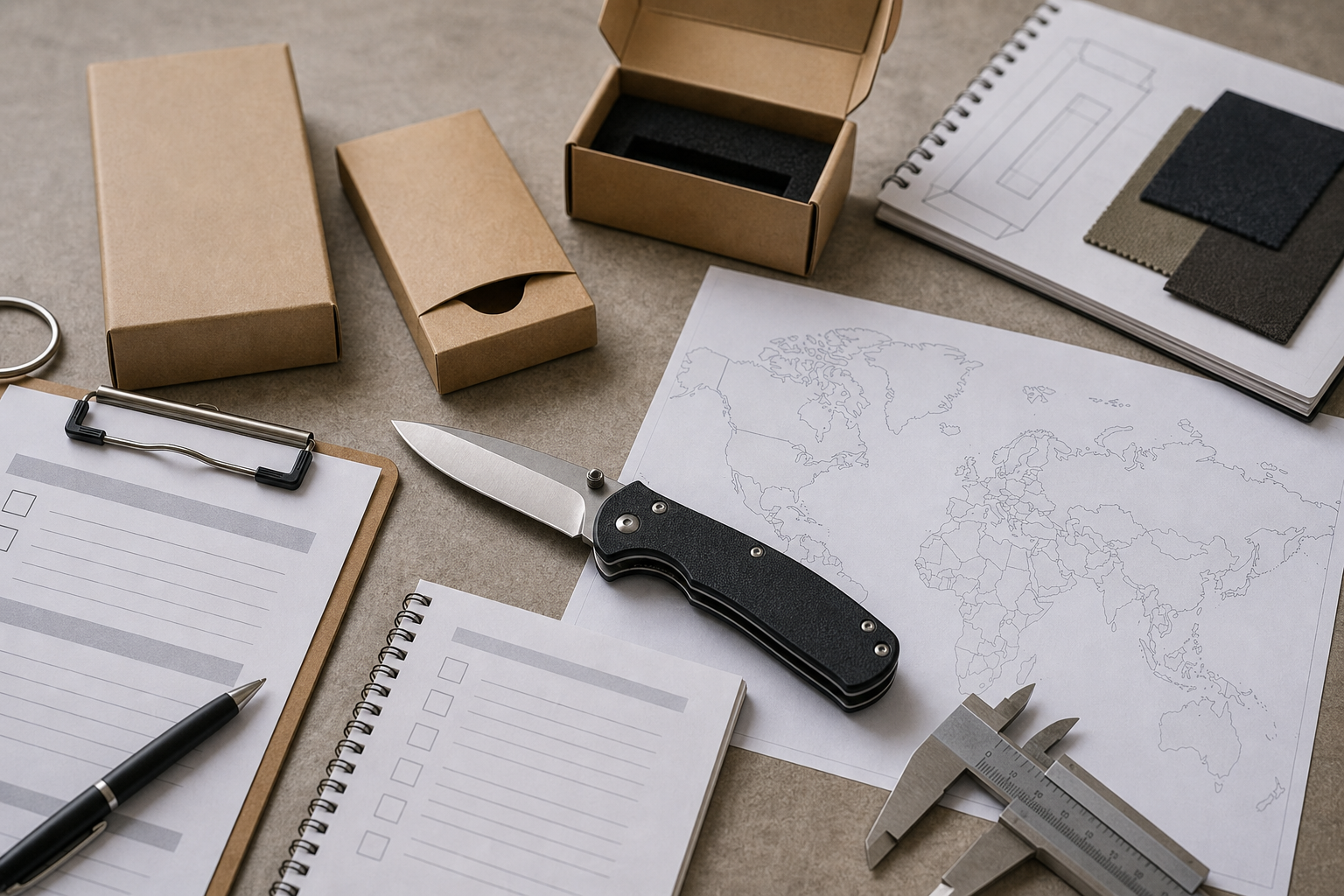
Buyers should check pocket knife compliance by market before production. The checklist should cover import rules, blade length, locking mechanism, opening method, age limits, carry restrictions, packaging, product safety, claims, and documentation. Local counsel or an import broker should confirm final requirements.
Quick buyer brief:
- Answer: Pocket knife compliance is market-specific and should be checked before design approval.
- Buyer context: This helps knife brands, outdoor brands, importers, wholesalers, distributors, private label buyers, and sourcing managers.
- Key checks: Import classification, restricted mechanisms, blade length, locking structure, age verification, packaging warnings, channel rules, product safety files, and supplier traceability.
Planning a private-label knife line for this market?
Use this article as an early planning reference, then prepare your target market, product category, labeling needs, and buyer-specified compliance requirements before production.
When a buyer asks me whether a pocket knife is suitable for a market, I do not answer from appearance only. I ask where it will be sold, how it opens, whether it locks, how long the blade is, what the packaging says, who can buy it, and which sales channel will list it. A knife that is normal in one market can be sensitive in another. This is why I like to discuss compliance during product development, not after mass production is finished.
Why Should Compliance Start Before Pocket Knife Design Is Finalized?
Some teams design first and check rules later. That can force expensive changes after tooling, packaging, and samples are already approved.
Compliance should start before design approval because blade length, opening mechanism, lock type, product name, packaging, and channel wording can all affect market access and sales risk.

I Check the Product Before I Check the Box
For OEM and ODM knife projects, compliance is not only a label problem. It is a product-structure problem. If the target market restricts certain opening methods, a small design decision can become a large commercial issue. If a marketplace has rules about blade length or age-restricted goods, the product page and packaging may need to be prepared before launch. If the buyer sells through distributors, each distributor may also ask for documents.
I usually start with a simple question: what market is the knife for? A buyer selling in the United States, the United Kingdom, the European Union, Japan, Canada, or Australia may face different import, sale, carry, and product safety expectations. Even inside one country, local laws or platform policies may add another layer. This is why I avoid one universal answer.
I also separate legal compliance from user safety. Legal compliance asks whether the product can be imported, sold, delivered, advertised, or carried under relevant rules. User safety asks whether the product has stable lockup, clear instructions, safe packaging, and reliable quality. A serious buyer needs both. A supplier can help with product structure, documentation, and production control, but the buyer should still confirm final legal requirements with local counsel, customs broker, or channel compliance team.
| Early question | Why I ask it | Practical buyer action |
|---|---|---|
| Target country | Rules differ by market | Confirm import and sale rules first |
| Sales channel | Platforms may add restrictions | Check retailer and marketplace policies |
| Opening method | Some mechanisms are sensitive | Review manual, assisted, automatic, gravity, or one-hand opening |
| Packaging claim | Words can increase risk | Avoid unsupported tactical or self-defense claims |
Private-label Planning Checklist
Before starting production, prepare the market and product details your importer or compliance advisor needs to review.
| RFQ Field | What to Prepare |
|---|---|
| Target market | Country, state, region, or sales channel |
| Product category | Folding knife / fixed blade / multi-tool / outdoor tool |
| Intended use | EDC / camping / kitchen / hunting / rescue / promotional |
| Buyer requirements | Testing, labeling, documentation, or packaging rules |
| Blade and lock details | Blade length, opening method, lock type, edge style |
| Packaging text | Warnings, claims, care notes, language requirements |
| Documents | Drawing, sample photo, logo file, packaging artwork |
| Review owner | Importer, legal advisor, testing lab, or internal compliance team |
How Should Buyers Separate Import, Sale, Carry, and Use Rules?
Many buyers ask one broad question: is this knife legal? That question is too vague for real sourcing decisions.
Buyers should separate import rules, sale rules, carry rules, and use rules. A knife may be importable but restricted for retail sale, age-controlled delivery, public carry, or certain promotional claims.
I Treat Each Rule Layer as a Separate Gate
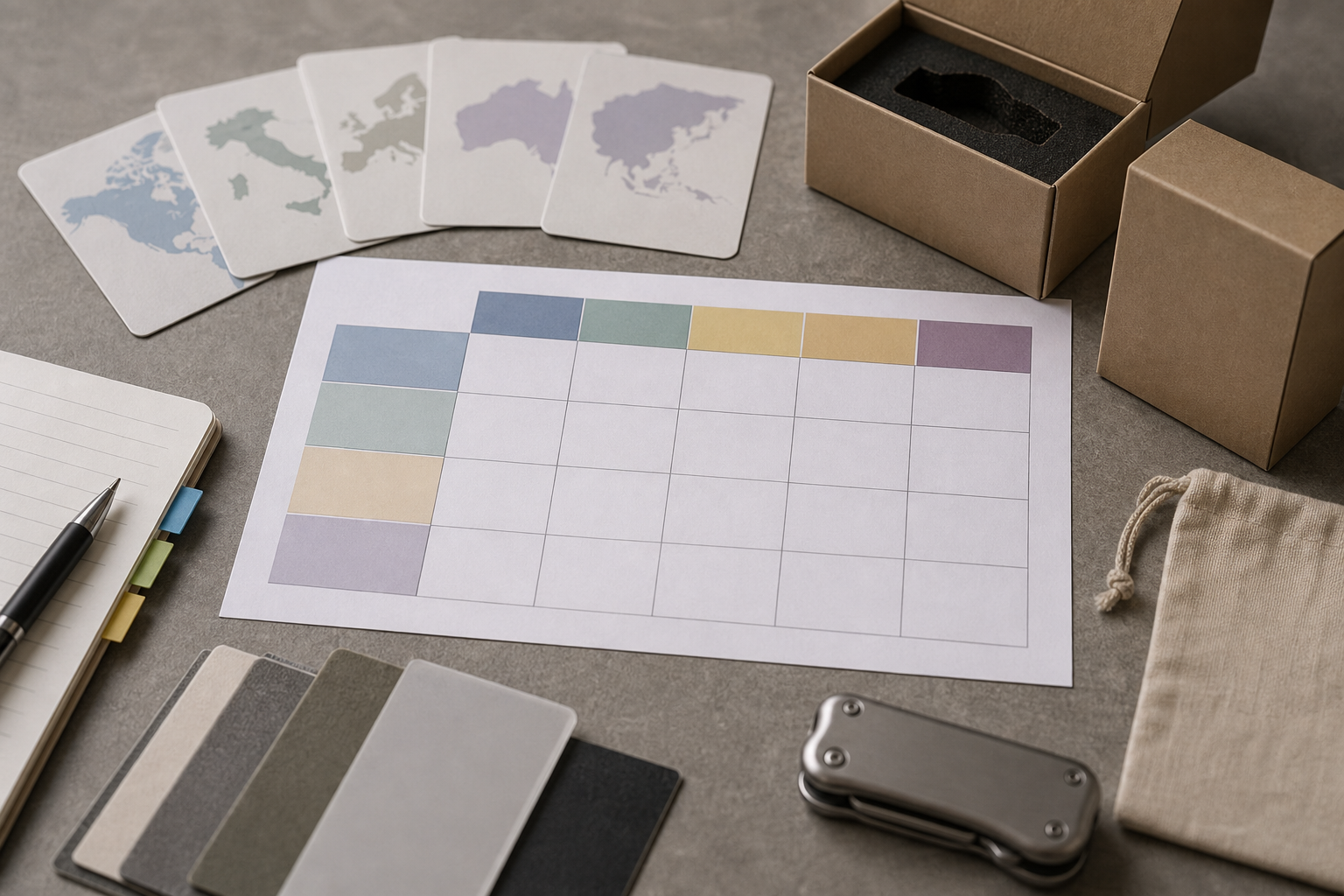
For a B2B knife order, I like to draw four gates. The first gate is import. Customs may care about classification, restricted mechanisms, country of origin marking, paperwork, and prohibited goods rules. The second gate is retail sale. Retail rules may cover age limits, restricted designs, in-store display, online listings, delivery steps, and seller responsibility. The third gate is carry. End users may face restrictions when carrying a knife in public, in a vehicle, or at events. The fourth gate is actual use. Outdoor, camping, rescue, and utility use should be explained responsibly.
This separation keeps the discussion practical. For example, a camping knife may be bought for lawful outdoor use, but that does not mean the user can carry it anywhere or leave it in a vehicle without considering local rules. A product page should not oversimplify this. It can say that buyers should check local laws, but that sentence alone is not enough for the importer. The importer still needs a product-specific compliance review.
In the United Kingdom, official guidance for the Offensive Weapons Act 2019 discusses age verification, delivery controls, and offensive weapon restrictions. In Japan, official law translation for the Act for Controlling the Possession of Firearms or Swords and Other Such Weapons shows why blade and possession rules must be checked with local context. I do not use these as a universal global rule. I use them to show why market-by-market review matters.
| Rule layer | Main question | Who should confirm it |
|---|---|---|
| Import | Can this design enter the country? | Importer, customs broker, local counsel |
| Retail sale | Can this product be sold through this channel? | Buyer, retailer, platform team |
| Delivery | Can this product be delivered to this buyer? | Seller, logistics partner |
| Carry and use | How may the end user legally carry or use it? | Local legal adviser or official guidance |
What Product Features Can Create Compliance Risk?
A small feature can change the product category. Buyers should not approve a knife only because the sample looks normal.
Product features that can create compliance risk include blade length, blade shape, locking mechanism, one-hand opening, automatic opening, gravity opening, assisted opening, double edges, hidden blades, and aggressive marketing language.
I Review Mechanism, Not Only Materials
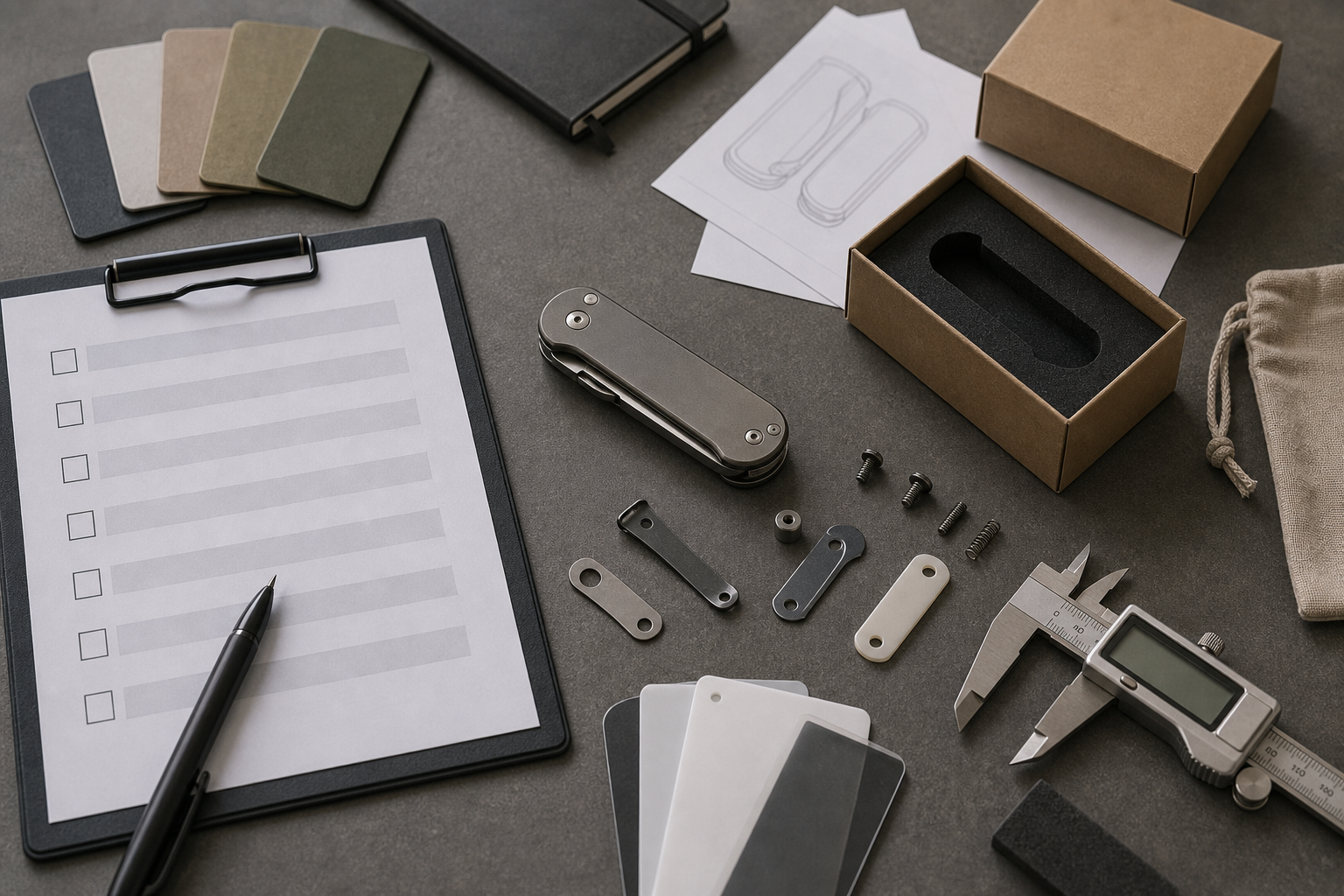
Many buyers naturally focus on steel, handle material, finish, and price. Those details are important, but compliance review also needs mechanism details. How does the blade open? Does it open automatically? Does it open by gravity or centrifugal force? Does it lock? How long is the blade? Is the edge single-sided or double-sided? Does the product look like a normal utility tool, or does the naming and packaging push it toward weapon positioning?
In the United States, federal law includes definitions related to switchblade knives in 15 U.S.C. Chapter 29. State and local rules can add more complexity, so federal wording is only one layer. In Canada, the Canada Border Services Agency has discussed import treatment for centrifugal knives. In Australia, the Australian Border Force has a prohibited-goods page for weapons. These examples show that opening method and classification can matter as much as material.
From a manufacturing point of view, this affects development. If a buyer wants a smooth one-hand opening design, I will ask about the target market before confirming the structure. If a buyer wants a lock type, I will ask whether the channel accepts locking knives. If a buyer wants a long blade for outdoor use, I will ask whether the target market has blade-length thresholds. This is not fear. It is practical product control.
| Feature | Why it may matter | Design response |
|---|---|---|
| Blade length | Some markets use length thresholds | Define exact measurement method |
| Opening method | Automatic or gravity action may be restricted | Confirm mechanism early |
| Lock type | Some channels treat locks differently | Match structure to target market |
| Blade shape | Aggressive shapes may raise concern | Use honest utility positioning |
How Should Buyers Handle Age Limits and Sales Channels?
A compliant product can still fail at the sales stage. Age checks, online delivery, and platform rules can block the order.
Buyers should handle age and channel rules by checking retail laws, online marketplace policies, delivery requirements, product listing language, packaging warnings, and distributor responsibilities before launch.

I Think About the Buyer Journey
The product does not move from factory to user in one step. It may pass through importer, warehouse, distributor, retailer, online platform, courier, and final customer. Each step can create compliance questions. Can the retailer display it? Can the platform list it? Does the courier accept it? Does the seller need age verification? Does the packaging need a warning? Does the product page need clear responsible-use wording?
The United Kingdom gives a useful example because official guidance discusses online sale and delivery controls for knives and bladed articles. A seller may need more than a checkbox on a website. The delivery method and final handover may matter. I do not copy one country's rule into another market, but I do use the example to remind buyers that compliance includes process, not only product design.
For private label buyers, this is also a brand issue. If the brand uses aggressive language, self-defense claims, or unclear images, the same physical knife may become harder to place in a mainstream outdoor channel. A camping, EDC, rescue, or general utility positioning is usually easier to support when the product is honestly designed for that use. I also suggest preparing clean product photos that show size, closed position, packaging, and function without dramatic use scenes.
| Channel issue | Risk | Practical control |
|---|---|---|
| Online sales | Age or restricted-goods policy | Check platform rules before listing |
| Retail delivery | Courier restrictions | Confirm accepted delivery method |
| Product page | Risky wording | Use utility-focused descriptions |
| Distributor sale | Different local requirements | Share compliance files with partners |
What Product Safety and Documentation Should Be Prepared?
Some buyers only ask for a sample and price. That is not enough for stable international business.
Buyers should prepare product specifications, material records, inspection criteria, packaging artwork, warning text, traceability information, test reports when needed, and a market-specific compliance checklist.
I Build a File That Can Be Checked Later
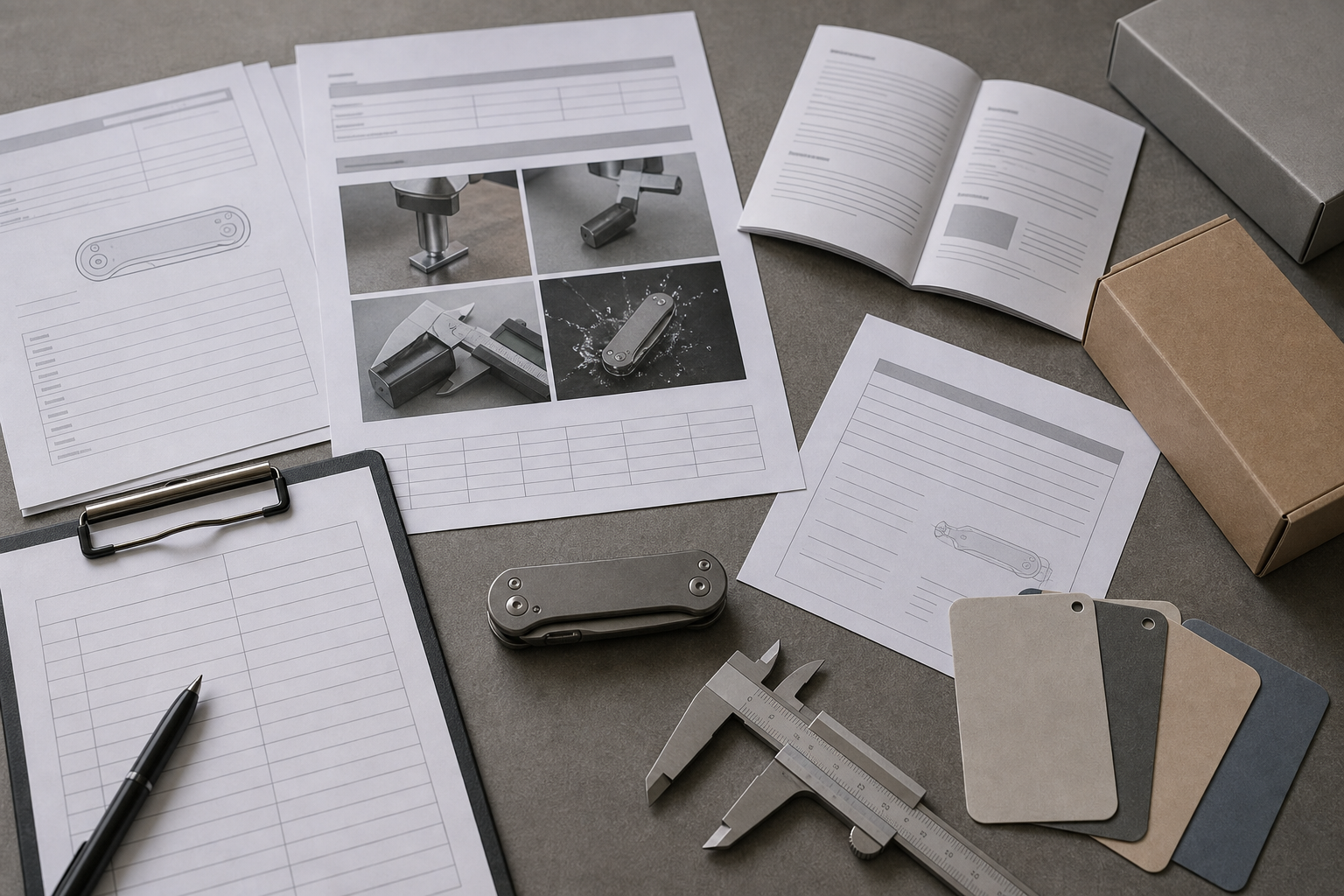
A good compliance file does not need to be complicated, but it should be organized. I like to keep the product specification, material choice, blade length, opening method, lock structure, finish, packaging wording, inspection standard, and supplier contact in one place. If the buyer later changes the blade length or lock type, the file should be updated. This protects the buyer from relying on old information.
For the European Union, the General Product Safety Regulation creates broad product safety duties for consumer products. The exact application depends on the product and market role, but the direction is clear: sellers should think about safety, traceability, risk, and consumer information. A knife buyer should not treat this as paperwork only. It should connect to real product controls such as sharp edge protection, secure packaging, clear warnings, and traceable batches.
Documentation also helps with repeat orders. If the first production run has a confirmed blade length, hardness target, pivot structure, screw specification, packing method, and inspection checklist, the second run can repeat more smoothly. This matters to B2B buyers because consistency affects reviews, returns, distributor trust, and margin.
| Document | What it proves | Why buyers need it |
|---|---|---|
| Product specification | Structure and dimensions | Confirms what was ordered |
| QC checklist | Inspection criteria | Supports batch consistency |
| Packaging proof | Warning and label wording | Reduces launch errors |
| Traceability file | Batch and supplier records | Helps after-sales follow-up |
How Should Packaging and Marketing Avoid Creating Extra Risk?
Packaging can turn a useful tool into a risky message. Bad wording can hurt compliance, channel approval, and brand trust.
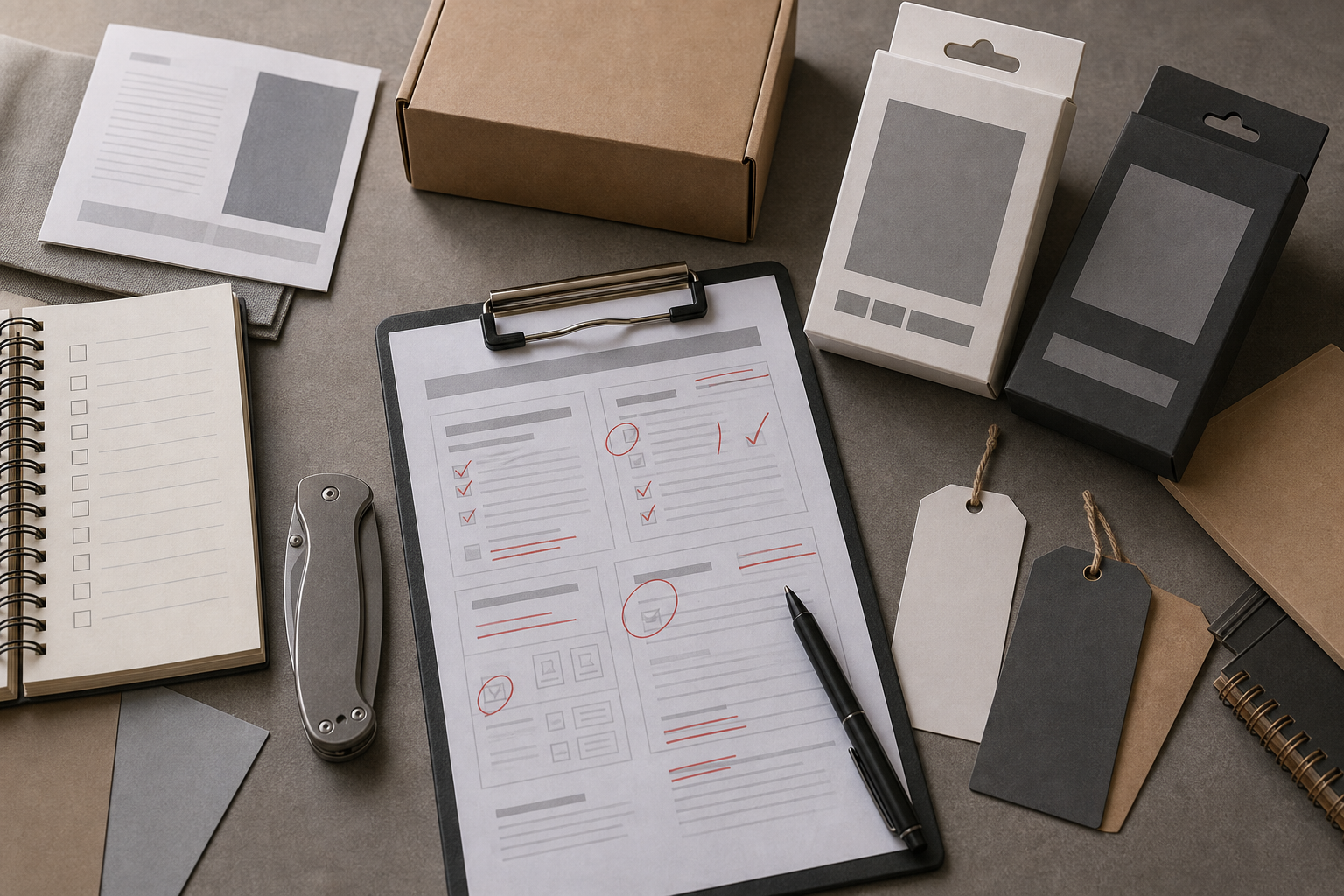
Packaging and marketing should use honest utility language, clear safety warnings, correct age or market notices, accurate size information, and responsible-use wording. Buyers should avoid unsupported self-defense or weapon-style claims.
I Prefer Utility Positioning Over Drama
In my view, many knife products become harder to sell because the marketing is too dramatic. A compact folding knife for camping, EDC, warehouse work, rescue kits, or utility tasks does not need extreme wording. The product should explain function, material, size, lock type, care, and safe use. It should not promise combat use, illegal carry, or unrealistic cutting performance.
Packaging also needs physical protection. The knife should not move freely inside the box. The edge should not damage the insert. A folding knife should be closed and secured. A fixed blade should have a sheath or blade guard. If the package is opened by a warehouse worker, retailer, or consumer, the presentation should be safe and predictable.
The instruction sheet can do a lot of work. It can explain safe opening and closing, cleaning, drying, sharpening, storage, local-law reminder, and warranty limits. It can also mention that laws vary by country, state, city, and use context. This is not a substitute for legal review, but it is better than silence. For B2B orders, I like to finalize instruction content before mass production, because packaging changes after production are slow and expensive.
| Packaging area | Common mistake | Better approach |
|---|---|---|
| Product name | Weapon-style wording | Utility or outdoor wording |
| Warning text | Generic and unclear | Market-specific review |
| Insert design | Knife moves inside box | Secure closed position |
| Product photo | Dramatic unsafe scene | Clean product-focused image |
How Can Vast State Support Market-Ready Pocket Knife Projects?
A supplier cannot replace local legal advice. But a good supplier can reduce avoidable product and documentation problems.
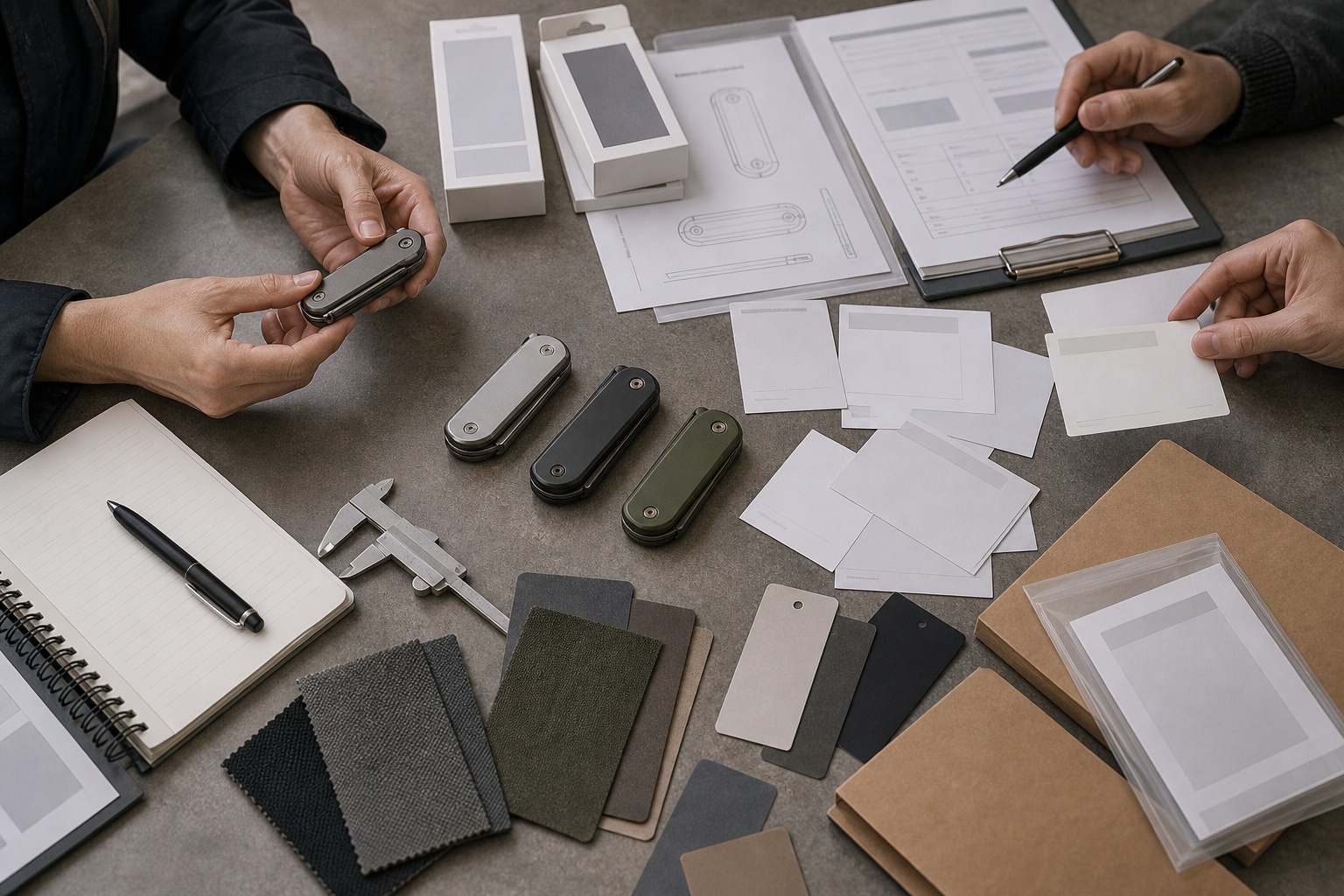
Vast State can support buyers by reviewing manufacturability, blade length, lock structure, materials, packaging options, QC checkpoints, prototypes, batch consistency, and export documentation needed for market-ready pocket knife projects.
I Help Buyers Turn Compliance Questions Into Product Decisions
Vast State is an OEM and ODM knife and outdoor tool manufacturer in Yangjiang, China. In real projects, I support customers from concept to production. This includes prototype development, material selection, finish options, lock and structure suggestions, packaging customization, and production follow-up. Compliance review belongs in that conversation because product choices affect market fit.
If a buyer already has a design, I can help check whether the structure is practical for production and whether the key details are clearly documented. If a buyer only has a rough idea, I can help turn it into a product direction that matches target price, use case, packaging plan, and sales channel. I cannot decide the buyer's legal position in every country. But I can help make sure the buyer has accurate product details to give to counsel, customs brokers, retailers, or compliance teams.
The best projects are specific. The buyer tells me the target market, target user, price range, sales channel, preferred blade length, handle material, lock type, packaging type, and any known channel restrictions. Then we can build the product around real commercial needs. This is better than making a beautiful sample that later needs redesign because one feature does not fit the market.
| Buyer need | Vast State support | Result |
|---|---|---|
| New product idea | ODM structure and material suggestions | More practical concept |
| Finished design | Manufacturability review | Fewer production surprises |
| Market preparation | Product details and packaging support | Easier compliance review |
| Repeat orders | QC and production follow-up | More stable supply |
Planning a private-label knife line for this market?
Use this article as a planning reference, then confirm local requirements with your importer or compliance advisor before OEM/ODM production.
Conclusion
I treat pocket knife compliance as a product-development step, so buyers can match design, packaging, documentation, and sales channels before production.
Source Notes
[1] UK Government, "Offensive Weapons Act 2019: statutory guidance", https://www.gov.uk/government/publications/the-offensive-weapons-act-2019/statutory-guidance-offensive-weapons-act-2019-accessible-version [2] Japanese Law Translation, "Act for Controlling the Possession of Firearms or Swords and Other Such Weapons", https://www.japaneselawtranslation.go.jp/en/laws/view/4464/en [3] Legal Information Institute, "15 U.S.C. Chapter 29 - Manufacture, Transportation, or Distribution of Switchblade Knives", https://www.law.cornell.edu/uscode/text/15/chapter-29 [4] Canada Border Services Agency, "Customs Notice 18-01", https://www.cbsa-asfc.gc.ca/publications/cn-ad/cn18-01-eng.html [5] Australian Border Force, "Weapons", https://www.abf.gov.au/importing-exporting-and-manufacturing/prohibited-goods/weapons [6] EUR-Lex, "Regulation (EU) 2023/988 on general product safety", https://eur-lex.europa.eu/legal-content/EN/TXT/?uri=CELEX%3A32023R0988