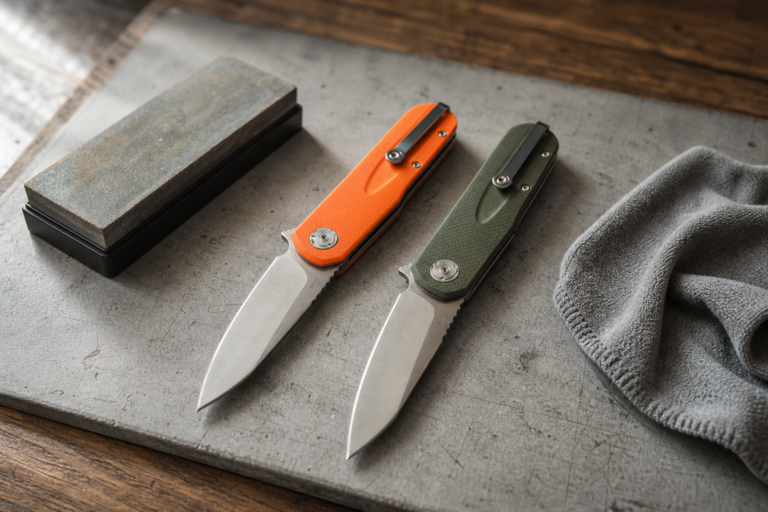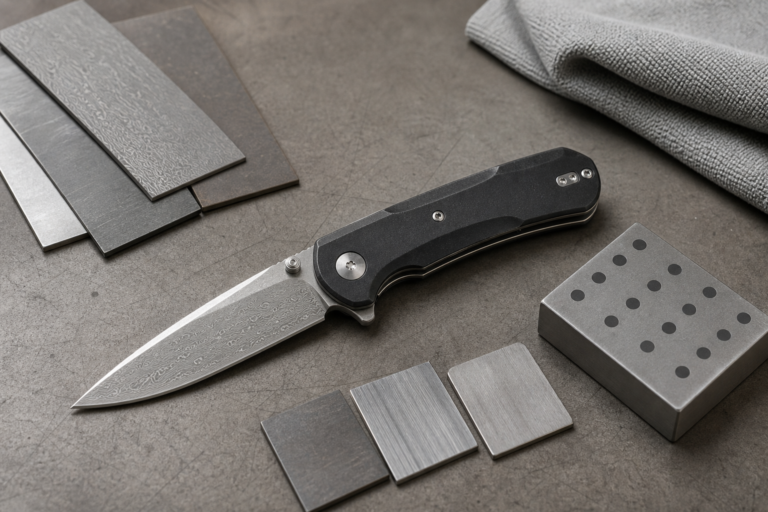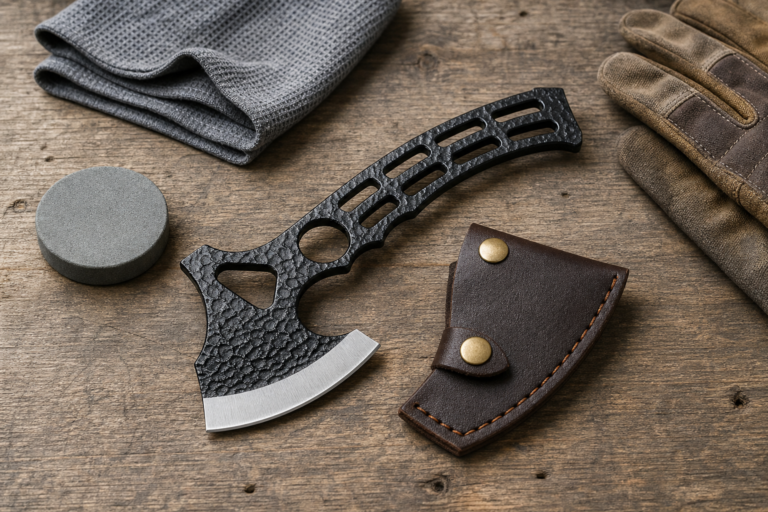
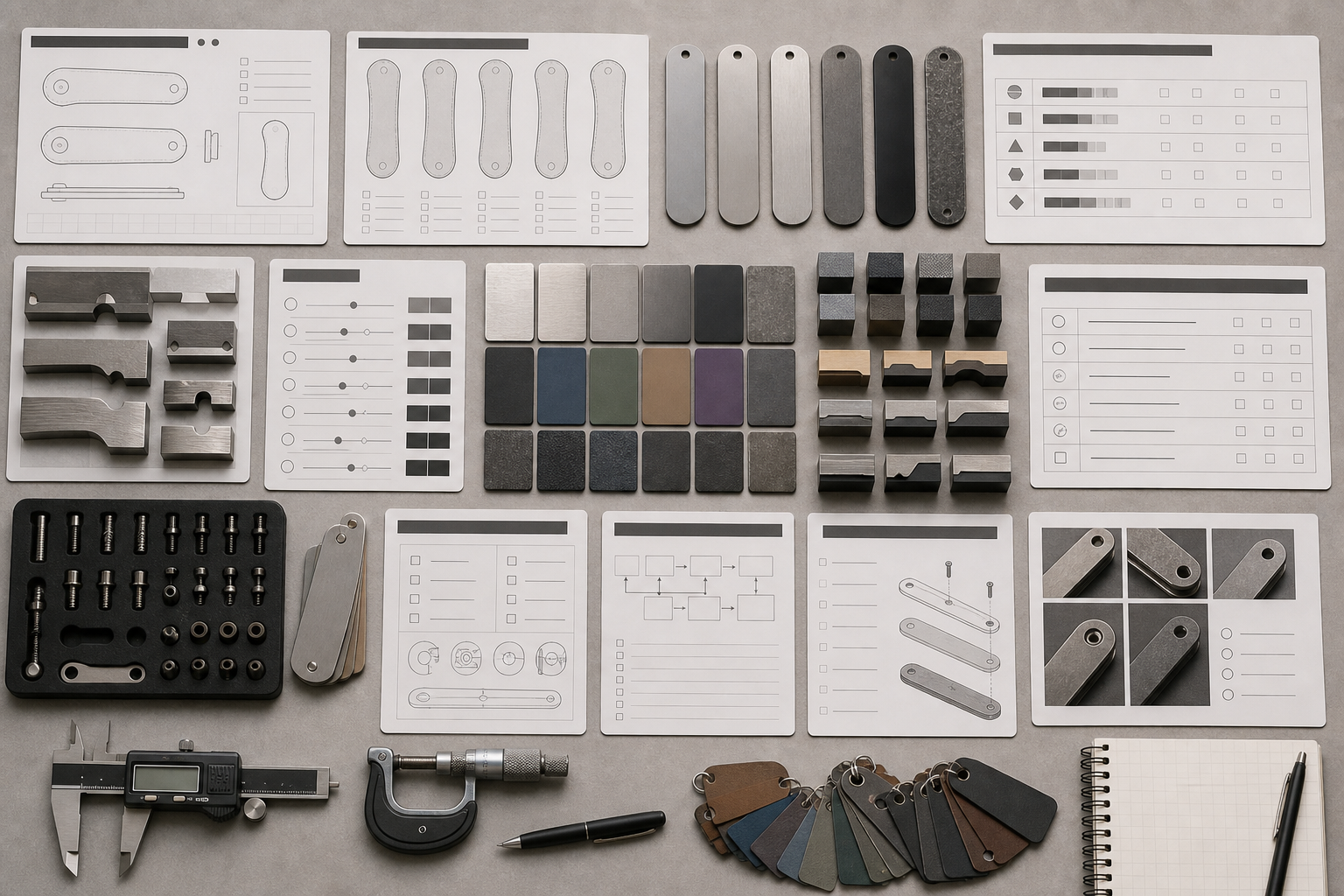
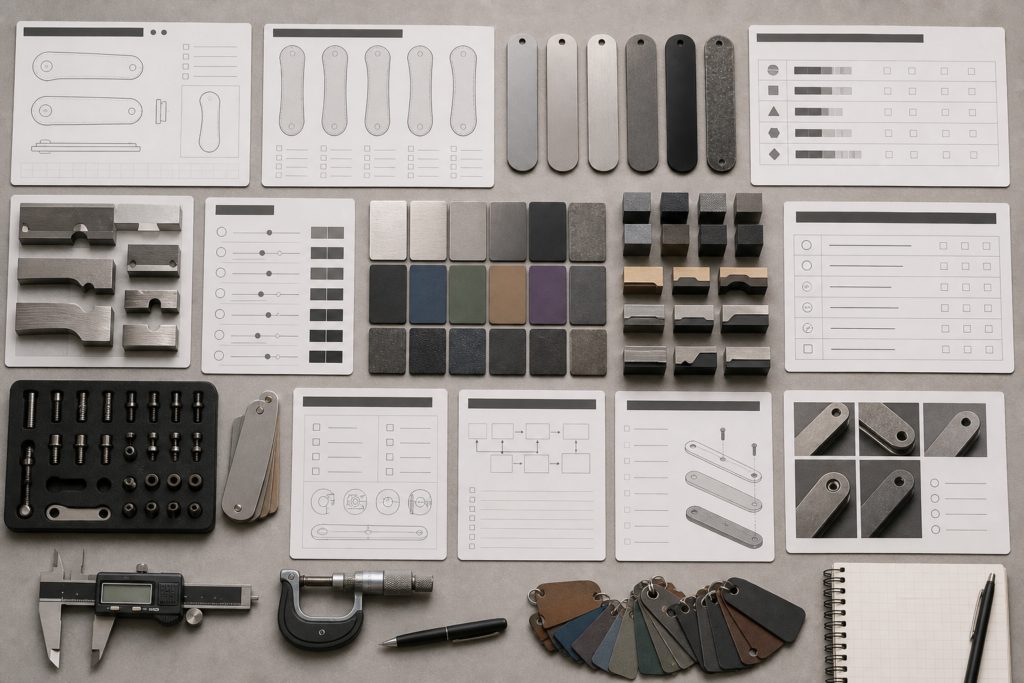
A blade can look attractive but still miss the market. Wrong shape, steel, thickness, or heat treatment can turn a sample into a production problem.
Buyers should match blade design and steel choice to the target user, price range, cutting task, manufacturing tolerance, heat treatment plan, finish, compliance needs, and QC standard before sampling an OEM/ODM EDC knife.
Quick buyer brief:
- Answer: Define blade shape and blade material as one production system.
- Buyer context: This helps knife brands, importers, wholesalers, and private label buyers.
- Key checks: Blade profile, steel grade, hardness range, grind, finish, marking, inspection, and approved sample control.
Planning a knife project with this steel?
Send us your target market, MOQ, price range, and blade type. Vast State can help you choose the right steel, HRC range, finish, handle material, and QC requirements for OEM/ODM production.
When I develop an EDC knife project, I do not choose blade design and blade material separately. The blade profile affects grinding. The steel affects heat treatment. Heat treatment affects edge stability. Blade thickness affects action and weight. Surface finish affects appearance and corrosion care. Even the logo position can affect how the product looks in retail. A buyer may begin with a drawing, but I need to turn that drawing into a blade that can be produced, inspected, packed, and repeated.
What Should Buyers Define Before Choosing A Blade Design?
Many buyers start with a blade shape first. That can work, but it can also hide cost, function, and production risk.
Buyers should define target user, use case, knife size, blade length target, price range, steel level, lock structure, finish, and destination market before choosing the final blade design.
I Start With Market Fit Before Shape
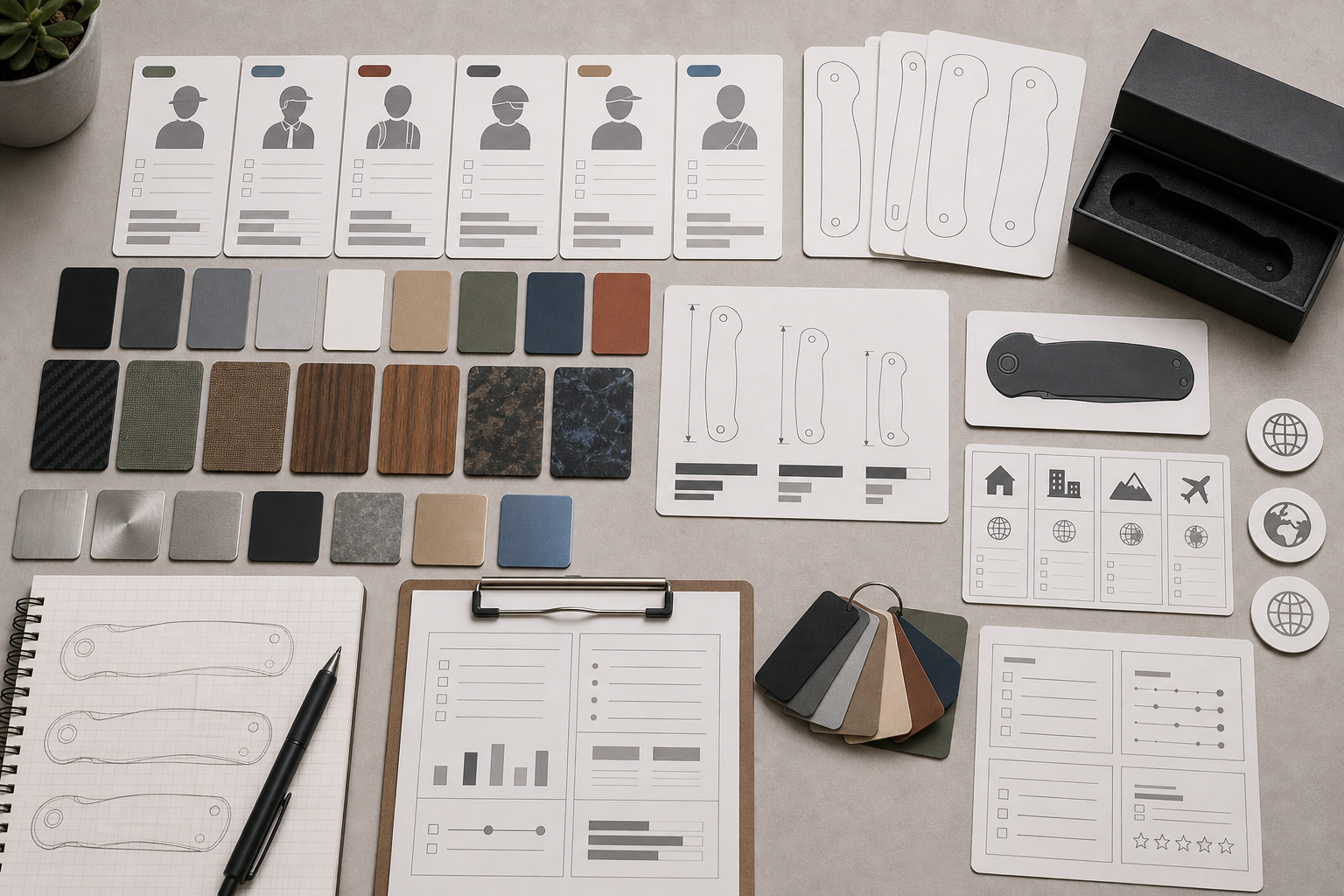
Blade design should begin with the buyer's market, not only with a visual preference. A compact EDC knife, an outdoor utility folder, a rescue-style tool, and a retail private label pocket knife do not need the same blade profile. The target user affects the blade shape. The target price affects the steel choice. The steel affects heat treatment and grinding. The handle and lock structure affect blade thickness, pivot placement, and closed position.
I usually ask buyers to define the product level first. Is the knife a value item for broad distribution, a mid-range EDC model, or a more technical outdoor tool? I also ask about destination market rules. Blade length, product description, packaging claims, and labeling may need review by the buyer's compliance adviser. This article is sourcing guidance, not legal advice.
The design brief should also name what cannot change. For example, a buyer may need a certain blade length, a certain steel, a certain lock type, or a certain target cost. When I know those fixed points, I can suggest a blade shape that is easier to grind, easier to inspect, and easier to repeat.
| Planning point | What the buyer should define | Why it matters |
|---|---|---|
| Target user | Daily carry, outdoor, retail, utility | It guides shape and edge needs |
| Product level | Value, mid-range, or higher specification | It guides steel and finish choices |
| Size target | Blade length, handle length, weight | It affects compliance and ergonomics |
| Fixed requirements | Steel, lock, finish, price, packaging | It keeps sampling focused |
Quote-ready RFQ Checklist for This Steel
To get an accurate OEM/ODM quote, prepare these details before contacting a knife manufacturer.
| RFQ Field | What to Prepare |
|---|---|
| Product type | Folding knife / fixed blade / multi-tool / kitchen knife |
| Target market | US / EU / outdoor retail / promotional / tactical / EDC |
| Steel option | 4116 / 14C28N / D2 / N690 / Nitro-V |
| Target HRC | Example: 55-57 HRC, 58-60 HRC |
| Blade finish | Satin / stonewash / black coating / bead blast |
| Handle material | G10 / micarta / aluminum / stainless steel / wood |
| Lock or structure | Liner lock / frame lock / slip joint / full tang |
| Estimated quantity | 500 / 1,000 / 3,000 / 5,000+ pcs |
| Packaging | White box / color box / blister / pouch / gift box |
| Required documents | Drawing / sample photo / logo file / packaging artwork |
How Does Blade Shape Affect Product Position And Manufacturing Risk?
A blade shape can sell the product visually. But complex lines can add grinding time, tolerance risk, and inspection pressure.
Blade shape affects cutting feel, tip strength, closed safety, grinding difficulty, material yield, brand style, and QC needs. Buyers should choose a shape that fits both market use and production stability.
I Compare Shape By Function And Process
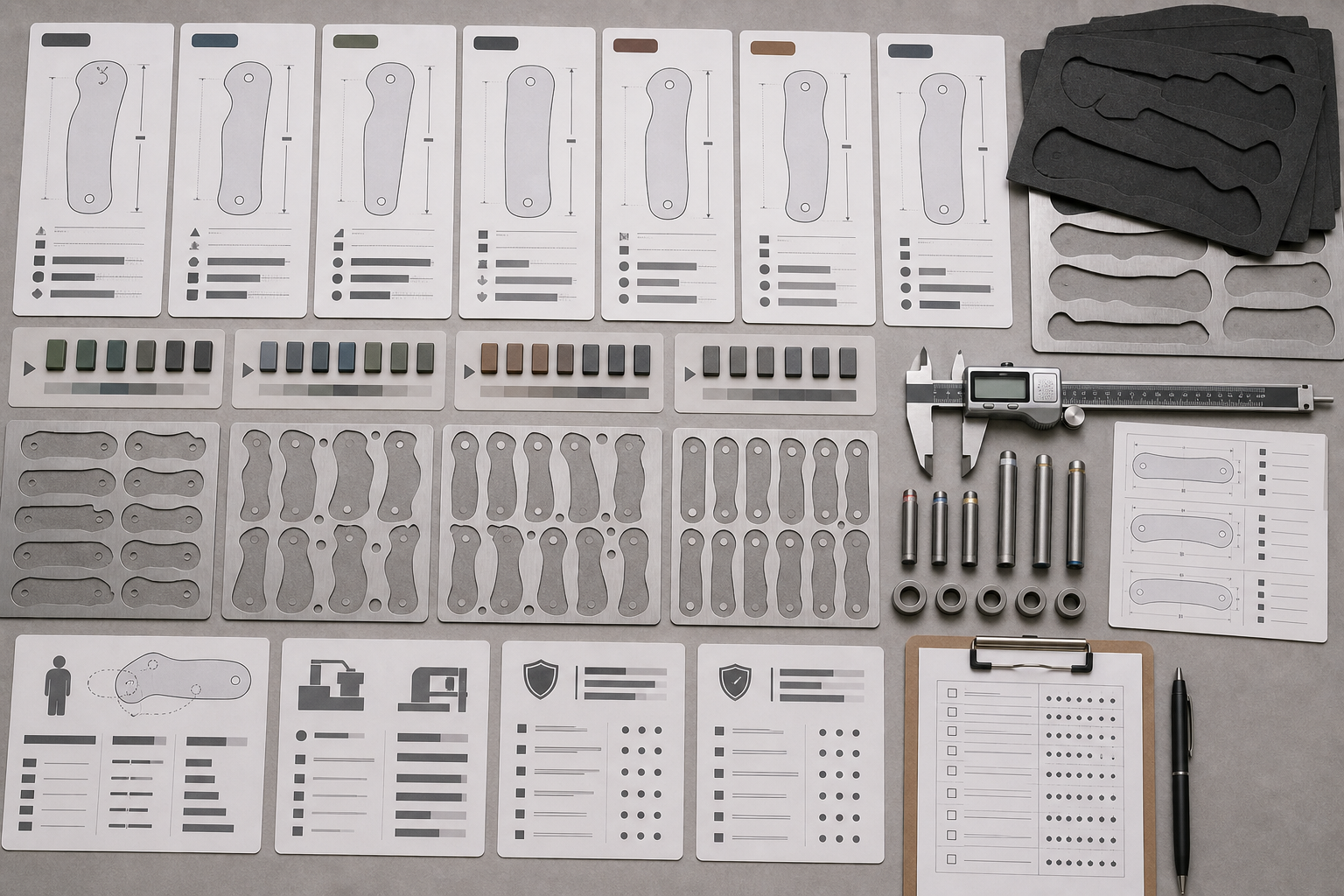
Different blade profiles create different selling points. A drop point can feel balanced for many EDC and outdoor products. A clip point can create a finer tip appearance. A sheepsfoot or utility-style blade can support controlled cutting tasks and a clean product identity. A wharncliffe-style blade can give a straight-edge visual direction. The buyer should not select a profile only because it looks interesting in a photo. The shape must also work with the handle, lock, pivot, stop pin, and closed blade position.
From a manufacturing view, blade shape affects material yield and grinding. A long curve, thin tip, deep swedge, or special cutout can increase process time. A very narrow blade may create strength and warping concerns during heat treatment. A shape with tight inside corners may need more CNC work or more careful finishing. If the blade has opening features, I also check whether those features interfere with handle comfort, packaging, or local market expectations.
For buyers, the practical question is simple: does this blade shape support the brand promise, and can the factory repeat it within the agreed cost and quality range? If both answers are yes, the design is moving in the right direction.
| Blade shape factor | Buyer-facing effect | Production concern |
|---|---|---|
| Tip shape | Style and fine cutting feel | Strength and grinding accuracy |
| Belly curve | Cutting feel and visual flow | Bevel symmetry and edge consistency |
| Spine detail | Brand style and grip impression | Extra machining or finishing time |
| Closed position | Safety and user confidence | Handle clearance and stop control |
How Should Buyers Choose Blade Steel For EDC Knife Projects?
Steel names can be confusing. A popular steel is not always the right steel for every price, market, or production plan.
Buyers should choose blade steel by balancing corrosion resistance, edge retention, toughness, sharpening ease, heat treatment control, availability, cost, and the buyer's target market expectations.
I Translate Steel Choice Into Buyer Priorities
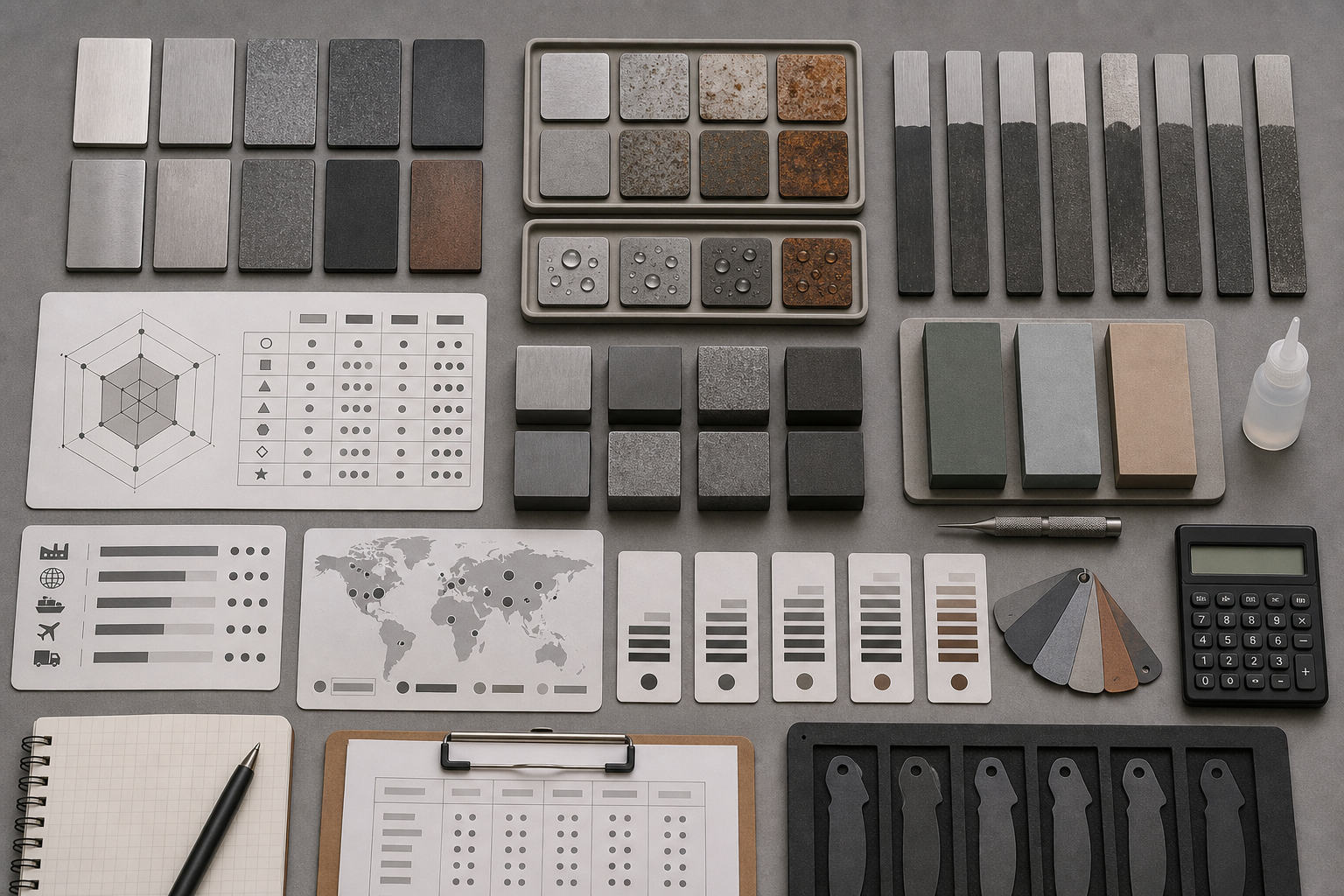
Blade steel is one of the most discussed parts of a custom knife project. But the buyer's real question is usually not "Which steel sounds best?" The real question is "Which steel supports my market, price, and product promise?" Some buyers want better corrosion resistance. Some want longer edge life. Some want easier sharpening. Some want a lower cost for large-volume private label orders. Some want a steel name that customers already understand.
Official steel manufacturer references can help buyers understand material positioning. For example, Alleima 14C28N knife steel is presented as a knife steel designed with a balance of edge performance, hardness, and corrosion resistance. That does not mean it is the correct answer for every project. It means buyers should ask what each steel is designed to do and whether the factory can heat treat it consistently.
I also look at availability and lead time. A steel grade can look attractive, but it may not fit the order quantity, target price, or production schedule. For OEM/ODM work, the best steel choice is practical. It should support the user's needs, the buyer's margin, and the factory's repeat process.
| Steel selection factor | What it affects | Buyer question |
|---|---|---|
| Corrosion resistance | Outdoor and humid-market performance | Will users expect easy care? |
| Edge retention | Cutting life between sharpening | Does the price level justify it? |
| Toughness | Chipping resistance under normal use | Is the blade thin or thick? |
| Availability | Cost and lead time | Can it support repeat orders? |
Why Should Heat Treatment Be Discussed With Blade Material?
A steel grade alone does not make a good blade. Poor heat treatment can waste a good material and damage buyer confidence.
Heat treatment should be discussed with blade material because hardness, toughness, edge stability, warping risk, and batch consistency depend on the process, not only on the steel name.
I Treat Heat Treatment As The Core Of Blade Performance
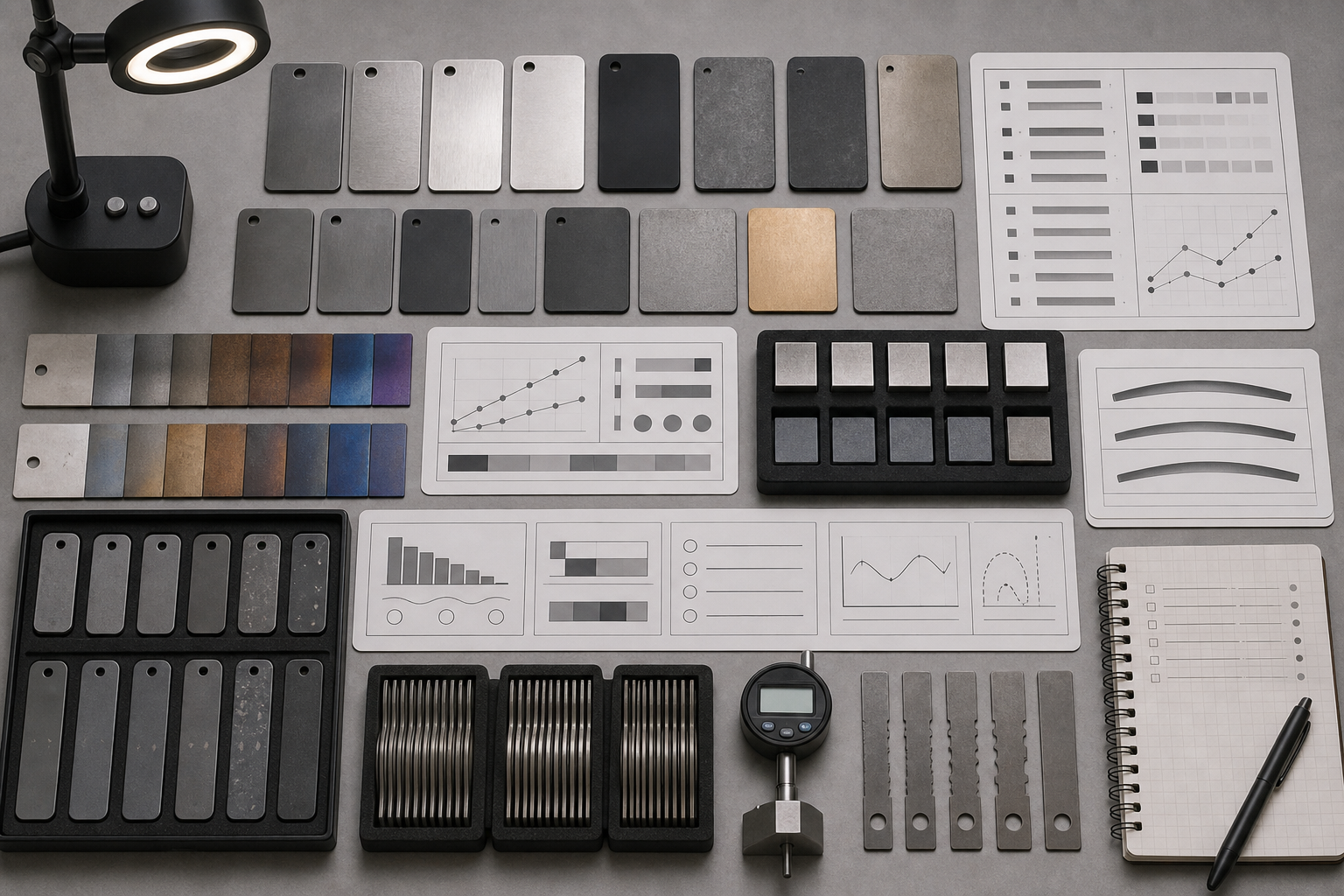
Before heat treatment, the blade is shaped steel. After heat treatment, it becomes a real cutting tool. This stage changes the structure of the steel and affects the final balance of hardness and toughness. The process must match the steel grade. Heating temperature, holding time, quenching method, tempering, and post-treatment inspection all matter.
Alleima's guidance on the purpose of hardening and tempering explains the basic idea: hardening raises hardness, while tempering helps reduce brittleness and create a useful balance. In production, I see why that balance matters. A blade that is too soft can lose edge performance quickly. A blade that is too hard can become too fragile for the design. A thin blade and a thick blade may also need different process attention.
This is why I ask buyers to discuss hardness range, not only steel grade. The supplier should confirm what hardness target is realistic for the material, blade geometry, and product positioning. The buyer should also decide whether hardness readings, batch records, or sample test reports are needed for their order.
| Heat treatment point | Why it matters | RFQ detail to request |
|---|---|---|
| Steel-specific process | Different steels need different treatment | Confirm recommended heat treatment path |
| Hardness range | Affects edge and toughness balance | Define target HRC range if needed |
| Warping control | Thin blades can move during heating | Add in-process straightness checks |
| Tempering | Reduces brittleness after hardening | Confirm final balance target |
How Do Blade Thickness, Grind, And Edge Geometry Affect User Experience?
Two blades can use the same steel but cut very differently. Thickness, grind, and edge geometry often explain the difference.
Blade thickness, grind type, bevel symmetry, edge angle, and tip geometry affect cutting feel, weight, strength, sharpening, appearance, and production time. Buyers should define these details early.
I Separate Cutting Feel From Strength Needs
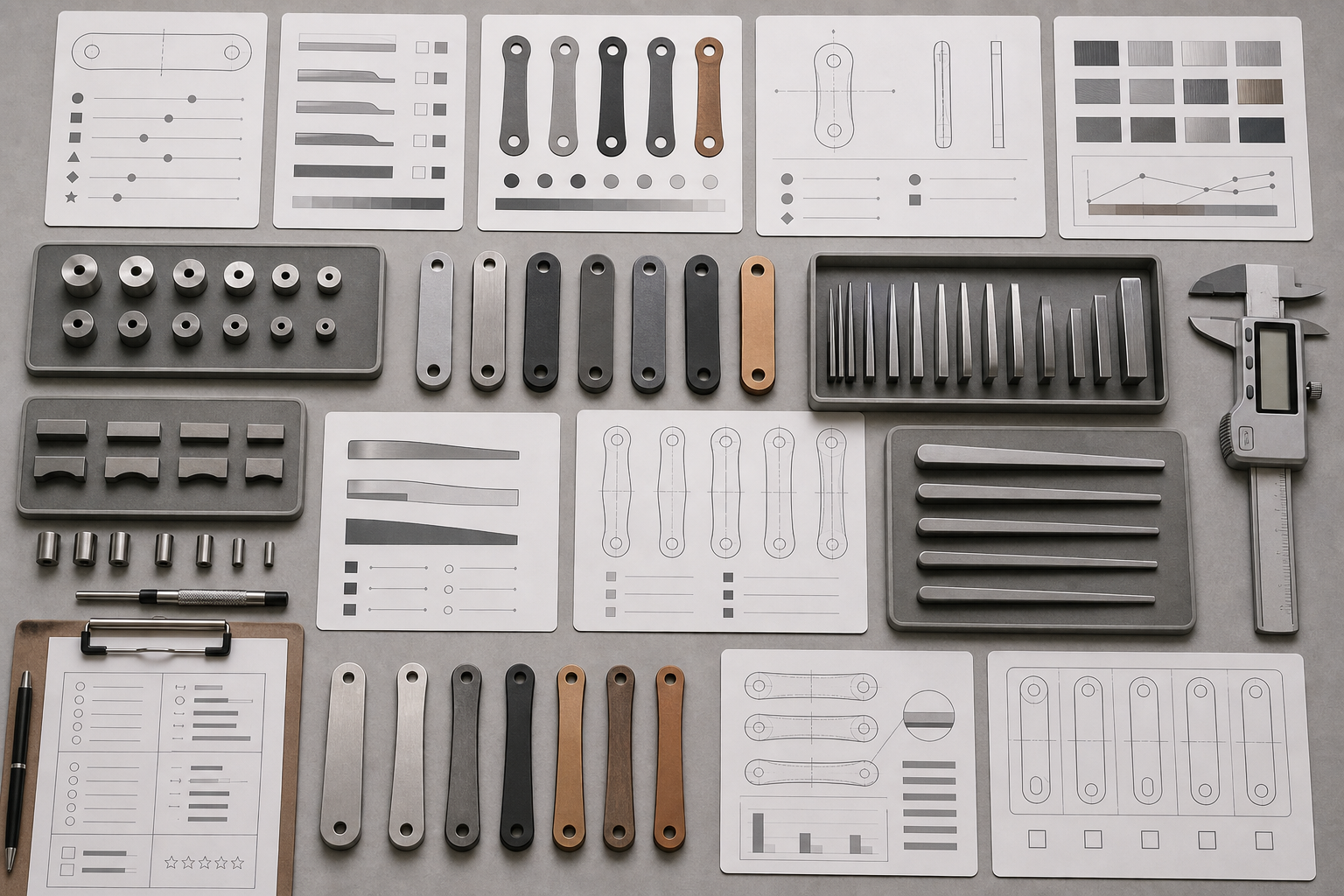
Blade geometry is where design becomes user experience. A thicker blade can feel strong and solid, but it may not slice as easily. A thinner blade can cut cleanly, but it may need more careful material and heat treatment choices. A high flat grind can create a good balance for many EDC knives. A hollow grind can give a thin edge feel, but it needs controlled grinding. A saber grind can create a stronger visual and structure, but it may cut differently from a thin flat grind.
For OEM/ODM projects, I prefer to discuss geometry with the target use and target price together. A buyer may ask for a thin blade and a lower-cost steel. That can work in some projects, but it needs careful expectations. A buyer may ask for a thick blade and high hardness. That may also work, but it can affect weight, action, and sharpening feel. The best design is not extreme. It is matched.
I also check bevel symmetry, edge line, tip finish, and plunge area. These details are visible to buyers and users. They also show whether the process is under control. A clear approved sample is the best way to define the final grinding look.
| Geometry choice | User-facing result | Production check |
|---|---|---|
| Blade thickness | Strength feel and weight | Material thickness and closed clearance |
| Grind type | Cutting feel and appearance | Grinding fixture and consistency |
| Edge angle | Sharpness and durability balance | Sharpening process and inspection |
| Tip geometry | Visual style and fine work feel | Heat treatment and finishing care |
What Finish, Coating, And Marking Details Need Approval?
Blade finish is often treated as decoration. But it affects appearance, corrosion care, logo contrast, scratch visibility, and repeat-order control.
Buyers should approve blade finish, coating, logo marking, steel mark, origin mark, surface sample, and acceptable visual limits before mass production.
I Use Finish Samples To Control Repeat Orders
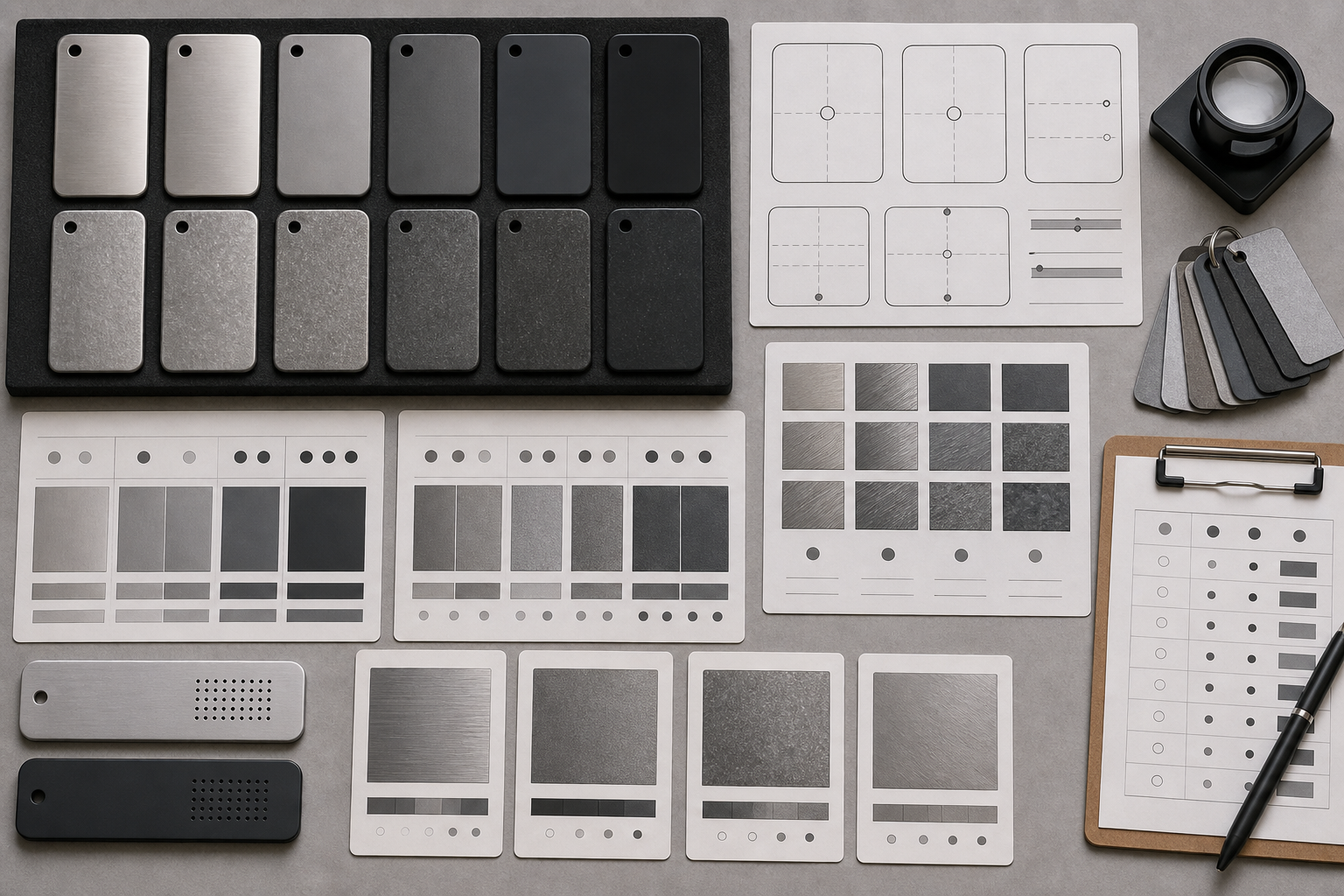
Blade finish can change the whole product feeling. Satin can look clean and directional. Stonewash can hide small handling marks better. Bead blast can give a matte look, but the buyer should consider corrosion care and surface cleanliness. Coating can create a specific color or appearance, but it adds process control needs and can show wear differently from bare steel.
Logo marking and material marking should also be approved with the finish. A laser mark that looks clear on satin may look different on stonewash or coating. A deep mark may not suit every blade thickness or customer expectation. If country-of-origin or other required marking is needed, the buyer should decide the location and method early. This article is not legal advice, and buyers should confirm destination-market rules with their own adviser.
I like to use a finish sample board or approved blade sample. The buyer should confirm finish direction, color tone, scratch limit, logo position, logo contrast, and packaging protection. This protects repeat orders because the supplier has a visible standard. It also helps avoid disputes caused by subjective words like "matte," "dark," or "clean."
| Finish detail | What to approve | Why it matters |
|---|---|---|
| Surface finish | Satin, stonewash, bead blast, coating | Controls appearance and scratch visibility |
| Logo mark | Method, size, position, contrast | Protects brand presentation |
| Steel mark | Grade text or buyer requirement | Supports product clarity if needed |
| Visual limits | Scratches, color shift, uneven finish | Reduces subjective inspection disputes |
What QC Checks Should Confirm Blade Performance And Consistency?
Final inspection cannot fix every blade problem. If checks happen too late, the order may lose time and consistency.
Blade QC should check material identity, dimensions, straightness, hardness, bevel symmetry, edge sharpness, tip finish, surface condition, marking, assembly fit, and packaging protection.
I Build QC Around The Blade's Critical Points
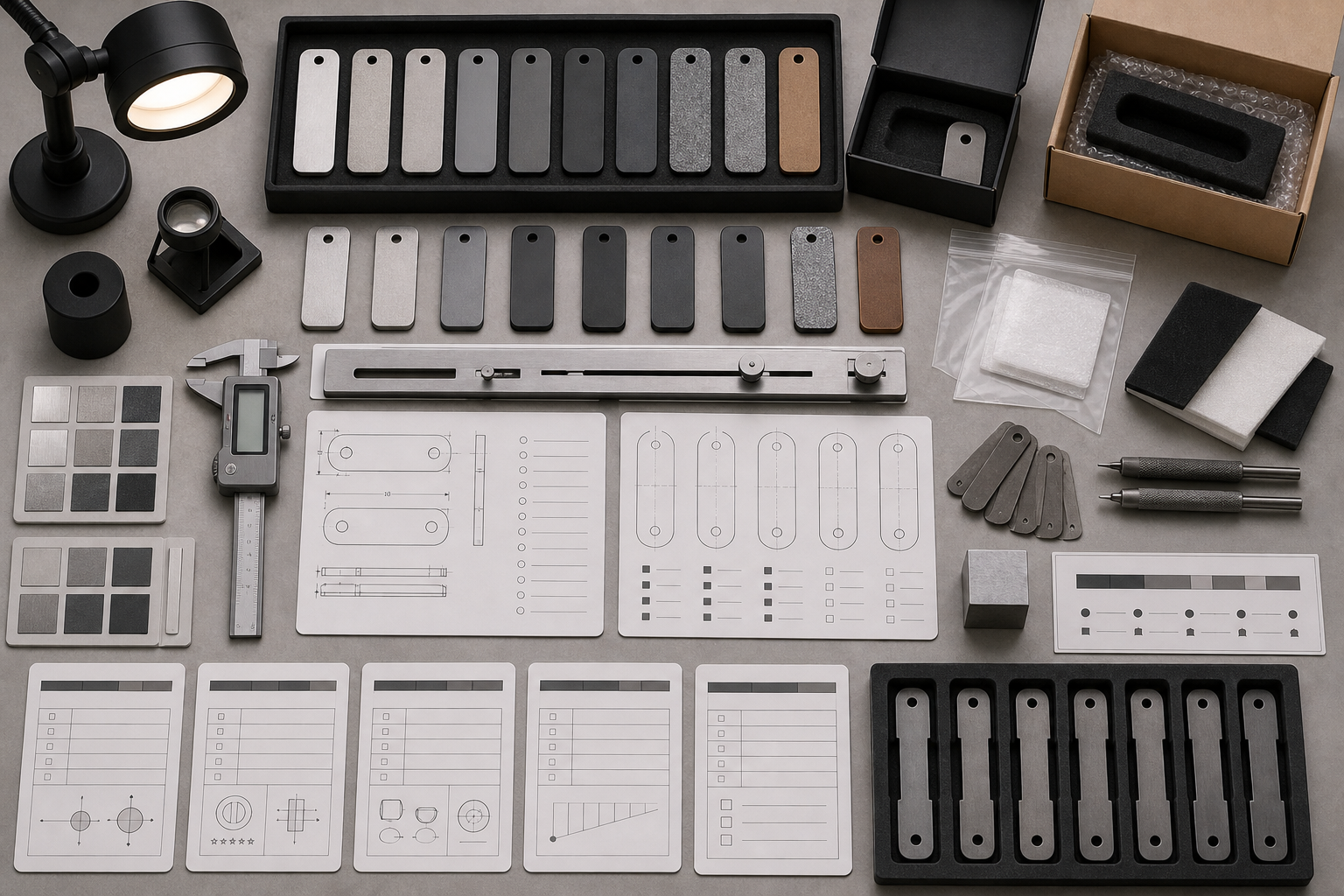
Quality control should match the risk points of the blade design. If the blade has a thin tip, I check tip finish and straightness carefully. If the steel has a tight hardness target, I ask for hardness checks. If the finish is dark or coated, I check scratches and handling marks before assembly. If the blade has a logo, I check position, contrast, and alignment before the product is packed.
Hardness measurement should also be treated carefully. The NIST guide to Rockwell hardness measurement shows why proper method, machine condition, and measurement practice matter. In a sourcing project, this means a buyer should not only ask for a hardness number. The buyer should ask where the reading is taken, what range is acceptable, and how records are handled.
I also connect QC to the approved sample. The sample should not be a loose inspiration. It should be the standard for blade shape, grind, finish, action, marking, edge, packaging, and user-facing feel. A process-based reference such as ISO 9001 is useful context because it treats quality as a management system rather than a final look-over.
| QC checkpoint | What to inspect | Why it protects the buyer |
|---|---|---|
| Dimensions | Profile, hole position, thickness | Protects assembly and repeatability |
| Hardness | Target range and records | Supports material and heat treatment control |
| Grind and edge | Symmetry, sharpness, tip finish | Protects user-facing quality |
| Finish and marking | Surface condition and logo position | Protects brand presentation |
What RFQ Details Help A Supplier Quote Blade Design And Material Accurately?
A blade RFQ with only a photo creates guesswork. The price may change once steel, grind, finish, and QC details become clear.
A strong blade RFQ should include blade drawing, steel grade or performance target, thickness, grind, finish, hardness range, marking, quantity, target price, timeline, packaging, and inspection requirements.
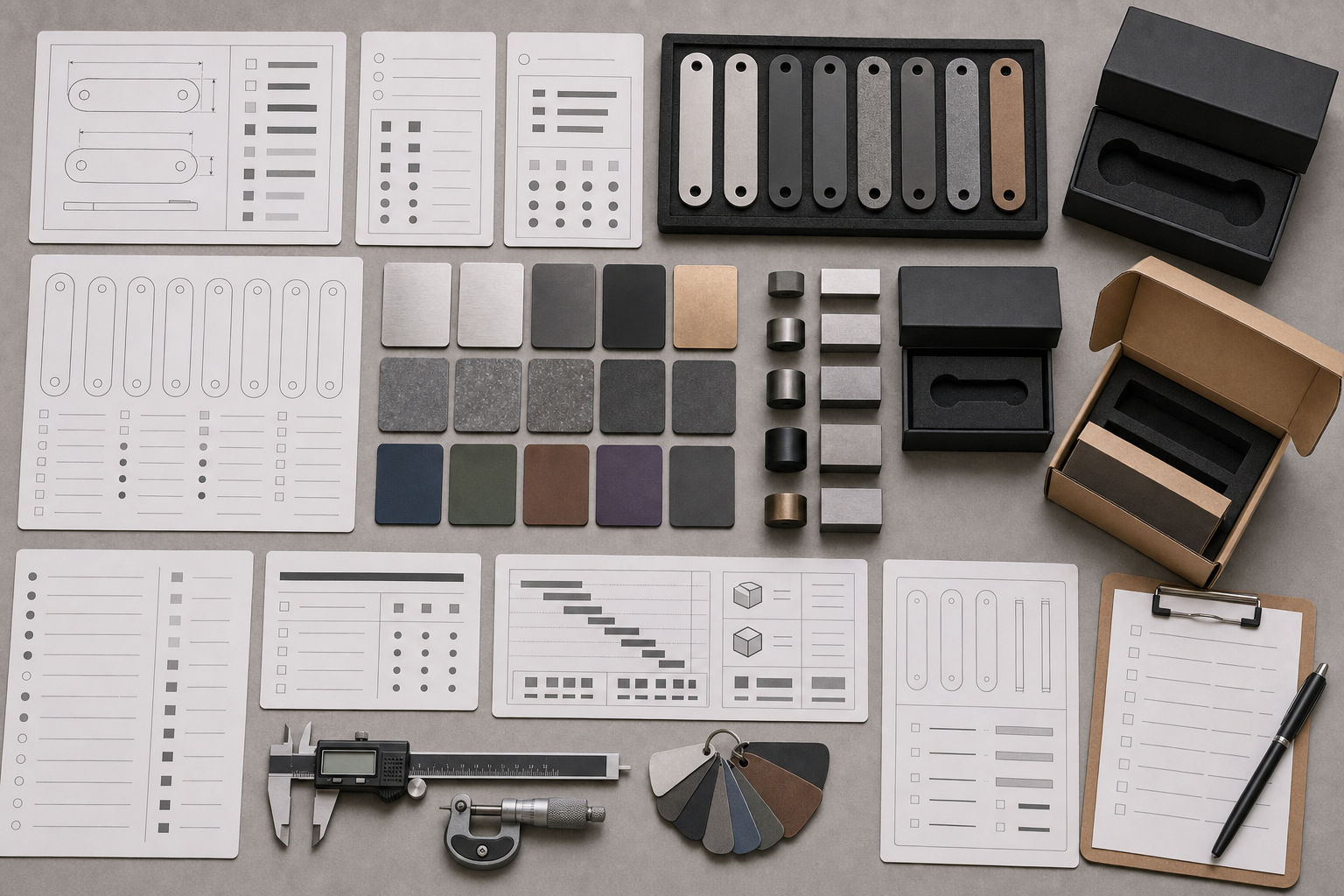
I Make The RFQ Specific Enough To Quote And Build
The best RFQ makes the project easy to understand. It does not need to be complicated, but it must answer the right questions. What blade shape does the buyer want? What is the target blade length and thickness? What steel is required, or what performance target should the supplier recommend? What hardness range is expected? What grind and finish should be used? What logo and marking are needed? What packaging must protect the blade finish?
If the buyer has drawings, I review them for manufacturability. If the buyer only has a concept, I help convert the concept into a workable blade plan. I also suggest that buyers control versions. A source such as ISO 10007 configuration management is useful as a general reference because custom products need clear version control from concept onward. In practical terms, the blade drawing, steel choice, hardness range, finish sample, logo file, packaging file, and QC checklist should all match the same approved version.
This makes the quote more useful. It also makes sampling faster. Most important, it helps the buyer avoid a sample that looks good once but cannot be produced consistently in repeat orders.
| RFQ field | What to provide | Supplier output |
|---|---|---|
| Blade design | Drawing, photo, sketch, or sample | Manufacturability review |
| Blade material | Steel grade or performance target | Steel recommendation and quote basis |
| Process details | Thickness, grind, finish, hardness | Sample and production planning |
| Quality standard | Approved sample and inspection points | Repeat-order control plan |
Ready to use this material in your next knife line?
Vast State can help you compare blade steels, heat treatment ranges, handle materials, finishes, packaging options, and QC requirements based on your target market and quantity.
Conclusion
I build stronger OEM/ODM blade projects by matching blade shape, steel, heat treatment, geometry, finish, and QC before production starts.
Source Notes
- Alleima 14C28N supports the discussion of knife steel selection as a balance of performance and corrosion resistance.
- Alleima hardening and tempering guidance supports the heat treatment section.
- NIST Rockwell hardness guide supports careful hardness measurement and record discussion.
- ISO 9001 supports the process-based quality control framing.
- ISO 10007 supports version and configuration control for custom blade projects.