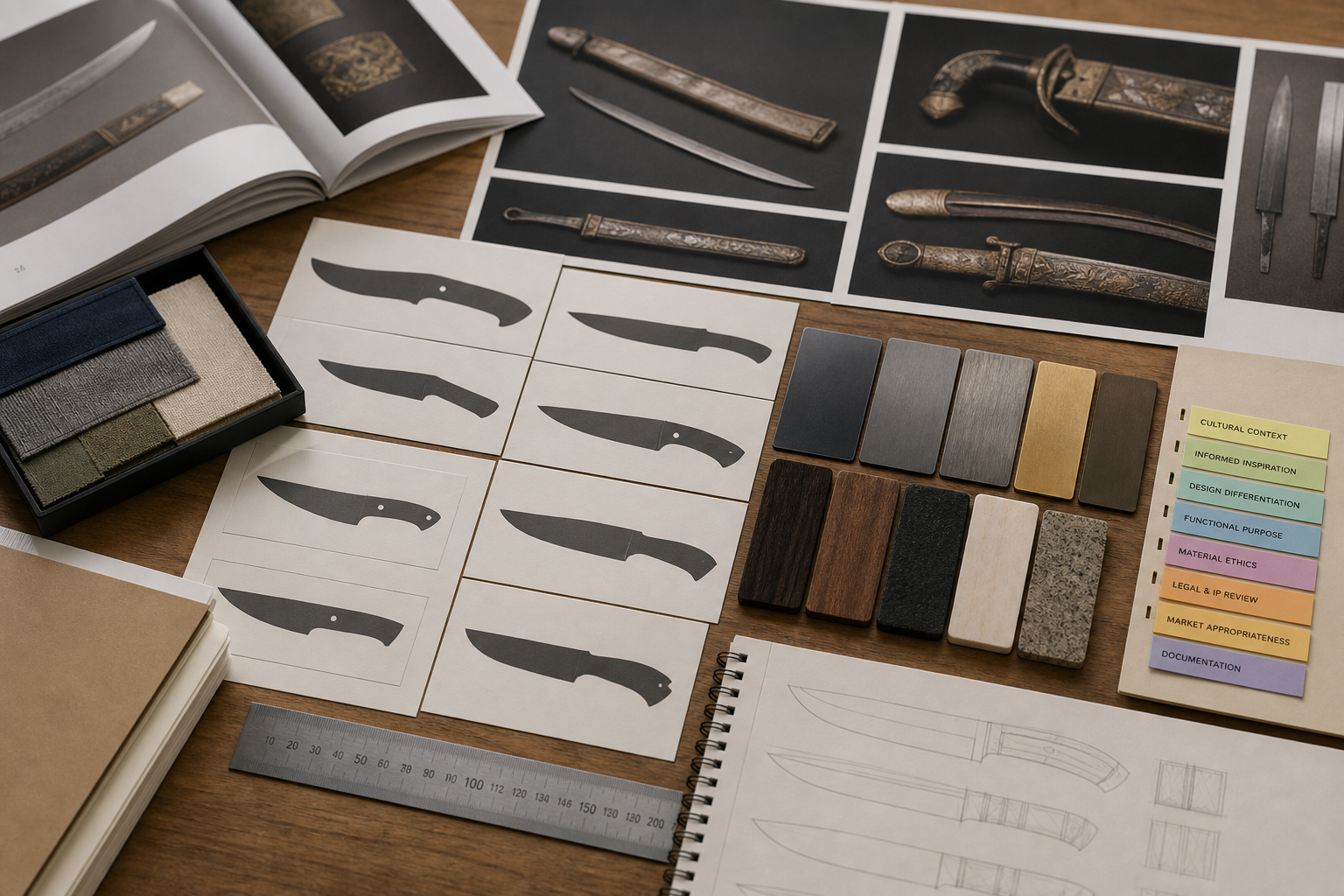
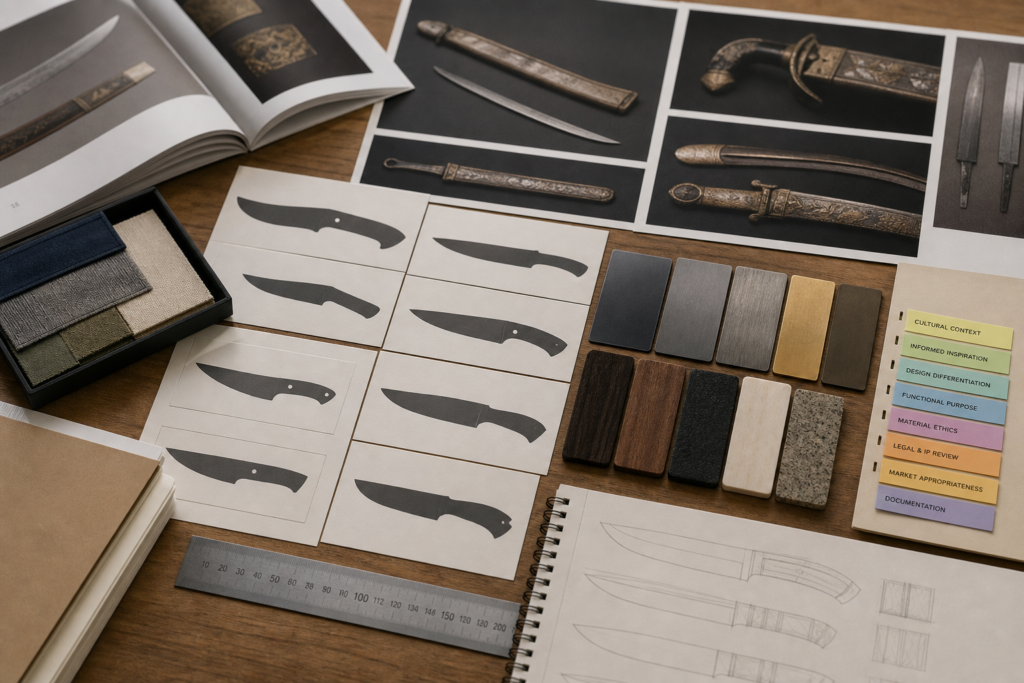
Historical blade ideas can attract attention fast. But careless copying can create compliance, cultural, and production problems before the first sample is useful.
Buyers should use historical Korean blade references as design inspiration only after checking sanctions, market rules, cultural meaning, manufacturability, material choices, packaging language, QC records, and RFQ details.
Quick buyer brief:
- Answer: Use historical references as controlled inspiration, not as a direct copy or risky sourcing path.
- Buyer context: This helps B2B knife brands develop heritage-inspired products without creating avoidable compliance or branding risk.
- Key checks: Sanctions screening, cultural research, drawing control, steel and finish choices, packaging claims, QC records, and RFQ detail.
Have a knife or multi-tool project in mind?
Send your sketch, CAD file, sample photo, or product idea. Vast State can review manufacturability, suggest materials, estimate MOQ, and prepare a quote for your OEM/ODM project.
When a buyer sends me a historical reference, I first separate inspiration from production. A museum object can guide proportion, scabbard logic, material contrast, or decorative restraint. It should not become a direct copy, a legal assumption, or a risky trade path. For a topic that mentions North Korea, I also make the boundary clear: this article is about design review for modern lawful B2B products. It is not legal advice, not use guidance, and not a recommendation to source from, ship to, or transact with sanctioned parties.
What Should Buyers Clarify Before Using A Historical Korean Blade Reference?
A reference image can feel like a complete brief. It is not. Without context, the sample can miss the market, price, and compliance path.
Buyers should clarify whether the reference is for shape, proportion, scabbard style, material contrast, decoration, story direction, or packaging mood before design work begins.
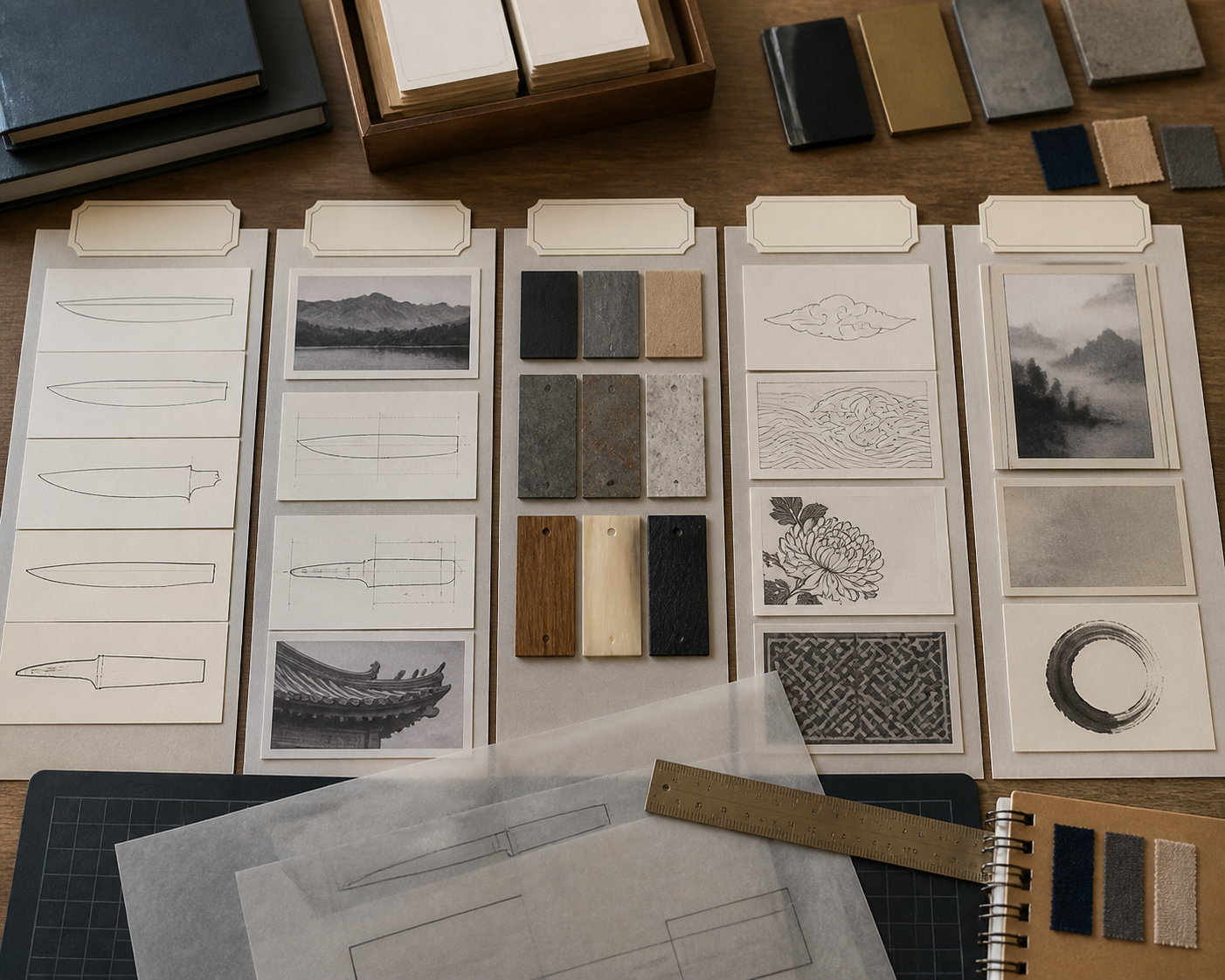
I Turn Inspiration Into A Product Brief
I do not start a heritage-inspired project by asking the factory to "make this." I start by asking what the buyer wants to borrow from the reference. The answer may be the blade silhouette, handle proportion, scabbard color, metal fitting language, balanced symmetry, or a calm traditional mood. These are very different design tasks.
Historical Korean blade records can show useful design cues. The Met has a Korean sword with scabbard dated to the 16th-19th century, with steel, wood, bronze, gold, silver, iron, pigment, and textile listed as materials. The National Museum of Korea also lists a Joseon Dynasty sword with iron material and a 100 cm length. These sources help a designer see proportion and material complexity. They do not tell a buyer what to manufacture today.
For OEM/ODM work, I translate the reference into a modern product brief. I ask for target market, sales channel, product type, target price, expected quantity, blade size, edge configuration, steel, handle material, finish, packaging, and inspection need. This keeps the project practical and avoids copying a cultural object without a clear commercial reason.
| Clarification point | Buyer question | Manufacturing impact |
|---|---|---|
| Design cue | Which part of the reference matters? | Guides drawing and sample direction |
| Product type | Display item, outdoor tool, gift product, or utility knife? | Changes steel, edge, handle, and sheath choices |
| Market fit | Which country and channel will sell it? | Drives compliance and packaging review |
| Price level | What is the target cost range? | Controls material and process choices |
OEM/ODM RFQ Checklist
Prepare these details to help Vast State review your project and provide a more accurate quotation.
| RFQ Field | What to Prepare |
|---|---|
| Project type | OEM from drawing / ODM private label / wholesale catalog |
| Product category | Folding knife / fixed blade / multi-tool / outdoor tool |
| Design status | Idea / sketch / 2D drawing / 3D CAD / physical sample |
| Target price | Ex-factory target price or retail price range |
| MOQ expectation | 500 / 1,000 / 3,000 / 5,000+ pcs |
| Logo method | Laser engraving / etching / printing / molded logo |
| Packaging | Standard packaging / custom retail box / Amazon-ready |
| Market | USA / EU / Japan / Korea / Middle East / other |
| Compliance needs | Buyer-specified testing / documentation / labeling |
| Timeline | Sample deadline / mass production deadline |
Why Should Compliance Screening Come Before Any Design Work?
Historical topics can hide modern trade risk. If screening happens late, the buyer may waste drawings, samples, and packaging work.
Compliance screening should come first because North Korea-related sanctions, export controls, import rules, and retail policies can affect sourcing, destination markets, parties, claims, and documentation.
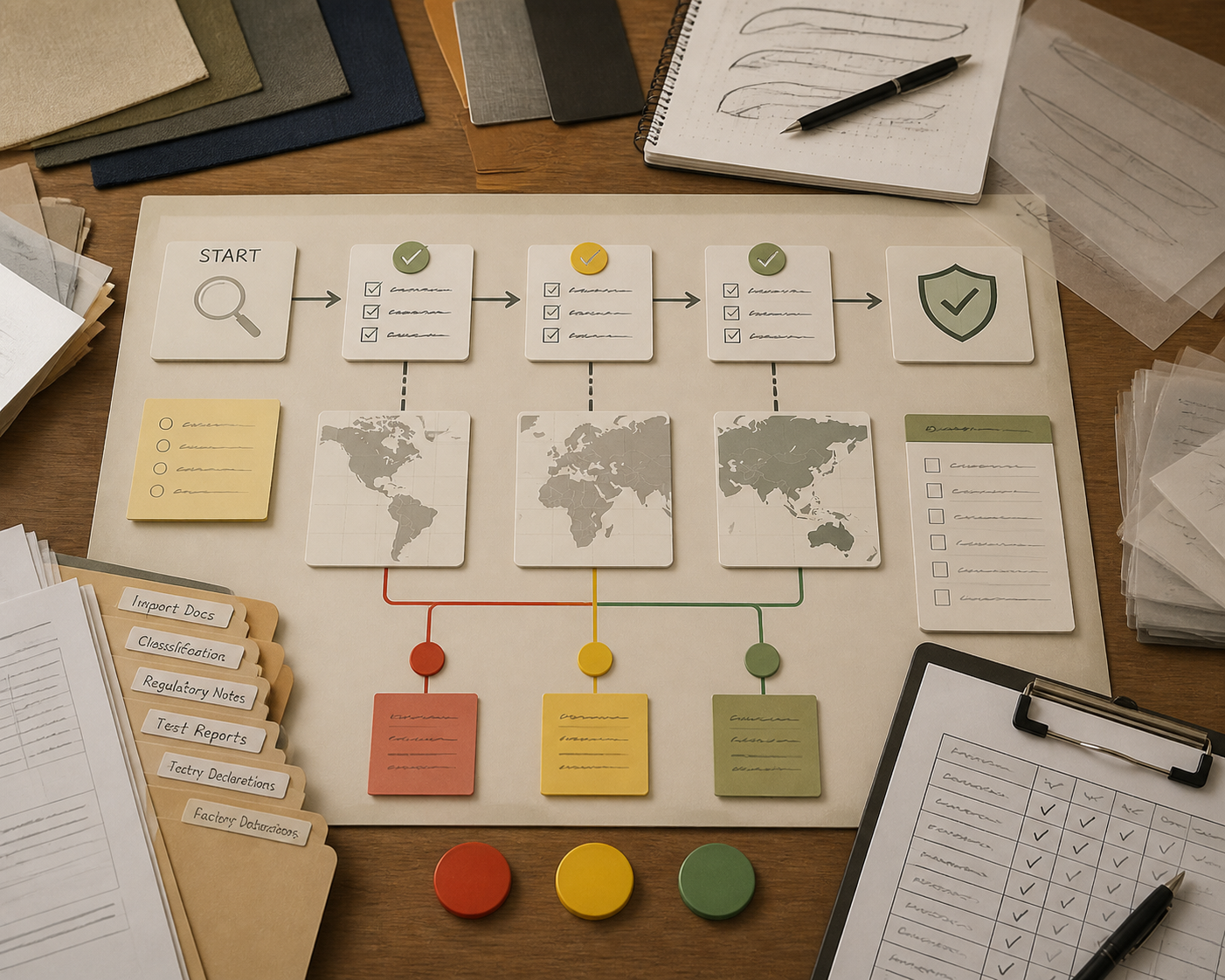
I Keep The Project Away From Sanctioned-Party Risk
If a buyer uses a reference connected to North Korea as a search topic, I treat the reference as sensitive. I do not use it as a sourcing origin, customer destination, supplier path, or official collaboration angle. It should stay as a historical or cultural research prompt only, and the buyer must confirm final rules with qualified counsel and trade-compliance advisers.
The U.S. Treasury's OFAC page on North Korea sanctions explains that the program is based on multiple legal authorities and includes licensing resources, sanctions lists, and guidance. The U.S. Commerce Department's BIS page on North Korea export controls states that a license is required for export or reexport to North Korea of all items subject to the EAR, except limited food or medicine cases designated EAR99. BIS also notes a general policy of denial for luxury goods, arms and related materiel, and certain controlled items.
That does not mean every non-U.S. buyer follows exactly the same rule set. It does mean no responsible B2B project should ignore sanctions screening, party screening, destination screening, and documentation review. The factory can support product details and records. The buyer must decide whether the project is lawful for the target market.
| Compliance area | What to check | Why it matters |
|---|---|---|
| Party screening | Customer, consignee, importer, distributor | Reduces sanctioned-party risk |
| Destination screening | Sales country and shipping path | Prevents late shipment problems |
| Product screening | Blade type, material, packaging claims | Supports import and retail review |
| Documentation | Drawing, invoice, marking, product records | Helps customs and buyer files |
How Should Cultural References Be Researched Without Copying Sacred Or Official Symbols?
Cultural style can add value, but careless copying can feel false. It can also create brand and IP concerns for the buyer.
Buyers should research cultural references through museum records, public-domain materials, IP review, symbol screening, and respectful design abstraction instead of copying sacred, official, or politically loaded elements.
I Prefer Abstraction Over Direct Copying
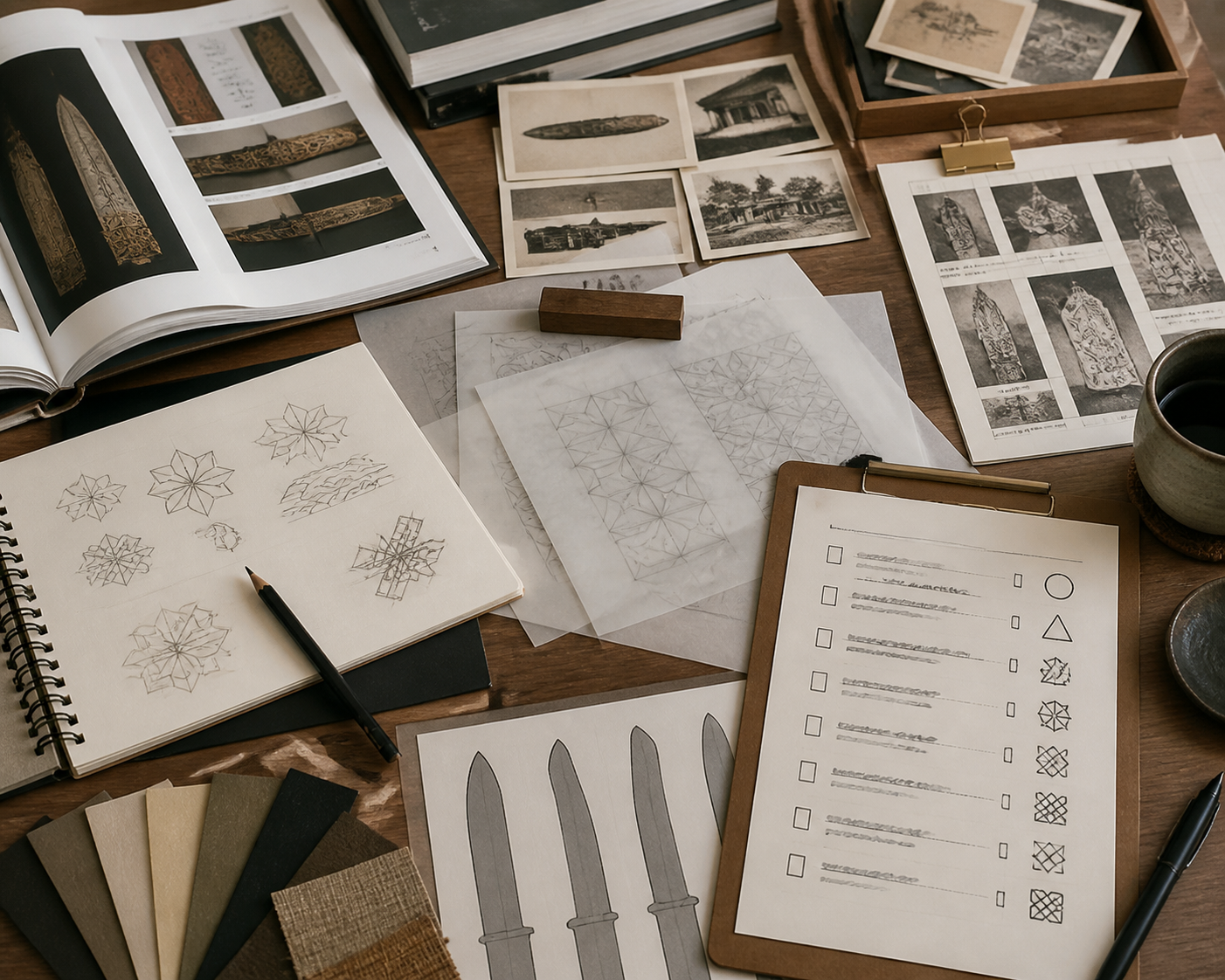
When I work with cultural references, I ask the buyer to avoid literal copying unless the source, rights, and meaning are clearly understood. A museum record can show material, date, dimensions, and cultural context. It may not give permission to copy every visible detail into a commercial product. Even when an image is public domain, a brand should still think about respect, market reception, and whether the design claim is accurate.
The British Museum page for a Korean samingeom sword-sheath describes ceremonial meaning, lacquered wood, brass fittings, and symbolic decoration. That is useful design context. It tells me that not every historical blade reference is only about shape. Some references are tied to ritual meaning, writing, timing, symbols, and cultural belief. A modern private label knife should not casually copy those symbols as decoration.
WIPO's traditional knowledge and traditional cultural expressions resources discuss IP issues around cultural knowledge, expressions, documentation, and community engagement. I use that as a practical warning. For a commercial knife project, abstraction is often safer. The buyer can borrow broad ideas such as balanced proportion, dark scabbard contrast, restrained metal fittings, or a heritage color mood, while creating original patterns, original packaging text, and a modern product identity.
| Research step | Practical action | Buyer benefit |
|---|---|---|
| Source review | Use museum and official records | Reduces guesswork |
| Meaning review | Check whether symbols have ritual or official meaning | Avoids careless copying |
| IP review | Check artwork, marks, pattern, and packaging claims | Reduces brand risk |
| Abstraction | Create new design language from broad cues | Supports originality |
How Can Historical Shape Cues Become A Modern Knife Specification?
A historical silhouette may not fit modern production. If the buyer copies it directly, cost, safety review, and quality control can suffer.
Historical shape cues should become a modern specification through controlled drawings, blade length, thickness, edge configuration, handle geometry, sheath fit, finish standards, and tolerance notes.
I Convert Style Into Measurable Product Details
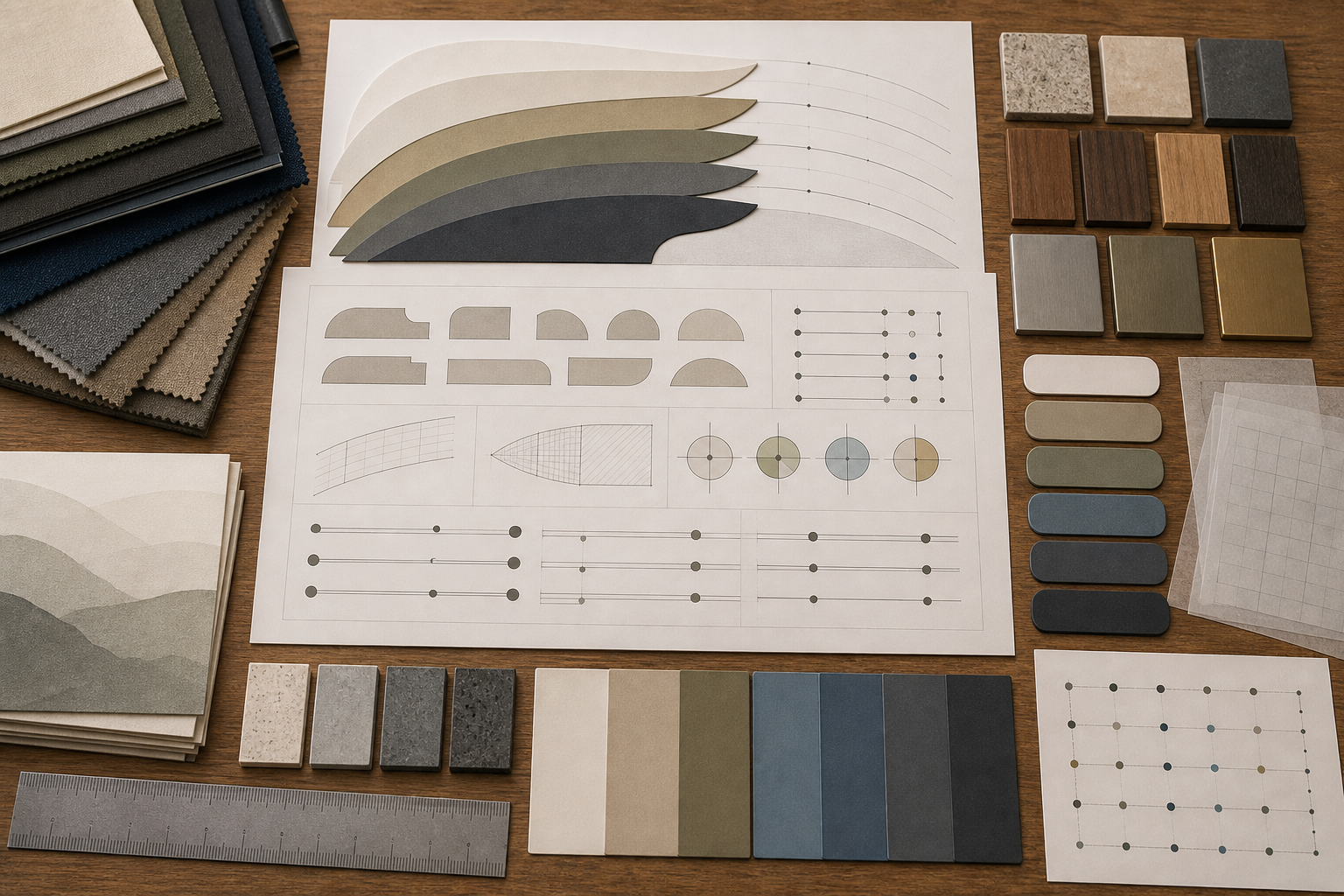
Historical references often have proportions that were made for a different purpose, era, and production method. A modern B2B buyer may want the mood, but not the exact size, weight, or construction. This is why I convert the reference into measurable details. The drawing should define blade length, blade width, stock thickness, point shape, edge configuration, handle length, handle thickness, guard or bolster shape, sheath material, and finish.
This is also where product positioning matters. A heritage-inspired fixed blade, a compact outdoor tool, a collector-style gift product, and a utility knife all need different specifications. A long historical reference can inspire a short modern design. A scabbard color can inspire a sheath finish. A decorative fitting can inspire a simple bolster line. The buyer does not need to reproduce the old object to benefit from the design language.
I also use configuration control early. ISO 10007 gives guidance on configuration management from concept to later product stages. In practice, I keep drawing versions, material revisions, sample photos, approval dates, and packaging changes recorded. This prevents the design from drifting as the buyer and factory revise the sample.
| Specification area | What to define | Why it matters |
|---|---|---|
| Blade geometry | Length, width, thickness, grind, point | Controls appearance and manufacturability |
| Handle structure | Tang, scale, bolster, fasteners | Controls feel, cost, and assembly |
| Sheath system | Fit, retention, insert, material | Protects product and packaging |
| Revision record | Drawing version and approval date | Prevents sample drift |
What Materials And Finishes Should Buyers Choose For A Heritage-Inspired Design?
Old material language can inspire a product, but modern orders need stable supply. Unclear materials can raise cost and delay production.
Buyers should choose modern materials and finishes by balancing appearance, corrosion resistance, machining stability, target price, MOQ, packaging weight, and repeat-production consistency.
I Match The Historical Mood With Practical Materials
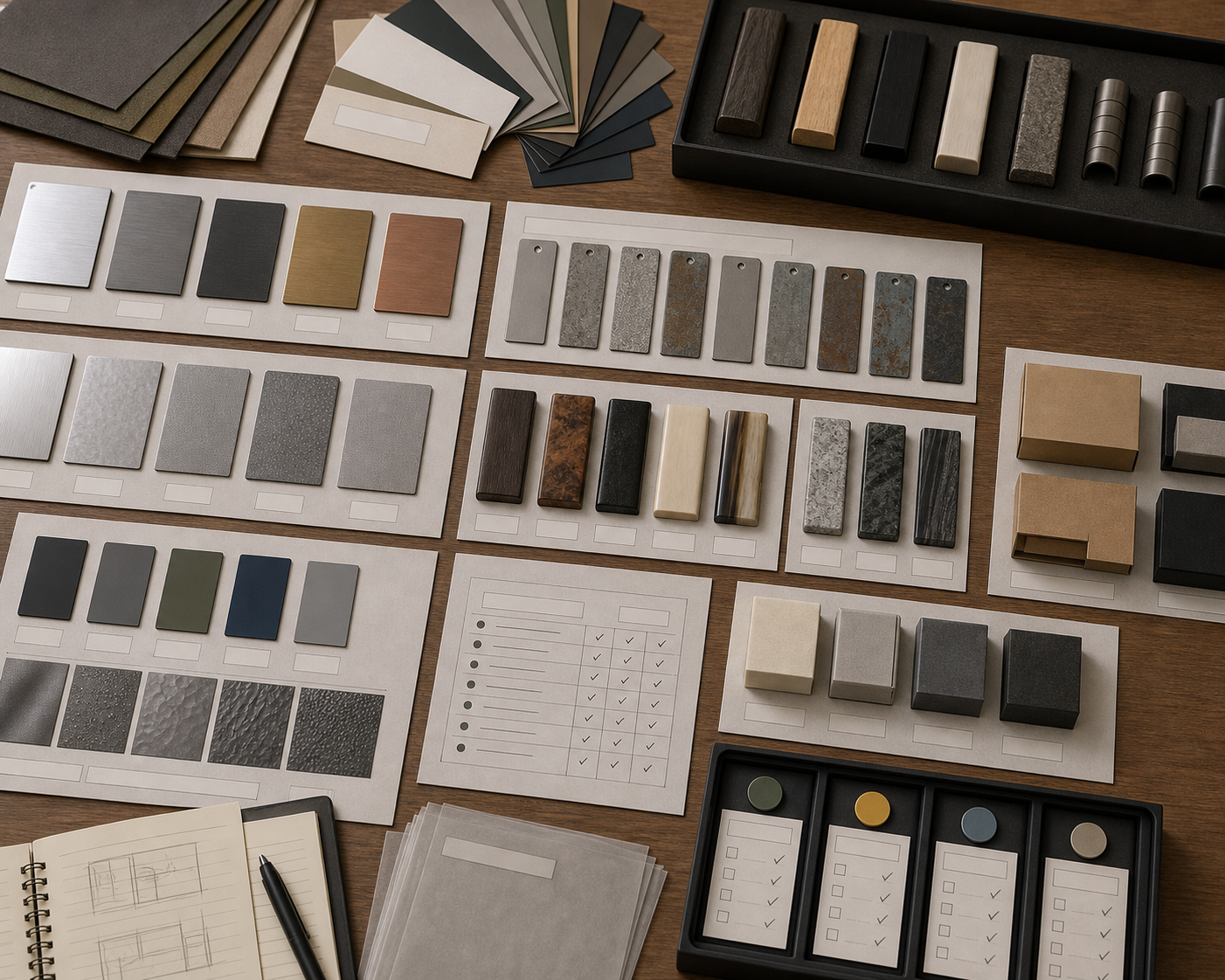
Historical references may include steel, wood, lacquer, bronze, silver, textile, pigment, or other decorative materials. A modern OEM/ODM product needs practical substitutes that can be sourced, machined, finished, inspected, and repeated. I usually separate the design mood from the exact material. A dark lacquered scabbard mood may become a black sheath or black package insert. A metal fitting mood may become stainless, brass-color plating, PVD color, or anodized aluminum, depending on price and target market.
For blade steel, the buyer should not pick a grade only because it sounds strong. The steel must fit the product purpose, target price, finish, corrosion expectation, and heat treatment. Alleima describes 14C28N knife steel as a knife steel with edge performance, hardness, and corrosion-resistance characteristics. This is useful as one technical reference, but it is not the only choice. A buyer may choose another steel if the price, edge expectation, and supply plan fit better.
Finishing also needs control. Satin, stonewash, bead blast, coating, mirror polish, or antique-style finishes all create different costs and defect risks. I ask the buyer to approve finish samples before mass production. A heritage mood should look intentional, not inconsistent.
| Material or finish | Practical choice | Control point |
|---|---|---|
| Blade steel | Stainless or tool steel based on use and budget | Heat treatment and hardness range |
| Handle material | Wood, G10, micarta, aluminum, or steel | Fit, texture, color, and tolerance |
| Metal accent | Plating, PVD, stainless, or brass-color part | Color consistency and wear risk |
| Surface finish | Satin, stonewash, coating, or polish | Sample standard and defect limit |
How Should Packaging And Storytelling Stay Respectful And Commercially Safe?
Packaging can sell the story, but it can also create problems. Overclaiming history or culture can damage buyer trust.
Packaging should describe the product as heritage-inspired, avoid unsupported historical claims, avoid official or sacred symbols, show required marks, and leave space for importer and compliance labels.
I Keep The Story Honest And Easy To Approve
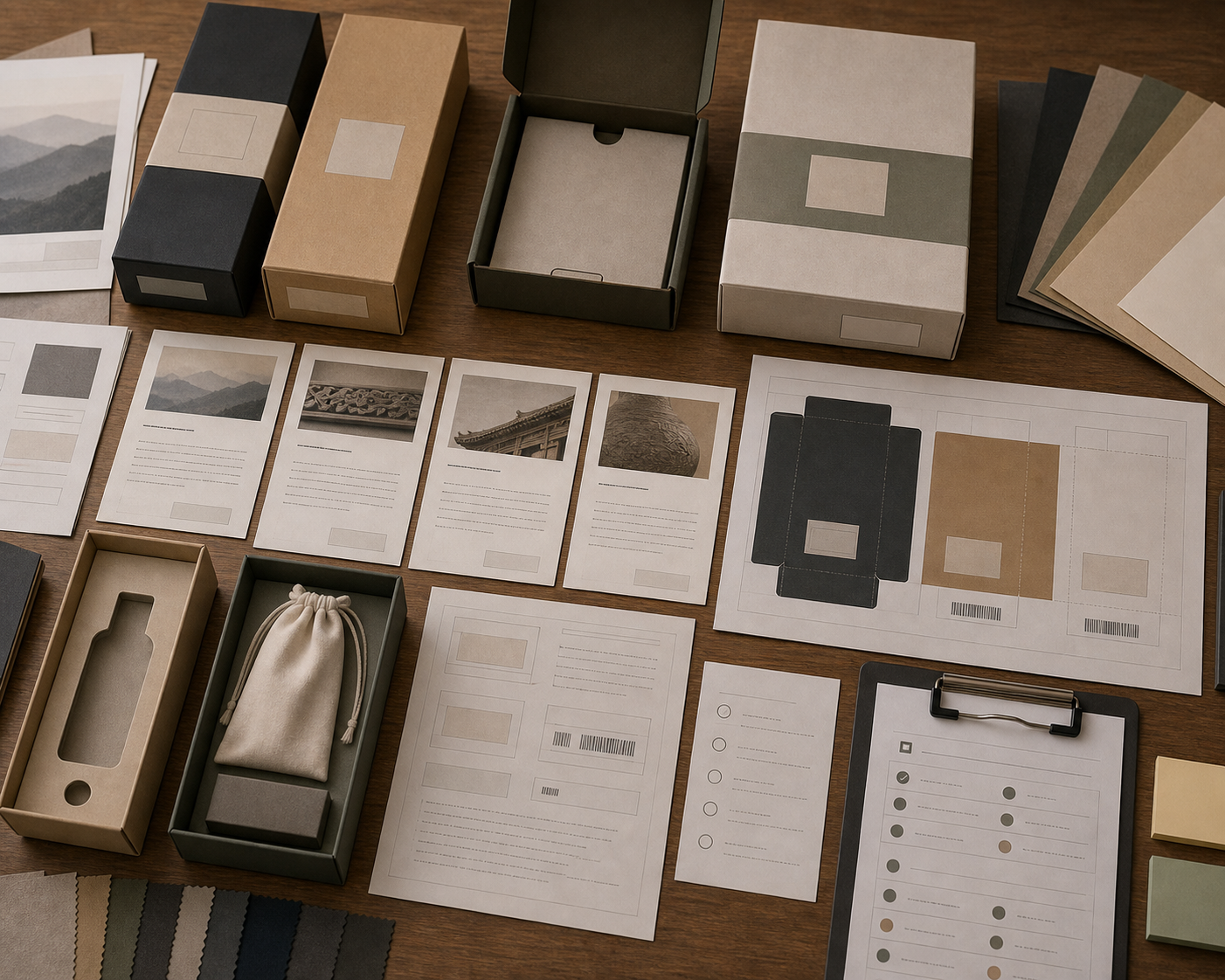
Packaging is where many heritage-inspired projects become too loose. A buyer may want a dramatic story, but the product still needs accurate language. If the packaging says the item is an authentic historical reproduction, the buyer needs proof, rights review, and a much higher research standard. If the product is only inspired by Korean historical blade forms, the package should say that plainly.
I also recommend avoiding official marks, political slogans, sacred symbols, and copied museum decoration. A clean story can still be attractive. The buyer can say the design uses balanced proportions, restrained metal accents, and a heritage-inspired sheath concept. That is safer than making a claim about exact dynasty, ritual meaning, or national origin unless the buyer has verified evidence.
Packaging must also support shipment and compliance. For U.S. imports, 19 CFR 134.43 lists knives among articles requiring specific country-of-origin marking methods, with limited exceptions depending on the applicable rule. Other markets may have their own requirements. From the factory side, I plan label space, carton marks, origin marking, barcode area, insert protection, and retail-box structure before mass production. Good packaging protects both brand story and delivery stability.
The buyer should also avoid turning a cultural reference into a risky marketing claim. A product can be inspired by history without pretending to be history. I prefer clear wording such as "heritage-inspired design," "modern interpretation," or "historical reference mood." Stronger claims, such as exact historical reproduction or official cultural object, need stronger documentation and legal review.
| Packaging element | What to control | Why it matters |
|---|---|---|
| Story wording | "Inspired by" language and factual claims | Reduces unsupported claims |
| Visual symbols | Avoid official, sacred, or copied details | Protects brand trust |
| Label space | Origin, importer, barcode, warnings if required | Supports market entry |
| Insert design | Blade and handle protection | Reduces transit damage |
What QC Records Keep A Heritage-Inspired Sample Consistent?
Heritage design often depends on small details. If QC records are weak, each batch can look slightly different.
QC records should cover approved drawings, material lists, color samples, finish standards, blade dimensions, handle fit, sheath fit, packaging artwork, marking placement, and final inspection.
I Build The QC File Around The Approved Sample
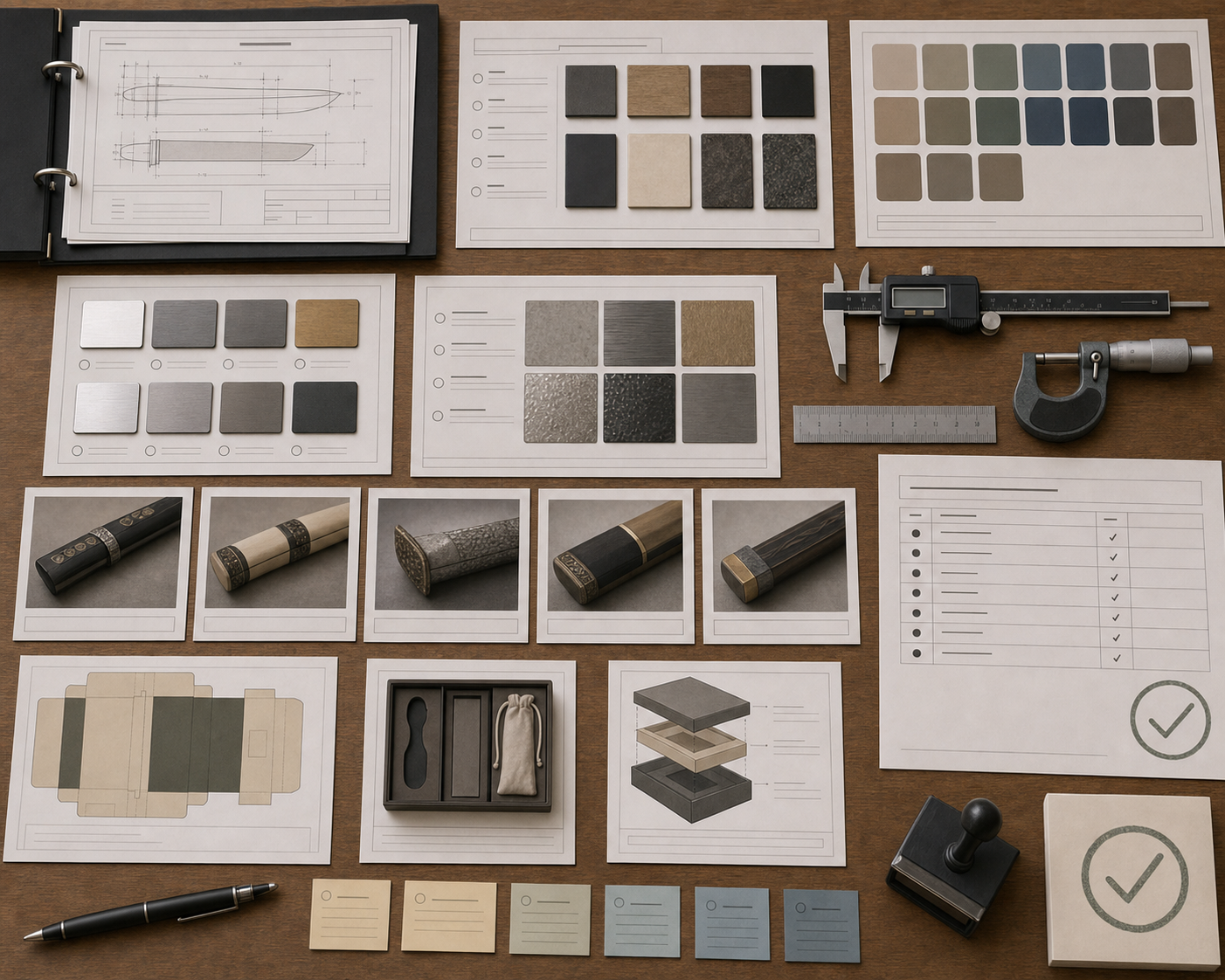
A heritage-inspired sample can be hard to judge because the buyer may care about color mood, proportion, texture, and packaging feeling. These details must become inspection items. I prefer to create a control file that includes the latest drawing, bill of materials, finish sample, color reference, handle material sample, sheath standard, packaging artwork approval, marking position, and defect limits.
ISO 9001 is useful as a quality-management reference because it focuses on customer requirements, controlled operations, documented information, performance evaluation, and improvement. The ISO page on ISO 9001 quality management explains that the standard can help organizations manage product and service quality across sectors. I use that mindset in a practical way. I want quality to be visible before final inspection.
For this type of project, I would inspect incoming materials, blade dimensions, finish consistency, handle gap, fastener fit, sheath retention, logo placement, origin marking, packaging color, insert fit, carton count, and final sample comparison. If the buyer wants a handmade look, the acceptable variation must be defined. "Handmade feeling" cannot mean uncontrolled production.
| QC record | What it should include | What it protects |
|---|---|---|
| Approved drawing | Current dimensions and revision | Shape consistency |
| Finish standard | Color, polish, coating, defect limits | Visual consistency |
| Packaging file | Artwork, insert, label, carton | Retail and shipping consistency |
| Inspection report | Measurements, photos, defects, approval | Repeat-order confidence |
What RFQ Details Should Buyers Send For This Type Of OEM/ODM Project?
A vague RFQ can turn a cultural idea into guesswork. The factory may quote quickly but miss the buyer's real risk.
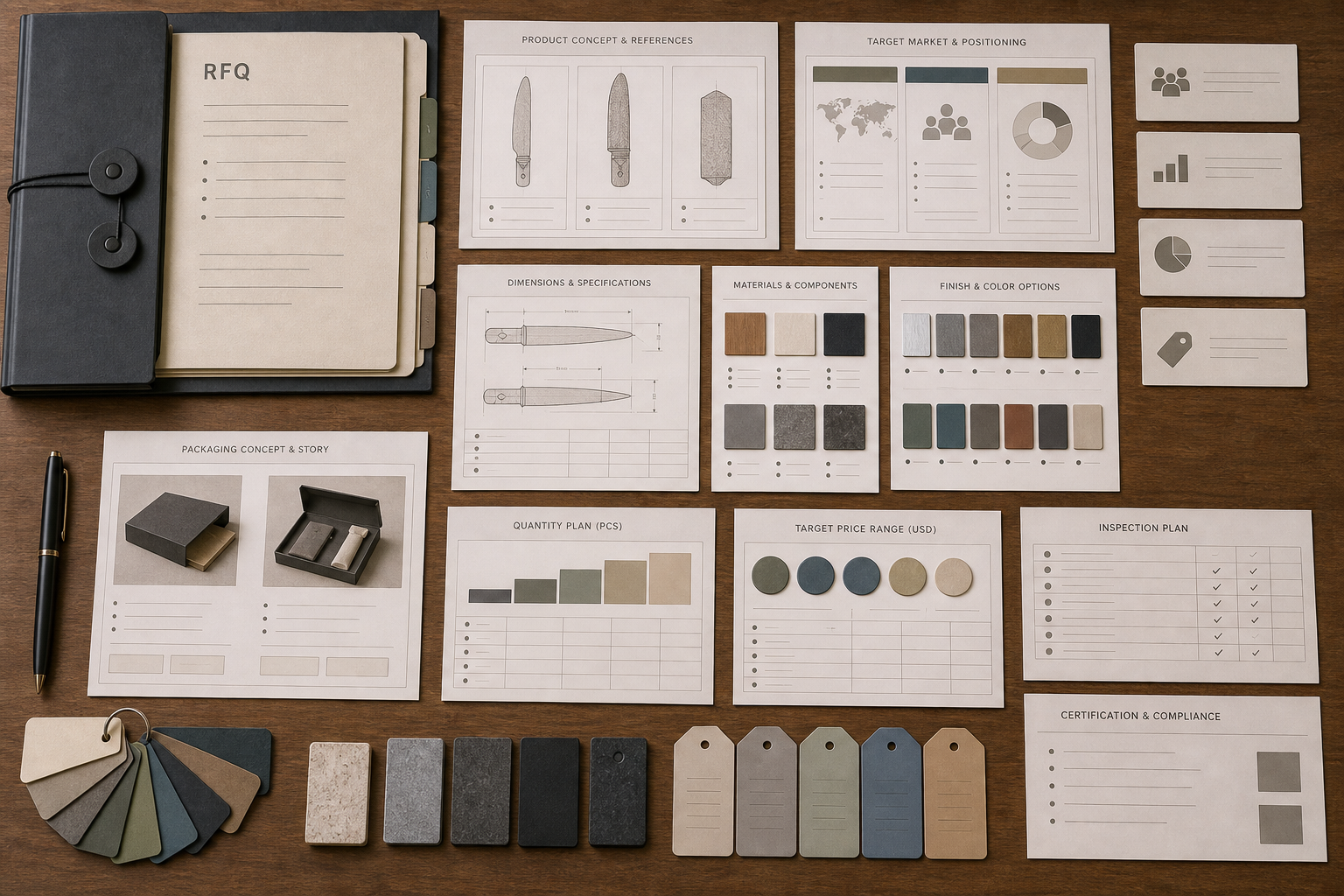
Buyers should send reference purpose, target market, compliance concerns, product type, dimensions, steel, handle material, finish, sheath, packaging story, marking needs, quantity, target price, and inspection plan.
I Ask For The Reason Behind The Reference
For this kind of project, a good RFQ should explain why the buyer chose the reference. Does the buyer want a collector-style look, a retail gift product, an outdoor tool with heritage mood, or a private label series with a cultural theme? This reason helps me suggest a practical structure.
The buyer should also provide the target market and compliance concerns at the start. If the project mentions North Korea in the research background, I want that separated from commercial activity. Vast State should receive a modern product brief, not a request connected to sanctioned sourcing, sanctioned destinations, or official political symbols. The RFQ should also state whether the buyer needs one sample, several concept options, or a production-ready prototype.
As an OEM/ODM knife manufacturer in Yangjiang, China, Vast State can help turn a sensitive reference into a controlled modern product path. I can support material selection, manufacturability, finish options, packaging structure, sample follow-up, and QC planning. But the buyer must define the market, confirm legal requirements, approve the final design language, and keep the product claims accurate.
| RFQ field | What to include | Why it helps |
|---|---|---|
| Reference purpose | Shape, color, scabbard mood, material contrast | Prevents direct-copy confusion |
| Compliance notes | Target market, party screening, product limits | Reduces early risk |
| Product specs | Dimensions, steel, handle, sheath, finish | Builds a realistic quotation |
| Brand package | Story wording, logo, labels, carton needs | Aligns product and retail plan |
Turn your idea into a quote-ready knife project.
Share your drawing, sample photo, target quantity, market, and packaging needs. Vast State will review manufacturability and prepare OEM/ODM options.
Conclusion
I use historical Korean blade references carefully: screen compliance first, abstract the design, control specifications, verify claims, and build a practical RFQ.
Source Notes
- OFAC North Korea sanctions and BIS North Korea export controls support the need for early sanctions and trade screening.
- The Met Korean sword with scabbard, National Museum of Korea sword, and British Museum samingeom sheath support cultural-reference discussion.
- WIPO traditional knowledge resources provide context for respectful handling of traditional cultural expressions.
- Alleima 14C28N supports steel-selection discussion as one technical reference.
- 19 CFR 134.43 supports planning country-of-origin marking for knives imported into the United States.
- ISO 10007 and ISO 9001 support configuration-control and quality-management references.