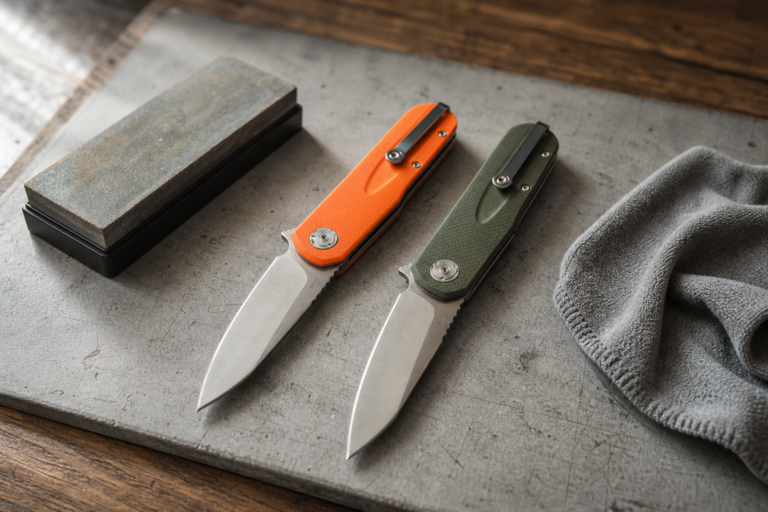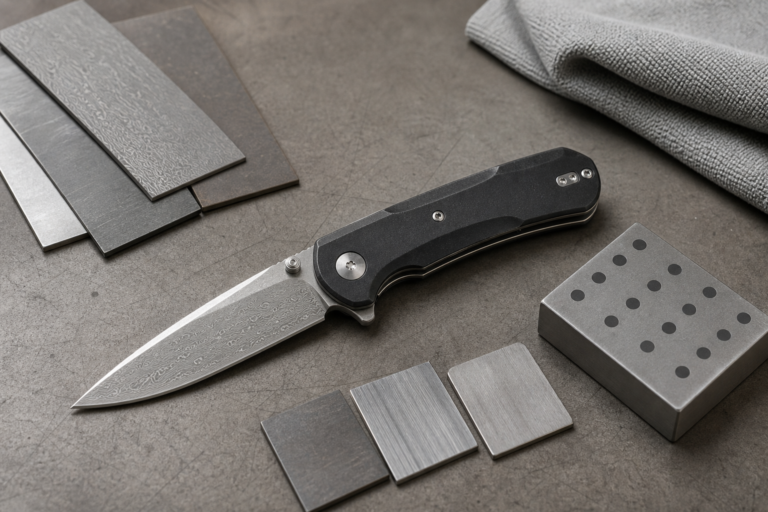
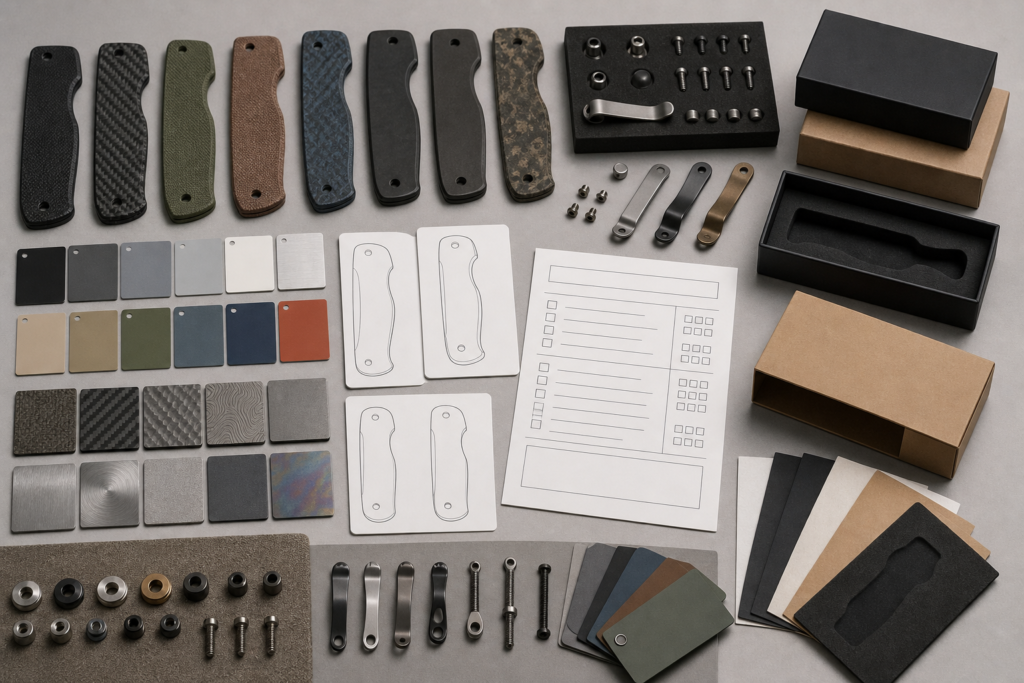
A custom EDC knife can look simple. But unclear handle, logo, and hardware choices can create cost changes, delays, and unstable repeat orders.
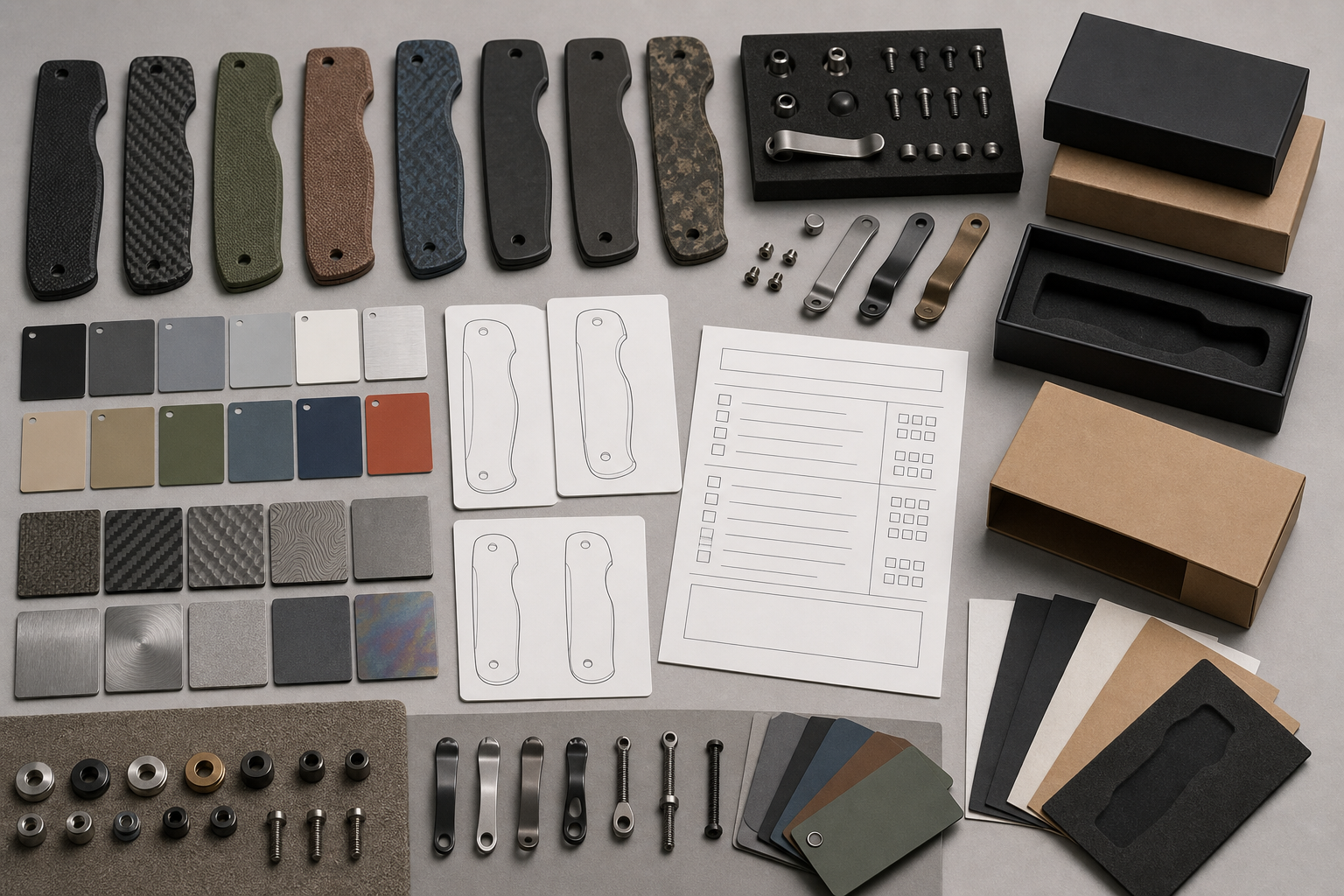
Buyers should specify handle material, finish, logo method, screw type, clip style, spacer structure, color tolerance, packaging, and inspection criteria before sampling. Clear details help an OEM/ODM supplier quote accurately and control repeat production.
Quick buyer brief:
- Answer: Turn visual preferences into measurable RFQ and QC details.
- Buyer context: This helps knife brands, importers, wholesalers, and private label buyers.
- Key checks: Handle material, logo durability, hardware fit, finish consistency, packaging, marking, and approved sample control.
Developing a folding knife line for your brand?
Vast State supports OEM/ODM folding knife projects, including blade steel, lock structure, handle material, finish, logo method, packaging, and quality inspection planning.
When I review a custom EDC knife project, I do not start with color only. I start with the buyer's target user, target price, order plan, packaging channel, and repeat-order needs. A handle material may look good in a sample photo, but it may add machining time, surface risk, or color variation. A logo may look clean on one sample, but it may not survive normal handling if the method is wrong. A screw may be small, but it can affect assembly speed, after-sales issues, and perceived quality. That is why I treat customization as a production specification, not just a design preference.
What Should A Custom EDC Knife Brief Define First?
A vague custom brief slows everything down. The supplier guesses, the sample changes, and the buyer loses control of cost and timing.
A custom EDC knife brief should define the target market, knife type, handle material, blade steel, lock type, logo method, hardware color, packaging style, MOQ target, target price, and inspection standard.
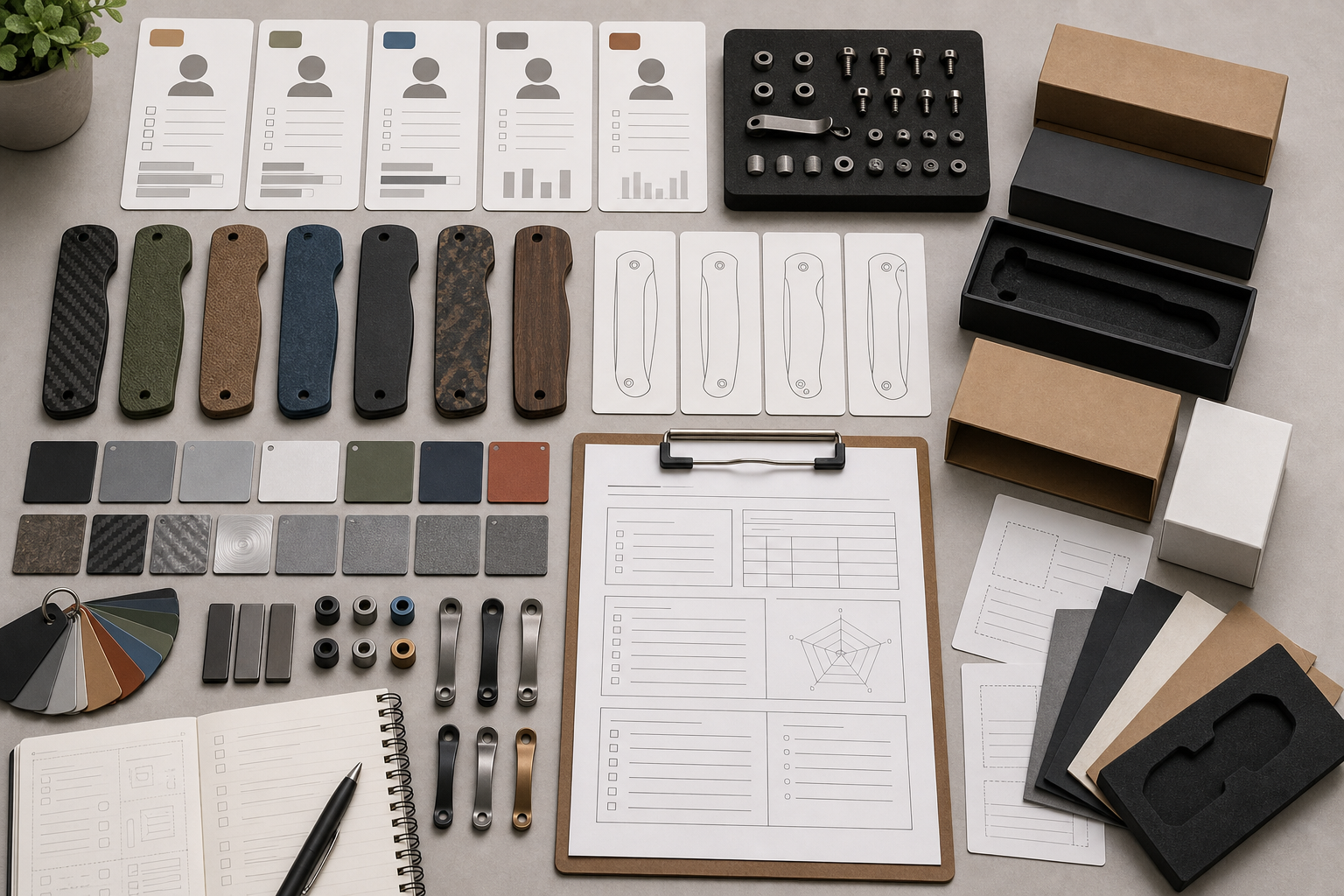
I Turn Style Ideas Into Production Questions
Many buyers begin with a picture, a sketch, or a reference sample. That is useful, but it is not enough for production. I need to understand what the knife must do in the market. A lightweight EDC folder for retail shelves, a value private-label knife for wholesalers, and a higher-end outdoor pocket knife can all use different materials and hardware. The brief should make the commercial target clear before the sample starts.
I usually ask the buyer to separate "must have" details from "nice to have" details. A must-have detail may be a certain handle material, a specific logo position, a reversible clip, or a target retail price range. A nice-to-have detail may be a special screw color or decorative backspacer. This matters because every custom detail can affect tooling, machining time, inspection, and packaging. A clear brief lets the supplier protect the buyer's main goal instead of spending time on details that do not change the selling point.
| Brief item | What I ask the buyer to define | Why it matters |
|---|---|---|
| Product position | Budget, mid-range, or higher-end EDC | It guides material and finish choices |
| Target market | Outdoor, daily utility, retail, private label | It affects packaging and feature priorities |
| Custom scope | Handle, logo, clip, screws, color, packaging | It controls sample work and quote accuracy |
| Order plan | Trial order, seasonal order, or repeat program | It affects tooling and QC planning |
OEM/ODM RFQ Checklist
Prepare these details to help Vast State review your project and provide a more accurate quotation.
| RFQ Field | What to Prepare |
|---|---|
| Project type | OEM from drawing / ODM private label / wholesale catalog |
| Product category | Folding knife / fixed blade / multi-tool / outdoor tool |
| Design status | Idea / sketch / 2D drawing / 3D CAD / physical sample |
| Target price | Ex-factory target price or retail price range |
| MOQ expectation | 500 / 1,000 / 3,000 / 5,000+ pcs |
| Logo method | Laser engraving / etching / printing / molded logo |
| Packaging | Standard packaging / custom retail box / Amazon-ready |
| Market | USA / EU / Japan / Korea / Middle East / other |
| Compliance needs | Buyer-specified testing / documentation / labeling |
| Timeline | Sample deadline / mass production deadline |
How Should Buyers Choose Handle Material For Grip, Weight, And Cost?
Handle material is easy to choose by appearance. But weight, grip, machining, finish, and cost decide whether the choice works in production.
Buyers should choose handle material by matching user need, target price, surface feel, machining risk, weight, finish stability, and repeat-order availability instead of choosing by photos alone.
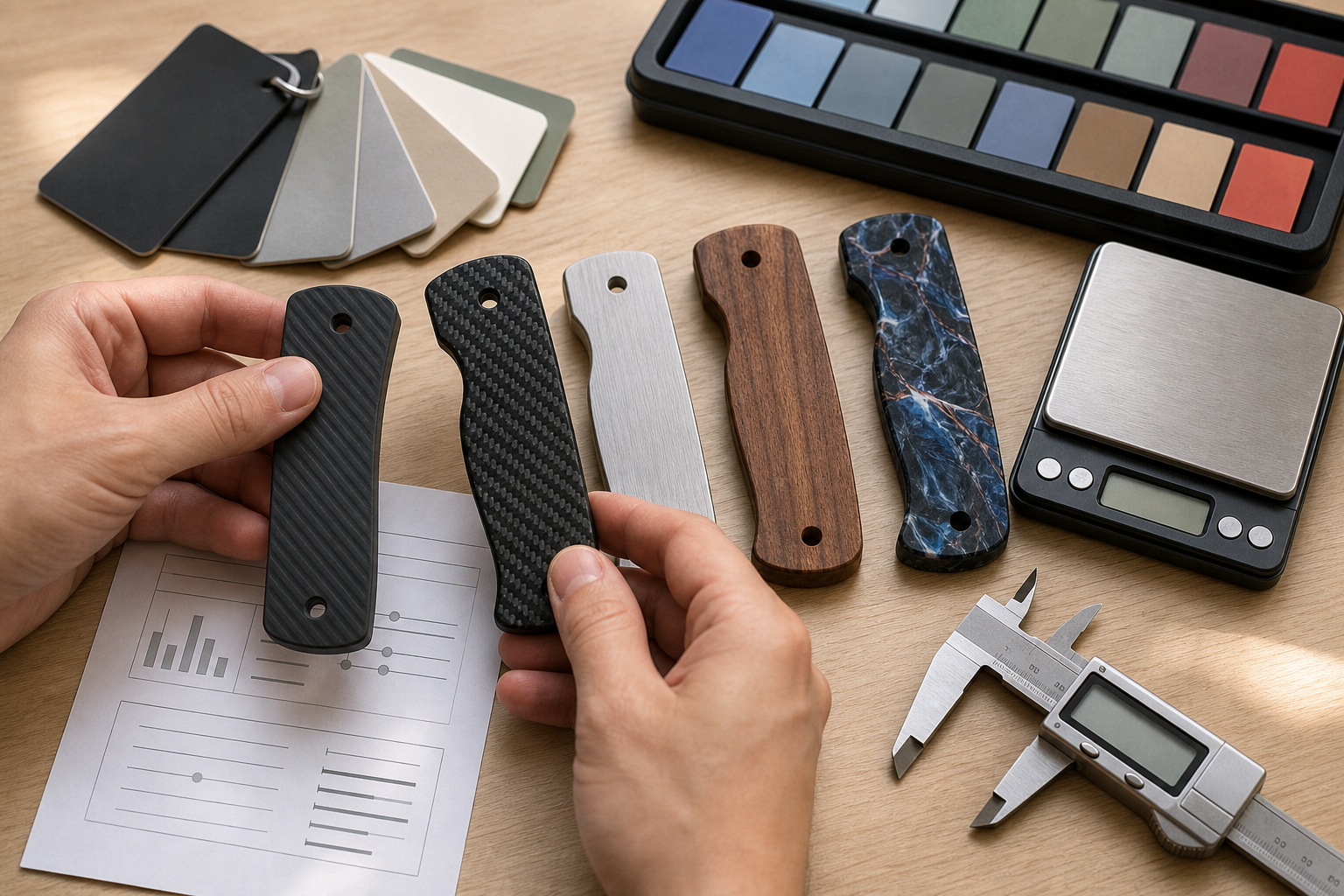
I Match Material To The Real Selling Point
The handle is one of the first things a buyer sees and one of the first things a user feels. But for B2B sourcing, handle material is also a cost and process decision. G10 can give good grip and stable strength. Aluminum can feel modern and light. Stainless steel can feel solid, but it adds weight. Wood gives a natural look, but each batch can vary. Resin materials can create strong visual identity, but color and pattern control should be discussed early.
For example, technical references for G10/FR-4 glass epoxy describe it as a glass fabric and epoxy composite with strength and stiffness. That explains why many buyers like G10-style materials for handle scales. But I still check thickness, texture, dust control during machining, edge finishing, and color availability. A strong material can still cause production issues if the design has sharp inside corners, very thin walls, or an unclear texture requirement.
I also remind buyers that the most expensive material is not always the best choice. A successful custom knife needs the right balance between user feel, target margin, appearance, and stable production.
| Handle material | Main advantage | Procurement check |
|---|---|---|
| G10 | Grip, stiffness, stable industrial feel | Thickness, texture, machining dust, edge finish |
| Aluminum | Lightweight, modern color options | Alloy, anodizing, scratch risk, color tolerance |
| Stainless steel | Solid feel and durable impression | Weight, machining time, finish consistency |
| Wood or resin | Distinct visual identity | Batch variation, moisture risk, pattern control |
How Do G10, Micarta-Style, Aluminum, Wood, And Resin Handles Compare?
A material comparison table can look simple. The hard part is knowing which tradeoff matters for the buyer's market.
G10, micarta-style laminates, aluminum, wood, and resin handles differ in grip, weight, machining behavior, finish stability, visual variation, and price level. Buyers should compare them by market fit.
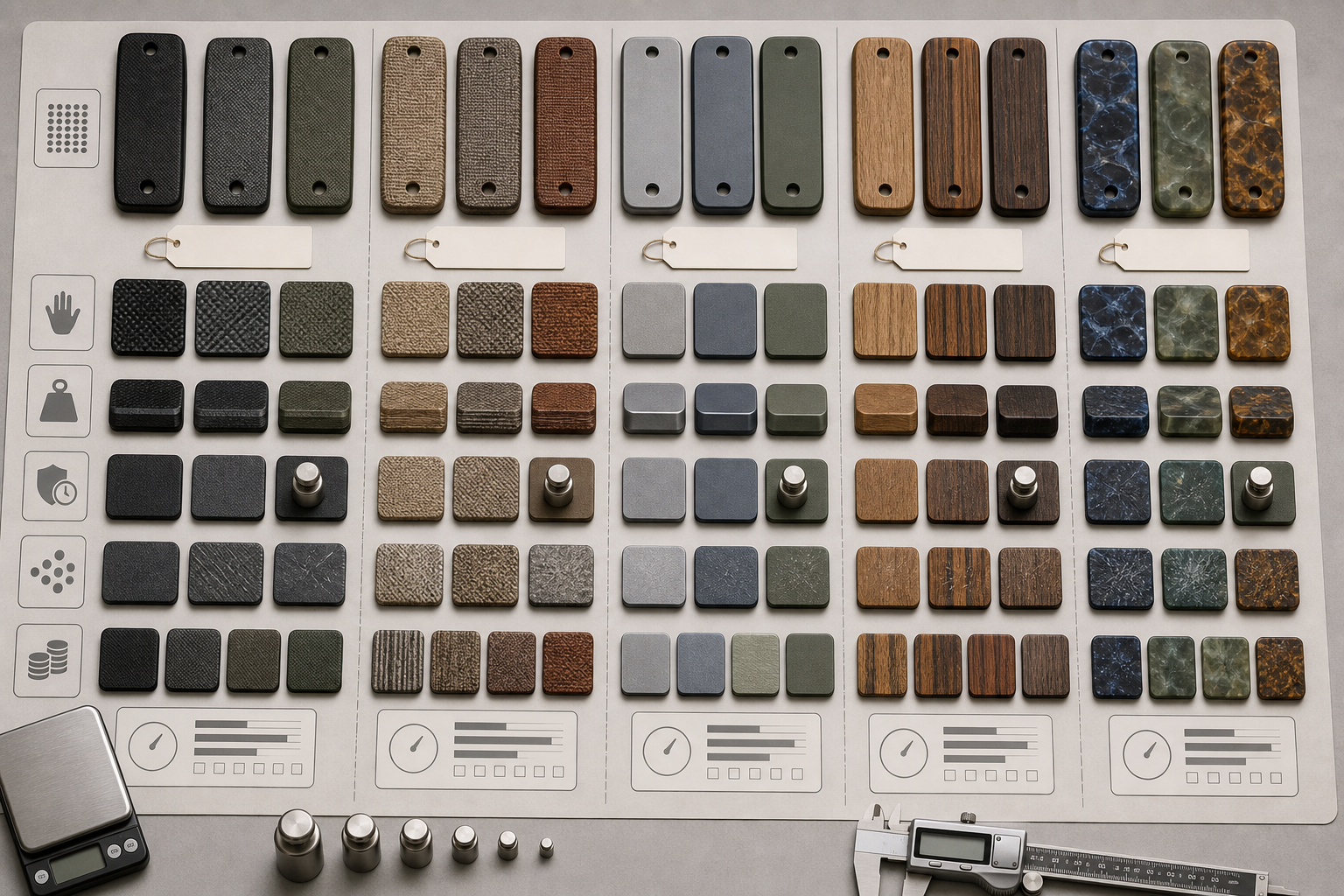
I Compare Materials By Repeatability, Not Only Beauty
When I compare handle materials, I look at two sides. The first side is the buyer-facing value. Does the material look right for the brand? Does it feel comfortable? Does it support the price level? The second side is production control. Can we source it repeatedly? Can we machine it cleanly? Can we keep color, texture, hole position, and edge finishing stable across batches?
G10 and similar glass-epoxy laminates are often practical for custom EDC knife handles because they can support texture and strength. Micarta-style laminates can give a warmer, fabric-like feel, but the final look can vary by material supplier and finishing method. Aluminum is useful when the buyer wants lighter weight and color options. The anodizing process can create a more durable oxide surface and can accept colors, but color consistency depends on alloy, surface preparation, chemistry, and process control. Wood and resin materials can make a knife stand out, but they need better sample approval because pattern variation is part of the material.
I do not tell every buyer to choose the same material. I help them choose the material that fits the sales channel and the factory process.
| Material option | Best fit | Main risk to control |
|---|---|---|
| G10 | Practical EDC, outdoor utility, private label | Texture and edge finishing consistency |
| Micarta-style laminate | Warmer grip and heritage look | Color and surface variation |
| Aluminum | Lightweight custom color projects | Anodizing shade and scratch visibility |
| Wood or resin | Gift, lifestyle, or signature series | Pattern repeatability and sample approval |
How Should Custom Engraving And Logo Marking Be Specified?
A logo can make a knife feel branded. But a poor marking method can fade, look cheap, or conflict with compliance marking.
Buyers should specify logo artwork format, marking method, position, size, depth or contrast, durability expectation, and approval sample before mass production starts.
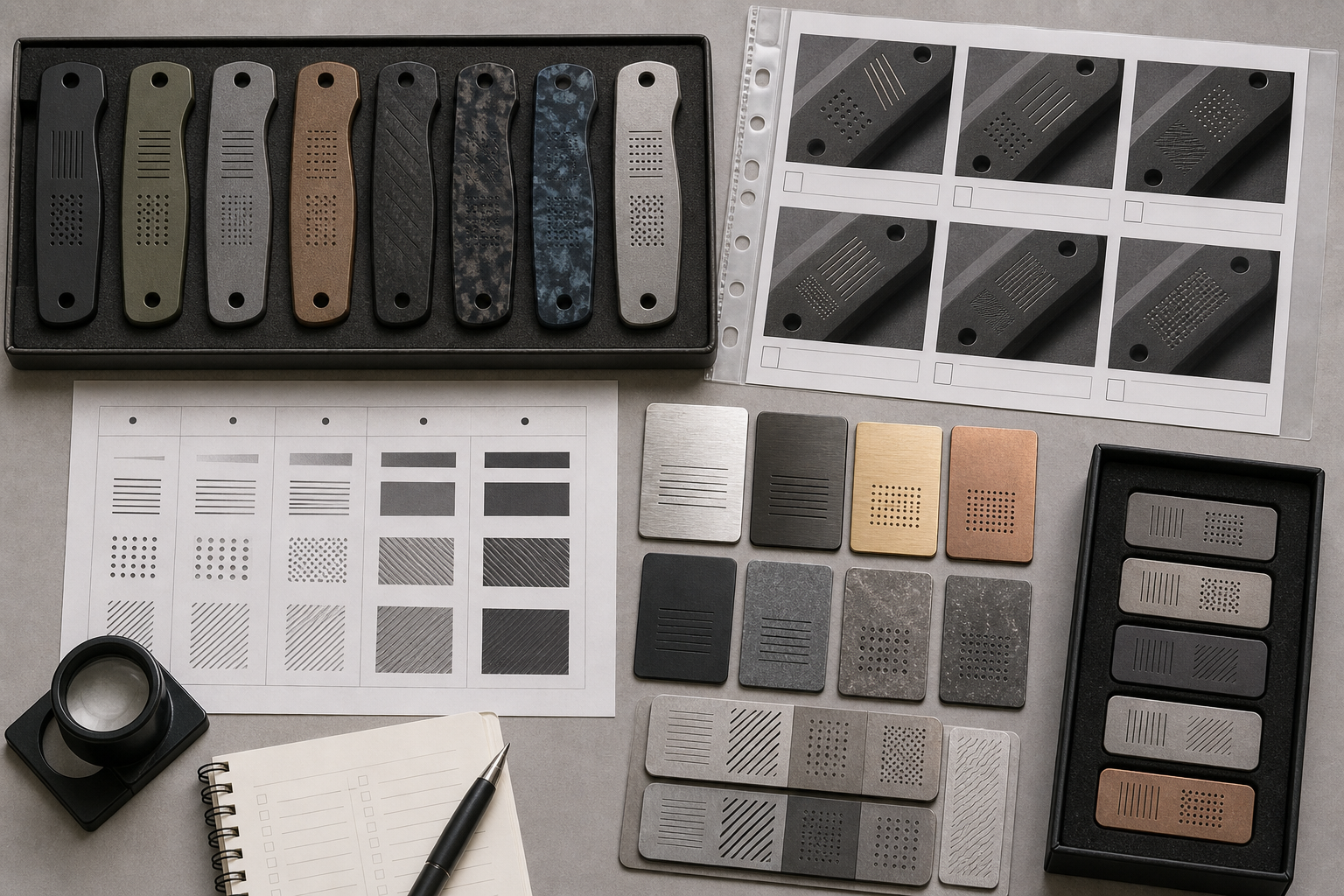
I Treat Logo Work As A Controlled Process
Logo marking is not just decoration. It affects brand identity, surface quality, and sometimes regulatory marking space. For a custom knife project, I ask the buyer to provide vector artwork when possible. I also ask where the logo should go: blade, handle, clip, pivot area, packaging, or sheath. Each position has a different process risk.
Laser marking can be clean on metal, but the contrast depends on material and finish. Engraving can feel more permanent, but it may add cost and may not suit every thin part. Etching can work in some cases. Pad printing may be useful for packaging or some surfaces, but it is not the same as a permanent mark. If the knife is going to a market with country-of-origin marking rules, I also separate brand logo work from required marking work. For example, 19 CFR 134.43 lists methods such as die stamping, etching, engraving, or attached metal plates for certain imported articles including knives. This is not legal advice, but it shows why marking method and location should be discussed early.
The best result comes from a signed marking sample. The buyer should approve logo size, location, contrast, and finish before production.
| Logo detail | What to specify | Why it matters |
|---|---|---|
| Artwork | Vector file and approved size | Prevents distortion and unclear marks |
| Method | Laser, engraving, etching, printing | Controls durability and appearance |
| Position | Blade, handle, clip, package | Avoids assembly and marking conflicts |
| Approval | Signed sample or clear photo record | Protects repeat-order consistency |
What Hardware, Screws, Clips, And Spacers Need Control?
Small hardware looks easy to change. But screws, clips, pivots, and spacers can affect action, assembly, and after-sales issues.
Buyers should control pivot hardware, screw size, thread type, pocket clip design, spacer structure, washer or bearing choice, color finish, torque process, and spare-part policy.
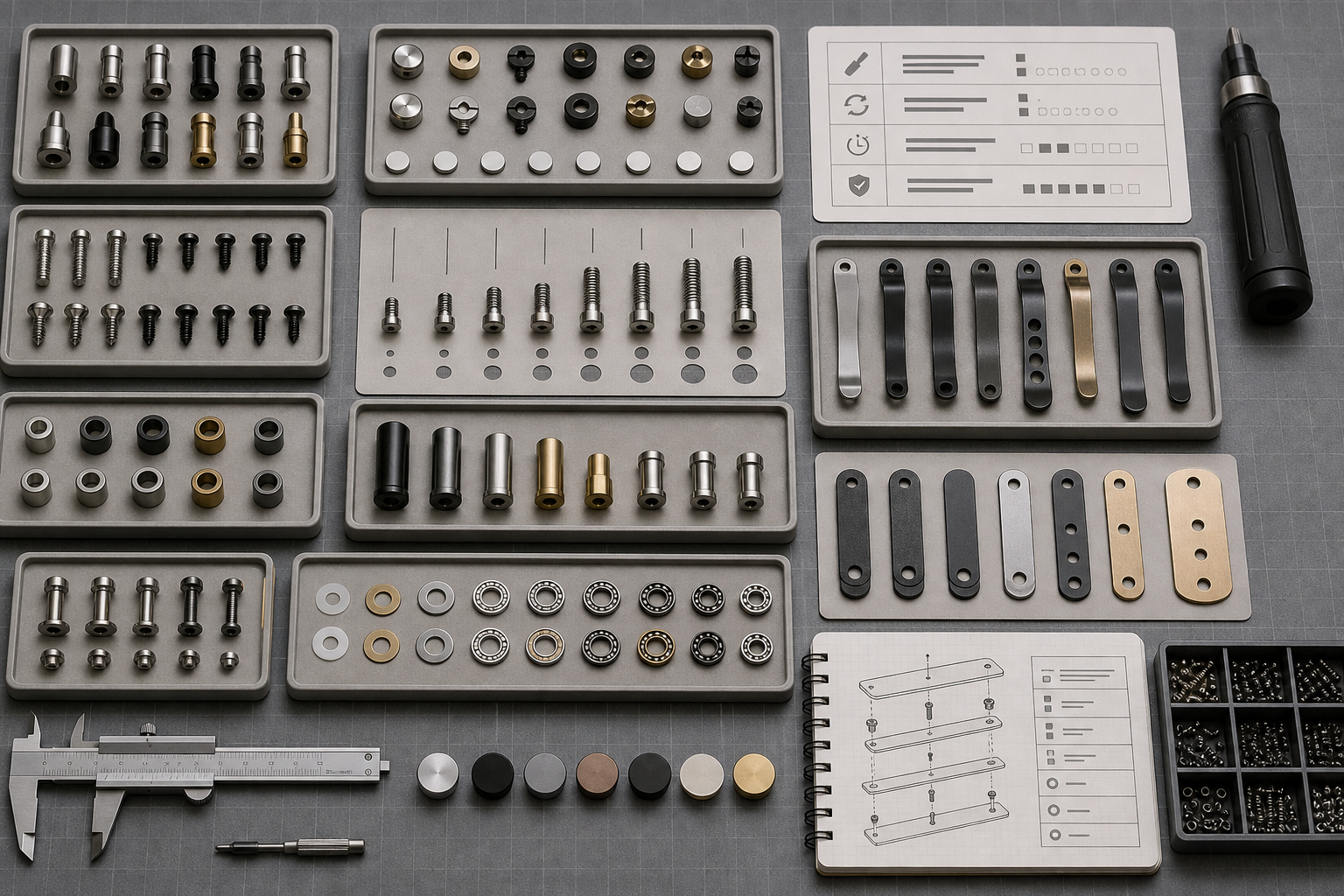
I Look At Hardware As A System
Hardware is not only a parts list. It is a system that holds the knife together and controls user feeling. The pivot affects opening smoothness and blade centering. The screws affect assembly speed and long-term stability. The clip affects pocket fit, retail appearance, and user comfort. The spacer or backspacer affects handle strength, cleaning space, and visual style.
When a buyer asks for custom hardware color, I check the finish method and the batch control. A black screw, stonewashed clip, or blue pivot ring may look good, but it should not create assembly scratches or color mismatch. If the screw head is uncommon, the buyer should think about after-sales service and spare parts. If the clip is reversible, the handle scale and liner must support the extra holes cleanly. If the design uses bearings instead of washers, the supplier should check tolerance, smoothness, contamination risk, and cost.
I also care about practical assembly. A design that needs too much hand adjustment may not be stable for repeat orders. For B2B customers, the best hardware design is one that looks right, works smoothly, and can be assembled with consistent results.
| Hardware item | What I control | Buyer benefit |
|---|---|---|
| Pivot | Diameter, fit, finish, tension | Better action and centering |
| Screws | Size, thread, head style, finish | Easier assembly and service planning |
| Pocket clip | Shape, position, finish, strength | Better user comfort and retail value |
| Spacer system | Stand-off or backspacer design | Controls weight, cleaning, and structure |
How Do Color, Finish, And Surface Treatment Affect Repeat Orders?
A color sample can look perfect once. The real question is whether the same look can be repeated in the next batch.
Color, finish, and surface treatment affect appearance, scratch visibility, texture, corrosion resistance, and batch consistency. Buyers should define color limits, finish samples, inspection lighting, and acceptable variation.
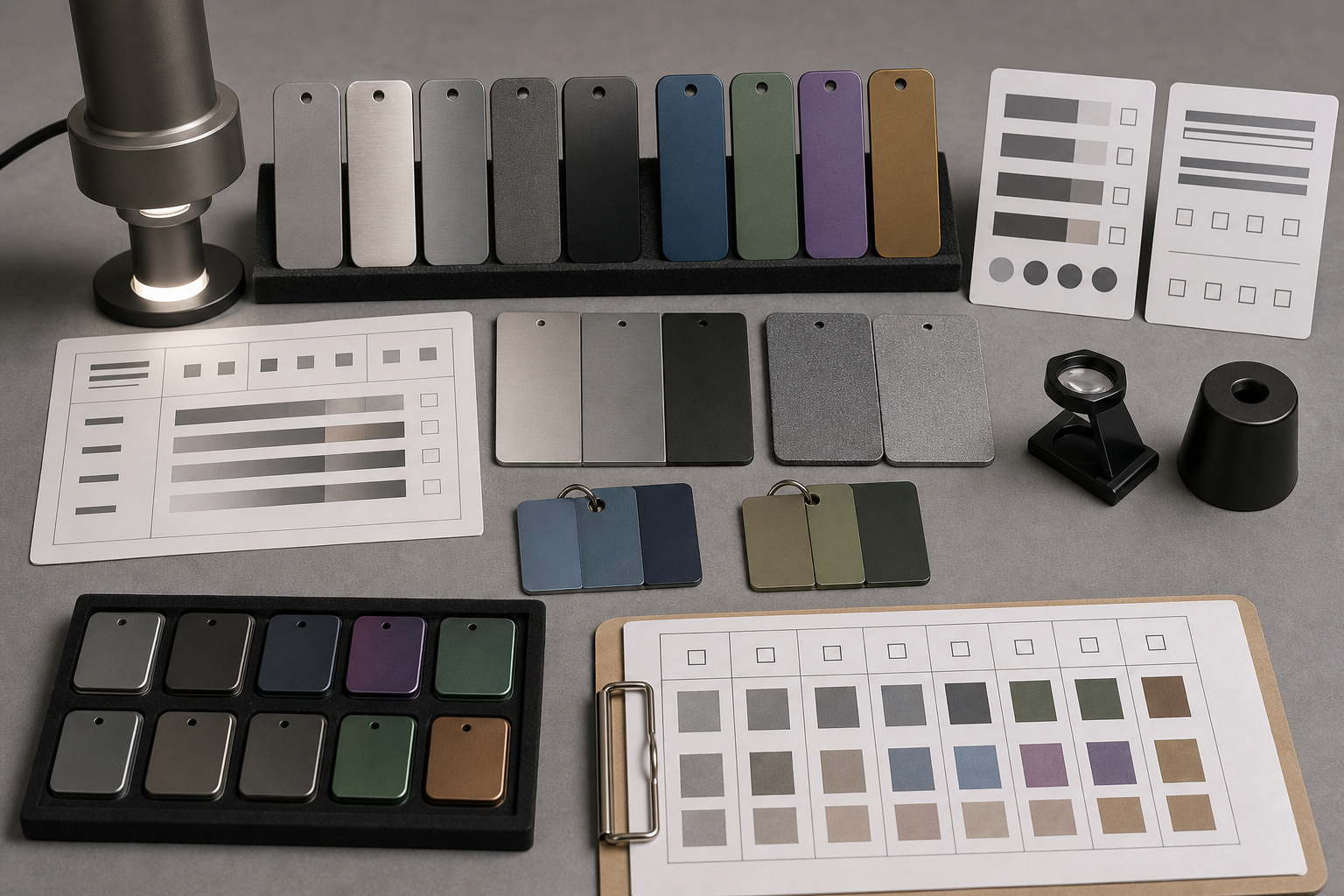
I Use Samples To Define What Words Cannot
Words like black, gray, satin, stonewash, matte, or polished are not precise enough by themselves. Different factories, material batches, and finishing methods can produce different results. This is especially true for anodized aluminum, coated screws, dyed handles, and patterned materials. I prefer to use approved samples, photos under agreed lighting, and written finish notes together.
For aluminum handles, anodizing can be a strong choice because the process creates an integrated oxide layer and can support color. But even good anodizing can vary if the alloy, surface preparation, part geometry, or treatment conditions change. For G10 and resin handles, color can also vary by sheet batch or pattern location. For stainless clips and screws, finish methods such as polishing, bead blasting, coating, or stonewashing need clear expectations.
The buyer should not ask the supplier to "make it look premium" without defining the surface. A better request is: use this approved sample as the standard, keep visible scratches below an agreed level, inspect under normal production lighting, and flag any color shift before shipment. That kind of language is easier to quote and easier to control.
| Finish issue | Common cause | Control method |
|---|---|---|
| Color mismatch | Different batches or surface prep | Approved sample and tolerance note |
| Visible scratches | Handling or soft coating | Protective process and final inspection |
| Uneven texture | Different machining or blasting settings | Process record and sample comparison |
| Hardware color shift | Different coating lots | Lot control and pre-assembly check |
What Packaging, Marking, And Compliance Checks Belong In The Spec?
Packaging is often discussed late. That can create carton changes, label problems, and extra work before shipment.
The spec should include inner packaging, retail box, barcode or label needs, country-of-origin marking, carton strength, drop or transport expectations, warning text if needed, and destination-market compliance checks.
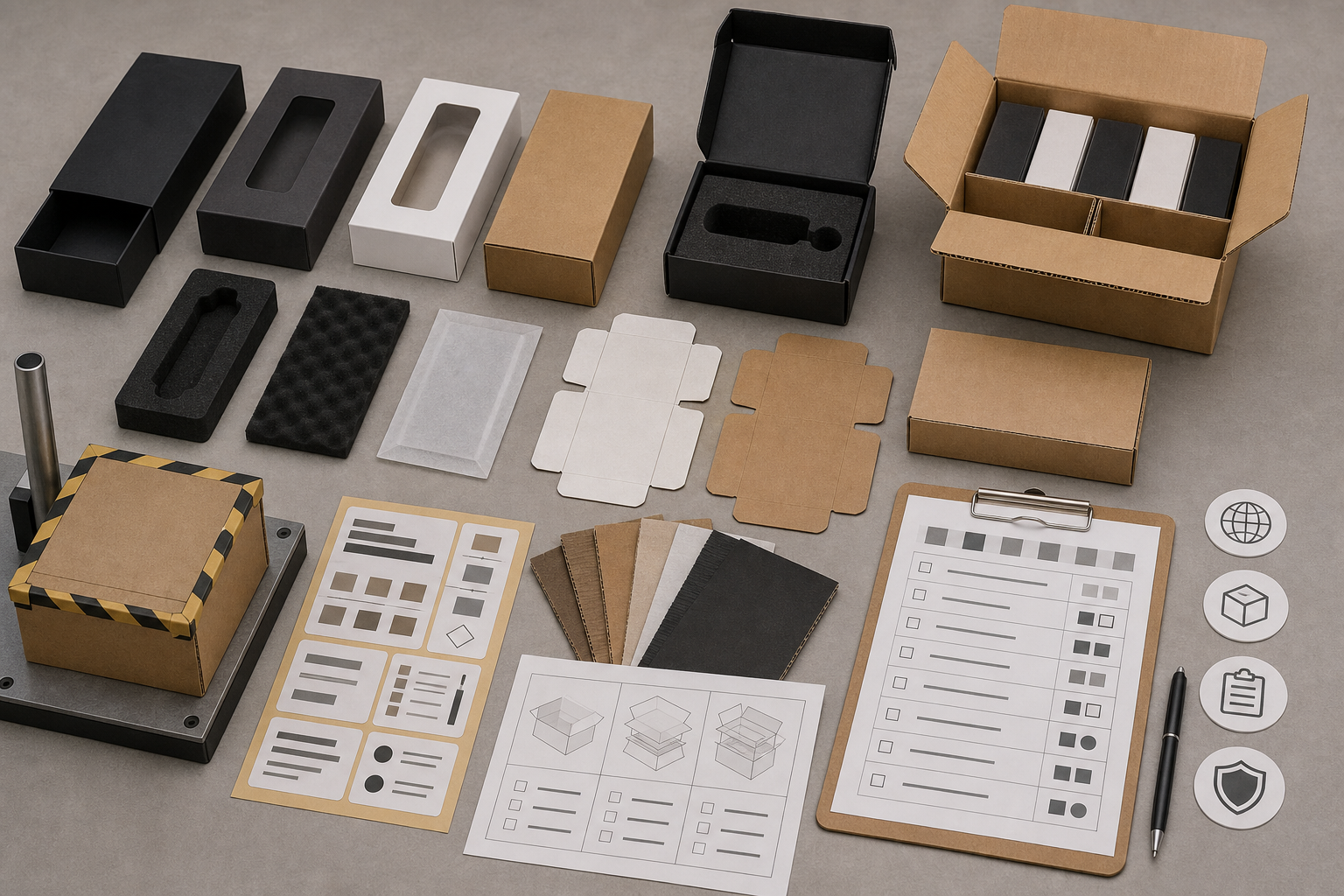
I Connect Packaging To Import And Retail Reality
For custom EDC knife projects, packaging is not only the final box. It affects retail display, shipping protection, barcode use, importer records, and customer experience. Some buyers need a simple white box. Some need a printed retail box. Some need insert cards, foam, blister packaging, or a pouch. Each choice affects unit cost, carton size, lead time, and inspection.
Transport packaging should also be discussed early. ISO 4180 gives general rules for performance test schedules for complete filled transport packages. A buyer does not need to cite a standard in every small order, but the idea is useful: packaging should be designed and checked for the real distribution path. If the knife has a delicate finish, the inner packing should prevent rubbing. If the retail box is part of the brand value, the carton plan should protect it.
Marking and compliance also belong in the spec. Country-of-origin marking, importer label needs, barcode requirements, and local restrictions should be confirmed by the buyer and their compliance adviser. This article is not legal advice. I can help make space and process plans for marking, but the buyer should confirm destination-market rules before mass production.
| Packaging item | What to define | Why it matters |
|---|---|---|
| Inner protection | Bag, sleeve, foam, or insert | Prevents finish damage during transport |
| Retail packaging | Box, pouch, card, barcode area | Supports brand and sales channel needs |
| Carton plan | Quantity per carton and protection | Controls shipping damage and freight planning |
| Marking needs | Origin, labels, barcode, warning if needed | Reduces last-minute shipment problems |
What RFQ And QC Details Help Suppliers Quote Custom EDC Knives Accurately?
An RFQ with only a photo invites guesswork. The quote may look fast, but it may not match the final product.
A strong RFQ should include drawings or reference samples, material choices, finish requirements, logo method, hardware details, packaging, target price, MOQ, destination market, timeline, and QC criteria.
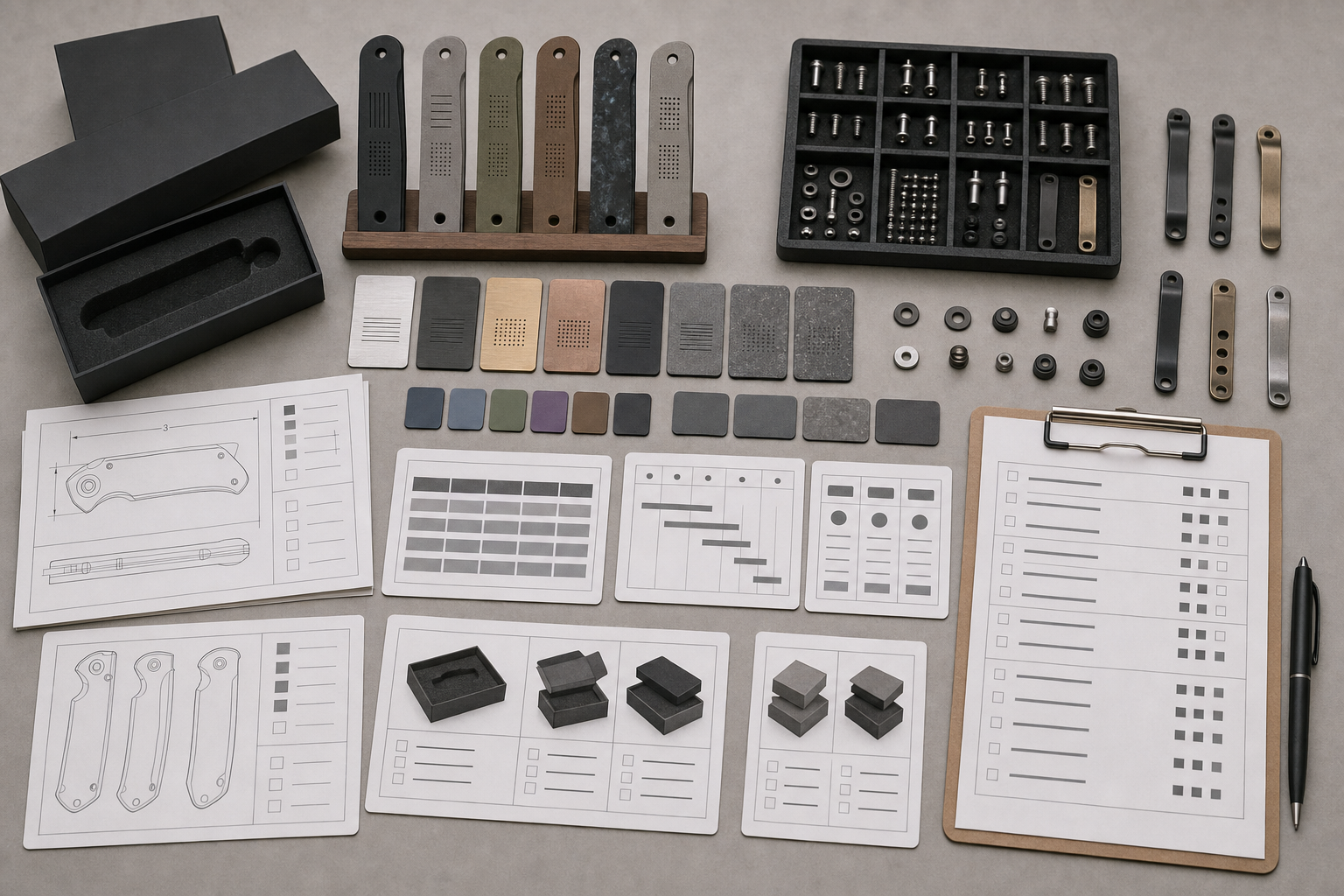
I Make The RFQ Easy To Price And Easy To Inspect
The best RFQ is not the longest one. It is the one that removes important uncertainty. If the buyer already has drawings, I check them against production needs. If the buyer only has an idea, I help turn it into a practical specification. The RFQ should tell the supplier what must be quoted now and what can be optimized during development.
For quality control, I like to connect the quote to measurable checkpoints. ISO 9001 quality management is useful as a general reference because it frames quality as a system, not only final inspection. For custom product versions, ISO 10007 configuration management is also useful context because it covers product and service configuration from concept to disposal. In practical knife manufacturing, this means the approved sample, drawing version, material code, logo version, finish sample, packaging file, and inspection checklist should all match the same version.
This protects both sides. The buyer gets a quote based on real choices. The supplier can plan material, machining, finishing, assembly, packaging, and inspection. The final product has a better chance of matching the approved sample in repeat orders.
| RFQ detail | What the buyer should provide | How it helps |
|---|---|---|
| Product files | Drawing, sketch, photo, or sample | Reduces interpretation risk |
| Custom details | Handle, logo, clip, screws, finish | Supports accurate pricing |
| Commercial targets | MOQ, target price, timeline | Helps choose practical solutions |
| QC standard | Approved sample and inspection points | Protects repeat-order consistency |
Turn this article into a folding knife project.
Share your blade type, lock direction, steel preference, handle material, quantity, target market, and packaging needs. Vast State can prepare OEM/ODM options.
Conclusion
I build better custom EDC knife projects by turning handle, logo, hardware, finish, and packaging ideas into clear production specifications.
Source Notes
- Curbell Plastics G10/FR-4 supports the discussion of glass-epoxy laminate strength, stiffness, and machining concerns.
- Aluminum Extruders Council anodizing supports the discussion of anodizing as an electrochemical aluminum finish with color and durability factors.
- 19 CFR 134.43 supports the need to discuss marking methods early for imported knives. This is not legal advice.
- ISO 4180 supports the idea of performance-based transport package planning.
- ISO 9001 and ISO 10007 support process control and configuration management thinking for repeat custom production.