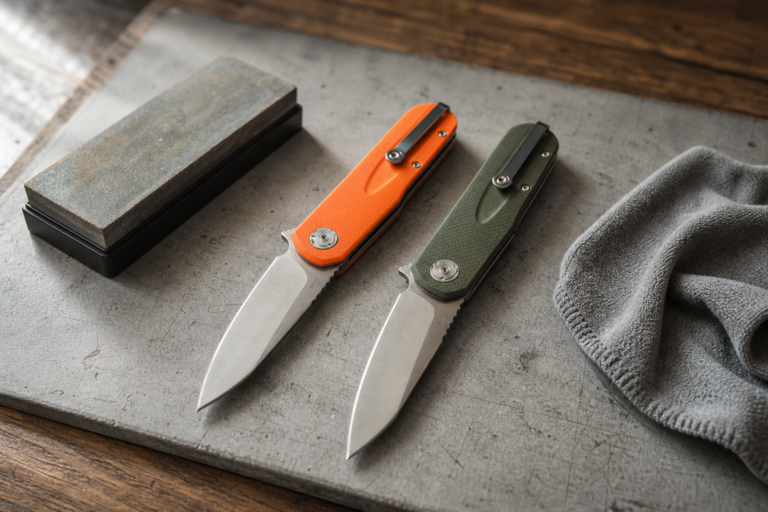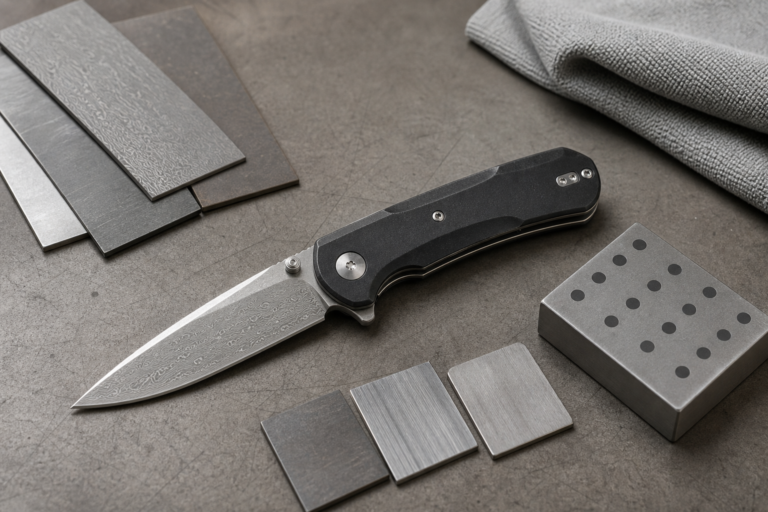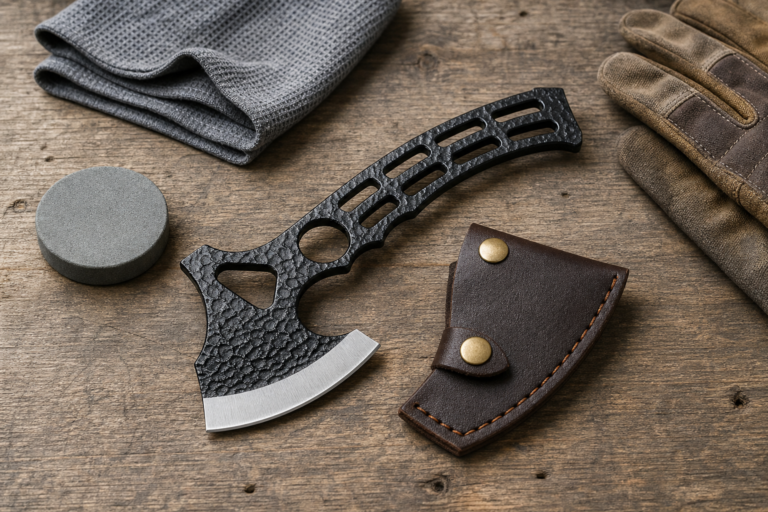
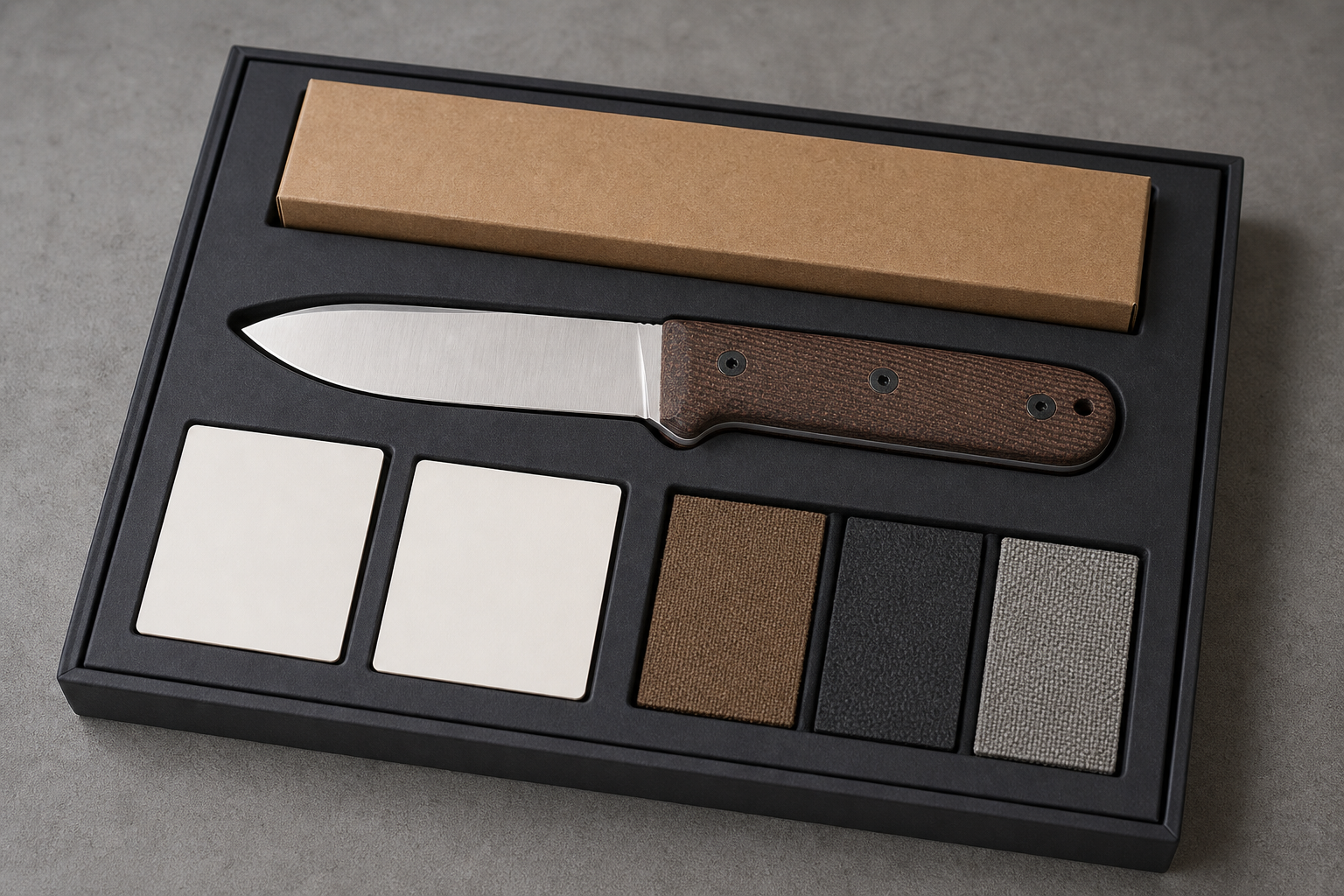
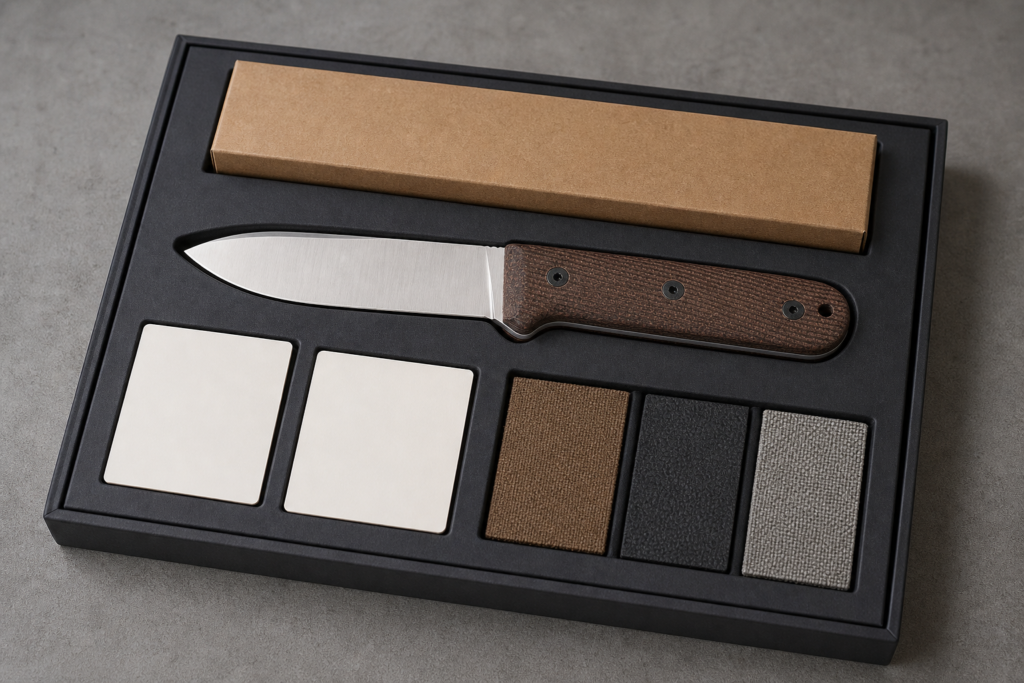
A bushcraft knife can look strong in photos. But the wrong blade type can make carving, food prep, and outdoor utility feel awkward.
Buyers should consider bushcraft blade types by matching the blade profile, edge grind, tip strength, steel, handle control, sheath, and target user. Drop point, spear or leaf-shaped, clip point, and sheepsfoot or wharncliffe directions each fit different outdoor tasks and brand positions.
Quick buyer brief:
- Answer: Start with the real outdoor tasks, then choose blade profile, grind, thickness, steel, handle, sheath, packaging, and QC.
- Buyer context: This helps knife brands, outdoor brands, importers, wholesalers, distributors, private label buyers, and sourcing managers.
- Key checks: Blade profile, edge grind, spine thickness, tip strength, full tang or folding structure, handle grip, sheath retention, corrosion resistance, responsible outdoor wording, and target-market compliance.
Have a knife or multi-tool project in mind?
Send your sketch, CAD file, sample photo, or product idea. Vast State can review manufacturability, suggest materials, estimate MOQ, and prepare a quote for your OEM/ODM project.
When I help a buyer plan a bushcraft knife line, I do not begin with the most dramatic blade shape. I begin with the work the customer expects the knife to do. Bushcraft users may carve wood, make feather sticks, prepare kindling where allowed, cut cord, prepare food, maintain camp gear, or carry a knife as part of an outdoor kit. A blade that is good for controlled carving may not be the best for heavy splitting. A blade that looks aggressive may not be the best for responsible retail positioning. For B2B buyers, the best bushcraft knife is not the one with the loudest silhouette. It is the one that fits real outdoor tasks, target price, brand story, and repeat production.
Why Should Buyers Define the Bushcraft Use Case Before Choosing a Blade?
Bushcraft can mean many things. If the buyer does not define the use case, the knife design can become confused.
Buyers should define the bushcraft use case first because carving, camp food prep, cord cutting, firewood preparation, and general outdoor utility require different blade profiles, grinds, steel, handle shapes, and sheath designs.
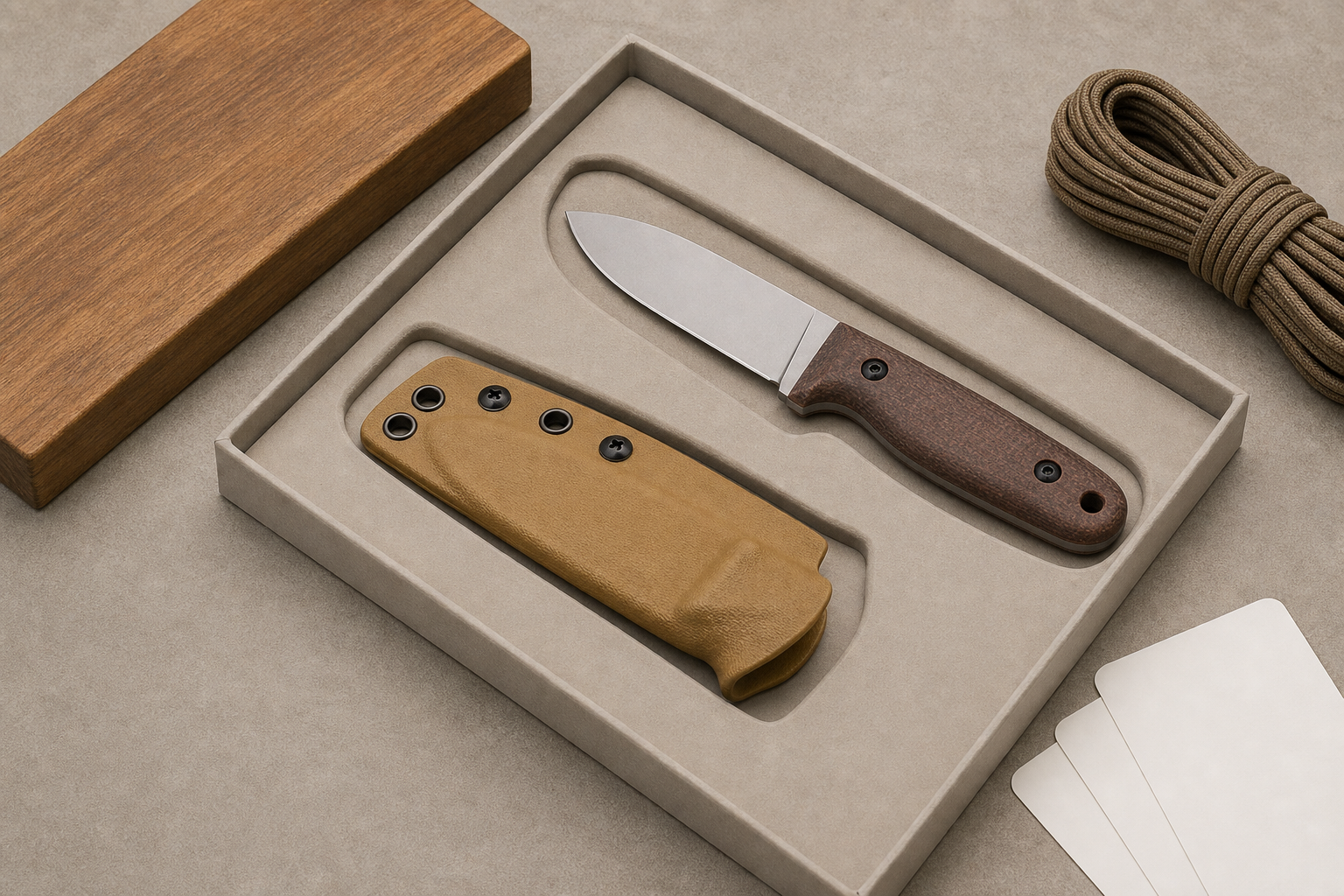
I Start With the Outdoor Task, Not the Shape
The word bushcraft often creates a strong image, but the actual tasks are practical. The user may need controlled cuts for carving. The user may need a comfortable handle for long use. The user may need a strong tip for outdoor utility. The user may need corrosion resistance for wet conditions. These needs should come before styling.
The National Park Service's Leave No Trace guidance reminds outdoor users to minimize campfire impacts, check restrictions, use local firewood, and be responsible with fires. I use this as a product-positioning reminder. A bushcraft knife should not encourage cutting live trees, ignoring local rules, or careless campfire behavior. It should support responsible outdoor use.
For B2B buyers, the use case should be written into the RFQ. A "general bushcraft fixed blade" is too broad. A "compact carving and camp utility fixed blade for entry-level outdoor kits" is clearer. A "heavier outdoor knife for experienced users who also carry a saw or axe" is another direction. Once the use case is clear, the supplier can suggest blade profile, grind, thickness, steel, handle material, sheath, packaging, and QC.
| Use case | Product direction | Buyer caution |
|---|---|---|
| Carving and feather sticks | Controlled edge and comfortable handle | Avoid overly thick blade |
| Camp utility | Balanced profile and corrosion resistance | Avoid extreme styling |
| Food prep at camp | Cleanable finish and usable belly | Add hygiene guidance |
| Wood processing support | Stronger spine and edge | Do not overclaim axe-like tasks |
OEM/ODM RFQ Checklist
Prepare these details to help Vast State review your project and provide a more accurate quotation.
| RFQ Field | What to Prepare |
|---|---|
| Project type | OEM from drawing / ODM private label / wholesale catalog |
| Product category | Folding knife / fixed blade / multi-tool / outdoor tool |
| Design status | Idea / sketch / 2D drawing / 3D CAD / physical sample |
| Target price | Ex-factory target price or retail price range |
| MOQ expectation | 500 / 1,000 / 3,000 / 5,000+ pcs |
| Logo method | Laser engraving / etching / printing / molded logo |
| Packaging | Standard packaging / custom retail box / Amazon-ready |
| Market | USA / EU / Japan / Korea / Middle East / other |
| Compliance needs | Buyer-specified testing / documentation / labeling |
| Timeline | Sample deadline / mass production deadline |
When Does a Drop Point Blade Work Best for Bushcraft?
The drop point is common because it is useful. But buyers should still tune its size, grind, and thickness.
A drop point blade works best for bushcraft when the buyer wants a balanced all-around knife for carving, camp utility, cord cutting, food prep, and general outdoor carry. It offers useful belly and a controllable tip.
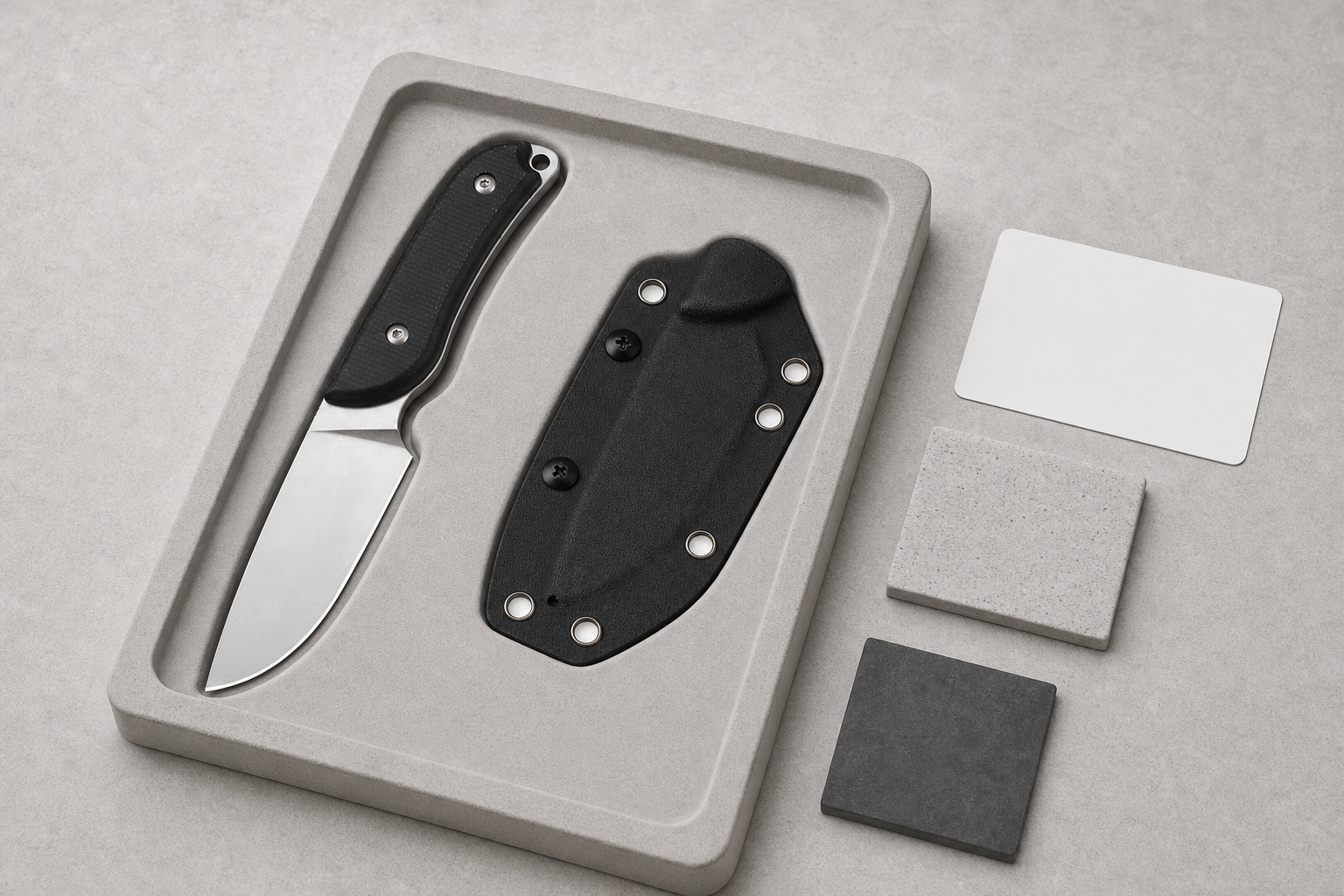
I Use Drop Point as the Safe Starting Point
For many buyers, a drop point blade is the easiest starting point for a bushcraft line. It has a useful belly for slicing, a lowered tip for control, and a profile that most outdoor users understand. It does not look as extreme as some tactical profiles, which can help with responsible retail positioning.
The drop point still needs careful design. A blade that is too thick may feel strong but carve poorly. A blade that is too thin may slice well but feel weak for tougher outdoor use. A tip that is too fine may break under misuse. A belly that is too round may not suit controlled wood cuts. The edge grind and handle shape must support the intended task.
For entry-level bushcraft kits, I often like a moderate drop point with a comfortable handle and a secure sheath. For a premium outdoor line, the buyer may ask for better steel, better finishing, and more refined handle material. For a cost-focused private label product, the buyer may choose simpler steel and handle materials but still needs consistent heat treatment and QC.
The USDA Forest Service's Handtools for Trail Work manual shows how outdoor tools are selected for specific trail tasks. It is not a bushcraft knife design guide, but it reinforces the idea that outdoor tools should match the job. A drop point should be chosen because it fits the job, not because it is common.
| Drop point factor | What to tune | Why it matters |
|---|---|---|
| Blade length | Compact or full outdoor size | Carry and task fit |
| Belly | Slicing and camp prep | Usable daily utility |
| Tip strength | Point control | Outdoor durability |
| Grind | Carving vs slicing balance | User experience |
When Should Buyers Consider Spear or Leaf-Shaped Blades?
A centered point can look clean and balanced. But buyers should not choose it only for symmetry.
Spear or leaf-shaped blades can fit bushcraft lines when the buyer wants balanced control, fine tip access, outdoor utility, and a clean visual identity. They need careful tip and grind design.
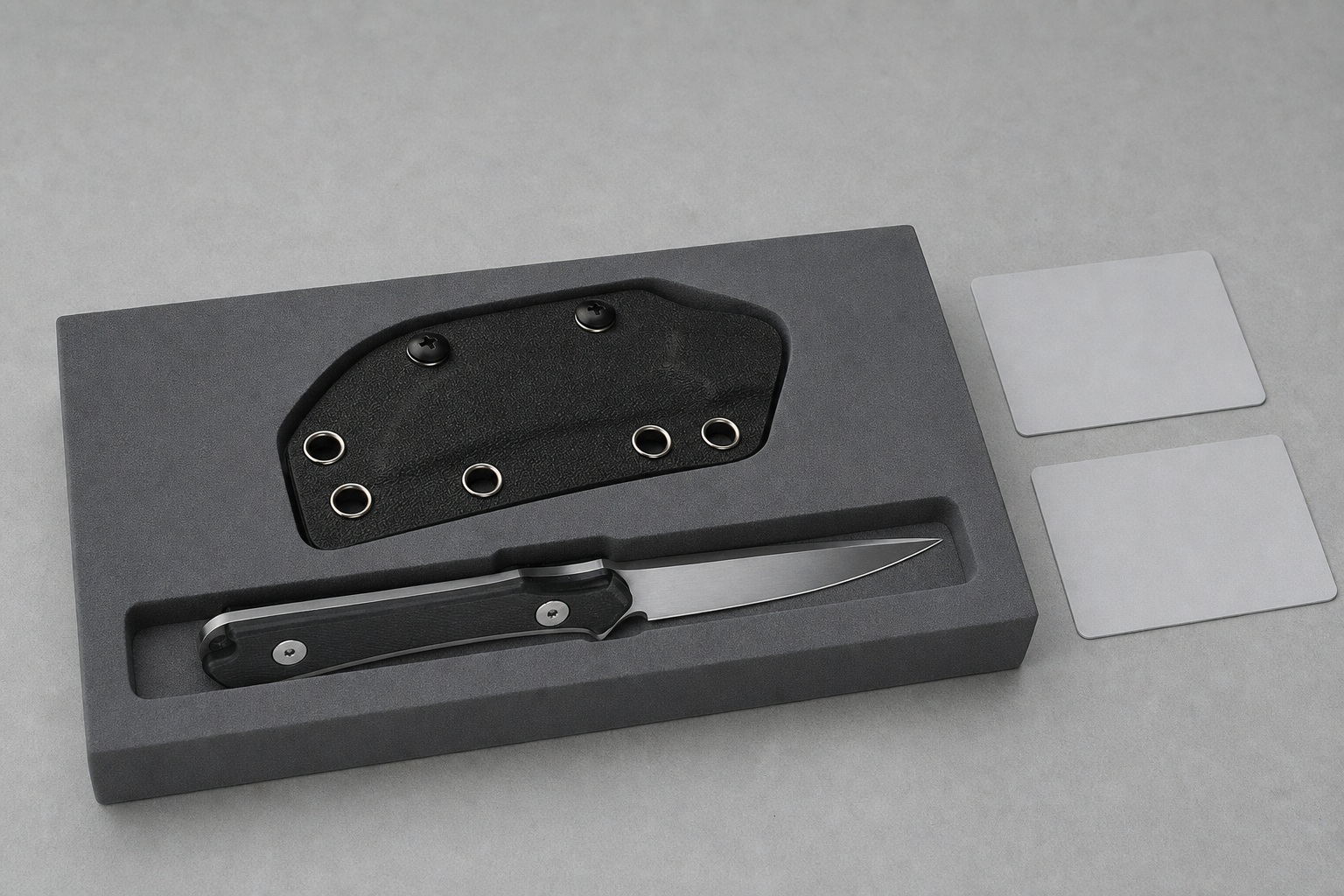
I Watch the Tip and the Message
A spear or leaf-shaped blade can feel balanced in hand. It can give the user a centered point, smooth cutting line, and a clean outdoor-tool appearance. Some brands like this direction because it feels less ordinary than a drop point but still practical.
The buyer should decide how strong the tip needs to be. A fine point may support detail work, but it may not be ideal for users who abuse knives. A stronger, broader point may suit general outdoor utility better. The grind matters too. If the edge is too thick near the point, the knife may not cut well. If it is too thin, durability may suffer.
Messaging matters. A spear-like shape can be perceived differently in different markets. For a responsible bushcraft product, I prefer utility language around carving, camp prep, cord cutting, and outdoor tasks. I avoid weapon-oriented copy. The knife should be sold as a tool.
This blade direction can work well for a higher-design outdoor brand, especially when paired with a clean handle and sheath. It can also work in a gift set if the profile looks refined. The buyer should test the finished knife with real camp tasks before approving production.
| Spear or leaf factor | Buyer decision | Practical result |
|---|---|---|
| Point position | Centered or slightly dropped | Control and perception |
| Tip thickness | Fine or stronger point | Detail work vs durability |
| Edge curve | Smooth slicing line | Camp utility feel |
| Brand style | Classic or modern outdoor | Retail identity |
When Is a Clip Point Useful in an Outdoor Knife Line?
A clip point can offer fine tip control. It can also look more aggressive if the design is not balanced.
A clip point can be useful in an outdoor knife line when the buyer needs a finer tip for controlled cuts, camp tasks, and traditional styling. It requires careful tip-strength and messaging review.
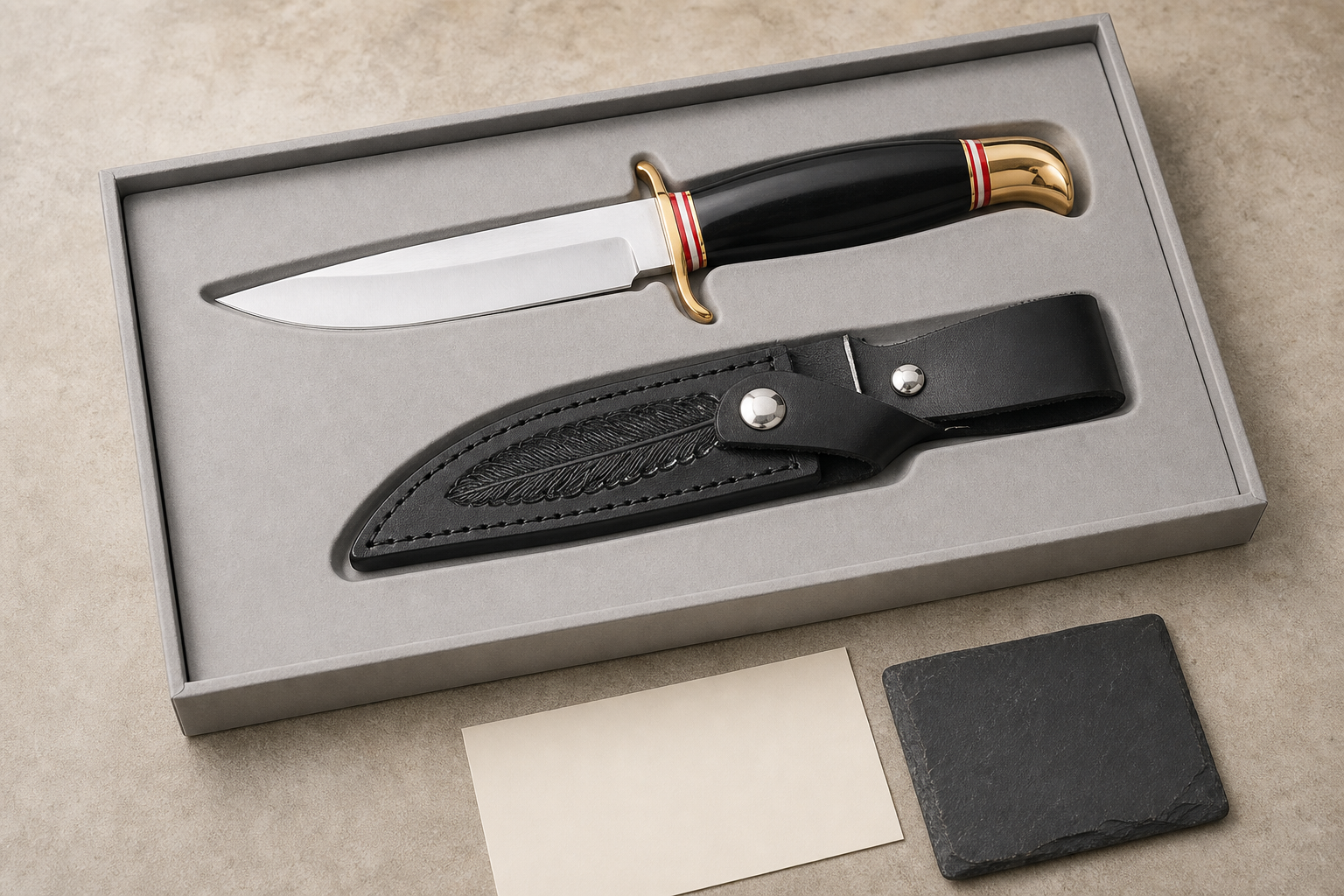
I Use Clip Points Carefully
The clip point can be practical when the user needs tip access. It can help with notching, detail cuts, light camp tasks, and traditional outdoor styling. It can also create a recognizable product silhouette. That makes it attractive for brands that want something more classic or more distinctive than a drop point.
The risk is tip strength and perception. A long, fine clip can be fragile if users pry or twist. It may also push the product toward a more aggressive look. For a responsible bushcraft line, I prefer a practical clip point, not an exaggerated one. The edge should still serve daily outdoor tasks.
If the buyer sells to experienced users, a clip point can make sense. If the buyer sells to beginners, the product page and instruction card should set clear limits. The knife is for cutting tasks, not prying or chopping. If the buyer expects heavier wood processing, a saw, axe, or stronger blade direction may be more appropriate.
QC should focus on the tip, grind symmetry, heat treatment, and sheath fit. A fine tip can be damaged during packaging or transit if the sheath or insert is poor. The buyer should inspect the product as a complete kit, not only as a blade.
| Clip point factor | Benefit | Control point |
|---|---|---|
| Fine tip | Detail control | Avoid prying claims |
| Classic profile | Strong retail identity | Keep styling responsible |
| Long clip | Distinctive shape | Check tip durability |
| Sheath fit | Tip protection | Test package movement |
When Do Sheepsfoot or Wharncliffe Directions Make Sense?
Some buyers overlook these profiles because they look less traditional for bushcraft. That can be a missed opportunity.
Sheepsfoot or wharncliffe directions make sense when buyers want controlled slicing, safer tip behavior, utility-focused styling, and a product that feels practical for camp tasks, cord cutting, and general outdoor kits.
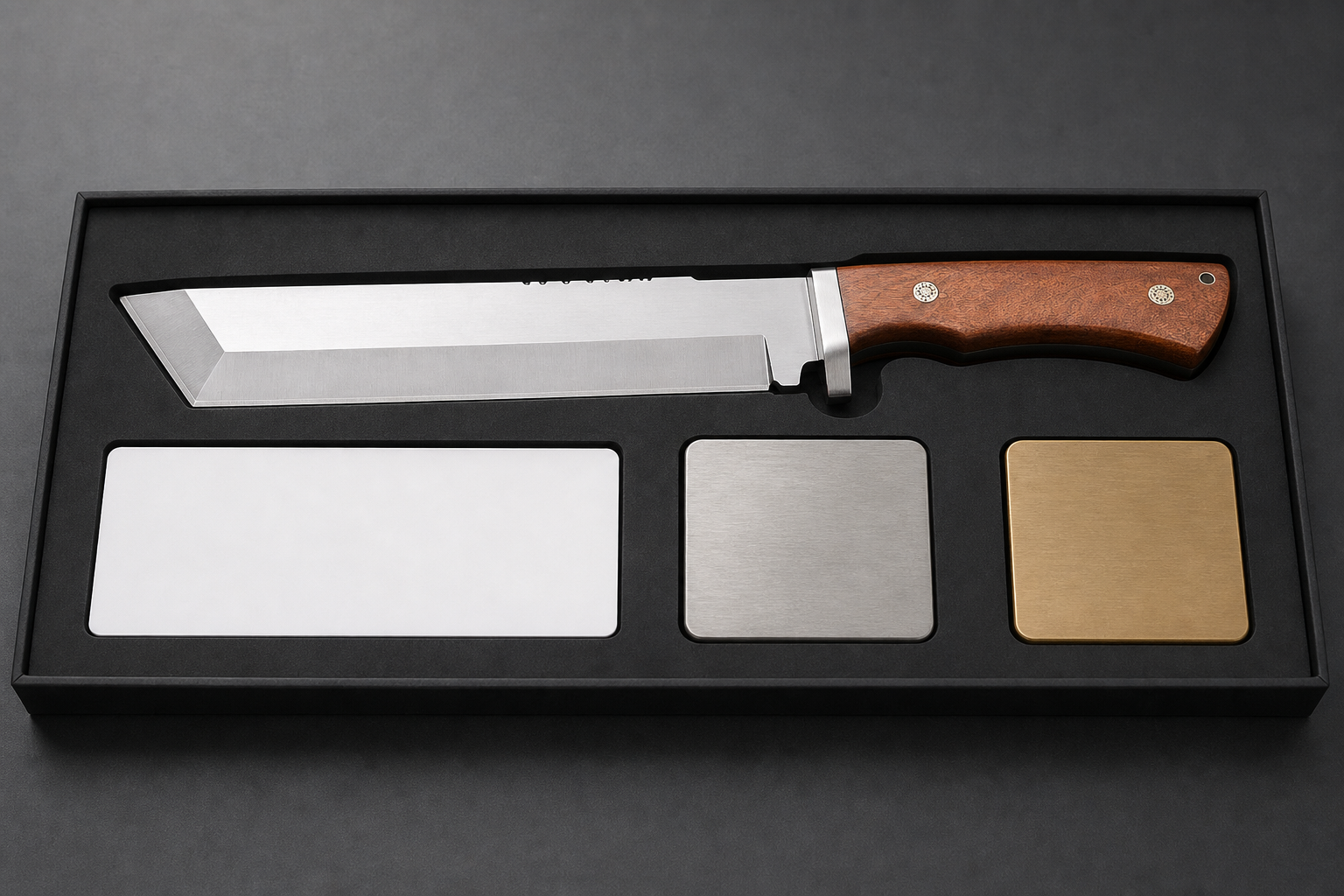
I Like These Profiles for Utility-Led Products
Sheepsfoot and wharncliffe-style blades are often associated with controlled cuts. They can work well when the buyer wants a practical camp utility tool rather than a classic pointed bushcraft knife. The straight or gently curved edge can support cord cutting, package opening, controlled slicing, and some craft tasks.
The tip behavior is different. These profiles usually reduce the emphasis on a sharp projecting point. That can make the product feel less aggressive. It can also help brands that want a calmer utility story. For some markets, this is a commercial advantage.
The limitation is outdoor versatility. A sheepsfoot or wharncliffe blade may not feel as natural for certain camp prep tasks that need belly or a fine point. The buyer should test the intended tasks instead of assuming the profile is better or worse. The use case should decide.
For OEM/ODM buyers, these profiles can create useful differentiation. Many outdoor knife lines look similar. A utility-led blade shape can stand out if the handle, sheath, packaging, and copy all support the direction. I would not call it a universal bushcraft answer, but I would consider it for compact outdoor utility kits, work-camp tools, and private label EDC-outdoor crossover products.
| Utility profile | Best fit | Buyer caution |
|---|---|---|
| Sheepsfoot | Safer controlled cuts | Less pointed-tip function |
| Wharncliffe | Straight-edge utility | Needs task testing |
| Compact fixed blade | Camp and work utility | Handle comfort matters |
| Outdoor EDC crossover | Differentiated product line | Avoid overclaiming bushcraft range |
How Should Edge Grind and Thickness Match the Blade Type?
Blade profile is only half the story. A good shape can perform poorly if the grind is wrong.
Edge grind and thickness should match the blade type, target user, steel, heat treatment, and task. Scandi-style, flat, convex, and saber directions each create different cutting and production tradeoffs.
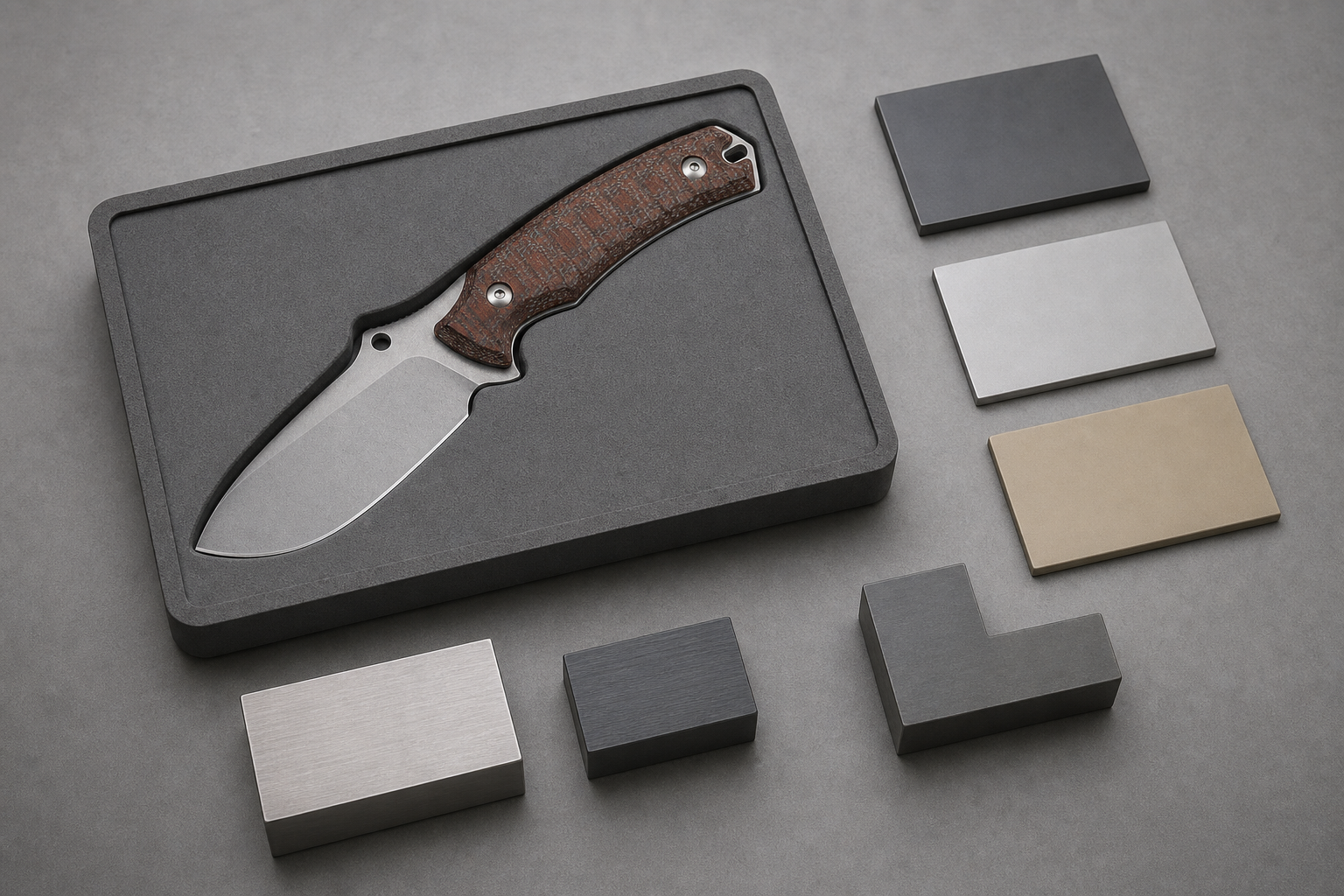
I Match the Grind to the Customer's Skill Level
The edge grind changes how the knife cuts, sharpens, and survives misuse. A Scandi-style grind is often associated with controlled wood work and easy angle reference for sharpening. A flat grind can offer good slicing performance. A convex direction can add strength and smooth cutting feel, but it may need more skill to sharpen. A saber grind can support strength, but it may slice less efficiently if too thick.
The buyer should not choose a grind because it sounds premium. The user skill level matters. Beginners may appreciate an edge that is easy to maintain. Experienced users may accept more specialized geometry. Production cost also matters. Some grinds require more controlled labor, fixtures, or finishing time.
Thickness should match the tool role. A thick spine can create confidence for heavier outdoor use, but it may make carving and food prep worse. A thin blade can slice well, but it may not fit a heavier bushcraft story. Heat treatment ties everything together. If the hardness and toughness are not right, a good grind will still disappoint.
For B2B buyers, I like to approve edge geometry on physical samples. Photos do not show how a knife bites into wood or cuts cord. Sample testing should match the product claims.
| Grind direction | Strength | Buyer note |
|---|---|---|
| Scandi-style | Wood control and easy angle | Needs clean bevel consistency |
| Flat grind | Slicing and general utility | Watch edge thickness |
| Convex direction | Strength and smooth cutting | Sharpening expectation matters |
| Saber grind | Robust outdoor feel | Avoid too much wedge effect |
What Sheath, Handle, and Packaging Details Support Bushcraft Use?
A bushcraft knife is not only a blade. The handle, sheath, and package decide whether the product feels trustworthy.
Sheath, handle, and packaging details should support grip, safe carry, edge protection, moisture control, belt or pack attachment, instruction clarity, and retail presentation for the target market.
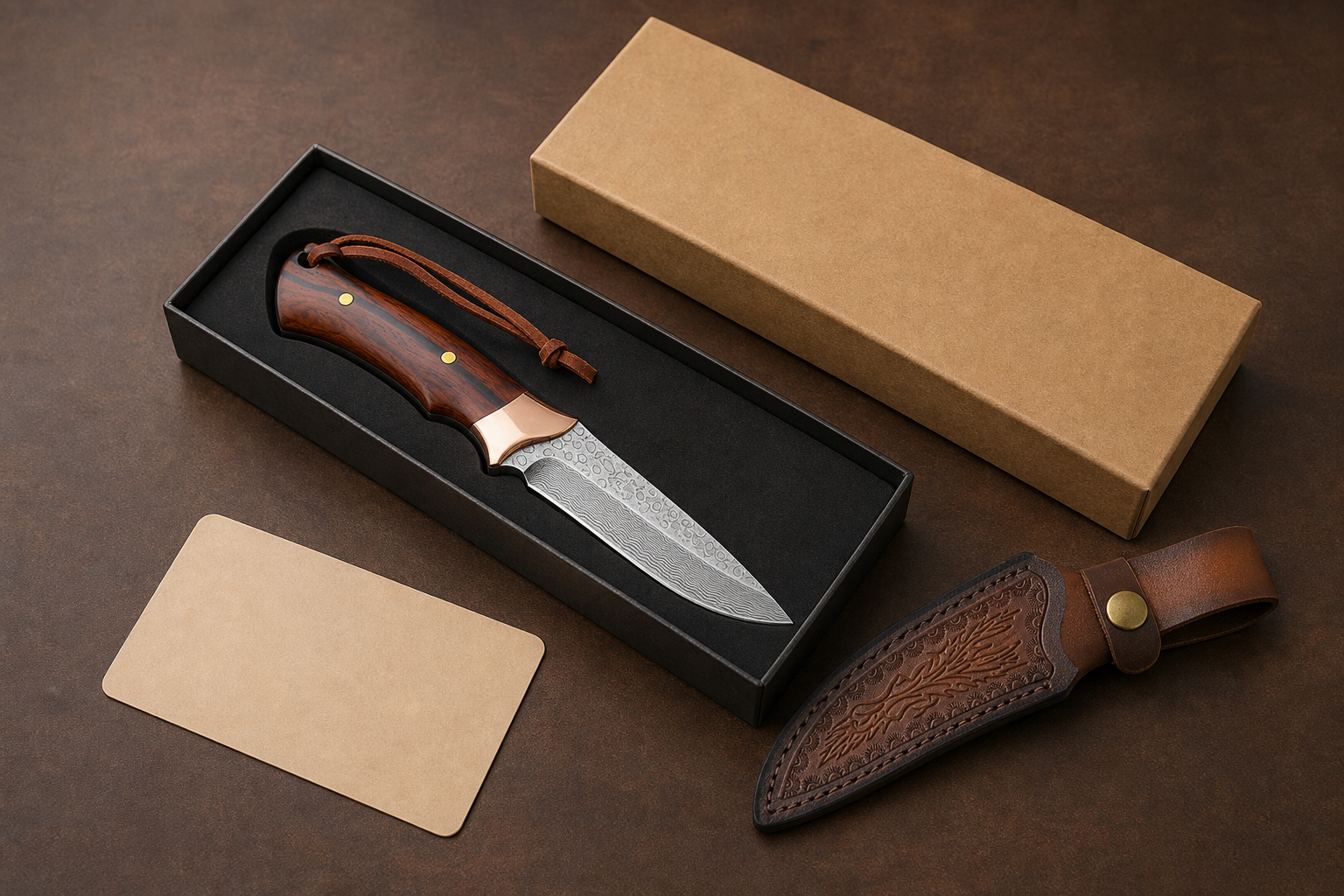
I Treat the Complete Kit as the Product
A bushcraft knife with a poor sheath is not ready for retail. The sheath should retain the knife, protect the edge, and allow safe carry. It should not scratch the blade badly, cut stitching, loosen too quickly, or expose the tip. Leather-style, polymer, nylon, and hybrid sheaths all have different cost and positioning. The buyer should choose based on market and use, not only appearance.
Handle design matters just as much. A bushcraft knife may be used for longer periods than a simple pocket knife. Hot spots, sharp edges, poor texture, and slippery surfaces can ruin the experience. Materials such as G10, micarta, wood, rubberized polymer, and layered composites all create different feelings. The handle should match wet or dry use, price range, and brand identity.
Packaging should also set responsible expectations. It can include care guidance, safe storage, local-law reminders, and outdoor-use boundaries. The TSA's knife guidance is useful for travel-related reminders because knives are not allowed in carry-on bags and should be secured in checked bags. The package should not imply the knife can be carried anywhere.
For outdoor claims, I also keep Leave No Trace thinking in mind. The knife can support camp tasks, but the product should not encourage damaging live trees or ignoring fire restrictions.
| Kit detail | What to inspect | Why it matters |
|---|---|---|
| Sheath retention | Hold and release | Safe carry |
| Handle texture | Grip and comfort | Long-use control |
| Packaging insert | Edge and tip protection | Retail safety |
| Instruction card | Care and safe use | Lower misuse risk |
What Quality Checks Should Buyers Require Before Shipment?
A bushcraft knife may face harder use than a normal gift knife. QC should not stop at surface appearance.
Buyers should require checks for blade geometry, heat treatment, edge finish, tip condition, handle fit, sheath retention, corrosion marks, logo placement, packaging protection, and batch consistency.
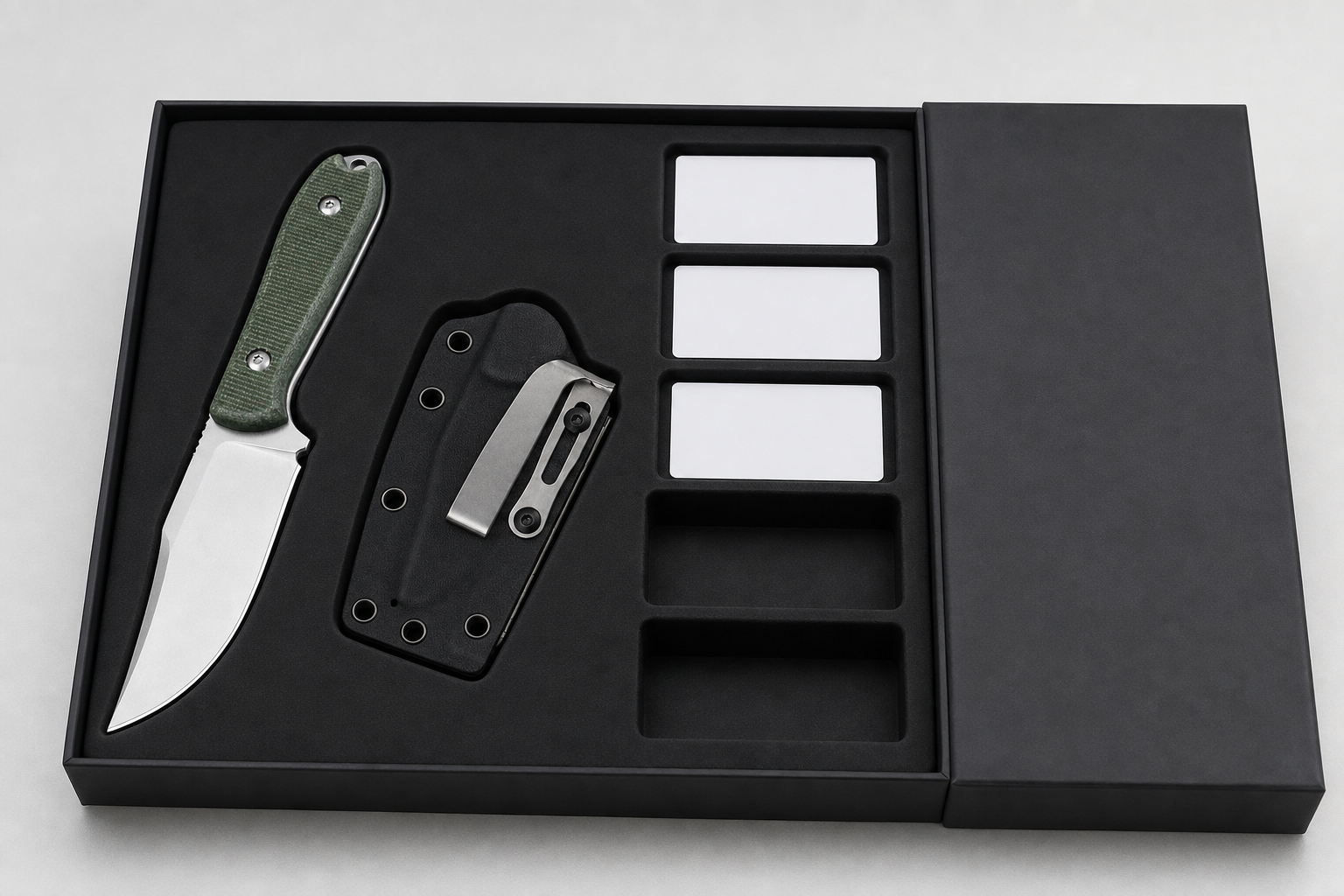
I Check Function Before Cosmetic Details
Quality control should match the product promise. If the knife is sold for bushcraft, the blade should be ground consistently. The edge should be even. The tip should be protected. The handle should be secure and comfortable. The sheath should retain the knife. The package should protect the tool in transit.
Heat treatment is especially important. A blade that is too soft may lose edge performance quickly. A blade that is too brittle may chip under normal outdoor use. The buyer should define the steel and hardness target before production. If the buyer does not know the best steel, the supplier should recommend options based on target price, corrosion needs, and performance expectations.
OSHA's hand-tool rule states that employers are responsible for the safe condition of tools used by employees. This is not a consumer bushcraft knife standard, but the principle is useful for B2B buyers. A tool should be safe and serviceable before it reaches the user. Final inspection should look at function, not only polish.
The buyer should also maintain approved samples and defect examples. This helps repeat orders stay consistent. It also helps avoid arguments about acceptable scratches, sheath fit, handle color, or edge finish.
| QC area | What to inspect | Buyer benefit |
|---|---|---|
| Blade geometry | Profile, grind, edge | Better performance |
| Heat treatment | Hardness and toughness target | Stable edge life |
| Handle and sheath | Fit, comfort, retention | Safer use |
| Packaging | Transit protection | Fewer retail issues |
How Can Vast State Support Bushcraft Knife Blade Development?
A strong bushcraft line needs practical engineering and market thinking. A blade shape alone is not enough.
Vast State can support bushcraft knife blade development through use-case review, blade type suggestions, steel and heat treatment planning, handle and sheath customization, prototype development, QC standards, packaging, and production follow-up.
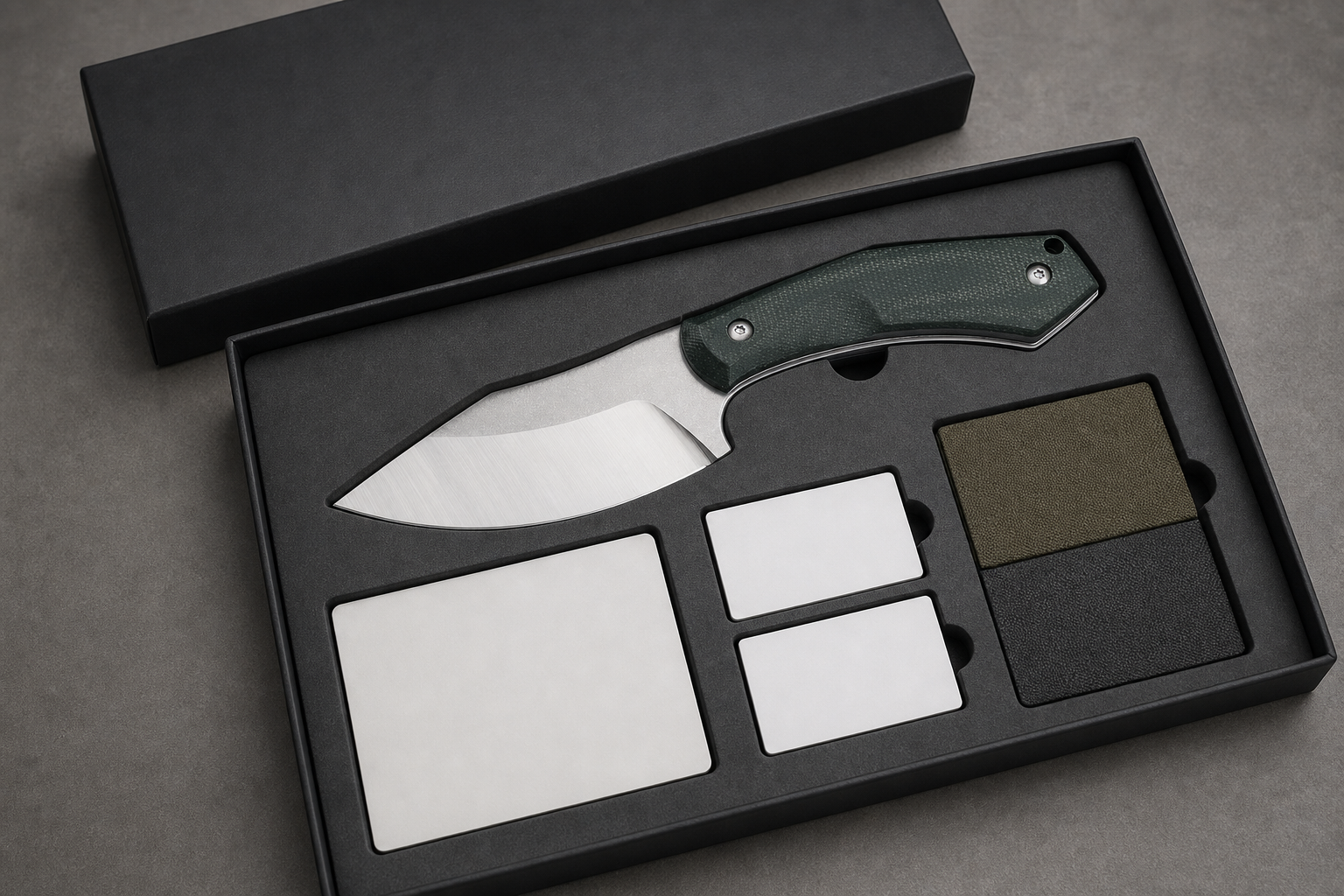
I Help Buyers Match Blade Type to Market Reality
Vast State is an OEM/ODM knife and outdoor tool manufacturer based in Yangjiang, China. We support international B2B customers with folding knives, fixed blade knives, pocket knives, camping tools, rescue tools, and multi-tools. For bushcraft knife projects, I focus on the connection between use case, blade type, material, and production stability.
Some buyers already have a finished design. Some have only a rough idea, target price, and market direction. In both cases, I help turn the idea into a manufacturable product. We can review blade profile, grind, steel, hardness target, handle material, tang structure, sheath type, packaging, logo method, and QC standards.
Our goal is not only to make a knife that looks outdoor-ready. The product must fit the target user, price range, sales channel, and brand position. A beginner bushcraft kit needs a different knife from a premium outdoor line. A compact carving knife needs a different edge from a heavier camp utility knife. A private label gift set needs packaging and finish consistency.
I prefer practical development. We approve samples, test the important details, define the limits, and follow production carefully. That is how a bushcraft knife becomes more than a shape on paper.
| Support area | What we help with | Buyer value |
|---|---|---|
| Use-case review | Carving, camp utility, kit role | Better blade direction |
| Engineering input | Profile, grind, steel, handle | Fewer sample problems |
| Customization | Sheath, logo, finish, packaging | Stronger brand fit |
| QC follow-up | Function and appearance checks | More stable production |
Turn your idea into a quote-ready knife project.
Share your drawing, sample photo, target quantity, market, and packaging needs. Vast State will review manufacturability and prepare OEM/ODM options.
Conclusion
I choose bushcraft blade types by matching real outdoor tasks, responsible positioning, edge geometry, handle comfort, sheath design, and production stability.
Source Notes
- National Park Service Leave No Trace guidance supports responsible outdoor wording around campfires, firewood, and local restrictions.
- USDA Forest Service Handtools for Trail Work supports the broader principle that outdoor hand tools should match real field tasks.
- TSA knife guidance supports travel-related packaging and carry warnings for knife products.
- OSHA hand-tool guidance supports the general principle that tools should be safe and serviceable before use.