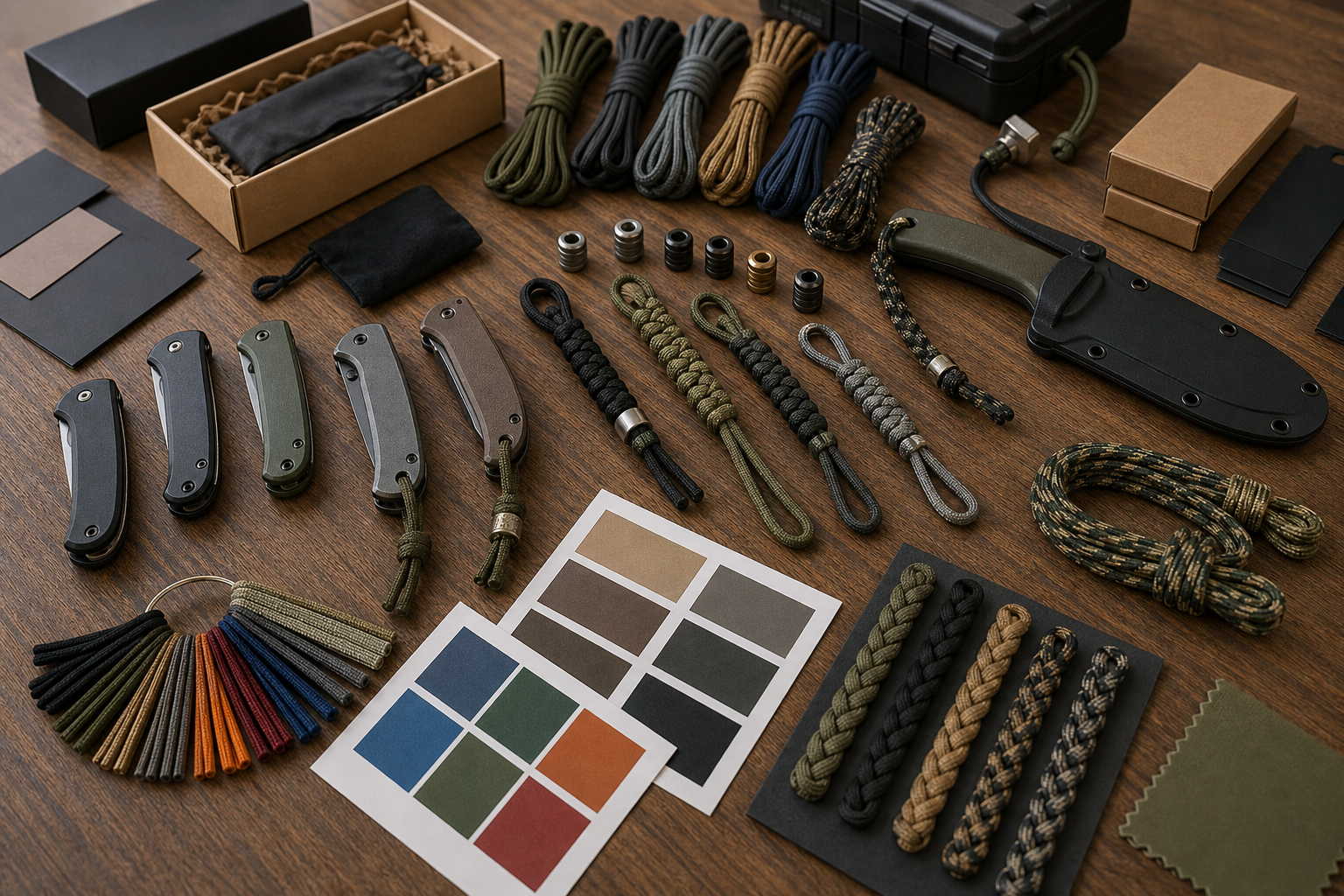
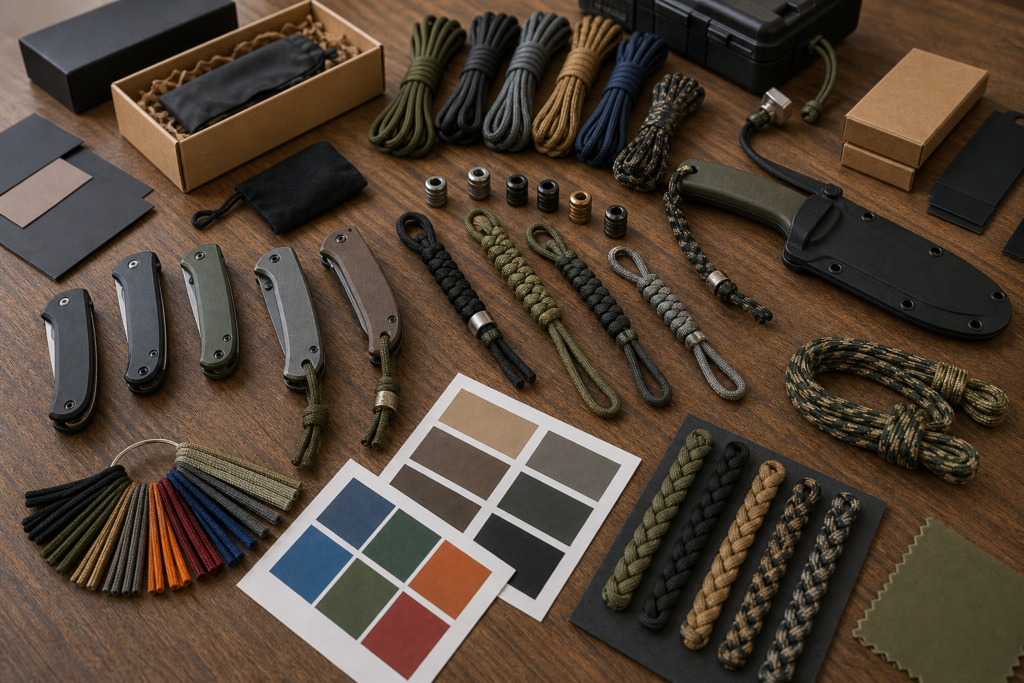
A paracord lanyard looks simple. But weak cord, poor knots, or unclear positioning can make a customized knife feel cheap.
Buyers can use paracord lanyards to customize knife and outdoor tool lines by defining cord specification, color, braid style, attachment point, safety limits, packaging, branding, and QC before production. The lanyard should improve carry, grip, and product identity without creating false performance claims.
Quick buyer brief:
- Answer: Treat paracord customization as a product system, not only a decorative knot.
- Buyer context: This helps knife brands, outdoor brands, importers, wholesalers, distributors, private label buyers, and sourcing managers.
- Key checks: Cord construction, colorfastness, diameter, braid pattern, end finishing, attachment hole, edge clearance, packaging, warning language, batch consistency, and whether any strength claim is actually tested.
Have a knife or multi-tool project in mind?
Send your sketch, CAD file, sample photo, or product idea. Vast State can review manufacturability, suggest materials, estimate MOQ, and prepare a quote for your OEM/ODM project.
When a buyer asks about adding paracord to a knife, I do not see it as a small decoration only. A lanyard can change how the user carries, pulls, grips, stores, and remembers the product. It can also support color themes, private label packaging, outdoor kits, and gift sets. But the details matter. A loose knot, rough burned end, weak cord, or oversized lanyard hole can make the whole product feel careless. For B2B buyers, paracord customization should be planned with the knife, sheath, package, and brand position together.
Why Should Buyers Treat Paracord as More Than Decoration?
Paracord can add value fast. But if it is only added at the end, it may not match the knife or the customer.
Buyers should treat paracord as more than decoration because it affects carry, grip, color identity, packaging, user perception, and safety wording. It should be designed into the product from the beginning.
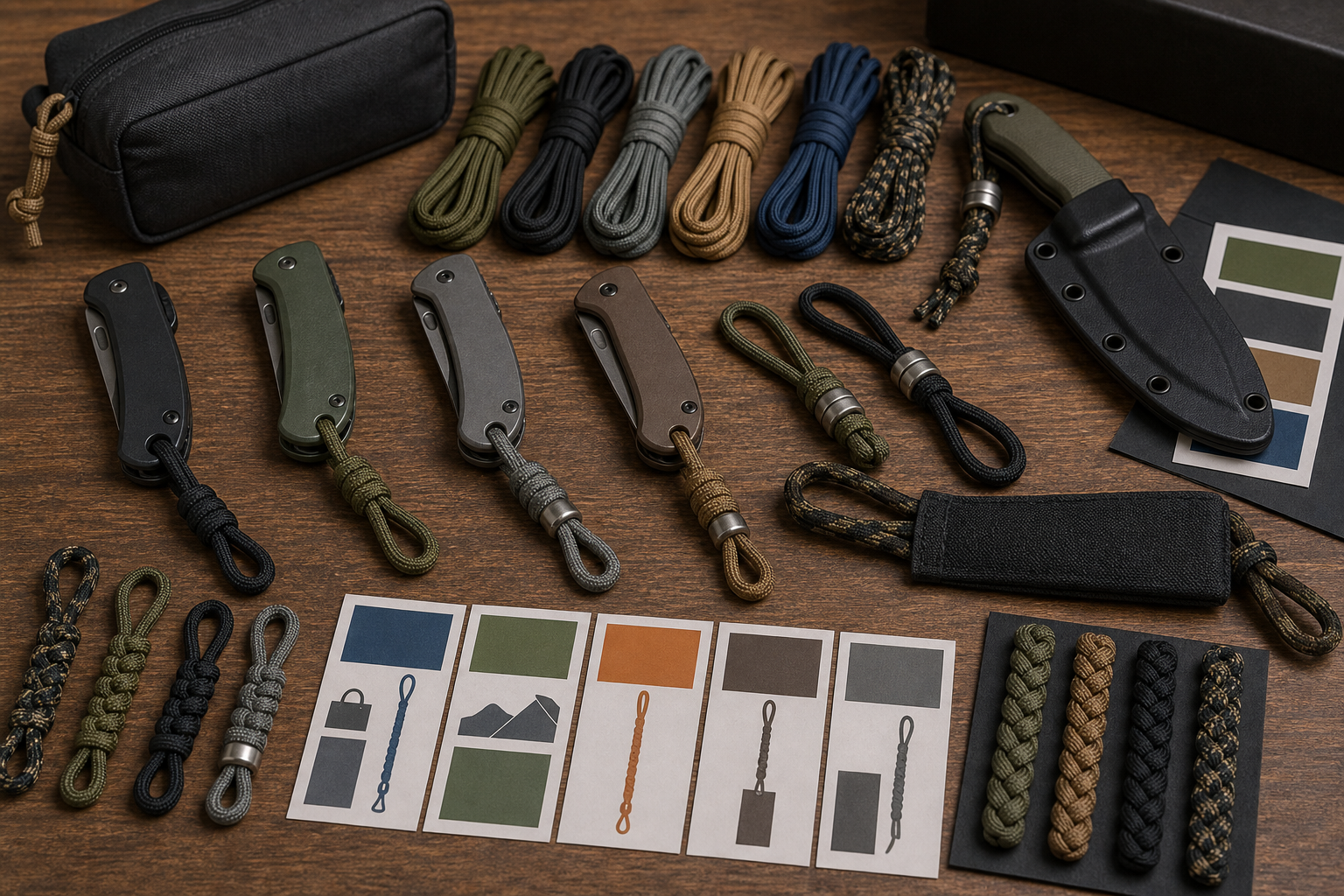
I Connect the Lanyard to the Product Role
A paracord lanyard can help a compact knife feel easier to pull from a pocket, pouch, or sheath. It can add a brand color. It can make a small tool easier to locate in a bag. It can also make a gift set feel more complete. These are practical benefits, not just visual details.
But the buyer should decide what the lanyard is supposed to do. If the goal is grip extension for a small fixed blade, the attachment point and braid length matter. If the goal is color branding for a folding knife, the cord color and finish consistency matter. If the goal is an outdoor kit, the lanyard should match the sheath, pouch, packaging, and other tools. If the goal is a low-cost promotional item, the buyer should control cost without making the product look unfinished.
The lanyard should never create a false claim. A knife lanyard is not automatically a rescue rope, climbing cord, tow line, or life-safety component. Unless the buyer has tested and certified the cord for a specific purpose, the product page should avoid load-bearing claims. This protects the brand and keeps the product honest.
| Lanyard role | Product benefit | Buyer caution |
|---|---|---|
| Pull tab | Easier pocket or sheath access | Keep length controlled |
| Grip extension | Better hold on compact tools | Test hand comfort |
| Color accent | Stronger brand identity | Control dye consistency |
| Kit detail | More complete retail package | Match packaging and tool style |
OEM/ODM RFQ Checklist
Prepare these details to help Vast State review your project and provide a more accurate quotation.
| RFQ Field | What to Prepare |
|---|---|
| Project type | OEM from drawing / ODM private label / wholesale catalog |
| Product category | Folding knife / fixed blade / multi-tool / outdoor tool |
| Design status | Idea / sketch / 2D drawing / 3D CAD / physical sample |
| Target price | Ex-factory target price or retail price range |
| MOQ expectation | 500 / 1,000 / 3,000 / 5,000+ pcs |
| Logo method | Laser engraving / etching / printing / molded logo |
| Packaging | Standard packaging / custom retail box / Amazon-ready |
| Market | USA / EU / Japan / Korea / Middle East / other |
| Compliance needs | Buyer-specified testing / documentation / labeling |
| Timeline | Sample deadline / mass production deadline |
What Cord Specification Should Buyers Define?
The word paracord is often used loosely. Without a clear specification, buyers may receive different cord quality across orders.
Buyers should define cord specification by confirming material, construction, diameter, color, inner strands, surface feel, end finishing, test requirement, and whether the cord must follow a known paracord specification.
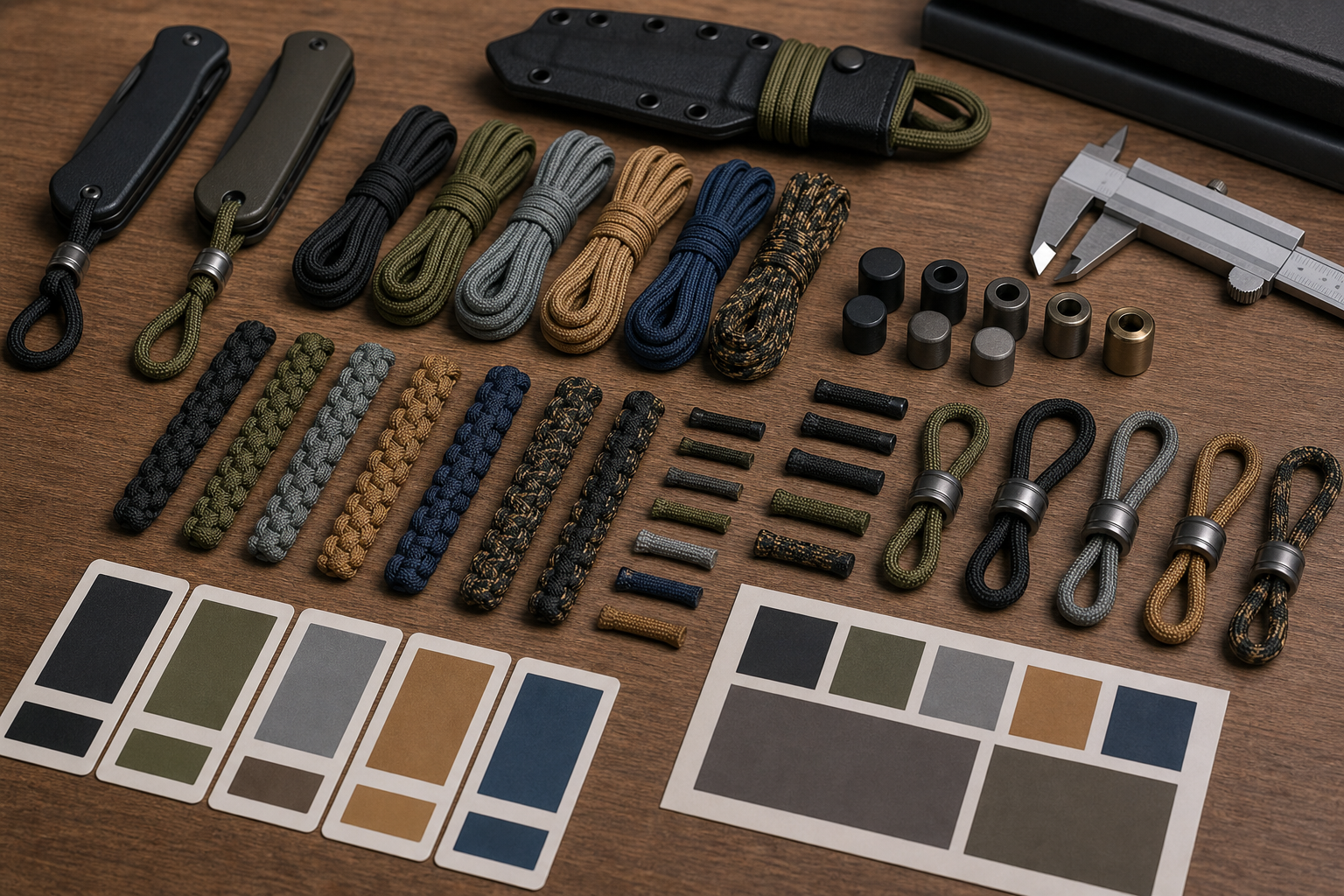
I Ask for Construction Before Color
Many buyers start with color. I prefer to start with cord construction. The Parachute Industry Association's PIA-C-5040 specification covers braided nylon cord, and it is often referenced when people talk about military-style parachute cord. For commercial knife lanyards, the buyer may not need full military specification cord, but the buyer should still define what quality level is required.
Cord can vary in material, diameter, sheath texture, inner strand count, firmness, colorfastness, and end finishing. These differences affect how the lanyard feels and how it looks after use. A soft cord may feel nice but collapse in a bead or knot. A stiff cord may hold shape but feel rough. A cheap dyed cord may look good on day one but fade or bleed. A poor burned end can feel sharp or messy.
If the buyer wants to claim strength, the buyer should require test evidence. If the buyer only wants decorative utility, the wording should say that. A knife lanyard can be useful without becoming a load-rated safety product. Clear specification keeps the product honest and makes repeat orders easier.
For OEM/ODM work, I recommend keeping approved cord samples. A photo does not show hand feel, stiffness, or knot quality well enough.
| Cord detail | What to define | Why it matters |
|---|---|---|
| Material | Nylon or other cord type | Feel, durability, and finish |
| Diameter | Actual measured size | Fits hole, bead, and knot |
| Color | Solid, mixed, reflective | Brand and batch consistency |
| Construction | Sheath and inner structure | Strength and hand feel |
How Should the Lanyard Fit the Knife or Tool Structure?
A lanyard that does not fit the tool becomes annoying. It may rub the edge, block the clip, or feel oversized.
The lanyard should fit the knife or tool structure by matching lanyard hole size, handle shape, clip position, sheath design, tool weight, and user hand size. The attachment should not affect safe opening, closing, or storage.
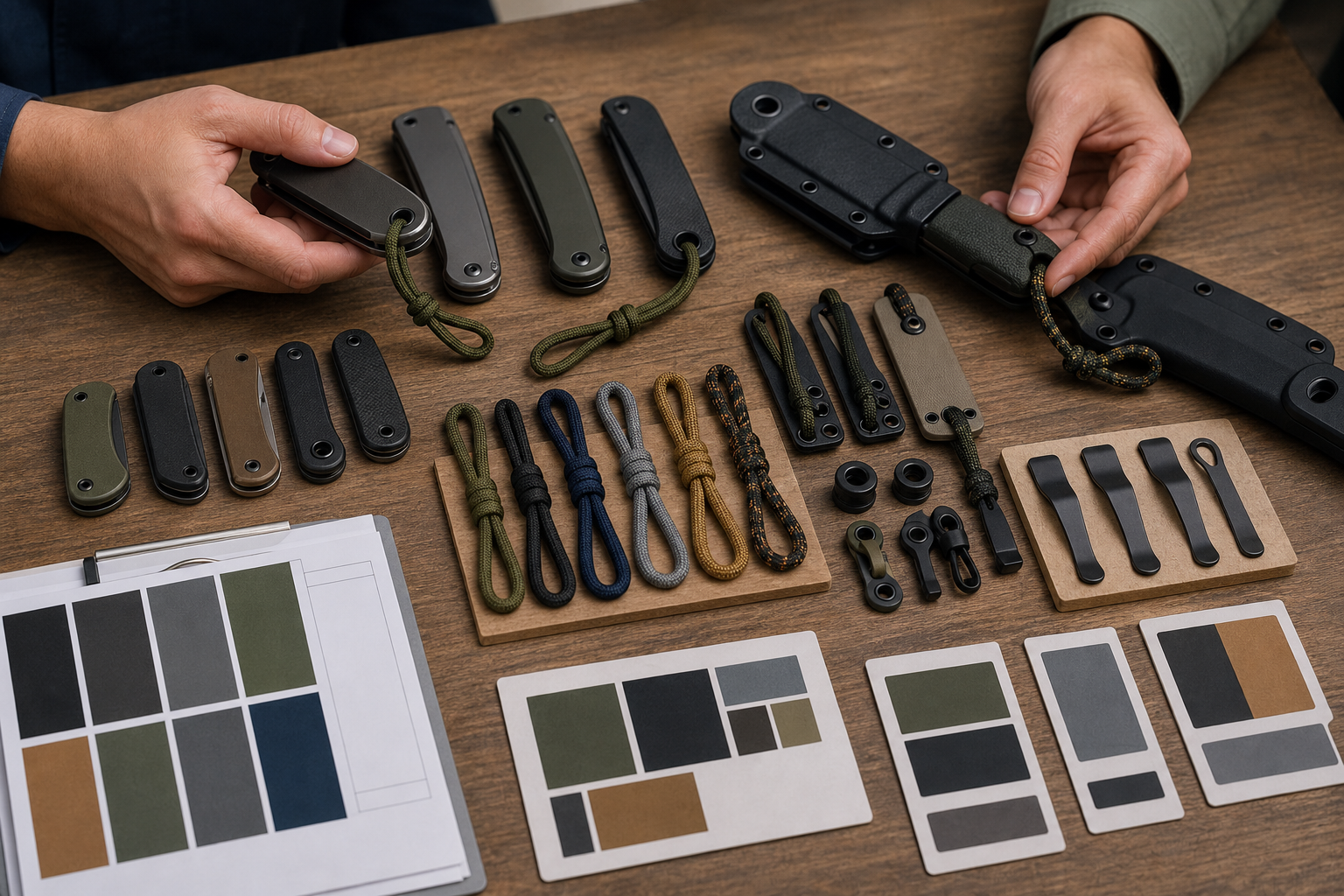
I Check Clearance Before Styling
The lanyard hole should be planned early. If the hole is too small, the cord is hard to install. If it is too large, it can weaken the handle area or look unbalanced. If the hole position is wrong, the lanyard may interfere with the pocket clip, lock access, sheath, or grip.
For folding knives, I check whether the lanyard affects pocket carry, clip access, and closing safety. The lanyard should not pull the knife into a poor angle or catch on the blade path. For fixed blades, I check whether the lanyard helps draw the knife from the sheath and whether it stays clear of the edge. For multi-tools or camping tools, I check whether the cord blocks moving parts or adds unwanted bulk.
The tool weight also matters. A heavy tool may need a thicker, stronger-looking lanyard. A small EDC knife may need a shorter and cleaner pull tab. A rescue or outdoor tool may need high-visibility color. A gift set may need a neat decorative braid. The same braid style does not fit every product.
The buyer should approve the tool and lanyard together. If the lanyard is approved separately, the final kit may feel mismatched.
| Structure detail | What to check | Practical result |
|---|---|---|
| Lanyard hole | Diameter and edge finish | Easier installation |
| Hole position | Clip, lock, sheath clearance | Safer daily use |
| Cord length | Pocket and grip fit | Less snagging |
| Tool weight | Cord size and braid style | Better balance |
Which Braid Style and Color Direction Fit Different Product Lines?
A nice braid can improve perceived value. A bad color choice can make the same knife look less professional.
Braid style and color should fit the product line, target user, brand palette, packaging, and price range. Simple, repeatable braids usually work better for mass production than complex handmade styles.
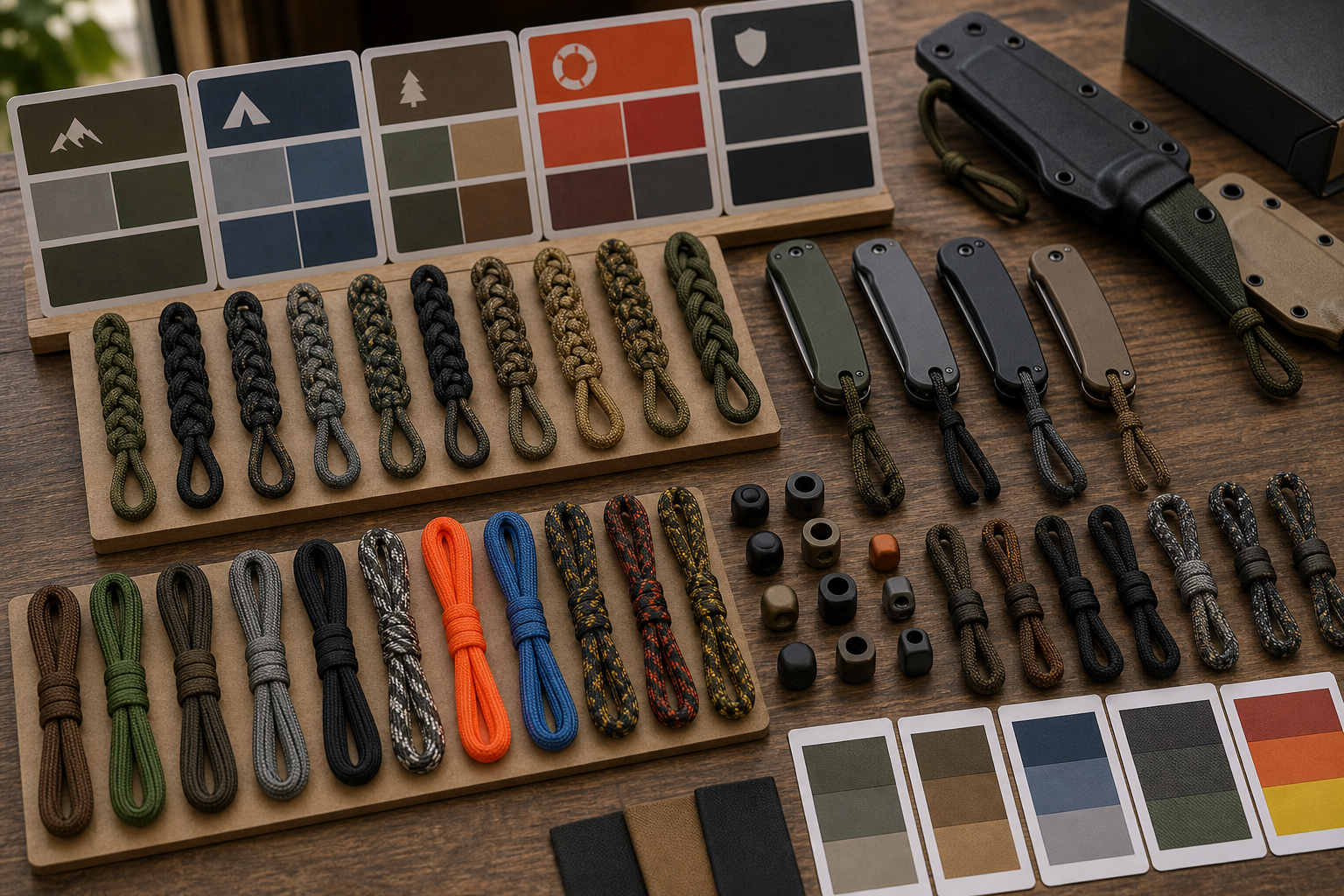
I Choose Repeatability Over Complexity
Some braid patterns look great in a close-up photo but are slow or inconsistent in production. For B2B orders, the buyer should think about repeatability. A simple snake knot, cobra-style braid, loop pull, or bead-and-knot design may be easier to control than a complicated pattern with many steps. The more complex the braid, the more labor time and defect risk it may create.
Color should match the product line. Outdoor products often use black, olive, tan, orange, gray, or mixed earth tones. Rescue tools may use brighter colors for visibility. Gift sets may use cleaner and more premium colors. Tactical-looking products may use darker colors, but buyers should avoid making the product story too aggressive if the sales channel prefers utility language.
Colorfastness matters. A lanyard that stains a light handle or packaging insert can cause returns. The buyer should test color transfer, especially for bright or dark cord. The package should also be checked after transit because cord can rub against handle finishes, coating, or printed inserts.
Branding can be subtle. A small bead, matching color, or coordinated package insert can say more than a large logo. The goal is to make the knife feel intentional, not overloaded.
| Product line | Useful color direction | Braid suggestion |
|---|---|---|
| EDC utility | Black, gray, muted tones | Short pull tab |
| Outdoor camping | Olive, tan, orange | Loop or simple braid |
| Rescue tool | High visibility colors | Secure loop with clear warning |
| Gift set | Clean premium colors | Neat bead-and-knot detail |
What Packaging and Safety Wording Should Buyers Add?
Paracord can invite misuse if the package is vague. The user may assume the cord is rated for any task.
Packaging should explain that the paracord lanyard is for carry, grip, identification, or accessory use unless tested otherwise. It should also include knife safety, storage, travel, and local-law reminders.
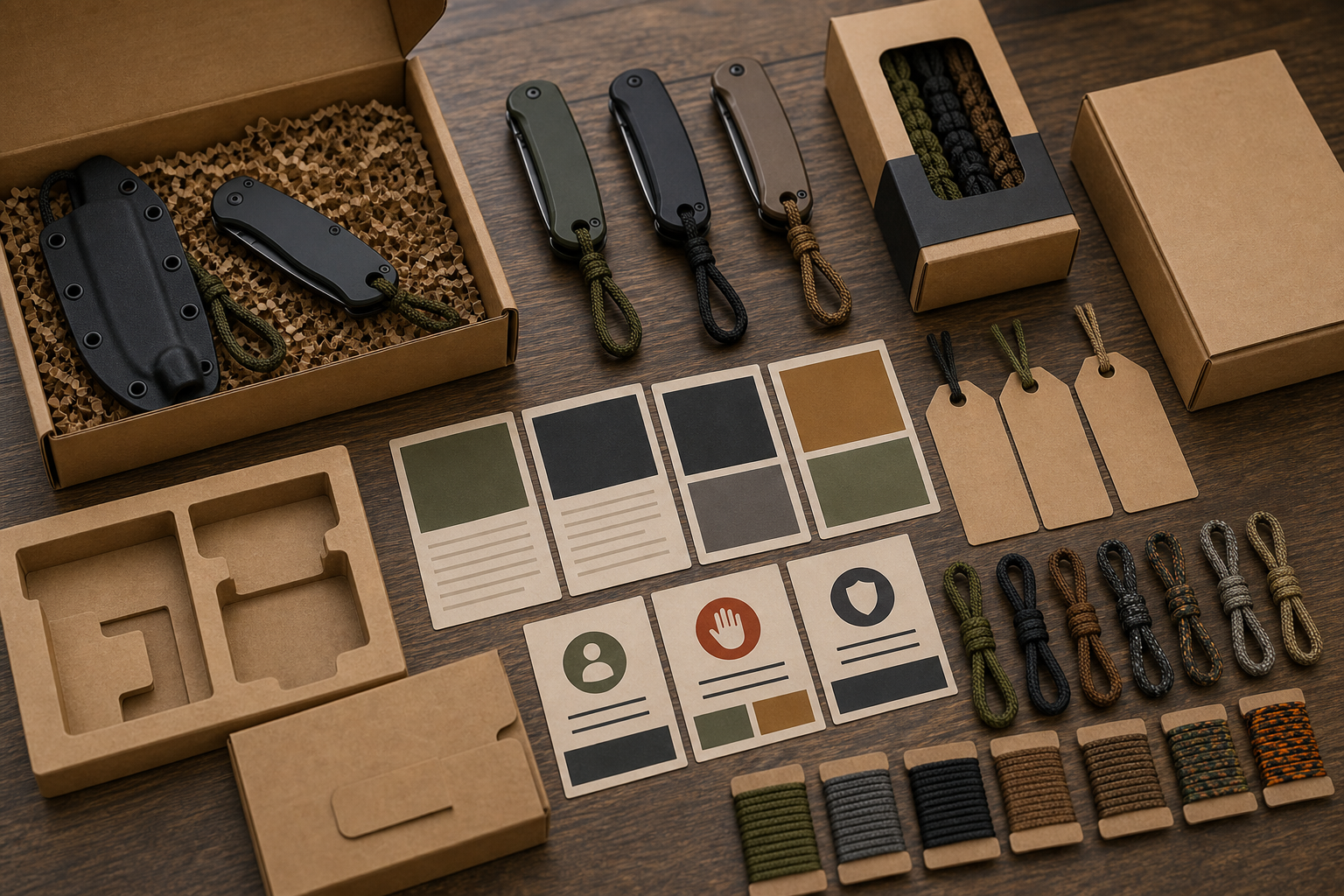
I Keep Claims Narrow and Clear
Packaging should set the right expectation. If the lanyard is decorative or for pull assistance, say so. If it is not load-rated, do not imply it can support body weight, towing, rescue, climbing, or emergency anchoring. If the buyer wants emergency-use positioning, the cord and finished lanyard should be tested and the claim should be reviewed carefully.
The package should also include knife safety reminders. The user should know how to store the knife, keep the blade closed or sheathed, keep it away from children, check local laws, and avoid restricted places. Travel matters too. The TSA's knife guidance says knives are not allowed in carry-on bags and should be securely wrapped or sheathed in checked bags. A paracord lanyard does not change that.
Documentation should match the target market. The CPSC's General Certificate of Conformity guidance reminds importers and manufacturers that certain general-use products subject to applicable safety rules require certification based on testing or a reasonable testing program. A paracord knife kit is not automatically one simple category, so buyers should review applicability.
The wording should be practical, not scary. A clean warning card can protect the user while keeping the product premium.
| Packaging element | Purpose | Buyer check |
|---|---|---|
| Instruction card | Explains safe use | Clear language |
| Claim boundary | Prevents misuse | No untested strength claims |
| Box insert | Prevents rubbing | Transit test |
| Travel note | Sets carry expectations | Check target market |
How Should Buyers Control Quality in Paracord Lanyard Production?
Small lanyard defects are easy to miss. But customers notice loose knots, uneven length, and rough ends immediately.
Buyers should control paracord lanyard quality by checking cord diameter, braid length, knot tightness, end finishing, color consistency, pull strength if claimed, attachment fit, packaging rub marks, and batch samples.
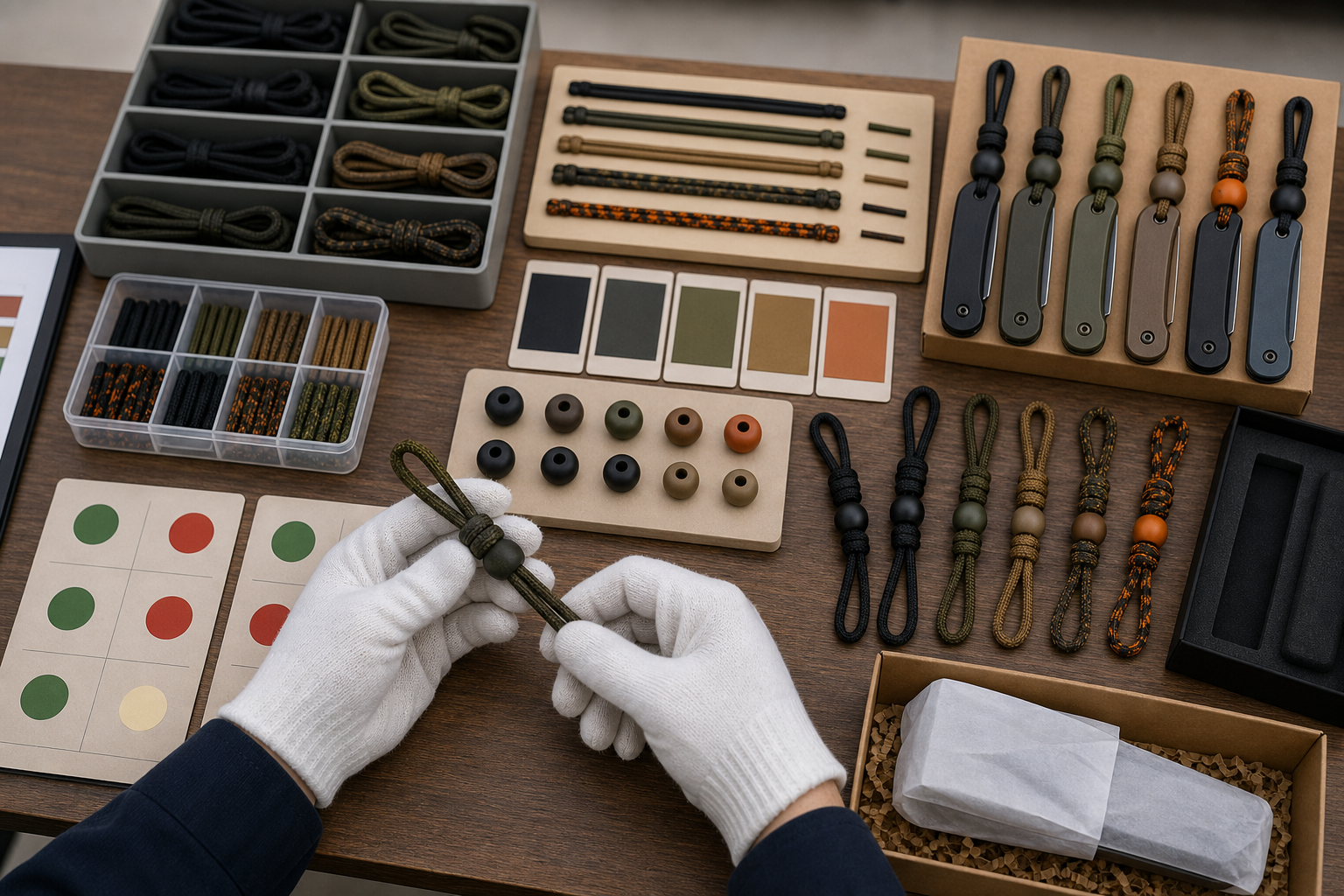
I Inspect the Details That Make It Feel Finished
Paracord quality control should be simple and visible. The lanyard length should stay within tolerance. Knots should be tight but not distorted. Ends should be sealed neatly without sharp melted points. Color should match the approved sample. The cord should pass through the lanyard hole without fraying. If a bead is used, it should not crack, rattle, or scratch the handle.
The finished knife should be checked as a complete product. The lanyard should not interfere with blade opening, closing, lock release, sheath insertion, pocket clip use, or packaging. A lanyard that looks fine by itself may fail when attached to the tool. This is why final inspection should include the complete kit.
If the buyer requests a strength claim, the inspection plan must include the test method and acceptance level. Without testing, the product should not make strength claims. This is important because many consumers associate paracord with survival use. The buyer should not let that association create unsupported promises.
OSHA's hand-tool rule says employers are responsible for the safe condition of tools used by employees. This is workplace guidance, not a knife-lanyard standard, but the principle is useful. A tool and its accessory should be safe and serviceable before use.
| QC point | What to inspect | Why it matters |
|---|---|---|
| Cord size | Diameter and fit | Stable installation |
| Knot quality | Tightness and shape | Better perceived value |
| End finish | Burned or sealed ends | Comfort and appearance |
| Complete kit | Knife, sheath, package | Real customer experience |
How Can Paracord Support OEM/ODM Branding and Kit Design?
Paracord is small, but it can make a product line feel more coherent. Buyers should use it with intent.
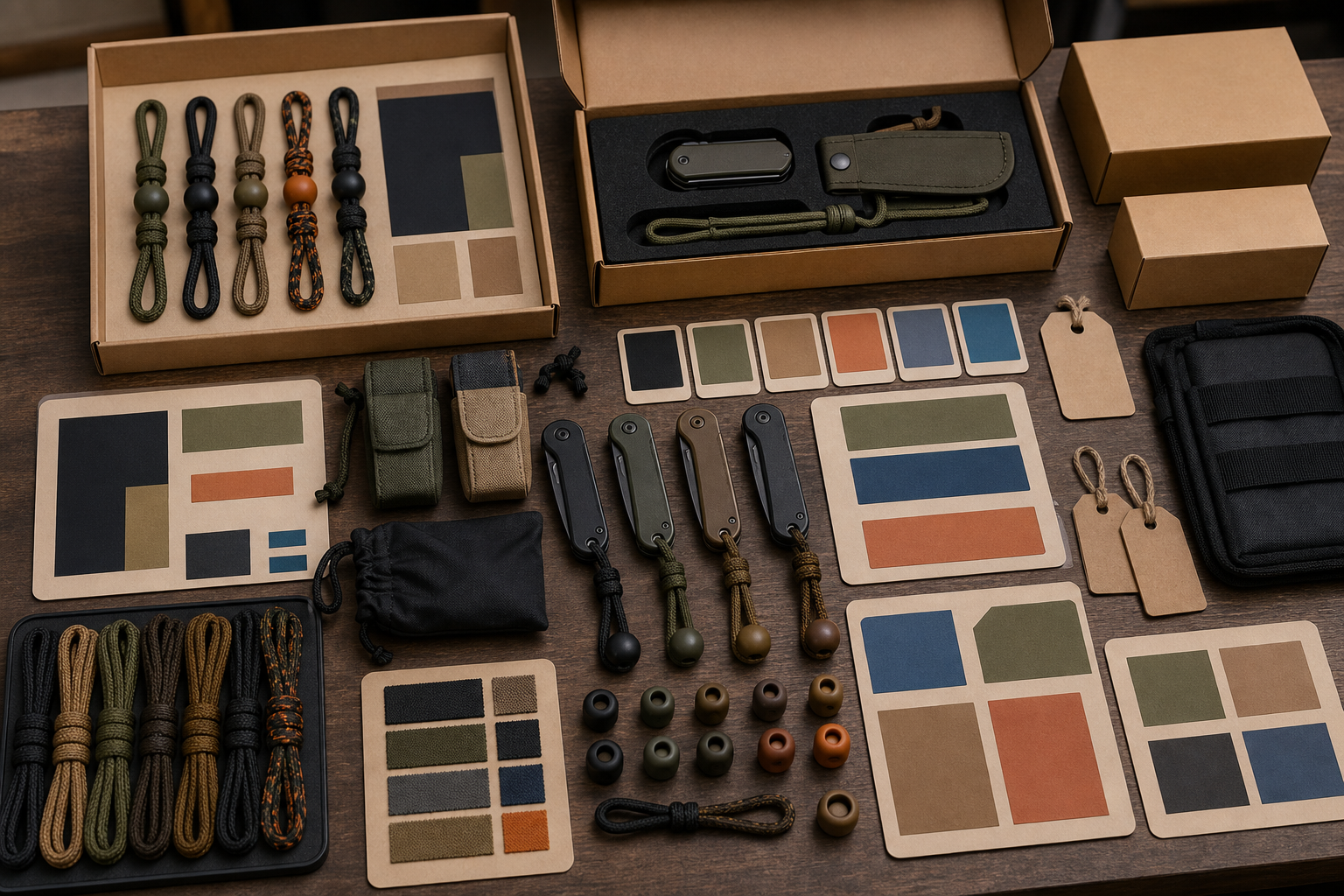
Paracord can support OEM/ODM branding through color matching, custom lanyards, beads, hang tags, sheath coordination, kit bundles, gift packaging, and consistent visual identity across knives and outdoor tools.
I Use Color and Texture to Connect the Line
Private label buyers often want customization that does not require expensive tooling. Paracord can help. A matched lanyard color can connect a folding knife with a fixed blade, camping tool, rescue tool, or gift set. A small bead can add brand personality. A cord wrap or pull tab can make a standard product feel more tailored.
The buyer should still control the design. Too many colors can make the product look cheap. Too many decorative parts can increase labor time and defects. A good paracord detail should feel useful and intentional. It should not distract from the knife's main function.
Kit design is a strong use case. A camping kit may include a knife, fire starter, whistle, saw, or small tool pouch. Paracord can connect the kit visually. A rescue tool kit may use high-visibility cord. A fishing or marine-oriented kit may need corrosion-resistant knife materials and easy-to-see cord colors. Each direction should match the buyer's market, not only the supplier's catalog.
For OEM/ODM work, paracord can be a flexible customization option. It can support lower MOQ customization compared with new molds, but it still needs clear specs and approved samples.
| Branding method | Benefit | Control point |
|---|---|---|
| Color matching | Stronger line identity | Batch color approval |
| Custom bead | Premium detail | Fit and scratch control |
| Kit coordination | Better retail story | Packaging layout |
| Lanyard variation | Flexible customization | Labor and QC time |
How Can Vast State Support Paracord Knife Customization?
Good customization needs practical production thinking. A nice sample is not enough if the details cannot repeat.
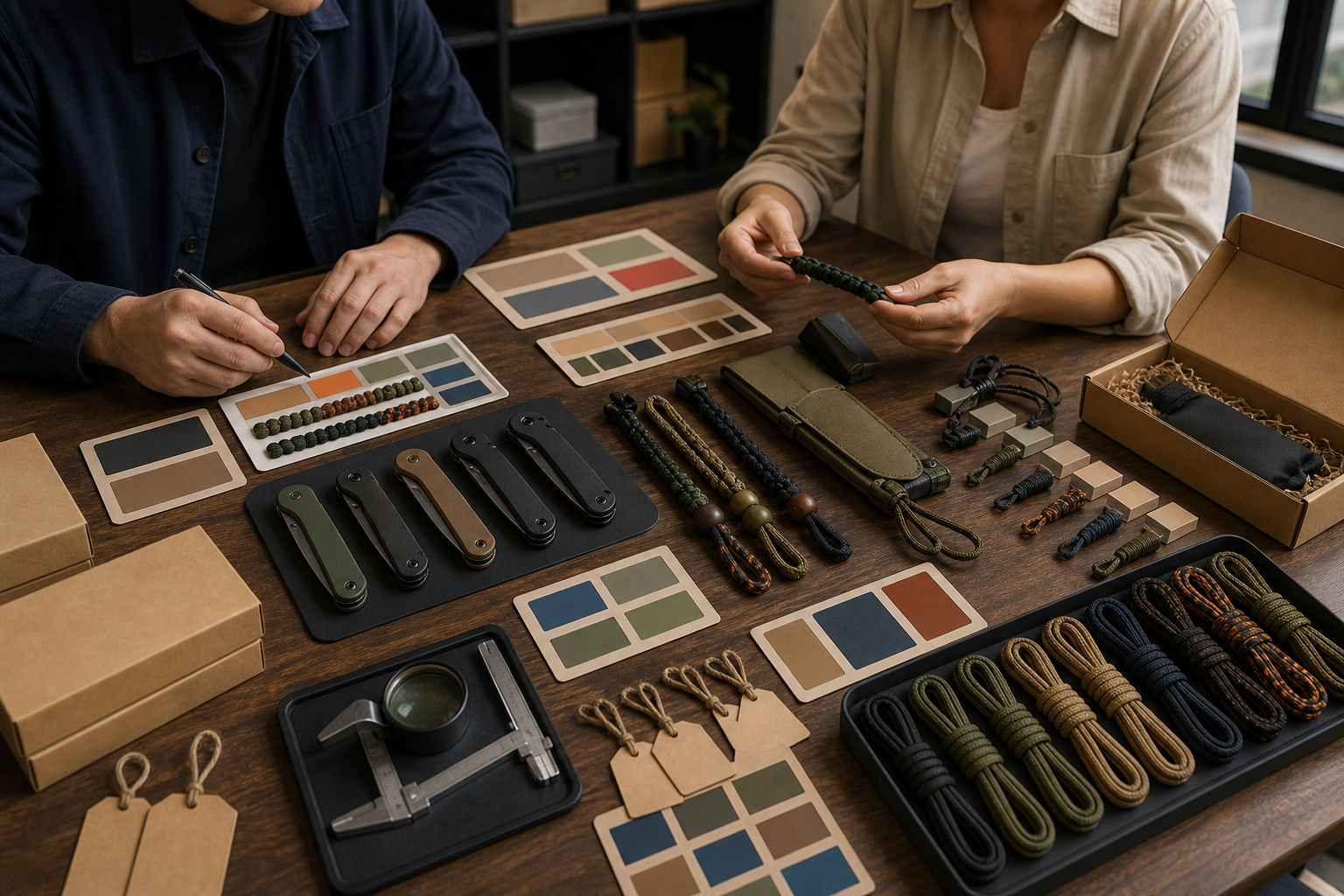
Vast State can support paracord knife customization through cord selection, lanyard design, knife and sheath structure review, color matching, packaging customization, sample development, QC standards, and production follow-up.
I Help Buyers Make the Detail Repeatable
Vast State is an OEM/ODM knife and outdoor tool manufacturer based in Yangjiang, China. We work with folding knives, fixed blade knives, pocket knives, camping tools, rescue tools, and multi-tools for international B2B customers. Paracord customization fits many of these products because it can add function, color, and brand identity without changing the whole tool.
When a customer asks for paracord, I first clarify the product goal. Is the lanyard a pull tab, grip extension, color accent, kit accessory, or retail gift detail? Then I check the knife or tool structure. The lanyard hole, handle edge, pocket clip, sheath, and packaging all need to work together.
After that, we can discuss cord type, diameter, color, braid style, bead option, end finishing, and packaging. We can also prepare samples for buyer approval. During production, QC should compare the finished lanyard with the approved sample, check installation, and inspect the complete kit.
Our goal is not to add random decoration. Our goal is to help customers build products that fit their target market, price range, and brand position. A good paracord detail should make the knife easier to use, easier to recognize, and easier to sell.
| Support area | What we help with | Buyer value |
|---|---|---|
| Cord selection | Material, diameter, color | Better specification |
| Structure review | Hole, sheath, clip, handle | Better product fit |
| Customization | Braid, bead, packaging | Stronger brand identity |
| QC follow-up | Length, knot, finish, batch | More stable repeat orders |
Turn your idea into a quote-ready knife project.
Share your drawing, sample photo, target quantity, market, and packaging needs. Vast State will review manufacturability and prepare OEM/ODM options.
Conclusion
I use paracord customization well when the cord, tool structure, packaging, safety wording, branding, and QC all work together.
Source Notes
- PIA-C-5040 supports the need to define braided nylon cord construction when buyers request paracord-style materials.
- TSA knife guidance supports travel-related warning language for knives with or without lanyards.
- CPSC GCC guidance supports early documentation review when applicable consumer product safety rules apply.
- OSHA hand-tool guidance supports the general principle that tools and accessories should be safe and serviceable before use.