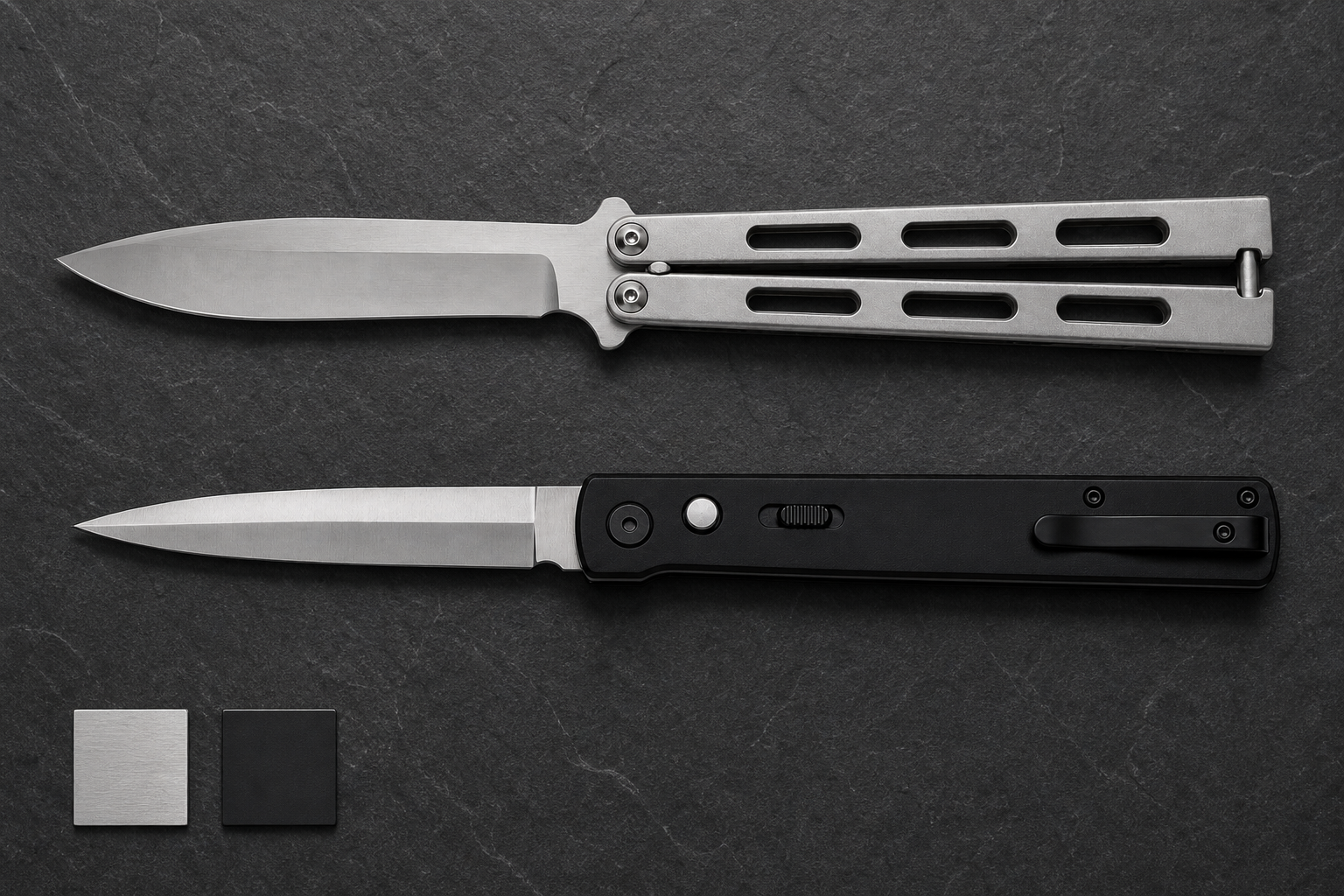
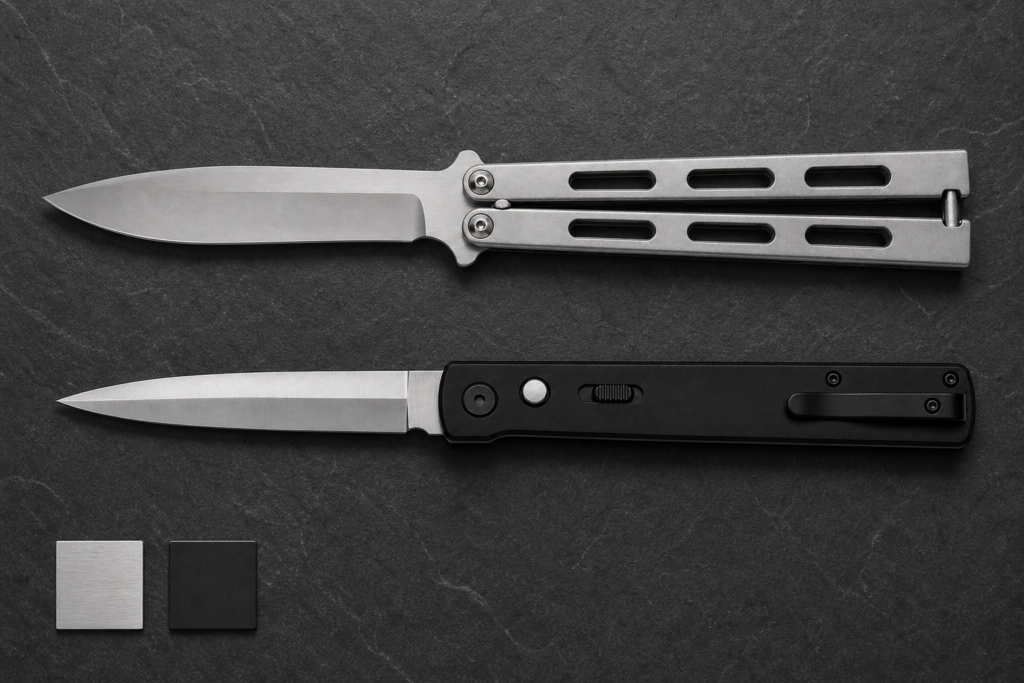
Knife names can sound simple. Product sourcing becomes risky when legal definitions, import rules, and retailer policies use different language.
For product sourcing, buyers should not assume a butterfly knife and a switchblade are treated differently just because users describe them differently. Classification depends on the mechanism, jurisdiction, import rule, product condition, documentation, and channel policy, so every such project needs legal and customs review before quoting.
Quick buyer brief:
- Answer: A butterfly knife may not be a switchblade in everyday language, but in some import or regulatory contexts butterfly, balisong, gravity, and automatic-opening knives can be treated as restricted categories. Buyers should review the exact mechanism and target market before sourcing.
- Buyer context: This guide is for knife brands, cutlery importers, distributors, private label buyers, marketplace sellers, compliance teams, and OEM/ODM sourcing managers.
- Key checks: Mechanism type, opening force, button or handle device, inertia or gravity opening, blade bias toward closure, import status, state or local rules, marketplace policy, age positioning, packaging claims, supplier declarations, customs broker review, and legal counsel sign-off.
Planning a private-label knife line for this market?
Use this article as an early planning reference, then prepare your target market, product category, labeling needs, and buyer-specified compliance requirements before production.
This article is not legal advice. It is a sourcing-risk framework. Knife laws and import rules change by country, state, city, platform, and product condition. A buyer should confirm the latest rules with counsel, customs broker, marketplace compliance team, or relevant authority before manufacturing, importing, selling, or shipping any knife in a restricted mechanism category.
The practical sourcing lesson is simple: do not let the supplier's product name decide the compliance answer. A product called "butterfly," "balisong," "trainer," "gravity," "automatic," "spring," or "folding" still needs a mechanism review.
Why Is This Question Risky for Buyers?
Common product names do not always match legal definitions.
This question is risky because a knife can be described one way in marketing, classified another way by customs, and restricted differently by local law, retailer policy, or shipping channel.
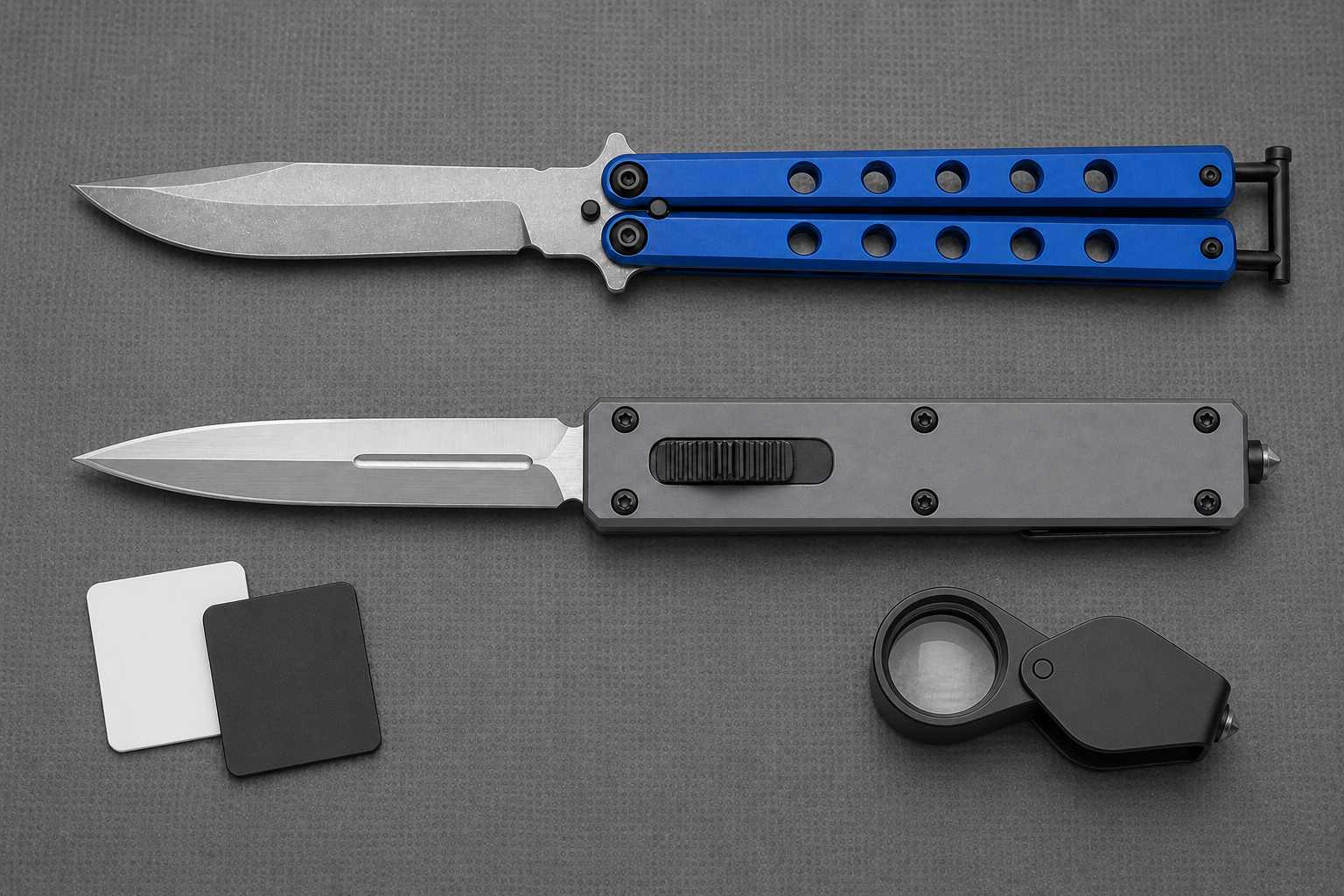
I Do Not Let the Product Name Decide the Classification
In consumer language, a butterfly knife is often described by its two-handle rotating construction. A switchblade is often described as an automatic-opening knife. That everyday distinction can be useful for conversation, but it is not enough for sourcing.
The U.S. Code definition in 15 U.S.C. 1241 defines a switchblade knife by automatic opening through a button or other device in the handle, or by operation of inertia, gravity, or both. That means the compliance question is not only the product name. The opening method matters.
U.S. Customs and Border Protection also warns travelers that switchblade knives and other spring-loaded knives are prohibited for import and may be subject to seizure, while noting that local laws still matter. The CBP travel guidance page is a useful reminder that federal clearance is not the only issue.
For B2B buyers, the risk is practical:
- A supplier may use casual product names.
- A buyer may rely on a catalog title.
- A marketplace may use stricter rules than customs.
- A state or city may treat the product differently.
- A shipping carrier may refuse certain categories.
- A customs entry may need mechanism documentation.
What Should Buyers Check Before Asking for a Quote?
The RFQ should not start until the mechanism is understood.
Before asking for a quote, buyers should identify whether the knife opens by button, spring, gravity, inertia, wrist motion, assisted mechanism, two-handle rotation, manual thumb action, or two-hand opening.
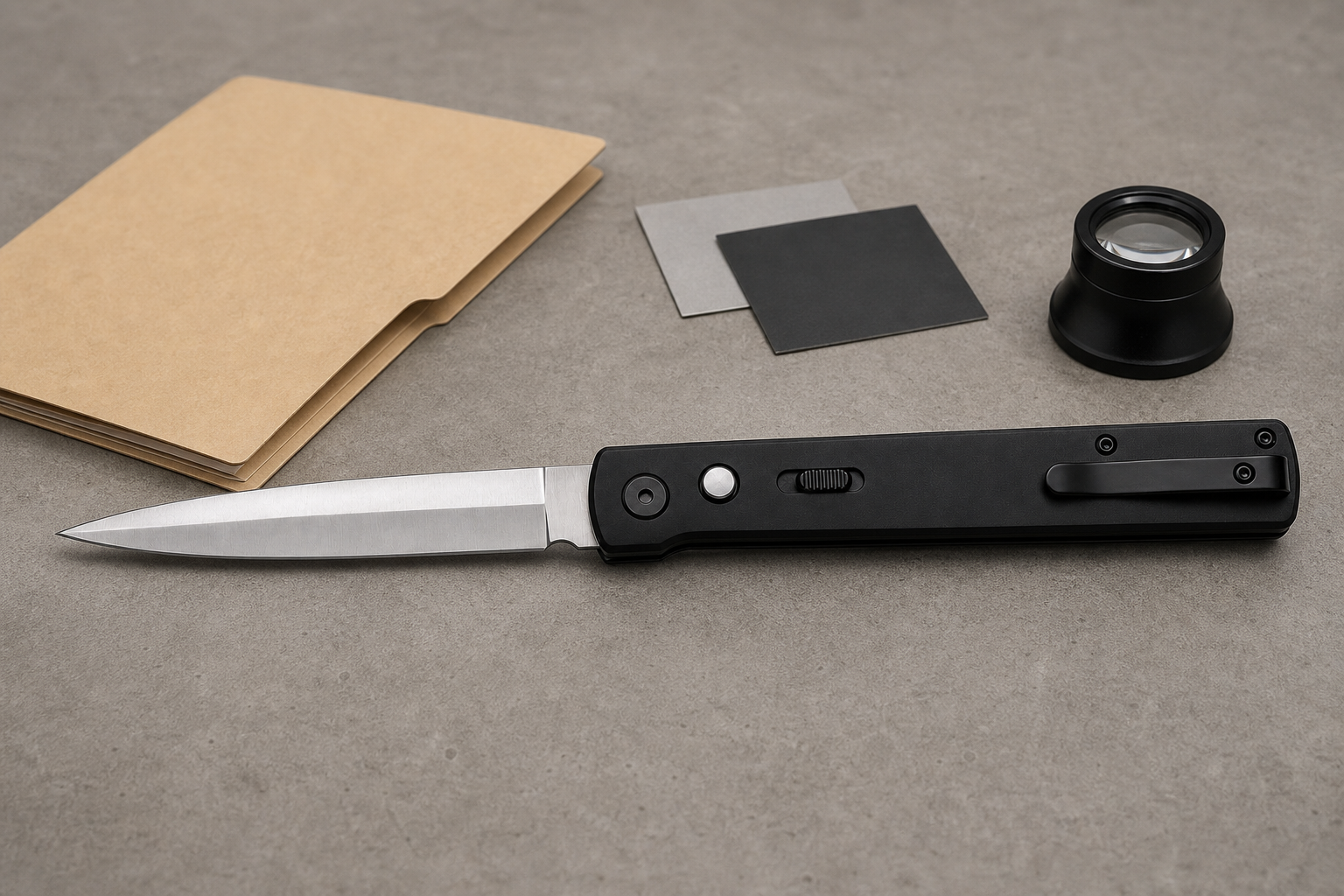
I Ask for Mechanism Facts, Not Sales Terms
The buyer should ask the supplier for factual mechanism information. Do not ask, "Is it legal?" The supplier may not know the buyer's target market. Ask how the blade opens, how it stays closed, how it locks, how it is assembled, and whether the product can be altered easily into a different opening mechanism.
Useful RFQ questions:
- Does the blade open automatically by a button or device in the handle?
- Does the blade open by inertia, gravity, or wrist movement?
- Is there a spring, detent, or bias-toward-closure mechanism?
- Does the blade require manual pressure on the blade or thumb feature?
- Is the product a training tool, live blade, unsharpened sample, kit, handle-only part, or complete knife?
- Can the product be converted with ordinary tools?
- What documents can the supplier provide about mechanism and construction?
The buyer should also request videos or controlled sample demonstrations for internal compliance review. The goal is not to teach use. The goal is to understand product classification before money is spent on tooling, packaging, or import paperwork.
How Do U.S. Federal and Import Rules Affect Classification?
Federal and import rules may not answer every state or platform question.
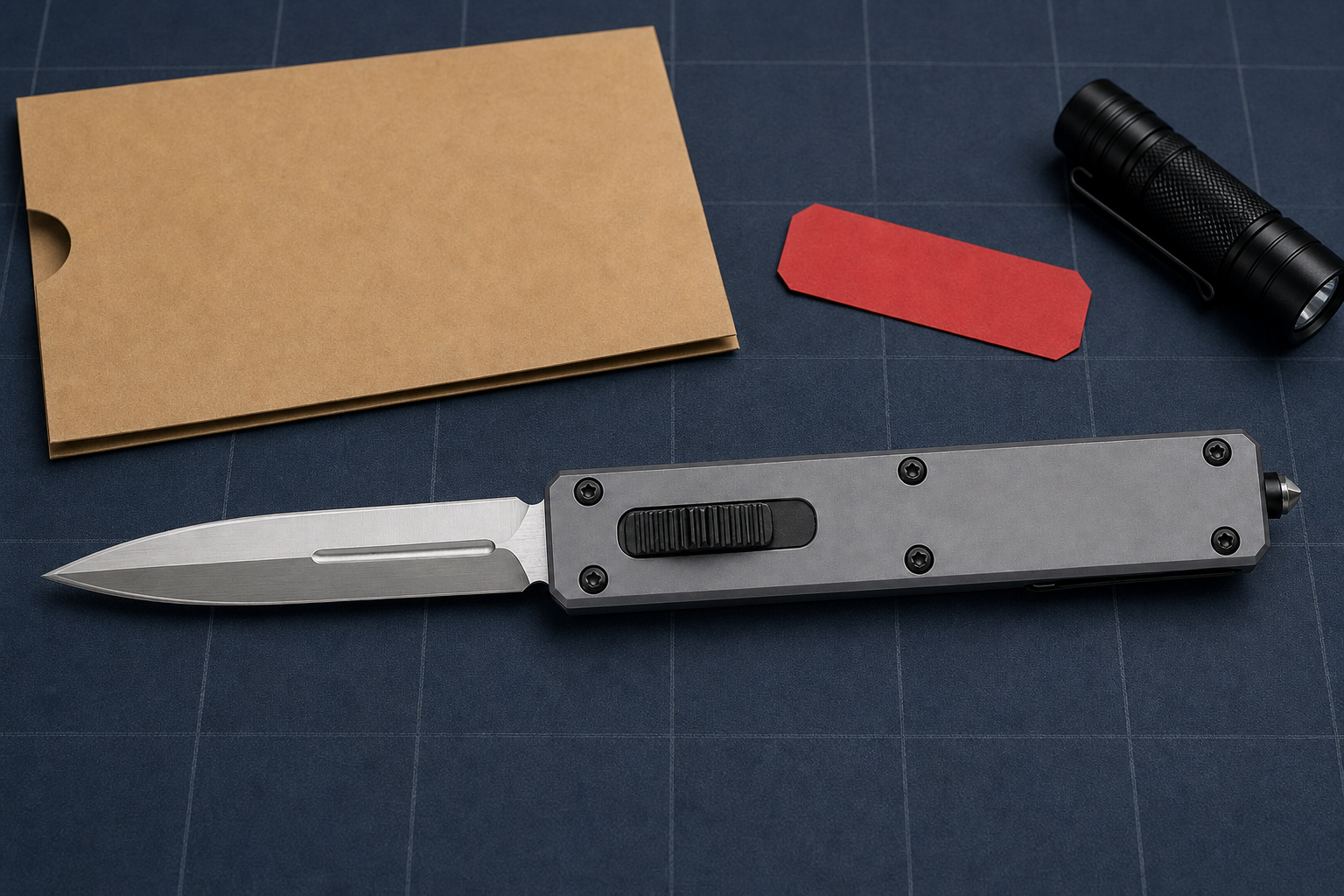
U.S. federal sourcing review should start with 15 U.S.C. 1241, related Switchblade Knife Act provisions, CBP import guidance, and customs regulations before considering state, city, platform, and carrier rules.
I Separate Federal Import Risk From Retail Sales Risk
The U.S. federal definition is only one layer. The U.S. Code section for 15 U.S.C. 1242 addresses introduction, manufacture for introduction, transportation, or distribution in interstate commerce for switchblade knives. Import review then adds customs-specific rules and enforcement practice.
The customs regulation at 19 CFR 12.95 is especially important for importers because it has historically used broader import-language categories that include terms such as Balisong, butterfly, gravity, and ballistic knives when certain characteristics are present. A buyer should not treat that as a casual blog definition. It should trigger customs broker and counsel review.
At the same time, federal import review does not end the process. A product may face:
- State restrictions
- City restrictions
- Marketplace policy limits
- Retailer category restrictions
- Carrier shipping restrictions
- Age-verification requirements
- Payment processor concerns
- Advertising wording limits
The sourcing decision should therefore be conservative. If the product category triggers legal uncertainty, buyers should pause before sample approval.
Why Should Buyers Avoid Casual Comparison Tables?
Simple comparison tables can hide legal nuance.
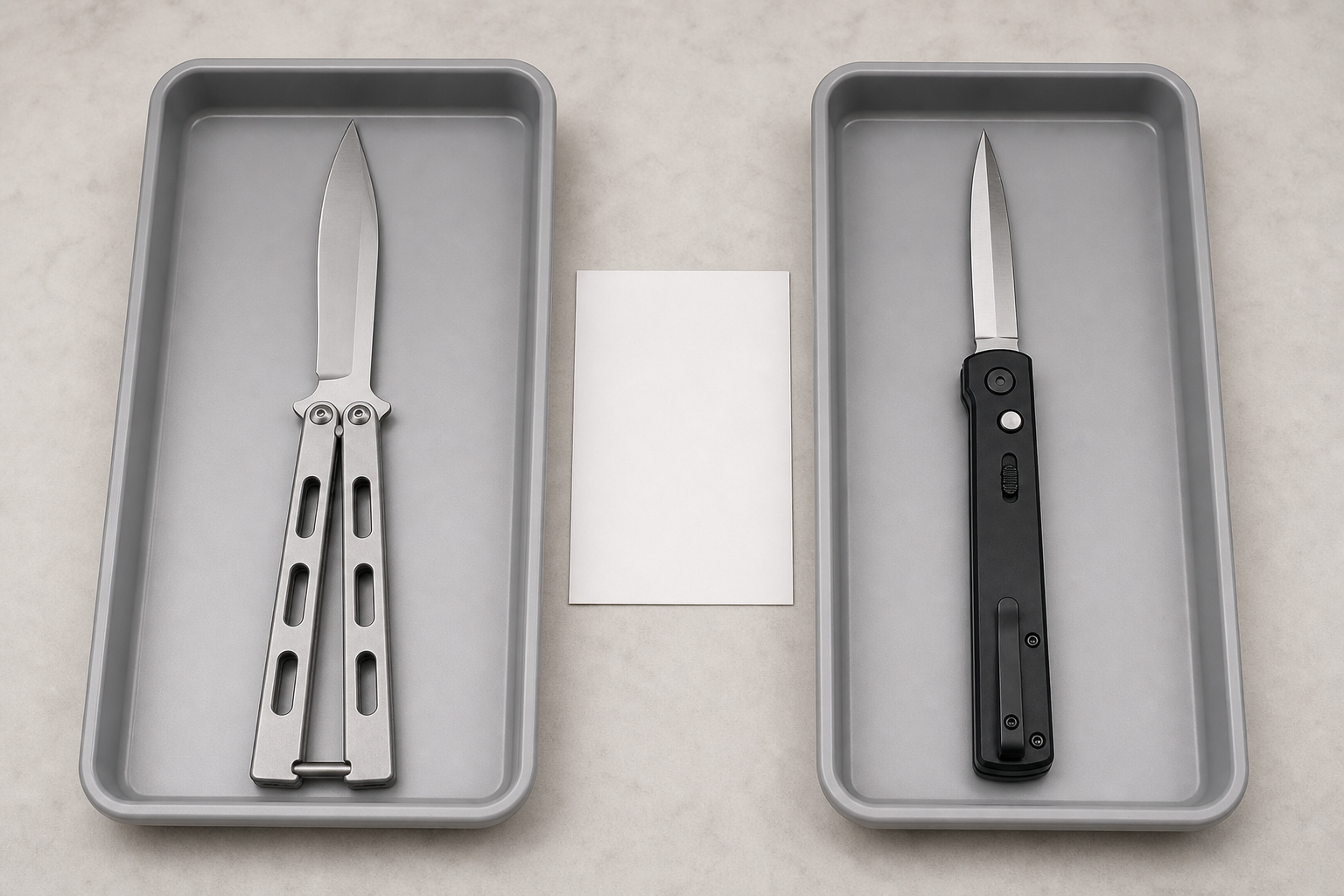
Buyers should avoid casual comparison tables because terms such as butterfly, balisong, gravity knife, automatic knife, switchblade, assisted opener, and manual folder can overlap differently by jurisdiction and import context.
I Use a Decision Matrix, Not a Ranking
This topic should not be written as "which one is better." It should be written as "which one creates which compliance risk." A butterfly knife may be a separate physical design from a push-button automatic knife. But if a rule focuses on gravity, inertia, automatic opening, centrifugal movement, or import classification, the buyer cannot rely on casual distinctions.
A practical matrix should include:
| Question | Why it matters | Buyer action |
|---|---|---|
| How does it open? | Mechanism affects classification | Request mechanism declaration |
| How does it stay closed? | Bias toward closure may matter | Review detent or closure system |
| Is it imported? | Import rules may be stricter | Ask customs broker |
| Where is it sold? | State and local rules vary | Ask counsel |
| Which channel sells it? | Marketplaces may restrict categories | Review platform policy |
| How is it marketed? | Claims can create risk | Avoid weaponized language |
Private-label Planning Checklist
Before starting production, prepare the market and product details your importer or compliance advisor needs to review.
| RFQ Field | What to Prepare |
|---|---|
| Target market | Country, state, region, or sales channel |
| Product category | Folding knife / fixed blade / multi-tool / outdoor tool |
| Intended use | EDC / camping / kitchen / hunting / rescue / promotional |
| Buyer requirements | Testing, labeling, documentation, or packaging rules |
| Blade and lock details | Blade length, opening method, lock type, edge style |
| Packaging text | Warnings, claims, care notes, language requirements |
| Documents | Drawing, sample photo, logo file, packaging artwork |
| Review owner | Importer, legal advisor, testing lab, or internal compliance team |
The buyer should not use a public comparison table as a clearance document. A comparison table can help internal teams ask better questions, but it cannot replace legal review.
What Documents Should Suppliers Provide?
Supplier documents should describe the mechanism, not just the product name.
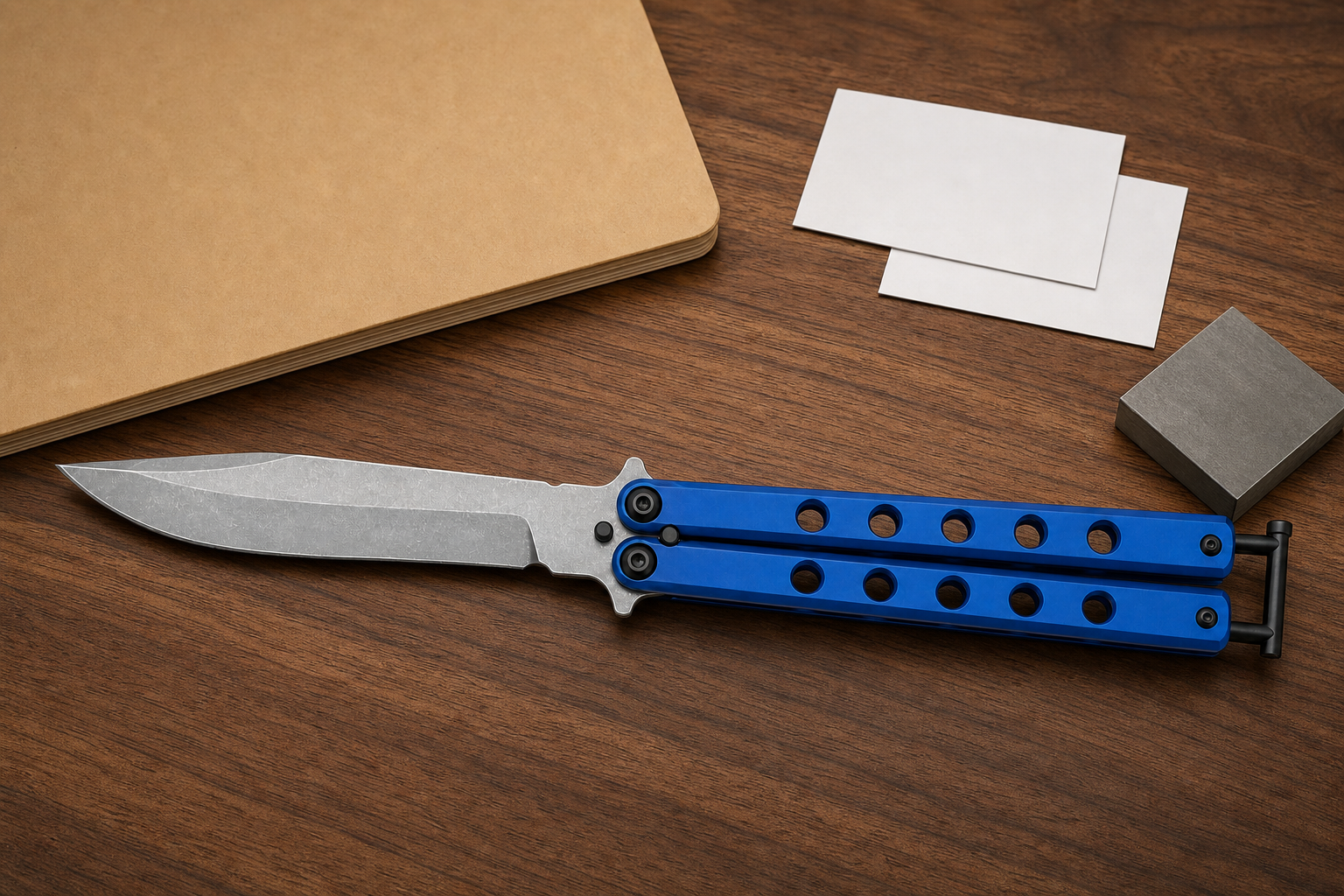
Buyers should request drawings, mechanism description, bill of materials, sample photos, opening and closure declaration, conversion-risk statement, packaging draft, HS classification support, and prior customs or compliance records where available.
I Build the File Before the Sample Leaves the Factory
A buyer should not wait for customs questions before building a product file. The file should exist before samples ship. It should explain what the product is, how it opens, how it closes, what parts are included, whether it is sharpened, whether it is a kit, and how it is marketed.
Useful supplier documents include:
- Technical drawing
- Mechanism description
- BOM
- Blade status and edge condition
- Closure or retention description
- Lock description
- Photos of open and closed product
- Packaging draft
- Warning and instruction draft
- Material declarations
- Supplier compliance statement
- Change-control commitment
The CPSC manufacturing best practices page supports the broader idea that manufacturers and importers should consider safety, specifications, records, and supplier controls early. For restricted knife mechanisms, records are not paperwork decoration. They are part of risk management.
How Should Packaging and Marketing Copy Be Controlled?
Packaging can create risk even when the product file is strong.
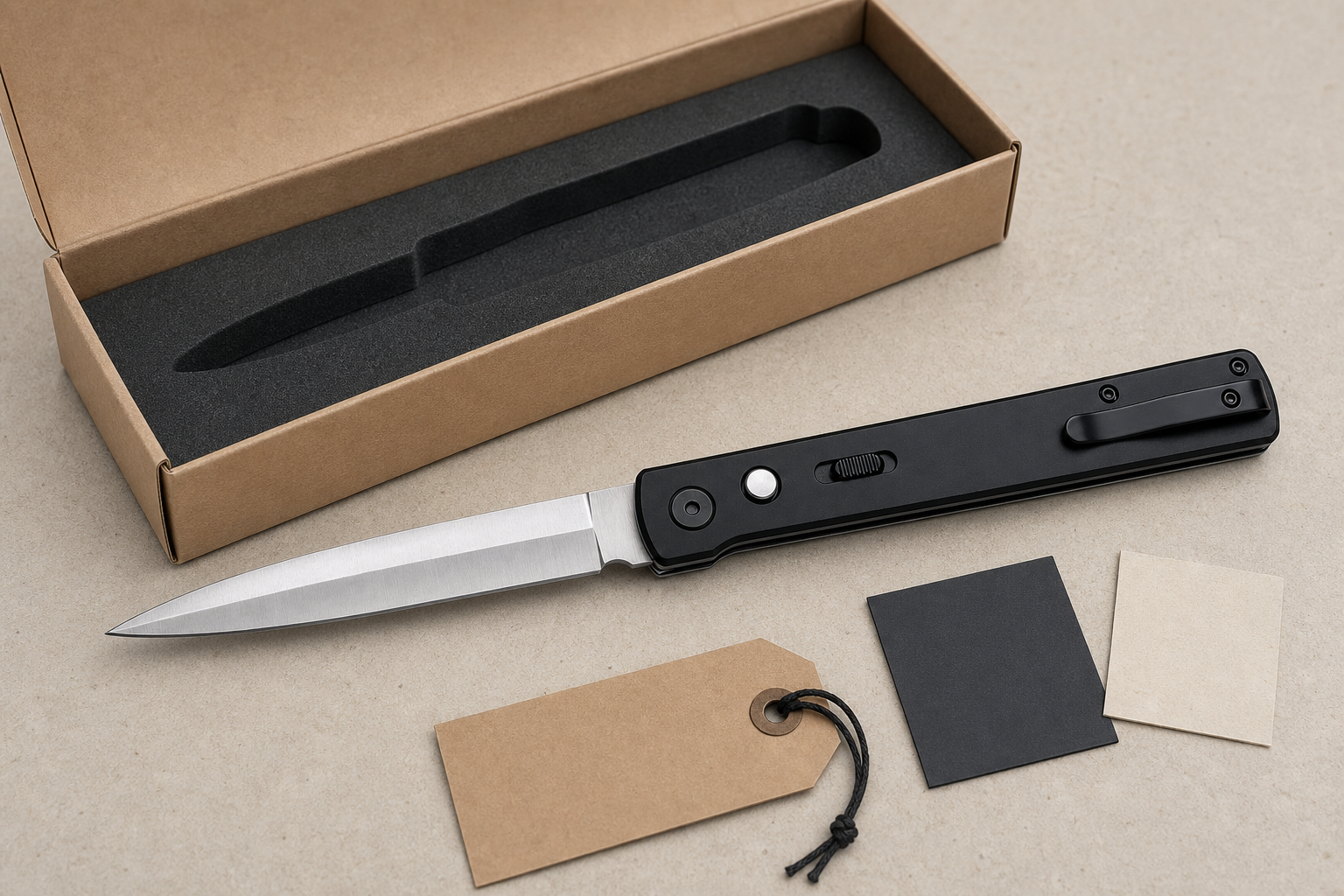
Packaging and marketing copy should avoid self-defense, combat, rapid-deployment, stealth, automatic-opening, illegal-use, or age-inappropriate positioning unless counsel has specifically reviewed the category and market.
I Keep Claims Neutral and Evidence-Based
The FTC advertising and marketing guidance is a useful reminder that advertising should be truthful and not misleading. In a restricted mechanism category, marketing should be especially careful. A buyer should not use wording that implies illegal carry, weapon use, rapid deployment, or universal legality.
Better sourcing language is neutral:
- Mechanism type under review
- Product for lawful markets only
- Practical collection, training, display, or tool context only when true and reviewed
- Age and local law notice where appropriate
- No claim of universal legality
- No claim that customs clearance is guaranteed
- No self-defense or combat positioning
The CPSC labeling overview also reminds buyers that labeling requirements can depend on product type, design, components, and age group. The buyer should review labels by market instead of copying a generic warning.
What QC Checks Matter for Restricted Mechanism Categories?
QC should confirm the product matches the approved compliance file.
QC should verify mechanism type, opening behavior, closed retention, lock or latch, blade status, edge condition, kit contents, packaging, instruction placement, warning copy, and no unauthorized mechanism changes.
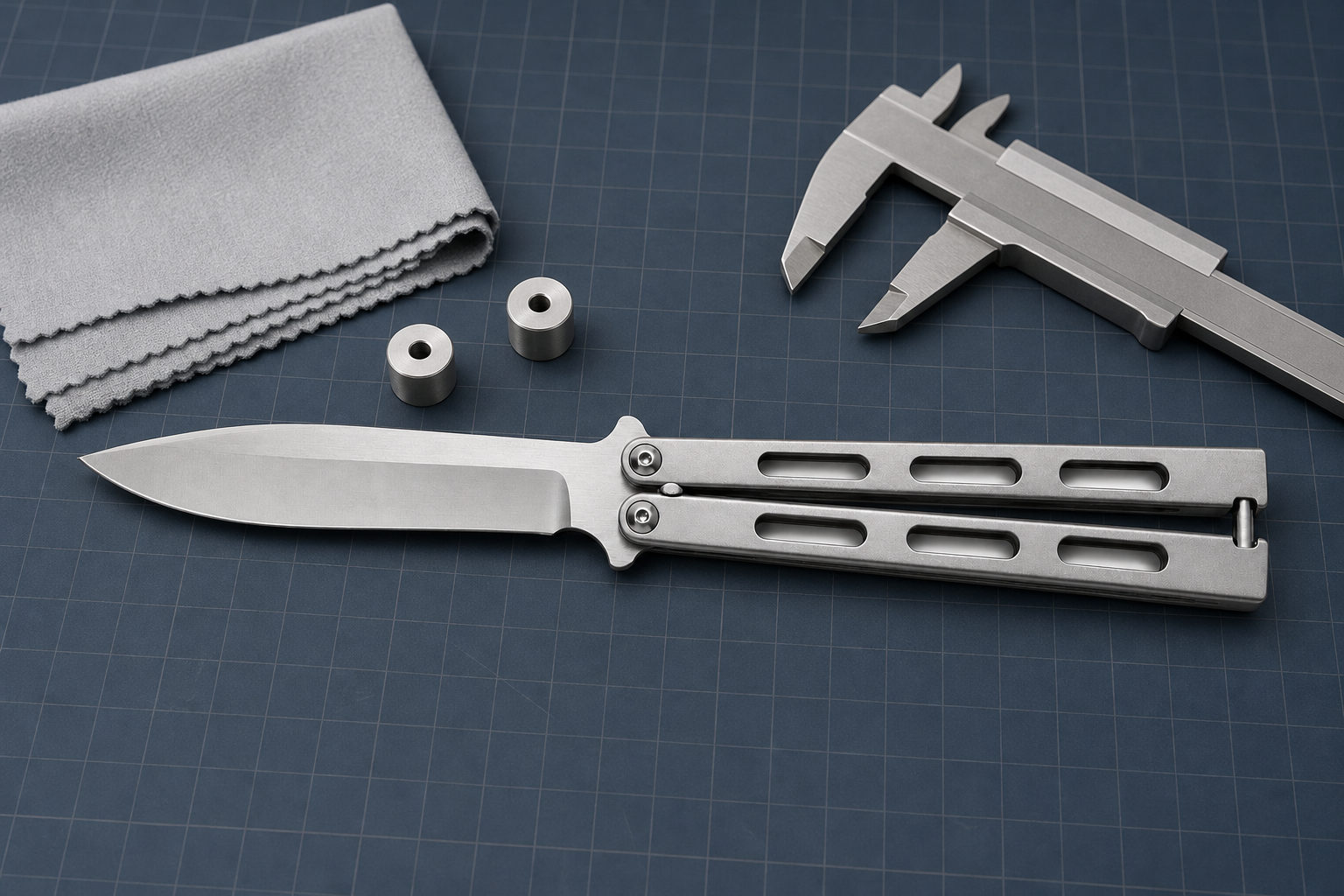
I Inspect Against the Approved Compliance Sample
Restricted mechanism categories need strong change control. A supplier may change a spring, detent, latch, pivot, handle gap, blade weight, or assembly step to improve feel or reduce cost. That change can alter classification risk. The buyer should not allow silent mechanism changes after legal review.
QC checks should include:
- Product matches approved sample.
- Mechanism matches supplier declaration.
- No added spring or automatic-opening feature.
- Closure or retention feature matches approved design.
- Kit contents match approved list.
- Packaging and instruction copy match approved version.
- Warning and age-positioning notes are present.
- Product photos match marketplace listing.
- Carton labels do not use restricted or misleading terms.
The NIST dimensional metrology page supports the role of measurement in manufacturing control. For mechanism-sensitive products, small dimensional or hardware changes can matter. Buyers should define measurable checks where possible.
When Should Buyers Skip the Product Instead of Reworking It?
Some sourcing risks are not worth solving in the first production run.
Buyers should skip the product when classification is unclear, import risk is high, target markets conflict, marketplace rules are restrictive, supplier documents are weak, or legal review cannot support the planned sale.
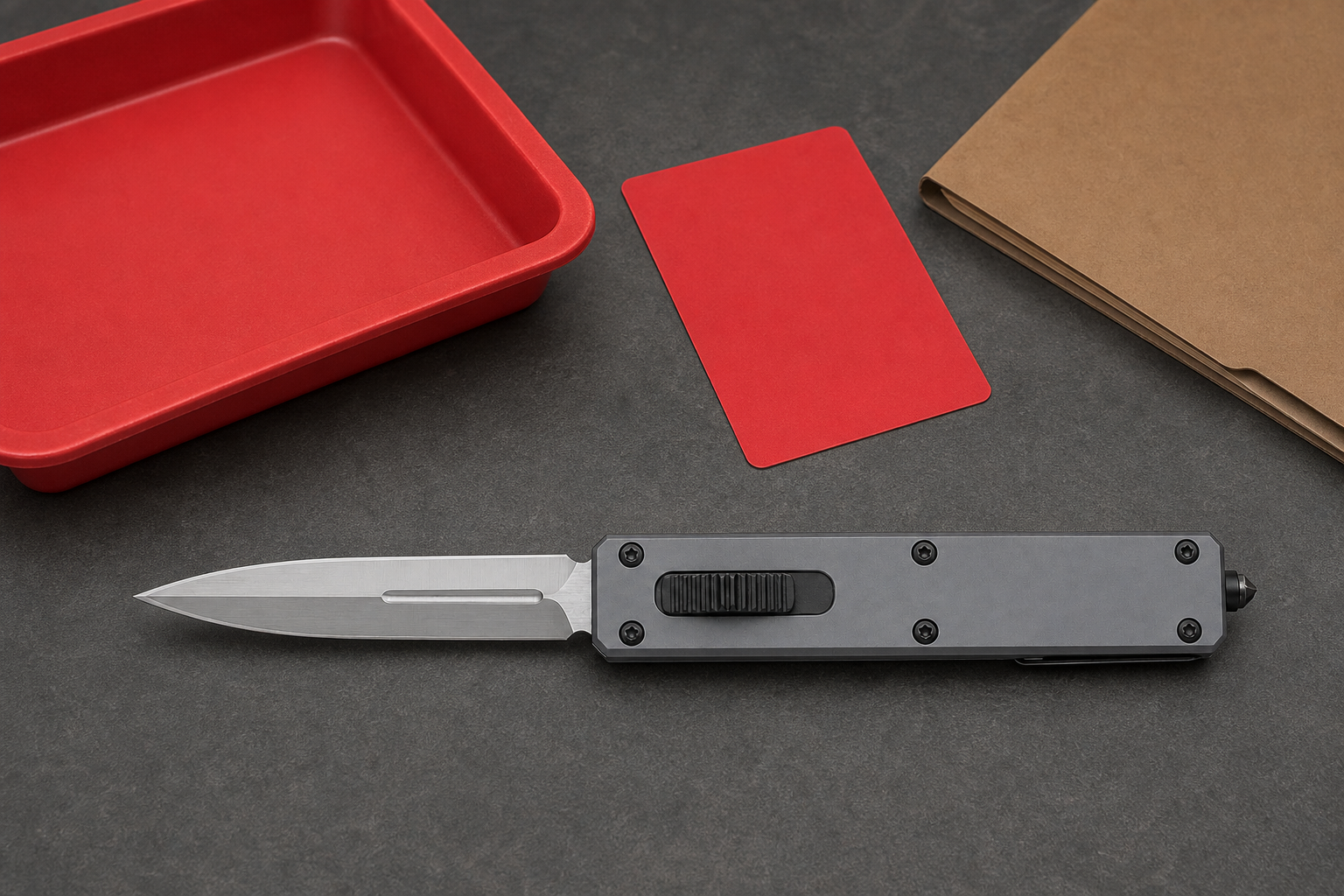
I Prefer a Clean Product Line Over a Risky Product
Some products create more trouble than revenue. If a buyer wants to sell through mainstream marketplaces, big-box retail, cross-border ecommerce, or conservative distributors, butterfly and switchblade-related categories may create unnecessary friction. Even if one jurisdiction allows the product, another market, platform, carrier, or payment processor may reject it.
Skip or pause the project when:
- Legal review is not available.
- Supplier documents are unclear.
- The mechanism changes during sampling.
- The product may be treated as gravity, switchblade, or automatic-opening.
- A marketplace bans the category.
- Shipping carriers refuse the product.
- The package copy relies on risky language.
- The target market includes conflicting jurisdictions.
Skipping a risky category is not a failure. It may protect the brand, shipment, and customer relationship. The buyer can redirect the budget to manual folders, kitchen tools, outdoor fixed blades, accessories, or other products with cleaner compliance paths.
How Can Vast State Help Buyers Review Knife Classification Risk?
Vast State can help organize the sourcing file before buyers spend money on tooling.
Vast State helps buyers review knife classification risk by collecting mechanism facts, supplier documents, market scope, packaging copy, claim wording, QC criteria, and RFQ fields for legal, customs, and channel review.
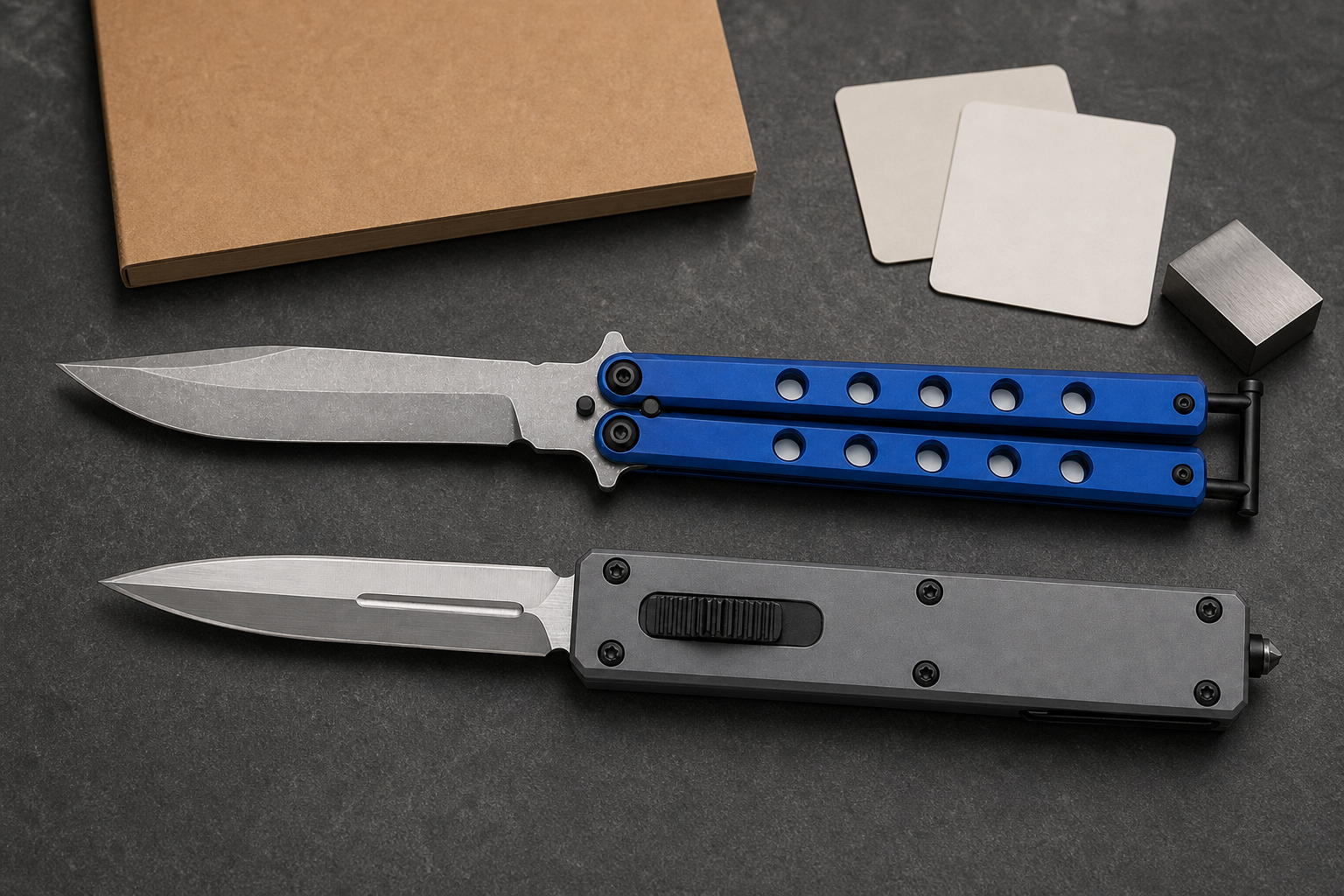
I Keep the Review Practical and Documented
Vast State does not replace legal counsel. We can help buyers prepare the product information that counsel, customs brokers, and compliance teams need. That includes mechanism description, product photos, drawings, BOM, opening and closure facts, packaging draft, warning copy, marketplace language, and QC checks.
We can also help buyers decide when to move away from risky categories. If the goal is a broad-market product line, a safer manual folding knife, kitchen tool, outdoor fixed blade, or accessory may be easier to manufacture, import, list, and distribute.
Vast State can support:
- Mechanism-risk intake checklist
- Supplier document request
- RFQ fields for legal review
- Packaging and claim review
- Marketplace policy preparation
- Customs broker document package
- QC checklist for mechanism consistency
- Alternative product specification planning
The goal is not to answer legal questions casually. The goal is to make the sourcing decision disciplined before the buyer commits to samples or production.
Planning a private-label knife line for this market?
Use this article as a planning reference, then confirm local requirements with your importer or compliance advisor before OEM/ODM production.
Conclusion
Butterfly and switchblade classification is a sourcing-risk question. Buyers should verify mechanism, market, import rules, documents, claims, and QC before proceeding.