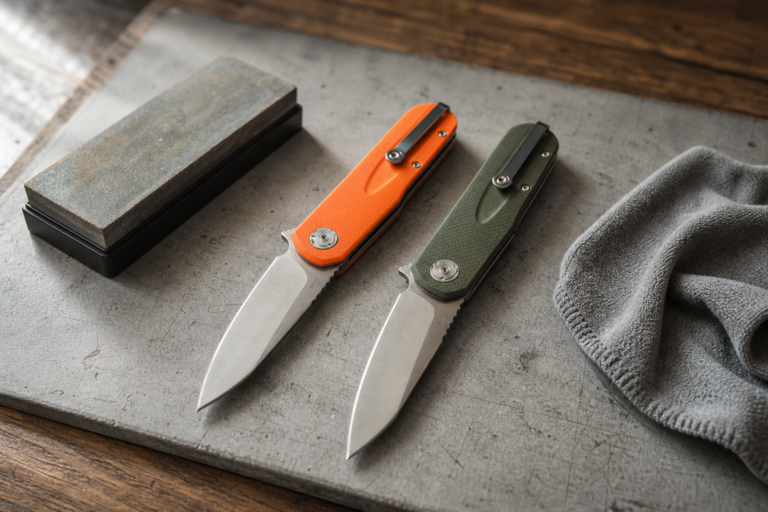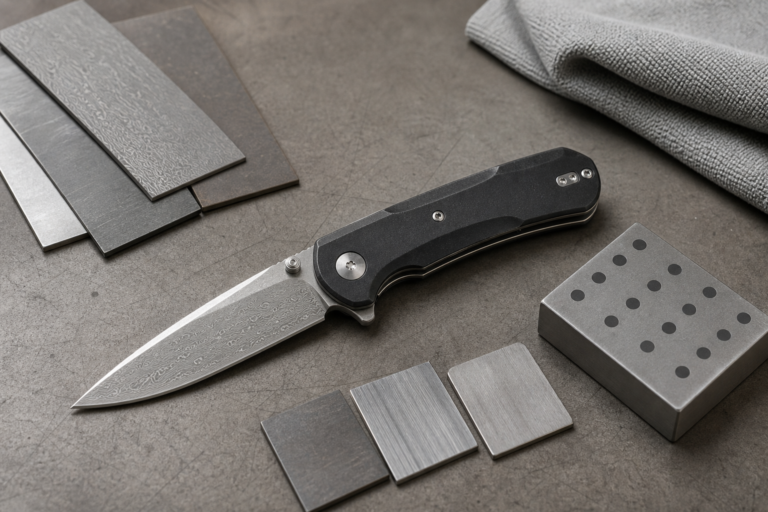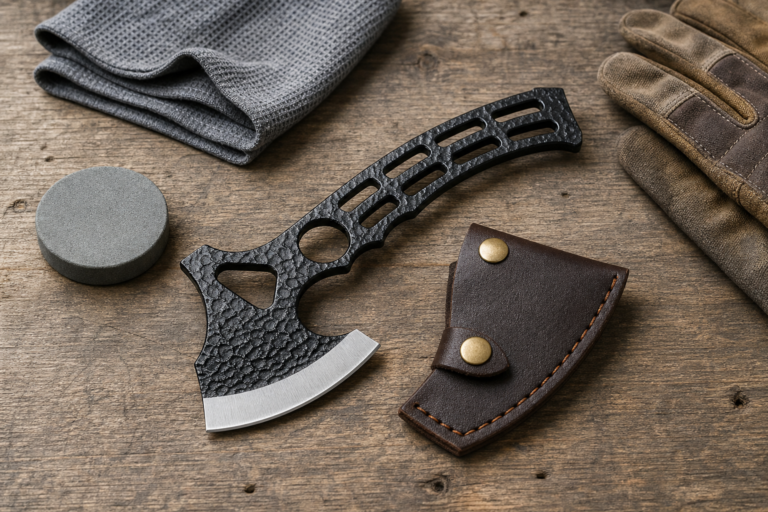
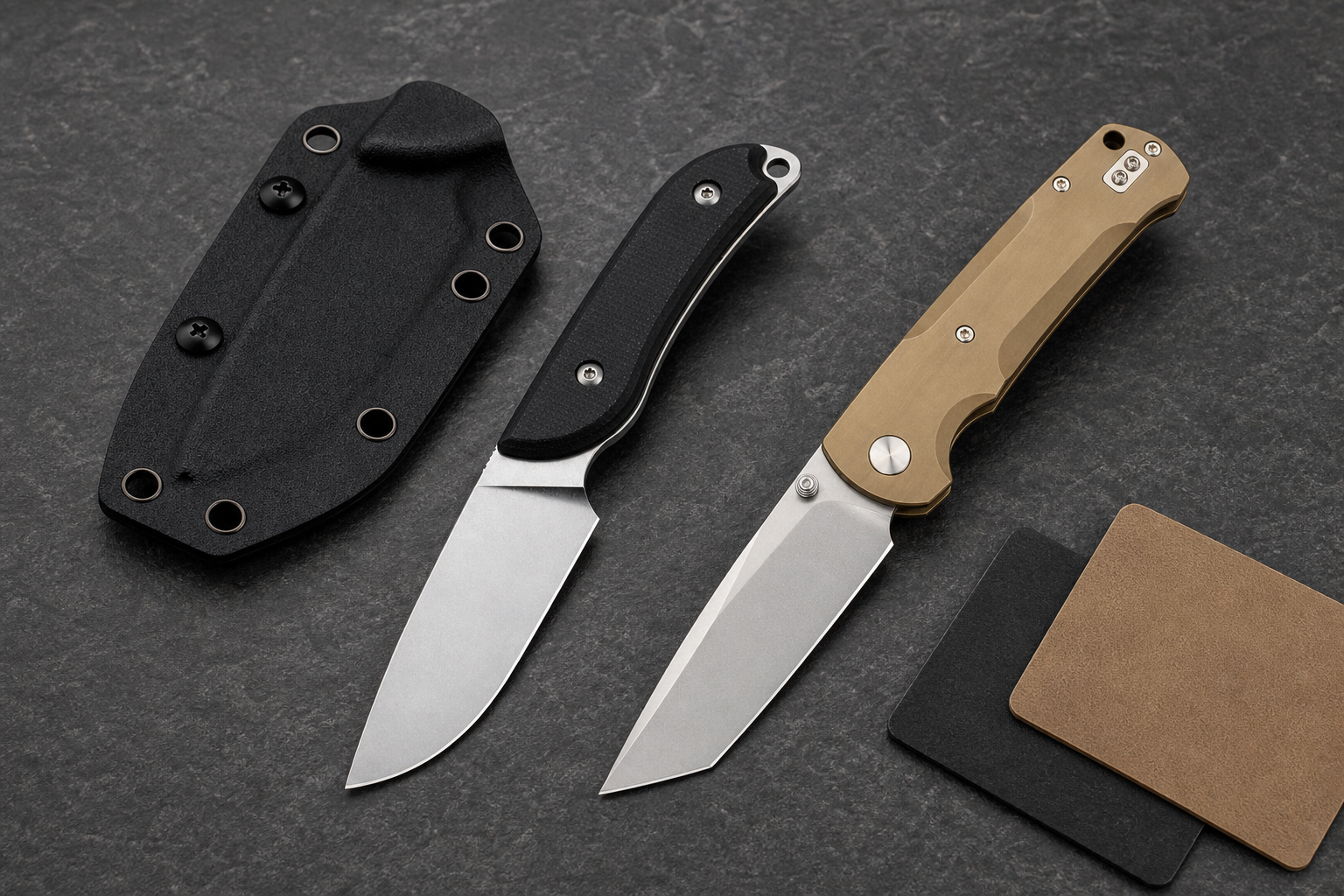
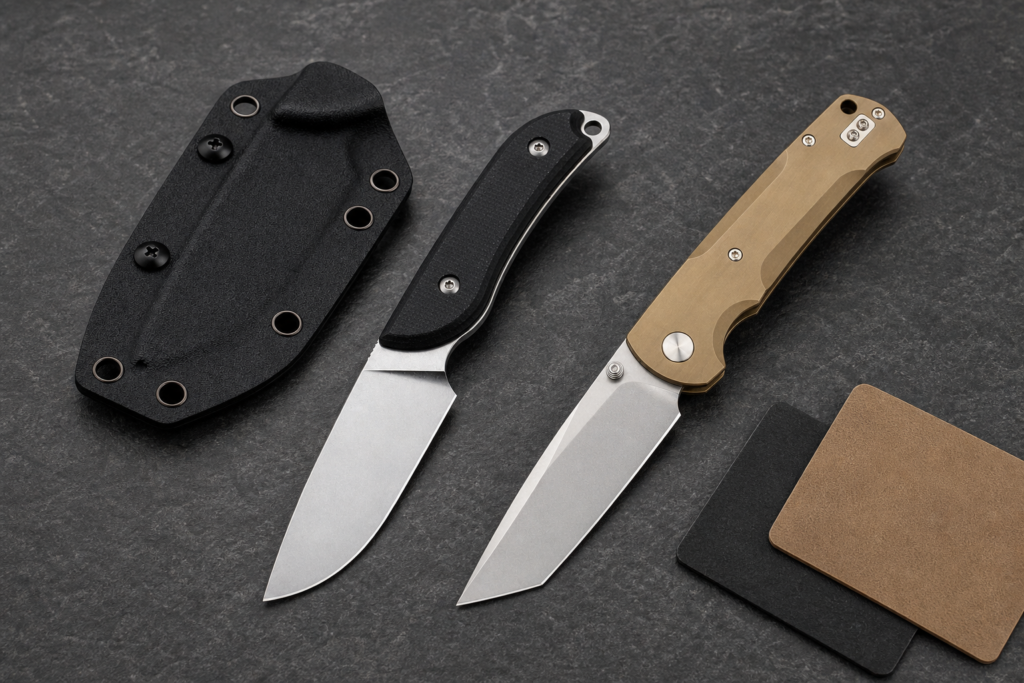
Fixed blade and folding knife comparisons are often written for end users. OEM/ODM buyers need a different answer.
Buyers should compare fixed blade and folding knives by use case, structure, safety expectations, target channel, packaging, tooling cost, inspection difficulty, compliance scope, and after-sales risk before choosing a product platform.
Quick buyer brief:
- Answer: Fixed blades are usually simpler to inspect, stronger in continuous structure, and easier to package with a sheath. Folding knives are more compact, more mechanism-dependent, and require tighter control of lock, pivot, detent, action, and user instructions.
- Buyer context: This guide is for outdoor brands, EDC brands, knife importers, distributors, marketplace sellers, private label teams, and OEM/ODM sourcing managers.
- Key checks: Target use, carry context, blade length, handle construction, lock or sheath retention, pivot tolerance, material system, opening mechanism, package copy, warning language, tariff review, QC fixtures, final inspection records, and customer support plan.
Developing a folding knife line for your brand?
Vast State supports OEM/ODM folding knife projects, including blade steel, lock structure, handle material, finish, logo method, packaging, and quality inspection planning.
The practical mistake is asking, "Which one is better?" That question is too broad. A fixed blade can be the stronger and simpler tool for outdoor lines. A folding knife can be easier to carry, ship, display, and sell in compact retail programs. Each platform has a different sourcing file.
This article treats both products as lawful utility, outdoor, EDC, or retail tools. It does not cover combat, self-defense, or restricted mechanism positioning. The goal is to help buyers brief suppliers clearly, avoid vague quotes, and inspect samples with the right checklist.
Why Should Buyers Compare Use Case Before Knife Type?
The knife type should follow the customer job.
Buyers should compare use case first because the customer job determines blade size, handle length, pocket or sheath storage, packaging format, instruction copy, inspection method, and acceptable cost.
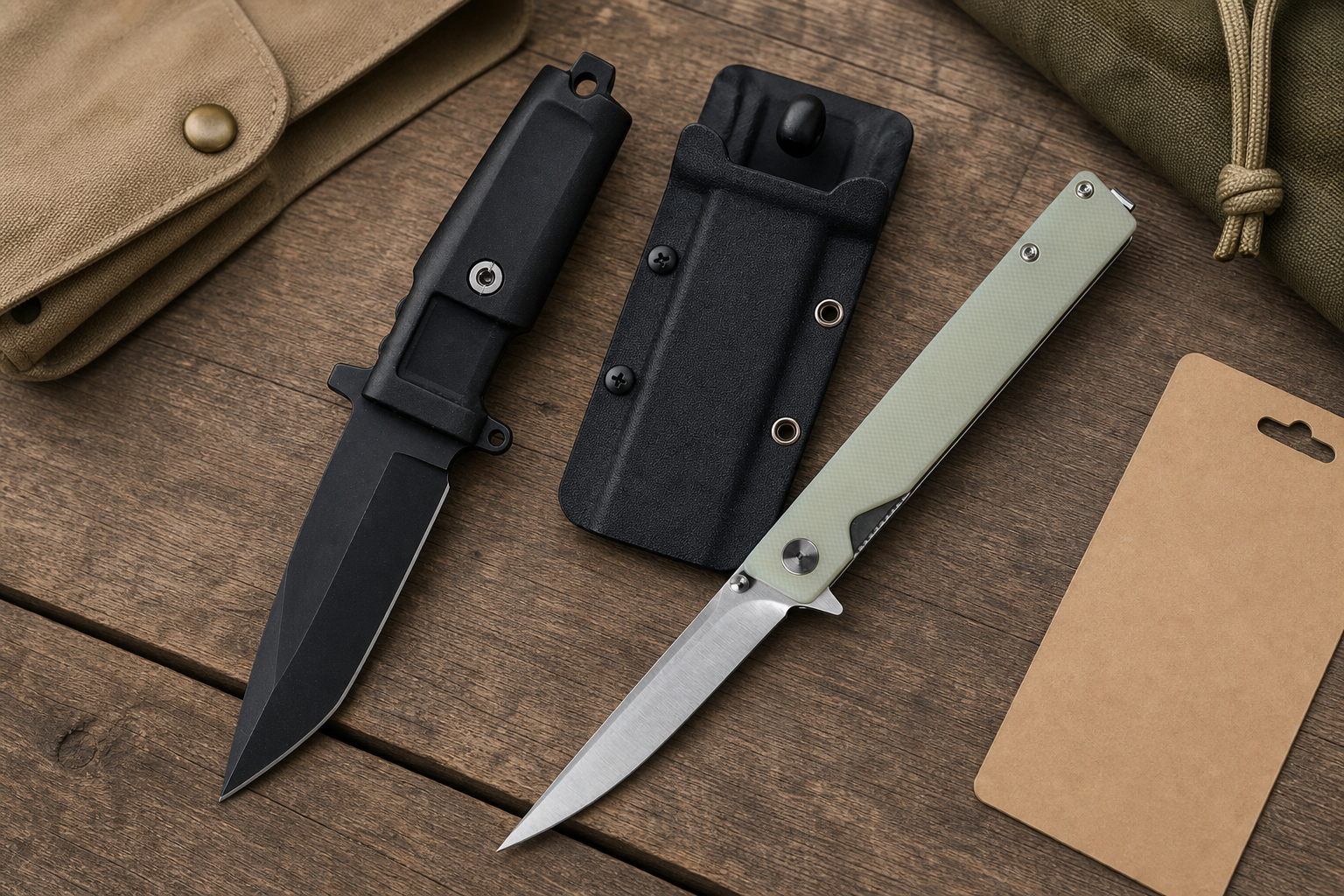
I Start With the Customer Job, Not the Shape
A fixed blade and a folding knife can both cut. That does not mean they serve the same buyer. A camping kit, hunting accessory line, general outdoor tool, workwear pocket tool, retail gift set, or EDC product all need different decisions.
For example, a fixed blade may fit a product line where the customer expects a sheath, a stronger full-length handle, and simple cleaning. A folding knife may fit a compact product line where pocket carry, retail display size, and lower package volume matter. The buyer should not force one structure into every channel.
The CPSC manufacturing best practices page supports planning around product safety, supplier controls, records, and consumer feedback. For sourcing teams, that means the first decision should be the customer job and risk profile, not the catalog photo.
Useful use-case questions:
- Will the customer use the knife outdoors, at work, in a kit, or as a general utility tool?
- Will the product be stored in a sheath, pocket, pouch, drawer, or retail blister?
- Does the channel expect compact packaging or stronger field positioning?
- Is the buyer prepared to inspect a folding mechanism?
- Does the package need simple care and storage copy?
How Does Fixed Blade Construction Affect OEM/ODM Sourcing?
Fixed blades are structurally simple, but the sheath and handle still decide quality.
Fixed blade sourcing should focus on tang construction, blade thickness, handle fit, grind consistency, edge finish, sheath retention, corrosion plan, packaging safety, and point protection.
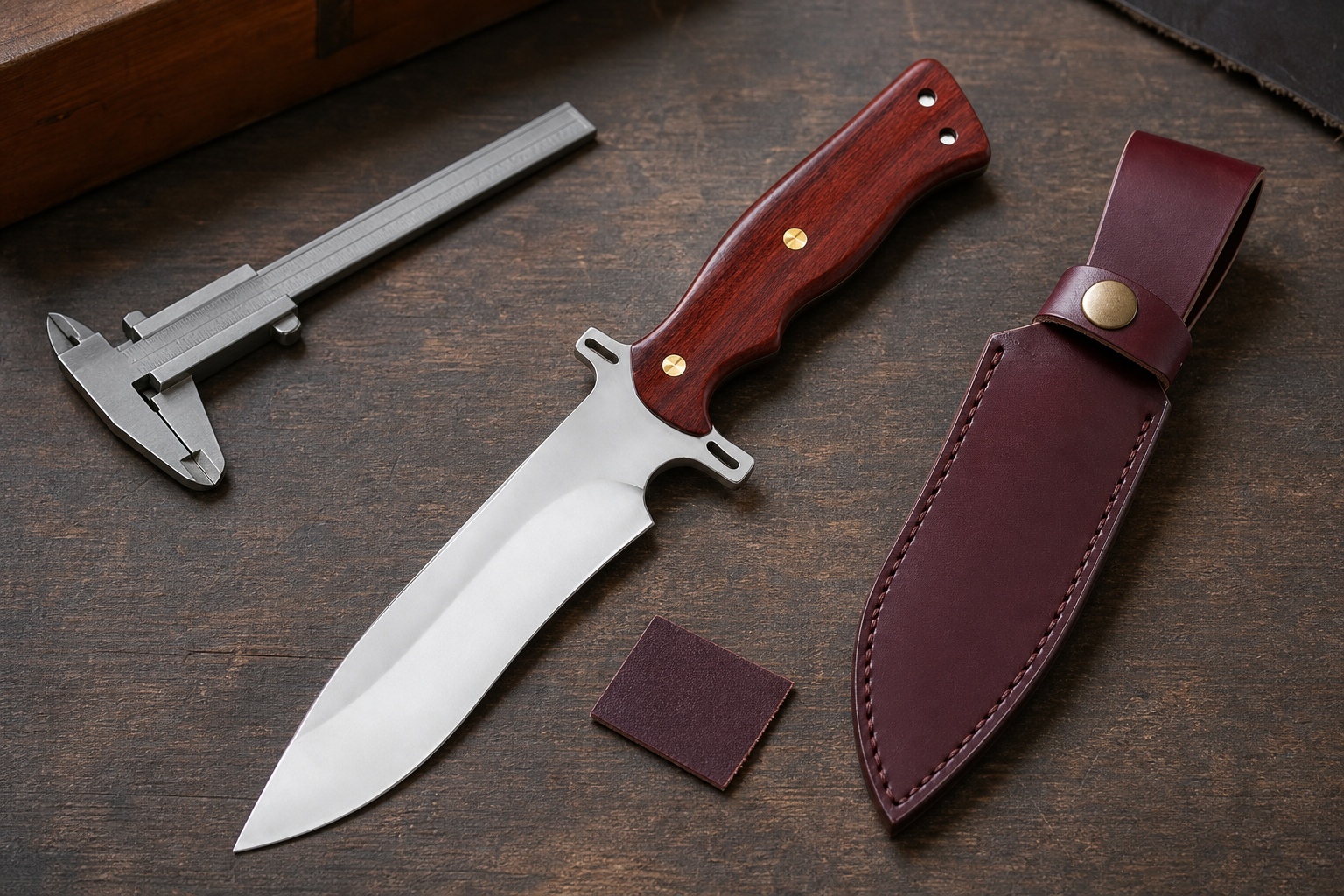
I Treat the Sheath as Part of the Product
Many buyers focus on the blade and under-spec the sheath. That creates complaints. A fixed blade is not complete without safe storage. The sheath controls retention, package safety, belt or bag attachment, point protection, and customer confidence.
Fixed blade sourcing is usually easier to understand than folding knife sourcing because there is no pivot or lock mechanism. However, it still needs discipline. A full tang, partial tang, hidden tang, or molded handle construction will change strength, weight, balance, assembly cost, and inspection. A polished finish may look premium, but it can reveal grinding variation. A coated finish may hide variation, but it needs adhesion and scratch expectations.
The buyer should define:
- Tang type and handle attachment method
- Blade thickness and finished dimensions
- Grind type and edge target
- Handle contour and edge radius
- Fastener type or molded handle requirements
- Sheath material and retention method
- Point protection and carton safety
- Corrosion-prevention packaging
Fixed blade programs often succeed when the buyer writes a complete package specification, not only a blade drawing.
How Does Folding Knife Construction Affect OEM/ODM Sourcing?
Folding knives add mechanism risk to the sourcing file.
Folding knife sourcing should focus on pivot tolerance, lock function, detent or closing bias, blade centering, handle alignment, screw retention, opening method, pocket clip, user instructions, and final mechanism inspection.
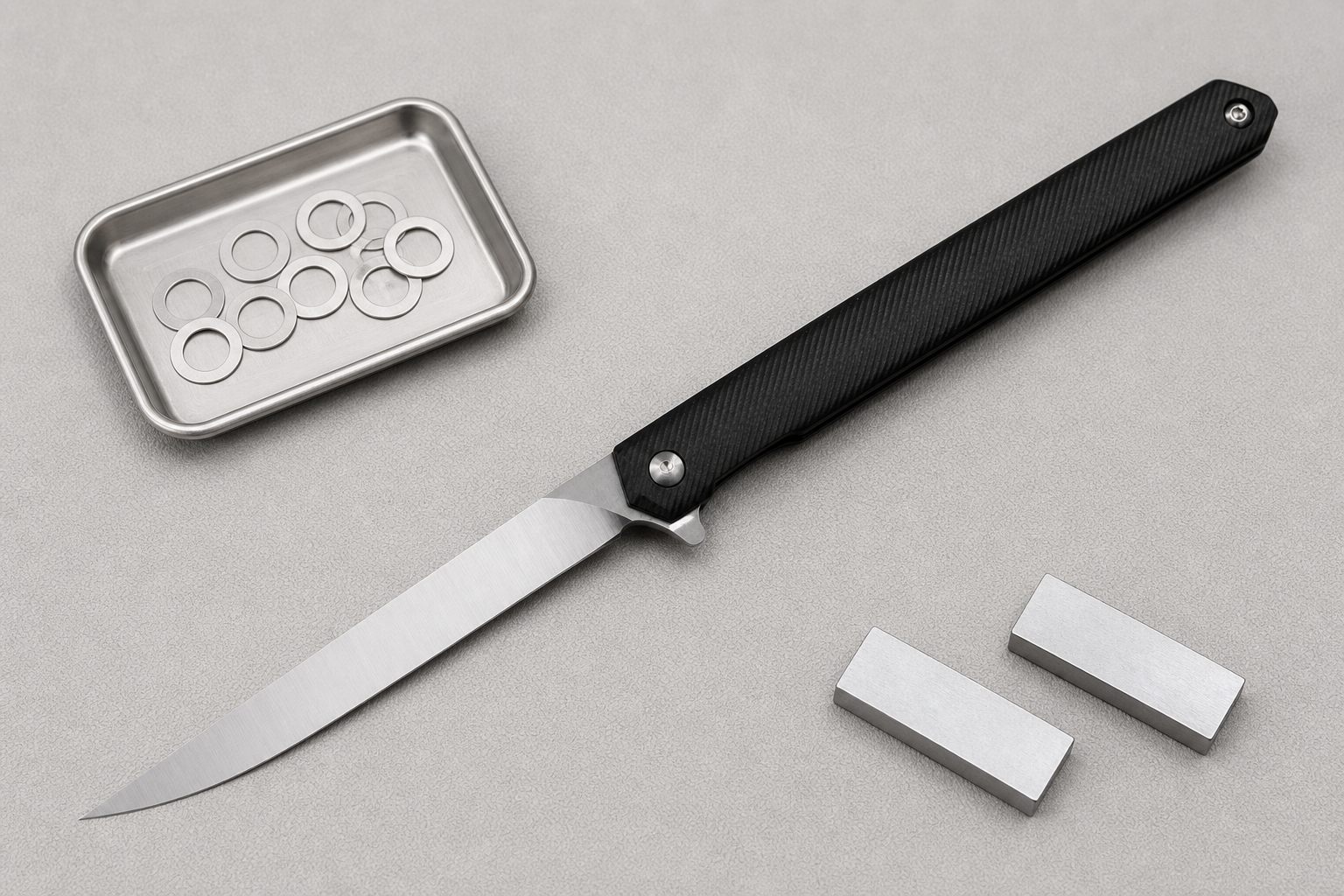
I Do Not Approve a Folding Knife From Photos Alone
A folding knife can look good in photos and still fail in hand. Pivot feel, blade play, lock engagement, lock release, detent strength, centering, clip fit, screw retention, and handle alignment all affect the customer experience. These are not cosmetic details. They are core quality requirements.
Folding knives also need careful mechanism language. A manual folder, assisted opener, automatic opener, gravity-sensitive product, or other opening system may be treated differently by laws, marketplaces, and carriers. This article does not give legal advice, but it does recommend a conservative classification review before sourcing.
For a folding knife RFQ, buyers should request:
- Opening method description
- Lock type and lock test plan
- Pivot hardware and washer or bearing type
- Blade centering tolerance
- Acceptable blade play limits
- Screw thread-locking plan
- Clip material and attachment test
- Closed retention or detent requirement
- Instruction and warning copy
The folding knife sample should be reviewed by hand, measured, cycled, and compared against the approved file before production approval.
What Cost and Tooling Differences Should Buyers Expect?
The cheaper option depends on the whole product, not only the blade.
Cost comparison should include steel, machining, handle construction, pivot hardware, lock parts, sheath or clip, assembly time, packaging, inspection labor, replacement risk, and tooling amortization.
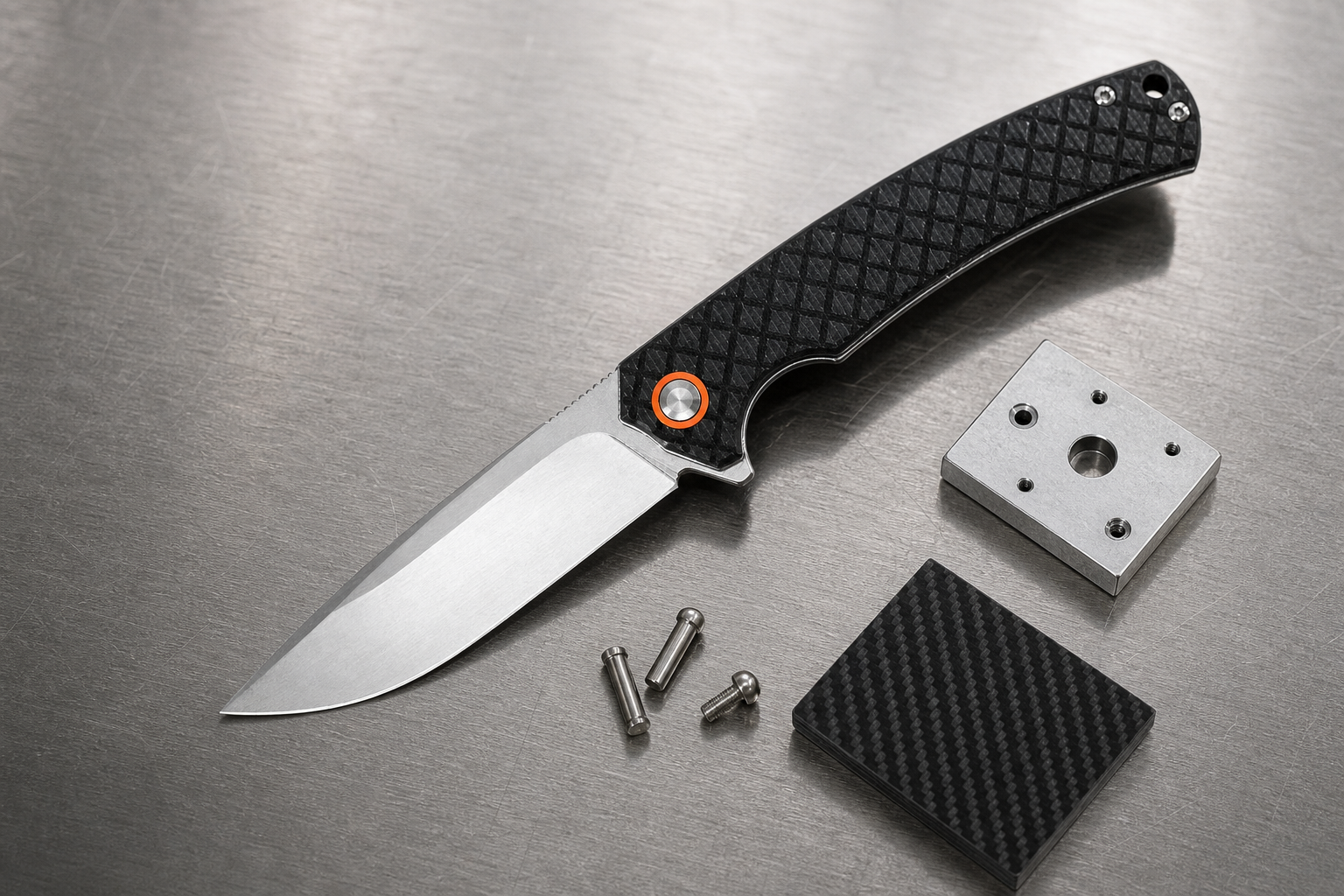
I Compare Finished Program Cost, Not Unit Price Only
A fixed blade may have a simpler blade structure, but it often needs a sheath. A folding knife may use less blade length, but it needs pivot hardware, liners, lock parts, screws, clip parts, and more assembly control. Either platform can become expensive if the buyer adds decorative machining, premium materials, complex packaging, or strict cosmetic requirements.
Cost can also move after sampling. A supplier may quote a low price for a folding knife, then add cost when the lock needs improvement. A buyer may quote a fixed blade, then realize the sheath needs a better retention design. The practical comparison is not "fixed blade versus folding knife." It is "complete approved product versus complete approved product."
The NIST dimensional metrology page is useful for the broader manufacturing mindset: dimensions and measurement systems matter. For buyers, this means tolerances should be written clearly for pivot fit, blade thickness, handle alignment, sheath clearance, and package dimensions.
Cost fields to request:
| Cost field | Fixed blade issue | Folding knife issue |
|---|---|---|
| Blade material | More steel may be used | Smaller blade may need tighter fit |
| Handle | Scales or molded handle | Scales, liners, spacers, screws |
| Storage | Sheath is often required | Clip or pouch may be required |
| Assembly | Simpler mechanism | More moving parts |
| Inspection | Edge, handle, sheath | Edge, lock, pivot, centering |
| Packaging | Point protection matters | Closed retention matters |
OEM/ODM RFQ Checklist
Prepare these details to help Vast State review your project and provide a more accurate quotation.
| RFQ Field | What to Prepare |
|---|---|
| Project type | OEM from drawing / ODM private label / wholesale catalog |
| Product category | Folding knife / fixed blade / multi-tool / outdoor tool |
| Design status | Idea / sketch / 2D drawing / 3D CAD / physical sample |
| Target price | Ex-factory target price or retail price range |
| MOQ expectation | 500 / 1,000 / 3,000 / 5,000+ pcs |
| Logo method | Laser engraving / etching / printing / molded logo |
| Packaging | Standard packaging / custom retail box / Amazon-ready |
| Market | USA / EU / Japan / Korea / Middle East / other |
| Compliance needs | Buyer-specified testing / documentation / labeling |
| Timeline | Sample deadline / mass production deadline |
How Should Packaging and Safety Copy Differ?
Packaging should match the storage risk of the platform.
Fixed blades need sheath and point-protection packaging, while folding knives need closed-position protection, mechanism warnings, handling instructions, clip or pouch notes, and clear claim control.
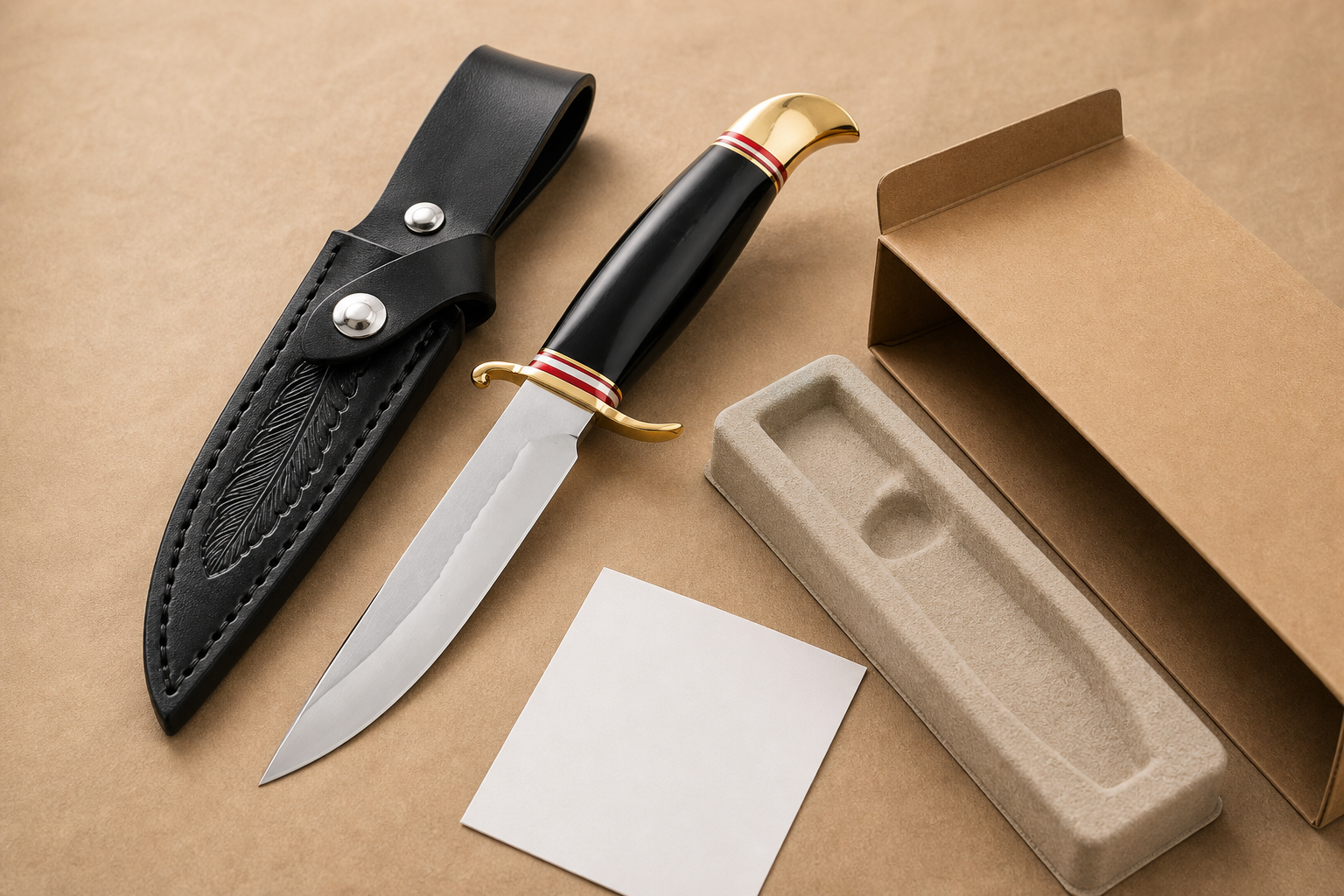
I Write Packaging Around Storage and Handling
Packaging is not decoration. It is part of risk control. For fixed blades, the package should prevent the point and edge from contacting the carton, retail staff, or customer before opening. For folding knives, the package should keep the knife closed, prevent movement, and avoid confusing mechanism claims.
The CPSC labeling requirements overview reminds businesses that labeling requirements depend on the product type, intended audience, and regulatory context. Knife buyers should therefore review labels by product, market, and channel instead of copying generic warning copy.
The FTC advertising and marketing guidance also matters. Claims should be truthful, not misleading, and evidence-based. Buyers should avoid unsupported wording such as "unbreakable," "legal everywhere," "military grade," or "safe for all users." Neutral tool language is easier to defend.
Packaging checklist:
- Product name matches the approved category.
- Warning copy matches product structure.
- Sheath or closed-position storage is clear.
- Age and lawful-use language is reviewed.
- Claims are supported by test or supplier records.
- Retail and marketplace wording is consistent.
What QC Checks Should Be Different?
Fixed blade and folding knife inspections should not use the same checklist.
Fixed blade QC should emphasize blade geometry, handle fit, edge finish, sheath retention, and package safety. Folding knife QC should emphasize lock, pivot, centering, blade play, closed retention, screws, clip, and action consistency.
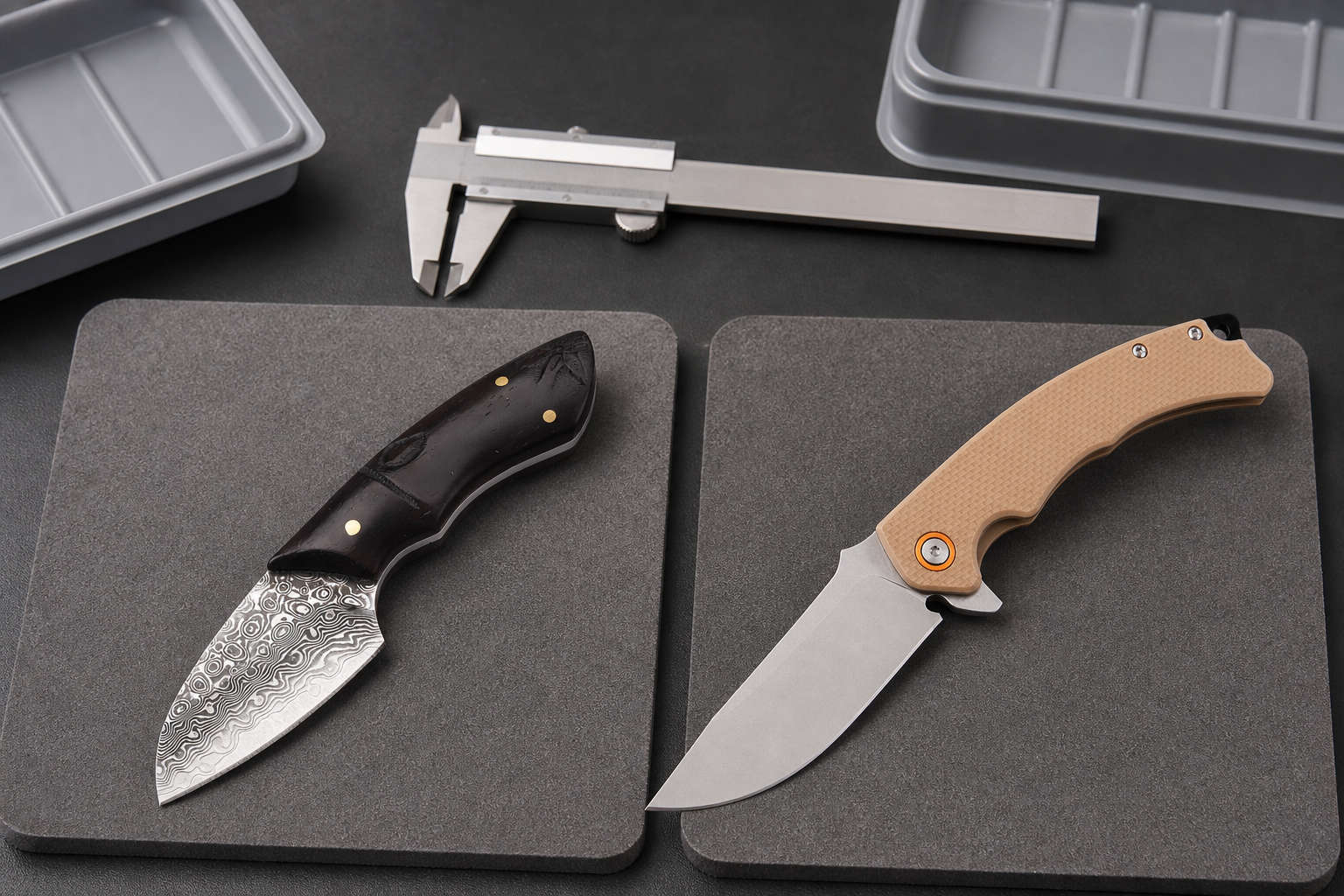
I Build Separate AQL Notes for Each Platform
Many buyers use one generic knife inspection sheet. That is not enough. A fixed blade can fail because the sheath is loose, the handle has gaps, the edge is uneven, or the point protection is weak. A folding knife can fail because the lock sticks, the blade rubs the liner, the pivot loosens, the clip bends, or the closed retention feels unsafe.
The CPSC Handbook for Manufacturing Safer Consumer Products supports the importance of design review, documentation, supplier control, production control, and records. That is exactly the mindset a buyer needs when creating platform-specific inspection plans.
Fixed blade QC examples:
- Blade length, thickness, grind symmetry
- Edge burr and tip finish
- Handle gap, fastener finish, edge radius
- Sheath insertion and retention
- Package point protection
- Finish, logo, and corrosion protection
Folding knife QC examples:
- Blade centering and side play
- Lock engagement and release
- Pivot smoothness and screw retention
- Detent or closed retention
- Clip attachment and pocket clip finish
- Handle alignment and hardware finish
How Do Import, Channel, and Policy Checks Affect the Choice?
The product platform can change the compliance workload.
Import, channel, and policy checks should consider knife type, blade length, opening mechanism, product description, packaging claims, market scope, tariff classification, marketplace rules, and carrier restrictions.
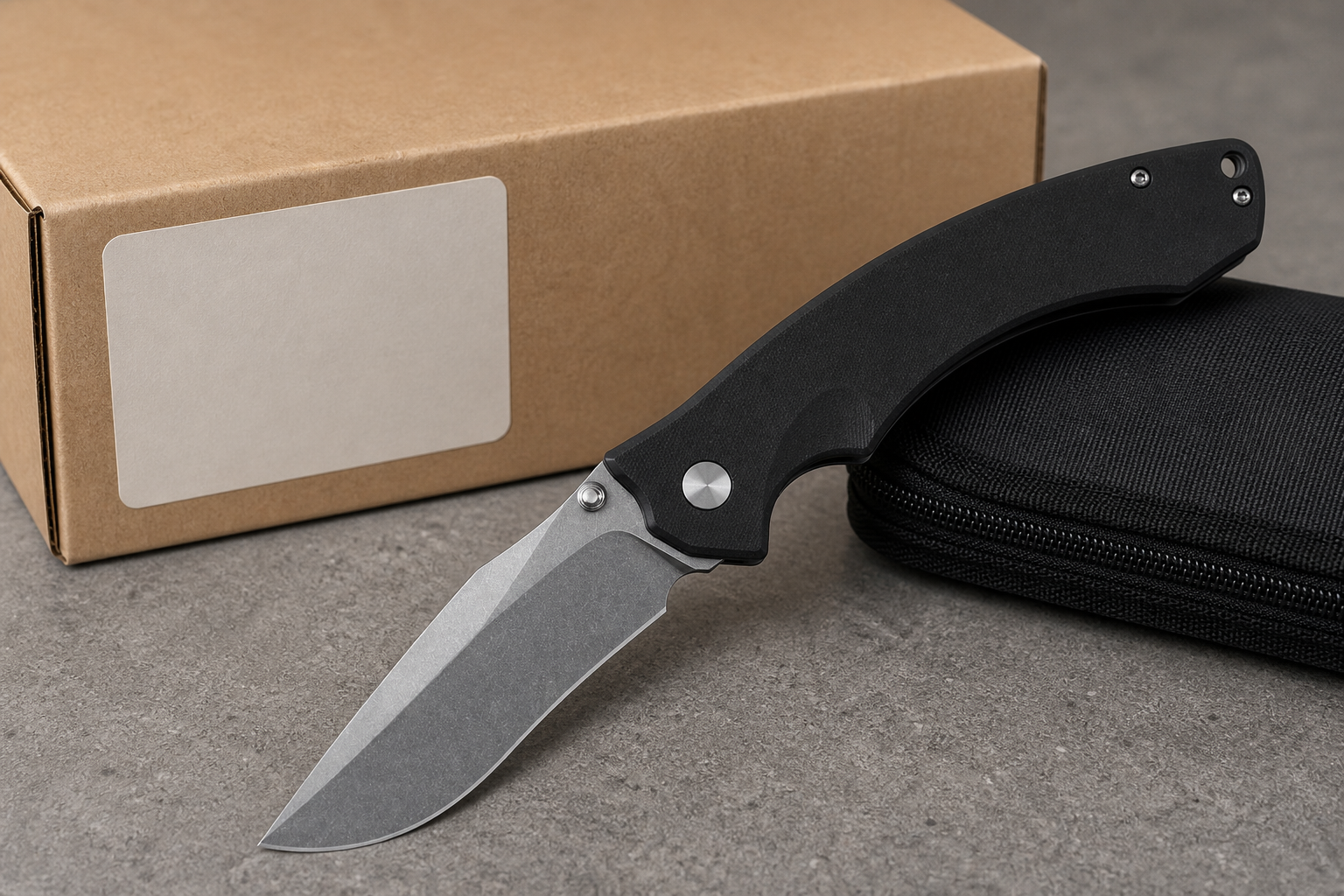
I Ask Compliance Before I Approve Samples
This article is not legal advice. Knife rules vary by country, state, city, channel, product condition, and opening mechanism. Buyers should ask counsel, customs brokers, marketplaces, and carriers before sourcing for a target market.
The USITC Harmonized Tariff Information page is a reminder that import classification is a real sourcing task, not an afterthought. Fixed blade and folding knife products may require different descriptions, product details, and document support. The buyer should not rely on a supplier's casual HS code without review.
Channel policy matters too. Some marketplaces and retailers restrict blade length, opening mechanism, age positioning, product imagery, or wording. A folding knife with a complicated mechanism may create more policy questions than a simple manual tool. A fixed blade may create more packaging and storage questions because the blade is always extended.
Compliance questions to ask:
- Which markets will receive the product?
- Is the knife fixed, folding, assisted, automatic, or manual?
- What product description will appear on invoices and listings?
- Does the channel allow this blade type and size?
- Does the carrier accept the package category?
- Are labels, warnings, and claims approved?
When Should Buyers Choose Fixed Blade, Folding Knife, or Both?
The right product mix depends on channel focus.
Buyers should choose fixed blade, folding knife, or both based on customer use, retail format, price tier, inspection capability, packaging budget, compliance comfort, and brand positioning.
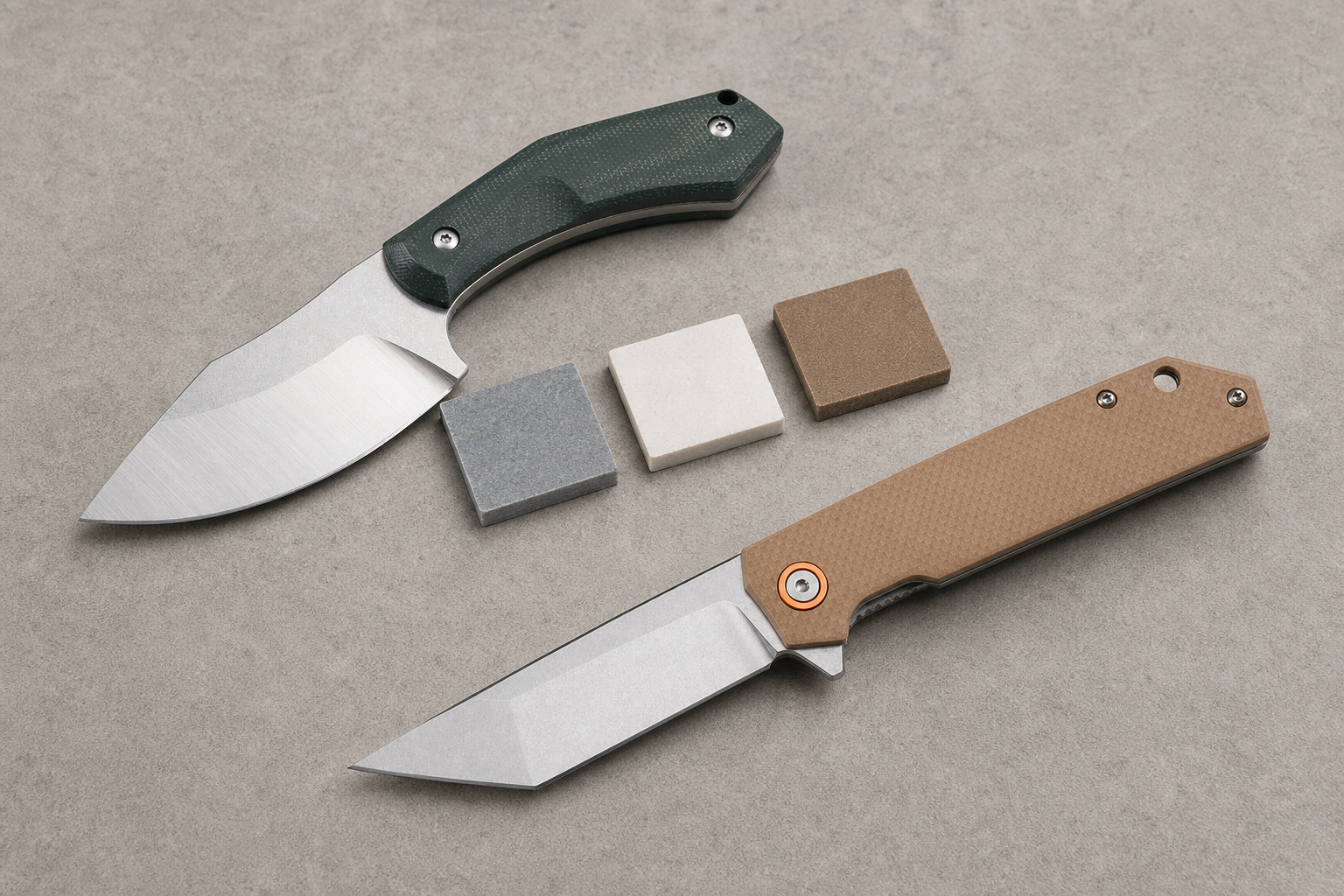
I Use a Simple Platform Decision Matrix
A buyer can sell both platforms, but each one should have its own purpose. Fixed blades may support outdoor kits, camping lines, hunting accessory programs, and workwear bundles. Folding knives may support compact EDC lines, gift sets, retail displays, and pocket-tool programs.
A simple decision matrix helps:
| Buyer priority | Fixed blade may fit when | Folding knife may fit when |
|---|---|---|
| Simple structure | Buyer wants fewer moving parts | Buyer can control pivot and lock |
| Compact carry | Sheath carry is acceptable | Pocket carry is a priority |
| Packaging size | Larger package is acceptable | Small display footprint matters |
| Inspection ability | Sheath and edge checks are manageable | Mechanism checks are manageable |
| Channel policy | Fixed blade category is allowed | Folding category and mechanism are allowed |
| Brand story | Outdoor field tool | Everyday utility tool |
The CCOHS sharp blade guidance reinforces general principles such as choosing the right tool, inspecting tools, and safe storage. For sourcing, that supports a practical point: product choice should match the job and storage method, not only appearance.
How Can Vast State Help Buyers Build the Right Spec?
Vast State can turn the platform choice into a supplier-ready brief.
Vast State helps buyers compare fixed blade and folding knife projects by building RFQ fields, drawings, material options, packaging notes, QC criteria, compliance questions, and production decision records.
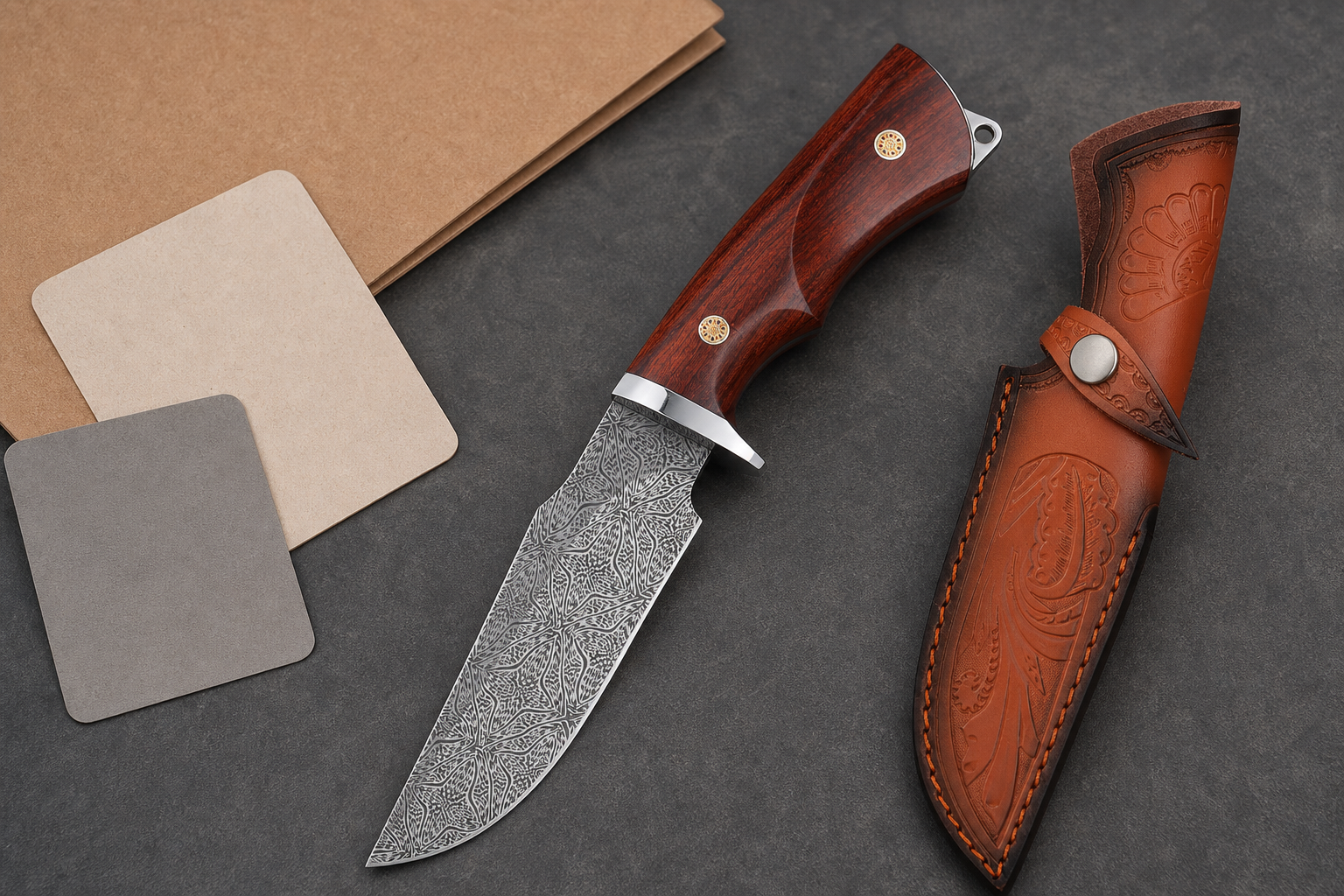
I Make the Quote Comparable Before Sampling
Two suppliers can quote the same knife idea and mean very different things. Vast State can help buyers define what must be comparable: steel, heat treatment, blade size, handle material, lock or sheath design, finish, packaging, inspection standard, documentation, and change control.
For fixed blade programs, we help organize tang type, handle system, sheath retention, package protection, and outdoor positioning. For folding knife programs, we help organize mechanism details, lock expectations, pivot hardware, closed retention, clip design, screw control, and sample review.
Vast State can support:
- Fixed blade versus folding knife platform review
- Supplier RFQ document preparation
- Material and handle option comparison
- Sheath, clip, pouch, and package planning
- Mechanism and safety documentation request
- QC checklist and inspection photo guide
- Claim and packaging copy review
- Alternative product planning when risk is high
The goal is a cleaner sourcing decision. A buyer should know why the platform was chosen before the supplier starts sampling.
Turn this article into a folding knife project.
Share your blade type, lock direction, steel preference, handle material, quantity, target market, and packaging needs. Vast State can prepare OEM/ODM options.
Conclusion
Fixed blade and folding knife sourcing should not be a casual style comparison. Buyers should compare use case, structure, cost, packaging, QC, compliance, and channel fit before approving samples.