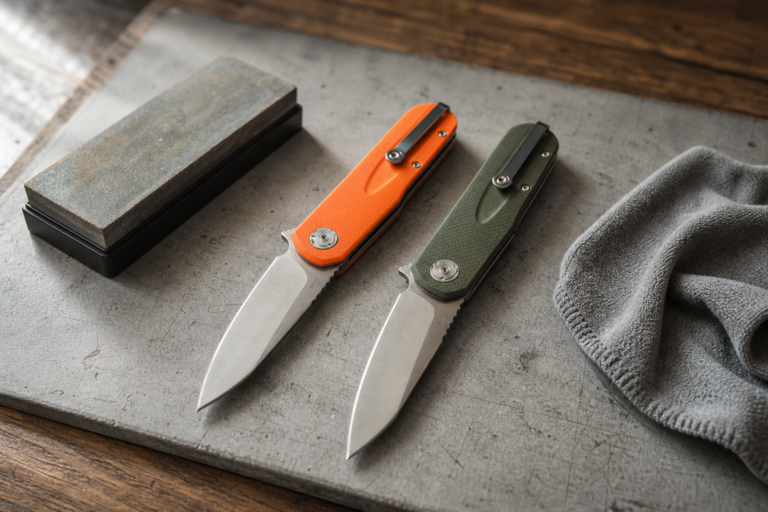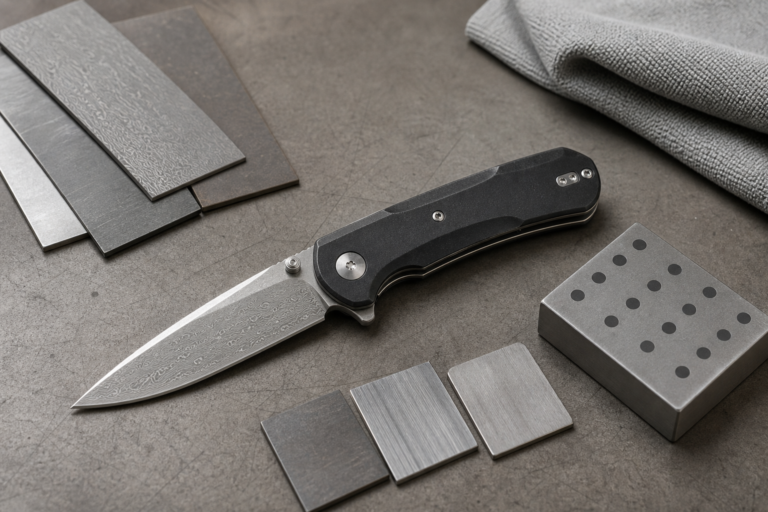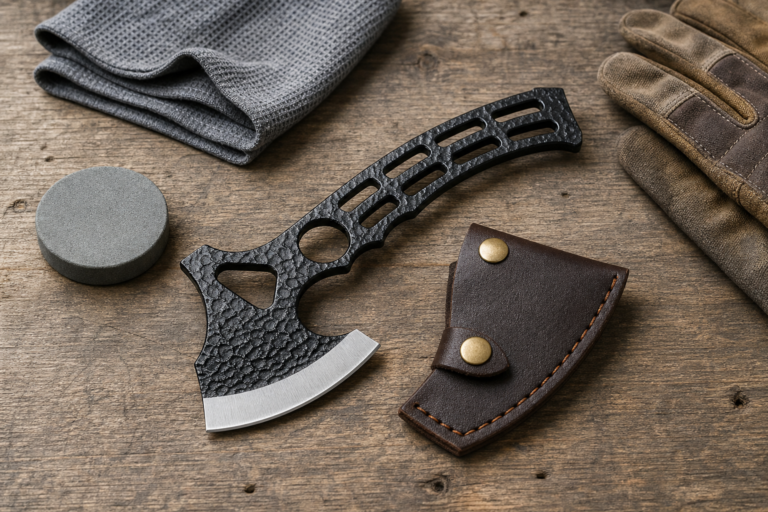
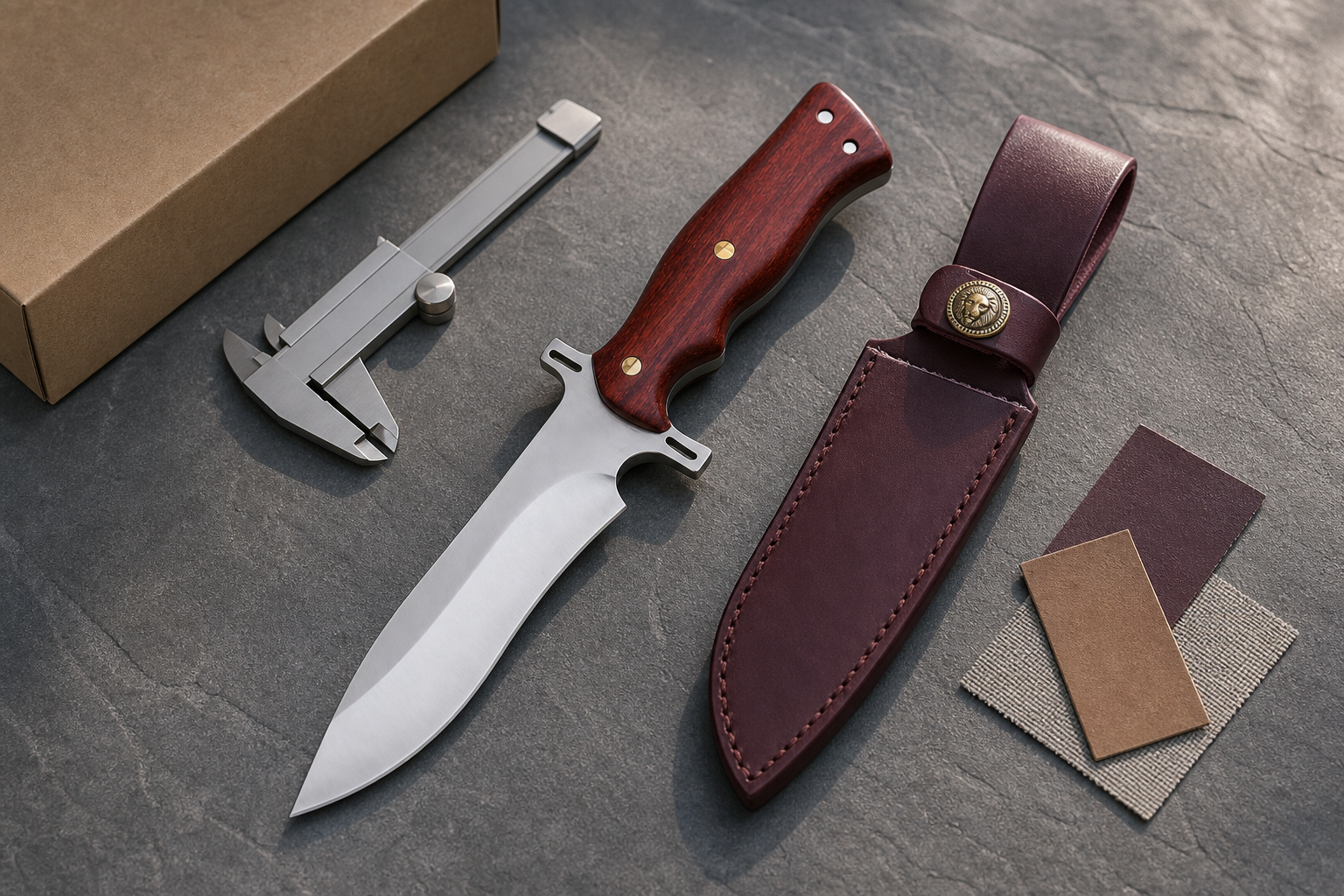
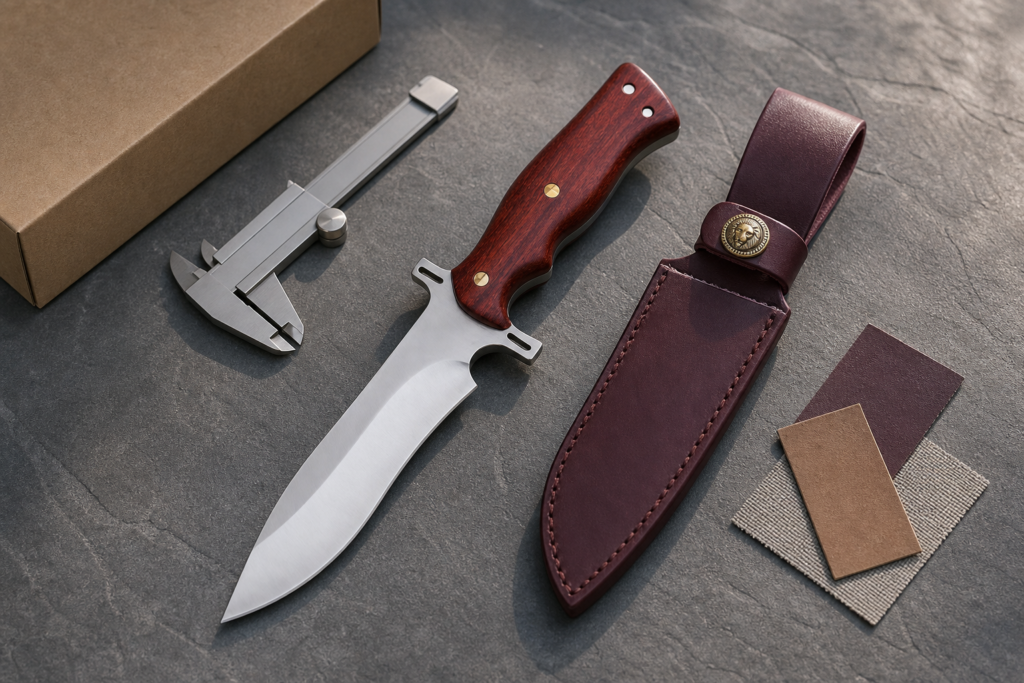
A camping knife is not chosen by looks alone. It is chosen by the tasks the buyer expects it to survive.
B2B buyers should choose camping knife specifications by defining outdoor use case, blade length, blade geometry, steel, heat treatment, handle grip, sheath or folding mechanism, corrosion resistance, safe-use copy, packaging, accessories, and QC checks before requesting OEM/ODM samples.
Quick buyer brief:
- Answer: A good camping knife brief starts with real camp tasks, not a generic "best knife" idea. The buyer should define what the knife will cut, how it will be stored, who will use it, and what claims the brand can safely make.
- Buyer context: This guide is for camping brands, outdoor brands, knife brands, EDC brands, importers, distributors, private label buyers, and OEM/ODM product managers.
- Key checks: Fixed or folding format, blade size, tip strength, grind, edge thickness, steel grade, hardness target, handle texture, sheath retention, clip or pouch fit, maintenance instructions, legal copy, packaging movement, and final inspection records.
Have a knife or multi-tool project in mind?
Send your sketch, CAD file, sample photo, or product idea. Vast State can review manufacturability, suggest materials, estimate MOQ, and prepare a quote for your OEM/ODM project.
When a buyer asks, "How do we choose a camping knife?" I do not start with a style name. I start with the campsite. Is the knife for cord, packaging, food-package opening, repair, feather-stick preparation where allowed, vehicle kits, campsite setup, or giftable outdoor retail? These tasks sound similar, but they lead to different specifications.
A camping knife article can be useful for consumers, but for an OEM/ODM buyer it should do more. It should become a product brief. It should help the buyer avoid overbuilt knives, underbuilt knives, vague rugged claims, unsafe packaging, and samples that look good but cannot be repeated in production.
Why Should Buyers Define Camping Tasks Before Choosing a Knife?
Camping knives become confusing when the task list is vague. A clear task list makes the RFQ stronger.
Buyers should define camping tasks before choosing a knife because blade size, grind, handle, sheath, steel, and packaging all depend on whether the product supports repair, cord cutting, food-package opening, kindling prep, or general camp utility.
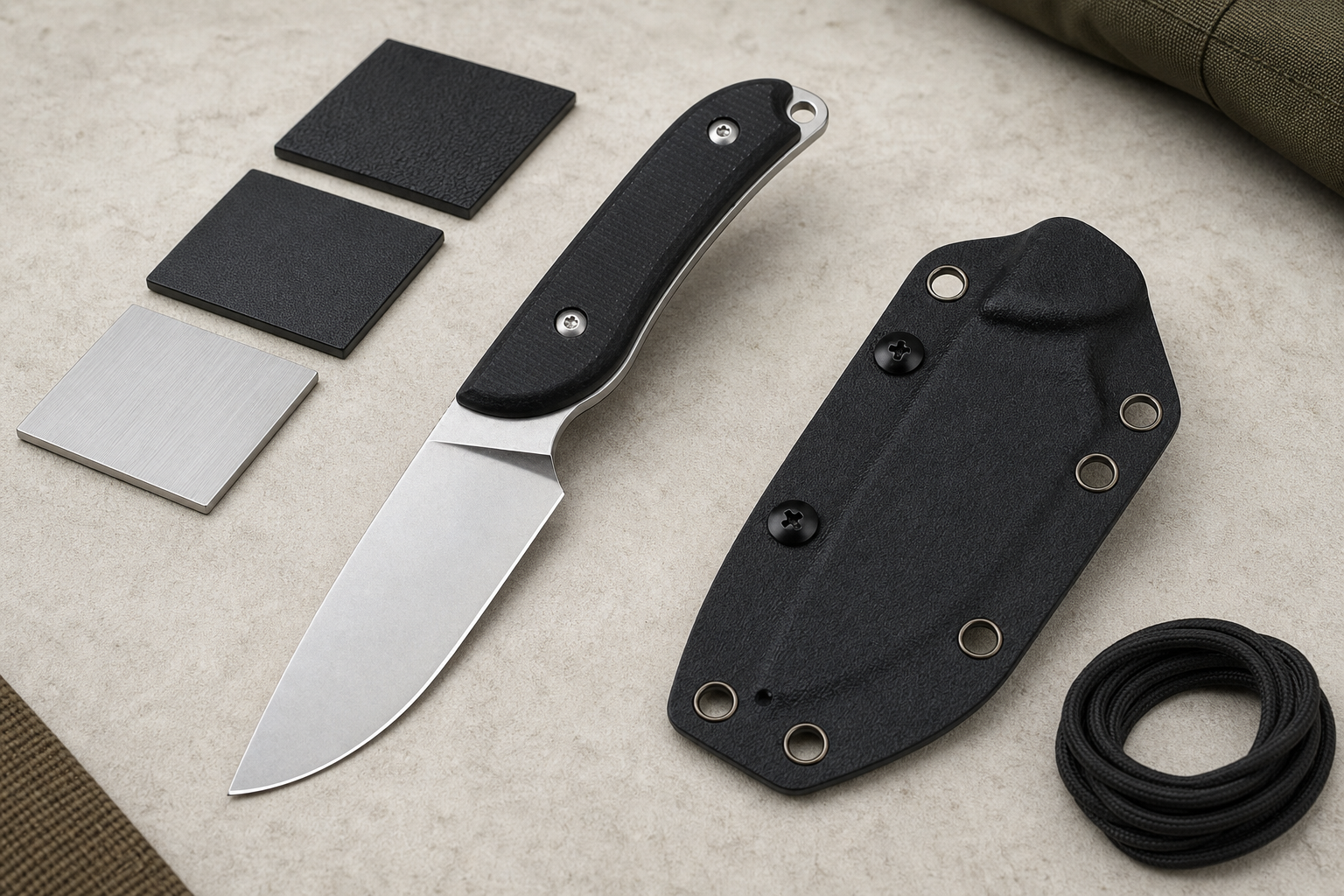
I Start With Use Cases, Not "Best Camping Knife" Claims
"Best camping knife" is not a specification. It is a search phrase. A buyer needs a use-case map. The National Park Service Ten Essentials frames outdoor preparation around systems such as repair kit and tools. That supports a practical way to think about camping knives: as one part of a broader kit, not a magic solution.
The buyer should list primary and secondary tasks. Primary tasks might include cutting cord, opening packages, shaving tinder where allowed, helping with repair tape, trimming small material, or preparing packaged food. Secondary tasks might include backup kit storage, gift-box presentation, or emergency supply positioning. Each task should be lawful, safe, and realistic.
This task list prevents overpromising. A compact folder may be enough for light campsite tasks. A fixed blade may be better for outdoor utility and sheath-based storage. A small utility blade may be more suitable for family camping kits. A heavy survival-style knife may be too much for casual retail camping lines.
| Task group | Product implication | Buyer note |
|---|---|---|
| Cord and packaging | Practical edge and safe grip | Avoid oversized blade |
| Camp repair | Durable tip and handle control | Add pouch or sheath |
| Outdoor prep | Corrosion care and easy cleaning | Define maintenance copy |
| Gift camping line | Finish and packaging quality | Avoid unrealistic rugged claims |
OEM/ODM RFQ Checklist
Prepare these details to help Vast State review your project and provide a more accurate quotation.
| RFQ Field | What to Prepare |
|---|---|
| Project type | OEM from drawing / ODM private label / wholesale catalog |
| Product category | Folding knife / fixed blade / multi-tool / outdoor tool |
| Design status | Idea / sketch / 2D drawing / 3D CAD / physical sample |
| Target price | Ex-factory target price or retail price range |
| MOQ expectation | 500 / 1,000 / 3,000 / 5,000+ pcs |
| Logo method | Laser engraving / etching / printing / molded logo |
| Packaging | Standard packaging / custom retail box / Amazon-ready |
| Market | USA / EU / Japan / Korea / Middle East / other |
| Compliance needs | Buyer-specified testing / documentation / labeling |
| Timeline | Sample deadline / mass production deadline |
Should Buyers Choose a Fixed Blade or Folding Camping Knife?
The fixed-versus-folding decision changes safety, carry, storage, and QC.
Buyers should choose fixed blades for stronger sheath-based outdoor utility and folding knives for compact lawful kit or pocket storage, while checking target-market rules, product use, and inspection complexity.
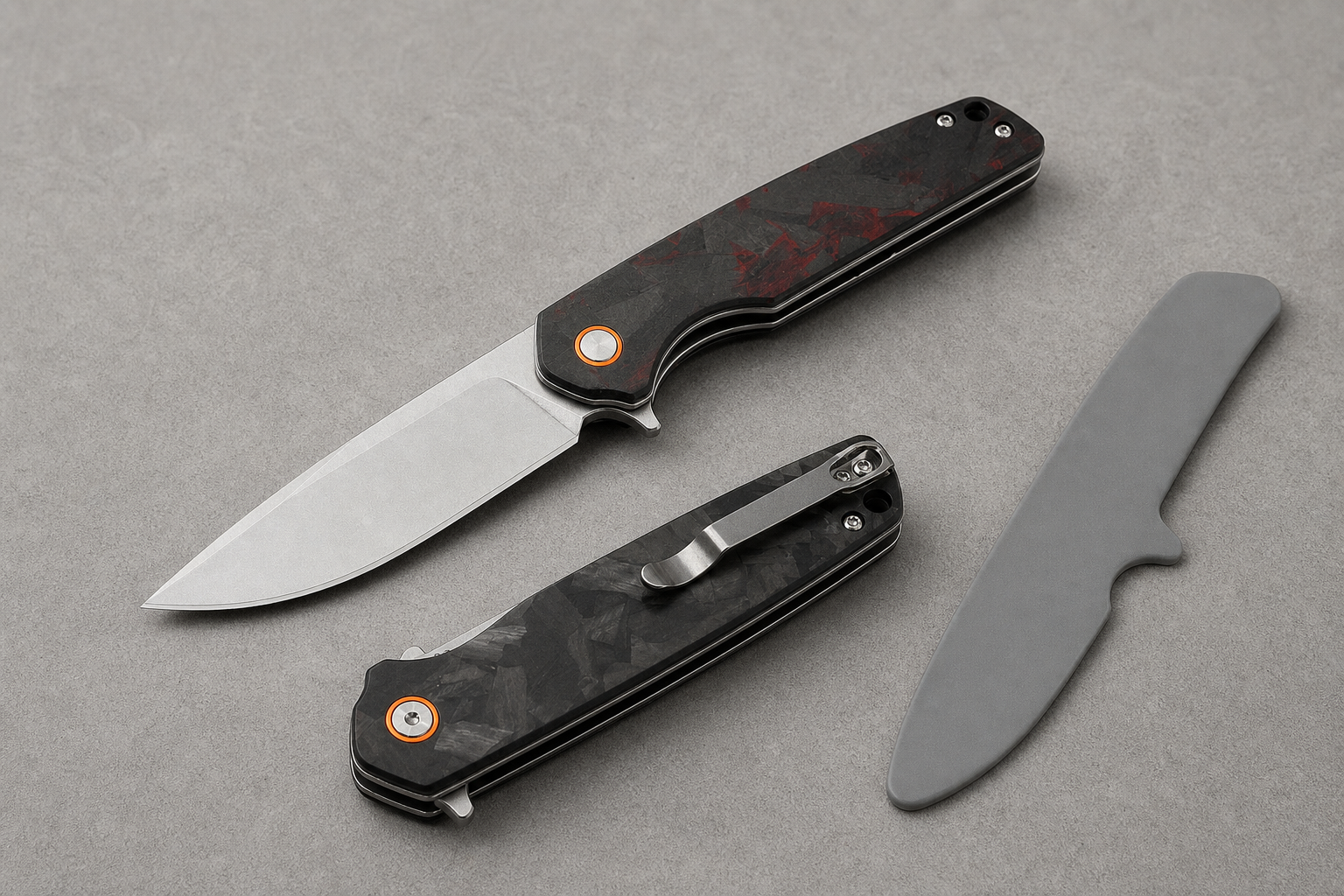
I Match Format to Storage and User Skill
A fixed blade usually gives a more direct outdoor-tool feel. It has no pivot and no folding lock to maintain. It can be easier to clean, easier to inspect, and easier to design for glove use. But it needs a good sheath. The sheath must cover the edge and point, hold the knife securely, and fit the intended storage method.
A folding camping knife can be compact and convenient where lawful and appropriate. It can fit a small kit or retail EDC-outdoor crossover line. But it has more moving parts. Pivot action, lockup, blade play, blade centering, closed-edge exposure, screw security, and clip retention all need inspection.
The right format depends on the buyer's market. If the line is for family camping and light tasks, a compact folder may be easier to position. If the line is for outdoor utility kits, a small or medium fixed blade may be more robust. If the product will be sold across several countries, the buyer should review local restrictions before choosing blade length, lock type, and carry format.
| Format | Strength | Watch point |
|---|---|---|
| Fixed blade | Simple structure and sheath-based protection | Sheath retention and packaging |
| Folding knife | Compact storage and retail flexibility | Pivot, lock, and centering control |
| Kit knife | Stored in pouch or vehicle kit | Edge protection and instructions |
| Gift outdoor knife | Finish and packaging appeal | Copy should stay realistic |
What Blade Size, Shape, and Grind Work for Camping Lines?
Blade geometry should support camp utility without turning the product into a gimmick.
Buyers should specify blade length, stock thickness, tip profile, belly, grind type, edge angle, spine finish, and sharpening access according to the camping tasks and user skill level.
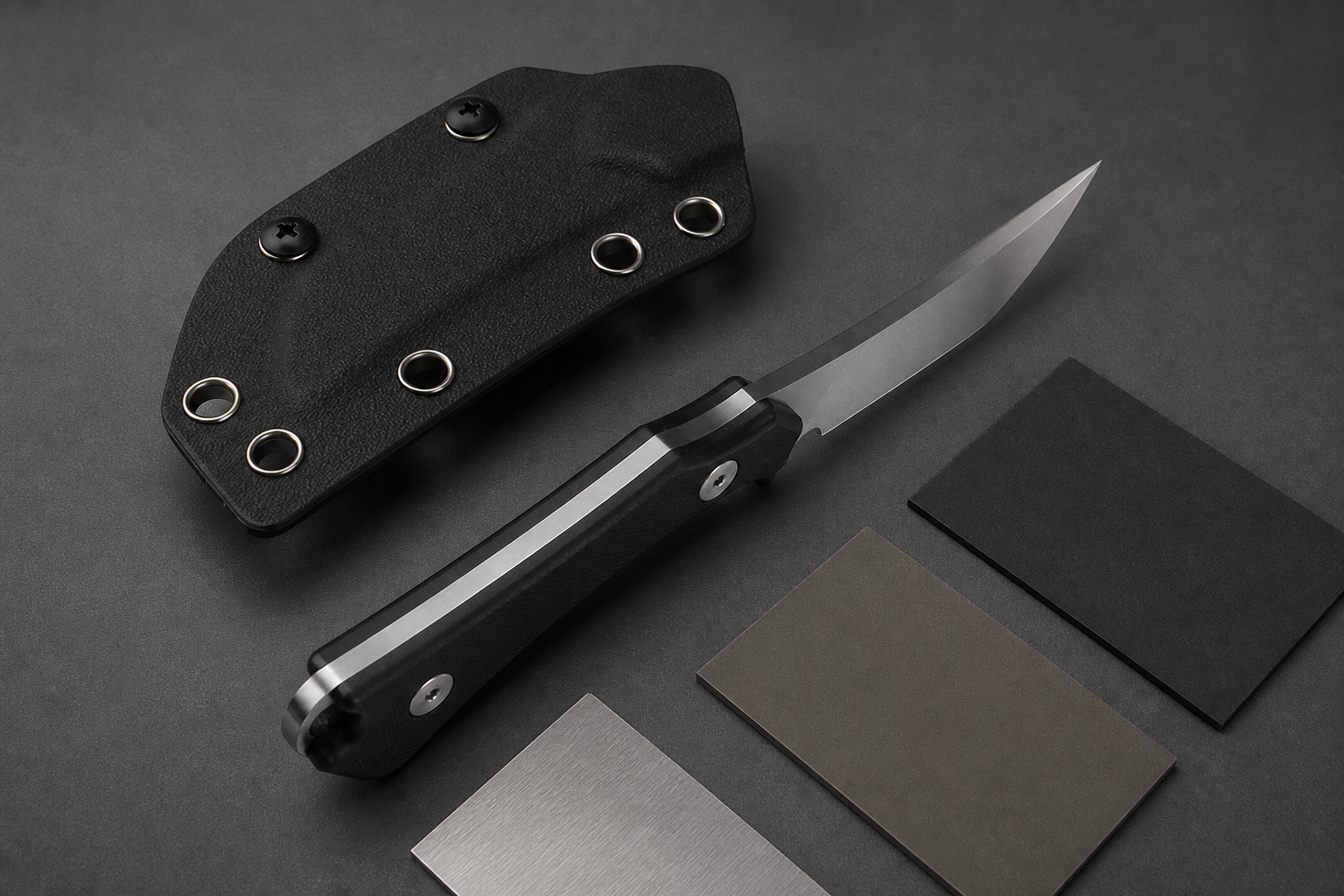
I Prefer Controlled Geometry Over Oversized Designs
Camping knives are often overbuilt in marketing images. A bigger blade can look more serious, but it may be less comfortable, harder to pack, harder to control, and more restricted in some markets. A buyer should define a practical size range instead of asking for "big and strong."
For many camping lines, a medium blade with a controlled point and enough belly for slicing is easier to position than an extreme shape. Drop point and straight back profiles are common because they are easy to explain and can support general utility. Clip point, sheepsfoot, Wharncliffe, or modified profiles can also work if the use case is specific.
Grind matters as much as outline. A flat grind may slice well. A saber grind may support a stronger outdoor look. A scandi-style grind may appeal to bushcraft-oriented markets, but it needs clear sharpening expectations. A hollow grind may not fit harder outdoor use unless the design is limited to lighter cutting tasks.
The buyer should request drawings and boundary samples for:
- Blade length and overall length
- Spine thickness and tip thickness
- Edge angle and behind-edge thickness
- Primary bevel and plunge line
- Spine finish and jimping if used
- Choil or guard geometry
- Sheath or handle clearance
How Should Steel, Heat Treatment, and Corrosion Resistance Be Chosen?
Camping knives face moisture, dirt, food residue, cord, packaging, and uneven maintenance.
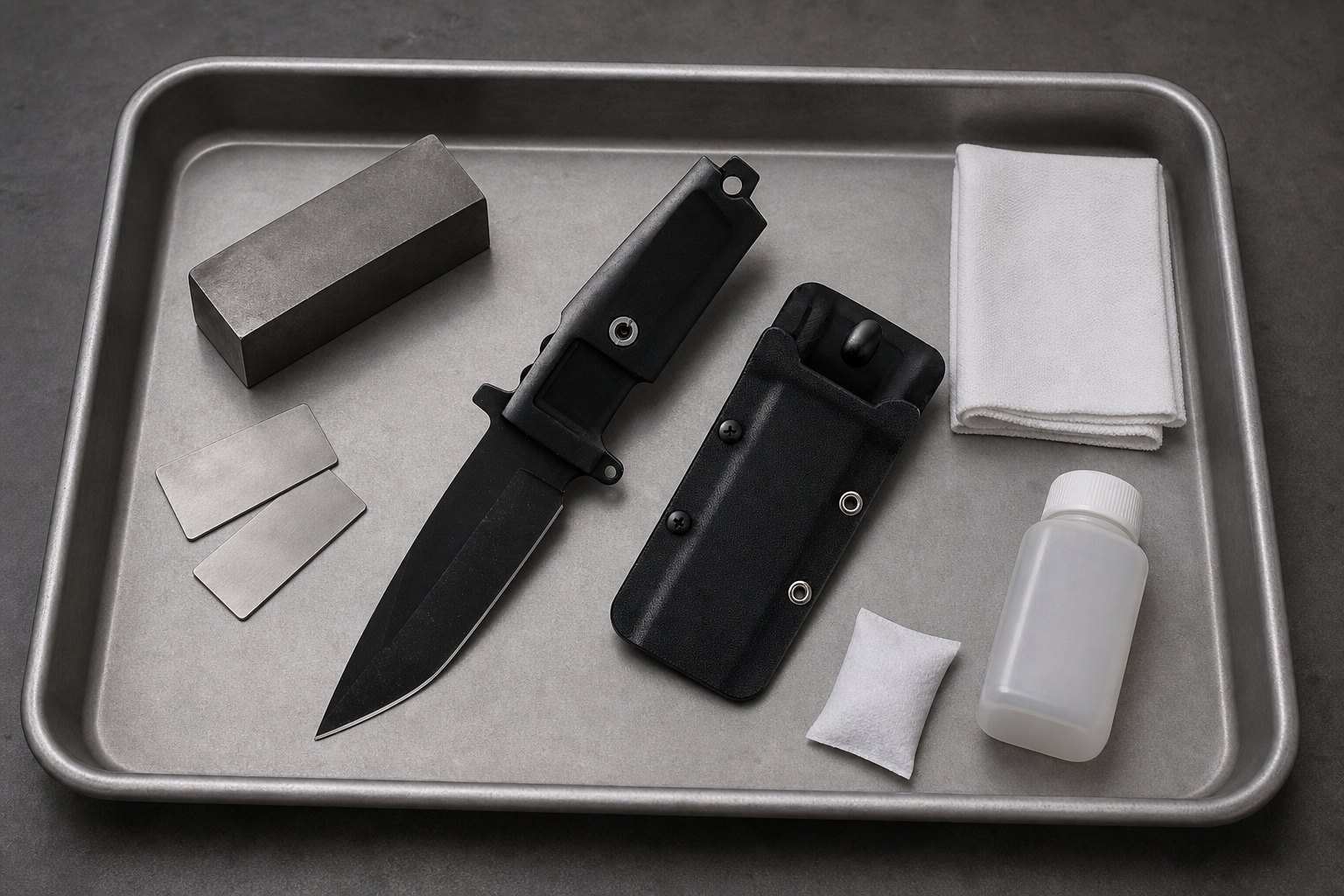
Buyers should choose steel and heat treatment by balancing toughness, corrosion resistance, edge retention, sharpening ease, target price, and care instructions for the expected camping environment.
I Ask for a Balanced Material Story
Camping customers may not sharpen perfectly or clean the knife immediately after use. That makes steel and finish choices important. Stainless steels can support corrosion-resistance positioning. Carbon steels may support toughness and easy sharpening but need clearer care instructions. Coated blades may support outdoor use but need coating adhesion and edge finish checks.
The NIST heat-treatment reference supports the principle that heat treatment changes steel properties. For a buyer, the practical question is not only "Which steel?" It is also "How will the supplier heat treat it, inspect it, and keep the result consistent?"
The buyer should ask for target hardness, heat-treatment records, warpage control, and final edge geometry. A hard blade with poor edge geometry may chip. A tough blade with poor corrosion instructions may rust in customer storage. A stainless blade with poor heat treatment may underperform. The specification must connect material, process, and use case.
| Buyer goal | Material/process decision | Supporting copy |
|---|---|---|
| Wet camping use | Stainless or coating plan | Explain cleaning and drying |
| Easy field maintenance | Sharpenable steel and edge angle | Explain care routine |
| Tougher camp utility | Heat treatment and thicker geometry | Avoid unbreakable claims |
| Premium retail feel | Better finish and tighter QC | Keep claims specific |
What Handle, Grip, and Sheath Features Matter for Camping?
The hand and storage system decide how controlled the knife feels outdoors.
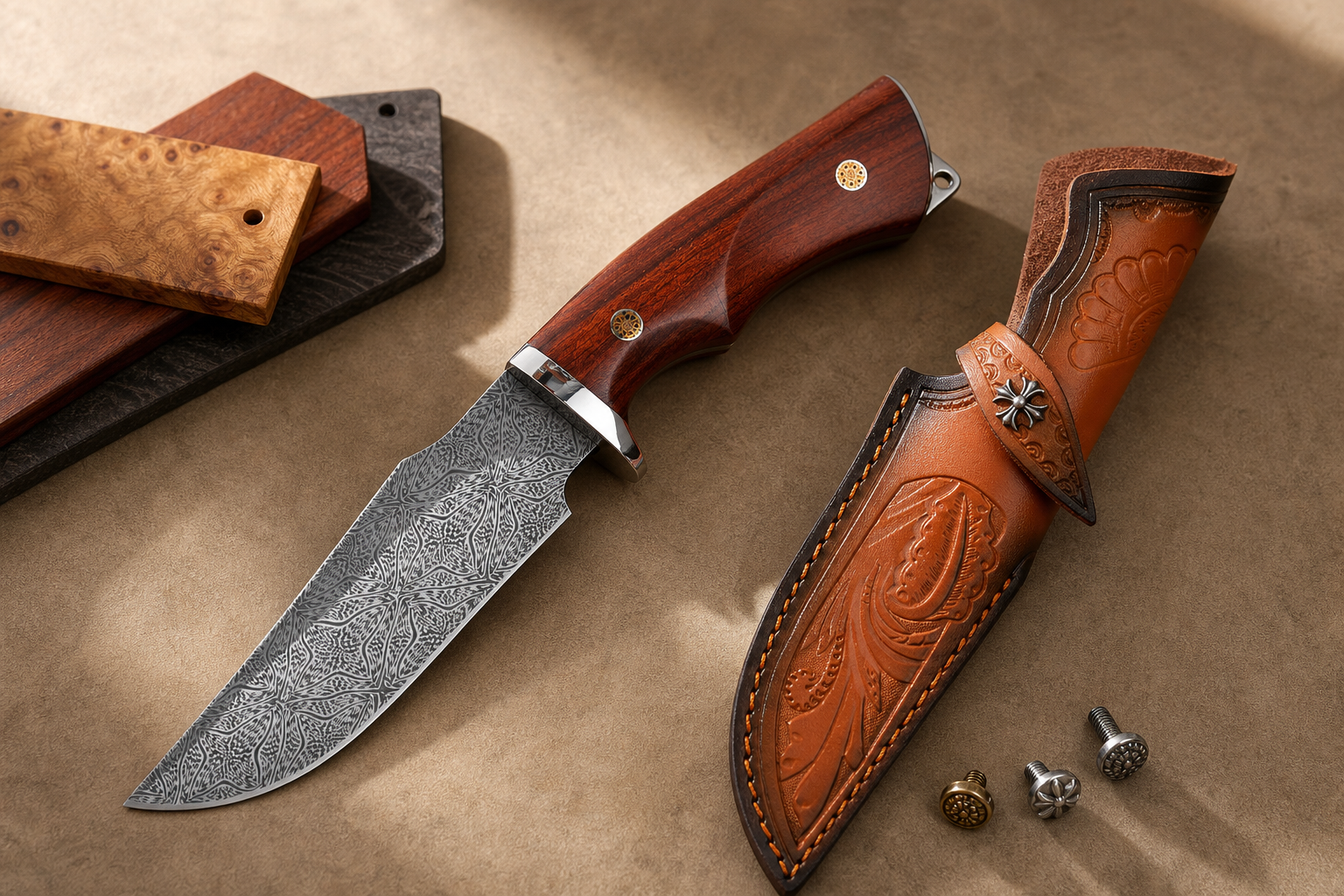
Camping knife buyers should specify handle texture, palm swell, chamfering, guard or choil, lanyard hole, fastener security, sheath retention, belt or pouch attachment, drain or cleaning needs, and packaging protection.
I Treat Grip and Sheath as Safety Features
Camping conditions are not always clean and dry. Users may wear gloves. Hands may be cold, wet, or tired. A handle that looks good in product photos may feel slippery or uncomfortable outdoors. Buyers should ask for grip texture, handle contour, edge chamfering, and surface finish samples.
The sheath or pouch matters just as much. A fixed blade needs edge and point coverage. The sheath should hold the knife securely during normal movement and shipping. A folding knife may need a clip, pouch, or kit case. Clip screws should not loosen easily. Pouch stitching and insert fit should be checked.
The CCOHS sharp blade safety guidance supports the general principle that sharp tools need controlled handling and storage. For a camping knife, that means the handle and sheath are not decorative extras. They are part of the safety system.
| Feature | Camping value | Buyer check |
|---|---|---|
| Textured handle | Better control in outdoor conditions | Grip and finish sample |
| Guard or choil | Helps hand placement | Functional review |
| Sheath retention | Covers and holds blade | Pull and shake check |
| Lanyard hole | Kit or field handling option | Placement and edge finish |
How Should Outdoor Ethics and Safe-Use Copy Be Written?
Camping knife copy should support responsible outdoor behavior.
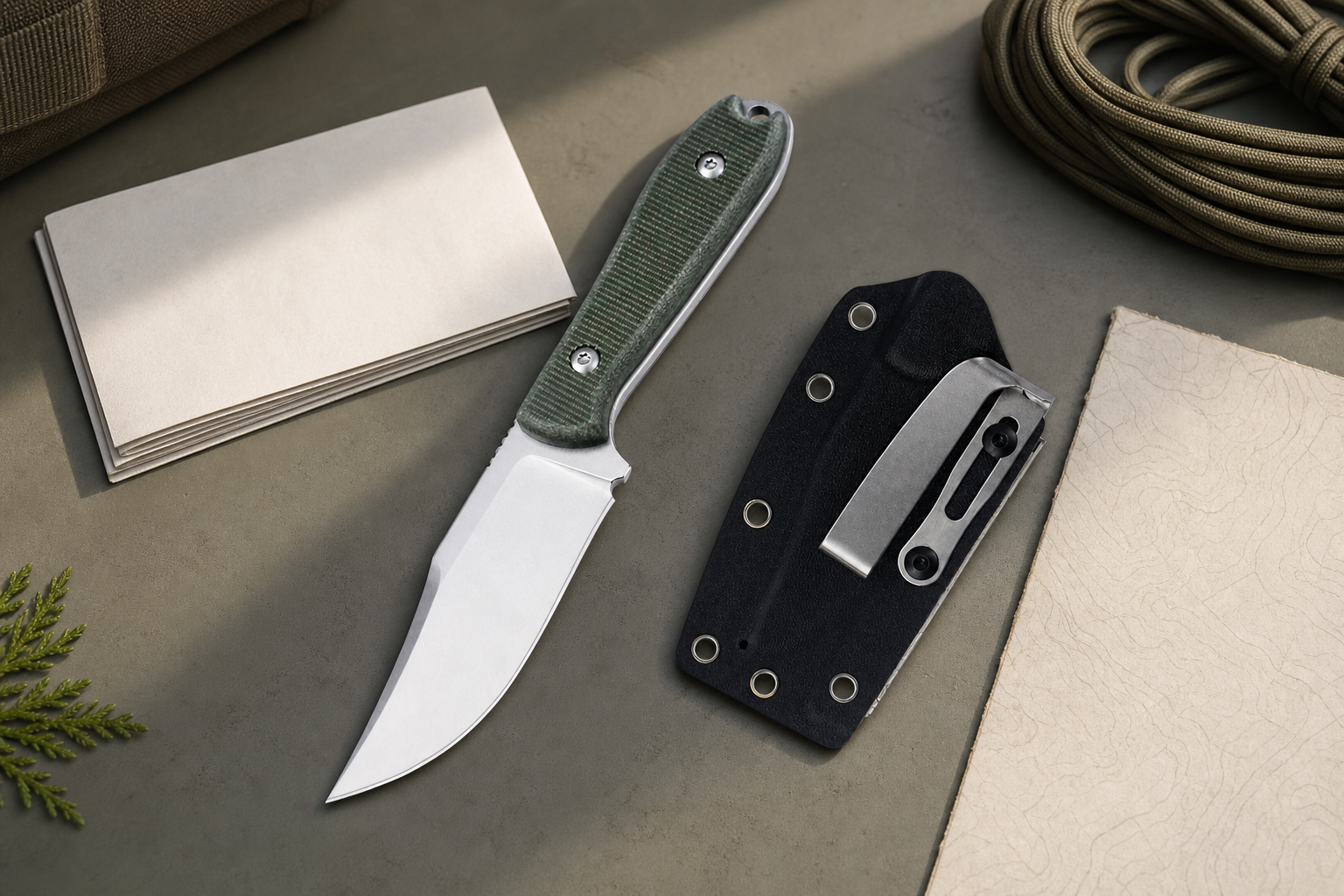
Buyers should write camping knife copy that explains lawful utility, safe storage, local rules, Leave No Trace principles, product limits, care instructions, and intended cutting tasks without self-defense or destructive-use claims.
I Avoid Copy That Encourages Misuse
Outdoor marketing can become too aggressive. A camping knife product page should not encourage cutting live trees, damaging public land, carrying into restricted places, or using the knife as a weapon. It should explain practical cutting tasks and responsible storage.
The National Park Service Leave No Trace Seven Principles gives buyers a helpful outdoor ethics frame. It supports copy that tells users to plan ahead, minimize impact, and respect the place where they camp. That does not mean a knife product page needs a long ethics lecture. It means the product should not encourage careless behavior.
Legal wording also needs care. The GOV.UK knife guidance is a reminder that knife rules can depend on blade type, age, carry context, and market. A camping knife sold globally should not claim legal carry everywhere. Travel copy should also be careful. The TSA knives guidance shows that knives are not allowed in carry-on bags and that sharp objects in checked bags need proper wrapping.
Good camping knife copy should say:
- Use only where lawful and appropriate.
- Keep blade closed or sheathed when not in use.
- Follow campsite, park, event, and local rules.
- Use only for intended cutting tasks.
- Clean and dry after use.
- Do not use as a weapon, pry bar, or throwing tool.
What Packaging, Instructions, and Accessories Should Buyers Include?
The package should protect the knife and teach the correct storage method.
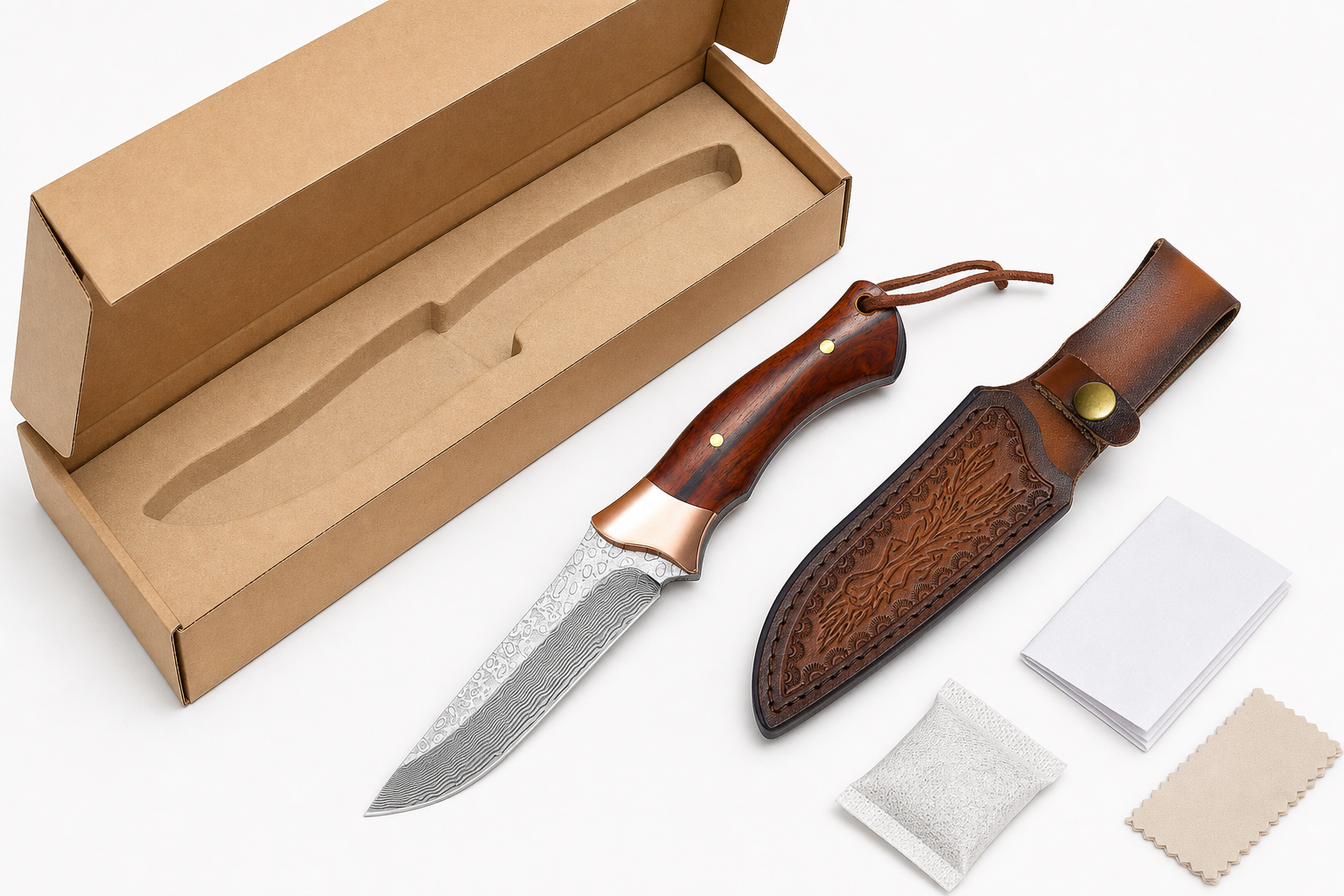
Camping knife packaging should include secure blade protection, sheath or closure instructions, safe-use warning, care guidance, material-specific maintenance, optional useful accessories, and claim wording that matches the actual product.
I Do Not Add Accessories Just to Fill the Box
Camping knives are often bundled with accessories. Some are useful: pouch, fire starter, cord, care cloth, small sharpener, or storage tin. But every accessory adds cost, QC, and customer expectation. A poor accessory can make a good knife feel cheap.
The buyer should define whether accessories support the real use case. If the knife is for a compact camping repair kit, cord and pouch may make sense. If the knife is a premium fixed blade, a better sheath and care leaflet may be more valuable than a low-quality add-on. If the steel needs maintenance, care instructions are not optional.
Packaging should also prevent movement. A knife should not rattle inside a box. A fixed blade should ship in the sheath or in secure blade protection. A folding knife should ship closed. Warning text and instructions should be present and easy to find.
| Package item | Purpose | QC check |
|---|---|---|
| Sheath or insert | Controls edge and point | Movement check |
| Instruction leaflet | Explains safe storage and care | Copy and placement check |
| Care accessory | Supports maintenance | Accessory quality check |
| Bundle item | Adds real task value | Use-case fit review |
What QC Checks Should Buyers Require Before Shipment?
Camping knife quality should be measured before the product reaches customers.
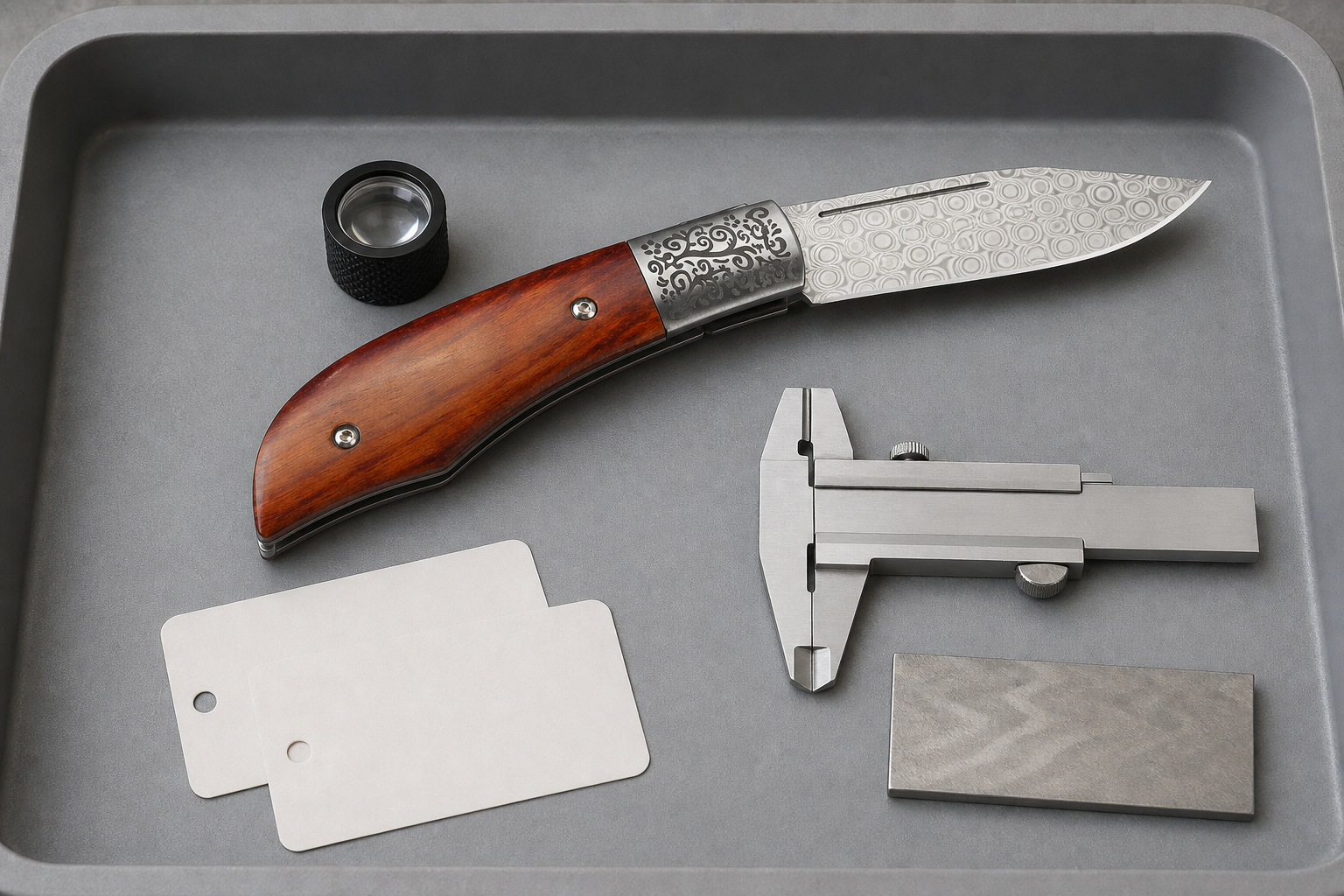
QC should verify material records, blade dimensions, hardness, edge angle, sharpness, burr control, handle fit, fastener security, lock or sheath function, corrosion-control steps, packaging movement, and instruction placement.
I Turn Outdoor Claims Into Inspection Records
If the product page says "camp ready," the buyer should define what that means. If it means corrosion resistance, inspect the finish and care instructions. If it means secure sheath, inspect retention. If it means durable edge, inspect hardness, edge geometry, and burr control. If it means easy to pack, inspect packaging, sheath, clip, pouch, and weight.
NIST dimensional metrology supports the importance of measurement in manufacturing. ISO 9001 supports the broader quality-management approach of defined requirements and records. For buyers, the practical lesson is to convert marketing claims into measurable QC checks.
I would request:
- Material record or supplier material confirmation
- Heat-treatment and hardness record
- Blade length, thickness, and tip thickness check
- Bevel symmetry, edge angle, and burr check
- Handle gap, fastener torque, and surface finish check
- Lockup, blade play, centering, or sheath retention check
- Corrosion-control step or care instruction review
- Packaging movement and warning insert check
- Final pre-shipment inspection report
This keeps the camping knife project grounded in evidence.
How Can Vast State Help Buyers Choose Camping Knife Specifications?
Vast State can help turn a camping knife idea into a controlled OEM/ODM product brief.
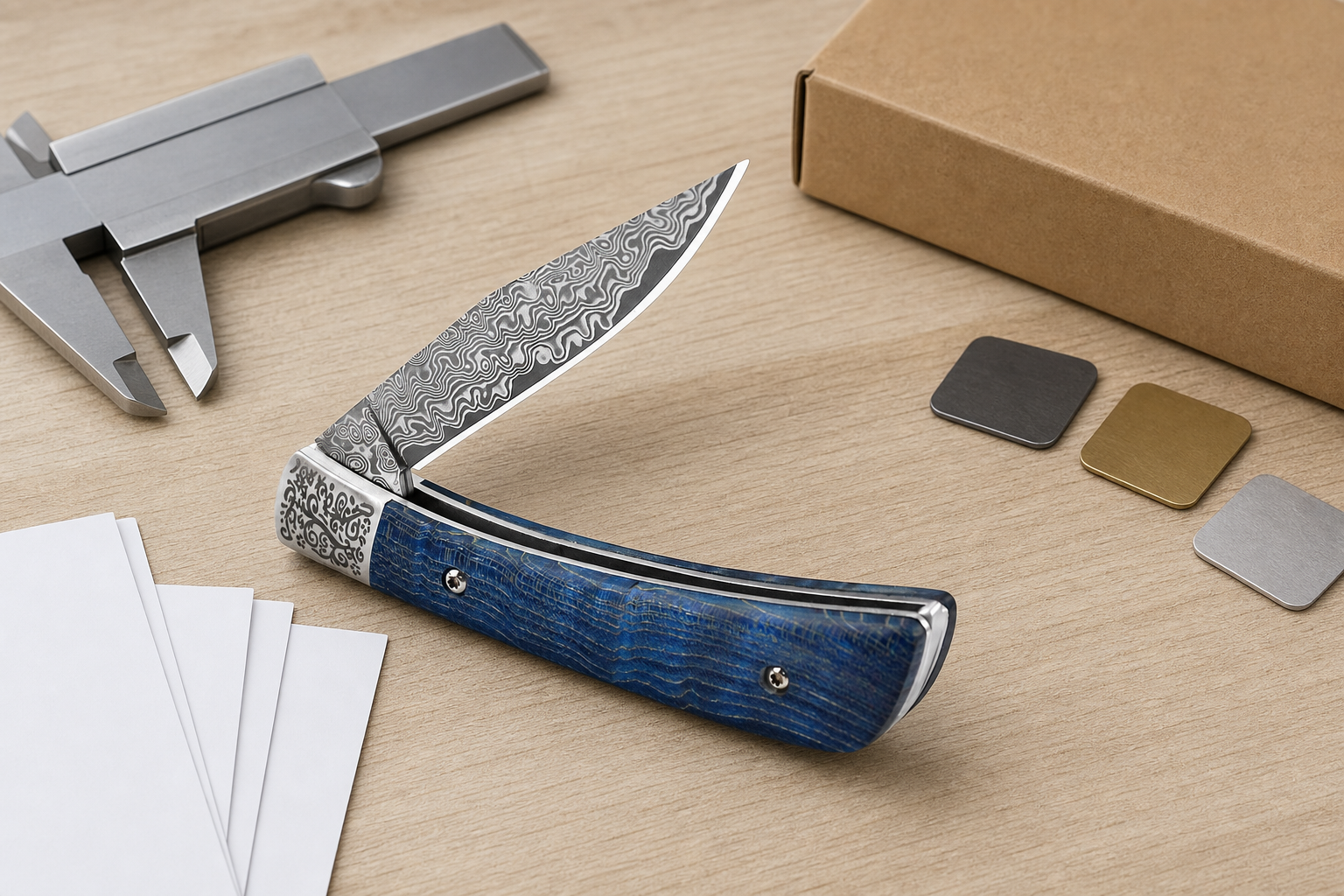
Vast State supports buyers by clarifying use case, fixed or folding format, blade geometry, steel, heat treatment, handle, sheath or clip, packaging, safe-use copy, accessories, sample standards, and QC requirements.
I Build the Camping Knife Around a Product Matrix
A useful camping knife project begins with a matrix. The rows are use cases: cord cutting, repair, light food-package opening, campsite setup, vehicle kit, gift retail, family camping, outdoor utility. The columns are product decisions: format, blade length, steel, grind, handle, sheath, packaging, accessories, copy, and QC.
That matrix keeps the buyer from asking for everything at once. A camping knife cannot be the cheapest, toughest, lightest, most premium, easiest to sharpen, highest edge retention, most compact, and most rugged product at the same time. Every specification has a tradeoff.
Vast State can help with:
- Camping knife RFQ planning
- Fixed blade versus folding format selection
- Blade profile, grind, steel, and hardness review
- Handle material, grip texture, sheath, clip, and pouch decisions
- Packaging and accessory bundle planning
- Responsible camping copy and safe-use wording
- Sample approval and boundary sample setup
- QC checklist development for mass production
The goal is not to choose a camping knife by trend. The goal is to choose a specification that matches the real campsite tasks and can be produced consistently.
Turn your idea into a quote-ready knife project.
Share your drawing, sample photo, target quantity, market, and packaging needs. Vast State will review manufacturability and prepare OEM/ODM options.
Conclusion
Choosing a camping knife for OEM/ODM production means choosing a task-based specification. Buyers should align use case, design, copy, packaging, and QC.