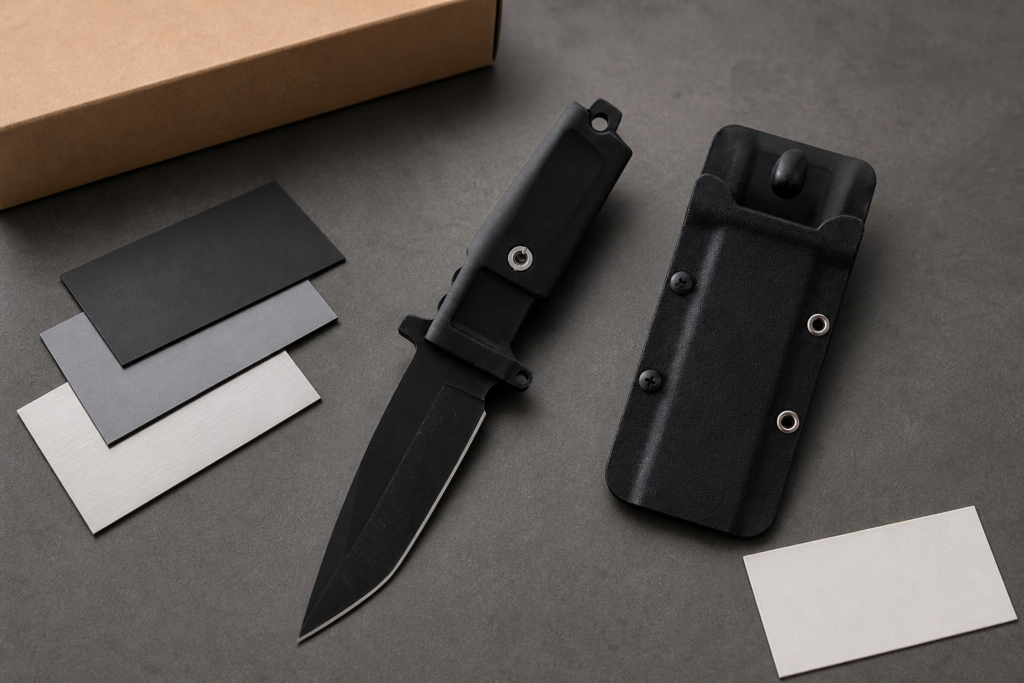
Knife making looks simple from the outside, but fixed and folding knives are built around very different risks.
B2B buyers should plan fixed and folding knife manufacturing by separating blade type, steel, heat treatment, grinding, handle construction, locking or sheath system, tolerances, packaging, safety copy, and QC records before approving samples or mass production.
Quick buyer brief:
- Answer: Fixed knives need strong blade-handle construction, sheath fit, edge protection, and outdoor or utility positioning. Folding knives need pivot control, lockup, blade centering, handle clearance, clip hardware, and repeatable assembly.
- Buyer context: This guide is for knife brands, outdoor brands, EDC brands, utility-tool buyers, importers, distributors, private label teams, and OEM/ODM sourcing managers.
- Key checks: Product category, blade steel, blanking route, machining route, heat treatment, hardness target, grind, edge angle, surface finish, handle material, pivot or tang construction, lock or sheath function, packaging, instructions, and inspection plan.
Developing a folding knife line for your brand?
Vast State supports OEM/ODM folding knife projects, including blade steel, lock structure, handle material, finish, logo method, packaging, and quality inspection planning.
When buyers talk about the art of making fixed and folding knives, I like the word art, but I do not stop there. The factory still needs drawings, tolerances, fixtures, material records, heat-treatment control, assembly checks, packaging instructions, and final inspection.
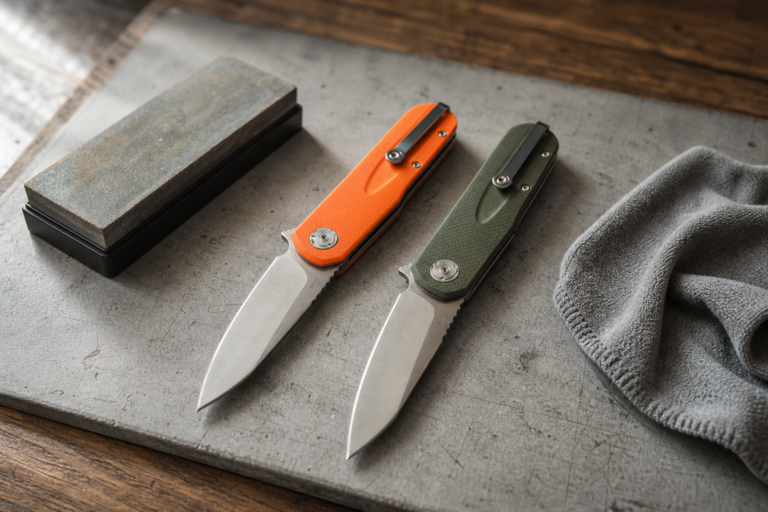
The first decision is the product route. A fixed blade is usually simpler in mechanism but more dependent on blade-tang strength, handle fit, sheath safety, and outdoor or utility positioning. A folding knife is more compact, but it adds pivot geometry, washers or bearings, lock surfaces, blade centering, detent or backspring feel, and clip hardware. If the buyer treats them as the same project, the risk shows up in samples.
Why Should Buyers Separate Fixed and Folding Knife Manufacturing Routes?
Fixed and folding knives share steel and edge work, but their product risks are different.
Buyers should separate fixed and folding knife routes because fixed blades depend on tang, handle, and sheath control, while folding knives depend on pivot, lock, clearance, blade centering, and assembly repeatability.
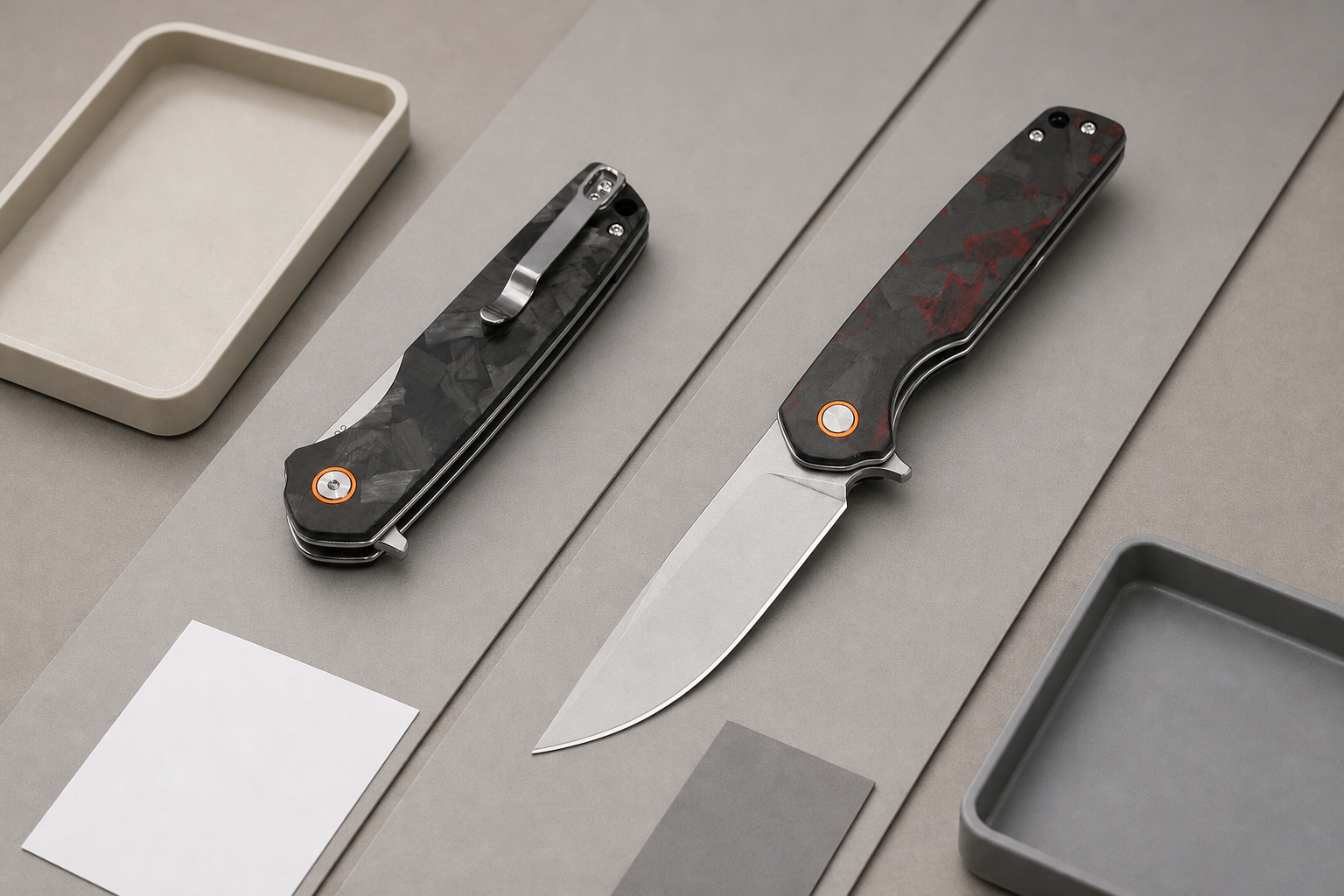
I Start With Product Architecture, Not Aesthetic Style
A knife is a cutting instrument with a blade and handle. The Britannica knife overview gives that basic frame, but OEM/ODM buyers need to go deeper. The manufacturing route depends on whether the blade is fixed or folding.
Fixed blades often have fewer moving parts. That does not make them automatically easier. Full tang, hidden tang, skeleton tang, overmolded handle, riveted scales, guard, pommel, and sheath fit all need control. If the sheath is weak or the handle fit is poor, the product fails even if the blade is good.
Folding knives add mechanical behavior. Pivot holes, stop pin contact, lock interface, backspring tension, detent, washers, bearings, liners, spacers, screws, and clip position all matter. Small dimensional drift can create blade play, poor centering, lock slip, stiff action, or edge exposure when closed.
| Product route | Main manufacturing risk | Buyer focus |
|---|---|---|
| Fixed blade | Tang strength, handle fit, sheath safety | Structure and protection |
| Folding knife | Pivot, lock, centering, clearance | Mechanism and assembly |
| Both | Steel, heat treatment, grinding, finish | Process control |
| Both | Packaging and instructions | Responsible product launch |
OEM/ODM RFQ Checklist
Prepare these details to help Vast State review your project and provide a more accurate quotation.
| RFQ Field | What to Prepare |
|---|---|
| Project type | OEM from drawing / ODM private label / wholesale catalog |
| Product category | Folding knife / fixed blade / multi-tool / outdoor tool |
| Design status | Idea / sketch / 2D drawing / 3D CAD / physical sample |
| Target price | Ex-factory target price or retail price range |
| MOQ expectation | 500 / 1,000 / 3,000 / 5,000+ pcs |
| Logo method | Laser engraving / etching / printing / molded logo |
| Packaging | Standard packaging / custom retail box / Amazon-ready |
| Market | USA / EU / Japan / Korea / Middle East / other |
| Compliance needs | Buyer-specified testing / documentation / labeling |
| Timeline | Sample deadline / mass production deadline |
What Does a Fixed Blade Manufacturing Flow Usually Include?
A fixed blade is straightforward only when the tang, handle, and sheath are specified early.
Fixed blade manufacturing usually includes steel preparation, blanking or forging, profiling, hole drilling, heat treatment, straightening, grinding, handle fitting, surface finishing, sharpening, sheath fitting, packaging, and inspection.
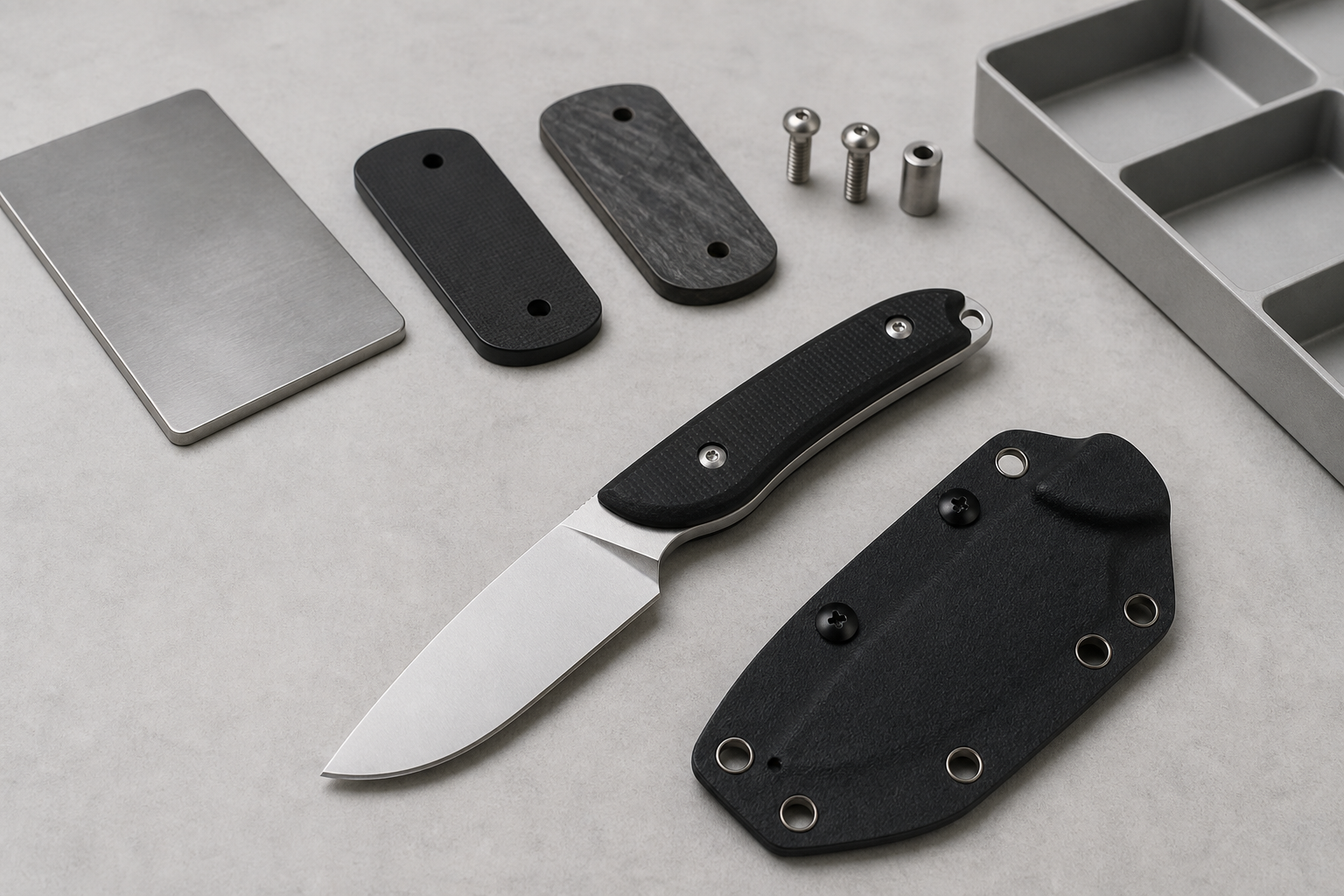
I Treat the Tang as the Foundation
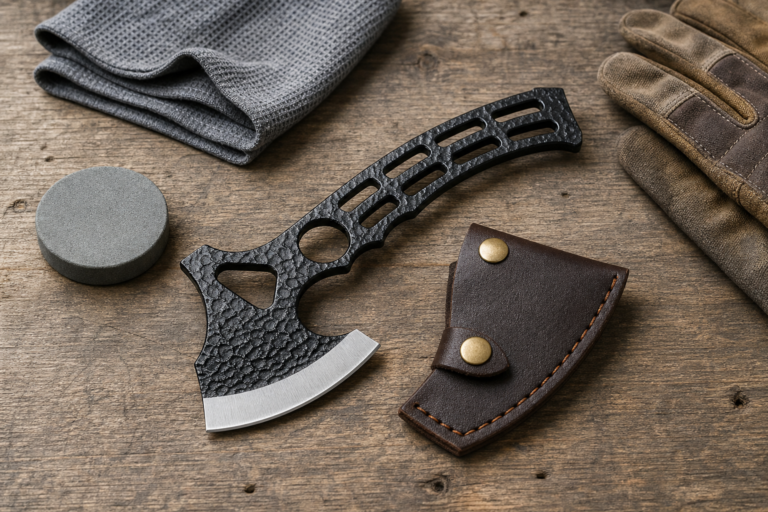
For fixed blades, the tang design is a major decision. A full tang can support rugged positioning and visible scale construction. A hidden tang may support a different style, guard, or handle shape. A skeleton tang can reduce weight. An overmolded handle can support comfort and volume production if tooling is justified.
The buyer should specify tang thickness, hole positions, handle scale fit, fastener type, adhesive or mechanical retention, guard or choil design, and the transition from blade to handle. If the tang and handle are not aligned, the knife may have gaps, sharp edges, weak feel, or poor retail appearance.
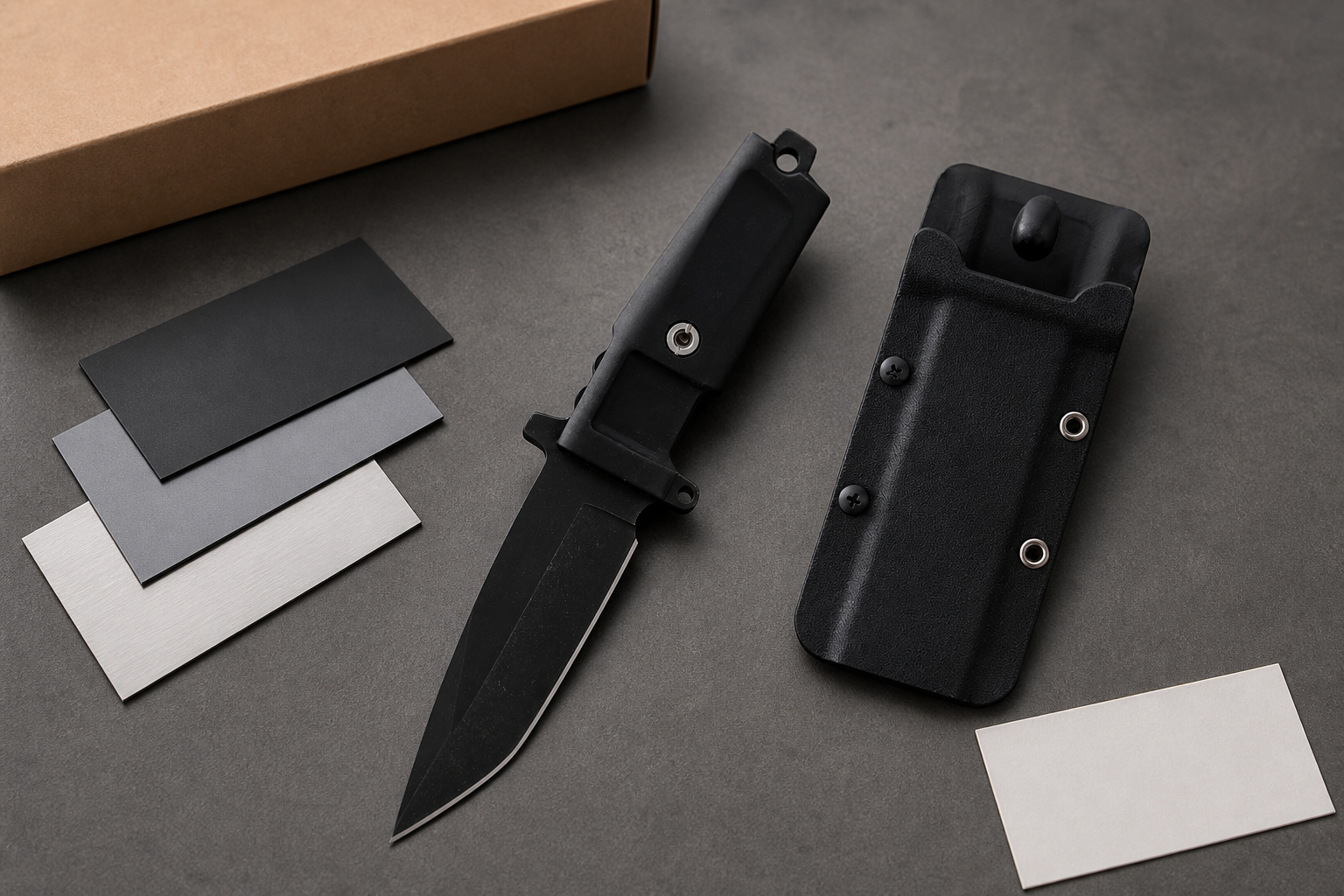
The sheath should be developed at the same time. A fixed blade without a reliable sheath is not ready for sale. The sheath should cover the edge and point, hold the knife securely, resist normal packaging movement, and support the intended carry or storage method where lawful.
For RFQs, I ask for a fixed-blade flow that names every major step:
- Steel purchase and incoming check
- Blanking, forging, stamping, laser cutting, or machining route
- Profiling and tang hole machining
- Heat treatment and straightening
- Primary grinding and surface finish
- Handle assembly and fastener control
- Sheath fitting and retention check
- Sharpening, cleaning, packaging, and final inspection
What Does a Folding Knife Manufacturing Flow Usually Include?
A folding knife is a small mechanical product. The blade is only one part of the system.
Folding knife manufacturing usually includes blade blanking, pivot and stop-pin machining, heat treatment, grinding, handle or liner machining, lock surface fitting, washer or bearing assembly, action tuning, blade centering, clip assembly, sharpening, packaging, and inspection.
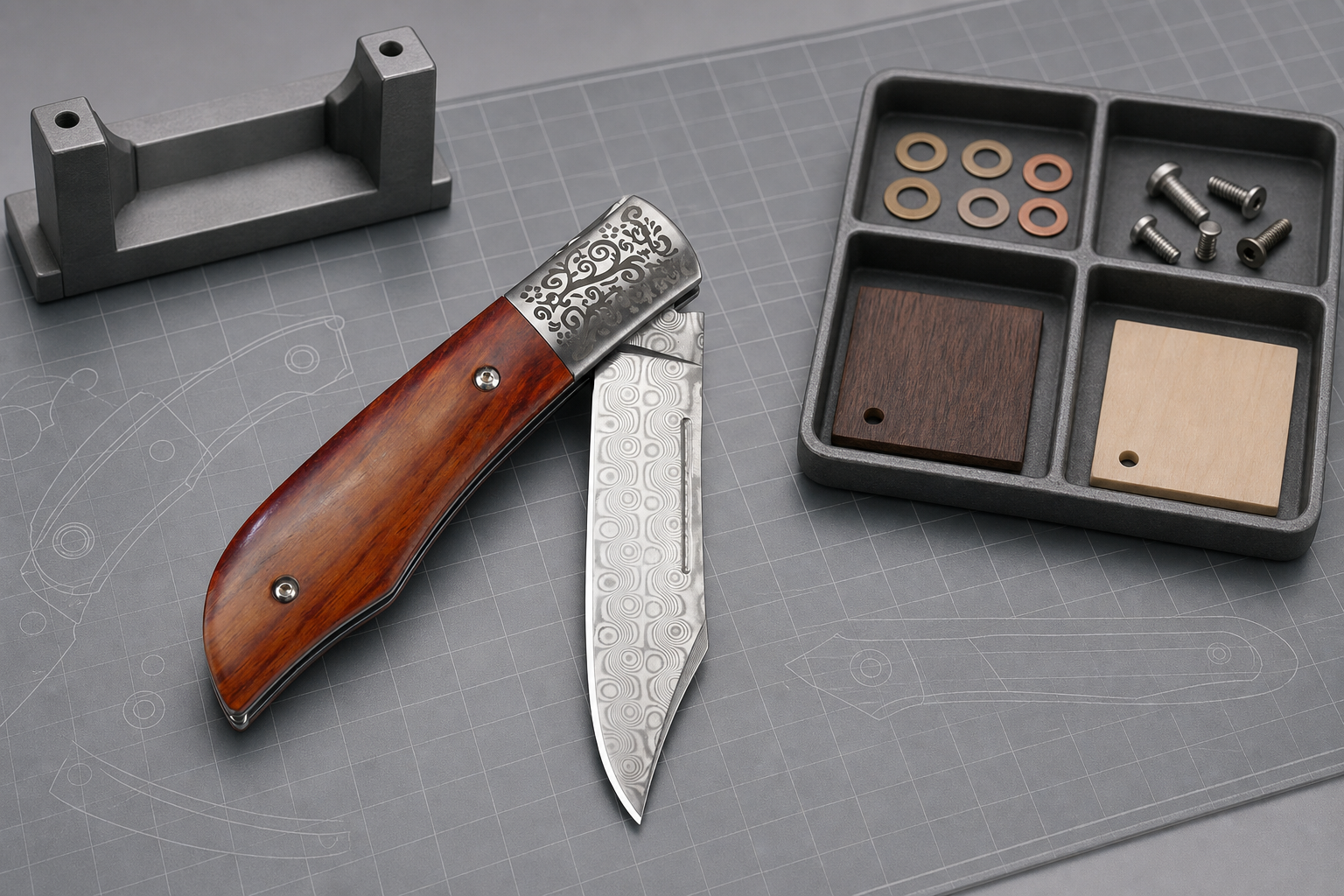
I Ask for Mechanism Requirements Before I Approve Styling
Folding knives need more mechanical definition than many buyers expect. The opening method, lock type, handle construction, washer or bearing choice, clip style, and closed-blade clearance should be defined before sample approval. If not, the supplier may make a sample that looks close but cannot be repeated in production.
Pivot hole position is critical. Stop pin contact controls the open position. Lock surfaces control engagement. Handle scale and liner thickness affect clearance. Screw length affects assembly. Clip screws can interfere with the blade if they are too long. Small mistakes can produce real user complaints.
The buyer should decide whether the knife is a simple two-hand folder, thumb-stud folder, flipper-style manual folder, lock-back, liner lock, frame lock, slip-joint, or another approved route. Some opening and locking mechanisms may require additional market review, so the product manager should not treat mechanism choice as only a user-experience decision.
| Folding feature | Why it matters | Buyer request |
|---|---|---|
| Pivot system | Controls action and blade play | Pivot tolerance and assembly spec |
| Lock interface | Controls open-blade security | Lock engagement criteria |
| Closed clearance | Controls storage safety | Edge exposure inspection |
| Clip hardware | Controls carry convenience | Screw and pull test |
How Should Steel, Heat Treatment, and Grinding Be Controlled?
Steel names do not make quality by themselves. Process control does.
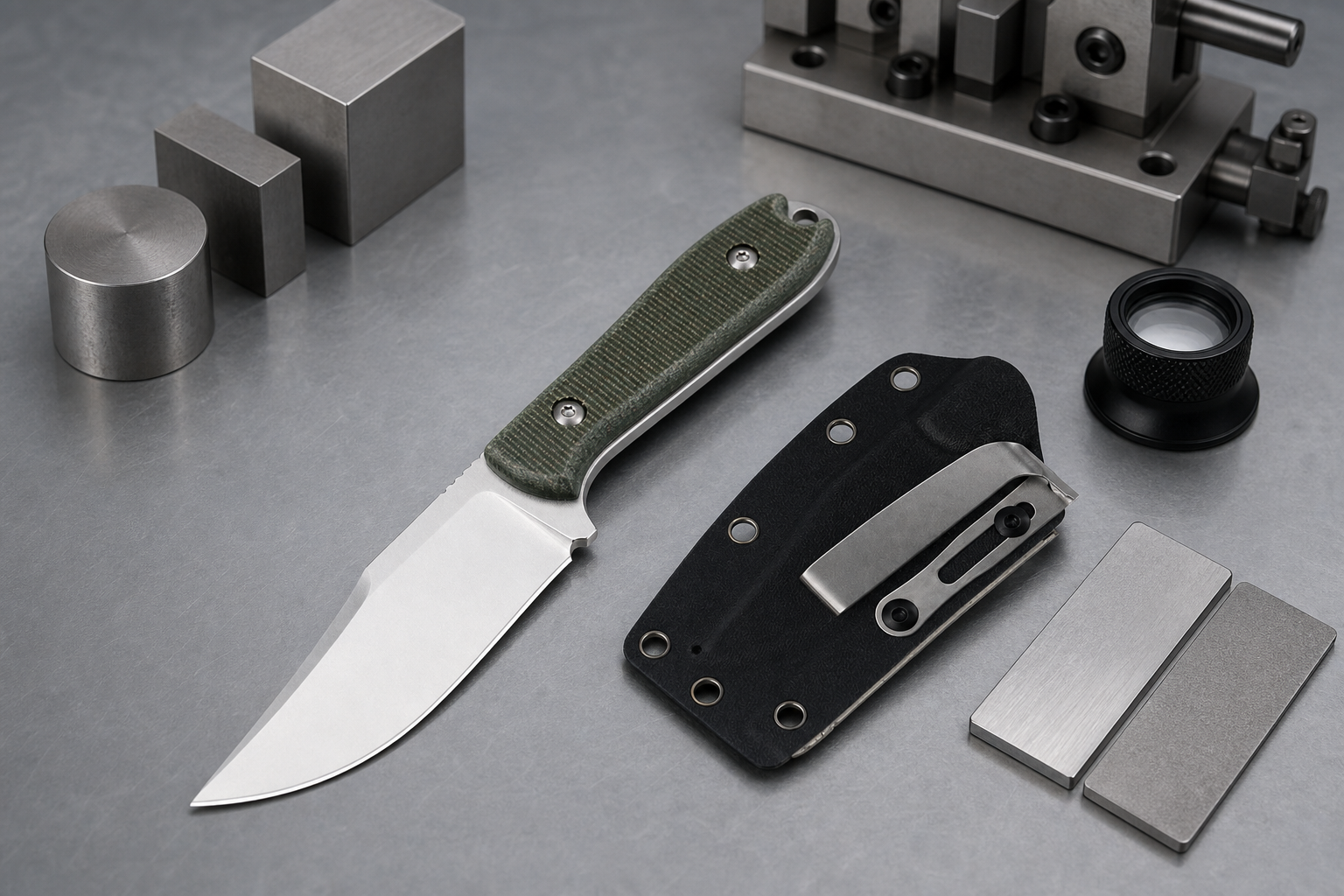
Buyers should control steel grade, material traceability, blank condition, heat-treatment route, hardness range, straightening, grind type, bevel symmetry, edge angle, surface finish, and final sharpness standard.
I Separate Material Choice From Performance Proof
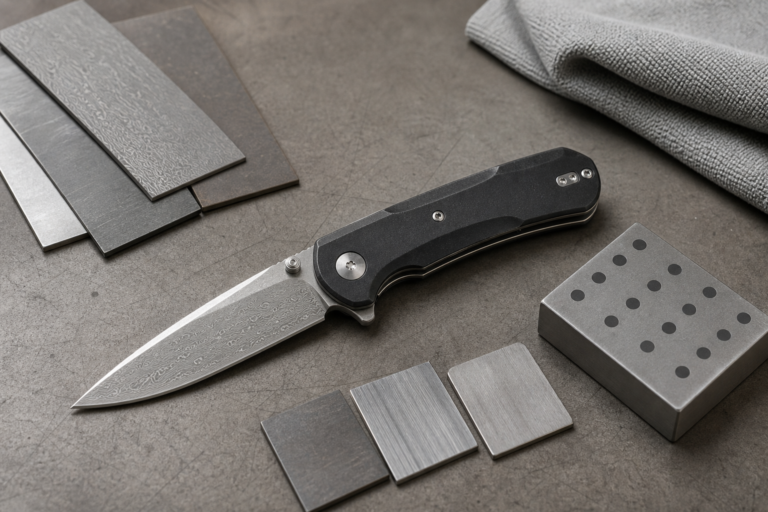
A buyer may request D2, 9Cr, 14C28N, 420, 440, AUS series, carbon steel, or a premium steel. The name matters, but only with correct heat treatment and geometry. A poorly heat-treated premium steel can disappoint. A well-controlled mid-range steel can perform reliably within its intended price tier.
The NIST heat-treatment reference supports a basic technical point: heat treatment changes steel properties. In sourcing terms, the buyer should ask for heat-treatment route, target hardness, hardness testing method, and batch records.
Grinding also needs control. A thick outdoor fixed blade may use a different grind than a thin folding knife. If the blade is too thick behind the edge, it may cut poorly. If the edge is too thin for the use case, it may chip or roll. If grinding overheats the edge, performance can suffer even after good heat treatment.
I usually ask the supplier to define:
- Steel grade and material record
- Blank route and grinding allowance
- Heat-treatment process and hardness range
- Straightening and warpage limits
- Grind type and bevel symmetry
- Edge angle and sharpening standard
- Surface finish and coating requirement
- Rust-prevention or care instructions
How Should Handles, Fasteners, Sheaths, and Clips Be Planned?
The parts around the blade often create the most visible customer complaints.
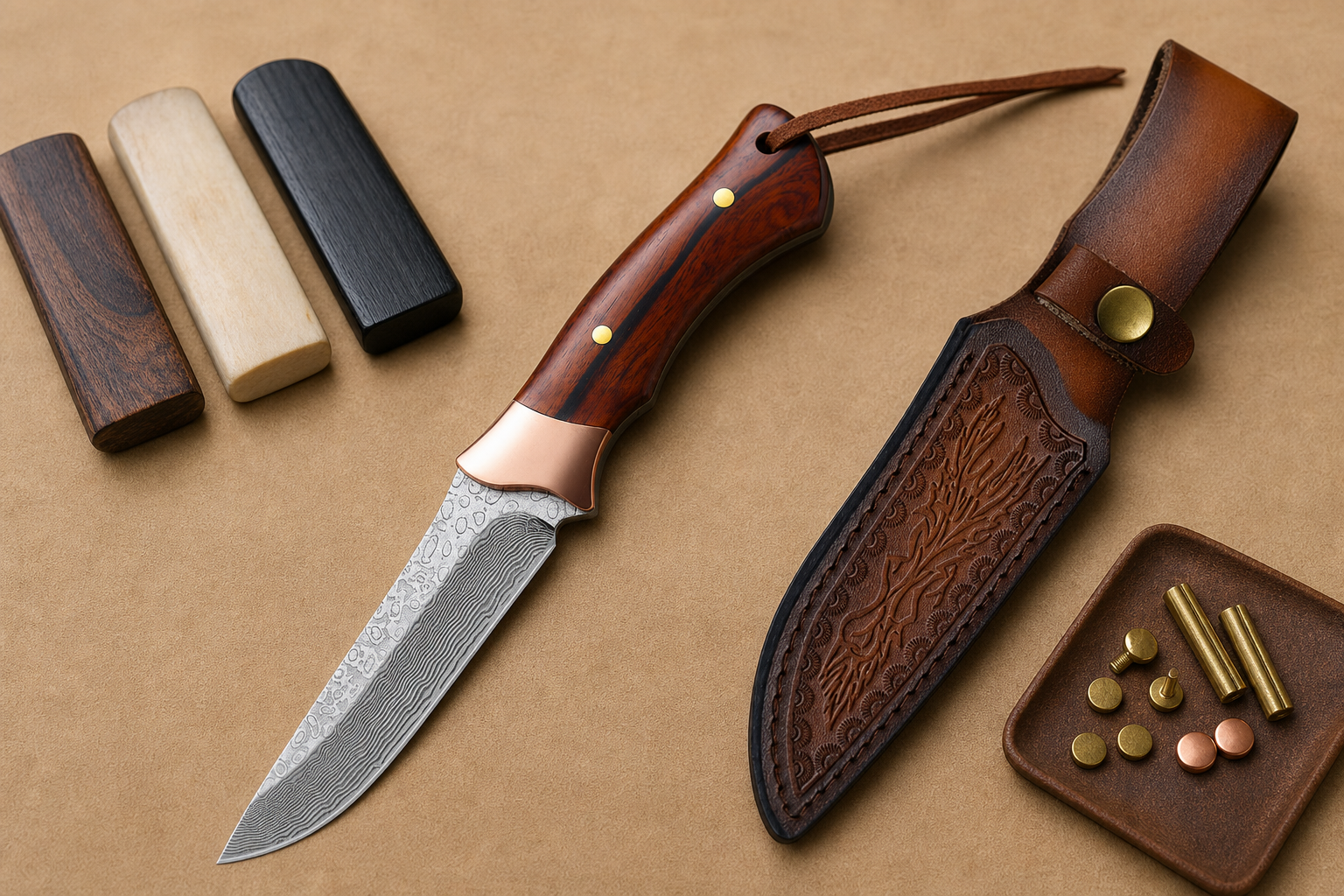
Buyers should plan handle material, scale fit, fastener type, adhesive or mechanical retention, texture, chamfering, pocket clip strength, sheath retention, and packaging protection as part of the core specification.
I Treat Attachments as Functional Parts
Handle materials can change the whole product. G10-style laminate, micarta-style laminate, wood, aluminum, stainless steel, polymer, rubberized overmold, and carbon fiber-like materials all create different weight, texture, tolerance, cost, and finishing questions. The buyer should not choose handle material only from a photo.
Fasteners need their own control. Rivets, screws, threaded inserts, barrel spacers, backspacers, and standoffs affect assembly and serviceability. Folding knives also need screw-length control because a screw that is slightly too long can interfere with blade movement.
Fixed blades need sheath planning. Folding knives need clip planning. A clip should be strong enough for normal use, with controlled screw torque and no interference with the blade. A sheath should retain the knife, cover the edge and point, and match the intended belt, pouch, or kit storage method.
The CCOHS sharp blade safety guidance supports the broader safety need for controlled handling and storage. For buyers, that means handle grip, sheath retention, clip security, and packaging protection are not afterthoughts.
What Tolerances Matter Most for Fixed and Folding Knives?
Knife tolerances should match the product route. Folding knives usually need tighter functional alignment.
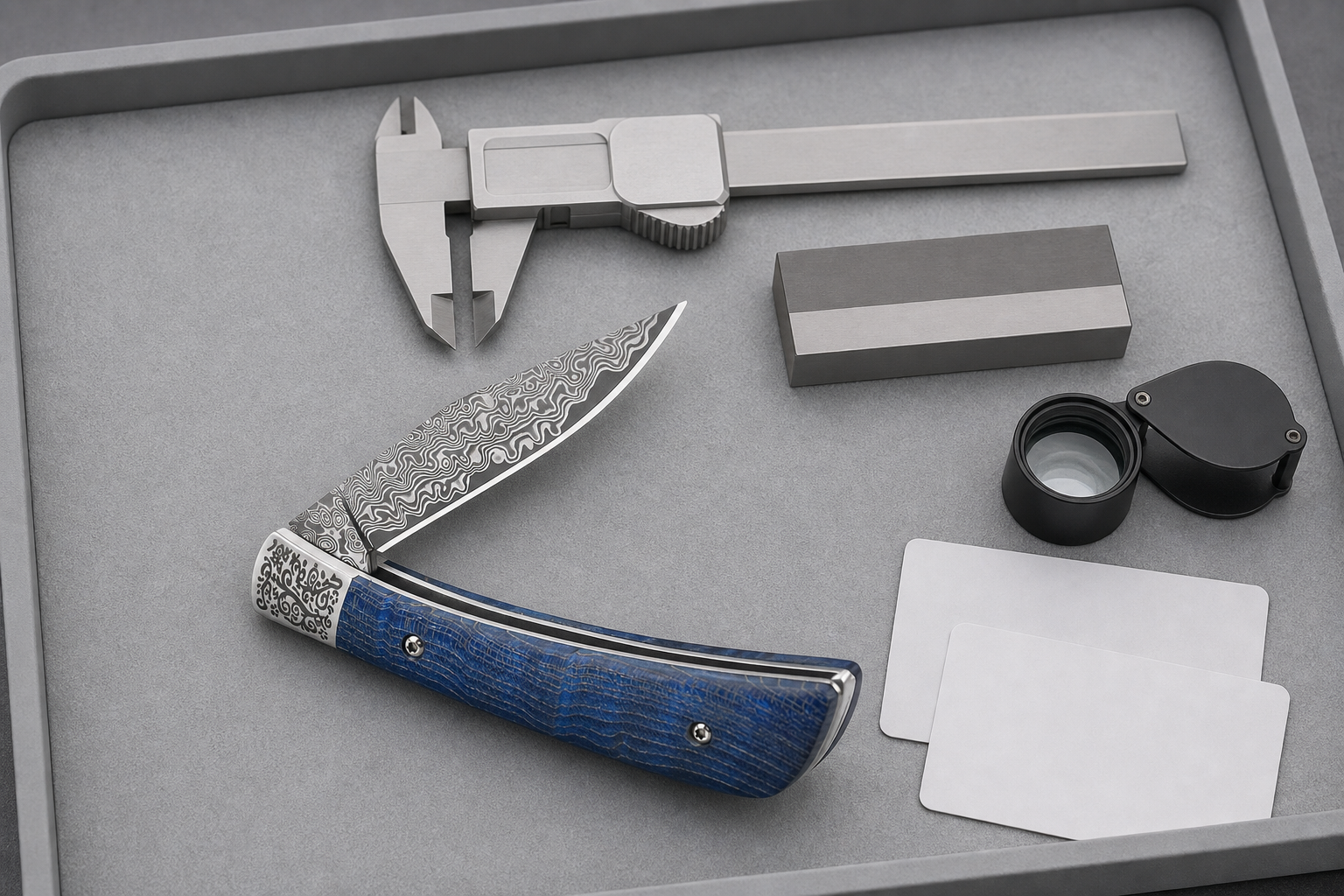
Critical tolerances include blade profile, blade thickness, tip thickness, hole position, pivot diameter, stop-pin contact, lock interface, blade centering, handle gap, sheath fit, clip screw length, and closed-edge clearance.
I Convert Drawings Into Checkpoints
Dimensional control is where a nice sample becomes a repeatable product. NIST dimensional metrology describes the importance of measurement for manufacturing and process improvement. Buyers do not need a laboratory for every knife project, but they do need agreed inspection methods.
For fixed blades, the key dimensions often include blade length, thickness, tang hole position, handle fit, guard fit, sheath mouth fit, edge coverage, and point coverage. For folding knives, the list expands: pivot hole, stop pin, lock surface, blade centering, closed clearance, blade play, screw length, washer thickness, liner alignment, and clip position.
The buyer should ask which dimensions are critical to function and which are cosmetic. Not every dimension needs the same tolerance. Over-tightening every tolerance increases cost. Under-defining functional tolerances creates unstable production.
| Dimension area | Fixed blade concern | Folding knife concern |
|---|---|---|
| Blade profile | Sheath and visual fit | Handle clearance |
| Holes | Handle scale alignment | Pivot and stop-pin function |
| Thickness | Grind and sheath fit | Action and clearance |
| Fasteners | Handle security | Assembly and blade movement |
| Edge coverage | Sheath safety | Closed-handle safety |
What Safety, Compliance, and Packaging Checks Belong Before Launch?
A knife is a sharp product. Packaging and copy need review before the shipment leaves.
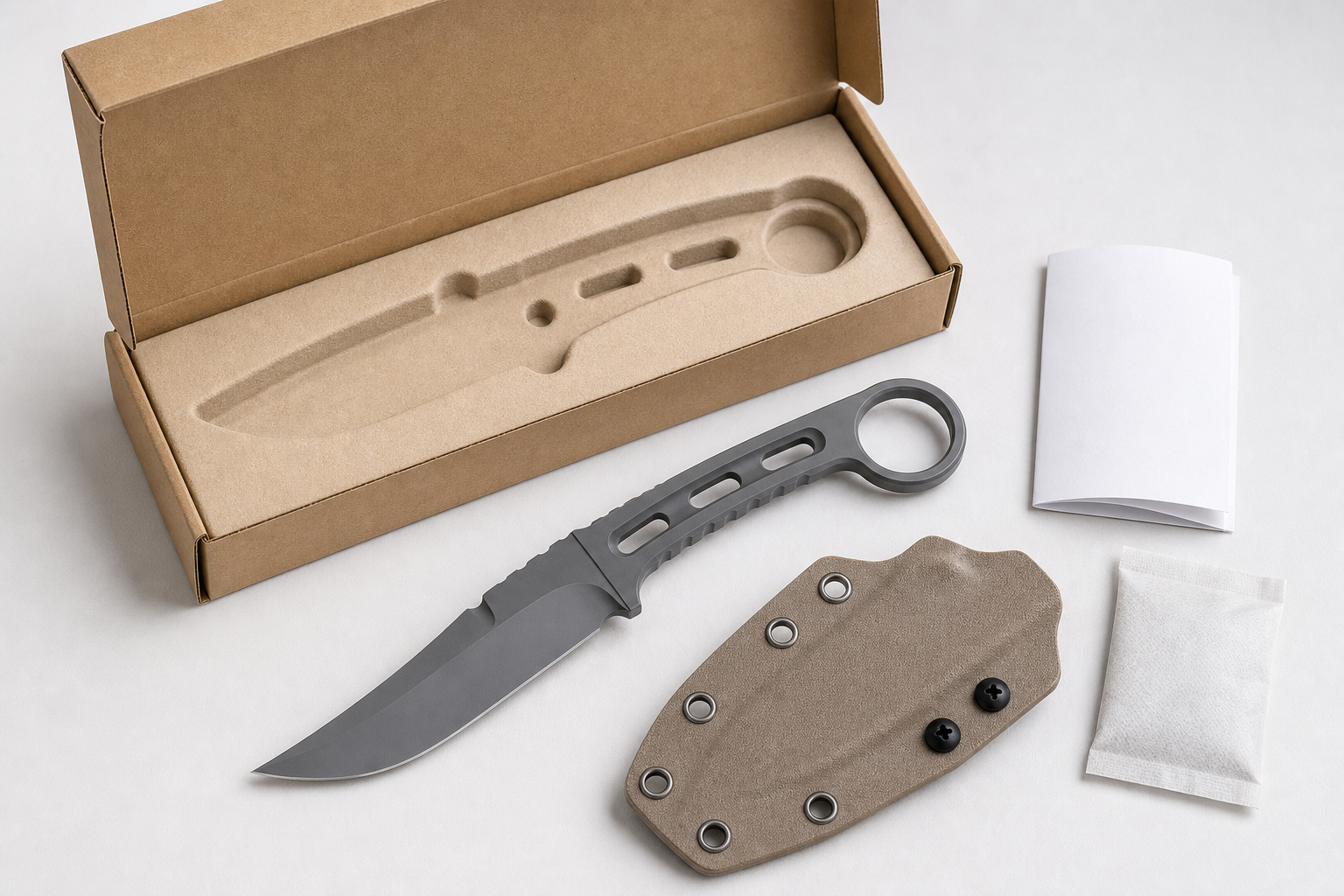
Buyers should review target-market rules, age restrictions, marketplace policies, safe-use instructions, warning text, sheath or closed-blade protection, packaging movement, barcode labels, and claim wording before launch.
I Review the Claim Before the Carton Is Printed
The European Commission product safety and labelling page points businesses toward product safety and labelling responsibilities. For knife buyers, that means instructions, warnings, labels, and product claims should be checked before mass production.
Safety copy should be practical. It should tell users to keep blades closed or sheathed when not in use, follow local laws and venue rules, keep the product away from children, inspect damaged parts, and use the knife only for intended cutting tasks. It should not say legal everywhere, safe for everyone, or suitable for self-defense.
Packaging should also be tested. A fixed blade should not move inside the box in a way that damages the sheath or insert. A folding knife should ship closed and protected. Accessories should not scratch the knife. Instructions should be present and visible.
| Launch item | Buyer check | Why it matters |
|---|---|---|
| Warning text | Market and channel review | Reduces copy risk |
| Packaging insert | Product movement check | Protects edge and finish |
| Instructions | Correct for fixed or folding route | Supports safe use |
| Product claims | Match actual design and QC | Avoids overpromising |
What QC Records Should Buyers Require From Sample to Mass Production?
Good manufacturing is not only what the sample looks like. It is what the factory can repeat.
Buyers should require sample approval records, material records, heat-treatment reports, hardness checks, dimensional inspection, functional tests, appearance standards, packaging checks, corrective actions, and final pre-shipment inspection records.
I Do Not Approve Production From Beauty Samples Alone
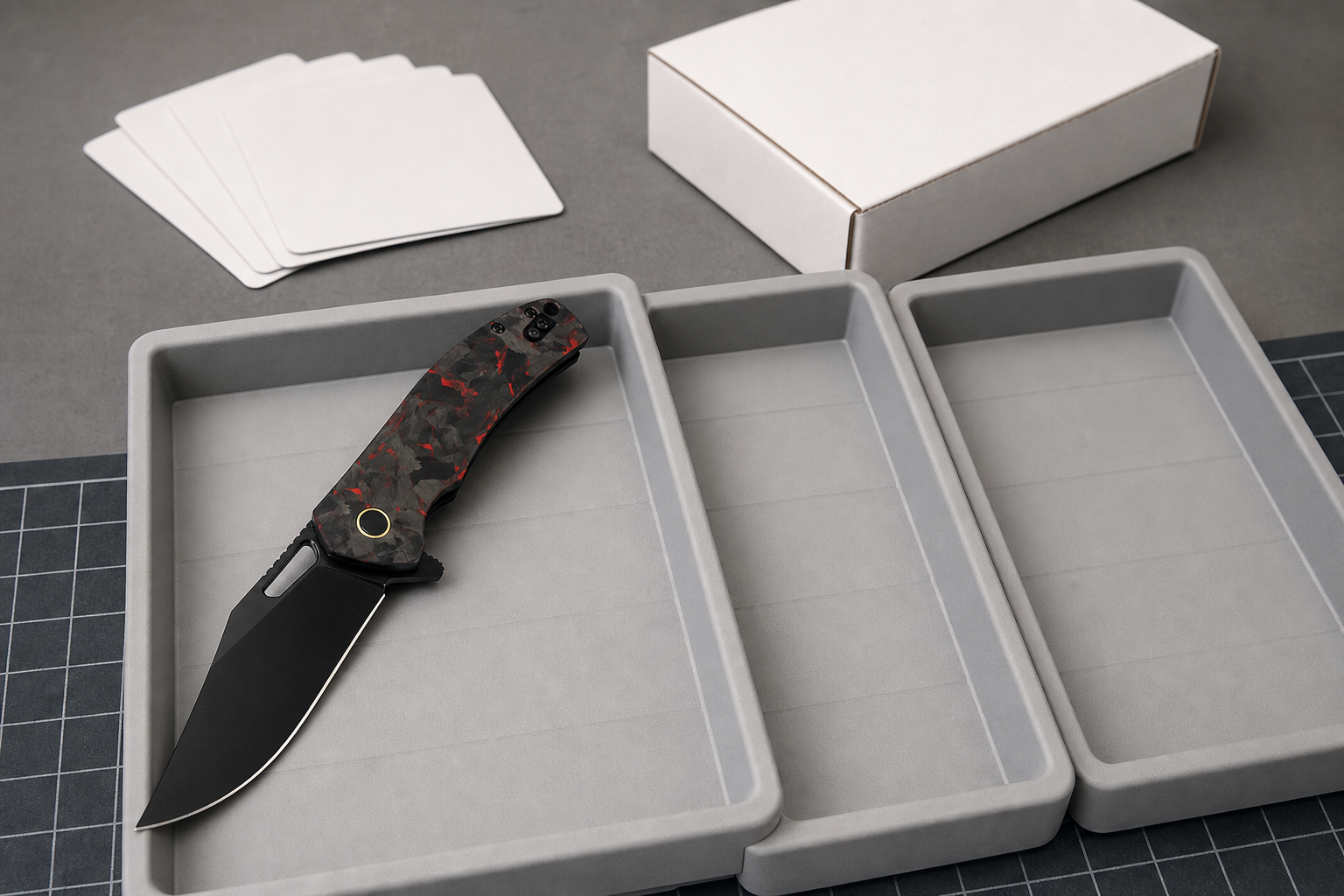
A beauty sample can show shape, finish, and retail feel. It cannot prove batch stability. Buyers need production-intent samples and inspection records. This is especially true for folding knives because small assembly changes can alter action, lockup, and centering.
The ISO 9001 quality management systems page supports the general idea that organizations use quality management requirements to meet customer and regulatory expectations. For OEM/ODM knife sourcing, that becomes a practical checklist: define requirements, inspect samples, record results, correct problems, and verify the next batch.
I would ask for:
- Approved drawing and approved sample photos
- Material record or supplier material confirmation
- Heat-treatment and hardness records
- Dimensional inspection for critical features
- Functional test records for locks, sheaths, clips, and closure
- Surface finish and cosmetic boundary samples
- Packaging inspection and instruction insert check
- Pre-shipment report and defect summary
If the buyer cannot see how the factory checks the product, the project is not ready for scale.
How Can Vast State Help Buyers Manage Fixed and Folding Knife Manufacturing?
Vast State can help turn a knife concept into a controlled OEM/ODM manufacturing brief.
Vast State supports buyers by defining fixed or folding product architecture, steel, process route, heat treatment, grinding, handle, mechanism, sheath or clip, packaging, safety copy, sample standards, and QC records.
I Build the RFQ Around the Knife Type
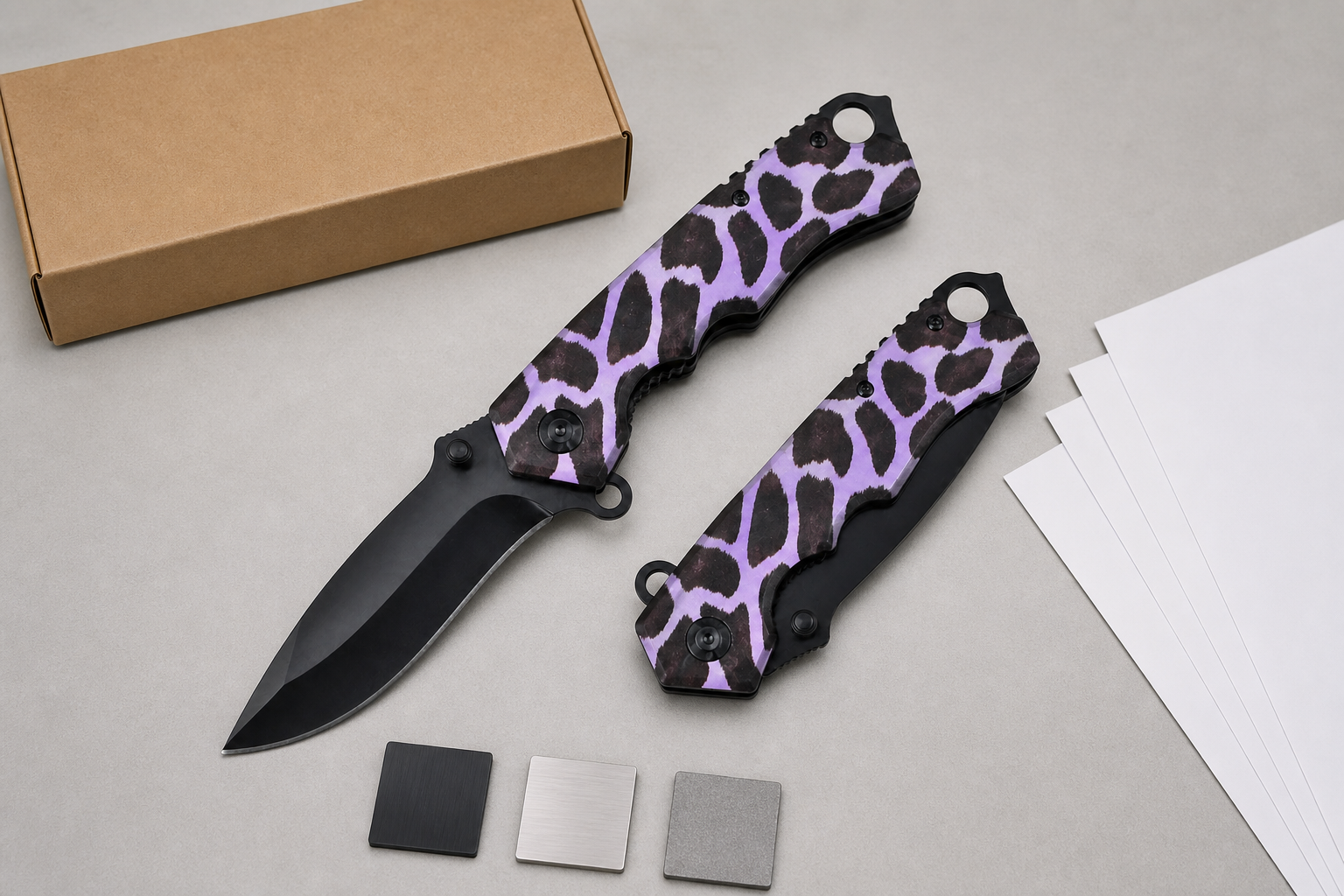
For a fixed blade, Vast State can help buyers define tang construction, steel, grind, handle, sheath retention, packaging protection, and outdoor or utility copy. For a folding knife, Vast State can help define pivot system, lock type, opening method, blade centering, clip hardware, screw control, and action feel.
The goal is to make the product easier for the factory to quote and easier for the buyer to approve. Instead of asking for "a good fixed knife" or "a smooth folder," the buyer can ask for a controlled product with drawings, target materials, inspection points, and packaging boundaries.
Vast State can support:
- Fixed and folding knife RFQ planning
- Blade steel, heat treatment, grind, and finish selection
- Handle, fastener, sheath, clip, and mechanism review
- Sample approval and boundary sample setup
- Safety, compliance, and product-copy review
- Packaging and instruction planning
- QC checklist development for mass production
- Pre-shipment inspection requirement alignment
Knife making may have art in it, but sourcing needs a system. That system is what keeps the final product consistent.
Turn this article into a folding knife project.
Share your blade type, lock direction, steel preference, handle material, quantity, target market, and packaging needs. Vast State can prepare OEM/ODM options.
Conclusion
Fixed and folding knives need different manufacturing plans. Buyers should define architecture, process, safety, packaging, and QC before approving mass production.