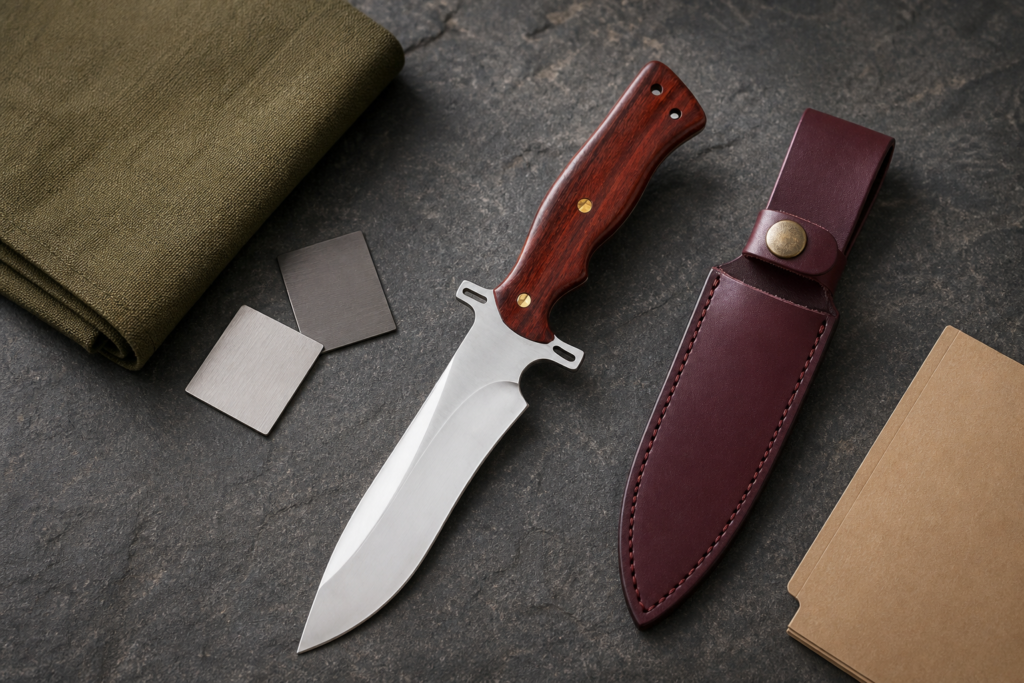
"Survival knife" is a strong phrase, but serious buyers need a controlled outdoor-tool specification.
B2B buyers should specify survival-style outdoor knives by defining lawful hunting-accessory and camping tasks, blade length, tip strength, steel, heat treatment, handle grip, sheath retention, corrosion resistance, safe-use copy, packaging warnings, and QC tests before approving OEM/ODM production.
Quick buyer brief:
- Answer: Do not treat "survival" as drama. Treat it as a responsible outdoor utility category for cutting, camp repair, field kit support, food-prep-adjacent tasks, and lawful hunting accessory use.
- Buyer context: This guide is for outdoor brands, hunting-accessory brands, camping brands, knife brands, importers, distributors, private label buyers, and OEM/ODM sourcing teams.
- Key checks: Intended use, market rules, blade geometry, steel grade, hardness target, corrosion control, handle shape, guard or choil design, sheath fit, lanyard option, packaging copy, safe-use instructions, and batch inspection.
Planning a fixed blade or outdoor knife project?
Share your target use, blade size, steel preference, handle direction, sheath needs, quantity range, and packaging plan. Vast State can help turn it into a quote-ready specification.
When a buyer asks for a survival knife guide for hunters and campers, I first change the frame. The product should not be sold as a weapon, a fear object, or a magic tool for every emergency. It should be specified as a durable outdoor cutting tool for clear, lawful tasks.
That change makes the project easier to manage. A camping user may need cord cutting, food-package opening, feather-stick preparation, and repair support. A hunting-accessory buyer may need a different blade belly, safer sheath, easier cleaning, and field-use instructions. The same product cannot be optimized for every task. A good OEM/ODM brief chooses the real job first.
Why Should Buyers Reframe "Survival Knife" as Responsible Outdoor Utility?
The word survival can pull a product into risky marketing. Utility language is more useful and easier to verify.
Buyers should reframe survival-style knives as outdoor utility tools for lawful camping, hunting-accessory, field kit, and repair tasks rather than self-defense, combat, or emergency fantasy claims.
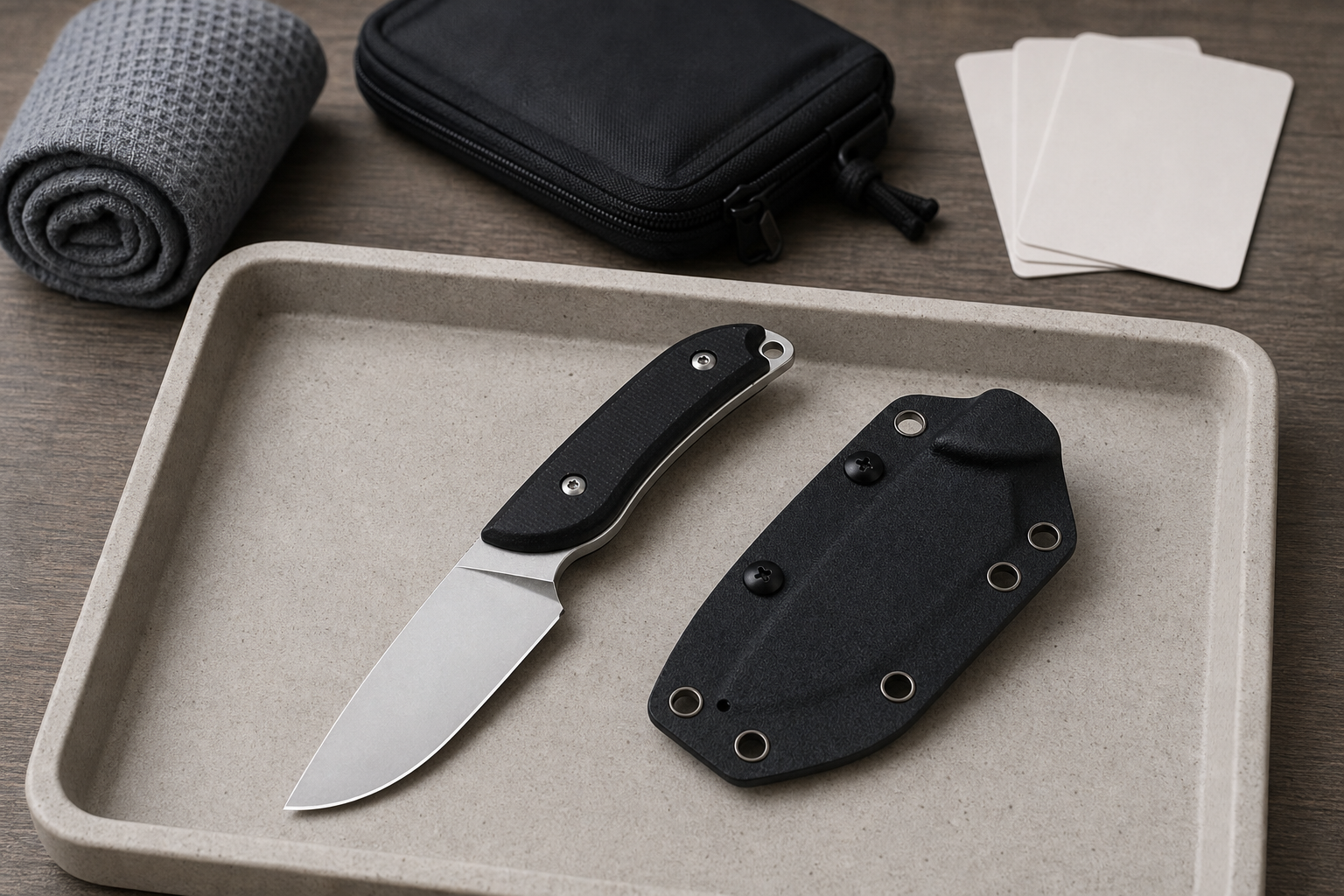
I Do Not Let "Survival" Become a Weapon Claim
Outdoor knife buyers often want strong language. I understand why. "Survival" sounds rugged. It can help customers understand that the knife is meant for harder outdoor use than a small pocket folder. But the word can also push copy toward fear, combat, or unrealistic promises. That creates problems for marketplaces, retailers, and responsible brands.
The National Park Service Ten Essentials is a useful starting point because it treats outdoor preparation as a set of practical systems, including repair kit and tools. Ready.gov kit guidance also supports preparation before emergencies. Neither source supports reckless knife marketing. Both support a calmer message: practical tools belong in prepared kits.
So the buyer should define the tool. Is it a camp knife? A hunting accessory? A vehicle emergency kit knife? A bushcraft-style outdoor knife? A giftable outdoor fixed blade? Each option changes the blade, handle, sheath, and copy.
| Risky angle | Better B2B angle | Why it works |
|---|---|---|
| Survival weapon | Outdoor utility cutting tool | Avoids weapon framing |
| Ready for anything | Designed for defined camp and field tasks | Avoids impossible claims |
| Emergency defense | Preparedness kit support | Keeps copy responsible |
| Unbreakable knife | Durable design with QC limits | Makes performance testable |
OEM/ODM RFQ Checklist
Prepare these details to help Vast State review your project and provide a more accurate quotation.
| RFQ Field | What to Prepare |
|---|---|
| Project type | OEM from drawing / ODM private label / wholesale catalog |
| Product category | Folding knife / fixed blade / multi-tool / outdoor tool |
| Design status | Idea / sketch / 2D drawing / 3D CAD / physical sample |
| Target price | Ex-factory target price or retail price range |
| MOQ expectation | 500 / 1,000 / 3,000 / 5,000+ pcs |
| Logo method | Laser engraving / etching / printing / molded logo |
| Packaging | Standard packaging / custom retail box / Amazon-ready |
| Market | USA / EU / Japan / Korea / Middle East / other |
| Compliance needs | Buyer-specified testing / documentation / labeling |
| Timeline | Sample deadline / mass production deadline |
How Should Hunting-Accessory and Camping Use Cases Be Separated?
Hunters and campers may overlap, but their knife requirements are not identical.
Buyers should separate hunting-accessory and camping use cases by task, cleaning needs, blade belly, tip control, handle grip, sheath retention, legal restrictions, and packaging instructions.
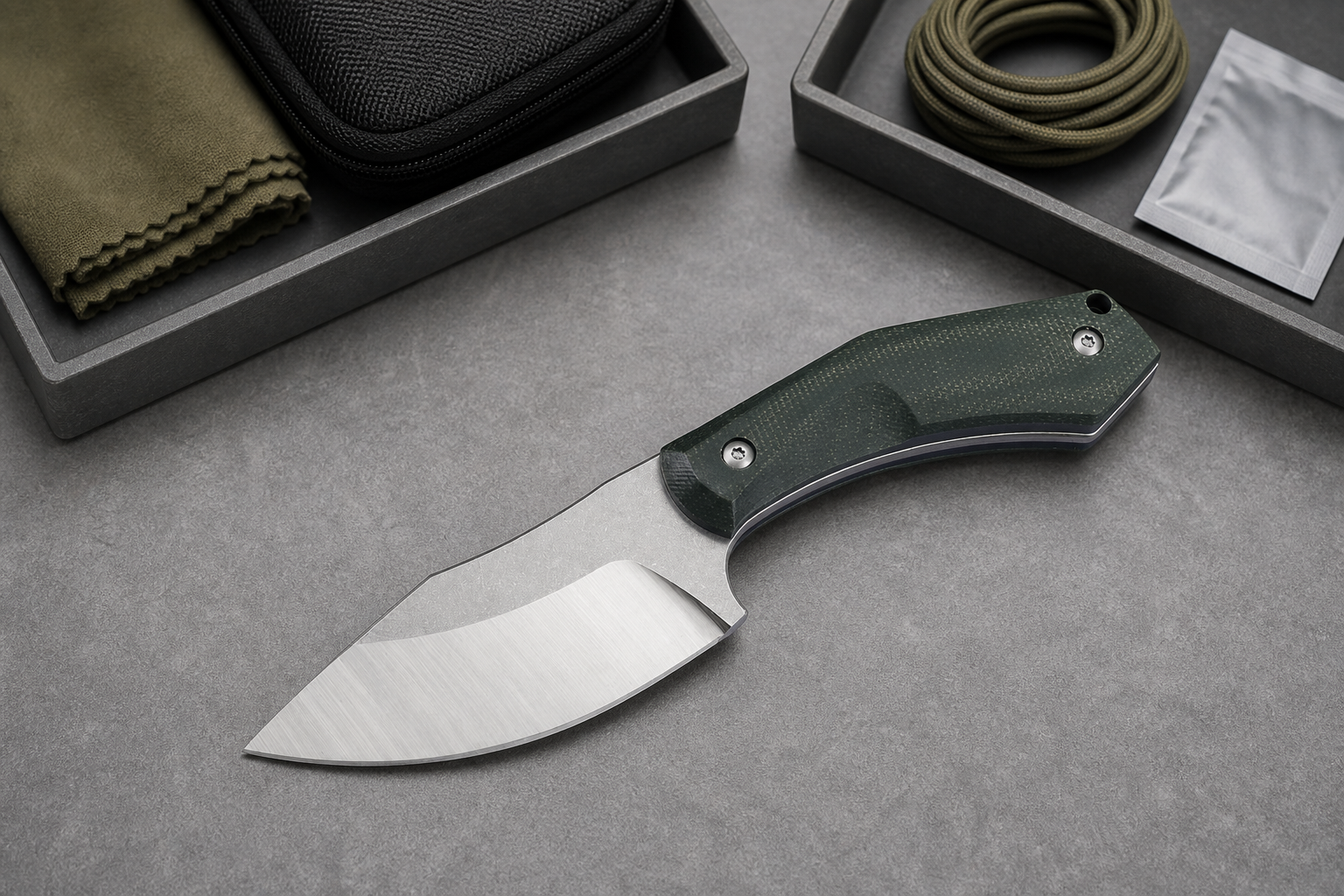
I Write Two Use-Case Columns Before I Approve One Knife
A camping knife may need broader camp utility. It may cut cord, open packaging, help with repair tasks, prepare kindling in a controlled camping context, and support general outdoor kit use. A hunting-accessory knife may focus more on field utility, cleaning access, edge control, grip security, and easy sanitation. These are different jobs even when the product category overlaps.
The buyer should decide whether one SKU can serve both audiences honestly. Sometimes it can. A medium fixed blade with balanced belly, durable point, corrosion-resistant finish, secure sheath, and easy-clean handle may work for a broad outdoor line. Sometimes it cannot. A thick camp knife may feel awkward for detail work. A fine hunting-accessory blade may not suit heavier camp tasks.
The RFQ should describe the priority. If camping comes first, specify grip comfort, sheath carry, cord cutting, and reasonable wood-processing limits. If hunting accessory use comes first, specify cleaning, edge control, blade belly, and packaging language that avoids graphic or aggressive imagery.
| Use case | Design priority | Copy boundary |
|---|---|---|
| Camping | Repair, cord, packaging, controlled kindling prep | Avoid "does everything" claims |
| Hunting accessory | Edge control, cleaning, grip, field utility | Avoid graphic language |
| Vehicle kit | Covered edge, corrosion control, storage stability | Avoid panic messaging |
| Gift/outdoor retail | Visual finish, safe packaging, instructions | Avoid unsupported rugged claims |
What Blade Size, Shape, and Grind Should Buyers Specify?
Blade geometry decides whether the knife feels useful or awkward.
Buyers should specify blade length, stock thickness, tip profile, belly, grind type, edge angle, spine finish, choil or guard, and sharpening access based on the intended outdoor task.
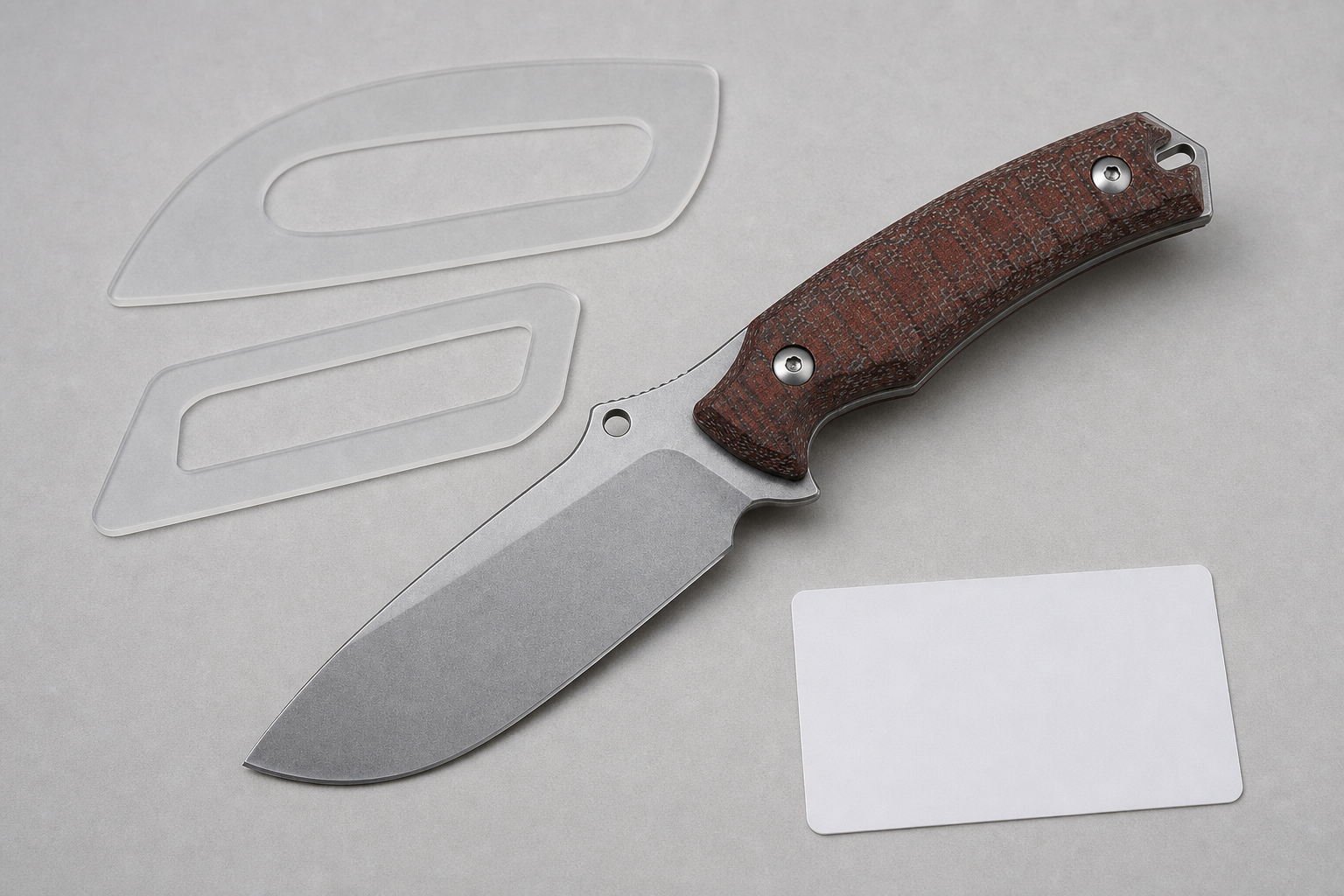
I Prefer Balanced Geometry Over Oversized Drama
Large blades can look impressive, but bigger is not automatically better. A camping buyer may need control more than size. A hunting-accessory buyer may need belly and edge feel more than thickness. A kit buyer may need a compact fixed blade that stores safely. The product should fit the task and the user's hand.
Common outdoor profiles include drop point, straight back, clip point, and modified spear-style profiles. The buyer should avoid turning this into a style ranking. The right answer depends on whether the knife needs slicing belly, point strength, detail control, or easier sharpening. The buyer should also specify grind type. A full flat grind, saber grind, hollow grind, convex grind, or scandi-style grind can all change cutting feel, strength perception, maintenance, and manufacturing cost.
For OEM/ODM sourcing, drawings should include more than the outline. They should include blade length, handle length, stock thickness, tip thickness, primary bevel, edge angle, plunge line, jimping if used, spine finish, choil, guard, and sheath fit. If the blade is too thick behind the edge, it may feel poor in real cutting. If the tip is too thin, it may fail under misuse or even normal heavier tasks.
The blade should look rugged only after it is useful.
How Should Steel, Heat Treatment, and Corrosion Resistance Be Chosen?
Outdoor knives face moisture, dirt, impact, and uneven maintenance. Steel choice needs a realistic target.
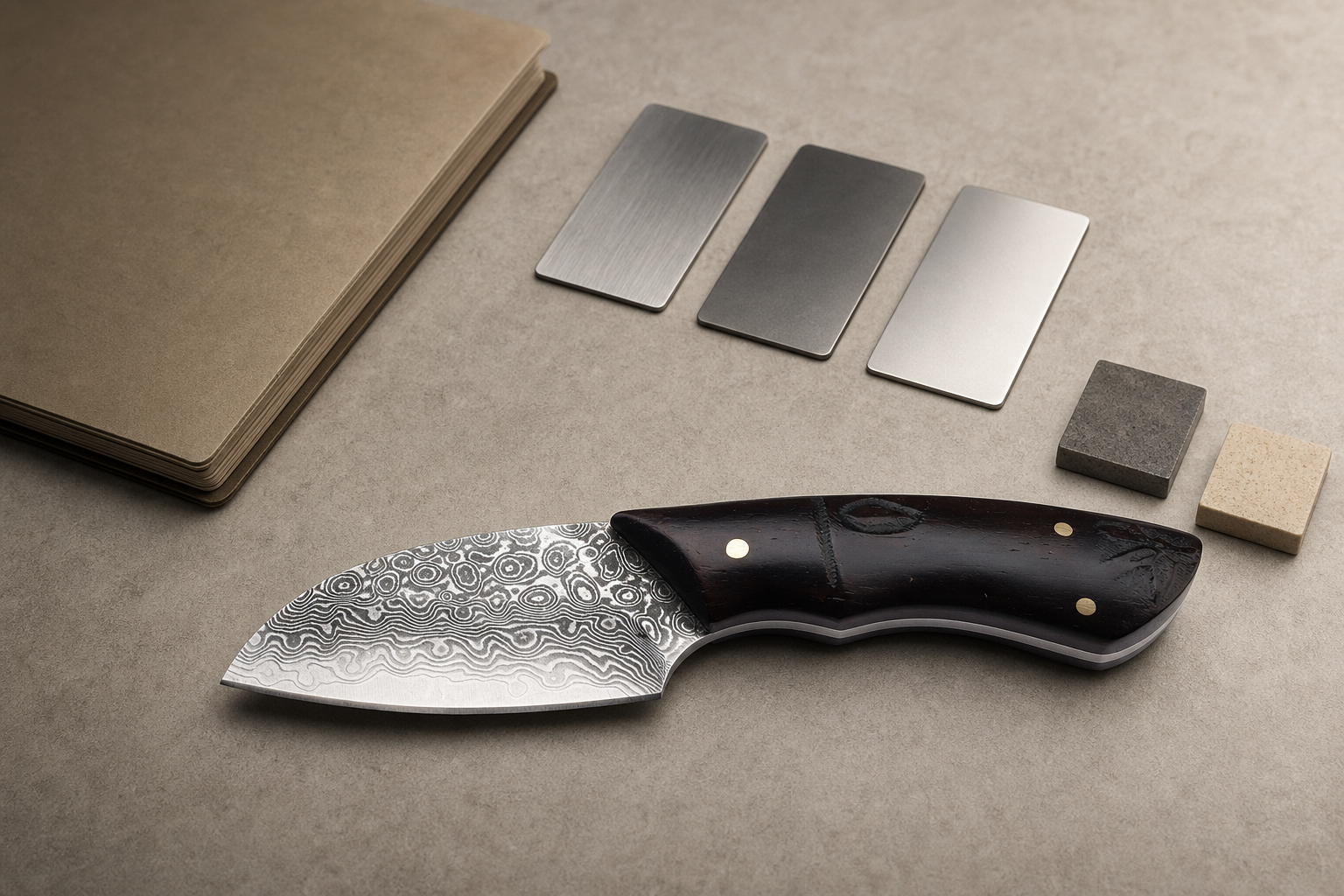
Buyers should choose steel, heat treatment, surface finish, hardness range, corrosion resistance, toughness target, and sharpening expectations according to the outdoor use case and price level.
I Ask for a Performance Balance, Not a Steel Name Alone
Steel names can distract buyers. A survival-style outdoor knife needs a balance of toughness, edge retention, corrosion resistance, sharpening ease, and cost. A high-carbon steel may be tough and easy to sharpen but may need more corrosion care. A stainless steel may resist corrosion better but still needs correct heat treatment and geometry. Tool steels and powder steels may support premium positioning but can change machining, heat treatment, and cost.
The buyer should ask the supplier for the heat-treatment route and target hardness range. The hardness number alone is not enough. A very hard blade may chip if geometry and heat treatment are wrong. A softer blade may roll too easily if the task requires edge stability. The correct balance depends on whether the knife is for camping, hunting accessory use, vehicle kits, or outdoor retail.
For corrosion resistance, the buyer should define the sales promise. If the product is sold for wet camping or coastal outdoor use, the supplier may need stainless steel, coating, passivation, oiling instructions, or packaging controls. If the product is sold as traditional carbon steel, the copy should explain maintenance honestly.
| Requirement | Buyer question | RFQ output |
|---|---|---|
| Toughness | Will users do heavier camp tasks? | Steel and heat-treatment target |
| Corrosion resistance | Will the knife face moisture or storage? | Steel, coating, and care instructions |
| Edge retention | What material will it cut most often? | Hardness and edge geometry |
| Sharpening ease | Will users maintain it in the field? | Edge angle and steel choice |
What Handle, Guard, and Sheath Details Matter Most?
The blade gets attention, but the handle and sheath often decide whether the knife feels controlled.
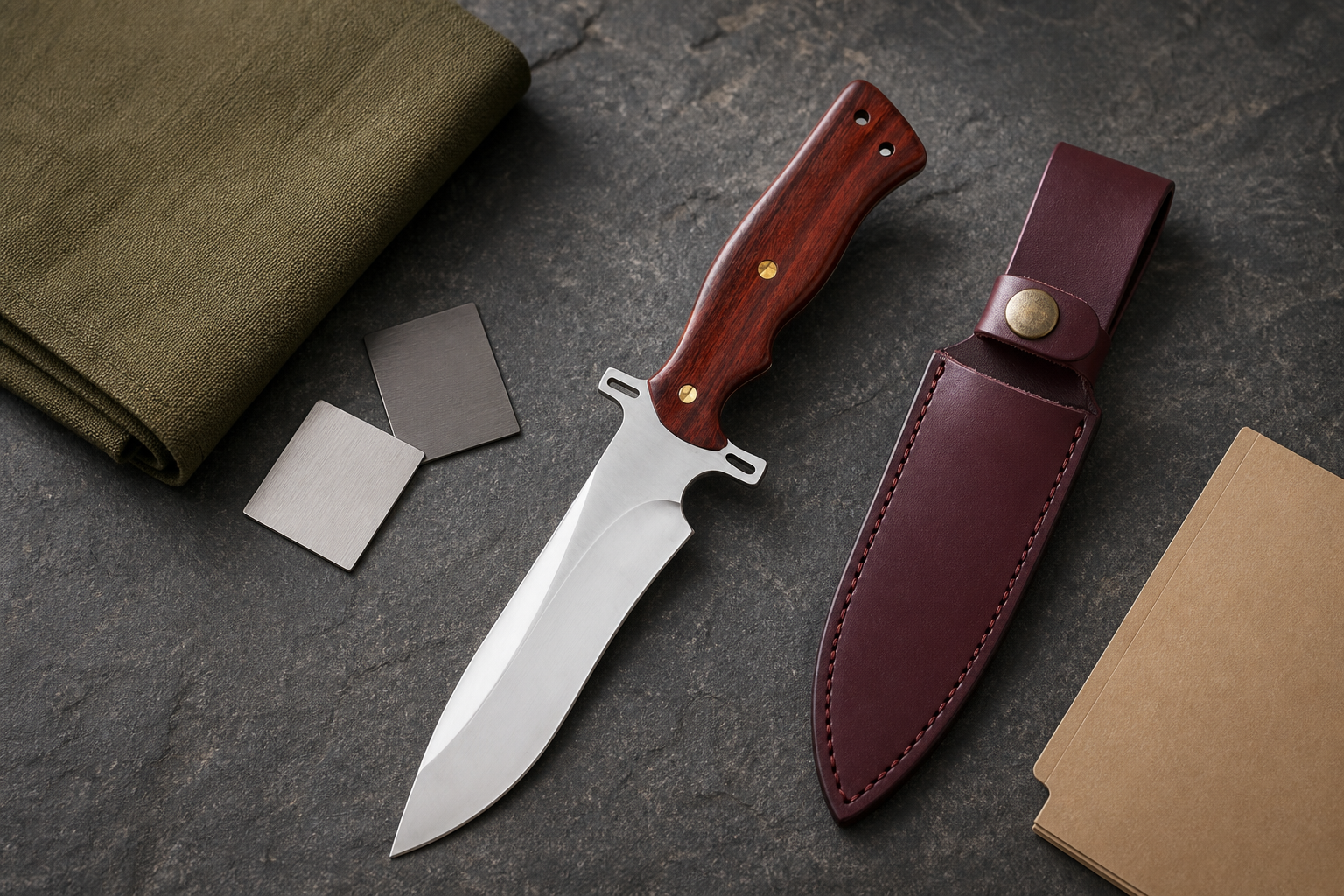
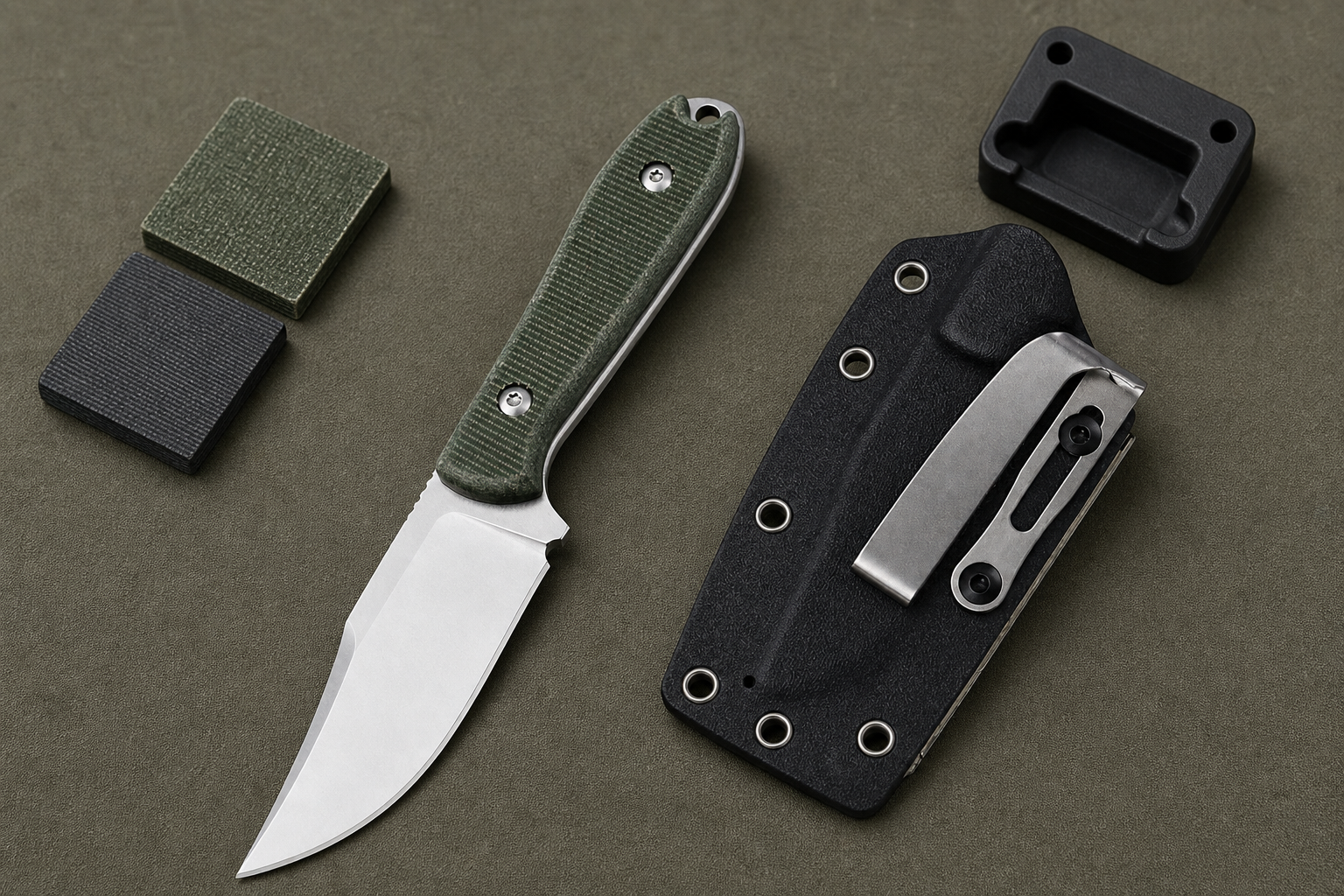
Buyers should specify handle material, texture, palm swell, guard or choil, lanyard hole, fastener security, sheath retention, belt attachment, drain or cleaning features, and packaging protection.
I Treat Sheath Retention as a Safety Requirement
Outdoor knives are often fixed blades, so the sheath is not optional decoration. It covers the edge and point when the product is stored, carried where lawful, packed, or shipped. A sheath that is loose, weak, or poorly shaped can create safety issues and customer complaints.
Handle design also matters. Camping users may use gloves or wet hands. Hunting-accessory users may need cleaning access and grip security. Retail gift buyers may care about finish and material story, but the product still needs safe handling. Buyers should specify texture, handle edges, fastener security, guard or choil geometry, and whether the hand could slide toward the edge during normal use.
The CCOHS sharp blade safety guidance supports a basic safety principle: sharp tools need controlled handling and storage. In OEM terms, that becomes handle control, sheath retention, edge coverage, point coverage, and instructions.
| Component | Requirement | QC check |
|---|---|---|
| Handle | Grip, comfort, no sharp hotspots | Fit and feel review |
| Guard or choil | Hand control during cutting | Visual and functional check |
| Sheath | Edge and point coverage | Retention and coverage test |
| Fasteners | Handle and clip security | Torque or pull check |
How Should Outdoor Ethics, Safety, and Legal Copy Be Written?
Outdoor knife copy should be responsible, not dramatic.
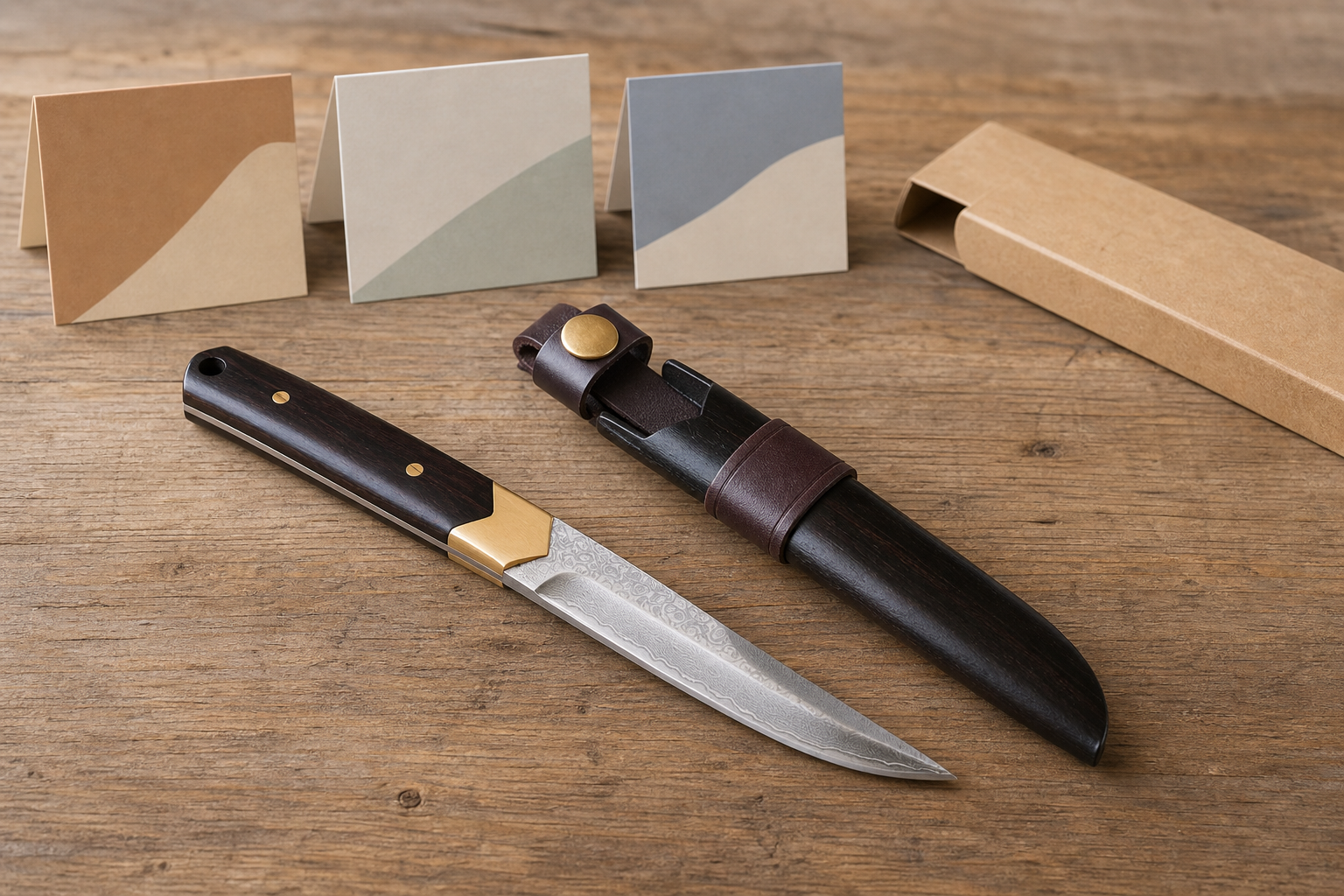
Buyers should write copy that explains lawful outdoor utility, safe handling, covered storage, respect for local rules, Leave No Trace principles, and product limits without self-defense or destructive-use claims.
I Keep the Article Away From Fear and Misuse
Outdoor customers can be serious without being reckless. The copy should describe practical use: cutting cord, preparing camp materials where allowed, opening supplies, supporting repair kits, and storing the knife safely. It should not encourage damage to public land, unauthorized cutting, self-defense carry, or illegal possession.
The National Park Service Leave No Trace Seven Principles gives buyers a useful outdoor ethics frame. It reminds outdoor users to plan ahead, respect other visitors, and minimize impact. For knife copy, that means avoiding language that encourages cutting live trees, leaving waste, or treating outdoor spaces carelessly.
Legal language also needs care. The GOV.UK knife guidance is one example of why market rules matter. A buyer selling globally should not write packaging as if one rule applies everywhere. Travel copy needs the same caution. The TSA knives guidance shows that knives are not carry-on items in air travel contexts and that sharp objects in checked bags need careful wrapping.
Good copy is simple:
- Use only where lawful and appropriate.
- Keep the knife sheathed when not in use.
- Follow local rules, land-use rules, and venue restrictions.
- Use only for intended cutting tasks.
- Do not use as a weapon, pry bar, or throwing tool.
What Manufacturing and QC Checks Should Buyers Require?
A rugged sample photo does not prove repeatable production.
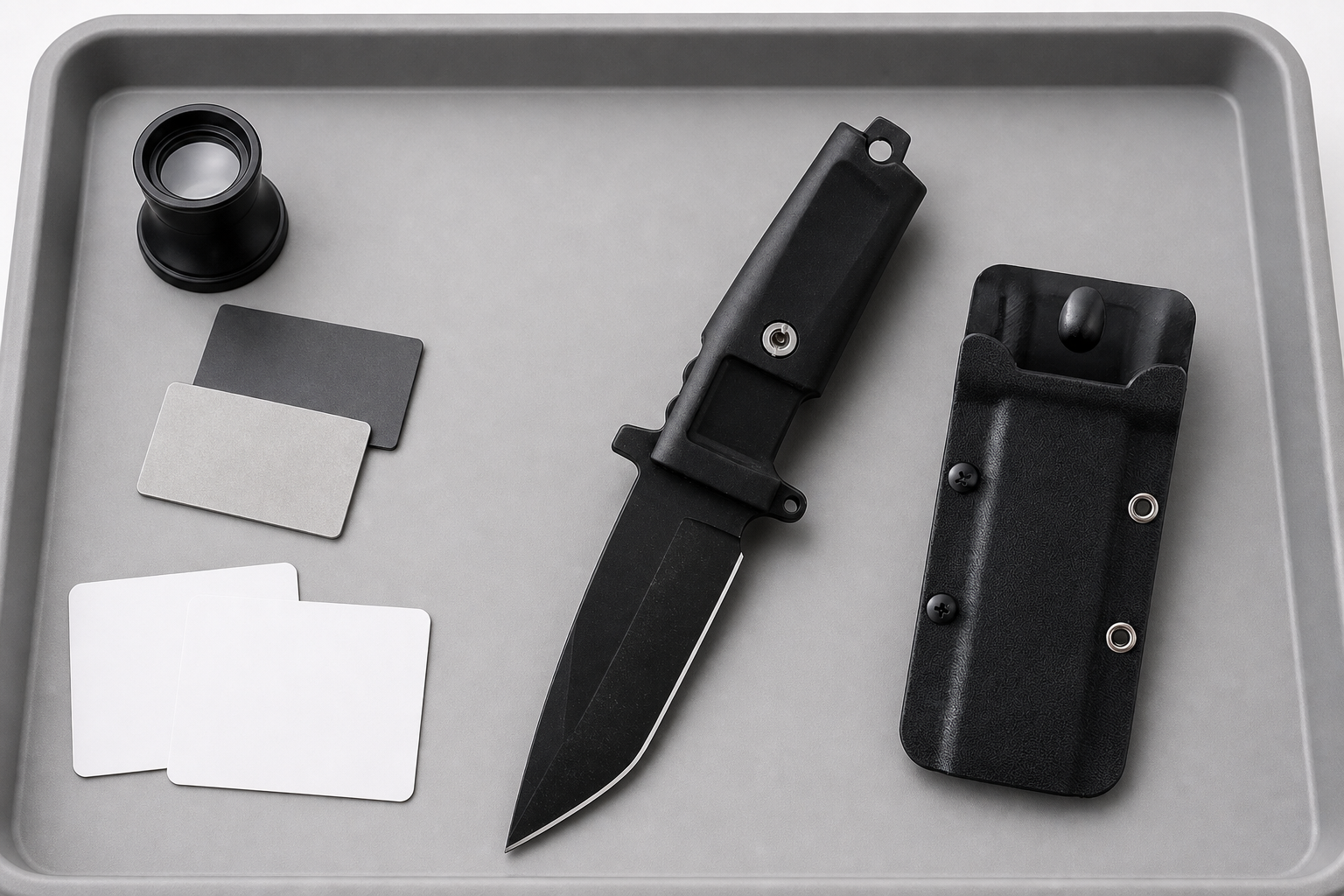
QC should verify steel records, blade dimensions, tip thickness, bevel symmetry, heat treatment, hardness, edge finish, handle fit, sheath retention, corrosion controls, packaging movement, and instruction placement.
I Convert Rugged Claims Into Testable Requirements
If the product page says durable, the RFQ needs a durability definition. If the copy says outdoor ready, the buyer needs corrosion, sheath, and handle checks. If the packaging says secure sheath, the factory must inspect retention. If the product is marketed to hunters and campers, the buyer should confirm whether the same sample works for both use cases.
NIST dimensional metrology supports the role of measurement in manufacturing. ISO 9001 supports the broader quality-management idea of defined requirements and controlled records. For outdoor knives, that translates into clear inspection points rather than subjective sample approval.
I would include:
- Material certificate or steel record
- Blade length, thickness, tip thickness, and weight
- Bevel symmetry and edge angle
- Hardness range and heat-treatment record
- Handle gap, fastener security, and surface finish
- Sheath retention, edge coverage, and tip coverage
- Corrosion-control plan or care instructions
- Packaging movement test
- Instruction leaflet and warning placement check
The goal is not to overcomplicate the project. The goal is to make the promise repeatable.
What Should Packaging, Bundles, and Accessories Include?
Outdoor knife packaging must protect the product and guide responsible use.
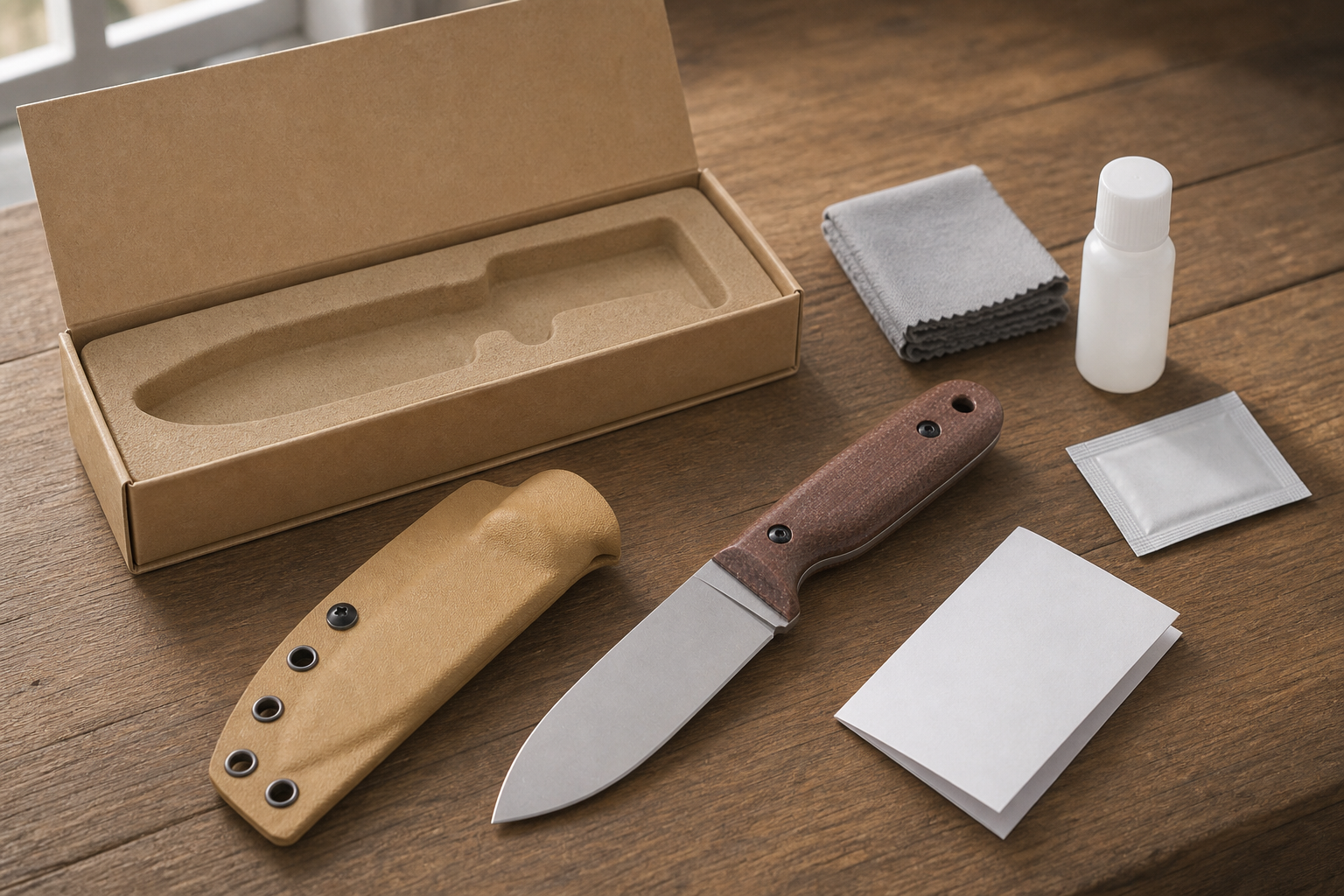
Packaging and accessory bundles should include secure blade protection, sheath or pouch instructions, care guidance, warning text, optional fire starter or cord only when appropriate, and clear copy that matches the product's real capability.
I Keep Bundles Useful and Honest
Many survival-style knife products include accessories. Some are useful. Some make the package look busy without adding value. A fire starter, cord, whistle, sharpening stone, pouch, or care cloth can make sense if the buyer defines the target user and quality level. Cheap accessories can weaken the whole product if they fail quickly or make the package look gimmicky.
Packaging should protect the edge and point during shipping and retail handling. The knife should not move freely inside the box. The sheath should be included in a way that shows correct storage. The instruction leaflet should be easy to find. If the product has carbon steel or a coating, the care text should match the material.
The buyer should also review claims on the box. "Survival kit" can imply a complete emergency solution. If the product is only a knife plus small accessories, the copy should say that. If the knife is part of a camping accessory kit, say that. Avoid unsupported claims such as "all-in-one survival system" unless the product truly includes a broader, tested kit.
| Packaging item | Purpose | Buyer check |
|---|---|---|
| Sheath or insert | Controls edge and point | Movement and retention check |
| Instruction leaflet | Guides safe use and care | Copy approval |
| Accessory bundle | Adds task support | Accessory QC |
| Box copy | Sets expectations | Claim review |
How Can Vast State Help Buyers Develop Survival-Style Outdoor Knife Projects?
Vast State can help turn a broad survival knife idea into a controlled OEM/ODM product brief.
Vast State supports buyers by defining outdoor use cases, blade geometry, steel, heat treatment, handle, sheath, accessories, packaging copy, safety language, sample standards, and QC records before production.
I Build the Product Around a Use-Case Matrix
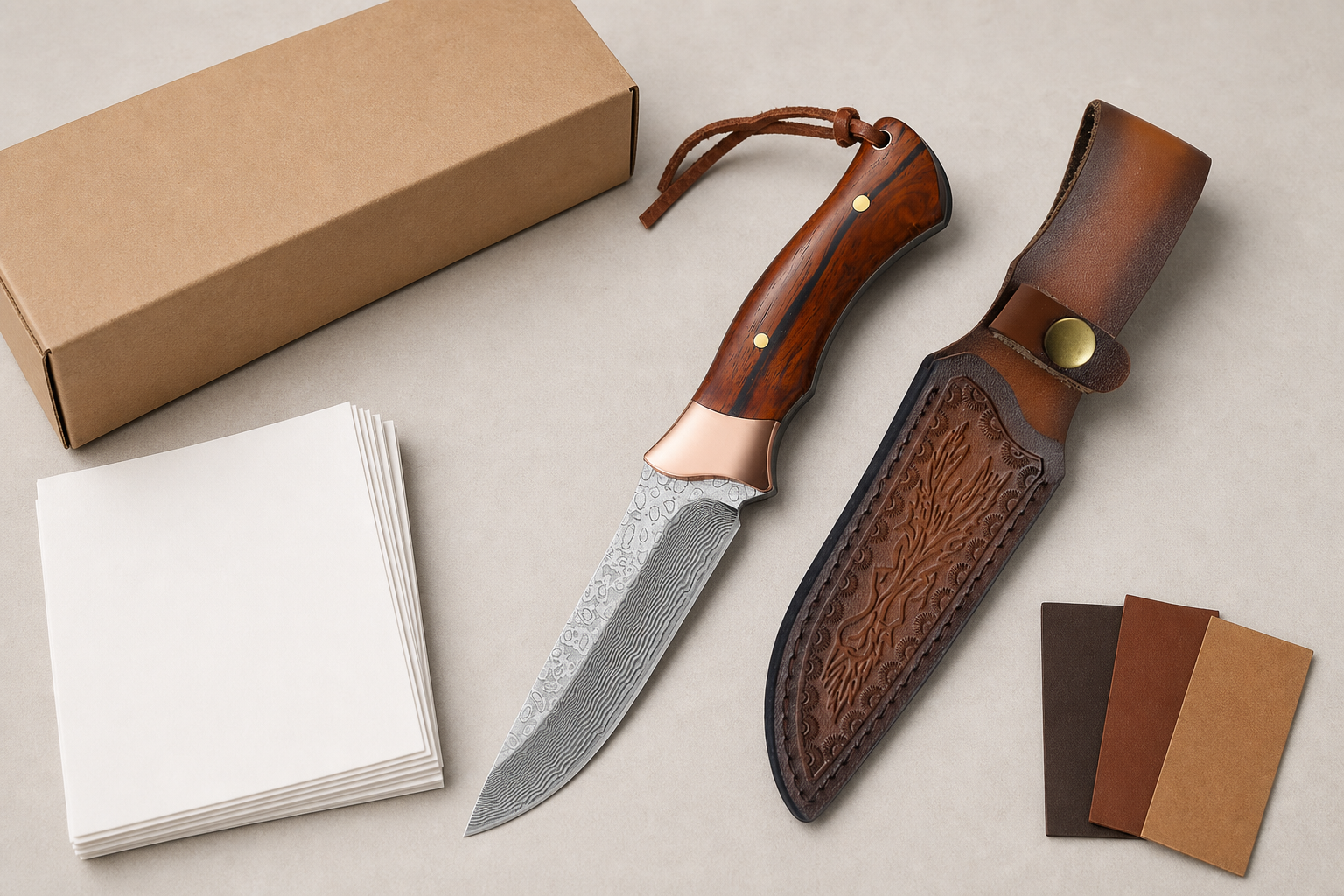
A useful survival-style knife project begins with a matrix. The rows are use cases: camping, hunting accessory, vehicle kit, outdoor retail, gift bundle, field repair. The columns are product decisions: blade length, steel, grind, handle, sheath, accessories, copy, compliance review, and QC.
That matrix keeps the project honest. It prevents a buyer from asking for a knife that is lightweight, heavy-duty, low-cost, premium, compact, oversized, easy to sharpen, high edge retention, corrosion proof, and indestructible all at the same time. Every choice has a tradeoff.
Vast State can help with:
- Outdoor knife RFQ planning
- Blade profile, grind, steel, and hardness review
- Handle material and sheath retention decisions
- Hunting-accessory and camping use-case separation
- Packaging and bundle planning
- Responsible survival-style copy without weapon framing
- Sample approval and boundary sample setup
- QC checklist development for mass production
The best survival-style product is not the loudest one. It is the one whose design, claims, and inspection records all point to the same real outdoor job.
Turn this article into a fixed blade project.
Send your target use, blade size, steel, handle direction, sheath needs, quantity, and packaging plan. Vast State can help shape it into a quote-ready project.
Conclusion
A survival-style outdoor knife should be specified as a responsible utility tool. Buyers should connect use case, design, copy, packaging, and QC before production.