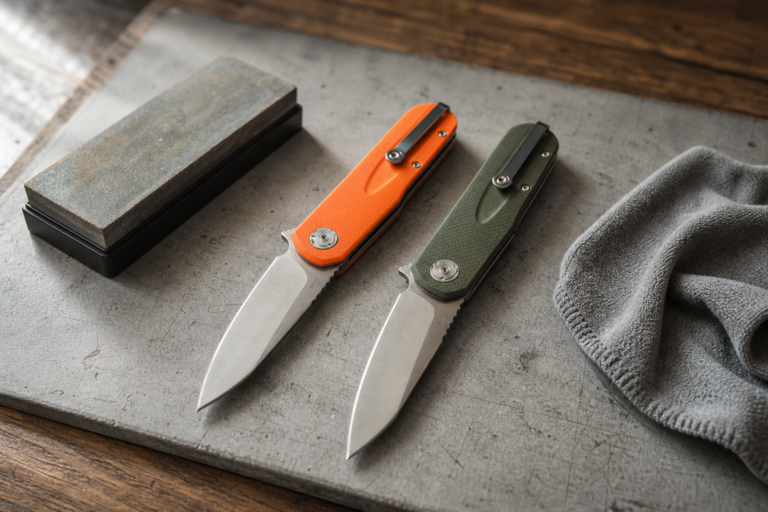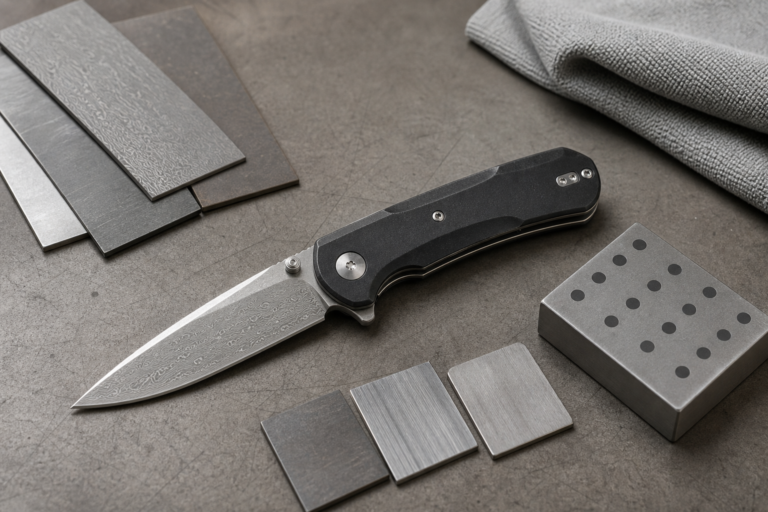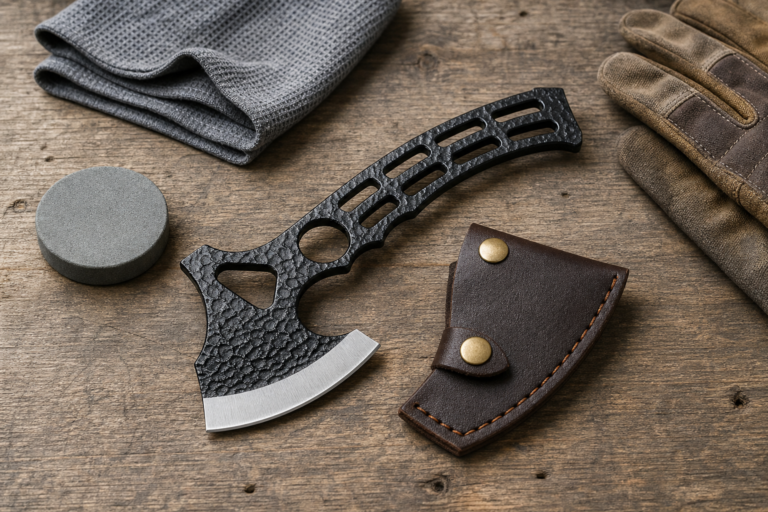
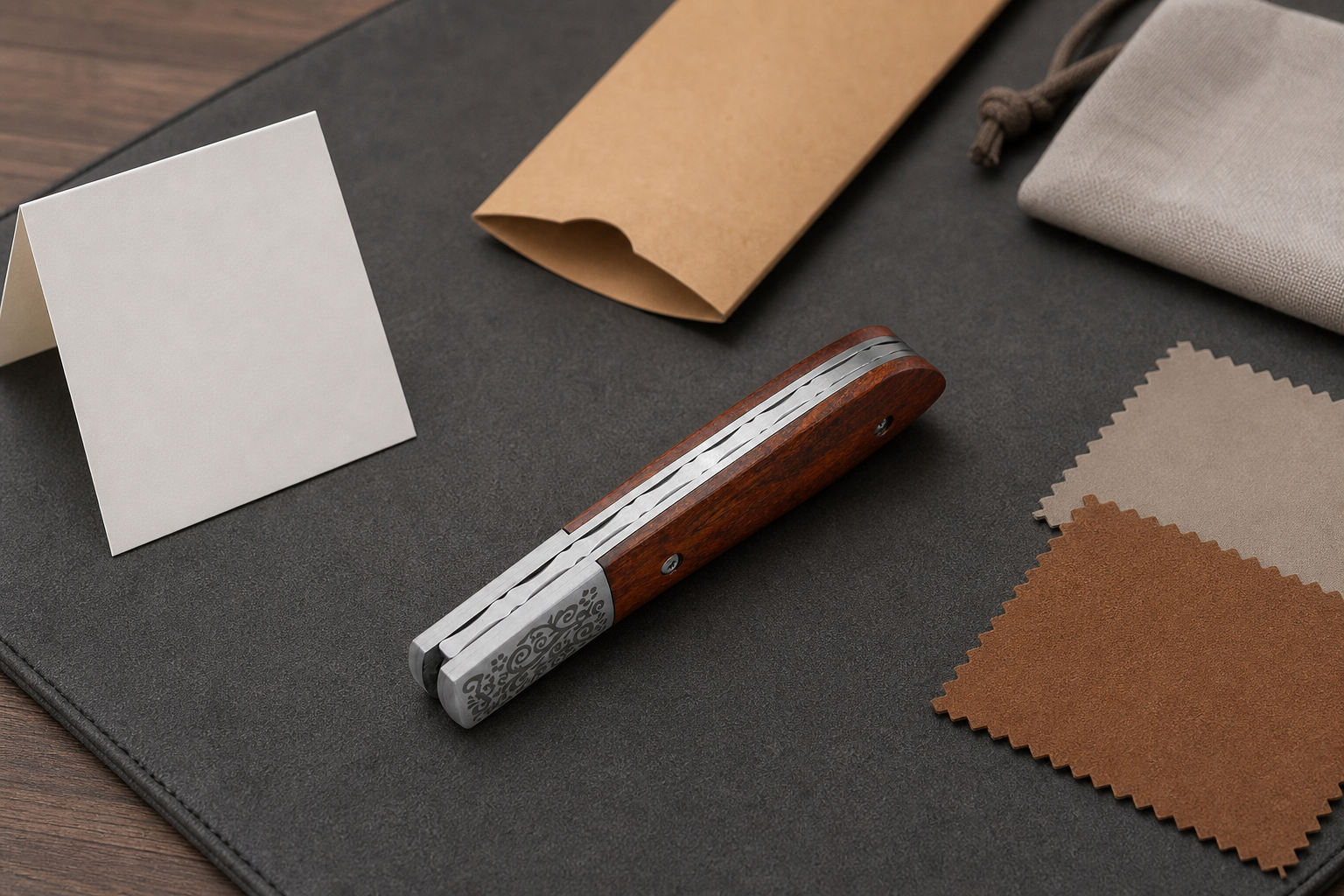
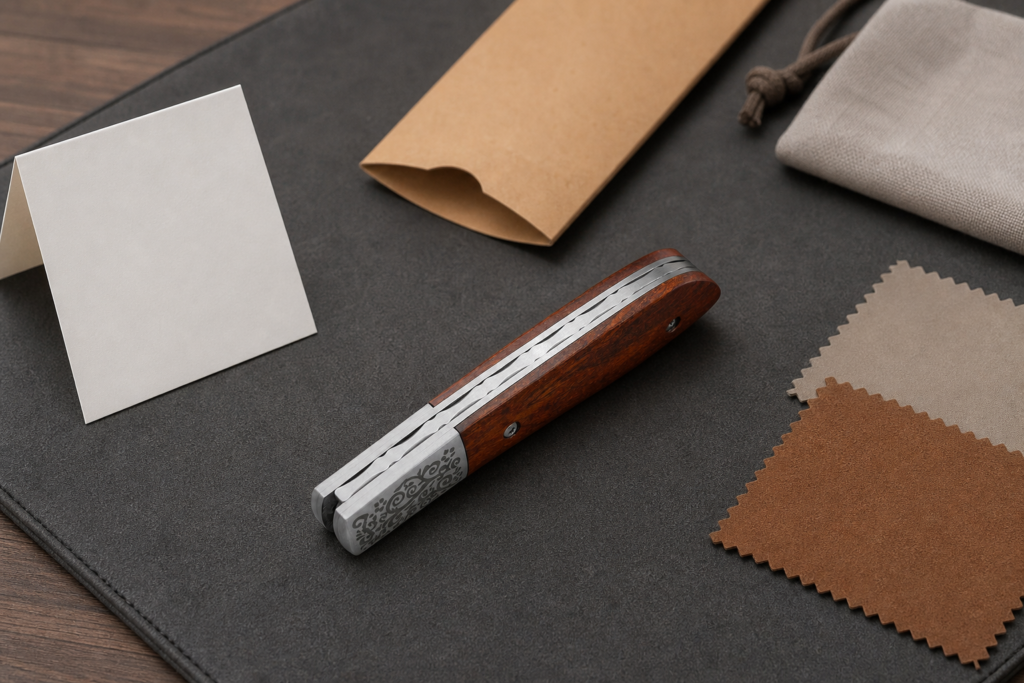
Knife carry guidance can help customers, but careless wording can create legal, safety, and channel problems.
B2B buyers should build safe knife carry guidance around lawful use, secure storage, covered edges, closed mechanisms, sheath or clip retention, travel and workplace restrictions, user instructions, packaging warnings, and QC checks that prove the product stays controlled before shipment.
Quick buyer brief:
- Answer: Treat "safe carry" as product guidance, not legal advice. The copy should tell users to follow local rules and should explain how the knife is designed to be stored, closed, sheathed, clipped, packed, or transported responsibly.
- Buyer context: This guide is for knife brands, outdoor brands, EDC brands, utility-tool buyers, importers, distributors, retail category managers, and OEM/ODM sourcing teams.
- Key checks: Target market, blade type, lock or sheath, edge exposure, clip retention, screw security, pouch fit, instruction wording, warning placement, air-travel copy, workplace restrictions, packaging movement, and inspection records.
Have a knife or multi-tool project in mind?
Send your sketch, CAD file, sample photo, or product idea. Vast State can review manufacturability, suggest materials, estimate MOQ, and prepare a quote for your OEM/ODM project.
When I see a topic like "how to safely carry a knife around," I do not write it as a universal consumer instruction. A knife may be lawful and useful in one outdoor or work context and restricted in another. A buyer selling across markets needs language that is clear, practical, and careful.
For OEM/ODM projects, safe carry guidance should begin before the article is written. The product must support the guidance. A folding knife should close reliably and protect the edge. A fixed blade should fit its sheath. A clip should hold under normal movement. Packaging should prevent the product from shifting. The manual should avoid legal promises and self-defense framing. That is the difference between copy that sounds safe and a product system that is actually managed.
Why Should Safe Carry Guidance Be Product Guidance, Not Legal Advice?
Legal rules vary by market, venue, and knife type. A generic blog post cannot replace review for the target market.
Buyers should write safe carry guidance as product and handling guidance: follow local laws, respect restricted places, keep edges covered, keep folding knives closed, use secure sheaths or clips, and avoid weapon-oriented language.
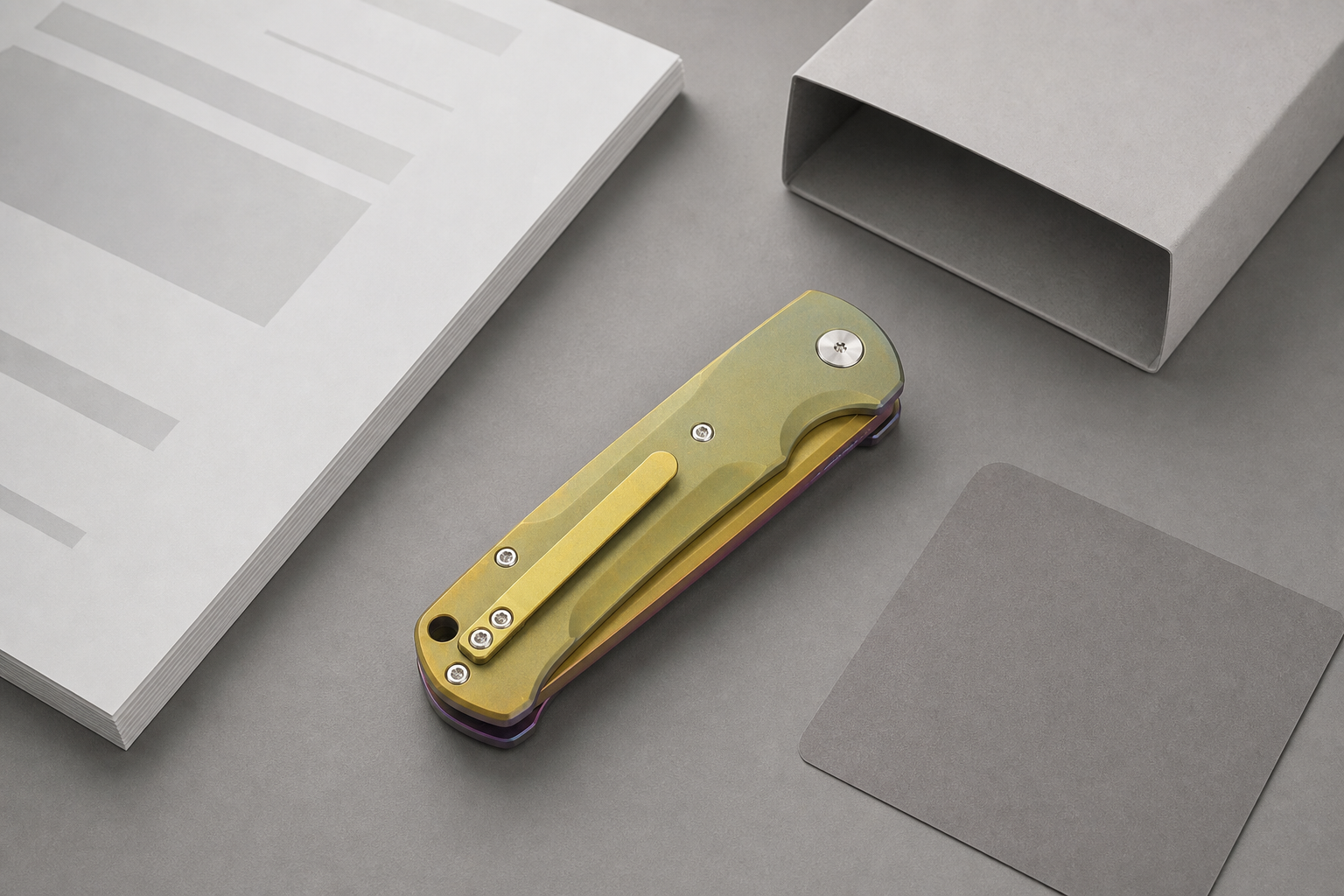
I Avoid "Legal Everywhere" Language
Safe carry guidance should never say or imply that a product is legal to carry everywhere. The GOV.UK guidance on buying and carrying knives shows how specific knife rules can be in one market, including age, public carry, locking mechanisms, and banned categories. Other countries, states, cities, workplaces, schools, transport systems, and events may have their own rules.
That is why I prefer simple copy boundaries. A product article can explain storage, sheath use, clip checks, and safe handling. It should also say that users must follow local laws and venue rules. It should not decide what counts as a lawful reason in every market. It should not promise that a blade length or lock type is acceptable everywhere.
This is not about making the article weak. It is about making the article professional. Buyers can still explain useful design features. They can say the sheath covers the edge. They can say the folder is designed to close fully before storage. They can say the product is intended for lawful utility tasks. Those statements are stronger than vague carry advice because they connect to the actual product.
| Risky wording | Better wording | Why it works |
|---|---|---|
| Carry this knife anywhere | Follow local laws and venue rules | Avoids universal legal claims |
| Safe for all users | Designed for controlled utility tasks | Avoids absolute safety claims |
| Perfect self-defense carry | Practical cutting tool for lawful tasks | Avoids weapon framing |
| Airport friendly | Check official travel rules before packing | Avoids travel confusion |
OEM/ODM RFQ Checklist
Prepare these details to help Vast State review your project and provide a more accurate quotation.
| RFQ Field | What to Prepare |
|---|---|
| Project type | OEM from drawing / ODM private label / wholesale catalog |
| Product category | Folding knife / fixed blade / multi-tool / outdoor tool |
| Design status | Idea / sketch / 2D drawing / 3D CAD / physical sample |
| Target price | Ex-factory target price or retail price range |
| MOQ expectation | 500 / 1,000 / 3,000 / 5,000+ pcs |
| Logo method | Laser engraving / etching / printing / molded logo |
| Packaging | Standard packaging / custom retail box / Amazon-ready |
| Market | USA / EU / Japan / Korea / Middle East / other |
| Compliance needs | Buyer-specified testing / documentation / labeling |
| Timeline | Sample deadline / mass production deadline |
What Carry Contexts Should Buyers Define Before Design?
Safe carry depends on where and why the tool is used. The product should match the context.
Buyers should define whether the knife is for outdoor kits, work utility, warehouse tasks, camping, vehicle emergency kits, retail gift sets, or professional supply channels before approving blade size, sheath, clip, lock, and copy.
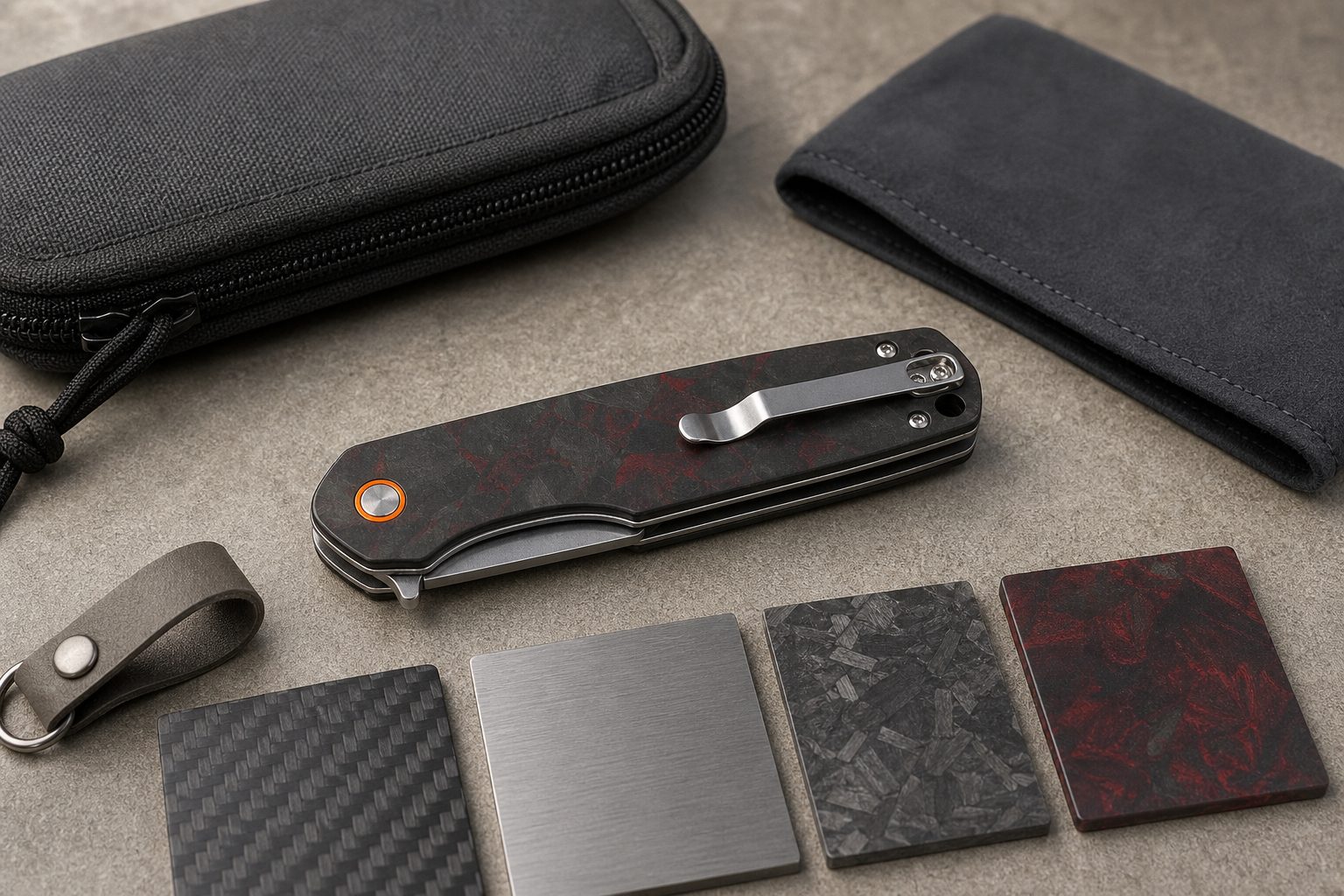
I Define the Context Before I Choose the Carry Method
A camping repair pouch, a warehouse utility kit, and a pocket EDC line do not need the same carry system. A camping product may need sheath retention, lanyard compatibility, corrosion resistance, and clear storage instructions. A work utility folder may need pocket clip strength, easy cleaning, closed-edge protection, and a simple manual. A gift set may need packaging that prevents movement and presents the product safely.
Outdoor preparedness sources can support practical kit language. The National Park Service Ten Essentials includes repair kit and tools as part of outdoor preparation. That supports a measured statement: a knife can be part of a prepared outdoor kit. It does not support unrestricted public carry language.
The buyer should turn context into requirements. If the product is designed for a kit, include pouch fit and edge protection. If it is designed for pocket carry where lawful, define clip orientation and retention. If it is designed for a belt sheath, define sheath mouth, retention feel, drain hole, snap or friction fit, and how the edge is isolated.
| Carry context | Product requirement | Copy boundary |
|---|---|---|
| Outdoor kit | Sheath, pouch, corrosion plan | Say kit storage, not universal carry |
| Work utility | Clip strength, closed-edge safety | Respect workplace rules |
| Vehicle kit | Covered edge, stable storage | Avoid emergency panic language |
| Retail gift | Secure packaging, instructions | Avoid use by untrained minors |
How Should Folding Knives Be Designed for Controlled Pocket or Pouch Carry?
A folding knife only carries safely when the closed position is controlled.
Folding knife carry guidance should be supported by blade centering, secure closure, detent or opening resistance, lock function, handle clearance, clip strength, screw security, edge protection, and clear instructions.
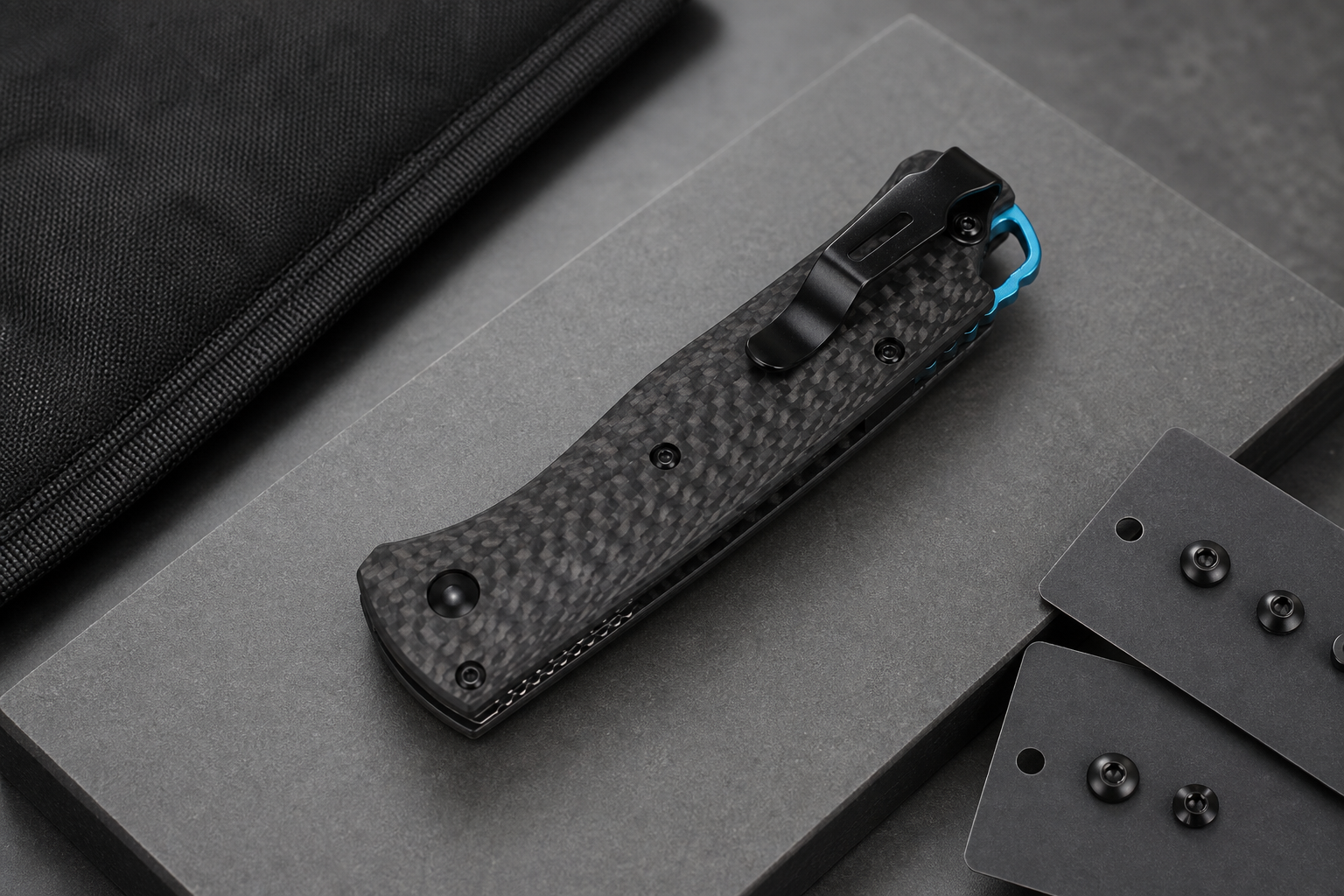
I Look at the Closed Knife First
Many buyers focus on how a folding knife opens. Safe carry begins with how it closes and stays closed. The blade should not expose the edge through the handle. The point should not sit proud. The clip should not loosen easily. Screws should be controlled. The opening action should not be so loose that the blade opens accidentally during normal storage.
This is where design and QC meet. The buyer should specify blade centering, closed blade clearance, detent or backspring feel, pivot screw control, clip screw torque, handle chamfering, and packaging protection. If the knife uses a lock, the lock should engage and release consistently. If it is non-locking, the backspring or slip-joint resistance should match the intended market and use case.
The CCOHS sharp blade safety guidance emphasizes controlled handling and storage for sharp blades. For an OEM/ODM folding knife, the same logic becomes a design checklist. The sharp edge should be controlled when not in use. The user should know how to store it. The packaging should prevent movement before sale.
| Folding knife item | Buyer requirement | QC method |
|---|---|---|
| Closed edge | No edge exposure through handle | Visual and feel check |
| Blade centering | Blade clears both handle sides | Centering inspection |
| Clip retention | Clip holds under normal movement | Pull and screw check |
| Opening resistance | No accidental opening in storage | Functional check |
How Should Fixed Blades and Sheaths Be Specified for Carry Safety?
A fixed blade depends on the sheath. A weak sheath can ruin a good knife project.
Fixed blade carry guidance should specify sheath retention, covered edge, covered point, belt or pouch attachment strength, drain or cleaning needs, handle draw control, packaging protection, and inspection before shipment.
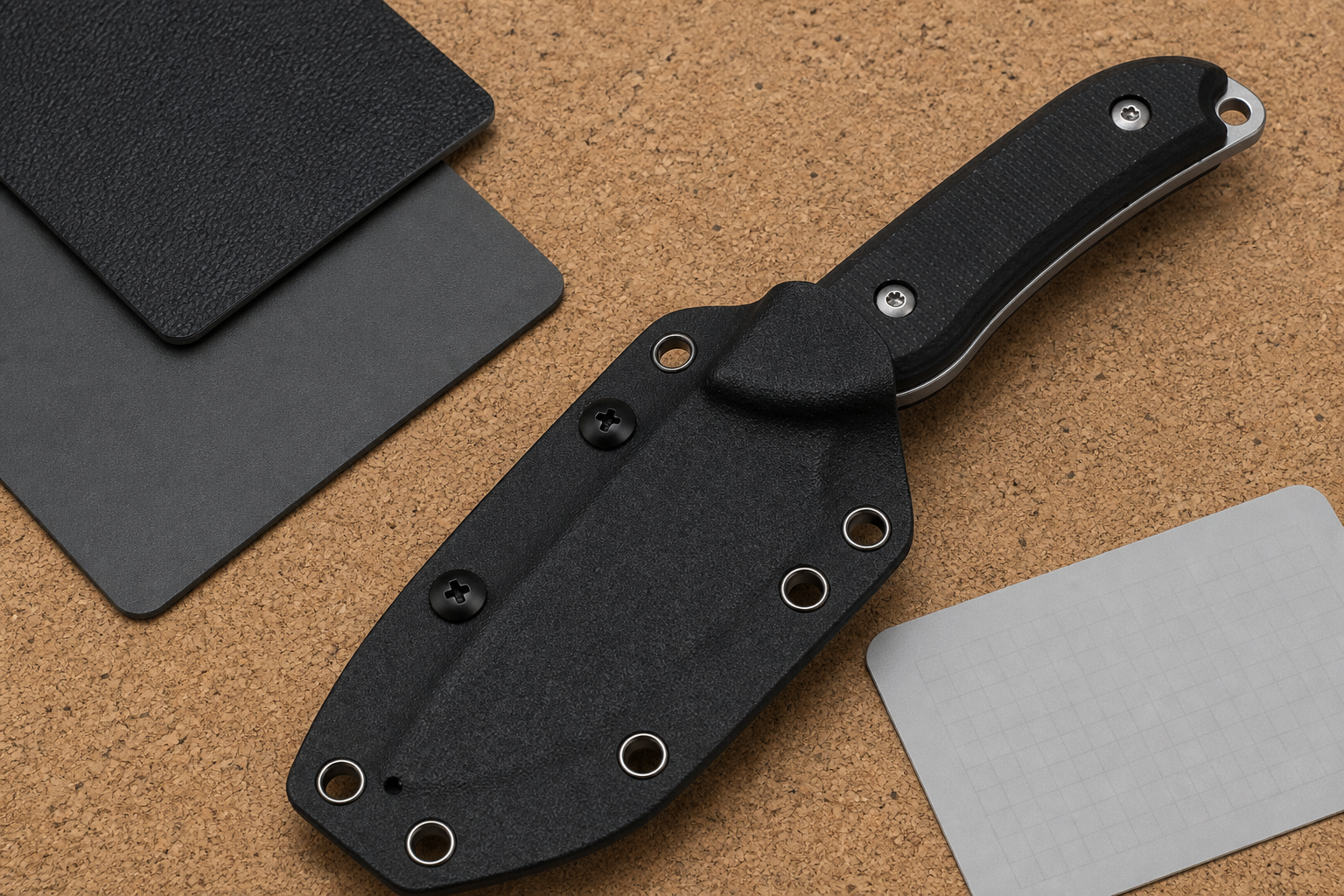
I Treat the Sheath as Part of the Product
Some buyers treat the sheath as an accessory. For safe carry, it is a functional part of the product. The sheath controls the edge and point when the knife is stored, moved, packed, or displayed. If the sheath fit is loose, the knife may rattle, fall out, cut the packaging, or create customer complaints. If the fit is too tight, the user may need unsafe force to draw the knife.
The buyer should define retention style. Friction fit, snap strap, button, belt loop, clip plate, pouch, or molded sheath all need different checks. The buyer should also define material. Nylon, leather, molded polymer, Kydex-style material, or hybrid sheaths create different fit, moisture, cost, and packaging questions.
For outdoor products, the sheath should also match real use. Does the user wear gloves? Is the product expected to get wet? Does the sheath need a drain hole? Does the belt attachment rotate or stay fixed? Is there a lanyard hole? Does the blade edge contact stitching or soft material inside the sheath?
| Sheath item | Why it matters | Buyer check |
|---|---|---|
| Retention | Prevents falling out | Shake and pull check |
| Edge coverage | Prevents accidental contact | Covered edge inspection |
| Point coverage | Prevents packaging or sheath puncture | Tip protection check |
| Attachment | Controls belt or pouch use | Pull and wear simulation |
What Should Packaging and Instructions Say About Safe Carry?
Packaging should guide use without sounding like legal advice or fear marketing.
Safe carry instructions should tell users to keep the blade closed or sheathed when not in use, store away from children, follow local laws, avoid restricted places, inspect clips or sheaths, and use the knife only for intended cutting tasks.
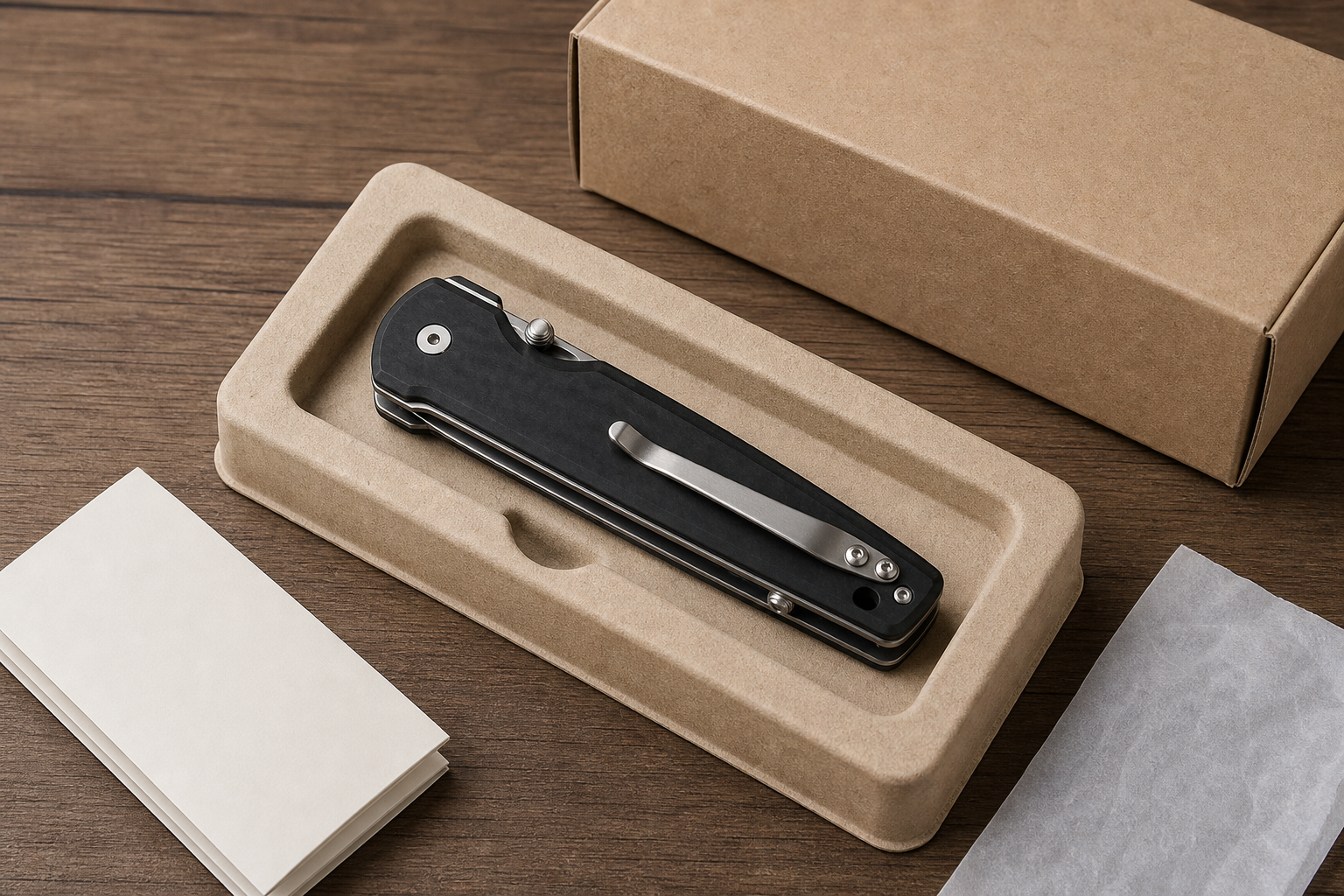
I Keep the Language Plain and Boring in the Best Way
Good safety copy should be clear. It does not need drama. It should not include self-defense claims, intimidation language, or promises that the knife can be carried in all places. It should explain the product's intended use and storage method.
The European Commission product safety and labelling page points businesses toward product safety and labelling responsibilities. For buyers, the practical takeaway is to review labels, warnings, and instructions before mass production, especially when selling across markets.
A useful instruction insert can include:
- Keep blade closed or sheathed when not in use.
- Follow local laws, venue rules, and workplace policies.
- Do not carry into restricted places such as schools, airports, or events where prohibited.
- Keep away from children.
- Inspect sheath, clip, and screws before use.
- Use only for intended cutting tasks.
- Do not use as a pry bar, weapon, or throwing object.
- Stop use if lock, sheath, clip, or handle is damaged.
The buyer should also match the language to the actual product. A folder insert should mention closing and lock release. A fixed blade insert should mention sheath use. A utility knife insert should mention blade replacement or retraction if applicable.
How Do Travel, Workplace, School, and Event Restrictions Affect Product Copy?
Carry guidance must respect places where knives are restricted or inappropriate.
Buyers should avoid blanket carry claims and instead tell users to check official rules for air travel, schools, workplaces, public events, parks, and local jurisdictions before transporting or carrying any knife.
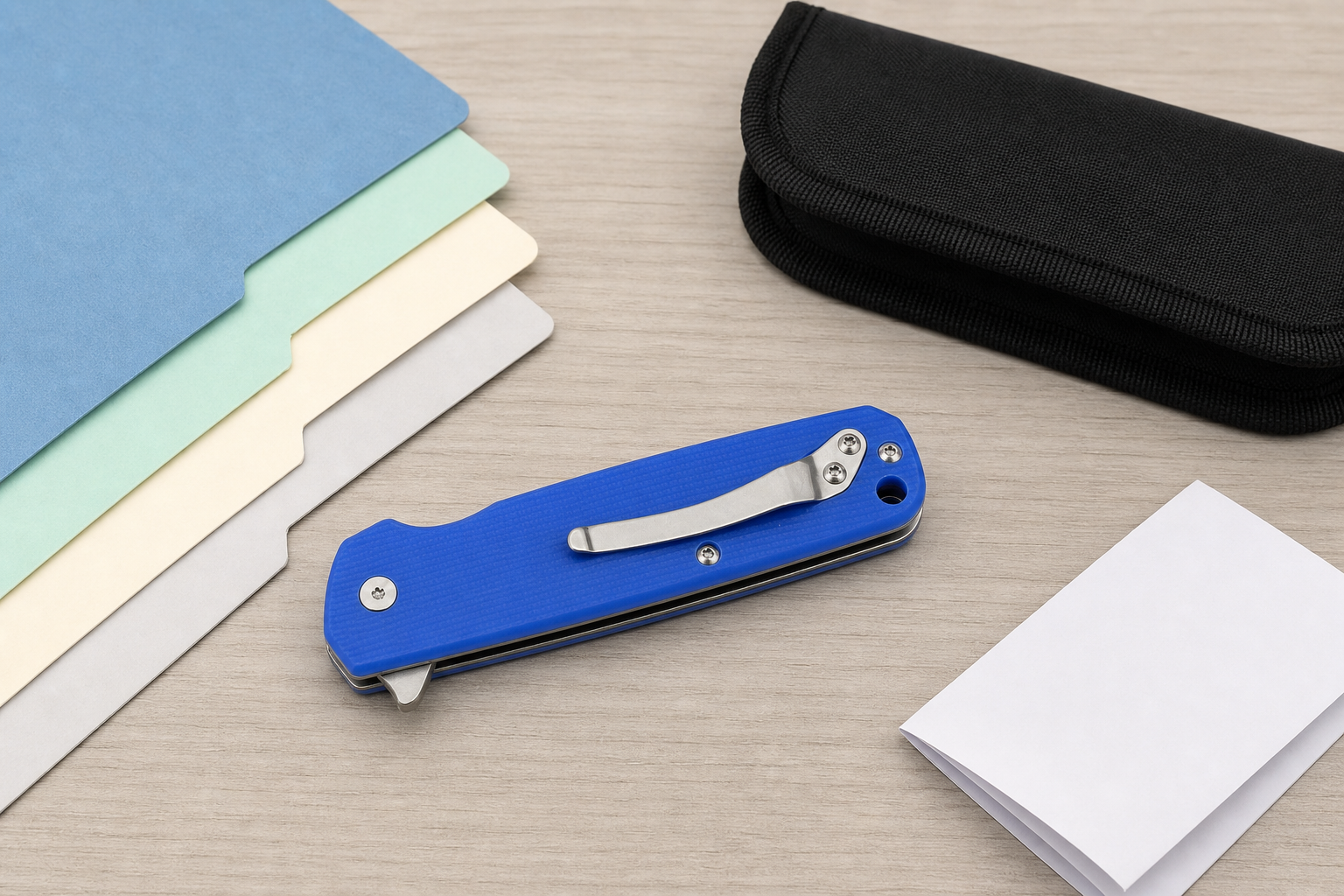
I Never Let "EDC" Override Restricted Places
EDC is a product category. It does not override rules. A buyer should not approve copy that says "carry anywhere," "airport ready," or "school safe." Those phrases can create problems with customers, platforms, and regulators.
The TSA knives page is a strong example for travel copy because it treats knives as not allowed in carry-on bags, with checked-bag handling and wrapping guidance for sharp objects. The final decision at a checkpoint belongs to TSA officers. A product page should not simplify that into "travel friendly."
Workplaces can also restrict blades. Schools and events often have strict no-knife rules. Parks or outdoor locations may allow tools for specific activities but still have local rules. Buyers should avoid writing one global rule into packaging.
Instead, I use wording like:
- "Follow local laws and venue rules."
- "Do not bring this product into restricted places."
- "For travel, check official transport and airline guidance before packing."
- "Keep blade closed or sheathed when stored."
That language is less exciting. It is also much more useful.
What Product Design Features Reduce Carry Risk?
Safe carry is easier when the product itself helps the user do the right thing.
Design features that reduce carry risk include secure sheath fit, reliable folder closure, covered edge, rounded handle edges, clip retention, screw locking plan, clear grip orientation, lanyard option, packaging insert, and visible instruction cues.
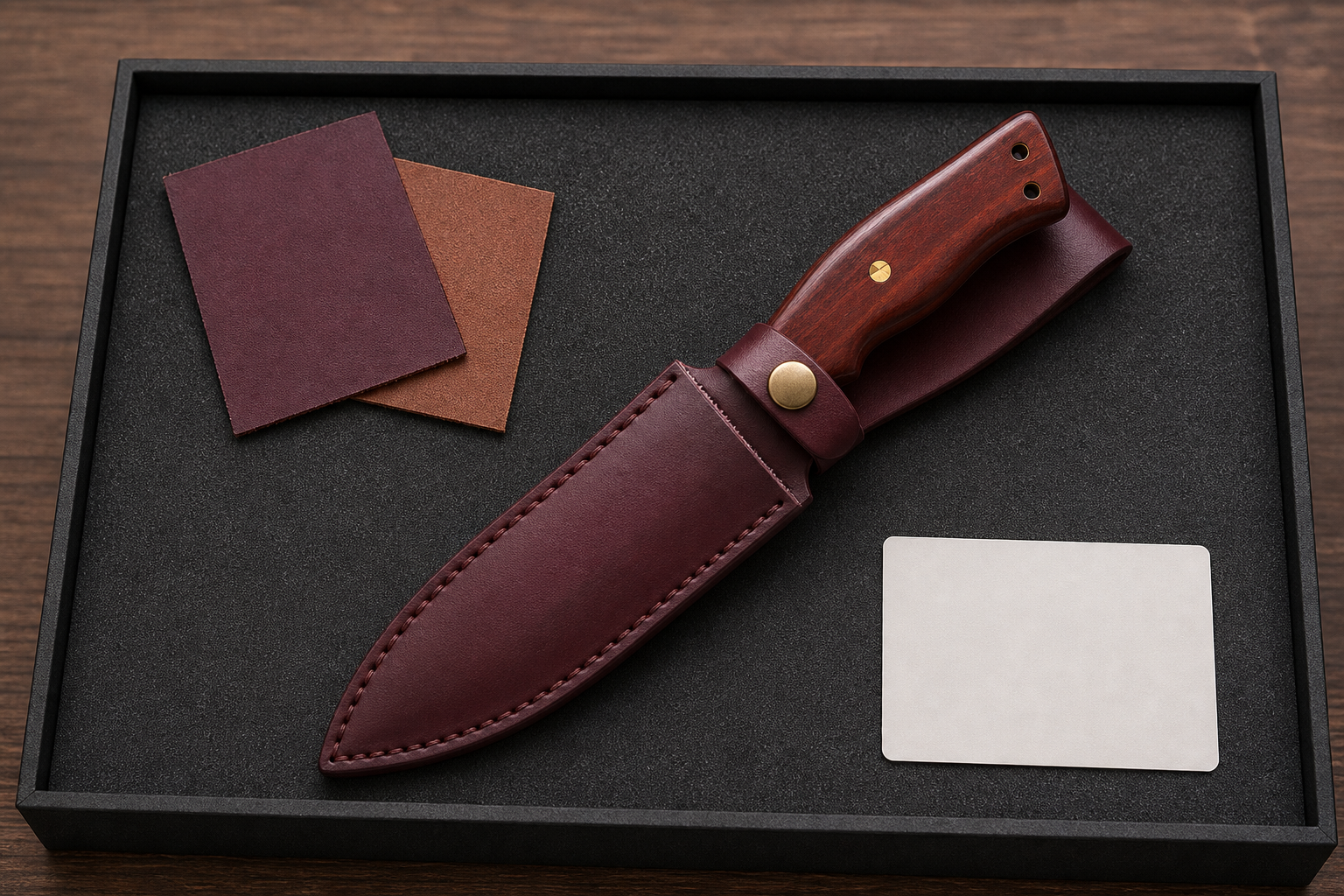
I Prefer Design That Makes Safe Storage Obvious
A good carry design should make the correct storage method intuitive. The sheath should guide the blade in. The clip should sit firmly. The handle should not create sharp hotspots. The folder should close fully. The package should hold the product in a stable position. The user should not need to guess how the knife is meant to be stored.
Usability matters here. The ISO 9241-11 usability standard page defines usability around users, goals, and context of use. It is not a knife standard, but the principle is helpful. A carry system should work for the intended user in the intended situation.
For example, an outdoor fixed blade for gloved users may need a larger handle, visible sheath orientation, and retention that can be operated without unsafe force. A slim EDC folder may need a deep-carry clip, controlled opening resistance, and a smooth handle profile. A work utility folder may need high clip strength, simple cleaning, and robust screws.
| Feature | Carry benefit | RFQ detail |
|---|---|---|
| Secure sheath | Controls exposed edge | Retention test method |
| Closed folder clearance | Prevents edge exposure | Handle clearance tolerance |
| Clip retention | Reduces accidental loss | Pull force or sample test |
| Rounded handle edges | Reduces snagging and discomfort | Chamfer and finish standard |
What QC Tests Should Verify Safe Carry Before Shipment?
Safety claims need inspection records. A single good sample is not enough.
QC should verify blade closure, sheath retention, edge coverage, point coverage, blade centering, lockup, blade play, clip pull, screw torque, packaging movement, warning insert placement, and finished-sample consistency.
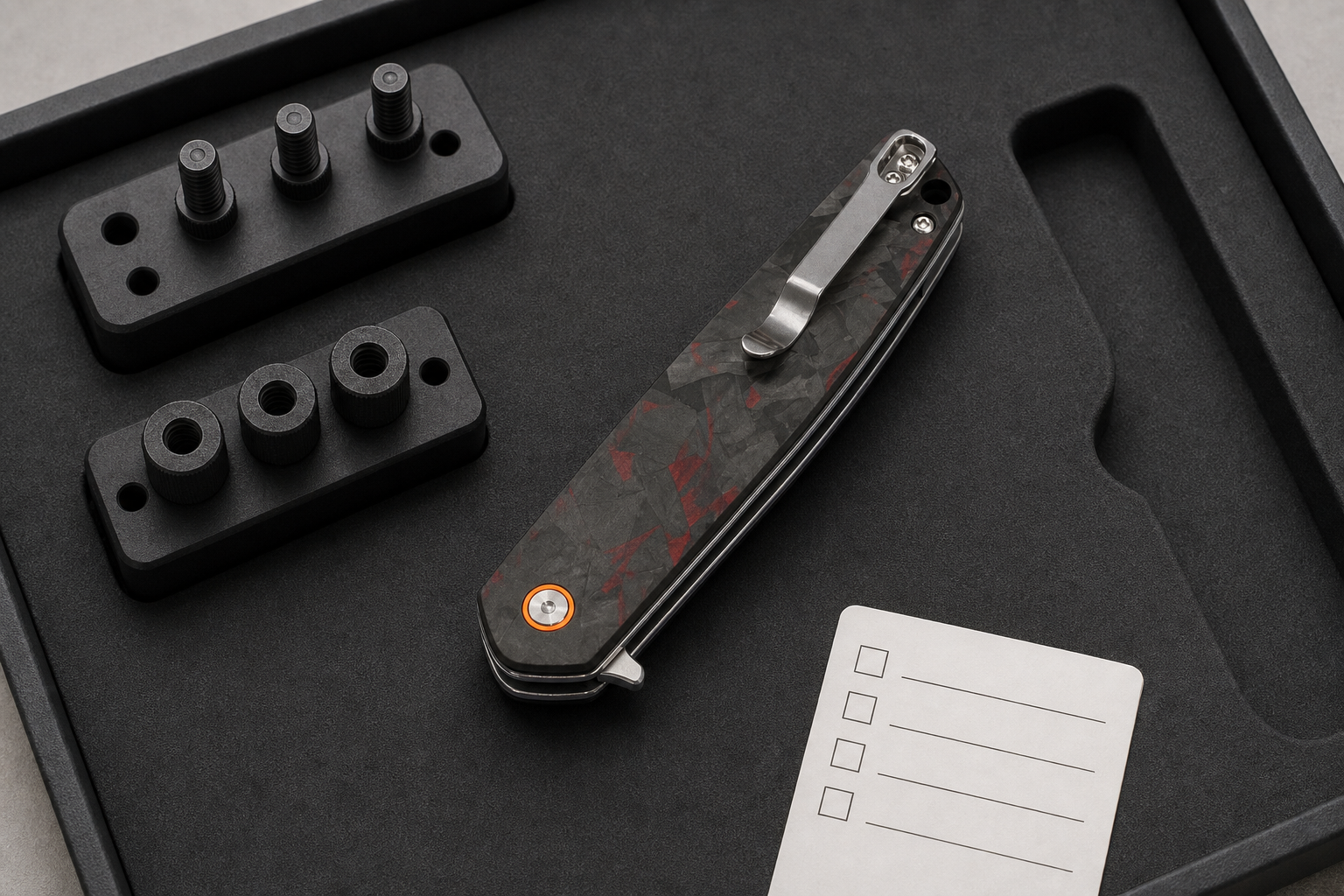
I Turn Every Safety Sentence Into a Check
If the instruction says "keep the knife sheathed," the sheath must retain the knife. If the product page says "secure pocket clip," the clip must be checked. If the copy says "designed for safe storage," the blade should not move freely inside the package. If the manual says "inspect screws," the factory should also inspect screw security before shipment.
The NIST dimensional metrology page supports the role of measurement in manufacturing improvement. The ISO 9001 quality management systems page supports the broader idea of defined requirements, records, and controlled quality processes. For knife buyers, these principles translate into a clear carry-safety inspection plan.
I would include these checks in the pre-shipment plan:
| QC area | Inspection item | Record type |
|---|---|---|
| Folding knife carry | Blade centering, closed edge, opening resistance | Functional inspection |
| Fixed blade carry | Sheath retention, edge coverage, tip coverage | Fit and retention report |
| Clip carry | Clip screw torque and pull resistance | Torque and pull record |
| Packaging | Product movement and warning insert | Packaging inspection |
| Copy alignment | Claims match actual design | Artwork approval record |
Carry safety should not live only in the article. It should show up in the inspection sheet.
How Can Vast State Help Buyers Build Safe Carry Guidance?
Vast State can help connect product design, packaging, copy, and QC into one carry-safety plan.
Vast State supports buyers by defining carry context, blade type, sheath or clip requirements, instruction wording, compliance review points, sample approval standards, packaging protection, and QC checks before mass production.
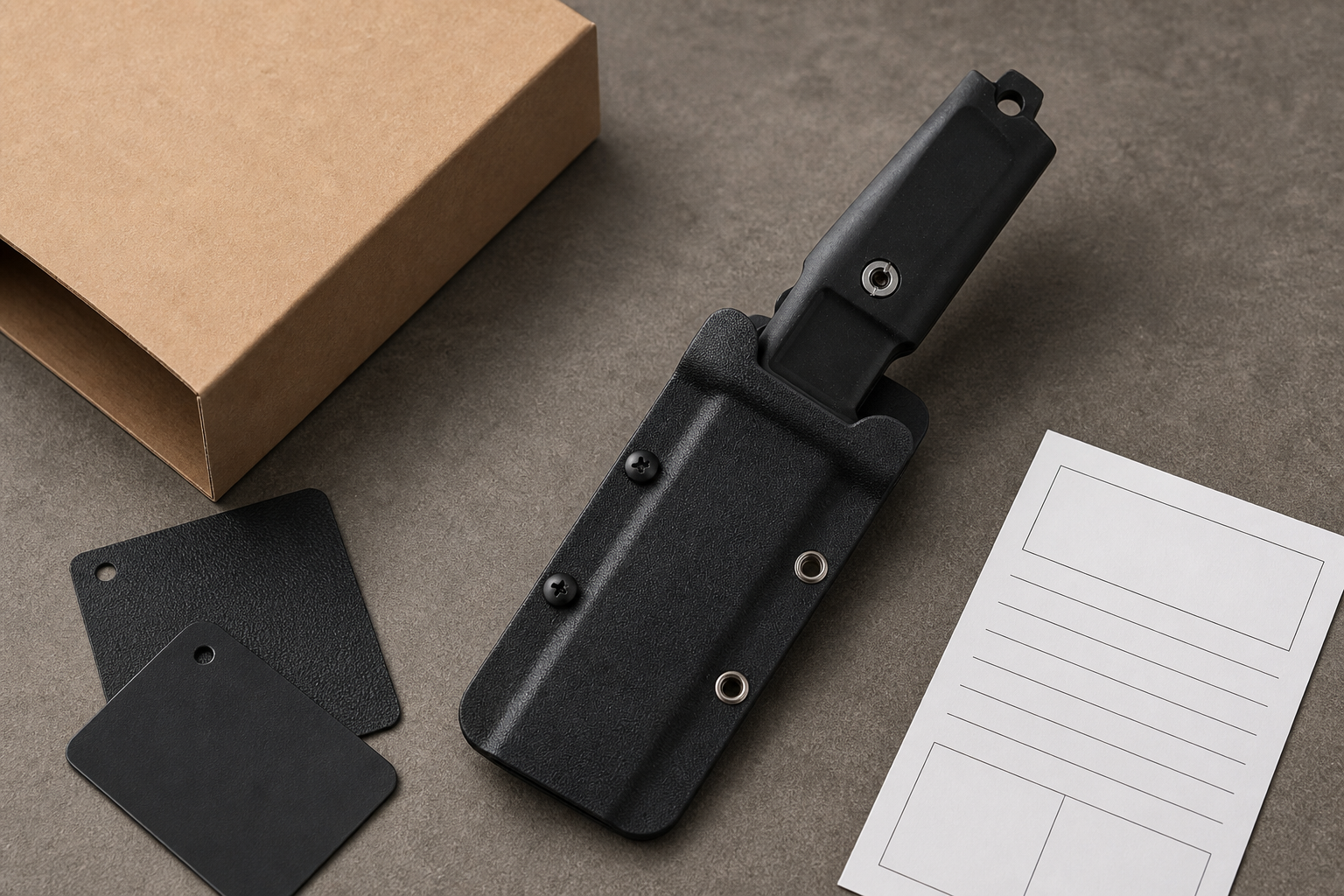
I Build the Guidance From the Product Up
The safest workflow is simple. First, define the use case and target market. Second, design the carry method. Third, write packaging and article copy that matches the design. Fourth, approve samples against the same requirements. Fifth, inspect mass production against the approved sample and the carry-safety checklist.
Vast State can help with:
- Safe carry requirement planning for folding and fixed blade projects
- Sheath, pouch, pocket clip, and packaging protection review
- Lock, closure, blade centering, and edge exposure checks
- Safe-use instruction and warning wording
- Compliance-aware product page and blog wording
- Sample approval and boundary sample setup
- QC checklist development for carry-related risks
- RFQ translation between copy claims and factory inspection
This keeps the article honest. It also gives the factory a clearer job. The buyer is no longer asking for vague safe carry. The buyer is asking for a product system that controls the edge, protects the user, respects market rules, and can be inspected.
Turn your idea into a quote-ready knife project.
Share your drawing, sample photo, target quantity, market, and packaging needs. Vast State will review manufacturability and prepare OEM/ODM options.
Conclusion
Safe knife carry guidance works best when it is lawful, practical, product-specific, and verifiable. Buyers should connect every sentence to design, packaging, and QC.